Loading summary
Transcript110 lines
- [00:00]
Okta Advertiser
These days it seems like AI agents are just about everywhere you turn, every field and every function. But without identity, you can't trust they'll serve your business instead of jeopardizing it. Fortunately, Okta helps you get identity right by securing your AI agents identities, giving you a single layer of control, a single standard of trust. So whether an AI agent supports a single user or your entire enterprise, with Okta you'll turn risk into opportunity. Secure every agent. Secure any agent. Okta secures AI.
- [00:36]
David Marchese
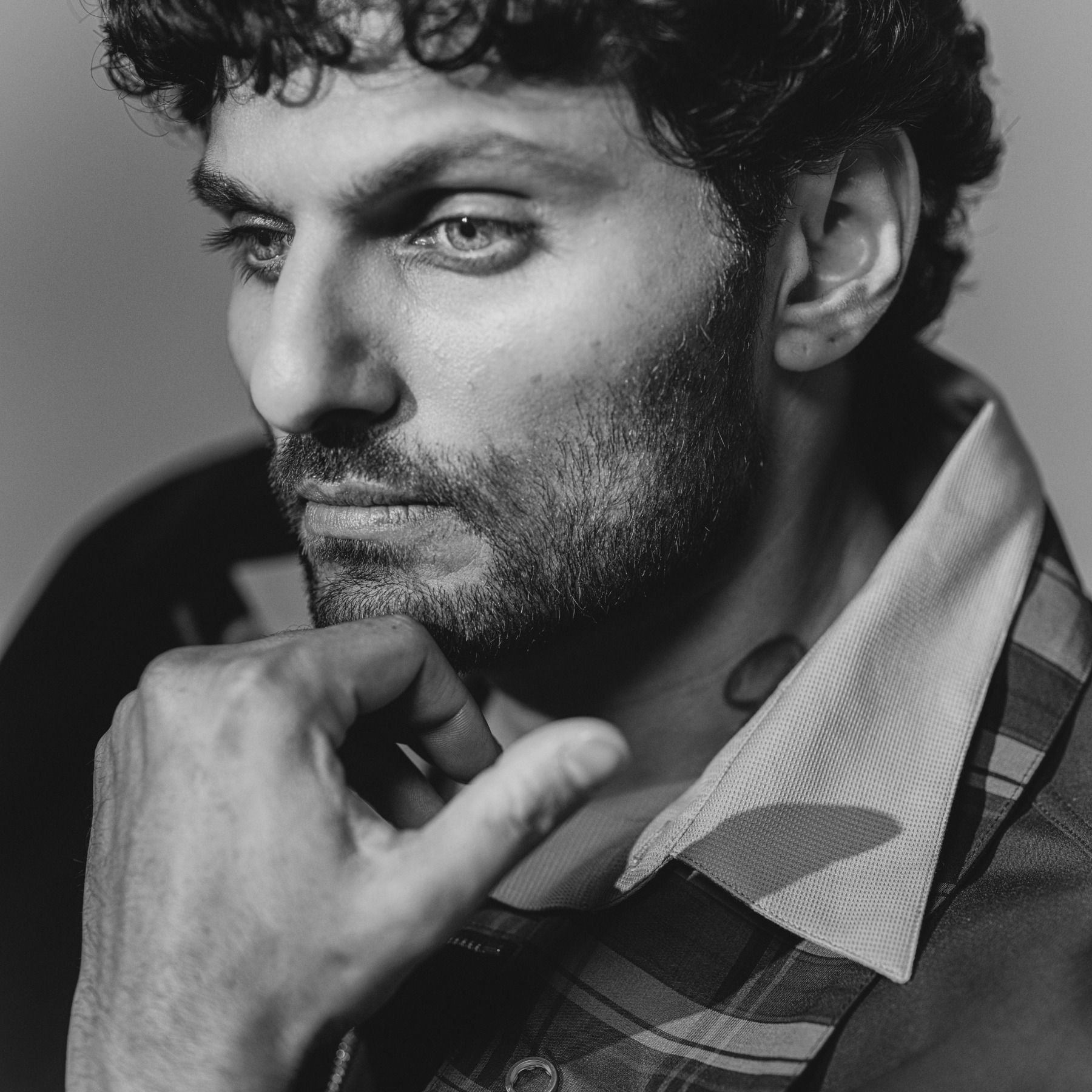
From the New York Times this is the Interview. I'm David Marchese. Jay Shetty is without a doubt a giant in the world of wellness and mental health influencers. His podcast On Purpose is incredibly popular and its related YouTube channel, which features interviews as well as Shetty's video essays about self improvement, has more than 5 million subscribers. His books Think Like a Monk and Eight Rules of Love were both bestsellers, and he's also just launched a production company called Perfect Strangers. Part of Shetty's success has to do with his message. It's a breezy blend of pop psychology and self help tips overlaid with some reassuring Eastern spirituality. Another part surely has to do with his backstory. As Shetty tells it, he was a wayward young man who went to a lecture by a monk from the ISKCON movement, better known as the Hare Krishnas, and then decided to change his life and become a monk himself. He eventually left that life behind and became an influencer, determined to, as he's put it, make wisdom go viral. While there's no doubt about Shetty's success, I did find myself with other doubts about him that I wanted to explore. They were partly to do with a 2024 article in the Guardian that that raised questions about many aspects of Shetty's public life, including accusations of plagiarism on his platforms early in his career, some allegedly misleading certification information put out by his online life coaching school, and even the extent of his training as a monk. That's reporting that Chetty and his lawyers have disputed and which we talked about at length in our conversation. So there are those tensions. And there's also the seeming contradiction of a man who espouses monk like thinking while now living the glamorous life in LA as a superstar influencer, which turns out to be a tension he's been thinking about too. Here's my conversation with Jay Shetty.
- [02:39]
Jay Shetty
Hey David.
- [02:40]
David Marchese
Hi Jay, how are you?
- [02:41]
Jay Shetty
I'm doing really well. I'm doing really well. How was your weekend?
- [02:43]
David Marchese
It was good. It was mellow Just stuff with the kids. How about you?
- [02:47]
Jay Shetty
Oh, amazing. It was Grammys week, so very busy, but fun and enjoyable. So it was good.
- [02:54]
David Marchese
You know, it's funny, I've been watching so much of your stuff for honestly the last six weeks or something like that, really trying to immerse myself. And just yesterday I watched a video of yours that had a segment about how to have difficult conversations. I thought the most useful part of it was, was that you talked about being clear about one's own intentions during a conversation. And I think that's a very useful thing. And I feel like my intention with you and with everyone is to just understand as much as I can.
- [03:25]
Jay Shetty
I love that. Well, thank you for sharing that with me. And my intention today is always to try and share myself as authentically as I can.
- [03:34]
David Marchese
Good, because I hope I have some hard questions for you, so we'll see how that goes. But for people who are aren't familiar with you and your work, which of your beliefs would you say are most fundamental to what you do as a sort of wellness self help influencer? What are you fundamentally trying to teach people about?
- [03:57]
Jay Shetty
I wouldn't even say I'm trying to teach. The four things I really am encouraging people to reflect upon are the four most important questions I believe that we all have to answer in life. The first is, how do I feel about myself? It's a decision we make every day when we wake up and we look in the mirror. The second is what do I do for work? You know, what do I do with my time? The third is who do I choose to love and receive love from? And the fourth is how do I choose to serve the world? And so all of my work is dedicated and devoted to helping people reflect on and answer these questions for themselves. So whether someone comes and asks me, like, hey, Jay, like, I really want to find my purpose, or I'm kind of stuck in my job right now, or maybe they're going through a breakup and they're looking for insight on what will help them heal. Or someone who says, jay, you know, your work helped me through a divorce or your work stopped me from committing suicide. Like, I think those are the kind of things people usually come to me with. And so that's what I find is usually the kind of questions and reflections and insights that people are looking for from me. And I'm always trying to help them think through those challenges.
- [05:04]
David Marchese
How much do you find the answers to those questions change depending on the individual circumstances? Is it the case that, you know, broadly speaking, the Same kinds of answers apply in most circumstances. Or it's more the case that depending on the specific circumstances, the answers to say, you know, how can I find more purpose? Or how can I feel better about myself than change?
- [05:31]
Jay Shetty
There's two types of wisdom in my opinion. There's timeless wisdom, universal principles and language that affects all of our hearts and that we all resonate with. And then at the same time, there's very specific, timely advice that we all need in a really difficult moment. And so really it depends on how personally I'm in that space with someone. If someone's at an event of mine and they put up their hand and they're on the microphone, they ask a question, then I get to look in that person's eyes, I get to see their body language, I can ask them a follow up question. If I'm creating something like a podcast episode, then that's naturally more broad because it's me speaking from one to many. And so to me it's about being adaptable and being personal and being specific. And so my approach is to always try and meet the person if I really can get to know them and actually be present with them.
- [06:20]
David Marchese
So kind of the, to my mind, big differentiator for you or distinguishing factor is the fact that you trained as a monk. Your book of course was called Think like a Monk and specifically correct me if I'm wrong, but you trained within the ISKCON movement, colloquially known as the Hare Krishna, is that right?
- [06:42]
Jay Shetty
So I trained as part of the Radha, Gopinath and bhaktivedantamana ashrams across India and the UK and Europe. And they are parts of that. Yes.
- [06:54]
David Marchese
And you know, because of that training, there is this sense of ancient or spiritual wisdom around your content. And it's interesting because when I read your books or listen to your stuff, a lot of it reminds me of almost cognitive behavioral therapy material or self help material that I've encountered in lots of different places. You know, like list making, gratitude, journaling. You talk about the importance of breathing, but it's within this framework of spiritual thinking. Can you tell me a little bit more about the interplay between your spiritual training and more secular self help ideas that also comes up in your work?
- [07:40]
Jay Shetty
Absolutely, yeah. I've always been passionate and fascinated by the intersection between ancient wisdom and modern science. And when I first read the Bhagavad Gita, which is the primary text that I reference in my books, which is a 5,000 year old text, and Eastern wisdom, to me, pretty much every modern growth idea or Personal development idea can be somehow traced back to it and found in it. And so I find it to be an incredible map and conversation starter for so much of the spiritual wisdom that I love to share. So, you know, recently we've been talking about the value of circadian rhythms and the need to see sunlight early in the morning. And to me, there's something known as sun salutations in the Eastern tradition of yoga, where that's exactly what you would do. Now, they didn't talk about it as a circadian rhythm starter, but that's exactly how you'd start your morning. So I've always found it fascinating to find this intersection because I'm personally deeply interested. I also find that it's really beautiful when there are really practical ways of showing how these old ideas have a lot of validity. Today, there's not many new things, but there are deeper ways of understanding the same thing.
- [08:54]
David Marchese
You know, we hear about things like, you know, mindfulness has kind of exploded over the last decade or so, or people will talk about karma or living within one's dharma, which I think dharma can basically be understood as one's life purpose. And people talk about these concepts that are rooted in religious and spiritual practices. And sometimes I wonder if people maybe mistakenly think that they can decouple the spiritual practices or like, the true religious root of these things and just sort of use them in almost like a fast food kind of way. Like, it's a shortcut.
- [09:38]
Jay Shetty
I have a different perspective that I'd like to share. Yeah, my. My perspective is that sometimes someone's starting point in a deep practice may be really simple, easy, and potentially even surface level. And that may be them just dipping their toe in the water. And that's how we all started something. Like, I'll give an example. During the pandemic, I did around 40 days of meditation on Live, on Instagram, Facebook Live, and YouTube Live. And people could just join from their home. And the amount of people that I still meet today who will come up to me and say, jay, I started meditating because of you. Now, all these people had never meditated in their entire life. Is meditating on Instagram Live the deepest, most profound meditation? Probably not. But if that's their starting point, if that's the connection point, then what a beautiful thing that people have gone on to, like, travel and maybe go on a meditation retreat and maybe do more with their own life, with whichever teachers or practices that they love. I think to me, it's almost like it's a good thing.
- [10:41]
David Marchese
Yeah, I'm very interested in people's turning points in their lives. So I'd like to ask you about what I think was your big turning point, which is, you know, you were a young man in London, I believe you were going to business school at the time, or.
- [10:57]
Jay Shetty
I attended Cass Business School, which is now known as Bayes Business School. Yes.
- [11:00]
David Marchese
And you ended up kind of on a whim, going to a lecture by a monk whose name was a Garanga Das Garangadas.
- [11:08]
Jay Shetty
Yes.
- [11:08]
David Marchese
And you were swept away, had this epiphany that he was saying something that you needed to hear. Can you tell me about what you heard in that moment that was so powerful to you that you thought, well, that. That it actually became kind of a life changing moment, really, David, it was
- [11:25]
Jay Shetty
probably even beyond what I heard. It was seeing a man who externally was not attractive to me in any way, you know, as a, you know, seeing a man in robes, with his head shaved, with an Indian accent from India. And I didn't understand, even in that moment probably of why I was so attracted to him, but it was his sense of peace, his sense of ease, his sense of confidence in being so different. And I think at that age in your life, you know, you're always trying to fit in. And here was someone who didn't fit in at all, but felt like the most comfortable person in the room. And to me, that was more important, I think, than anything. He even said, yeah, I want to
- [12:06]
David Marchese
ask you something related to that, which is, you know, it's to do with kind of your arc. And, you know, I think one of the things that's particularly unusual about your arc is that it kind of looks from the outside like it's an inversion of like a typical monk's journey, where I think, you know, usually the typical version of that is somebody decides to embrace monastic life and then embraces a kind of asceticism or a renunciation of material things, wealth, whatever it may be. In some ways, it seems like you decided to pursue a monastic life and then have moved towards, you know, you're. I think you're probably doing pretty well for yourself financially. You know, you hang out with glamorous people, you know, you're a successful entrepreneur. Are there any ways in which you. You feel like the spiritual tradition in which you were training is in tension with the life that you're living now?
- [13:07]
Jay Shetty
First of all, I'm not. Yeah, I'd say that there's a understanding in spiritual tradition which is all about how as humans, we tend to idolize or demonize things, and that the ultimate truth is to be able to utilize everything for a higher purpose. And I think that's what's often missed. And so there's a beautiful statement in the Gita, which I was talking about earlier, the Bhagavad Gita, that says attachment and aversion are two sides of the same coin. And so I think we often, in our Western understanding, see detachment as better than attachment. However, the spiritual understanding is far more subtle and far more refined. That detachment doesn't mean aversion. Detachment means you can be close to anything in the world and use it for a higher purpose. Now, I'm not saying I'm doing that, and I'm not saying I live in that. I'm saying I try my best. And I'd say that's my aspiration. My aspiration is that every day I'm living in the quote, unquote, real world, or, you know, however we call it, I'm reminded of my flaws. I'm reminded of my. How far away I am from truly living up to the spiritual pursuits that I have and have had for most of my life now. And I love that. I love being reminded of how far I have to go. And so I would argue that I feel more close to growth in my current life than I ever did in the ashram. Because in the ashram, I could almost forget or think maybe I'd already found it.
- [14:45]
David Marchese
Is there any part of you that thinks maybe that's an elaborate self justification?
- [14:52]
Jay Shetty
I have questioned that many times.
- [14:55]
David Marchese
Yeah.
- [14:55]
Jay Shetty
And I continue to question it. I think that the spiritual philosophy of 5000 years old is pretty clear on it. So I. I take that as my authority over myself. However, the other side of it, to be quite frank and honest, is I think it's also a graduation. It's like I'm. I'm married, I have businesses, we have teams, we have companies. I'm not a monk anymore. And I think it's almost like having to recognize that you've evolved, you've grown, your life has changed. And, yeah, I'm not living that way anymore. And it's partly why I wrote a book called Think Like a Monk, not Live like a Monk. That was intentional because I think everyone can think like a monk. I don't think everyone, including me, can live like a monk for the rest of their life.
- [15:40]
David Marchese
I think the think like a monk, live like a monk distinction is sort of related to what I was asking about earlier, which is how usefully we can decouple sort of Religious belief from religiously inspired action. And I know I keep asking you, like, where is the line here? But I'm interested in trying to understand where these boundaries are. But is there a point at which thinking like a monk, if you're not also living like a monk, stops being monk, like, thinking? Do you know what I'm saying? Maybe that was my version of, like a Zen riddle.
- [16:13]
Jay Shetty
But it's a koan.
- [16:14]
David Marchese
Yeah, exactly.
- [16:15]
Jay Shetty
Yeah, it's a koan. Yeah, Zen koan. No, David, I, I, I really appreciate you. I, I, I can tell that you're really trying to understand it, and so I, I want to try and try and meet you there and, and, and help you with that. Yeah, it's probably different across traditions, and everyone has their own version. It's, Wait, let me, let me, let me really sit with your question because, yeah,
- [16:37]
David Marchese
How much can you think like a monk? And if you're not really trying to live like a monk? That's what the question is.
- [16:43]
Jay Shetty
And my response to that, with sitting there and thank you for repeating it, is what if thinking like a monk was the beginning of that journey and living like a monk could end up being a potential pathway for the person who tries to do that? Like, I'll give it, if every person in the world started to think like a monk, things would just improve in general. Right. So I don't want to force everyone to try to live like a monk, because that's not going to happen tomorrow or ever. I don't think that's ever been the goal. But it's, how can we take these mental practices and how can we apply them to our everyday lives to actually improve our sense of peace and purpose? I think that's the goal.
- [17:26]
David Marchese
I'd like to ask a little bit more about your specific content. Now, when I watch your material, and mostly I watch it, you know, there are some guests, like, for example, an Adam Grant, you know, who is, I believe he teaches maybe at the Wharton School or something like that.
- [17:43]
Jay Shetty
Yes, that's right. Yes, yes.
- [17:44]
David Marchese
Highly credentialed psychologist. And then you also have on folks like John Edward, the Psychic Medium, who's, let's just say his credentials are maybe more up in the air. Do you think about sort of what responsibility you have as far as the credibility of a given guest?
- [18:09]
Jay Shetty
Yeah, absolutely. Our team does a lot of research. Our team works very hard on figuring out who we think would be great to introduce our audience. We think it's a responsibility that we take very seriously. At the same time, we're also listening to our audience as to who they'd like to learn from, who they'd like to listen from, what kind of things they're struggling with and challenged by. And a lot of guests are guests that the audience wants to hear from that they're asking for in the comment section or writing to us on our website. And so I think, to me, my job is to be curious, and it's to be curious for my audience and community, and it's also to allow them to be involved in finding people that they believed are important for their healing, important for their growth, and important for their wellness journey as well.
- [18:54]
David Marchese
Does skepticism fit into what you do at all?
- [18:57]
Jay Shetty
Yeah, absolutely. I think that it's, you know, for example, like, I recently interviewed an astrologist, and that's something that I had a lot of questions about because it's not something that, you know, I'm. I've never really read a horoscope out of a magazine or, you know, and. And felt that it was valuable or valid necessarily. And so there's definitely my own personal interpretation that comes into it, but it's still coming from a place of wanting to learn and wanting to see where it goes. And it doesn't mean I always walk out of anything a believer or a, you know, a supporter in that sense. But I am fascinated for my audience. I think avoiding topics or putting them aside doesn't gain any value either.
- [19:37]
David Marchese
But how do we figure out what's true? Like, isn't there also some value in trying to determine whether or not astrology or psychic mediumship is actually true and not just a pseudoscience? Like, truth is why we're here, to figure. To figure out what is, what is what is true or not.
- [19:55]
Jay Shetty
Totally. And I don't disagree with you at all. I think you're absolutely right. I just think that truth, when it comes to healing is really, really open. Healing doesn't look the same for everyone. And what helps some people won't help other people. And that's also true. And so it depends what your definition of truth is. And I think sometimes when we talk about truth, which is important and of course, the most valuable conversation, not every. It's like me saying to you, like, David, how. How. How long have you been with your partner?
- [20:26]
David Marchese
17 years, something like that. 20 years.
- [20:29]
Jay Shetty
Okay. Amazing. Amazing. Which is incredible.
- [20:31]
David Marchese
She'll be mad. I didn't get that exactly correct.
- [20:33]
Jay Shetty
I'm sorry. Sorry to. Sorry to expose you like this. I apologize. Congratulations.
- [20:40]
David Marchese
That.
- [20:40]
Jay Shetty
Honestly, that. That's amazing. It's my wife and I's it's our 10th wedding anniversary this year.
- [20:45]
David Marchese
Oh, congratulations.
- [20:45]
Jay Shetty
And. And 13 years together, so. But it's like, how do I prove that my love for my wife is true? Like, what. What. What proves that? I'm not saying that there isn't a way of answering that question, but it's a very hard question to answer as fact or fiction, because everyone will say something different. Or if I asked your wife and you asked my wife, what proves to you that David loves you? Or Jay, what proves to you that, you know your partner loves you? Like, they'd probably give very different answers, I imagine.
- [21:13]
David Marchese
Yeah. I think you're mixing some things together that maybe shouldn't be mixed together. I mean, the answer to what is proof of my love for my wife? I think the proof would be my actions every day. But the truth of that proof is a very different kind of truth than, is my broken bone healed, or can the stars tell me what's going on in my life? Or can we communicate with the dead? These are all different kinds of truth that require different levels of proof, for sure.
- [21:41]
Jay Shetty
But the proof is not. I don't disagree with you at all. I mean, the questions that you're specifically looking at. I've been both curious and skeptical in those interviews. I guess what I'm debating with you and enjoying the discussion that we're having is, I think it's really hard to call someone else's personal experience of healing with something as not true.
- [22:03]
David Marchese
Yeah.
- [22:04]
Jay Shetty
And that is something that I'm not. Are willing to put aside, because that's an important thing that. That humans also need to be curious and skeptical about is. Is allowing space for that. I think it's easier to be like, yeah, true. We. You know, the facts are all that matters.
- [22:19]
David Marchese
So, you know, I'm sure, you know, there was this Guardian article that came out in 2024 where the writer, you know, he sort of wrote about ways in which he said you. You know, you sort of fudge details, specific details about what your actual training was as a monk, how much time you actually spent in India, sort of when your entryway into spiritual thinking really began, and the timeline of how all that happened. But my question about that is whether you felt like you did have to try and simplify or elide details about your backstory so as to make your story more legible to more people. Like, if there was a story about Jay Shetty that you wanted to tell publicly, did you feel like you had to tell that story a certain way, even if maybe that way was not 100% factually accurate.
- [23:18]
Jay Shetty
I've. I've always been open and honest about, you know, that time in my life and clear about it. I mean, I lived as a monk for three years. I traveled across India, the UK and Europe. And I think what's fascinating to me is the value I gained from that time is the teachings and the lessons I share. And that's my focus and that's what I'm really about, and that's what I'm really trying to deliver to the world.
- [23:41]
David Marchese
Jay, I feel like we can go deeper with that answer. Were there things that you felt like you had to simplify or just tell in a more legible fashion?
- [23:52]
Jay Shetty
No, not at all. I extremely clear about an open about my experience. It was three years. It was traveling. I was learning deep meditation in India and study and then traveling to London to share and teach, traveling to Europe to share and teach. That was part of our practice. And I think I've created my, created so much content. And there's insights to this, you know, whether it's my books, my podcasts, everywhere. And it's. It would be hard for anyone to consume all of that, to really get the full picture. And so I think if someone was reading and listening and following me on Instagram and social media and everything, they'd be able to very clearly see it as well. And they do.
- [24:32]
David Marchese
And the other thing I wanted to ask about from that Guardian piece was there has been criticism of you in the past for earlier in your career sharing words of wisdom without attribution or your online coaching school. There were questions about whether aspects of its accreditation were misleading in various ways. And as far as I can tell, that stuff has all been cleaned up. But I guess my question to you is what might account for those missteps? Was there any intention to mislead in some way?
- [25:08]
Jay Shetty
I think if you look at my videos from day one, you'll see me quoting, sourcing, crediting appropriately all the time. And I value the work of so many other people that I share and wisdom from others that I've gained from and want to pass it on. And we actually have a team now that's fully dedicated to crediting and sourcing and researching to make sure that all of those things are kept intact. And I'm really proud of that because it's such an important thing for us to be doing to make sure that people who deserve the credit receive it.
- [25:38]
David Marchese
But that was an issue earlier, right. Like what you're describing is a change in practices.
- [25:44]
Jay Shetty
I think that at the time there's so much wisdom out there. There's so many things being shared. It was never intentional. It was never my values to be clear and transparent and simply share wisdom that I've gained and learned. And that's why if there were any discrepancies, they were definitely cleared up.
- [26:04]
David Marchese
Are there things that you feel like you've learned from criticism of you that you've encountered over the years?
- [26:10]
Jay Shetty
Yeah. I've learned that intention is important, and I've learned that there's such a profound need to see anything that comes your way as a mirror to see how you can improve in every way. And so I think that whether it's feedback, whether it's criticism, I look at it from the perspective of, how can I be better? How can I improve? How can we be better? What can we do differently? And. And I'm always willing to, you know, take that responsibility to do that, because I think that's what my teachers would want me to do. That's what my training was, you know, geared towards me to do. And so anything that comes my way is. Is always a way of improving, a way of being better next time. I mean, I'm so excited about the production company we're building. I'm excited about all the exciting work that we're up to, because I almost can't believe that I get the opportunity to do this. I feel very grateful for it. I feel very fortunate, very lucky.
- [27:11]
David Marchese
I was talking to someone about the production company that you're.
- [27:16]
Jay Shetty
Is it.
- [27:16]
David Marchese
Does it say you launch. You're launching it, or how would you
- [27:19]
Jay Shetty
describe what's in the. We're announcing it with you, Perfect Stranger? I haven't even talked about it yet. It's the first time.
- [27:26]
David Marchese
But I was talking with someone about Perfect Strangers, and she said to me that one of the things that you're interested in doing is being like a destination for a certain type of celebrity interview. Is that accurate?
- [27:41]
Jay Shetty
I'm not sure. No. No. I would say on purpose already is that. I mean, I would say that my podcast has already been. Establishes a place when we find people of, whether they're athletes, musicians, actors, artists, experts, thought leaders who really want to open their heart and have a space to really talk about things that they've never talked about before. And behind the scenes, whether it was Madonna last year talking about her spiritual journey or Emma Watson talking about the, you know, the behind the scenes of an incredible career, I feel on purpose is that destination. And I'm really grateful and proud that we've been able to create it because I want to tell stories that make people feel less alone. David, did you see adolescence?
- [28:24]
David Marchese
Yeah.
- [28:24]
Jay Shetty
Yeah. I don't know. I was extremely moved by that and I feel like that's like a gold standard of things that I'd love to be able to create and put out there. Stories that help parents have better conversations with their children, help partners have more efficient conversations with each other, create content that sparks conversation, allows people to have deeper conversations about mental health awareness and what it looks like to really raise awareness of these things in a way that isn't on the nose, that isn't maybe teachy in a traditional sense, but allows people to really brought into the heart of what's going on and what's happening at the root. And so I think that I'm glad that you've seen it because I think that's a really good example of something that I would aspire to want to make.
- [29:05]
David Marchese
Yeah. You know, you, you talk about the subject of detachment in your work. Do you think you've practiced detachment in this interview?
- [29:19]
Jay Shetty
Have I practiced detachment in this interview? What's your definition of detachment in that question?
- [29:29]
David Marchese
I think in some of my questions around sort of criticisms or controversies, you gave answers that felt safe and maybe a little more comfortable, rather than detaching from what's safe or comfortable and answering in a somewhat more objective or clear way.
- [29:53]
Jay Shetty
That's why I ask, and I would say that to me, my definition of detachment is am I able to be present here and be open and honest with you and clear with you. And I've tried to do that to the best of my ability.
- [30:11]
David Marchese
I appreciate you speaking with me and I am very much looking forward to talking with you again. And I think it's just a couple days.
- [30:18]
Jay Shetty
Yeah, absolutely. I look forward to it as well.
- [30:25]
David Marchese
After the break, I talk to Jay again and we go deeper into the possible conflict between his monk like principles and being an influencer.
- [30:33]
Jay Shetty
I don't fault you for that skeptical skepticism and that thought process because I've felt the same internally.
- [30:53]
Okta Advertiser
This podcast is supported by hers. With so many options for weight loss treatment plans, it can be hard to know what's the best choice, who to trust, what to know about side effects and if something's even going to work. That's why HERS offers access to doctor developed treatment plans personalized to you. Through hers, you're connected with a medical provider who determines if treatment is right for you. If prescribed, your treatment plan is personalized to support you in reaching your goals. Plus, you can access a range of treatment Options like oral medication kits or GLP1 injectables. From weight loss support to growing thicker hair, easing anxiety, navigating menopause symptoms, even accessing convenient lab testing, hers has you covered. Feel like your best self again. Visit forhers.com thedaily to get a personalized, affordable plan that gets you. That's F O-R-H-E-R-S.com thedaily fourhers.com thedaily Weight loss by hers is not available everywhere. Compounded drug products are not approved or evaluated for safety, effectiveness or quality by the fda. Prescription required. See website for full details, important safety information and restrictions. Actual price depends on product and plan. Purchased
- [31:55]
David Marchese
foreign. I'm very happy to be speaking with you again.
- [32:04]
Jay Shetty
Me too, David. It's good to see you.
- [32:06]
David Marchese
Do you have any thoughts from our first conversation? Anything lingering?
- [32:11]
Jay Shetty
I think there was, you know, something that, that maybe I didn't get a chance to share with you. And it was around this idea of just we talked a bit about any sort of criticism coming your way. And I think when I think about that, it's to let you in on that. It's like for me, that's uncomfortable. It's hard because you're trying to do something with the best of intentions. And I think we all want to feel understood and we want to feel seen. And I think when you're misunderstood or not seen in the way that you would like, it's hard for everyone. And it's been very hard for me and difficult for me. And I think when you're being judged, the first point is not to push that person away, it's to see whether that exists in you. And I think when you actually look at yourself in that way, you can find everything exists in you. You can find, you know, and that's really vulnerable to say, it's really open to say that you can find that every intention exists within you if you really take a look in the mirror and if you're not scared of looking at that. And so when I look at my experience of all of that, I've kind of come to this conclusion of, well, I do want to be deeply spiritual and I want to be really successful. Like, I do want to be deeply connected to my monk principles and I want to do really well as an entrepreneur. And it almost feels like to me, the balancing of that or the aligning of that, very honestly and candidly speaking, is worth pursuing rather than this fixation we have specifically in the west of being like, I'm just going to be this, and this is how I define myself to the world and myself.
- [33:45]
David Marchese
That answer has opened up so many questions for me. You know, I think I, I definitely have judged you in a certain way, and it's related to trying to reconcile the monkish principles with the entrepreneur influencer principles. And I think it's skepticism that comes from a particular type of perception of you. And I think that when I think of you as someone trying to operate within a spiritual or a mental health realm, then my skepticism kind of grows. If I think about you as someone operating within an entrepreneur or a sort of influencer realm, then I feel like you're sort of who you are is much easier for me to understand. But those are my own hang ups. I want to know how you think you should be perceived. What is the correct lens through which to understand Jay Shetty?
- [34:45]
Jay Shetty
David, I want to be honest about that. Going back to my earlier point that I was saying is, I don't, I don't fault you for that skepticism and that thought process because I felt the same internally. Right. So, like, to, to be honest with you, it's like the reason why that's even interesting to hear for me is because I've had that conversation with myself. The paradox or the paradoxical nature of my journey is something I've had to live through and I've had to reconcile mentally, emotionally, spiritually, practically. Like, it's something I'm wrestling with on a daily basis. And so when you say how I want to be seen. Yeah, it's not even an easy answer because I'd say that I want to be seen as someone who is striving spiritually and striving entrepreneurially at the same time. Because I don't think that. Yeah, I think both spirituality and success are not mutually exclusive. And even if they are, and that's what I discover at the end of my life, I'm open to that. But I'm excited by the experiment and hypothesis of if it is possible. That experiment fascinates me and pulls me closer to it. And I'll tell you why I believe it's a worthy pursuit is because the other choice is to say, okay, I think people can just be successful and not be spiritual. I don't know if you want to live in that world, David. I don't want to live in that world. I don't want to live in a world full of successful people who don't have deeply held values and have integrity and try and create a difference in the world and be of service and make an impact and do things that are valuable. I don't want to live in a world where people who are successful don't have those values. And I'm glad I get to pass that on and be the latest mailman for. And that's how I really see it. And so I think it's a bit of a weak argument because the alternatives are not ones that me or you would subscribe to either.
- [36:39]
David Marchese
Yeah, I realized I didn't ask this earlier. I think it's an important part of your story, but why did you stop training as a monk?
- [36:48]
Jay Shetty
Yeah, it was one of the hardest points in my life, because it sounds crazy to say this, but it was my dream while I was at college. And that wasn't because I lived a perfect life at college, at university, but it was like I'd made it kind of like this thing of like, I really hope I can do this after I graduate. And I was actually at one point thinking of quitting university and doing it then. And the monk teacher said to me, no, you should finish your education and do it after that. Which I'm very grateful they did that. But it was one of the toughest things. I dreamed about it. I'd wanted it. I'd really believed that that was going to be my path. I really believed I was going to do it for the rest of my life. Whether that it was me being naive or whether it was my youth enthusiasm, you know, at 22 years of age, I really believed that. And so leaving wasn't easy. It was. It was very difficult because I felt like I was failing. And that at that point in time was one of the heaviest things I was going through. Even though it. Because it felt like a divorce. That's how I.
- [37:49]
David Marchese
Was there a precipitating incident, like, why did you make the decision?
- [37:52]
Jay Shetty
Yeah, no, no, no. So. So the why was. It was extremely rough on my health. My health was taking a massive hit.
- [37:59]
David Marchese
You're fasting or.
- [38:00]
Jay Shetty
Yeah, I'd spent time in hospital during my time in the monastery, both in India and the uk, and I. I was. I was struggling. I had had polyps in my throat that had to be lasered out a year before I left. I had exhaustion, which was. Some doctors said it was chronic fatigue. It was. I was really, like. I was emaciated. I weighed around. I want to get the metrics right, but I weighed around like, 60 kilograms, if that's right. Like, I was, like, really, really emaciated, and I'd lost a lot of weight.
- [38:27]
David Marchese
So physically you were struggling?
- [38:28]
Jay Shetty
Yeah, physically. I was struggling and. And so there was a massive health component that really hit me hard. And I think what's really interesting is when your physical health goes, it affects your mental health and your emotional health even more. So partly what I'm expressing is feeling like a divorce and a failure. I think it's also because my, my physical health was falling apart. That was a big part of it. And the other side of it, funnily enough, at the same time was I genuinely deeply believed that all of that self awareness made me realize I wasn't amongst and maybe I don't have what it takes. And that realization, I mean, I left now 30. It's been 13 years since I left, so I'm a bit distant from that emotion now, but it still hit me. So that's like a collection of. I'm letting you in on all of it because it's, it's not as easy to be. Like there was this. It was like there was health, there was my self awareness through all the meditation. There was emotional weakness, mental weakness, understanding of who I was. There was, it was, it was a complicated time.
- [39:27]
David Marchese
I just have, I don't mean to belabor this. I have one more question about. Just one more. Just one more about kind of like a tension. So, you know, I understand that one of your larger goals is to like, I guess you could say, like bring people into the tent where they might encounter ideas that can help improve their lives. But sometimes, like is the way that you have to do that. Can that feel a little bit funky for you? For example, the way you have to title your videos online, right? Just these are sort of algorithmic necessities for capturing people's attention. But they have titles like, you know, attract anything you want. Break free from your trauma, wake up. Completely different. Now, of course, you and I both know no one video can deliver on that promise. But I feel like you're position is no, but you know, that's how you get them in. And then we present them with information that can be helpful. But is, is there. Do you ever feel like it's a little. Yeah, I guess funky is the word that comes to mind for me. Like, do you ever feel a little funky about the fact that like to get people in you have to kind of make these hyperbolic promises?
- [40:36]
Jay Shetty
It's a great question. I think that I love writing something like that and then almost debating the concept in my video. Like for example, I debate this idea of manifestation. So I have many videos that have manifestation in the title. But as soon as it gets in there. I'm like, guys, there is no such thing as manifesting what you want simply by dreaming about it or writing, you know, whatever it may be, I'm actually breaking it down. And so sometimes I think it's a way of debunking myths. Sometimes it's a way of actually introducing people to new ideas. And I do agree with you that we live in a attention economy. We live in a space where we have to have the ability to help someone get through the door. That is just the way the world works. It's just the way things are today. And to me, if the promise and what's on the inside is valuable, that's actually also what will make people stay. So if it was simply just a title, the views and the transformation wouldn't be valid or value. It wouldn't happen.
- [41:41]
David Marchese
Jay, I know I've been sort of implicitly critical or skeptical of the idea of, like, quick hit fixes or easy answers, but what's one thing we can leave people with? Hopefully then you know your answer. We can clip it and put it on our socials. It'll go viral. But what's one. We have to put the right title on it, too. But what's one piece of advice you want to give people here at the end of our conversation that you think could really help them when they go back to their lives?
- [42:26]
Jay Shetty
Sorry, I'm taking my time because you've asked me such a big question and I don't want to be. I don't want to be. I think as humans we have this tendency to say, God, the last five years in that job were a waste of time. Now I found my path, or, you know what, that relationship just wasted three years of my life, and I don't know if I'll ever find love again. And we have this habit of almost disregarding our experience, our lessons, our emotion, our everything we've been through and now saying we found it. And I would encourage people to reflect on those moments, to learn from them, to value them, no matter how difficult and painful they might be. And there'll be so much value in it. I don't think that clip's going to go viral or give you what you want, but it's something that's been on my heart and mind a lot.
- [43:27]
David Marchese
Yeah, well, all I ever want is an honest answer. So thank you very much and good luck with everything in the future.
- [43:33]
Jay Shetty
David, you too. Thank you so much for your time and energy, and I hope our paths cross again.
- [43:42]
David Marchese
That's Jay Shetty, his podcast is called On Purpose and his new production company is Perfect Strangers Media. To watch this interview and many others, you can subscribe to our YouTube channel@YouTube.com betlethe interview podcast. This conversation was produced by Seth Kelly. It was edited by Annabelle Bacon. Mixing by Sonia Herrero Original music by Dan Powell, Rowan Nimisto and Marian Lozano Photography by Devin Yalkin. The rest of the team is Priya Matthew Wyatt, Orme, Paola Neudorf, Joe Bill Munoz, Amy Marino, Kathleen o' Brien and Brooke Minters. Our executive producer is Alison Benedict. Next week, Lulu talks to Maggie Gyllenhaal, director of the new movie the Bride, about how Hollywood treats female directors.
- [44:30]
Okta Advertiser
It's fine, like when we make little movies. Cute starts to get dangerous when women have their hands on a lot of money.
- [44:43]
David Marchese
I'm David Marchese, and this is the interview from the New York Times.
- [44:57]
Jay Shetty
With no fees or minimums on checking accounts, it's no wonder the Capital One bank guy is so passionate about banking with Capital One. If he were here, he wouldn't just tell you about no fees or minimums. He'd also talk about how most Capital One cafes are open seven days a week to assist with your banking needs. Yup. Even on weekends, it's pretty much all
- [45:17]
David Marchese
he talks about in a good way.
- [45:19]
Jay Shetty
What's in your wallet? Terms apply seecapitalone.com Bank Capital One NA member FDIC.