← The Daily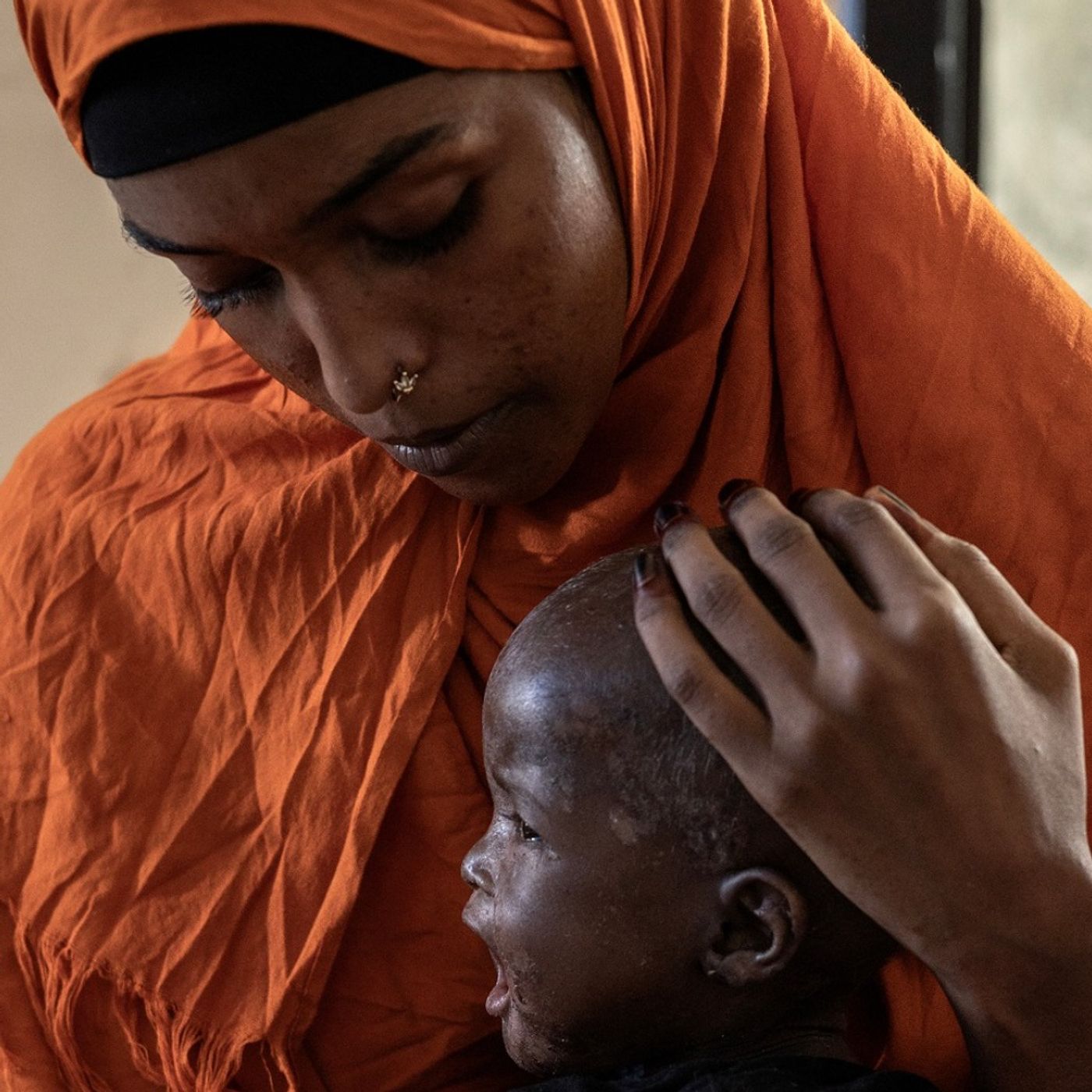
The Daily
The Iran War's Devastating Butterfly Effect
00:26:56
The war in Iran has had some visible consequences, like skyrocketing energy costs and higher gas prices, but the effects of this war are often far less obvious and much more serious for the world’s most vulnerable people. Today, Peter S. Goodman tells us what he learned on a recent trip to Somalia, and why the system of global aid is no longer in a position to help.
Loading summary
Transcript68 lines
- [00:00]
TikTok Narrator
On TikTok, entire communities are turning curiosity into connection. History lovers share stories that bring the past into focus. Scientists and educators break down big ideas with experiments and insights that make discovery feel approachable. And across art, language, and everyday tips, people on TikTok give fresh perspectives on the world we share. TikTok is a place for curiosity where learning is fun, connection is meaningful, and discovery is never stops.
- [00:30]
Rachel Abrams
From the New York Times, I'm Rachel Abrams, and this is the Daily. The war in Iran has had some visible consequences, like skyrocketing energy costs and higher gas prices. But the effects of this war are often far less obvious and much more serious for the world's most vulnerable people. Today, my colleague Peter Goodman tells us about what he learned on a recent trip to Somalia and why the system of global aid is no longer in a position to help. It's Wednesday, june 10th. Peter goodman, welcome back to THE Daily.
- [01:25]
Peter Goodman
Thanks for having me.
- [01:26]
Rachel Abrams
So, Peter, we're now 101 days into the war with Iran, and we have talked a lot on the show about its effect on gas prices. But you cover global supply chains, which means that you've gone all over the world. You've reported on how something gets from point A to point B, and you have focused a lot on all the people who are affected in between. So for that reason, why we wanted to ask you for your take on how the war has disrupted things all over the world in less visible ways.
- [01:55]
Peter Goodman
Well, first of all, the price of energy goes so far beyond putting gas in your car, right? I mean, we've seen cooking fuel get scarce in India, in South America. We've seen the Philippines limit the hours that people can work in office buildings to limit the cost of air conditioning. We've seen helium, which is used by computer chip factories from Thailand, get expensive and hard to secure. The ripple effects of this are almost infinite.
- [02:24]
Rachel Abrams
Reminds me of the butterfly effect. A butterfly flaps its wings in one place and you see a tidal wave at another, right?
- [02:30]
Peter Goodman
I mean, this particular butterfly is coming out of the Strait of Hormuz, which is the conduit for something like one fifth of the world's oil supply and something like a third of major forms of fertilizer, which affects how much food that we can grow. And so the consequences of this particular flapping of wings are especially enormous. In addition to these kind of ripple effects, there are also significant issues of life and death. And that's what I've been focusing on. I've been looking at 60 or so countries that tend to suffer from malnutrition even in the best of times. And every time there's a shock, we have reason to worry. And now we have a big reason to worry because the price of food and fertilizer is going up very quickly in many parts of the world. And we in wealthy countries decided to dismantle large parts of the international humanitarian relief system. This is the safety net that dates all the way back to the end of World War II. And then we in the United States and Israel decided to launch this war.
- [03:40]
Rachel Abrams
The aid cuts that you referred to, the US Aid cuts, of course, refer to usaid. We covered this on the show. That was something that happened very early on in the second Trump administration.
- [03:49]
Peter Goodman
Yes, critically important part of the story, but it's far from the only part. I mean, in addition, major European donors like the United Kingdom, like Germany, have also pulled back. And this is in part because the Trump administration has pressed European allies to spend more money on their own defense or financing NATO, as opposed to, in the Trump view, just relying on the good graces and largesse of the United States. And so in London, in Berlin, major governments have also cut back significantly on overseas aid, and that has contributed to this picture. So let me give you an example. Four years ago, when Russia invaded Ukraine, there were similar fears about a fertilizer crisis and hits to food security because Russia and Ukraine together produce a lot of grain. They also produce a lot of the peace parts for fertilizers. And so from Egypt to Indonesia, there were worries about the price of bread and grains.
- [04:54]
Rachel Abrams
And if the prices did go up because of that war, too, they're not unfounded, right?
- [04:57]
Peter Goodman
Oh, no, these were real effects. In fact, I went to Nigeria back in 2023 to write about the shock to the fertilizer situation. And it was pretty dire. But here's what was different. There was $43 billion in international humanitarian relief led by 17 billion from the United States that got marshaled to take on this crisis and staved off famine in places like sud, Sudan, Ethiopia, Afghanistan and Somalia.
- [05:30]
Rachel Abrams
So when the war in Ukraine shocked the world economy, the humanitarian system more or less worked.
- [05:35]
Peter Goodman
Exactly. And then came the war in Iran. And this time we're in a moment where the politics are completely different and much of the developed, wealthy world is pulling back. And so now we're in a situation where we've got tremendous need for aid, we've got climate crises around the world, and yet we've seen international humanitarian relief drop from 43 billion in 2022 to 28 billion last year. And it's still coming down.
- [06:09]
Rachel Abrams
Do you feel like the U.S. s allies looked at the cuts that the U.S. was making to USAID and thought, okay, well, if the US Is cutting it, we can cut it too? Like, do you think the US Almost gave our NATO allies permission to cut their own humanitarian programs?
- [06:25]
Peter Goodman
Yes and no. I mean, look, the Nordic countries and the European Union as a bloc are still holding the on overseas aid. And yet the political appeal in many countries, and especially this one, the United States, of saying, hey, how about we solve problems at home instead of trying to save starving kids in some faraway place that I'll never visit, that has a lot of political punch. Now, I think it's important to remember that while politically it's sometimes very convenient for people to attack overseas aid and treat it like it's just sort of a discretionary type of charity, the people who designed it and continue to advocate for this system have argued that in addition to the humanitarian aims, it's also been an instrument of foreign policy. It's traditionally been about national security policy. And while it might be tempting to say, well, what do people in some faraway place have to do with the voter in Ohio or New Jersey or wherever, history tells us that when you leave tens of millions of people in a situation where they don't have enough food to eat and they're already difficult, lives become that much more traumatic. That can play out a lot of different ways, but they're not good. First of all, you can end up with the mother of all migration crisis. Now, I'm not here to fear monger about immigration, but if your perspective is you don't want millions of people heading to the Darien Gap in Panama or streaming toward places like Greece and Turkey and on toward northern Europe, well, you got to give a thought to what's gonna happen if you remove all of this aid and then add on an enormous crisis.
- [08:09]
Rachel Abrams
You're describing a bunch of reasons why people risk everything to travel to other countries in search of a better life. Hunger, climate change, desperation. And all of that, as you're describing, is poised to get even worse because of the shocks caused by the Iran war.
- [08:23]
Peter Goodman
Right? People are not gonna sit in their villages and starve. People are going to go to where they can better support their families. And the worse the crisis gets, the more likely that people will be on the move. It's also worth reminding people that, you know, Al Shabaab, which is this Al Qaeda affiliated Islamist militia, is active in the Horn of Africa. And certainly trauma like famine provides recruits. It's Another societal shock.
- [08:57]
Rachel Abrams
Right. There are a lot of reasons why it might be bad for a country to become, for lack of a better term, a failed state.
- [09:04]
Peter Goodman
That's right. What happens when a state sinks into absolute dysfunction? That can play out a lot of different ways. They're generally not good. And it's not tenable for the rest of the world to pretend that it's living in some sort of giant gated community. You know, gated community as national security policy tends not to work very well.
- [09:24]
Rachel Abrams
Right.
- [09:25]
Peter Goodman
So, you know, I was already thinking about places I could go to illustrate the crisis from rising fertilizer prices and malnutrition. And I was talking to aid groups around the world. And then I had a conversation with Mercy Corps, this American aid organization that I had known from traveling with them in Nigeria to write about the fertilizer Crisis back in 2023. And they suggested that I think about going to Somalia, a country that is especially susceptible to climate change drought. My reflexive take on that was that Somalia was not a place on my map of potential places to do reporting because it's traditionally thought of as very difficult, dangerous. But they suggested that it would be possible. And as I saw how dependent Somalia was on not only imported food, but also imported fertilizer coming out of the Strait of Hormuz, I realized that it was the perfect place to see up close this grave test of what one person put it to me as the post aid era. Foreign
- [10:49]
Rachel Abrams
we'll be right back.
- [10:52]
TikTok Narrator
Not all AI is created equal, especially when it comes to shipping. What separates a good tool from a great one? It's what it's built on. Shipstation's AI is powered by over 20 years of real shipping data. Built to optimize, not just execute. ShipStation is an end to end order fulfillment platform for e commerce businesses. Powered by AI. Trained on decades of data from billions of shipments across the world, ShipStation adapts to your unique business, alerting you when stock is low, recommending the best carrier selections and rates, and automating tasks to save you time so you can stay one step ahead. Over 1 million businesses have trusted ShipStation to optimize and scale their shipping. The sooner you switch, the sooner you start saving time and money. Get started with Shipstation today and get 60 days free at shipstation.com with code the Daily that's shipstation.com code the Daily shipstation.com, code the Daily Taxes and fees apply.
- [11:52]
Podcast Sponsor Announcer
This podcast is supported by Only Fantasy On Audible from the earliest days of the Internet, people have shared content online. But then came a platform that promised to put creators in charge of their own destiny. While you've heard of OnlyFans and its creators, OnlyFantasy is here to challenge what you think you know about the platform. In this new investigative podcast, journalist Leon Nayfak teams up with comedian and OnlyFans creator Gracie Kanan for a one of a kind exploration into the current state of human connection. Listen to Only Fantasy wherever you get your podcasts or binge all episodes ad free. Right now only on Audible. Start your Audible subscription in the Audible app or on Apple Podcasts.
- [12:29]
Rachel Abrams
Okay, so, Peter, talk to us about your trip to Somalia. What did you find going on there?
- [12:35]
Peter Goodman
Well, it's important to say right at the top that Somalia was already in a very precarious situation before the war started. There was, you know, as I mentioned before, a severe drought. There'd been several droughts in a row. These had devastated the food supply. You've got armed conflict and then you've got these dramatic cuts to the aid system before this war. So Somalia imports something like 70% of its food and 90% of its. And because so much shipping has been disrupted by the shutdown of the Strait of Hormuz and to a lesser extent, the Red Sea, you've got several weeks of delays getting supplies into ports in the Horn of Africa. And so the price of food and fuel has more than doubled since the war.
- [13:27]
Rachel Abrams
You're describing a series of cascading events that all could lead to these potentially catastrophic results. I wanna go through them one by one. Let's start with the food situation,
- [13:40]
Peter Goodman
right? So in Mogadishu, which is the capital of Somalia, I went to a fish market and there were these guys wielding machetes to hack sharks and tuna into steaks. I talked to a woman who was running a stand there, Fatuma Noor, and she was telling me that wholesale prices have gone up because the fishing boats can't afford to buy as much diesel as they used to, which means they can't go out to the deeper waters where the biggest fish are. They're staying closer to the shore, which is depleting the catch, which is limiting the supply of fish. So she has to pay more, and as a result, she has to charge her customers more. So her sales are down half. And she's actually worried about going bankrupt as a result of this.
- [14:29]
Rachel Abrams
And Somalia, of course, is a country where a lot of people already had trouble affording food, of course. But what about the people who, even before the Iran war could not afford to Go to this market and purchase the sharks that are being cut up. The fish that she is selling, what have they been doing since prices have only gone up?
- [14:46]
Peter Goodman
Yeah, I mean, I talked to I don't even know how many families who said, we don't know where our next meal is coming from. We're lucky if we can feed our children one meal a day. Lots of families are now subsisting on, you know, sorghum porridge with weeds that they're finding by riverbanks and the drought is even eliminating that. This is the drought that existed before. But what struck me was how unicef, for one example, they're trucking water to drought afflicted areas and they were already dealing with budget cuts. Well, now the price of diesel goes up, so the price of trucking that water is much more expensive. So now they're trucking less water. Well, now that they're trucking less water, there are more people in need who can no longer stay in the places that used to be relying upon that water. They have to go move somewhere in search of aid in the places like the ones I visited in camps along the Ethiopian border.
- [15:42]
Rachel Abrams
So what did you see when you visited those camps and what did the people there tell you?
- [15:49]
Peter Goodman
Yeah, well, this was gutting. On my first day in the town of Dolo on the Ethiopian border, the sort of place where traditionally large international relief groups, World Food Program, unicef, have clustered. I met a family that had left a rural area where the drought had been particularly severe. It had killed their 50 head of cattle. That's their life savings. Once that's gone, they've got nothing. Meanwhile, the rivers have dried up. They can't grow any food. So they walked for nine days carrying their three year old daughter on their backs. And they get there to Dolo, and they discover that all of these international relief groups, almost all of them, have abandoned the area. There's no help.
- [16:39]
Rachel Abrams
Did they tell you how it felt to arrive only to find out that this was just an aid camp with no aid?
- [16:45]
Peter Goodman
I mean, they were in disbelief. And they understood, like most of the people in these camps, they can't go back. They set up a tent alongside hundreds of others with some plastic sheeting that gets donated by some other people in the camp. They find some sticks and they set up the shelter and they're just waiting and hoping that some aid will return.
- [17:09]
Rachel Abrams
What you are describing is a mass starvation crisis in the making. If not already here. Can you talk a little bit about what treatment is available for people who do not have enough food? For these children who do not have enough food. And has that changed also as a result of the war?
- [17:24]
Peter Goodman
Yeah, that's changed dramatically. I think maybe the most harrowing thing I saw, I was taken to a UNICEF ward of a hospital in Mogadishu where the most severe malnourishment cases are taken. This hospital has seen a doubling of cases in the last few months. This is since the disruptions of the war. I saw babies needing feeding tubes and oxygen to be kept alive. Is this okay? And I talked through a translator with a mother who was sitting next to her 18 month old baby boy, leaning up alongside her. So she said the river dried up so they cannot captivate, so they lost their crops. So they got hungry. And her son began vomiting. Yeah, they have to give us injections. And when her infant son couldn't hold down any food, she had to beg to get $24 to get her child to the city in a place where farm laborers are making a dollar a day. And he was actually a quote, unquote, positive outcome. Oh, that's it. Another three or four days. He was about to be discharged. Okay, great. Thank you. Thank you so much. But here was the part of this that was, was most striking to me. The doctors there told me a third of these cases they think could have been avoided had these kids been assessed and treated earlier. Now UNICEF has been forced to close 205 health and nutrition centers throughout Somalia. If those centers were still there, then a lot of these kids ending up in the hospital needing oxygen to breathe and feeding tubes to stay alive would be treated and assessed earlier. But that capacity has been dismantled.
- [19:32]
Rachel Abrams
Peter, you mentioned that Somalia was already facing a cascading series of crises even before the Iran war.
- [19:38]
Peter Goodman
Right.
- [19:39]
Rachel Abrams
Do we have any way to quantify how much worse the humanitarian crisis has gotten?
- [19:44]
Peter Goodman
Well, let me put it to you this way. In February, so this is before the impacts of the Iran war. The UN Food and Agriculture Organization warns that there are six and a half million people in Somalia. That's about a third of the population that are suffering hunger at levels that are deemed an emergency. And early last year, the World Food Program, which is the largest source of food aid in the country, has funds to serve as many as 2 million people a month. Well, when I was there, this is late April, early May, they were down to funds that were adequate to serve 300,000 people a month. And that was gonna run out at the end of June.
- [20:31]
Rachel Abrams
So from 2 million to 300,000amonth and no more come July.
- [20:35]
Peter Goodman
Correct. And I actually Got a snapshot of this aid running out in real time in Somalia. So I went to visit a World Food Program warehouse. So this was. This is two months supply?
- [20:50]
Josephine Mouly
Yeah, two months supply.
- [20:52]
Peter Goodman
This is a place that felt like a fortress. You know, high walls topped by barbed
- [20:57]
Josephine Mouly
wire, supplying the region basically with food.
- [21:00]
Peter Goodman
And I walked through that facility with the director, Josephine Mouly. Josephine, so when you first started here two years ago, how many of these tents were full?
- [21:12]
Josephine Mouly
Basically, we used to have full capacity.
- [21:16]
Peter Goodman
She showed me these 13A frame tents that normally would be full of food aid. And 12 of these 13 tents were empty. So we're in the one tent that actually does have some supplies. And it's. We went inside this one tent that was full and there were these brown cartons, cardboard boxes stamped with the USAID logo and American flags says Made in usa. They were full of plumpy nut, which is this peanut rich nutrient paste that's fed to malnourished children and pregnant and breastfeeding moms. And this was the last of it. There was nothing else in the pipeline up to June.
- [22:02]
Josephine Mouly
June, July.
- [22:03]
Peter Goodman
Right.
- [22:03]
Josephine Mouly
If we don't get any funding, we'll be dry Completely. Completely. We can't respond.
- [22:08]
Peter Goodman
And I asked the director quite bluntly, and then what happens to the population? What are you gonna do?
- [22:14]
Josephine Mouly
I would ask you the same question. What happens when you don't have anything to give? What do you give and get desperate and see people?
- [22:22]
Peter Goodman
It really brought home for me that these aid workers are now in a position where they're having to contemplate this surreal hierarchy of suffering where, you know, as one World Food Program official put it to me, we're deciding who lives today and who dies in two weeks.
- [22:41]
Rachel Abrams
Peter, how representative is what you saw in Somalia of the downstream effects of this war in the other countries that you have been focused on?
- [22:51]
Peter Goodman
Well, look, Somalia goes into this crisis especially vulnerable, but it is very much representative in that the trajectory is the same. So in Sudan, which is widely considered the world's most dire humanitarian crisis at the moment, where you already have parts of the country in officially declared famine. Well, now in Port Sudan, the primary gateway for food aid in Sudan, you have stuff coming in weeks later. And then the head of UNICEF for Sudan told me, it's difficult to get that stuff trucked to places that are stricken by famine because not only is the price of diesel so expensive, but the trucking companies are unwilling to take the risk of bringing their trucks into the hinterland because there are actual physical shortages of diesel fuel.
- [23:43]
Rachel Abrams
They're Worried they're going to get stuck there.
- [23:44]
Peter Goodman
They're worried they're going to get stuck there. So I just came back from Ivory coast, which is one of the fastest growing economies on on Earth. This is in West Africa. And there you have cocoa farmers who have already been suffering from dramatically reduced prices for their crops. Now they're looking at increased prices for fertilizer, which means lower yields, lower livelihoods, and on it goes.
- [24:10]
Rachel Abrams
Peter one of the things that we have talked about on this show a lot since the war began was that even if it ended tomorrow, even if the Strait of Hormuz opened tomorrow, enough damage has been done to energy infrastructure in the Persian Gulf that the disruptions to energy supplies could go on for years. And I wonder whether you foresee that same kind of more lasting disruption in the countries that we've talked about today.
- [24:37]
Peter Goodman
Look, a lot of what we're talking about here will change people's lives forever. Now, will some of it return to normal when the Strait reopens? Maybe some of it, sure. Fuel prices presumably will go back down. Fertilizer will be more available, and food prices could come back down. And that could have a lot of benefit. But you have to look at things a little more expansively than that. I mean, again, again, think about the butterfly effect, all of the ripple effects that can't be undone in a few weeks or maybe even years. I mean, I went to a training program in Dolo in Somalia that used to be funded by usaid. It trained people to be seamstresses. And when I was there, they had no threat. They didn't have chemicals for their sewing machines, and enrollment had crashed. Now, this is not the most acutely needed sort of program, if you're thinking about feeding people tomorrow, but it's vital in terms of building up some upward mobility. Think about that times a million. You know, Rachel, I've been doing this sort of work a long time. I spent a lot of time in conflict zones and disasters. You know, 2004, I was in Thailand the day of the tsunami. I went to Indonesia, and I saw and heard stories that will haunt me forever. I saw 200 bodies in Thailand set up at this makeshift morgue lying out in the sun. I heard parents recounting how their children had been yanked out of their arms by this wave. I mean, I don't really like the sort of Olympics of suffering. And yet what I saw in Somalia was enraging as well as gutting, because what happened in the Indian Ocean tsunami was, as they say, an act of God. And What I was seeing in Somalia was the product of a series of political decisions. It was made by human beings. You have hundreds of millions of people who, by dint of climate change cuts to the aid system. The impacts of the war are now in these sort of purgatory situations. And we're still at the beginning stages of it. There's a long way down to go from here.
- [27:08]
Rachel Abrams
Peter Goodman, thank you so much.
- [27:09]
Peter Goodman
Thank you so much, Rachel.
- [27:15]
Rachel Abrams
We'll be right back.
- [27:22]
AT&T/iPhone Advertiser
Summer it's when we share more time, more memories and more photos. And at AT&T, the iPhone 17 Pro is your summer essential. Its center stage front camera auto adjusts the frame to fit everyone into group selfies. You don't even have to turn your phone. And ATT makes sharing those pics with everyone easy. Right now at at&t ask how you can get iPhone 17 Pro and them with eligible trade in requires. Eligible plan terms and restrictions apply subject to change. Visit att.comiphone or visit an ATT store for
- [27:53]
Podcast Sponsor Announcer
this podcast is supported by USA for unhcr. A dire new report from the UN Refugee Agency. As the numbers of people fleeing war escalate, funding shortages have left them without the basics to survive. The impact is devastating. Families who've lost everything now struggle in overcrowded camps without food, water or shelter. Your gift can rush clean water, hygiene kits and shelter materials within 72 hours of an emergency. Donate@unrefugees.org the Daily your gut isn't just about digestion.
- [28:25]
AT&T/iPhone Advertiser
It's the command center of your whole body. New Ollie Precise probiotics are made with clinically studied strains to provide targeted benefits beyond digestive health. By supporting your metabolism, skin health or stress response, start giving your body what it needs. Shop precise probiotics with skin, stress or metabolism support at your nearest Walmart. These statements have not been evaluated by the Food and Drug Administration. This product is not intended to diagnose, treat, cure or prevent any disease.
- [28:53]
Rachel Abrams
Here's what else you need to know today. On Tuesday, President Trump claimed that Iran had shot down a US Helicopter over the Strait of Hormuz, and he said the United States was obligated to retaliate. The downing of the American helicopter, apparently by an Iranian drone, is the latest challenge to a fragile ceasefire and delicate peace talks between the United States, United States and Iran. And meanwhile, in Lebanon, Israeli forces launched a series of attacks on Tuesday that killed at least eight people, even as Iran warned that such attacks would trigger a wave of retaliatory attacks against Israel. Today's episode was produced by Adrian Hurst, Rochelle Banja and Claire Tennis Guetter, with help from Diana Wynn. It was edited by Chris Haxel and Michael Benoit, with help from Liz o', Ballin, and contains music by Dan Powell and Leah Shaw Demeron. Our theme music is by Wonderly. This episode was engineered by Chris Wood. That's it for the day Daily. I'm Rachel Abrams. See you tomorrow.
- [30:17]
Podcast Sponsor Announcer
This podcast is supported by USA for unhcr. A dire new report from the UN Refugee Agency. As the numbers of people fleeing war escalate, funding shortages have left them without the basics to survive. The impact is devastating. Families who've lost everything now struggle in overcrowded camps. Camps without food, water or shelter. Your gift can rush clean water, hygiene kits and shelter materials within 72 hours of an emergency. Donate@unrefugees.org the Daily.