← The Daily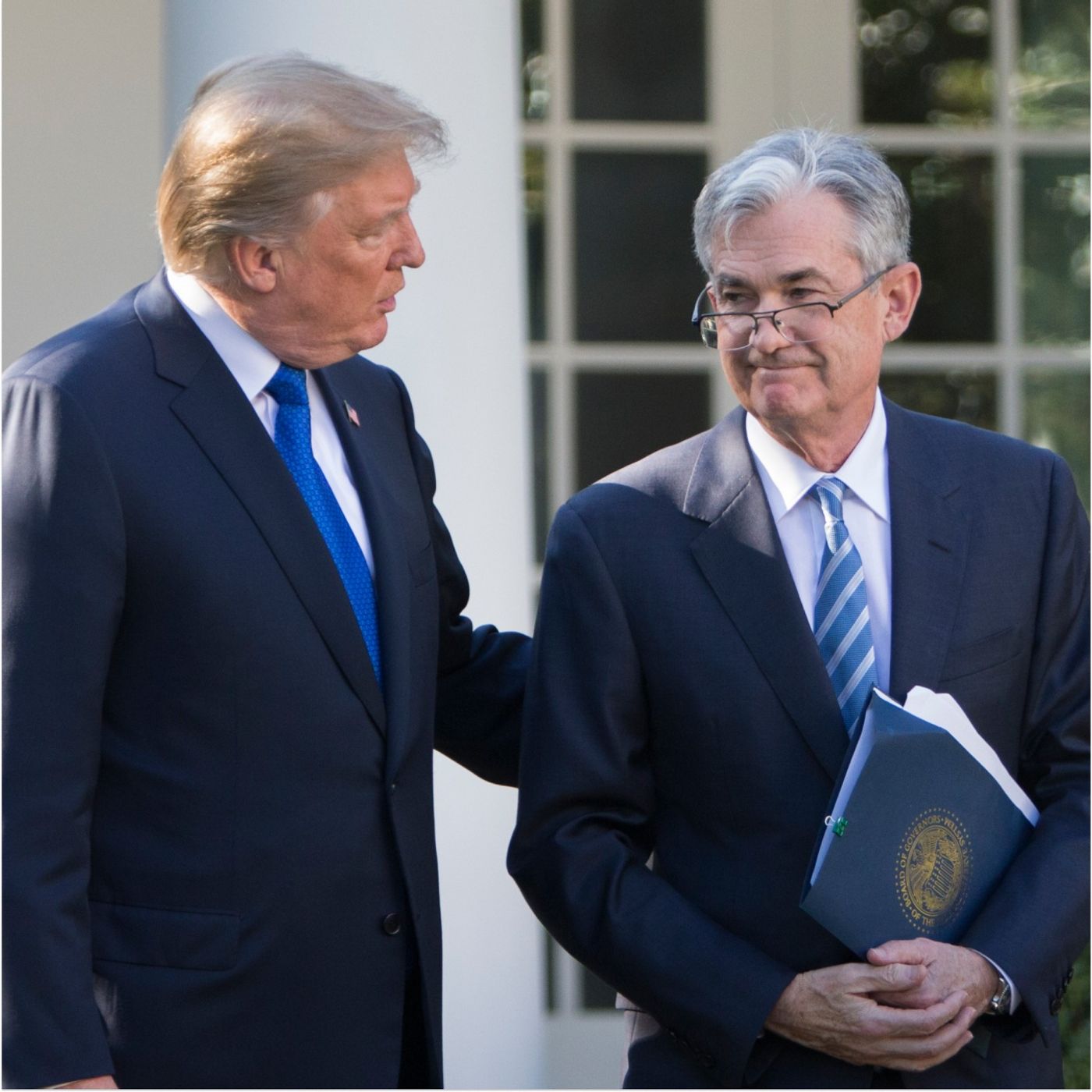
The Daily
The Most Toxic Relationship in Washington
00:30:40
During an Oval Office meeting with congressional Republicans a few days ago, President Trump showed off the draft of a letter to fire Jerome H. Powell, the chair of the Federal Reserve. It’s the latest chapter in a dysfunctional relationship that has major implications for the global economy.
Loading summary
Transcript108 lines
- [00:01]
Michael Balbaro
From the New York Times, I'm Michael Balbaro. This is the Daily. During an Oval Office meeting with congressional.
- [00:14]
Colby Smith
Republicans a few days ago, it didn't.
- [00:17]
Michael Balbaro
Take President Trump long to turn to his favorite subject, his hatred for the Chairman of the Federal Reserve, Jay Powell. In fact, during the meeting, Trump proudly showed off the draft of a letter that would fire Powell for good. It's the latest chapter in a dysfunctional relationship that has major implications, not just for the American economy, but for the global economy. Today, I speak with my colleague Colby Smith about what's really at the heart of Washington's ugliest drama, Trump versus Powell. It's Thursday, July 17th. Colby, nice to have you.
- [01:09]
Jay Powell
Thanks for having me.
- [01:11]
Colby Smith
So this is an episode about some pretty heavy duty topics. Monetary policy, interest rates, tariffs. But really, at its core, it. It's an episode about a toxic personal relationship between the President of the United States and the country's most powerful economic official. So tell us that story of how this relationship has become so toxic.
- [01:35]
Jay Powell
So it's a complicated relationship, to say the absolute least. As you mentioned, these are two of the most powerful policymakers in the entire world, and their decisions have massive economic ramifications for the global economy, the global financial system. And at the heart of the matter, you have President Trump, who has been able to unveil all the different aspects of his economic agenda that he's campaigned on. He's been successful in pushing tariffs through. He's been successful in pushing these tax cuts through. He's been successful in cracking down on immigration.
- [02:06]
Colby Smith
That's why we say this is Trump's economy.
- [02:08]
Jay Powell
Absolutely.
- [02:08]
Colby Smith
He's made it his own.
- [02:09]
Jay Powell
He owns it through and through. And in this one area that has massive economic, political and financial ramifications, he does not have control over that. And that is the Fed's interest rate. He sees this as this blockade that is making it difficult for him to achieve what he set out to achieve on the campaign trail. And for him, the chair of the Federal Reserve, Jay Powell, he is his enemy in this process.
- [02:39]
Donald Trump
Very average mentally person. He's an average mentally person.
- [02:42]
Jay Powell
We've had nonstop name calling, but we.
- [02:45]
Donald Trump
Have a guy that's just a stubborn mule.
- [02:47]
Jay Powell
He's referred to Chair Powell as a major loser, a numbskull.
- [02:52]
Donald Trump
It doesn't help. He's like a knucklehead. No, he's a knucklehead.
- [02:56]
Jay Powell
Knucklehead, yeah, Knucklehead.
- [02:58]
Donald Trump
Now, we have a man that just refuses to lower the Fed rate, just refuses to do it. And he's not A smart person. I don't even think he's that political. I think he hates me, but that's okay. You know, he should. He should. I call him every name in the book, trying to get him to do something. I've been nice to him.
- [03:13]
Jay Powell
We're not seeing President Trump talk about the Fed as being a steward of the economy and, you know, someone keeping the economy on track, but rather it's in opposition to the president. So this really reached a climax on Tuesday night. So President Trump, he's sitting in the Oval Office with House Republicans. They're not meeting to talk about Powell, and yet, you know, this is Trump's favorite topic. And it comes up and he starts bashing the Fed chair. And he's asking around, you know, saying, should I fire him, should I not?
- [03:44]
Colby Smith
He's polling these House Republicans. Should I fire the Fed chair?
- [03:47]
Jay Powell
Right. And in all of these exchanges, he whips out this draft letter that he has, actually firing Powell. Wow. Now, this is not something that he is sent. He's not even saying that he is going to send it, but the fact of the matter is that he clearly has it at the ready. And that's a real escalation in his threats against the chair. And I think, just for context, it's important to note that throughout history, presidents have always bashed on their Fed chairs. They're a very useful scapegoat in that sense because they do operate independently from the White House. But I think the relentlessness of his attacks has really stood out.
- [04:23]
Colby Smith
And we should just say the reason why the president, why any president wants control of the interest rate is because the interest rate is this accelerant or decelerant of economic activity. And just to be really wonky about it, the Fed can raise interest rates when it's worried about inflation, higher prices, because that will slow the economy down and help bring prices down. Or the Fed can lower rates when it's worried about a recession, because that's a way to stimulate economic activity. The interest rate, in short, is this very unique tool, weapon, whatever you want to call it, and if you're the most powerful person in the world, you'd want that.
- [05:05]
Jay Powell
Exactly. The Fed pulls up on a lever, or it pulls down on that lever, and that has a widespread impact on how people spend throughout the economy, whether businesses decide to invest more, whether they decide to pull back, whether they hire or they fire workers. So that's why President Trump wants it so badly. But that's also why the Fed is acting so cautiously here, because they know if they make the wrong move, they could potentially be guiding the economy in the wrong direction.
- [05:33]
Colby Smith
So, Colby, how exactly did this relationship become so testy? Name, Callie. At times ugly, and I guess we should say one sidedly ugly. It's not like Chairman Powell is calling Trump names. And I asked that question because Trump appointed Jay Powell to the job of running the Federal Reserve. So at one point, he clearly liked him enough to give him the job. So what is the story of how we got from there to here?
- [06:02]
Jay Powell
So their relationship stretches back to November 2017. That's when Trump nominates Powell to be the next Fed Chair. And in doing so, he broke with tradition, actually, because most presidents, they end up keeping on their predecessor's Fed chair. And that's something he decided not to. So that was Janet Yellen. It was Janet Yellen who was appointed by President Obama, and so she served only one term.
- [06:23]
Colby Smith
And what exactly does Trump like about Powell?
- [06:27]
Jay Powell
He's a Republican, he is wealthy, and he is seen as a pragmatist and a centrist. And so he fit the bill in a lot of ways. For the president, as president, there are.
- [06:37]
Donald Trump
Few decisions more important than nominating leaders of integrity and good judgment to hold trusted positions.
- [06:44]
Jay Powell
And I always think back to the announcement in the Rose Garden.
- [06:47]
Donald Trump
And few of those trusted positions are more important than the Chairman of the Federal Reserve.
- [06:54]
Jay Powell
When President Trump announces that he's picking Powell to be his chair, I am.
- [06:59]
Donald Trump
Confident that Jay has the wisdom and leadership to guide our economy through any challenges that our great economy may face.
- [07:09]
Jay Powell
And he has all these nice things to say about him. He calls him smart, he says he's committed, he says he's strong and would be this wise steward of the Fed.
- [07:17]
Janet Yellen
Thank you very much, Mr. President, for the.
- [07:20]
Jay Powell
And you know, in accepting the nomination chair, Powell talks about the objectivity he's going to bring to the role.
- [07:26]
Janet Yellen
And I'm committed to making decisions with objectivity based on the best available evidence in the longstanding tradition of monetary policy independence. Mr. President, thank you again for this extraordinary opportunity to serve the American people. Thank you.
- [07:40]
Jay Powell
And you really get a sense that he understands the position that he's about to step into here.
- [07:46]
Colby Smith
And we as omniscient storytellers, can tell that the seeds of a future conflict have been laid. Independence on the one hand, and strong person that I want in the job for me on the other.
- [07:57]
Jay Powell
Exactly. We have our main characters, and I think the timing of this is really important because Powell takes over in February 2018. This is right around the time that Trump embarks on his first trade war where he's putting tariffs on Chinese imports and the Fed is raising interest rates. But tensions don't really start boiling over, over until July, when President Trump starts to be more vocal about his misgivings about what the Fed is doing.
- [08:26]
Colby Smith
What is he saying?
- [08:29]
Donald Trump
I put a very good man in the Fed. I don't necessarily agree with it because he's raising interest rates. I'm not saying that I agree with it.
- [08:37]
Jay Powell
So he's starting out relatively benign.
- [08:38]
Donald Trump
I'm not thrilled because, you know, we go up, and every time you go up, they want to raise rates again. And I don't really. I am not happy about it, but at the same time, I'm letting them do what they feel is best.
- [08:50]
Jay Powell
He's saying, you know, I'm not really thrilled with what they're doing here. I don't really think they should be raising interest rates. But he doesn't do anything or say anything that seems like he's, like, coming after their independence in any way, shape, or form. You know, the attacks really start to escalate as we get into the fall.
- [09:05]
Donald Trump
I think the Fed is out of control. I think what they're doing is wrong.
- [09:09]
Jay Powell
He says the Fed has gone crazy. They're out of control with these interest rate increases.
- [09:13]
Donald Trump
No, no. My biggest threat is the Fed, because the Fed is raising rates too fast.
- [09:19]
Jay Powell
And things start to really take a turn in December when he was asking around whether he has the legal authority to fire the chair. And these conversations end up becoming public. And it leads Steven Mnuchin, the Treasury Secretary at the time, to have to go out there and assure financial markets in the world that the President isn't about to get rid of his Fed chair. You know, he says something along the lines of, the President isn't happy with what Powell's doing here, but he kind of understands that he's sticking around.
- [09:48]
Colby Smith
I mean, just to step back and try to understand what's really happening here between Trump and Powell. Clearly, there's not just a divergence about whether the interest rate should be raised or cut in this moment, that's clear enough. There seems to be a divergence over the role of the Fed and who should control it.
- [10:11]
Jay Powell
Right? Absolutely. I think Trump sees the Fed as an institution that can act at his behest, that can help him fulfill his economic and political ambitions. For the Fed, what they're trying to do is steer the economy in the right direction, and they're doing so without the influence of the White House.
- [10:28]
Colby Smith
Right. There is this inherent Tension. The Fed is trying to manage the long term health of the economy. The President, for obvious reasons, wants a strong economy during his or her tenure. And what's good politically for the president in the short term, in many cases, low interest rates isn't necessarily good for the economy in the long term. If you are the Fed.
- [10:54]
Jay Powell
That's right. And I think it's important here to unpack how the Fed goes about making its decisions, because it's not up to one person. It's a consensus driven organization. So there is a committee of 12 officials. They vote on policy at any given moment. So they need to be so certain that this is the right thing for the economy in order to get there. And this isn't something that is just like flicking a switch like President Trump has kind of talked about.
- [11:19]
Colby Smith
Right. It's a carefully and slowly considered process that it sounds like everyone at the Fed sees as deeply independent of politics.
- [11:28]
Jay Powell
Exactly. It's very deliberate. And the idea here is that a central bank that's independent is going to put the economy on the best footing possible because they're not worried about the whims of a political party. They're not worried about an election cycle. They are chiefly focused on making sure they're prioritizing that inflation is staying low and stable and the labor market is healthy. And those two goals are what gives people confidence that the economy is in good hands.
- [11:57]
Michael Balbaro
So how does that tension continue to.
- [11:58]
Colby Smith
Play out in Trump's first term?
- [12:00]
Jay Powell
So I think everything gets overshadowed at some point by the pandemic. Basically, the entire world shuts down. The economy is in free fall. Financial markets are seizing up. At that point, tension between these two individuals somewhat evaporates because we're in a crisis fighting mode. So the Fed knows exactly what to do in a crisis situation like this. They cut interest rates to zero. They're wading into financial markets. They're buying unlimited government bonds. They're doing everything in their power in order to stabilize the situation. And the Trump administration pushed through two big stimulus packages to prop up the economy. And then Biden came into the office and did another big package as well to shore up growth. And this is when Powell makes this big miscalculation that he even concedes is an error on his end. It happens in when Biden is in office. And this mistake ends up haunting the Fed and eventually influencing his relationship with Trump.
- [12:53]
Colby Smith
Now, well, just explain that.
- [12:55]
Jay Powell
You know, supply chains are all gummed up. There's shortages in goods everywhere at exactly the moment that all this money is coming into the system. And that just helped to bid up prices over time. So as the situation starts unfolding, Powell is faced with this big question. Is the inflation that started to show through, is that temporary or is that persistent?
- [13:16]
Janet Yellen
Inflation at these levels is, of course, a cause for concern.
- [13:20]
Jay Powell
Powell ends up putting his stake in the ground on inflation in August of 2021.
- [13:25]
Janet Yellen
But that concern is tempered by a number of factors that suggest that these elevated readings are likely to prove temporary.
- [13:32]
Jay Powell
He makes this big speech in front of global policymakers and the world, frankly, where he says, disinflation is temporary. We're going to keep interest rates low in this environment. And that ends up being the wrong call because what ends up happening is that inflation really starts to re, accelerate from that point on. And the Fed, because it's slow, slow to kind of catch on to the extent of the problem, inflation ends up spiraling as high as 9% in the summer of 2022. So eventually, you know, after a series of historic interest rate increases, the Fed does get a handle on inflation. But I think the long term lesson here for the Fed and for Chair Powell in particular is not to be complacent about it, because if they misread the inflation situation, they let things get out of hand, then they're going to be potentially facing down a much worse problem later down the line.
- [14:25]
Colby Smith
And just to be very clear, for Powell, the lesson is do not for a second take your eye off inflation. And the minute you see inflation, slay the inflation dragon.
- [14:34]
Jay Powell
That's the lesson from this whole period. And it's something that we see the Fed and Chair Powell bring up time and again in Trump's second term in the White House. And that lesson makes an already bad relationship even worse.
- [14:51]
Michael Balbaro
We'll be right back.
- [14:57]
Colby Smith
So Colby, talk about how this already not good relationship in term one further devolves in term two, and how this lesson that Jay Powell has observed somehow fits into it.
- [15:08]
Jay Powell
So it starts to devolve even before President Trump is back in the White House. So on the campaign trail, he is attacking the, the chair for lowering interest rates, which they started to do in September, just a couple months before the election.
- [15:21]
Colby Smith
And why are they lowering interest rates?
- [15:23]
Jay Powell
So they're doing this because they wanted to support the economy at this time. Inflation had receded from some of those, like post pandemic peak, and the labor market was starting to cool off. And this was the big first rate reduction that we had seen in the kind of post pandemic period.
- [15:38]
Colby Smith
Okay.
- [15:39]
Jay Powell
And in Trump's eyes, this was entirely political. They were doing this to kind of tip the scales towards Kamala Harris's campaign to juice the economy, basically before all the voters descended to the voting booth, got.
- [15:51]
Colby Smith
So in Trump's mind, if the interest rate is being cut when he is a candidate for president and Biden is the incumbent and Harris is running, then it's being done in some ways to screw with him.
- [16:02]
Jay Powell
And also, it was like the magnitude that I think pissed him off even more. Typically, the Fed moves in these, like, quarter point increments, and they ended up moving much faster than that for the first cut. And then the Fed ended up cutting interest rates again in November. They cut interest rates in December. And then Trump did comes back to the White House, and then the Fed presses pause on all of it. They say, we're gonna wait and see. And we need to take stock of what President Trump has planned for this economy.
- [16:27]
Colby Smith
Right. Because Trump has a lot planned for the economy in the second term once he gets in. He is issuing executive orders on immigration. He is levying tariffs on countries across the world. Doge is cutting tens of thousands of federal jobs. The things Trump campaigned on, he's now doing. I'm hearing you say that the Fed looking at all of this is saying, that's a lot. We need to see how it filters through the economy before we can make any educated decision about the interest rate.
- [16:58]
Jay Powell
Right. Tariffs, for instance. The thinking there is that it's gonna raise inflation at the same time that it slows down growth. The immigration crackdown, that's gonna shrink the labor force. And it also could mean higher inflation as well. You also have tax cuts layered on top of that, and deregulation. So there's a lot of moving parts. And the Fed, they move slowly. It takes a lot of time to, like, gain consensus amongst all the various officials to get to the right point and know which direction to go in terms of interest rates. And they don't want to rush. And their argument here is that the economy is on solid enough footing that there's no urgency here. Meanwhile, Trump is like, we got to cut interest rates now. I want lower borrowing costs. It's going to be better for my economic agenda.
- [17:39]
Colby Smith
Deja vu.
- [17:40]
Jay Powell
Exactly. Deja vu.
- [17:41]
Colby Smith
And what's still very much at the heart of this perhaps irretrievably dysfunctional relationship is Trump wants Jay Powell to lower interest rates. Powell isn't giving into Trump's demands. He's keeping them exactly where they are. But I wonder, just based purely on the economic situation we're in now, Whether Trump has any point here that may make him right, even if it might seem to Powell like his motivations are wrong.
- [18:14]
Jay Powell
So, I mean, he's right in the sense that inflation has come down over time, that we are in a situation in which, compared to where we were a couple years ago, price pressures are a lot more muted and the economy is looking okay. And in an environment like that, it makes total sense that the Fed would be cutting interest rates from these relatively elevated levels and providing some support. But the problem is, is that the policies that he has laid out are inflationary. That's at least what economists and policymakers think is the case. And when you have a situation where you think inflation is coming down the pipe, you're not going to lower interest rates now if you eventually have to reverse course later because consumer prices start rising again in a significant way.
- [19:00]
Colby Smith
And specifically, when we say that Trump's policies are inflationary, I'm assuming we mean his tariffs in particular.
- [19:06]
Jay Powell
It's tariffs in particular, but I also think it's immigration restrictions. When you cut back the supply of labor in the economy, that means fewer workers. That could potentially mean companies have to provide higher wages to get people in the door again. So there are reasons to think that inflation has not been vanquished entirely here.
- [19:27]
Colby Smith
And as we know, that is the very thing Jay Powell is most anxious about not having done. Vanquishing inflation.
- [19:35]
Jay Powell
That's the lesson that is being internalized here at the Fed, and it's what's fueling this debate that's ongoing amongst officials at the current moment. So Jay Powell isn't alone in wanting to be patient in terms of cutting interest rates. There's a large group of policymakers that are also kind of in his corner. But other officials have taken a different view that are slightly more aligned with what the Trump administration is at here. So what the heart of the debate comes down to is how to view inflation caused by tariffs. We go back to the same kind of question that we grappled with after the pandemic. Is this inflation temporary or is it persistent? Now, the thinking here amongst this cohort of officials is that tariffs are actually going to lead to only a temporary burst in inflation. So the case that this is temporary rests on this assumption that these price pressures are going to come through, but they're not going to feed on themselves. So back during the post pandemic period, what we ended up up seeing was that these price pressures broadened out. So it wasn't just in the supply chain disrupted sectors. It spread well beyond that into services, into to areas that were not directly impacted by the pandemic. And the thinking of this group of officials is that it's going to stay pretty contained. And that means that over time, it's not going to lead to inflation, you know, getting out of control again. Now, that's really, I think, where the Trump administration is at in terms of what is going to happen to inflation over time. But what is preventing the bulk of the Fed from moving in that same direction is the fact that they don't want to make the same mistake again twice. They want more data, they want to take a little bit more time, they want to have more certainty than otherwise would be the case had they not just made this error a couple of years ago.
- [21:22]
Colby Smith
Right. And we should say you and I are talking about after the government just released data, monthly inflation data that showed that prices rose 2.7% in May compared with May a year ago, which is to say that if you're at the Fed and you're in the Jay Powell camp of wait and see, you've just seen data that suggests that prices are continuing to rise and your instinct is probably not to defer to the Trump camp that says cut interest rates, roll the dice, hope it's temporary. Your fear is that it's not temporary. And your evidence in part is this new data.
- [22:04]
Jay Powell
Right. And the data showed clear evidence that tariffs are starting to impact consumer prices. And I think what's worrisome about this is that this is like the early stages of this. So the expectation for economists and policymakers is that as the summer kind of continues, this is just only going to kind of intensify as we new data. And so that puts the Fed in a really uncomfortable position. How is it going to justify cutting interest rates when price pressures are moving away from their stated goal and the economy is still kind of doing okay? It doesn't seem like the rationale is really there just yet. And so I think that's why we can broadly expect them to see them extend this whole wait and see approach, at least for the next couple of months.
- [22:50]
Colby Smith
Which of course explains why the President is now so evidently furious at Powell, so much so that he waives that draft letter saying, you're fired in the Oval Office. We should be careful and say he hasn't sent that letter. It's therefore not official. But that raises the question, can Trump fire Jay Powell?
- [23:13]
Jay Powell
So the President can't outright fire a Fed chair. The rules stipulate that, like, once they're in that position and say confirmed by the Senate. They're relatively protected here. And the only mechanism that the President has, which was just recently re established by the Supreme Court earlier this year, is that the President has to find cause in order to get rid of a Fed official.
- [23:32]
Colby Smith
Right. You can't just fire him because you disagree with him. You have to fire him because he took a bribe.
- [23:35]
Jay Powell
Right. It can't be about a rate decision. It has to be like severe misconduct or, you know, some kind of dereliction of duty. And that really raises the bar for Trump to find something in order to get Powell removed. One of the avenues that we have seen most recently is Republicans going after the Fed chair from renovations taking place at the central bank's headquarters down in D.C. these are very costly. They've attracted a lot of attention at a time when there are cuts across the government. And recently there was an allegation that Chair Powell had lied to Congress about the extent of the plans. And when legal experts kind of have pieced through these accusations, they have been concerned that this is one of the ways in which the Trump administration is trying to build the case for cause. Now, that's a really hard argument to build. And I don't think a lot of people think it's going to be successful.
- [24:30]
Colby Smith
So what are the other options?
- [24:31]
Jay Powell
So the other options that the President has toyed with is naming Powell's successor early. So Powell's term ends in May of 2026. And so the idea here is that by naming someone early and having them come out and talk about a very divergent, you know, path for interest rates or to put forward a very different view on the economy that more align with President Trump's, that that's a way for them to discredit Powell and put more attention on whoever's going to be taking the reins in a couple of weeks.
- [25:02]
Michael Balbaro
Right.
- [25:03]
Colby Smith
It would kind of like. It would kind of be like having two popes. You'd almost have, in theory, two Fed chairs, one official, one kind of shadow.
- [25:09]
Jay Powell
And that is a recipe for disaster in terms of communication for the Fed, because what they rely on is that financial markets have an understanding of where they're going with interest rates and policy, and that is what makes their policy setting effective. So if you have the same institution essentially speaking in completely divergent ways, that could lead to a really bad outcome where people don't know who to listen to.
- [25:34]
Colby Smith
And so in a world where Trump does not get what he wants for the next many months, let's even for the sake of argument, say he may not get A rate cut before Jay Powell's term is up next May. Suddenly the President has the opportunity to put in place a replacement for Jay Powell. And I think we can presume it's going to be someone who agrees with the President that that, generally speaking, interest rates should be cut. What is it gonna look like for us to have a Fed chairperson who may be in the mold of the rest of Trump's appointees to various government agencies who see their role as fulfilling his vision? That's not what Jay Powell thought. If we suddenly have a Fed chair who says, I wake up in the morning and my job is to see the economy as Trump sees it, what does that mean for us all? What does that mean for the US.
- [26:27]
Michael Balbaro
Economy and maybe even the global economy?
- [26:29]
Colby Smith
It's a big change.
- [26:30]
Jay Powell
I mean, I think it's a really worrying development and it's something that people already grappling with today. This idea that this institution might not be this, like, beacon of credibility that it has always been. If you have someone leading the Fed who is being influenced by the White House, that really changes your perception about the decisions that that person is trying to usher through. And one investor I spoke to was like, I don't even know who the next Fed chair is and I already don't trust him. And that's such a huge issue for whoever is in the role, because the role is based upon having the support of financial markets and being seen as a credible individual guiding the economy in the right direction.
- [27:15]
Colby Smith
What that investor was basically telling you is that what Trump has done in bludgeoning Jay Powell, the way he has over these now many years, is made it impossible for people to see his next choice as someone who can operate independently.
- [27:32]
Jay Powell
And the stakes could not be higher. You could easily see a situation where we have higher inflation, a worse economic backdrop, and a person in the role who is not kind of willing to make the tough choices that would potentially go against the President that would benefit the long term health of the economy over these short term gains that President Trump is focused on.
- [28:04]
Michael Balbaro
Well, Colby, thank you very much. Appreciate it.
- [28:07]
Jay Powell
Thank you.
- [28:15]
Michael Balbaro
We'll be right back.
- [28:34]
Colby Smith
Here's what else you need to know today.
- [28:37]
Michael Balbaro
On Wednesday, President Trump issued a blistering rebuke of those on the right who are upset with him over how he's handled files related to Jeffrey Epstein, the convicted sex offender whose connections to the rich and powerful have spurred conspiracy theories about his suicide. In a social media post, Trump mocked those who are criticizing him as past supporters who have, quote, bought into this bullshit. Hook, line and sinker. But the reality is that current supporters are among his critics, including Republican House Speaker Mike Johnson and the conservative activist Laura Loomer.
- [29:19]
Colby Smith
And.
- [29:27]
Michael Balbaro
During an audacious attack in broad daylight, Israel launched deadly airstrikes on the capital of of Syria, damaging its defense ministry and nearly hitting its presidential palace. Israel said that the strikes are an attempt to stop Syria's new government from attacking a minority group in the country's southern region, which borders Israel. Israel said that it would keep striking Syria's government until Syrian troops withdraw from the region. Today's episode was produced by Ricky Novetsky and Olivia Knapp with help from Rochelle Banja. It was edited by Mark George and Lisa Chow, contains original music by Diane Wong, Dan Powell, Pat McCusker and Rowan DeMisto and was engineered by Alyssa Moxley. Our theme music is by Jim Grunberg and Ben Landsberg of One Wonderland. That's it for the Daily I'm Michael Bavaro.
- [30:34]
Colby Smith
See you tomorrow.