← The Daily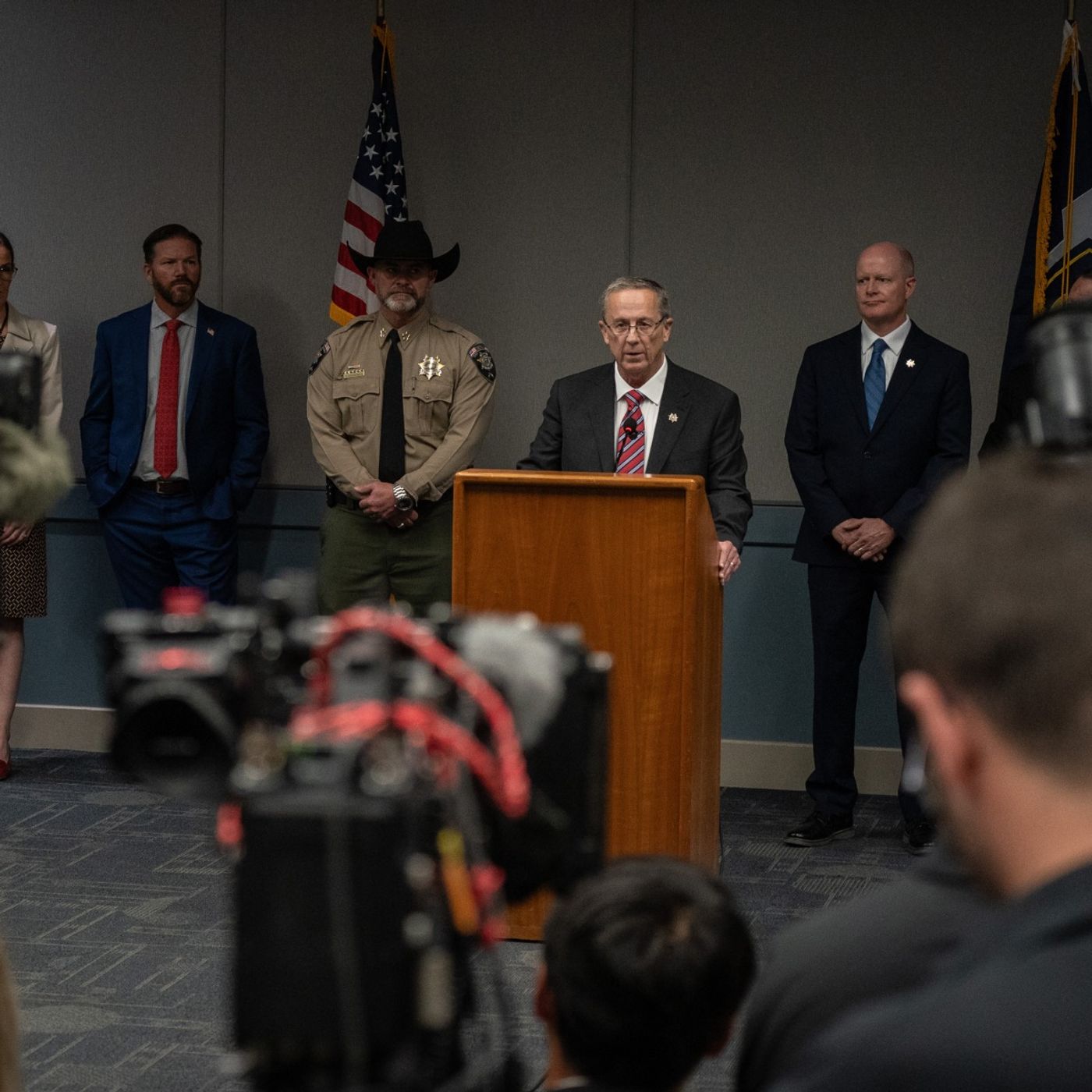
The Daily
The Plan to Turn Charlie Kirk's Murder Into a Crackdown on the Left
00:34:19
On Tuesday, prosecutors charged the man suspected of killing Charlie Kirk with aggravated murder, vowed to seek the death penalty and released a mountain of new evidence against him. Jack Healy, who has been covering the killing of Mr. Kirk for The New York Times, explains what the police have uncovered about his motives. Kenneth P. Vogel, an investigative reporter, discusses the emerging White House plan to use the federal government to crack down on the left-wing groups that it believes inspire political violence.
Loading summary
Transcript133 lines
- [00:00]
Advertisement Narrator
Ollie knows the back to school chaos all too well. Schedules, carpools, relearning algebra 2. It's a lot for you and your crew. Ollie makes wellness an easy and delightful part of your routine. Need immune support? Kids will enjoy. Try Kids Multi Probiotic. Is bedtime a struggle? Go with kids Sleep for gentle support moms. Support your immune system, nutrition and more with Women's multi. Grab these products@ollie.com or retailers nationwide. These statements have not been evaluated by the Food and Drug Administration. This product is not intended to diagnose, treat, cure or prevent any disease.
- [00:35]
Michael Bavaro
From the New York Times, I'm Michael Bavaro. This is the Daily. On Tuesday, prosecutors in Utah brought formal charges against the man suspected of killing Charlie Kirk.
- [00:54]
Jack Healy
Count one, aggravated murder, a capital offense.
- [00:59]
Prosecutor or Legal Official
For intentionally or knowingly causing the death of Charlie Kirk.
- [01:04]
Michael Bavaro
Vowed to pursue the maximum penalty under the law.
- [01:08]
Jack Healy
I am filing a notice of intent.
- [01:10]
Tyler Robinson's Mother
To seek the death penalty.
- [01:13]
Prosecutor or Legal Official
I do not take this decision lightly.
- [01:16]
Michael Bavaro
And released a mountain of new evidence against him.
- [01:20]
Jack Healy
Robinson's mother explained that over the last.
- [01:22]
Podcast Host or Interviewer
Year or so, Robinson had become more.
- [01:25]
Jack Healy
Political and had started to lean more.
- [01:28]
Podcast Host or Interviewer
To the left, becoming more today, my.
- [01:32]
Michael Bavaro
Colleague Jack Healy on what police have and have not uncovered about the suspect's motives. And Ken Vogel on the emerging White House plan to use Kirk's murder as a rationale for cracking down on left wing groups across the country. It's Wednesday, September 17th.
- [02:04]
Podcast Host or Interviewer
Jack, we have spent the last few days trying to understand exactly what information police have collected against Charlie Kirk's suspected assassin, Tyler Robinson. And. And on Tuesday, we got our official answer. So tell us about what we learned.
- [02:24]
Jack Healy
Quite a bit. The prosecutors in this case put out a 10 page summary of the charges and of the information that they are releasing in this case that contains an enormous amount of detail about how they say he carried out the murder, why he did it and how they found him.
- [02:45]
Podcast Host or Interviewer
Well, tell us first about the new information related to how they found this suspect because that's something about which there was some confusing detail in the beginning.
- [02:57]
Jack Healy
Yeah, absolutely. There was a 33 hour manhunt scouring social media, interviewing hundreds of witnesses that fielded thousands of tips in the search for Charlie Kirk's killer. But it seems to have come down to Tyler Robinson's mother.
- [03:14]
Podcast Host or Interviewer
Hmm.
- [03:15]
Jack Healy
Yeah. What we learned today from prosecutors is that they say that on the day after the shooting, she saw a photo of the shooter that law enforcement had released to the media and that was circulating everywhere, you know, on tv, on social media, and she recognized the suspected shooter as her son. This is that figure, the sort of dark clad figure in the Converse, who I think a lot of us, you know, looked at very closely in the day after the shooting. And so what happened is she sees this photo, she thinks this looks like Tyler, and she calls him and asks, Tyler, where are you? He told his mother that he was homesick and that he had actually also been homesick the day before the day of the shooting. According to prosecutors, Robinson's mother is concerned by this. She then goes to her husband and she says she thinks the shooter looks like Tyler. And she shows him the picture, and he agrees it sounds like his mother.
- [04:15]
Podcast Host or Interviewer
Is already suspicious and suspicious of his explanation.
- [04:18]
Jack Healy
Definitely. Definitely. Then Robinson's father gets involved. Robinson's father asks Tyler about the gun, the rifle used in this attack, because Robinson's father believes that the gun used to kill Kirk may be a gun that Robinson got as a gift. And so.
- [04:38]
Podcast Host or Interviewer
Right. We should maybe explain that the photos of this rifle were circulating at that time. So his father would have had had an image of this gun in his head.
- [04:46]
Jack Healy
Yep, exactly. And officials also described it, and they described how it had been found in a sort of brushy, woody area not far from the campus where Charlie Kirk was killed up in Orem, Utah. That's about 250 miles north of the St. George community where Tyler Robinson and his family lived. And so what happens is Robinson's father asks Tyler, show me a photo of the rifle. And then Robinson did not respond to his dad.
- [05:17]
Podcast Host or Interviewer
Wow.
- [05:17]
Jack Healy
Yeah. And so this is the start of what become a series of very delicate negotiations and conversations to figure out how to bring him in from his own parents. From his own parents. Yeah. Robinson gets on the phone with his parents, and according to prosecutors, he indicates that he is considering killing himself and says he can't go to jail. And so the quote is, Robinson implied that he was the shooter and stated that he couldn't go to jail and just wanted to end it. When asked why he did it, Robinson explained there is too much evil and Charlie Kirk spreads too much hate.
- [05:57]
Podcast Host or Interviewer
This is what he told his parents, according to these documents.
- [06:00]
Jack Healy
This is what he told his parents, according to prosecutors. And so Robinson's parents are able to convince him not to kill himself. And they are able to convince Robinson to go over to their family house in Washington, Utah, which is just next door to St. George. And in the meantime, Robinson's parents reach out to a family friend of theirs who happens to be a retired sheriff's deputy. And this deputy reaches out to the local county sheriff, and he breaks the news that as this huge manhunt is going on across Utah and really across the entire country, right from Washington to the command center in Orem, Utah, to people scouring their own social media, that this deputy has just gotten a call out of the blue from the suspect's parents. And so the sheriff, I spoke with him a couple of hours ago.
- [06:54]
Podcast Host or Interviewer
Huh?
- [06:55]
Jack Healy
Yeah. The sheriff down in southern Utah in Washington county gets this information in a phone call from the retired deputy, and they begin talking about how to actually get Tyler Robinson from his parents home into law enforcement custody. Tyler Robinson was apparently very concerned about getting killed in a police shootout or ending up the target of a massive SWAT operation as the law enforcement net closed around him. That's according to the sheriff I spoke to. And so they agreed to a very low key end of this standoff. I mean, almost. I don't want to say casual, but like almost unbelievably quiet. The retired deputy drove Robinson and his parents to the sheriff's office. And Robinson was walked in, not in handcuffs, and put into an interview room. And they had him wait there and kept an eye on him as investigators up near Salt Lake City rushed to get on a plane and fly down to southern Utah and figure out, you know, what they had and if this was indeed the suspect, the killer they had been looking for.
- [08:03]
Podcast Host or Interviewer
And just to pick up the story from here, we know from what's been made public even before Tuesday that Robinson, once in police custody, does not cooperate. So I'm curious what police presented in these charging documents that further deepens this already growing body of evidence that he is the shooter and really deepens our understanding of motive, which up until now we have understood in this very limited way to simply be the belief by Robinson that Kirk spewed, quote, hate.
- [08:36]
Jack Healy
Yeah. What we get is an explanation of the shooting in Robinson's own words. And these come in a really striking and intimate text message exchange with his roommate, who was also his romantic partner. They had been living together and. And officials have described the roommate as a male who is undergoing a gender transition to female. And that detail about the roommate's identity and their relationship could prove extremely relevant to motive because Robinson's mother had told authorities that over the past year or so, her son had become more political, more left leaning, and, quote, more pro gay and trans rights oriented. So this remarkable text exchange starts not long after the shooting when Robinson texts his roommate and says, drop what you were doing. Look under my keyboard. And when the roommate does that, they find a note saying, quote, I Had the opportunity to take out Charlie Kirk. And I'm going to take it.
- [09:40]
Podcast Host or Interviewer
Wow. So Robinson allegedly left this note under his own keyboard. Instructs his roommate, his partner, to go get it.
- [09:47]
Jack Healy
Exactly. And the next messages show the roommates utter shock and astonishment. It's just one word. What? Followed by just a line of question marks. You're joking, right? I feel like it's important to note, Michael, that the authorities have not charged the roommate with any crime, have said they had no knowledge of this attack, and that they have been cooperating fully with investigators. And what follows is a really remarkable exchange between Robinson and the roommate. While Robinson is still on the run, while authorities are just fanning out all across Utah to try to figure out who the shooter is, the FBI is on the scene. You know, people are still running around just trying to absorb what happens. And Robinson says this. I am still okay, my love, but am stuck in Orem for a little while longer yet. Shouldn't be long until I can come home, but I gotta grab my rifle still.
- [10:46]
Podcast Host or Interviewer
Wow.
- [10:46]
Jack Healy
To be honest, I had hoped to keep this secret till I died of old age. I am sorry to involve you. And the roommate is just flabbergasted. They reply, you weren't the one who did it, right? And Robinson says, I am. I'm sorry.
- [11:02]
Podcast Host or Interviewer
Wow. Twice already. The roommate is basically saying, I cannot comprehend this.
- [11:07]
Jack Healy
Cannot comprehend it. I mean. And the roommate asks the natural question, the one I think all of us have been asking ever since this happened, which is why Robinson says, why did I do it? Yeah. The roommate says, and here's. Here's the key. I had enough of his hatred, referring to Charlie Kirk. Some hate can't be negotiated out.
- [11:30]
Podcast Host or Interviewer
Hmm. Jack, from the outset, those around Charlie Kirk, and here I'm speaking of people in the White House, was motivated by some form of left wing ideology over Kirk's viewpoints. And what this evidence so far suggests is that that presupposition may have been correct. Not that it necessarily was the driving force, but a suspect saying that he wanted to take out Charlie Kirk because he spewed hate and his views had become more outspoken and known to his parents around LGBTQ rights. That does seem to add up to a more left wing than Charlie Kirk set of views animating what happened here at this moment.
- [12:21]
Jack Healy
That's what the publicly available information suggests. I mean, the statement that I've had enough of this hatred is as clear a window into his mindset as we have gotten so far. But there is still a lot that we. We need to understand about this. I mean, it's a hugely important question. And I think that there are some strong pieces of evidence in here, but this is a 10 page court document and there is still a lot of digging that prosecutors and we as journalists need to do to try to understand more about his beliefs, how they evolved. Today is just sort of day one of a very long sort of legal process that is going to play out over months, if not years to try to uncover everything that investigators and defense attorneys possibly can about what drove him, motivated him, his life, his mental state. There's a lot more that we still need to know about Tyler Robinson and what was going on inside his mind.
- [13:31]
Podcast Host or Interviewer
Right. And what exactly hate meant to him and what in his life led him to believe that assassination was in any world an answer to that.
- [13:45]
Jack Healy
That's right.
- [13:52]
Podcast Host or Interviewer
Well, Jack, thank you very much. We appreciate it.
- [13:54]
Jack Healy
Thanks so much.
- [14:04]
Michael Bavaro
After the break, Ken Vogel on the Trump administration's emerging plans to punish liberal groups that it claims have promoted political violence, including against Charlie Kirk. We'll be right back.
- [14:27]
Advertisement Narrator
Why do tech leaders trust Indeed to help them find game changing candidates? Because they know that it takes an innovator to find innovators. When it comes to hiring, Indeed is paving the way. Indeed's AI powered solutions analyze information from millions of job seeker data points to match potential candidates to employers jobs. You'll find quality matches faster than ever, meaning less time hiring and more time innovating. Learn more at Indeed.comHire.
- [15:01]
Podcast Host or Interviewer
Recently we asked.
- [15:02]
Jack Healy
About how you share your New York.
- [15:03]
Podcast Host or Interviewer
Times account and you had a lot.
- [15:05]
Jack Healy
To say about New York Times games.
- [15:07]
Listener or Audience Member
I need my own New York Times login because my sister is so much worse at the crossword than I am.
- [15:13]
Advertisement Narrator
I discover that he's already finish connections that day and I'm like Jonah, it was my day.
- [15:19]
Podcast Host or Interviewer
It doesn't let us play the same games as each other.
- [15:21]
Jack Healy
I play the stoku, I do the crossword.
- [15:24]
Podcast Host or Interviewer
I do the spelling bee.
- [15:25]
Prosecutor or Legal Official
I do the wordle. Please help.
- [15:28]
Podcast Host or Interviewer
My kids want to be able to play wordle. But with the wordle bot, we would love to be able to have our own puzzles. I love New York Times games.
- [15:37]
Advertisement Narrator
I want to be able to play my own games.
- [15:40]
Podcast Host or Interviewer
Listeners, we heard you introducing the New York Times Games Family subscription.
- [15:45]
Jack Healy
One subscription up to four separate logins.
- [15:47]
Podcast Host or Interviewer
And your existing stats and streaks come with you.
- [15:50]
Jack Healy
Find out more@nytimes.com family.
- [15:56]
Podcast Host or Interviewer
Ken, on Monday, we saw something pretty remarkable. The Vice President, J.D. vance from his office in the White House host the podcast of his late friend Charlie Kirk. And it was remarkable not just for the fact that the Vice President United States was hosting a podcast for two hours, but also because by the end of the podcast, Vance and his White House colleagues started to articulate this rationale for using the entire federal government to dismantle left wing groups that they say promote violence or celebrate it, including the violent murder of Charlie Kirk. And then they started to outline how they would actually do it. So talk to us about this podcast appearance and the plans that it revealed.
- [16:45]
J.D. Vance
Hey, everybody, J.D. vance here live from my office in the White House complex and filling in for somebody who cannot be filled in for, but I'm gonna.
- [16:54]
Prosecutor or Legal Official
This podcast really began as a remembrance of Charlie Kirk.
- [16:58]
J.D. Vance
The last several days have been extremely hard for our country. They've been hard for me, hard for my family, hard for the countless people in this building who knew and loved Charlie Kirk.
- [17:10]
Prosecutor or Legal Official
And a lot of the folks who were on it shared their recollections of him and how he, you know, what he meant for their lives.
- [17:15]
Podcast Host or Interviewer
And so just by watching Charlie from a distance was so inspiring to me as a young conservative woman.
- [17:22]
Jack Healy
And Charlie was so great at connecting.
- [17:25]
Podcast Host or Interviewer
Those dots and connecting human beings.
- [17:28]
Listener or Audience Member
One of Charlie's gifts was not talking at you, but engaging you where you were.
- [17:34]
Prosecutor or Legal Official
How he helped people on the conservative side of the spectrum feel comfortable articulating their views. But then the tone of it really started to shift.
- [17:43]
J.D. Vance
Of course we have to make sure that the killer is brought to justice. And importantly, we have to talk about this incredibly destructive movement of left wing extremism that has grown up over the last few years, and I believe is part of the reason why Charlie was killed by an assassin's bullet. We're going to talk about it.
- [18:02]
Prosecutor or Legal Official
Really quickly became an expression of the grievances against liberal groups that J.D. vance felt was perpetuating the type of violent rhetoric that he argued led to Charlie Kirk's assassination. But it wasn't just Vance who was making these arguments. It was also other folks from the White House, including the top adviser, Stephen Miller.
- [18:21]
Stephen Miller
And we are going to channel all of the anger that we have over the organized campaign that led to this assassination to uproot and dismantle these terrorist networks. So let me explain.
- [18:33]
Prosecutor or Legal Official
You seem to try to cast the prosecution of these groups, or at least the administration's efforts to go after them, as kind of a perpetuation of Charlie Kirk's legacy.
- [18:42]
Stephen Miller
The last message that Charlie sent me was, I think it was just the day before we lost him, which is that we need to have an organized Strategy to go after the left wing organizations that, that are promoting violence.
- [18:52]
Prosecutor or Legal Official
He talked about the last message that he received from Charlie Kirk before his killing was urging him to go after the left wing organizations that are promoting violence in this country. And he describes the types of activity that he's referring to.
- [19:09]
Stephen Miller
The organized doxing campaigns, the organized riots, the organized street violence, the organized campaigns.
- [19:16]
Prosecutor or Legal Official
Of dehumanization, village, you know, everything from doxing to incitement of violence, messaging that's.
- [19:22]
Stephen Miller
Designed to trigger incite violence, and the actual organized cells that carry out and facilitate the violence. It is a vast domestic terror movement.
- [19:30]
Prosecutor or Legal Official
He describes it as all kind of a piece that it's domestic terrorism.
- [19:35]
Stephen Miller
With God as my witness, we are going to use every resource we have at the Department of Justice, Homeland Security, and throughout this government to identify, disrupt, dismantle and destroy these networks and make America safe again for the American people. It will happen, and we will do it in Charlie's name.
- [19:50]
Prosecutor or Legal Official
And that led Miller to make a really impassioned proclamation about how he and the federal government was going to use every resource at their disposal to go after and disrupt and dismantle and destroy these networks that he says on the left are making America unsafe.
- [20:10]
J.D. Vance
St. Paul tells us in the book of Ephesians to put on the full armor of God. Let all of us put on that armor and commit ourselves to that cause for which Charlie gave his life to rebuild a United States of America and to do it by telling the truth.
- [20:38]
Podcast Host or Interviewer
So when Vance and when Miller talk about left wing groups that are, and they're telling making America Unsafe are fomenting violence, do we have a sense of which groups specifically they are referring to?
- [20:54]
Prosecutor or Legal Official
I think there are a number of groups that could probably fit into this category, based on my conversations with people around the White House or around Trump's orbit who are talking to them about how to pursue this. But two organizations specifically have come up. One of them is the Open Society Foundations, and that's George Soros's philanthropic organization. And the other is the Ford Foundation. Now, they don't really do programming of their own. So what seems to be at issue here is the organizations that they fund and what those organizations in turn are doing.
- [21:29]
Podcast Host or Interviewer
Well, let's explore the funding that groups like the Ford foundation and Soros's Open Society philanthropy do. That may represent the thing that Miller and Vance are talking about here.
- [21:43]
Prosecutor or Legal Official
Sure. So Open Society, for instance, and I believe the Ford foundation were big funders of sort of racial justice groups around the Black Lives Matter movement. And so some of Those groups clearly were involved in organizing protests. And it is theoretically possible that at some of the protests where some of these groups were involved in the organization, there may have been vandalism or violence. And so that would be the type of thing that it appears as if JD Vance is trying to pin back on the Ford foundation or the Open Society Foundation. But for people around the White House, it's really about what they think of as a broader network of liberal nonprofit groups and firms that administer them that they believe are stoking violence through really extreme rhetoric and polarization. And they attribute to some of these groups other seemingly disconnected acts of vandalism. There's one example involving vandalism of Teslas and Tesla dealerships.
- [22:49]
Podcast Host or Interviewer
Right. A few months back.
- [22:50]
Prosecutor or Legal Official
Right. A few months back, when Elon Musk was working with the Trump administration on government cost cutting, and they tried to blame this vandalism on a large network of nonprofit groups that was administered by this firm, Arabella Advisors. Elon Musk seemed to suggest that he wanted the government to investigate it. We didn't really see anything happen at that time, but you can see how this sentiment is sort of building towards a moment like what we're experiencing right now.
- [23:20]
Podcast Host or Interviewer
Ken, if we take this argument at face value, is the case being made by Stephen Miller, J.D. vance, folks in the White House, that left wing violence is the result of groups sponsoring specific acts of protest that turn violent? Or is it a more diffuse argument that these groups fund organizations that speak of people like Charlie Kirk, that speak of people like J.D. vance, that speak of people like Donald Trump in ways that. That dehumanize them, that treat the right as evil and in that sense may promote violence.
- [23:59]
Prosecutor or Legal Official
I think it's largely the latter. I think most conservatives who have, like, studied this issue and actually gotten into the weeds of the nonprofit tax filings of these groups would admit that the sort of more extreme groups, the antifas of the world that are actually committing the violence, are not really in line to get a big grant from George Soros Foundations. Rather, what they are saying is that some of the groups that do receive grants from large philanthropic organizations on the left are engaging in what they would deem to be extreme rhetoric, sort of vilifying the opposition, sometimes on issues, sometimes personally, in a way that does give license to people who are not necessarily even directly associated with the groups, but are just sort of receiving the rhetoric to act in ways that sort of cross the line into violence, into illegality, into vandalism.
- [24:56]
Podcast Host or Interviewer
Right. And to what degree do we know whether that is true.
- [25:01]
Prosecutor or Legal Official
I mean, it's difficult to measure. Certainly there are some groups on the left as well as on the right that are funded by rather deep pockets that do engage and, you know, rather polarizing rhetoric. I don't think that would be a shock to anyone to learn. But the degree to which that rhetoric is leading directly to action, I think is not necessarily well established.
- [25:24]
Podcast Host or Interviewer
So how do Miller and Vance propose targeting these groups that they're talking about and that you have been referring to here? What is cracking down on them look like according to the conversations they're having so far?
- [25:41]
Prosecutor or Legal Official
Well, J.D. vance started to suggest that one of the things that they might look to is the nonprofit tax status that a lot of these groups have and that they benefit from and potentially stripping that tax status. He didn't get into any of the details there, but we have certainly heard extensive conversation around the right, including from folks who have briefed the White House on some of these issues about potentially targeting the tax status of some of these large liberal and progressive nonprofits for allegedly engaging in political partisanship, which they are barred by, in a lot of cases, their tax status from so doing. It's sort of the trade off. Like you get the nonprofit status and in exchange you promise not to do these certain things that would step over the line into essentially being a political committee. And so the suggestion here is that they have crossed that line.
- [26:33]
Podcast Host or Interviewer
Right. And that the Trump administration could use the IRS to take away that tax exempt status. And in the process, one imagines kind of cripple the financial viability of some of these groups because their tax exempt status is what encourages people to give donations to them. It's what makes a donation to the Open Society, for example, or the Ford foundation tax deductible or any of the.
- [26:59]
Prosecutor or Legal Official
Groups that those, that those large foundations fund. Right. So. Right. So the tax deduction works on sort of both ends of it. And yes, it is a significant advantage to these groups and to their donors to be able to have that. And it would be in a lot of cases, quite crippling if they were to lose that. And some conservatives who are advocating for, for this type of scrutiny would admit that is their goal. Their goal is to cripple the sort of extra party infrastructure of the political left in a way that would push their donors to the sidelines and make it harder for Democrats and liberals to compete not just in public policy debates, but, but in elections. And a lot of these folks on the right feel that this type of targeting of liberal nonprofits is not necessarily something that they've invented. In fact, they believe it's turnabout that the left and Democrats did it first to them.
- [27:53]
Podcast Host or Interviewer
Well, just explain that.
- [27:55]
Prosecutor or Legal Official
Yeah. So this actually dates back to something that happened under the Obama administration when the Internal Revenue Service targeted conservative groups in the Tea Party movement. And actually in some cases, like search for the word Tea Party and in their IRS filings and audited these groups in a way that was, like, quite onerous for them, some of which were quite small and unable to foot the legal fees necessary to stave off these audits.
- [28:22]
Podcast Host or Interviewer
Right. I think I remember this now. And it caused quite an uproar on the right. I want to even say Congress started an investigation of this.
- [28:33]
Prosecutor or Legal Official
Yeah, that's right. And we should be clear that the Obama administration did not embrace this. In fact, they distanced themselves from this conduct by the irs. And Obama himself called it intolerable and inexcusable. So it's not like it was the modus operandi of the left, but it did certainly leave a real bad taste in the mouths of many on the right, to the point where some, even today, when I'm talking to people about this potential move by the Trump administration against these liberal nonprofits, are still citing that targeting of these Tea Party groups.
- [29:07]
Podcast Host or Interviewer
Right. And I suppose two things or three things can be true at the same time. It can be the fact that Republicans have nursed this desire to go after the progressive network of nonprofits out of revenge for what they believe the Obama administration did to them. It's simultaneously very possible that this is just an opportunity to kneecap their rivals, just weaken them politically. And it's simultaneously very possible that J.D. vance and Stephen Miller are genuinely reacting to what they see as an existential threat to their movement and to people they care about, including Charlie Kirk and Donald Trump himself, who was the target of two separate assassination attempts, they would argue, in some measure inspired by the language and activities of the left and the groups that we're talking about.
- [30:16]
Prosecutor or Legal Official
Yeah, I mean, I think all three of those things are true. And I would go even further on the third point and say that they don't just think that it's like they and their allies who are at risk from this, but, you know, the American way of life and safety in the United States of America more broadly. But it is also true that JD Vance in particular has been talking about the abuse by liberal nonprofit groups of their tax exempt status and how they're sort of using their power and their money to reshape American society since before he even ran for Senate. So there you have an example of someone, sure, this is a moment where this is, like, coming to the fore in a way that is, like, quite personal and painful for them and they see an opportunity. But also it's something that they, in at least J.D. vance's case, have been thinking about for some time.
- [31:07]
Podcast Host or Interviewer
Ken, what's been interesting to watch since this JD Vance podcast is elements of the right grappling with this idea that their government leaders may now be essentially targeting speech. And this really came to the fore when the Attorney general, Pam Bondi, within the last day or so, said that she would absolutely target hate speech. And conservatives responded by saying what a principle of the conservative movement is freedom of speech, and you're not going to go after free speech. So is it possible that this administration may be provoking a backlash among their own supporters who very much treasure their ability to say unpopular things?
- [32:03]
Prosecutor or Legal Official
Yeah, and this is where we see a little bit of a divide between, like, the tactical advantages of engaging in politics and the principles of, you know, in this case, the conservative movement being in favor of free speech. It may help conservatives and Republicans to target Democratic groups, but it sort of cuts against their embrace of free speech as a fundamental principle of their movement. And even more than that, there could be some backlash. I talked to one conservative who's sort of a leader in this space, and he talked about it as a potential Pandora's box that we could all come to regret. He said, I don't want the next Democratic administration going after, quote, unquote, hate speech. And the suggestion is there by Republicans. So, yeah, there's both, like, tactical advantage and tactical risk, and there's some philosophical incongruity.
- [33:01]
Podcast Host or Interviewer
Well, Ken, thank you very much.
- [33:04]
Prosecutor or Legal Official
Yeah, it was a pleasure.
- [33:14]
Podcast Host or Interviewer
Foreign.
- [33:18]
Michael Bavaro
We'll be right back.
- [33:21]
Advertisement Narrator
Deal's not just another payroll platform. It's one your team might actually enjoy. HR IT and payroll together finally built in house built. For peace of mind, visit deel.com NYT.
- [33:36]
Listener or Audience Member
Don'T just imagine a better future. Start investing in one with betterment. Whether it's saving for today or building wealth for tomorrow, we help people in small businesses put their money to work. We automate to make saving simpler. We optimize to make investing smarter. We build innovative technology backed by financial experts. For anyone who's ever said, I think I can do better, so be invested in yourself. Be invested in your business. Be invested in better with betterment. Get started@betterment.com investing involves risk performance not guaranteed.
- [34:09]
Podcast Host or Interviewer
Hi, I'm Joel from the New York Times. Games team and I'm out here talking to people about games. What's your favorite game? The Mini Connections Fair Cross Vibe Strands. What's your vibe when you're playing one of our games?
- [34:19]
Advertisement Narrator
It makes me feel like I'm procrastinating in a really productive way.
- [34:24]
Podcast Host or Interviewer
It just scratches an itch in my brain. All of these games are so fun.
- [34:27]
Jack Healy
Because it's like a little five to ten minute break.
- [34:30]
Advertisement Narrator
I love these games.
- [34:31]
Podcast Host or Interviewer
Yeah, you can play all New York.
- [34:33]
Jack Healy
Times games@nytimes.com games or in our games app.
- [34:44]
Michael Bavaro
Here's what else you need to know today. On Tuesday, the Israeli military launched a long threatened ground assault against Gaza City, saying that it was necessary to free the remaining Israeli hostages that there and to prevent Hamas fighters from using the city as a staging ground for future attacks. Gazan officials said that the operation has already killed at least 20 people, displaced thousands from their homes, and set off panic in the densely populated city.
- [35:23]
Advertisement Narrator
They said you were dead.
- [35:25]
Tyler Robinson's Mother
Don't make a big thing out of it. No, make a big thing out of it.
- [35:33]
Michael Bavaro
Robert Redford, the legendary actor and director whose films from Butch Cassidy and the Sundance Kid to All the President's Men helped America make sense of itself, has died at the age of 89.
- [35:49]
Tyler Robinson's Mother
Listen.
- [35:50]
Jack Healy
It goes all the way to Stans.
- [35:51]
Tyler Robinson's Mother
It goes all the way the to Stans. He gave the check to Stans for the Committee to re elect.
- [35:55]
Podcast Host or Interviewer
Did he say that? He said it.
- [35:57]
Tyler Robinson's Mother
I've got it on my notes. Jesus, it's down on record Bernstein.
- [36:01]
Michael Bavaro
Redford's greatest cultural impact came in the second half of his life, when he used his wealth and star power to nurture independent films through the Sundance Film Festival, which he created in the 1980s. In interviews, Redford said that his own life experience had compelled him to make films that challenged the audience.
- [36:24]
Tyler Robinson's Mother
My memory begins with the end of the Second World War. So I grew up with a lot of propaganda as a kid. There was a lot of red, white and blue going on, you know, and I bought into it. And then as time went on and I grew up and I went out in the world, I realized that there was a big gray area out there where life was much more complicated. I said, I think I'd like to make films that are about that, that gray zone. Which eventually led to one of the reasons for starting Sundance was to give opportunities for others.
- [36:59]
Michael Bavaro
Today's episode was produced by Asla Chaturvedi, Mooj Zaidy and Ricky Novitsky, with help from Michael Simon Johnson. It was edited by Devin Taylor with help from Michael Benoit and was engineered by Alyssa Moxley. That's it for the Daily I'm Michael Balbaro. See you tomorrow.
- [37:41]
Advertisement Narrator
Let's be honest. Most HR platforms aren't exactly a joy to use. Deal's different. It's AI native, keeps you compliant and grows with your team, whether you're five people or 50,000. HR IT and payroll on one platform that just works? See for yourself@d eel.com NYT.