← The Daily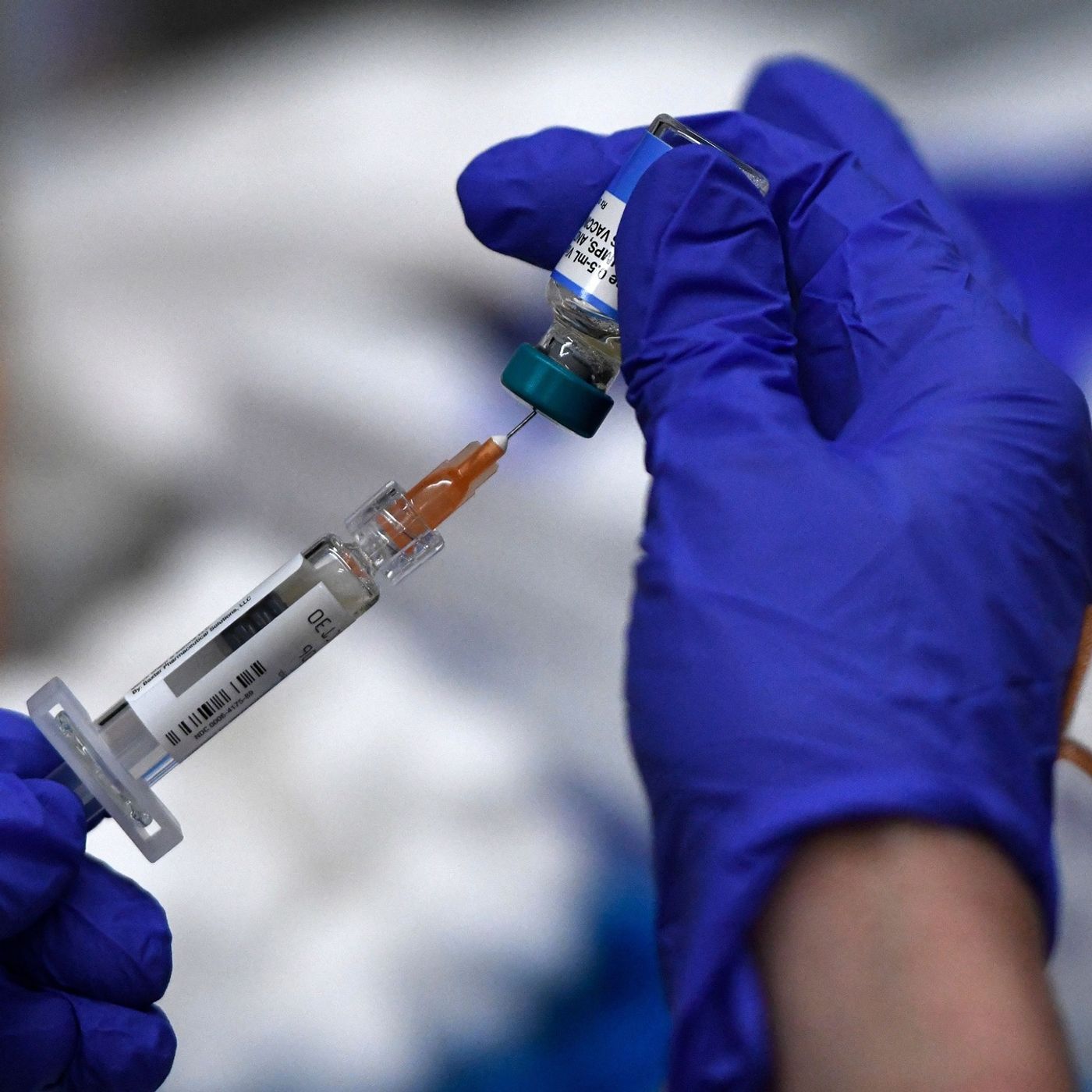
The Daily
The R.F.K. Jr. Era of Childhood Vaccines
00:26:13
Warning: This episode contains strong language. The Centers for Disease Control and Prevention on Monday released new guidelines that dramaticaly cut down the number of childhood vaccines recommended by the federal government. Apoorva Mandavilli and Benjamin Mueller, who cover health, explain what is being cut and how it fits into Health Secretary Robert F. Kennedy Jr.’s broader agenda.
Loading summary
Transcript86 lines
- [00:00]
Rachel Abrams
This message comes from Capital One Commercial Bank. Your business requires commercial banking solutions that prioritize your long term success with Capital One. Get a full suite of financial products and services tailored to meet your needs today and goals for tomorrow. Learn more@capitalone.com Commercial Member FDIC from the New York Times, I'm Rachel Abrams and this is the Daily. Earlier this week, the CDC released new guidelines which dramatically cut down the number of childhood vaccines recommended by the federal government. Today my colleagues Benjamin Mueller and Apoorva Mandavilli explain what's being cut, how this fits into the broader agenda from Health Secretary Robert F. Kennedy, Jr. And the broader implications for public health. It's Thursday, january 8th. Ben Apoorva, thank you both so much for being here today.
- [01:14]
Apoorva Mandavilli
Glad to be here.
- [01:15]
Benjamin Mueller
Thanks so much for having us.
- [01:16]
Rachel Abrams
So ever since Robert F. Kennedy, Jr. Was confirmed as the health secretary, there have been all kinds of questions about how he might seek to reshape public health policy, particularly as it relates to vaccines, which he has been openly skeptical about for years. And this week we saw some of the first major changes on that front. And I wanna talk about the changes, why he made them, the implications for public health. But first, Apoorva, can you just explain to us what vaccines were affected?
- [01:44]
Apoorva Mandavilli
So before Monday, American children were supposed to routinely get vaccines for 17 diseases. And on Monday, Secretary Kennedy and his associates, the other health officials, said that that vaccine schedule for children would be pared down. So that now routine recommendation includes vaccination against 11 diseases and which six were taken off. So the six that are now being treated differently are respiratory syncytial virus, rsv. Rsv, yes, Rotavirus, hepatitis A and B, meningococcal vaccines, which are really for meningitis and influenza. And I want to clarify here that when we say they were taken off, they are still on the recommendations, they're just recommended differently. So in theory, these vaccines are still all on the schedule, but they are being recommended either for certain high risk groups or if you don't fall into one of those groups, that you should consult with your doctor first before getting them. So what it actually means in practice is that fewer people will get them, more people will be confused. And the public health experts that I've been talking to feel that this will actually undermine trust in vaccines in a very broad way and people will start to think they're not really necessary at all.
- [02:58]
Rachel Abrams
And Ben, can you tell us a little bit about what the argument is from Secretary Kennedy and the CDC for why this change was necessary and a good idea.
- [03:09]
Benjamin Mueller
Kennedy's been campaigning about the dangers of vaccines for years. And even Trump has sort of adopted that language about kids getting too many shots with sort of vague reference to the dangers that that might hold for kids, dangers that doctors don't believe are actually reflected in the evidence in this case. Kennedy has sort of taken Denmark as his model, a country that has a much more minimal vaccine schedule than the United States, a much smaller country with a very different health system. And the idea there seems to be that they want to refashion the American vaccine program to sort of fit a much more pared down schedule so it no longer tries to address all of the problems and fallibilities with the American health system, all of the medical needs of the American population, and instead say, you know, there should be a new system that's much more individualistic, where each kid is consulted on their particular needs and the particular advice of their doctor. Rather than a sort of one size fits all, let's decide what's best for the health of the American population generally. That seems to be a little bit of what's going on here.
- [04:09]
Rachel Abrams
It feels very spiritually connected to this idea that we've heard from Kennedy before about people should have autonomy with their own bodies, their own health. They should be able to make their own choices.
- [04:19]
Benjamin Mueller
Right, Right. And this sort of resistance to collective thinking about the collective health of Americans, they brand themselves as a medical freedom movement. I mean, in this case, the vaccine schedule does not itself mandate the taking of these shots that' happening at the state level. So Kennedy hasn't actually sort of in practice, freed anybody from onerous obligations to take this or that shot with this decision itself. But yes, they are trying to make this a much more case by case. You talk to your doctor and you have the power to decide what shots your kid should be taking.
- [04:53]
Rachel Abrams
Can I just ask a question about that, though? Because I. We all know how rushed some doctors are, how little time medical professionals have. And I feel like one of the criticisms or pushback to that that you hear from people that are skeptical of vaccines is that, well, in practice, I'm not reading the information sheet. I'm not given the information sheet. The doctor's not going over the risks with me. What is the response to that idea?
- [05:17]
Apoorva Mandavilli
Well, that's a fair point. Doctors don't necessarily always have time to go through these things. But the idea is that if parents do have questions, this is how they can talk about it. There is a forum for that. And if we are worried about doctors not having enough time to talk about parents through all of the concerns, well, we've just quadrupled that problem by putting a whole bunch of vaccines on the list that parents are now going to have to really talk about with their pediatricians before they can even get the shot.
- [05:42]
Benjamin Mueller
I would also say the decision to put vaccines on this recommended slate of shots has not historically been taken lightly. It's happened after consultation with doctors, members of the public, professional groups, and those recommendations have filtered down into medical practice. And to the extent they've been adopted, they've been adopted because they were studied pretty extensively and determined to be safe and effective.
- [06:04]
Rachel Abrams
And so the people that presumably have spent a lot of time thinking, studying, writing, researching the safety of vaccines, how are the medical and scientific communities responding to these changes?
- [06:15]
Apoorva Mandavilli
They've been sort of broadly falling into two camps, I'd say. I've talked to a lot of people who are optimistic, hoping that pediatricians and parents really recognize the value of vaccines and that when it really comes down to it, people will continue to go on as they always have and nothing much will change. And then on the other side are experts who are genuinely really worried because they are already seeing some parents coming in saying, what I'm hearing is the government is saying these vaccines are not needed anymore and do I even really need to get this one? And I don't know, it seems like too much, et cetera, but pretty much all of them agree that this is creating a lot of confusion and that confusion is never good when it comes to public health. One really quick, I think interesting thing to note here is that they've been talking a lot about Denmark and the person who has done probably the most work on vaccine safety is in Denmark, of Denmark's cdc. And I've spoken to him a few times now and he is just baffled by these decisions and does not understand why the US Is doing this.
- [07:13]
Rachel Abrams
Wait, just explain that. Why would it be so baffling that the US would want to emulate Denmark?
- [07:18]
Apoorva Mandavilli
Denmark is a tiny country with impeccable healthcare, free prenatal care, really excellent screening of pregnant women. They have decided not to have quite as many shots. They have 10. They're really the outlier when we talk about the world. And they've done that because they have to purchase a lot of vaccines. And for such a small country, sometimes the burden of disease doesn't make those vaccines quite as cost effective. So it's really an economic decision. But in the United States, we don't have the kind of rigorous follow up and free care that would make it okay for a kid to not be vaccinated and maybe get sick, because in Denmark, that kid would get seen right away, get treated right away at zero or very little cost to the parents. Whereas here, prevention is really the best option.
- [08:03]
Rachel Abrams
Obviously, all of these vaccines that are coming off the schedule, they all do different things, they have different backstories. But I wonder if we can pick one to focus on that might help us explain sort of how we got to this point. Like, maybe you can tell me about how a particular vaccine got added to the childhood vaccine schedule and then later became a target.
- [08:23]
Benjamin Mueller
I think hepatitis B is a really interesting example here. This is a virus that is highly contagious, can be very dangerous. It infects the liver, and it spreads through blood and other bodily fluids. So finally, after years of work in the early 1980s, scientists develop a vaccine. It's highly effective, it's safe. And federal health officials decide to recommend it to groups that they deem to be at high risk for the virus, which is intravenous drug users and men who have sex with men, for example. And there's a lot of optimism that they're finally going to turn back the tide of this virus. Instead, the opposite happens. Cases of hepatitis B keep climbing. Hundreds of thousands of people are getting infected. And I think in that story, we learn about what some of the holes were in that initial vaccination strategy, which were. Well, so one problem with that first vaccination strategy was that doctors turned out not to be very good at identifying which patients would be well served by the vaccine. And some of those very patients either didn't know that they should get the shot or were resistant to getting it because they were afraid of the vaccine. It was a new vaccine. There were sort of false rumors spreading that it might be causing hiv. There was also a second problem, which is that doctors didn't always recognize in what patient populations this virus was in fact spreading. That included kids, many of whom were getting infected, some of whom were facing health problems years down the road from this virus. And those kids were not covered by that first vaccination strategy, which focused on high risk adults.
- [09:53]
Apoorva Mandavilli
There were something like 20,000 cases a year in children, and not all of them were even getting the virus from their mothers, which was thought to be the main mode of transmission. There were studies at the time suggesting that something like half of the cases in these young children were of unknown source, potentially from other children in the community or from people they lived with. Because you can get the virus from crusted blood, you can get it from a shared toothbrush or from a towel that has dried body material on it. So this is a very, very highly infectious virus. And so they started to recognize that babies really needed protecting. And they went after a few different ways. They started out initially with that high risk group. They expanded that to include pregnant women. But in 1991, they decided, okay, this is not working. We really need to protect these babies. And the only way we're going to be able to get to every single one is to do it at birth.
- [10:46]
Benjamin Mueller
So 10 years after that initial rollout, federal health officials reconvene and decide that, in fact, they should start recommending the vaccine to infants. And it's remarkably successful. Over the next few decades, cases of hepatitis B fall in children and young adults by something like 99%. The vaccine is widely taken up. It's safe, including an infant. It's highly effective. And it's that very strategy, the strategy of vaccinating infants that Kennedy has now decided to effectively undo.
- [11:15]
Apoorva Mandavilli
The really interesting thing here is that that whole colorful history of how the universal B vaccination at birth came to be also lent itself to becoming this very popular anti vax talking point. They started saying that essentially the country was vaccinating all babies as a safety net for adults, that they were vaccinating infants to protect these high risk groups. And you have to remember this is the late 1980s, early 90s, a time when HIV is rampant in the country. There's all this homophobia, this villainization of gay people, there's tons of fear. But at that same time, scientists were also starting to figure out that infants were really at risk of this disease.
- [11:57]
Rachel Abrams
So all of that helps explain why in this country, public health policy changed. It also helps explain why it has run squarely into the Maha movement.
- [12:07]
Benjamin Mueller
I think that's exactly right. I think the vaccine program that developed over those years has now run headlong into a Maha movement that is dead set against a one size fits all vaccination strategy that's much more interested in a sort of individualistic approach to the health of children that distrusts drugs and vaccines and sees them as sort of another contaminant on top of a list of contaminants in the food supply and in the air and in the water. And that also sort of sits uneasily with this idea that Kennedy seems to have about the best way of protecting the health of Americans, which is, rather than introducing vaccines into their body to strengthen their defenses against illness, to, for example, improve their diet, we saw that Kennedy just recently remade the American Dietary Guidelines to recommend that Americans eat more whole foods, vegetables, more proteins, which fits squarely in the middle of this Kennedy strategy of trying to fortify people's own bodies, strengthen people's own resources against disease, rather than vaccinating them as a sort of way to protect against very dangerous illness.
- [13:22]
Rachel Abrams
After the break what these changes mean now and moving forward.
- [13:33]
NetSuite Advertiser
Every business is asking the same question. How do we make AI work for us? No more waiting with NetSuite by Oracle, you can put AI to work today. NetSuite is the number one AI Cloud ERP trusted by over 43,000 businesses. It's the unified suite that brings your financials, inventory, commerce, HR and CRM into a single source of truth. That connected data is what makes your AI smarter, helping you make fast decisions. Right now, get the business guide demystifying AI free@netsuite.com NYT the New York Times.
- [14:08]
Rachel Abrams
App has all this stuff that you may not have seen.
- [14:11]
NetSuite Advertiser
I can immediately navigate to something that.
- [14:13]
Benjamin Mueller
Matches what I'm feeling.
- [14:14]
Apoorva Mandavilli
The way the tabs are at the top with all of the different sections.
- [14:17]
Benjamin Mueller
It'S just easier to navigate that way. There is something for everyone.
- [14:21]
Apoorva Mandavilli
The personalized page, the utep, that one's my favorite.
- [14:24]
Rachel Abrams
I can also save my articles easily in this area right under the byline.
- [14:29]
Benjamin Mueller
It says click here if you like to listen to this article.
- [14:32]
Rachel Abrams
I like that the cooking tab on top is really easily accessible.
- [14:35]
Apoorva Mandavilli
So if I'm on my way home.
- [14:36]
Rachel Abrams
And I'm just thinking, oh, what am I gonna make for dinner?
- [14:39]
Apoorva Mandavilli
I'll just quickly go on to cooking and say, oh, I've got this in my pantry.
- [14:43]
Benjamin Mueller
I'm gonna try out some of these recipes I see in here.
- [14:46]
Apoorva Mandavilli
I go to games, always doing the.
- [14:47]
Benjamin Mueller
Mini, doing the wor.
- [14:49]
Apoorva Mandavilli
I loved how much content it exposed me to. Things that I never would have thought to turn to a news app for.
- [14:54]
Benjamin Mueller
This app is essential.
- [14:57]
Rachel Abrams
The New York Times app, all of the times, all in one place. Download it now@nytimes.com app. So Apoorva, you said earlier that theoretically these vaccines will still be available to the people that want them. But obviously these guidelines are changing. I can imagine that if you are a parent who wants a vaccine for your child, this is all very confusing. How are people supposed to navigate this?
- [15:25]
Apoorva Mandavilli
I think it's very important to know first of all that for parents who really want vaccines for their kids, insurance will still cover the costs they will not have to pay out of pocket. And they can find pediatricians who will give them the shots. This idea of shared clinical decision making is what became really important in this new schedule. Talk to your doctor first. So on a very practical level, the new guidelines won't change much for parents who want the vaccines and pediatricians who are administering them.
- [15:53]
Rachel Abrams
Right. If pediatricians already wanted to give the vaccine, that should not change.
- [15:58]
Apoorva Mandavilli
Correct. Even if you're not in a high risk group, you should be able to get a vaccine that theoretically is only for high risk groups. Where I think we're really going to see changes is at the individual level, where individual parents are confused and not sure what to do and pediatricians may run out of time to counsel their patients on what to do. I think that's where things are really going to start to fray. And then, you know, in terms of mandates, which is really where rubber hits the road for vaccines. Every state has requirements for children to enter daycare or kindergarten. And those are actually very similar across states. Blue and red, very few differences. And so far, at least, it seems like that may not change either. I was speaking with a New York state health commissioner who's been having a lot of conversations with his colleagues in both red and blue states, and he was saying that he. But nobody really wants to change anything. So unless their governors intervene, I think things will stay as they are.
- [16:53]
Rachel Abrams
So. But theoretically, a state governor could say, okay, the CDC is now recommending that these six vaccines come off the schedule. I want to see changes in my state and I will direct my state health department to change the requirements for, let's say, the vaccines you need for preschool. And if that were to happen, explain what happens next.
- [17:15]
Apoorva Mandavilli
What happens is they will probably have a fight on their hands because vaccines, even with all of the anti vaccine sentiments you hear, are still really popular with most people. There's strong bipartisan support for childhood vaccination. And in states where people have proposed making changes, it has not always gone well.
- [17:33]
Rachel Abrams
Okay, so it sounds like even if things do not change for the time being at the state level, as you were saying, Apoorva, practically speaking, fewer kids are gonna get this vaccine either. It's because the clinicians don't have time to go over the risks, parents are confused, or perhaps other reasons. And so therefore we can expect that there will be more illness of some amount in this country. And I wonder if we have any sense of the scale of that.
- [17:57]
Apoorva Mandavilli
Well, we have some idea for some of the diseases right from before the vaccines were in routine use. So if you think about something like rotavirus, before the vaccine was in Routine use. There were something like 70,000 hospitalizations in kids a year. And that's the worst case scenario. But also, it's important to remember we're a big country with a big population. So even a small drop in vaccination rates, which we have already seen in this country, results in quite a few cases. You know, we're seeing that unfold now with measles, for example, the vaccination rate for measles has fallen by something like 2 percentage points. But this year we've had more cases than in the mid-1990s.
- [18:36]
Rachel Abrams
And it's fallen, by the way, because of public messaging, not necessarily because of vaccine changes. Measles, I should note, is still on this schedule.
- [18:43]
Apoorva Mandavilli
It is on the schedule. And the reason it fell as a combination of a couple of different things. It started to fall during the pandemic because of sort of infrastructure. You know, clinics were closed, people couldn't get to the clinics. And then also, yeah, the combination of sort of rising anti vaccine sentiment. And that certainly got worse this last year. And at the end of this month, we are most likely going to lose our status for measles elimination in this country. So the United States will no longer be considered to have eliminated measles.
- [19:09]
Benjamin Mueller
There's this idea, I think, that healthy children will somehow be sort of excluded from these consequences, protected from these consequences. That the rising tide of illnesses like measles will sort of only or predominantly affect sick kids with weakened immune systems. And that's just not been true. I think it's been part of the sort of Kennedy and Kennedy aligned thinking on what might happen in a country with fewer vaccines. But what we've seen is that healthy children too have been stricken with these viruses and gotten very sick from them. And we've seen, for example, in the last couple winters that the seasonal flu has exacted a really high toll on American children. Hundreds of kids died last winter from the flu, which was the highest toll in more than a decade. This year's flu is again a really devastating virus. And so the consequences of lower vaccination rates, we're already seeing them play out among American children.
- [20:04]
Apoorva Mandavilli
And there's one other giant thing that is really weighing on the minds of some of the public health experts that I've been talking to, which is the vaccine Liability protection program we have in this country. So basically, companies that make vaccines are protected from what legal authorities call frivolous lawsuits, meaning people can't just go sue these companies willy nilly. And that was put in place because vaccines are not huge Profit makers and.
- [20:32]
Rachel Abrams
Companies, meaning the margins are not that great.
- [20:35]
Apoorva Mandavilli
The margins are not that great. And companies were finding it very difficult to go about their business because of these lawsuits. And so they basically set up the system where companies pay a tax for the vaccines that they make and people who think they've been harmed can take their case to this vaccine court and get financial compensation. That system has been there since 1986 to make sure that vaccine companies stay in the business. There is some question about whether taking these six shots out of the routine vaccination schedule affects that whole thing. So far it seems like it should be okay, but that's still an open question. And companies are really watching this very closely because vaccines are not that profitable. And at some point, if things get very difficult for them to do business in the United States, they may decide to just not do business here.
- [21:25]
Rachel Abrams
Meaning that the companies might say the liability is too high, the margins are too small, it's not worth us to manufacture this vaccine in the United States. Ergo, even if you wanted one of these six shots that's been removed from the list, you might not be able to get it. That would be the worst case scenario. That highly speculative. Not on the table yet, but that's what you're referring to.
- [21:44]
Apoorva Mandavilli
Absolutely speculative. We're not anywhere near there yet, but that is the big worry because it's. That's a real worry.
- [21:51]
Rachel Abrams
Ben, what do you make of RFK's approach here? Because from everything we've been talking about, it seems like these are both meaningful changes, a meaningful revision to the vaccine schedule that might eventually have some long term consequences, but also a smaller step than it could have been in terms of immediate change.
- [22:08]
Benjamin Mueller
I think part of what we hear and what Apoorva was just describing was some of the concessions that Secretary Kennedy has made to the sort of political realities around vaccines in this country. He is maintaining access to the shots for parents and physicians who decide that they're warranted for kids. He's keeping insurance coverage in place. He's not yet stripping liability protections from these major shots. And I think that political reality is that vaccines are still popular among the majority of Americans. The majority of Americans still believes the childhood vaccines are highly effective and safe, even as those margins are getting narrower. And more and more Republicans, especially MAGA supporting Republicans, are growing more distrustful of vaccines. So on the one hand, Kennedy has this sort of state of public opinion which makes it politically somewhat risky to take too big a sledgehammer to the sort of American vaccine program. On the other hand, Though there is Kennedy's base, the sort of very committed anti vaccine activists who have been working at Kennedy's side for years, who are raising money for him, working for sort of outside groups supporting his agenda. The sort of activists who were on his podcast for years promoting their opposition to vaccines. And those folks, I would say over the last year have gotten a little bit impatient with Secretary Kennedy at times about the sort of pace of changes to the vaccine program. They felt like we helped put Kennedy in power to sort of take this bulldozer to the American vaccine program and why isn't he yet using that bulldozer?
- [23:40]
Rachel Abrams
And to that point, though, I wonder how is that base reacting to this news, which I would imagine is not as far as they would want him to go. And what does that maybe tell us about what we might expect in the future under his leadership?
- [23:56]
Benjamin Mueller
I think they've been encouraged by how far Kennedy went in sort of taking this chunk out of the vaccine schedule, but they're not resting on their laurels. They're not sort of patting themselves on the back yet. They want to see more. They're clamoring for more action. They are highly concerned about the COVID shot, which, which those allies of Kennedy blame for sickening many Americans despite that shot remaining safe and effective. So I think public health experts and Kennedy supporters alike are sort of looking to this next year as a testing ground for how far Kennedy can afford to go in dismantling the country's vaccine program. Kennedy is walking a fine line between the demands of his base and sort of what public opinion will tolerate in terms of new restrictions on vaccine access. And there are a lot of open questions about how far he's willing to go and how much support President Trump will deliver him in enacting that agenda.
- [25:02]
Rachel Abrams
Apoorva, Ben, thank you both so much.
- [25:05]
Apoorva Mandavilli
Thank you.
- [25:05]
Benjamin Mueller
Thanks, Rachel.
- [25:10]
Rachel Abrams
We'll be right back.
- [25:14]
NetSuite Advertiser
Every business is asking the same question. How do we make AI work for us? No more waiting. With NetSuite by Oracle. You can put AI to work today. NetSuite is the number one AI Cloud ERP trusted by over 43,000 businesses. It's the unified suite that brings your financials, inventory, commerce, HR and CRM into a single source of truth. That connected data is what makes your AI smarter, helping you make fast decisions. Right now, get the business guide demystifying AI free@netsuite.com NYT hi, this is Andy.
- [25:49]
Benjamin Mueller
I've been a New York Times subscriber for years and years, and I'm trying to get my teenagers interested in reading it. If they were to have their own logins and we could share articles, I think that would help get them interested. It would also then allow us to discuss over the dinner table or wherever. Thank you very much. Andy. We heard you introducing the New York Times Family subscription. One subscription, up to four separate logins for anyone in your life. Find out more@nytimes.com family.
- [26:23]
Rachel Abrams
Here's what else you need to know.
- [26:24]
Benjamin Mueller
Today to ICE get the fuck out of Minneapolis. We do not want you here.
- [26:31]
Rachel Abrams
The mayor of Minneapolis, Jacob Fry, is demanding the federal immigration officials immediately leave the city after an ICE agent shot and killed a US Citizen in her car on Wednesday.
- [26:42]
Benjamin Mueller
Your stated reason for being in this.
- [26:44]
Rachel Abrams
City is to create some kind of safety and you are doing exactly the opposite.
- [26:50]
Benjamin Mueller
Somebody is dead. That's on you.
- [26:54]
Rachel Abrams
The shooting occurred about a mile from the location where George Floyd was killed by police in 2020. A video recorded by a bystander shows ICE officers demanding that a woman get out of her car. When she drives forward, an officer fires into her car as witnesses scream out in horror. What did you do? You Shame. Shame.
- [27:19]
NetSuite Advertiser
Shame.
- [27:21]
Rachel Abrams
Shame. After the shooting, the Department of Homeland Security accused the woman of weaponizing her vehicle. It was an act of domestic terrorism. An officer of ours acted quickly and defensively, shot to protect himself and the people around him. But city officials disputed that claim and protesters quickly took to the streets to express their outrage. And in an Oval Office interview with the Times on Wednesday night, President Trump suggested the United States would be involved in Venezuela for years following his ouster of its president, Nicolas Maduro. How long do you think they'll be running Venezuela?
- [28:03]
Apoorva Mandavilli
Only time will tell. Three months?
- [28:06]
Rachel Abrams
Six months? A year?
- [28:06]
Apoorva Mandavilli
Longer, I would say. Much longer.
- [28:08]
Rachel Abrams
Much longer.
- [28:09]
Apoorva Mandavilli
We have to rebuild.
- [28:11]
Benjamin Mueller
You have to rebuild the country.
- [28:12]
Apoorva Mandavilli
And we will rebuild it in a very profitable way.
- [28:15]
Rachel Abrams
That interview with the President will be the subject of tomorrow's episode of the show. Today's episode was produced by Alex Stern, Olivia Natt, Nina Feldman and Stella Tan, with help from Asta Chatterbait. It was edited by Chris Haxel and Devin Taylor with research help by Susan Lee. Contains music by Marian Lozano and was engineered by Chris Wood. Special thanks to Kyle Grandillo. That's it for the Daily. I'm Rachel Abrams. See you tomorrow.
- [29:14]
NetSuite Advertiser
What does the future hold for business? Can someone invent a crystal ball? Until then, over 42,000 businesses have future proofed their business with Netsuite by Oracle, the number one AI cloud erp bringing accounting, financial management, inventory and HR into one platform. With real time insights and forecasting, you're able to peer into the future and seize new opportunities. Download the CFO's Guide to AI and Machine Learning for free at netsuite.com NYT that's netsuite.com NYT.