← The Daily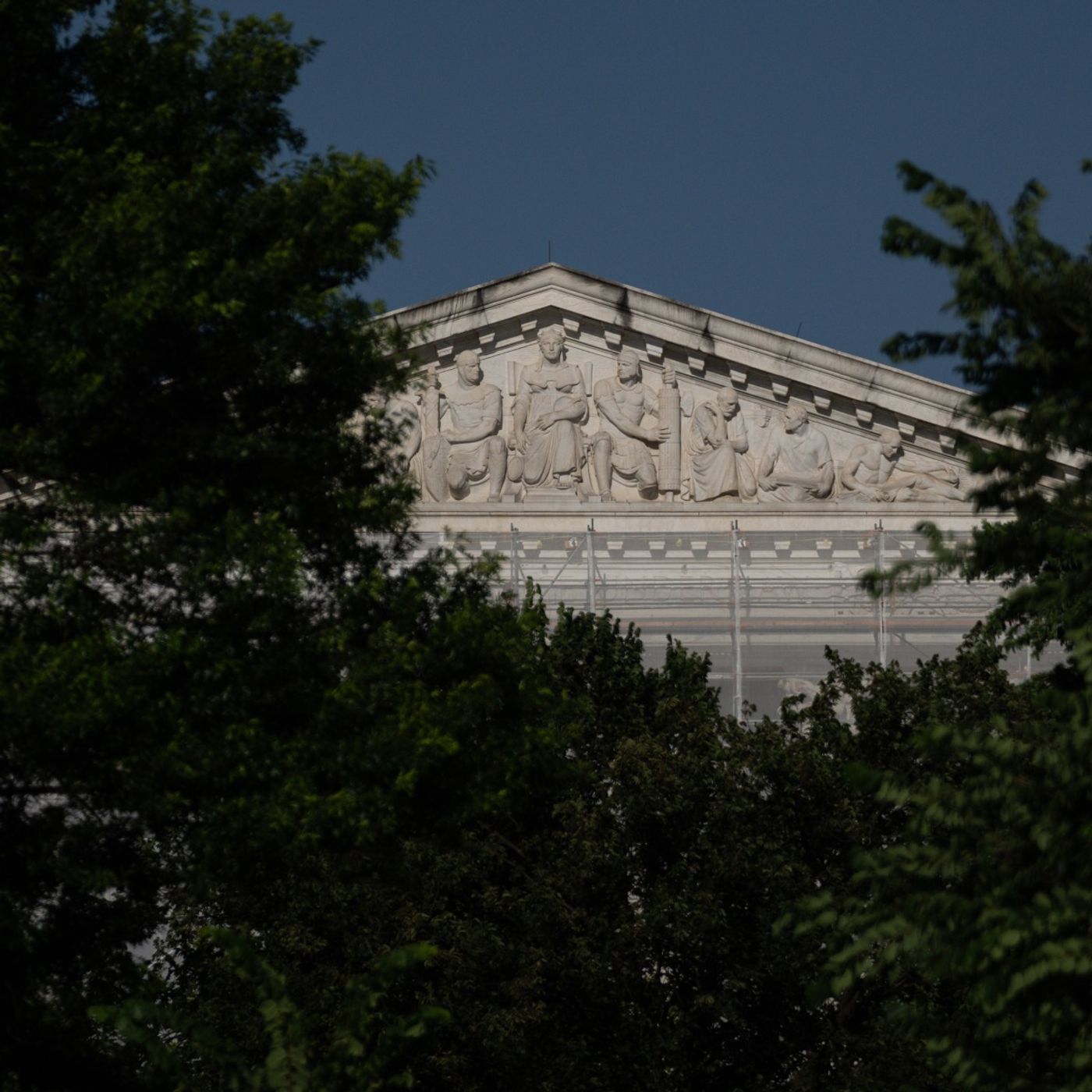
The Daily
The Rise of the Supreme Court’s So-Called Shadow Docket
00:26:17
The Supreme Court has cleared the way for President Trump to remake American government, siding with the president again and again. But many of those rulings have lacked something fundamental: an explanation for why the most important judges in the country came to their decision. Adam Liptak, who covers the Supreme Court for The Times, explains the justices’ increased use of the so-called shadow docket, and why it has sown confusion — and in some cases frustration — in courts around the country.
Loading summary
Transcript55 lines
- [00:01]
Adam Liptak
It's your day to play it's your morning to make the most of it's.
- [00:05]
Rachel Abrams
Your way to love it's your climate to consider it's your answer to what should I watch?
- [00:11]
Ollie Brand Representative
It's your money to save it's your.
- [00:13]
Adam Liptak
Song to analyze line by line it's.
- [00:16]
Rachel Abrams
Your 10 ways to find a little calm. It's your world to understand.
- [00:23]
Adam Liptak
The New York Times. Find out more@nytimes.com yourworld.
- [00:30]
Rachel Abrams
Hey there, it's Rachel. I want to take a quick second to tell you about a fun little project that we're working on here at the Daily. It's something that we'll share later on as a bonus episode for New York Times subscribers. And the idea is really simple. We want to talk to our fascinating, incredible colleagues here at the New York Times about who they are and how they do their jobs. And as part of that, we want to take questions from you, our listeners. We're going to start with games, wordle connections, the crossword, the thing so many of us do every single day. We're starting with the actual people who actually make those games. So what are your questions? Do you want to know what the wordle editor thinks of your starting word? Do you want to know how they come up with a new game? Do you want to know if they ever cheat? Whatever your question is, you can send it to us by recording a voice memo and emailing it to daily subscribersytimes.com okay, here's the show from the New York Times. I'm Rachel Abrams and this is the Daily the Supreme Court has cleared the way for President Trump to remake American government, siding with the president over and over again. But many of these rulings lack something fundamental, an explanation for why the most important judges in the country came to their decision. Today. My colleague Adam Liptak explains why the rise of the so called shadow docket has sown confusion and in some cases, frustration in courts around the country. It's Monday, September 15th. Adam, I think that when most people think of the Supreme Court, they imagine oral arguments and lawyers standing in front of justices making impassioned cases for their clients and then the justices asking questions and writing these lengthy opinions and dissents. But you recently wrote about how there's been this flurry of cases recently that are kind of the exact opposite of everything I just described, which felt a little bit surprising. And I wondered if you could just start off by telling us what has been going on at the Supreme Court lately.
- [02:51]
Adam Liptak
So the Supreme Court is operating these days on two tracks One of those tracks, the one you refer to, Rachel, is the merit stocket. On the merit stocket, people ask the Supreme Court to hear a case. If it does, it hears oral arguments. The justices meet, vote, deliberate, exchange drafts.
- [03:10]
Rachel Abrams
Right.
- [03:11]
Adam Liptak
And about 60 times a year, they issue long, involved, considered decisions, majority opinions, dissenting opinions, often 100 pages or more. And that's what we're used to. Now, at the same time, on a separate track, there's the so called, and people use different names for this, there's the shadow docket or the emergency docket, or lately some justices have been calling it the interim docket. But the short of it is that this happens really fast. Parties race through the court, they submit only very thin briefs, there's no oral argument. And in a matter of weeks, the court issues orders, deciding consequential matters in a way that will last a year or two in a very terse opinion. And this different procedure has really accelerated in the second Trump administration, which has run to the court maybe 24 times already in its first seven or eight months in office. That's a larger number than the Biden administration did over four years. It's a much larger number than the Obama and George W. Bush administrations combined. So order of magnitude, we're in a different area.
- [04:30]
Helene Cooper
Wow.
- [04:33]
Adam Liptak
And also the subject matter of these applications is really consequential. And the court has greenlighted immigration stops in la, canceling NIH grants, firing thousands of federal workers, discharging transgender service members. It's essentially the entire Trump agenda.
- [04:56]
Rachel Abrams
Okay, that helps me understand why. Something that I don't think I've really heard about before this week, suddenly it feels as though I'm hearing about it everywhere. So can you just explain, what is this? How does it work?
- [05:10]
Adam Liptak
So here's how these cases typically arise. A president, say President Trump issues an executive order setting out some bold piece of his agenda, some program that gets challenged in court, and a federal district court judge says, I don't know yet. I haven't had a chance to look at all the evidence. I don't know yet whether it's lawful or not, but I'm going to maintain the status quo. And the status quo is, we didn't have this program yesterday, let's not have it today either. And I'm going to block this program for now while the case goes forward, because I think it might not be lawful. The administration doesn't like that answer. And they'll go to an appeals court and say, would you pause this ruling? Because we think this ruling is Wrong. The appeals court might well say, no, it's, it's okay with us. Then within days, it goes to the Supreme Court, and the Supreme Court is asked to pause that ruling, blocking the initiative not to rule on its ultimate lawfulness, just to say whether it can be in place or not. And the court does that very fast, generally without in person deliberation among the justices, kind of shooting from the hip. And importantly, issues orders that contain either very little reasoning, a paragraph or two, or quite often no reasoning at all. It just says yay or nay, and you don't know why.
- [06:37]
Rachel Abrams
So it basically sounds like this is a process that allows decisions to both get expedited and also does not provide a lot of transparency into why they're made. Why has this procedure become more popular recently?
- [06:51]
Adam Liptak
I mean, the basic answer is that presidents of both parties have been increasingly aggressive in trying to do stuff by executive order. And that gives rise kind of as night follows day, to court challenges, to court rulings, to initiatives being blocked, and the Supreme Court being asked to weigh in on really short notice. And I should say that this acceleration, this uptake, has exploded in the second Trump administration. And the administration thought that the Supreme Court will generally be sympathetic to them, either because it's a 6:3 Republican appointee majority that might be inclined to be sympathetic to a Republican president, or a court that in general defers to executive power of presidents of either party. But the Trump administration has gone to the Supreme Court over and over again in the knowledge that they were quite likely to succeed, and they have been.
- [07:53]
Rachel Abrams
So what it sounds like is that the Trump administration has basically figured out that this is an effective strategy to execute their agenda quickly. And they have been proven right in the many decisions that we've seen handed down so far this year. But I feel like a lot of people listening might be thinking, like, wait a minute, don't the Supreme Court justices typically vote along party lines? There's a reason we call them conservatives or liberal justices. Right.
- [08:18]
Adam Liptak
There is an element of politics in Supreme Court judging, but in argued cases on the so called merit stocket, they're unanimous. Like 40% of the time. The number of cases that break strictly along the 63 line is like a large handful. And unusual alliances and weird permutations and strange bedfellows are not uncommon on the merit stocket.
- [08:41]
Rachel Abrams
So, like in the normal course of business, you do see more agreement among the conservative and the liberal justices.
- [08:48]
Adam Liptak
Yes, but when we looked recently at just these emergency applications in the last two administrations, the picture is quite different. There's a lot more partisan voting. There are essentially no strange bedfellows. The Biden administration did win a slight majority of its Emergency applications, about 53%. The Trump administration, far more successful at 84%. But I don't think those are the most interesting numbers. The most interesting numbers are when you look at the voting records of individual justices. And the right side of the court and the left side of the court are both completely playing to type. So Justice Alito may well be the most conservative member of the court, voted for President Trump 95% of the time and President Biden 18% of the time. That is a 77 percentage point gap. I did that math because when you look at Justices Sotomayor and Ketanji Brown Jackson, probably the two most liberal members of the Court, they also have a 77 percentage point gap. But going in the other direction now, this is not completely apples to apples. They're not the same cases, they're different legal issues. But in a sense, not in a sense, it's the same fundamental legal issue. How much deference do you give the president? And how do you calculate whether leaving a program in place causes harm to one side or the other? That's the basic question in all of these emergency applications. And the Justices I just mentioned come to very different conclusions, if not based on at least correlated to the president, who they might be thought to like or dislike.
- [10:44]
Rachel Abrams
Why do you think we see so much more partisanship in these emergency decisions?
- [10:49]
Adam Liptak
I think the justices themselves will say they don't do their best work on short notice, that long consideration of briefs and arguments and deliberations helps them understand the issues, find consensus, find common ground, find common ground, find ways to rule, maybe more narrowly, but with a greater majority. When you're operating at this speed, things other than the law may take a greater role. Now the justices will say, well, that's why we don't write anything, because we don't want to be locked in, because we haven't thought it through completely, because we're being required to give a quick answer and we will defer to another day, the chance to give a more considered answer. And they say that if you were to write something now, you'd be locked in and it would be harder for you to come to a different conclusion later. But the rise of this procedure, the rise of emergency orders, has real consequences for the work of the Supreme Court, and it's causing some real chaos in the legal system itself.
- [12:16]
Rachel Abrams
We'll be right back.
- [12:28]
Ollie Brand Representative
Ollie knows the back to school chaos all too well. Schedules, carpools, relearning algebra 2. It's a lot for you and your crew. Ollie makes wellness an easy and delightful part of your routine. Need immune support? Kids will enjoy Try Kids Multi plus Probiotic Is bedtime a struggle? Go with kids Sleep for gentle support Moms Support your immune system, nutrition and more with women's multi grab these products@ollie.com or retailers nationwide. These statements have not been evaluated by the Food and Drug Administration. This product is not intended to diagnose, treat, cure, or prevent any disease.
- [13:02]
Helene Cooper
I'm Helene Cooper. I cover the US Military for the New York Times. So I'm sitting in my car in a parking lot outside the Pentagon. I had a cubicle with a desk inside the building for years, but the Trump administration has taken that away. So now I sometimes come out here to make phone calls and even to file my stories, using my car as sort of a makeshift desk. People in power have always made it difficult for journalists. It hasn't stopped us in the past. It's not going to stop us now. I will keep working to get you the facts. I want people to understand exactly what we're asking these young men and women of the US Military to do. All of my colleagues at the New York Times are dedicated to helping you understand the areas that they cover. None of this work happens without subscribers. If you'd like to subscribe, go to nytimes.com subscribe.
- [14:05]
Rachel Abrams
Adam, I can imagine why these kinds of decisions might be sort of confusing because these orders, as you explained, are issued really, really quickly. And the Supreme Court isn't explaining itself in great detail. So I wonder if you could give an example of a case that would allow us to see kind of how that lack of explanation leads to this confusion in real time.
- [14:27]
Adam Liptak
Well, just recently, there was a challenge to the immigration crackdown in the Los Angeles area where, as you know, ICE agents were stopping detaining lots of people. And Challenger said that violated the Fourth Amendment. They said it was indiscriminate racial profiling. And they persuaded a federal trial judge to issue an injunction that says, we're not saying you can't enforce the immigration laws, but saying you can't rely on certain factors alone or in combination. And those factors were someone's apparent ethnicity. You can't stop somebody just for looking Hispanic, whether they speak Spanish or accented English, whether they're at a work site that you might associate with unauthorized immigrants or the type of work people do, say landscaping or construction. And the Trump administration didn't like those restrictions. They Go to the appeals court, the ninth Circuit, the ninth Circuit won't pause it. And they go to the Supreme Court. And the Supreme Court rules for the administration. In a decision that contains precisely zero reasoning, like nothing.
- [15:42]
Rachel Abrams
They didn't explain any part of the decision.
- [15:45]
Adam Liptak
Yeah, we don't know whether it was because the parties challenging the order didn't have standing or whether the lower courts had ruled too broadly on immigration enforcement tactics. The majority gave no reasons. All we know is the Supreme Court orders that in Los Angeles, at least, ICE agents are free to use these tactics to pick people up, at least for now. Does it apply elsewhere? We just don't know.
- [16:18]
Rachel Abrams
So in other words, and I think this gets at the confusion that you were talking about earlier, if you are, for example, a judge in Chicago and you're dealing with this exact same type of issue, whether or not law enforcement can racially profile, you don't know how the Supreme Court made its decision. So therefore you, you don't understand what the actual precedent is and you are just basically guessing about whether or not your decision is an appropriate application of the Supreme Court's precedent.
- [16:47]
Adam Liptak
Right. I mean, one thing in this case in particular was that the trial judges ruling looked at four factors and said that you can't alone or in combination relying on only those factors stop somebody. Well, that raises a ton of questions. And the next judge may wonder, well, what about two or three of those factors? Or what about apparent ethnicity? By itself, an ordinary merits decision would methodically work through these issues and give litigants and judges real guidance about what the law is. Now, we haven't yet seen real life examples of lower courts grappling with the quite recent decision on immigration stops in la. But in other cases involving federal grants and whether the President can fire the leaders of independent agencies, whether he can deport people to South Sudan, those cases have caused actual judges to be actually confused. Justice Neil Gorsuch actually last month in a case involving NIH grants, said that a federal judge in Boston had ignored the reasoning of a four paragraph order in April in a different case and that he should have understood that even though that wasn't a ruling on the merits and whether, as Justice Gorsuch said, it was only probabilistic, then it still had presidential force. And that judge had done something gravely wrong. And that gave the judge, William Young of the Federal District Court in Boston, a real, I don't know what to call it. He actually went into a court hearing and at length apologized and said he didn't realize he had not meant to defy the Supreme Court.
- [18:46]
Rachel Abrams
Oh, wow.
- [18:46]
Adam Liptak
That he, he was a Reagan appointee. He said in his 40 some years on the bench, he's never tried to defy a higher court ruling. He is committed to precedent.
- [18:56]
Rachel Abrams
He's like, I'm not a troublemaker.
- [18:58]
Adam Liptak
He just didn't know. And this is not an isolated incident. Lots of judges are really struggling to figure out what kind of precedent a shadow docket ruling represents. The problem we have is the Supreme Court isn't giving us opinions, it's giving us signals. Just last week, federal appeals court judges in Virginia debated this in open court. The Supreme Court's action must mean something. It doesn't do these things just for the kicks of it, and we can't just blow past it. And you can hear them weighing how, on the one hand, these orders are quite opaque.
- [19:42]
Rachel Abrams
But I mean, I have to say I kind of read the Supreme Court as telling us we are the ultimate deciders of the interim status of a case. How do we get around that here?
- [19:52]
Adam Liptak
On the other hand, they have an obligation to follow Supreme Court precedent if they can figure out what that precedent is, but they're telling us nothing. And so you had one judge really bristling at the Supreme Court for putting them in this position, for giving them so little detail, so little guidance. Yes, we out here flailing. We're just in the water, thrown in the water. Just give us some guidance. Yeah, no disagreement there.
- [20:19]
Rachel Abrams
And I guess, Adam, I think one of the previous recent times we've had you on the show was to discuss this growing tension between the lower courts and the Supreme Courts. And this feels like a really clear example of how that tension is playing out in the open.
- [20:35]
Adam Liptak
Right. And in general, that is not the way the federal judicial system usually works. There's great respect and admiration across the levels of the judicial system, and people know their roles. And this controversy, dispute, schism, and out in the open is really unusual.
- [20:57]
Rachel Abrams
I guess one thing I'm wondering is it's clear why what you have outlined could be frustrating to a judge, but why should an average person care that this is going on?
- [21:09]
Adam Liptak
Well, if judges are confused, the people affected by these decisions are confused. And that's not a handful of people. That's thousands, maybe tens of thousands of federal workers. It's many hundreds of thousands of immigrants. These are decisions that are not abstractions. They are real life, life altering decisions from the court.
- [21:31]
Rachel Abrams
Given all of the confusion this is causing for people and for the lower courts, I just want to ask, is this the only mechanism by which these cases can be decided. Like, do they really have to be decided this quickly just because the government asks for them to be decided on this emergency basis?
- [21:49]
Adam Liptak
There is another way, and the Court has done this occasionally. Instead of issuing an order based only on these thin stay application briefs, it's. It could set the case down for argument, it could call for more briefs. It could do that pretty quickly. And maybe the answer is, in these hard cases, rather than moving at lightning speed, slow it down a little bit and give a more conclusive answer after briefing argument deliberation.
- [22:19]
Rachel Abrams
The short answer is no, it does not have to be this way. There could actually be an in between option.
- [22:25]
Adam Liptak
Yes. But what's more common is that these same cases in which the Court has temporarily greenlighted programs will come back to the Court in due course, in a year, on the merits, and they'll set it down for real arguments, and they won't necessarily go the same way. In the Biden years, there were three instances where the Court refused to lift injunctions blocking Biden programs, but ultimately ruled in favor of Biden. In the Trump scenario, it may be that when cases return to the court, Trump loses. But in the meantime, things will have happened. If the Court greenlights lifting immigration protections for hundreds of thousands of people, some of those people will have been deported. If the Court greenlights firing thousands of federal workers, maybe someday they'll go, you know what? You shouldn't have fired them.
- [23:23]
Rachel Abrams
But they got fired nonetheless. They got deported nonetheless, right?
- [23:27]
Adam Liptak
So you can call these interim orders, provisional orders, temporary orders, but they have real world, immediate consequences that can't necessarily be undone.
- [23:36]
Rachel Abrams
I wonder how you think we should understand the moment that the Court is now in, in terms of what. Whether what we are seeing represents a fundamentally different Supreme Court or a phase of the Supreme Court.
- [23:53]
Adam Liptak
I think this could be a new normal with the Court, which has for centuries operated in great deliberation. There are scattered around the Supreme Court grounds, little sculptures of tortoises, and that's a representation from the Court that what they do is slow and deliberate and considered and not moving at lightning speed. But these days, seemingly half of the Court's efforts are devoted to this kind of speedy, unexplained work. And remember that we have three branches of government. Two of them are elected. They claim legitimacy by dint of having been elected by the public, the Supreme Court. The Justices are obviously unelected, and they claim legitimacy and authority by dint of reason, by dint of explaining themselves and persuading people that the issue before them has gotten their full attention and a careful opinion that you may not agree with, but at least you can follow it. At least you can engage with it. At least you can sort of test where it's right or wrong in a court that just says, like a parent would say to a child, why? Because I said so. That is a different version of the American justice system than the one we've been used to. And it has the potential to reshape not only the Supreme Court, but American justice.
- [25:53]
Rachel Abrams
Adam, thank you so much.
- [25:55]
Adam Liptak
Thank you, Rachel.
- [26:04]
Rachel Abrams
We'll be right back. Here's what else you need to know. Today, Governor Spencer Cox of Utah provided new information about the background and political leanings of the 22 year old accused of killing Charlie Kirk, saying that the suspect had, quote, leftist ideology and that he had been in a romantic relationship with someone who was in the process of transitioning from male to female.
- [26:36]
Adam Liptak
I will say that that person has been very cooperative with authorities. What we have learned specifically is that this person did not have any knowledge, was shocked when they, when they found out about it.
- [26:49]
Rachel Abrams
Cox said on NBC's Meet the Press that the the romantic partner who lived with the suspect had provided investigators with private messages that incriminated the alleged gunman. Cox also said that the suspect appeared to have been, quote, radicalized sometime after dropping out of college and that the man had spent much of his time immersed in online gaming message boards and part of what Cox called the, quote, deep, dark Internet. And in a live stream from the set of Kirk's Population podcast, his wife, Erica spoke for the first time publicly since the assassination, vowing that her husband's work would continue. If you thought that my husband's mission was powerful before, you have no idea. You have no idea what you just have unleashed across this entire country and this world. You have no idea. Today's episode was produced by Mary Wilson, Ricky Novetsky and Michael Simon Johnson. It was edited by Rob Zipko, Lexi Dio and Devin Taylor and was engineered by Alyssa Moxley. That's it for the Daily. I'm Rachel Abrams. See you tomorrow.
- [28:21]
American Petroleum Institute Representative
This podcast is supported by the American Petroleum Institute. Energy demand is rising and the infrastructure we build today will power generations to come. We can deliver affordable, reliable and innovative energy solutions for all Americans. But we need to overhaul our broken permitting process to make that happen. It's time to modernize and build. Because when America builds, America wins. Read API's plan to secure America's future at permitting reformnow.org.