← The Daily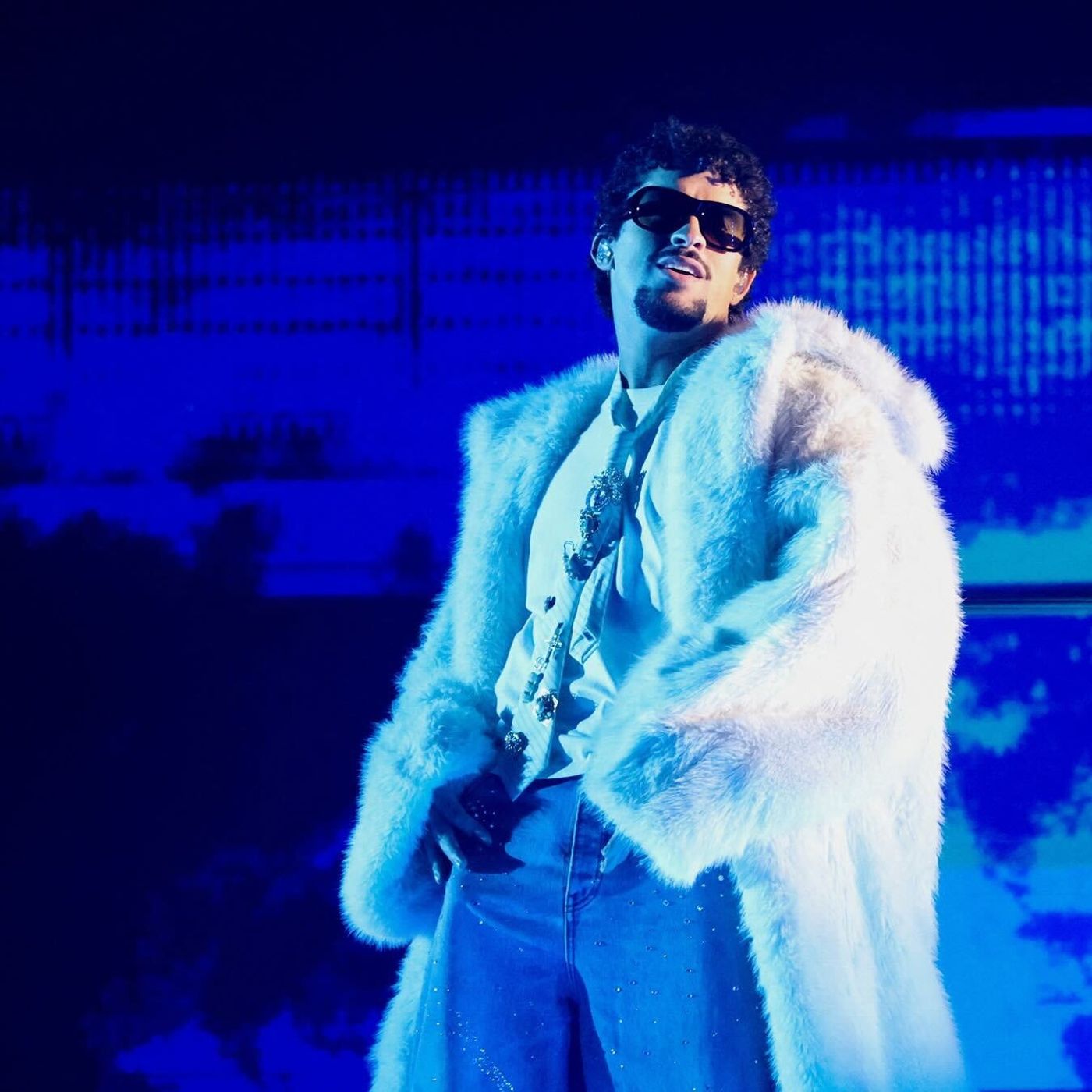
The Daily
The Sunday Daily: Bad Bunny Takes Over America
00:48:41
At the Grammy Awards tonight, the Puerto Rican pop sensation Bad Bunny is the first Spanish-language artist to be nominated for album, record and song of the year simultaneously. For most artists, this would be the high point of their year, if not their career. For Bad Bunny, this is just an appetizer for what’s in store for him next week. Next Sunday, he will headline the Super Bowl halftime show. His performance comes in the middle of a nationwide crackdown on immigration — an issue he’s been vocal about — and follows a backlash against the N.F.L. for booking him in the first place. Jon Caramanica and Joe Coscarelli, the hosts of The Times’s pop music show “Popcast,” discuss Bad Bunny’s rise to the heights of pop stardom, and explore what it means for a Puerto Rican artist to headline the world’s biggest stage.
Loading summary
Transcript203 lines
- [00:01]
A
Hi, I'm Solana Pine. I'm the director of video at the New York Times. For years, my team has made videos that bring you closer to big news moments. Videos by Times journalists that have the expertise to help you understand what's going on. Now we're bringing those videos to you in the Watch tab in the New York Times app. It's a dedicated video feed where you know you can trust what you're seeing. All the videos there are free for anyone to watch. You don't have to be a subscriber. Download the New York Times app to start watching. From the New York Times, I'm Natalie Kitroweff. This is the Daily on Sunday. If you don't already know who Bad Bunny is by this time next week, you definitely will. At the Grammys tonight, he's up for six awards, and that's already made history. He's the first Spanish language artist up for album, song, and record of the year simultaneously. But tonight is really just an appetizer for the massive moment he's about to have. One week from today, Bad Bunny headlines the biggest stage in music, the super bowl halftime show. And that would be a big deal any year, but this year, it's become incredibly contentious because Bad Bunny has been openly critical of ICE and its immigration crackdown. Back in September, when this was first announced, conservative commentators were not thrilled about it.
- [01:28]
B
The NFL just chose Bunny Rabbit or whatever his name. This guy who hates ice, the white.
- [01:35]
C
Guilt ridden, virtue signaling, NFL announcing Puerto.
- [01:38]
B
Rican Trump hating rapper Bad Bunny will be the super bowl halftime show.
- [01:42]
C
Don't be mad that we have a.
- [01:44]
B
Cross dresser who doesn't speak English doing.
- [01:46]
C
The halftime show because if Kamala won.
- [01:48]
B
He would have been a cabinet member.
- [01:50]
A
And President Trump, who loves football, called the selection of Bad Bunny, quote, absolutely ridiculous. I never heard of him.
- [01:59]
C
I don't know who he is.
- [01:59]
A
I don't know why they're doing it. It's like, crazy.
- [02:02]
C
And then they blame it on some.
- [02:03]
A
Promoter that they hired. So today we're gonna talk about Bad Bunny. And with me to do that are the hosts of Popcast, music critic John Caramonica, and music reporter Joe coscarelli. It's Sunday, February 1st. John Jo, welcome to the Sunday Daily.
- [02:27]
C
Great to be here.
- [02:28]
B
Great to be here.
- [02:29]
C
Oh, this is like a whole new thing.
- [02:31]
A
It's a whole new thing. We're loose. We're loose.
- [02:33]
C
We're loose.
- [02:34]
A
Yeah. Okay. So welcome to the Sunday Daily. I think this is the first daily podcast crossover event.
- [02:41]
B
Thank you.
- [02:42]
C
This is the first official John And I have never been on an episode of the Daily Together.
- [02:46]
A
Right, we love that. I wanna start by just stipulating that this is the week that Bad Bunny is gonna essentially subsume America. Culturally speaking. There's a good chance he will walk away with at least a few big awards at the Grammys, and he is going to perform in Spanish in front of America at this critical juncture when this federal immigration crackdown is maybe at its highest point of tension yet in.
- [03:13]
B
Front of America and the world, I think, which is worth mentioning. I mean, the super bowl is one of, if not the biggest and most visible music performances on the planet.
- [03:24]
C
Apologies to the Grammy Awards, which are happening tonight.
- [03:28]
B
Salute to them. It is a clash between two incredibly vocal people that's about to be set up. Bad Bunny, as you say, is never shy about his political opinions. And he's now set up to have a very vocal confrontation with Donald Trump and his many minions.
- [03:46]
A
Okay, I want to first just get into the reason why we have this moment, this moment of a potential clash, this moment where we're all waiting to see what happens. And I think that is really because of who Bad Bunny is and what he's come to represent for tens of millions of people who listen to him. So let's start there with the basics. Who is he? Who is Bad Bunny, Joe?
- [04:13]
C
Yeah. Bad Bunny comes from small town Puerto Rico. He's born Benito Ocasio. He's a kid who grew up on the first and second generations of Puerto Rican reggaeton, which had a huge commercial moment even in the United States in the late 90s and early 2000s. I think, if anything, people know the beat from Daddy Yankee's Gasolina.
- [04:41]
A
Oh, my God. Hard to forget.
- [04:43]
C
And that was like a seismic moment in American pop culture on the heels of the Latin crossover of the mid to late 90s. You're thinking Ricky Martin, another Puerto Rican superstar. And then that gets a little harder edged with reggaeton, which is their version of dance influenced rap music, known for being provocative, let's say explicit, occasionally misogynistic in the way that a lot of American rap music has faced similar criticisms. And Bad Bunny shows up and he's like, no, no, no, we're gonna do things my way. And this starts as most things do on the Internet. He's posting songs on SoundCloud, which is the sort of underground rap platform of the early 2010s.
- [05:32]
A
Yep.
- [05:33]
C
And he's on YouTube and he's all over social media. He becomes a colorful Instag and he's pushing what has become a sort of fossilized genre into the 21st century with genre bending, with fashion experimentation. He's painting his nails, he's wearing gender bending clothing, he has jewelry that might not be the sort of machismo that you're used to in this world.
- [06:05]
A
He's presenting himself in this kind of socially progressive way with this aesthetic that doesn't really fit with what we've seen from reggaeton stars thus far.
- [06:17]
B
Yeah. What I will say is you can't talk about the rise of Bad Bunny without talking about how he dovetails with the rise of streaming platforms in order to be a Latin star or a Spanish language music star in the years leading up to that, primarily you're a star of radio. Part of the reason that reggaeton got sort of fossilized or ossified in a way is cause people landed on a style made sense on tropical radio. Basically.
- [06:44]
A
Like they knew it would be a hit, they knew it would be played on these radio stations.
- [06:47]
B
And they're working almost from the hits backwards and the formulas of how to make things incredibly successful. Bad Bunny arrives. What do you have? You have YouTube as a successful distribution platform. You have SoundCloud to post your songs on. You have Spotify and Apple Music in order to get songs directly out to your listeners without having to navigate a radio infrastructure or even a major label infrastructure.
- [07:09]
A
And you're saying that essentially helped facilit this more creative, more kind of genre.
- [07:18]
B
Bending style because there's no gatekeepers.
- [07:21]
A
Right.
- [07:21]
B
If he had come along five years earlier, he'd have to think, well, how do I get heard? I get heard by signing to a major label and by getting played on radio. I probably have to make some concessions in order to have those things happen. Whereas you come along in the mid 2010s, all of the other platforms are in place.
- [07:39]
A
So it also seems to me that those streaming platforms help you get famous faster and more within your own control. And it seems like that happened with Bad Bunny. Like he just kind of exploded overnight, at least the way I remember it. When did he show up on your radar screens? What was the song that kind of put him on the map for you?
- [08:02]
B
So in the mid 2010s, there's a song called Soy Payor. We should listen to a little bit of it.
- [08:06]
A
Let's play it.
- [08:15]
B
So this comes out right at the end of 2016 and Bad Bunny instantly becomes a true, what I would say, a true YouTube star. This was, this was a novel era where I think as reporters and critics, we really started to realize that the real action was on the Internet. The real action was on SoundCloud. The real action is on YouTube. And someone like Bad Bunny essentially leapfrogged almost everybody who was signed to a major label. This, this video and what happened in the next couple of years really does coincide with what I would describe as a drop in the quality and influence of major label Spanish language music at that time. By the end of 2018, he puts out a full length album, Porsemprey. I remember having to review this, I'm pretty sure, on Christmas in 2018. And it was, I thought, one of the most creative albums that had come out of that space period. It was mindful of pop and also mindful of history. The thing about Bad Bunny that I find so fascinating is we all sit here and talk about him as a progressive. We talk about him as an innovator and as someone who's breaking rules. How do you break rules? You have to understand the rules to break the rules. And I would venture to say that Bad Bunny knows more about reggaeton history than most people currently making the music, even if he's constantly sort of like violating its tenets.
- [09:47]
C
The other thing I wanted to say about Bad Bunny's musical rise is that he's also coming post American rap being completely changed by people like Kanye west and Drake. Tell me how so Bad Bunny is mixing singing and rapping. He's bringing an extremely melodic touch to reggaeton, which is traditionally a more serrated, in your face, rapid fire rapping genre. And he's softening its edges. John mentions Por Siempre, the Bad Bunny debut album. The real moment when I stood up and took notice of Bad Bunny was the debut single from that album, which is called Est, And it has this extremely dreamy music video. Again, you see the painted nails. You see a guy who doesn't look even in the video for Soy Peor, he looks like pretty much a standard reggaeton artist. He looks like a rapper. In Estamos Bien, he looks more like Young Thug, who's a rapper that broke all the rules of rap in America and sort of warps the sound that we're used to. Estamos Bien is like a pop song. It's beautiful. It's like a little bit emo. He's taking from all of these different strains of basically post ipod music, right? When we think about young people growing up listening to everything, not just the one CD they can afford on a given week, but if you grow up in the time of iTunes and YouTube and file sharing.
- [11:36]
A
Yeah, yeah, yeah. All Of a sudden, the entire world is at your fingertips.
- [11:38]
C
Exactly. And Bad Bunny was very much a vessel for all of these things combining at once. And he's doing it in Spanish.
- [11:48]
A
You're saying basically that part of the reason he doesn't follow this standard arc, part of the reason he is such a crossover artist, is the time in which he comes up.
- [11:59]
C
It's very specific, but we did skip a step, and that step was Despacito.
- [12:04]
A
What's the despacito step?
- [12:06]
C
So I don't think you can talk about the popularity of Bad Bunny and Latin music and its arrival on the super bowl stage next week without talking about what happened in 2017 with Luis Fonzie and Daddy Yankee's song Despacito. Despacito, Quiero despacito, which became one of the biggest singles of all time, regardless of language. This is a Latin pop song from two veteran artists who were not exactly the hottest or coolest at that moment. They made a totally undeniable dance hit that appealed to 2 year olds and 82 year olds. And then they got Justin Bieber on the remix in which he sings mostly in Spanish. He comes to them. And this was what year this was in 2017.
- [13:08]
A
So this is kind of pre Bad Bunny's explosion.
- [13:12]
C
It's all happening at the same time. When they realize that because of the way music can traffic online and then bubble up to radio stations, award shows, television performances, all of that, they realized there was no going back. Right. This was a toothpaste out of the tube moment for Latin music or pop music in any language besides Eng, in which it became clear that there was a big enough audience to sustain it. And I think after Despacito becomes among the longest running chart toppers ever, all of a sudden there's tons of interest and investment in these artists that are allowed to stay who they are.
- [13:59]
B
And also, we talked a little bit earlier about the power of streaming. It's had one of the most visible impacts on Spanish language music, because what it did is sort of aggregated everybody, all across the planet, hundreds of millions of people who speak Spanish, all one home, to be able to find music that speaks to them in their language.
- [14:21]
C
It also makes it so the artists don't have to compromise to reach that level of audience. If there's a middleman, if there's a gatekeeper in between a visionary artist and hundreds of millions of people, there's probably some negotiation going on in this case specific in terms of language. What? Bad Bunny.
- [14:40]
A
Good. Let's talk about that.
- [14:41]
C
Yeah. What Bad Bunny has never done in his ascent to the super bowl stage is sing a rap in English.
- [14:48]
A
And just to put a fine point on that, that's something that his predecessors in the world of Latin music did. Right. I mean, you think about Marc Anthony, Shakira, There were English versions of their songs. I mean, they did Spanish music, but they also made music that was in English, theoretically, to appeal directly to this audience. So why did Bad Bunny not do that? And, I mean, you guys talk to him. What's his relationship to that decision?
- [15:17]
C
Yeah, I mean, he represents a new kind of pop star for the 21st century in which the musicians can commune directly with their audiences. You think of artists like bts. This is the K pop group.
- [15:30]
A
Right.
- [15:31]
C
Again, on the level of Bad Bunny. Billions and billions and billions of plays, entire economies built around them, and they sing in Korean and they reach listeners all around the world, some of whom speak Korean, some of whom learn Korean because of this music, and some of whom have no idea what's being sung or rapped. And I think all of that goes for Bad Bunny as well.
- [15:56]
A
And, I mean, you guys talk to him about this on podcasts on your show. What does he say about it? Because it's a decision, right? It's a decision to do it in the beginning and to stick with it. I mean, it's now been years and years of this.
- [16:09]
B
I hope you'll play the part from our interview where I think. Joe, you asked him, right?
- [16:13]
A
Yes. Good idea. Let's play it.
- [16:16]
C
Now that your music is reaching so many millions of people around the world, is there a part of you that feels like listeners who don't understand the lyrics are missing something and will never fully grasp what you're trying to convey?
- [16:29]
A
Definitely.
- [16:30]
C
Definitely.
- [16:31]
A
People miss a lot of.
- [16:32]
C
A lot of nuance. Yeah. Actually, even there's a lot of Latinos who speak Spanish that they missing a lot, I think, because I'm singing in Puerto Rican slang.
- [16:48]
B
Right.
- [16:48]
C
And I asked him if that bothers him, if he wished that, you know, either the audience tried harder or he tried harder to communicate with them, to meet them, where they were, were.
- [17:00]
A
And what he say?
- [17:01]
C
He said, I don't care. And he.
- [17:04]
B
He said it very.
- [17:04]
C
Leaned into it.
- [17:05]
B
He said it very melodically.
- [17:07]
A
I don't care. It's almost like the proliferation of streaming. What it does is kind of show that the hegemony of the English language was a fallacy the whole time. Always was right and always was. And Bad Bunny walks through that door and kind of opens this new world where it Becomes very clear that many, many people, you know, not just Spanish speakers, want to hear this.
- [17:38]
B
Yep.
- [17:39]
C
And then he goes on this insane run, right. He puts out six albums, not counting mixtapes and collaboration, six solo albums of his own. Un Verano Senti comes out in 2022. That's sort of the high water mark up to that point. That's, I think, widely considered his masterpiece. And that's because it combines everything that he's good at. It combines the sort of love Lauren singing, he does the Latin trap rapping they sort of tossed off, fun stuff, but also stadium filling anthems. And then you get to 2025, January 5, 2025, he puts out Debit Mas photos, his most recent album. And this is a bit of a swerve for him. And the album starts with a song called Nueva Yol Nueva, about Latin Americans in New York and how he can feel at home here. And it's traditional instrumentation. It's not as digital as everything he's done in the past. It has this sort of bespoke, homemade feel to it. It's party music, but it's nodding to all of the various styles that come together to make this moment of Latin music explosion, both personally and I think, internationally. This is an album of memory. It's called I Should have Taken More Photos. It's a breakup album, but it's also an album about being away from Puerto Rico. Bad Bunny had spent a year living in Los Angeles, being very famous, being very famous, being paparazzi with Kendall Jenner, his alleged girlfriend at the time, and becoming this huge star who lives either on the road or in the Hollywood Hills. And then this album represents, I think, him coming back home and once again, as he'd done throughout his career to this point, but now with a brighter spotlight showing people where he comes from.
- [20:07]
A
It's interesting because you guys have sketched a trajectory of this megastar where it seems as though as he became more famous, as his profile and his influence grew, you know, he's a total star. And at the same time, it sounds like he's deepening his commitment to traditional music.
- [20:30]
B
It's an interesting dovetailing of personal narrative, musical narrative, and I think political narrative, even if it's a tiny bit sublimated, but. But it is there. So to me, you get to a certain level of fame and invariably you're making some kind of sacrifice. You're sacrificing your privacy, you're sacrificing your ability to make decisions on your own, without consultation with others, without thinking about how it might affect future opportunities. You're running essentially a small business.
- [21:05]
C
Not that small.
- [21:06]
B
Yeah, yeah. You are. As Joe said earlier, you are your own economy, in a way. And it was fascinating, I think, to see someone really at the peak of their powers who could have just absolutely said, you know what I'm doing? I'm going on a global stadium run for the next three years and making hundreds of millions of dollars. He says, no, I have a moral obligation to myself. I have a creative obligation to the people who predated me in Puerto Rican music. I have an emotional obligation to make something that's true to my spirit.
- [21:44]
C
And I think a lot of that happened because of what was going on in his homeland as he was increasingly away from it.
- [21:52]
A
Okay, talk about that.
- [21:53]
C
Puerto Rico been in the news a lot this last decade. 2017, right. When bad Bunny is becoming a superstar, Hurricane Maria hits.
- [22:02]
A
Yep.
- [22:02]
C
Kills many on the island. You know, leads to years and years of political upheaval stemming from the government's handling of that crisis and the United States handling of that crisis. You have Bad Bunny, I think, having his political awakening in real time, in public. You have this moment in 2019, which really illustrates this, which is that there are street protests against the governor at the time after correspondence between the governor and his associates that and shows both corruption, homophobia, disrespect, callousness. Callousness. And disrespect for the dead from Hurricane Maria. And Puerto Ricans take to the streets. And Bad Bunny's on this big European tour at the time. And what does he do? He cancels his shows. He flies home.
- [22:57]
A
Wow.
- [22:58]
C
He records a protest anthem with two other Puerto Rican artists, Residente and Ilay, And they put out this song, which translates to sharpening the knives. And Bad Bunny calls out the governor by name. And takes to the streets. Bad Bunny says, my people need me. I'm going to be beside them. And in part because of these protests, the governor ends up resigning.
- [23:37]
A
Wow.
- [23:38]
C
I think that's Bad Bunny coming into his power.
- [23:41]
A
Right.
- [23:41]
C
And from there, he doesn't stop. Anytime he feels the call to say something in particular, something about Puerto Rico.
- [23:50]
A
He'S becoming, you're saying, a kind of explicitly political figure in this moment.
- [23:55]
C
Yeah. But I think he's doing something very careful, and I think something that other artists, frankly, could take note of, which is he's speaking about issues that are meaningful to him personally. And I think that comes across. Anytime he decides he's gonna stand up and say something, it's because it's an issue that is near and dear to him and where he comes from.
- [24:18]
A
It seems authentic. It doesn't seem like he's trying on some sort of political shirt that day.
- [24:22]
C
Yeah.
- [24:23]
A
And then there's this other political moment that I honestly learned about preparing for this show with you guys, which is this song. Yo Pereo Sola. Yo Pereo Sola. I mean, it's. I twerk alone in English, and it's about a woman who dances alone. It's a song essentially about sexual harassment and violence against women. I did not know that because I experienced that song as an amazing song to dance to and have, like, a great time listening to. I learned it was political, which makes sense, but. Yeah, I wonder what to make of that.
- [25:02]
C
I mean, this is the genius of Bad Bunny. And I think any great pop figure who is interested in Trojan horsing more complicated ideas in digestible, joyful, celebratory packages. One of the things that Bad Bunny has done really effectively in a way that I think prevents people from feeling like he's preachy, is pairing these things in a way that feels natural, but also in a way that you can just enjoy on their surface level.
- [25:32]
A
Okay. Which I think brings us just about to near the present moment. You said he comes out with this album, his most recent album, in January 2025, obviously the same month that Donald Trump is inaugurated as President of the United States. He then makes a series of decisions around that album and the performances of those songs in the United States that are making more direct statements politically in the United States. Walk me through those, John.
- [26:01]
B
So we talked about this album as a homecoming for him, and he makes that explicit by saying, yes, I'm gonna perform, but I'm not gonna perform in the United States. I'm not gonna perform in California or New York or Texas. I'm gonna perform dozens of shows in Puerto Rico. And if you wanna come see me, you have to come see me.
- [26:21]
C
Make a trip of it.
- [26:21]
B
Come. Yes.
- [26:22]
C
Come. Put your money where my mouth is. Yes.
- [26:25]
A
You know, like, wow, that's.
- [26:27]
B
That's good. Trademark off the top, off the dome. Bolstering the local economy, obviously, but also allowing him to perform truly purely on his terms and presumably go home every night later. He says part of that decision is attributable to concerns about how his concerts and the fans that might be gathered at his concerts might be used as cudgels in the ongoing immigration enforcement actions of the Trump administration. And saying explicitly, I don't want to give ICE and Trump an obvious target to come and gather Folks, up.
- [27:03]
A
This performance at the Super Bowl. It will be Bad Bunny's first performance in the continental US since he made that decision to not show up here for fear of ice and for these reasons.
- [27:14]
B
First public performance. Yes.
- [27:16]
C
Right. First one in front of a crowd. And it's not just any crowd, and it's not just any performance, but it's this television moment with all of these political stakes swirling around it, and no one knows how he's going to use that time.
- [27:36]
A
Let's take a quick break, and when we come back, we're going to look at why the NFL decided to offer this stage to Bad Bunny and all the complications around that. We'll be right back. Hi, I'm Juliette.
- [28:05]
B
I'm Joelle.
- [28:06]
C
We're from the New York Times Games.
- [28:07]
A
Team, and we're here talking to fans about our games.
- [28:10]
B
What's your vibe when you're playing one of our games?
- [28:12]
A
It makes me feel like I'm procrastinating in a really productive way. It just scratches an itch in my brain. Do you have a roof? I'm doing long distance with my boyfriend. We'll call every night and share our screen. We do connections, the Mini, and then strands, always in that order. Do you have a favorite? The Mini. We try and get it under 30 seconds. We rarely get it under 30, but that's always the goal. Folks will really time themselves.
- [28:38]
C
But with spelling bee, I give myself all day.
- [28:41]
A
It is really fun getting queen bee.
- [28:42]
C
Yeah.
- [28:43]
A
Yeah. I play it when my kids are going to bed. Do you guys play together?
- [28:46]
C
My daughter plays. She likes playing wordle.
- [28:48]
A
If you ever miss a day, there's also archives. That's so great to know. And you have it for connections as well. Lord help me. I'm just gonna be doing that all day, every day. New York Times games subscribers can now access archives for our most popular games.
- [29:01]
C
Find out more@nytimes.com games.
- [29:07]
A
So when the news came out in September that Bad Bunny was the pick for the super bowl halftime show, I have to say I was honestly surprised, because I couldn't believe the NFL, which is not a league known for pushing boundaries, chose someone who was going to be this politically contentious. So explain that to me.
- [29:29]
C
This all goes back to what happened with the NFL and Colin Kaepernick.
- [29:34]
B
He is expected to kneel once again and protest to what he says are social injustices to African Americans.
- [29:41]
C
Around 2016, you have this quarterback for the San Francisco 49ers who takes it upon himself to kneel during the national anthem before football Games in protest of the police treatment of black men. And believe me, if Colin Kaepernick were on this program, the Factor right now, he'd be sacked within seconds because his knowledge of current events is sadly lacking. Based upon what he has said so far, he was essentially pushed out and blacklisted from the NFL. And the NFL had a really hard time responding to the social upheaval that came from this. And that was reflected in part by its inability to book black and relevant acts for its halftime show.
- [30:28]
A
And you're saying part of the problem for the NFL at this point is that it has a tough time dealing with this moment and that alienates artists who it wants to book for the halftime show.
- [30:40]
C
Yes. And this all comes to a head in 2019, when the super bowl was in Atlanta, the capital of black music in modern times, and everyone is thinking, oh, all the amazing rappers or R and B singers that they could book for the Atlanta super bowl halftime show. There's reports that Rihanna turned the show down. Rihanna sort of at the peak of her world beating success at that moment. And she says, allegedly, according to reporting. I don't want any part of this.
- [31:14]
A
Post Kaepernick as a protest, you're saying of the NFL's treatment of Kaepernick?
- [31:19]
C
Totally. Instead, we get Maroon 5.
- [31:29]
B
You really, at that moment, could not pick a more anodyne artist to headline the super bowl halftime show, which we want to underscore is the biggest concert on American soil every year.
- [31:44]
A
No offense to Maroon 5.
- [31:46]
B
Yes, offense to Maroon 5.
- [31:47]
C
What are you talking.
- [31:48]
B
Is there a band name for Maroon 5? The Fiverrs Mafia.
- [31:52]
C
The Maroon 5 Mafia.
- [32:00]
B
Yes. All offense to Maroon 5. Who. I think I said something in my piece who said, would have lost all credibility had they any credibility to lose.
- [32:10]
C
Wow.
- [32:12]
B
Maybe the positive outcome of that is it makes everyone realize, oh, this has to be fixed. And so the NFL realizes they have a problem.
- [32:22]
A
By the way, I'm getting a note that the Maroon 5 fans are called the Marooners just in case anybody wants to.
- [32:27]
B
Because they're stuck on an island and no one wants to rescue them.
- [32:30]
A
Wow. I mean, they're catching straight.
- [32:33]
C
They set themselves up for that one.
- [32:35]
B
Sorry.
- [32:35]
A
Okay, so the NFL is at its low point with this Maroon 5 performance. Get me up to speed what happens, because obviously there's some recovery.
- [32:44]
C
They need help. They call Jay Z. Jay Z's Roc Nation. His entertainment company has a sports wing. Jay Z has a history of, let's say, bridging the gap between street level culture and boardrooms. That's his whole mo, especially in the latter half of his career. And the NFL brings on Roc Nation as a partner to help them in the selection of super bowl halftime performers and all other entertainment that goes around the edges of that throughout the NFL season.
- [33:21]
A
They're in repair mode.
- [33:22]
C
They're in repair mode. And they need a.
- [33:25]
B
It's plausible cover. Right.
- [33:27]
C
And they need a diplomat. Jay Z immediately faces a ton of backlash for this. He had previously been a supporter of Colin Kaepernick's, and people say he sold out. People say he's collaborating with the Enemy, et cetera. The way Jay Z frames it as I'm here to make change from the inside.
- [33:46]
A
Got it.
- [33:47]
C
So Roc Nation then works to book a string of slightly more relevant, slightly more diverse halftime shows. So the very first Roc Nation halftime show is Shakira and Jennifer Lopez. Bad Bunny actually makes a cameo during that performance. And then you get the Weeknd. You get Rihanna eventually. And then there's this one big moment for the super bowl that I think is the Band aid. The Jay Z shaped band aid. On top of everything, which is rap gets its shine. There's a Super bowl halftime show starring Dr. Dre and Snoop Dogg, Mary J. Blige, Kendrick Lamar and Eminem.
- [34:37]
A
Lose yourself in the music.
- [34:39]
C
The moment you hold it, you better never let it go. What also happens during that performance is a sort of off script moment where Eminem, in solidarity with Colin Kaepernick, takes a knee on stage. This, I think, not a coincidence that the white artist on stage felt like he had the moral imperative to make the show of solidarity.
- [35:04]
A
And also maybe the leeway.
- [35:06]
C
Exactly.
- [35:07]
B
And the currency.
- [35:08]
C
Exactly. But this is something that I don't think the NFL loved. And yet it sort of works for everyone. And I think we'll get to this idea when it comes to Bad Bunny is like, you want this to feel a little bit dangerous, especially if Jay Z is involved and saying, no, no, no, we're not capitulating to corporate dollars and ownership. We are bringing our culture to the world stage. We're doing what we do in this space where we typically were not allowed. So you want to be able to tell the artists that they're going to have some freedom, that they're going to be able to take those eyeballs and show them something that they might not see. If, you know, Toby Keith, may he rest in peace, was headlining the scene.
- [36:00]
A
You're saying, like, a whiff of transgressiveness is helpful to. All Right.
- [36:04]
C
That keeps people watching.
- [36:05]
B
It's Also look, Jay Z coming on to help supervise the halftime show is another step in this long sort of conversation in hip hop about capitalism as activism or the overlaps of those two spaces. And I think the proposition for many years was that the sheer scale, power and corporate influence of rap music was a form of activism in and of itself. It's interesting. Last year, Kendrick Lamar performs at the halftime show kind of in the post glow of his Drake Beef, which is what people were extremely watching for.
- [36:45]
A
And we discussed, Joe, you and I, on the Daily last year, I'll just say.
- [36:49]
B
And the only moment of actual protest during that show is actually a totally unscripted moment where a dancer pulls out a flag in support of, I believe, Gaza and Sudan and is summarily whisked off of the field into the bowels of the stadium by security. By security. Because that is not. Obviously, you have this moment right, when it happens and say, oh, was that intended but not intended, but intended but actually, no.
- [37:14]
C
And this is a tradition at the super bowl, right. We talk about Janet Jackson and the wardrobe malfunction that I think, you know, know, people still debate whether or not.
- [37:24]
A
We should remind people, was the moment at which Justin Timberlake ripped Janet Jackson's.
- [37:31]
C
Costume, revealing her breast. Her breast and some jewelry.
- [37:37]
A
Yes.
- [37:38]
C
And people still to this day argue about whether or not that was intended, whether that was part of the show to drive attention, but certainly drove countless FCC complaints and became a years, if not decades long controversy. And we've had these moments since then. You know, whether it's Prince going super phallic with his guitar when he's supposed to be the safe choice. You have one year Madonna performs and Mia, the sort of activist rapper, throws a middle finger up and that becomes a days long news cycle. Right. Like you need these little moments of off script, parentheses, question mark, close parentheses, to keep this thing spicy because you don't want people to use the bathroom or go heat up their nachos.
- [38:28]
A
No, and I get that. But still, the NFL's decision to book Bad Bunny still strikes me as a risky choice for an organization that's trying to theoretically, on the whole, avoid a confrontation with the most powerful man in the world. Trump has been known to target institutions for far less.
- [38:49]
B
What's more important potentially than that, and that is ratings. You want people to keep watching. You want the ad inventory to remain valuable. How do you do that? By creating a show that many tens, if not hundreds of millions of people will want to watch. In the modern music era, there's a vanishingly Small number of performers in any genre who can achieve that. You have Taylor. Taylor says no for a variety of reasons which we can talk about.
- [39:26]
A
Is that an established fact that Taylor said no?
- [39:29]
C
So what Taylor Swift has said is that Jay Z and Roc Nation made a soft approach to her. They asked if she might potentially be interested. But Taylor Swift told Jimmy Fallon that she was not given a hard offer and then sort of did a little dance in that she wanted to leave the football to her fiance, Travis Kelce of the Chiefs, and not bring her business into his business.
- [39:53]
A
He's not at the super bowl, we should note. Obviously, he's spending more time with his family.
- [39:57]
C
I do want to complicate this idea, though, that Bad Bunny is such a crazy choice for the super bowl because looked at another way, he's the only choice for the Super Bowl. He's basically the guy who had the biggest year. Look at the Grammy nominations. He's the star of the Grammy Awards the week before the super bowl in the same way that Kendrick was the star of the Grammy Awards the week before the super bowl last year. He is the most relevant man in music. So why wouldn't you put him on the stage? That is all about maintaining and amplifying relevance.
- [40:34]
A
Okay, let's take another short break, and when we come back, I want to talk about how you think, think Bad Bunny might meet this moment, what he might do when he actually takes the stage. We'll be right back. Okay. One week from today, Bad Bunny will headline the super bowl halftime show. The scene is set for what appears to be an inevitable confrontation of some kind. Cultural, literal. What do we think?
- [41:14]
C
I think the big question is, what will Bad Bunny be allowed to get away with? And how might he flout those rules and agreements going into this show? Every moment, every second, every micro movement is carefully choreographed. It is, I assume, signed off on at many, many, many levels of corporate hierarchy. It is quibbled over, negotiated, and eventually agreed upon. Everyone's gonna hit their marks, but what's left outside of that?
- [41:47]
A
Well. So, okay. It actually would be helpful for me if you guys could lay out the spectrum of the things he could do here, from most to least provocative.
- [41:59]
B
It's funny. I tend not to think of things in terms of most to least provocative because I think, as we were talking about with the hip hop halftime show earlier, some might contend that the mere existence of a hip hop halftime show is in and of itself, provocation. I do not feel that way personally, but there are people who perceive the mere fact of Bad Bunny Performing and performing in Spanish at the halftime show as a provocation.
- [42:26]
A
You're saying provocation is in the eye of the beholder?
- [42:29]
B
Yes. To me, I do not feel that way. Bad Bunny could do something extremely explicit during his performance. He could make a public statement about ICE and deportations. He could cosplay being arrested. He could make explicit reference to the killings of Alex Preddy and Renee Goode. There are any number of things that he can do literally within the show. I will say that I don't personally expect that level of directness within the confines of the show, but I think what we haven't talked about is what can Bad Bunny do outside the confines of the show? What you get when you perform at the super bowl halftime show is a tremendous amount of attention. Everyone is looking at you all at the same time. And who's to say that he won't perform 12 to 13 minutes of moderately provocative songs and set pieces and so and so forth? And the minute that stage gets disassembled, release a statement, a video, an album, something directly addressing the current moment. That's in my mind, where the real opportunity is.
- [43:39]
A
You're basically saying that it's a mistake to view this performance as contained to within the actual minutes of the performance.
- [43:47]
B
I certainly wouldn't.
- [43:49]
A
And just to say what that means is something could happen after, but also before. I mean, the Grammys is a big stage as well.
- [43:56]
C
Totally. It's completely possible that maybe hours after you listen to this episode, Bad Bunny is going to win the trophy for Album of the Year at the Grammy Awards. And he could take that mic and say anything he wants about Ice or Donald Trump or Puerto Rico. And all of a sudden, that completely raises the temperature on the performance that's gonna follow seven days from now. Seven days is also a really long time. I want to even Remember back in 2016, Beyonce releases Formation the week before she performs at the Super Bowl.
- [44:34]
A
My God, what an era. The eye is corny with that Illuminati mess.
- [44:42]
C
Formation, the first video from Lemonade, has all this iconography for black culture. Black Southern Pride, references to New Orleans, Hurricane Katrina even. And Beyonce's performance there sort of loosely. Black Panther's revolutionary themed, all his money.
- [45:03]
A
But they never take the country.
- [45:05]
B
Out.
- [45:09]
C
Comes a huge culture war moment. Fox News freaks out about this. And I think what you're seeing from the right in the lead up to this Bad Bunny halftime show is that same culture war. Red meat. I think Bad Bunny likes to play with expectations. You already had headlines this week before we recorded this episode announcing Bad Bunny will not be wearing a dress at the super bowl because there was gossip that that was going to be his protest. So you're already having micro news cycles about what he may or may not do to thumb his nose at the powers that.
- [45:51]
A
And he. Right. Weighed in himself with this kind of promo video that he put out. He looks like he is signaling that this performance is going to be showcasing the deeply multicultural Latino ness of his music.
- [46:08]
C
Right. He's leading with a message of unity. The tagline that Appleapple and the NFL put on this trailer for his performance is the world will dance. He's seen spinning all sorts of multicultural, multi, generational, multiracial, multiracial partners of all genders and sizes and colors. And it's possible that that is Bad Bunny's statement that he is coming in saying, I'm not interested in divisiveness. I'm interested in the joy of music. So I do think that that is one way Bad Bunny could play the super bowl. And that could bring him criticism from the left.
- [46:54]
A
Hmm.
- [46:54]
C
Yeah.
- [46:54]
A
Okay. Talk about that.
- [46:55]
B
Yeah. I mean, I think there will be heavy expectations that he speak forcefully about what's been happening in this country, what's been happening to Latino people and Spanish speaking people here under the thumb of the Trump administration. And I think it will be probably likely to be a rough ride for him if the morning after the super bowl we wake up and nothing of that sort has happened.
- [47:20]
C
People feel like he played it safe. So I think Bad Bunny finds himself in this really interesting push and pull where he could alienate the government, he could alienate his corporate benefactors, or he could alienate his own progressive fan base.
- [47:34]
B
And my contention is he should do all three because that will only make him more famous and more successful.
- [47:39]
A
But what's interesting about what you're saying right here is that I've been thinking about this performance as extremely risky for the NFL. With all these landmines out there, you're telling me it's also risky for Bad Bunny. And since this performance is not just a one single event thing, since the news cycle extends and begins now or before this moment, the risks begin now. Right. Like if he wins a Grammy and he doesn't make a statement. I wonder if the questions begin even right then.
- [48:15]
C
The peanut gallery starts chattering. What I will say is the thing that's been most compelling and exciting about watching Bad Bunnies Rise over the years as a reporter focused on the music business is just how nimble and savvy and borderline tricky he's been. He's really hard to pin down. He's always subverting expectations. He may not speak out when you want him to, but he speaks out when he feels like he needs to. His music is constantly swerving in unexpected directions. He is very much not beholden to anyone or anything. And I think that sense of freedom is both what people love about dancing to his music, but also thinking about and observing the way he's operated in his career.
- [49:07]
A
Well, what is clear is that we're all going to be watching not just next Sunday, but tonight at the Grammys and as you said, basically every moment up until then to see how this all plays out. Thank you, John. Thank you, Joe. It's been really fun.
- [49:22]
C
Thanks, Natalie.
- [49:23]
B
Thanks for having us.
- [49:25]
A
Foreign. Was produced by Tina Antolini with help from Alex Barron. It was edited by Wendy Doerr and engineered by Rowan Nimisto. It contains original music by Diane Wong and Dan Powell. If you want to hear more from Joe and John tonight after the Grammys, they'll both be chatting live on social media. Back it. Their handle is Opcast. They'll also be Live on their YouTube channel immediately following Bad Bunny's performance next week at the Super Bowl. That's it for the Sunday Daily. I'm Natalie Kitro f. See you tomorrow.