← The Daily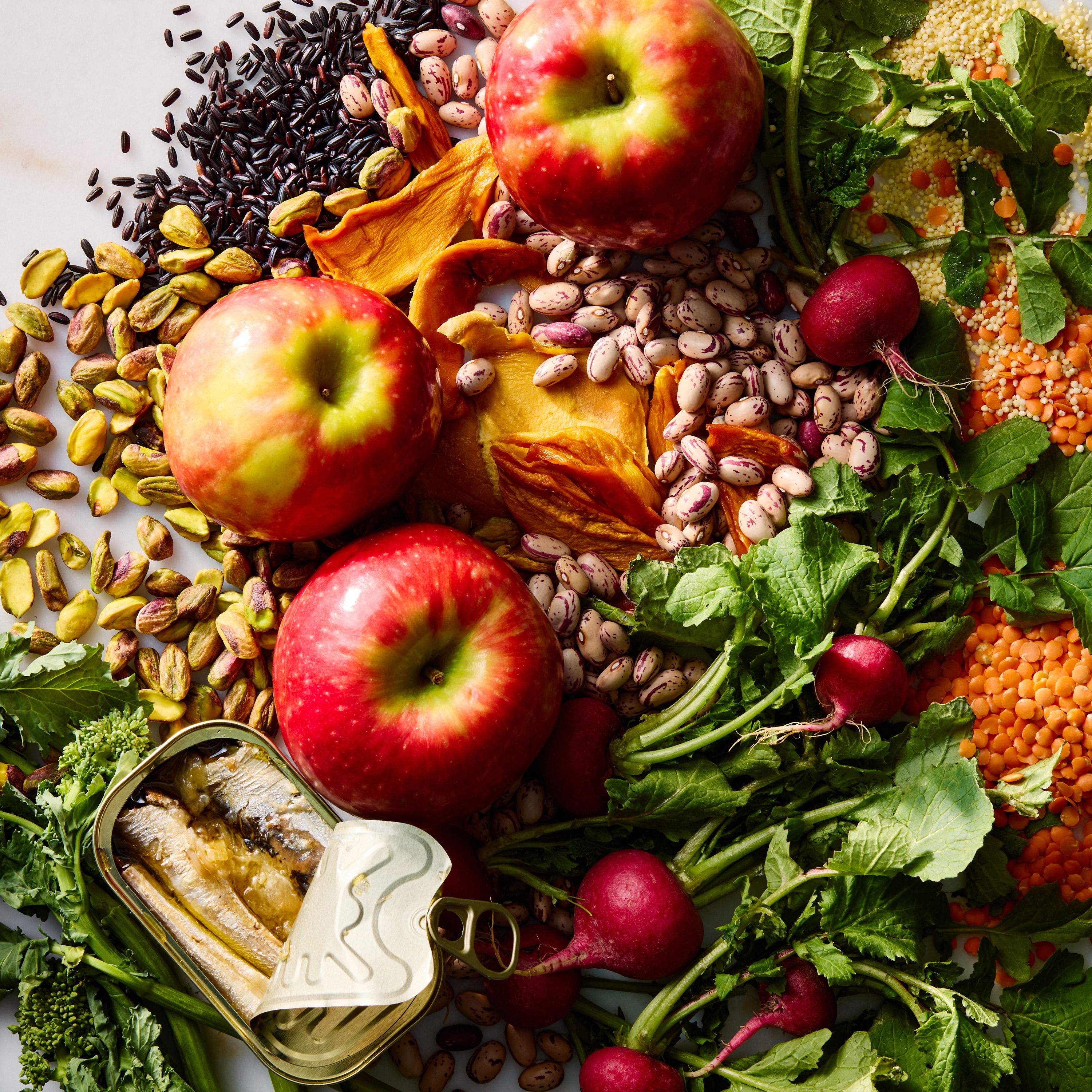
The Daily
To Save His Life, Our Food Critic Reset His Appetite
00:37:14
For 12 years, Pete Wells had his dream job: working as the chief restaurant critic for The New York Times. The job’s journalistic mission required Wells to eat out most nights and taste nearly everything on any given restaurant’s menu. He didn’t realize it at the time, but the excessive eating had taken a toll on his body. Then came a health crisis, followed by his doctor’s advice to “stop doing what you’re doing right now.” In 2024, Wells gave up his post as restaurant critic and set out to remake his entire relationship with food. On today’s episode, Michael Barbaro speaks with Wells about the realities of life as a restaurant critic, and what he’s learning about the joys of home cooking, mindful eating and grocery shopping for the diet he intends to follow.
Loading summary
Transcript152 lines
- [00:00]
Alexa Advertisement Voice
Say hello to the all new Alexa, our smartest, most proactive AI assistant yet. Chat naturally about anything and watch your to do list. Disappear. Planning date night. One conversation handles everything from dinner reservations to entertainment. Alexa learns your style, anticipates what's next, and puts thousands of services at your fingertips. Experience AI that's all yours. And now Alexa is free with prime on your Amazon devices like echo and Fire TV. Amazon.com Alexaplus hello, Pete.
- [00:32]
Pete Wells
Hi, Michael.
- [00:34]
Michael Bavaro
Take a seat. Make yourself comfortable. A former restaurant critic bearing gifts.
- [00:39]
Pete Wells
I've brought you a present.
- [00:41]
Michael Bavaro
Tell me about this present.
- [00:44]
Pete Wells
It's a six pack of little mini boxes of California raisins. And I thought we could each eat one raisin.
- [00:55]
Michael Bavaro
Just one.
- [00:55]
Pete Wells
One raisin.
- [00:56]
Michael Bavaro
Okay, what are we up to here?
- [00:58]
Pete Wells
This is something that's called the raisin exercise. Sometimes it's called the raisin meditation because it comes ultimately from a Zen Buddhist perspective on eating.
- [01:13]
Michael Bavaro
Okay.
- [01:14]
Pete Wells
And the world of mindfulness.
- [01:17]
Michael Bavaro
So I hadn't anticipated that that could ever revolve around a raisin.
- [01:20]
Pete Wells
It can revolve around anything. We could be doing this with an M and M. From the New York
- [01:26]
Michael Bavaro
Times, I'm Michael Bavaro. This is the Daily on Sunday.
- [01:30]
Pete Wells
I'm gonna open this box of raisins.
- [01:32]
Michael Bavaro
Recently, I sat down with former Times restaurant critic Pete Wells for a very small meal. Can I eat it?
- [01:41]
Pete Wells
You cannot eat.
- [01:44]
Michael Bavaro
Consisted of one raisin.
- [01:46]
Pete Wells
You can have more later, but we'll start with one.
- [01:49]
Michael Bavaro
First we looked at this raisin. Lots of veins and ridges. Then we smelled the raisin.
- [01:57]
Pete Wells
Let's give it a sniff.
- [01:58]
Michael Bavaro
Then we took one tiny bite of the raisins.
- [02:02]
Pete Wells
I want to keep chewing so badly.
- [02:04]
Michael Bavaro
And then finally and mercifully, we ate it.
- [02:08]
Pete Wells
What changed?
- [02:10]
Michael Bavaro
Everything. I mean, it's unlocked its flavor. All in all, it took us 25 minutes to eat one raisin. Everything about this violates my sense of how food is to be consumed, Right. If it's not already abundantly clear. My colleague Pete Wells, who was the restaurant critic here at the times for 12 celebrated years, he has been on a mission to completely transform his relationship with eating. And this exercise, the raisin meditation, was one way that he learned how to slow down and really pay attention to the food that he was consuming and why he was consuming it. But for Pete, this larger mission, this resetting of his relationship with food, it wasn't about a trendy diet, and it wasn't about losing weight to look better. It was a matter of. Of life or death. Today, my conversation with Pete Wells about how and why he went from being the king of indulgence to a model of austerity. It's Sunday, March 15th. Pete, welcome to the Sunday Daily.
- [03:36]
Pete Wells
Thank you.
- [03:37]
Michael Bavaro
I just have to say that this single raisin routine, this exercise you put us through, it feels very far from the relationship with food that defined the last decade of your life and your career as the restaurant critic for the Times. And it seems like you're changed.
- [03:59]
Pete Wells
Well, I used to eat a lot more than one raisin, and I didn't think particularly about whether I wanted that raisin or needed that raisin or whether that raisin was going to fill me up. I used to ignore a lot of messages that I was getting from my body. And those messages might have told me to slow down, might have told me to eat less, but I couldn't afford to listen to them. And if I had continued that way, it would have been a disaster for me. I was in so much trouble from basically pretending that I could eat and eat and eat with no consequence.
- [04:49]
Michael Bavaro
So that's really what I wanted you to come here and talk about, those consequences and what you have done to address them. So I wonder if you could go back to the beginning of all of this. How did this start for you?
- [05:07]
Pete Wells
Well, on New Year's Day, 2024, I was sitting in a sauna with a doctor. I was at a party. The doctor was at the party, and the host of the party has a sauna in back of his house. So I was sitting there in my bathing suit chatting with this guy about, oh, how the health industry is changing and how journalism is changing. And I thought we were having a perfectly pleasant conversation. And I had charmed him, no doubt. Two days later, my phone rang and the host of the party said, you remember that doctor you were talking to,
- [05:44]
Michael Bavaro
the one you charmed?
- [05:46]
Pete Wells
I said, yeah, sure. Well, he's very concerned about you. And he looked at you and thought there was a possibility that you might have something, and if you do have it, you could drop dead at any minute.
- [06:03]
Michael Bavaro
Oh, my God. Based on simply being in a sauna
- [06:08]
Pete Wells
with you, looking at my stomach, this doctor had determined, looking at my gut, which had just gotten bigger and bigger, and I had a hernia just above my belly button, and I knew I had.
- [06:20]
Michael Bavaro
And here you thought he'd been looking in your eyes the whole time.
- [06:23]
Pete Wells
It was not the encounter that I thought I was having, but he looked at that and he knew there was a chance it was a hernia, but he also thought there was a chance that it was Cirrhosis that my liver was so diseased that it was starting to manifest in my external appearance. And so a couple weeks later, I was sitting in a doctor's office for the first time in a few years. Hmm.
- [06:52]
Michael Bavaro
You hadn't been getting annual physicals?
- [06:54]
Pete Wells
No, I mean, you know, Covid happened, and I couldn't get in to see my doctor when I really wanted to. And then after that, I just kind of got it, and I was feeling relatively okay. And, you know, years ago, when I first started reviewing restaurants, I went to my doctor, and I needed a colonoscopy. So I went in, and just as the anesthesiologist was about to put me under, my doctor says to him, you know what this guy does for a living? He's the restaurant critic of the New York Times. Can you believe that? And then they proceeded to go and look around my gu. But, you know, that doctor said, your colon's fine. You're a little bit overweight, but, hey, given what you do, that's to be expected. And I kind of took that as a green light to just do what I needed to do and do what I wanted to do.
- [07:52]
Michael Bavaro
Right. And now, suddenly, a different doctor a few years later has rendered a rather different verdict.
- [07:59]
Alexa Advertisement Voice
Yeah.
- [07:59]
Pete Wells
And he says, you need to stop what you're doing right now. So when I got my blood work back, the lab results from the hospital are sort of laid out in, like, green, yellow, and red, fine, borderline, and bad. Bad. And there was a lot of red on that page in cholesterol and the triglycerides and blood sugar. And even I, who know nothing about health and diet, knew that this was bad. It was a couple days before I got the blood work back, but there was a note of concern in what he wrote, the commentary on it, and he said, you're pre diabetic. And that totally got my attention, because I thought pre diabetic sounds bad, but, like, diabetic, that sounds even worse. And I didn't really want to find out what would be entailed because I knew it wasn't good.
- [09:02]
Michael Bavaro
And just to be clear on the chronology, at this point, you're still the restaurant critic at the Times. You're eating out, what, four or five nights plus a week at this point
- [09:16]
Pete Wells
that we're talking about? Even more than that, because I was working on a list of the hundred greatest restaurants in New York.
- [09:23]
Michael Bavaro
Right.
- [09:24]
Pete Wells
And that was my idea. I thought it was important to do it, but it was so much more punishing than I expected because I would say, like, well, if I wanted to say that somebody had the best cheese pierogies, I would probably, at that time have gone around and tried 10 cheese pierogies around the city. It just. It led me into much more eating than I had anticipated, so that I could really feel like I could stand behind my choices. So at this point, I was probably eating more than in a short period of time than I ever had in my life.
- [10:05]
Michael Bavaro
So just as you're receiving some pretty serious information about your health that you're kind of in crisis, you realize that you have to keep slogging through these 100 restaurants.
- [10:18]
Pete Wells
I slogged. I slogged. The only thing I could do at that moment was to change how I ate at home. But I wasn't eating at home very much because I was just out around the city, all five boroughs, trying to cover it all. But by the time I was done with that, it was clear that I needed to change more than just what I ate at home. I really needed to change my job. Hmm.
- [10:50]
Michael Bavaro
And give up a job you presumably love, not to mention one of the most prestigious jobs in journalism, let alone food journalism. How do you make that decision?
- [11:00]
Pete Wells
Oh, it was a great job. And I don't think I could have made that decision without being scared for my life. The only way that I was ever going to leave there was if I got fired or dropped dead. You know, I thought for about five minutes about whether I could really make the changes I needed to make while continuing to do the job. And it just didn't make any sense. It didn't make any sense at all. How do I go into a restaurant and avoid carbohydrates? How do I avoid bread? How do I avoid sugar? I thought about it and I thought, I don't see how I can do it. And part of the way I used to do the job, and I think anybody doing the job would agree with this, is you do need to give yourself over to the joy of the food.
- [11:58]
Michael Bavaro
Right? I mean, beyond the need to taste everything which you do, you have a professional obligation as restaurant critic to do right by the menu. You can't suddenly become the guy ordering vegan, ordering just the healthy foods.
- [12:13]
Pete Wells
Right, Exactly. My philosophy about restaurant criticism was always that I should be a reporter on the frontiers of pleasure, and here's what's out there. And whether that's good for me or not doesn't come into the picture. Now. A lot of times, you know, I would usually bring people along with me not to help me eat, but to make it look Less crazy. When I was sitting there at a table full of food, half the menu right in front of me. I didn't need the other people to eat it, but I did. But it just wouldn't.
- [12:50]
Michael Bavaro
They were cover.
- [12:51]
Pete Wells
Yeah, they were cover. Right. So. And occasionally I would go with a new person who didn't know the drill, and they would look at the menu and say, you know, I think I'm gonna have the salad. I'm gonna have the salad. And I say, okay, you can have the salad, but you're also getting the pork chop and you're getting the cannoli.
- [13:12]
Michael Bavaro
You're on assignment here.
- [13:13]
Pete Wells
Right. I'd sometimes be there with civilians who are trying to eat in a normal way. And I was like, what are you doing? That is not what happens here.
- [13:22]
Michael Bavaro
So you decide you've got to walk away from this job. And I have to imagine that that's hard.
- [13:29]
Pete Wells
It's hard, because what else am I ever going to do that'll be as good as that? And a lot went with it, too. That sort of. My entire social life had migrated into my job, probably. People came out and spent time with me who would not have come to my apartment. You know, you've become like the one kid in high school who has a car. Like, you can never quite tell. Am I really this popular, or is
- [14:01]
Michael Bavaro
it just the car, or is it my Ford Tempo? So all of a sudden, you're, I presume, at home every night.
- [14:11]
Pete Wells
Yes, every night.
- [14:12]
Michael Bavaro
Cooking.
- [14:14]
Pete Wells
Cooking. Making whatever was the right thing for me to be eating. And I had to figure out what that was and how to do it.
- [14:27]
Michael Bavaro
Right. Well, that is what we're going to explore. Right after a quick break, exactly how you reset your entire relationship to food. Right back.
- [14:52]
Alexa Advertisement Voice
Say hello to Alexa and see how the experience is tailored to you. Alexa learns your preferences to serve you better. Planning a vacation? Ask Alexa to recommend a trip to check off your bucket list. Use Alexa to find the name of that song you love, discover new favorite shows or recipes, and do so much more. Ask Alexa anything. And now Alexa is free with prime on your Amazon devices like echo and Fire TV. Get started at Amazon.com alexaplus I'm Julian Barnes.
- [15:22]
Julian Barnes
I'm an intelligence reporter at the New York Times. I try to find out what the US Government is keeping secret. Governments keep secrets for all kinds of reasons. They might be embarrassed by the information. They might think the public can't understand it. But we at the New York Times think that democracy works best when the public is informed. It takes a lot of time to find people willing to talk about those secrets. Many people with information have a certain agenda or have a certain angle. And that's why it requires talking to a lot of people to make sure that we're not misled and that we give a complete story to our readers. If the New York Times was not reporting these stories, some of them might never come to light. If you want to support this kind of work, you can do that by subscribing to the New York Times.
- [16:14]
Michael Bavaro
So, Pete, you're trying to figure out how to change your diet. So what do you tackle first?
- [16:22]
Pete Wells
Because I was so concerned about blood sugar, I went for the simple carbohydrates
- [16:28]
Michael Bavaro
first, by which we mean, well, sugar,
- [16:31]
Pete Wells
obviously, white flour, especially white rice. I was concerned about all these foods that release energy really, really quickly, cause blood sugar spikes, and then ultimately make you hungrier.
- [16:50]
Michael Bavaro
Like pasta.
- [16:51]
Pete Wells
Pasta, love pasta. It was gone. Well, you know, so all. A lot of things that I love. A great loaf of bread. You know, there's mediocre bread and there's great bread, and when you get the great bread, it's like, oh, thank you. Thank you for doing this. A cookie, A good cookie, you know, so all of that, all of it, I just kicked it out of the kitchen.
- [17:14]
Michael Bavaro
Beyond pasta, what was the hardest of these to give up on?
- [17:20]
Pete Wells
Oh, sugar. I mean, sugar is so delicious. Right. And I was. Every morning, I would wake up and I would drink five or six cups of coffee, and each one would get a teaspoon of sugar. The teaspoons got a little more rounded as time went on, and I was drinking.
- [17:36]
Michael Bavaro
So you're having essentially five or six teaspoons of sugar a morning?
- [17:40]
Pete Wells
Yep.
- [17:41]
Michael Bavaro
What is it like just to use this microcosm when that coffee is sugarless and when there is no pasta and no cookie?
- [17:52]
Pete Wells
What I discovered giving them up was I gave them up because of the blood sugar. Right. It's almost literal. Like, your blood sugar's too high. Eat less sugar.
- [18:00]
Michael Bavaro
Right.
- [18:01]
Pete Wells
What I discovered as I gave it up was that my mind cleared. I didn't even understand what was happening for a while, but my mind was clearing. I didn't have all these voices shouting at me, like, hey, it's cookie time. Hey, it's time for another spoonful of sugar in the coffee. Well, you know what? What people now call food noise. I was surrounded by it, and a lot of it just cleared up, went away as I ate fewer simple carbs. I didn't understand how much the things I was eating were contributing to my cravings. For more and more and more. This just vast hunger that I felt almost all the time was being produced
- [18:54]
Michael Bavaro
by food, by what you were putting in your system.
- [18:57]
Pete Wells
Yeah.
- [18:58]
Michael Bavaro
So talk about what you were starting to eat instead, what you were supplanting all of these simple sugars, these carbohydrates with, right?
- [19:08]
Pete Wells
So I'm drinking my coffee black and kind of liking it more and more as time goes on. I was eating a lot of fruit, ripe fruit in the summer, and then the rest of the year, dried fruit. I mean, I love dates, and they have so much sugar in them, but it was an okay form of sugar for me because it wasn't the kind that was gonna, like, spike my blood sugar right away and make me run like a. Like a rat in a wheel, you know, was figuring out, without exactly understanding why, that, like, fruits in their natural state before they've been reduced to sugar, are actually food. And that food satisfies you and in a way that all of this extracted sugar just never did.
- [19:57]
Michael Bavaro
What about meat?
- [19:59]
Pete Wells
Oh, well, meat. I had to bring down the cholesterol. You know what we're talking about, the bad cholesterol, whatever that is, I had to bring that down. So I threw almost all animal products overboard. Even chicken, which isn't that bad. You know, one of the hardest things to give up was chicken skin. Chicken skin on a roast chicken, it's so good. But other, apparently there's cholesterol in there. I never knew this. And I had to put something in the place of all this meat I wasn't eating anymore. And that turns out to be sometimes fish, but a lot more often plants, vegetables, beans, lentils, broccoli, kale. Stuff that I liked already, but I had never really made it the focus of my meals, Right. So as vegetables especially became so much more central to my diet, I was no longer really happy going to the grocery store on my corner, which is very convenient and not all that expensive. But the produce section, it's not why anyone's going there. And so, in search of better, fresher, brighter, more colorful, tastier vegetables, I ended up spending a lot more time at my food co op than I ever had before, which is full of great vegetables, full of dried beans, full of dried grains, full of most of the stuff that I want to be eating. It essentially doesn't have a lot of the stuff that I'm not gonna be eating anyway or that I don't even wanna think about. Right? So you go into a typical American supermarket, there are so many things in the aisles and these bright packages, like
- [21:58]
Michael Bavaro
a dietary casino, right?
- [22:00]
Pete Wells
Cereal boxes stacked up to the sky that you couldn't possibly miss. It's just all in your face, trying to get your attention. It's just like walking through the slot machines like, bing, bing, bing, bing, bing, bing, bing. And the Co Op is not like that. It is a much more somber experience. I mean, they're friendly, but it's not a pinball machine of joy, you know.
- [22:29]
Michael Bavaro
So among the many changes you're making here is where and how you shop
- [22:35]
Pete Wells
for groceries, it starts to fit together. Then if I, you know, shop in a place and in a manner that's sort of geared toward, like, what I ultimately want to eat. And if I walk in there with a plan and a list and an idea of, like, here are the things that I want to eat this week, it becomes a different approach to shopping, which. Where, you know, I might have in the old days, waited until it was like 7:30 and the supermarket was about to close. And then I'd run in there and I was sort of in a panic and I was already like, getting really, really hungry. And I would just start grabbing stuff, like, what's quick, what's easy, what can I get on the table? And boy, those cookies are put in some ice cream for later, just in case. Just in case, right? And it's different when you go into it with cold blood, with a plan.
- [23:36]
Michael Bavaro
And once all this food comes home with you from the Co Op, what are you doing differently with it?
- [23:44]
Pete Wells
I'm trying partly to put things that I want to eat more of right in front of me, like, where I'll see them. What's that like? So if I have raspberries that I've just brought home, they go in the refrigerator right at eye level. So I remember to eat them before they go moldy and squishy and, you know, turn into raspberry soup. And then there's a. I've got basically one cabinet in my kitchen where I can keep food. And I would put all the almonds and the peanuts and the pistachios and the dried fruit right at eye level in there. So when I open it up, there it is. Here, have a handful of almonds. You don't.
- [24:28]
Michael Bavaro
You're saying ton of geography is destiny in your kitchen?
- [24:32]
Pete Wells
Well, I think most people eat what's right in front of them. I mean, my eye keeps going back to this box of raisins, right? I don't know about yours, but, like, I'm sort of like, oh, there was raisins Here. If they were cookies, that's what I'd be staring at. And if they're almonds, that's where I'll stare at There. Maybe almonds aren't quite as enticing, but they become enticing when they're the only thing around. Right.
- [24:56]
Michael Bavaro
For those who are curious, what is a typical dinner plate looking like in this new regime?
- [25:06]
Pete Wells
Well, the other day I made a salad, so I had some lentils that I had already cooked. And I didn't want to just eat lentils because, you know, it's a little penitential. It's a little bit like, what have I done wrong to deserve this? So I dressed them up with some lemon juice and olive oil, and then I shaved some carrots into these thin little coins and chopped some radicchio into, like, ribbons and mixed that all up. And then the lemon and olive oil just gave it some life, and I felt pretty good about that.
- [25:44]
Michael Bavaro
That was dinner.
- [25:45]
Pete Wells
That was great. You know, back when I was eating a lot of meat, I would have wanted some sausages to go with that.
- [25:52]
Michael Bavaro
I was gonna say, you know what
- [25:53]
Pete Wells
would go really well with that obvious?
- [25:55]
Michael Bavaro
Roasted chicken with skin.
- [25:57]
Pete Wells
Anything. You know, I've been eating the lentils with smoked trout, and that's great. You know, smoked trout maybe with, like, a horseradish mayonnaise or a mustard and then the lentils underneath. There's something so nice about that combination.
- [26:12]
Michael Bavaro
I mean, you're resetting your pleasure sensors.
- [26:15]
Pete Wells
Well, all those sensors, they were always working, and they were always sending messages, but, you know, like the. The raisins, you were probably getting all of that data from the raisin in the past, but when you slow down and you register those impressions, like, actually take in the data that you're being given. And I was finding this as I changed the way I ate that. The lentils, if they have the right partner, they are enough. And not just enough, but actually kind of wonderful.
- [26:52]
Michael Bavaro
Okay, we're going to take another quick break, and when we come back, I want to talk about something we haven't yet covered. Something I'm very invested in understanding your changing relationship to alcohol.
- [27:05]
Pete Wells
This break brought to you by the Lentil Council.
- [27:09]
Michael Bavaro
We'll be right back.
- [27:23]
Alexa Advertisement Voice
Say hello to Alexa and see how the experience is tailored to you. Alexa learns your preferences to serve you better. Planning a vacation. Ask Alexa to recommend a trip to check off your bucket list. Use Alexa to find the name of that song you love. Discover new favorite shows or recipes, and do so much more. Ask Alexa anything. And now Alexa is free with prime on your Amazon devices like echo and Fire TV. Get started at Amazon.com alexaplus I gave my brother a New York Times subscription.
- [27:54]
Michael Bavaro
We exchange articles and so having read the same article we can discuss it.
- [27:59]
Pete Wells
She sent me a year long subscription so I have access to all the games the New York Times contributes to our quality time together.
- [28:06]
Alexa Advertisement Voice
It enriches our relationship with it was
- [28:08]
Pete Wells
such a cool and thoughtful gift.
- [28:10]
Alexa Advertisement Voice
We're reading the same stuff, we're making the same food.
- [28:14]
Pete Wells
We're on the same page.
- [28:16]
Michael Bavaro
Learn more about giving a New York
- [28:17]
Alexa Advertisement Voice
Times subscription as a gift@nytimes.com gift so
- [28:22]
Michael Bavaro
Pete, this entire conversation I have related to a lot of the things that you have been talking about, but none more so than when you said that your doctor told you that your triglycerides were on the higher end. Because I just got that information.
- [28:39]
Pete Wells
Oh, you did?
- [28:40]
Michael Bavaro
Myself. From my doctor. Not super high, but higher than they want. I think, to use the metaphor, you did the yellow zone. And I am pretty sure I know precisely why that is. And it's because of my affection for cocktails.
- [28:55]
Pete Wells
Cocktails are great.
- [28:57]
Michael Bavaro
And I have to imagine that changing your relationship to booze, to wine has been a relatively important part of this experience for you.
- [29:08]
Pete Wells
Oh, it's been a major change. Major change. Because I rarely drink now and in the old days I drank almost every night and a lot, a lot. Like, what's a lot more than I realized? Well, you know, cocktail, when you sit down and then a bottle of wine. Usually if I'm with other people, sometimes it would be two bottles, sometimes three. It really adds up. And I think I was probably a little bit hungover every single morning without quite registering what it was. I didn't feel great. I woke up feeling unrested. I have headaches. Part of the reason I wanted that sugar in the coffee so badly, like the dessert at the end of a disappointing meal, the alcohol can also help smooth over a lot of mediocrity. You know, there were some restaurants that I would go into to review, and I would know almost after the first bite that it wasn't gonna be a review. It just was. And the alcohol just is your companion in those lonely situations where you're going through the rest of the meal knowing that nothing's going to come out of it while the martini is there to hold your hand. And in so many other situations too, it is just a companion when you need one.
- [30:38]
Michael Bavaro
And so what was it like to give that up?
- [30:42]
Pete Wells
Surprisingly, because I had made this major shift from eating out almost all the time to eating at home all the time. It wasn't as traumatic as I would have thought because the way I drank in restaurants came from being in restaurants. And when you're at home, you might have a glass of wine, but the sommelier is not refilling it while you're not even paying attention. So you have the experience of getting to the bottom of your glass of wine and having to think, should I have another glass at a restaurant? You don't have to make those decisions right at home and without other people around, too. And this is a big part of what makes drinking. I think the value of drinking is that it's great to share with your friends. It's great to raise a glass with people you like. Or strangers become a little less strange. Well, sometimes they get more strange after a couple of drinks. But, you know, and I don't so much have that going on for me at home. I'm mostly alone. I don't need to get to know myself any better. I already kind of know who this person is. I'm fine with not drinking at home.
- [31:51]
Michael Bavaro
So when do you give yourself permission
- [31:54]
Pete Wells
to drink with other people? If I have people over on the rare occasions I'm invited to someone else's home and in restaurants, because it's something they do so well, right? So now if I go to a restaurant, there's a chance I'll get a martini. Especially at a place that I know does them well, which to me just means making them really cold. That's basically all that matters as far as I'm concerned.
- [32:22]
Michael Bavaro
You write about martinis in a way that I find to be poetic. You describe the way that first sip of a cold martini makes the hairs on the back of your neck stick up.
- [32:32]
Pete Wells
Oh, it's incredible. It's just. It's like getting an injection in your veins of some, like, experimental drug that hits all your pleasure senses. Right? It's gotta be. I don't know what it is, but I don't want to mess with it, and I don't want it to go away. I just don't need it every night of my life. And I find now, you know, any. Anything that becomes habit becomes routine. Your brain sort of says, like, I don't need to be fully engaged here. I know what that's going to be. I know what a raisin tastes like. I don't need to pay attention to all the sensory data coming off that raisin. I don't need to pay attention to this martini because there'll be Another one tomorrow. There was one last night. When you haven't seen a martini for a month or two, you can really focus on it. You can really be, oh, gosh, look at that. Look at the surface on that. A little bit of ice floating on there.
- [33:28]
Michael Bavaro
Mindful martini.
- [33:32]
Pete Wells
I don't know, maybe that's blasphemy. But for me, I do think if you bring this mindfulness approach to your life, you don't only apply it to healthy things, you apply it to everything. You know, I'm trying to maintain, and maintaining means that I don't go back to my old way of living. But it does mean I allow myself a lot of stuff that I just cut out in the very beginning. I'll have a pastry sometimes I will have a martini, sometimes I'll have a steak once in a while. But for me, it's nice to give myself all those indulgences in a restaurant setting. So when I go out, I feel a little bit like, okay, we're not going to break all the rules at once, right? But we'll break some of the rules and that'll be part of the experience.
- [34:29]
Michael Bavaro
So you are now eating occasionally back out at restaurants and you are enjoying some booze. And is that because you've reached a certain point of turning your health around? Are you basically out of the red zone?
- [34:47]
Pete Wells
I am not in crisis anymore.
- [34:49]
Michael Bavaro
Mazel tov.
- [34:50]
Pete Wells
Thank you. Thank you.
- [34:52]
Michael Bavaro
Are you still pre diabetic?
- [34:55]
Pete Wells
I am not. I've been. I mean, I could go back there, but I'm not there right now. Wow.
- [35:01]
Michael Bavaro
You've taken yourself out of that category.
- [35:03]
Pete Wells
I've been told and other evidence suggests that I am no longer obese.
- [35:08]
Michael Bavaro
I mean, it's really impressive that you did all of this by your own design.
- [35:14]
Pete Wells
Right.
- [35:14]
Michael Bavaro
You didn't join any formal program and you didn't.
- [35:17]
Pete Wells
I didn't use the drugs. I didn't use the drugs. I didn't get there. I didn't get to the point.
- [35:22]
Michael Bavaro
No Ozempic, no GLP1?
- [35:24]
Pete Wells
No. Right. So a lot of times when people go on those drugs, they've tried to diet and sometimes they have not been able to stick to the diet. Sometimes they've successfully dieted and then gained the weight back. That's super common that might happen to me. I'm very aware of the possibility that I will gain this weight back. I do feel like I've learned a lot of stuff about not just managing my diet, but managing myself and managing my behavior and managing my attitudes about food that I. They feel like Long term changes. It feels like knowledge that I now have that's changed the way I live. And if all goes well, I should be able to just continue to approach food in this, in this new way that I've come to.
- [36:18]
Michael Bavaro
And you feel better?
- [36:20]
Pete Wells
Well, that's to me, which is the most important thing. Way more, way more important than how I look. And it's like that my mind is just brightened. Like my mind was always so heavy and under slept confused and just perpetually kind of groggy and grumpy and it's wild actually. Sometimes you don't realize how bad you felt until you feel better.
- [36:45]
Michael Bavaro
Right. Well, now that you're on the other side of this all, I want to invite you to be a little bit philosophical about what you've been through. Your relationship with food was always going to be a little bit different than the rest of us to some degree because of your job.
- [37:02]
Pete Wells
I mean, I'm still a curious person and I'm still a curious eater. What I have done is poured a lot of what I know about food, food and flavor and spices and different cuisines into making chickpeas Interesting. Right. One thing I've really appreciated about this sort of new chapter as a dedicated home cook is that it takes me out of my head. It's like physical activity that I live in while I'm working. It's, it's all verbal. It's ideas and words and moving the words around and kind of logical language based thinking. And then when I'm in the kitchen, I'm like chopping and oh, don't get your finger too close to the edge of the knife. And how should I stand? What's the most comfortable posture here? And oh, that's about to burn. I can't see it, but I can start to smell the scorching on the stove and it's time to turn that over. All of these things where you've just, you're existing through your senses and through your body. I find it like such a great relief from what I do in my job. And the pleasure of sitting in the restaurant is not the same as it's so passive. Right. When I'm cooking now, and even when I'm eating, I feel like I'm doing something which is somehow like really satisfying, just really appreciating how I can just feel like, here I am, here I am, right here, right now. Feet planted on the ground, feet planted on the ground. Single raisin in front of me. What will I do with it?
- [38:55]
Michael Bavaro
Well, I am extremely happy for you, Pete. And I want to thank you so much for being here today.
- [39:03]
Pete Wells
Well, thank you. Yeah, I wasn't expecting any of this, but it's. I'm glad to be here.
- [39:23]
Michael Bavaro
Today's episode was produced by Tina Antolini with help from Alex Baron and Luc Van Der Plug. It was edited by Wendy Doerr and engineered by Rowan Namisto. It contains music by Dan Powell, Mary Lozano and Rowan Misto. Our production manager is Franny Carr Toth. That's it for the Sunday Daily. I'm Michael Balborough. See you tomorrow.
- [40:03]
Alexa Advertisement Voice
Say hello to the all new Alexa plus and see how Alexa can do so much more for you. Need last minute concert tickets? Craving your favorite restaurant? Just sit back, relax and talk naturally. Alexa's on it. Alexa remembers what you love, anticipates what you need and makes it all happen. Alexa brings thousands of possibilities to life, ready whenever inspiration strikes. And now Alexa is free with prime on your Amazon devices like echo and Fire TV. Amazon.com Alexa.