← The Daily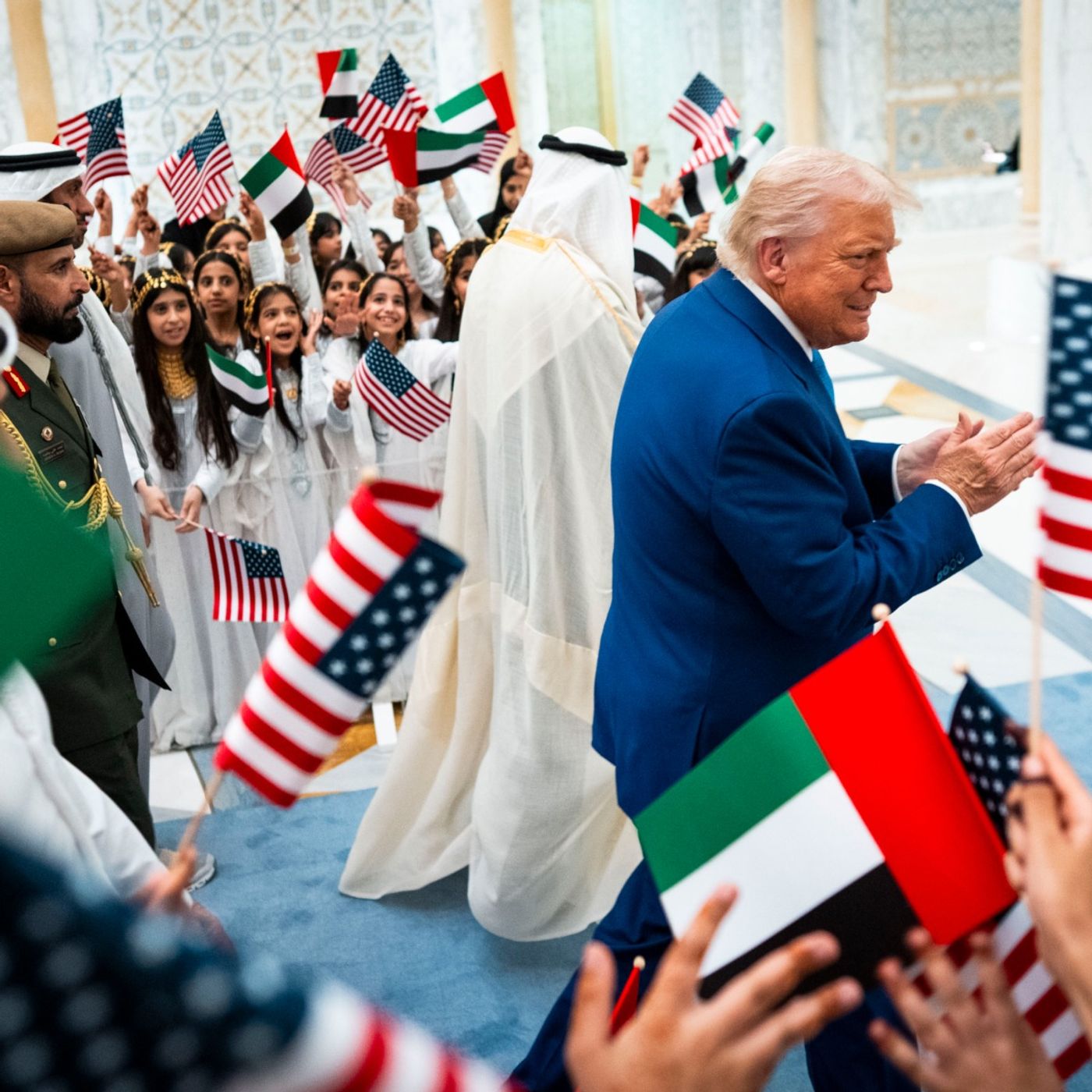
The Daily
The U.A.E. Got A.I. Chips. Trump’s Inner Circle Got Crypto Riches.
00:25:21
President Trump and his inner circle are making millions of dollars from agreements that intersect with America’s national security interests, a New York Times investigation found. Eric Lipton, who wrote the article, explains why these conflicts of interest are unlike anything we’ve seen before.
Loading summary
Transcript84 lines
- [00:00]
A
We all have moments when we could have done better. Like cutting your own hair. Yikes. Or forgetting sunscreen so now you look like a tomato. Ouch. Could have done better. Same goes for where you invest. Level up and invest smarter with Schwab. Get market insights, education and human help when you need it. Learn more@schwab.com.
- [00:27]
B
From the New York Times, I'm Rachel Abrams, and this is the Daily. A New York Times investigation into a series of major deals between the Trump administration, the United Arab Emirates, and the Trump family has revealed that the president and his inner circle are making millions of dollars from agreements that intersect with America's national security interests. Today, my colleague Eric Lipton explains why these conflicts of interest are unlike anything we've seen before. It's Wednesday, September 24th. Eric, welcome to the show.
- [01:10]
C
Hello, Rachel.
- [01:12]
B
Eric, I feel like every time we've talked on the show, we've had you on to talk about some kind of conflict of interest that has to do with either the Trump family or the Trump administration. And you explain each time that what we are discussing is more significant or problematic than the last time we had you on the show or than another administration. And here we are. I think it's been about four months since we had you on last time. And I think that, once again, this is what you're going to tell me. Am I right?
- [01:41]
C
That's right. We're not talking about martinis at the Trump Hotel in D.C. are staying a couple of nights at the Trump Doral or people gathering at Mar a Lago?
- [01:52]
B
These were things that were considered scandals during the first Trump administration by his critics.
- [01:57]
C
Right. This is an entirely different scale. What we're seeing here in these series of transactions is at a scale unlike anything I think I've seen as a reporter in actually four decades of doing my job.
- [02:09]
B
Wow.
- [02:10]
C
In terms of the national security implications and just the scale of dollars in play that are potentially enriching the president's family and the family of some of his advisors.
- [02:22]
B
So, okay, I want to dig into specifically what we're talking about here. You mentioned a series of transactions, so tell us about the transactions.
- [02:29]
C
I mean, one of the deals directly financially benefits the president, his family, and some of his advisors. The second deal directly benefits the United Arab Emirates and its ambitions to become an AI superpower. So back in May, we have the first deal, which involves $2 billion of money from the United Arab Emirates going into a cryptocurrency company that was created by the Trump family and one of his advisors, Steve Witkoff, that happens in early May. Several weeks later, there's a separate transaction where the United States agrees to give the UAE access to some of the most advanced artificial intelligence chips that are designed in the United States. These are the crown jewels of American technology, and it agrees to allow them to have hundreds of thousands of these chips exported to the United Arab Emirates. So these two deals happen. You know, my colleagues and I are watching this and we're like, wow, wait a minute, what just happened here? How did these two deals come about? And so we launched on an investigation that involved a team of reporters, including from San Francisco, from New York, Washington, Taiwan and London.
- [03:51]
B
I just want to make sure I understand why this would catch your eye in the first place. You are obviously an investigative reporter. Did you see these two deals and think, I wonder if there's a connection? Because The UAE transfers $2 billion to the Trump Witkoff family crypto business, and then the Trump administration turns around and hands over to the uae. So hundreds of thousands of these super important chips. Like, is that what initially piqued your interest?
- [04:20]
C
That's right.
- [04:20]
B
Okay, so what did you find? Were the deals related and how did they come about?
- [04:24]
C
So as our team of reporters worked on this, what we found was there were more linkages between these two deals than were publicly known or that had been disclosed by the White House or the United Arab Emirates. For example, there's this one guy who's at the center of both of these transactions, and he goes by the name of Sheikh Taknun. He's the National Security chief of the United Arab Emirates. And he's this kind of somewhat mysterious figure who's constantly seen wearing sunglasses because he has an eye condition. So even when he's inside, he's got these shades on, and it gives him a kind of an air of intrigue. And he's been an intermediary for presidents and foreign advisors for many years. But starting around 2023, he began to transition to becoming one of the leaders in deploying the UAE's massive Bank of oil money to make strategic decisions about how to transform the United Arab Emirates, this super rich oil country, into becoming a place that could raise money from some other economic sector. And they concluded that the best place to go to make more money was to become a technology beacon in the.
- [05:33]
B
World, like a Silicon Valley of the Middle East.
- [05:36]
C
Right. They want to build one of the largest AI data centers outside of the United States. But in order to transform their economy, Tuck Noon needed something from the United States, and that was access to these AI chips. Made by companies like Nvidia. And he went to the Biden administration and he basically said, give us your chips. And initially they were quite skeptical of that because they were concerned about, you know, what's he going to do with.
- [06:03]
B
Those chips, like, for security reasons or what was the concern exactly?
- [06:07]
C
Their primary concern was that the United Arab Emirates has had long time close ties with China. And not only that, but they even have done joint military exercises from China. They also have a defense contracting firm that is building military equipment jointly with China. And at the time that they first came to the Biden administration, they had put a bunch of Chinese equipment into some of their data centers. And this is equipment that the United States is concerned potentially could be compromised and used by China to gain access to American technology. So the Biden administration is concerned that if we allow the United Arab Emirates to have these crown jewels, some of the most important technological inventions of modern times, are they potentially going to be sharing that technology with China in a way that could hurt the United States national security? That was a concern that the Biden.
- [06:59]
B
Administration had in particular hurt the U.S. how exactly? Like, what specifically are they worried would happen?
- [07:05]
C
I mean, the United States is now in a race with China over the progress in artificial intelligence. And it's not only an economic race, it's a military race. Because AI is already being applied to all kinds of weapons systems, and particularly around drones that could be autonomously operated and armed and become autonomous killing machines. And if China gets access to the most advanced chips that the United States is designing, they could accelerate their efforts to build a killer drone fleet that could threaten the United States.
- [07:36]
B
So the stakes are obviously quite high. The Biden administration has all of these concerns about What a deal, 4 chips to the UAE could mean for American national security. What happens after that?
- [07:49]
C
I mean, the Biden administration ultimately reaches an agreement in which they talked to Sheikh Taknun. They said, you know, you're going to have to remove some of this Chinese technology from your data centers, and we will then agree to give you access to some of these chips. But Taknun is not satisfied because he.
- [08:04]
B
Had seen Biden as taking this very hard line.
- [08:07]
C
It sounds like they were quite frustrated that the Biden people were being too conservative, they were too nervous. They were nervous Nellies that they were holding back the ambitions of the United Arab Emirates. And that was where things ended. And then Biden leaves office. But Tuck Noon wants more chips. He wants more powerful chips. And that's when Trump comes in. And Tuck Noon, very smart guy. He sees an opportunity here to get what he couldn't get during the Biden era.
- [08:36]
B
And what do you mean by that? Like, what specifically does he see as an opportunity?
- [08:39]
C
Well, Trump, the dealmaker that he is, puts in some senior advisors who are dealmakers themselves. He puts in Steve Witkoff, a real estate buddy of his for New York City, and suddenly Witkoff is the Middle east envoy. And then he separately puts in as his AI advisor in the White House, David Sachs, a venture capitalist from Silicon Valley who comes from the world that thinks that the United States is best if it exports as many ships as possible around the world. And both of these guys become critical players in Taknun strategy to get what he wants. And so the new administration is starting and Tak Nun gets to work.
- [09:27]
B
We'll be right back.
- [09:35]
A
With Disney and Hulu. There's so much amazing entertainment to discover every day. Whether you're looking to binge a classic hit like Modern Family, enjoy the biggest blockbuster like Marvel Studios, Thunderbolts on Disney, catch the latest news on what yout need to Know, or check out new episodes of Only Murders in the Building. This is the one place that has it all. Get all of this and so much more with Disney and hulu every day. 18 and up only offer valid for eligible subscribers. Only terms apply.
- [10:02]
D
My name is Jasmine Uloa, and I'm a national politics reporter for the New York Times. I grew up in Texas, on the border with Mexico, and I've been reporting in the region since I was in high school. Now I travel the country looking for stories and voices that really capture what immigration and the nation's demographic changes mean for people. What I keep encountering is that people don't fall into neat ideological boxes on this very volatile issue. There's a lot of gray, and that's where I feel the most interesting stories are. I'm trying to bring that complexity and nuance to our audience. And that's really what all of my colleagues on the politics team and every journalist at the New York Times is aiming to do. Our mission is to help you understand the world, no matter how complicated it might be. If you want to support this mission, consider subscribing to the New York Times. You can do that@nytimes.com subscribe.
- [10:59]
B
So, Eric, tell us about how Taknun actually gets to work. What does he do first?
- [11:04]
C
Taknun first makes a visit to the United States in March, in which he comes here and he's treated like he is a major global player. He has private meetings with the head of the CIA with the Treasury Secretary, the commerce secretary with CEOs Jeff Bezos.
- [11:25]
B
He gets an audience with some very important people.
- [11:27]
C
It sounds like, I mean, he was starting to get that kind of access during Biden. But this visit in March was unlike anything he'd had before. I mean, it's just an incredible lineup of people from both the government, from the private sector, from the financial world. It shows you that this guy not only has one of the world's biggest piggy banks, but, but he is a transformative figure in the global economy and in technology. And he actually then also goes over to the White House for a special dinner that includes much of the President's cabinet and President Trump and the Vice President. And Steve Witkoff and David Sacks are all there. And they talk about the interest of the United Arab Emirates in becoming a global leader in AI. These are initial kind of meet and greet conversations, but in the background there's a whole nother thing going on. The one thing that the United Arab Emirates has is a boatload of money. They want access to chips. They've got trillions of dollars in the bank. World Liberty, a cryptocurrency company created by Donald Trump. Steve Witkoff and their families needs money to get going. And this is a moment that UAE can write a check for $2 billion and hand it over to World Liberty just at the same moment that they're seeking access to the chips. These two things basically simultaneously are in play.
- [12:52]
B
Well, I mean, basically sounds like the UAE is essentially dangling a $2 billion transfer into the Trump Witkoff family business at the same time that they're asking the administration for this technology.
- [13:05]
C
That's right. And to be clear, it's the sons of both Trump and Wyckoff who are overseeing World Liberty and its dealings. And they're the ones that are negotiating for the $2 billion transfer into World Liberty. But regardless, they're doing these negotiations at the same time as their fathers are having a sit down dinner with Sheikh Taknun, Talking about the UAE's plans to become a global AI superpower with the help of, of Trump.
- [13:37]
B
So what happens next with these negotiations?
- [13:39]
C
Well, it's, you know, in March and early April, there's a clash that's playing out behind the scenes in the White House. There's these two different groups. There's David Sachs who comes in from Silicon Valley, is like, unlimited export of these chips. Let's sell as much as possible. And then there's a separate group of people that have come in in this new Trump administration that are Effectively, China hawks. They're really skeptical of China. They're very concerned about the military buildup in China, and they are separately working behind the scenes to build out a policy that would actually further restrict access by foreign entities to the most advanced chips. They call it the America First AI Plan that would limit the sale or export of the most advanced chips for a year after they come onto the marketplace, which is not what top 10 wanted to.
- [14:27]
B
So it sounds like there are at least some officials in the Trump administration who have the same or at least similar concerns about where these chips are going to end up and what they're going to be used for. That the Biden administration did. Right. Like, in other words, giving the UAE these chips could also mean that they end up in China, and therefore the same national security risks are associated with it.
- [14:48]
C
That's right. There's still a significant concern in the intelligence community about just how reliable the United Arab Emirates is and whether or not they are truly going to honor commitments to not share this technology with China. So you have this split in the White House of one group of advisors that's saying, hey, we got to be careful here. And the other group's saying, sell, sell, sell. So that's a clash that's playing out in March and April until suddenly there's a big disruption.
- [15:15]
B
And what is that disruption?
- [15:17]
C
So Laura Loomer, a conservative activist who has the ear of President Trump, is frequently coming into the White House and talking to Trump and. And giving him a list of people that she wants to see fired. And it ends up that one of the people on that list is David Feith, who is one of the leaders of the effort in the White House to try to crack down and limit the export of the most advanced American chips. He and a number of other folks from the White House national security team are fired within a day.
- [15:45]
B
So basically, the guardrails that had existed within the White House are gone.
- [15:48]
C
At this point, what happened was that some of the key players that were quite concerned about additional sharing exited. But the biggest thing that happened was that that was an opening for David Sachs to become the de facto leader of this effort. And Sachs comes in, yeah, let's sell as many chips as possible because it will benefit the United States.
- [16:11]
B
So the fight in the White House over whether to sell these chips to Technoon and to the uae, it sounds like it's now leaning very heavily in favor of doing a deal. What is going on with the other negotiation between the UAE and World Liberty at this point?
- [16:25]
C
So the first thing that happens is that $2 billion moves from the United Arab Emirates to World Liberty in early May. And effectively overnight, World Liberty becomes one of the largest stablecoin crypto companies in the world. And it turns what was a startup with an uncertain future into one of the biggest players in the crypto space in the world. And that single action by the United Arab Emirates is going to make the owners of World Liberty tens of millions of dollars a year.
- [16:56]
B
Wow.
- [16:56]
C
That's done. That deal is done. But the chips deal isn't yet decided. And then basically the UAE comes in and says, you know what? We don't just want 100,000 chips. We want 500,000 chips, and we want the most advanced chips. This happens in May while this debate is playing out. And some of the people from the White House and from the Trump administration that are participating in this are, like, amazed at what has just been requested. A massive increase in the compute power that the UAE wants. And Sachs takes the position that this is a deal that should be landed. And Witkoff is coming in and saying, you know, this is a signature moment for the President and the new administration. He's heading over to the Middle east and he needs deals to sign.
- [17:38]
E
But I want to thank His Highness.
- [17:40]
C
And so Trump goes over to the.
- [17:45]
E
UAE and want to also thank His Highness, Sheikh Taknun.
- [17:50]
C
There's a big event that Sachs is there, Witkoff is there, Sheikh Taknun is there.
- [17:55]
E
Yesterday, the two countries also agreed to create a path for UAE to buy some of the world's most advanced AI semiconductors from.
- [18:03]
C
And they announced that they've reached an agreement to give them 500,000 chips a year.
- [18:07]
E
This will generate billions and billions of dollars in business and accelerate the UAE's plans to become a really major player in artificial intelligence.
- [18:17]
B
And I read where I remember this announcement. This was his first big international trip. Right where they made this announcement.
- [18:24]
C
That's right. It was a huge event.
- [18:26]
E
But this was. Coming to UAE was very important. Coming to Saudi Arabia and Qatar was very important to me because of personal relationships that I had, maybe more than anything else.
- [18:38]
C
And it's potentially transformational for the future of the United Arab Emirates in terms of its place in the global economy.
- [18:45]
E
Thank you very much.
- [18:58]
B
But wait, okay, what about all the security concerns? What about all the concerns about whether these chips were going to go to China? Did they get addressed? Did they evaporate?
- [19:07]
C
They made some initial commitments in the deal that was signed in May, like cyber controls at the data centers and commitments around who would have access to these data Centers. But they largely agreed to further negotiate the terms of the security agreement in a working group that would be created after the Trump administration announced the deal.
- [19:28]
B
So basically they kicked the can down the road. They'd punt it.
- [19:31]
C
Yes. And that was very frustrating and disappointing to some of these skeptics inside the administration. They were saying we had the most leverage at this moment. We should have asked, for example, no more joint military exercises with China, no more advanced technology sharing with Chinese companies that are going to be anywhere close to your data centers. They wanted those commitments up front. Sachs and the Trump administration said we'll work on these commitments in the weeks and months ahead. They are still being negotiated.
- [19:59]
B
Do you think it's too far to say that punting it suggests that Sachs and Witkoff don't care that much about the concerns?
- [20:08]
C
No, no. I mean, what I heard from some White House aides that were supportive of the deal was that not a single chip is going to be transferred until they are confident that the security protocols are rock solid. And that said, that did not satisfy the skeptics who wanted these security terms negotiated up front. And ultimately Sachs won that fight.
- [20:28]
B
I just want to posit a theory though for a minute because what you're laying out here, it definitely sounds like the Trump administration eased up on a concern that the Biden administration had that even some people in the Trump administration also shared. And the concern could be that they eased up because Trump and Witkoff had a financial incentive to give the UAE what it wants. But, but could it also be true that David Sachs and others had a legitimate non corrupt debate over the wisest chips policy? Like rather than keep these chips from China, they felt like the wiser thing to do was to make sure the entire world, including China, is reliant on American chips, on American technology and needs to get it from us. The administration recently reversed course and said that it would give China some of these chips directly, if I'm not mistaken. So I'm just sort of wondering how you're thinking about whether this is problematic or whether this reflects a change in attitude about sharing chips or whether it's some combination or something else.
- [21:37]
C
I think ultimately it is a combination because there was definitely a clash of worldviews. There was the Sachs philosophy and also the philosophy of Nvidia. And I spoke with executives there that they felt like really the United States is better off economically and also in its national security interest if the US tech stack becomes the global tech stack. And the way that you do that is you distribute your technology globally and the world relies upon it. And you build up the strength of that tech stack. And China is still not going to get ahead of us, is their belief. Because we're holding onto most of the chips domestically, we're only sharing a relatively small number of them with uae. That's the argument that they make. But this whole thing has become blurry and complicated because regardless of this substantive debate that they were having in the White House, there's $2 billion that is going from UAE to the Trump and Witcoff family's business.
- [22:32]
B
It's hard not to wonder about the intentionality of that and the motivations.
- [22:36]
C
Right. It's not normal for the President and his Middle east advisor to have a financial interest in matters that they're involved in.
- [22:44]
B
I mean, basically what the concern is, just to put it really bluntly, is like, who is the President and the administration representing here? And how can we be confident the President's own interests and the interests of his close advisors are not playing some kind of role in a deal that impacts America's economic security, national security, and many other facets of the country?
- [23:07]
C
That's right. And actually I heard that from people within the Trump administration that they had that same question. And that's really kind of startling to me to hear that that comes from inside the walls that are involved in these deliberations, that they wondered the same thing. And the consequences here are so enormous. I mean, we're talking about technology that is every day transforming the world. And the United States has such a dominant place in developing this technology. But to throw into that equation a $2 billion deal that's going to a company that's owned in part by the Middle east envoy and the family of the President. It's just like, how is that possible? I mean, at a minimum, it creates an appearance of a conflict of interest and an appearance of corruption. It's a blurring of lines that are going to lead to second guessing that is going to play out around the interactions with the Middle east, you know, a key party in so many decisions now about peace and war and financial matters. And I mean, all of these interactions are now being colored by financial connections to Trump and his administration.
- [24:24]
B
Eric, thank you so much.
- [24:25]
C
Thank you, Richard, for having me.
- [24:33]
B
In a statement to the Times, the White House said that the $2 billion crypto deal was, quote, totally unrelated to any government business. Meanwhile, a spokesman for Sheikh Tuckn insisted that his business dealings operate to the, quote, highest standards of integrity and governance. We'll be right back.
- [25:00]
A
Your home is an active investment not a passive one. And with Rocket Mortgage, you can put your home equity to work right away. When you unlock your home equity, you unlock new doors for your family, renovations, extensions, even buying your next property. Get started today with smarter tools and guidance from real mortgage experts. Find out how@rocketmortgage.com Rocket Mortgage LLC licensed in 50 states nmlsconsumeraccess.org 3030 hi, my name is Dana.
- [25:32]
B
I am a subscriber to the New York Times, but my husband isn't and it would be really nice to be able to share a recipe or an article or compete with him in wordle or connections.
- [25:45]
C
Thank you Dana. We heard you introducing the New York Times. Family Subscription One subscription, up to four separate logins for anyone in your life. Find out more@nytimes.com family.
- [26:02]
B
Here'S what else you need to know today. On Tuesday, President Trump gave a 56 minute speech full of grievances against the United nations. To the United Nations. They ranged from a malfunctioning escalator at the UN Building to not winning a renovation contract, even questioning whether the United nations should even exist.
- [26:22]
E
What is the purpose of the United Nations?
- [26:25]
B
The speech went nearly four times longer than Trump's allotted time limit, during which he lectured the UN and other nations about how they were failing.
- [26:34]
E
Your countries are going to hell and.
- [26:39]
B
A federal jury found Ryan Ruth guilty of trying to assassinate President Trump last year. During the presidential campaign, Ruth, armed with a semiautomatic rifle, staked out Trump at one of his Florida golf courses before being spotted by a Secret Service agent. During closing arguments, prosecutors said that Ruth was just one bullet away from killing Trump. After the verdict was read, Ruth appeared to try to stabilize himself in the neck several times with a pen. He now faces the possibility of life in prison. Today's episode was produced by Shannon Lynn with help from Jessica Chung. It was edited by Rachel Quester with help from Paige Cowett. Contains original Music by Pat McCusker, Marian Lozano, Rowan Niemisto and Alicia Beitup and was engineered by Alyssa Moxley. Special thanks to David Yaffe Bellamy. That's it for the Daily. I'm Rachel Abrams. See you tomorrow.
- [27:48]
F
When it comes to reducing carbon emissions, the heaviest industries face the toughest challenges. That's where we come in. ExxonMobil is investing in technology to help American industry lower its emissions, including in our own operations, all while empowering businesses and creating job opportunities. It turns out that fewer emissions can mean a stronger economy. ExxonMobil let's deliver.