← The Daily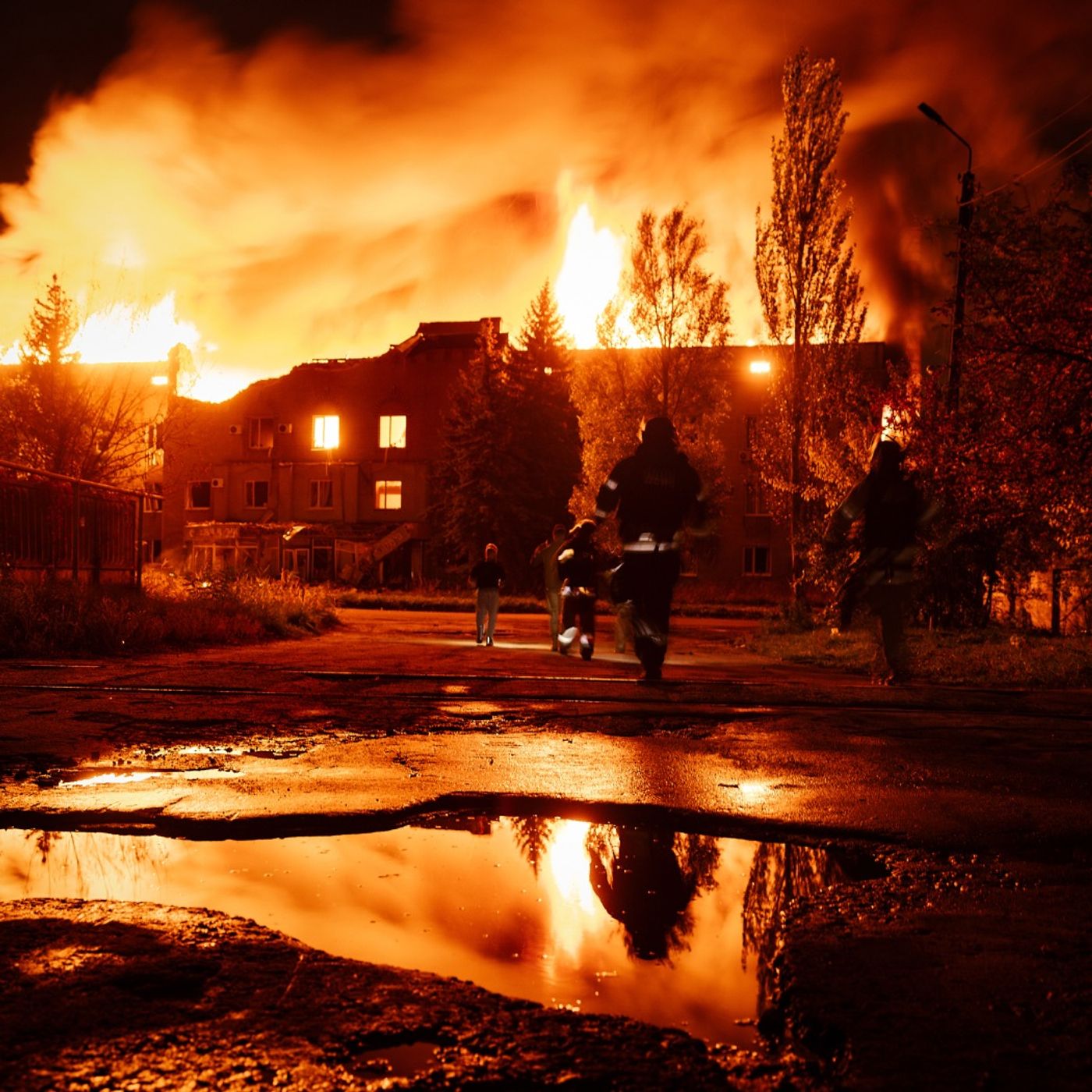
The Daily
The Ukrainian Peace Plan Written by ... Russia?
00:27:59
When President Trump’s peace plan to end the war in Ukraine was leaked last week, many felt as though Russia had written the proposal, and to a large degree, it reflected the Kremlin’s demands. The plan set off a global outcry that has forced American officials to revise their approach in the days since. Kim Barker and David E. Sanger explain the process that led to the contentious plan and why it comes at a vulnerable moment for Ukrainian leadership.
Loading summary
Transcript63 lines
- [00:00]
A
This podcast is supported by the Capital One Venture X Card. Venture X offers the premium benefits you expect, like a $300 annual capital one travel credit for less than you expect. Elevate your earn with unlimited double miles on every purchase, bringing you one step closer to your next dream destination. Plus, enjoy access to over 1,000 airport lounges worldwide. The Capital One Venture X Card what's in your wallet? Terms apply. Lounge access is subject to change. See capitalone.com for details.
- [00:31]
B
From the New York Times I'm Rachel Abrams and this is the Daily. When a U.S. peace plan to end the war in Ukraine was leaked last week, it looked to many like it had been written by Russia. And to a large degree it had been. And it sparked a global outcry that has forced American officials to backtrack, revise and rethink their approach in the days since. Today, my colleagues Kim Barker and David Sanger on the backroom process that led to the controversial plan and why it comes at a vulnerable moment for Ukraine's leader. It's Wednesday, November 26th. Before we start, I just have one question. Kim, what is that hat?
- [01:39]
C
Oh, this is like this crazy hat that is made of feathers. I love it. I had lost it for a long time and I just found it. So that's the hat I'm wearing now.
- [01:48]
B
Oh my God, it looks great. I couldn't tell if it was actually like one of those Soviet type hats that I It's like very furry and very warm.
- [01:57]
C
So it'll be coming with me back to Kyiv.
- [01:59]
B
Amazing.
- [02:00]
C
It's cold there, man.
- [02:01]
B
I've heard. Kim Barker, welcome to the show.
- [02:04]
C
Thanks very much for having me.
- [02:06]
B
So there has been a lot of news about the war in Ukraine this past week and a possible peace plan that might actually end it. But this is not the first time that we have heard about plans to end the war. And it is kind of hard to tell at this point what is real movement and what is not. So we're turning to you to try to understand what's happened. You've spent a lot of time in Ukraine, you've covered the war. What do you make of what has happened in the past few days?
- [02:33]
C
Yeah, it's been very confusing and a bit of whiplash in Ukraine as well with what happened last Thursday when this 28 point peace plan was leaked. And all of a sudden everybody in Ukraine is looking at this peace plan and they're looking at every single point and saying to themselves, this sounds an awful lot like Russian talking points, like everything Russia ever wanted. But Then at the same time, they're hearing that this is an American plan and there's a lot of pressure for Ukraine to accept it right away. And you have to understand the situation on the ground right now. You've got people who are very tired of this war going on four years. And I think a lot of Ukrainians, if you were to ask them, they would say, yes, let's get some sort of peace deal that's not too bad for Ukraine, right? They would like to get something. But at the same time, you've got this issue along the front lines where you've got not enough troops and then you've got on a nightly basis, this barrage of missiles and drones coming in and attacking civilian targets.
- [03:42]
B
Given all of that, it makes total sense why Ukrainians would be so desperate to end the war. But you also mentioned this peace plan that was leaked that has seemed to at least initially, heavily favor Russia. And I just wonder, given that, how did Ukrainians react to it?
- [03:58]
C
I mean, universally, the word that we heard over and over again was capitulation. I heard it from people who were waiting for their relatives, their dead relatives to be taken out of this building that had been hit by missiles a couple days before capitulation and disgust. And the idea that like, no, we have lost too much blood. The idea that we're just going to give up everything we've been fighting for for nothing. No. And also at the same time, you have to understand that this proposal is coming along when Ukrainian President Volodymyr Zelensky could not be in a weaker position politically because of this corruption scandal, you know, that's unfolded in the last couple of weeks.
- [04:41]
B
So tell us about that. Where does that story start?
- [04:44]
C
Well, that story starts about 15 months ago when an investigation called Operation Midas started into a company called Energo Atom, which is this nuclear power giant in Ukraine. And it's a state owned company. And the country's anti corruption agencies have been investigating this company for about 15 months. They've got wiretaps of like more than a thousand hours. And they're basically looking at key allies of President Zelensky who are accused of embezzling $100 million from this company. And it first comes out into public knowledge on Monday morning, November 10, when the country's anti corruption agencies unve the series of videos outlining a huge corruption scheme and their investigation. And then over the next two days, these videos unroll every few hours, giving more and more salacious details. And they feature a detective who's very well lit Very well produced. And you're listening to it and you're feeling like, oh, this is dramatic. Something's happening here. And then you go into these sort of like wiretapped conversations of these people who have given themselves code names like Rocket and Sugarman and Che Guevara and the Professor. And you learn through these videos that some of the money that these guys are making is coming from money that was supposed to be spent to build shelters, to protect things like nuclear power substations and power transformers and things like that from Russian missiles and drones. And each episode ends with something like, you know, more to come and to be continued. Dali Buda and it really has got Ukrainians glued to their phones.
- [07:01]
B
So it sounds like basically, if I have this right, this anti corruption agency is releasing almost like a miniseries about this scandal to the public.
- [07:09]
C
Yeah, I mean, I made that joke in the very beginning to an editor. I'm like, it kind of feels like Netflix. And then started looking at all the sort of social media that was being put out there. And it's exactly what Ukrainians were saying. You had like the memes of Bill Hader eating popcorn, waiting for the next thing to drop. And you had this sense that, oh, my God, is this gonna actually reach the. Is this gonna reach the president's chief of staff who is gonna be on these tapes next?
- [07:37]
B
I'm obviously no expert in Ukrainian anti corruption investigations, but at least in the United States, that kind of announcement would be a bit unusual. Why would they release videos like this as opposed to just, I don't know, a press conference?
- [07:50]
C
Yeah. I mean, in the States, anywhere, really. You would have a lawyer standing behind a lectern and, like, reading out the charges. Or maybe they would just be filed in paper. You wouldn't have this sense of like, we're going to have a promotional series of video, our investigation before we've even brought anybody to court. Right. It's very unusual. I mean, one of the goals clearly could be to inoculate the agencies against any sort of blowback from the president's office. They get the people on their side, they get an audience. And that seemed to be happening over the first couple of days.
- [08:21]
B
Tell me more about that. What was the reaction from Ukrainians to these videos?
- [08:25]
C
They were horrified. People are making money off of shelters that are supposed to protect us from Russian missile and drone attack. Especially when you have us going into a winter right now where it's pretty touch and go with the power situation. Russia has really been targeting all these places that generate power. And you've got blackouts going pretty much around the clock. So there's a sense of indignation hearing these people, hearing these men talk on these wiretaps about making money off of this. It's gross, it's disgusting. And Ukrainian were quite upset. You know, Zelensky rode into office on anti corruption pledges. Right. And there is a war. There's a war that means that it's martial law. You can't elect somebody new and this is their president. They want the country to hold together. But for the first time, you had this sense that opposition was forming against Zelensky. You had the sense that the political parties were getting together. There were calls for a vote of no confidence in parliament.
- [09:32]
B
What has Zelenskyy's response been to the scandal?
- [09:35]
C
I mean, Zelenskyy's response to the scandal has been, look, if there's anybody, you know, guilty of corruption in this administration or anywhere, they should pay in court. Anybody who commits corruption needs to face the consequences. Right. But he has not been specific about these charges. He's not talked about his allies who have been accused of this. His chief of staff, after these accusations first came, appeared, disappeared for more than five days, which was highly unusual. So it felt like the administration was just kind of going quiet, seeing if it was going to blow over and then they would figure it out. But it was not blowing over. It was not blowing over at all. It was snowballing until this peace plan leaked. And this peace plan was very beneficial to Russia. In fact, it looked as if Russia had written some of the proposals. Among them, Ukraine would never be able to join NATO, ever. Ukraine would permanently have to have a smaller military. Ukraine would have to cede territory that Russia hadn't even won yet.
- [10:46]
B
All of these being non starters, basically, for Ukraine.
- [10:49]
C
All of these are non starters, especially the idea of having a smaller military. If you look at the history of how Russia has been trying to take a bite of Ukraine there, a bite of Ukraine here, right? Like it's not going to happen. People are not going to accept that. But also at the same time, there was a lot of pressure coming from America, like, make this deal, sign this deal, accept this peace, and let's move on. And you have this sense that maybe this peace plan was coming out, maybe it was being pushed because Zelenskyy looked so weak that he had no choice but to accept it. But that is not what happened. Instead, it was the opposite. Zelensky came out and he's returning to his early wartime president sort of disposition where he's doing these videos and he's very serious and he's telling the country that. They have a choice right now. It's one of the toughest choices they've had. Are we going to sacrifice our dignity, or are we going to be willing to lose this key partner, that partner being the United States. Diplomat? And instead of being in the very weak position that Zelenskyy had been in just a day before, even hours before, you have Zelenskyy as defiant leader and the country rallying around what he is saying, which is we're not going to simply give in. But it still has left Zelenskyy in a really hard position because he's facing dealing with this peace plan, dealing with America whose support he would like to keep, and dealing with the Trump administration and wanting to look like they're playing ball, like they're trying to negotiate in good faith to get a deal to end this war, which is what the Trump administration really, really wants. But he's got to somehow do that without sacrificing everything. And that is why Zelensky finds himself between a rock and a hard place.
- [13:22]
B
After the break, David Sanger explains where this peace plan actually came from and the diplomatic scramble it set off. We'll be right back. AI promised intelligence, but it also exposed everything we couldn't see. Now there's a new way forward where protection, governance and AI trust move as one. Veeam and security AI accelerating safe AI at scale.
- [13:57]
D
Learn more@veeam.com Every day, countless people turn to TikTok in search of something new. And whether it's topics like science and history or literature and math, they're finding individuals who make knowledge accessible. TikTok adds a new layer to learning by turning curiosity into everyday discoveries. Readers share recommendations that revive forgotten classics and launch new authors into the spotlight. Parents trade tips that make everyday challenges feel a little easier. Home cooks pass down family recipes and global food traditions, while language learners swap tricks that make new words stick. People on TikTok are teaching life skills like budgeting, job prep or how to fix something around the house, right alongside lessons on philosophy, art and culture. And every day, diverse voices offer new perspectives on the issues shaping our world. From learning and creativity to community and connection, TikTok is a tool for curiosity, a resource for self education, and a place where discovery turns questions into conversations. To learn more about the world and about yourself, discover TikTok hey, it's Lauren.
- [15:04]
A
Dragan from Wirecutter, the product recommendation service from the New York Times. And I test headphones we basically make our own fake sweat and spray it over and over on these headphones to see what happens to them over time. We're gonna put on some noise canceling headphones and see how well they actually block out the sound. I have 3,136 entries in my database. Kids workout. What version of Bluetooth? At Wirecutter, we do the work so you don't have to. For independent product reviews and recommendations for the real world, come Visit us@nytimes.com Wirecutter.
- [15:34]
B
David, we just heard from Kim Barker about how this leaked peace plan was so poorly received in Ukraine because it seemed like it might as well have been written by Russia. It seemed so incredibly lops. Is that your take?
- [15:47]
E
Well, certainly that's my take. And after it leaked, the first thing I wrote was it read like it had been drafted in the Kremlin. And the reason for that is parts of it, it turned out essentially had been because they talked to the Russian representative as they began to develop this weeks before they got to the Ukrainians. And so the first draft of it was incredibly pro Russian and basically gave Vladimir Putin everything he wanted. Now, when you go and you probe with the administration, how did this happen? Their immediate answer is, well, we were trying to replicate our success in Gaza. Now, Rachel, you remember that because we talked about it a lot and you and I were in Israel together when that agreement came to fruition and the hostages were released. And that also was a 20 point plan, right? And they had put it together by sitting down with the Israelis and getting a list of their demands and their red lines and all that. And then through cutouts and representatives basically doing the same thing with Hamas and then going back to try to force compromises in certain areas. And so soon after the President returned from Israel, Jared Kushner, his son in law, who the President had called in on this one again and who had played a central role in the Gaza negotiations, and Steve Witkoff, his envoy for everything, and J.D. vance, the vice president, and Marco Rubio, who's got two important titles here, Secretary of State and National Security Advisor, all met together and basically they argued to the President, hey, let's try with Ukraine and Russia, exactly what we did in Gaza. And the President gave them a green light in part because, Rachel, he didn't have any other options. So they started with having a Russian representative, a Harvard Business School educated head of Russia's sovereign wealth fund, come to Miami and meet with Witkoff and with Jared Kushner and basically laid out Russia's Concerns. A lot of that was in the document. And it wasn't until weeks later that they began to sit and talk to the Ukrainians. They never talked to the Europeans. And then of course, the document leaked. And as soon as it did, it triggered that uproar. The Europeans felt cut out by President Trump yet again. The Ukrainians felt betrayed yet again. And the Russians were celebrating because the early version of the document looked like their wish list.
- [18:37]
B
Okay, so Ukraine was involved in the negotiation, but the ultimate product here was really one sided and favored Russia. Is that kind of another similarity here between what's happening with Ukraine and the Gaza deal? Meaning specifically that the administration, at the end of the day, is really trying to force a plan through that heavily favors one side?
- [18:59]
E
Well, you're certainly right, Rachel, that the Ukrainians came in and were consulted, but they came in very late. It was only about a week before the actual document leaked out. And so the version that we all saw last week really didn't reflect the Ukrainian point of view. Now, there are two ways to interpret that. One is that they hadn't had enough time to begin to go back and forth and amend the document. That's the version of events that administration officials have put out. The other way to look at it is that this administration fundamentally has run out of patience and sympathy for the Ukrainians here, that the President believes that they're going to have to give up land sooner or later. So they might as well just get accustomed to that. And of course, you've got some split views within the administration. Vice President Vance made clear through the entire campaign that he doesn't particularly care about Ukraine. He just wants to make sure the United States gets out, isn't sucked into another forever war. Marco Rubio, on the other hand, as a senator, voted to aid Ukraine and spoke out quite vociferously about the need to defend Ukrainian democracy. It was only after he entered the administration that he began to adopt President Trump's view, as you would expect an administration official would.
- [20:31]
B
You know, it's sort of interesting though, because the way that you described Marco Rubio's stance, at least initially, vis a vis Ukraine, was more of a traditional foreign policy approach, like, not that much different from Biden in the sense that he was in favor of supporting Ukraine. And now you're saying that he has switched his attitude essentially and adopted this very much more. America first, get out of foreign entanglements at any cost. That we have seen from JD Vance and other people in the administration.
- [21:01]
E
I'm not sure that's entirely Right, Rachel. Because Marco Rubio's true views seemed to pop out when this document leaked last week. And all of a sudden, his first reaction to it was, oh, this is just an initial set of talking points. I think he said at one point, it's a living docum. It's going to change. Right. It's just a starting point. And yet the President took a very different position. Trump said, this is a great plan. It's great for Ukraine. Zelensky has until Thanksgiving Day to agree to it or go off. And he's going to fight his own little wars again, hinting without saying that he might be doing that without much American support. So it was becoming pretty evident to Secretary Rubio that this negotiation had somehow escaped his hands. But Rubio clearly felt the need to seize this back. And suddenly on Saturday morning, we heard that he was getting on his plane on an unscheduled trip to go to Geneva and meet both the Europeans and the Ukrainians to try to put down the incredible uproar that the leak of this early draft had created. Because the Europeans felt like this draft of a peace accord not only sold Ukraine down the river, it sold their own security down the river. And you heard that directly from the German Chancellor, Friedrich Merz, who said outright, this isn't just about Ukraine. This is about the security of Europe. It's about the security of NATO nations.
- [22:45]
B
The Europeans clearly see this as much more existential than the conflict in Gaza.
- [22:49]
E
That's absolutely right.
- [22:52]
B
Okay, so what happens next?
- [22:54]
E
So on Sunday, there are 11 hours of meetings. Witkoff is there, Jared Kushner is there. It's pretty heated from what we hear, particularly with the Ukrainians. But magically, the 28 point plan turned into a 20 point plan. Suddenly gone from this was a limit on the Ukrainian military to be no more than 600,000 troops. Suddenly gone from this was that NATO troops could never be based in Ukraine. So he clearly was trying to wrench this document back to the middle in an effort to save the peace process. But along the way, he may have lost the Russians.
- [23:39]
B
And that is the big question here. Right, David? Because as you and I have discussed on the show multiple times before, Russia has been extremely consistent since the start of the war about what it wants and what it would consider victory. And they haven't wavered from that at all. So the idea that a new peace plan that would be more favorable to Ukraine coming out of Geneva, that almost seems like it would be a non starter.
- [24:03]
C
Right.
- [24:03]
B
So you almost have to wonder, what is the point or the good of this plan at all?
- [24:09]
E
Well, clearly the president believed that by setting up this Thanksgiving deadline that he was going to rush something through and he would have an agreement. And a cynic might say that the president was interested in speed because he wants to add an agreement between Russia and Ukraine to that list for the Nobel Peace Prize that he believes he's been nominated for for next year. And he regularly made the absolutely correct point that it is one of the great human tragedies that we're losing thousands of Ukrainians and Russians every single week here, and he just wants to get to something that will stop the killing. The question is, at what cost and how much pain does he believe Putin will put up with?
- [25:04]
B
David, this is reminding me of a characteristic that we often see with President Trump, which is that he often likes to tout a victory with the details to be worked out later. And that seems like it is maybe a dynamic that is playing out here because it feels like from everything you are saying, the goal is to end the war in Ukraine by hook or by crook and not necessarily to uphold any particularly strongly principles in the process. Is that fair?
- [25:32]
E
That's exactly right, Rachel. If you think about how former President Biden talked about this war from the beginning of the invasion, he always said, we're here to reestablish the rules of the post World War II order, that countries don't invade each other's borders, that countries don't take each other over, that this era of land wars in Europe we were done with at the end of World War II. President Trump doesn't talk in those terms. He says, just tell me what it will take to get it done. Because this is a power competition between Ukraine and Russia. Russia's got nuclear weapons. It's a much larger country. It's going to win any power contest. So let's just define where those borders are and acknowledge that it's the stronger state. Now, we have to open up the possibility here that clunky as this entire process over the past couple of days has been that President Trump might actually be able to capitalize on the fact that they have something on the table here that the Russians and the Ukrainians are finally engaged to get to something that resembles a ceasefire, if not a full peace agreement? And the question is, can he properly assess when the Russians have suffered enough that the pain is too great, or when the Ukrainians have come to the conclusion at a moment of weakness from them because of the corruption scandals, because they're losing territory, that they're better to cut a deal. He thinks this may be the moment, and maybe he's right. We all have to hope so. But this certainly has been an example of pretty awkward diplomacy. Maybe from here it gets better.
- [27:40]
B
David, thank you so much.
- [27:41]
E
Thanks, Rachel.
- [27:48]
B
On Tuesday evening, Russia launched a deadly barrage of missiles and drones at the Ukrainian capital as Kremlin officials signaled they would resist changes negotiated by Ukraine to President Trump's peace plan. The president, meanwhile, said he'd backed off the Thanksgiving Day deadline and that his envoy, Steve Witkoff, would be traveling soon to Moscow to meet with the Russian president, Vladimir Putin. We'll be right back.
- [28:21]
D
Hey, it's Vaughn Vreeland from New York.
- [28:23]
C
Times cooking Colder weather is here, and.
- [28:25]
D
I'm no meteorologist, but I think the forecast says you should bake with us.
- [28:30]
C
Almost any cake can be turned into a one mole cake.
- [28:33]
A
It's like a croissant, but like even more crunch and. And flake.
- [28:36]
C
Oh, my God.
- [28:37]
E
I could eat 5 billion of these.
- [28:39]
D
That is a brownie.
- [28:40]
C
They look so chocolatey and delicious.
- [28:43]
B
Don't be afraid. This is so forgiving.
- [28:45]
E
These are deluxe cookies.
- [28:47]
C
Do you guys wanna try this?
- [28:49]
E
Bake with New York Times cooking this season.
- [28:52]
A
Find all the recipes@nytcooking.com subscribe now for a limited time offer.
- [29:01]
B
Here's what else you need to know today. The six Democratic members of Congress who recorded a video tell troops they could refuse illegal orders said they were being investigated by the FBI. The group, which included veterans of the military and the CIA, said the bureau had requested interviews with them, though it's unclear what, if any, laws the videos could have violated. In a statement, the four House members said that the president was, quote, using the FBI as a tool to intimidate and harass members of Congress. And Dr. Ralph Abraham, a critic of vaccines who's called the COVID vaccinations dangerous, has been named second in command at the CDC as Louisiana Surgeon General. Abraham had ordered the state to stop promoting vaccinations, and his appointment was not announced by the CDC at all. Instead, it appeared on an internal database with a start date of November 23rd. Dr. Abraham's views on some issues align with those of Health Secretary Robert F. Kennedy, Jr. Including when he endorsed the unproven link between taking Tylenol during pregnancy and autism. Today's episode was produced by Mooch Zaidie, Alex Stern, and Anna Foley. It was edited by Maria Byrne with help from Brendan Klinkenberg and Paige Cowett. Contains music by Marian Lazan and Dan Powell, and was engineered by Chris Wood. Special thanks to Alexandra Mikolician and Sasha Duckworth. That's it for the Daily I'm Rachel Abrams. See you tomorrow.
- [30:56]
D
This podcast is supported by GiveWell. When you give to a nonprofit, how do you measure success? Many focus on low overhead, but what about real impact on people's lives? Over 150,000 donors have used GiveWell's research, collectively saving 300,000 lives and improving millions more. Make a tax deductible donation@givewell.org first time donors can have their donation matched up to $100, as long as matching funds last. Select podcast and New York Times at checkout.