← The Daily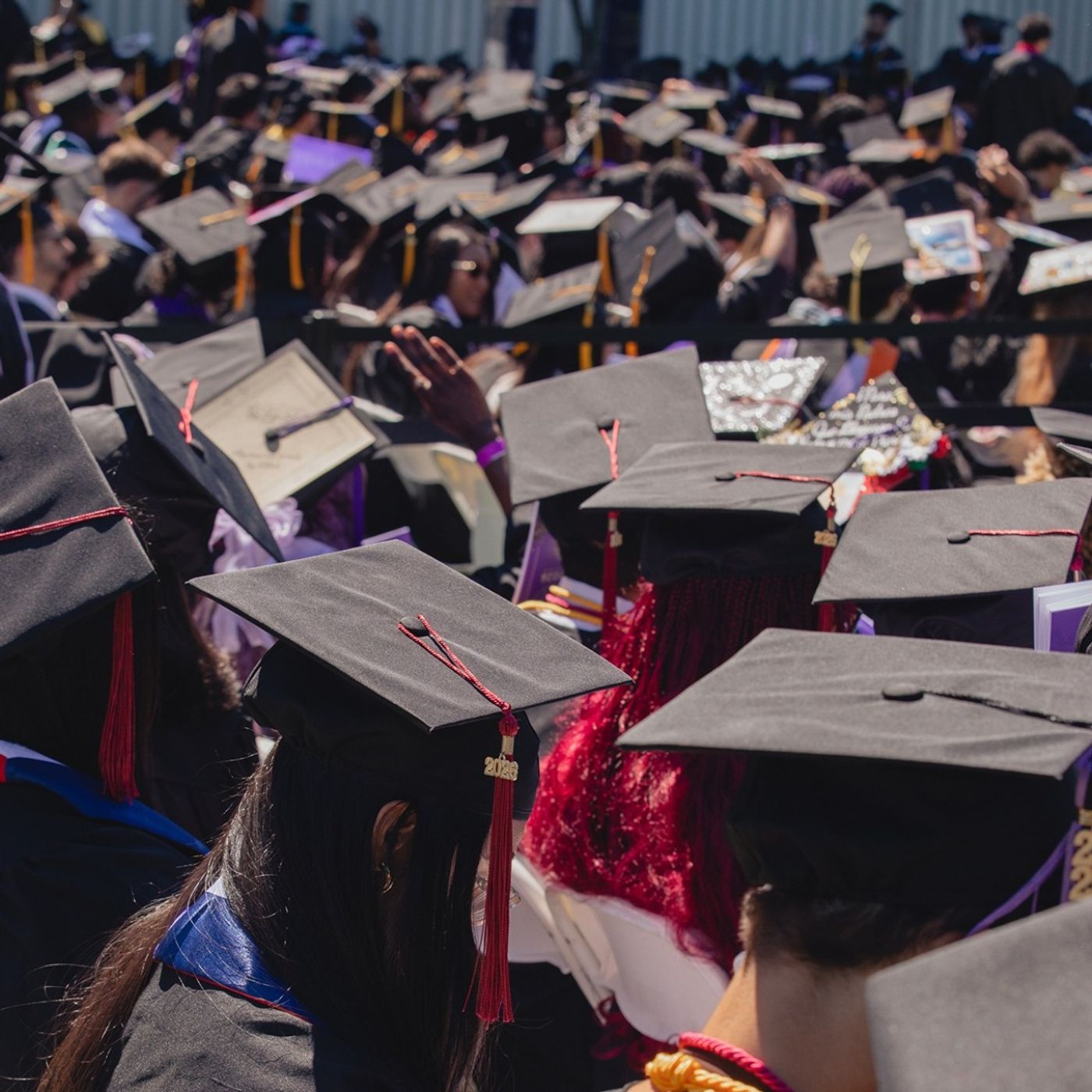
The Daily
The Young Economic Populists Reshaping the Left
00:37:25
College graduates used to lean right politically, but over the past few decades, they have increasingly moved to the left. Today, Noam Scheiber, the author of “Mutiny: The Rise and Revolt of the College-Educated Working Class,” explains the economic forces that have left many college grads deeply indebted, underpaid and angry, and also how their unmet expectations are reshaping class politics in America.
Loading summary
Transcript147 lines
- [00:00]
Capital One Advertiser
This podcast is supported by the Capital One Venture X Card. Venture X offers the premium benefits you expect, like a $300 annual capital one travel credit for less than you expect. Elevate your earn with unlimited double miles on every purchase, bringing you one step closer to your next dream destination. Plus, enjoy access to over 1,000 airport lounges worldwide. The Capital One Venture X Card what's in your wallet? Terms apply Lounge access is subject to change. See capitalone.com for details.
- [00:31]
Natalie Kitroeff
From the New York Times I'm Natalie Kichoev. This is the Daily. As Democrats wrestle over the direction of their party, a new crop of progressive candidates has made the case that the political future is economic populism. Among the biggest supporters of that platform are college graduates who used to lean right politically but over the last few decades have moved increasingly to the left. Today, my colleague Noam Scheiber explains the economic forces that have left many college grads deeply indebted, underpaid and angry, and how their unmet expectations are reshaping class politics in America. It's Thursday, june 11th. Noam, to set the stakes of the conversation that we're about to have, can you describe the political transformation of college graduates that you've just written a book about and that you've been reporting on for years now?
- [01:49]
Noam Scheiber
Yeah, so I think we sometimes forget that as recently as the 1980s and 1990s, college grads were actually pretty conservative politically. In the 1980s, for example, they tended to vote Republican by double digit margins, at least on the presidential level. They used to favor things like smaller government, lower taxes, fewer regulations. And a lot of this, I think, was driven by the fact that college educated workers tended to see themselves as kind of management adjacent. They tended to expect that their lives would become much more affluent in the future. So this is very consistent with their worldview. If you're an affluent person and you run a business or you're an executive, you tend to want the government to stay out of your way. But if you fast forward a few decades, you really start to get a different picture. And if you look at the most recent election, you see that college grads actually shift really far in the other direction. They end up supporting Kamala Harris over Donald Trump by about a 15 point margin.
- [02:53]
Natalie Kitroeff
Right.
- [02:53]
Noam Scheiber
And on those specific economic issues like government and taxes and regulation, they've actually moved much further to the left, much closer to people without a degree than they were in the 1980s.
- [03:05]
Natalie Kitroeff
And so what explains that? What is driving that transformation?
- [03:10]
Noam Scheiber
Well, there are a number of factors that people point to when trying to explain this. But in my book, I focus first and foremost on economics. A lot of people who went to college were really sold on this idea that it would be the key to an upper middle class adulthood. And it turned out that the reality fel far, far short of that. And instead they were squeezed in a whole variety of ways in that field. A sense of grievance and frustration among a lot of college grads with the economic system that exists today.
- [03:43]
Natalie Kitroeff
Okay, what are the economic forces that led to this deep sense of frustration?
- [03:50]
Noam Scheiber
So this starts several decades ago. In 1970, only about 10% of Americans had four year college degrees. The vast majority of Americans did not go to college, did not have a degree. But we see that in the 80s and 90s, the number of people going to college really starts to explode.
- [04:08]
Political Figures / Historical Clips (e.g., Bernie Sanders, Barack Obama, Alexandria Ocasio-Cortez)
NBC News in depth. Tonight, America's new insecurity. Good jobs, good wages, a whole way of life disappearing forever.
- [04:17]
Noam Scheiber
And I think a lot of it has to do with the decline of traditional blue collar jobs.
- [04:22]
Natalie Kitroeff
In the first six months of this
- [04:23]
Noam Scheiber
year alone, America lost 221,000 jobs in manufacturing.
- [04:28]
Natalie Kitroeff
And it's getting worse.
- [04:30]
Noam Scheiber
There was a sense that automation and globalization and the decline of unions was really making it harder for people to make a living if they only had a high school degree.
- [04:39]
Political Figures / Historical Clips (e.g., Bernie Sanders, Barack Obama, Alexandria Ocasio-Cortez)
Earlier this year, the Census Bureau reinforced the view that a college degree makes a big difference in lifetime earnings. Hundreds of thousands of dollars difference.
- [04:47]
Noam Scheiber
And the solution in a lot of cases was, well, we should send them to college.
- [04:52]
Political Figures / Historical Clips (e.g., Bernie Sanders, Barack Obama, Alexandria Ocasio-Cortez)
I have something to say to every family listening to us tonight. Your children can go on to college.
- [04:58]
Noam Scheiber
This really becomes a kind of national obsession.
- [05:02]
Political Figures / Historical Clips (e.g., Bernie Sanders, Barack Obama, Alexandria Ocasio-Cortez)
We can make college as universal in the 21st century as high school is today.
- [05:07]
Noam Scheiber
And my presidents, beginning especially with Bill Clinton, talk about how people should go to college so that they can compete in the modern global economy.
- [05:16]
Political Figures / Historical Clips (e.g., Bernie Sanders, Barack Obama, Alexandria Ocasio-Cortez)
The no Child Left behind act needs to be reauthorized and strengthened.
- [05:19]
Noam Scheiber
We see George W. Bush when he pushes his education reform initiative. No Child Left behind.
- [05:26]
Political Figures / Historical Clips (e.g., Bernie Sanders, Barack Obama, Alexandria Ocasio-Cortez)
And the reason I bring it up is in order to make sure we've got more children ready for college, emphasizes
- [05:31]
Noam Scheiber
that we need to prepare people better to go to college.
- [05:34]
Political Figures / Historical Clips (e.g., Bernie Sanders, Barack Obama, Alexandria Ocasio-Cortez)
A good education is no longer just a pathway to opportunity. It is a prerequisite.
- [05:38]
Noam Scheiber
And of course, Barack Obama really elevates this as well.
- [05:41]
Political Figures / Historical Clips (e.g., Bernie Sanders, Barack Obama, Alexandria Ocasio-Cortez)
We will provide the support necessary for all young Americans to complete college and meet a new goal. By 2020, America will once again have the highest proportion of college graduates in the world. That is a goal we can meet. That's A goal we can meet.
- [05:59]
Noam Scheiber
And this change really happens even outside of the political realm too, even in the public school system. In charter schools, we really as a nation start emphasizing the importance of going to College. Good morning, Ms. Notwani.
- [06:14]
Capital One Advertiser
What we're doing here at KIPP Academy
- [06:16]
Noam Scheiber
elementary is preparing our kids not only
- [06:18]
Capital One Advertiser
for academic excellence, but for college.
- [06:21]
Noam Scheiber
One of the largest charter school networks in the country, called kipp, even though
- [06:26]
Capital One Advertiser
they are four and five years old right now, and in kindergarten, they'll be graduating from college in the year 2000.
- [06:31]
Noam Scheiber
It really starts emphasizing in the early 90s that college begins in kindergarten, that everyone must start obsessing about college from the very moment that they enter a
- [06:41]
Natalie Kitroeff
classroom and go to college.
- [06:43]
Capital One Advertiser
Go to college, Go to college.
- [06:50]
Natalie Kitroeff
What you're saying is there's essentially a national PR campaign for college.
- [06:54]
Noam Scheiber
No question. Everyone from your friends and family members to the President of the United States is telling you that this is an absolute necessity. And so naturally, people start to follow that advice. And by 2010, we see that 30% of Americans have four year college degrees and it's rising rapidly.
- [07:13]
Natalie Kitroeff
30%. Which is compared to what you said, 10% in 1970. So basically the rate tripled in 40 years.
- [07:23]
Noam Scheiber
Yeah. And to meet all that demand, we start to see a whole bunch of new players open their doors or expand their ranks. So we see for profit colleges really start to enter the scene, and we have a huge increase in the number of people who are attending for profit universities. And another thing that we see is what are known as non competitive public universities. So that's like not the University of Texas at Austin, which is obviously a very prestigious public university, or even the University of Texas at Dallas, which is a pretty competitive state university, but something like the University of Texas at Rio Grande Valley, which admits almost everyone who applies to the university. And what we've seen is that if you go to the University of Texas at Austin, you tend to do very well. If you go to the University of Texas at Dallas, often it works out pretty well. But for someone who graduates from an essentially open admission public university, it's a much more complicated picture. And it's not at all clear that the cost is worth the benefit to you at a university like that.
- [08:31]
Natalie Kitroeff
Just to summarize quickly, you have this huge increase in the number of prospective students, and as a result, the landscape of education starts to change in order to accommodate them. You get these new colleges both for profit and these non competitive ones. And it sounds like those changes, they start to dilute the value of a college degree.
- [08:53]
Noam Scheiber
That's exactly right. I mean, in some ways, in the 1980s and 1990s, a college degree really was a can't lose asset. We find that the value of these degrees were increasing pretty much in lockstep. Obviously, if you went to Harvard and studied engineering, you might do better than someone who went to their state university and studied art history. But in general, this was an appreciating asset. But by the 2020s, we see a much more mixed picture, which in some cases makes sense for people, but in a lot of other cases doesn't make that much sense for people.
- [09:28]
Political Figures / Historical Clips (e.g., Bernie Sanders, Barack Obama, Alexandria Ocasio-Cortez)
I rise today to give my heartfelt support for the Higher education amendments of 1991.
- [09:35]
Noam Scheiber
And what's happening around the same time
- [09:37]
Political Figures / Historical Clips (e.g., Bernie Sanders, Barack Obama, Alexandria Ocasio-Cortez)
the provisions of this bill vastly expand the amount students may borrow to help
- [09:42]
Noam Scheiber
them finance their education is that Congress is making it easier for people to borrow to go to college. So Congress raises the limit on student debt in the early 90s, and then it raises it again a few times in the kind of 2007, 2009 period. By passing this bill, we will make a college education possible for hundreds of
- [10:04]
Political Figures / Historical Clips (e.g., Bernie Sanders, Barack Obama, Alexandria Ocasio-Cortez)
thousands of additional students over the next five years.
- [10:08]
Noam Scheiber
And this coincides with a really rapid increase in the debt that people are taking on to go to college. We see it roughly double between the early 90s and 2020, which is significant.
- [10:18]
Natalie Kitroeff
Right. Twice the amount of debt is no small matter.
- [10:22]
Noam Scheiber
It's no small matter. And actually we see that when people max out on their own debt, their parents even step in to pick up the difference. So it's even larger than that doubling in some respects.
- [10:32]
Natalie Kitroeff
Overall, this sounds like a pretty bad situation. You have a generation of people who are being told that college is absolutely necessary, being hyped up on the importance of it, who then go to colleges that may not have even existed for very long, and then graduating from those schools with loads of debt. And that is how they enter the job market.
- [10:53]
Noam Scheiber
That's right. And then the whole thing kind of falls apart. Around 2008, the Great Recession and financial crisis hits. During this time, millions of people lose their jobs or have trouble finding work.
- [11:06]
Natalie Kitroeff
Right.
- [11:06]
Noam Scheiber
But in a way, this is kind of a uniquely sharp blow to these young college grads.
- [11:12]
Natalie Kitroeff
Why?
- [11:13]
Noam Scheiber
Well, because, remember, these were the folks who were probably given the hardest sell about why they need to go to college of any generation in history. They had these sky high expectations. They really thought of college as something that you should pretty much do everything you can to attain. And yet when they leave college and they enter the Job market with this huge amount of debt, suddenly they're scrambling to find jobs that are in line with what they've studied. We see the unemployment rate for recent college grads jump to its highest level in decades. And if you recall what's going on in 2008 and 2009, debt is just this huge problem. We have whole financial institutions that are collapsing under the weight of it.
- [11:55]
Natalie Kitroeff
The House passes a sprawling $700 billion
- [11:59]
Noam Scheiber
government or the financial industry, and what happens is that the government intervenes very aggressively to bail out these large financial institutions.
- [12:07]
Natalie Kitroeff
Bailing out Wall street is the only way to save Main street, so says the president.
- [12:13]
Noam Scheiber
But for the people who went to college and who did everything that they thought they were supposed to do and are stuck with this debt that's suddenly weighing them down, you know, for us
- [12:22]
Natalie Kitroeff
private citizens, nobody's bailing us out.
- [12:24]
Noam Scheiber
Nobody. There doesn't appear to be a bailout for them.
- [12:29]
Natalie Kitroeff
Right. This moment amplifies this sense that there are just two tiers of society in America. There's Wall street, there's the ultra wealthy, and everyone else. You're pointing to a moment in this history where the economic forces we've been discussing start to have very visible political consequences.
- [12:51]
Noam Scheiber
Yeah, this is a moment where the country really shifts in a kind of populist direction. On the right, you had the rise of the Tea Party movement, people who saw the government intervene and bail out the big banks and really start to turn against government. And then on the left, you have this sense that the government is bailing out the fat cats, and the Wall street billionaires are doing great, but the rest of the country is really struggling, and the government isn't doing much for them.
- [13:18]
Political Figures / Historical Clips (e.g., Bernie Sanders, Barack Obama, Alexandria Ocasio-Cortez)
Occupy Wall Street. All day, all week.
- [13:21]
Noam Scheiber
Occupy Wall Street. And this really starts to crest with the Occupy Wall street movement. In 2011, This was a group of folks who start to protest in Zuccotti park in New York City right now, after 30 years of having our living standards decrease While the wealthiest 1% have had it better than ever, I think it's time for maybe, I don't know,
- [13:46]
Natalie Kitroeff
some participation in our democracy.
- [13:48]
Noam Scheiber
They really start to identify the 1% as the kind of bait noirs of the country. And it's the other 99% of Americans who are doing the right thing but getting left behind by the economy.
- [14:01]
Natalie Kitroeff
You know, I went to school.
- [14:02]
Noam Scheiber
A lot of these people went to school. And now that we're out for the
- [14:05]
Capital One Advertiser
summer or out completely, there's no jobs. We can't pay those student loans back.
- [14:08]
Noam Scheiber
And all we keep hearing from the creditors is we're late to. And it turns out that young college grads are a huge part of this movement. There have been studies showing that about three quarters of the people involved in Occupy were college grads.
- [14:21]
Political Figures / Historical Clips (e.g., Bernie Sanders, Barack Obama, Alexandria Ocasio-Cortez)
Why are other people getting bailed out
- [14:23]
Noam Scheiber
and I'm stuck with college loans?
- [14:24]
Political Figures / Historical Clips (e.g., Bernie Sanders, Barack Obama, Alexandria Ocasio-Cortez)
Why can't I get a job that's actually fulfilling what I like to do?
- [14:27]
Noam Scheiber
And they actually end up elevating student debt and student loans as a major concern of the Occupy movement. Feed the rich, feed the poor, feed the rich. And this is a moment where you start to hear a whole variety of populist chants that are probably familiar to a lot of people. There's just a whole new vocabulary that we hadn't really seen when it came to economic issues before.
- [14:58]
Natalie Kitroeff
Yeah, I graduated college in 2011 and remember occupy so well. It was this thing that really activated college graduates politically, not just in New York, but all across the country. There were Occupy style protests, I remember in many cities. And it felt as though this was the critical juncture at which the rage that had been bubbling over inequality. It became more of a solidified political identity.
- [15:27]
Noam Scheiber
I think that's right. And I think this is a moment where you have a real shift in their consciousness. So instead of seeing themselves as the people who are either at the top or who are gonna be top, pretty soon, they start to identify with everyone else. They start to identify with people who have been exploited by the people at the top. And of course, the Occupy movement eventually fizzles out. People leave Zucati park and they go back to their homes and their jobs. But this turns out to be the opening act of a pretty dramatic shift that will play out across the next 15 years. It's the beginning of this realignment in American politics that really changes the way people who went to college thought about where their allegiances lie.
- [16:27]
Natalie Kitroeff
We'll be right back.
- [16:36]
Capital One Advertiser
Brought to you by the Capital One Savor Card. With Savor, you earn unlimited 3% cash back on dining, entertainment, and at grocery stores. That's unlimited cash back on ordering takeout from home or unlimited cash back on tickets to concerts and games. So grab a bite, grab a seat, and earn unlimited 3% cash back with the Savor Card. Capital One, what's in your Wallet? Terms apply. SeeCapital1.com for details.
- [17:01]
International Rescue Committee Advertiser
This podcast is supported by the International Rescue Committee. Here's what you need to know about the crisis in the Middle east and how you can help. In Lebanon alone, violence has forced hundreds of thousands of Families from their homes. IRC staff are on the ground delivering critical supplies, but they need to scale up support and quickly. All donations are matched to rush two times the emergency aid. Give now@rescue.org rebuild summer it's when we
- [17:30]
Capital One Advertiser
share more time, more memories and more photos. And at ATT, the iPhone 17 Pro is your summer essential. Its center stage front camera auto adjusts the frame to fit everyone into group selfies. You don't even have to turn your phone. And AT&T makes sharing those pics with everyone easy. Right now at, at and t ask how you can get iPhone 17 Pro on them with eligible trade in requires eligible plan terms and restrictions apply. Subject to change. Visit att.comiphone or visit an ATT store for details.
- [18:01]
Natalie Kitroeff
So, Noam, you said the Occupy movement was really the opening act for this political realignment to what happens after Occupy, after it fizzles out in 2011.
- [18:12]
Noam Scheiber
So when it comes to the economy, things really did stay bad for a really long time. All the way through the end of the decade. Employment rates for young college grads are still pretty low. Wages never really recover. We have this thing called scarring, which shows that if you graduate into a recession, your earnings can be impacted for 10, 15 years later. And then there's this other big force that's happening out there in the job market that's really reinforcing all the things that young college grads are experiencing. And that's the consolidation across a whole bunch of different industries. In tech, in retail, healthcare, we're seeing companies get bigger and bigger.
- [18:49]
Natalie Kitroeff
Can you just slow down and explain what you mean by consolidation?
- [18:53]
Noam Scheiber
Yeah. So in a lot of cases, you see companies merging together. One company buys another company that it competes with in some way. If you think back to the early 2010s, for example, you have Facebook buying Instagram or WhatsApp, and maybe that could be a good thing for consumers. Maybe Facebook invests a lot of money in building out infrastructure and new features that consumers really like. But for workers, that can really reduce the options that you have about where to work. And it can actually also be really frustrating and alienating. Like if you think of a computer programmer, maybe they were at a smaller startup and they felt like they had a real impact on the development of the product or even a role in the mission of the company. But then suddenly they're working for this giant company. It's much more bureaucratic. It makes people feel like they just have a lot less agency in what they're doing.
- [19:45]
Natalie Kitroeff
You're saying consolidation sometimes leaves Workers worse off because as a worker, you now have fewer options and less power.
- [19:53]
Noam Scheiber
That's right. And one of the best places to see this is actually the health care industry, where consolidation really starts to ramp up in the2010.
- [20:01]
Natalie Kitroeff
Why? What happened?
- [20:02]
Noam Scheiber
Well, the healthcare industry had been consolidating for a few decades, but if you remember, one of the big priorities of the Obama administration when it came to power in 2009 was to make the healthcare industry a lot more efficient. And they did that through big initiatives like Obamacare and through a series of regulations that really accelerated consolidation in the industry. And there's actually kind of an irony here, because on one level, Obamacare was a more populist economic policy. It really expands health care economy to millions of Americans who didn't have it. But on the other hand, it kind of makes healthcare an industry that's worse for the people who are working in it.
- [20:40]
Natalie Kitroeff
How do you mean?
- [20:42]
Noam Scheiber
Well, one of the wrinkles of Obamacare and these regulations is that they actually foist more risk onto individual hospitals and healthcare systems. So, for example, if patients got a procedure and didn't do that well after the procedure, the government might not reimburse the hospitals as much as they were expecting. And so the hospitals decide that the way to protect themselves against this risk is to get bigger and bigger. You know, if you're a small hospital and suddenly the administration isn't reimbursing you as much as you thought for different procedures because your patients aren't doing as well as you'd hoped, that can really hurt you financially. But if you operate dozens and dozens of hospitals, you're much more insulated against that risk.
- [21:23]
Natalie Kitroeff
Makes sense.
- [21:24]
Noam Scheiber
And what happened when these healthcare systems got really big is they started buying up more and more hospitals in different cities and states, and that actually created fewer places for people to work. And this kind of had two effects. First, if you were a nurse or a pharmacist or someone who worked in the back office of a hospital, that really could have an impact on your wages because you had fewer potential employers bidding up the price of your labor.
- [21:50]
Natalie Kitroeff
Right.
- [21:50]
Noam Scheiber
And then there was a second set of employees like doctors. And these folks generally didn't see their wages go down, but they were still affected in other ways that made them really hate this new arrangement of working for bigger and bigger healthcare systems. So, for example, I first covered a group of doctors who were unionizing at a big healthcare system in Oregon in 2015. And one thing that I heard from them over and over again is we feel like Cogs in some giant medical industrial complex. We might as well be factory workers. They're governed by MBAs and bean counters who are suddenly telling them how much time they can spend with their patients, how long they can keep patients in the hospital, what they have to ask them when they talk to them. And these are people who've often trained for years and years.
- [22:36]
Natalie Kitroeff
Right.
- [22:37]
Noam Scheiber
The thing that they pride themselves on is their professional judgment, the ability to evaluate a situation, to apply the best treatment. And suddenly they feel like they're being micromanaged by people who have no medical expertise to speak of. So it's incredibly alienating.
- [22:53]
Natalie Kitroeff
Yeah. I mean, it sounds like you basically have the most educated people in society, almost doctors, starting to feel more like laborers. They don't have that control. They don't have the stature that they thought they were getting when they got that md.
- [23:08]
Noam Scheiber
Yeah. And what you start to see is that a lot of highly trained white collar workers who at one point had thought of themselves as management adjacent, they start to in a lot of cases, identify as just kind of rank and file employees who were bossed around by management.
- [23:27]
Political Figures / Historical Clips (e.g., Bernie Sanders, Barack Obama, Alexandria Ocasio-Cortez)
And then today, I am proud to announce my candidacy for President of the United States of America.
- [23:35]
Noam Scheiber
It's at this point in 2016, that all these grievances start to coalesce into a mainstream political figure. And that figure, at least on the left, is Bernie Sanders.
- [23:45]
Political Figures / Historical Clips (e.g., Bernie Sanders, Barack Obama, Alexandria Ocasio-Cortez)
The issue of wealth and income inequality is the great moral issue of our time. It is the great economic issue of our time. It is the great political issue of our. Of our time. And we will address it.
- [24:03]
Noam Scheiber
Sanders, the independent senator from Vermont, comes along and sort of enters the stage talking about the 99% versus the 1% and how the bosses and the billionaires are dominating the political system in ways that are not aligned with the interests of ordinary workers.
- [24:19]
Political Figures / Historical Clips (e.g., Bernie Sanders, Barack Obama, Alexandria Ocasio-Cortez)
It is insane. It is counterproductive to the best interest of our country that hundreds of thousands of bright young people cannot afford to go to college and that millions of others leave school with a mountain of debt that burdens them for decades.
- [24:40]
Noam Scheiber
And in ways that might not have been imaginable a few decades earlier. A lot of college grads, and especially younger college grads, really start to identify with that language.
- [24:50]
Natalie Kitroeff
So. So the rise of Bernie Sanders and his political appeal within this class of highly educated people that you've been looking at, that is a manifestation of the shift that you've been talking about. It seems as though Bernie both reflects this growing left wing populism among college grads, but he also may be Driving it just like Occupy did, helping to solidify that identity.
- [25:18]
Noam Scheiber
I think that's right. Of course, we all know that Hillary Clinton goes on to win the Democratic presidential nomination. But you see Sanders really outperform with young people and especially with young college graduates. Overall, he loses to Hillary Clinton by a small margin among college grads. But among young college grads, college grads under 30, he crushes her by a 2 to 1 margin. And more broadly, what you see Sanders doing is really giving voice to this sense of grievance on the national political stage, this sense that the economy just isn't working for them.
- [25:51]
Natalie Kitroeff
We have no choice but to liberate working people from economic marginalization and make
- [26:00]
Noam Scheiber
sure that every person in this country gets a living wage and health care as a right. It's not too long after Bernie that we see Alexandria Ocasio Cortez win a Congressional seat in New York City.
- [26:13]
Natalie Kitroeff
Yep.
- [26:14]
Noam Scheiber
And it was literally easier for me
- [26:16]
Natalie Kitroeff
to become the youngest woman in American
- [26:18]
Noam Scheiber
history elected to Congress than it is
- [26:21]
Natalie Kitroeff
to pay off my student loan debt.
- [26:23]
Noam Scheiber
And she's very much of this demographic and supported by this demographic.
- [26:28]
Capital One Advertiser
The red socialist flag is held proudly as the Democratic Socialists of America, or dsa, are going door to door.
- [26:35]
Noam Scheiber
We see a huge increase in the number of young college grads who are joining the Democratic Socialists of America, which goes from about 5,000 members in the United States states before 2016 to nearly 100,000 members by the end of the decade. A majority of them young college educated people.
- [26:53]
Natalie Kitroeff
We didn't grow up sort of with the Red scare, and so the word doesn't scare us as much.
- [26:57]
Noam Scheiber
We see support for socialism really rise among college educated folks, and especially young college educated folks, basically doubling support between 2010 and 2020 from about 20% to about 40%. And of course, last year in New
- [27:14]
Political Figures / Historical Clips (e.g., Bernie Sanders, Barack Obama, Alexandria Ocasio-Cortez)
York City, for as long as we can remember, the working people of New York have been told by the wealthy
- [27:21]
Noam Scheiber
and the well connected that power does not belong in their hands. We saw Zoran Mamdani run away with the mayor's race with a huge burst of support from young college grads. If you look at college grads under 30 in New York City, 84% of them supported Zoran Mamdani.
- [27:38]
Political Figures / Historical Clips (e.g., Bernie Sanders, Barack Obama, Alexandria Ocasio-Cortez)
I am young. Despite my best efforts to grow older. I am Muslim. I am a Democratic socialist. And most damning of all, I refuse to apologize for any of this.
- [27:52]
Noam Scheiber
And so what we really see is the long tail of all this economic upheaval that college grads have been dealing with for decades. Come to fruition at this moment and create all this momentum behind Canada in ideas that would have almost been unthinkable before the financial crisis and Great Recession.
- [28:15]
Natalie Kitroeff
Okay, Noam, at the beginning of this conversation, you said economic forces weren't the only thing driving this populism on the left among this cohort. So can we turn to some of the other forces for a minute? Ideological, cultural. One theory that I've seen, which I know you, you've also engaged with, for why America's college educated population has moved to the left, is that the demographics of this group have just fundamentally changed. This is an argument that Eric Levitz of Vox made in his review of your book. He says increasingly the population of college grads is more female and less white. And because women and non white voters tend to be more progressive in their views, that's why we're seeing this leftward shift. So what do you make of that argument?
- [29:03]
Noam Scheiber
There's definitely something to this. We've seen more women and more people of color get college degrees, and we know historically they tend to be more liberal than white people and men. But actually, if you only look at white male college grads during this period, you also see them move pretty sharply to the left too. So it's not just a matter of the changing demographics. The same profile of person is actually moving to the left.
- [29:29]
Natalie Kitroeff
So given that, is it possible that it's the college education itself that's helping drive students to the left? We know that colleges as institutions have been moving to the left in recent years. It seems plausible that has an effect on how students political identities are shaped.
- [29:49]
Noam Scheiber
I think that's a really fair point. We know from a lot of data, including a recent report by Yale University, that the ideological composition of faculty members has really shifted over the past generation or two. So in the late 80s, less than half of faculty members identified as liberal. And a generation later, in the mid 2010s, it was well over half, around 60%. And if you look at the partisan composition these days, Democrats tend to outnumber Republicans among college faculty members by about 10 to 1, which is an incredibly stark difference.
- [30:22]
Natalie Kitroeff
Yeah. Wow.
- [30:22]
Noam Scheiber
And so I think there's something going on there. It's probably not the whole story though.
- [30:27]
Natalie Kitroeff
Okay, got it. There's another thing that I've been thinking about, Noam, which is, couldn't college graduates be moving to the left on economic issues? Not actually purely because of their economic circumstances, but rather because they're identifying with the left on a range of issues that really matter to them. Things like abortion or race politics. And then once they're in that tribe, they're also adopting the economic platform.
- [30:57]
Noam Scheiber
I do think there's some truth to that. If you look at research on when college grads started moving to the left, it does start to happen around 2004, a few years before the Great Recession. But you actually see a much, much sharper movement to the left after the Great Recession. So I think the most intuitive reading of the research is that there was some kind of cultural politics that was pushing college grads to the left, but that the real shift happens after the bottom falls out of the economy in 2008. It's just hard to overstate how destabilizing the Great Recession was for American politics.
- [31:36]
Natalie Kitroeff
It's also just worth acknowledging that even if a college grad may feel more like the working class, economically speaking, they aren't ironically voting more like working class people who didn't go to college in America, because those people have actually moved to the right. Most of them voted for Trump in the past three presidential elections. Of course, in those elections, Democrats didn't put forward an economic populace to contend with Trump. But when faced with the options they had, the working class chose the Republican in the race.
- [32:12]
Noam Scheiber
It is absolutely the case that since about 2012, we've seen this so called diploma divide open up, where college grads tend to vote for the Democrat and people without a degree tend to vote for the Republican. That gap has gotten larger since then. But one thing that you have to keep in mind is that actually on economic issues, on whether you want to tax the rich or whether you support unions, or if you think the government should have a big role in healthcare or in regulating other industries, people who graduated from college and people who didn't have actually been moving closer and closer together over the past 20 years. What we really see is that these elections just haven't been fought on those issues. They've largely been fought on cultural issues, issues like, like diversity or LGBTQ rights or immigration and race. And on those issues, you tend to see this big divide between college grads and non grads. What's interesting is that even on this subset of issues, college grads and non grads are not living in two completely different universes. So we saw that during the Biden years, for example, college grads actually moved closer to non grads on immigration. They became much more skeptical of immigration, much more restrictionist, and their voting preferences really started to come closer to people without a degree. We saw something similar with crime, where in the 2010s, people with degrees were not very concerned about crime, while people with degrees were very concerned. But by the 2024 election, they had moved much more closely toward where people without a degree were. So even on these so called cultural issues, these non economic issues, we've actually seen some convergence that suggests, suggests that these two groups of people don't have so little in common that they can't even talk to one another.
- [34:08]
Natalie Kitroeff
Just to raise something that we haven't discussed yet, I want to ask about AI, which is an economic force that we haven't yet seen fully play out, but which I could imagine would also have an impact and perhaps is already having an impact on college educated people, especially recent grads, and their political identity. The AI revolution may ultimately hurt college grads more than the working class. So how do you think about this massive technological shift and its potential effect on the political realignment that you've studied?
- [34:43]
Noam Scheiber
Yeah, I really think it's going to add to this sense that college grads are workers, just like people without a degree, who are at the mercy of executives and big powerful companies. I think one thing that we're seeing with AI is that it's spreading that sense of powerlessness to a whole variety of white collar workers that hadn't really been affected by this before. So whether you're talking about lawyers or people in banking, in finance or consulting or marketing or sales, suddenly all these folks are now having to contend with AI and with the leverage that that gives their employers, and with the lack of leverage that they suddenly have in their own jobs when they can see that a machine can do their work almost as well, if not better, than they can.
- [35:26]
Natalie Kitroeff
And what are the political consequences of that?
- [35:29]
Noam Scheiber
I think it's a little hard to say what the political consequences are going to be over the next five or 10 years. But one thing that I can say with certainty is that I've really seen in my own reporting how radicalizing the shift can be. I report a lot on tech workers and their relationship to their companies and their bosses. And just over the past few years, amid the rise of AI, I've just seen this incredible anger kind of ricocheting across the Internet and in channels where they typically congregate. It used to be that these folks really thought that their companies had their best interest at heart. They thought that they had good relationships with their bosses, they wanted to be their bosses. And as these big tech companies have laid people off and have cited all the ways that AI is changing their jobs and how many workers they need, these folks, they're really lashing out in ways that I've never seen. And I think that's only going to be exacerbated as we see these companies worth hundreds of billions or even trillions of dollars go public in a way that's really accruing to just a small portion of affluent, very rich owners and founders of these companies, and leaving behind tens of thousands of people who've been laid off just in the last year or two amid the rise of AI. So we don't know when exactly this will have a political effect or how large that political effect will be. But I think we can say that this dividing line between the 1% and the 99% is as stark as it's ever been. And I would guess that it's only going to get starker going forward.
- [37:08]
Natalie Kitroeff
Well, Noam, thank you so much.
- [37:10]
Noam Scheiber
Thanks for having me.
- [37:15]
Natalie Kitroeff
Noam Scheiber's book is called the Rise and Revolt of the College Educated Working Class. We'll be right back.
- [37:34]
Capital One Advertiser
Brought to you by the Capital One Savor card. With Savor, you earn unlimited 3% cash back on dining, entertainment and at grocery stores. That's unlimited cash back on ordering takeout from home or unlimited cash back on tickets to concerts and games. So grab a of bunch, grab a seat and earn unlimited 3% cash back with the saver card. Capital One what's in your wallet? Terms apply seecapitalone.com for details.
- [37:59]
International Rescue Committee Advertiser
This podcast is supported by the International Rescue Committee. Here's what you need to know about the crisis in the Middle east and how you can help. In Lebanon alone, violence has forced hundreds of thousands of families from their homes. IRC staff are on the ground delivering critical supplies, but they need to scale up support and quickly. All donations are matched to rush two times the emergency aid. Give now@rescue.org rebuild summer it's when we
- [38:28]
Capital One Advertiser
share more time, more memories and more photos. And at AT And t the iPhone 17 Pro is your summer essential. Its center stage front camera auto adjusts the frame to fit everyone into group selfies. You don't even have to turn your phone and AT and T makes sharing those pics with everyone easy. Right now. At AT and T ask how you can get iPhone 17 Pro and them with eligible trade in requires eligible plan Terms and restrictions apply. Subject to change. Visit att.comiphone or visit an AT and T store for details.
- [39:00]
Natalie Kitroeff
Here's what else you need to know. Today, the US Launched a new wave of airstrikes on Iran hours after President Trump vowed to keep up military pressure on Tehran because Iranian leaders were taking, quote, too long to negotiate. Earlier US Strikes on Wednesday destroyed what appears to be a drinking water facility on Iran's southern coast near the Strait of Hormuz, according to an analysis by the New York Times. A local official said that water was cut off to more than 20,000 people living in a town and villages nearby. Temperatures in the area have reached above 100 degrees Fahrenheit this week. It's unclear if the US intentionally struck the water facility. Deliberately targeting civilian infrastructure could constitute a war crime under international law. Today's episode was produced by Stella Tan, Ricky Novetsky and Olivia Natt. It was edited by Lisa Chow, Fact Checked by Will Pychl and contains music by Marian Lozano, Dan Powell, Rowan Nimisto and Alicia Ba? Ituk. Our theme music is by Wonderly. This episode was engineered by Chris Wood. Special thanks to Joe Lensky, the Roper center for Public Opinion Research, John Della Volpe and Mark Cantrowicz. That's it for the Daily I'm Natalie Kitrowak. See you tomorrow.
- [40:43]
Capital One Advertiser
This podcast is supported by the Capital One venture X card. VentureX offers the premium benefits you expect, like a $300 annual Capital One travel credit for less than you expect. Elevate your earn with unlimited double miles on every purchase, bringing you one step closer to your next dream destination. Plus, enjoy access to over 1,000 airport lounges worldwide. The Capital One Venture X Card what's in your wallet? Terms apply. Lounge access is subject to change. See capitalone.com for details.