← The Daily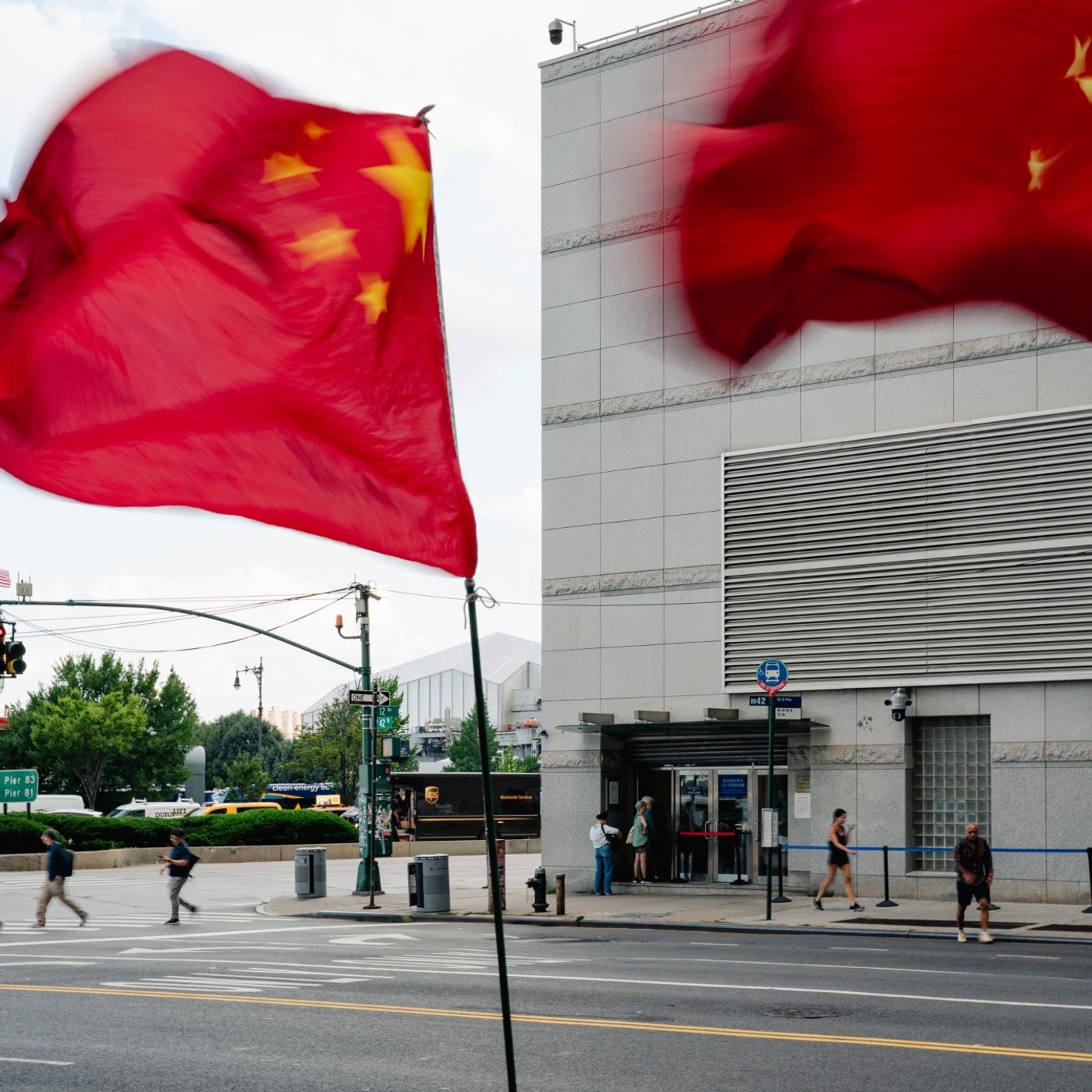
The Daily
Threats and Cash: How China Meddles in U.S. Local Elections
00:31:18
A curious news story emerged in New York last week. It involved the mayor’s race, a reporter from the news outlet The City and a bag of chips. Michael Forsythe, a reporter on the investigations team at The New York Times, explains how the episode fits into a larger story about how China has been attempting to influence American politics.
Loading summary
Transcript136 lines
- [00:01]
A
From the New York Times, I'm Rachel Abrams, and this is the Daily. This next story takes the phrase all that and a bag of chips to a whole new level. Last week, a curious news story enveloped New York.
- [00:16]
B
I covered a lot of campaigns in my life, and I'm not sure I've ever seen anything like this.
- [00:20]
A
It involved the mayor's race. A reporter from the news outlet the City, named Katie Hoenen, and also a.
- [00:26]
C
Bag of opened her sour cream and Onion Ridge potato chips.
- [00:30]
A
A bag of chips after a campaign event for Mayor Eric Adams. One of the mayor's advisors, Winnie Greco, who has close ties to China, insisted that Honan take the chips.
- [00:42]
C
And she says, oh, have the chips. Have the chips. I refused the chips multiple times.
- [00:46]
B
No, I don't want.
- [00:47]
C
She said, take chips. I said, no, it's ok. I don't want any chips. And at a certain point, I said, let me just hold this in my hand as I walk with her. And then we parted and I figured I would just throw them out. And I walk outside to the 125th street station. And right at the top of the subway station, I just look in the bag and I notice a red envelope.
- [01:08]
A
And inside, a wad of cash, $300 in cash. Honan did not accept the money. Greco later said that she'd made a mistake and apologized.
- [01:19]
C
I'm still really confused by everything and just trying to wrap my head around her motivation, why she gave it to me and what the whole point of it was.
- [01:29]
A
Today I talked to my colleague, Mike Forsyth, about how that incident actually fits into a much larger story. He's been working on about how and why China has been attempting to influence American politics in New York and Beyond. It's Thursday, August 28th.
- [01:48]
D
Foreign.
- [01:55]
A
Mike Forsyth, welcome to the Daily.
- [01:57]
B
Glad to be here.
- [01:58]
A
So, Mike, last week, when an advisor to Mayor Eric Adams, this woman named Winnie Greco, slipped a reporter a bag of potato chips with $300 hidden inside of it at a campaign event, I wondered whether this was the most cartoonish example of grift in a campaign that has been absolutely riddled with allegations of grift. But I wonder how you, somebody who has covered China and local election campaigns, how you viewed this.
- [02:27]
B
I was really surprised as well, Rachel. But I have to confess, I have also received an envelope with cash in it.
- [02:37]
A
You have received one?
- [02:38]
B
I have. This was 25 years ago. I'm dating myself here. I was a cub reporter in Beijing and I went to a press conference. I can't remember what it was for, but it was a Chinese company. And I was handed an envelope. It wasn't red. I think it was white. And it had cash in it, several hundred renminbi, so maybe about 25, $30. And I was filled with righteous indignation. I was insulted. And I angrily returned the envelope to the conference organizers.
- [03:07]
A
Wow.
- [03:08]
B
Reporters in China often do get these envelopes of cash. They're called transportation fees in Chinese. So I knew that this existed. But what surprised me was that Adams longtime advisor Winnie Greco would do this. That she would actually give a red envelope stuffed with cash inside a potato chip bag to a reporter for an American news organization.
- [03:37]
E
But, you know, maybe I shouldn't have been so surprised because I'd actually seen this for myself at Eric Adams events through the course of the summer.
- [03:46]
B
In the month of July, my colleagues and I, Bianca Pullaro and J. Ruth myself, went to three Addams events in the ethnic Chinese community. One was in Queens, one was in Brooklyn, one was in Manhattan's Chinatown. And at all three events, we saw red envelopes of cash being exchanged.
- [04:06]
A
Oh, my.
- [04:07]
E
Yeah. Now, the Adams campaign said it was unaware of any payments to reporters and hadn't approved them. But the reason we were at these campaign events is that we were looking into a much bigger story, and that story was the Chinese government's interference in local elections right here in New York City.
- [04:26]
A
So your interest went well beyond whether the Adams campaign knew about a bag of chips with money stuffed into it.
- [04:32]
B
Right.
- [04:33]
E
And over many months of reporting, my colleagues and I found that the Chinese government has created a very sophisticated system to influence elections in New York at.
- [04:43]
B
The city and the state and even the congressional level.
- [04:46]
E
It's all an attempt to suppress views that go against the Communist party line and promote views and policies that they support.
- [04:56]
A
Okay, so we're going to get into the whys of all of this, why China thinks it's even necessary to do that. But just to begin, can you talk about when you realized that there was a bigger story to pursue here?
- [05:07]
E
So it was last fall, and there had been a lot of news stories going around about Chinese interference in local and state politics.
- [05:18]
D
And.
- [05:18]
E
And I was looking into those stories, and that's when I heard about a state senator named Iguan Chu.
- [05:25]
A
And who was Iwen Chu?
- [05:28]
B
I, Wen Chu, is a woman who was born in Taiwan.
- [05:31]
D
I came to New York with the two pieces of luggage all by myself.
- [05:37]
B
She came over here in her twenties.
- [05:39]
D
Everything's brand new to me.
- [05:40]
E
She became a reporter for a Chinese language newspaper here in New York City.
- [05:44]
D
Yiwen is my Chinese name.
- [05:47]
E
And then she got into politics, running for a state Senate seat for Brooklyn.
- [05:51]
D
This name will mean so much for my Asian community.
- [05:57]
E
She won that election in the fall of 2022, and she became the first Asian American woman in the New York State Senate.
- [06:04]
D
We need to have a seat at the table. And to all my friends from Brooklyn.
- [06:13]
E
And a few months after she took office, she got an invitation from the president of Taiwan, who was visiting New York to attend a banquet on Manhattan's west side at a place called the Glass House, which interestingly, is only a few blocks away from the Chinese consulate. Taiwan's president at the time was a woman named Tsai Ing Wen, and she.
- [06:33]
B
Spoke at the event.
- [06:34]
D
And we are confident that Taiwan would continue to stand tall, free, democratic, and with dignity.
- [06:43]
B
And it was kind of a delicate.
- [06:44]
E
Diplomatic affair because the US doesn't really officially recognize Taiwan. And our reporting shows that there were some local politicians who were invited, but who chose not to go.
- [06:56]
B
But Yi Wenchu did go. And of course, I, Wenchu, was just honored to do this. She came from Taiwan. It was a great thing to be able to attend this banquet.
- [07:05]
D
We are stronger when we stand together in solidarity with fellow democracies.
- [07:19]
B
But a few days after the banquet, things started to change. And Yuan Shu realized that there were a lot of people and a lot of constituents that were angry at her, calling her office, asking her, why did you go to this event?
- [07:35]
A
And presumably this anger about going to an event hosted by the Taiwanese president. This anger has to do with the fact that China does not recognize Taiwan's legitimacy. Right? Is that what they're so upset about?
- [07:49]
B
That's absolutely right. China really bristles at any attempt by the Taiwan government and by its president to exert itself on the international stage because they consider Taiwan to be a province of China. And Taiwan independence is like the no go zone, the red line for the Chinese government. They absolutely cannot countenance Taiwane ever declaring independence.
- [08:12]
E
And Yuan Chu is surprised at this moment that her constituents are making such.
- [08:16]
B
A big deal about this.
- [08:18]
E
And then a few days after that, things got even more interesting because her chief of staff received an email from the Chinese consulate in New York City saying, hey, we'd like to meet with you and discuss New York and China affairs.
- [08:33]
B
So the Chinese consulate, and they've got one in New York, they've got a few in California, Chicago, around the country, just like the US has consulate offices in China in many cities, provides a lot of basic services to Chinese citizens, like passport renewals and Things like that. They have these outposts around the country that can do a lot of this diplomatic grunt work. But there's another purpose for these Chinese consulates, and that's to keep an eye on the Chinese diaspora in the United States. Now, New York lawmakers and lawmakers actually, in many cities do receive invitations from consulate officials from many countries to have meetings. And so she took this meeting. It was at a cafe in the Bay Ridge section of Brooklyn. And this would have been in April of 2023.
- [09:23]
D
And.
- [09:23]
B
And it quickly became obvious that this meeting was not just about discussing New York and China affairs. The person who came from the consulate was a guy named Li Zhipeng, who was a deputy consul general. So he's a very senior official. And Mr. Lee said that this issue had become explosive in the community, that they were hearing from her constituents, that they were very upset that. That she attended this event. So the senator, Yi Wen Chu, replies to this Chinese diplomat that, hey, I'm just focused on New York affairs. I don't have any say over these global issues.
- [10:05]
A
I don't have any say over America's policy toward Taiwan.
- [10:08]
B
Basically, she absolutely did not. She's a state senator from New York, representing a part of southern Brooklyn. But it was too late for Senator Chu. After she went to this event with a Taiwan president, everything changed. In some sense, she became a pariah. A few months later, in an office in Sunset park in Brooklyn, Beijing's top power broker in New York City, a guy named John Chan, he has this meeting to pick out an opponent to run against Yuan Chu.
- [10:40]
E
And let me just explain here. John Chan is the consulate's main man in New York City. There's always a main person for the consulate, and it's always a man.
- [10:51]
B
And right now, it's this guy John.
- [10:53]
E
Chan, a former Chinatown gangster who just a few weeks after that, would be in Beijing at the Great hall of the People at China's annual legislative conference. That's how close he is to the Chinese government and the Communist Party. And John Chan wanted to find somebody to run against Y. Chu.
- [11:13]
F
It's a pleasure to be here, everybody. My name is Steve Chan.
- [11:16]
E
And he found a Republican opponent who was not born in Taiwan, someone who he could work with and someone who he could endorse.
- [11:25]
F
I'm running for state senate in District 17.
- [11:28]
B
That's exactly what he did.
- [11:30]
F
I stand here before you today not as a politician. I'm here as your neighbor. I'm here as a friend.
- [11:37]
B
And this Republican candidate defeated Y. Wen Chu in the general election in 2024, she was the only New York state senator to lose. It was the only seat that flipped, and it cost Democrats their supermajority in the New York State Senate. Wow.
- [11:53]
A
So clearly the influence of the Chinese consulate was really effective in this particular race.
- [12:00]
B
Right.
- [12:02]
E
But we wanted to find out how that happened. It appeared that the Chinese consulate was pulling some strings to get what they wanted out of this election.
- [12:12]
B
But how?
- [12:14]
E
How does the Chinese consulate, the Chinese government's outpost here in New York City, how do they reach voters? And that's what we set out to find out. How far did this all go?
- [12:34]
A
We'll be right.
- [12:38]
D
Foreign.
- [12:43]
A
So, Mike. Iwan Shu loses her seat, in part, it seems, because of this campaign by the Chinese consulate to find and back another candidate. But people still need to vote for candidates. So I'm wondering what connection, if any, you found between the consulate and the voters.
- [13:00]
B
So the first thing I did is try to figure out more about this huge Chinese American community in New York. The number of ethnic Chinese people in New York City is greater than any other place outside of Asia. And it quickly dawned on me and my colleagues, Jay and Bianca, that this was a very organized community in many ways, and that there's hundreds of these groups we call hometown associations. In Chinese, it's Tongqiang Hui, that represents people from the home communities of these very, very diverse group of people, ethnic Chinese people in New York City. So these hometown associations can represent an entire province, a city, a district within a city, or even a village. And they are extremely active in New York. So active that sometimes the hometown associations that represent a village in China have more members and have more people going to their banquets in New York than there are villagers in the village back in China.
- [14:08]
A
Wow.
- [14:09]
B
So these are not unique to China. Irish Americans, German Americans, Italian Americans, all had heritage clubs here in New York City.
- [14:20]
A
And what exactly do they do here?
- [14:23]
B
So most of the work of these hometown associations is pretty innocent. People come from the home country. They feel uncomfortable. They don't speak the language. Here's a group of people from their same town, same city back, that can help them out and get them adjusted to life in New York City. And a lot of these people play a lot of mahjong. If you go to Chinatown, go up to the third or fourth floor, walk up where these hometown associations have their clubhouse. You open the door, they're all playing mahjong. And they like to throw parties.
- [14:56]
E
Lots of parties.
- [14:57]
B
They have parties for Chinese New Year. Sometimes they have parties for Chinese National Day. And they have lots of parties when they have new officers. Like, they have an inauguration for the new president of. Of this hometown association. And we discovered that they love to document all of their parties on YouTube.
- [15:22]
E
And what they show is that some of these hometown associations are under the influence of the Chinese consulate. They fly the Chinese flag, they sing the Chinese national anthem.
- [15:37]
B
And what we saw in many of these is actually the Chinese consular officials, the diplomats from the New York Chinese consulate coming in there and giving the new officers for these hometown associations their oaths of allegiance, where they pledged to be very good president of whatever organization. And some of the things that the hometown association people were pledging to were very anodyne. You know, like, be really honest. You know, be good, Love your hometown, love your association. Non controversial things, very non controversial things. But sometimes the things that they were pledging oaths to that they were promising to uphold were core Chinese policies. And remember, these are American groups. They are registered with the IRS or the New York Department of State. And they were pledging in some instances, to work for the reunification of China, which is code word for absorbing Taiwan into the mainland. For example, they were actually using vocabulary about revitalizing the. The motherland, the homeland, which is words that are exactly the words that Xi Jinping, China's president, uses, for example. So they're parroting Chinese policies while taking an oath from a Chinese government official in Brooklyn.
- [17:13]
A
What did you make of that?
- [17:14]
B
I thought it was amazing and shocking. It really surprised the heck out of me. And I just wanted to find as many of these examples as possible so that we could document it. Good evening, everyone.
- [17:24]
A
I'm Congresswoman Grace Bang, and it's such an honor to be here.
- [17:29]
B
And we also saw a lot of New York lawmakers come and also make speeches. And this makes a lot of sense because these are their constituents. So you see people like Representative Grace Mung, who is the congresswoman from Flushing, Senator Chuck Schumer, and a lot of state assemblymen, city council members really like to go to these events. This is a great way for them to reach out to the Chinese American community, which is becoming an increasingly powerful political force here in New York City.
- [17:57]
A
Okay, so it sounds like these hometown associations are a really powerful way of reaching voters. And we know that the consulate is involved in some of their events. But what did you learn about what role, if any, the hometown associations played in Iwan Chu's specific case, like in her loss?
- [18:15]
B
So this was very difficult to report because what we were learning is that the consulate would talk to the Leaders of these hometown associations. And then those leaders of these hometown associations would pass on whatever the consulate was saying to these lawmakers or to their members. And the challenge for us was to document this. We really needed some of these hometown association members to fess up, basically, to say, yeah, we met with a consulate, and this was a real challenge for us because they have no interest in talking to us. So it took many, many months, but.
- [18:51]
E
Eventually we got lucky.
- [18:53]
B
And what we learned was a few days after Yuen Chu went to this banquet with the Taiwan president, that hometown leaders got called in to talk to the consulate about this event. And we were able to talk to one of them, a guy named Zhen Jinrong, who is a longtime leader of a very large hometown association that's located in Brooklyn. And he was called into the consulate, and there were two diplomats from the consulate in the room. And they started asking him about this banquet and about Senator Chu, you know, and they were asking questions about, well, what do you think her position is on Taiwan independence? And so they were. Were concerned that Yi Wenchu going to this might indicate that she somehow supported Taiwan independence. So Chen Jinrong, you know, was getting these questions from the Chinese consulate, and the Chinese consulate was telling him that they were hearing from the community that people were upset about Senator Chu going to this event.
- [19:55]
A
There may be subtly, or not so subtly, actually trying to send this guy the message that we do not like this woman's actions and we do not like her.
- [20:02]
B
Yeah, that's certainly the message that he could have gotten. And it was a message that other hometown leaders got as well. They had all backed her in her 2022 election victory. They were proud to support somebody who is a Chinese speaker, somebody who's ethnically Chinese and would be the first ethnically Chinese person to represent them in Brooklyn. But after she went to this event with a Taiwan president, she stopped getting invited to their many functions that they had, from Christmas parties to Chinese New Year's celebrations.
- [20:35]
D
And.
- [20:36]
B
And one by one, these hometown associations dropped their support for her and backed her Republican opponent. And as I said before, she lost.
- [20:48]
A
Okay, so I understand why the Chinese government might not have liked that. I, Wenchu, attended this banquet because to them, it implied that she supported Taiwanese independence, which they obviously do not approve of. But what I don't understand is the role of the hometown associations, because they are not political. Right. They do not work for the government of China. And so why are they even going along with what the consulate says? Like, why do they care what the Chinese government, through the consulate is telling them to do so.
- [21:21]
E
There's a lot of reasons why the.
- [21:23]
B
Hometown associations have become such useful tools for the Chinese consulate. And of course, that's not all the hometown associations. It's just a select group of them. And one of the reasons we found out through our reporting is a fear that their business interests back in China, and a lot of these people have business interests back in China, could be jeopardized if they don't work closely with the consulate, if they don't do what they're told. Conversely, they're looking for new business opportunities as well. And if they forge close relations with the consulate, they might be able to get more business opportunities. And in some cases, they may still really have some nostalgia and patriotism for the home country as well. We've seen that with other ethnic groups in New York as well who proudly fly the Irish flag or the Italian flag or the Indian flag.
- [22:11]
A
So, Mike, you have basically described this effort on Beijing's part to influence local elections, and you've given us this one example of Yuan Shu. But I'm wondering what other examples you found and what else stood out to you.
- [22:25]
B
Right. So we. We had this one compelling example of Senator Iwan Chu. But one example does not a story make. We had to show that this was system.
- [22:34]
E
And it turns out we found two other examples. We found examples on the congressional level, and actually one on the city council level as well. And maybe the most shocking example is a guy who ran for Congress in 2022.
- [22:49]
B
He's a Chinese American. He was actually a leader of the 1989 Tiananmen student protests. And so in 2022, he decided to run for Congress, and he thought his record as this man of principle would really be a boon in this very Chinese district in New York. There were two very established candidates running in that election in the Democratic primary, and he never had a chance to win. But the Chinese government was not taking any chances. They did not want a leader of the Tiananmen Student Movement to have any possibility of becoming an elected member of the U.S. congress. And so what they did in this case, according to a federal indictment, is had a spy work with a private investigator in New York to undermine his candidacy.
- [23:36]
A
Oh, my.
- [23:37]
E
Yeah, the guy was an army chaplain. And so they thought one thing they could do maybe is hire a prostitute to entrap him and destroy his reputation. Another thing they were talking about doing was beating him so that he couldn't run for election in the first place.
- [23:53]
B
In addition to this, hometown association leaders were telling this guy, according to our reporting, that they couldn't support him because the Chinese consulate was saying, you cannot support this guy or your business interests in China will be affected. So he was being undermined in that respect, too, and not getting support from the community that he expected.
- [24:14]
A
And presumably he lost.
- [24:16]
B
He lost badly.
- [24:21]
A
Can I just step back for a second and ask you maybe kind of a really basic question, which is, why does the Chinese government care about local politics to begin with? Like, what does the State assembly have to do with Taiwanese independence?
- [24:34]
B
You know, at first blush, and on the surface, it just seems crazy that they would care so much about it. So you really have to take a step back and think how the Chinese government works. And I don't want to give you a history lesson, but the last dynasty of China, the Qing Dynasty, fell back in 1911, 1912. And a lot of the revolutionary fervor, a lot of the revolutionary ideas, and the leaders of this revolution that overthrew China's last dynasty came from the overseas Chinese community in places like Tokyo. And so those ideas kind of fomented up overseas in the ethnic Chinese community and came back to China. The Chinese government knows this. The Chinese government wants to control the narrative in these huge diaspora communities, Chinese.
- [25:31]
E
Americans in New York City, all 600,000.
- [25:33]
B
Of them, have freedom of speech. They can say whatever they want. That's not the case back in China. So this is the place where ideas can be generated. This is the place where opposition to the Chinese government can really take hold and to mature.
- [25:49]
A
And they want to quash that kind of dissent.
- [25:51]
B
They want to squish it like a bug. And so this is a real priority for them. But there's another reason why the Chinese government and the Chinese Communist Party does this. They're playing the long game. If they can cultivate relationships among politicians at the local level, who's to say that these people don't somehow rise up and maybe state senator becomes a U.S. senator, right? So many national leaders in the United States have come from local politics in New York, say Senator Schumer, the minority leader of the US House, Hakeem Jeffries, these people rose up from the ranks.
- [26:31]
A
The number one and number two Democrats in the U.S. government.
- [26:33]
B
In the U.S. government. And don't forget, just four years ago, when Mayor Eric Adams took office, people were talking about him maybe running for president someday. So they're playing the long game, right? Cultivate them now, and maybe later you're.
- [26:47]
E
Gonna have a really important ally at.
- [26:50]
B
A high level of government.
- [26:52]
E
Now, I should say that we brought our findings to the consulate and they denied any wrongdoing. They said they followed international law and have never tried to influence U.S. elections.
- [27:04]
A
Mike, our whole conversation has been about New York and New York politics. But given what you guys uncovered about sort of how sophisticated this is and the aims of the Communist Party and how they're playing the long game, I just sort of wonder if you have any indication about whether this is happening elsewhere.
- [27:21]
B
We know it's happening elsewhere. It's happened in Australia. There's been Chinese interference in Australian politics and it's well documented. In Canada, it's happened again, very well documented by both the media and, you know, the national intelligence services there. And I think the concern here is the Chinese government's ability to control the narrative, to make it so that talking about more democracy in China, and not just for ethnic Chinese politicians, but for politicians in general who want to win the vote of these communities, that talking about these issues that go against the Communist Party, the Chinese government's line is just something best to be avoided. It's just too much trouble, so why even bother? And that's concerning because these beliefs of more freedom for people like in Hong.
- [28:15]
E
Kong or Taiwan or China are really.
- [28:18]
B
Fundamental beliefs that anyone around the world who treasures liberty, freedom, democracy should be deeply concerned about.
- [28:30]
A
Mike Forsyth, thank you so much.
- [28:32]
B
Thank you, Rachel.
- [28:46]
A
We'll be right back. Here's what else you need to know today. Police identified the shooter who killed two children and injured 17 at a Catholic school in Minneapolis as a 23 year old former student. While a motive for the shooting was still unclear as of Wednesday night, the suspect's social media accounts contained videos of diary entries that describe the killing of children and a drawing of the sanctuary of the school's church where the shooting took place as the students were attending morning Mass.
- [29:27]
D
So we really didn't know what to do.
- [29:29]
B
We just got into the pews and.
- [29:30]
D
He shot through the stained glass window windows.
- [29:34]
A
The shooter had barricaded the church's doors and fired at students and teachers through the windows.
- [29:40]
B
And don't just say this is about thoughts and prayers right now. These kids were literally praying.
- [29:44]
A
Court documents show that several years ago, the shooter had filed to change her first name from Robert to Robin. Within hours of the shooting, some conservative activists had seized on that detail on social media to portray transgender people as violent or mentally ill. Officials said that the shooter's social media suggested a long history of anger and grievance. And the White House said late Wednesday night that it had fired the director of the center for Disease Control and Prevention. Susan Menarez. After a tense confrontation between Dr. Minarez and the Health Secretary, Robert F. Kennedy James Jr. Kennedy had demanded Manares resignation, which he had briefly resisted before the White House intervened. The fight between the two officials burst into public view on Wednesday as four other high ranking CDC officials quit en masse, apparently out of frustration over the agency's vaccine policy and Kennedy's leadership. Today's episode was produced by Mary Wilson Mooch Sethi, Caitlin o', Keefe, Alex Stern, Sydney Harper and Rochelle Bonga. It was edited by Maria Byrne with help from Michael Benoit, research help from Susan Lee, and it was engineered by Alyssa Moxley. That's it for the Daily I'm Rachel Abrams. See you tomorrow.