← The Daily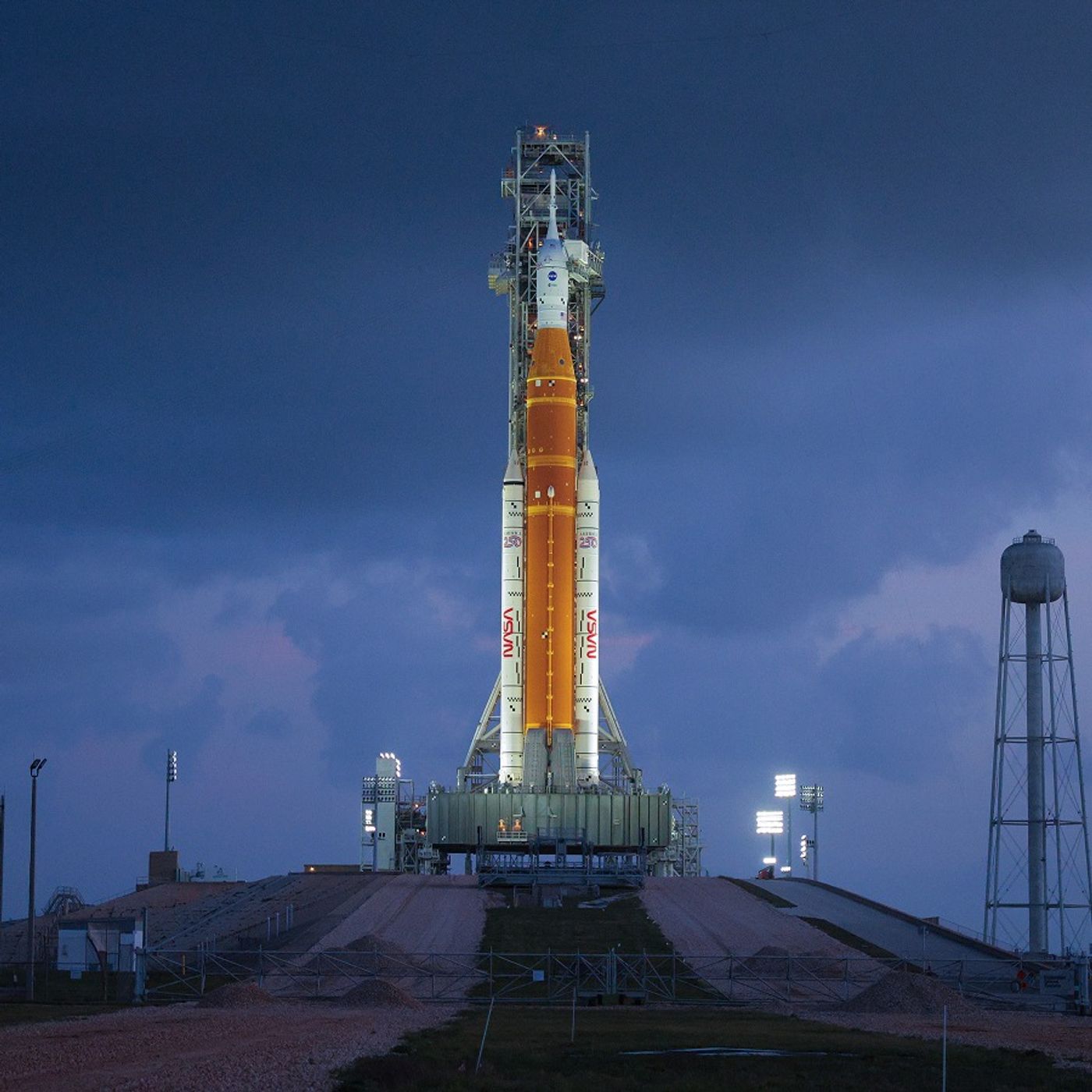
The Daily
Today’s Mission to the Moon
00:25:09
Today, NASA is set to send four astronauts on a trip around the moon and back. If the mission succeeds, a return of astronauts to the moon’s surface could follow. Kenneth Chang, who covers science, explains why the United States wants to go back to the moon.
Loading summary
Transcript125 lines
- [00:00]
Okta Advertiser
These days, it seems like AI agents are just about everywhere you turn every field and every function. But without identity, you can't trust they'll serve your business instead of jeopardizing it. Fortunately, Okta helps you get identity right by securing your AI agents identities, giving you a single layer of control, a single standard of trust. So whether an AI agent supports a single user or your entire enterprise, with Okta, you'll turn risk into opportunity. Secure every agent. Secure any agent. Okta secures AI.
- [00:38]
Launch Countdown Voice
Two, one, zero.
- [00:41]
Astronaut or Game Player
All engines running.
- [00:43]
Michael Barbaro
From the New York Times, I'm Michael Balbaro. This is the Daily. Nearly six decades after the United States put men on the moon, that's one
- [00:56]
Launch Countdown Voice
small step for man, one giant leap for mankind.
- [01:03]
Michael Barbaro
It is returning to that mission. And today a major step in that process will begin in Florida. My colleague Ken Chang is there and explains why it is that the United States wants to go back to the moon. It's Wednesday, April 1st.
- [01:33]
Interviewer (New York Times Host)
Ken, welcome back to the Daily.
- [01:35]
Ken Chang
Good to be here again.
- [01:37]
Interviewer (New York Times Host)
So we always turn to you when something big and meaningful is happening in space and something big and meaningful is happening today, whether permitting. So does the weather permit this big and meaningful thing to happen on Wednesday?
- [01:55]
Ken Chang
Hopefully it looks good. The forecast says 80% chance that it's going to go, but that means there's 20% chance that something doesn't quite clear up.
- [02:04]
Interviewer (New York Times Host)
Right. Okay. Those are pretty good odds. So start by describing this mission.
- [02:11]
Ken Chang
This is the first time that anyone's going close to the moon in more than 53 years.
- [02:17]
Interviewer (New York Times Host)
Wow.
- [02:17]
Ken Chang
Four astronauts are going to be blasting off from Kennedy Space center in Florida and they're going to head out to the moon. They're not going to land. They're just going to swing around the moon and then head straight back to Earth and splash down in the Pacific Ocean ten days later.
- [02:33]
Interviewer (New York Times Host)
And why? I mean, as you've just hinted at some 50 so years ago, astronauts from the United States did that very thing. So why are we doing it again?
- [02:48]
Ken Chang
So the goal this time in this program, which is called Artemis, is to get people back to the moon, but also stay there this time. And so this program is broken up into pieces because it's really hard to land on the moon. You don't want to do all the hard things all at once. You want to break it up into pieces. So you do step by step.
- [03:11]
Interviewer (New York Times Host)
Right.
- [03:12]
Ken Chang
So Artemis I, back in 2022, it sent this spacecraft to the moon and spent several weeks there, but without any people aboard. So that's sort of established that the Basic machinery works. Now we're on the next step, which is Artemis 2. This time they're including the four people aboard. And that's critical because the main task of this mission is to test the life support systems. And it's impossible to test it without actual people producing. Producing carbon dioxide, producing water and poop and everything else that you need to clean up.
- [03:50]
Interviewer (New York Times Host)
Right. So that's this mission. Step one was, can we get an aircraft around the moon? Step two is, can we get people on this craft to live?
- [04:02]
Ken Chang
Yes. The biggest goal for the astronauts on this mission is to not die. And if Artemis 2 succeeds, NASA can move on to next steps, which will lead to attempts to land astronauts on the moon in a couple years.
- [04:19]
Interviewer (New York Times Host)
Okay. And at this point, I may sound like a broken record, but why? I mean, what is the rationale for trying to do this thing that we did with great fanfare 50 something years ago?
- [04:32]
Ken Chang
What NASA says is that this time we're not going to just go there and then forget about it. That this will be the first step to building a moon base.
- [04:44]
Interviewer (New York Times Host)
To a moon base?
- [04:45]
Ken Chang
Yeah. So that they're going to start putting a power plant, some habitats to allow people to stay there for days, weeks, months. Hmm. So at first, it will probably be a scientific research station, much like what we have in Antarctica near the South Pole. Beyond that, people will start thinking about how we can take advantage of the Moon's resources. They might even start trying to mine valuable materials that could be found there, such as helium 3.
- [05:18]
Interviewer (New York Times Host)
And what's helium 3 and why do we want to mine it on the moon?
- [05:22]
Ken Chang
So helium 3 is a light version of helium, and it's quite rare on Earth. It's a little bit more prevalent on the Moon's surface. And this is a version of helium that could be very useful in future fusion reactors. It's also thought to be useful for future quantum computers, which people are very excited about, because it could be used for artificial intelligence, among other things. And helium three on Earth costs roughly $3 million a pound.
- [05:52]
Launch Countdown Voice
Wow.
- [05:53]
Ken Chang
So if you can even get a little bit from the moon, you could probably make a profit.
- [05:57]
Interviewer (New York Times Host)
Right. So what lies in the future is space research and potentially some serious commercial mining.
- [06:07]
Ken Chang
Yes, they're still speculative, but there are companies who are planning to do things along those lines already. And then there's scientific dreamers who want to do something like build a big radio telescope on the far side of the moon to listen to the universe.
- [06:23]
Interviewer (New York Times Host)
Listen to the universe?
- [06:25]
Ken Chang
Yes. There's signals from just after the Big Bang, billions of years ago. But it's hard to do that from Earth because we've basically made things very noisy with tv, cell phone calls, podcasts. But on the far side of the moon, you have the entire thickness of the moon blocking all that noise.
- [06:48]
Interviewer (New York Times Host)
Wow.
- [06:49]
Ken Chang
So you can hear the rest of the universe.
- [06:51]
Interviewer (New York Times Host)
Wait, just so I understand, we can build a giant listening post on the far side of the moon where it's dead quiet and we could hear the ancient sounds of really the dawn of time itself.
- [07:09]
Ken Chang
Pretty much these would be almost the echoes of the Big Bang. Wow. And the other thing they want to do is use the moon as a testing ground for technologies that they ultimately want to put on Mars. That would include nuclear power plants, habitats, life support systems, because many of the conditions on the moon are things you'll ultimately have to face on Mars as well.
- [07:37]
Interviewer (New York Times Host)
So basically would use the moon and its conditions and its gravity to figure out whether something we eventually want to have on Mars can first survive the moon.
- [07:51]
Ken Chang
Yes. And then there's this romantic notion of humanity just spreading out into the solar system, that we are no longer just confined to one planet, but we can live elsewhere as well someday on a moon colony. But on top of all that, there's also the geopolitical competition with China. And of course, we want to do all this before they do.
- [08:15]
Michael Barbaro
Right.
- [08:15]
Interviewer (New York Times Host)
If we are to be a multi planet species, Americans would like to be the first.
- [08:21]
Ken Chang
Yeah. Because the people who are there first are the ones who make the rules of how space commerce is conducted, will have the prime locations on the moon and control the resources and so on. So being first means being the one who's in charge.
- [08:37]
Interviewer (New York Times Host)
Ken, what you have just laid out is a tremendous vision for the future. And all of it rests on the shoulders of four astronauts who are going to be blasting off toward the moon in a few hours on Wednesday there in Florida.
- [08:56]
Ken Chang
True, but that's probably not what is going to be on their minds. Remember, their first job is staying alive. If they don't do that, then all these dreams are pushed even farther into the future. We'll be right back.
- [09:28]
American Petroleum Institute Advertiser
This podcast is supported by the American Petroleum Institute. Energy is all around today. America's natural gas and oil keeps the country moving, growing, and building, and makes every day a little easier. But energy demand is growing, and the infrastructure built today will help secure a more affordable, reliable future. With enough energy to go around when America builds, America wins.
- [09:57]
TikTok/Capital One Advertiser
These days, the online world moves fast. That's why TikTok approaches teen safety with families in mind. From the start on TikTok teens get over 50 built in protections right when they join accounts for teens start private by default. For those under 16, direct messages are turned off and only friends can comment on their videos. That proactive approach means parents don't have to dig through menus or set everything up themselves. Safety is built in from day one, so peace of mind is already part of the experience. When safety comes first, discovery and creativity can follow. Learn more@TikTok.com guardiansguide with no fees or minimums on checking accounts, it's no wonder the Capital One bank guy is so passionate about banking. With Capital One, if he were here, he wouldn't just tell you about no fees or minimums. He'd also talk about how most Capital One cafes are open seven days a week to assist with your banking needs. Yup. Even on weekends, it's pretty much all he talks about in a good way. What's in your wallet terms apply. See capitalone.com bank capital1NA member FDIC.
- [11:02]
Interviewer (New York Times Host)
Ken, can you introduce us to these four astronauts who have all this responsibility on their shoulders and describe the logistics of this 10 day mission they're embarking on from their perspective?
- [11:13]
Ken Chang
Yes. The commander is Reid Weissman.
- [11:20]
Astronaut Jeremy Henson
We just need to go execute this mission and bring a little bit of each of our own personalities.
- [11:25]
Ken Chang
He's a former fighter pilot in the US Navy. He served in the Middle east on two deployments and he was the head of the astronaut office before he stepped down, which allowed him to be assigned to the moon mission.
- [11:40]
Astronaut Jeremy Henson
I was outside last night and I was looking up at the moon thinking, the next time I see this site, there's a good chance that we will have been around the far side and back.
- [11:50]
Ken Chang
And there's also a poignant detail about him. His wife died a few years ago. Him going to moon means leaving his daughters behind for 10 days.
- [11:59]
Astronaut or Game Player
Well, and so I hope there's a piece of it that extends beyond human spaceflight as well.
- [12:05]
Ken Chang
Victor Glover. He's also a former naval aviator.
- [12:08]
Astronaut or Game Player
Ten years from now, when the next challenging thing happens, maybe we can look back on this and go, hey guys, remember we did that. We had our own moonshot, remember? And it was global, it was international, and we did it together.
- [12:20]
Ken Chang
He was the first black man to serve and extend his stay on the space station. And now he'll be the first black man to go to the moon. Next is Christina Koch.
- [12:30]
Astronaut Christina Koch
None of us can be as big as what we're asked to do, but we can contribute the part and bring our best selves and come together to do it.
- [12:40]
Ken Chang
She's an electrical engineer by training and she actually worked on NASA missions on the ground before she was selected by NASA to become an astronaut. And she now holds the record for the longest single spaceflight by women of 328 days. So that's almost a full year.
- [13:00]
Astronaut Christina Koch
All these things that we talk about first are really not about any one individual's accomplishment, but more about celebrating where we are at.
- [13:09]
Ken Chang
And finally, there's Jeremy Henson. He's the Canadian on the crew.
- [13:13]
Astronaut Jeremy Henson
You can't fix all the problems in the world, but you can influence the little bit around you.
- [13:19]
Ken Chang
It would be the first time that a non American has gone to deep space.
- [13:23]
Astronaut Jeremy Henson
We don't know the ripple effects of what we're about to do, but we can do it well to the best of our ability and have joy while we're doing it. And hopefully that will make a small contribution.
- [13:34]
Ken Chang
And he has a sense of humor about this. He said if something goes wrong on this mission, then NASA can blame Canada.
- [13:50]
Interviewer (New York Times Host)
Okay, so that is the crew. Talk to us about their next 10 days as they're going to experience it, the four of them together.
- [14:01]
Ken Chang
So they'll have a very long day before launch even. They'll wake up eight hours before launch. They have to get into their space suits. They'll be driven out to the launch pad. They'll go up this huge tower and enter their spacecraft. It's known as Orion. Then they'll be sitting there for about four hours until the countdown clock gets to zero. And eight minutes later, they'll be in space. Wow. And that first day in space will also be quite busy. They won't immediately go to the moon. In fact, what they'll do is make two looping orbits around Earth. And the reason they're doing that is they want to take this time to check out every little system on the spacecraft to make sure it's working before they make the decision to fire the engines to send them off to the moon.
- [14:53]
Interviewer (New York Times Host)
Basically a couple of test flights, right?
- [14:56]
Ken Chang
So after day two, when they fire the engines to head to the moon. The moon is close to a quarter million miles from Earth. So it takes a while to get there. Basically four days. And they'll be spending all this time in this capsule which has about as much space as two minivans.
- [15:15]
Interviewer (New York Times Host)
Two minivans. And I say this as a father that fills basically a minivan. That's not a lot of space.
- [15:21]
Ken Chang
It's actually a little bit more than beyond Earth because you get to float around so you can Use all the space above you. It's not quite as crowded as it would be if you were driving cross country.
- [15:33]
Interviewer (New York Times Host)
Right.
- [15:33]
Ken Chang
So on day six is the big event. This is when they are closest to the Moon and they're not super close. So the way NASA describes it, the Moon will appear about the size of a basketball held at arm's length, and the Moon's gravity will basically pull them around the Moon and they'll go behind the Moon. So that means they'll lose all radio communication with Earth for about 40 minutes, and we won't know what's going on until they emerge on the other side. And during this time, they'll also be making all these observations of the far side, the Moon, such as. So what's really interesting is that they will be seeing parts of the far side of the Moon that no human eyes have seen before. And that's because the last time an astronaut passed over the far side of the Moon, it was a different time of day, and those areas were in darkness.
- [16:44]
Interviewer (New York Times Host)
So that's fascinating. These astronauts, because there will be light, will cast their eyes on parts of the Moon that no human being has ever seen before. In actual daylight.
- [16:55]
Ken Chang
Correct. On the Moon, there's no street light. So the last time an astronaut passed over these parts, it was completely dark.
- [17:07]
Interviewer (New York Times Host)
So, Ken, as these astronauts are moving along the far side of the Moon, you had said that the Moon's gravity was going to be holding them down. How much power will they have to actually direct the craft that they're in
- [17:22]
Ken Chang
during this period, the trajectory that they're on? NASA designed it specifically that they actually don't need to use the engines to bring them back to Earth. It's going along a path that the gravity of the Moon basically is going to sling them around and throw them right back toward Earth without them doing much of anything.
- [17:45]
Interviewer (New York Times Host)
So in a sense, they're kind of powerless to do much themselves. They're at the mercy of the Moon's gravitational push and pull, which is a
- [17:54]
Ken Chang
good thing because it's much easier to be headed back to Earth than into deep space, where who knows where you would end up.
- [18:01]
Michael Barbaro
Right.
- [18:02]
Interviewer (New York Times Host)
So assuming this gravitational slingshot system brings these four astronauts safely home, what happens?
- [18:11]
Ken Chang
So once they complete their lunar flyby, they have to spend another three days just sitting around waiting to get back to Earth. This is probably the boring part of the trip. It's basically, are we there yet? On the very last day, Earth's gravity is going to be pulling them around Earth, and they'll be on a path to re enter the atmosphere and they'll splash down in the Pacific Ocean off San Diego. They'll be plucked out of the ocean, taken to a ship and then flown back to shore where they'll be checked out by doctors and then they'll get to fly back to Houston. And that will be the end of Artemis 2.
- [18:52]
Interviewer (New York Times Host)
And assuming that the astronauts leave this process in tip top shape, which we of course hope they do, my sense is that this is going to be a really proud moment for NASA because from everything I've taken from your reporting in the lead up to Artemis 2, it's really a NASA production through and through and not what we think of when we think of the modern space system where things kind of get divided up between NASA and these well known private companies. Jeff Bezos, Elon Musk.
- [19:25]
Ken Chang
You're right, Michael, this is old school NASA, where NASA designed and operated their various spacecraft. And it'll be a triumph for them in that the old ways of doing things succeeded. But on the very next mission, Artemis 3, the new space companies, SpaceX, run by Elon Musk and Blue Origin, started by Jeff Bezos, they become involved because SpaceX and Blue Origin are producing the lunar landers that are eventually going to take astronauts to the surface of the moon.
- [20:02]
Interviewer (New York Times Host)
Got it. So in these next phases, these big private companies are going to be providing some of the really key equipment that will allow NASA to land on the moon. So in that sense, Artemis 2 is
- [20:14]
Ken Chang
kind of the end of an era in a sense. Yes. This expectation is this will be the last big NASA spacecraft and rockets. And in the future there will be much more work from private companies like SpaceX and Blue Origin.
- [20:33]
Interviewer (New York Times Host)
You know, Ken, just to end this conversation, it's pretty hard to ignore the context of when Artemis 2 is happening. Right now we're in the middle of a war and it's big and it's controversial and it has had ripple effects across the entire world. And I think of space exploration as at its best, this big unifying experience
- [20:59]
Ken Chang
for the whole world.
- [21:00]
Interviewer (New York Times Host)
And this mission comes at a moment when that's not so unifying.
- [21:07]
Ken Chang
But if you think back to the 1960s when we went to the moon for the first time, that was a turbulent era, especially the year 1968. Martin Luther King was assassinated, Robert Kennedy was assassinated. The country was mired in the Vietnam War. The Democratic convention in Chicago was was beset by riots. It was a very unsettled time in the United States. And at the end of that year, December of 1968, the engines are armed.
- [21:47]
Launch Countdown Voice
4, 3, 2, 1, 0. We have commit.
- [21:53]
Ken Chang
We have Apollo 8 launch, and there's
- [21:57]
Launch Countdown Voice
the rumble in our building.
- [21:58]
Ken Chang
And that was the equivalent of Artemis 2.
- [22:01]
Launch Countdown Voice
It's a beautiful takeoff so far.
- [22:07]
Ken Chang
It was the first launch of the mighty Saturn V rocket that NASA used then with people aboard. And the three astronauts on Apollo 8, they went to the moon or visited the moon.
- [22:23]
Launch Countdown Voice
And on Christmas Eve, we are now approaching lunar sunrise. And for all the people back on Earth, the crew of Apollo 8 has a message that we would like to send to you.
- [22:39]
Ken Chang
As they were in orbit around the
- [22:41]
Launch Countdown Voice
moon, in the beginning, God created the heaven and the Earth.
- [22:47]
Ken Chang
The three astronauts took turns reading Genesis from the Bible.
- [22:53]
Launch Countdown Voice
And the spirit of God moved upon the face of the waters. And God said, let there be light. And there was light.
- [23:03]
Ken Chang
And it was such a calming, hopeful moment that some people even talked about how that mission saved 1968. So we don't know what the four astronauts on Artemis 2 are planning to say as they are coming back from the moon. But still, just the imagery that's going to come back of them seeing Earth from a quarter million miles away could just provide a moment of calm that makes us realize we are still all part of the same planet. And perhaps we'll just offer a note of hope that maybe it won't be as turbulent as it seems right now.
- [24:03]
Interviewer (New York Times Host)
Well, Ken, thank you very much.
- [24:04]
Michael Barbaro
We appreciate it.
- [24:06]
Ken Chang
Thank you. I hope it goes off perfectly later today.
- [24:09]
Interviewer (New York Times Host)
Me too.
- [24:26]
Launch Countdown Voice
God called the dry land Earth and the gathering together of the waters called E. God saw that it was good. And from the crew of Apollo 8, we close with good night, good luck, a merry Christmas, and God bless all of you. All of you on the good Earth.
- [24:58]
Ken Chang
We'll be right back.
- [25:07]
TikTok/Capital One Advertiser
This podcast is supported by nerdtech, ODT Remedipant. We know you didn't ask for an interruption, but migraine doesn't wait for the right moment to interrupt either. It just barges in, takes your time, and throws everything off. So when migraine takes your time, take note. Nurtec. It's for the acute treatment of migraine with or without aura. In adults, Nurtec can provide pain relief in two hours, which can last up to two days. Ask your healthcare provider if Nurtec is right for you, because your time is for you, not migraine. Don't take if allergic to Nirtek odt. Allergic reactions can occur even days after use. Get help right away for trouble breathing, rash, swelling of face, mouth, tongue or throat, high blood pressure, and Raynaud's syndrome can occur. Get help for high blood pressure, numbness, coolness, pain or color changes in fingers and toes. Common side effect is nausea. For full prescribing information, call 1-8334-NERTECH or visit nertec.com all right, back to your podcast.
- [26:06]
Astronaut Christina Koch
I'm opening up Crossplay. I've been playing against Dan, my colleague at the New York Times.
- [26:10]
Astronaut or Game Player
Kat's played another move.
- [26:12]
Launch Countdown Voice
Ugh.
- [26:12]
Astronaut Jeremy Henson
She played Stoop for 36 points.
- [26:15]
Astronaut Christina Koch
I've got a Z, which is 10 points.
- [26:17]
Ken Chang
I'm guessing Tenga is not a word.
- [26:19]
Astronaut Jeremy Henson
Let's see.
- [26:20]
Interviewer (New York Times Host)
Tenga is a word.
- [26:21]
Astronaut Christina Koch
Oh, Dan played his last turn. Let's see who won. It's so close, but I did win
- [26:28]
Okta Advertiser
Crossplay, the first two player word game from New York Times Games. Download it for free today.
- [26:33]
Ken Chang
It's devastating when you see a game
- [26:36]
Astronaut Jeremy Henson
that you could have won.
- [26:39]
Michael Barbaro
Here's what else you need to know today. On Tuesday afternoon, a federal judge ordered that President Trump end construction of his proposed massive ballroom off the east wing of the White House until the project is blessed by Congress. The decision delivered the first meaningful setback to the President's increasingly bold efforts to redesign the White House. And for the first time since the start of the war in Iran, the average price of gasoline across the United States surpassed $4 a gallon, a major milestone for consumers.
- [27:18]
Astronaut or Game Player
Not happy about this. And even my customers are coming in this morning and saying what happened? What happened in 24 hours where we
- [27:27]
Michael Barbaro
went in Jacksonville, Florida. Cam Judy, the gas station manager we spoke to for Friday's episode, raised his prices on Tuesday to 429A gallon. That's up more than 50% since the start of the war.
- [27:42]
Astronaut or Game Player
And it just caught everybody off guard, including myself. So it's upsetting and I hope it. I hope it doesn't last long.
- [27:49]
Michael Barbaro
Prices are expected to remain high until oil can flow freely through the Strait of Hormuz. Today's episode was produced by Alex Stern, Jack Desadoro, Rochelle Banja, and Diana Wynn. It was edited by Rachel Quester and contains music by Marion Lozano, Dan Powell and Diane Wong. Our theme music is by Wonderly. This episode was engineered by Alyssa Moxley. Special thanks to Timothy Bella. That's it for the Daily I'm Michael Balboro. See you tomorrow.
- [28:46]
Okta Advertiser
Support is available 24. 7 with VRBoCare. We're here day or night, ready whenever you need help because a great trip starts with the right support.