← The Daily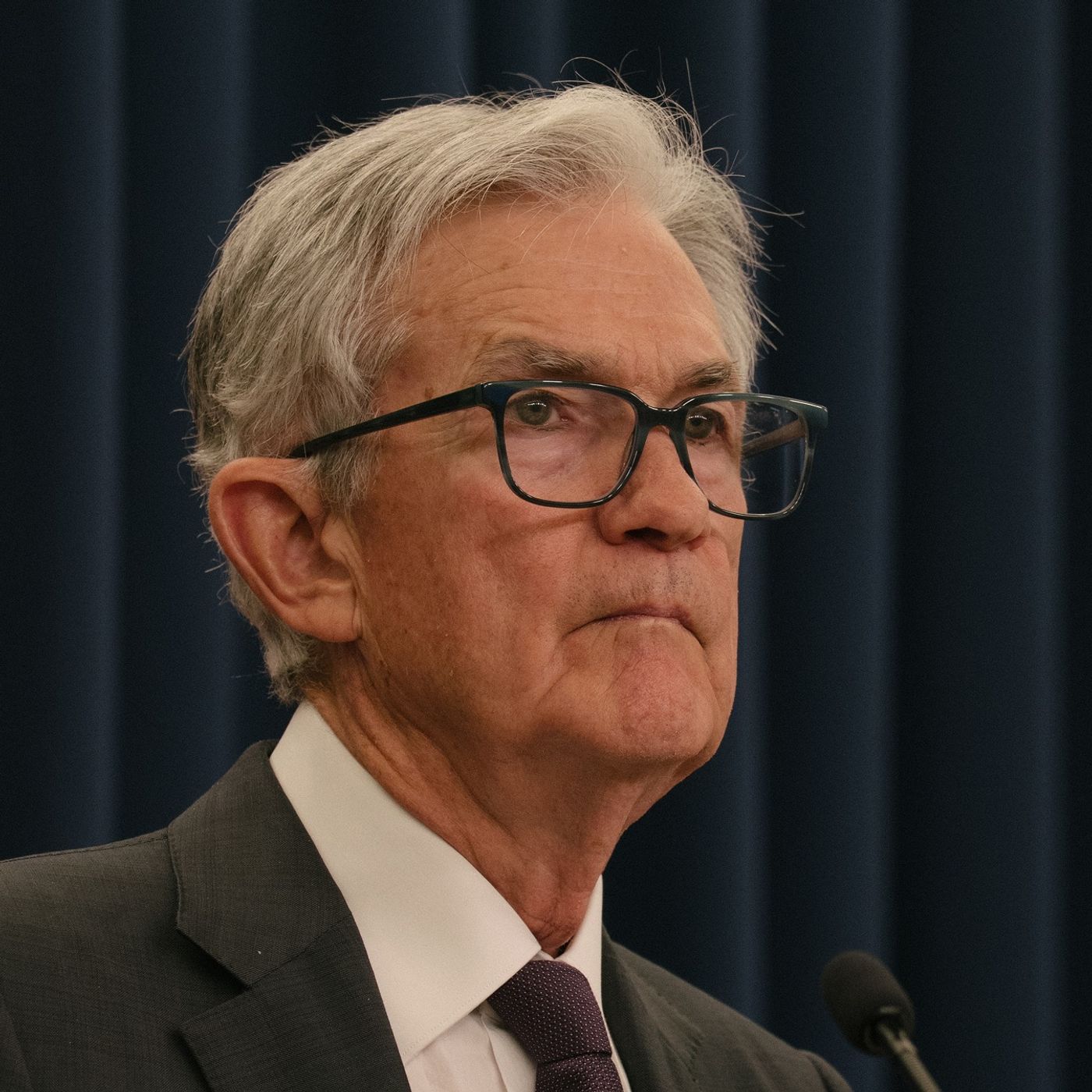
The Daily
Trump’s D.O.J. Went After the Fed. It Backfired.
00:28:15
The Trump administration’s decision to open a criminal investigation into the Federal Reserve chairman, Jerome H. Powell, has stunned the worlds of business and politics. Colby Smith and Glenn Thrush, who have been covering the news, discuss how the investigation came about, the panic it unleashed and why it might have made the Fed chair stronger than ever.
Loading summary
Transcript96 lines
- [00:00]
A
David I'm David Marchese.
- [00:02]
B
And I'm Lulu Garcia Navarro.
- [00:04]
A
And we're the hosts of the Interview from the New York Times.
- [00:06]
B
David and I have spent our careers interviewing some of the most interesting and influential people in the world, which means.
- [00:13]
A
We know when to ask tough questions and when to just sit back and listen.
- [00:16]
B
And now we've teamed up to have these conversations every week. We'll try to reveal something about the people shaping our world.
- [00:23]
A
And we'll get some great stories from them, too.
- [00:25]
B
It's the Interview from the New York Times. Listen wherever you get your podcasts.
- [00:32]
A
From the New York Times. I'm Natalie Kitroweff. This is the Daily. Even for an administration that has taken revenge to an extreme, the decision to open a criminal investigation into Fed Chairman Jerome Powell has stunned the worlds of business and politics. Today, my colleagues Colby Smith and Glenn Thrush explain how the investigation came about, the panic it unleashed, and why it might have made the Fed chair stronger than ever. It's Thursday, january 15th. Glenn, Colby, welcome to the show. It's great to have you here.
- [01:30]
C
Thank you.
- [01:31]
B
Thanks. It's good to be back.
- [01:33]
A
So for the past several months, we've been tracking this simmering conflict between President Trump and Federal Reserve Chair Jerome Powell. Trump has been trying to push Powell for a while now to lower interest rates as fast as possible, and Powell has been resisting. And then in the past few, few days, really, that fight entered a new and unprecedented phase. Federal prosecutors opened a criminal investigation in t pal and that set off a firestorm in Washington. You two have been covering this moment. Glenn, from your perch as our Justice Department reporter, Colby, as our Fed reporter. And I want to start by asking you, Colby, to help us get up to speed on how exactly we got from simmering conflict to this extremely tense moment.
- [02:24]
B
So it all centers around interest rates. As you mentioned, Trump has been all over the Fed for not lowering borrowing costs as fast as he would like. They've lowered interest rates three times over the course of three meetings. But it hasn't been enough for the president. He is facing a lot of pressure from constituents who are worried about affordability issues, are worried about high inflation, about a weakening labor market. And all of this is making Trump feel like the Fed needs to be doing more. And standing in the way of that is Chair Powell.
- [02:56]
A
Right. We've seen Trump put a ton of pressure on Powell personally. He's threatened to fire him, he's called him names. And all of that has really not done all that much. If anything, it seems to make Powell Move on interest rates.
- [03:09]
B
That's right. But then over the summer, he found a new angle. And what he focused on was this renovation project that was happening at the Fed's headquarters in Washington. There had been massive cost overruns. This thing was running about $700 million over budget, and it was looking like it was going to cost somewhere in the ballpark of two and a half billion dollars. And when Trump saw this, he seized on it and used it to go after Powell and say this Fed chair must be incompetent and mismanaging this project. Or maybe something like fraud was happening here.
- [03:41]
A
Okay, so I've read a lot about this renovation, and it does sound like it was extremely costly and did go way over budget. But do we have any indication that there was anything criminal here? There was fraud.
- [03:57]
B
So it's certainly expensive. I mean, two and a half billion dollars for a building is no laughing matter. And what we do know is that the costs were running about 700 million over budget or so. So clearly the project had gone a little bit awry here. I think what's important context, though, is that these are 100-year-old buildings. They've never been comprehensively renovated before. There was a lot of work to be done to kind of the original features, and they also were dealing with higher costs for materials and labor. But I think it's important to note that cost overruns, they're not a crime.
- [04:30]
A
But you're saying that Trump sees in these cost overruns an opportunity to gain leverage over Powell. Glenn, from your reporting on the Justice Department, just explain how the White House lands on an investigation as the next move here.
- [04:45]
C
Because the Justice Department has become for the White House its principal conduit for achieving retribution or intimidating political adversaries. And Trump has a lot of people in his orbit telling him things that he wants to hear. Chief among them is a guy by the name of Bill Pulte. Most people haven't heard of him because he runs a relatively obscure agency.
- [05:07]
A
Yeah, explain who he is.
- [05:09]
C
He's a former real estate developer and he runs the agency that deals with housing finance, which seems like a pretty benign and non controversial post. This is a guy who, who's been pushing Trump to go after a couple of his enemies on mortgage fraud. Letitia James, the New York State Attorney General. Adam Schiff, the senator from California who has been a burr under Trump's saddle. And recently he's been pushing Trump to use this renovation as a way to go after Powell.
- [05:39]
A
And what you're saying is the guy who is Suggesting this, this official, Bill Pulte, he may seem obscure to many of us, but actually within Trump's orbit. He's kind of distinguished himself as something like an unofficial chief retribution officer. He's engineering many of these pushes to go after figures that Trump wants to see punished.
- [06:01]
C
What makes this one different, however, is this isn't about going after an enemy. This is about applying leverage for a political result and to pursue Trump's goal to gain more control over the Fed and economic policy at a time when his approval ratings on the economy are in the tank. So Pulte has been in Trump's ear, telling him that this is a possibility, that something could really be done against.
- [06:31]
A
Powell, which, of course, we now know they did take action against Powell. So tell me about how this all came about. What exactly happened?
- [06:41]
C
So enter Jeanine Pirro. She is the U.S. attorney for Washington, D.C. the District of Columbia, and she is the person who has jurisdiction over the Fed headquarters. So this is in her territory. Pirro is obviously somebody who has been close to Donald Trump for a long time, decades, really. She is the former Westchester District Attorney. She's a former Fox host. She is somebody who talks to Trump constantly. Pirro, at some point in the fall, we think around November, starts reading press accounts, including one in the New York Post that really hits home for her. And she decides to assign a couple of prosecutors in her office to begin a preliminary inquiry into Powell's activities.
- [07:27]
A
She's reading press stories, to be clear, she's reading press stories that are talking about this renovation and the fact that it is costly.
- [07:35]
C
Yeah, and really press stories from Trump friendly news outlets that are emphasizing the potential culpability of Powell in something nefarious. So this motivates her and she starts moving forward. Our sense is that this started off pretty slowly, but by December, this starts to really pick up. And Pirro's office sends the Fed two letters requesting information. Now, we don't have copies of these letters, but they've been described to us. And one Piro associate said these were among the most polite letters her office ever sent to anyone.
- [08:12]
A
Colby, is that sense shared within the Fed? Like, how were these letters received?
- [08:19]
B
These were seen as, you know, casual outreach. I mean, breezy almost. In a way, nothing of the sort that would lead to a criminal investigation, and an imminent one at that. There was no mention of an investigation, no mention of subpoenas, no deadline even for a response. They were over the holiday period. It was around December 19th. And then the second email came on December 29th, and there was no real sense of kind of urgency in terms of a response. And so the Fed sits tight, they don't respond to those letters, and they never expected what would happen next.
- [08:53]
A
Okay, I get that these letters landed during a kind of dead holiday week and they didn't come with a deadline, but these were prosecutors asking for information, right? Like, why didn't the Fed respond? Do we know?
- [09:08]
B
So I think there's a lot we don't know about the, like, ins and outs of their responses here. But I think what's been clear, especially about these renovations, is that this is something that the Fed has had to provide a lot of answers for. And they've provided a ton of information since this whole controversy broke out back in July. That was a time when there was so much scrutiny over this project, which is a two and a half billion dollar, sprawling, multi year undertaking that had drawn so much attention that even the President came and visited the active construction site and openly sparred with Chair Powell over the true cost of the project. So this is something that they had answered countless lawmaker questions about, not only about the nature of the cost overruns, but what the specific plans around the project were going to be. So I think in a lot of ways the perception was there's a lot of information already out there about these renovations. And I don't think that they thought that this required an immediate response.
- [10:12]
A
Got it. So the lack of response to these letters may have been because Powell is basically saying, we have been forthcoming and we haven't done anything wrong. So, Glenn, tell me, how do we get from these apparently very polite letters to a criminal subpoena?
- [10:28]
C
It's right here that this collides with the pressure campaign that Trump is ramping up against his own Justice Department a couple of days earlier. Very interesting. Closed door meeting between Trump and dozens and dozens of U.S. attorneys from around the country, including Jeanine Pirro. Trump lashes out at them, calls them weak, accuses them of not aggressively enough pursuing his retribution agenda. And it is just a couple of days later that Pirro makes the decision to start playing hardball with the Fed. And then on Sunday night, we break the story that Pirro initiated a criminal investigation into the Fed. And then Powell comes out and says his office got subpoenas on Friday.
- [11:12]
B
And the way Powell did that was extraordinary.
- [11:16]
D
Good evening. On Friday, the Department of justice served the Federal Reserve with grand jury subpoenas threatening a criminal investigation.
- [11:24]
B
Shortly after we broke the story, on Sunday night, the Fed released a two minute video. It featured Powell standing alone in front of a lectern reading a statement.
- [11:35]
D
This unprecedented action should be seen in the broader context of the administration's threats and ongoing pressure.
- [11:41]
B
And it basically called out the President for these legal threats.
- [11:45]
D
This new threat is not about my testimony last June or about the renovation of the Federal Reserve buildings.
- [11:51]
B
And he made clear that all of these legal threats related to the renovation, those are pretexts, were nothing more than pretexts to put pressure on the central bank to lower interest rates.
- [12:02]
D
This is about whether the Fed will be able to continue to set interest rates based on evidence and economic conditions, or whether instead, monetary policy will be directed by political pressure or intimidation.
- [12:14]
A
And, Colby, you've been covering the Fed and Chair Powell for a very long time. So just explain for me why this video was so extraordinary.
- [12:24]
B
So we hadn't really seen Powell directly respond to anything the President has really done. Now, what that has looked like is Powell kind of brushing aside all of the various attacks that the President has thrown his way. Anytime he's insulted him, anytime he's threatened to fire him or tell him to resign, Powell has pretty much ignored that.
- [12:44]
D
I have served at the Federal Reserve under four administrations, Republicans and Democrats alike.
- [12:50]
B
But this was different. This was not a rhetorical attack. This was not something that I think the Chair thought that he could ignore. I think the thinking there was that this was a moment to step up and say something strong about Fed independence and to show that, you know, the Fed was not going to be pushed around any longer.
- [13:12]
D
Public service sometimes requires standing firm in the face of threats. I will continue to do the job the Senate confirmed me to do with integrity and a commitment to serving the American people. Thank you.
- [13:28]
B
And once that video goes out and we hear Powell say those words out loud, everything changes.
- [13:49]
A
We'll be right back.
- [13:56]
E
My name is Nina Feldman. I'm a producer on the Daily. I recently worked on an episode about how weight loss drugs like Ozempic turned a marriage upside down. This story was reported by Lisa Miller. Lisa spent so much time with this couple. She built this genuine connection that allowed them to feel comfortable sharing their really intimate story. And they even wanted Katella in their own words with us at the Daily to help people understand these new drugs in a totally different way. The Daily relies on journalists like Lisa investing time into building these connections, telling a unique story and making sure that they get it exactly right. New York Times subscribers make this possible. If you're already a subscriber, thank you so much. If you're not, you can become one by subscribing to The New York Times.
- [14:56]
A
Okay, so Powell comes out with this statement, and it really changes the dynamic. How? Walk me through that. What happens?
- [15:05]
C
We see a backlash from Republicans and Trump allies across the board that we had not seen after the announcement of investigations and prosecutions. This is totally different. The first person out of the gate was Thom Tillis.
- [15:21]
F
I mean, the President said he wasn't in the mix. Another example of amateur hour, as far as I'm concerned.
- [15:26]
C
He's kind of a moderate Republican from North Carolina. He's not running for reelection. Those are always the people who speak loudest in Washington. And he comes out and he says, president Trump, whoever you send up to the Hill to replace Powell, I'm not even gonna vote on. If you continue down this road on this prosecution, should they drop the investigation?
- [15:49]
F
I'm not gonna get into that. What I'm gonna do is drop any consideration for any board conference information until it's done.
- [15:56]
C
That just hasn't happened before. And then in the succeeding hours, and really over the next 36 hours, we just saw this cascade of criticism.
- [16:05]
F
I will be shocked if he has.
- [16:07]
C
Done anything wrong from places Trump isn't used to seeing criticism from. Fox News.
- [16:12]
F
Well, I'm not sure this investigation will ever go anywhere.
- [16:15]
D
I doubt very seriously that Jerome Powell.
- [16:17]
F
Lied to Congress in any intentional way. He may have been mistaken, mistaken in something he said. But I think he's an honorable man.
- [16:23]
C
Larry Kudlow.
- [16:24]
F
He was a terrible Fed chair, but he's not a criminal.
- [16:28]
C
One of his top economic advisors during the first term and somebody Trump watches on TV all the time, said this was a stupid idea. And other members of the Senate, including John Thune, the majority leader, if the Justice Department is pursuing something, I hope they have a smoking gun. Expressed extreme skepticism about this and said that they needed to see real evidence that Powell had committed criminality for this thing to go forward with their approval.
- [16:58]
A
Okay, so I understand that Powell is, you're saying, very trusted among many people on the Hill. But, Glenn, we know that Republicans have been very willing to go along with a lot from Trump, a lot of retribution efforts, even a lot of attacks on the Fed before this. So why do they break with him on this so forcefully?
- [17:20]
C
In less than six months, the midterm elections are going to hit full swing. And there is nothing that makes Republicans speak up louder and challenge their own president than the potential prospect of losing their jobs. And anything that threatens the potential stability or the economy, they are going to fight back. And that's exactly what we're seeing.
- [17:44]
B
And I also think it's important to note that nothing's going to rattle financial markets more than thinking that the central bank isn't independent. And it's been notable that we haven't seen more of a market reaction. I think some people were expecting in the aftermath of this that this would be a seismic moment. But a lot of what I hear is that having so many Republican lawmakers come out and say that they don't stand by attacks of this nature has really helped to alleviate fears that the Fed isn't suddenly going to fold here and no longer act independently. But again, I mean, it's not just the economy that I think these lawmakers are focused on. It's really Wall street, which we know is a barometer of success for the president.
- [18:24]
A
And just say quickly why it is that Wall street will react so strongly to the appearance that the Fed's independence is really being threatened.
- [18:32]
B
Well, so much of the stability of the financial system rests on the fact that we have a central bank that wants to pursue low, stable inflation and a healthy labor market. And if that has changed, then I assumptions about the financial system in the US Start to change. That independence is what bolsters people's confidence in the dollar, in US Treasuries. And so if you flip the script on Fed independence, then it really starts to change people's perspective of just how stable is the U.S. economy and its financial system.
- [19:02]
C
Another way to think about this is this is like pulling out the one Jenga piece you cannot afford to pull out. This is not something that Republicans want. It's not something that adds to stability. Look, when the Justice Department goes after James Comey or Tish James, it compromises fundamental issues of rule of law, but, you know, it doesn't imperil the overall economy. That's something Republicans on the Hill cannot abide.
- [19:32]
A
And what has the Trump White House response to this rare showing of dissent been like? Does Pirro, for example, see her actions as a mistake?
- [19:43]
C
Now, Jeanine Pirro's reaction to this has been really interesting. When the blowback happened, and it was pretty much instantaneous, Pirro responded by downplaying the seriousness of this investigation. She essentially said that the lack of response is what precipitated this, that an investigation is far from being a prosecution. Pirro has downplayed the likelihood that this will result in prosecutions. So she did something that you almost never see Justice Department people do in the Trump era, and that is walk it back ever so slightly. But she's somebody who is attempting to balance her desire to please the boss with maintaining some semblance of her own image as an impartial prosecutor motivated by facts rather than politics. And who knows? While the Republicans on the Hill and the international monetary community might think Pirro has gone way overboard, Trump to some extent is quite likely to see this as her executing something that he wanted accomplished.
- [20:51]
A
And do we have an understanding of how Trump is perceiving this? What's his reaction been?
- [20:57]
B
So Trump is not necessarily, like, backing away from this. He tried to create some distance between himself and the investigation. He said he didn't know anything about it, but he's certainly not taking the opportunity to, you know, shift his tone as it relates to Powell.
- [21:11]
F
He's billions of dollars over budget, so he either is incompetent or he's crooked. I don't know what he is, but he does. Certainly he doesn't do a very good job.
- [21:21]
B
Recently he, you know, called him a jerk and said that it didn't really matter much because he'd be out soon.
- [21:26]
F
Last week, the average 30 year mortgage dropped below 6 for the first time in many years. It's coming down very rapidly, and that's not with the help of the Fed. If I had the help of the Fed, it would be easier. But that jerk will be gone soon.
- [21:41]
B
Referencing the fact that Powell's term is up in May. But what we do know is that inside the administration, it's a bit more complicated. Treasury Secretary Scott Bessant, who's leading the process to find Powell's replacement as chair, was not on board with this decision at all. He called the president directly when he found out the investigation was moving forward and expressed his frustration and told the president that this could impede their plans to confirm a new chair for the Fed.
- [22:12]
A
And is that true, Colby? Could this actually impact the administration's ability to nominate Powell's replacement?
- [22:20]
B
Yeah, this could be a big impediment. I mean, as Glenn mentioned earlier, it was Senator Tillis who kind of raised his hand and said, I, you know, I'm not gonna be on board with approving or moving along any of the nominations that the administration is putting forward for this chair position. And that's a big problem because he's on the Senate Banking Committee and they are responsible for vetting and questioning and then voting on who proceeds to the full Senate for a vote. And if they lose Tillis, that could result in a deadlocked vote. So it could very easily be the case that the whole Fed nomination process gets thrown off the rails. Second to that, it's very possible that Chair Powell decides to stay as a governor after this point. His term as chair is up in May, but he technically can stay on at the central bank until 2028, when his term as a governor expires. Now, this is important because what Trump really wants to do is to put as many of his supporters at the Fed as possible. And if Powell doesn't leave, that blocks another vacancy that Trump would have had to put forward someone that he wanted in that position.
- [23:26]
A
Can we just pause and cogitate for a second on that? Like what you just said is essentially that this dramatic move against Powell may have both made it much harder for Trump to put his own person in as the head of the central bank. And it also may prompt Powell to stay on at the bank in a voting capacity for a while longer than Trump probably wants.
- [23:49]
C
The paradox here is Trump may have lost a significant amount of his authority over the American economy by trying to assert dominance over these institutions. His reach might very well have exceeded his grasp. I know we say this a lot in a lot of contexts, but Trump is, you know, not too far from the second half of his second and lame duck term here, and he may have pushed this a bit too far. He's been able to have his way with the Justice Department. He's been able to have his way with Republicans on Congress until fairly recently.
- [24:25]
A
He can extract a dictator from Venezuela, it seems, without much resistance.
- [24:30]
C
Exactly. Exactly. But this is a guy who's got a 40% approval rating, and there are limits to his authority. And what he's also hitting here are the institutional strengths that were created this bulwark in the Federal Reserve in the early 20th century that were intended to withstand precisely this kind of an executive power grab. And this might be a real moment, potentially a high watermark in terms of Trump's control over the economy. This is the kind of mistake that presidents tend to make. We tend to think of Donald Trump as being completely outside of the stream of history. But presidents, typically in their second terms, oftentimes after an election that they believe validated them, tend to reach for goals that they do not have the political support to achieve. Time will tell if this is one of those instances, but the early indications are Donald Trump may have gotten himself into some trouble here.
- [25:28]
A
And for Powell, Colby, and the Fed, what is the lesson in all of this? This institution that prides itself on being so careful with its words and so cautious to not engage in any partisan behavior has now come out and defended itself forcefully, and it seems to be working so what's the upshot?
- [25:53]
B
I think the upshot here is that the Fed, in being so quiet and so non confrontational in the past year, I think they built up a lot of respect and goodwill. And so when the time came when the president took too aggressive of a step and attacked the institution in a way that so many people thought was a step too far, when they finally did respond, everyone sat up and listened. And I think that now we are entering a new era where officials feel a little bit more forthright in calling out the president for what he is doing. And that, in turn, I think, is going to help to bolster the independence of the Fed, which had been under, you know, relentless attack in the past year or so. And in some ways, in trying to weaken the Fed, the president and the administration only made it stronger.
- [26:57]
A
Well, Colby, Glenn, thank you so much.
- [27:00]
B
Thank you.
- [27:00]
C
Thank you.
- [27:17]
A
We'll be right back. Here's what else you need to know today.
- [27:34]
F
We have been informed by very important sources on the other side. They've said the killing has stopped and the expert executions won't take place. There were supposed to be a lot of executions today and that the executions won't take place.
- [27:46]
A
On Wednesday, President Trump said that the Iranian government appeared to have stopped killing protesters. Trump had been threatening to attack Iran if the government harmed demonstrators, and he didn't say Wednesday whether he was still considering military action.
- [28:01]
B
Does this mean military action is now.
- [28:03]
A
Off the table against Iran?
- [28:04]
F
And we're going to watch and see what the process is, but we were given a very good, very good statement by people that are aware of what's going on.
- [28:15]
A
Iran had announced on Wednesday that it was closing airspace across the country to commercial flights. And the US Military had evacuated personnel from Qatar amid the tensions. But after Trump's comments, a US Military official told the Times that the Pentagon was ready to bring troops in back to the base in Qatar, saying the president had given a quote, off ramp. And Senate Republicans successfully blocked an effort to force President Trump to seek congressional approval for any military action in Venezuela. Last week, it seemed that the measure to curb the president's war powers would come up for a vote after five Republican senators said they would support. But on Wednesday, after speaking with officials from the Trump administration, two of those, senators, Josh Hawley of Missouri and Todd Young of Indiana, flipped their positions and joined the push to kill the measure. Today's episode was produced by Mary Wilson and Michael Simon Johnson. It was edited by Devin Taylor and Mark George. Contains music by Diane Wong and Pat McCusker and was engineered by Alyssa Moxley. That's it for the Daily. I'm Natalie Kitroweff. See you tomorrow.
- [29:44]
B
Did you know Tide has been upgraded to provide an even better clean in cold water? Tide is specifically designed to fight any stain you throw at it. Even in cold butter? Yep. Chocolate ice cream. Sure thing. Barbecue sauce. Tide's got you covered. You don't need to use warm water. Additionally, Tide pods let you confidently fight tough stains with new coldzyme technology. Just remember, if it's gotta be clean, it's gotta be Tide.