← The Daily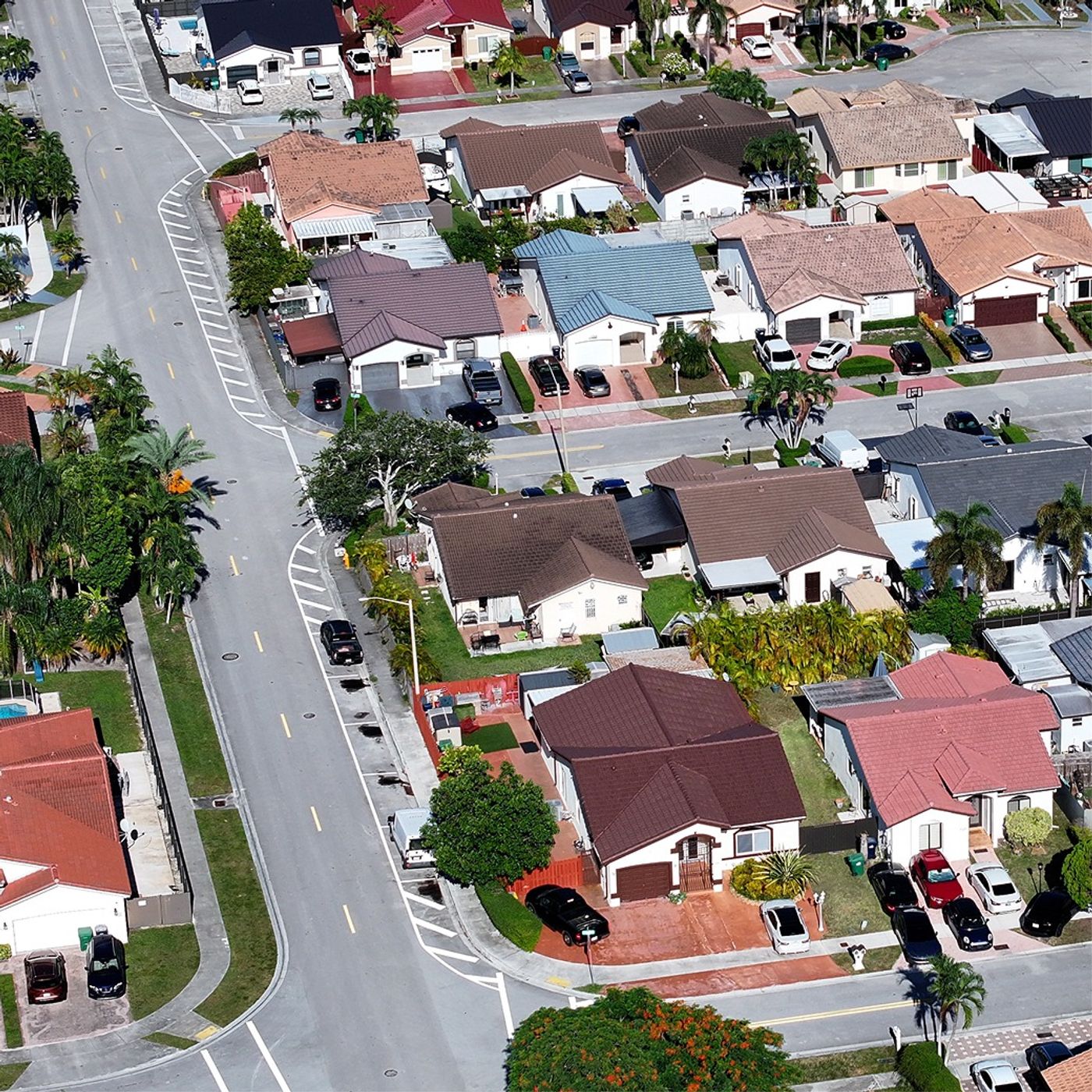
The Daily
Unpacking Trump’s 50-Year Mortgage Proposal
00:25:56
When President Trump proposed the introduction of a 50-year mortgage, he challenged a bedrock of the American housing market and financial system. He also revealed how desperate the administration is to lower prices for consumers. Conor Dougherty, who covers housing and development, explains what’s attractive about the idea and its potential drawbacks — and why housing affordability is such an intractable problem.
Loading summary
Transcript111 lines
- [00:00]
Planned Parenthood Announcer
This podcast is supported by Planned Parenthood Federation of America. As a listener of the Daily we know you want the facts. Fact 1 Lawmakers are making it harder for Americans to get health care. 2. A new policy blocks patients from using their Medicaid insurance for life saving care at Planned Parenthood health centers. Cancers will go undetected, STIs will go untreated, and patients won't have the care they need. 3. Planned Parenthood will not back down, but they need your help. Don't donate@plannedparenthood.org defend.
- [00:32]
Michael Barbaro
From the new York Times, I'm Michael Balbaro. This is the Daily A few days ago, when President Trump proposed the introduction of a 50 year mortgage, he challenged a bedrock of the American housing market and financial system. But above all, he revealed just how desperate he is to lower prices for consumers and how willing he is to embrace radical solutions to do so. It's Monday, November 17th.
- [01:15]
Conor Daugherty
Democrats had a clean sweep around the country on Tuesday. It was a resounding demand for relief from the rising cost of living in an off gear election.
- [01:26]
Michael Barbaro
In the final analysis, the message from the elections two weeks ago in New Jersey, Virginia and New York was exceptionally clear. The country is unaffordable.
- [01:36]
Conor Daugherty
People's groceries bills are still high.
- [01:38]
Planned Parenthood Announcer
They're still dealing with inflation. They're suffering.
- [01:41]
Conor Daugherty
Focus on domestic policy and on making people's lives better.
- [01:46]
Michael Barbaro
Everyone embraced that message except our energy.
- [01:49]
Donald Trump
Costs are way down. Our groceries are way down. Everything is way down for President Trump. So I don't want to hear about.
- [01:56]
Michael Barbaro
The affordability because who initially dismissed it, much to the consternation of his fellow Republicans?
- [02:03]
Conor Daugherty
The president says there's virtually no inflation.
- [02:05]
Marjorie Taylor Greene
And that grocery prices are going down.
- [02:07]
Conor Daugherty
Do you agree with him on that?
- [02:10]
Marjorie Taylor Greene
No. I go to the grocery store myself. Grocery prices remain high, energy prices are high, so affordability is a problem.
- [02:17]
Michael Barbaro
Who said that they agreed with the American people that the President had not done enough to bring down prices. So after a few days of denial, Trump abruptly changed his tune. Suddenly he was Mr. Affordability.
- [02:37]
Marjorie Taylor Greene
President Trump accusing four of the biggest.
- [02:40]
Planned Parenthood Announcer
Meatpacking companies of driving up US beef prices, which had.
- [02:44]
Michael Barbaro
He ordered the Justice Department to investigate whether meat packing companies have conspired to inflate meat prices.
- [02:51]
Conor Daugherty
The president, looking into it, you could say he has beef with this particular industry here.
- [02:56]
Michael Barbaro
He lifted his own tariffs on household products like coffee, tomatoes and bananas, and floated the idea of giving Every American a $2,000 check based on the revenues from his tariffs.
- [03:09]
Donald Trump
I want the money to go directly.
- [03:11]
Michael Barbaro
To you, the people he suggested lowering health care costs by sending consumers a direct federal subsidy.
- [03:18]
Donald Trump
And you go out and you'll buy your own health insurance and you'll negotiate different plans and you'll get much better insurance and you will be an entrepreneur for yourself.
- [03:28]
Michael Barbaro
And finally, he offered a potentially game changing and extremely controversial idea for reducing the price of housing. And he announced this idea in a pretty unusual way, even for Trump.
- [03:46]
Conor Daugherty
So Saturday morning, Trump posts this picture on Truth social media. It's just a picture and it says great American Presidents.
- [03:55]
Michael Barbaro
Conor Daugherty is a housing reporter for the Times.
- [03:59]
Conor Daugherty
And on the left you have Franklin D. Roosevelt. And above him it says 30 year mortgage. And on the right you have President Donald Trump. And above him it says 50 year mortgage.
- [04:10]
Podcast Host (Interviewer)
And when you saw that Connor, did you know what that meant? Yeah.
- [04:14]
Conor Daugherty
Right off the bat you see he's trying to come up with an idea that will lower mortgage payments for everyone who has a mortgage. Right.
- [04:22]
Podcast Host (Interviewer)
Address affordability by making. Making housing more affordable.
- [04:25]
Conor Daugherty
Yes. Making payments more affordable.
- [04:27]
Podcast Host (Interviewer)
Right. And quite importantly, this image puts him in the pantheon of great presidents who radically rearrange the US Housing market. And to use that image maybe as our roadmap here, let's talk about the left side image, FDR and the 30 year mortgage, which is the starting point for Trump and I suspect for this conversation.
- [04:50]
Conor Daugherty
So I suppose what we should probably do is go to a little bit before FDR and say what the housing market used to be like.
- [04:59]
Podcast Host (Interviewer)
Okay.
- [05:00]
Conor Daugherty
Many fewer Americans owned their homes and they had a lot of different ways for borrowing the money to buy a home. Now, one of the most popular models was something called building and loan associations. Some of your older or film buff listeners might know that during the movie It's a Wonderful Life, there's a fictional company called the Bailey Brothers Building and Loan. So basically they're co ops. A bunch of people buy into like what is essentially a pool of money, and then they can borrow from that pool of money, their shareholders in this pool, and then they. That allows them to borrow money from it. So very complicated model. It had a lot of risk to it, but the point is that it's a very haphazard market and it's a market that the government has essentially no involvement in.
- [05:48]
Podcast Host (Interviewer)
Right.
- [05:48]
Conor Daugherty
So during the Great Depression, obviously there's total chaos. There's a huge run on banks. Credit is just completely pulled back in various ways and it makes it really, really hard to buy a house. FDR is seen as the person who brought the government into the housing market in a big way. After The Great Depression. Government does a bunch of different things. One is they really try to make standard this idea of what's called an amortizable mortgage, which means you have one payment and you do your principal and interest in one easy payment. The other thing is they start encouraging longer term mortgages. Now, longer term mortgages are going to be more affordable because the monthly payment is going to be much less if you can extend it over, say, 30 years instead of 10 years. The problem is banks don't really want to do long mortgages. They don't like it because if interest rates go up, they have to pay more money to the people who put money in their bank. But they're still getting the same amount of money from the people who've borrowed money for the home. So the government says, okay, well, we'll help you with that problem by covering you if these loans start to go belly up. Now, exactly how they do this is this very, very complicated mortgage system that we now have. But the whole point of all of this is to make it easier for more people to buy homes and for that home to be sort of wrapped around one easy payment.
- [07:15]
Podcast Host (Interviewer)
So out of the economic calamity that was the Great Depression comes this effort by the government to encourage as many Americans as possible to buy a home by ensuring that they can do so over a very long period. That makes it more affordable with what we now think of as the fixed rate 30 year mortgage. Interestingly, we can thank the Great Depression in a sense for that.
- [07:41]
Conor Daugherty
Yeah. That system is why we have a huge homeownership rate. About 2/3 of Americans own their home. That number would be way lower without their 30 year fixed mortgage. And it's just an incredible deal because the interest rate is fixed, your monthly loan payment is frozen, even if inflation picks up. On top of that, if rates go way down, you can refinance.
- [08:04]
Podcast Host (Interviewer)
Right.
- [08:05]
Conor Daugherty
So you can actually lower your rate over time, which I did not too long ago. So you get all the benefits of a fixed rate with none of the downsides. And that is why we have a really high home ownership rate. Now, let's talk for a second. Why would the government want to make it easier for people to borrow money? Well, the reason is if you're borrowing money to buy an asset, a home, something that's going to hold its value, hopefully increase in value, it's kind of different than running up a credit card bill to get takeout one night. Right. So the government has all this financial plumbing created because it wants people to buy a stable asset it's stable for their family. It has forced savings. Even if the home doesn't appreciate or appreciates not very well, you're still saving all that money, which you would not be doing if you were just renting. So you're borrowing all this money to kind of create stability. You create people who are rooted in neighborhoods. You create an asset that people can own and pass to their children. You create a form of retirement savings.
- [09:07]
Podcast Host (Interviewer)
So why would we ever Mess with the 30 year fixed rate mortgage if from what you're saying, it kind of works? And works pretty well?
- [09:16]
Conor Daugherty
Yeah. Homes have become much more expensive. There are a lot of complicated reasons for why they become more expensive. But the way that people see it is that mortgage payment. There's an adage in the real estate industry that says you don't actually buy a house, you buy a payment. People use that payment as their barometer for can they or can they not achieve the dream of becoming a homeowner? So this payment has gotten a lot more expensive over the past couple years for a whole bunch of different reasons. One is homes just cost more. So if homes cost more, it's going to be a higher payment. The other is interest rates have gone up.
- [09:55]
Podcast Host (Interviewer)
Right.
- [09:56]
Conor Daugherty
Quite a bit from their rock bottom level in the pandemic, and that is making people feel really bad because all their friends got 2% interest rates and now they're stuck with 6. So homes are more expensive and money is more expensive. And so that payment has gone up quite a bit from what it was.
- [10:15]
Podcast Host (Interviewer)
Right. The 30 year fixed rate mortgage no longer feels very affordable.
- [10:19]
Conor Daugherty
Yes. And so if you're a politician, though, and you're just looking at that payment, you're going, everyone is mad about this payment. What can I do in a relatively short period of time that will make that payment go down, which would make people feel very good. Well, you can do what FDR did, which is find ways to stretch the payment out over a much longer period of time.
- [10:46]
Podcast Host (Interviewer)
Thus the idea of a 50 year mortgage. Yes.
- [10:50]
Conor Daugherty
So Bill Pulte, who is a senior Trump administration official, also happens to be the grandson of William Pulte, who has helped build the Pulte Homes homebuilding empire.
- [11:01]
Podcast Host (Interviewer)
Wow.
- [11:02]
Conor Daugherty
Apparently goes to Trump and shows him this poster. FDR on the left 30 year mortgage, Trump on the right 50 year mortgage. And Trump buys into the idea, I guess, and posts it on Truth Social and seemingly embraces it as a proposal.
- [11:17]
Podcast Host (Interviewer)
And just explain how a 50 year mortgage would work to actually lower people's monthly housing costs.
- [11:23]
Conor Daugherty
So we're Taking some guesses here because the Trump administration did not put out a thorough white paper on this. But the basic gist is the cost of the home would be spread out over 50 years instead of 30 years. So if you are buying a $500,000 home, for instance, you're paying that purchase price over 50 years instead of 30 years. And so the portion of your payment that is the home is going to be lower in each monthly payment. So let's just say you're buying a $500,000 house at current mortgage rates and you put down 20%, your payment would go from about $2,500 for a 30 year. Right. To about $2,200 for a 50 year.
- [12:06]
Podcast Host (Interviewer)
Per month.
- [12:07]
Conor Daugherty
Per month. So you'd save about $300 per month.
- [12:10]
Podcast Host (Interviewer)
And just to say $300 a month times 12 months in a year is nearly $4,000 a year. That's real money.
- [12:18]
Conor Daugherty
Yeah, definitely. That's real money, babe. Imagine if you got a $4,000 raise.
- [12:22]
Podcast Host (Interviewer)
Yeah, you'd be pretty pleased. And so in theory, what would a 50 year mortgage do to the US market if it came into existence and if it lowered home monthly payments by the amount we're talking about?
- [12:37]
Conor Daugherty
It's hard to say exactly how it would impact the market, but it would turn up the heat. It would make more people want to buy, it would make more people feel like they could buy. That in turn might get more people want to list because they feel like, oh, I'm going to finally get the offer I really wanted to. That in turn could get home builders to increase the pace of new construction because the lines are growing again. So it would definitely stimulate the housing market in a great many ways because more people can buy homes now.
- [13:07]
Podcast Host (Interviewer)
Right. So you can see why this would be an attractive option for the President of the United States at a moment when everyone's telling him there's a real affordability problem in this country and it's typified by the unaffordability of the housing markets. You can see why it would be tempting to post that image and just make a 30 year mortgage suddenly a 50 year mortgage.
- [13:32]
Conor Daugherty
Oh, totally. I mean, if you're a president who wants to do anything for affordability, coming up with a thing that will change someone's monthly bill is really appealing because it would lower payments and it would lower them in an obvious way that people could see in their budget.
- [13:51]
Podcast Host (Interviewer)
And so what is the response to this idea once Trump posts it? That image of himself in FDR and the concept of 50 year mortgage.
- [14:05]
Conor Daugherty
People just annihilate this idea. I mean, they say this could make things worse, not better. People from all across the political spectrum converge and say this is just an incredibly bad idea.
- [14:27]
Podcast Host (Interviewer)
We'll be right back.
- [14:29]
Planned Parenthood Announcer
This podcast is supported by Planned Parenthood Federation of America. As a listener of the Daily we know you want the facts. Fact 1 Lawmakers are making it harder for Americans to get health care. 2. A new policy blocks patients from using their Medicaid insurance for life saving care at Planned Parenthood health centers. Cancers will go undetected, STIs will go untreated, and patients won't have the care they need. 3. Planned Parenthood will not back down, but they need your help. Donate@PlannedParenthood.org defend this podcast is supported by.
- [15:02]
Liz Ann Saunders or Kathy Jones
On Investing, an original podcast from Charles Schwab. Each week, hosts Liz Ann Saunders, Schwab's chief investment strategist, and Kathy Jones, Schwab's chief fixed income strategist, along with their guests, analyze economic developments and bring context to conversations around stocks, fixed income, the economy, and more. Download the latest episode and subscribe@schwab.com oninvesting or wherever you get your podcasts.
- [15:28]
Upwork Advertiser
If you're overextended and understaffed, upwork Business plus helps you bring in top quality freelancers fast. Get instant access to the top 1% of talent on Upwork in marketing, design, AI and more. Ready to jump in and take work off your plate. Right now, when you spend $1,000 on Upwork Business plus, you'll get $500 in credit. Go to Upwork.comsave now and claim the offer before December 31, 2025. Again, that's Upwork.comsave scale smarter with top talent and $500 in credit. Terms and conditions apply.
- [16:04]
Podcast Host (Interviewer)
So Connor, why is everyone panning this idea? What is so wrong with the 50 year mortgage?
- [16:11]
Conor Daugherty
Okay, so the problem is it looks like it saves you money. Let's return to our example. You have the $500,000 house. With the current 6.2% mortgage rate, you go from $2,500 to $2,200. You've saved yourself 300 bucks, right? Okay, now in the first example, 30 years, you're going to end up paying about $500,000 in interest. You pay basically the house in interest. Buy a $500,000 house, you pay about 500,000 interest.
- [16:43]
Podcast Host (Interviewer)
A lot of interest.
- [16:43]
Conor Daugherty
Yeah. Okay, now let's go to the second example. You take that house and you buy it over 50 years. Well, now you're going to end up spending about $900,000 in interest.
- [16:54]
Michael Barbaro
Wow.
- [16:54]
Conor Daugherty
A significant amount more. So almost a million dollars in interest for your $500,000 house, while you're paying.
- [17:02]
Podcast Host (Interviewer)
Way more in interest than you are for your house. You're basically buying your house twice, but you're paying the bank for a whole other version of your house.
- [17:10]
Conor Daugherty
Exactly. I mean, and the reason is it's 20 more years of paying interest.
- [17:14]
Podcast Host (Interviewer)
So a major, major downside of a 50 year mortgage is 20 extra years of forking over interest payments to the bank.
- [17:24]
Conor Daugherty
And not only that, there's some questions about whether or not it would even really save you money. So, for instance, if banks are going to be doing 50 year mortgages, the interest rate on the 50 year mortgage is almost certainly going to be higher than on a 30 year mortgage. And the reason is a 50 year mortgage is much riskier. If you're lending someone money over 50 years instead of 30 years, there's a much higher chance that something will go wrong in those 50 years. On top of that, if you are buying that home after 50 years, it takes you a lot longer to start owning real equity in that home. As anybody knows, looking at their mortgage statement, in the first few years, you're mainly only paying interest, and in the last years you're mainly only paying principal. So it would take you 20 years to start really having significant equity in the house.
- [18:14]
Podcast Host (Interviewer)
Right. And I guess we should probably mention the reality that if a lot of Americans started to take out 50 year mortgages, and we assume many people don't start taking them out until they're in their late 30s and early 40s, which is when a lot of Americans now employ, embark on homeownership. A lot of people are not gonna make it to the end of these mortgages. I mean, they're gonna die, right?
- [18:35]
Conor Daugherty
Unquestionably. Now, what's really striking about the critiques of this idea is just how much of it is coming from within Trump's party and some of Trump's closest allies. You have Laura Loomer, the conservative activist, saying lifetime mortgages. You have Marjorie Taylor Greene, who is one of the most strongly associated with America First. Well, she says you'll be in debt for life. You have Christopher Ruffo, another conservative activist, saying, if you have a 15 or a 30 year mortgage, you'll actually own your home. Whereas a 50 year mortgage, you're never going to own your home. Essentially, you're just renting it from the bank.
- [19:10]
Podcast Host (Interviewer)
Now, interesting.
- [19:11]
Conor Daugherty
Many people from all across the political spectrum sort of recognize this as a very risky deal.
- [19:17]
Podcast Host (Interviewer)
So is it fair to say that this is probably not about to become the new gold standard of American mortgages?
- [19:25]
Conor Daugherty
I think it's fair to say they're going back to the drawing board on this one.
- [19:28]
Podcast Host (Interviewer)
So if this idea isn't really going anywhere at the moment, what else is coming out of this administration that would potentially confront the unaffordability of housing right now?
- [19:38]
Conor Daugherty
So Bill Pulte, the Trump administration official, said this was just one of several ideas. Another would be portable mortgages where you could take your mortgage rate with you to another house. That would hopefully open up inventory, because a lot of Americans right now have lower mortgage rates and want to move, but aren't going to because they don't want to have to buy a new house at a higher mortgage rate. So that might encourage more people to move. So it would unstick the housing market, potentially. Another one would be assumable mortgages. So that's kind of the same idea from a different direction. If you buy a home and the person who owns the home has a killer low interest rate, you might be able to assume their mortgage and their mortgage rate, you know, when you buy the house. So that would encourage someone to move, that would encourage someone to buy, et cetera.
- [20:28]
Podcast Host (Interviewer)
Are any of these practical? Are they achievable?
- [20:31]
Conor Daugherty
Probably not. What you're seeing, though, is all the same type of idea, which is how do we fiddle with the debt, how do we fiddle with mortgage rates in such a way that we can attack the payment either by extending it with the 50 year old, or essentially winding back in time to give people access to mortgage rates that reflect mortgage rates of 10 years ago. But there's one big thing we're missing here, which is that the reason housing is so expensive is that we have a really bad housing shortage in the country. We stopped building housing, essentially stopped building housing after the Great Recession, and have never caught up. So if you want to have any real impact on affordability, you have to eventually attack that problem. And attacking the mortgage rate stuff, all it really does is make it easier for more people to buy what is basically the same number of homes.
- [21:35]
Podcast Host (Interviewer)
Right. It attacks a symptom by definition.
- [21:37]
Conor Daugherty
Exactly. And the problem with the housing shortage is that it takes a long time to have any impact on, and it's not a thing that the President has a lot of control over. There are state regulations for how you build housing. There are local regulations for how to build a housing. All this stuff that just breaks your brain. The White House doesn't have much control or even influence over.
- [21:58]
Podcast Host (Interviewer)
Right. That's the province of governors. It's the province of mayors.
- [22:01]
Conor Daugherty
Yes. So around the country you are seeing states really go after this supply problem. You've seen Florida, Montana, Texas, California, Oregon, Arizona, Massachusetts. All of these states have had some kind of effort to essentially lower their housing regulations to make it easier to build housing in hopes that they will inspire home builders to go through a building boom. But these solutions all take a really long time and they can also be controversial.
- [22:35]
Podcast Host (Interviewer)
Right.
- [22:35]
Conor Daugherty
You know, in California, for instance, they just passed a law that changes zoning. It makes it much easier to build higher density housing in existing neighborhoods. Well, the legislature who passed that bill has been working on a version of this for 10 years. And it only passed after people fought like crazy against it because they don't want taller buildings in their single family neighborhoods. Even if all these things happen after going through all that difficult politics, it'll still be years before developers get projects approved, before they start building them, before there's enough units to impact the supply that people would really notice in prices. So this work is just grinding hard work that's also kind of thankless. And it feels like the states have kind of run out of options and so they are doing the hard work. So let's say all these states, California, whatever, Texas, actually have a huge impact on the supply and actually they lower prices for people. Right. Let's say that it's a resounding success. That resounding success is unlikely to happen in anyone's political lifetime. It's certainly not going to happen before the 2026 midterms. And it's very unlikely to have a huge, huge, noticeable impact on prices by 2028.
- [23:55]
Podcast Host (Interviewer)
Got it from everything you're saying, the real solutions to the American housing crisis of unaffordability right now isn't flashy, it isn't quick, it's not a true social post with two presidents on it. It's not a 50 year mortgage. It's this very unsexy, difficult, slow brain breaking work of changing the way zoning works and stimulating local housing markets and stimulus. And it's probably not going to be coming from the White House.
- [24:28]
Conor Daugherty
Absolutely right. I think the federal government can be a huge part of this story. I think there are lots of things the federal government can do to help these efforts that are happening in state and local governments, but they're not going to be the author of them.
- [24:50]
Podcast Host (Interviewer)
Well, Connor, thank you very much.
- [24:52]
Conor Daugherty
We appreciate it. Thank you.
- [25:01]
Podcast Host (Interviewer)
We'll be right back.
- [25:07]
Planned Parenthood Announcer
This podcast is supported by Planned Parenthood Federation of America. As a listener of the Daily we know you want the facts. Fact 1 Lawmakers are making it harder for Americans to get health care. 2. A new policy blocks patients from using their Medicaid insurance for life saving care at Planned Parenthood health centers. Cancers will go undetected, STIs will go untreated, and patients won't have the care they need. 3. Planned Parenthood will not back down, but they need your help. Donate@PlannedParenthood.org defend this podcast is supported by.
- [25:39]
Liz Ann Saunders or Kathy Jones
On Investing, an original podcast from Charles Schwab. Each week, hosts Liz Ann Saunders, Schwab's chief investment strategist, and Kathy Jones, Schwab's chief fixed income strategist, along with their guests, analyze economic developments and bring context to conversations around stocks, fixed income, the economy and more. Download the latest episode and subscribe@schwab.com oninvesting or wherever you get your podcasts.
- [26:06]
Betterment Advertiser
Don't just imagine a better future, start investing in one with betterment. Whether it's saving for today or building wealth for tomorrow, we help people in small businesses put their money to work. We automate to make saving simpler. We optimize to make investing smarter. We build innovative technology backed by financial experts. For anyone who's ever said, I think I can do better, so be invested in yourself, be invested in your business. Be invested in better with betterment. Get started@betterment.com investing involves risk performance not guaranteed.
- [26:41]
Michael Barbaro
Here's what else you need to know today. One of the Republican Party's most high profile alliances between President Trump and Representative Marjorie Taylor Greene of Georgia officially imploded over the weekend. Green, a once fierce Trump advocate who backed his efforts to overturn the 2020 election with results, has infuriated Trump recently by criticizing his handling of the economy and the Jeffrey Epstein investigation. As a result, Trump withdrew his support for Greene, called her a traitor, and accused her of becoming a Republican in name only.
- [27:19]
Podcast Host (Interviewer)
What do you think happened?
- [27:21]
Conor Daugherty
What do you think is the reason for this?
- [27:26]
Marjorie Taylor Greene
Unfortunately, it is come down to the Epstein files and that is shocking. And you know I stand with these women, I stand with rape victims and I will not apologize for that.
- [27:39]
Michael Barbaro
In an interview on Sunday with cnn, Greene said that she still supports Trump, but expressed alarm at the ferocity of his attacks on her over the past few days.
- [27:50]
Marjorie Taylor Greene
The most hurtful thing he said, which is absolutely untrue true, is he called me a traitor. And that is that is so extremely wrong. And those are the types of words used that can radicalize people against me and put my life in danger.
- [28:11]
Michael Barbaro
Meanwhile, on Sunday night, President Trump ended his effort to stop House Republicans, including Representative Green, from backing a bill that would force the administration to release all of its files on Epstein. Trump had previously fought the measure. The bill is expected to pass later this week, and so by endorsing it now, Trump hopes to avoid a potentially major embarrassment. Today's episode was produced by Nina Feldman, Mary Wilson, Ricky Novetsky and Jessica Chung. It was edited by Patricia Willins and Michael Benoit, contains music by Dan Powell, Marion Lozano and Diane Wong and was engineered by Alyssa Moxley. That's it for the Daily I'm Michael Balboro. See you tomorrow.
- [29:32]
Planned Parenthood Announcer
This podcast is supported by Planned Parenthood Federation of America. As a listener of the Daily we know you want the facts. Fact 1. Lawmakers are making it harder for Americans to get health care.
- [29:42]
Liz Ann Saunders or Kathy Jones
2.
- [29:43]
Planned Parenthood Announcer
A new policy blocks patients from using their Medicaid insurance for life saving care at Planned Parenthood health centers. Cancers will go undetected, STIs will go untreated and patients won't have the care they need. 3. Planned Parenthood will not back down, but they need your help. Donate@PlannedParenthood.org defend.