← The Daily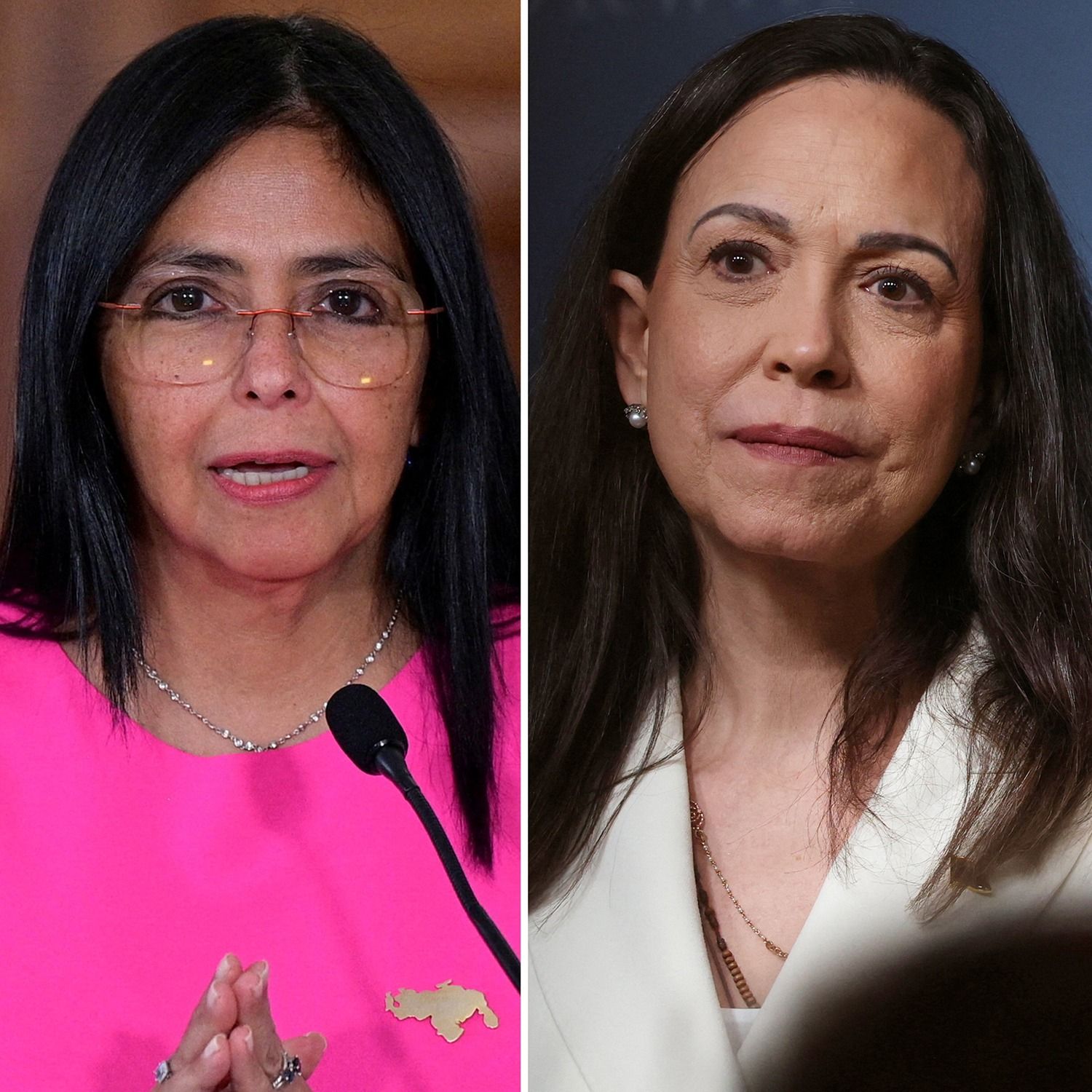
The Daily
Venezuela, After Maduro
00:35:07
On Monday, President Trump picked Vice President Delcy Rodríguez of Venezuela, now the interim leader, to continue to preside over the country instead of María Corina Machado, the opposition leader. Anatoly Kurmanaev, who reports on Venezuela, explains why Mr. Trump chose a Maduro loyalist to run the country. And Venezuelan citizens reflect on the realities of a post-Maduro era.
Loading summary
Transcript67 lines
- [00:01]
Drake May
Hey, Drake May here. You know that calm you get when your team has a drive under control? That's the same feeling I get investing and saving with Betterment. Their automated technology does the work to help grow your money and save you on taxes. So when the market gets unpredictable, you can stay calm, cool and confident. That's what I call the Betterment effect. And it's why I'm glad they're on my team. Get started today@betterment.com investing involves risk performance, not guaranteed paid client ad views may not be representative. See App Store and Google Play store reviews. Learn more@betterment.com pursuitbetterpartners.
- [00:31]
Jan Rodriguez
My country is Venezuela and my name is Jan Rodriguez. My name is Juan and I'm in Caracas in the capital.
- [00:40]
Carolina Hill
My name is Carolina Hill. I live near the most important military complex here in Venezuela. Early January 3rd, it was like 1:57am and I was watching a movie with my sister and everything went completely dark. And five seconds later, we heard the first explosion. I ran to the window to take a look at what was going on. My hands were shaking. I could only see the light of the moon. And we could hear the airplanes and we could hear the helicopters, but we couldn't see them. And the walls of my building and the windows were shaking. I thought, now the gringos are here. They are attacking Caracas.
- [01:38]
Jan Rodriguez
Everybody in the city heard the noises. I think we were nervous, but at the same time excited because we thought they were overthrowing the government. They were freeing us from the dictatorship. Like, my girlfriend and I were crying and screaming. I called my mom, I called my brothers. Like, I called all my family. We were waiting for that for years. When Donald Trump put up the picture with Maduro tattoo, I am so happy in that moment. Oh, my God, man. Honestly, I cry for that picture is finished. That this hell, this felt like a real victory. Like someone in this government that has done so much damage to my country is going to finally face real justice.
- [02:32]
Carolina Hill
After this attack. We were like, okay, they did it, but what's the meaning of that? What will come for us? I mean, what's the next step? Because, okay, they took Maduro out, but we have, we have Padrino Lopez, we have Jorge Rodriguez. I mean, they are still here, other people.
- [02:54]
Jan Rodriguez
Government is free. I am confused. The future in Venezuela really, really is uncertain and the people don't know what will happen. The people is so scared. Is so scared.
- [03:19]
Natalie Kitroeff
From the New York Times, I'm Natalie Kitroweff. This is the Daily on Monday as Nicolas Maduro and his wife Celia pleaded not guilty in a Manhattan courtroom. The nearly 30 million people of Venezuela struggled to absorb the reality of a post Maduro era, an era in which the United States appears to be the dominant force reshaping their once firmly anti American government. Today, my colleague Anatoly Khmernaev explains why President Trump chose to back a Maduro loyalist to run the country and what Venezuelans think of it all.
- [04:02]
Anatoly Khmernaev
Foreign.
- [04:06]
Natalie Kitroeff
It's Tuesday, January 6th. Hi, Anatoly. Welcome. It's good to have you here.
- [04:15]
Anatoly Khmernaev
Thanks for having me, Natalie.
- [04:17]
Natalie Kitroeff
So in the last couple of days, we at the show have talked about how this operation to capture Nicolas Maduro went down. We've talked about the legality of it. What we haven't talked about as much is who is running Venezuela right now and how is all of that gonna play out? Because that feels very uncertain in this moment. You've been in the country as this all has been going on through the mission itself. You're in Caracas right now. So just to start, how does it feel there?
- [04:48]
Anatoly Khmernaev
It feels surreal. You know, the city is still coming out of Christmas holidays. It's a metropolis of more than 4 million people, and it's full of lights and decorations. And I was driving through the city last night and the city was completely deserted. You know, there was not a single soul on the streets, no sounds to be made. It felt like I was in a zombie movie. And I think it just sums up this atmosphere of expectation, of fear, of concern. It's just tense. We have not seen mass signs of jubilation at the fall of Nicolas Maduro. At the same time, we had not seen any genuine mass outpourings of grieving for him and his wife. And this atmosphere of quiet tension is taking place amid growing signs of repression, of people being detained, of journalists being harassed. Which shows to me that even though this government has a new face, the brutal, repressive apparatus that has kept it in power for decades remains in place and is cracking down again.
- [05:50]
Natalie Kitroeff
It sounds like everyone in Venezuela is just kind of waiting with bated breath for what's to come. So let's get into that. And my first question is, is what we're seeing actually regime change? Because now that the dust has settled a little bit, it seems as though the regime is actually still in power in Venezuela.
- [06:12]
Anatoly Khmernaev
That's right, Natalie. The regime is in place. The people who are no longer here is Maduro and his wife. And around 80 people have died between his Cuban bodyguards and Venezuelan civilians, Venezuelan security service members. But beyond that, we are seeing the same cast of characters. Most of his inner circle is intact. It is in power and is led by Delsey Rodriguez, known universally as Delsey, who was Maduro's vice president, who was the first in line to replace him under any circumstances. So the same characters are ruling the country.
- [06:49]
Natalie Kitroeff
Okay, so Delsey Rodriguez, the vice president now in power, is someone that Trump has endorsed. The administration says they're gonna be working directly with her. And I wanna talk about why. Why her? Because honestly, when you and I have talked about this, the most obvious choice for who was gonna work with the Trump administration in the event that Maduro was no longer in power was someone else. It was Maria Karina Machado, this famous opposition leader. So explain for me, Anatoly, why it's not Machado and why it's Delsey instead.
- [07:23]
Anatoly Khmernaev
The short answer is continuity. Trump wanted to stop the flood of drugs from Venezuela. He wanted to start of migrants. But above all, he made it very clear he wanted Venezuelan oil and Delta. Rodriguez has been able to sell herself as a reliable guardian of Venezuela's oil industry, as a person who can manage Venezuela resources and protect foreign interest, which in this case will be American investor interests.
- [07:48]
Natalie Kitroeff
And Machado was not able to sell herself as that figure.
- [07:52]
Anatoly Khmernaev
She was not. And this is perhaps the biggest surprise of this theme. Machado is by far the most popular politician in the country. She has led an election campaign in 2024 that has led more than 70% of Venezuelans to vote for the opposition. And she has won the Nobel Peace Prize for her efforts. She has global recognitions and global. And she comes with impeccable conservative credentials. She's the daughter of a wealthy industrialist. She has an impeccable record of supporting free markets, of supporting personal freedom, supporting Christian faith, all values at the heart of traditional Republican agenda. But she's a product of a different period of American politics. And Machado's gravest mistake was not being able to adapt to the. The transformation that Trump has brought to the American right.
- [08:48]
Natalie Kitroeff
What do you mean by that exactly?
- [08:50]
Anatoly Khmernaev
Well, the adjective that defines Machado more than anything else is consistency. She has been extremely consistent in her beliefs. She has been extremely consistent in her political agenda. And this consistency is what brought her to the cost of gaining power in Venezuela during the last elections. This is the reasons why she has galvanized Venezuelan populations. Because people believed in her. They believed in her values. They believed in what she stood for and that she would defend them. That she would not negotiate with Maduro, but she would not sell them out. This consistency was at its core, but in the current transactional Washington of today, this has become a liability. She has not been able to adjust to a very transactional approach to politics that we see in Washington, a ideologically agnostic approach to Washington, where beliefs and policies are ditched and sacrificed and adjusted on a daily basis to suit the whims of people taking power. And this has gradually led her to lose allies and make a growing number of enemies in the Trump administration, which eventually has contributed to her being sidelined at this crucial moment in Venezuelan history.
- [10:03]
Natalie Kitroeff
Okay, can you go a little deeper there? Like, give me examples of how she wasn't able to adjust.
- [10:09]
Anatoly Khmernaev
So, for example, when Trump returns to power, his initial focus on Venezuela is getting Americans detained there out of jail and back into the United States. And he sends his envoy, he sends a man called Richard Grenell, a businessman and former ambassador to Germany, to Caracas to negotiate the deal. And then Granell arrives in Caracas. He reaches out to Machado because she's the representative of Venezuela in a position she's seen at as representative of American interest. And he starts a dialogue. He starts a relationship that very quickly goes off rails, because getting Americans out means talking to Maduro's government means negotiating. Negotiating is an anathema for Maria Carina Machado. She has argued for decades that freedom is not negotiable, that democracy is not negotiable, that there can be no compromises. And that set the stage for a train wreck between Richard Grinnell and Maria Carina Machado, a clash that has repeated itself over and over throughout the Trump administration as she lost natural allies and created new enemies.
- [11:16]
Natalie Kitroeff
You're saying basically, Machado is such a purist that she's totally opposed to any notion of negotiating with Maduro. And this alienated Trump's lead negotiator in Venezuela who's there to try to get a deal.
- [11:31]
Anatoly Khmernaev
He was there to try to get a deal, and he's there to get economic deals. He started negotiating a deal with Maduro's officials that would see Maduro hand over Venezuelan resources in return for him staying in power, at least for the time being. Again, this goes completely against everything that Machado has stood for. And over time, in the months since the election, as Venezuelan government stepped up a repression, Machado's movement became increasingly marginalized in Venezuelan political life. They increasingly had to flee in exile. Machado herself had to go into hiding. They have gradually lost touch with what is happening on the streets in Venezuela. And their uncompromising position meant they had very few contacts inside Venezuelan government. So then the Trump administration, they have gradually come to realize that the strategies that Machado and her aides were providing to Washington were outdated, were not accurate, and the intelligence or, you know, the assumptions being made by the opposition have proved wrong time and again. And this has angered officials in the Trump administration that were trying to work out a credible plan of getting Maduro out of power.
- [12:43]
Natalie Kitroeff
So it sounds like they start to sour on her in part because they don't believe she's giving valuable intel. And that's despite the fact that, as we know, in recent months, Machado was really doing everything she could to kind of ingratiate herself with the Trump administration as they began to dial up the pressure on Maduro. She even dedicated her Nobel Peace Prize to Trump. I guess all that wasn't enough.
- [13:07]
Anatoly Khmernaev
All that wasn't enough. And to me, there's a certain tragic element to this, because this is a politician with impeccable moral credentials. Machado has built her presidential campaign on the focus on Venezuelan migrants, of reuniting Venezuelan families, of returning the millions of Venezuelans that have fled the country from Maduro, bringing them back home. And since Trump took power, she has stopped talking about Venezuelan migrants because these were the people that Trump was arresting, Trump was deporting, Trump was jailing in foreign jails where they were tortured. And Machado stays silent as flights into the country were gradually canceled under American pressure. She stayed silent as inflation rose under tightening American sanctions, complicating people's daily life. She has stayed silent. And this has caused a political capital inside the country. She has sacrificed a lot of political goodwill that she has built inside Venezuela to please this one man. She has gone out of her way to praise him. She has published op eds saying that Trump is the greatest defender of freedom in the Western Hemisphere. It was very clear to everyone observing Venezuela that Machado is speaking to the audience of one. And her entire strategy has been on bringing Trump to her side. So far, she has failed.
- [14:31]
Natalie Kitroeff
You know, Trump said in this big press conference he gave over the weekend that Machado just didn't have the support in Venezuela. So was that actually true, based on what you just said?
- [14:43]
Anatoly Khmernaev
Credible polling in Venezuela is very limited, but the evidence we have shows that her popular support has been gradually, very slowly, sipping away from a very high point. Crucially for Trump, when he says that she doesn't have a respect, he is talking about respects of a people that would make it possible for her to govern. And Machado's inflexibility and focus on pressure rather than negotiation has meant that she has lost the support of Venezuela's economic elites that have traditionally supported the opposition. And she has not been able to gain the support or the armed forces that she herself has constantly said are crucial to removing Maduro. She has, again, to please Trump, she has gone out of her way to mimic his talking point that Venezuelan government is a narco cartel. She has mimicked his language that Maduro is flooding United States with drugs and criminals. And this has meant that for the officers watching her speeches, for the members of the governments, for the people that actually make the state tick and hold the guns, that she was painting them as members of anarco cartel as part of a problem, as people that need to be eliminated from Venezuela's public life. And the dissonance between her calls for the armed forces and government employees to rise up against Maduro and the way she has branded them as members of anarcho cartel ended up spelling her political downfall inside the Venezuelan political system.
- [16:17]
Natalie Kitroeff
So, ironically, in order to align herself with Trump, Machado starts saying these things that actually alienate all these elite elites within Venezuela that she actually needs to have on board in order to persuade the Trump administration that she's a viable candidate to run the country. Is that right?
- [16:37]
Anatoly Khmernaev
That's right. That's exactly what happened. These are people that have been in charge for a very long time. And the Trump administration became convinced that to get the country running quickly, to keep it stable, to keep it from collapsing and sending hundreds of thousands of migrants to its borders, to keep the oil flow into the United States, to boost that flow of oil, they needed to work with people who were already in charge. And that's why we picked DLC over Maria Karina Machado. This is the great irony of the current political drama that Delsey, despite of her Marxist roots, despite being the handpicked protege of a person labeled as a narco terrorist by the United States, despite playing a crucial part in a repressive machine, the White House has decided that she is the most likely candidate among the available options to bring Venezuela into the American sphere of influence.
- [17:43]
Natalie Kitroeff
We'll be right back.
- [17:49]
Ivan Penn
Hi, I'm Ivan Penn. I'm an energy reporter for the New York Times. I think a lot of people take electricity for granted, but it's an essential piece of some of the biggest stories right now. The rise of artificial intelligence, the threat of climate change, and the real challenges that everyday people are facing with increasing electric bills. I spend my days talking to experts, sometimes traveling to really remote places and investigating the role that energy plays in these huge issues. I'M just one of hundreds and hundreds of journalists at the Times, experts in what they cover, who carry the same level of commitment to their reporting. And that's the beauty of the New York Times. We're all working together to help you better understand and make sense of the world today. So if that sounds like something that connects with you and you're not a subscriber yet, you can go to nytimes.com subscribe.
- [18:45]
Natalie Kitroeff
Okay. Let's talk about Venezuela's new leader, who, as you said, everyone calls Delsey. She sounds like an unlikely choice for the Trump administration in many ways to support explain who she is and what the Trump administration sees in her.
- [19:02]
Anatoly Khmernaev
First and foremost, they see Delsey as a capable economic manager. And that reputation that she has earned has come at the end of a very unexpected journey. She is the daughter of a Marxist guerrilla who was tortured by the security forces over previous pro American governments during the Cold War. So she comes from a background of impeccable socialist credentials, but we also come from money. And she enjoyed quite a privileged upbringing. She went to university in France and she joined the government, the current regime, under the wings of her older brother, going up in the ranks of a chavismo government. And that rise really accelerated around 2019, when Venezuela was facing tremendous economic pressure from United States that had just sanctions, its oil industry. The revenues have collapsed. The Maduro government has struggled to just keep the lights on in the country. And Maduro turns to Delsey and basically tells her to fix it.
- [20:10]
Natalie Kitroeff
And what does she do? Does she fix it?
- [20:14]
Anatoly Khmernaev
She completely re engineers Venezuelan economy. She and a group of technocrats allied to her began a process that in a very short period discarded the socialist tropes that the government had based its legitimacy on for many years. Price controls, currency controls, focus on the needs of Venezuelan poor and turned it into a free for all market economy where money ruled and investment was the only merit.
- [20:47]
Natalie Kitroeff
It's so interesting that the daughter of a Marxist became this trusted steward of something approaching capitalist reform.
- [20:57]
Anatoly Khmernaev
Well, in many ways, you know, Venezuela is an extremely corrupt country, and it is as corrupt today as it was under the nominally socialist principles. But in terms of actual policies, Delsey has turned Venezuela into a radically capitalist society that there's practically no regulation, that there are practically no rules, that money is the only variable that governs society and governs the interaction between the states and its citizens.
- [21:26]
Natalie Kitroeff
But did it work, though? Like, did it stabilize the economy, which is what Maduro was originally asking for?
- [21:33]
Anatoly Khmernaev
It did work and led to a period of moderate growth starting in 2021, the inflation subsided, people started to open up businesses, people started to travel more, the oil production began to gradually edge up. And remember, Natalie, that this has all started from a very low base. We're not talking about Dubai of Latin America, but we're talking about a country that had suffered a tremendous economic collapse, where millions have fled, where people have suffered from malnutrition, and it gave them a modicum of economic stability.
- [22:08]
Natalie Kitroeff
Okay, so it sounds like the reforms that Delsey helped engineer, they didn't, you know, bring wealth back en masse to Venezuelans, but they, but they did, right? The economic ship, they helped stanch the bleeding. Did that do anything to help the regime's standing with Venezuelans? I mean, obviously they still voted for the opposition in the last election. So I would imagine the answer is no, right?
- [22:35]
Anatoly Khmernaev
The answer is no. And the elections of 2024 have proven that the government had gone out of its way to sell itself to Venezuela. And as we are stability, the opposition is chaos. Stick with us, you can live with us, you can breathe with. And still more than 70% of Venezuelans, including massive proportions of public sector workers and the poor, voted for the opposition, voted for the candidate of Maria Carina Machado, showing just the scale of exhaustion and repulsion that this population has against President Maduro.
- [23:08]
Natalie Kitroeff
And what about the elites that we talked about earlier? How do they see Delsey in all of this?
- [23:14]
Anatoly Khmernaev
Delta's reforms gave him space to grow, gave him space to invest. Again, not talking about massive investments. We're not talking about tremendous growth. We're talking about a climate where people that have money can start making more money. And Machado's message is overhauling this completely, scrapping this whole system is starting from scratch. And business wants stability. And we turn against Machado's message of radical change.
- [23:43]
Natalie Kitroeff
It's really interesting, right, because Machado in many ways is a more natural ally of theirs too, right? She comes from this family, they probably know this industrialist. She has these impeccable credentials as a free market capitalist, and yet here she's the one with the broad based popular support who's lost the support of these elites while Delsey died. Doesn't have that popular support, it sounds like, but she has one over this group of business titans that is still incredibly influential in this country.
- [24:20]
Anatoly Khmernaev
This is a fundamental paradox. Natalie, I could not have summarized it better. And I think all it just goes to show that economic freedoms do not always correlate with political freedoms. And the reality is that for Trump, what matters to him is the deals and the investments of the elites. And that has led him to gradually ally with Del cv, the self styled technocrat who could bring him Venezuelan riches over Maria Carilly Machado, who was promising political liberation, but a very volatile and unstable economic environment.
- [24:57]
Natalie Kitroeff
Okay, so now I think I get why Delsey is preferable to Machado in the eyes of Trump. What I still don't understand though is why Delsey is preferable to Maduro. Because you've told us, Anatoly, the few times that you've come on to talk about this, that Maduro was actually happy to let the US into Venezuela's oil fields to give up those natural resources as part of a potential deal with Trump. Why did Trump reject that only to go for what sounds like a very similar deal with Delsey?
- [25:31]
Anatoly Khmernaev
I don't think we have perfect clarity to that question at the moment, Natalie. My hunch is that the campaign against Maduro, the campaign to brand them a narco terrorist and the cartel chief who's at war with the United States, has gone simply too far for Trump to tolerate him and make a deal with him. Remember that while oil is the driving force of Trump's policy towards Venezuela, it's not the only one.
- [25:55]
Natalie Kitroeff
Right.
- [25:55]
Anatoly Khmernaev
And there are advisors within his administration. There are people in his administration that are pushing towards our go. Stephen Miller with his focus on migration and illegal drugs. There's Secretary of State Marco Rubio, who has been a declared anti communist warrior. These people have been sworn enemies of Maduro. And as Maduro repeatedly rebuffs Trump administration's attempts to provide him a soft landing, to provide him a golden parachute, Trump's position hardens. And by December, his patience finally snaps. Maduro's response to increasingly explicit ultimatums for America was to present himself as a carefree partier. He constantly dances on television, he sings, no crazy war. You know, he's a good dancer. You know he puts up the moves and you know he does on a regular basis. And at some point Trump snaps.
- [27:07]
Natalie Kitroeff
Wait, are you saying, Anatoly, that Maduro dancing on national television is an actual factor here in everything that ends up happening?
- [27:16]
Anatoly Khmernaev
My understanding it was the straw that broke the camel's back.
- [27:20]
Natalie Kitroeff
Meaning what exactly? That Trump saw Maduro dancing and said, this guy's not taking me seriously or what?
- [27:29]
Anatoly Khmernaev
Meaning that Trump saw the ongoing dancing as a humiliation, as Maduro calling Trump's bluff, as Maduro telling Trump, I'm here and I'm here for as long as I want to be. And Trump could not tolerate what he saw as a personal Affront.
- [27:46]
Natalie Kitroeff
Wow. We are truly living in wild times.
- [27:50]
Anatoly Khmernaev
Remember, I mean, naturally, history is often made by seemingly sort of small, banal circumstances. Right. It's an accumulation of major factors, major forces like oil, migration, drugs. But, you know, it can be something as sort of small as a little techno dance on a public stage that can tilt the scares towards a momentous policy decision that will change the history of Western Hemisphere perhaps forever.
- [28:17]
Natalie Kitroeff
Okay, we'll have plenty of time to talk about that future. But for now, the Trump administration is counting on Delsey. And this is someone who in the last few days, has come out very strongly against them, it's worth saying. She said Maduro is the only president of Venezuela. She refers to herself as the vice president. And I'm wondering what we should make of that. I know that there are a lot of people from the regime that are still in power in the country, and I wonder if this is her playing to them, to that domestic audience. She has to appease them, right?
- [28:58]
Anatoly Khmernaev
That's right. Remember that the attack was a major humiliation to the armed forces and security officials that form the core of Maduro's regime. It was an operation that cost the life of 80 people, causing major destructions in capital Caracas. Delsey could not just sort of wave us off and open her arms to Americans. She has to satisfy the domestic audience. She has to show to the ruling party's faithful, who are not numerous in numbers, but who hold a lot of guns, that she's not an American pawn, that she's someone who will defend the country's sovereignty, someone who will defend the countries standing, while at the same time she has to satisfy American demands. You know, the Trump administration and his officials have repeatedly stated that Delsey must do their bidding or else she will face the same fate as Maduro. So she's trying to play for both audiences. And as you said, she started off making very sort of aggressive remarks towards America, but just in a matter of days, in a matter of hours, her position has softened. She has issued a statement calling for corporations with the United States, for peaceful coexistence, for working together, for joint business ventures, and just let it sink for you, Natalie, this is a statement towards the government that has just blown up your capital and killed 80 people living in the capital. And you are basically opening your arms to their investments and to bilateral relations.
- [30:29]
Natalie Kitroeff
No, it's totally remarkable. And it makes me want to ask you about what this means for the Chavista movement that has been in power now for almost three decades in Venezuela. This is a movement that has staked its legacy on being an anti American bulwark. What happens to that legacy if Delsey follows through and really does become a willing partner of the Trump administration?
- [30:56]
Anatoly Khmernaev
To me, Natalie, the events of the past few days exposed the hollowness of the nationalist rhetoric behind the Chavismo movement. At the time when the country came under the attack, no one was prepared to defend President Maduro. There was no notable resistance from YAM forces. And to me, this peels another layer of mysticism and ideology from the movements that over the years, over the decades, this movement has gradually lost the pillars of its ideology. First it lost the popular support, then it lost the socialist credentials. Now it loses nationalism. And what is left? Natalie Survival. Survival is the core aspects of Chavismo movements. And the senior officials who have been at Maduro's side for years and have now closing ranks behind Elsie are focused on survival at any cost.
- [31:52]
Natalie Kitroeff
Anatoly I want to end by just asking how the Venezuelans you're talking to are perceiving all of this, how they're feeling right now. I have to imagine that the many people who voted against Maduro are happy that he's gone on the one hand, and yet the regime that he led is still very much there. And not only that, now there's also this added element of Trump having a potentially very heavy hand in their country. So how is that playing with people?
- [32:24]
Anatoly Khmernaev
This is a country that has gotten used to disappointments, that has gotten used to tragedy. In the years that I have lived here, I have experienced time and again a moment of extreme exaltation when it appeared that freedom and democracy were just within grasp. You know, I have witnessed millions of people come out on the streets in popular protest against the government. And every time that hope that democracy, that freedom was snatched from under their nose. This is a country that has been burned many times and where people have learned to temper their expectations. And I think most people in Venezuela, when they watch DLC being sworn in as the country's interim president, this is not the outcome they would have hoped for. This is not the outcome they would have chosen. This is an outcome that is not just, that is not fair, but is an outcome that just might make their difficult life just a little bit easier.
- [33:24]
Natalie Kitroeff
Well, Anatoly, I hope you get some rest in the coming days, and thank you so much.
- [33:29]
Anatoly Khmernaev
Thanks for having me.
- [33:35]
Natalie Kitroeff
On Monday, in her first interview since the capture of Maduro, Maria Karina Machado told Fox's Sean Hannity that she hadn't spoken with President Trump since the US deposed the Venezuelan leader. But I do want to say today on behalf of the Venezuelan people, how grateful we are for his courage. She also thanked Trump for the, quote, courageous actions that led to Maduro's removal. It's a milestone, and it's not only huge for the Venezuelan people and our future. I think it's a huge step for humanity, for freedom and human dignity. We'll be right back.
- [34:21]
Solana Pine
Hi, I'm Solana Pine. I'm the director of video at the New York Times. For years, my team has made videos that bring you closer to big news moments, videos by Times journalists that have the expertise to help you understand what's going on. Now we're bringing those videos to you in the Watch tab in the New York Times app. It's a dedicated video feed where you know you can trust what you're seeing. All the videos there are free for anyone to watch. You don't have to be a subscriber. Download the New York Times app to start watching.
- [34:53]
Natalie Kitroeff
Here's what else you need to know today. On Monday, Defense Secretary Pete Hegseth said the military had begun administrative actions against Mark Kelly, the Democratic senator from Arizona, a move that could end up reducing Kelly's rank and the military pension he receives as a retired Navy captain. The review stems from a video that Kelly and five other Democratic lawmakers released in November that reminded service members they were obligated to refuse illegal orders. Hegseth called the video seditious and called Kelly reckless for trying to undermine discipline in the red ranks. Kelly and his lawyers have argued the senator was simply articulating a fundamental principle of military law. They've also pointed out that Hegseth himself has made similar comments in the past. Today's episode was produced by Olivia Knapp, Rob Zipko, Rochelle Banja and Claire Tennisketter, with help from Carlos Priest. Ditto. It was edited by Paige cowett and Liz O'. Ballin. Contains music by Marion Lozano, Pat McCusker and Rowan Nimisto and was engineered by Chris Wood. Special thanks to Isayen Herrera, Annie Coriel and Maria Victoria Fermin. That's it for the Daily. I'm Natalie. Natalie Kitroweth. See you tomorrow.