← The Daily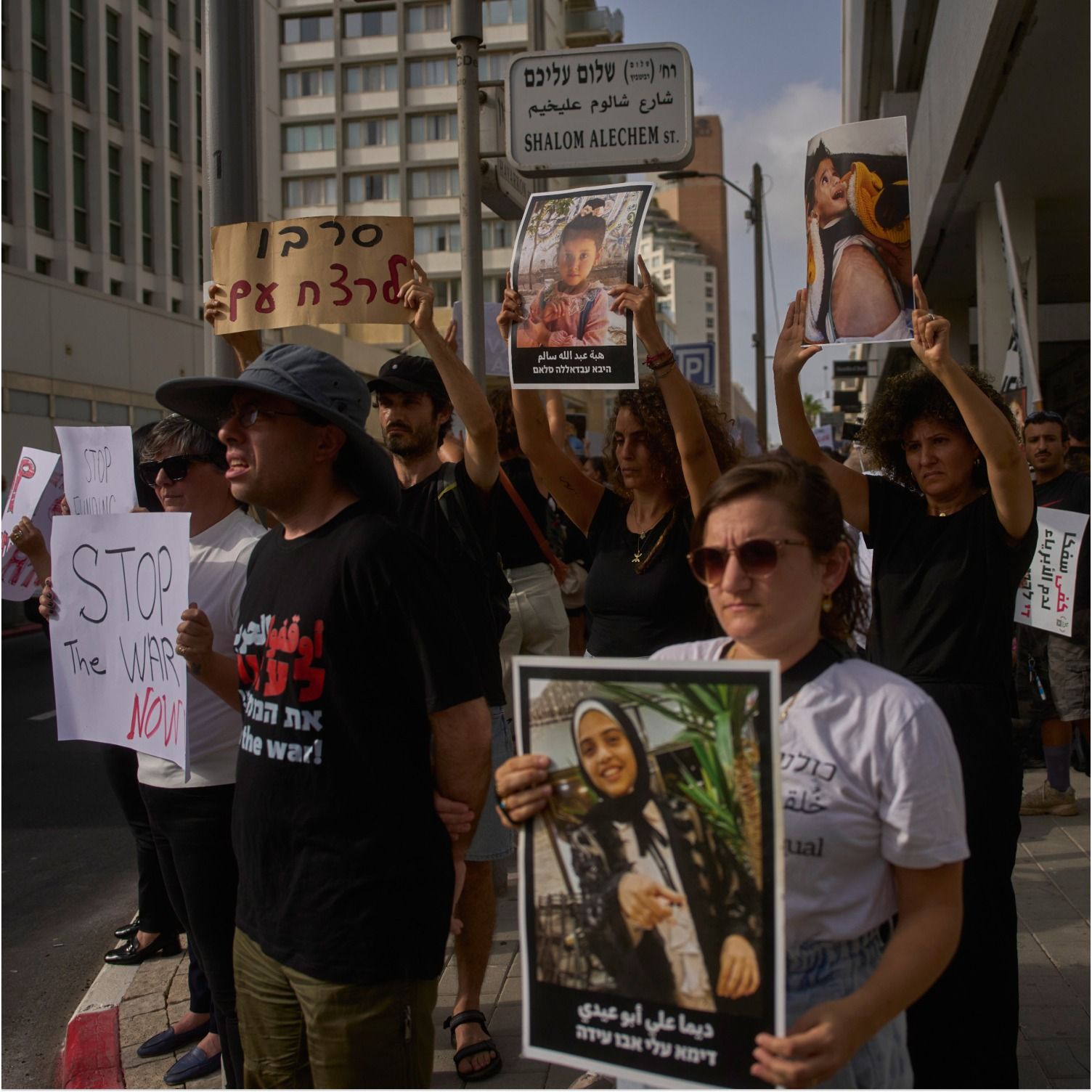
The Daily
What Many Israelis Don’t Want to See
00:24:43
As the images of starving Palestinian children continue to come out of Gaza and aid groups have confirmed a rising number of deaths from malnutrition, there has been a new round of international outrage, including from Israel’s own allies. Emmanuelle Elbaz-Phelps, an independent Israeli journalist, discusses whether any of the outcry is resonating with Israeli society.
Loading summary
Transcript39 lines
- [00:00]
Advertiser
We all have moments when we could have done better. Like cutting your own hair. Yikes. Or forgetting sunscreen so now you look like a tomato. Ouch. Could have done better. Same goes for where you invest. Level up and invest smarter with Schwab. Get market insights, education and human help when you need it. Learn more@schwab.com from the New York Times.
- [00:27]
Rachel Abrams
I'm Rachel Abrams and this is the daily. According to UNICEF, more than 320,000 children, the entire population under age 5 in Gaza are at risk of acute malnutrition. Ratine is three months old, a child.
- [00:45]
Emmanuel Elbas Phelps
Of a Gaza that's starving. She now weighs less than when she was born.
- [00:49]
Rachel Abrams
As the images of starving Palestinian children cross continue to come out of Gaza, and Times reporting and aid groups have confirmed a rising number of deaths from malnutrition, there's been a new round of international outrage, including from Israel's own allies. 28 nations, including the UK, France and.
- [01:10]
Emmanuel Elbas Phelps
Japan, issued a joint statement denouncing the Israeli government's, quote, drip feeding of aid. We see starving babies, children too weak to stand, images that will stay with us for a lifetime. The suffering must end.
- [01:27]
Rachel Abrams
Today. Israel insists that there are no restrictions.
- [01:30]
Advertiser
On aid deliveries and says there is no starvation.
- [01:34]
Rachel Abrams
I speak with an Israeli journalist about whether any of that outcry is resonating with Israeli Society. It's Friday, August 1st. Can you start by saying your name for us? Sure.
- [02:00]
Emmanuel Elbas Phelps
So my name is Emmanuel Elbas Phelps. I'm a journalist. I'm actually independent. I write for.
- [02:07]
Rachel Abrams
On Tuesday, I called Emmanuel Elbas Phelps, a French Israeli independent journalist who works for various outlets. As a correspondent in Israel?
- [02:16]
Emmanuel Elbas Phelps
Yes. And I do see as a contributor every Saturday evening on a news talk show on Channel 13 in Israel.
- [02:25]
Rachel Abrams
A couple weeks ago, while Emmanuelle was doing her regular appearance on one of the mainstream channels in Israel, she said something you don't normally hear on Israeli television, and a clip of it was shared widely on social media.
- [02:37]
Emmanuel Elbas Phelps
So this talk show is a news talk show every Saturday evening on Israeli television. And we discussed the current events and, of course, the war every week. And the clip you saw was us talking about the tolls of the war. And so we talked about the hostages still hold by Hamas and how painful it is and the agony of the family and how it is impossible for the Israeli society to start while they are still in captivity. We talked about the soldiers, the Israeli soldiers that are falling during the war. And so we were talking about the victims, and then I thought that we must point to the other victims. So I said that I want to say something now that is not really spoken on Israeli television. This war is also killing a lot of Palestinians in Gaza, which is, you know, just a statement, a factual statement. And the anchors, I think, of course not planned. They had a gut reaction. Okay, okay. And one of them said, okay, in a manner of like, we heard enough, we can move on. And I insisted not to the second anchor, he said, emmanuel, I respect you a lot, but I do not have to worry about what's happening in Gaza. These are my enemy. And I told him, well, you can let me say that I do worry about, about what's happening in Gaza. And when you see the images coming out of Gaza, I don't understand how people can look at them and not get horrified about them. And he said, yeah, you can say whatever you want. It's not that he didn't want me to talk, but he was not really interested in it. And I have to say it's representative of a part of the Israeli population, a pretty important part of the population here in Israel is not ready to hear about the suffering of the civilians in Gaza.
- [05:35]
Rachel Abrams
How do you explain that reaction, not just from this anchor, but from the people that you think he is representative of within Israel?
- [05:47]
Emmanuel Elbas Phelps
So I think something that is pretty hard to grasp, I think, outside of Israel is how much 7th of October is still alive in Israel, how the population is not living. A post traumatic event, but a traumatic event still. Hostages are still over there. The pain of this day is huge. I was in Niroz a week ago.
- [06:14]
Rachel Abrams
That was the kibbutz that suffered some of the Most casualties on October 7th.
- [06:18]
Emmanuel Elbas Phelps
Yes. One of every four inhabitants in Niroz has been either killed or either kidnapped. And some of the houses that are still burnt to the ground, you can still get the smell of this day. It's horrific. And this is how alive and how painful 7th of October is still for Israelis. And so it is so much to grasp and so much to live with that a majority of the Israelis, I think, do not have room in their heart for compassion for the population in Gaza, which is the place where the attack of Hamas, the terrorist group, came from. And. But we, as the Israeli media, we are part of the reason that Israelis are not able to look at the other side.
- [07:14]
Rachel Abrams
What do you mean by that?
- [07:16]
Emmanuel Elbas Phelps
So first you have to understand that you have seen pictures coming out from Gaza for almost two years. Israelis almost didn't see pictures of daily life in Gaza. People living in tents, looking for water and for flour on the ground. And really Hardship of every day under the war and of course horrific pictures of people being killed. Most of the Israelis do not see that because the Israeli media has been failing its job by not showing what's happening in Gaza. You almost have no stories, human stories on Israeli tv. And of course there are some media that are showing and are talking about it for sure are. The newspaper is bringing human stories and very hardship stories from Gaza on a daily basis. But mainstream media is, during most of the war it's been silent about it. And you would see Gaza only when you would see, you know, destruction from above, kind of to show how IDF is winning. But you wouldn't see anything that is really human and the suffering of the population. And I think that was partly because journalists are Israelis and almost everybody knows somebody that has been killed or kidnapped. And military service is mandatory in Israel. So everybody has been in the army or is his kid is going to be the army or his uncle is in the army. So it's really hard to have a distinction between you as a civilian and you as a journalist. And at the beginning, when 7th of October was so violent, nobody wanted to hear about the other side. But at one point I think TVs and media in general convinced themselves that the public don't want to hear, the public doesn't want to see Gaza. The public is not ready for it. And that's where I think the mistake happened.
- [09:23]
Rachel Abrams
I just want to push back, Emmanuel, on one thing you said though, which was you mentioned that one factor shaping Israeli sentiment is that they haven't been shown images coming out of Gaza. Those images haven't really been broadcast on Israeli television, Israeli media, but I mean a lot of this stuff is coming from social media, right? Instagram, TikTok, Twitter. It sort of feels like what's happening in Gaza, the situation on the ground is accessible to people who want to see it. It would not have been hard, in other words, to find these images over the past couple years. And so what you're describing, sure it sounds like they're not getting it from Israeli media, but is there also like an active looking away that's happening?
- [10:07]
Emmanuel Elbas Phelps
Yes, definitely. Definitely you're right. If you want to see what's happening in Gaza, you can take your phone, you can go on some accounts on Instagram or Twitter and you can, you know, the algorithm will do the rest and sending you pictures on a daily basis and you can be really aware of what's happening. And yes, there is a looking away decision by most of the Israelis. And I think it's really because of what we talked about a few minutes ago, the sense of I cannot bear the suffer of these other people and I don't want this to get personal because it's not personal. Right? This is really representative of a society problem and it's not about him or me. But I will give this example because I think it will answer your question. We had another show last Saturday and we had the talk about the horrific pictures of Gazan children starving. And he said the anchor that is not interested, he doesn't want to see the pictures. He didn't say it's not happening. He didn't say the pictures are not true or fake. He didn't say that he doesn't want to see the pictures because. Because he cares about the children of Israel and he has to care about them and he's worried about them and not the children in Gaza. And then he said that me feeling empathy for the children in Gaza means that I forgot about the events of October and that those hungry kids that we are now talking about, he thinks that in a few years they will come and they will try and kill us. And I answer to that. If we don't want to get to this point, we have to start to work on a political solution now because this going to take a generation or maybe a generation and a half, maybe two. But it's never going to happen. The possibility of getting to a point where our mentality change never going to come if we don't work on a political solution, if there is no horizon for another future. And that sounds very utopic on an Israeli panel on a discussion. But I want to say something about the reaction I got after this incident on the show that you were referring to at the beginning of our talk. It really surprised me because I got hundreds, hundreds of messages on every social platform by people I do not know and that were saying either thank you, either Kola Kavod, which is like congratulations or whatever, please continue, continue to talk about Gaza. And I was very surprised because I didn't expect this amount of messages by people I don't know that were telling me either thank you for telling us about the reality, or some also were saying I don't really care what's happening in Gaza personally, but I do think that a journalist has to do his job. I think it took time, but I think now it's changing because Israelis are also understanding that they do not see what the world sees and they have to look at it in the eyes.
- [14:26]
Advertiser
We'll be right back. We all have moments when we could have done better. Like cutting your own hair. Yikes. Or forgetting sunscreen so now you look like a tomato. Ouch. Could have done better. Same goes for where you invest. Level up and invest smarter with Schwab. Get market insights, education and human help when you need it. Learn more@schwab.com brought to you by the Capital One Venture X card. If you love to travel, Capital One has a rewards credit card that's perfect for you. With Venture X, earn unlimited double miles on everything you buy and turn all of your purchases into extraordinary travel. And you get premium benefits at a collection of luxury hotels when you book through Capital One Travel. Plus, you'll get access to over 1,000 airport lounges worldwide. Capital One what's in your Wallet? Terms apply. SeeCapital1.com for details.
- [15:26]
Rachel Abrams
You mentioned that things have been changing the last week. Can you just talk about what has prompted the change that you mentioned?
- [15:33]
Emmanuel Elbas Phelps
Yes, so there has been a few small events that I think when you add them together, they might explain it. So around two weeks ago, there was a demonstration outside of Channel 12 studios by this peace group. It's called Standing Together. And this is a group of Israelis and Palestinians that demonstrate together every week and have actions. And they call for the end of the war. And they also, in Tel Aviv and other parts of Israel, they show pictures of children of Gaza. And they came outside of the studio of channel 12, which is the main television channel in Israel, and they were demonstrating and asking the journalists to cover the war in Gaza and show the pictures of Gaza. And then from that, one of the journalists of the channel wrote in the group chat that maybe we should actually think about that or talk about that or cover the subject. And others were arguing that no one actually said that. When you talk to some of the hostages that came back and some of them said that nobody was innocent in Gaza and nobody was helping them in Gaza, even civilians, then you can understand why we don't connect to the suffering of the Gazans. And another journalist answered that this is not a question of connecting or feeling for them, but this is the job of a journalist. And all this conversation that wasn't really long, it was leaked. And I think that had an influence on the public discussion because it was out. You know, these journalists are very famous and when, you know, the subject is discussed among them, it also means that, well, there is a choice to show or not show the images and they make the decision in an active way. And I think that was also a tipping point. The first stone of this small change that we are seeing today. After that, the main anchor of the 8 o' clock news of Channel 12, Yonit Levi, she had one very short but very strong sentence she said about Gaza, maybe it's about time that we understand that the problem is not the problem of image, but it's the problem of morals. And she's not very known on taking a stance. So that was huge. And she got backlash from that.
- [18:18]
Rachel Abrams
It feels like there are some cracks forming in Israeli media in the sense that, like just in the past week or so, it sounds like people are starting to acknowledge this stuff on television in a way that they haven't before, I think.
- [18:31]
Emmanuel Elbas Phelps
So I think the discussion is on the table. I don't know how long it's going to stay. There is still a discussion. You know, even some of it is not really going very far. It stays around. Are the pictures of the children are fake or they're not fake? Was the children dying of hunger over another sickness? There was a lot of referring today of the correction made by the New York Times about the pictures of the little boy that was ill and not only hungry. Right. And I think this is not a very deep conversation, but the conversation is on the table and people are now showing the pictures, they're watching it, and the media is having the talk. And I think it's really the beginning of the change. And I think part of it for sure, most of it, it's because the public debate in the world is so loud that, you know, the Israelis, they had to hear it reached them first. You know, factually, it reached them because as you said, it's on social media. But you take your phone in the morning and, you know, you go on the Internet and it will pop. And there's a limit to how much you can just look away. So I think now, because the situation is. Yeah, got to another point. It's so dire and the pictures were so vivid and hard, I think it was just impossible to look away.
- [20:06]
Rachel Abrams
I understand that you're trying to explain and not at all justify the reaction within Israeli society about why people are starting to shift sentiment now. But as we noted, these images, the situation, that information has been widely accessible if you wanted it. And I think a lot of people might be listening to this and thinking, really, it took this long. Now is the point where you can't look away. There have been horrific images coming out of this war for nearly two years. So I just sort of wonder what you would say to that in response.
- [20:36]
Emmanuel Elbas Phelps
I think they didn't feel it was legitimate to talk out loud. And those same Israelis that were always looking at Gaza but were silent. And I think it's a huge part of the population now because the talk is becoming public. They have the legitimacy to say it out loud at the family dinner, you know, and around friends. But it's not a huge shift. I mean, if you take a room of people that never wanted to hear about Gaza, they still don't want to.
- [21:13]
Rachel Abrams
It sounds like what you're saying is that whatever shift we're seeing among Israelis, it's small. It's notable, but it's small.
- [21:22]
Emmanuel Elbas Phelps
Yes, I agree. Again, I think it's the first step. The first step is having the public debate and asking the hard questions. And I think we are getting there. I think the question, you know, you can see it in the media, you can hear it around you in the cafes. You have the discussions sometimes on Shabbat dinner. It's happening. And it's not an easy talk. It's not an easy talk because, again, the war is also a matter of at the end, what do Israeli want? And I know, I think it's not. It's hard to grasp right now outside of Israel, but it's pretty simple. What do Israelis want? They want to live a normal life in security. That's what they want. And they do not believe they can do it while Hamas is still in Gaza because Hamas has shown he won't let the Israelis live in prosperity and in peace. And he has been saying, also he has been saying over and over, you know, leaders of Hamas said after 7th of October that they will do it at any chance they get. And so the question of how do you win Hamas? How do you make it disappear? Can you make it disappear for all the sides? The discussion is so complex that, you know, when. Sometimes when a discussion is too complicated and you do not have the solution for it, you just avoid the talk. But I think now people are talking about it, even though they do not have the answers, but they just try to put it on the table.
- [23:11]
Rachel Abrams
The idea that Israelis want to live in peace and security, I think it's fair to say that that's what everybody wants, for sure.
- [23:18]
Emmanuel Elbas Phelps
Of course. Of course. There's no question about it.
- [23:27]
Rachel Abrams
Emmanuel, thank you so much for taking the time to speak with us today. We really appreciate it.
- [23:32]
Emmanuel Elbas Phelps
Thank you very much, Rachel.
- [23:41]
Advertiser
We'll be right back. We all have moments when we could have done better. Like cutting your own hair. Yikes. Or forgetting sunscreen. So now you look like a tomato. Ouch. Coulda done better. Same goes for where you invest. Level up and invest smarter with Schwab. Get market insights, education and human help when you need it. Learn more@schwab.com brought to you by the Capital One Venture X card. If you love to travel, Capital One has a rewards credit card that's perfect for you. With Venture X, earn unlimited double miles on everything you buy and turn all of your purchases into extraordinary travel. And you get premium benefits at a collection of luxury hotels when you book through Capital One Travel. Plus, you'll get access to over 1,000 airport lounges worldwide. Capital One what's in your wallet terms apply. See capitalone.com for details.
- [24:51]
Rachel Abrams
Here's what else you need to know today. During dramatic testimony on Thursday, the emergency management coordinator for the Texas county where floods killed 108 people on July 4 said he was sick and asleep when the flood waters rose in the middle of the night.
- [25:07]
Emmanuel Elbas Phelps
I stayed in bed throughout July 3rd and did not participate in the regularly scheduled 10am and 3pm Texas Emergency Management Coordination center coordination calls.
- [25:17]
Rachel Abrams
Complicating matters, that official's boss, the county's top ranking official, was out of town at his second home when the floods began. The result was that the leaders responsible for leading the emergency response to the floods were unavailable. Among those who eventually were killed in the flood were 28 people at Camp mystic, an all girls Christian summer camp. And Microsoft has now become the world's second company to be worth $4 trillion. The milestone came after the company reported better than expected earnings this week that relied on its growing use of artificial intelligence. Nvidia, whose high powered computer chips are widely used in AI, became the first company with a $4 trillion market value just a few weeks ago. Today's episode was produced by Rochelle Bonga, Ricky Novetsky, Stella Tan and Shannon Lynn. It was edited by Paige Cowett and Liz o'. Ballin. Fact Checked by Susan Lee Contains original Music by Pat McCusker, Diane Wong, Marian Lozano, Alicia Ba? Itup and Dan Powell and was engineered by by Alyssa Moxley. Our theme music is by Jim Brumberg and Ben Landsberg of Wonderly. Special thanks to Aaron Boxerman, Yonatan Reese, Isabel Kershner, Patrick Kingsley and Yara Bayoumi. That's it for the Daily I'm Rachel Abrams. See you on Monday.
- [26:58]
Advertiser
We all have moments when we could have done better. Like cutting your own hair. Yikes. Or forgetting sunscreen so now you look like a tomato. Ouch. Coulda done better. Same goes for where you invest. Level up and invest smarter with Schwab. Get market insights, education, and human help when you need it. Learn more at schwab. Com.