← The Daily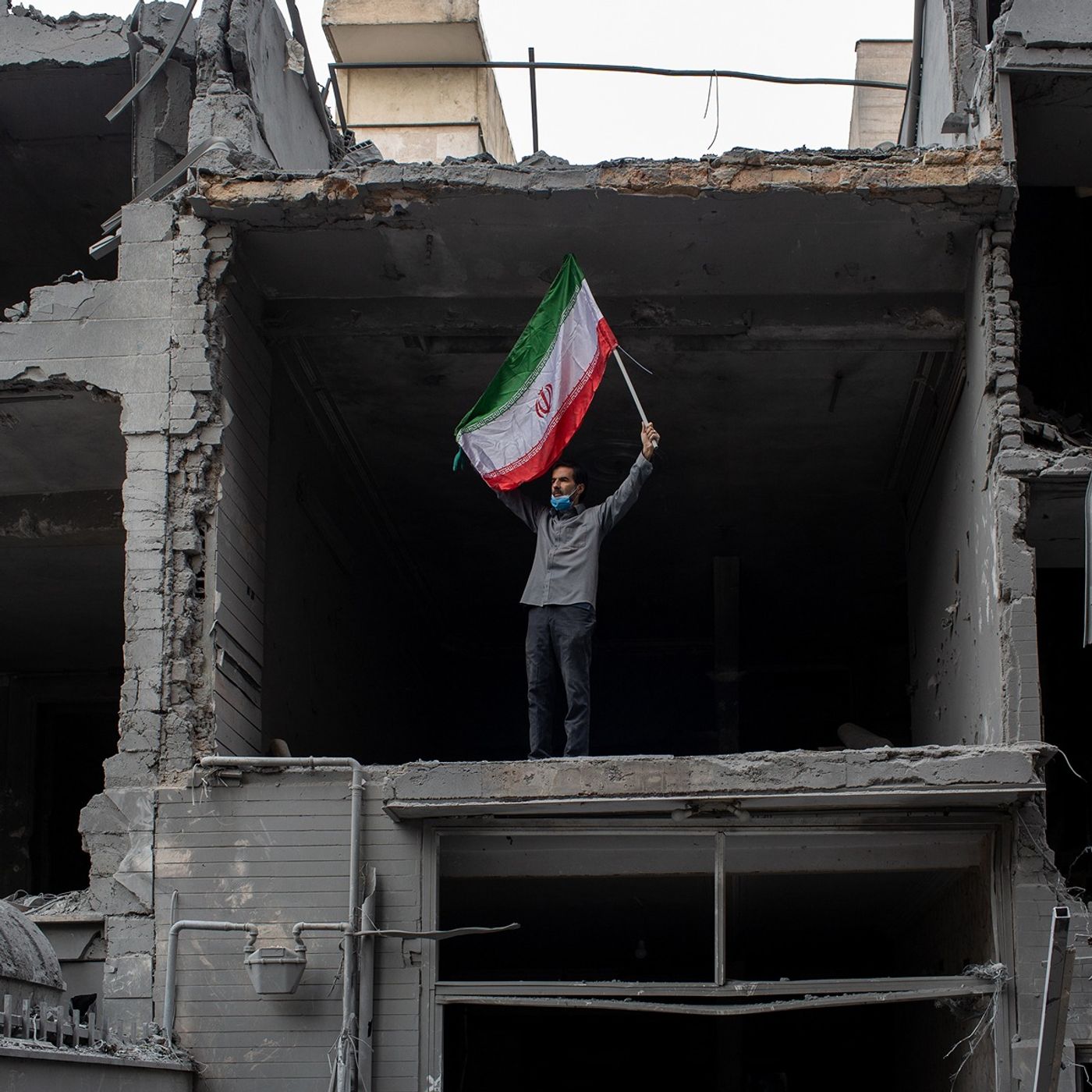
The Daily
Who Is Winning the War in Iran?
00:37:58
Nearly three weeks into the war in Iran, the United States and Israel have largely decimated the regime’s missile capacity, taken out key leaders and disrupted its central command. Yet, the regime in Iran has become more hardened and is wreaking more havoc than ever. Eric Schmitt, a national security correspondent for The New York Times, discusses the state of the war and President Trump’s options for getting out of the conflict.
Loading summary
Transcript131 lines
- [00:00]
American Beverage Association Sponsor
This podcast is supported by the American Beverage Association. America's beverage companies have been a part of the American story for over 100 years. They support more than 275,000 good paying jobs, the kind that make it possible to raise a family and build a future. With manufacturing and distribution facilities Nationwide, they deliver $324 billion to the US economy. Their success means success for small businesses and millions of American workers across retail, transportation and other industries. Learn more at wedelia deliver for america.org
- [00:35]
Natalie Kitroeff
from the new York Times, I'm Natalie Kitro F. This is the Daily. Nearly three weeks into the war in Iran, the US And Israel have largely decimated the regime's missile capacity, taken out key leaders and disrupted its central command. And yet Iran has not backed down. In fact, the regime has become more hardened and is wreaking more havoc than ever. Today, my colleague Eric Schmidt on how Iran continues to challenge the most powerful military in the world and what President Trump's options are for getting out of this conflict. It's Thursday, march 9th.
- [01:41]
Natalie Kitroeff (Interviewer)
So Eric, we had you on the show 10 days into the war to lay out where things stood. Not in terms of rhetoric or stated goals, things that have been pretty hard to nail down, but in terms of hard facts, what has actually happened on the ground. And here we are almost at the end of week three of this war and we want to do something similar. So please orient us, where do things stand right now?
- [02:05]
Eric Schmidt
So here we are, as you said, nearly three weeks into this campaign. And from a military standpoint, the commanders think they're doing pretty well.
- [02:16]
News Reporter / Correspondent
The United States is decimating the radical Iranian regime's military in a way the
- [02:20]
Eric Schmidt
world has never seen before. They think they're actually a bit of ahead of schedule.
- [02:25]
Government Official / Secretary Pete Hegseth
In less than two weeks, we've rendered the Iranian navy combat ineffective and continue to attack naval vessels.
- [02:32]
Eric Schmidt
They've hit over 120 Iranian naval vessels. This includes ships that lay mines in the Gulf. They've struck more than 7,800 targets in Iran. These are things like missiles, missile launchers, drone storage areas.
- [02:50]
Natalie Kitroeff (Interviewer)
And this is the U.S. and Israel, or just the U.S. this is just the U.S. wow.
- [02:55]
Eric Schmidt
The Israeli Air force has carried out its own campaign in parallel with the United States, and they in particular have gone after many of the Iranian leaders. Israel claimed to have hit the hideout of Iran's security chief.
- [03:09]
Government Official / Secretary Pete Hegseth
There's another big hole in the top of the leadership.
- [03:12]
Eric Schmidt
They've killed the top security chief, Ali Larajani, another killed by Israel, Gomeraza Soleimani. He was the Head of a war. They've killed the head of the Basij, the militia group that ruthlessly suppressed protesters in January. And then on Wednesday they announced they killed the intelligence chief for Iran.
- [03:29]
Government Official / Secretary Pete Hegseth
He was responsible for overseeing the country's entire global terror network.
- [03:33]
Eric Schmidt
These are very prominent strikes that they've carried out against the leadership of the country at this point.
- [03:43]
Natalie Kitroeff (Interviewer)
So these are obviously massive blows to the structure of the regime. To what extent do those deaths, though, actually impact the regime itself? Because it seems like they're still there.
- [03:57]
Eric Schmidt
That's right. The regime has been quite resilient.
- [04:01]
Advertisement Voice / Narrator
Iran has been hitting back with attacks
- [04:03]
Natalie Kitroeff (Interviewer)
across the region using underwater vehicles to hit tanker ships off the coast.
- [04:09]
Eric Schmidt
Despite the fact that they've lost these top leaders, they have factored that into their planning. Well, Israel has also been under attack. Iran launched a new wave of retaliatory strikes overnight. Iran is clearly striking back here after Israel confirmed the killing of two of these Islamic Republic's most powerful official. They're finding new ways, including through the use of these cluster munitions to get
- [04:31]
Natalie Kitroeff (Interviewer)
through Israel's air defenses, cause damage and also tonight fatalities.
- [04:35]
Eric Schmidt
And so they've been able to fight on even as the Israeli and American militaries continue to degrade their ability to fight back. And that's really important because right now it's what the military calls an asymmetric war. The Iranian regime, weakened as it is, knows it can't go toe to toe with the Israeli and American militaries. So they're fighting almost a guerrilla style campaign at this point.
- [05:06]
Natalie Kitroeff (Interviewer)
Right. And how is the Pentagon assessing then its progress? How does the Pentagon see the war thus far?
- [05:15]
Eric Schmidt
Well, again, the Pentagon looked at this as maybe a four to six way campaign from the start. And again, we're coming toward the end of the and they feel by their metrics, they're doing pretty well at degrading and destroying the leadership. Some of the military sites Iran's ability to fight back, Iran's ability to produce new weapons. So they think they're doing pretty well.
- [05:39]
Natalie Kitroeff (Interviewer)
And Eric, in terms of loss of life, where does that stand on all sides of this?
- [05:44]
Eric Schmidt
Well, right now the Times estimates that there've been at least 2,100 deaths on the ground in the war so far, over 1,300 of those civilian deaths, mostly in Iran itself. There have been deaths in some of the other countries that have been attacked by Iran, Saudi Arabia, United Arab Emirates and Qatar. So those countries have suffered as well. On the American side, the death toll is now up to 13 that have been killed in Action with scores of others being injured in various attacks in as many as seven different countries.
- [06:18]
Natalie Kitroeff (Interviewer)
And obviously, all of that is tragic. Loss of life on the American side, is that number, that 13 is that low if you're the Pentagon, I mean, when you just think about the level of operation that is being carried out here and the time that it's taken.
- [06:37]
Eric Schmidt
That's right. Any death, any US Service member can combat death is tragic. But I think most commanders would say, as tragic as these numbers are, that it's still on the relatively low side. Things could have gotten much worse. Obviously, about six of these American deaths came when two refueling aircraft collided over western Iraq last week. So that's an accident itself. But it was interesting in the second briefing during the first week of the war, Secretary Pete Hegseth said that about 90% of the 50,000American troops in the region had been moved away from their main bases in the region. That reflected the concern they had with potential casualties. So you've got several thousand American troops still on the ground, but it's really the main operators that are still in place and at risk, as opposed to a much larger potential target set for Iranian missiles and drones.
- [07:35]
Natalie Kitroeff (Interviewer)
Okay, so bottom line, it sounds like the Pentagon is feeling like it's executing its military mission successfully. I do hear a but, though, in what you've been saying, because you've been careful to emphasize military success.
- [07:53]
Eric Schmidt
That's right. Because on the other side of the coin, there are political goals. And of course, the president has been articulating several over the last several days, some of which seem to conflict with each other. Certainly on the first day of the war, he talked about regime change altogether in Iran. He seems to have moved away from that. He talks about denying Iran's capability to ever develop a nuclear weapon.
- [08:14]
Natalie Kitroeff (Interviewer)
Right.
- [08:15]
Eric Schmidt
He talks about devastating Iran's ability to project power in the region, that is, its ability to threaten not only the United States, but its neighbors in the future. And so it's a shifting array of targets and also a shifting end state as we come to the end of this third week.
- [08:33]
Natalie Kitroeff (Interviewer)
Right. And as you've said, despite all of the decimating of Iran's military capacity that has happened, the regime is not backing down. So just explain that. What are we seeing?
- [08:48]
Eric Schmidt
Well, the main thing that we're seeing is with the dwindling amount of resources that the Iranian military has, they're being very selective in their targeting. They're still trying to hit American bases, American embassies in the region. But their most important thing is they're basically now entering a new phase where economic warfare is probably their biggest tool. So now what they're doing is they're going after the economic vulnerabilities of the United States and the international community.
- [09:15]
Natalie Kitroeff (Interviewer)
You're talking about the Strait of Hormuz.
- [09:17]
Eric Schmidt
Exactly. This narrow strategic waterway through which so much international commerce flows in and out of the Persian Gulf. And what they've been able to do is with a handful of mines, the New York Times has reported, but just the threat of attacks. They've basically brought international commerce to a trickle. And that's the main concern right now of the administration because it's sending global shockwaves in terms of the economic impact this is already having.
- [09:47]
Natalie Kitroeff (Interviewer)
And Eric, just to understand the situation on the ground, the way that Iran is holding up traffic in the Strait of Hormuz, it's not just theoretical threats. Right. There have been actual attacks.
- [10:01]
Eric Schmidt
That's right. I think nearly 20 different tankers, whether oil tankers or cargo tankers, have been struck.
- [10:06]
Natalie Kitroeff (Interviewer)
Wow.
- [10:07]
Eric Schmidt
And that has a real deterrent on other shipping companies and their insurers who might want to send ships either out of the Gulf or a growing number of ships that are waiting on the other end to come back into the Gulf itself.
- [10:20]
Natalie Kitroeff (Interviewer)
And Eric, can you just explain how exactly they're hitting ships just on a tactical level, what they're doing, how they're doing it, and with what weapons? Like, how does this work?
- [10:32]
Eric Schmidt
Sure. There are three main kinds. One is there are mines that they can put out in the water. And the Iranian military is believed to have somewhere between five and six thousand mines. It may have actually been more. And these are mines that actually can float on the surface, or they can be attached to the seabed and the narrow bottom of the Persian Gulf. And they can, you know, detach and attack naval ships that way. So that's one way. Another way is just from missiles that can be launched from the shoreline. Just to the north of the strait is Iranian territory. And so whether they're cruise missiles or other kind of missiles, they could fire at ships and cause all sorts of other damage. Another means is Iran's Islamic Revolutionary Guard Corps has scores, if not hundreds of speedboats.
- [11:21]
Natalie Kitroeff (Interviewer)
Speedboats?
- [11:22]
Eric Schmidt
Yeah, speedboats that can go around and they've harassed naval traffic. And you've got some guy on one of these speedboats with a rocket propelled grenade, and suddenly he could get within just a couple hundred meters of a target. And there you go. So there are multiple means that Iran has to threaten shipping, which has really had a very severe effect on traffic. Moving in and out of that strategic waterway.
- [11:46]
Natalie Kitroeff (Interviewer)
Yeah. I mean, when you imagine a speedboat coming through with an RPG on it or like a floating mine, it really underscores the extent to which Iran can hold up this choke point for the entire global economy, really in a super nimble way that doesn't seem to be all that affected by, by this enormously successful thus far military campaign against them.
- [12:13]
Eric Schmidt
That's right. Just on Tuesday night, they announced that the US military has dropped several 5,000 pound penetrating bombs that go to missile silos that are right along the shoreline of the Strait of Hormuz. But the problem here is even if you get 95, 98, 99% of the threat eliminated, there's always going to be that 1% chance or less that some kind of rocket or missile could get through and damage or destroy some valuable ships.
- [12:42]
Natalie Kitroeff (Interviewer)
Yeah. And it seems as though Iran has been able to direct these attacks without their senior leadership fully intact. Right?
- [12:52]
Eric Schmidt
That's right. And that's mainly because what Iran did is they had a very decentralized system of attack. They have what's called a mosaic defense. They have some 30 different districts basically, that they've assigned defenses to so that if you knock out the Central Command and control in Tehran or any one of these important leaders in the intelligence service or the military or the irgc, these independent districts, their commanders already have a set of general instructions and they can continue carrying out attacks with the weapons that they have.
- [13:24]
Natalie Kitroeff (Interviewer)
Yeah. I mean, just to be crystal clear, here we are seeing the most powerful and sophisticated military in the world being stymied essentially by this totally decentralized strategy carried out by a seriously weakened country that has had 90% of its missile capacity destroyed. Obviously, it's not new.
- [13:46]
Natalie Kitroeff
We've seen asymmetric warfare in the past.
- [13:50]
Natalie Kitroeff (Interviewer)
But the fact of Iran being able to exercise complete control over this hugely important waterway is wild.
- [14:00]
Eric Schmidt
Right. And that's the challenge that the American military faces. But it's also a challenge that President Trump faces because he has demanded that various allies, both in the region and NATO allies, pony up ships and other resources that could help, you know, defend the Strait. So it's, it's both a military problem. How do you get at the threat? But it's emerging more and more as a political problem. How do you marshal the resources of the international community? Because everybody's affected by this. The global economy is affected by this. But the Iranians know this is their real ace in the hole.
- [14:33]
Natalie Kitroeff (Interviewer)
This is their leverage.
- [14:35]
Eric Schmidt
This is their leverage. And as long as they can hold on to it, again as an economic leverage. They have, you know, a lot of influence over this final decision.
- [14:43]
Natalie Kitroeff (Interviewer)
Okay. I want to ask about the president and the extent to which he understood and calculated that these issues with the Strait were going to happen and were going to happen to the extent that they have, because, as you said this week, we saw Trump ask for help from his allies, from European and Asian allies of the United States to help solve this problem. He then criticized them when they were reluctant to do so. This is after he didn't really consult them or seek partnership in advance of this war. In the beginning, he act as though the United States definitely didn't need help. It suggests to me as though he might not have foreseen this problem. What do we know?
- [15:30]
Eric Schmidt
Well, what we do know is that both intelligence leaders and military commanders, such as General Dan Kane, the chairman of the Joint Chiefs of Staff, Admiral Brad Cooper, who's the head of U.S. central Command, that's the military command that's actually carrying out the operation. They briefed to the president and his senior advisors well in advance of the war itself. And they pointed out this was very much predictable because the, the problem of the Straits of Hormuz is not a new problem. This is something you can point back to, for instance, in the Iran Iraq War, the 1980s. And it was a problem then.
- [16:04]
Natalie Kitroeff (Interviewer)
Right.
- [16:04]
Eric Schmidt
What was perhaps took some military officials, and certainly some in the White House, I think, off guard was a, the extent that Iran would attack its fellow neighbors, its neighboring countries, with the ferocity that it did. Defense Secretary Pete Hegseth is in and acknowledged that. I think the other thing was, while obviously this was always seen as a threat, many believe that the Iranians wouldn't reach for this card right away. But the problem with that is it's also been briefed that by the intelligence community was that if Iran believed that it was an existential threat to the regime, that they might reach for that ace in the hole, bottling up the Strait of Hormuz faster than certainly this administration anticipated. The US did not have the naval assets in place to deal with this kind of a threat right away. Their minesweeping capabilities antiquated. Some of the ships that they've got aren't even in the Gulf region now. Two of them are in Asia, and they hadn't marshaled any kind of international support for the kind of, you know, remedies such as a tank or escort operation that you might need.
- [17:15]
Natalie Kitroeff (Interviewer)
Right.
- [17:15]
Eric Schmidt
So this is something that, while it was predictable, I think the way in which The Iranian regime reached for this option quickly and with as broad as strokes that it did, I think took some American officials off guard. And now they're playing catch up to some extent.
- [17:31]
Natalie Kitroeff (Interviewer)
Eric, I want to just stay here for one more minute because of the extreme havoc that has been wreaked by by the strait being shut down for so long. Do the Pentagon folks that you talk to acknowledge that this misread was a colossal failure? Do they look at this as a really big mistake that could have been avoided?
- [17:57]
Eric Schmidt
No. They still say this would have been in their planning all along. Perhaps it wouldn't have had to be an address this quickly in their plan. They would have liked to have, you know, battered away at the their main target sets, the missile launchers. Of course, you know, they want to hammer away at Iran's military capability to fight back. That's what they're doing. And how you deal with this kind of economic problem was maybe more secondary. Certainly was in the plan. It's just now they have to accelerate how you deal with this threat because it's become such a major political and economic problem for the White House.
- [18:31]
Natalie Kitroeff (Interviewer)
Okay, so now that we know the Iranians are seeing this appropriately as an existential threat and are essentially saying that they are willing to fight indefinitely now that the oil situation is getting more and more serious by the day, we know the President doesn't want to see a huge economic fallout continue. What are the ways out of this?
- [18:53]
Eric Schmidt
So the options are not good. They basically range from bad to really bad to worse for the President right now. And those are the kind of decisions that he and his top advisors are now weighing.
- [19:13]
Natalie Kitroeff (Interviewer)
We'll be right back
- [19:18]
Advertisement Voice / Narrator
on TikTok. Teens get over 50 built in protections from the start. But for parents, further visibility and control of content can help create the right environment. That's where family pairing comes in. Teens under 18 have a 60 minute screen time reminder in place. And with family pairing, parents can set their own screen time limits or even set restricted times based on what works best for their family. Family pairing lets parents link accounts to see their teens followers and who they follow and help restrict content that's not right for them. When safety comes first, discovery can follow. Learn more@TikTok.com GuardiansGuide this podcast is supported
- [19:52]
Arbor Day Foundation Sponsor
by the Arbor Day Foundation. For more than half a century, the Arbor Day foundation and its global network of more than a million inspired individuals, businesses and community leaders have united behind the power of trees to help solve some of the planet's most pressing problems. From Michigan to Madagascar, the Arbor Day foundation is planting trees at the speed of a changing world in communities and forests across the globe. See how you can do your part@arborday.org
- [20:20]
IBM Advertisement Voice
thedaily so there's a lot of noise about AI, but time's too tight for more promises. So let's talk about results. At IBM, we work with our employees to integrate technology right into the systems they need. Now a global workforce of 300,000 can use AI to fill their HR questions, resolving 94% of common questions, not noise. Proof of how we can help companies get smarter by putting AI where it actually pays off, deep in the work that moves the business. Let's create smarter business IBM.
- [20:52]
Natalie Kitroeff (Interviewer)
Okay, Eric, if we are looking at options that range from your words bad to super bad to worse, where should we start? What's on the table, and what's the likeliest path that you think the US Military will take now?
- [21:09]
Eric Schmidt
So the first option is, how do you deal with this problem of the Strait of Hormuz that we've been discussing? And one of the options on the table is for the US Navy, perhaps with other countries, to basically conduct tanker escorts, where you have Navy ships that would escort commercial vessels out of the Persian Gulf and then take other ships back in. These are probably be Navy destroyers that are equipped with special radar that can track incoming missiles, deal with drones, that kind of thing. They would almost certainly be accompanied by drones and helicopters overhead that could also detect drones, not, you know, only in the air, but in the sea.
- [21:54]
Natalie Kitroeff (Interviewer)
Wow.
- [21:54]
Eric Schmidt
They would be looking for threats on the shoreline, and they'd be keeping an eye out for those speedboats that we talked about with the gunmen on board who might fire an RPG vessel. So it would be a very complex operation where you'd have to have dedicated as many of 12 or so of these specialized destroyers leading some number of commercial vessels through this strait, which is 21 miles at its narrowest point. You're going through channels, and again, they're having to go through this as they look for all these different threats that could pop up at any given time. And if you look at it, the possibility of a missile getting through, one of these warships getting hit and maybe American sailors being wounded or killed, that's also very much a distinct possibility.
- [22:42]
Natalie Kitroeff (Interviewer)
Right.
- [22:42]
Eric Schmidt
And the ultimate decision here will rest with the shipping companies that own these vessels as well as their insurers, to see is it worth, even with the protection of the US Military and perhaps the militaries of other countries that donate ships, is it worth the risk of getting your cargo through? That's the risk that they have to balance versus holding off and waiting for some kind of diplomatic solution, which right now the chances look quite remote of achieving anything like that.
- [23:10]
Natalie Kitroeff (Interviewer)
Yeah, I cannot imagine being a captain on one of these tankers, imagining such a voyage. So that option does sound bad, does sound incredibly risky. What's the next one?
- [23:23]
Eric Schmidt
So the second main option is basically taking over a place called Kharge Island. This is a small island in the northern part of the Persian Gulf off the Iranian coast, which is Iran's main oil hub. About 90% of its oil production go through this place. And just last week, on President Trump's orders, the US military bombed the military installations. Over 90 targets were hit on this island itself. These are the military emplacements that protect the oil infrastructure there. Now, the president at that time said, I ordered the Pentagon to avoid hitting the oil infrastructure because of the long term economic impact this would have not only on Iran when the time comes, if you want to help, you know, rebuild its economy, but also the impact it would have on the global economy, the shock that would have of taking, you know, the Iranian oil, which continues to flow through the Strait of Hormuz, by the way, taking that off the table.
- [24:25]
Natalie Kitroeff (Interviewer)
Right. It sounds completely counterproductive to imagine a strike that would just blow up the entire infrastructure of Iran's oil economy. Right, right.
- [24:35]
Eric Schmidt
So what's the option? Okay, so one option is to take those Marines that are steaming from the Pacific region and have them do some kind of amphibious landing or some other kind of military operation to seize control of this strategic island and pressure the regime to concede on other fronts. Because the Americans control this very important economic hub for Iran.
- [25:00]
Natalie Kitroeff (Interviewer)
But they'd have to go through the Strait of Hormuz. Right. If I have my geography right, I mean, we're talking about these Marines popping out of the water, but they have a tough journey to get there before that.
- [25:11]
Eric Schmidt
Yes. And everybody, everybody would see them coming because as you said, first they'd have to go through that strait. And presuming if they make it through that safely, with all the protection that they and their equipment would have, they could make it up several more hundred miles up into the northern part of the Gulf. Then they would have to stage this operation, which presumably the whole world would be keeping an eye on, there'd be no strategic surprise there in doing that.
- [25:34]
Natalie Kitroeff (Interviewer)
Yeah.
- [25:35]
Eric Schmidt
Even if you were to succeed with that mission. And military commanders, again, have for years planned this as a possibility if they ever went to war with Iran, once they seize this territory, they immediately become a target for the Iranian military, which is just a short ways off the coast of Iran.
- [25:52]
Natalie Kitroeff (Interviewer)
Right. They have to defend it.
- [25:53]
Eric Schmidt
Once they seize it, they would have to defend it. Exactly. So they could then again be threatened by whatever remains of Iran's arsenal of drones and missiles there. So there's again, something that would become quite a high threat to do. Now. You take the risk of seizing the island, but it could backfire on you if somehow, during the course of the initial invasion or subsequent occupation, the oil infrastructure there is damaged and then you've kind of lost the whole point of taking this island if the economic part of it is destroyed or damaged seriously.
- [26:28]
Natalie Kitroeff (Interviewer)
And this option of seizing Karj island, in the best case, you're saying it would essentially allow the US to put a lot of economic pressure on Iran. My question is, is there any guarantee or even expectation that that kind of pressure would actually effectively stop Iran from
- [26:54]
Natalie Kitroeff
continuing to do what it has been
- [26:55]
Natalie Kitroeff (Interviewer)
doing, which is wage asymmetric warfare, that is disrupting traffic through the strait, attacking its neighbors, all of this stuff. Is that pressure seen as effective in this context?
- [27:09]
Eric Schmidt
Well, there's no guarantee at all, Natalie, that this strategy would be effective. And what we're seeing now is with many of the top leaders killed, what might remain of an Iranian regime may be even more hardline than what existed before. Be even less willing to negotiate with the United States, particularly if they felt they had this gun to their head, literally and economically, they're willing to basically go down as martyrs rather than knuckle under to the American demands. So there's no guarantee this would work at all.
- [27:41]
Natalie Kitroeff (Interviewer)
Okay. So far, these options have not left me with a particularly optimistic view of what's coming. Is there anything else available?
- [27:53]
Eric Schmidt
Well, yes, and obviously one of the things that President Trump has talked about from the very beginning of this operation is denying Iran's capability to develop a nuclear weapon. This goes back to last June, the American bombing missions that hit three different Iranian nuclear sites. But Iran was still able to preserve a large amount of highly enriched uranium, much of which is being stored right now in a facility called Isfahan in underground bunkers and tunnels. So at the end of any kind of conflict, the idea would be that somehow for the President to really consider this mission an overall success, you'd have to address whatever happens to that highly enriched uranium.
- [28:37]
Natalie Kitroeff (Interviewer)
Right.
- [28:38]
Eric Schmidt
This is uranium that isn't ready to be made into a bomb, but it can be processed to the next level to that bomb grade capability. So what do you do about that? And you could continue bombing and entombing that material under so much rubble that it would be very difficult for the Iranians to get at it. And even if they did, in the future, the presumption is the United States would continue to fly some kind of aerial surveillance aircraft or use satellites, and if they see the Iranians at any time trying to dig that material out, they'd go back and restrike it. Another option the President has talked about is sending ground forces, basically commandos that are specially trained to go into very dangerous situations like this, go down into these tunnels and somehow extract these canisters of highly niche uranium that are in gaseous form and get them out all without having these canisters being destroyed. In order to do this, you have this core team that would go down into these tunnels with nuclear trained experts to extract it, to bring it out of the country altogether, or to neutralize it so the Iranians couldn't use it effectively. But you'd have to ensure a security ring around this team that goes in. So you'd have to have several hundred troops, basically seize the territory around Isfahan to safeguard the operation while it's underway, and then to ensure that they're able to get out safely.
- [30:09]
Natalie Kitroeff (Interviewer)
Right.
- [30:09]
Eric Schmidt
My colleagues have pointed out to us that if one of these canisters were to be pierced, the moisture inside would release gas that's highly toxic and also highly radioactive.
- [30:19]
Natalie Kitroeff (Interviewer)
Whoa.
- [30:20]
Eric Schmidt
So you've got that problem. You also have the problem of trying to extract these canisters. It could inadvertently set off a chain reaction with this nuclear material.
- [30:29]
Natalie Kitroeff (Interviewer)
To state the obvious, this option seems incredibly risky and dangerous and kind of insane.
- [30:37]
Eric Schmidt
It is. And again, this is something. The President has openly talked about this as an option. So again, this would not be a surprise. So the Iranians, again, they know this is the ultimate target for the United States. They're going to fight to the death to protect it and preserve it, because that, you know, in the end, is really what they want to hold on to, their ability to produce a nuclear weapon.
- [31:02]
Natalie Kitroeff (Interviewer)
So what you're describing is a very difficult situation for the President in particular, as he is looking at what he said were the goalposts and what it would actually take to achieve those goals. I just wonder whether there isn't a final, less horrible option in all of this, which is the President coming out and saying that this is over and that we have actually accomplished enough, calling it quits at this point, cutting bait. Is that a potential?
- [31:41]
Eric Schmidt
Well, it certainly is, because the President's actually floated this idea. He's talked about how, you know, the war is essentially over from a military standpoint, of how they've already achieved these extraordinary goals of degrading or destroying much of Iran's ability to fight back, much of its ability to terrorize and threaten its neighbors in the United States. The leaders that the United States has condemned for all these years, many of them are dead. And even if a weakened regime was in place, hard lying that it may be, it could be contained, although we
- [32:12]
Natalie Kitroeff (Interviewer)
are currently seeing the limits of that containment, because while they are weakened, they are still able to create tremendous instability in the world. But go on.
- [32:22]
Eric Schmidt
That's right. I mean, again, this is the rhetorical case that the president presumably would make if he decided to essentially declare victory and move on.
- [32:30]
Natalie Kitroeff (Interviewer)
Also, we should point out, I mean, for one side to declare victory in a war, it doesn't mean the war is over. Right. Like, Iran doesn't have to agree. Iran could keep firing back in all the ways that we've seen.
- [32:44]
Eric Schmidt
That's right. And Iran could take other steps that we haven't discussed, like activating terror cells in the region, in Europe or the United States. And to be sure, Israel may not want to stop fighting either. They may have goals that are not fulfilled, both in destroying Iran's capability to threaten Israeli territory. The President and Prime Minister Benjamin Netanyahu talk almost every day about this, and they are not necessarily on the same page in terms of when to quit this fight. But so far, they've been consistent in their war aims. But we've seen instances where these are diverging, and we may see it eventually if the war continues to go on and if these options that we've just been talking about just impose too much pain for the President to accept, too much risk for the President to accept and for him to basically say, I felt we can declare victory at this point, but the Prime Minister of Israel may decide, no, that's not the case.
- [33:39]
Natalie Kitroeff (Interviewer)
Eric, I want to return to one of the biggest justifications for this war, which is achieving regime change in Iran. Does anyone actually think that this military campaign could still produce regime change? You've been saying from the beginning that expecting airstrikes to produce a change in government, it's really difficult to imagine. And I'm just wondering if anyone is still holding out hope, given how hardened the regime has been by this campaign. Even as leader after leader in Iran has been taken out.
- [34:19]
Eric Schmidt
I think most American intelligence analysts would say no, right now. There isn't really a good chance of regime change right now. The best you're going to get is a badly weakened state. Yes, it may be filled with hardliners, but it's very unlikely at this point that you're going to have regime change of the kind that the president talked about on the first night of the war where you have popular uprisings throughout the country, basically overwhelming what remains of a state. And so what you're left with is kind of a rump, IRGC led type government with still the instruments of repression to basically attack any kind of protests. You've seen no serious defections from the regime that would show serious cracks. Now we'll see with the deaths of these recent leaders if that will still hold. Is there a point where the regime just becomes too brittle to survive? So far they've proved more resilient. I think that either American or Israeli officials believe they would be by this point in the conflict.
- [35:22]
Natalie Kitroeff (Interviewer)
You know, returning to the options that face Trump and the possible paths to an end to this conflict. It feels as though that is very much tied to the story of the war in general, which is what are your goals and how do you determine when you've actually achieved them? And it seems like that is still very uncertain for the administration, for Israel, for everyone involved.
- [35:51]
Eric Schmidt
I think that's right, Natalie. And I think what you've seen is the president is really weighing two conflicting impulses. On the one hand, he may want to double down, send in ground forces, or does he look for an off ramp? Does he declare victory and find ways of basically ticking off a series of achievements that would basically say in the end, we're safer now than they were at the beginning of this operation. And I therefore can say this is a victory for the American people. Which decision he'll make, we still don't know.
- [36:28]
Natalie Kitroeff (Interviewer)
Well, we will be watching alongside you. Eric, thank you so much for coming on the show again.
- [36:35]
Eric Schmidt
Thank you very much.
- [36:41]
Natalie Kitroeff
On Wednesday, Qatar's state owned energy company reported that missiles had caused extensive damage to a major energy hub in the country, which is one of the world's largest exporters of liquefied natural gas. The Qatari government blamed Iran, which had vowed retaliation after an earlier attack on an Iranian gas field. In a Truth Social post late Wednesday night, President Trump said Israel was responsible for the attack on the Iranian gas field and he claimed the US had no idea it was going to happen. He also threatened Iran, saying that if the country attacked Qatar again, the US Would blow up the rest of the oil field. We'll be right back.
- [37:28]
News Reporter / Correspondent
Foreign.
- [37:35]
Arbor Day Foundation Sponsor
This podcast is supported by hers. With so much noise around weight loss trends, opinions, medications. It's hard to know what's actually right for you. Hers can help. If prescribed, your personalized treatment plan supports you in reaching your goals with access to 24. 7 support, nutrition tips and tools for tracking movement, hydration and sleep. Feel like your best self again? Visit fourhers.comthedaily to get a personalized, affordable plan that gets you. That's f o r h e r s.comthedaily Weight loss by hers is not available everywhere. Prescription required. See website for full details, important safety information and restrictions. This podcast is supported by Planned Parenthood Federation of America. As a listener of the daily we know you want the facts. Fact 1 Some lawmakers are making it harder for Americans to access health care.
- [38:20]
Government Official / Secretary Pete Hegseth
2.
- [38:21]
Arbor Day Foundation Sponsor
A new policy threatens to prevent patients from using Medicaid insurance for life saving care at Planned Parenthood health centers. This could mean cancers going undetected, STIs left untreated, and patients not receiving care they need. 3. Planned Parenthood will not back down, but they need your help. Donate@PlannedParenthood.org Defend life in Italy with Belmond
- [38:46]
Belmond Advertisement Voice
we got married at Hotel Caruso in May on the Amalfi Coast. On the wedding day, looking out as I ate breakfast, I could see the olive trees where our dinner would later happen. I could hear the birds chirping. I could hear our pianists practicing. I could hear almost nothing else.
- [39:08]
Advertisement Voice / Narrator
Discover a new pace of travel. Read more stories@nytimes.com Belmond LifeInItaly
- [39:18]
IBM Advertisement Voice
here's what
- [39:18]
Natalie Kitroeff
else you need to know.
- [39:19]
News Reporter / Correspondent
Today you told the media that I was a freaking snake and that you completely understood why I had been assaulted. I was shocked that you would justify and celebrate this violent assault that caused me so much pain and my family so much pain.
- [39:34]
Natalie Kitroeff
During a sometimes fiery confirmation hearing, Republican Senator Rand Paul of Kentucky confronted President Trump, Trump's choice to run the Department of Homeland Security. Senator Mark Wayne Mullen over his past statements, including remarks in which Mullen seemed to approve of a violent attack on Paul several years ago that resulted in broken ribs and a damaged lung.
- [40:01]
News Reporter / Correspondent
I just wonder if someone who applauds violence against their political opponents is the right person to lead an agency that is screwed, struggle to accept limits to the proper use of force.
- [40:10]
Government Official / Secretary Pete Hegseth
I did not say I supported it. I said I understood it. There's a difference.
- [40:14]
News Reporter / Correspondent
What do you think most people would interpret completely understand to be support for or a condemnation of the violence?
- [40:22]
Government Official / Secretary Pete Hegseth
Sir, as I said, we can have our differences. It's not going to keep me from doing my job as secretary of Homeland
- [40:27]
Natalie Kitroeff
Security, Mullen, who's known for his combative style, sought to strike a conciliatory he said he believed that he could work with Democratic mayors and sheriffs in sanctuary cities that oppose the Trump administration's agenda on immigration.
- [40:43]
Government Official / Secretary Pete Hegseth
And these law enforcement and I would even say these mayors, they still love their community, they still love their, their cities, they still love this country. So maybe it's a misunderstanding we can work by and I'm going to start with that and hopefully work with them and never work against them.
- [40:57]
Natalie Kitroeff
The Homeland Security Committee is expected to vote on Mullins nomination today. Today's episode was produced by Rachelle Banja, Carlos Prieto and Mary Wilson. It was edited by Paige Cowett and Liz o' Ballin and contains music by Dan Powell, Alicia Ba? Itupe, Marion Lozano and Rowan Nimisto. Our theme music is by Wonderly. This episode. This episode was engineered by Chris Wood. That's it for the Daily I'm Natalie Kitroweff.
- [41:40]
Natalie Kitroeff (Interviewer)
See you tomorrow.
- [41:47]
Advertisement Voice / Narrator
Life in Italy with Belmond we got
- [41:50]
Belmond Advertisement Voice
married at Hotel Caruso in May on the Amalfi Coast. On the wedding day, looking out as I ate breakfast, I could see the olive trees where our dinner would later happen. I could hear the birds chirping. I could hear our pianists practicing. I could hear almost nothing else.
- [42:12]
Advertisement Voice / Narrator
Discover a new pace of travel. Read more stories@nytimes.com Belmond LifeInItaly.