Loading summary
Transcript240 lines
- [00:00]
Apple Card Announcer
Brought to you by Apple Card. Hey, you could be earning 2% daily cash back on that purchase and that
- [00:07]
Lauren Jackson
one and even that one.
- [00:09]
Apple Card Announcer
That's because Apple card users earn 2% daily cash back on every purchase, including everyday items they buy online or in store when using their Apple Card. With Apple Pay, not an Apple Card customer, you can apply in the Wallet app on iPhone subject to credit approval. Apple Card issued by Goldman Sachs bank usa Sign Salt Lake City branch terms and more at Apple Co Benefits.
- [00:34]
Michael Barbaro
From the New York Times. I'm Michael Balbaro. This is the Daily across the country
- [00:40]
Various Interviewees / Church Leaders
and here in south central Pennsylvania, church leaders say they're seeing a noticeable shift. Gen Z is returning to faith, but in ways you might not expect. You're seeing the largest number of converts in recent history.
- [00:56]
Various Interviewees / Commentators
Young New Yorkers have a new hotspot.
- [01:00]
Various Interviewees / Church Leaders
Sunday Mass.
- [01:02]
Father Mike Schmitz
We're learning that for the first time
- [01:04]
Donald Trump
in decades, faith in this country appears to be growing.
- [01:08]
Michael Barbaro
After decades of declining church attendance and a profound rise in secular I was
- [01:15]
Various Interviewees / Church Leaders
like, can I maybe go to a church service with you just to like, see what it's like?
- [01:20]
Michael Barbaro
Religion is having a moment.
- [01:24]
Various Interviewees / Church Leaders
I think we do start to question, like, why is this happening?
- [01:28]
Michael Barbaro
Today, producer Asla Chaturvedi talks to our colleague Lauren Jackson about why more and more Americans are now choosing to believe. It's Tuesday, May 12th.
- [01:46]
Asla Chaturvedi
Hey, Lauren.
- [01:47]
Lauren Jackson
Hi. How are ya?
- [01:49]
Asla Chaturvedi
I'm good.
- [01:49]
Lauren Jackson
It's so fun to see you in this space.
- [01:52]
Asla Chaturvedi
Oh yeah, let's see how fun it is.
- [01:54]
Lauren Jackson
I love this angle.
- [01:58]
Asla Chaturvedi
It feels like so much of the conversation about religion in the last few years and even the Daily's coverage of religion has been about how politicized it has become, especially on the right. It's true there was a recent face off between the Pope and the President, but I'm also thinking about the overturning of Roe v. Wade, battles at the Southern Baptist Convention over female pastors and ivf. Some of these episodes I've produced for the Daily. But you haven't been reporting on religion from that angle. Instead, you've been reporting on faith itself and how and why people in America believe. And I want to understand how all of this started for you and why you decided to begin reporting on this now.
- [02:43]
Lauren Jackson
Yeah, there have been so many stories in the last few years of the ascendancy of a very muscular, conservative Christianity and the ways in that is expressing itself in politics. I'm interested in all of them, but I was really interested in how most people in America wrestle with these really big questions of religion and Spirituality and how they appear in their lives, their families and communities. And as I started to look into that, something really dramatic emerged in my reporting, which was there is something hugely significant happening sociologically and demographically within America when it comes to American spirituality and religiosity, and that is that we know people across the political spectrum, young and old, are expressing a renewed interest in spirituality and in religiosity. We've seen for the first time since Pew Research has been gathering data on religion that people have stopped leaving churches. In essence, secularization is paused.
- [03:55]
Asla Chaturvedi
So it's not an uptick in churchgoing, but kind of a flattening out.
- [03:59]
Lauren Jackson
Yeah, and that sounds like it's insignificant. It's just a pause. But it's a really big moment for people's personal relationships to religion and spirituality. We know that in the early 90s, 90% of American adults identified as Christian. According to Pew, that number dropped basically over my lifetime to be only about two thirds of Americans. It was called the great de Churching. It was the largest and fastest shift in American religiosity on record. And some people estimate that 40 million people left American churches. So what demographers and sociologists had said for years was going to be the definitive decline of religiosity in America, that has stopped. It has paused over the past five years. And we actually got some new data in the last few weeks and months that really made this picture even more interesting.
- [04:54]
Asla Chaturvedi
How so?
- [04:54]
Lauren Jackson
We had expected that every cohort coming up, so every new group of young adults would be less religious than their parents or their grandparents. But Pew published a report that shows if you actually look at the youngest group of Americans, so 18 to 23 year olds, there are signs that that group is e even more likely. And it's slight, but it's more likely to attend religious services at least once a month than those just older than them. And then separately, we got a new survey from Gallup that found a sharp rise in the share of men under 30 who say that religion is, quote, very important to them. It went from 28% in 2023 to 42% in 2025.
- [05:36]
Asla Chaturvedi
That's a huge jump.
- [05:37]
Lauren Jackson
It is, and it was surprising as well, because historically, we've seen that young women tend to be more religious than young men. That's changing.
- [05:47]
Asla Chaturvedi
So a lot of numbers pointing in a similar direction. How should we be looking at them in aggregate? How are you seeing this moment?
- [05:54]
Lauren Jackson
It's a really good question, and it's one that has sparked a lot of debate both in the pages of the New York Times and also in the people I'm speaking to on the religion beat. You know, plenty of people have declared this a revival. That's a strong word. And plenty of other people have said that is very premature and potentially erroneous. But what we do know is that this trend continues. So in 2025, the non religious share of the American population declined yet again. And the number of atheists and agnostics is back down to the levels we saw in 2014. That's close to 15 years ago. We do have signs that this shift is happening more on the right, particularly among young men. But we're also seeing this across the political spectrum. And if you take a step back, this is not just about Christianity. It's about all other major religions as well. So the main takeaway is that the story of faith and religion and belief in this country is really at an inflection point.
- [06:56]
Asla Chaturvedi
And as I said, you've been examining what's been driving all of this. You've been talking to people about what they believe and why they believe it. I can imagine that these conversations are quite intimate.
- [07:08]
Lauren Jackson
I often say I feel like I'm part reporter, part therapist because it takes a lot of attention and a lot of time to attend to these stories. They're so intimate, they're so personal. And it's also personal for me. My life, in a way, mirrors the shifts we've been seeing in Americans attitudes toward religion and also their religious practices over the past three decades.
- [07:32]
Asla Chaturvedi
Could you tell me a little bit about your journey?
- [07:38]
Lauren Jackson
I was raised in a very, very conservative and very religious place. I was raised in Little Rock, Arkansas. I was raised a devout Mormon or member of the Church of Jesus Christ of Latter Day Saints. And my family was really practicing. When I was, you know, a little girl, I used to write and send articles to the church magazines because my dream job was to work as a writer for the church magazines. In high school, I had a 6am Bible study that I attended every day before school.
- [08:09]
Asla Chaturvedi
That's early six.
- [08:10]
Lauren Jackson
Yeah.
- [08:11]
Asla Chaturvedi
Oh, my gosh.
- [08:12]
Lauren Jackson
I was always late. I was always late. I mean, it's astonishing that I didn't crash on the freeway every day when I was just careening down the highway to get there on time. Because if I didn't graduate from this seminary class, I couldn't attend the biggest church university called Brigham Young University. So I had to make it. I was expected to attend, and I expected myself for my whole life to attend, find someone to marry, have children and raise them in the Church. So it was an extraordinary shift when I decided to attend a secular university.
- [08:50]
Asla Chaturvedi
Was that a big deal in your family?
- [08:53]
Lauren Jackson
It was a huge deal. I had a guidance counselor who nudged me and nudged me and nudged me and finally I relented and decided to apply for a scholarship. And when I got it, I was really surprised by how moved I was by the environment, how much I thought I wanted to learn in that space. And so ultimately I decided to go. But I was terrified. And that was a really, really hard transition for me. It was extraordinarily difficult for me to not only leave that community, but begin to challenge a faith and an ideology that was really comprehensive.
- [09:32]
Asla Chaturvedi
What did that look like?
- [09:33]
Lauren Jackson
The first week I was there, I fell in love with someone who was not a member of my faith. And it's a very common rupture for a lot of people who then have to begin to question what it is they believe in and how they can neg the boundaries of that.
- [09:51]
Asla Chaturvedi
Because the way you were raised, it was like, yeah, you were meant to be with someone from the same faith.
- [09:55]
Lauren Jackson
Absolutely. I also encountered ideas. You know, I, in a political science class read Isaiah Berlin on pluralism, the idea that many truths and realities are equally valid and worthy of consideration and examination. And that really cracked my world open. That idea, that concept that there was not one true church, there could be many possible truths. And for me personally, that was the beginning of a huge reckoning. One that continued as I attended graduate school abroad. And at the age of 25, I ultimately formally left the church.
- [10:44]
Asla Chaturvedi
How does that affect your relationship with your family, given how you were raised?
- [10:49]
Lauren Jackson
I mean, of course, if a parent truly and deeply believes that a religion is true and is the best path to follow and they desperately love their child, they're going to want their child to follow it. So it was an exercise in empathy and trying to understand and really accept my parents perspective while also holding my own. Mom, I need you to know that I am grateful for the many positive things, in many ways that being Mormon has brought me. I'm no longer choosing to be Mormon.
- [11:32]
Lauren's Mother
Okay, that sounds good to you, but what you're pushing back is this flow of happiness, joy.
- [11:40]
Lauren Jackson
You know, these were tough conversations, but I knew even then that these were really important moments in my life and that I wanted to remember them accurately. So I recorded them. I'm telling you right now, it's not a healthy institution for me and many, many, many people. I do not want to participate. And that is the healthiest choice for me for many reasons. I'M asking you to honor that. As my mom, I was desperately wanting my parents to not only understand, but also to approve of the life choices that I'd made in leaving my faith. Okay.
- [12:14]
Lauren's Mother
I'm just asking if we could. I never got any chance to talk to you about it, but it's not.
- [12:19]
Lauren Jackson
It's not. It's not up for a debate with you. It's not up for.
- [12:23]
Lauren's Mother
It's not a debate. I guess the thing is that.
- [12:26]
Lauren Jackson
And frankly, that's not something my parents were willing to offer because they deeply believe in the worldview and the faith that they believe in and that they were raised in and that they live every day.
- [12:37]
Lauren's Mother
I think if you put that over here and you had ever experienced feeling the Holy Spirit, then you would get what I'm talking about. But if you don't have, like, room in your heart to just try and listen, then.
- [12:54]
Lauren Jackson
And so they want me to participate in that. I love you. Love to you. Looks like being exceptionally prescriptive, they felt like my rejection of that faith was a rejection of them. And that led to a great amount of conflict. I don't know.
- [13:13]
Lauren's Mother
I guess if there was a sunset. Sometimes you say to somebody, come see the sunset, because you get excited, and that's all. You know, you can make it sound so demeaning, but it's like a sunset to me. It's like, wait a second, let's not go look at the bush. Let's look at the sunset.
- [13:35]
Lauren Jackson
I feel like, okay, I've got a different view of the sunset. I've got my own sunset. It's pretty great.
- [13:54]
Asla Chaturvedi
So you were on a different path, a part of this great de churching. What did faith look like to you at that point?
- [14:02]
Lauren Jackson
I mean, yeah, yeah, I stopped going to church, but I didn't stop searching for answers to the big life questions that plague us all. And that made me like most Americans. Almost everyone believes in something, whether that's religious or not. The most recent Pew Survey said that 92% of Americans say that they believe in a God, spirits, souls, or an afterlife. But only 30% of Americans actually attend a house of worship weekly. So, like most Americans, I found meaning outside of religion. I threw myself into work. I did what I'd always wanted to do, which was be a journalist. I was really motivated by the mission of the New York Times. I worked all the time, all the time. I also worked out as much as possible in my off time. I hiked, I went to workout classes. SoulCycle of CrossFit, these expensive workout classes. That promise not just a healthier body, but also a better life. I never got into astrology, but I understood why so many people, especially young women, had downloaded costar, the astrology app.
- [15:07]
Asla Chaturvedi
I've had so many conversations over the years about astrology and about Mercury.
- [15:12]
Lauren Jackson
Yeah, Mercury seems to always be in retrograde, but I get it. It helps explain the messiness of life. It promises that there's some sort of cosmic alchemy to the chaos, and who doesn't want that? And the more I spoke to people, the more I traveled, I couldn't shake a really ingrained worldview that I had, which was one in which I saw belief and spirituality. I saw it everywhere.
- [15:38]
Various Interviewees / Church Leaders
The people in power are obviously scared of the truth, yet no matter how hard they try, they cannot escape from it.
- [15:47]
Lauren Jackson
You know, standing at a climate rally with Greta Thunberg on stage at COP in Glasgow, there was a reverence in the crowd.
- [15:55]
Various Interviewees / Church Leaders
This is what leadership looks like,
- [16:00]
Lauren Jackson
a desire for deliverance. In the crowd, that felt distinctly religious to me. I saw it in the intensity of how people gravitated to social justice and campus activism movements where, like, you had a sense of what was right and wrong.
- [16:20]
Young Interviewee 1
No man, no wall.
- [16:22]
Young Interviewee 2
Sanctuary for all.
- [16:24]
Lauren Jackson
Well, today we are. I felt it at the ERAS tour. What are people feeling if not an extraordinary, ecstatic form of communal gathering rarely found outside of religious spaces?
- [16:41]
Lauren's Mother
After tonight, when you hear these songs,
- [16:44]
Various Interviewees / Church Leaders
you're going to think about us and
- [16:46]
Lauren's Mother
the memories we make tonight on the AR tour.
- [16:49]
Lauren Jackson
So while we had all this data that millions of people had left American religion, it was still so clear to me that people were looking for an outlet for their beliefs. And then came the Pew report. And that data seemed to show that some people were reconsidering religion or houses of worship as a place they could turn to explore those beliefs. And so I started to talk to them to try to figure out why.
- [17:19]
Michael Barbaro
We'll be right back.
- [17:22]
American Petroleum Institute Announcer
This podcast is supported by the American Petroleum Institute. Energy demand is rising, and the infrastructure we build today will power generations to come. We can deliver affordable, reliable, and innovative energy solutions for all Americans. But we need to overhaul our broken permitting process to make that happen. It's time to modernize and build. Because when America builds, America wins. Read API's plan to secure America's Future at Permitting Reform Now.
- [17:53]
Apple Card Announcer
Self Directed Investing, Trading, Full Service Wealth Management. Automated Investing, Financial Planning. Thematic Investing, Retirement planning.
- [18:00]
Lauren Jackson
Whew.
- [18:01]
Apple Card Announcer
And to think that's just a small taste of what Schwab offers, because Schwab knows when it comes to your finances, Choice matters. No matter your goals, investing style, life, stage or experience. Schwab has everything you need all in one place so you can invest your way. Visit schwab.com to learn more.
- [18:21]
Simplisafe Announcer
Protecting your home shouldn't be a headache. Most security companies make it one, trapping you in expensive multi year contracts and requiring service appointments. Simplisafe is better with comprehensive 24. 7 professional monitoring for a fraction of the cost. Customize your system online in minutes and set it up in under an hour. No drilling stress and no long term contracts. SimpliSafe award winning security that earns your business every day. Right now get 50% off your system@simplisafe.com the Daily that's half off@simplisafe.comThe Daily there's no safe like Simplisafe.
- [18:57]
Young Interviewee 2
Even though I did attend Catholic school, all through elementary and middle school, I felt like I was going through the motions, but didn't really have a strong faith of my own.
- [19:07]
Young Interviewee 1
My parents, they were just like, religion is dumb. Like, why would you believe that? Like, I remember I was really little and I was like, oh, like what happens after you die? And they were like, nothing. You die.
- [19:21]
Asla Chaturvedi
So Lauren, what did people tell you about what they were looking for and why it led them to religion or back to religion?
- [19:28]
Lauren Jackson
Everyone has their own story and it's tough to make generalizations. But as I talk to hundreds of people across the country, a few themes did start to emerge.
- [19:38]
Young Interviewee 1
So I started college in my freshman years when the pandemic happened. And suddenly we were like inside all the time and like, I wasn't interacting with that many people and I just like became very depressed, which was like a big change for me. Like, that was never something.
- [19:52]
Lauren Jackson
I think the biggest one that came up again and again is that the pandemic was a moment of extraordinary rupture in American life.
- [19:59]
Young Interviewee 2
Right at the beginning of COVID my Nana, she doesn't have a husband. Her oldest daughter just died. Like she was standing there with a smile on her face praising God. And for me that was like, damn, I want that.
- [20:13]
Lauren Jackson
When we look at the Pew data, the moment that we start to see secularization level off or pause, it's just about the exact same moment that the pandemic started.
- [20:22]
Young Interviewee 1
I'm looking at this and I'm like, life is full of so much uncertainty and I wish I had like some way, like mentally to like deal with that.
- [20:36]
Lauren Jackson
People were forced to contend with their own mortality and look hard at the questions that they had about how they were living and if it was working
- [20:47]
Asla Chaturvedi
for them, and a lot of people decided that it wasn't working for them.
- [20:51]
Young Interviewee 1
It wasn't just the work that I'm doing. Like, it just feels like a lot of, like, corporate bullshit. Like, I think my parents generation had a much stronger belief that, like, work is good and, like, by working you are making the world a better place. But like, my generation, like, a lot of us do not feel that way.
- [21:10]
Various Interviewees / Church Leaders
A lot of us see our jobs as just a job.
- [21:12]
Young Interviewee 1
We don't see it as an outlet for, like, main meaning.
- [21:17]
Young Interviewee 2
The community piece, I think, is the piece that still aches.
- [21:23]
Lauren Jackson
You know, I think many people have realized, especially in the last few years, that they really don't have the depth of community that they long for in their lives.
- [21:35]
Young Interviewee 2
We all live in these separate nuclear homes with our nuclear families. And you think this is like the pinnacle of first world country success. But the huge con of that is we're isolated.
- [21:50]
Young Interviewee 3
I've been like, where's community? All my old undergrad friends have left. Or like, they're all just like, in their own little buckets, you know what I mean? Everyone's separate for me.
- [21:59]
Young Interviewee 2
Even though I left the church, I feel a pain I don't really know how to describe.
- [22:05]
Young Interviewee 3
I've had this, like, really strong desire to, like, host barbecues, like in my apartment complex. I've like, felt like I could will a community into existence, you know what I mean? Just like through sheer personality. I could just like, invite a ton of people and host like a big party. But I just like, it's been eight months now and I haven't made a move. You know what I mean?
- [22:23]
Lauren Jackson
When things go wrong, when they get sick, when something really hard happens, many people I talk to are looking for connection and community that they're just not finding in comments online. They want a meal train. They want to give and receive really tactile, meaningful care. And they're looking for spaces that can offer that.
- [22:51]
Young Interviewee 2
In coming back to religion, realizing that the high holidays offers a good structure for thinking about the way I live my life, especially in relationship, I think the sexual world doesn't have a good. There's no Hallmark card for I'm sorry day. And you know, Kipper offers that. And I. And I think many people feel lost without having to be accountable to something. I mean, I think, you know, guilt
- [23:20]
Nick Woomer
gets a bad rap, but I feel
- [23:22]
Young Interviewee 2
guilty if I don't do that process during Yom Kippur.
- [23:26]
Lauren Jackson
And many people have said they're reassessing the value of religion with all of its built in community, ritual and set of existential and spiritual answers to the meaning and purpose of life. They're revisiting that whole package in the process, even if that comes with the baggage of what are sometimes deeply flaw institutions.
- [23:47]
Young Interviewee 3
I've been to my church four times since being home in the last like seven or eight months, and every time pretty cathartic. And I go, these are my values. Like, right in front of me. I'm like, this is who I am. And I miss it and I want it, but I'm like, I don't know, like I really want it to be me that's stepping into it and that's just a big leap. And it also.
- [24:10]
Young Interviewee 2
I would love to find a way to have what I had then without compromising who I feel I am. I couldn't do it then and I don't. I don't know where to do it now.
- [24:23]
Young Interviewee 1
Like, I still want more. Like I still want something to believe in.
- [24:31]
Lauren Jackson
So in addition to the pandemic and this widespread sense of dissatisfaction, there's another theme that has really stuck out to me and it comes back to our politics. We all know that Trumpism has injected a renewed energy and even sense of ascendancy into conservative Christianity over the past decade. But what surprised me was I started talking to and hearing from more and more people on the left who said that this political moment had also sparked a renewed interest in their own faith.
- [25:00]
Nick Woomer
Hey, how are you?
- [25:01]
Lauren Jackson
Hey, I'm doing well. Is now still a good time?
- [25:03]
Nick Woomer
Yeah.
- [25:05]
Lauren Jackson
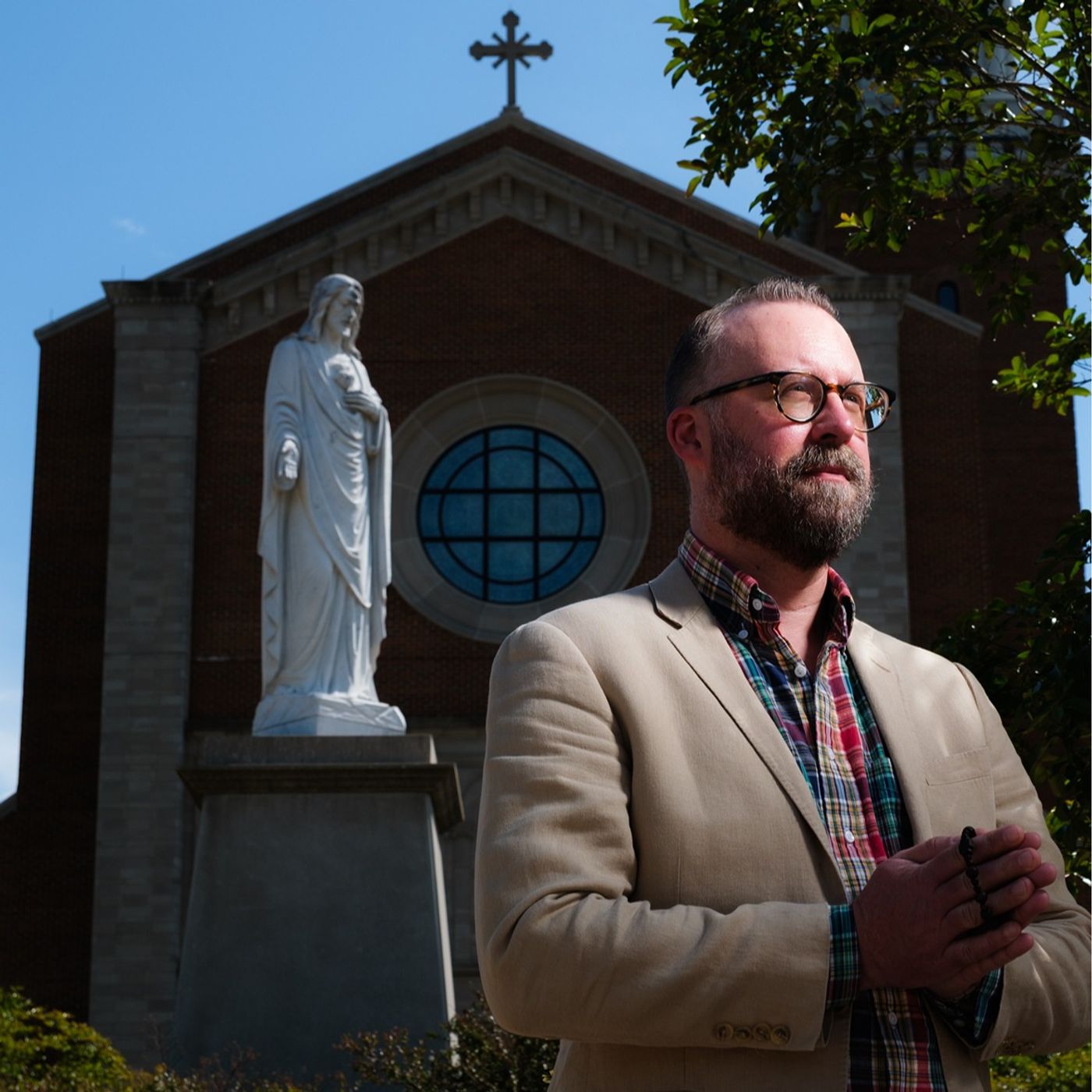
And there's one person I spoke to who really stood out to me, and his name was Nick Woomer. Dieters.
- [25:10]
Nick Woomer
We attended mass, but I think they were going more because that's just what upwardly mobile suburban professionals did. You know, late 80s, early 90s, right.
- [25:22]
Lauren Jackson
He's 46 years old, he's from North Carolina, and for much of his childhood was a Catholic. But his family wasn't particularly devout at
- [25:30]
Nick Woomer
that period of time. In the church, the catechesis of children was particularly just bad.
- [25:36]
Lauren Jackson
Around the time he entered high school, the Catholic church's sexity scandal was really at the height of its visibility in public life.
- [25:46]
Nick Woomer
And so by ninth grade I was done with it.
- [25:50]
Lauren Jackson
And I'm like, so he said he really did not want to go to church anymore.
- [25:54]
Nick Woomer
I don't believe in God. This is all bullshit.
- [25:57]
Lauren Jackson
He fought with his parents and he'd kind of pitched this personal crusade against it.
- [26:01]
Nick Woomer
And I became so insufferable. I think that my parents, like, we've lost this battle and we stopped going to church.
- [26:09]
Lauren Jackson
Yeah. Okay.
- [26:10]
Nick Woomer
So as an undergraduate, I was as big left wing student activist.
- [26:18]
Lauren Jackson
And, you know, he turned to schools, to his workplace, to a meaningful job as a public defender for a sense of purpose in his life.
- [26:26]
Nick Woomer
And just by happenstance, I ended up marrying a woman who was much more devout than I was more as a left wing Catholic. But through the process of our courtship, I convinced her that she should leave. And so I would say I was actively hostile to it.
- [26:45]
Young Interviewee 2
Yeah, for decades.
- [26:47]
Lauren Jackson
Yeah. Then something shifted for him when Trump was elected in 2016.
- [26:53]
Nick Woomer
You know, I had to like, kind of come back and be like, what the hell happened? And try to understand, like, who are these people who voted for him? And I did a lot of things, you know, like kind of self reflection on why half America hates the Democrats and people like me.
- [27:12]
Asla Chaturvedi
What shifted? What changed for him?
- [27:14]
Lauren Jackson
One, he didn't see the election results coming, and it really upended some key assumptions for him about where he thought the country was headed.
- [27:26]
Nick Woomer
You know, So I started to read some of these guys who are right wing kind of influencer people, like, just go to some Twitter accounts and everything. And I guess what I realized is it's like that kind of really nasty, kind of godless. I think some of those guys are just so profoundly evil to me, they've got, you know, what they call race realism stuff.
- [27:49]
Lauren Jackson
And it's like he also found himself disturbed by the tenor of the discussion and the discourse around politics, social and cultural issues online.
- [28:01]
Nick Woomer
And it's like, you know, basically you need to have solidarity with people who are like you. And of course, that just happens to be white people or whatever. And it scared the shit out of me. Ross Doubtfad had some blog posts once where he's like, if you hated the religious right, you're really gonna hate the irreligious right.
- [28:19]
Lauren Jackson
And he thinks really deeply about the best way to counter what he sees as a kind of toxicity.
- [28:24]
Young Interviewee 2
And it's.
- [28:25]
Nick Woomer
It kind of made me realize that without having a transcendent ideology that's universalistic and grounded in something common for all of humanity, we inevitably fall into this kind of us against them world. And that just seems very poisonous to me. So the alternative to that, you know, a universalistic religion where we're all, you know, equal, we're all created in the image of God. And so that's what I felt like I needed.
- [29:06]
Asla Chaturvedi
So to answer the despair that Nick has been feeling about American politics, he's starting to turn to faith. This thing that he's been openly Hostile to for so long. What does that look like?
- [29:17]
Lauren Jackson
Well, he takes steps slowly at first, in the middle of the night, in secret. And because he was too embarrassed to admit he was going down these rabbit holes, he found himself watching religious videos online alone.
- [29:30]
Father Mike Schmitz
Hi, my name is Father Mike Schmitz, and this is Ascension Presents. So a little while back, I think
- [29:34]
Nick Woomer
I remember reading from the Times. It was like an interview with this priest named Mike Schmitz from Minneapolis. He's got all these popular Catholic podcast, and he makes YouTube videos every week.
- [29:46]
Father Mike Schmitz
One of the things I hate, one of the things you probably hate is, like, when we find weakness in ourselves or when we just find ourselves, like, powerless to do what we want to do, you know where.
- [29:57]
Nick Woomer
And so I started watching some of his videos, and I was just keep watching them, you know, like, oh, it's this asshole saying, right.
- [30:06]
Father Mike Schmitz
And one of the things that God wants for us in the. With us more than anything else is he wants to be in relationship with us, and he wants us to be in relationship with other people.
- [30:14]
Nick Woomer
I'd watch him and I'm like, okay, terrible.
- [30:18]
Father Mike Schmitz
Nothing we can do can fully break any kind of relationship with God.
- [30:24]
Lauren Jackson
I've spoken to quite a few people who point to Father Schmitz as someone very accessible for them in re examining the merits of a religious life.
- [30:31]
Nick Woomer
And so he was kind of like, my gateway.
- [30:35]
Lauren Jackson
Yeah.
- [30:35]
Father Mike Schmitz
Into it, you have freedom, you have power, and you can start living that freedom and start living that power today.
- [30:46]
Nick Woomer
And it was like, my secret, My dirty secret. Right. Like, my leftist political commitments, which included, like, a heavy dose of just atheism. And it was such a central part of, like, my Persona that I was, like, ashamed to admit that I was doing this.
- [31:07]
Lauren Jackson
Yeah. Finally he comes to this sense that he wants to reconnect in some way to a faith community.
- [31:15]
Nick Woomer
Eventually, last April, Easter came and went, and I just. We didn't do anything. I didn't mark it because we were Christian. I just felt really bad, like, that we hadn't. We're just hanging out, right? The utter lack of spiritual significance of this. It just felt icky to me. And so I was sitting in my office. I've been thinking about emailing the diocese and being like, what do I do? But I always just put it off. And then I just went. I snapped. I emailed them, and I said, I want to do a general confession, which is.
- [31:55]
Lauren Jackson
So Nick actually contacts the church, and he's talking to a priest, and he says, hey, I'm open to coming back, but I have a Block.
- [32:02]
Nick Woomer
I'm having a real hard time just getting to the believing in God.
- [32:09]
Lauren Jackson
And the block is I don't believe in God. And that feels like a pretty significant problem when it comes to living a religious life or living a Catholic life.
- [32:18]
Nick Woomer
And he said, well, here's what you do. Just start reading the Gospels. And I said, well, no, I've read all those, right? And he's like, no, he's like, you know, you have to read them, like, with an open heart, as if this is giving you some sort of spiritual insight, not as an academic exercise. I said, okay, all right. And he's like, and then you have to start. Come to mass. You just have to do it. Just dive in.
- [32:45]
Asla Chaturvedi
So what did he do?
- [32:47]
Lauren Jackson
He did what the priest said, and he continued to try.
- [32:51]
Nick Woomer
So I go on Amazon, I order a Catholic Bible. I still told, like, nobody about this at all. It took me like a week and a half. I had to tell my wife. I was like, guess what I did last Friday? She goes a lot. I said, I met with a priest. And she goes, why? That's weird. And so that was an awkward conversation.
- [33:14]
Lauren Jackson
He buys a Bible and he starts going to church. But he does all of this very quietly.
- [33:20]
Asla Chaturvedi
And how do you account for his impulse to keep it all a secret? Is it just as simple as not wanting to come off as a hypocrite to his family?
- [33:27]
Lauren Jackson
I think potentially, in part, he said as much.
- [33:30]
Nick Woomer
I was clandestinely going to. I mean, it was kind of a weird thing because it was hard. It was hard to admit I'd just screwed up, you know, like, you just feel like you go from being so strident about one thing and then doing a 180. That's a little bit. You feel a little bit silly, you know.
- [33:50]
Lauren Jackson
He'd spend much of his life making an intellectual argument against the church, that there was no value in prayer or church attendance on Sunday. But what really mattered instead were political commitments to progressive causes that he felt would reform society.
- [34:03]
Nick Woomer
Two years ago, I'd say, well, what we need to do is change structures, right? So what we really need to do is, you know, take over the state, you know, and create a safety net or whatever. You know, like, we need to have state power so that we can fix these problems. It's not your job as an individual, in fact.
- [34:20]
Lauren Jackson
And here he was re evaluating all of that.
- [34:23]
Nick Woomer
But to ignore the individual component and your individual ethical responsibility is really wrong, I think. And so Christianity also, it gives you kind of a broader vision, but it's, you know, Again, it's a very personal thing, too.
- [34:38]
Lauren Jackson
You know, as flawed as Nick thought the church is, and as much as he'd rebelled against it, he started to see Christianity as something that he thought could make the world just a little bit better.
- [34:49]
Nick Woomer
You know what? Like, this works really well for a long period of time. And we're in this moment after, say, this post war era where you've had all these great innovations, and I think we're starting to realize that it doesn't seem very durable anymore.
- [35:04]
Lauren Jackson
Yeah.
- [35:04]
Nick Woomer
You know, Marxism doesn't tell you a whole lot about what you should do with your life. Christianity does.
- [35:09]
Lauren Jackson
Yeah. And this reconciliation of his past worldview with a new one, it wasn't easy, but he did keep trying.
- [35:18]
Nick Woomer
I just, you know, I like the. I like the smells and the bells and the aesthetics of it. You know, it's the religion of half my ancestors.
- [35:30]
Lauren Jackson
And in the process, he found something that was really meaningful to him by
- [35:34]
Nick Woomer
going through the motions and kind of absorbing and reading sacred scripture and with a different attitude. I feel like I have a faith, like a genuine faith in God now.
- [36:01]
Asla Chaturvedi
Lauren, Nick's conversion seems very powerful, but just because people believe in something doesn't necessarily guarantee that they'll suddenly rush to church or to the mosque or to the synagogue or a temple. We are now only seeing the numbers level off. And while that's significant, as you've said, it's not definitive or predictive. Right. There's no guarantee that we're going to see a great rebound in people returning to some established religion.
- [36:30]
Lauren Jackson
Of course, and I want to be very clear, we are not seeing a revival of religiosity. What I am hearing about is a renewed interest or a new renewed curiosity in religion. For example, even chaplains at Harvard tell me that in the last 25 years, they haven't seen this much interest in religion on campus. We're also seeing religious references appear more frequently throughout American life, and I think that's most visible at the very top of the Trump administration. You think about J.D. vance, who's been very public about his conversion to Catholicism in recent years. He's publishing a book on the subject soon.
- [37:07]
Asla Chaturvedi
Right.
- [37:07]
Lauren Jackson
Think about Pete Hegseth, Secretary of War, who is invoking Christianity in speaking publicly about the war in Iran. So it's a big part of the Trump administration, but it's become a bigger part of our politics in General.
- [37:20]
Mayor Zoran Mamdani
There are 11 days remaining until Election Day. I will be a Muslim man in New York City each of those 11 days. And every day that follows after that
- [37:29]
Lauren Jackson
in New York, for example, Mayor Zoran Mamdani is being very frontal and open, and he has been throughout his campaign about his Islamic faith.
- [37:36]
Mayor Zoran Mamdani
The Prophet Muhammad was a stranger, too, who fled Mecca and was welcomed in Medina.
- [37:43]
Lauren Jackson
He's now in office hosting iftars during Ramadan, and he's praying in public.
- [37:47]
Mayor Zoran Mamdani
Many think of this month solely as a time where we fast from sunup to sundown. And yet for me, and I know for so many of you, it is a month where we also get to reflect on who we are.
- [37:59]
Lauren Jackson
That's new, you know, for a long time, I think since 2001, really, that would have been seen as a liability.
- [38:06]
Various Interviewees / Commentators
Religion is not just about other people who lived a long time ago. Religion is about us in the here and now.
- [38:14]
Lauren Jackson
And then, you know, if you look to the south, look at Texas State Representative James Talarico, who obviously has been in the news a lot. He won the Democratic primary for a Texas Senate seat.
- [38:23]
Various Interviewees / Commentators
Christian nationalists walk around with a mouthful of scripture and a heart full of hate.
- [38:29]
Lauren Jackson
He's been talking about the Christian gospel as a way to combat the rise of what he derides as Christian nationalism. And he's really encouraging voters to see Christianity as the foundation for a more compassionate form of economic populism.
- [38:43]
Various Interviewees / Commentators
What would Jesus do about a tax system that benefits the rich over the poor?
- [38:49]
Lauren Jackson
You know, he's a seminarian. He really knows the Bible, and he's really quoting it in a way that we haven't seen in a long time from a candidate in the Democratic Party. Right.
- [38:59]
Asla Chaturvedi
It was so interesting to see Talarico.
- [39:01]
Lauren Jackson
How are you, James?
- [39:02]
Various Interviewees / Church Leaders
I'm doing well. How are you?
- [39:04]
Young Interviewee 3
Kind of school.
- [39:05]
Asla Chaturvedi
Joe Rogan a few months ago about Christianity.
- [39:08]
Nick Woomer
It's always interesting to see a person who is a Christian, who is not for the Ten Commandments in schools.
- [39:18]
Various Interviewees / Commentators
Yeah. In all of Jesus teachings, he's always focused on the outsider, the outcast, the person who's left out, or the person who's different.
- [39:27]
Asla Chaturvedi
And in general, to see all these young political leaders push to counter the dominance around conversations that we've seen so long on the political right.
- [39:39]
Lauren Jackson
Yeah, exactly. And beyond politics, the Pope is dead. The throne
- [39:47]
Various Interviewees / Church Leaders
is vacant.
- [39:48]
Lauren Jackson
We're also seeing this in Hollywood. Did you know there's a rabbi here?
- [39:51]
Nick Woomer
No shit.
- [39:52]
Lauren Jackson
Yeah. Where he has a beard and he.
- [39:55]
Various Interviewees / Church Leaders
He was definitely judging me.
- [39:56]
Nick Woomer
Sounds like a rabbi.
- [39:57]
Lauren Jackson
And in pop music, I'm thinking especially of Justin Bieber and of Rosalia, who has a new album out called Lux, which was released to high critical acclaim. It's all about faith, hers and others. And on it, she even says in one of the songs that she's hot for God. Wow.
- [40:18]
Asla Chaturvedi
If that doesn't make God cool, then I don't know what does.
- [40:22]
Lauren Jackson
Roselia is very cool.
- [40:25]
Asla Chaturvedi
But what about you, Lauren? I'm curious if any of this has led to you rethinking your position on faith and established religion.
- [40:37]
Lauren Jackson
It's a big question. The short answer is I am not religious. I do not attend a house of worship. I have not gone back to the faith of my family and my childhood. Mm. You know, I still pray. I don't know what or whom I'm praying to, but the fact that my job explores these issues has given me the chance to really examine and to think deeply about the ideas that I grew up with. Mm. And in a way, it's brought me closer to my parents.
- [41:11]
Lauren's Mother
I think we need to talk about some of the articles more because each
- [41:16]
Lauren Jackson
week I write a newsletter called Believing. And every Sunday, whatever I write becomes something for us to talk about.
- [41:22]
Lauren's Mother
You know, the documenting is a job, but your heart and your soul are always, you know, precious to me.
- [41:33]
Lauren Jackson
And while we still don't see eye to eye, I think I've heard from you and dad saying you see this as part of my, in your view, mission on this earth, which is flattering because I know that comes from a really meaningful place for you. I think I see it differently. I'm a journalist and we have found a way to connect again about something that for a long time really drove us apart. I love you.
- [41:57]
Lauren's Mother
Love you.
- [41:57]
Young Interviewee 2
Get better.
- [41:58]
Lauren Jackson
Okay? Thanks mom. Bye.
- [42:00]
Young Interviewee 2
Bye.
- [42:01]
Michael Barbaro
Bye.
- [42:07]
Asla Chaturvedi
Lauren. Thank you so much.
- [42:09]
Lauren Jackson
Thank you so much. I've had so much fun in this conversation.
- [42:21]
Michael Barbaro
We'll be right back.
- [42:26]
Apple Card Announcer
Self directed Investing, Trading, Full service Wealth management, Automated Investing, Financial planning, Thematic investing, Retirement planning.
- [42:34]
Lauren Jackson
Whew.
- [42:35]
Apple Card Announcer
And to think that's just a small taste of what Schwab offers. Because Schwab knows when it comes to your finances, choice matters. No matter your goals, investing style, life stage or experience. Schwab has everything you need all in one place so you can invest your way. Visit schwab.com to learn more.
- [42:54]
Simplisafe Announcer
Protecting your home shouldn't be a headache. Most security companies make it one, trapping you in expensive multi year contracts and requiring service appointments. Simplisafe is better with comprehensive 24. 7 professional monitoring for a fraction of the cost. Customize your system online in minutes and set it up in under an hour. No drilling stress and no long term contracts. Simplisafe award winning security that earns your business every day right now. Get 50% off your system at simplisafe.com thedaily that's half off@simplisafe.com thedaily there's no safe like Simplisafe.
- [43:30]
Father Mike Schmitz
It's your day to play it's your morning to make the most of it's
- [43:34]
Various Interviewees / Church Leaders
your way to love it's your climate
- [43:36]
Lauren Jackson
to consider it's your answer to what should I watch?
- [43:40]
Young Interviewee 1
It's your money to save it's your
- [43:43]
Michael Barbaro
song to analyze line by line it's
- [43:45]
Various Interviewees / Church Leaders
your 10 ways to find a little
- [43:47]
Lauren Jackson
calm it's your world to understand the New York Times.
- [43:53]
Various Interviewees / Church Leaders
Find out more@nytimes.com yourworld.
- [44:03]
Michael Barbaro
Here's what else you need to know today. On Monday, President Trump mocked Iran's response to his latest peace proposal as unserious and said it had imperiled the ceasefire between the two countries.
- [44:17]
Nick Woomer
For the time being, the ceasefire remains in place.
- [44:20]
Donald Trump
It's unbelievably weak, I would say. I would call it the weakest right now after reading a piece of garbage they sent us. I didn't even finish.
- [44:30]
Michael Barbaro
Iran called its response, quote, generous and responsible, a description that Trump flatly rejected.
- [44:38]
Donald Trump
I would say the ceasefire is on massive life support, where the doctor walks in and says, sir, your loved one has approximately a 1% chance of living
- [44:52]
Michael Barbaro
and Democrats in Virginia are appealing to the US Supreme Court to save a new congressional map approved by voters that was thrown out last week by a state court. It's a last ditch attempt to preserve a redistricting plan that created four new Democratic leaning House districts before the midterm elections. In its surprise decision, the state court ruled that the redistricting process violated Virginia's constitution. Because the case revolves around six state law, it's unclear if the Supreme Court will agree to hear the appeal. Today's episode was produced by Asta Chaturvedi. It was edited by Michael Benoit and contains original music by Marion Lozano, Dan Powell and Elisheba Itu. Our theme music is by Wonderly. This episode was engineered by Alyssa Moxley. Special thanks to Rachel Quester, Nick Pittman, Chris Wood, Kyle Grandillo and Sophia Landman. That's it for the Daily. I'm Michael Balvara. See you tomorrow.
- [46:22]
Apple Card Announcer
Investing with Schwab is like spending a Saturday at a great farmer's market. You can fill your reusable tote with a bit of everything. Maybe you go for some free range self directed investing or perhaps you pick up a few farm fresh trades while you peruse. You can even get help from a dedicated advisor. That's full service wealth management. Mix, match and change your mind whenever you want. Because at Schwab you can invest your way. No matter your goals or appetite for investing, Schwab has everything you need all in one place. Visit schwab.com to learn more.