← The Daily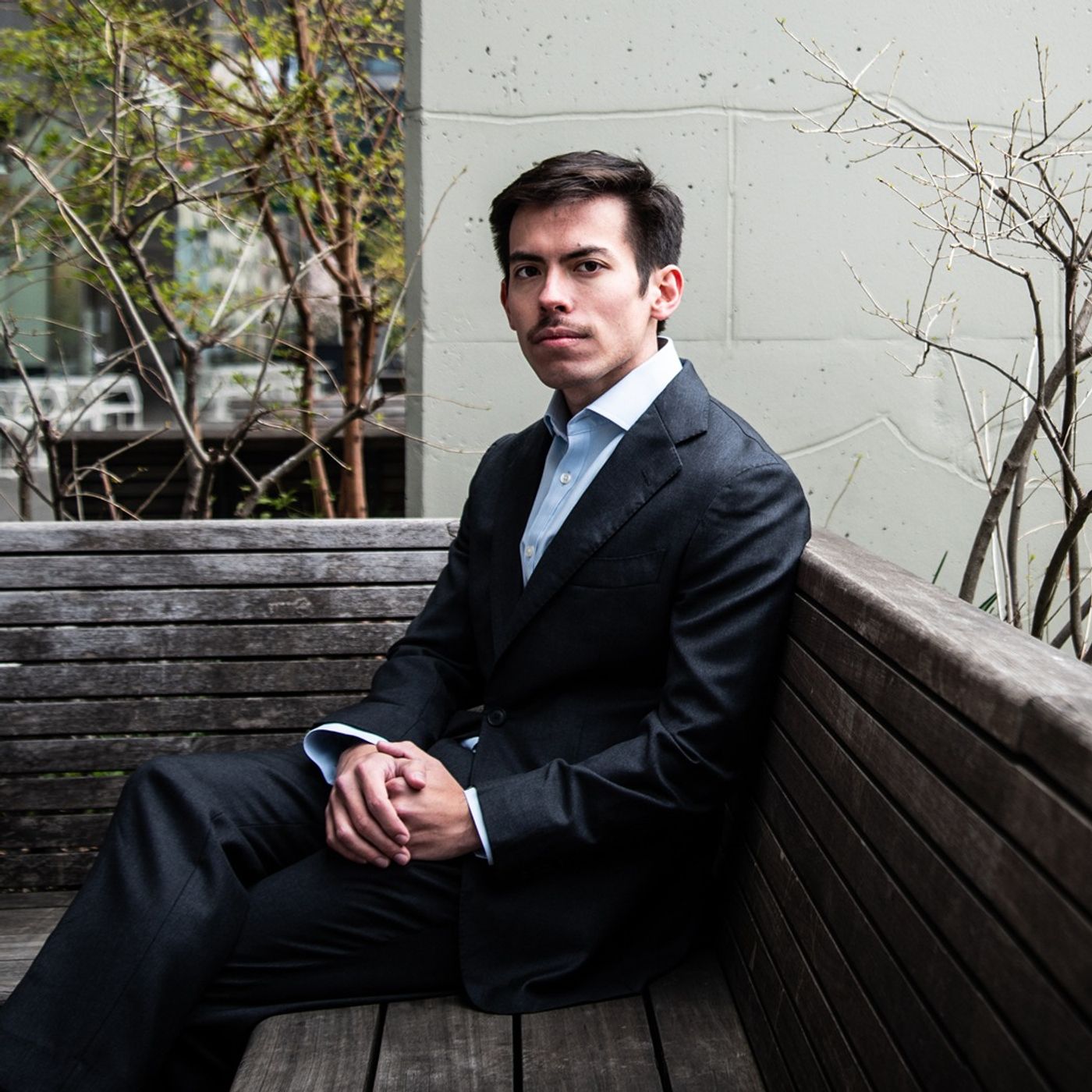
The Daily
Why One Lawyer Resigned When His Firm Caved to Trump: An Update
00:24:34
This week, The Daily is revisiting some of our favorite episodes of the year and checking in on what has happened in the time since. President Trump has used executive orders to wage war on law firms, specifically targeting those whose lawyers have investigated or sued him, or represented his enemies in court. Michael Barbaro speaks to Thomas Sipp, a lawyer who chose to quit after his firm, Skadden, negotiated a deal to placate the president.
Loading summary
Transcript106 lines
- [00:00]
Michael Barbaro
This podcast is supported by AT&T, the network that helps Americans make connections. When you compare, there is no comparison. AT&T. Hey, it's Michael. This week, the Daily is revisiting some of our favorite episodes this year, listening back and hearing what's happened in the time since they first ran. Today we return to our conversation with Thomas sipping the lawyer who quit his job at a prestigious corporate law firm after his bosses gave in to legally dubious demands from President Trump. And we hear how SIP views that moment. Now, eight months later, it's Monday, December 29th. Thomas, welcome to the Daily.
- [00:48]
Thomas Sipping
Thanks for having me.
- [00:49]
Michael Barbaro
I'm getting the small sense that this is a nerve wracking experience for you even before it started. I'm just seeing it on your face.
- [00:57]
Thomas Sipping
Yeah, it definitely is.
- [00:59]
Michael Barbaro
I want to start by asking you to explain, Thomas, how it is that you came to be a lawyer in the first place and ended up at this very prestigious firm where you worked until just a few days ago. Skadden, Arps, what's that story?
- [01:16]
Thomas Sipping
So, going all the way to the start. I was born in Japan to an American father and a Japanese mother. And my family moved to the United States when I was 10. My parents separated shortly after. And so, you know, I was learning English in middle school and also learning about what it means to be an American suddenly becoming this sort of racial minority because I'm mixed race and coming to understand a social fabric that's kind of unique to the United States, especially compared to a relatively homogenous country like Japan.
- [01:51]
Michael Barbaro
Right.
- [01:52]
Thomas Sipping
And, you know, growing up with my. My single mom who doesn't speak, you know, fluent English and getting all those sort of experiences, I think started to put me on the path that I'm on now.
- [02:04]
Michael Barbaro
Can you just explain that?
- [02:06]
Thomas Sipping
Yeah. I mean, there were difficult days, for sure. You know, whether it's not being able to make friends, being made fun of for my accent and stuff like that, that really, I think started to form, like that sense of injustice that I think fuels me sometimes. Right. But at the same time, I moved to the United States, you know, in 2008, during that election, and there's all this conversation in America about hopefulness and about, you know, this being a country where there's a place for anyone. Right. And so I was also absorbing that as well. In high school, I joined a debate team to practice public speaking. And in college, I was studying political science at the University of Texas, and I had this wonderful opportunity to be an intern at the United States Senate.
- [03:04]
Michael Barbaro
Wow.
- [03:04]
Thomas Sipping
This was probably basically like a decade after I moved to the United States, and suddenly I'm walking through the halls of Congress with my little yellow Senate intern badge and running into senators and congressmen, getting to sit in on important hearings. And it was during that time that I really decided I want to be a part of this project here in the United States.
- [03:30]
Michael Barbaro
And when you say this project, what do you mean?
- [03:33]
Thomas Sipping
It's, you know, a march towards justice, the betterment of everyone. I think there are these core principles that are unique to the United States in many ways.
- [03:42]
Michael Barbaro
I'm getting from you a real sense of idealism and a real, pure admiration for what the United States represents.
- [03:52]
Thomas Sipping
Yeah. I'm not blind to the errors in the past. And I know that the United States has not been and still is not a perfect country, but I really still believe that when the United States is doing the right things, the whole world is a better place because of it.
- [04:09]
Michael Barbaro
So talk about how this all translates into your decision to become a lawyer, to enter this industry.
- [04:16]
Thomas Sipping
Well, so a lot of the people with the cool jobs in D.C. tend to have law degrees. And so I figured it was the next best step afterward. And so I go to law school straight out of college. All the law firms, the big law firms, almost by definition, pay the same scale salary. So the way that these law firms distinguish themselves from each other oftentimes is in things like how their pro bono program operates, how invested they are into diversity initiatives. And I chose Skadden because it had the prestige. And as a 22 year old trying to pay off a six figure debt, I was drawn toward a higher salary, among other things.
- [05:00]
Michael Barbaro
I'm just going to explain to people. Yes, by Skadden, you mean Skadden Arps.
- [05:04]
Thomas Sipping
Skadden Arps, Yes.
- [05:05]
Michael Barbaro
Big, big law firm has an office here in New York. Has offices, I think, all over the world. It's one of the firms that we think of when we think of this concept of big law. Law firms that do a huge amount of work in corporate America.
- [05:17]
Thomas Sipping
That's right. And Scadden really advertised two things. It's pro bono program and its diversity initiatives. With regard to the pro bono programs, Scadden had a rule basically that said that you can count an unlimited number of your pro bono hours towards your billable hours requirement. And it was a big deal that Skadden does that because not many other firms do.
- [05:42]
Michael Barbaro
So when did you start to understand that Scadden had entered the President's crosshairs?
- [05:50]
Thomas Sipping
So on March 17, when the EEOC, which stands for the Equal Employment Opportunity Commission, basically published this letter listing 20 law firms, including my own, saying that these law firms are essentially under investigation for their practices related to diversity.
- [06:07]
Michael Barbaro
Right. I believe the claim was that these law firms may have practiced discrimination through the application of diversity, equity and inclusion practices.
- [06:17]
Thomas Sipping
Right.
- [06:17]
Michael Barbaro
And these executive orders, I think it's worth reminding listeners they can feel to the law firms that are being hit with them like death sentences because they explicitly prevent these firms, like Perkins Coie, from interacting with the federal government. And so the people who work at these firms fear that they may go out of business.
- [06:38]
Thomas Sipping
Right. Yeah. And one of my friends from the firm sends me an article that the New York Times published, basically stating that Scadden was in talks with the administration to avert an executive order. And this was after Paul Weiss, which is essentially a peer firm, made a deal, including for $40 million pro bono commitment to causes that the President agrees with. And during that preceding week, there had been pockets of the law firm trying to organize some sort of request from a response. Nothing publicly, but at least internally seeking clarity and hoping to provide at least some input into what the attorneys who actually work there feel about what's going on and how so many of us believe that it's unconstitutional.
- [07:25]
Michael Barbaro
The executive orders.
- [07:26]
Thomas Sipping
Right. This is not a difficult legal question. There's no legal basis for what the president's doing. It's complete abuse of power. And so we want our firm to stand up for that, but we're feeling like things are moving really fast, and we felt voiceless.
- [07:42]
Michael Barbaro
So what happens next?
- [07:44]
Thomas Sipping
So there's this email thread that got around to parts of the firm. And so when I see that, I realize at that point that's pretty likely that there's going to be a deal and that it's going to be one that the attorneys don't like. And, you know, within hours, I think we again find out from the news that there is this agreement. And then we hear from the firm.
- [08:18]
Michael Barbaro
They have done a deal.
- [08:20]
Thomas Sipping
Yeah.
- [08:32]
Michael Barbaro
We'll be right back.
- [08:39]
Podcast Sponsor Announcer
Support for this podcast comes from GoodRx. The holidays are here, but so is cold and flu season. Find relief for less. With GoodRx, you could save an average of $53 on flu treatments, plus save on cold medications, decongestants, and more easily. Compare prescription prices and find discounts up to 80%. GoodRx is not insurance, but works with or without it and could beat your copay price. Save on cold and flu prescriptions this holiday season. @goodrx.com thedaily I'm Peter Baker.
- [09:11]
Peter Baker
I'm chief White House correspondent for the New York Times. I cover the President of the United States, and I've covered every president since 1996. The pressure on an independent press today feels greater than any time I've seen it in four decades as a journalist. All that pressure, though, is just a reminder of why journalism matters. Our job is to bring home facts, help our readers understand what's happening, regardless of what the consequences may be to us. And if they punish us, so be it. We will still go out there and report as honestly and aggressively and fairly and truthfully as we can. I mean, look, if the New York Times were not at the White House asking the hard questions, we looking for stories behind the stories, trying to understand what's going on. It's possible these questions don't get asked. Independent reporting requires resources. You can support it by subscribing to the New york times@nytimes.com Subscribe.
- [10:06]
Michael Barbaro
I just want to summarize what is in this deal that Scadden reached with President Trump. It promises to provide $100 million in pro bono legal services from Scatten to causes that both President Trump and the law firm both support. It calls for hiring what are known as Scadden Fellows. Those fellows are at least some of them supposed to be focused on Trump friendly issues, and some of them have to be conservative in their ideological outlook. And then there's a part of the agreement that vows that Scadden will not engage in, quote, unquote, illegal DEI hiring practices. Broadly, this is the deal that every major law firm that has come to an agreement has reached with the President. So what is your reaction to this deal when you finally digest it?
- [11:02]
Thomas Sipping
Personally, I felt ashamed to work at Scadden. And that's such a new experience because of how prestigious the law firm is. And then suddenly, in the blink of an eye, in just a few days, hours, even my whole view of the firm has been completely tainted.
- [11:22]
Michael Barbaro
Can you explain what precisely is making you feel the shame?
- [11:27]
Thomas Sipping
It's a mix of things. This is giving the President a PR win after being bullied. So it seems like I'm working at a firm that isn't as high caliber as it said it was. Right. But more importantly than that, so many lawyers agree that what the president is doing is wrong. This is a threat to our constitutional fabric, to our democracy, to our civil liberties. You know, people should be able to be represented by their lawyers freely. Judges should be able to make decisions even if it goes against the president. And to see Skadden be complicit to aid this attack. I was so ashamed to work there.
- [12:14]
Michael Barbaro
So what did you do?
- [12:16]
Thomas Sipping
So I start actually just writing down notes. And really my questions, some of them are practical, like, how is this going to be enforced? What will it actually look like? And I started thinking about it and finding answers. And so the questions became statements. And then I realized what I had written was a draft of resignation letter.
- [12:38]
Michael Barbaro
So that's not necessarily what you set out to do?
- [12:40]
Thomas Sipping
No.
- [12:43]
Michael Barbaro
Can I ask you to read from parts of the letter?
- [12:47]
Thomas Sipping
Yeah, of course. Dear colleagues and friends, I'm writing to let you know that I'm leaving this firm. There was a time when my employment here was so unlikely. For much of my early childhood, I was not a good student. I struggled to focus in class and take anything seriously. But even then, I. There was one subject I loved. History. I thought it was so wonderful to learn about all that came before me, about the triumphs and tragedies, about the moments of individual bravery and collective complacency. I would often imagine myself faced with the same dilemmas. What would I do if I was there? Would I do the right thing? It always felt like there was no way to know. I believe, as I know many of you do, that what the current presidential administration is doing is wrong, that we are sliding into an autocracy where those in power are above the rule of law. Scadden's agreement with the Trump administration sent our country deeper down this dissent. And then I finish. Scadden is on the wrong side of history. I could no longer stay, knowing that someday I would have to explain why I stayed.
- [14:23]
Michael Barbaro
What did it feel like to hit send? I mean, listen to your breathing right now. It's like you're reliving it.
- [14:32]
Thomas Sipping
Yeah.
- [14:33]
Michael Barbaro
What was it like to send that email?
- [14:36]
Thomas Sipping
If you heard my breath, it felt like that maybe a hundred times more, though, because I knew that that was a pivotal moment in my life, maybe just as pivotal as coming to the United States in the first place. I knew that I was closing some doors. And, you know, a place like Skadden, I'm grateful for that experience, I think is only possible in a country like the United States. And I really, really believe in it.
- [15:09]
Michael Barbaro
I'm sure you're aware that many people who have spoken out against President Trump and his policies have experienced, at times, ferocious blowback. It can be a life altering event. Is that something you're worried about now?
- [15:26]
Peter Baker
Yeah.
- [15:26]
Thomas Sipping
And I was finally able to talk to my mother after, you know, resigning, and she's back in Japan, you know, with the rest of my family. And I told her I quit. And she was like, do you have another job? And I was like, no, mom, you don't understand. Like, this is, like in the news. And she sort of didn't process it at first. And then she started to cry and she asked me to come back to Japan. I said no, like, I can't and I won't.
- [15:58]
Michael Barbaro
Many of your colleagues are not leaving their jobs. They may feel the way you feel and have two kids they have to put through college. They might not feel the way you feel. I'm thinking about reporting my colleagues did inside the upper echelons of Paul Weiss when that law firm did a deal with Trump. And it became clear that the majority of the people who run the firm, lots of them, felt that the best thing to do was to make a deal to protect the thousands of people who work at these firms. And that at the end of the day, what they're giving up is small compared to that survival. And the bosses at all these firms that end up capitulating to Trump say some version of we are the same law firm after we did these deals, as we were before. In fact, in a company wide email, your former boss says just that, quote, this agreement does not change who we are. What do you make of that?
- [17:01]
Thomas Sipping
I just don't think that's true. These law firms are agreeing to these deals when they know that there's no legal basis for any threatened executive order. And by capitulating, they're aiding this existential threat against the profession, the independence of the judiciary and our democracy. And everyone who depends on does change.
- [17:31]
Michael Barbaro
Who the firm is.
- [17:32]
Thomas Sipping
Yes.
- [17:33]
Michael Barbaro
In short, yes, you very clearly have a lot of faith in the US but at this point, how confident are you, given everything you've just been through, that the version of the United States that seems to be at the center of everything you've done here is now the version of the United States confident.
- [17:57]
Thomas Sipping
Because of what so many people, strangers, you know, reaching out to me, have said to me, which is that they're also scared. Everyone is scared. But if everyone could, you know, stand up and speak up about this, then we can turn this back. I think we can save it still.
- [18:17]
Michael Barbaro
But are you a little bit worried that you're making the wrong bet?
- [18:21]
Thomas Sipping
Well, of course I'm worried. I guess I'm putting my career on the line for this. And I knew that going into this. I have student loans, I have a single mom who, you know, and you.
- [18:35]
Michael Barbaro
Just publicly picked a little bit of a fight with the president.
- [18:38]
Thomas Sipping
That's Right.
- [18:39]
Michael Barbaro
I wonder if this experience made you question going into law.
- [18:46]
Thomas Sipping
No, I don't. I don't regret becoming a lawyer and going to law school. It's a wonderful education. You know, even my time that's gotten. I learned so much, and it's equipping me with skills, I think, to advocate for what I believe in and for others as well, and that's what lawyers do.
- [19:17]
Michael Barbaro
Well, Thomas, thank you for coming in here and for telling us this story. We really appreciate it.
- [19:25]
Thomas Sipping
Thank you.
- [19:31]
Michael Barbaro
After the break, how Thomas has fared since he quit his job.
- [19:52]
Podcast Sponsor Announcer
Support for this podcast comes from GoodRx. The holidays are here, but so is cold and flu season. Find relief for less. With GoodRx, you could save an average of $53 on flu treatments, plus save on cold medications, decongestants, and more easily. Compare prescription prices and find discounts up to 80%. GoodRx is not insurance, but works with or without it and could beat your co pay price. Save on cold and flu prescriptions this holiday season. @goodrx.com thedaily this is Nick Kristof.
- [20:24]
Michael Barbaro
I'm an opinion columnist for the New York Times, and I'm proud that for more than 100 years, the Times has conducted an annual appeal to raise money for charitable organizations. Times journalism is fundamentally about vetting the truth, and in this case, about vetting organizations and selecting some of the best to help create opportunity and overcome hardship. I hope you'll consider donating to the New York Times Communities Fund. To learn more, go to nytimes.com nytfund thank you. Let's catch up.
- [21:00]
Thomas Sipping
Okay.
- [21:01]
Michael Barbaro
Formally.
- [21:01]
Thomas Sipping
Okay.
- [21:02]
Michael Barbaro
You look well. You look rested.
- [21:04]
Thomas Sipping
The last time you saw me, I was running on almost no sleep.
- [21:07]
Michael Barbaro
Well, catch me up on everything that's happened to you. Last time we spoke, it was just a few days after you quit your job at Skadden, Right. Suddenly you're not employed, you're not getting any paychecks. What happened next?
- [21:23]
Thomas Sipping
I came on this podcast. I remember that part and sounded like people generally liked what I said. And I got so many heartfelt messages from people, you know, feeling that sort of hopefulness that I feel thinking about these sort of democratic values, what it means to be an American. Other people reached out because they felt sort of maybe a kinship, a sort of common background, whatever it may be. There were just some parents who were worried about their kids and, you know, listening with their kids, and those are some of the most touching ones. There was one in particular that really struck me as a.
- [22:01]
Michael Barbaro
Can you describe it?
- [22:02]
Thomas Sipping
Yeah, it Was a. A father driving his kids to school, and they're listening to this episode, and he's asking kids, his kids, what would.
- [22:12]
Michael Barbaro
You do if you were in Thomas's position?
- [22:14]
Thomas Sipping
Yeah, exactly. And that's the sort of thing that, when I was a kid, I would think about in history class. And I don't know, it was a really great feeling, and it gave me a real. It was like a win in my back.
- [22:27]
Michael Barbaro
And what ends up happening to your job prospects? Do you end up finding a job?
- [22:30]
Thomas Sipping
Long story short, I do. I'm currently working for a federal judge.
- [22:35]
Michael Barbaro
And what can you tell me about that work, how you got it and how it may or may not fit into the way that your last job ended?
- [22:43]
Thomas Sipping
I can't tell you a lot, but I can tell you some things.
- [22:45]
Michael Barbaro
Okay.
- [22:46]
Thomas Sipping
The judge actually found me through his network and mine, kind of colliding. I'm his. The title is I'm a law clerk. And the job is essentially analyzing the law, explaining it, making recommendations to the judge. So you're basically the judge's assistant.
- [23:03]
Michael Barbaro
I know when you clerk for a judge, this is my sense, you may not be able to discuss a lot of the intricacies of your work. But it strikes me that if you're working for a federal judge, you're potentially interacting with President Trump's agenda to some degree. And federal judges are the figures in our legal system right now who are seen as really the most powerful and important potential checks on this president. And I'm sure that hasn't escaped you either.
- [23:38]
Thomas Sipping
I'm. To be honest, I'm not going to talk about active cases that may or may not be before my judge. It's because there's pretty serious ethics concerns about. You know, clerks typically don't talk to the media.
- [23:49]
Michael Barbaro
Right.
- [23:50]
Thomas Sipping
And I want to make it clear that the judge's job isn't to be a partisan actor. It's to be the adjudicator of what the law says. And as you know, my judge's clerk, that's also my job and responsibility, and I take that really seriously.
- [24:06]
Michael Barbaro
Right.
- [24:06]
Thomas Sipping
And I think the true interpretation is that I made this decision on ethics grounds, and it was about what I thought the law was, what the Constitution demands. And I was just hoping to explain my own decision in a time when I think a lot of people were facing a similar decision and they weren't sure what it would look like on the other side. And I guess right now, I'm speaking to you from the other side of that decision. Say I was fine I was actually more than fine.
- [24:41]
Michael Barbaro
There is another side.
- [24:43]
Thomas Sipping
There is another side to quitting a.
- [24:44]
Michael Barbaro
Big, prestigious, well paying job at a law firm on principal.
- [24:49]
Thomas Sipping
Yes. In the year 2025. You'll end up all right. And specifically speaking to the lawyers, not everyone in America can safely speak their mind right now. Mm. But lawyers can. Obviously, you may be targeted and. But the law firms that fought back and are winning in courts are doing fine financially. You know, they're not, they're not going underwater. And this, I think existential fear was completely overblown.
- [25:25]
Michael Barbaro
It was overstated, I think.
- [25:26]
Thomas Sipping
So as an excuse, I think it was putting profits over an oath that lawyers swear to protect the Constitution. And you know, if someone like me ends up fine, more than fine, then the executive partners and chairpersons of these.
- [25:44]
Michael Barbaro
Law firms who make many millions more.
- [25:47]
Thomas Sipping
Right. Would have been completely fine too. And regardless, I think the oaths have to mean something.
- [26:02]
Michael Barbaro
Thank you once again for your time and your candor.
- [26:07]
Thomas Sipping
The pleasure and the privilege is all mine. I really just want to say thank you because you're a huge part of what happened to me a few months ago. You changed my life.
- [26:19]
Michael Barbaro
Oh, well, you. You changed your own life. We just chronicled it. Today's daily was produced by olivia natt, shannon lynn and mooj zadi. It was edited by patricia willins, jody becker and michael benoit. Contains music by dan powell and marion lozano and was engineered by alyssa moxley, rowan misto and chris wood. Special thanks to jessica silver greenberg. That's it for the daily. I'm michael balbaro. See you tomorrow.
- [27:14]
Podcast Sponsor Announcer
On January 6th, Idaho Network revisits one of the most notorious cases of the past 25 years in the new documentary event the Cult behind the the Andrea Yates Story. When Andrea Yates drowned her five children in 2001, the world was shocked. How could a mother do something so horrific? This three part documentary exposes how the sinister influence of a cult may have driven Andrea's postpartum depression to the most tragic extremes. Don't miss the Cult behind the Killer the Andrea Yates Story January 6th on id.