← The Daily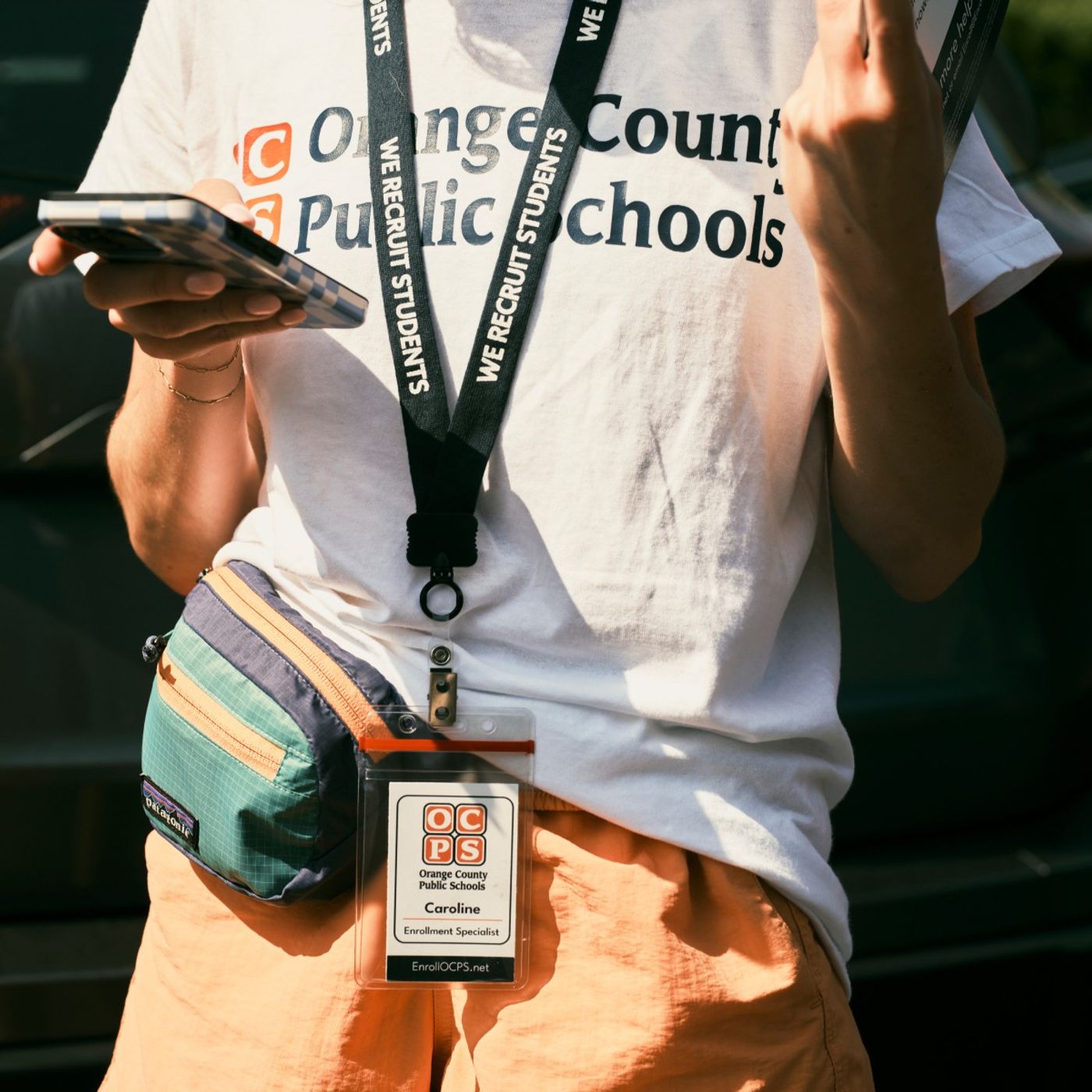
The Daily
Why So Many Parents Are Opting Out of Public Schools
00:29:35
Across the country, public schools are facing steep declines in enrollment, while the movement to use public funds for private education grows. Dana Goldstein, who covers education and families for The New York Times, explains why so many parents are using taxpayer money to privately educate their children — and what this means for American education.
Loading summary
Transcript88 lines
- [00:00]
Capital One Advertiser
Brought to you by the Capital One Savor Card. With Savor, you earn unlimited 3% cash back on dining, entertainment and at grocery stores. That's unlimited cash back on ordering takeout from home or unlimited cash back on tickets to concerts and games. So grab a bite, grab a seat and earn unlimited 3% cash back with the saver card Capital One. What's in your wallet? Terms apply. See capitalone.com for details.
- [00:27]
Natalie Kitroeff
From the New York Times, I'm Natalie Kitroweff. This is the Daily across the country, public schools are facing massive declines in enrollment while the movement to use public funds for private education grows. Today, my colleague Dana Goldstein explains why why so many parents are using taxpayer money to privately educate their children and how their choices will transform the future of American education. It's Wednesday, August 20th. Dana, you're a longtime education reporter here at the Times. You have become a reference point, I think, for a lot of people on what is happening with schooling in the United States. And you've been covering what's been described as a sea change in the way America approaches K through 12 education. So tell me about that change.
- [01:41]
Dana Goldstein
For the longest time, the debate among policymakers was about improving public schools. How can policymakers help public schools do a better job, do better academically for kids, do better socially for kids? But over the past few years, I've been looking at one of the biggest shifts I've observed in almost 20 years as an education reporter. And that is because a big idea has gotten more energy than ever before. And that is that instead of putting all of our efforts into making public schools better, we should be spending more money on giving parents more opportunities to basically escape public schools to put their kids in homeschooling or private education.
- [02:23]
Natalie Kitroeff
And what does that look like on a policy level?
- [02:25]
Dana Goldstein
Well, basically, it looks like some form of a private school voucher, some way that parents can spend taxpayer dollars to send their kids to private school or to homeschool them. And over the past five years, we have doubled the number of students using some form of a private school voucher. And now more than 1 million American kids are using public dollars for some form of private education. And this is starting have a big impact on the public school system that we're beginning to really take a close look at this school year.
- [02:57]
Natalie Kitroeff
And what is it exactly? What are you seeing?
- [02:59]
Dana Goldstein
So over the past few years, according to data that we've analyzed, two thirds of traditional public schools have lost enrollment numbers.
- [03:07]
Natalie Kitroeff
Wow. A lot.
- [03:09]
Dana Goldstein
Yes. And there are two reasons for that. The first is that Americans Are having fewer children than before. So it makes sense that if the child population is going down, public schools will lose enrollment. But just as that is happening, there's this explosion of school choice, which is brought on in part by the availability of these vouchers. And we are seeing a lot of growth in the private education sector and in homeschooling. And when a kid uses one of these vouchers to leave a public school, they take with them public money that would otherwise go to public education. And this has grown to the point that we're beginning to see impacts on public schools and a major shift in how parents think about educating their children. And that is the culmination of years of work from conservative activists and donors.
- [04:05]
Natalie Kitroeff
Okay, let's talk about that history. Let's roll the tape back. How did all this start?
- [04:11]
Dana Goldstein
Well, vouchers are a really old idea, but if you go Back to the 1990s, the idea was that vouchers should be available to the kids who maybe needed another option most, those with disabilities who were not being adequately served in the public school system, Perhaps low income children who were zoned for underperforming schools. And then there was another argument that was frequently put forth, which was that if we introduced more competition into the education sector, perhaps public schools would improve when forced to compete more with private education. However, the sort of organizing idea behind the private school choice movement was really started to shift during the COVID 19 pandemic.
- [04:57]
Natalie Kitroeff
How so? I mean, I obviously remember very well that during the pandemic there was all of this kind of anger from parents around school closure, around masking. There was all this debate. How, how did that interact with this movement?
- [05:13]
Dana Goldstein
Remember, parents were dissatisfied on many different levels during COVID We risk losing an.
- [05:22]
Natalie Kitroeff
Entire generation to the pandemic.
- [05:24]
Dana Goldstein
It could be that their schools were closed for in person learning and they wanted them to be open.
- [05:30]
Natalie Kitroeff
Our lives have been upended.
- [05:32]
Dana Goldstein
It could be that their schools were open and they thought that that wasn't cautious enough.
- [05:37]
Chris Hemsworth / National Geographic Narrator
Putting critical race theory into our classrooms.
- [05:40]
Dana Goldstein
Is taking our nation in the wrong direction. Some parents, watching their students learn virtually on video from home, did not like what they saw. Or they may have just thought, look, I don't think the teacher is teaching my child effectively. But all of this frustration and angst about schooling that really came to the fore during the COVID 19 pandemic sort of supercharged what many conservatives had been fighting for, which was a much more universal view of the school voucher. So through a combination of grassroots activism and. And support from Conservative donors and philanthropists, a string of Republican leaning states during the COVID 19 pandemic start to pass laws for something called a universal education savings account. It is a type of voucher that's available to almost anybody, very few restrictions on income, and there are now policies like this in 18 Republican leaning states.
- [06:48]
Natalie Kitroeff
Wow.
- [06:51]
Dana Goldstein
A debate is raging at the state Capitol over universal school vouchers. We see states like West Virginia here.
- [06:59]
Donald Trump
Kids are not trapped in failing schools.
- [07:03]
Dana Goldstein
Arizona, Florida, parents, you're in charge of your kids education. And most recently Texas, embrace this vision of a universal or near universal education savings account.
- [07:19]
Donald Trump
As you know, we want to bring education back to the states.
- [07:22]
Dana Goldstein
And most recently, we even see a federal program that will be a form of private school choice potentially nationally for the first time with the one big.
- [07:33]
Donald Trump
Beautiful bill we're delivering both empowering hundreds of thousands of families to choose the public, private, charter, religious school or the home school of their choice.
- [07:43]
Dana Goldstein
On July 4, when President Trump signed his budget bill, included in there was a tax credit that would go to fund private school vouchers potentially across the country.
- [08:01]
Natalie Kitroeff
When we look at the programs passed in the Republican states, how much money are they giving parents?
- [08:09]
Dana Goldstein
The vouchers are getting more generous as this movement becomes more popular. It could be $5,000 also. It could be 7,000, 8,000, it could be 10,000. And for some students with disab, it could be up to $30,000 per year.
- [08:23]
Natalie Kitroeff
Oh, wow.
- [08:24]
Dana Goldstein
And often the laws are written to really include a broad variety of expenses. So for example, I could pay for traditional private school tuition, but it can also be spent on a computer that your child would use to do their homeschooling from home. Or it could be spent on the test fee to take the SAT or an advanced placement exam.
- [08:46]
Natalie Kitroeff
And I'd imagine when you're multiplying that by whatever, 5, 6, $7,000 by many, many kids. At the end of the day, you're talking about a lot of money coming out of public budgets.
- [08:59]
Dana Goldstein
Yes, a lot of money coming out of state budgets for these programs. And a lot of debate about whether this is a good use of public dollars.
- [09:08]
Natalie Kitroeff
Let's get into that debate. What are the critics saying now that these voucher programs have taken hold in a larger swath of the country?
- [09:16]
Dana Goldstein
Well, there are some arguments against vouchers which are perennial and have existed for decades. So for example, they don't pay necessarily for the full price of private school tuition. So therefore it's really mostly upper middle class and affluent families who can take advantage of these to go to many private schools. In other words, you might be able to use this money for the private education that you're already paying for out of pocket with no problem. And then there's the question of accountability for private education. Private schools do not have to follow the same accountability rules that public schools do. Private schools are not required by law to educate disabled students with all the supports that they need. Private schools can reject anybody they want. They're not required to serve everybody. And so all of this means that private schools are more and more taking public money, but not being held to exactly the same standards.
- [10:13]
Natalie Kitroeff
Right.
- [10:13]
Dana Goldstein
And then, of course, there's the major concern about the impact all of this will have on public schools, because public schools are funded on a per pupil basis. When a single child withdraws, they take many thousands of dollars with them. But the school is still open. It still needs to maintain its H VAC system. Fix the roof, pay the principal, keep the lights on. Yes. So if the school is going to remain open with fewer kids, it's going to be doing everything it needs to do with less money. And that is a big argument that opponents of vouchers have made for many years. But what's interesting is there are new critiques as this money is increasingly being spent on homeschooling, which is the question of is the money being spent on truly educational purposes? In some of the states, parents have attempted to collect reimbursements for, say, buying a trampoline, which they have set as part of their physical education curriculum in their home school, or visiting a theme park, because they've said they took their homeschooled student on a field trip. So, of course, when the local media has dug into some of these receipts, they have found some examples that have provoked some outrage.
- [11:30]
Natalie Kitroeff
So if we set aside the trampoline purchases for a moment and just focus on the fears about how vouchers are gonna impact the public education system and what actually is gonna replace those options for kids. That's not a theoretical question anymore. Right. This has been now in practice for years. You've told us. So how do you determine what the impact actually has been on the ground?
- [11:58]
Dana Goldstein
Great question. A lot of this is pretty new, but one place where the impacts are really visible is Florida. That's where more students than in any other state are using some form of a private school voucher. So I went to Orlando, which has one of the state's largest school districts, to really see how this is playing out.
- [12:26]
Natalie Kitroeff
We'll be right back.
- [12:35]
Chris Hemsworth / National Geographic Narrator
Want to live better. Join Chris Hemsworth in National Geographic's new Disney original series, Limitless. Live Better Now, Chris will put his mind and body to the test in three unique challenges over three episodes. Confronting risk by climbing a 500 foot dam wall in Switzerland, Embracing pain while working with the South Korean military and retraining the brain by learning to play the drums with one of the world's biggest pop stars. Live Better now is now streaming on Disney and Hulu.
- [13:03]
Claire Tennisgetter
Hi, I'm Claire tennisgetter. I'm one of the many names you hear in the list of credits on the Daily Every week. A big part of my job as a producer is talking to my colleagues, to New York Times reporters to get their expertise on the news. But we also want to explore the human side of the news. And so another big part of my job is talking to people about how they're experiencing what's happening in the world. That can mean walking up to people on the street, making cold calls. It's spending months making sure we represent all sides of the story, whether it's about what shapes our political identities or how we're coping with crises. We always feel like there's something to learn from these conversations. We often hear from listeners that these types of stories are what makes the Daily special and we want to keep bringing them to you. We can't do that without subscriber support. If you haven't subscribed to the New York Times, you can do that@nytimes.com subscribe and thanks.
- [13:58]
Natalie Kitroeff
Dana. You go to Florida, you think this is gonna be a place where you really see the impact of this because as you said, so many parents are using these vouchers. What do you find when you get there?
- [14:09]
Dana Goldstein
Well, what I found is a 25% expected decline in the size of the incoming kindergarten class in the Orange county public schools in Orlando this year. Yes, for this school year, which is starting right now. And this equals about a $28 million. So it is significant for the schools. And what's really interesting is also what I saw with my own eyes, which is when you drive down the highway, you just see housing booming up. There's a lot of new housing construction and data shows that families are moving to Orlando in pretty significant numbers. It's a popular place to live. And yet still, even though the Orlando area defies some of these trends in terms of a decreasing child population, the public schools are experiencing disenrollment. So there are 132 elementary schools in Orange county, and 107 of them have experienced enrollment declines. And so we know that the private school choice, the voucher programs in Florida are playing a very significant role.
- [15:19]
Natalie Kitroeff
And who are all these families that are leaving the public school system?
- [15:24]
Dana Goldstein
What's really interesting is that it cuts across demographic divides. What the data shows is that schools are losing population in low income urban neighborhoods in Orlando and also in some of the affluent suburban areas near the theme parks. And that's what I'm finding as I go out across the country and talk to parents who are either using some form of a private school voucher or want to be. They're not down the line Republicans in any way. They really run the gamut in terms of their political identity, their race, their class, and they have a lot of different reasons for why they would like to use a voucher.
- [16:03]
Natalie Kitroeff
What did parents tell you about why they're opting out?
- [16:08]
Dana Goldstein
So almost all the parents I interviewed were considering something other than their neighborhood public school. And many of them talked about two themes over and over again. The first was academic rigor. They wanted their children to be challenged, and they had the perception, fair or not, that their children would not be adequately challenged in public education. And the other really big theme that came out was perceptions of safety. Many parents told me that especially middle schools, they perceived as sort of out of control behaviorally. They weren't sure their kids would be really safe and well cared for, and they were looking for a different environment.
- [16:54]
Natalie Kitroeff
So in these conversations, it sounds like you're hearing parents saying the public schools are failing my kid. Is that true? Is there any way of getting at that?
- [17:05]
Dana Goldstein
You know, I think what the parents were saying was not exactly the public schools are failing my kid, but I fear that they will. And I think it's important to say that there's no reason to believe that this public school district in Orlando is extraordinarily bad. In fact, the opposite is true. 75% of the schools have an A or B rating from the state of Florida. So, of course, like any large district, there are some underperforming schools. There's some racial segregation within the school system and class segregation. But in many ways, this is a typical large school district.
- [17:46]
Natalie Kitroeff
So when those families vote with their feet, when they take their kids out of the public system, where do they go?
- [17:53]
Dana Goldstein
Well, first, let's talk about where they mostly aren't going. Because if you have a voucher worth, say, 7 to $10,000 per year, that is not going to buy you the cost of a really academically elite private school.
- [18:08]
Natalie Kitroeff
Right?
- [18:08]
Dana Goldstein
Of course, the vast majority of private schools in Florida and across the country, our Christian or Catholic schools, and those are receiving many of these voucher dollars. But what's really interesting nationally is that the private school, traditional brick and mortar sector is not really growing to meet the new demand created by these voucher programs. And so we really see a lot of growth in non traditional private education. Here's what that looks like. It could be a micro school, which is, you know, a private, for profit, one room schoolhouse type model. I have visited some of these. It could be run out of the teacher's house.
- [18:52]
Natalie Kitroeff
Oh, wow.
- [18:52]
Dana Goldstein
It could be rented space in a strip mall. And it could cost five or six thousand dollars a year. There might be seven or twelve kids in there. Another thing that's really growing is virtual schooling, which is for profit. And we see venture capital money flowing into this sector and really grow it up. But these are programs that homeschoolers often enroll in to help their parents guide them through the curriculum at home.
- [19:17]
Natalie Kitroeff
So this private school market expands. People flock to it. How is the Orlando school district responding? Because this sounds like an exodus from the public system.
- [19:30]
Dana Goldstein
Yes, they are trying some really non traditional things. One of the things I did while I was down there was traverse the city with a team of consultants who are from a private company that recruits students to public education.
- [19:48]
Natalie Kitroeff
Whoa.
- [19:48]
Dana Goldstein
Yes. So they're basically out there with flyers and information about the public school district, and they're looking for parents. It could be at a boys and girls club. They could visit a preschool, a playground. And they're saying, hey, are you considering school options for your child? Let me tell you about all of the great things that are happening in Orange county public schools. So districts are hiring companies like this to actually market themselves, essentially door to.
- [20:16]
Natalie Kitroeff
Door salesmen for public schools. It's kind of remarkable. What is their pitch?
- [20:22]
Dana Goldstein
So they really target their pitch to what parents are looking for. So if the mom says, you know, I work till 6, I really need after school childcare, they'll be prepared to talk about the after school options. If the parent says, I really want my high school kid to earn college credit, they can talk about dual enrollment with the local community college or the advanced placement program. So they're really listening to what parents have to say. But they also make some anti private school arguments that might be controversial. If a parent says, I'm looking for small class size, they will say, look, there's very little or no research that shows that a small class size leads to better outcomes in adulthood. And this speaks to the fact that this is now a much more competitive marketplace. For 100 years, public schools have had a near monopoly. And that has really changed in Florida.
- [21:16]
Natalie Kitroeff
If parents are leaving public schools because they think they can do better for their kids, which is what you're hearing, do we have any insight into whether they actually are doing better for their kids? Are their kids doing better academically? In other words, is the promise of school choice paying off?
- [21:36]
Dana Goldstein
This is such a crucial question. And what is really frustrating for me as an education reporter is right now there is not a strong consensus on what the answer to that question is. There have been some studies of what happens after a child accepts a voucher. Unfortunately, they've come to conflicting conclusions. One study out of Ohio seemed to suggest that kids who took a voucher did better in terms of attending and graduating from college than similar peers that didn't use a voucher. But a study from Louisiana came to a very different conclusion. It showed that students with a voucher did worse on math standardized tests. So this is something that researchers are continuing to look at with great interest, and I'm going to be continuing to track as a reporter. But to step back a second, the proponents of these programs are not really making the argument that they're going to lead to higher test scores or better academic outcomes that are measurable for students. It's much bigger than that. They're making an argument about parental rights, about parental choice, that every family should choose for themselves what works best for their individual child. And they get to define what success looks like. And, and this is a really big philosophical shift from where education politics was in the very recent past, which was all about helping kids learn more, raising their test scores.
- [23:08]
Natalie Kitroeff
In some ways it sounds like the measure of success isn't precisely about kids achievement per se, but whether parents are happy, which to a certain extent makes sense. Right? I mean, like we should expect parents to want to be satisfied with the education that their children are getting.
- [23:26]
Dana Goldstein
Yes, and I totally get that. I have two kids in public school and I'm always wondering if they're being well served and looking for more information about what's going on in their classroom and thinking are they being challenged? Are their social, emotional needs being met? But whether it's me or any other parent, we make these assessments about schools with imperfect information. I mean, there's a lot of rumors and gossip in a neighborhood about what's going on in a school that may or may not align with reality. And there can be a real gap between perception and reality when it comes to the quality of public education.
- [24:04]
Natalie Kitroeff
Dana, I want to ask A political question here, given the popularity of these programs, which you've told us about and which you said cuts across demographic lines and appeals to many working class families. What are Democrats to do in this scenario? Because it seems like a very tricky political situation for them, because on the one hand, they don't want to alienate working class voters who support this, but on the other, it's been a core value of the Democratic Party to uphold and support the public education system.
- [24:43]
Dana Goldstein
This is an incredibly tricky emerging issue for Democrats. Polls suggest that while white liberals feel pretty negatively about private school vouchers, a lot of working class black and Hispanic parents are interested in them. And in fact, many of the parents who I interviewed in Orlando who are excited to use a voucher were black and Hispanic. We spoke earlier about President Trump signing into law the first sort of national federal private school choice program.
- [25:14]
Natalie Kitroeff
Right.
- [25:14]
Dana Goldstein
Governors will have the opportunity to opt in or out to decide if their states are going to accept that money. Now, Democratic governors are facing a really difficult choice. They're going to have a lot of pressure from constituencies like teachers unions to not provide vouchers for private school tuition. However, they are also hearing from those within the Democratic Party who are urging a new approach, one that would tune into the fact that working class black and Hispanic parents, those same voters who we know tilted toward President Trump in last year's election, are excited about school choice. And if even a single Democratic governor chooses to participate in the Trump private school scholarship program, there will be pressure on others to participate.
- [26:09]
Natalie Kitroeff
Pulling back, I want to ask what it means to have public schools in this world where we have the system that pours taxpayer dollars into vouchers, that funnel people into private schools. There are practical implications that we've talked about, but what I want to know is, as a country, what does it mean about how we see now the function of education in America?
- [26:37]
Dana Goldstein
So I think this gets to some of the deepest ideological divides in our country. If you see education as an issue of parental empowerment and parental rights, you are going to love the moment we're in with the expansion of vouchers and private school choice. However, it's worth pointing out that this is in deep contradiction to some of the sort of fundamental founding principles of public education in the United States. If you go back to the 1830s and the birth of the common schools movement and a man named Horace Mann, who was sort of the father of public education in America, his idea was that you would take children across lines of religion class. Later on, of course, race being a crucial line of difference that we're supposed to cross in the classroom. Bring all these kids together and inculcate in them. She shared values Prepare them together across differences for citizenship in a democracy. Make sure that our future voters and future workers have great reading comprehension skills. Now, as a country, did we live up to these beautiful ideals? Often we did not. Often we kept kids in schools that were segregated by race and class. Often kids graduated without great reading skills, without great math skills. And there has been a lot of cynicism about public education, but many people still hold fast to these ideals of common schooling. However, the private school choice movement is moving so quickly that it is worth pausing to consider whether education in America could look drastically different within our lifetimes.
- [28:32]
Natalie Kitroeff
Well, Dana, thanks so much for coming on the show.
- [28:36]
Dana Goldstein
Thanks so much for having me, Natalie.
- [28:51]
Natalie Kitroeff
We'll be right back.
- [28:57]
Chris Hemsworth / National Geographic Narrator
Want to Live better? Join Chris Hemsworth in National Geographic's new Disney original series, Limitless Live Better Now. Chris will put his mind and body to the test in three unique challenges over three episodes, confronting risk by climbing a 500 foot dam wall in Switzerland, embracing pain while working with the South Korean military, and retraining the brain by learning to play the drums with one of the world's biggest pop stars. Live Better now is now streaming on Disney and Hulu.
- [29:25]
Capital One Advertiser
Ollie knows the back to school chaos all too well. Schedules, carpools, relearning algebra 2. It's a lot for you and your crew. Ollie makes wellness an easy and delightful part of your routine. Need immune support? Kids will enjoy. Try kids Multi Probiotic Is bedtime a struggle? Go with kids, Sleep for gentle support moms Support your immune system, nutrition and more with women's multi grab these products@ollie.com or retailers nationwide. These statements have not been evaluated by the Food and Drug Administration. This product is not intended to diagnose, treat, cure or prevent any disease.
- [30:01]
Natalie Kitroeff
Here's what else you need to know today. White House Press Secretary Caroline Levitt said on Tuesday that President Vladimir Putin of Russia had agreed to meet with Ukrainian President Volodymyr Zelensky, something Moscow hasn't confirmed. Trump has touted the potential meeting between the two leaders as an achievement of Monday's day of diplomacy with European leaders who visited Washington to discuss terms for ending the war in Ukraine. But the Kremlin downplayed any potential for face to face peace talks. Russian state media barely mentioned any possibility of Putin and Zelensky sitting down together on Tuesday, and Russia's foreign minister said that while Russia wasn't against such a meeting, any contacts involving top officials would have to be prepared very carefully. World leaders have been trying to hammer out security guarantees to protect a post war Ukraine, including potentially sending European soldiers to the country as peacekeepers. Trump has said American troops would not be sent to Ukraine as part of any deal.
- [31:06]
Donald Trump
I just want to end it. I want to end it. You know, we're not losing American lives, we're not losing American soldiers. We're losing Russian and Ukrainian, mostly soldiers.
- [31:16]
Natalie Kitroeff
And in an interview on Fox and Friends on Tuesday, the president gave new insight into his efforts to broker an end to the war.
- [31:24]
Donald Trump
You know, if I can save 7,000 people a week from being killed, I think that's a pretty I want to try and get to heaven if possible. I'm hearing I'm not doing well. I'm really at the bottom of the totem pole. But if I can get to heaven, this will be one of the reasons. Well, I think I saved a lot.
- [31:40]
Natalie Kitroeff
He said his motivation was salvation. Today's episode was produced by Eric Krupke and Diana Wynne with help from Sydney Harper and Mary Wilson. It was edited by Lexi Diao and MJ Davis Lynn and was engineered by Chris Wow. That's it for the Daily I'm Natalie Kitroweff. See you tomorrow.
- [32:26]
Chris Hemsworth / National Geographic Narrator
What does the future hold for business? Can someone invent a crystal ball?
- [32:30]
Natalie Kitroeff
Until then, over 42,000 businesses have future.
- [32:34]
Chris Hemsworth / National Geographic Narrator
Proofed their business with NetSuite by Oracle.
- [32:36]
Natalie Kitroeff
The number one Cloud ERP bringing accounting, financial management, inventory and HR into one platform. With real time insights and forecasting, you're.
- [32:46]
Chris Hemsworth / National Geographic Narrator
Able to peer into the future and seize new opportunities.
- [32:49]
Natalie Kitroeff
Download the CFO's Guide to AI and Machine Learning for free at netsuite.com NYT that's netsuite.com NYT.com.