Loading summary
Transcript77 lines
- [00:00]
Commercial Announcer
This message is brought to you by Apple Card. For a limited time, when you get a new Apple card and purchase AirPods Pro 3 at Apple, you can earn back the cost up to 250 daily cash. New AirPods Pro and up to $250 daily cash back. Now that's music to my ears. Subject to credit approval limitations and spend requirements apply. Apple Card is issued by Goldman Sachs Bank USA Salt Lake City Branch Terms and more at Apple Co AirPods from
- [00:27]
Natalie Kitroeff
the new York Times, I'm Natalie Kichoev. This is the Daily. On Wednesday, the US Charged Cuba's former leader and Communist general Raul Castro with murder. The charges stem from Castro's role in a decades old incident when three Americans were killed by the Cuban government and they were the latest escalation in the Trump administration's campaign to force political change on the island. Today, my colleagues Francis Robles on the story behind the charges against Castro and Julian Barnes on what the American government really wants from Cuba. It's Thursday, May 21st. Frenchie, welcome back to the show.
- [01:20]
Frenchie (Reporter)
Thanks for having me, Natalie.
- [01:21]
Natalie Kitroeff
You just got out of this Department of Justice press conference in Miami. You are in fact still in your car and we appreciate you making the time. So tell us what it was like.
- [01:33]
Frenchie (Reporter)
It was so interesting. I've been covering judicial events and press conferences and court cases and announcements for many, many years and I can't say I've ever seen one quite like this. Usually these are held at, you know, either at a courthouse or an office, maybe the district attorney's office or the doj. So they held it at the Freedom Tower. So that's the first thing that was really fascinating. It's a really important historic building in Miami. It's kind of a cool old looking tower. And the reason it's an important location is because in the 1960s and the early 70s, it was the Cuban refugee center. So it's basically Ellis island for Cuban exiles. It was the first stop for many, many thousands of people who left Cuba after the revolution and came to live in Miami.
- [02:22]
Natalie Kitroeff
So a lot of symbolism there for people.
- [02:24]
Frenchie (Reporter)
Oh, 100%, a lot of symbolism. And not only that, this event was held today's Wednesday, May 20, which is Cuban Independence Day. So that's, you know, symbolism squared for this event. An event where hundreds of people came to attend, politicians, mayors, federal prosecutors who haven't worked they there in decades. I mean, it was a who's who of the Cuban exile community of Miami.
- [02:50]
Natalie Kitroeff
It was a place to be.
- [02:52]
Frenchie (Reporter)
Absolutely.
- [02:53]
Natalie Kitroeff
Okay. And what happens at this event? How do the charges get rolled out.
- [02:58]
Frenchie (Reporter)
Good afternoon. I'm Madeline Pumariega, president of Miami Dade College. Welcome to the Freedom Tower. I was kind of struck, to be honest, that the first speaker was Madeline Kumariga, who's a Cuban American woman, the president of Miami Dade College. The building that we were in is part of Miami Dade College. And so it was interesting to me because she's a very prominent member of the community, but she's not a prosecutor. So it told you a lot. It says that this isn't just a, quote, unquote, judicial or law enforcement event. This is a community event. And to our brothers and sisters in Cuba, we hear you.
- [03:34]
Natalie Kitroeff
Freedom will come.
- [03:36]
Frenchie (Reporter)
Cuba will be liberated. It's an important event to the city of Miami and the people in this entire community who have been waiting 30 years for this day. It is now my distinct honor representing all of you to introduce the United States Acting Attorney General, Todd Blanche. And she introduced the Attorney General, the Acting Attorney General, Todd Blanche. The hundreds of people in the room got up and gave him a standing ovation before the man even opened his mouth. Everybody was cheering him on because they knew what he was about to say.
- [04:15]
Julian Barnes
Thank you. Thank you very much. It's great to be here in the great state of Florida.
- [04:20]
Natalie Kitroeff
And what did he say?
- [04:22]
Frenchie (Reporter)
No, he got right into it.
- [04:24]
Julian Barnes
Today we are announcing an indictment charging Raul Castro and several others with conspiracy to kill US Nationals. Just
- [04:39]
Frenchie (Reporter)
one of his first words were conspiracy to kill US Nationals. And they had to break after that because everyone got up onto their feet and started applauding him again, and he just started reading out the charges.
- [04:55]
Julian Barnes
Mr. Castro and the others are charged with additional crimes as well, including destruction of aircraft and four individual counts of murder.
- [05:04]
Frenchie (Reporter)
He was being charged with conspiracy to kill US Nationals, two counts of destruction of aircraft, and four counts of murder.
- [05:18]
Natalie Kitroeff
And just explain what these charges are really about. What is the incident that they're referring to when they talk about murder?
- [05:27]
Frenchie (Reporter)
The incident that this case is about occurred in 1996. But really, to tell that story, I'm going to go back further. I'm going to go a little early in the 90s. There was a point in the 90s where Cubans were literally throwing themselves to the sea to make it to the United States. They were doing that on inner tubes. They were doing that on old cars that they rebuilt into a boat, on rafts. And so it becomes what's known as the Cuban rafter crisis because there's so many people, literally thousands and thousands of people that were in the sea trying to make it to the United States. And so with that crisis is born an organization called Brothers to the Rescue. And what they were doing, they were Cuban American pilots who raised money to buy small planes, and they would fly over the Straits of Florida between the Florida Keys and Cuba. And it's where many, many people died trying to make their way to the United States. So they would fly over the waters, and they would spot somebody, you know, on a raft in an inner tube, what have you, and they would call the Coast Guard for help.
- [06:44]
Natalie Kitroeff
So this is a nonprofit organization that is attempting to help these people that are migrating en masse from Cuba?
- [06:52]
Frenchie (Reporter)
Absolutely. They saved hundreds, if not thousands of people. They did over 2,000 flights. It was a big deal. The Coast Guard was overwhelmed. The Coast Guard couldn't handle the volume. There was a point in the summer of 1994, Natalie, this is a true story. Where There were about 2,000 people a day were showing up in Key West.
- [07:13]
Natalie Kitroeff
Crazy.
- [07:17]
Frenchie (Reporter)
So why do I start with that? So the reason that's important is because at some point, the situation gets so dire that the Clinton administration and the Cuban government reach an accord. People will try to prevent people from leaving the island. And the United States agrees that when people are caught, they're going to be turned back. And so what does that mean? It means that the Brothers to the Rescue kind of no longer has a mission. Mm. So they change their missing, and they start getting a little bit more provocative and poking a stick in the eye of Fidel Castro.
- [07:50]
Natalie Kitroeff
How so?
- [07:50]
Frenchie (Reporter)
They started dropping leaflets over Cuba. They dropped religious medallions, doing things like that that were a little bit more protest actions as opposed to rescue missions. The Cuban government was furious. They felt like this was an illegal incursion into their airspace. They. They kept on turning to the Clinton administration saying, you guys got to put a stop to this. Everybody. And their mother warns the organization, you got to stop. This is going to blow up in your face. And the founder of the organization was a man named Jose Basulto. He felt really strongly that this was his right. This was his right as a Cuban. As a Cuban American, and he was going to continue those flights. And he did.
- [08:31]
Natalie Kitroeff
And what happened?
- [08:35]
Frenchie (Reporter)
So one day, February 24, 1996, he left an airport outside of Miami. He and two other planes left, and they fly down to Cuba. That day, they did cross what's known as the 24th parallel. It's international airspace. But to the Cubans, they shouldn't have been there. And so the Cubans on air traffic. They're on air traffic Control. And Jose Basulto, who's the founder of Brothers to the Rescue, as he's supposed to, he announces himself to the air traffic control and he says, good afternoon, this is Jose Basuta from Brothers to the Rescue. You know, it's a beautiful day up in the skies above Havana. And the Cuban air traffic control responds to him saying, you know, if you're below the 24th parallel, that's an activated zone. That was the word that they used. And he says, this is my right as a free Cuban. And they continue their journey. And so the Cuban government, the Cuban military, shot two of the planes out of the sky, killing four people, including three US Citizens. I can't even describe for you the sense of shock throughout South Florida.
- [10:03]
Natalie Kitroeff
You were covering this at the time, right, Frenchie?
- [10:05]
Frenchie (Reporter)
I actually attended. A friend of mine wanted to go to the memorial service at the Orange bowl, which was a big football stadium that we used to have. And it was really dramatic. I mean, it was hard to not feel the emotion in the room. I remember so clearly they started calling out the names of the guys, you know, Pablo Morales. And everybody cried out together, presente Armando Alejandre, presente. I mean, I remember it today like it happened yesterday. It was a really dramatic moment with Miami and for the United States.
- [10:42]
Natalie Kitroeff
Right. And this ties to Raul Castro because I assume this is when he's Secretary of defense, is that right?
- [10:49]
Frenchie (Reporter)
He was the Defense Minister and he gave the order. I mean, I don't think that there's too much doubt about that, because MiG pilots in Cuba are not going to be shooting planes out of the sky without very clear chain of command orders.
- [11:03]
Natalie Kitroeff
And just explain why, if it was so clear, didn't the US Bring charges against him then?
- [11:11]
Frenchie (Reporter)
I've asked that same question to a number of former federal prosecutors. And the sense that I got was it would just be really destabilizing to diplomatic relations, even though we didn't really have any. And destabilizing in the region.
- [11:29]
Natalie Kitroeff
Okay. Obviously now there is the political will to indict Raul Castro, who we should say is a 94 year old man. He was once the President of Cuba, but he's not anymore. But what you're saying is that targeting him is part of what you've already told us the last time you came on the show, which is there has been this escalating pressure, pressure campaign by the Trump administration on the Cuban regime. You see this as another step in that?
- [11:56]
Frenchie (Reporter)
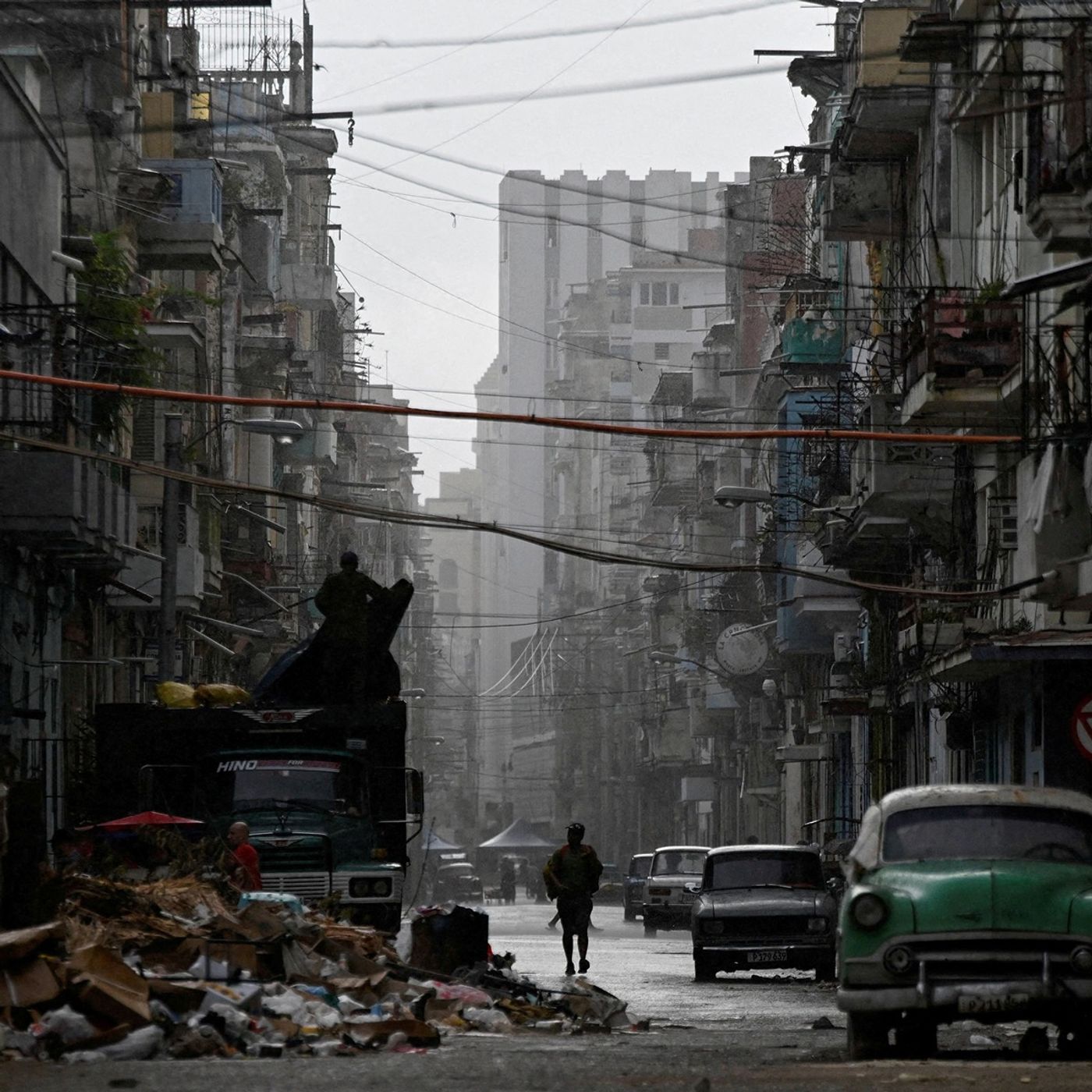
Absolutely, Natalie. I do see this as the latest step in that escalating campaign. The Trump Administration cut off oil to Cuba last week. They announced they don't have any reserves left. That means places like Havana are going 22 hours a day without electricity. We keep asking people, what's it like when the power goes out that long? And I've gotten a very similar answer several times. No, no, no. It's not when the power goes out that's the problem. It's when the power comes on, because the power comes on at maybe 11 o' clock at night or 12 o' clock, and you got to jump out of bed and you have to charge your phone, you have to charge your laptop. And if you're a family ahead of a household, you're getting a pot of rice and beans on the stove to cook the next day's meals. You're hearing really, really dramat like that people having to walk hours and hours to their jobs. People were not able to work because their work depends on having electricity and having Internet. It's a really terrible situation.
- [13:00]
Natalie Kitroeff
And when you talk to Cubans on the island, who do they blame for this? Do they blame the US or their own government?
- [13:07]
Frenchie (Reporter)
I would say that the answer to that tends to be generational. I think older people are blaming the United States. You know, the talking points from the government is certainly that this is all the United States fault. And the younger people are much more apt to blame the Cuban government and for the mistakes that it's made during the management of its country that led to this fiasco.
- [13:32]
Natalie Kitroeff
Okay, and what about the reaction inside of the Cuban government? What are they saying about this vice grip that the Trump administration has on them?
- [13:42]
Frenchie (Reporter)
They say it's an illegal. I think they've used the word genocide, that it's going to lead to a bloodbath and that it will be the United States fault. They don't recognize any errors that they've ever made, and they 100% see this as the fault of the Trump administration.
- [14:00]
Natalie Kitroeff
And this is a group of people who are used to weathering hard times and still holding on to power, kind of fighting through. And it sounds like they're still doing that.
- [14:10]
Frenchie (Reporter)
It's been 67 years, and they have had really severe hardship in the past, and they've always weathered. And I think a lot of people feel that maybe the Trump administration is underestimating the degree to which these people will want to hang on to power at any cost.
- [14:32]
Natalie Kitroeff
After the break, my colleague Julian Barnes takes us inside the US Government's broader strategy in Cuba. We'll be right back.
- [14:50]
Commercial Announcer
Summer it's when we share more time, more memories and more photos. And at, at and t, the iPhone 17 Pro is your summer essential. Its center stage front camera auto adjusts the frame to fit everyone into group selfies. You don't even have to turn your phone and AT and T makes sharing those pics with everyone easy. Right now at, at and t ask how you can get iPhone 17 Pro on them with eligible iPhone trade in any condition requires trade in of iPhone 15 or higher excluding iPhones 16 and 17. E requires eligible plan Terms and restrictions apply. Subject to change. Visit att.comiphone or visit an ATT store for details. This podcast is supported by E Trade from Morgan Stanley. Now that E Trade is part of Morgan Stanley, there's even more to love. Get the freedom to invest on your own with $0 commissions on stocks, options, ETFs and mutual funds, plus account types for every investor. And when you're ready, speak with a pro to help guide you on your financial journey. Discover more ways to make the most of your money and get up to $1,000 when you open a brokerage account with a qualifying deposit today. Learn more@etrade.com offer terms and other fees. Apply Investing involves risks. Morgan Stanley Smith Barney LLC Member SIPC E Trade is a business of Morgan Stanley.
- [16:01]
Natalie Kitroeff
I'm David Marchese. And I'm Lulu Garcia Navarro and we're the hosts of the Interview from the New York Times. David and I have spent our care interviewing some of the most interesting and influential people in the world, which means we know when to ask tough questions and when to just sit back and listen. And now we've teamed up to have these conversations every week. We'll try to reveal something about the people shaping our world, and we'll get some great stories from them, too. It's the Interview from the New York Times. Listen wherever you get your podcasts, Julian, you cover the U.S. intelligence community and you've been reporting on this pressure campaign and the role of the CIA in amping that up. So just tell us what you've learned. What is the end game in Cuba?
- [16:48]
Julian Barnes
Well, we don't know what the exact endgame is here. We don't know exactly what the US Wants. But what's clear is, is that the pressure is only going to increase. This indictment is just the next step in that, right? Like it is a message to the Cuban government that what happened in Venezuela could happen in Cuba.
- [17:18]
Natalie Kitroeff
Just want to pause on that because I think that is a big question that's been hanging over all of this. For those of us watching Is this a prelude to what we saw in Venezuela, where Nicolas Maduro was indicted by the US Government and then was extracted by the US Military? Is that what this is about?
- [17:39]
Julian Barnes
It's very important to note that our reporting shows that President Trump wants the option. He wants the option to do a military extraction to get Raul Castro to put pressure on the Cuban government. You saw Todd Blanche raise that. He talked about, how would they get Castro. Right. And he talked about it being a Pentagon issue. That said, it's also important to note that there aren't a lot of Special Operations forces in the region. There aren't Special Operations forces that we know of that have been training for this kind of operation. Cuba is very different than Venezuela. The circumstances are different. It seems that a actual military extraction of Castro is pretty remote. You know, all the Special Operations forces are still in the Middle East. They're still geared up to possible action against Iran. Right. You have to reset and come back for Cuba. And it wouldn't necessarily have the same effect like Nicolas Maduro was the official president of Venezuela. Pulling him out triggered a change in leadership. It allowed Vice President Delsey Rodriguez to become the acting president to take power. Raul Castro is a very important figure in Cuba. He is very politically influential. But if you grabbed him, it wouldn't change any official leadership. Right. The Cuban government would continue on.
- [19:27]
Natalie Kitroeff
Right. Everybody formally in charge would remain formally in charge because they would still be in the country.
- [19:33]
Julian Barnes
Right. And so when you talk to outside experts, it is that reason that in the end, they see this as a threat, as pressure, as a signal, more than a sign of what is to come.
- [19:49]
Natalie Kitroeff
Okay. If it's appropriately viewed as a threat, as a kind of chip in these negotiations, in this game of chicken that's happening, to what end? Like, what does the US Actually want from Cuba? Is the goal really wholesale regime change?
- [20:09]
Julian Barnes
They've been a little unclear in their public comments about this, and certainly the Cuban government wants to know what the US Demands are. But we did in recent days start to get some answers. John Ratcliffe, the CIA director, last week took a trip to Cuba, first Trump Cabinet official to go down there. He delivered a message to the grandson of Raul Castro, the interior minister and the head of Cuba's intelligence services. And he talked vaguely about economic and political change, but he also said that Cuba can't be a platform for America's adversaries. And the Cubans knew exactly what he was talking about. That was a reference to the Chinese intelligence post and the Russian military post that are on Cuba. These are installations the Russians and the Chinese use to intercept communications inside the US they are listening to southcom. They may be listening up at Central Command. These are very important military bases and the US Wants them closed. And this is a concrete ask and it is something the Cubans could do. Right?
- [21:39]
Frenchie (Reporter)
Right.
- [21:39]
Julian Barnes
This is a step that they could take. There is a path to reduce that intelligence collection there, to either close the base or limit the number of people there or kind of restrict it.
- [21:53]
Natalie Kitroeff
Radcliffe basically told the Cubans, look, if you want to do a deal with us, you got to kick our adversaries out. They're spying on us from your country. They have to go. What else did he ask for?
- [22:04]
Julian Barnes
Well, the economic and political demands were a lot more vague. But we are getting a sense of the kinds of things the US wants to see. And they range from more extreme to easier things to do. But they start off with reducing the power of the military industrial backed conglomerate that controls a huge chunk of the Cuban economy. It could mean pushing more pragmatic, less dogmatic politicians forward. And it also could be a step to toward free elections. Right. Like you could see the US pushing for elections at the local level to make those more meaningful. And that would be a real win. It would not be regime change, it would not be a total change in communist rule, but it would be a meaningful step forward.
- [23:05]
Natalie Kitroeff
And would one of the smaller, more incremental of those demands be seen as a real success by the Trump administration? I mean, in Venezuela, they had this trophy of Nicolas Maduro being brought to the US to theoretically face justice in this case if they aren't going to extract Castro. And that's largely a symbolic move. If the goal is really these more modest changes, you could see the administration running the risk of being seen as making a compromise with an authoritarian government in Cuba while allowing them to remain in power? No.
- [23:49]
Julian Barnes
That is a very important point and one that we can't lose sight of. Inside the United States, there is a big constituency, an important constituency, an influential constituency for regime change in Cuba. Cuban Americans have wanted for years and years to end communist control of Cuba. Anything that is short of that is going to feel inadequate. On the other hand, the Trump administration knows that sometimes when they reach for the big goal, they fall short. And when they reach for the smaller, they can be more successful.
- [24:39]
Natalie Kitroeff
I assume when you're referring to reaching for a big and difficult to achieve goal, you're talking about Iran.
- [24:44]
Julian Barnes
Yes. If you remember, on the night of the Iran war this year, President Trump delivered a video address to the nation. And he talked expansively about war goals. He talked about regime change. He called on the Iranian people to rise up.
- [25:04]
Natalie Kitroeff
Right.
- [25:05]
Julian Barnes
And pushing for regime change is not a narrow mission. It is not something that is easy to achieve. It's something that the US has struggled with in war after war. They can do it, but it usually requires a very big ground force and unleashes forces that are out of anyone's control. Iran is a mess. Like they don't have a peace deal that's lasting yet. They're contemplating starting strikes again. The supreme leader has been killed, but the government is as hardline as ever. They are not backing down from their nuclear program demands. And if you look at President Trump's other foreign military adventures, foreign operations, they've been much more narrowly cast with a very specific goal to kill a specific leader, to bomb a specific nuclear site, or in the Venezuela case, to capture Nicolas Maduro. When he has drawn the goals narrowly, he has seen more success. And so if you look at Cuba, the kind of long term goal of many Cuban Americans, of a Cuba free of communism, that's going to be harder to achieve. But if you look for more narrow goals, reduction of the power of the military, industrial state, incremental steps toward elections, those are achievable things. You could make meaningful progress.
- [26:41]
Natalie Kitroeff
Even so, Julian, you more than anyone know that Cuba has been in the sights of the CIA for a very long time. So why would the administration take this on right now, given everything you're saying, given that the administration is already in the middle of a war in the Middle east, that people are already skeptical of what the administration is doing abroad, why do this now?
- [27:04]
Julian Barnes
Well, as you just said, Cuba has been a thorn in America's side for decades and decades. This is not some adventure that came out of this administration's head. Right. There have been generation of American leaders who have tried to change the government in Cuba. It is something that is very important to a powerful constituency in the United States. And Trump sees himself as someone who can cut through bureaucracy, as someone who can solve problems that have bedeviled the United States for years. He's someone who has little patience for progress or history, who believes through the force of will he can fix them or change them. And also we do have Iran right now, and Iran looks like a really difficult problem. And all of a sudden he's got Cuba and his pressure campaign is working better than they thought. So there's a sense here among some in the administration that Cuba could be the success that helps them move past the morass of Iran.
- [28:24]
Natalie Kitroeff
Trump may essentially just be looking for a win.
- [28:26]
Julian Barnes
You're saying if we know anything about Donald Trump, he's always looking for a win.
- [28:35]
Natalie Kitroeff
Well, Julian, thank you so much for coming on. We really appreciate it.
- [28:39]
Julian Barnes
Thanks for having me.
- [28:45]
Natalie Kitroeff
We'll be right back. My name is Dan Powell. I'm Marian Lozano. We are composers at the New York Times, and we write a lot of music for the Daily. I'm currently working on a piece called Geometry. It's a musical moment of reflection to help the listener digest the story. This piece is for a space episode. I want to put the listener right into the deep darkness of space for this cue. The producers wanted us to write something that would evoke the late 70s. I started with a bass line, and then I added some drums to it. He said, can you, like, add 20 or 30% more funk to this? Yeah. We write music to highlight a moment to draw you into the story without telling you how to feel.
- [29:46]
Frenchie (Reporter)
Yeah.
- [29:47]
Natalie Kitroeff
It's always the puzzle to solve. So if you love the Daily and you want us to keep making reflective, cosmic, sometimes groovy, but always subtle music for the show, support us by subscribing to the New York Times. Here's what else you need to know today. On Wednesday, two police officers who defended the US Capitol against a pro Trump mob mob on January 6 challenged the constitutionality of a new $1.8 billion fund that they warned could reward those who participated in the attack. Their lawsuit will answer the question of whether anyone has the legal standing to stop the Trump administration from creating the controversial fund. That fund is expected to make payments to Trump supporters, including January 6th rioters who claim their prosecutions were politically motivated. And so what I realized was a lot of Americans were not homophobic but thought they were supposed to be. And as more of us came out and our reality confronted the prejudice, we made great gains. Barney Frank, the blunt talking former congressman from Massachusetts who for decades was the most prominent gay politician in America and who wrote the most sweeping overhaul of US Financial regulations since the Great Depression, has died. He was 86. His signature legislation, the Dodd Frank law, passed after the 2008 financial crisis. It regulated derivatives that had worsened the crisis, imposed new rules on large banks, and created the Consumer Financial Protection Bureau as an industry watchdog. Asked about complaints from business leaders about the law, Frank scoffed. Well, I hate to say this, but the impression I get most is that their feelings are hurt. Oh, you were rude to us. You said we were fat cats. You hurt our feelings. Get over it. I mean, I'm in the kind of business where people say rude things about us all the time. I've said that to them. Today's episode was produced by Ricky Novetsky and Diana Wynn with help from Lindsey Garrison. It was edited by M.J. davis, Lynn and Michael Benoit. Contains music by Elisheba Etoupe, Marian Lozano, Pat McCusker and Dan Powell. Our theme music is by Wonderly. This episode was engineered by Chris W. That's it for the Daily I'm Natalie Kitroweff. See you tomorrow. This podcast is supported by Planned Parenthood Federation of America. As a listener of the Daily we
- [32:34]
Frenchie (Reporter)
know you want the facts.
- [32:35]
Natalie Kitroeff
Fact 1 Some lawmakers are making it
- [32:38]
Frenchie (Reporter)
harder for Americans to access health care. 2.
- [32:41]
Natalie Kitroeff
A new policy threatens to prevent patients from using Medicaid insurance for life saving care at Planned Parenthood Health Center. This could mean cancers going undetected, STIs left untreated and patients not receiving care they need. 3. Planned Parenthood will not back down, but they need your help. Donate@planned parenthood.org defender.