Loading summary
Transcript133 lines
- [00:00]
Ryan Holiday
Welcome to the Daily Stoic podcast, designed to help bring those four key stoic virtues, courage, discipline, justice and wisdom, into the real world.
- [00:15]
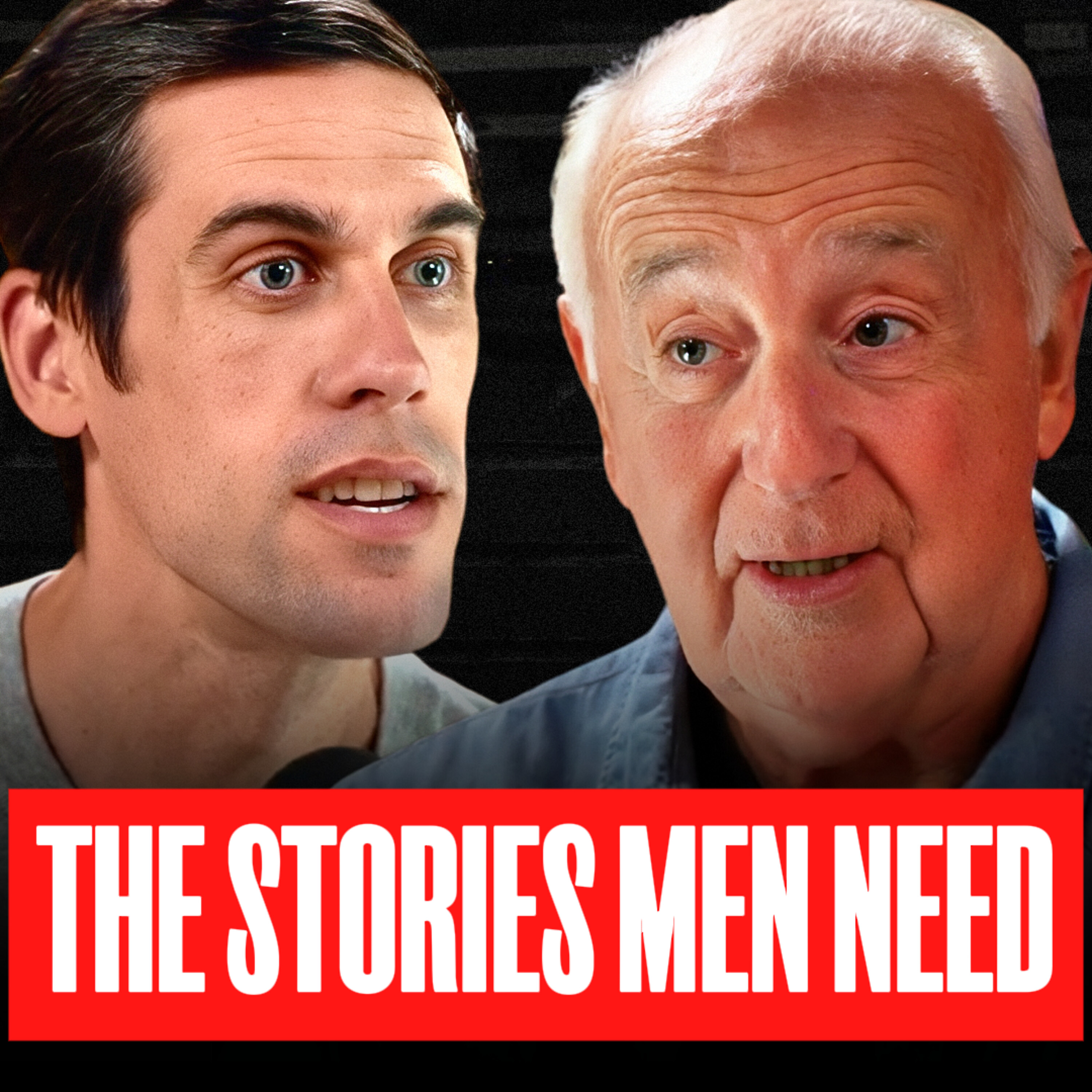
Hey, it's Ryan. Welcome to another episode of the Daily Stoic podcast. I'm about to hop on a plane about. I guess the car should be here in about 25 minutes. And I'm reading this. I'm reading this novel, this bit of historical fiction. I don't want to say what it is yet because I don't know if I like it enough yet, but I do love reading historical fiction. I love it. And one of my all time favorite writers of historical fiction, probably one of the first great bits of historical fiction I read, and I'm nothing against the westerns that I read as a kid or whatever, was Steven Pressfield's the Gates of Fire. In fact, I have the last page of the original manuscript signed on my wall. One of my prized possessions.
- [00:53]
And I think I love that book
- [00:55]
because, look, there's things that we talk about, but what fiction does is it shows you right. That book is honor and courage and shame and sacrifice, loyalty, betrayal, greatness. What it means to keep your word, what it means to fail, what it means to care about something. What it means to be committed to something. What it means to be the kind of person that other people can count on. Look, I think all of us need to watch less news, maybe even listen to fewer podcasts and read more. Right? And we need to read more fiction, myself included. I'm not lecturing you. I'm lecturing myself here. Because a good novel puts you inside of a life, puts you inside of a time, a place. It makes abstract virtues feel real. And you can show the consequences of choice. You can show struggle in a way that a lecture or a list or even one of my books never could. And I think Steven Pressfield understands this as well as just about anyone. He's one of my writing heroes. Not just his novels. Gates of Fire, A Man at Arms, Tides of War, the Virtues of War. He has this great new one called the Arcadian. And these are books that I think they're really popular with the military, but with people in all walks of life. Cause they talk about some of that old fashioned stuff. And Steven Pressfield was out here in Texas recently and we sat down and we talked about why we should read more novels, especially young men. What fiction can teach us, and why sometimes stories are a better way of carrying the truth than facts alone. He's got an incredible story. I love his nonfiction too. Turning pro. Put your ass where your heart wants to be. The war of art, the warrior ethos. All this stuff is great. He signed copies of many, many, many of them, which you can grab at the Painted Porch. Steve doesn't just talk about these things. He's lived in a fascinating life. He was in the Marines. He's worked 21 different jobs in 11 states before he got his first novel published. He taught school. He drove tractor trailers. He worked in advertising. He was a screenwriter. He worked on offshore oil rigs, picked fruit. He's just a lovely guy, one of our greats. And if you haven't read him, maybe start with the new one, the Arcadian, or the classic the War of Art and Gates of Fire. You can follow him on Instagram. Steven pressfield go to stevenpressfield.com and read more. Have the Men in youn Life Read more. It'll make you better.
- [03:17]
Back to School starts now. Get long lasting battery life on the Dell XPS laptop powered by Series 3 Intel Core, so you can work from anywhere. And now starting at $690 with exclusive student pricing starting at $599. It's lightweight, portable and packed with enough processing power to make multitasking a breeze. So say goodbye to distractions and hello to more free time because you finished your work faster. Complete your setup with savings on select monitors and more. Must have electronics and accessories, limited time deals and free shipping on PCs and more await you at Dell.com deals that's Dell.com deals foreign I'm on the road for these daily stoic talks I'm doing. I started in Seattle. My family and I drove all the way down. Now I'm in San Francisco. We're in Sacramento tomorrow. I've actually been booking houses on Airbnb all along the way. We stayed in this awesome one in Mendocino. Last night we stayed in a lovely one on the ocean in Bremerton, Washington. It's been awesome, and that's usually how we stay as a family. When we're traveling, we book houses or apartments on Airbnb. But what a lot of people don't know is that when I first started as a writer, I used to list my house on Airbnb, my first house, this little house in East Austin. We would book it out when we were out of town, which is what Airbnb is so great at. And then when we moved out to the country, I would write at it during the week and book it out on the weekends. And that's how we helped cover the mortgage. That's how I was able to make the transition from a marketing person to a writer. Wherever you live, but especially if you live in a city that's hosting a bunch of events this summer or you're traveling, you should think about listing your house or apartment or condo on Airbnb. It might be worth more than you think. And you can find out how much@airbnb.com host I was reading someone. They were talking about that young men aren't reading enough fiction. That, like, sort of muscular, masculine fiction used to be. You know, you have your Hemingways and you're. You had these great sort of larger than life writers. Not only was that an aspirational occupation for people, but that the fiction was speaking to what it means to be a man, what it means to be a human being, and that that's not what it is today. Like, most of the bestselling fiction writers are women, and most of the fiction is written for women. I would put you up as an exception to that. But how do you think about the role of fiction in people's lives?
- [05:50]
Steven Pressfield
Wow, that's really interesting. I haven't even thought about that, but it is true. You think about James Jones, you know, From Here to Eternity, or John Irving and all the stuff that he did, and actually that sort of male writer has now really, really fallen into disrepute. It's like it's a bad thing. Right.
- [06:07]
Ryan Holiday
I just reread all James Salter's novels. Do you know who that is?
- [06:11]
Steven Pressfield
Yeah.
- [06:11]
Ryan Holiday
A fighter pilot who leaves. He has a Russian MIG to his name. Like he leaves the Air Force to be a. A novelist. That's not a career trajectory so much anymore.
- [06:23]
Steven Pressfield
Yeah, it sure isn't. But I certainly think those pieces of fiction were formative for me. I mean, now it's like male fiction is sort of like telling the story of your struggle with drug addiction or. You know what I mean?
- [06:40]
Ryan Holiday
All the novels are about young novelists living in New York City.
- [06:43]
Steven Pressfield
Yeah. Really? Or they're serial killers or whatever they are. You know, I wonder what that's about. I haven't really thought about that. I mean, it's. I guess it's the masculinity quote unquote, has been so, you know, whatever. Deplatformed that it's almost embarrassing. It's like, for me, writing Gates of Fire and setting a story in ancient Greece with the Spartans. Part of the reason I did that was so you could talk about honor with a straight face.
- [07:12]
Ryan Holiday
Yes.
- [07:13]
Steven Pressfield
If you wrote a contemporary story.
- [07:15]
Ryan Holiday
Yeah.
- [07:16]
Steven Pressfield
And some character says something, you know. Well, we have to stand, you know, to get laughed out of the room, you know, but yet readers, particularly men and women too, want that, you know, so to put it in ancient characters, mouths, that kind of dialogue and write. Written in sort of an archaic format, it works. Finally you can say something like that and then people are moved to tears, you know, and people are, you know.
- [07:41]
Ryan Holiday
So yeah, it's like if you'd written a nonfiction book about honor, that might have sold even if it was a big hit, it might have sold 50,000 copies or 100,000 copies, but you put it in a novel and it's sold millions of copies over it and it would have been very much of its moment.
- [07:59]
Right.
- [08:00]
Like if you'd written that non fiction book, it would. When did you write gates of fire?
- [08:04]
Steven Pressfield
1998 or six or something like that.
- [08:07]
Ryan Holiday
It would have a 90s feel to it, you know, and you read Gates of Fire because it's not just a novel, but it's a novel set in the past. It has a timelessness to it that allows it to reach not just a bigger audience, but I think, as you said, reach them in a much more earnest, emotional way.
- [08:26]
Steven Pressfield
I think it, I think it does. Or books like that. Yeah, yeah. The idea of like when you said writing a book about honor, I mean, it's like I wouldn't even dream of it.
- [08:35]
Ryan Holiday
That would be lame.
- [08:35]
Steven Pressfield
Yeah, it would be. Couldn't be. Yeah.
- [08:39]
Ryan Holiday
And there'd probably be some imposter syndrome as well. The author, like, who am I?
- [08:43]
Steven Pressfield
Yeah, right.
- [08:44]
Ryan Holiday
Who am I to lecture?
- [08:45]
Steven Pressfield
Unless you're Jim Mattis, you can't. He's like the only guy or, you know, Craven or somebody like that. That's about the only people who could do it.
- [08:52]
Ryan Holiday
I mean, even in my. I don't do fiction exactly, but I try to tell stories about the ideas because it's a way in. As opposed to.
- [09:01]
Steven Pressfield
Do you ever think you will write fiction someday?
- [09:04]
Ryan Holiday
I have a novel idea. I want to tell you about it.
- [09:06]
Steven Pressfield
Ah, not on camera.
- [09:08]
Ryan Holiday
Not on camera. It's a weird idea. I was curious about your advice on it, but. Yeah, the. The as a way of teaching is obviously how we learned most lessons for all of human history. I think you miss something when that goes away.
- [09:23]
Steven Pressfield
Yeah, I think I didn't answer your question, I think. But I definitely believe fiction. Not even as teaching. I think it's more than that. I mean, now of course we have movies like Star wars has certainly influenced bazillion people or Harry Potter or something like that, but a novel obviously Lets you get into the head of a character or multiple characters. You never could in any other medium other than maybe movies. Yes. You know. You know, that's what makes people really learn something, I think. You know, really let it sink in.
- [09:55]
Ryan Holiday
Yeah.
- [09:55]
Steven Pressfield
Like a legend, like a myth, you know, it's a character, it's a human being.
- [10:00]
Ryan Holiday
Because then to carry you through the novel, there's usually. It's usually like, the two virtues or values or whatever it is, fighting each other out. Who are you rooting for? Who's going to win? What's going to happen? Where's this going to take this person? That's what the novel allows us to do.
- [10:14]
Steven Pressfield
And you get involved emotionally.
- [10:16]
Ryan Holiday
Right.
- [10:16]
Steven Pressfield
You start rooting for somebody, oh, my God, don't let that happen. You know, that kind of thing.
- [10:20]
Ryan Holiday
Yeah.
- [10:21]
Steven Pressfield
And that's where things sink in. Plus, I know from my point of view, it's just fun, you know?
- [10:24]
Ryan Holiday
Yeah.
- [10:25]
Yeah. I did this piece a couple of months ago where I wasn't talking about novels so much, but I was. I was talking about some of those poems, like Longfellow's A Psalm of Life or invictus. In the 19th century and 20th century. There were these kind of like, even, I don't know, muscular, masculine, like, earnest poems, too, about, like, the struggle and the fight. I mean, Kipling's famous. Obviously has a lot of racist poems, too, but. But if. Is such a famous example of, like, an encapsulation, a distillation of, like, the values of what you want a young person to do. And, like, I don't read a lot of poetry now, but if I walk to the poetry section of a bookstore, that's not what most of the poems would be about.
- [11:08]
Steven Pressfield
Yeah, I'm sure. And they would.
- [11:09]
Ryan Holiday
Most of them would not be for young men.
- [11:12]
Steven Pressfield
Yes. Too bad.
- [11:13]
Ryan Holiday
It is.
- [11:14]
Steven Pressfield
By the way, I saw. I don't know, it was on a talk show or something. It was Michael Caine.
- [11:18]
Ryan Holiday
Yes.
- [11:19]
Steven Pressfield
And he read. Did you see this?
- [11:20]
Ryan Holiday
Yes.
- [11:20]
Steven Pressfield
When he read that. If.
- [11:23]
Ryan Holiday
Yes.
- [11:23]
Steven Pressfield
And it was, you know, brilliant. I mean, brought you to tears, you know.
- [11:26]
Ryan Holiday
Oh, man, I had this crazy experience. Anthony Hopkins read a couple of my books, and he would. For a while, he was emailing me and I. I told him that I was reading one of these poems to my kids, and he, like, sent me audio of him reading it. When you have a poem and then it's read by some, like, incredible voice, like when you, like. Yeah, if by Michael Caine is crazy, there's a bunch of, like, really, like, poems. You thought you got Emotionally. And then a really good voice.
- [11:56]
Steven Pressfield
Yeah, it's amazing.
- [11:57]
Ryan Holiday
It just hits you at this whole other level.
- [11:59]
Steven Pressfield
Yeah. Have you had Anthony Hopkins on the podcast?
- [12:02]
Ryan Holiday
No, but I better get him. I would have him on in two seconds. Yeah, I'm in his memoir. He wrote about one of the exchanges. It was great. Someone was like, you know, you're in. That can't possibly be real. But. Yeah. I just feel like so much modern fiction is like these kind of unlikable antiheroes. Or it's like, yeah, where did these come from? Whiny losers, you know, who are in publishing, trying to. It's like, I don't need to read any more novels about aspiring novelists cheating on their wives in New York City
- [12:38]
or whatever it is.
- [12:39]
Steven Pressfield
Yeah.
- [12:39]
Ryan Holiday
But there's something, I think, done right. There's something earnest about the medium that's very moving, but they tend not like, yeah, you hear about these novels that win these awards and then you look at the sales and you're like, sold like 6,000 copies. You know, it's not even actually speaking to a large audience. Not that that's always the metric of whether it works or not, but like, you know, your F. Scott Fitzgerald's and your Hemingways and those. They were trying to speak to people, you know, and they did.
- [13:10]
Steven Pressfield
I've never quite understood this phenomenon that there are certain writers and movie makers, too, that are like the darlings of the critics, you know, and you can never shake that in any way.
- [13:20]
Ryan Holiday
Yeah.
- [13:21]
Steven Pressfield
And I don't know. I don't know what it's. It's so. It's. It's woke.
- [13:25]
Ryan Holiday
Yes.
- [13:25]
Steven Pressfield
In some sense.
- [13:27]
Ryan Holiday
Yes.
- [13:27]
Steven Pressfield
Although I'm not sure, you know, in a bad sense.
- [13:29]
Ryan Holiday
You know, there's something about, like. Yeah. If you read, like, what the New York Times, like, your novel will sell more copies than most of the books reviewed in the New York Times, most of the novels reviewed in the Times over the next three or four months.
- [13:43]
Right.
- [13:44]
Because you have an audience. You've done this a long time.
- [13:45]
Steven Pressfield
I hope so.
- [13:46]
Ryan Holiday
Yeah. But they would never think to review this novel.
- [13:49]
Steven Pressfield
Oh, yeah. No chance.
- [13:50]
Ryan Holiday
And so I do think that does create some of the media backlash and some of the resentment and. And where it's like the things that is celebrated in the media or in the culture or the elites is not even close to matching what people want and like. And know is good.
- [14:09]
Steven Pressfield
Yeah. But there has to be kind of a middle area, too, between. Sure. You know, but it's also like the. When movie critics write the 12 movies, you should see, Right.
- [14:19]
Ryan Holiday
Yes.
- [14:19]
Steven Pressfield
You never heard of any of them, Right.
- [14:21]
Ryan Holiday
Or what nominated for Best Picture is like a bunch of movies you even heard of. Yeah, yeah, yeah. There's a. Obviously there's a space for. For discovering great underappreciated things. But there's also something, I think, about the medium or the culture where the people that are writing novels are almost deliberately not trying to speak to a wide.
- [14:46]
Steven Pressfield
Or the critic that are praising these things are trying to show how smart they are, that they get something that you and me don't get, you know?
- [14:55]
Ryan Holiday
Yeah.
- [14:55]
But I think generally people should read more fiction and fiction should reach a larger general audience.
- [15:03]
Steven Pressfield
Although I understand why people don't, you know.
- [15:05]
Ryan Holiday
What do you mean?
- [15:06]
Steven Pressfield
I think people will say, oh, it's made up, it's not real. I want something that, you know.
- [15:12]
Ryan Holiday
Yeah.
- [15:13]
Steven Pressfield
And you know, it's tough to argue against that, but except made up stuff a lot of times is realer than real.
- [15:19]
Ryan Holiday
It gets closer to the big truths.
- [15:22]
Steven Pressfield
Yeah. When it's right, it is. Yes, it does.
- [15:25]
Ryan Holiday
And, and I would put in the middle category.
- [15:28]
I talk about Plutarch a lot.
- [15:29]
Like most of what Plutarch tells us is probably not true.
- [15:34]
Steven Pressfield
Right.
- [15:34]
Ryan Holiday
Or you read history, the Peloponnesian War, none of those speeches happened.
- [15:39]
Steven Pressfield
The words of Thucydides.
- [15:41]
Ryan Holiday
Yes, the words of.
- [15:42]
Steven Pressfield
How do you know that?
- [15:43]
Ryan Holiday
Well, because he wasn't there.
- [15:45]
Steven Pressfield
Ah. I mean, the way I heard it was that he went to great pains if he wasn't there to talk to people who were there and who were there.
- [15:55]
Ryan Holiday
What I mean is that there was never a recording of Pericles funeral oration.
- [15:59]
Steven Pressfield
Right.
- [15:59]
Ryan Holiday
So. So, so what we have is Thucydides version of it, which I would say gets close or closer to the, the, the big T truth, even if it's not the literal recording. And so, so what I mean is that I think also historians have taken as their job to capture literally what happened. And everything has to be footnoted. And if it can't be footnoted or verified, they'll spend a lot of time trying to disprove it, when really the purpose of history is actually the same purpose as literature. Do you know what? Like, the purpose is to capture the essence of what happened and to, to trans. To communicate the lesson of the event and the personality and the struggle.
- [16:52]
Steven Pressfield
I mean, you must be dealing with this, with the Stockdale book, you know, every day. Right.
- [16:57]
Ryan Holiday
But I even think in the stories that I'm writing in the book, sometimes I'm. I know it didn't Literally happen that way. Or there's. There's this story that I tell in. Right thing right now. Do you know the story of Regulus the. The Roman general.
- [17:13]
Steven Pressfield
Yeah. Who turned himself in after. Yeah, yeah.
- [17:15]
Ryan Holiday
And.
- [17:16]
Steven Pressfield
And that is an amazing story. Yeah.
- [17:18]
Ryan Holiday
There's not that much proof that it happened. It's a story told over and over and over again in these different ones. Cincinnatus is another great example. You know, the story of Cincinnatus, he's the Roman general. Rome. Rome's army is basically captured or on the verge of defeat. And so there's an old Roman general named Cincinnatus who they make dictator of Rome to save the country. And he leaves his retirement, he saves the Roman army, and he lays down his powers 17 days later and returns to his farm. And it's this myth, Cincinnatus, that Washington is referring to when he resigns his commission and then when he leaves the presidency. So it's not like we have monuments and scrolls and documents. There's not a lot of historical evidence for Cincinnatus, but it doesn't matter because generations of Romans believed in the myth of Cincinnatus to the point that it. It was true enough that 2,000 years later, Washington makes it as a model.
- [18:21]
Steven Pressfield
So if it wasn't true, it should have been true.
- [18:23]
Ryan Holiday
Exactly, exactly. It's like if it wasn't true, you would have to invent it. So I'm telling the story as per the ancient sources. I'm telling you what the ancients believed. I'm not adding details and inventing things. You know, I'm making it real by describing, I don't know, the sea, the wind at its back. You know, I'm coloring the story, but I'm not telling the story and then going. And by the way, this is bullshit, and you're an idiot if you believe it, because I think the essence of that story is really important.
- [18:55]
Steven Pressfield
Yeah.
- [18:55]
Ryan Holiday
So I think there's nonfiction and fiction, and then there's actually kind of a fluid.
- [19:02]
Steven Pressfield
What is the thing from the man who Shot Liberty Valance? The quote. If you have a choice between the fact and the legend, print the legend.
- [19:12]
Ryan Holiday
I forgot. Yeah.
- [19:13]
Steven Pressfield
Whether that was a line from the movie or was a true newspaperman said that or I don't know.
- [19:18]
Ryan Holiday
Right.
- [19:18]
Steven Pressfield
But I'm from that school too.
- [19:20]
Ryan Holiday
Yes.
- [19:21]
Steven Pressfield
Print the legend. You know, it's a lot more fun.
- [19:24]
Ryan Holiday
But, but, but the. Yeah, the purposes of those. Across those three different types, the mission is the same. Which is you're supposed to teach people things. That about the human experience, I think ultimately, if not, why are you doing it?
- [19:40]
Steven Pressfield
Yeah, like Braveheart is a great example of that. You know, who knows what the actual story of William Wallace is?
- [19:45]
Ryan Holiday
Yes.
- [19:46]
Steven Pressfield
But I'll take the movie anytime.
- [19:47]
Ryan Holiday
Yes, totally. Hey there.
- [19:50]
Just a heads up, I'm going to be on tour this fall. You can see me in Australia and New Zealand in October. In August. I'm mixing my months up here, but in August you can see me in Chicago and Minneapolis and Detroit. Then I'll be on the east coast sometime in November and December. Anyways, grab tickets to that dailystoiclive.com Hope
- [20:12]
to see you there.
- [20:21]
Tammy (Geico Ad)
From GEICO Subconscious News, I'm Tammy. Racing thoughts broadcasting from your brain. You think you live in a pretty safe place. Place. But you just heard about a break in four miles away, which isn't close, but it isn't far either. You know Art Palpitations is on the scene.
- [20:33]
Art Palpitations (Geico Ad)
I sure am, Tammy. And I don't even know why I drove out here because as you know, you got customized renters insurance through Geico, so your stuff is covered.
- [20:41]
Tammy (Geico Ad)
Oh, well, that's great. Any sign of crime there, Art?
- [20:44]
Art Palpitations (Geico Ad)
Just some light littering, Tammy. But like they say, a little litter can lead to a lot.
- [20:48]
Tammy (Geico Ad)
Wise words. It feels good to worry less. It feels good to Geico.