← The Daily Stoic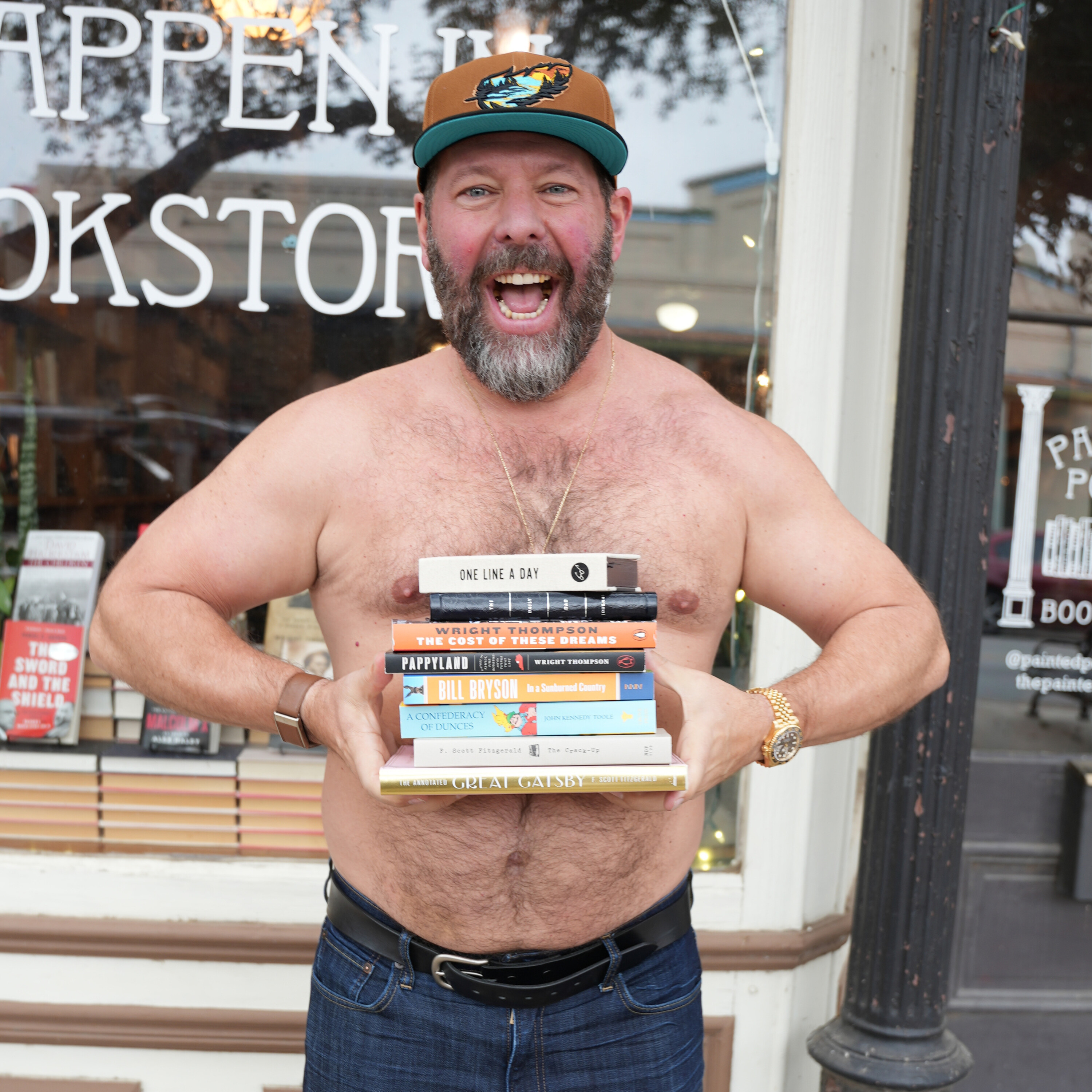
Loading summary
Transcript184 lines
- [00:00]
A
You know, I mostly run and swim. Sometimes I bike. One of my goals for the year has been doing some strength training. You know, Peter Attia talks about this, that the most important thing you can do is some form of strength training as you get older. But the problem is, you know, it's easy just to head out of my house and run. Doing an actual workout requires some stuff. Well, that's where today's sponsor, Tonal comes in. Tonal provides the convenience of a full gym and the guidance of a personal trainer anytime at home with their one sleek system. It's designed to reduce your mental load because Tonal is the ultimate strength training system. Helps you focus less on workout planning and more on results. Tonal gives you real time coaching cues to dial in your form and help you lift safely and effectively. And then they help you adjust in 1 pound increments as you go so you get stronger, you're always challenged. And right now, Tonal is offering our listeners 200 bucks off your Tonal purchase with promo code TDS, that's Tonal.com and use promo code TDS for $200 off purchase Tonal.com, tDS, 200 bucks off. New Year new systems. Right. This is the time when we should look at the messier parts of our business and think there's gotta be a better way. And there is. Streamlining your communications is one of the quickest and easiest system upgrades you can make. And that's why today's episode is brought to Quo is brought by Quo. That's Q U O the smarter way to run your business. Communications. Quo is the number one rated business phone system on G2 with over 3,000 reviews. And it's built for how modern teams work. And that's why over 9,000 businesses, from big companies to little ones, use Quo to stay connected, professional and reachable. Your entire team can handle calls and texts from one shared numbers so stuff doesn't get dropped, nothing gets missed, and the customer gets taken care of. Plus, it's easy. Calls, texts, voicemails, transcripts and contact details all live in one clean view and you've got it all at your fingerprints. Make this the year where no opportunity and no customer slips away. And you can try quo for free. Plus get 25% off your first six months when you go to quo.comDailystoic Q u-o.com Daily Stoic Quo no missed calls, no miss customers. Welcome to the Daily Stoic podcast, designed to help bring those four key stoic virtues, courage, discipline, justice and wisdom into the Real world.
- [02:33]
B
When Bert Kreischer asks you for some book recommendations, you really got to think.
- [02:38]
A
About what he's gonna like.
- [02:39]
B
And he came out to my bookstore here in Bastard, Texas recently, and this.
- [02:43]
A
Is what I picked out for him.
- [02:44]
C
All right?
- [02:44]
B
So I said. I said to crack up.
- [02:47]
C
Pornography. Never mind. I have that book. 1929.
- [02:52]
A
Amazing. He was there.
- [02:54]
C
Oh, I didn't read it, but I have it.
- [02:55]
B
It's really good. Where's the crack up? Okay, so this is about F. Scott Fitzgerald blowing up his life.
- [03:01]
C
I love one of my favorite lines in a book ever. Great Gatsby. Nick Carraway says, at the age of 30, I realized I had to stop lying to myself. It's my favorite line.
- [03:10]
B
Okay, so let me give you this then. I didn't find myself in high school or something.
- [03:15]
C
I read it in. I read it when I moved to New York and I was working at Barnes and Noble.
- [03:24]
B
There's a new edition of it that is like amazing. Really?
- [03:28]
A
Yes.
- [03:28]
B
Okay, so it's a hundred years old. It's now officially in the public domain. So this is a hundred year anniversary edition. And it's got all these like, illustrations and stuff. My favorite line from the Gatsby is actually the first line, which I'll read to you. It's easier to find here, but I think this is like the greatest line. In my younger, more vulnerable years, my father gave me some advice I've been turning over in my mind ever since. Whenever you feel like criticizing anyone, he told me, just remember that all people in the world haven't had the advantages you've had.
- [03:56]
C
He's written about white privilege in 1929.
- [04:00]
A
No.
- [04:00]
B
Okay, so this is. It's got all these, like.
- [04:02]
A
It's really cool.
- [04:02]
B
It's got all these like, cool, like facts and stuff on the side.
- [04:04]
C
Oh, shit.
- [04:05]
B
So you can like, learn about like the making of the book and stuff.
- [04:07]
A
Oh, that's awesome.
- [04:08]
B
So those two go. Go. Really? Do you know the crazy Fitzgerald Hemingway story?
- [04:13]
C
No.
- [04:14]
B
Okay, so Fitzgerald is in like the worst marriage of all time. Zelda's. Yeah, whatever. She tells Fitzgerald that his dick is small. And he's like, really? He's really broken up about it.
- [04:26]
C
So still works 100 years ago.
- [04:27]
B
So he goes to Hemingway and he tells her. He tells him that she said this and whatever. And then Hemingway's like, let me see it. He shows him. He's like, dude, what are you talking about?
- [04:41]
A
And then that's.
- [04:42]
B
That's their famous exchange. So he's so in his head about the essay hey, we check it out and tell him whether it is.
- [04:48]
C
I always say the best titles for any book are Hemingway, and the best titles for any movies are the Grateful Dead.
- [04:55]
B
Ooh, that's good.
- [04:56]
C
Grateful Dead has the best titles. People have stolen so many titles, like, so many Grateful Dead songs and use it as a title that you're like, oh, man.
- [05:05]
B
Someone told me that, like, every word in the Gettysburg Address has become a book title. Like, every phrase of the Gettysburg Address has become its own book title.
- [05:13]
A
You know, these honor dead. We.
- [05:16]
B
You know, every phrase in it has become itself.
- [05:20]
C
I can. I will sit. Like, one of my favorite things to do is sit and try to think of titles.
- [05:24]
A
Yeah.
- [05:24]
C
So. And. But that's how I got the TV show. Something's Burning was just like, oh, that's great. Something's burning then. And then I build the show around it. I have a show I'm trying to do called Too Many Cooks in the kitchen. It's where 47 people make one dish, where you just all. Everyone's just like, stop, stop.
- [05:38]
B
No, no, no, no. So the other Hemingway. There's actually a book called Hemingway Verse Fitzgerald that's about their, like, frenemy friendship. And in it, he. The other one. The other famous exchanges, because Fitzgerald is obsessed with money and, like, rich people. And he goes, you know, like Ernest, like the rich, they're just, like, different than you and I. And Hemingway says, like, yeah, they have more money. And then Hemingway puts that exchange in one of his, and Fitzgerald was, like, humiliated.
- [06:07]
C
Can I tell you what book I didn't understand? And now I understand. I didn't understand in college, and now I'm starting to understand. And I have not finished the whole book, but I've read parts of it all over. Is the Fountainhead.
- [06:18]
B
Oh, yeah. Ayn Rand is like. You know, because at first I go, the.
- [06:24]
C
The hero's Keating. He's doing the job. He's getting the job done. He's showing up and going to work. He's. Yeah, he's slapping it together, man. That's what we do. And then I start going. A roar is the. Oh, shit.
- [06:36]
B
Some of these books you have to read. You have to read over the course of your life. That's why I think you'll like that new one. Have you read. Have you read A Confederacy of Dunces, the funniest book of all time?
- [06:49]
C
The book that's this thick?
- [06:51]
A
Yeah.
- [06:51]
C
No, I've never read it.
- [06:52]
A
You haven't?
- [06:53]
B
No. Would you read it? Yeah. Let me find it.
- [06:56]
A
But it's.
- [06:56]
B
It's the funniest. It's one of those books that you're like, I would love this to be a movie. And they just had never managed to make it.
- [07:02]
C
That guy. That guy breaks my heart.
- [07:04]
B
Oh, yeah, well, that's a good example.
- [07:06]
C
I saw the Jason. Jason Whatchamacallit movie. He did Jason Kid from How I Met yout Mother did a movie about the guy.
- [07:16]
B
Oh, about John Kennedy.
- [07:17]
A
Tool.
- [07:18]
C
No. Oh, who am I thinking of?
- [07:20]
B
Are you thinking of Infinite Jets?
- [07:22]
C
I'm thinking of Infinite Jets.
- [07:23]
A
Okay.
- [07:23]
C
No. Confederacy of Dunces. I have not read.
- [07:25]
B
Okay, so where is Confederacy? I don't know why it's so confused. I will get you Confederacy Dungeons. Okay, But John Kennedy.
- [07:33]
A
Oh, here it is.
- [07:34]
B
Okay, here it is. Funniest book of all time.
- [07:37]
C
Are you serious?
- [07:37]
B
There's a statue of him on Canal street in New Orleans. He's a hot dog. It's a book about a hot dog salesman who just eats all the hot dogs. It's really. It's. It's. It's amazing. But okay, so the story of this book is this guy writes this book, he sends it to his agent, and his agent is like, this is not a book. This sucks. She sends it to his editor. The guy's like, not a book.
- [08:01]
A
This sucks.
- [08:02]
B
So he kills himself on a road outside Biloxi. Drives his car off, takes a garden hose, puts it in the pipe into the window, kills himself. His mother finds a Confederacy of Dunces in a desk drawer after his death, and she takes it to a professor in New Orleans, at Tulane, a guy named Walker Percy, who wrote a famous book called the Moviegoer. This book, also amazing. The Moviegoer, he's a professor there. He reads the book, thinks it's genius, gets it published by the Louisiana University Press. It wins the Pulitzer Prize that year. So it's just a reminder to go.
- [08:43]
A
To our point about.
- [08:44]
B
Not the same fucking book. He's dead. He has not changed it in any way. The one that his editor said wasn't a good book, the one that his agent said wasn't a good book wins the Pulitzer Prize.
- [08:53]
A
Holy.
- [08:54]
B
So you can't. You can't. You can't write. You gotta. Do you think it's good? Does it?
- [08:58]
A
Do what you want to do?
- [08:59]
B
Does that mean it's going to be a success? You don't know, but you can't. It's the funniest book you will ever read.
- [09:05]
C
I can't wait. I absolutely can't wait.
- [09:07]
B
Okay, what else might you like? I don't know. So you said you're reading two 600 page books.
- [09:11]
A
What's the other one?
- [09:12]
C
Oh, something about. I was used to being history books. It was John Mulaney's book. It's John Mulaney recommended. It's about them sending the first debtors down to Ireland or to Australia.
- [09:28]
B
Oh, the Fatal Shore.
- [09:31]
C
Fatal Shore, Yeah.
- [09:32]
B
Incredible book.
- [09:33]
C
It's so hard to get into. Okay. Can I ask you as a book owner, a bookstore owner, do we have.
- [09:38]
B
To read the preface if you want to understand what's happening?
- [09:41]
A
I think so.
- [09:41]
C
Damn it.
- [09:42]
B
Okay, this book is. Here's a funnier Australian book.
- [09:45]
A
This is better.
- [09:45]
B
This is much better. The Fatal Shore. I just read this year because I did an Australia tour last year and I was amazing. And it's a. It's a crazy good book. But I mean, the first like 200 pages of the Fatal Shore are about, like how prisons in England work.
- [09:58]
C
Yeah.
- [09:59]
B
It's like it takes a while to get to Eva Australia. I know it's a lot.
- [10:03]
C
And they don't have it in audiobook.
- [10:05]
B
Yeah, it's old. It won like the Pulitzer Prize in like the 60s or something.
- [10:08]
A
It's very.
- [10:09]
B
But read that one. It's very good.
- [10:11]
C
Okay.
- [10:18]
A
We're all going to experience pain and injuries and physical obstacles, right? That's part of life. But we choose how we respond to those setbacks. And Built for Broken is an award winning book from corrective exercise specialist Scott Hogan that helps you heal painful joints and rebuild your body stronger. Obviously, mindset's a big part of that, but this book arms you with knowledge and gives you practical recommendations for rebuilding painful joints. Whether you're a runner like me or a lifter, whether you're an active dad, whether you're getting up there in age, your loved ones need you to be strong and pain free. And right now, it's time to invest in the one vehicle that gets to carry you through in life, which is your joints. To celebrate the launch of Built from Broken in stores nationwide, listeners get access to a bunch of exclusive offers. Just visit saltrap.comdaily stoic to get your copy and download the full exercise video library for free. And you also get free access to the Built From Broken guide to Regenerative Therapies, which Scott wrote in partnership with the Clinical Advisory Board of Physical Therapists and Regenerative Medicine Practitioners. And second, if you use code daily stoic@saltrap.com to save 20 bucks on your first order of therapeutic nutrition formulas, this book and tools are references you can turn to for the rest of your life to turn setbacks into comebacks. Look, this is the time of year we try to get our health in order, try to get back on track, try to have better habits, put better things into our bodies. So maybe you're thinking about supplements. If you are, you know, it's a confusing space. There's a lot of brands out there. It's a low trust category. Not a lot of regulation, a lot of scammers, a lot of big unpronounceable ingredients is hard. And that's where momentous comes in. And it's also what makes them stand out. They become a high trust brand in a low trust category. They weren't satisfied with the industry standard, so they built the momentous standard, which is their commitment to doing things the right way, not the easy way. They use only the highest quality ingredients on the planet. Everything is based with clinically backed, highly bioavailable nutrients, no fillers, and no artificial sweeteners. Every product is independently certified by NSF for sport or form sport, which means they test it for contaminants, heavy metals, banned substances, and verify for label accuracy. If you want to start this year with supplements, I can't recommend them enough. You can try their protein or creatine or omega 3. Those are all ones that I have tried. I've been taking the creatine lately. And right now Momentous is offering our listeners up to 35% off your first order with promo code Daily Stoic. Head over to livemomentous.com and use promo code Daily Stoic for up to 35% off your first order. Livemomentous scientist.com promo code Daily Stoic.
- [13:19]
C
I read this book in college.
- [13:22]
B
Yeah, amazing.
- [13:23]
C
He was like my first. He was my first, my first book I ever sat and read. For real. Like where I was like, not like I had to read in class, but I sat and read. A book was the Firm. And then the next one was Fear and Love. And once I read Fear and Loathing, I then read Cahill Gibran's the Prophet.
- [13:41]
B
Yeah, whatever.
- [13:41]
C
And then I got into reading and then I read Hell's Angels. I started reading a lot in college and then. And then been in and out. But like, you remember James Mishner? Yeah, I was big into Mishner.
- [13:52]
B
Yeah, he, he, he's buried in Texas. Yeah, yeah, let's. Yeah. Would you read Hawaii or something?
- [14:03]
C
I read. Well, I read why it's really racist now when I read it. But that's the thing. It was like I read that summer in the Midnight sun or whatever that Joe recommended.
- [14:12]
B
Empire of the Summer Moon.
- [14:13]
C
Yeah. And then I was like, wow, the Indian sounds like dicks. And he's like, well, you got to be careful who writes it.
- [14:18]
B
He lives. He lives here.
- [14:19]
A
He's been here.
- [14:21]
C
And Frank had a boyfriend. It's a new joke I have.
- [14:24]
B
Did she? Yeah.
- [14:25]
C
And she lives in a. I go. There we go. Single ladies in the audience, they go, yeah, I go and fight another boyfriend. Still been an addictor in the Holocaust. Maybe it's you ladies I bought Endurance.
- [14:34]
B
Endurance is very good.
- [14:35]
C
Do you know why it's called? Oh, you told me why.
- [14:38]
A
My bad.
- [14:38]
B
What did I tell you?
- [14:39]
C
Yeah, I was about to quote you from your book about that.
- [14:44]
B
By endurance we conquer.
- [14:45]
C
Yeah, that was his family motto. And so he named the boat the Endurance. And then they all.
- [14:49]
B
Have you read Happy Land?
- [14:51]
C
No, I have not.
- [14:52]
A
Right. Thompson.
- [14:53]
B
Thompson's maybe the greatest sports writer of all time.
- [14:55]
C
Oh, I know this guy. I haven't read this book, but he was on. On 30 for 30. Yes, I know this guy. He's awesome.
- [15:02]
B
Yeah. Okay. He has a sports book you'll like.
- [15:05]
C
You got sweet. This is. This is a like legit bookstore.
- [15:11]
B
It's a real.
- [15:12]
A
We needed office space.
- [15:14]
B
And I was like, do I want to rent a boring like Tom, like your guys studio in Austin? It's like I could rent something like that there and then it would have zero. It would be cool and easier in a lot of ways, but it would have zero external impact on the world. Do you know what I mean? So I was like, we were eating brunch at that like, greasy spoon across the street and this was for sale. And I would say, what if we just did a bookstore and office? That's brilliant.
- [15:39]
C
Hey, did you read Matthew McConaughey's Green Lights?
- [15:41]
A
Of course.
- [15:42]
B
Were you playing I'm on the.
- [15:44]
A
Usually there's.
- [15:46]
C
Were you. Were you impressed by how much catch. How much he likes ketchup? Isn't that crazy?
- [15:51]
B
I thought there was more wet dreams in the book than I. Oh, really? Yeah, he asked me to blur, but I'm on the back.
- [16:05]
A
Cost of these dreams.
- [16:06]
B
This is the. This is the great.
- [16:07]
C
What is this?
- [16:08]
B
This is his Sportsman.
- [16:09]
A
This amazing.
- [16:10]
C
Oh, for real?
- [16:12]
B
Yeah, it's really good.
- [16:12]
C
Oh, I'm gonna. Okay, I'm gonna get warm with this.
- [16:17]
A
Okay.
- [16:18]
C
And then I'm going straight to Confederacy.
- [16:19]
B
I think that's the right order.
- [16:20]
A
Yes. Then. Then do the crack.
- [16:22]
B
Then do the crack up.
- [16:23]
C
Wow, this is great.
- [16:24]
A
All right, there's your. There's your stack.
- [16:26]
C
That's perfect. Thank you.
- [16:26]
B
Oh, and then you said journaling. I got a journal for you.
- [16:29]
C
Okay.
- [16:29]
B
All right. It's one line a day, but a parenting question every day.
- [16:35]
C
For real?
- [16:36]
A
Yeah. So I did. That's what I do.
- [16:38]
B
One of the journals I do.
- [16:39]
A
I have.
- [16:40]
B
I made a version.
- [16:44]
C
That's crazy. That's. That's the. That's the best. That's the best way to hold yourself accountable because you get so doable.
- [16:49]
A
Yes.
- [16:50]
B
Yeah. I do this one, and I just write one sentence a day, and it's.
- [16:53]
A
I've done it.
- [16:54]
B
I did it for five years on.
- [16:55]
A
One, and then I finish it, and.
- [16:57]
B
Now I'm on the 10th year of the second one. So every day for 10 years, I write one thing. So it's really, really cool because I can go through it. Hey, do we have any one line of day journal? But the idea is, like, it's like, oh, on June 1st last year, June 1st, the year before, you can kind of see the rhythms of your life, and you're like, oh, I'm gone too much, or whatever. Or, oh, this.
- [17:18]
C
Yeah, One line a day. What's that?
- [17:20]
B
Yeah, that's yours. So the parent. This is this idea, but it's like a parenting version. And then this is just a general one. So you're just like. You would just be like, what's the date today?
- [17:30]
A
The 23rd.
- [17:30]
B
You'd be like, July 23rd or January 23rd. You'd be like,. Show came out, debuted number two on Netflix. Like, feeling good.
- [17:40]
A
And then.
- [17:40]
B
So it'd be cool, like, next year, you're just doing some random shit. Oh, that was exactly a year ago. And then the third year, you're like, you know. And then your fourth year, you're like, I forgot. You know, give me. Can I.
- [17:52]
C
To give this to my daughter, Georgia. Isla won't write, but Georgia will. This is perfect.
- [17:56]
B
Yeah. So that's like a parenting version of the same thing, but, oh, wow.
- [18:00]
C
I'm going to be a better parent this year considering my daughters watch my TV show about them come out. We're not in love with it.
- [18:07]
B
Oh, they didn't like it.
- [18:08]
C
They don't like. It's weird when you're.
- [18:09]
B
And it uses their names, right?
- [18:11]
C
Uses their names. And it's. And it's like this. It's got to be really weird to see someone playing you when it's not you and it's not your life. And then you see a story that wasn't yours, and then they, like, they're like, it's really good and it's really well done. It's just very uncomfortable.
- [18:24]
A
Yeah. Yeah.
- [18:25]
C
Well. And you're like, well, do you want to go to college? I mean, if you want to finish college, then deal with that uncomfortableness. Go to a bar and get rid of it, or I'll send you a one line a day journal. George.
- [18:36]
A
Yeah. Thanks so much for listening. If you could rate this podcast. Thank you. And leave a review on itunes, that.
- [18:46]
B
Would mean so much to us and it would really help the show. We appreciate it.
- [18:50]
A
And I'll see you next episode.