← The Daily Stoic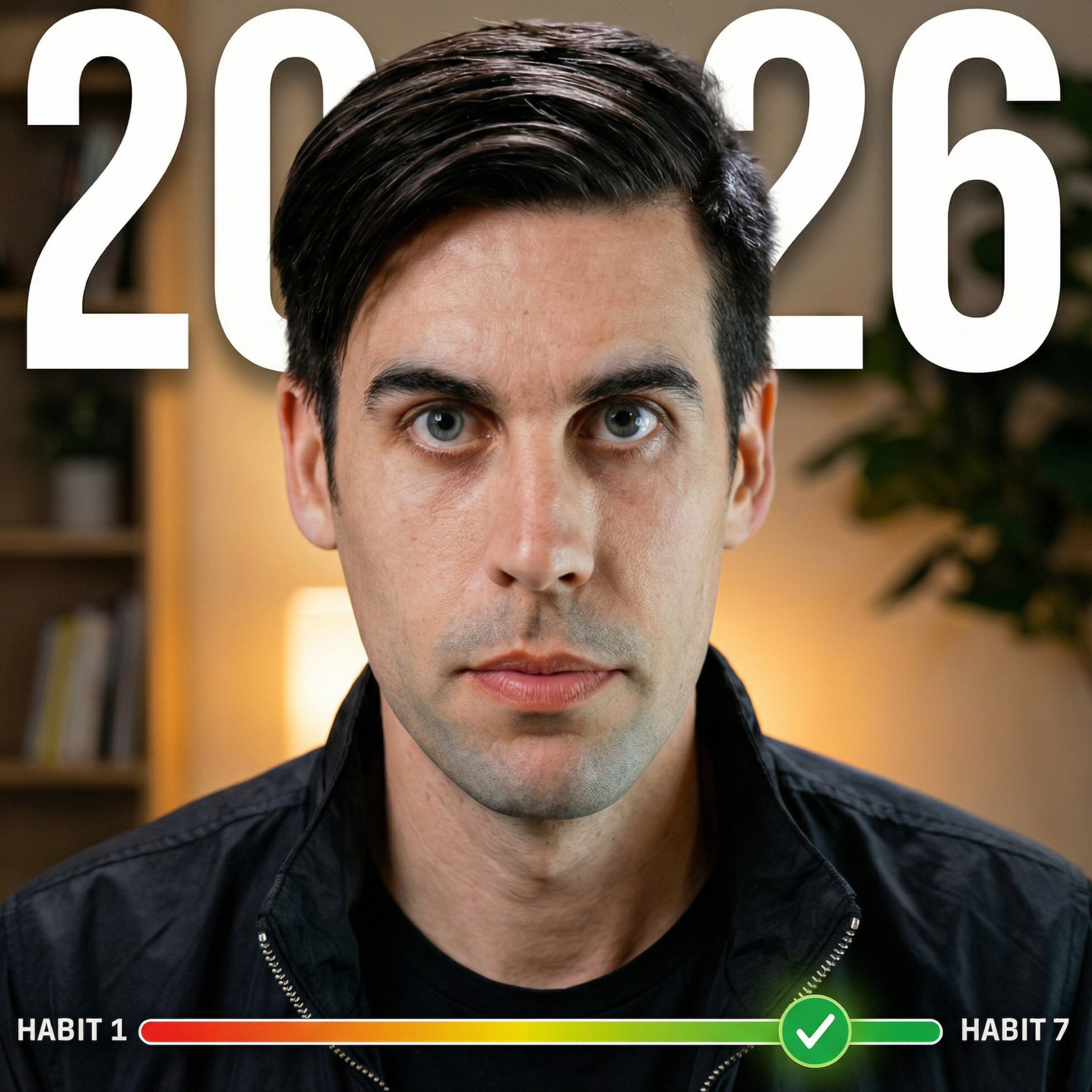
Loading summary
Transcript18 lines
- [00:00]
Ryan Holiday
Foreign. Welcome to the Daily Stoic podcast, where.
- [00:09]
Each day we bring you a Stoic.
- [00:11]
Inspired meditation designed to help you find strength and insight and wisdom into everyday life.
- [00:19]
Each one of these episodes is based.
- [00:20]
On the 2000 year old philosophy that has guided some of history's greatest men and women. Help you learn from them, to follow in their example, and to start your day off with a little dose of courage and discipline and justice and wisdom. For more visit Dailystoic.com.
- [00:57]
Here we are at the end of one year and the beginning of another, and I think it behooves us to ask ourselves, what do we have to show for it? Did we do what we set out to do? Did we meet those resolutions, make those goals? Were we the person we were capable of being in 2025 or in any year? And I think if we're honest with ourselves, we have to say that we weren't. In fact, I would say that neither you or I are anywhere near full potential. What happened? Well, we got busy, life happened, motivation faded, old habits die hard. Same patterns reasserted themselves in today's episode. I want to talk to you about doing it differently. I want to talk to you about how you can make 2026 or any year, whenever you're watching this, the best year yet. Because this can be a turning point. This can be the moment that you make changes. This can be the time that you finally answer Epictetus famous question, how much longer am I going to wait to demand the best of myself? How did the most powerful man in the world start and end his days? He spent them alone. Whether he was in his palace in Rome, whether he was on the front with the Roman army, whether he was traveling, whether he was sick, whether he was tired, whether he. It didn't matter. Marcus Aurelius spent time with his journal. In fact, Meditations, his famous book, survives to us, totally unique from all other philosophy books. He wasn't writing it for you or for me. He was writing it for himself. He was taking time out of his day, out of his busy life, to work it out on the page. This habit of journaling is one of the most basic but most powerful practices you could start this year. In my book, Stillness is the Key, I talk about Kennedy in the missile crisis. Russia had just moved ballistic nuclear missiles into Cuba, and there, in a moment, the world is now on the brink of nuclear war. Kennedy is just one bad decision away. Not from losing an election, but destroying the planet, killing millions of people. So what does he do to handle this immense stress? He does the same thing that Marcus Aurelius is doing. He pulls out a pad of paper and he doodles. He writes notes. He works it out on the page. Instead of working it out on his opponent, instead of working it out on his advisors, it's working it out on the page. As Anne Frank would say, it's because paper is more patient than people. You want to know why Kennedy doesn't escalate during the missile crisis? You want to know why power doesn't corrupt Marcus Aurelius? I think journaling, doodling, writing it out on the page is an important part of it. My journaling practice, I do every single day. Sometimes in the morning, sometimes at night. It doesn't matter how you do it. It doesn't matter where you do it. You do it on. Take some time to put it down on the page. Your mind will thank you, your colleagues will thank you, your family will thank you, your future family, your grandchildren and great grandchildren. If they ever get their hands on it, they'll thank you. Work it out on the page. So if you're going to pick up only one habit in 2026, journaling would be a pretty good one. Look, I get it. You're tired. You've got a lot going on. It feels great to sleep in. But a foundational habit for this year and every year, for every day, should be waking up early. After all, Marcus Aurelius opens book five of Meditations with what this famous passage he says, at dawn, when you have trouble getting out of bed, tell yourself, I have to go to work. As a human being, what do I have to complain of if I was going to do what I was born for? The things I was brought into the world to do? Or is this what I was created for? To huddle under the blankets and stay warm? But it's nicer here. He said so. You were born to feel nice instead of doing things and experiencing them. Marc isn't talking about getting up early to go to your crappy job. He's saying you get up to go live your life, which, by the way, is ticking away. There's something sacred, holy, special, beautiful about the mornings. I don't love getting up early, but I love having gotten up early. And that's why this is such an important habit. Get up, get a ju on the day. Don't wake up on your back foot already late, already rushed. Be intentional, be purposeful. Now, look, if you have trouble getting up early, you're not a morning person. I do have a book recommendation for you. I read it to my kids on a regular basis. It takes discipline to wake up early. It also takes discipline to wind down properly to go to sleep. But the point is, wake up early because it's quiet. Wake up early because you want to send a message to yourself that you're not the person who hits the snooze button. Toni Morrison, the great Nobel Prize winning author. She woke up every morning in the dark for years to write. She said she wanted to get up. She wanted to sit at her desk at her small apartment. She wanted to write as the sun came up and light filled the room. She said it was also important that she got all her writing done as a single mother before she heard the word mom for the first time. So when are you at your best? When do you have the most peace and quiet? Before the phone calls have come in? Before the emails, before the news, before all the things you have for the day, Right? That's when you want to get up and get after it. It's a great time to journal, I would add. I know it's not easy, it's not always fun, but that's why it's such a great habit. Send a message that you decide that you know you're not meant here to huddle under the covers and stay warm. You're meant to do things. You're meant to make things. You're meant to fulfill your potential. You're meant to live this life. It's here. Get up, get after it, get moving.
- [06:54]
Toyota Trucks Voiceover
The world is full of tours.
- [06:58]
Ryan Holiday
But.
- [06:58]
Toyota Trucks Voiceover
You don't choose a Toyota truck to follow the beaten path. You choose it to find the places in between the detours where each adventure pulls you toward the next. And wrong turns turn out right. So why would you ever take a tour when you could take a detour?
- [07:21]
Ryan Holiday
Toyota trucks deciding what workout to do.
- [07:25]
Or how much weight to use.
- [07:26]
These are all roadblocks, ways that we.
- [07:29]
Sort of get in our own way. And that's where today's sponsor comes in. Tonal will pick the perfect weight, track your progress and suggest what to do next based on your muscle readiness. Taking the guesswork out of getting a great workout, Tonal provides the convenience of a full gym and the guidance of a personal trainer anytime at home. With one sleep system designed to reduce your mental mental load, Tonal is the ultimate strength training system, helping you focus less on workout planning and more on getting great results. You don't have to second guess your.
- [07:58]
Form because Tonal is giving you real.
- [08:00]
Time coaching cues to dial in your form and help you lift safely and Effectively. After a quick assessment, Tonal sets the optimal weight for every move and adjusts in 1 pound increments as you get stronger. So you're always challenged. And right now, Tonal is offering our listeners 200 bucks off your first Tonal purchase with the promo code TDS. That's Tonal.com and use promo code TDS for $200 off your purchase. Tonal.com, promo code TDS for $200 OFF.
- [08:36]
I know getting up early is hard, but that's the point. Doing hard things is good for you. The Stoics knew this. We treat the body rigorously, Seneca said, so that it's not disobedient to the mind. The Stoics sought out challenges. They weren't people who just sat in their desk writing about philosophy. They weren't huddling under the covers and staying warm. No, they got up and got after it. They sought out things that were hard. I interviewed Jesse Itzler on the Daily Stoic podcast recently, and he talked about this. He called this the misogy principle, which is like, pick one big thing that you're going to tackle each year. I think that's great advice as we look at a new year. What's something really hard that you're going to throw yourself into doing? You're going to start a company. You're going to build that shed in the backyard. You're going to run a marathon. My goal for 2025 is I wanted to run the original marathon. I ran from Marathon to Athens. It kicked my ass. It was so hard. But on the other side of that, I'm a person who knows now more what I'm capable of. I know that I'm a person who can set a really hard goal, not give up on it, train for it, go for it, and then do it. Even in the middle of it. When it was hard and I wanted to quit, I forced myself to push through. That's what Seneca is talking about when he says, we treat the body rigorously so that it's not disobedient, obedient to the mind. All these things are training. There's little bits of training, like little hard things to do. As we said, get up early, go in a cold plunge, go for a run. That's all great. But I would also urge you this year to set a big goal, something hard. You're going to try to do something that's going to challenge you, something that feels like a stretch. So you have to be the person who stretches to get there. So you have the opportunity, the motivation. So you are facing the temptation to quit. So you're having to make trade offs. So you're having to make adult decisions and then do it and commit and push through and come out the other side. My writing, my relationship, raising my kids, all of this is informed by the hard physical stuff that I do. And I have confidence that I'll be able to do things, solve problems, keep going. Because I know that I'm the kind of person that doesn't quit when things are hard. In fact, I like when they're hard. Right? It excites me. It challenges me. I get better when other people are quitting. That's what you cultivate when you do hard things. So let's do hard things this year. Which, by the way, is why we call this thing we do every January, the Daily Stoic New Year New you challenge. We call it a challenge because it's supposed to be challenging. It's 21 days of stoic inspired challenges. That means they're not easy. Some of them are hard, some of them are weird, some of them are uncomfortable. But that's the whole point. You get better for being challenged. You get better for being knocked down. As Seneca said, becoming Olympic class, Epictetus reminds us, takes sweat. It's supposed to be hard. Pair yourself with a strong sparring partner, he says, and see what a better wrestler and athlete you become. So that's what the Daily Stoke New Year New you Challenge is built around. We're launching on January 1st. Me and thousands of other Stoics all over the world are going to be doing it. We come up with new challenges every year. There's a community element. There's live Q and A's. With me, you get a calendar to mark your progress. There's a bunch of other awesome bonuses in there. I'd love to have you join us. It's one of my favorite things we do at Daily Stoic. One of my favorite things that I get to do personally each year. I look forward to it. I have a ton of habits that I've picked up from the challenges over the last eight or nine years that have made my life better, that I practice to this very day. So I hope to see you in there. You can sign up right now@dailystoic.com challenge. Look, I'm not saying this is going to solve all your problems. I'm just saying there's not many problems it's going to make worse. I'm talking about going for a walk. I've always been a big walker. Then we had kids. I started walking them every chance I could. Then we got a puppy last year. And now I'm definitely doing two walks a day. What you find is that walks are a kind of magic. They clear your head, they calm your nerves, they pull you away from distractions that get you out into nature. Seneca said that the mind must be given over to wandering walks, and so must you. As you're thinking about planning your day and your life in 2026, I'd urge you to get outside, get moving, Go for a hike, Walk down to the mailbox, take a few laps around the block, take your phone calls on the move. I even do my zoom calls walking. And you'll be amazed at what happens. You get healthier, but also ideas pop in your head. You meet people, you see things, you calm down in ways that you otherwise wouldn't be. Nietzsche has this great line. He said, only ideas had while walking have any worth. So, yeah, sure, walking is a physical activity, it's exercise. But I think it's really about your mental state. Walking has helped me write books. It helped me get through kids that didn't sleep. It's helped me in my relationships. It got me through a pandemic. It's helped me stay grounded through chaotic times. As I said, walking is a kind of magic. You're not magically or immediately going to become a new person just because a new year happens, right? It takes work, it takes time. Epiphanies are overrated. Transformations are rare. It's usually a gradual thing. Zena, the founder of Stoicism, would say, well, being is realized by small steps. But it's no small thing. This is my philosophy in life, too. I've written something like 17 books over the last decade and a half. Along with writing the daily Stoic email every single day, along with doing these videos, along with raising kids, I do a lot. And so people sometimes ask me, how do I write so much? How do I get it done? And the answer is, I do a little bit every day. There's actually a great writing rule, just a couple crappy pages a day. Show up, put your ass in the chair, do the thing. And the discipline of writing is the same as the discipline of doing just about anything difficult. You show up, you don't make excuses, you don't procrastinate. You also don't let yourself be a perfectionist. Show up, get a little bit better, do a little bit more, Make a contribution, add to the momentum. Seneca actually said that this was the path to wisdom too. His exchange, his Letters with his friend Lucilius. What they're doing is they're each sending each other just like one thing a day. Seneca said that each day we want to acquire something that will fortify you against poverty, against death, against misfortune. And he says, run these ideas, these insights, these lessons over in your head. He says, digest one every day. So if you set a rule or a goal for this year that you were just going to pick up or learn one single thing every day, it didn't have to be big again. It doesn't seem like much, but where would you be 12 months from now, 365 days from now? And where would you be times 10, times 20, times a whole life, Right? One gain per day adds up in a big way. Especially because many of these lessons, many of these things we acquire compound on top of, of each other. This is kind of the habit that beats all the other habits. Hey, I'm going to try to learn one thing a day. I'm going to make one small improvement a day, one change a day, even one a month would add up in a big way. Whether it's a book or a business or an anthill or an oak tree, impressive things often come from humble beginnings. Slow and steady, consistent. That's what it's about. Most of our goals, most of our resol. Solutions, most of our intentions are kind of selfish, right? It's our goals, our improvements, our growth. That's what we're thinking about. And this is. This is good, right? It's better than not thinking about this at all. But what if you tried to be more generous this year? Kinder, more helpful? What if you tried to have more positive impact? I think too many people misread stoicism. They think it's an individualistic philosophy. They think it's a disconnected philosophy. And this couldn't be further from the truth. Stoicism is not there to make you a better sociopath. Marx Realis talks about the common good like 80 times in meditations. He actually says that's what a good life is. He says a good life is good character and acts for the common good. So you can't have your best year yet if that year is all about you. Think about what goals you could set that would have a positive impact on someone else. Think about how you could be of something, service this year. And not only does it have a positive impact on the world, it has an impact on you too, because it gets you out of your head. It's easy to despair, to be frustrated, to be disappointed. To be disillusioned about everything that's happening in the world. One way we can always be sure we have something to feel good about is to do good. That's what Marx Rua said. Good fortune is good intention and good actions for other people. There are crazy times. It's easy to be overwhelmed. But if you were less self absorbed, less how does this make me feel? And more about, how can I make others feel good? How can I make the world a better place? How can I leave this better than I found it? I promise you, you will have a happier, more productive and more meaningful year. And it doesn't have to be huge things, right? It could be picking up trash on the side of the road. It could be lending a hand to a friend. It could be trying to change, cheer someone up, or just asking someone a question, or holding the door open for them. It could also be making a donation. It could also be getting involved in politics or volunteering. It could be many things. You don't have to save the world, but you do have to make a contribution. As we wrap up 2025, I think it's worth noting how fast that time went. The ancients say tempus fugate, right? Time flies. It didn't seem that long ago that we were sitting here planning out this new year that lay before us. And now that year is gone, it's dead forever. This is something Seneca points out. He goes, you got to remember, death isn't this thing in the future. You're not moving towards it. He says, death is happening now. The last 12 months are dead and gone. You will never get them again. And that's why, as our final habit, one that I think will transform your year and your life is so important, and it might seem depressing at first, it might seem odd, it might not seem fun, but it is essential. And it's, I want you to think about death every day. The Stoics say memento mori. Remember you are mortal. I remember a few years ago, a friend emailed me on a Friday. I saw it. I said, you know what, I'll respond on Monday. And by Sunday, he was gone. He'd fallen dead of a heart attack on a hike. But the reason the Stoics practice memento mori is that life is short. You could leave life right now. Mark Sorrell says in meditations, let that determine what you do and say and think. Your friends can go, your family can go. Nothing is certain except the fact that we will all go at some point. Marcus Aurelius knew this. He lived in a time of very high infant mortality, he lived through a plague, and he also knew from this practice that he himself would die. But the practice of Memento mori, which he writes about in Meditations, was not meant to be morbid necessarily. It was meant to be empowering. Because when we remember death, we're reminding ourselves how valuable our time is. We're cutting out inessential things like pointless phone calls or people picking our brain. We're not going to spend time ruminating on what's happened or anxious about the future. It's going to remind us that, hey, all that time you're spending at the office is time you're spending away from your family, time you will never get back. Memento mori helps us say no. It helps us prioritize. It gives us a sense of urgency, a sense of clarity, and a sense of priority. Opportunities are going to come and go in the year ahead. Distractions are going to pop up. Things are going to seem appealing, they're going to seem important. But when you remember how temporary your time is, you remember how ephemeral things are, it's easier to focus on what really matters. It's the craziest thing in the world. Seneca says we protect our property, we protect our money, but we are frivolous with our time. He said life is not short, not in the way we think it is. It's that we waste a lot of it, and that's why it's so essential. It's something you have to do this year. Think about death. Let it give you a sense of time and urgency. Stop wasting your life. Get after the things you need to do, make the changes you need to make, and have a great 2026. Every day I send out one stoic inspired email, totally for free. Almost a million people all over the world. If you want to take your stoicism journey to the next level, I would love for you to subscribe. It's totally for free. You can unsubscribe at any time. There's no spam. Just go to daily stoic.com email. Love to see you there.
- [21:31]
Toyota Trucks Customer Testimonial
My family owns a 2023 Toyota 4Runner, and honestly, it's my favorite vehicle that I've ever owned around town. It's smooth and reliable, but where it really shines is on our trips into the backcountry. We've taken it on backpacking adventures to Colorado and New Mexico, loaded up with gear and never had to think twice about whether it could handle the terrain. That's what Toyota trucks are built for. Off road, confidence, rugged durability, and the freedom to explore. Toyota has a long history with the outdoor community, and they're committed to helping more people get out there and experience what nature has to offer. From remote trails to scenic byways, Toyota Trucks empowers you to take the detour, roam freely, and discover places that still feel wild and untouched. And they're not just making great trucks. They're working to expand access to adventure so more people can connect with the outdoors and pass that passion on to the next generation. Discover your uncharted territory. Learn more@toyota.com trucks that's toyota.com trucks Adventure.
- [22:25]
Toyota Trucks Voiceover
Detours the world is full of tours, but you don't choose a Toyota truck to follow the beaten path. You choose it to find the places in between the detours, where each adventure pulls you toward the next, and rolling turns turn out right. So why would you ever take a tour when you could take a detour? Toyota Trucks.