← The Daily Stoic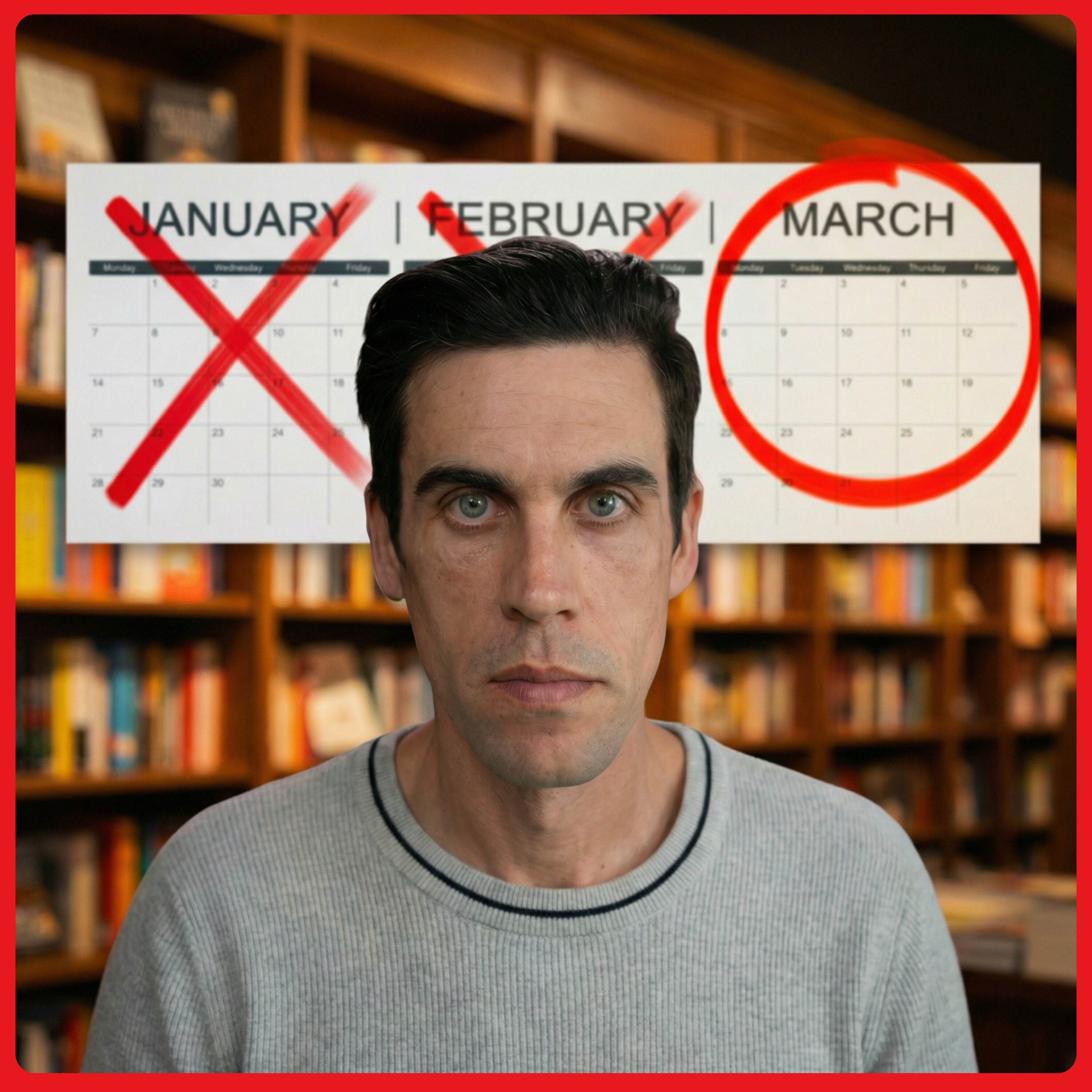
Loading summary
Transcript29 lines
- [00:00]
Ryan Holiday
It's funny.
- [00:00]
Sponsor Representative (Quo/Tonal Ads)
People want to level up their business, but they always focus on like, big stuff and they neglect some of the small, basic stuff. Like how do you talk to your customers and keep your team on the same page? Sometimes just a cleaner, more modern setup can make everything feel smoother and work better. And that's why today's episode is sponsored by Quo Q U O the modern alternative to help run your business communications. Quo is the number one rated business phone system on G2 with over 3,000 reviews. And it's built for how modern teams work. More than 90,000 businesses, from solo operations operators to growing teams, rely on Quo to stay connected, professional and consistently reachable. Your entire team can handle calls and texts from one shared number. They don't miss messages. Conversations don't get disconnected. Everyone sees the full thread, making replies faster and customers feel genuinely cared for. And Quo isn't just a phone system, it's a smart system. Quo's AI automatically logs calls, generates summaries and highlights next steps so that nothing gets lost. Can even qualify leads and respond after hours, ensuring your business stays responsive even when you yourself are enjoying some much needed offline time. Make this the year where no opportunity and no customer slips away. Try quo for free plus get 20% off your first six months when you go to quo.comdailystoic q u o.comdailystoic quo no missed calls, no missed customers I know it's not good for me to just run. I need it for my mental health. But it takes a toll on me physically and I need to mix it up.
- [01:30]
Ryan Holiday
So one of the things I'm trying
- [01:31]
Sponsor Representative (Quo/Tonal Ads)
to work on this year is doing more diverse kinds of workouts and specific doing more strength training. And that's where today's sponsor comes in. Tonal provides the convenience of a full gym and the guidance of a personal trainer anytime at home. With their one sleek system designed to reduce your mental load, Tonal is the ultimate strength training system, helping you focus less on workout planning and more on getting results. Plus, there's no more second guessing on your form. Tonal gives you real time coaching cues to dial in your form, which I need a lot of help on, and it helps you lift safely and effectively. Plus, Tonal sets the optimal weight for every move and then adjust it makes it a tiny bit harder each time in one pound increments as you go and as you get stronger. Right? So you're always challenged, which is one of the other things, right? We get in our rut even though we're doing something Positive. We're doing it in a way that's actually getting progressively easier instead of progressively harder. So right now, Tonal is offering our listeners 200 bucks off your Tonal purchase with promo code TDS, that's Tonal.com and use promo code TDS for 200 bucks off your purchase. That's Tonal.com, promo code TDS for $200 off. Welcome to the daily Stoic podcast, designed to help bring those four key stoic virtues, courage, discipline, justice and wisdom into the real world.
- [02:56]
Ryan Holiday
You're just gonna write this year off already? You're gonna write today off. Cause it got started the wrong way. You're gonna write this week off, this month off this phase of your life off.
- [03:06]
Sponsor Representative (Quo/Tonal Ads)
Why?
- [03:07]
Ryan Holiday
Cause you think you messed up? Cause you got off to a bad start. Start. Because you didn't do it perfectly, because you're tired. Because other people got out ahead of you. That's crazy. And most of all, the Stoics would say it's arrogant because it is presuming that you will get later, that you have more time. The Stoics tell us to get active in our own rescue, to get back to it right now. And that's what we're going to talk about in today's episode. Because right now, this moment is the perfect moment to reset, to get back to first principles, to do the things that you said you were going to do. Be the person that you know you want to be. I just ran and now I have the ocean totally to myself. I'm gonna do a long swim. This is the best. When, when. When you have the pool to yourself, when you have the track to yourself, when you have the roads to yourself, when you have the ocean to yourself because everyone else is sleeping or it's too wet or it's too late or it's too cold or it's too hot. When you have it all to yourself, that's the best. That's when the best are out, by the way, because you're stealing a march on everyone else. I always think of that famous line from Longfellow. He says the heights of great men weren't reached by sudden flight. He says, no, it was while their companions slept, they toiled upwards through the night. So you get up, you get after it precisely when everyone else is not doing that. That's when you make your progress. That's when you pull ahead. And also that's the most peaceful and wonderful and quiet and still time to do whatever it is that you like to do. It's not about now. It's not about what's happening now. It's not about what it's taking out now. It's about what it's given you. Right before it happened, you were scared before it happened, you were sheltered before it happened, you were soft. Before it happened, you were dependent. You were all these things and more. But after, right after the breakup, after the bankruptcy, after the pandemic, after those rough couple of years, after things didn't go your way, well, now you're something different now. You're something new. You are more, you are stronger, you are brighter, braver. You are more independent. You have a better sense of your capacities. This is why Seneca said he actually pitied people who hadn't been through things, who hadn't been kicked around, knocked around, knocked down in life. He said they didn't know what they were capable of. When the Stoics talk about how the Obstacle is the way, this is what they mean, that we're not just enduring something, we are becoming through it. The next time you're going through something, you have to remember this, that it's changing you. It's impossible improving you. It's teaching you, it's giving you insights into who you are and what you're capable of. And that's how you're going to become more than you were before. When the Obstacle is the Way it came out, it sold a couple thousand copies its first week, and then the next week it sold less copies, and then less copies, and then less copies, and then less copies. But I didn't focus too much on that because I was working on my next book. I wasn't thinking of it as a failure. I was too busy getting my ass kicked by the next book. And then about a year, year and a half later, it really did start to sell. It started to pick up like crazy. Sports teams were talking about it. It's getting media attention. But again, I didn't care that much because my ass was getting kicked by the next book. I wasn't thinking about the thing behind me. I was thinking about the thing in front of me. I was too busy doing the thing to be thinking about what people were saying about the thing. I've just found that to generally be a great strategy for life and for writing for work is be focused on what you're supposed to be doing. Be focused on your next opportunity. Don't be thinking back, looking back, admiring what you just did, or despairing about what you just did. Focus on what you're going to do next. Pour yourself into what you actually control, which is the act, the skill, the activity, let the chips fall where they may. There was once a promising Greek politician named Epaminondas who the powers that be wanted to get rid of.
- [07:00]
Tim Ferriss
Rid of.
- [07:00]
Ryan Holiday
So they give him a dead end job, supposedly a humiliation. They assign him to basically running the city's sewers and streets. He's literally picking up shit. He's literally diverting water from the public thoroughfares. And it should have been the end of his career. And instead it sets up a magnificent career in politics. Why? Because he takes that job seriously. He treats it like it's an important job and the citizens love him for it. Plutarch says that he transformed, transforms an otherwise insignificant office into a great and a respected honor. And I think there's a stoic lesson in here. It's the idea that whatever we do, if we do it well, is noble. That how we do anything is how we do everything. That the status, the recognition, what other people think about what we do, that says nothing. How we decide to treat it, the seriousness we bring to it, the excellence that we do it with, that says that's what reflects on us, that's what matters. It doesn't matter how high or how lowly our profession is. If we treat it seriously, if we treat it like a craft, if we treat it like a high office, it becomes that. And we ourselves are transformed in that process. So it doesn't matter what it is you're doing, doesn't matter what the task is in front of you, doesn't matter what other people think about it. What matters is what you think about it, and what matters is what you do with it.
- [08:22]
Daily Stoic Host/Contributor
Do you want the secret to getting more done? Well, Marcus Aurelius tells us that it's not doing more, it's in fact doing less. He says if you want tranquility, you have to ask yourself in every moment, is this thing essential? He says, because most of what we do, most of what we say is not essential. But he says, when you eliminate those inessential things, what you get is the double benefit of doing the essential things of better. Too often we're thinking about adding new habits. We're thinking about doing more stuff. In fact, we should be doing less. We should be ruthlessly eliminated. And that's what we're going to be doing in the Daily Stoic spring forward challenge. 10 Days of Stoic inspired challenges to help you clean up, to clean out, to get rid of stuff you shouldn't have, stuff you shouldn't be doing, thought Patterns you shouldn't be repeating. And me and thousands of other Stokes are going to be doing it together. All you got to do to sign up is go to dailystoic.com spring to sign up to reset, to get back on track after what's been, I think we can all admit, a difficult winter. If you want to get back on track this spring, join me and thousands of other Stoics in the daily Stoic Sprint Forward Challenge and then sign up right now@dailysto.com spring.
- [09:30]
Ryan Holiday
Look, there are things that suck. There are things that hurt. There is evil. There are scenarios that we dread that aren't fair. There are stuff we try like hell to avoid. But the Stoics want us to remember that none of this is bad. As in bad for you, as in bad for us, as in bad that it happened to you. In fact, they want you to see that it's the opportunity for you. Because we get to decide what things mean to us, because we get to decide how we respond to things. And so we have the power to turn these bad things into good things. We make our own luck. The Stoics believe that good fortune is not something that does or doesn't happen to us. That good fortune is something we make, as Marcus Aurelius says, with good intentions, with good character and good action. We can use this. We can use what's happening in the world as an opportunity. We can learn from it. We can grow from it. We can step up and meet it. And in fact, that is the most powerful way that we can turn bad into good for others and those that come after us. By rising to meet this moment, by letting it make us better, by learning from it, we take what is bad and we make it good. Doing hard things is good for you. Cold plunges, long hikes, long runs, challenging yourself, pushing your limits. Seneca says, we treat the body rigorously so that it's not disobedient to the mind. Doing the things you don't want to do, but that you're glad you did after. That's the skill that life demands more than any other skill. The ability to push yourself a little bit further, to hold on a little bit longer, to go a little bit further than you thought, to put up with a little bit more than you thought.
- [11:11]
Tim Ferriss
That's what it's about.
- [11:12]
Ryan Holiday
And so we find practices, we find places, we find experiences that allow us to practice that. They're also beautiful and enjoyable, but they allow us to build that muscle, the muscle that says, hey, I'm in charge. Hey, I push Myself, hey, I'm comfortable being uncomfortable. I'm comfortable being challenged. In fact, I like those challenges. I seek them out. Not just that I can do hard things, but I do hard things on a regular, consistent basis.
- [11:40]
Tim Ferriss
That's what it's about.
- [11:43]
Ryan Holiday
If you want to live in good times, you have to do good times things. We don't control what's happening in the world around us. We don't control what other people are doing. We don't control the economy, we don't control the government, we don't control the weather, we don't control the Zeitgeist. But we control what we do. We control who we are. In Marcus Realis meditations, Marcus Realis is lamenting all the shitty things that are happening around him. And there was a lot. He's living through a plague, he's living through a famine, he's living through a civil war. He has health problems, his marriage is struggling. He says, you know, I was once a fortunate man, but at some point, fortune abandoned me. But then he stops the pity party and he says, you know what? No good fortune is up to me. He says, it's good intentions, good character and good deeds. If you want to live in good times, do good things, that's where we find hope. That's where we find bright lights. That's where we find something to be inspired, inspired by in our own choices, in our own actions, because that's the one thing we control. Stoics say you have to stop being a slave this year. There's a story I tell in Discipline is Destiny about Richard Feynman. One day, it's like 10 o' clock in the morning, he's out for a walk and he feels this pull, wants to have a drink. He never saw himself as an alcoholic, never had this problem with alcoholism. But he was deep, uncomfortable with this drive, this pull to do something. It was coming from a part of
- [13:10]
Daily Stoic Host/Contributor
him that he didn't control. And the Stoics say, that's something you
- [13:14]
Ryan Holiday
have to be really suspicious of. Seneca says, slavery isn't just this legal status. He says, everyone's a slave. Someone's a slave to their mistress, somebody's a slave to money, someone's a slave to power and attention. And he said, those people might be literally free, they might be powerful, they might be important, but they're not in control. In disappointed Cessna, I also tell the story of, of Eisenhower, told by his doctor that his smoking app, he'd smoked like four packs a day for 40 years. It was hurting his health. He says okay. And I love this, he says, I gave myself an order to stop smoking. And he stopped smoking cold turkey like that. It's going to be harder for some people, easier for some people. But the point is, you got to give yourself that order. You have to say, who's in charge? This habit, this addiction, this vice that I have, this thing that I want? Or am I in charge? Am I the boss? Or is it the boss? And that's what Feynman was reacting to. That's what Seneca was reacting to. That's what Eisenhower's reacting to. And ultimately, that's what Epictetus is reacting to. In the same court as Seneca. He looks around and he goes, I'm a slave, but I'm freer than these people because I'm in control of my habits. I decide what I do and what I don't do. And we have to give ourselves that power that this year,
- [14:26]
Tim Ferriss
procrastination is the biggest waste of life there is. Seneca, the Stoic philosopher, said that it snatches away each day and denies us the present by promising us the future. So how did the Stoics then beat procrastination? Let me give you eight quick tips. Number one, you take it action by action. You can't be crushed by your imagination as a whole. Mark Shreli says, your extrapolations as a whole. He says, you build it action by action and step by step. This is Zeno's famous line that well being is realized by small steps. But it is no small thing. Number two, you need to have a routine. Life is too erratic without design. Seneca says, you can't just be winging it. You shouldn't have to make so many choices. Simplify and replicate. Routine eliminates uncertainty. It eliminates questions. It boxes procrastination out. It makes it clear what we should be doing. Number three, you have to cut out the inessential. This is actually the essential question. Marcus Riles tells us, do I need to be doing this? Does this matter? And he says, because most of the things we do and say are not essential. And when we eliminate those things, we can do the essential things better. If you have a bunch of stuff on your plate, you have a bunch to procrastinate about. Limit what you have to be doing and focus on that. Number four, part of the reason we procrastinate is because we think we have unlimited time. You could be good today, Marks Ruth says, instead, you choose tomorrow. You choose tomorrow because you think you have till tomorrow. But memento mori, life is short. You could go at Any moment. The Stoics meditate on their mortality to remind them that they don't have the luxury of putting things off. Number five, who are you spending time with? If you spend time with people who procrastinate, if you spend time with people who are putting things off until tomorrow, if you spend time with people who don't have a sense of urgency around their life, you're going to pick that up. Epictetus quotes a proverb that if you live with a lame man, you will learn to how. How to limp. We become like the people we're around. You want to procrastinate less, spend time with people who don't procrastinate. Number six, focus on the small wins. Seneca, writing to Lucilius, says, like, each
- [16:28]
Daily Stoic Host/Contributor
day I just try to find something.
- [16:29]
Tim Ferriss
He says, something that fortifies me against poverty, against death, against weakness, against misfortune. Just focus on one gain per day. Just make a little bit of progress. This is one of my writing rules. Did I make a small contribution today? If so, I did my job. Number seven, let's not focus on outcomes again. That perfectionism can become a kind of paralysis. Let's focus on what we control, which is of course the central idea in Stoic philosophy. I'm just going to show up, I'm going to do what I can do. I'm going to try to make a contribution. I'm going to do my best. And I know if I do that
- [17:02]
Ryan Holiday
day in and day out, I'll get where I want to go.
- [17:04]
Tim Ferriss
And I think number eight is related, right? You have to demand the best for yourself. If you want to live and die as, as ordinary Epictetus says, then keep putting stuff off, keep deferring, keep acting as if you have forever.
- [17:18]
Ryan Holiday
But if you want to be your
- [17:20]
Tim Ferriss
best, then you've got to do your best. And you've got to do it now. You have to start showing up now, not later, now. You could be good today. Mark Sweeley says, don't choose tomorrow.
- [17:38]
Sponsor Representative (Progressive Insurance)
This episode is brought to you by Progressive Insurance. Do you ever find yourself playing the budgeting game? Well, with the name your price tool from Progressive, you can find options that fit your budget and potentially lower your bills. Try it@progressive.com, progressive Casualty Insurance Company and affiliates. Pricing coverage match limited by state law. Not available in all states.
- [17:58]
Sponsor Representative (AT&T Business Wireless)
Not every sale happens at the register before AT&T business Wireless checking out customers on our mobile POS systems took too long.
- [18:06]
Ryan Holiday
Long.
- [18:06]
Sponsor Representative (AT&T Business Wireless)
Basically a staring contest where everyone loses. It's crazy what people will say during an awkward silence. Now transactions are done before the silence takes hold. That means I can focus on the task at hand and make an extra sail or two. Sometimes I do miss the bonding time. Sometimes.
- [18:22]
Sponsor Representative (Progressive Insurance)
AT&T business Wireless connecting changes everything.