← The Daily Stoic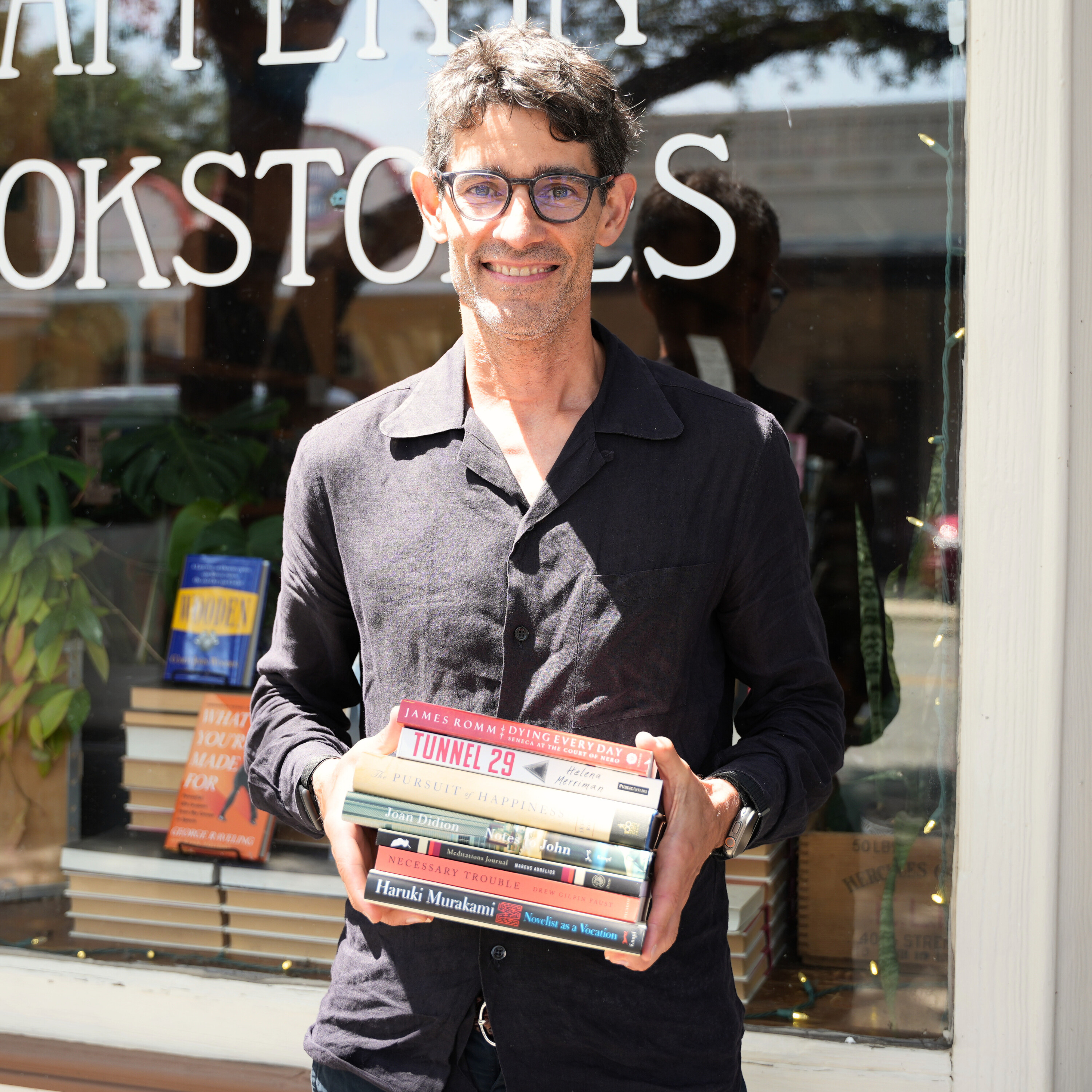
Loading summary
Transcript341 lines
- [00:00]
Ryan Holiday
You've probably heard of eight Sleep by now because I talk about it all the time. I woke up on my eight Sleep mattress pad this morning and I've slept on one for years. Eight Sleep is a company that is about improving your sleep and they have dramatically improved mine. The Pod 5 is the newest generation of Eight Sleep's signature product, the Pod, which is a smart mattress cover that you put right on top of your existing mattress. Their results are up to one hour of additional quality sleep per per night. Eight Sleep also just came out with their new Pod pillow cover. It syncs with your Pod system and automatically adjusts your head and neck temperature in real time based on your sleep patterns. And like the mattress cover, you slip it over any pillow you already love. Just head over to eightsleep.com dailystoic now and use code Daily Stoic to get 350 bucks off your very own Pod 5 Ultra. And the best part is you still get 30 days to try it at home and return it if you don't like it. I I think you'll love it. Your body will thank you for this investment in better sleep. Eight Sleep ships to many countries worldwide and you can see all the details@8sleep.com DailySToe.
- [01:11]
Toyota Trucks Advertiser
You hear that? That's not just a Toyota truck. That's the sound of no crowds, no alerts, no distractions, and no telling what you'll find next. You know, like a detour. So why would you ever take a tour? And you could take a detour. Toyota trucks.
- [01:44]
Ryan Holiday
Welcome to the Daily Stoic podcast where each day we bring you a stoic inspired meditation designed to help you find strength and insight and wisdom into everyday life. Each one of these episodes is Based on the 2000 year old philosophy that has guided some of history's greatest men and women to help you learn from them, to follow in their example, and to start your day off with a little dose of courage and discipline and justice and wisdom. For more visit Dailystoic.com.
- [02:37]
Book Editor or Literary Colleague
Only books that you love.
- [02:38]
Historian or Author
Only books that we love. Like this is the New. These are books that my wife told me I should read and then I put off reading and then I loved them when I read them. This is amazing. That this is this woman's first book is unbelievable, huh? Do you know this story? This couple is like decides to go on a sailing trip from London to New Zealand and then literally in the middle of it, like outside Hawaii or something, a whale jumps and sinks the boat. Which you wouldn't think could have actually happened, but it did and then they spent, like, six weeks in a. Eight weeks in a. In a raft floating in the ocean, and they're catching sharks and turtles. It's amazing. Super good story because, like, they say they. They had, like, a diary. So there's, like, diaries of a good chunk of it.
- [03:25]
Ryan Holiday
Amazing.
- [03:26]
Historian or Author
This is also insane. So good. I take that one.
- [03:33]
Ryan Holiday
That's about.
- [03:34]
Historian or Author
They're digging a tunnel from West Berlin to East Berlin to get people out. But cbs, like, the ethics of this, you may be interested in. So CBS finds out that they're doing this and obviously wants to do a story about it, but they can't because. So see, so the guy doing the tunnel says, okay, and he has, like, lunch or something with the president of CBS News. If you give us the money to dig the tunnel, we'll let you film us while we're doing it. And so it's.
- [04:08]
Book Editor or Literary Colleague
This is the weirdest ethical choice ever.
- [04:10]
Ryan Holiday
Yes.
- [04:10]
Book Editor or Literary Colleague
It's amazing.
- [04:11]
Ryan Holiday
Yes.
- [04:11]
Historian or Author
And so, like, he knows. And maybe one of the. But it's. So the whole thing.
- [04:16]
Book Editor or Literary Colleague
But you're paying them to get out of Eastern.
- [04:18]
Historian or Author
Yeah. You're paying them to commit, like, an international crime that could bring about a nuclear war or something. Right. And so the stakes of it are incredible. But what. It means. Depth of the Cold War. Okay, but the. But the crazy thing, too, is that it also means that the whole process is filmed as it's happening.
- [04:42]
Ryan Holiday
And.
- [04:43]
Historian or Author
But also, like, if they get caught, like, the Russians aren't gonna be like, oh, you're a journalist.
- [04:49]
Ryan Holiday
You're right.
- [04:50]
Historian or Author
It's fine.
- [04:50]
Toyota Trucks User or Family Member
No problem.
- [04:50]
Historian or Author
So it's crazy. So take that one. And then here's the. I just interviewed Jim Drum. But this is. This is Seneca in the Court of Nero. And it's all about this dilemma we're talking about. Oh, yeah, of course.
- [05:04]
Ryan Holiday
Those are for you. Amazing.
- [05:05]
Historian or Author
Thank you. So I think about that one all the time.
- [05:07]
Ryan Holiday
Awesome.
- [05:08]
Historian or Author
Which is fascinating, because then you just wrote another book that you have somewhere. Plato does the same thing. Plato goes. And he doesn't just want to be an academic, he wants to be involved in politics. And so he's like the teacher of this teacher tyrant who he's trying to convert to democracy. But really he's. The tyrant is just using his reputation to make people think he's more democratic than he is. And so that's the interesting thing about Seneca, too, is you could go like, okay, yeah, he's the adult in the room. But also, as we. And you understand this stuff more when you see analogs of it happening in the Present is you're like, okay. But also, I bet other people are saying, well, Nero can't be that bad or Seneca wouldn't be working with him.
- [05:55]
Book Editor or Literary Colleague
Right, right.
- [05:57]
Ryan Holiday
Like.
- [05:57]
Historian or Author
Or you go, actually, you can tell that Nero is smart because he has people like Seneca around him. And it's like, so, yes, on the one hand, you're. You're constraining them by taking papers off their desk or being like, do you really want to murder this person or not? And then you're also enabling and emboldening them to do the horrible things that they're doing.
- [06:21]
Book Editor or Literary Colleague
The dynamic between NHTSA and Reagan, where he's like a Democratic establishment, like, code warrior. Oh, he's working with the Reagan administration. Reagan administration can't be too hawkish, these California people.
- [06:30]
Historian or Author
Exactly. And so, yeah, it's in.
- [06:33]
Book Editor or Literary Colleague
Not that Reagan was a murderous person.
- [06:34]
Ryan Holiday
No, no, no, of course. No.
- [06:35]
Historian or Author
It's the analog that gives you the kind of insight. So that one's really good. This book on Churchill and his son is interesting.
- [06:42]
Ryan Holiday
I haven't read that one.
- [06:43]
Historian or Author
I've read a good bit about Churchill.
- [06:45]
Book Editor or Literary Colleague
But I haven't read that one.
- [06:46]
Historian or Author
I love Robert Wright's stuff. Oh, that book is so good.
- [06:49]
Book Editor or Literary Colleague
His whole.
- [06:49]
Historian or Author
I saw that you had some. The Moral Animal is very good. Yeah. Did you read the Sebastian Younger book on Dying?
- [06:57]
Book Editor or Literary Colleague
No, but you know Sebastian Younger. Fun fact about him, he has, I believe, the fastest marathon time of any journalist. He ran like a T19.
- [07:05]
Historian or Author
Really?
- [07:05]
Ryan Holiday
Yeah.
- [07:06]
Historian or Author
He was here. He didn't tell me this.
- [07:07]
Book Editor or Literary Colleague
Yeah, well, he just was like a brief period of his life. He was like, near Olympic trials level. Kind of amazing, right?
- [07:14]
Ryan Holiday
Yeah. Yeah.
- [07:14]
Book Editor or Literary Colleague
Wow.
- [07:15]
Ryan Holiday
I did not know.
- [07:15]
Book Editor or Literary Colleague
I saw his YouTube video on in the Time of Dying, but I haven't.
- [07:19]
Historian or Author
The book is really good. Let's see. Have you read Kafka's Letter to the Father?
- [07:27]
Book Editor or Literary Colleague
I have read Kafka's Letter to the Father.
- [07:29]
Ryan Holiday
Yeah.
- [07:29]
Historian or Author
I think that's one of the greatest parenting. My favorite part about it.
- [07:33]
Book Editor or Literary Colleague
That one's great, too.
- [07:33]
Historian or Author
I'm talking to him soon. Yeah, he's in the book.
- [07:36]
Ryan Holiday
In your book.
- [07:36]
Historian or Author
Yeah. But the other one, I think that I put that in a. In the parenting section deliberately. I think it's actually a parenting book.
- [07:43]
Book Editor or Literary Colleague
It's totally a parenting book. It's so good.
- [07:45]
Historian or Author
No, he's awesome. But yeah, my favorite part of the Kafka thing is that he writes the letter, sends it to his mom to give to the mom, and then she does it, and then you go, oh, it's a dynamic. It's not just like you have one parent. Yeah. Like, the parents were attracted to each other for some reason, too. And then they had their own toxic relationship or dynamic that affects the kids.
- [08:11]
Book Editor or Literary Colleague
This is such a good collection. Right. So that started in the Atlantic.
- [08:15]
Historian or Author
God bless him. He's great. Although he just joined. I just writes for us.
- [08:18]
Book Editor or Literary Colleague
She's a buddy for us now. Like her a lot.
- [08:20]
Historian or Author
She's awesome. We should have Olga's book around here somewhere, too. Unless we sold it. She was here. Ali Parrot. And we should have Tom Nichols book, the Death of Expertise somewhere. Malcolm a runner. Yes.
- [08:35]
Ryan Holiday
Yes.
- [08:35]
Historian or Author
I've run with David before. I've never run with Malcolm. We should have what I talk about when I talk about running. Did you read the Novelist as a vocation? His writing book? No, I've never read that Skin.
- [08:51]
Ryan Holiday
I just.
- [08:52]
Historian or Author
So I read. I read what I talk about when I talk about running. And then I was just in. I mean, I read it 15 years ago, 10 years ago. And then so I just did the Greece Marathon.
- [09:01]
Book Editor or Literary Colleague
Oh, cool.
- [09:02]
Ryan Holiday
Yeah.
- [09:03]
Historian or Author
Did you read.
- [09:04]
Book Editor or Literary Colleague
There's a wonderful. You actually. You like this book? Her name is, like, Andrea, and it's a book about running with the Greeks. And it's sort of like Greek wisdom for running a marathon. So she's a scholar of, like, Greek history and the greats, and it's one. It's, like, full of these beautiful insights about running. And then she runs the Athens Marathon.
- [09:23]
Ryan Holiday
Wow.
- [09:23]
Book Editor or Literary Colleague
Her name is Andrea Maricolongo, I think.
- [09:26]
Historian or Author
Okay.
- [09:26]
Book Editor or Literary Colleague
It just came out, like, a few months ago. It's so good.
- [09:28]
Ryan Holiday
All right.
- [09:29]
Historian or Author
It's really good because he does it in the book. He does it backwards. And so I was, like, thinking about, would I do it that way? Because that is the pain in the ass. It's like, how do you get 25 miles away? Or whatever.
- [09:39]
Ryan Holiday
Yeah.
- [09:40]
Historian or Author
But no, I did it. It was fun. And then I talked to, you know, Dean Carnazes.
- [09:44]
Book Editor or Literary Colleague
Yeah.
- [09:45]
Historian or Author
I mean, I talked to him a few times. So he heard I was there, and he called me and he was like, hey, like, when are you doing it? And I was like, oh, I'm doing it.
- [09:52]
Ryan Holiday
He's like.
- [09:52]
Historian or Author
He's like, oh, I'm sorry. I'm out of town. I would just do it with you. He was just, like, gonna do it, like, at the drop of a hat. Like, I was gonna run 26 miles, no problem.
- [10:00]
Book Editor or Literary Colleague
Yeah, that guy's.
- [10:01]
Historian or Author
And then I was, like, at some. Some level, also grateful because I only like running by myself. But, yeah, it was interesting.
- [10:08]
Book Editor or Literary Colleague
Yeah.
- [10:10]
Ryan Holiday
Yeah.
- [10:10]
Historian or Author
There aren't that many great books about running.
- [10:14]
Book Editor or Literary Colleague
Weirdly, very few.
- [10:15]
Historian or Author
Very few.
- [10:16]
Book Editor or Literary Colleague
I like Once A Runner is the classic by John Parker, the novelist.
- [10:19]
Historian or Author
Yeah, I hated that book.
- [10:20]
Book Editor or Literary Colleague
It's cliched and dorky, but it's awesome.
- [10:23]
Historian or Author
Yes, it's very like.
- [10:24]
Book Editor or Literary Colleague
I'll fight you on that one. Endurk by Alex Hutchinson is really good.
- [10:27]
Ryan Holiday
Yeah.
- [10:28]
Book Editor or Literary Colleague
Sabrina Little has like a book about running and philosophy that I like a lot that came out like a year or two ago.
- [10:32]
Historian or Author
Oh, what's that?
- [10:34]
Book Editor or Literary Colleague
It's like, it's called like all running or something. I actually don't love the Murakami. I love Murakami. I don't love his running book.
- [10:40]
Ryan Holiday
Really?
- [10:40]
Historian or Author
What don't you like about it?
- [10:41]
Book Editor or Literary Colleague
I think it's a little bland. It's a little too self involved. Like the density of like beautiful sentences and important thoughts to total amount of content is not as high as it.
- [10:51]
Historian or Author
So if you were his editor, what would you have told him to do?
- [10:53]
Book Editor or Literary Colleague
I would have told him to like spend another year on this book.
- [10:57]
Ryan Holiday
It does feel.
- [10:57]
Historian or Author
Yeah. It's kind of thrown. Thrown together and it's probably, if you, if you looked at the bones of it, probably like a collection of essays that got like stapled together as opposed to like a book on.
- [11:08]
Book Editor or Literary Colleague
It's not up to Mercami's level.
- [11:09]
Historian or Author
There's Born to Run, which is, yeah, amazing but completely false. You don't do the barefoot thing.
- [11:16]
Book Editor or Literary Colleague
I mean like we have run the experiment.
- [11:20]
Ryan Holiday
Right.
- [11:20]
Book Editor or Literary Colleague
Like everybody read that book and started running barefoot.
- [11:22]
Historian or Author
How many people run barefoot?
- [11:23]
Ryan Holiday
Yeah. Very few. Very few.
- [11:24]
Book Editor or Literary Colleague
Because they've like all stepped on nails and. And also because like we've invented shoes that make you go much faster.
- [11:30]
Historian or Author
Right.
- [11:30]
Ryan Holiday
That's true.
- [11:30]
Book Editor or Literary Colleague
Which is what he said wasn't happening. Right, right.
- [11:34]
Historian or Author
That the shoes are slowing you down.
- [11:35]
Book Editor or Literary Colleague
That said, the book is awesome.
- [11:36]
Historian or Author
Yeah, yeah. It's got great descriptions of running.
- [11:39]
Book Editor or Literary Colleague
It's incredible.
- [11:40]
Historian or Author
So the Dean Carnazes book that I read while I was there doing it, he does. So the story is that that guy runs from Marathon to Athens and that's why it's the marathon. Actually the guy ran from Athens to Sparta and back. So it's like 150 miles. And so Philippides.
- [11:56]
Ryan Holiday
Yes.
- [11:57]
Book Editor or Literary Colleague
Really?
- [11:57]
Ryan Holiday
Yes. I didn't know that.
- [11:58]
Historian or Author
That's why if he died, that's why he died.
- [12:00]
Book Editor or Literary Colleague
Because he ran 150 miles.
- [12:01]
Toyota Trucks User or Family Member
Yeah.
- [12:01]
Historian or Author
So the whole, the whole army runs from Marathon to Athens because they beat. They fight.
- [12:08]
Book Editor or Literary Colleague
Fact checking.
- [12:08]
Historian or Author
They fight the. The Persians at Marathon. And what the Persians had done is they'd split their forces and they sent half down to Athens. So Athens is left undefended. So there's this Athenian general who's like, no, no, we'll fight him here and then. And then we'll race there and fight. And so that's what they did. They fight and then the whole army makes the 25 mile ish run in the army in the armor, having just fought a battle. And then when they show up, the Persians go, oh, it's not undefended. And then they leave. So that's. So what had happened is they send the runner from. Before any of this happens, they send the runner from Athens to Sparta to ask Sparta if they would participate, which they didn't. Maybe why they were so willing the second time around to give everything at Thermopylae. So that's the actual story.
- [12:57]
Ryan Holiday
So.
- [12:57]
Historian or Author
But there's a. There is a. It's called the Spartathlon or whatever. There's a run that starts in. Ends in Sparta. And he did that and he. And it's a. It's a good book called the Road to Sparta. And he does it, but he tries to like only eat. He only eats like figs or something on the course of the run or something.
- [13:14]
Book Editor or Literary Colleague
I try to make it more like what it was.
- [13:15]
Historian or Author
Yeah.
- [13:16]
Ryan Holiday
Yeah.
- [13:16]
Historian or Author
Great, great. So that there was that. That's not great for digestive system. I think if I'm remembering correctly in the book, he talks quite at length about problems that it's feeding in that digestive system.
- [13:27]
Book Editor or Literary Colleague
Running books sometimes have a little too much on that. But yeah.
- [13:29]
Ryan Holiday
Yes.
- [13:30]
Historian or Author
But yeah, there's not really that many great running books.
- [13:33]
Book Editor or Literary Colleague
Peter Sagal's book is kind of fun, but it's not. It should be better.
- [13:35]
Historian or Author
It should be more.
- [13:37]
Ryan Holiday
Yeah. Why.
- [13:37]
Historian or Author
I wonder why that is.
- [13:38]
Ryan Holiday
I don't know.
- [13:39]
Historian or Author
Especially because they might listen to it on audiobooks while they're running. Right now the market is there are.
- [13:45]
Book Editor or Literary Colleague
More running books coming out. There have been a whole bunch that came out in the last year, but nothing that I've totally loved.
- [13:50]
Historian or Author
I think the tie between writing and running is interesting too.
- [13:53]
Ryan Holiday
That's.
- [13:54]
Historian or Author
I think obviously what comes up.
- [13:55]
Book Editor or Literary Colleague
That is a nice thing in Murakami's book. Right. Like his lines about what he's learned about writing and how it ties into what he's learned from running. That I like.
- [14:03]
Ryan Holiday
Yes.
- [14:04]
Historian or Author
What else do you like? What have you read? Have you read any of these recently?
- [14:07]
Book Editor or Literary Colleague
Read this one, of course. This book is awesome.
- [14:12]
Historian or Author
Oh, he's the best. He was just that one.
- [14:18]
Book Editor or Literary Colleague
Obviously. Read the Janet. The Janet Malcolm.
- [14:20]
Historian or Author
Oh, yeah.
- [14:21]
Book Editor or Literary Colleague
David Halberstone. I read the Walter Isaacson on Doudna.
- [14:29]
Historian or Author
I don't know why that's in history. That should probably be in biography.
- [14:31]
Ryan Holiday
But.
- [14:33]
Historian or Author
This. This Tom Ricks and then Tom Rex is great. And Jeffrey Rosen. Those two books are sort of the stoic influences on the founders.
- [14:42]
Book Editor or Literary Colleague
Oh, that.
- [14:43]
Historian or Author
Actually, can I read Jeffrey Rosen on there? That sounds awesome. I would love to upset your bunch.
- [14:54]
Ryan Holiday
Foreign thanks to Toyota Trucks for sponsoring this episode. When I bought my ranch in 2015 out here in Bastow County, I drove my car about halfway down the dirt road that we live on.
- [15:12]
Historian or Author
Thought, this isn't going to work.
- [15:13]
Ryan Holiday
Stopped, parked. It walked the rest of the way home, borrowed my wife's car, drove into Austin and bought a truck. One I bought was a Toyota Tacoma. And this truck wasn't just transportation getting me to and from my house. It unlocked a whole different style of living for us, not just on the ranch, but in our little Texas towns. There were places I could go now that I couldn't go before, especially out here in the piney forests, through the fields, and on the unpaved roads like the one that I lived in. We got to go deep into the hill country's wild beauty. We've driven all the way out to East Texas. We've driven it across the country. And by we, I mean not just my wife, but both my kids, who I drove home from the hospital in that truck. Toyota trucks are built for those who understand that the best adventures happen when you're willing to veer off course, because you never know when you'll end up on a Toyota Adventure Detour. And, of course, this is stoicism, too, because every detour, every obstacle is an opportunity. But it's helpful if you can handle the difficulty inherent in that, if you've got the resilience and the right companion to make it wherever the road takes you, discover your uncharted territory. Learn more@toyota.com Trucks Adventure detours.
- [16:37]
Historian or Author
The John Green book on tuberculosis is really good.
- [16:41]
Ryan Holiday
This one.
- [16:42]
Historian or Author
Yeah. It sort of goes to the point on. Okay. That we're talking about.
- [16:47]
Ryan Holiday
He basically.
- [16:48]
Historian or Author
Basically, he's like, we could live in a world where no one gets tuberculosis. We just, like, we choose not to. Not to live in that world. Yeah. Because. Because we think it's not a problem that affects us. And he's like, let me tell you, here's what it's like with COVID is what's gonna happen is they're gonna develop. We're gonna develop a new strain of tuberculosis that the current medication doesn't work on.
- [17:09]
Ryan Holiday
Yeah.
- [17:09]
Historian or Author
And then we're all gonna have to protect it. Kills like a million people a year. And we're just like, yeah, that seems like an okay number. Which is of course insane.
- [17:17]
Ryan Holiday
Yeah.
- [17:18]
Book Editor or Literary Colleague
This book. This guy was a friend of mine in college.
- [17:21]
Historian or Author
You knew him?
- [17:22]
Ryan Holiday
Yeah.
- [17:22]
Book Editor or Literary Colleague
Buddies. That book's incredible. It's the best book about dying I've ever read.
- [17:27]
Historian or Author
It's just that someone could write that book, period, who's not like a professional writer is insane. And that to do it as you're dying is insane. Yeah.
- [17:37]
Book Editor or Literary Colleague
That book just like that made me cry so much.
- [17:41]
Historian or Author
Have you read Death Be not Proud? Do you know who Johnny Gunther or John Gunther was?
- [17:46]
Ryan Holiday
The Journal.
- [17:47]
Historian or Author
So his son gets a brain tumor at like 16 and son's like a genius is about to be accepted to Harvard and he gets a brain tumor and it's like about his. The last year of his son's life and it's obviously devastating. And. And then also just one of the most incredible books that you've ever read. This book serves to be next to.
- [18:06]
Book Editor or Literary Colleague
It's surprisingly great. Of course it's so good.
- [18:09]
Historian or Author
But it's because it's probably the greatest ghostwriter in history. Who is the ghostwriter on that book? I'm forgetting his name, but he does so. And maybe the best selling ghostwriter of all time. Because he does this book. He does the Phil Knight Shoe Dog book and then he did Prince Harry's book.
- [18:23]
Book Editor or Literary Colleague
Oh, spare.
- [18:24]
Ryan Holiday
Yes.
- [18:25]
Book Editor or Literary Colleague
Did you like this one? This guy was actually on the standard tracking with me.
- [18:28]
Ryan Holiday
I like that.
- [18:28]
Book Editor or Literary Colleague
I like it.
- [18:29]
Historian or Author
So I mean, they're like an okay band. I mean they're like a pretty good band.
- [18:33]
Book Editor or Literary Colleague
I don't like the music, but.
- [18:34]
Historian or Author
But you wouldn't be like, oh, yeah, let me.
- [18:36]
Ryan Holiday
If I.
- [18:36]
Historian or Author
If you're like, okay, this is the lead singer of the Airborne Toxic event. Tell me what his life story was. Yeah, you wouldn't guess. Like his mom's and this weird cult.
- [18:44]
Toyota Trucks User or Family Member
Right.
- [18:45]
Historian or Author
And that I thought it's. It's one of those books where like the. The memoir is unexpectedly good.
- [18:52]
Book Editor or Literary Colleague
Yeah.
- [18:53]
Historian or Author
And. And thus like, because it plays against type. I think I really liked it. I just read another book that I would put in a similar category and I'm totally blanking on it. But yeah, just like an incredible, weird, strange life. So. But you knew him.
- [19:11]
Book Editor or Literary Colleague
Yeah, we were like. We were on the track team together for a year.
- [19:13]
Ryan Holiday
Wow.
- [19:15]
Historian or Author
No, I thought it was really good. And then kind of a sim. I mean it was the the mother character was really interesting because she's kind of like a child. That's probably why she ended up in a cult in the first place.
- [19:27]
Book Editor or Literary Colleague
Right? You got your Gideon, you've got supporting your desk, huh?
- [19:32]
Ryan Holiday
The new book.
- [19:33]
Historian or Author
Did you read the new one? I've been giving it to people. What's the new one that Notes. Notes to John. No. Do you know the story of this one?
- [19:39]
Book Editor or Literary Colleague
Is this like at the.
- [19:41]
Historian or Author
So, so her daughter is an alcoholic, which doesn't get mentioned in any of the other books. She drank herself to death and then.
- [19:50]
Book Editor or Literary Colleague
I didn't know that.
- [19:50]
Historian or Author
Yeah, but so she's, as her daughter is struggling with alcoholism, she, Joan Didion starts going to therapy. And obviously her daughter's in therapy. And so the book is like the notes that she would write after the therapy session summarizing what they talked about to her husband.
- [20:12]
Book Editor or Literary Colleague
Oh my God.
- [20:13]
Historian or Author
And they found that it like neatly. This is her office, like neatly stapled in a pile, like in a drawer in her desk. And so it's on the one hand, like not intended for publication.
- [20:26]
Book Editor or Literary Colleague
Right.
- [20:26]
Historian or Author
But then also it's Joan Didion. So it clearly is kind of. And so would she have wanted it? Would she. Wouldn't she have wanted it? And then. And then weirdly, it reads like this kind of epistolary novel about this. Like if someone said, okay, this is like a fame. This is a well known person or just an ordinary mother and they're watching their. Their daughter drink themselves to death. And it's a novel told in the form of notes to their spouse about the form. About the conversation they have with the therapist. Be like, well, that's a really interesting concept.
- [21:01]
Toyota Trucks User or Family Member
Yeah.
- [21:01]
Historian or Author
And so it's actually like really haunting and beautiful. And then because it's Joan Didion, it's. Even her notes are better than most writers.
- [21:09]
Ryan Holiday
Right.
- [21:10]
Historian or Author
So it's really incredible.
- [21:12]
Book Editor or Literary Colleague
The Story Bookstore is great.
- [21:13]
Ryan Holiday
Yeah. You like it? I'll show.
- [21:15]
Historian or Author
This is amazing. Yes.
- [21:17]
Book Editor or Literary Colleague
These are all like, different from your, like, home and.
- [21:20]
Historian or Author
No, no, these are just. There's actually a company called Books by the Foot. And you just buy it by a.
- [21:26]
Book Editor or Literary Colleague
Large winding stairwell in the Atlantic office. And it's filled entirely with books by people who've written for the Atlantic, which is half the great writers in American history.
- [21:33]
Historian or Author
So I got the idea from Ford's Theater. It has the spinning power of books about Lincoln. So that's what it is.
- [21:41]
Book Editor or Literary Colleague
Okay, cool. Yeah. So it's a similar thing.
- [21:43]
Historian or Author
That's very cool. Yeah.
- [21:45]
Book Editor or Literary Colleague
Can I take one of these home.
- [21:46]
Historian or Author
For my son to journal?
- [21:49]
Book Editor or Literary Colleague
Yeah.
- [21:50]
Ryan Holiday
Sure.
- [21:50]
Book Editor or Literary Colleague
I just thought it would be a good way for him to learn. He, like, keeps track of his workouts and he, like, trains harder than I do.
- [21:56]
Historian or Author
Sure.
- [21:57]
Book Editor or Literary Colleague
So.
- [21:58]
Historian or Author
And then. Yeah, this is. This is fiction over here. Oh, this is the book I was thinking of. I wouldn't have thought. She would have an interesting life, huh?
- [22:08]
Ryan Holiday
Yeah, I would have.
- [22:08]
Historian or Author
No idea.
- [22:09]
Book Editor or Literary Colleague
Like, you just think administrator of Harvard, like. Yeah, but she's great.
- [22:12]
Historian or Author
She came from this kind of like, fancy Virginian family, and her mom was an awful. It's actually very, very well written. It's a great cover. And then she gets drawn into the civil rights movement and it's. Yeah, it's.
- [22:25]
Ryan Holiday
Wow.
- [22:25]
Book Editor or Literary Colleague
Okay. I'm excited to read this.
- [22:26]
Historian or Author
Yeah, of course. This is going to cover the next week. Rich Cohen's written for the Atlantic, I think. Right.
- [22:33]
Book Editor or Literary Colleague
What's this, a magic bookstore?
- [22:35]
Historian or Author
Yeah, this is.
- [22:39]
Book Editor or Literary Colleague
Do we have our safe room?
- [22:41]
Ryan Holiday
Yeah. Exactly. What do you.
- [22:44]
Historian or Author
What of shoes do you use?
- [22:46]
Book Editor or Literary Colleague
I. I use. I've been racing in Puma R3s. I just did the last one in Ultra Flies, the Nike Ultra Flies. And then this morning, the Romeros. I've got a little bit of knee pain.
- [23:00]
Historian or Author
This is where I write.
- [23:02]
Ryan Holiday
Oh, cool. This is here.
- [23:03]
Historian or Author
This where I write.
- [23:04]
Book Editor or Literary Colleague
This is incredible.
- [23:05]
Ryan Holiday
Yeah.
- [23:08]
Book Editor or Literary Colleague
This is amazing.
- [23:09]
Historian or Author
What a good space.
- [23:11]
Book Editor or Literary Colleague
Your own bookstore downstairs.
- [23:12]
Historian or Author
That was the idea.
- [23:13]
Book Editor or Literary Colleague
This is your inspiration wall?
- [23:14]
Historian or Author
No, no, I'm doing a biography on Stockdale right now. So this is the James Stockdale. Yeah, yeah.
- [23:21]
Book Editor or Literary Colleague
Like, one time vice president.
- [23:23]
Historian or Author
Well, so that's. That's what. So, okay, so he's.
- [23:27]
Book Editor or Literary Colleague
He is a stoic, Right? Like, he's.
- [23:28]
Historian or Author
Yeah, he gets.
- [23:29]
Ryan Holiday
He gets.
- [23:29]
Historian or Author
Well, he gets introduced to stoicism at Stanford. He's. The Navy sends him for a post grad degree in his, like, early 30s, and he.
- [23:39]
Ryan Holiday
He.
- [23:41]
Historian or Author
He's walking through the philosophy department where he's not taking classes. And this professor's name is Philip Rhinelander, who had been in the Navy. He sees him and he thinks he's like a professor.
- [23:52]
Ryan Holiday
Yeah.
- [23:53]
Historian or Author
And they're just talking. And then he finds out he's a, you know, in the Navy. And he. And he gives him. Let me see if I have it. Gives him.
- [24:02]
Ryan Holiday
He gives him this.
- [24:02]
Historian or Author
I have it somewhere. This edition of Epictetus. I guess I put it somewhere, but gives him a copy of Epictetus. And that's what he's reading in his bunk on the carrier, like, the day that he takes off. And so he famously is testing stoicism in the laboratory.
- [24:20]
Ryan Holiday
But I've been.
- [24:24]
Historian or Author
He's like, I mean, so he's born in 23, so. So he's kind of born in this. Like we tend to think of the Vietnam guys as being of a certain generation. But he's like 38 when he gets shot down. So he graduates in 46 from the Naval Academy. So he's technically like a World War II guy. He's in Jimmy Carter's class at the Naval Academy. So he's kind of like in this like elite circles. But he's never the main guy. Like Bill Crow is his. Is his roommate who. So anyways, like one of his classmates goes on to run the CIA. So he's kind of always. But he's never the main guy until he gets shot down in the war. But the crazy thing is, which I haven't gotten to yet because I'm still. Korea hasn't happened in the book where I am. But he, he is, he is in the air the night of the Gulf of Tonkin incident.
- [25:27]
Ryan Holiday
Oh really?
- [25:28]
Historian or Author
And reports that nothing happens.
- [25:31]
Book Editor or Literary Colleague
Uh huh.
- [25:32]
Historian or Author
So I'm fascinated by this.
- [25:33]
Book Editor or Literary Colleague
That's incredible.
- [25:34]
Historian or Author
So you spend, you spend seven years as a prisoner of war being tortured to give up your secrets and you have the most explosive secret there could possibly be. That not only is it an explosive secret, but it would make you doubt whether you should be loyal to the country that you are currently giving your life to, not betray.
- [26:04]
Book Editor or Literary Colleague
And he knew the consequences of the secret he held when he was, he.
- [26:07]
Historian or Author
Gives his memo, he's like we were shooting at ghosts, there's nothing there. But yeah, I haven't got quite gotten there. So I don't know exactly.
- [26:16]
Ryan Holiday
But.
- [26:16]
Historian or Author
But there's this, he has this terrible secret and I'm interested in how he wrestles with that secret in the midst of the, the whole thing. And then his wife is obviously very interesting because she sort of goes to war with the Nixon administration about it.
- [26:32]
Book Editor or Literary Colleague
And then wait, so he's in prison 65 to 72.
- [26:36]
Historian or Author
Yeah. So he also. So the idea that he's born, he's born kind of like one of his aunts attends the Lincoln Douglas debates. So like he's of that era.
- [26:52]
Ryan Holiday
Right.
- [26:52]
Historian or Author
Like it's crazy. So I'm presenting him as this kind of man from the past. And then so he goes in, in 65 when Vietnam is still not the Vietnam, like what's the famous New Yorker piece that kind of blows it open. But Vietnam, he obviously there's problems with it, but it's not the same thing. So he goes in 65, it comes out in 72, like he's this kind of Rip Van Winkle character where he misses all of it. And his war is at 30,000ft, not at. He's not like watching the whole career of Jimi Hendrix. Yes. So when he comes back, his son who was like in middle school, is now at college. Protests against the war. Yeah. And so, yeah. So it's this fascinating arc. And then we like the political thing at the end is this kind of weird story because the reason.
- [27:57]
Ryan Holiday
He has.
- [27:58]
Historian or Author
This debt to Perot, because Perot does all this work for the prisoners while they're in there, takes care of their families. He sends the plane that picks them up. So when he says, hey, do you want to be my vice president? He's like, he's duty bound. So he kind of is. And then he gets up there and he figured. Thinks he's asking this philosophical question. Like he was like, who am I? Why am I here? Like he wanted to say, like, I'm not a politician, I'm a whatever. And then we just laugh him off the stage.
- [28:31]
Ryan Holiday
Yeah.
- [28:32]
Historian or Author
What a summer. So that's the arc of his life.
- [28:35]
Ryan Holiday
Cool. That's great.
- [28:37]
Toyota Trucks User or Family Member
That's great.
- [28:38]
Historian or Author
Sweet that you're doing that.
- [28:40]
Book Editor or Literary Colleague
That's an interesting project.
- [28:41]
Ryan Holiday
Yeah, we'll see. Maybe it'll work.
- [28:43]
Historian or Author
That's why I was fascinated by the Buckley book, because it's another book about a knot. Well known person. But it's interesting. Yeah.
- [28:51]
Book Editor or Literary Colleague
One of the things that I loved about getting right about Nissan Kennedy is that I felt like studying their lives made me smarter every day. Just like understanding how they made choices and what they did.
- [29:01]
Historian or Author
Have you read this guy at all? He's written for the Atlantic. I have not written from the old days. He's one of Emerson's friends. So he is a translator of Epictetus in the 80s, 1860s. And then he raises and leads one of the first black regiments in the Civil War.
- [29:19]
Ryan Holiday
Wow. And he wrote.
- [29:20]
Historian or Author
He wrote a book about it too, which I forget what it's called, but this is a collection of his. This has probably got some of his Atlantic pieces. Nice. Let's see.
- [29:31]
Book Editor or Literary Colleague
It's nice to have a history that you can be proud of as a publication.
- [29:34]
Historian or Author
Because it's not true. All of them. No, no, of course some of them. They published some real shitty people.
- [29:39]
Book Editor or Literary Colleague
Yeah, we published some shitty 1890s.
- [29:44]
Historian or Author
Oh, like who?
- [29:45]
Book Editor or Literary Colleague
We had some severe anti immigration pieces.
- [29:48]
Historian or Author
Interesting.
- [29:49]
Ryan Holiday
Yeah.
- [29:50]
Book Editor or Literary Colleague
Like there was a real kind of spasm of racism in the publication. Like the editor was a. I can't remember exactly what it's called. I can't remember the guy's name, but it was, you know, like.
- [30:01]
Historian or Author
Oh, like a ghazi or whatever.
- [30:02]
Ryan Holiday
Basically.
- [30:03]
Book Editor or Literary Colleague
Close the. Close this closet closed Staten Island.
- [30:05]
Ryan Holiday
Right.
- [30:05]
Book Editor or Literary Colleague
Like, stop letting these smelly people in.
- [30:06]
Ryan Holiday
Huh? Yeah.
- [30:08]
Book Editor or Literary Colleague
In fact, there's a famous poem that is like the poem used by anti immigrant crowd that was written by an editor at Dalenick.
- [30:14]
Ryan Holiday
Yeah.
- [30:14]
Historian or Author
Oh, and then his other thing is he discovers and publishes Emily Dickinson.
- [30:18]
Book Editor or Literary Colleague
Oh, good work.
- [30:19]
Historian or Author
Yeah, good work.
- [30:22]
Book Editor or Literary Colleague
Does he mention it like the Atlantic.
- [30:23]
Ryan Holiday
Here.
- [30:26]
Book Editor or Literary Colleague
Atlantic essays, Higginson's. There you go. Atlantic Monthly magazine.
- [30:30]
Ryan Holiday
Cool. Yeah.
- [30:33]
Historian or Author
But he's like, that's sort of to me again, the tradition of like the stoics being active and engaged in a way that we don't think of it's.
- [30:41]
Book Editor or Literary Colleague
Writing career advance by invitation to be among the first regular writers to the newly founded periodical the Atlantic Monthly.
- [30:46]
Ryan Holiday
There you go. Yeah.
- [30:47]
Historian or Author
Good stuff. Good stuff.
- [30:51]
Ryan Holiday
Cool.
- [30:51]
Historian or Author
Awesome.
- [30:52]
Ryan Holiday
Well, thanks.
- [30:52]
Historian or Author
I think we just have to take a picture and then you're.
- [30:54]
Ryan Holiday
Let's do it. I read a lot.
- [30:55]
Historian or Author
It's sort of my job. You can't write without reading.
- [30:58]
Ryan Holiday
For almost 15 years now, once a month I send out an email with.
- [31:01]
Historian or Author
My favorite book recommendations for that month. Books that I've been reading, books that.
- [31:06]
Ryan Holiday
I've been going through, books that changed my life, that inspired me, that I.
- [31:09]
Historian or Author
Think connect to what's happening in the world. And you could sign up right now@ryanholiday.net reading list.
- [31:20]
Toyota Trucks User or Family Member
My family owns a 2023 Toyota 4Runner, and honestly, it's my favorite vehicle that I've ever owned. I around town, it's smooth and reliable, but where it really shines is on our trips into the backcountry. We've taken it on backpacking adventures to Colorado and New Mexico, loaded up with gear and never had to think twice about whether it could handle the terrain. That's what Toyota trucks are built for. Off road confidence, rugged durability, and the freedom to explore. Toyota has a long history with the outdoor community, and they're committed to helping more people get out there and experience what nature has to offer. From remote trails to scenic byways, Toyota trucks empowers you to take the detour, ride, roam freely, and discover places that still feel wild and untouched. And they're not just making great trucks. They're working to expand access to adventure so more people can connect with the outdoors and pass that passion on to the next generation. Discover your uncharted territory. Learn more at toyota.com trucks adventure-detours that's toyota.com trucks adventure- detours.
- [32:16]
Ryan Holiday
Look, ads are annoying. They are to be avoided if at all possible. I understand as a content creator why they need to exist. That's why I don't begrudge them when they appear on the shows that I listen to. But again, as a person who has to pay a podcast producer and has to pay for equipment and for the studio and the building that the studio is in, it's a lot to keep something like the Daily Stoic going. So if you want to support a show but not listen to ads, well, we have partnered with Supercast to bring you a ad free version of Daily Stoic, calling it Daily Stoic Premium. And with Premium, you can listen to every episode of the Daily Stoic podcast completely ad free. No interruptions, just the ideas, just the messages, just the conversations you came here for. And you can also get early access to episodes before they're available to the public.
- [33:14]
Historian or Author
And we're gonna have a bunch of.
- [33:15]
Ryan Holiday
Exclusive bonus content and extended interviews in there just for Daily Stoic Premium members as well. If you wanna remove distractions, go deeper into Stoicism and support the work we do here, we well, it takes less than a minute to sign up for Daily Stoic Premium and we are offering a limited time discount of 20% off your first year. Just go to Dailystoic.com premium to sign up right now or click the link in the show descriptions to make those ads go away.