← The Daily Stoic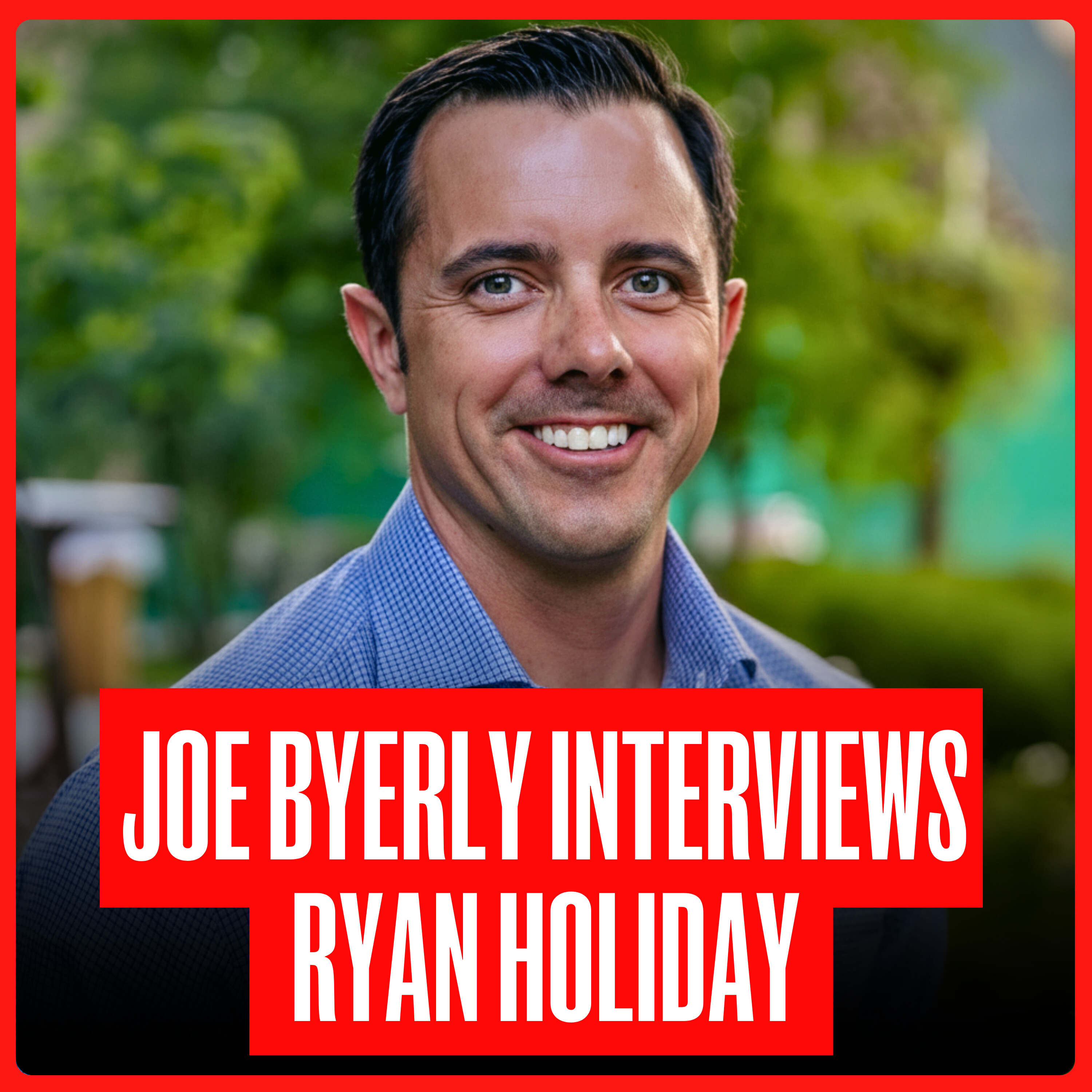
Loading summary
Transcript144 lines
- [00:00]
Ryan Holiday
Foreign welcome to the Daily Stoic podcast where each day we bring you a Stoic inspired meditation designed to help you find strength and insight and wisdom into everyday life.
- [00:19]
Joe Beyerly
Each one of these episodes is Based.
- [00:20]
Ryan Holiday
On the 2000 year old philosophy that has guided some of history's greatest men and women to help you learn from them, to follow in their example, and to start your day off with a little dose of courage and discipline and justice and wisdom. For more visit Dailystoic.com hey, it's Ryan. Welcome to another episode of the Daily Stoic podcast. So this is my life, a little window into my life. I write a book and then I send it into the publisher and then they work on it for a while. They edit it, they design it, they send it back to me, they copy it, we go back and forth. But this whole process takes many, many months. So like wisdom takes work. I think I turned in more or less as the book was going to be. Like I stopped writing wr like in December of 2024 and it just came out like two weeks ago. Right. So that's several months of one book ending before that book comes out. So what do I do in that interim period? I start writing the next book. Always writing. This is advice I got from Steven Prescott. Just start the next book. Start the next book. So I am already chugging away on the next book. You may have heard me talk about it in interviews or some of the walkthroughs. Cause people come into my office and then I show em what I'm working on and I'm working on it by biography. I'm actually working on a biography of James Stockdale. And Billy Oppenheimer has been my researcher for a long time. He worked on all four books in the Stoic Virtue series.
- [02:06]
Joe Beyerly
And he's fantastic.
- [02:07]
Ryan Holiday
He has a lovely email that I've talked about before where he sends out a bunch of things to think about every Sunday evening. You can sign up for that at billyoppenheimer. Com. So Billy's my go to guy. He's like what I was for Robert Crean. Right. But Billy's a little busier these days. Not just because he's working for some other interesting people. And he works on lots of stuff for Daily Stuff Stoic. But he's also working on his own book. So I decided when I was going to start this other book that I wanted to work with someone else. And given that this is a book about the military and about the Vietnam War, I decided I wanted someone with.
- [02:40]
Joe Beyerly
A background in that.
- [02:42]
Ryan Holiday
And so I was Trying to think about who I might work with.
- [02:46]
Joe Beyerly
And there was someone that I'd done.
- [02:48]
Ryan Holiday
Their podcast a couple of years ago. We had some mutual friends. We would chat back and forth every once in a while. I knew he wanted to be a writer. I knew he was retiring. He'd just spent 20 years in the US Army. He was a lieutenant colonel, a tank commander. He ran a cavalry squadron in Europe where he'd won a Bronze Star and the Legion of Merit and a Purple Heart. Just an incredible dude. And I said, hey, I don't know what you're thinking about doing next. You probably could go make a fortune as a consultant or as an executive at a defense company or something, but maybe you want to do this instead. And he said, that's exactly what I want to do. And so I've been working with Joe Byerly and Joe has been helping me research on this book that I'm doing now. And it's been an awesome experience. It's been not just great to watch him grow, but like he's found so much stuff that I would not have found on my own. He's been able to help me sort of scale myself a little bit, do some of the travel, like going to these different archives and stuff, which I don't have the bandwidth for. We've been chugging away on this book. So he wanted to interview me about Wisdom Ticks work, which he made some contributions to as well. And I said, okay, but I also want to run this conversation on the Daily Stoic because I think people would benefit from it. And I think more people should check out his site called from the Green Notebook, which is a podcast and an email list and sort of a platform for leaders, mostly military leaders, but I think leaders of all type who are trying to grow and get better. Joe talks a lot about reading and writing and self reflection. He's also got two little books, the leader's 90 day notebook. And he's also the co author of My Green Notebook, Know Thyself Before Changing Jobs. His writing has appeared on all over the place. You can follow him on Instagram from the Green Notebook and his podcast is called from the Green Notebook, which you can find on YouTube, Apple and Spotify. I wanted to bring this interview to you so you can kind of see behind the scenes what it's like to work for me, what I'm working on, how I think about things, and then Joe's perspective as well. You can watch the video version of this on YouTube, which I'll link to in the show. Notes and of course you can check out Wisdom Takes Work, which is in stores everywhere. I really appreciate the support everyone and let's just get into it. This episode is sponsored by BetterHelp.
- [05:09]
Joe Beyerly
I've talked here before. We've made whole videos about it.
- [05:13]
Ryan Holiday
Therapy has been incredibly helpful to me. It's given me emotional awareness. It's helped me process my feelings.
- [05:19]
Joe Beyerly
It's helped me deal with stuff as.
- [05:21]
Ryan Holiday
A parent, as a spouse, and just a person in a crazy busy noise. The sometimes demoralizing world. And my therapy practice is part and parcel of my stoic practice, right? Analyzing and putting your feelings, your impressions.
- [05:37]
Joe Beyerly
Your views, your values to the test. That's what therapy allows you to do.
- [05:42]
Ryan Holiday
And there's a reason I use online therapy because it's more efficient. It takes less time. BetterHelp is built around making starting therapy easier. They connect you with a licensed therapist.
- [05:54]
Joe Beyerly
You just fill out a questionnaire and.
- [05:56]
Ryan Holiday
You can match with a therapist in as little as a couple of days. With over 7,000 reviews and a 4.3 rating on Trustpilot, BetterHelp is a platform you can trust. You can click the link in the description below or just go to betterhelp.com daily stoic to get 10% off your first month of therapy. I'm recording this on a Monday and Monday is our grocery store day. In our family I usually pick my kids up from school and we go over to Whole Foods get all our groceries for the week. Although here very shortly we're gonna go over there to get our Thanksgiving turkey because they've got a bunch of great options. Turkeys start at 149 pound if you have prime with organic birds at $2.99 a pound and they only carry no antibiotic ever turkeys that will bring quality to your table at a great price. Whole Foods has great everyday prices on all your Thanksgiving essentials. Whether you celebrate with a massive family or just a few close friends, everything they sell has high standards to help you shop with confidence. Enjoy. So many ways to save on your Thanksgiving spread at Whole Foods Market.
- [06:56]
Joe Beyerly
Foreign.
- [06:59]
Joe Beyerly (Podcast Host)
Welcome to another episode of from the Green Notebook. I'm your host Joe Beyerly, and today I'm sitting down once again with my friend, New York Times best selling author Ryan Holiday. This conversation is a little different for me. It's my third time interviewing Ryan, but my first time since we started working together last summer. After 20 years in the army, stepping into the world of writing a book has been a completely new experience. At 44, I find myself very much an apprentice again Proof that growth never stops, which is one of the central themes of Ryan's latest book, Wisdom Takes Work. In our discussion, we talk about the importance of staying curious, the need to write things down and to reflect because our belief systems are at stake and can be easily influenced in today's world of social media. Ryan also shares why we should listen more than we talk, think with nuance, and ruthlessly question our own beliefs. We dig into why mental struggle is necessary, why shortcuts rob us of real knowledge, and how power and intelligence can be dangerous without the tempering influence of wisdom. In addition to exploring ideas in Wisdom Takes Work, you'll also get a sneak peek behind the curtain into Ryan's writing process. We talk about his next project and what both of us are learning as we work together for the first time. So with that, please welcome to the show Ryan Holiday.
- [08:29]
Joe Beyerly
Yes, I think you have a little glimpse into my life working on this next book together, which is that although I have one coming out, what I'm actually excited about and thinking about all the time is the next one. And it's the sort of blessing and curse of this, like, track that I'm on. Because, yeah, you're, you're talking about the thing that's done that you lived in for a while, but you're living in a totally different world.
- [08:56]
Joe Beyerly (Military Background)
It's interesting too, because the, I was actually listening. I was listening to it, but I don't think we recorded it. So the last, the first podcast we did, I think was in 2020 for courageous calling. When that was coming out and you made a comment, you said, I think I hope this works out. But you're like, I just signed up to do this four part series and so it's like you're like basically at the base of a mountain looking up and you only had one under your belt at the time.
- [09:30]
Joe Beyerly
Yeah, I'd never done books that are related before. My Ego, Obstacle and Stillness were sort of accidentally part of a set and they're not really linked in any way other than stylistically. And then I guess they're influenced by stoic philosophy. But yeah, this is the first time I'd ever. First and so far, only time that I'd ever done interrelated projects. It's not just weird, like doing any books that are interrelated, but the four virtues as an idea, like going back 2,500 years. Zeno talked about how they are distinct yet inseparable from each other. And there's something about that that I think goes to the essence of the virtues, because, you know, courage but in pursuit of what? Or wisdom but in pursuit of what? And so they're all related to each other. So where one book begins and ends is a little fuzzy and somewhat arbitrary. And then also your. As I was writing each one until I got to the last one, I was always thinking about the next one. And then you get to the end and you're like, well, I would do courage differently if I was starting. You know, so it's. It's been a. It's been an interesting project, for sure.
- [10:51]
Joe Beyerly (Military Background)
Yeah. And then, you know, for listeners.
- [10:53]
Joe Beyerly
Like what?
- [10:53]
Joe Beyerly (Military Background)
Like the thing that Ryan was alluded to right before we went into this discussion was, you know, I think I've been working with you now for a year, and this is the book that I've.
- [11:04]
Joe Beyerly
Oh, right, because you looked at the raveling book a little bit.
- [11:08]
Joe Beyerly (Military Background)
Yeah, that was like my first taste of it. And then this one was kind of towards the finish line, and then now we're just like, we're building the ingredients for the next one.
- [11:20]
Joe Beyerly
Yeah. And so it's a weird part of publishing where promotion is about the thing you've already done. And right as you start to finish a project, you start to think, usually finding what you're getting excited about next, and they tend to overlap. Like, right when it's. Because, I mean, the wisdom has been in the can. I think I submitted it as a final. I submitted the manuscript to the publisher in, like, maybe December of 24. So it's been. That didn't mean there wasn't a lot of work and a lot of editing to do. There was, but most of the creative sort of part of it has been done for nearly a year, and even by the time you turn it in, you've already been winding it down for a while. So. Yeah, it's a weird headspace because right when you're the most precious about your time and most excited and engaged with the thing you're doing now, you take large chunks of time to do podcasts and interviews and then the book tour and all that kind of stuff. So it's a. Yeah, it's a. It's a weird experience.
- [12:37]
Joe Beyerly (Military Background)
Yeah.
- [12:37]
Joe Beyerly
So.
- [12:38]
Joe Beyerly (Military Background)
So let's go back in time then, to.
- [12:39]
Joe Beyerly
Yeah.
- [12:40]
Joe Beyerly (Military Background)
To a last year conversation. So how do you. How do you define wisdom?
- [12:47]
Joe Beyerly
I would say that I don't. I think if you. If you could. If you feel like you could define wisdom, you're almost certainly exhibiting some quality that is not wisdom. Like, there. There is something fundamentally ineffable about it, which Isn't to say, I don't think we can wrap. That we can't wrap our heads around it. We can, but. But there's something ineffable about wisdom that. That by that I mean it is many things. It's not one thing. Right. It's experience and intuition and education and intelligence and understanding. It's creativity, it's perspective. It's, you know, it's being philosophical in the lowercase sense of that word. Right. So it's all these things and more. I guess what I have come to say is that the one thing we can say for certain about wisdom is that it has to be earned. That it's not something you're born with and it's not something anyone can give you. Wisdom is the result of hard work. That's what the title is. Something that ensues as a result of a relatively timeless and unchanging process is a method. And it's the byproduct of that method. So, you know, it's this thing that we are aspiring towards as opposed to something that you go, oh, this person has it. Right.
- [14:29]
Joe Beyerly (Military Background)
And even if somebody has it, they may only have it in one area.
- [14:33]
Joe Beyerly
Yeah, sure. And that the possession of it is fleeting at best.
- [14:39]
Ryan Holiday
Right.
- [14:39]
Joe Beyerly
Not just because circumstances are always changing, but also because the possibilities, all the additional things that one can learn, are also always changing. So it's like the horizon, Right. You can make progress towards it, but it also gets further away.
- [15:04]
Joe Beyerly (Military Background)
Yeah, I actually. I got this note card somebody got me on this thing of writing stuff down on note cards.
- [15:10]
Joe Beyerly
Yeah, sorry about that.
- [15:12]
Joe Beyerly (Military Background)
And it's from Plutarch, and he's talking about this Persian who visited this. The studio of a sculptor. Studio. And the. The sculptor says, as long as you kept quiet, you seem to be someone because of your golden jewelry and purple dye clothes, but now even these lads here grinding the pigment are laughing at you for talking nonsense. And because this guy came in thinking because he was rich.
- [15:39]
Joe Beyerly
He was.
- [15:40]
Joe Beyerly (Military Background)
And we see people making that mistake today.
- [15:43]
Joe Beyerly
Well, that's obviously the. The. The kind of thing you should write down on a note card. But yeah, there's a. There's a famous quote. Is it Lincoln, about, you know, I'd rather be quiet and thought a fool, then opened my mouth and remove all doubt. And then there's an episode of the Simpsons where someone says that to Homer Simpson and he says, you know, takes one to no one. And then in his mind he goes swish, you know. So I think there is something about wisdom that is one fundamentally about humility. And two, something very different than success, power, wealth. It is there are many smart people who are fundamentally foolish. And then there are very many people who no one would define as well educated, but are in fact quite wise.
- [16:36]
Joe Beyerly (Military Background)
Who are some of the people, as you were researching and thinking about the topic of wisdom, that you kind of held up as being a wise person?
- [16:46]
Joe Beyerly
Well, obviously there's some characters that run through the whole series of the books that's been a part of it. One of the things I've liked about doing these interrelated books is to be able to sort of track different people's evolutions and to be able to sort of hold them up and look at them from all these different angles. But there's sort of three main characters of the book. I First, I start with Montaigne, the French thinker who has this very untraditional education. Both a mix of sort of self education and traditional education, and then tutoring and life experience and travel. He's just sort of fascinating, one of the smartest people who ever lived, but also one of the most unconventional thinkers who ever lived. And so I sort of talk about the education that forms this man and the ongoing nature of it. So he's the primary character at the beginning, and then at the end I talk about Lincoln as a sort of ultimate man, the complete man, if you will, both self educated in the way that that Montaigne is, and then also, you know, a great moral figure who does one of the hardest things there is to do, which is to take this wisdom, this ability to see what other people can't see, and then change the world in that image. And then in between. The middle part of the book is about this idea we were talking about, which is how smart people can be very foolish and how there are these sort of sirens or pitfalls that can blunt considerable intelligence and in fact, even maybe weaponize that intelligence. And so for that character, I look quite in depth at Elon Musk, who I think is both one of the smartest people in the world and then one of the most dangerously stupid people in the world. And I sort of look at this incredible rise. How does a guy basically teach himself the automotive business, teach himself the space business, solve these incredibly complex and complicated problems, not just mathematically and from a physics standpoint, but the hardest thing to do in innovation, which I was saying is bringing it into the world. He's a logistical genius and a bureaucratic genius and a manufacturing genius and an organizational genius. And so how does he accomplish all these incredible things. And then you look at him today, and you're like, what happened? How does this person who goes from reading Soviet rocket manuals go to retweeting misinformation from Russian bots? And I think he's a. A cautionary tale in many ways. This isn't a political thing. Just how does someone, by nature of their information, diet and the stress and the strain go from being one of the most widely admired people on the planet to being this divisive, polarizing person who's gutted the federal government and done a number of other things? So that's sort of the arc that the book takes people on.
- [19:59]
Joe Beyerly (Military Background)
I'm trying to think back to your past books, and from what I remember, I think this is, like, the first time that you've taken a critical look at a contemporary person.
- [20:10]
Joe Beyerly
Ooh. I don't think that's exactly true. Certainly in the Virtue series, almost every one of the main characters has not been alive. Queen Elizabeth died in the middle of Discipline Is Destiny. So I mostly try to pick people that are not alive and then and mostly historic because they're less polarizing and partisan. But I definitely. In my other books, I've told stories of, you know, athletes and entrepreneurs and people. I think you're right. Mostly positive. I do mostly try to celebrate. You know, Alex Haley said, the job of the author is to find the good and praise it. And I kind of feel like most of the stories that I do are celebratory. But I also, you know, I started as a research assistant for Robert Greene, and I think one of the genius parts of the stylistic layout of the 48 laws of power is that as often as he's showing the observance of a law of power, he's showing a transgression of the law. And in many ways, this can be more compelling and persuasive to see the cost of. Of rejecting, you know, wisdom or. Or, you know, a fundamental part of his human experience. And so I don't have a problem doing negative examples. Actually, you know, in Ego is the Enemy, I sort of break down Howard Hughes at some length as one of the middle characters of that book. And in many ways, that set. The irony is that I heard about the book that I. That I. That I ended up basing a lot of that writing on. I heard about it from an interview I read with Elon Musk in, like, 2015. He was saying that, you know, Howard Hughes is both an inspiring and a cautionary tale. And so, you know, I think I was predisposed to sort of follow that trajectory then. And it wasn't a choice that I took lightly by any means. I mean, I've met him before. I've been to a party at his house. We have a lot of mutual friends. He's like, basically the owner of this town that I live in. You know, it's not something I was excited to do, and, you know, I could come to rue the decision, I'm sure, but. But. But struck me as a very powerful example of what can happen when you don't take care of yourself and also when you get high on your own supply, which is, I think, what happened, we have to remember, like, the story of King Midas is a cautionary tale. You know, pride goeth before the fall, but also, it's just. It's not sustainable to expose oneself to the amount of stress and strain and the workload that he has done. And you add into that the very potent element of everyone telling you that you're one of the smartest people in the world, and you are one of the most powerful and richest people in the world. To go to your point about Plutarch, Plutarch would very much recognize not just this personality type, but this arc. As would Montaigne, and as would Shakespeare, and as would Homer. This is what happens, right? This is not the exception to the rule. This is the rule. And if you read and you study history, this is what happens to MacArthur. In many ways, this is what happens to most of the great men and women of history. You break under the strain. And I think that my argument is that's largely what happened here.
- [24:03]
Ryan Holiday
Thanks to Toyota trucks for sponsoring this episode. When I bought my ranch in 2015 out here in Bastow County, I drove my car about halfway down the dirt road that we live on. Thought, this isn't going to work. Stopped, parked it, walked the rest of the way home, Borrowed my wife's car, drove into Austin, and bought a truck. What I bought was a Toyota Tacoma. And this truck wasn't just transportation getting me to and from my house. It unlocked a whole different style of living for us, not just on the ranch, but in our little Texas towns. There were places I could go now that I couldn't go before, Especially out here in the piney forests, through the fields, and on the unpaved roads like the one that I lived in. We got to go deep into the hill country's wild beauty. We've driven all the way out to East Texas. We've driven it across the country. And by we, I mean not just my wife, but both my kids, who I drove home from the hospital in that truck. Toyota trucks are built for those who understand that the best adventures happen when you're willing to veer off course, because you never know when you'll end up on a Toyota Adventure Detour. And of course, this is stoicism, too, because every detour, every obstacle is an opportunity. But it's helpful if you can handle the difficulty inherent in that. If you've got the resilience and the right companion to make it wherever the road takes you, discover your uncharted territory. Learn more@toyota.com Trucks Adventure detours one of the hardest things to watch the last several months has been the cuts to organizations all over the world that provide aid to the poorest, most vulnerable people. That's not just a political issue that has real consequences for real people. And if you're like me, that's sort of heartbreaking to watch. And maybe you're wondering, like, how can I help? What can I do about it? I researched today's sponsor, actually, when I was writing Right thing right now. GiveWell is an incredible organization. It's trusted by tens of thousands of donors all over the world, and it provides free and independent research about how you can provide a big impact. GiveWell has spent the last 18 years researching global help and poverty alleviation, and it directs funding to the highest impact opportunities they've found. Over 150,000 donors have already trusted GiveWell to direct more than $2.5 billion, including some donations from me. Their evidence suggests that these donations will save over 300,000 lives. And thanks to the donors who choose to sponsor their research, GiveWell doesn't take a cut from your tax deductible donation to their recommended funds. If this is your first gift through goodwill, you can have your donation matched up to $100 by the end of the year or as long as those matching funds last. To claim your match, go to givewell.com and pick podcast and enter the Daily Stoic at checkout. Make sure they know that you heard about GiveWell from the Daily Stoic to get your donation matched. GiveWill.org code Daily Stoic to donate or find out more.
- [27:13]
Joe Beyerly (Military Background)
Yeah, well, going back to, you know, even like writing this book or the writing you've done in general, I think a lot of people think that, you know, they can just read or, you know, consume information. What role does writing have in the development of wisdom?
- [27:30]
Joe Beyerly
Well, you helped kick off one of my favorite chapters in the book. It was a story I was familiar with, but hadn't dug that deeply into. I have a chapter in the middle of the book about writing as a way of clarifying and articulating your thoughts and holding yourself intellectually accountable. I tell the story of the monk Thomas Merton, who believed that writing was a contemplative act. But then the sort of B story in that chapter is a story of Eisenhower, who's called into Marshall's office at the outbreak of World War II. And as he is sort of being interviewed for a larger role, Marshall is really testing him and a number of other officers not so much on the caliber of their ideas, but how they go about coming up with those ideas. And so I make this up a little bit. But as far as we know, Eisenhower is the only general that Marshall interviews that when asked what would he do to save basically the Pacific theater in what is now the second truly a world war, what would he do? Eisenhower is the only one who goes, hey, I need some time to think about this. And he borrows a typewriter and some paper, and actually, I just found the papers you had. You found, like, actually the stock of paper circa 1941 or 1942 that he would have written this on. But he basically sits down and he puts his thoughts into writing. So instead of riffing, he puts his thoughts into writing. And I think the reason I liked that story and the reason it struck me is it's sort of central to who I am as a person. Like, I've said this before, but I think I became a writer because when I would get in discussions with my father or my teachers and I would feel like I was stumbling for the words, or I feel like I wasn't explaining myself well, I feel like my impulse was, I want to go in my room and write this out. And thinking with your fingers, to borrow the. An expression from Robert Caro, is, to me, one of the best ways to clarify your thoughts and to get them there. Because one of the things I don't like about podcasts is it's a lot of bullshitting. It's a lot of first takes, and your first take is very rarely a good one. Writing is. Even your first draft is not your first take, because you're having two thirds think about it and think about the word choice. But then as you. As you saw in the process of the book, you get edited and edited and edited and edited, even down to. In this room. You know, two months ago, I started the audiobook, and I had another final round of edits. Just hearing it out loud so it's the writing and the editing as a process that helps one develop as a thinker.
- [30:44]
Joe Beyerly (Military Background)
Yeah, the. I, I know I read it somewhere, but I've, like, talked, I've written about this. So it comes quickly to the, to the forefront of my mind. I think we have between like 50 and 75,000 thoughts a day swirling around in our heads. And, and it's when you, you know, that, how we open the podcast, that E.M. forster quote. How do I know what I think until I see what I say? Yes, seeing what, you know, seeing it on paper really helps to clarify the thinking. And then when you see it, you actually see gaps in your knowledge. And I know, like, in the writing process, sometimes I'll look at something and be like, wait, wait, why did this happen? But I wouldn't have asked the why question if I didn't see it written down first.
- [31:28]
Joe Beyerly
Yeah, it's writing. And then it's not just writing to see what you think, but also if you then conceive of the audience reading it, it adds this whole other wrinkle. Like Joan Didion said that writing is a hostile act. And by that she meant you are having to take what you think and say it forcefully and persuasively and logically enough that somebody else agrees with it. They don't just read your writing, but they concede the point. And so now if you're now thinking about the audience and you don't want to think about it too much, but you can't not think about it, you've now brought empathy into the equation. You've now preemptively considered the objections to your line of thinking, you've considered the attention span of the audience, and you've tightened what you said. So there's all these different angles now. So if it's just like, hey, here's what I think, maybe that's sufficient. But when you're, you're thinking, hey, what do I think? What are the problems with what I think? What are the problems other people are going to have with what I think? And then how do I make this snappy and compelling and interesting and stylistically solid? All of this forces you to refine and distill and refine and distill until you've gotten something close, if not to the best way to say it, then certainly a better way than you would have said it if not subjected to that pressure. Yeah.
- [33:06]
Joe Beyerly (Military Background)
And, you know, we're talking about it in the context of writing a book or writing an article, but, you know, for leaders listening to this show, I mean, like, you're constantly communicating. You're communicating down into your formation or your organization. You're communicating up to, you know, superiors, the marshals of the world, and, you know, laterally to your peers. And so each one of those people is a different audience. And as you think about those things and get it down in writing, you can kind of take a step back and look at it objectively and, you know, tighten your argument up and make sure that, again, you're speaking to the right audience and the right voice. And so it's not just. This isn't just a skill for writing, which I guess is why it's in the wisdom book. Yeah, It's. It's, you know, part of the process.
- [33:53]
Joe Beyerly
Yeah. And look like a world where you're sending slack messages to your fellow employees is not, you know, imagine you're Marshall or Eisenhower. You're having to write memos to the President. You're having to write orders to your generals, who in turn have to then write orders, who in turn have to write orders. And so if you're not starting from a point of clarity and conciseness, if you haven't well defined what you're doing and why you're doing it and what the priorities are, it's going to get, you know, you add that sort of game of telephone on top of it. It's going to get real sloppy real fast. And so, yeah, writing is. Is. Is an art, and it's something that you need to be good at and young people need to be good at. And this is obviously one of the worries about AI is not, you know, it's not that term. Term papers are that important, but the ability to produce a good term paper, that is to say, a good. The ability to get your thoughts on paper and explain something in a way that is satisfactory to someone else. That is the skill. And like, I think that's one of the things that's interesting as I fool around with AI, just how bad it is actually at writing, you know, But. But also one of the things you get from being a good writer is the ability to recognize bad writing. Right. And I think that's been striking to me. One of the other chapters in the book that I'm, I think is most relevant and most important. I talk about, you know, sort of sophistry and demagogues and conspiracy theories and misinformation like you. You notice that it's not just that people are bad at writing, but they're bad at reading, too. And by that I mean they're bad at recognizing bad writing. You know, like, I wrote an article a couple weeks ago and, like, somebody replied, you know, with like a link to a Gateway pundit article. And it's like, this is a person who, you know, is not able to recognize just bad thinking, bad writing. They can't even recognize, like, aesthetically what a reputable website looks like compared to a not reputable website. And so writing isn't just forming your ability to communicate what you need to communicate, but it allows you to effectively parse what other people are communicating and recognize sort of tricks and shortcuts and bad thinking and insufficient illogical arguments or insufficient arguments. These are all critical skills, both in the ancient and in the modern world.
- [36:55]
Joe Beyerly (Military Background)
Yeah, I'll try to explain. I wrote it out and let's see if I can explain it. But yeah, I wrote something called the Walls we Build. And essentially we have like. Like our belief system is built up over time. And each brick, you know, bricks come from childhood. They come from stuff your parents said, your coaches. So you're building up these walls of belief. And, you know, all across the Internet, there are people just handing bricks out. Whether they're hot takes on X or Facebook or this Gateway article, maybe that's two or three bricks. And if you're not careful, algorithms are going to build the wall. Who are misinformed are going to build that wall. Russian or Chinese disinformation is going to build that wall. And I think over time, if you're not careful, you're going to have a belief system that's built on a bunch of shitty bricks.
- [37:43]
Joe Beyerly
Well, I'll give you a funny example. And then I might need to actually help you. What? I will need to have you help me track down this actual stat. But for the Stockdale thing, I wanted to know how many graduates from the Naval Academy had died in World War II. And you might. We might have already talked about this, but I needed to know how many Naval Academy graduates had died during the Second World War. So I said, I typed this into ChatGPT and like, the newest, like that. Not like the free one, but like the one I pay a lot of money for. And it said, you know, and it, to its credit, it was showing me its work, but that's why this was so visible to me. It goes, okay, 6% of the graduates who served from the academy died during the Second World War. And then it said, between 1940 and 1945, 7,500 people graduated from the Naval Academy. So therefore it's like 422. Well, obviously that looks like thinking, and it was typed out persuasively. But the problem with this is that those are two totally unrelated variables. I happen to know from something else that I'd read that 54 classes from the academy served in the Second World War. The fact that 7,500 people graduated between 1940 and 1945, which is roughly the war years, is totally. Is totally unrelated or irrelevant to the fact that there was a 6% death rate, right? And then the fact that there is a 6% death rate means that the actual statistic is available somewhere like this would be in, you know, the VA would have this statistic or someone would have it. And so I remember saying to ChatGPT, like, hey, these are totally unreal. I was like, hey, this is wrong. I was just, this isn't even close to the answer. Try again. And it goes. Well, I was just estimating. Let me try to be a bit more precise. And I said, estimation is not the problem. The problem is you're just smashing two unrelated numbers together and telling me that that's the answer and it's not. And I said, obviously, again, by nature of you having this 6% number that was derived from the total number of people who served and the total number of people who died, we can get there. And then the irony is, and this is I think the thing that where smart people often outsmart themselves or make simple things complicated, there is the simple fact that there is a memorial on the wall in memorial hall at the academy that lists all of the names which I could just get a picture of and count. And so my point is not that AI is not impressive and that it can't do some things. My point is that actually the challenge of the 21st century, although this is arguably always the challenge, is how good are you at spotting bullshit? How good are you at questioning the answers that you get from other people or from other things? And so in this case, I needed to know a bunch of information and have some basic critical thinking skills. I still don't know the answer. I just know that what you gave me is not even close to the answer and that the formula that you attempted is not ever going to be able to produce that answer. And so in that way, I'm inoculated against being incorrect, but it still doesn't actually solve for me the problem that I need to solve. And so when we talk about wisdom, this is kind of what we're talking about, right? It's not having all the answers, but it's Knowing how to find the answers. And it's also knowing what is not the answer. Because just not falling for bad thinking, sloppy thinking, manipulative thinking, propaganda, et cetera is just a big part of being a wise person. Just not being stupid is the first part of getting closer to what? To wisdom. Yeah.
- [42:12]
Joe Beyerly (Military Background)
And you like, like curiosity too would play.
- [42:15]
Joe Beyerly
Yes. Not being satisfied with the first answer is a big part of it too. Like you ask a question or you read a book. And I think that's been the interesting part. When you and I were talking about this on the stockto book.
- [42:30]
Ryan Holiday
You read.
- [42:31]
Joe Beyerly
Something or you, you think you have a good sense of something, and it's only when you keep pulling on the thread that you find, oh, there's just so much more here. There's just so much more than you could have ever imagined. And it's really the desire to keep pushing and to not be satisfied with what are often secondary or non primary sources. And really to take it back to the roots. That's what it's all about.
- [43:03]
Joe Beyerly (Military Background)
The other thing about your reading too is, you know, okay, like you can read, you can listen to informative pod, whatever your method for intake is. But, you know, like something that I was thinking about this morning was, is the forgetting curve where 24 to 48 hours after you finish reading something, you forget 75% of it.
- [43:25]
Joe Beyerly
Yeah.
- [43:25]
Joe Beyerly (Military Background)
So for you, the importance of writing.
- [43:30]
Joe Beyerly
Yes.
- [43:30]
Joe Beyerly (Military Background)
Like writing things.
- [43:31]
Joe Beyerly
Yeah. Not writing prose, but reading the book and then the note cards of it. Yeah. And there needs to be some process by which you record and synthesize the information that you have. One of the stories I tell in the book, which I ended up reaching out to him and I got a bit more color on General Mattis tells the story in his memoirs of hitchhiking to go see the philosopher Eric Hofer talk. And he goes up to him later and he asks him for advice and he says, make sure you write down anything interesting that you hear or read. I asked Mattis about this and he told me that he has something he calls his book of wisdom, which are three ring binders, where for the last 60 or 70 years, I forget exactly when this Hopper thing happened, but basically for the rest of his life he has been doing that. And you can imagine the many, many binders that he's filled of these insights and ideas. And as it happens, Eric Hoffer did this too, at the Hoover Institute. There are supposedly file cabinets filled with note cards that Eric Hoffer accumulated in the course of his travels and experience and writing and reading so it's not just the reading, it's the processing of the information. And the only thing that I struggle with this is like, I read a lot, some of it for work, some of it for pleasure, some of it just for my own education. And I'm horribly backed up right now. Like, I'm reading all this stuff for the book that I'm writing now and having to process that. And every day, the stack of novels and nonfiction and biography that I've read that I haven't had the time to process piles up. And the funny thing is, so much of what appears in this book, and my past books, has actually come not when I was reading for work, so to speak. Right. It's when you're reading randomly or arbitrarily and you find something that you didn't even think of was related to some project you hadn't even started yet. So it's not just the reading, but it's the what comes after that I'm really interested in.
- [46:02]
Joe Beyerly (Military Background)
Yeah, and George Raveling, he did something similar too, with his three ring binders. And he was, you know, highly successful executive basketball coach. So I, like, there's something to that.
- [46:13]
Joe Beyerly
It is funny, though, because I've met so many people over the years that have, like, sort of proudly shown me their, like, like Buzz Williams, who's it, who's at Maryland now. You know, I went to his office one time and he starts handing me these binders that he's been doing. And it's like, it's only interesting to them, right? Like, like, like it can't make any sense to anyone else. Like, like if George Raveling had, in his will given me his binders of wisdom, that would have meant a lot to me, but it would have been almost totally worthless to me because it's not just in his handwriting and in his shorthand, but it's what he thought he needed to know. And so there is something like, I've spent thousands of hours on my note cards and they're really of value only to me and indecipherable to basically anyone and everyone else. But that's the point. You're not creating a resource for other people. You're creating a second brain for yourself.
- [47:21]
Joe Beyerly (Military Background)
Yeah, and a couple things on that one. I started doing this in 2012 and I actually remember Googling. I was like, oh, I should write about writing things down in a notebook. I was like, oh, who's this? Ryan Holly? It was like, 20.
- [47:39]
Joe Beyerly
Is that how you found me?
- [47:40]
Joe Beyerly (Military Background)
Yeah, 2016, 2017.
- [47:42]
Joe Beyerly
That's interesting.
- [47:42]
Joe Beyerly (Military Background)
Look, he wrote something about commonplace notebook. And I just started going through all the writing. I was like, I really like this. So I found that I was keeping a small three by five notebook on me.
- [47:55]
Joe Beyerly
Yeah.
- [47:55]
Joe Beyerly (Military Background)
You know, throughout my back half of my military career, sure. I was constantly looking this stuff over and over and over again. And I found that it was almost like things were at the tip of my, you know, not just my tongue, but my mind when I was facing problems that look, were new, you know, I was having to address like very complex issues. I was able to rely on those notebooks.
- [48:21]
Joe Beyerly
Well, it helps with the recall. Right. So I think people, look, I have no problem with audiobooks and ebooks. I like that people buy them. And I think at this point they're like 50 or 60% of my sales. So I'm certainly not complaining. But I think if you tell yourself, oh, I'm saving this on my Kindle, or I'm making a note in audible and I'm going to remember it, I think you're fooling yourself. Right. To me, it's the longhand, it's taking the notes in the book and then transferring it. And then it's the ability to go back to your shelf and grab it and find, okay, I see here on the note card or in my thing that this is the quote. It's on page 92. And it's not just the quote, but the larger context of the quote. And so, yeah, I not only read all my books longhand, but when I am, like, if I'm just reading the news of the day, I'll read it on my phone or whatever. But I print out articles, interviews, research papers. I print them out and I go through them by hand because I want that to be my sole focus. And then I want to have the paper record of it so I can go back to it later. And then even, you know, like, the process is always refined. I never, until I'd done this biography, you know, I hadn't needed as much material that wasn't in books. But these kind of briefing books that you've been putting together have been, you know, a really important part because, you know, I'm reading, you know, dozens and dozens of letters, I'm reading memos, I'm reading transcripts of interviews. And again, I need to physically have it and be able to read it once, mark all the stuff that's important and then go back to it and transfer it from here either into notecards or into the chapter or the section that I'm writing.
- [50:26]
Joe Beyerly (Military Background)
So for Those listening. This is where. When you don't know that working on a general staff is ever going to pay off in the future, this is where it's paying.
- [50:35]
Joe Beyerly
I would say, I would say it's substantially improved the process for me. The pages keep coming out of these little books. Okay. I think from a technology standpoint I would be. We're in the middle of it and it doesn't matter. But like if I was traveling a lot or I could only imagine one of these briefing books in a combat zone or something, there's gotta be like a better technology for it.
- [50:57]
Joe Beyerly (Military Background)
The trick is they don't read it, you prepare it.
- [50:59]
Joe Beyerly
Ah, they never look at it.
- [51:02]
Joe Beyerly (Military Background)
They look at it one time.
- [51:03]
Joe Beyerly
Well, and then. Or also it's like, you know, you open it halfway. I'm the same way. I was just going through this on my, my 9 year old's like homework this morning. It's like that. What I've always hated about the three ring binders and stuff is you're like, you know, you get like halfway and then you should be able to just snap it closed. Instead it's this like delicate process of like, you know, like whatever. But it's just, it's funny too, just to think. And there's this great book that I read, I've been raving about called the Notebook, which is about the history of notebooks.
- [51:34]
Joe Beyerly (Military Background)
Oh yeah, I interviewed Roland.
- [51:38]
Joe Beyerly
But just as a technology. It's old, but not that old. Just the technology of a notebook is from the 1400s. The modern notebook dates to the 1400s. Which means on the one hand the Romans didn't have access to, to something that's convenient. On the other hand, like da Vinci is complaining the same way that we're complaining or you know, I'm left handed. And so one of the things I hate about writing by hand and I tend to use like Sharpies a lot is like my, I'm just like covered because I'm dragging or whatever, you know. So anyways, it just the timelessness of like the insufficient nature of all these different mediums and the complaints about the technology is pretty great. There's actually a line in Isaacson's bio of Da Vinci where he talks about how incredible it is that Da Vinci's pages survive to us. Right. And I was in Milan a few years ago and I went and I saw some of the pages of the Notebook. But he points out that when he was working on the Steve Jobs book, that Steve Jobs was like, oh, I have some diary pages or I have some Things that I wrote about this, let me find it. And Steve Jobs is going back to this old Mac that he had from the 80s. And even Steve Jobs is having trouble getting the things that he'd put on this computer out of the computer. Meanwhile, these diary pages From Da Vinci 500 years ago are readable to your average layperson. And he was saying, like, basically put it on paper. The best place to put it is on paper. And I think that's largely right. Yeah.
- [53:27]
Joe Beyerly (Military Background)
And the Stockdale book would be very hard to do now if it wasn't for the letters.
- [53:33]
Joe Beyerly
Yes, yeah, of course. Well, and just paper copies of his orders and. Yeah, all these artifacts, for sure. At the same time, if he had lived, if he had been born a century earlier, there wouldn't be these oral histories that are so valuable too. So it's a little of both.
- [54:02]
Ryan Holiday
Deciding what workout to do or how much weight to use.
- [54:05]
Joe Beyerly
These are all roadblocks, ways that we.
- [54:08]
Ryan Holiday
Sort of get in our own way. And that's where today's sponsor comes in. Tonal will pick the perfect weight, track your progress, and suggest what to do next based on your muscle readiness. Taking the guesswork out of getting a great workout. Tonal provides the convenience of a full gym and the guidance of a personal trainer anytime at home with one sleep system designed to reduce your mental load, Tonal is the ultimate strength training system, helping you focus less on workout planning and more on getting great results. You don't have to second guess your form because tonal is giving you real time coaching cues to dial in your form and help you lift safely and effectively. After a quick assessment, tonal sets the optimal weight for every move and adjusts in 1 pound increments as you get stronger. So you're always challenged. Black Friday early access is on for a limited time. Tonal is offering our listeners $1,000 off your tonal to purchase promo code TDS for $1,000 off your purchase. You hear that?
- [55:08]
Joe Beyerly (Military Background)
That's not just a Toyota truck. That's the sound of no crowds, no alerts, no distractions, and no telling what you'll find next. You know, like a detour. So why would you ever take a tour? And you could take a detour. Toyota trucks as we wind down. I'm curious because a lot of people listen, they're like, well, I'm so busy, I don't have time. Like, and even now, like, I'm looking like, I'm looking around right now. I have, like, stack of, like, stuff for you. I have my own stack. I have My personal reading. And then I've got, like, books that are just coming in from folks. You're like, hey, you should read this. So I'm also getting backed up right now. So how do you find time or how do you make time in your schedule to go back and kind of pull these notes out of your books into note cards?
- [56:14]
Joe Beyerly
Well, I remind myself that pretty much everything I know and everything I write is a lagging indicator of work that I did at some point in the past. Right. It was not just reading the book, but then processing it, that put it on a note card, that then, as I was going through and organizing the next book, was sort of perfectly exactly what I needed in that moment. So I just have to remind myself that it's a form of time travel. It is a gift I'm giving my future self. In the same way that it would be awesome to be able to travel back in time and tell a younger version of you something you learned. This is a way that a present. You can travel to the future and tell a future version of something that you're probably going to forget. Like Joan Didion was talking about how she says that notebooks are a way of remembering who you used to be. It's also a way of remembering what you used to know. Right. And so I just have to remind myself this is. This might feel like it's not moving me forward or it's of value, but that's because it's not moving me forward right now. It's not a value right now, but it's actually going to be the exact solution to a problem that I have six years from now because I'm writing something or because I'm dealing something with my kids. And suddenly the. The recall, the memory of having written this down pops into my head or I'm going to be doing a memo or a video or whatever. It's a gift to your future self. I usually go through periods I'm not caught up right now because I'm so unbalanced working on this thing, but I know that when this slows down, I have to go back through that backlog.
- [58:06]
Joe Beyerly (Military Background)
Does this slow down?
- [58:09]
Joe Beyerly
Well, yes. Yes. Because as we were talking about, I finished the wisdom book in, let's say, November, December of last year, or finished most of the writing and the researching. And then I immediately started going through everything that I'd read about Stockdale, everything I'd read about Vietnam, everything I'd read about the POW experience. And that formed the basis of the sort of outline for the book. That I'm now researching and writing. So, yeah, I know stuff is piling up for the next project, and I'm kind of putting it over to the side, and I know I'm going to go back through it later.
- [58:53]
Joe Beyerly (Military Background)
Oh, Ryan, I appreciate you making time, man. I know I actually can say, I know how busy you are now.
- [59:03]
Joe Beyerly
This has been a. Dude, you're doing amazing. This has been actually a great experience, and I can't. I was just telling Samantha the other day, like, I. I'm, like, loving this. Like, I'm loving being in the middle of the thing and that. That I. I should not only enjoy it, but I should not rush through it. Like. Like, I. I can turn the book in whenever. Like, I don't know. I didn't tell you this, but my publisher was like, hey, so we wanted to talk about release dates on the book. And I said, okay, what are you thinking? And they gave me this date and I said, okay, but when would I have to turn it in? And they were like, I don't know, sometime December or January of this year. And I was just like, immediately, no. And I was like, not. Because I couldn't. I think I probably could. Like, I could get something rough, but I was like, why would I. Why would I. I'm enjoying this meal. Why would I try to finish it as quickly as possible? And so, yeah, I just. I've genuinely loved being in this person's life and in this period of time. And there's something, too, about when the world feels like it's falling apart. I. I'm enjoying being in the. The 20s and the 30s and the 40s. I guess it says something about our current moment that there's something relaxing about living in the 1940s. But it is, right, because you know how that story ends and you don't know how the present ends. And there's something wonderful about being in, you know, somebody's journals and diaries and these sort of great men and women of history that. That sort of turns down the volume in a way that you don't experience in the. In the current moment.
- [61:02]
Joe Beyerly (Military Background)
Yeah, agreed. I'm again, right. Right there with you in the trenches of this one. So, again, Ryan, appreciate your time, man. And, yeah, like, I've been. I tell people, like, it was like, six months before I retired, and I remember we had a conversation and I didn't want to commit to anything. I was just like, I just want to retire and I'll figure it out later. And then, like, wouldn't it be nice if you Just knew that you were walking into something next. And I was like, okay, that's a. That's a good, valid point that may take some of the stress off.
- [61:36]
Joe Beyerly
Oh, that's funny I said that. Interesting. Do you feel like you're learning, like. Because I feel like I'm like, obviously I've done projects similar to this and I've researched a lot, but I feel like I'm learning a lot about. Not just about this person, but I feel like I'm adding. I found this conspiracy where I had to read a lot of legal papers and just. Even the process of procuring all the legal papers was a lot, but I feel like I'm learning about just different kinds of archives and types of information. And it's been an interesting experience.
- [62:17]
Joe Beyerly (Podcast Host)
Yeah.
- [62:18]
Joe Beyerly (Military Background)
And I was, I was like, this is book. This will be what book? 17. Something.
- [62:22]
Joe Beyerly
I don't know, something like that. Yeah.
- [62:23]
Joe Beyerly (Military Background)
But I would imagine for the process. And I was, I was telling. I think I was telling Amanda. This is like, this process would have been different for Obstacle is the way or Ego is the enemy.
- [62:33]
Ryan Holiday
Sure.
- [62:33]
Joe Beyerly (Military Background)
But now that you're like, have several under. Like, I can tell you're trying to push the limits of what you've done before.
- [62:42]
Joe Beyerly
Well, I've done that in all the books. I would say that was actually the excruciating part of the obstacles away, the 10 year anniversary edition, because I had to go back and do it. And I noticed not just. Well, first off, what struck me is like, oh, this was basically everything that I knew. Like, this was all the stories and anecdotes and history that I knew up until that point. You know, I was. I think I was largely writing it at like 24, 25. So I'd read a lot and I researched a lot, but that was. That was everything that I knew and now I know a lot more. So it's like I'd read one biography of Grant, you know, now I've read five, and then other, you know, so I just had a larger base of knowledge. And so what I found was sometimes the things that. The claims that I was making were thin. Right. Like that I was resting it only on, you know, one line from one person and that I just wouldn't. I wouldn't allow myself to do that now.
- [63:44]
Joe Beyerly (Military Background)
Yeah, and that's the thing is, like, now I feel like because you're at this level, like, it's almost like you're from an educational standpoint. I'm learning where you're at on this number book.
- [63:58]
Joe Beyerly
Yes. Yeah.
- [63:59]
Joe Beyerly (Military Background)
You learn side of it.
- [64:00]
Joe Beyerly
And I remember when I was a researcher for Robert Greene, he'd be like, try to find me this. And I'd find it. And he would just be like, ah, that's not. That was not good enough. And he just meant like, the story wasn't good enough. And then other times he would mean like, that's not a serious enough source. Right. And I would have to go back and find more and more and more and really actually support this claim. And so. But as I've gotten better, I've tried to not only find different, I feel like my writing, that the examples have gotten more diverse, the history has gotten more interesting. And then I also feel like the ground that I'm standing on has gotten firmer because I've asked that of myself. But I do remember also working for Robert, he told me he's like. And he was four books in maybe, but his books are just different. He'd been doing it 15 or so years probably when I started working for him. And he was saying, he was like, at some point you get to a place where you can just smell what you're looking for. Like a shark can smell blood in the water. And I just remember thinking, oh, that's really interesting. And I wonder what that's like. And you've probably seen that on this, where I'm like, I know this is somewhere. I don't know where it is, but I know that it's somewhere. And let's keep looking until we find that thing. The stories were the. It's funny, before I came down here, I just finished the section, finished the section on Wes Brown. I feel like finally I have all the information I need to make the claims that I'm making. And to also, as we were talking about you, thinking about the audience, I feel like I've disproven. I haven't left anything unchallenged. I've looked at it from every angle. I have all the information I have. I can safely make this conclusion and have this section and it's supported and justified and that if anything, it's the tip of the iceberg. I could say more if I wanted, but I'm leaving it here.
- [66:07]
Joe Beyerly (Military Background)
So on that I wrote this down the other day because of this thing and for listeners, you'll have to wait till the book comes out. But this idea of learning from the instincts. And so, like when I was working for senior officers, they would make gut calls, they would make instinctual calls like that. And I would remember, I would write them down and Then go back and reflect on, like, you know, what information did he receive. He or she receive in order to make that call. And so the other day, when we started going down this West Brown theme of the story in the book, I was like, man, like, Brian has an instinct there. And sure enough, like, as we've, yeah. Locked that. That wing of the hotel, there's plenty of doors to.
- [66:58]
Ryan Holiday
To.
- [66:59]
Joe Beyerly (Military Background)
But, like, is this idea of people who are, you know, in this mentor, protege role is not only, you know, paying attention to things they're saying, but, like, learning from instincts, I think is. Is something I want to explore.
- [67:13]
Joe Beyerly
Well, and in. In, like, what Robert was having me do is chase stuff down to either prove or disprove an instinct he had. Like, he'd be like, I think there might be a story in this person. Go read like five books and come tell me if there is. Right. And so he could do that, and he knows how to do that, but it's not worth his time because the chances of it being true or not true is low. Right. Or valuable or not valuable is low. The important stuff he's doing himself. But what I'm learning is how to do that. And then you're developing that same instinct. And so now I can say to you, hey, there's gotta be like, you know, I think we. There was something. It was like a speech. And I was like, there's gotta be something out there. And you're like, I don't think there is. And then I was like, there's no way that one of the most famous people in the world visited this small town in Iowa and it was not covered wall to wall by newspapers. And you were able to find it. And that was because I remember I'd done some stuff. I'd researched some stuff that. And I was just amazed at the level of detail that was covered in these newspapers. I wrote a whole book about media criticism. So I just had a sense that this was there. And this goes to the AI thing. I couldn't tell you for sure where it was or that it existed. I just knew that more likely than not, it. It was there. And that this gut instinct was falsifiable. Right. Like, you could go search the archives of these three newspapers and we would find very quickly whether it did or didn't exist. And that's where. And I talk about sort of delegation and stuff in the discipline book. That's what leadership ultimately is on a level that's different than being a writer. Sure. If I wanted to spend the next eight years of My life. I could track down each one of those leads. But what you get good at is knowing the falsifiable assertion and then having trustworthy people who can then go give you the answer one way or the other. That's what it's about.
- [69:55]
Joe Beyerly (Podcast Host)
Right.
- [69:56]
Joe Beyerly (Military Background)
Well, as we wind this down, because that was the last question. So one more. What is one thing after finishing this book that has changed your life or that you're doing differently?
- [70:10]
Joe Beyerly
Oh, that's a good question. What have I taken out of this book? Well, one of my favorite stories in the book, I talked about Socrates being a very smart guy who had sort of poor social intelligence, right? Like they killed Socrates because he was obnoxious, not because he was smart, because he was obnoxious. And I just put a lot of. I'm putting more thought into, like, it's not just what you say, but it's how what you say makes people feel. And that I think this is another way where smart people, you know, get themselves into trouble. And I am trying to be a bit more thoughtful and deliberate, especially in this kind of fragile, you know, sensitive slash incendiary world we're living in. You just don't, you don't do yourself any favors posting or saying the first thought that pops into your head. This isn't to say you censor yourself. That's not what I'm saying at all. But it is the ability to say, hey, what is the best way to say this? Not the most diplomatic way, but what is the way that will make sure that what I'm actually saying is heard? Not how do I immediately offend? Turn the other people off.
- [71:38]
Joe Beyerly (Military Background)
Yeah, Ben Franklin, actually, he wrote about that. He talked about that. That's the ultimate goal. So do so in a way to where it will be received. So maybe if you just start wearing like bifocals and a coonskin cap.
- [71:51]
Joe Beyerly
Well, Ben Franklin is a really interesting example. And I talk about him a little bit in the book. Like, it's very rare that the smartest person in the world is also one of the most well liked people in the world. And people really fucking liked Ben Franklin. Like, and that's a level of his genius that he doesn't get enough credit for. Is like, people really liked Ben Franklin. Nobody locked Ben Franklin up in the tower, right? Like, even the British were sort of begrudging fans of Ben Franklin. And that social intelligence and interpersonal relations is another layer of wisdom and intelligence that we often ignore to our peril. Elon Musk being a great example of.
- [72:38]
Joe Beyerly (Military Background)
This well, Ryan, thanks for your time, man.
- [72:42]
Joe Beyerly
Of course.
- [72:43]
Joe Beyerly (Military Background)
This is awesome. I, I think the next interview on the the Stockdale book is going to be very. It'll be a different. It'll be. I don't know what it'll be like. Yes, the time that comes around so.
- [72:54]
Joe Beyerly
Well, we got to get to the finish line first and we're only maybe 20 done.
- [72:58]
Joe Beyerly (Military Background)
So that's great. That's good to know. Good to know. I know what my, my weekend's going to be. But again, thanks. Thanks for making time today and thanks for the last year. It's been awesome education.
- [73:11]
Joe Beyerly (Podcast Host)
Thank you again for listening to another episode of from the Green Notebook podcast. If you enjoyed the show, please give us five stars. Wherever you listen to podcasts, it helps us gain visibility and the opportunity to help more people on their leadership journey. Also, make sure you check out our website at www.from thegreen notebook. Com. There you can listen to past episodes, read leadership articles written by military leaders.
- [73:36]
Joe Beyerly (Military Background)
From around the world. You can sign up for our monthly.
- [73:39]
Joe Beyerly (Podcast Host)
Reading list email where you can learn about new books that are coming out. And our Sunday reflection email that comes out every Sunday morning is really short. It's a two minute read, but I.
- [73:48]
Joe Beyerly (Military Background)
Guarantee you it's going to start your.
- [73:50]
Joe Beyerly (Podcast Host)
Week off on the right foot.
- [73:52]
Joe Beyerly (Military Background)
Finally, make sure you follow us on.
- [73:53]
Joe Beyerly (Podcast Host)
Twitter TGNotebook and you can find us on Instagram and Facebook by searching for from the Green Notebook. Again, thank you so much for coming on this journey with us. I am humbled by the opportunity to learn these lessons alongside you.
- [74:08]
Joe Beyerly (Military Background)
So please join us next week for.
- [74:10]
Joe Beyerly (Podcast Host)
Another episode of from the Green Notebook where we're going to help you lead with the best version of yourself.
- [74:21]
Joe Beyerly
My hands strong like a tree there's roots where I stand.
- [74:30]
Commercial Voice 1
Oh, I've been.
- [74:32]
Ryan Holiday
Running from the law.
- [74:40]
Commercial Voice 2
My family owns a 2023 Toyota 4Runner, and honestly, it's my favorite vehicle that I've ever owned around town. It's smooth and reliable, but where it really shines is on our trips into the backcountry country. We've taken it on backpacking adventures to Colorado and New Mexico, loaded up with gear and never had to think twice about whether it could handle the terrain. That's what Toyota trucks are built for. Off road confidence, rugged durability, and the freedom to explore. Toyota has a long history with the outdoor community, and they're committed to helping more people get out there and experience what nature has to offer. From remote trails to scenic byways, Toyota trucks empowers you to take the detour roam freely and discover places that still feel wild and untouched. And they're not just making great trucks. They're working to expand access to adventure so more people can connect with the outdoors and pass that passion on to the next generation. Discover your uncharted territory. Learn more@toyota.com trucks adventure detours that's toyota.com trucks adventure detours what do you think.
- [75:36]
Joe Beyerly
Makes the perfect snack?
- [75:38]
Commercial Voice 1
It's gotta be when I'm really craving it and it's convenient.
- [75:41]
Joe Beyerly
Could you be more specific when it's cravenient?
- [75:44]
Commercial Voice 1
Okay, like a freshly baked cookie made with real butter, available right down the street at a.m. p.m. Or a savory breakfast sandwich I can grab in just a second at a.m. pM.
- [75:52]
Joe Beyerly
I'm seeing a pattern here.
- [75:53]
Commercial Voice 1
Well yeah, we're talking about what I.
- [75:55]
Joe Beyerly
Crave, which is anything from am pm.
- [75:57]
Commercial Voice 1
What more could you want? Stop by AMPM where the snacks and drinks are perfectly craveable and convenient. That's cravenience am PM Too much good stuff.