← The Daily Stoic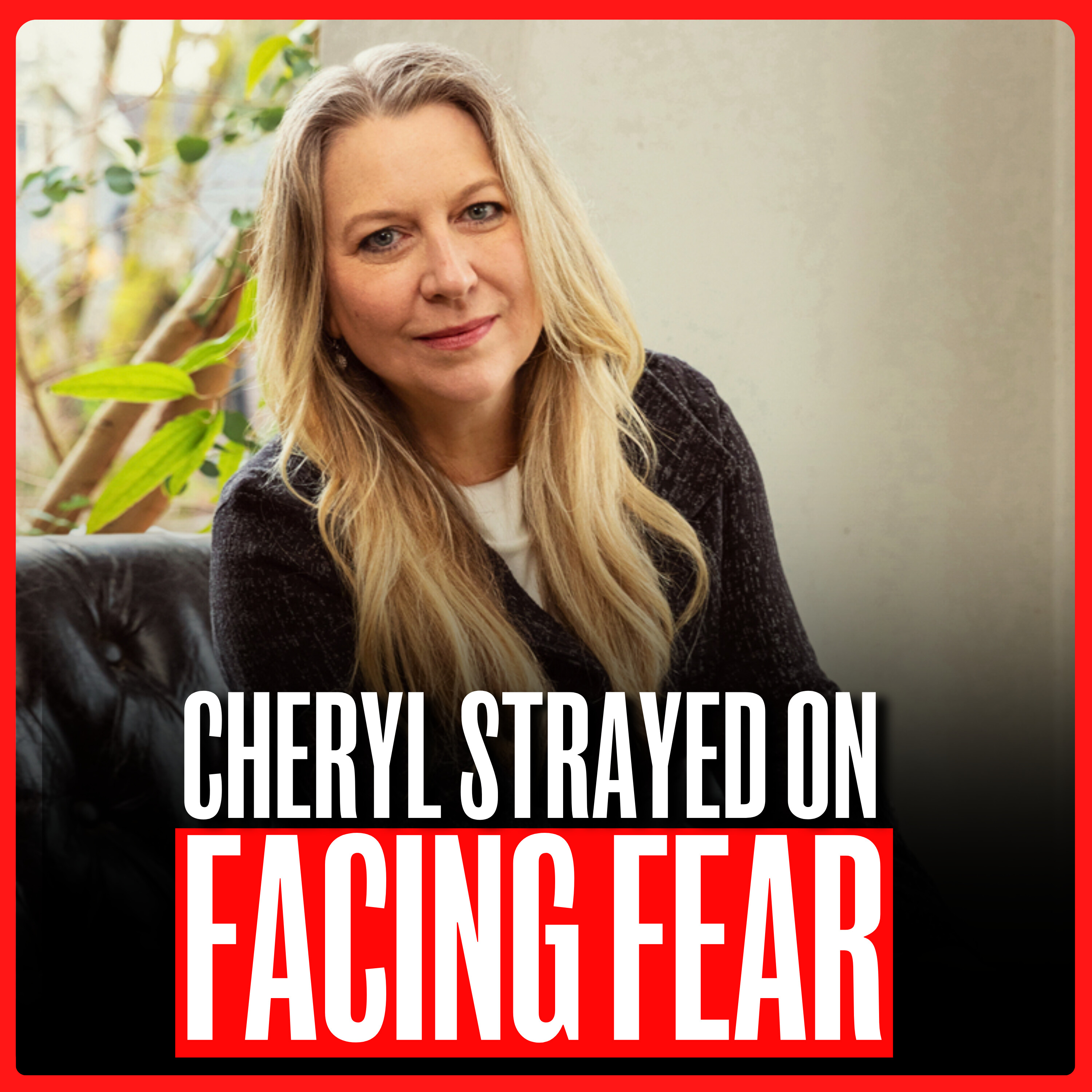
Loading summary
Transcript160 lines
- [00:00]
Ryan Holiday
I'm recording this on a Monday and Monday is our grocery store day. In our family. I usually pick my kids up from school and we go over to Whole Foods get all our groceries for the week. Although here very shortly we're going to go over there to get our Thanksgiving turkey because they've got a bunch of great options. Turkeys start at 1.49a pound. If you have prime with organic birds at $2.99 a pound and they only carry no antibiotic ever, turkeys that will bring quality to your table at a great price. Whole Foods has great everyday price on all your Thanksgiving essentials. Whether you celebrate with a massive family or just a few close friends, everything they sell has high standards to help you shop with confidence, enjoy so many ways to save on your Thanksgiving spread at Whole Foods Market. One of the hardest things to watch the last several months has been the cuts to organizations all over the world that provide aid to the poorest, most vulnerable people. That's not just a political issue that has real consequences for real people. And if you're like me, that's sort of heartbreaking to watch. And maybe you're wondering like how can I help? What can I do about it? I researched today's sponsor actually when I was writing Right thing right now. GiveWell is an incredible organization. It's trusted by tens of thousands of donors all over the world and it provides free and independent research about how you can provide a big impact. GiveWell has spent the last 18 years researching global help and poverty alleviation and it directs funding to the highest impact opportunities they've found. Over 150,000 donors have already trusted GiveWell to direct more than $2.5 billion, including some donations from me. Their evidence suggests that these donations will save over 300,000 lives and thanks to the donors who choose to sponsor their research, GiveWell doesn't take a cut from your tax deductible donation to their recommended funds. If this is your first gift through Goodwill, you can have your donation matched up to dollar by the end of the year or as long as those matching funds last. To claim your match, go to givewell.com and pick podcast and enter the Daily Stoic at checkout. Make sure they know that you heard about GiveWell from the Daily Stoic. To get your donation matched, givewell.org code Daily Stoic to donate or find out more. You've probably heard of eight Sleep by now because I talk about it all the time. I woke up on my eight sleep mattress pad this morning and I've slept on one for years. Eight Sleep is a company that is about improving your sleep and they have dramatically improved mine. The Pod 5 is the newest generation of Eight Sleep's signature product, the Pod, which is a smart mattress cover that you put right on top of your existing mattress. Their results are up to one hour of additional quality sleep per night. Eight Sleep also just came out with their new Pod pillow cover. It syncs with your Pod system and automatically adjusts your head and neck temperature in real time based on your sleep. And like the mattress cover, you slip it over any pillow you already love. Just head over to eightsleep.com dailystoic now and use code DAILYSTOIC to get 350 bucks off your very own Pod 5 Ultra. And the best part is you still get 30 days to try it at home and return it if you don't like it.
- [03:18]
Stephen Hanselman
I think you'll love it.
- [03:19]
Ryan Holiday
Your body will thank you for this investment in better sleep. Eight Sleep ships to many countries worldwide and you can see all the details@eightsleep.com Daily Stoic Foreign.
- [03:34]
Stephen Hanselman
Welcome to the Daily Stoic Podcast where each weekday we bring you a meditation inspired by the Ancient Stoics, a short passage of ancient wisdom designed to help you find strength and insight here in everyday life. And on Wednesdays we talk to some of our fellow students of ancient philosophy, well known and obscure, fascinating and powerful. With them we discuss the strategies and habits that have helped them become who they are and also to find peace and wisdom in their lives.
- [04:20]
Ryan Holiday
Hey, it's Ryan. Welcome to another episode of the Daily Stoic Podcast. I think about today's guest pretty regularly, actually. I think about her especially when I am putting a book out because I read a line in one of her books that actually my friend Jenna from high school, who I'm going to see in a couple weeks at our high school reunion, gave to me. If you haven't read Dear Sugar by Cheryl Strayed, you are missing out. It's one of the great self help books of advice that I've ever read. And in this, Cheryl Strayed is talking to a young writer who's talking about all this stuff. And Cheryl points out that this person has confused writing with publishing, with being a writer. And this is classic stoicism, right? Writing is in your control. You can be a writer in prison, you can be a writer on a blacklist, you can be a writer in anywhere for any reason. Being an author, being published, that's something that the market decides a little bit, that publishers decide, that bookstores decide, that Culture decides, right? Like whether people read your stuff is not up to you. Whether you pour yourself into it and do the work is up to you. I've had books that have surprised me.
- [05:34]
Stephen Hanselman
With how well they've done.
- [05:35]
Ryan Holiday
I've had disappointments, I've had arguments with my publisher. There have been moments where I thought my stuff wouldn't get out in the world. But I come back to this lovely little distinction which was so helpful to me all the time. And then the other thing I come back to from that book, which is one of my all time favorites, is she has this line about how in our 20s we're becoming who we're going to become, so we might as well not become an asshole again. Classic stoicism, right? Virtue is not something you are, it's something you do. You're becoming who you're going to be. So you might as well be the person that you want to be and you definitely shouldn't be the kind of person that you don't want to be. Cheryl Strayed is a mega best selling author for a reason. At 22, she thought she'd lost everything. She'd lost her mother, her marriage was falling apart, and actually I believe she was in the middle of destroying said marriage. And with basically nothing to lose, she made this impulsive decision. She had no experience, no training, driven only by determination, some sense of purpose that she would hike the thousand or so miles of the Pacific Coast Trail, Mojave Desert, all the way to the top of California, to Oregon, Washington, and she'd do it alone. And this became that massive bestselling book, Wild From Lost to Find on the Pacific Crest Trail became a huge movie. As I said. Her collection of columns, Dear Sugar, was put into a book called Tiny Beautiful Things, which I love. We sell it in the bookstore. It's one of my all time favorites. She has other novels like Torch. She has a best selling collection called Brave Enough. And her books have sold millions of copies all over the world, have been translated into 40 languages. She's a great author, a great thinker, and as I said, her stuff has influenced me in a really big way. Obviously I remember more from the books, but sometimes it's just a singular line. This line stays with you, this idea stays with you and it changes you. And that's, I think, the power of writing and why I've wanted to have her on the podcast for a very long time and it was a great conversation. I wish it could have been in person, it was remote, but I still think it went really well. And you are going to love this interview, I promise. You can follow her on Instagram, Erylstrade, check out her work on her website, cherylstrayed.com let's get into it. My wife's doing story time downstairs at the bookstore. I'm gonna hear my children yelling and being crazy, so I might go rescue her. So this interview is gonna be a little shorter than normal and we'll just get into it, which I think is fine because it's an awesome interview. And as I said, you're going to love it. Thanks to Cheryl for coming on. And seriously, if you haven't read Tiny Beautiful Things, deersugar, you're missing out.
- [08:17]
Stephen Hanselman
Wild is good.
- [08:18]
Ryan Holiday
It's famous for a reason, but Tiny Beautiful Things is one of my all time favorites. I'll link to that in today's show notes. Talk to y' all soon.
- [08:27]
Stephen Hanselman
I'm excited. I'm a huge fan.
- [08:29]
Cheryl Strayed
Thank you so much. You're so sweet. I saw on Instagram one time that you recommended Tiny Beautiful Things and I'm your fan too, Ryan. I love your podcast.
- [08:39]
Ryan Holiday
Oh, well, thank you.
- [08:40]
Cheryl Strayed
And just, you know, I'm thrilled to be on.
- [08:43]
Stephen Hanselman
Well, you know, I think my favorite line in that book, and I was going to ask you about it, my favorite line in your book is in your 20s, you're becoming who you're going to be, so you might as well not be an asshole.
- [08:56]
Cheryl Strayed
That is true. That is true. I mean, I think about that, that decade and of course the fact is we're constantly evolving and it's always our job to grow. But I think anyone who's, you know, made it to 30 can look back at their 20s and realize just what a powerfully intense emotional journey our twenties are for most of us. Because you are becoming, you know, you're. Most of us are not secure enough in our sense of self and identity that we know exactly who we are and we need to kind of experiment with some things and try this out and try that out. And we have to reckon with our past and our childhood and there's just a lot of emotional work in our 20s. And yeah, you might as well pretty early on I think make a decision to have character be a really important thing, virtue a very important thing. You know, your ethical code and you know, as I write a lot about in my books and Wild and Tiny Beautiful Things both is that doesn't mean that you always do the right thing.
- [09:58]
Ryan Holiday
Sure.
- [09:58]
Cheryl Strayed
That very often the way we learn what our ethical code is is that we violate it or we disappoint ourselves, or we do. We do make a decision for which we have to apologize or make amends or change our behavior.
- [10:13]
Stephen Hanselman
Maybe the specific age number in that quote is almost a red herring, right? Because it's. We're always becoming who we're going to be or who we are. And so the choices that we make day to day, or the choices that we make right now, they really matter because that's. That's who we are. So, yeah, you can make mistakes, you'll screw up, you're not always going to be perfect. But there is, I think, sometimes this mistaken assumption that, like, we just are who we are or we are who we've been, as opposed to. To. No, it's who we're going to choose to be in this moment, who we're going to choose to be going forward, and that our character is really something we do as opposed to something we inherently have or were born with.
- [10:58]
Cheryl Strayed
Absolutely. And this is something I talk about a lot again, in both my work as to Sugar, but also as the author of Wild, a book that is about deciding as a young woman to walk alone in the wilderness. And one of the most common responses I've gotten over, you know, these years that it's. I've had so many conversations with people about it is they say, I couldn't do that because I'm not brave enough. And I always say, you're wrong. You're absolutely wrong. You know, courage is not some. Some just sort of inherent characteristic that, you know, here are the brave people in this, you know, corner, and here are all the rest of us. It's actually something that you cultivate. I always say, you know, one of my things I talk about a lot when I teach workshops is cultivating courage. And that word cultivate is probably more important than the word courage because it is something we practice and we get better at. It's literally like the way you lift weights and you get stronger day by day. Courage works like that, too.
- [11:57]
Stephen Hanselman
Well, the idea that it's a verb, not a noun. Right. That it's an action that you take. And the time. I mean, Aristotle talks about this, that virtue is a. Is an action, it's a thing you build, as opposed to, again, this thing that you. You simply are or aren't. And the bad news is, if you've made a lot of bad decisions, you've done a lot of bad things, you can't just tell yourself, oh, but I'm a good person. You know, I didn't mean it. Right, right. But it means that you can decide to be something new and better. Now that's the case.
- [12:31]
Cheryl Strayed
Always. I mean, and that's what's so powerful to me when. I mean, that's why I think so many of the stories of redemption are so powerful for us, because I think, especially when we're younger, there is this sense that you can think like, okay, I ruined my life. You know, I set off down the path that now I'm ashamed of or I regret, and now it's the end. And, of course, I'm 56 now. And one of the great wisdoms of age is that we can always begin again. We can always start again. That doesn't mean you could always, like, do terrible things and then be like, okay, you know, clean slate.
- [13:06]
Stephen Hanselman
Sure, that that was who I used to be. Sorry.
- [13:09]
Cheryl Strayed
No, but. But it is to say, like, okay, I can. I can do better and I will. And then you have to really genuinely apply some real thought and agency and consideration to that. And you said something about doing.
- [13:24]
Stephen Hanselman
Yeah.
- [13:25]
Cheryl Strayed
You know, I think that that's such a powerful thing to remember, too, you know, that putting into the body and into action those values or beliefs that you espouse is such a powerful thing. And sometimes, you know, like when I was hiking the Pacific Crest Trail, I had a mantra, I am not afraid. I only said it when I was absolutely terrified. But those words, I am not afraid. We're telling my body, be not afraid. Body, go forward. And I think that when I have been the happiest and again in my work is, Dear Sugar, when I talk to people who are suffering to the greatest degree, it is when their actions are contrary to their words or their exterior is contrary to what they're feeling inside, when they have that true voice inside, and they're living the untrue voice, and that's the path to suffering. Really?
- [14:22]
Stephen Hanselman
Yeah. If you weren't afraid, then there wouldn't be the opportunity for courage. Right. The whole point is that it's scary, and then you transcend or you push through that fear into doing the thing that, you know, on some level you want and on another level, you don't want. But if it wasn't scary, then, then there's no opportunity for bravery.
- [14:44]
Cheryl Strayed
Right. And I think there's something in the way we've all been. I think we've internalized these lessons in this culture that are about opposition and dichotomy that I think is a little bit false. You know, to me, courage and fear are not over here on opposite sides. They sit next to each other and it's for the reason you just so beautifully said that, you know, we can't be brave unless we have fear. And fear is such a wonderful opportunity to allow us, to show us to ourselves what we're capable of. You know, it's kind of like the obstacle is the way, you know, the path to those most beautiful, powerful, meaningful things are very often via fear, suffering, doubt, anxiety, all of those things that we. We think of as the opposite of those emotions.
- [15:31]
Stephen Hanselman
Yeah, I mean, hearing you say that, it's like all of the virtues have to be paired with their opposite or with their temptation or there's not much virtue in it. Right. So. So, you know, wisdom isn't. Impressive is maybe not the right word, but wisdom isn't virtuous without the opportunity to be the fool instead.
- [15:51]
Ryan Holiday
Right.
- [15:51]
Stephen Hanselman
If ignorance is not also an option, why is it impressive? Or why is it meaningful to pursue wisdom, you know, without. Without something scary or without the option to do the wrong thing. You choose justice or you choose courage. The whole point is that there's a choice. The, you know, Hercules comes to the crossroads and he has to choose between one path or the other. It's that choice that makes the right choice meaningful and purposeful.
- [16:19]
Cheryl Strayed
Absolutely. And I think, I think the wisest people know that. And it's. To me, it's, you know, the wisest people I know are, you know, that word humility always comes to mind, is the threat. And to me, that's like. About. About that kind of like daily remembering that, you know, that we're always making choices about who we are, you know, which brings us back, you know, that advice that I said, you might as well not be an asshole. You know, I think in that same bit of advice I said, you know, because it was somebody saying, like, how do I, you know, I'm my 20s, how do I be good? And, you know, it's such simple things, but it's also like, you know, in the tiniest way, what path you walk. I recommended you go into a bookstore and buy 10 books of poetry and read them and see what happens. And so many people since I wrote that have been, okay, tell me which 10 books. Yeah, and I'm like, no, that defeats the whole purpose, you know. And to me, I think that part of that seeking is about humility is saying, like, I'm just going to wander around in the wilderness of this bookstore and I'm going to find or library, and I'm going to find something that speaks to me even in just a glimmer of a way And I'm going to be humbled before it and take it in. And some things are going to change my life, and some things are not. And that's part of the journey, you know. And so I, you know, I think that, again, that's not something we just need to do in our 20s. People in their 30s and 40s and beyond benefit from that as well.
- [17:48]
Stephen Hanselman
Well, going to this idea of the noun versus the verb, I think my other. One of my other favorite lines from.
- [17:53]
Ryan Holiday
You, I think it's in Dear sugar.
- [17:56]
Stephen Hanselman
Or from a dear sugar letter, but some young writer was asking you for advice or explaining something, and you pointed out, And I think about this all the time, you pointed out that they were confusing writing and publishing. And I think about that all the time because I've begun. I was telling someone the other day that I'm very ambitious as a writer, and I'm no longer ambitious as an author. Like writing is the part of it that I control. And publishing, being an author, that's for other people. That's a label that other people have. That's what the New York Times decides. That's what the sales figures show at the end of the year. But my ambition is now directed more at the part of it that's up to me that I get to control. And I think we often, as creatives, we make the wrong. We fail to distinguish between the process and the outcome. I think people in life tend to do that, which is they're confusing the part of it that's not up to them with the part of it that is up to them. And they want lots of advice on the part that's not up to them.
- [18:57]
Cheryl Strayed
Absolutely. And I mean, that's, I think, the most essential core piece of writing advice that I give again and again is be wildly, profoundly, deeply ambitious about the work itself, because it is, as you said, it is the only thing that you have control of. And this was, you know, really, we get so confused because, again, so many of us have internalized these ideas about the definition of success, which is almost always, at least in our culture, defined outside of us. And it's dependent on the judgment of other people.
- [19:34]
Ryan Holiday
Right.
- [19:34]
Cheryl Strayed
You know, are you famous? Are you financially rewarded for your work? Are you rich and famous? That's. That's success in America. Right. And many other countries, too. And, of course, you know, that never really works. It certainly doesn't work for writers and artists of any kind. But I would say anyone in any field, you know, to me, the measure of success, I always say, you know, Can I answer yes to these two questions? Did I make good on my intentions? Did I do what I said I would do? Yes or no. And did I do it? Did I give it everything I had? Did I do it with all of my intelligence? Yes. That's success to me. And I really came to that when I was struggling to finish my first book. It's a novel called Torch. And I, you know, had spent my life dreaming of being a great American novelist. And, you know, all. Everything. For years, everything I said I was doing was, I'm writing. I'm writing my first novel. I'm writing my first novel. And I got to this point where I was almost done with it. I was like, you know, 75% the way through. All I had was this. This last bit to write, and I found myself unable to write it. I just was in really a dark night of the soul. I thought, you know, maybe I've been lying to myself. Maybe. Maybe I actually don't want to write a book, because otherwise, why am I spinning my wheels and procrastinating and. And I had this realization that I had to surrender to my own mediocrity, which sounds terrible and not inspiring, but what I mean by that is I had to do that thing you just elucidated. I had to let go of. Of all the parts of the story that were about, like, being on the New York Times bestseller list or getting published or finding an agent or, you know, making money. I had to let go of all those dreams, and I had to hold really tight to the one dream that was within my grasp, which was writing this book, making good on my intentions and giving it my all. And what that could mean, what I realized when I say surrender to my own mediocrity, it could mean that I did all that. I. And I wrote a mediocre book that never.
- [21:40]
Stephen Hanselman
You just didn't make the cut.
- [21:41]
Cheryl Strayed
Yeah. And guess what, though? I would so much rather live with that than live with not finishing it, because I was terrified of what the outcome would be. And so I've really held fast to that for all these years. As a writer, I always persevere through all the doubt and anxiety, because, of course, there is doubt and anxiety. And I remind myself almost daily of that definition of success that I have, you know, that it is not about something external. It's about what's within.
- [22:12]
Stephen Hanselman
It hit me, you know, working on a book one time you go and you put in your day's labor, and you're not really any closer to being finished. And These things just kind of exist. I don't know about you, but I save each draft each day as a new file, right? So in case I ever screw anything up and I need to go back. But I remember just looking in Dropbox and seeing just days and days and days in a row of this manuscript that I didn't really feel anything closer to finishing. And I was struggling with it, and I wasn't having a lot of fun. And I just remember thinking, is this only worth it if I finish? Like, is this only. Is. Am I doing all this so that it will be done? Then I'll get paid, then it'll come out, then it'll do well, and then all of this misery will have been worth it? That seems like a. That that means that. That what I'm doing today is not actually in and of itself justifiable, right? Like, if I got hit by a bus or if I decided to do something else, all of this would have been a waste because it didn't end with that thing being justified in some way. And that's just struck me as a strange way to spend your time, given that you don't control the outcome, right? Like, you could. You could get hit by a bus, you could get canceled, you could get blacklisted, your publisher could go out of business. You know, there could be a natural disaster, and people don't care about books anymore. So many things could prevent that thing from happening. And so how do you find a way that you can say today was a success day to day, in and of itself? And I think your standard of, hey, did I do my best and did I realize what I set out to do that day or what my intention was for that day? And I think what's really empowering about that, and I think this pertains more to. To a lot more than just writing, is it allows you to be a winner every day. It allows you to have success every day as opposed to, you know, putting all this down, down, down, down, and then one day somebody else getting to anoint all of that as having been.
- [24:15]
Ryan Holiday
Worth it or not.
- [24:17]
Cheryl Strayed
Right? And, you know, I think that the way I persevere through that is I really, truly, genuinely believe that I will forever be an apprentice. I never want to stop considering myself an apprentice to the craft and art of writing. And so even if those things happen that, you know, like, even if I've. Everything I've written for the last, you know, whatever number of years is like, well, that doesn't then turn into a book or the last, you Know, the last five years, I've actually been writing a lot of screenplays. And that's a really interesting lesson. You know, being hired to write a screenplay in Hollywood, I've learned, does not mean that. That. That. No, it's like. And I've said, where does that go? Like, I've written whole. Created whole worlds that are just like, you know, on my computer, on those pages, in some producer's office, and who knows what will happen to them? And, you know, I only say that to myself when I'm feeling kind of cranky and doubtful. But really, in the end, what I can honestly say is, wow, I learned so much doing that work, and I trust that someday it will inform something else I'm doing. You know, the Apprentice is one who's like, you know, you don't. If you're apprenticing yourself to a furniture maker, you know, you have to build a lot of chairs that aren't very good chairs, you know, and that's how you learn how to make the best chair ever. And so I think that that happens over and over again for all of us. And the more that we can come to peace with that, the better we'll be able to work and also feel, you know, because I do think that everything I've ever written teaches me how to write the next thing.
- [26:05]
Ryan Holiday
This episode is sponsored by BetterHelp. I've talked here before. We've made whole videos about it. Therapy has been incredibly helpful to me. It's given me emotional awareness. It's helped me process my feelings. It's helped me deal with stuff as a parent, as a spouse, and just a person in a crazy, busy, noisy, sometimes demoralizing world. And my therapy practice is part and parcel of my stoic practice, right? Analyzing and putting your feelings, your impressions, your views, your values to the test. That's what therapy allows you to do. And there's a reason I use online therapy. Because it's more efficient. It takes less time. BetterHelp is built around making starting therapy easier. They connect you with a licensed therapist. You just fill out a questionnaire, and you can match with a therapist in as little as a couple of days. With over 7,000 reviews and a 4.3 rating on Trustpilot, BetterHelp is a platform you can trust. You can click the link in the description below or just go to betterhelp.com dailystoak to get 10% off your first month of therapy.
- [27:10]
Toyota Trucks Advertiser
The world is full of tours.
- [27:14]
Cheryl Strayed
But.
- [27:14]
Toyota Trucks Advertiser
You don't choose a Toyota truck to follow the beaten path. You choose it to find the places.
- [27:20]
Stephen Hanselman
In between.
- [27:23]
Toyota Trucks Advertiser
The detours where each adventure pulls you toward the next. And wrong turns turn out right. So why would you ever take a tour when you could take a detour? Toyota trucks.
- [27:44]
Stephen Hanselman
I do imagine at this point, as a author, you can publish pretty much anything you want. Your publisher's gonna give you the green light. Cause your track record. Has working on film challenged this? Sort of, hey, I'm gonna focus on writing, not publishing. Has it challenged that? Because I imagine you can say this stuff to yourself as much as you want, and then somebody else getting to decide whether your thing is a go or not. That's heartbreaking.
- [28:09]
Cheryl Strayed
Yeah. And that's Hollywood. But that's why, Ryan, I'm back to really working on my next book now. I'm like, okay, goodbye, Hollywood, for a while. I'm just gonna write my next book, which I've had on the burner for a while, but I put it on the back burner to do this Hollywood stuff. And, yeah, I'm excited about that. And I do think, however, I want to say that a lot of people think like, wow, you know, now that you had this big best sell, these bestsellers, like, you can just write whatever you want. And that's true. That's true. I can. I have a lot easier. It's easier to me to. For me to pass through that gate. But what's interesting to me is just on the ground level, me alone in this room, it's my office in Portland, Oregon, contending with, you know, the computer, the blank computer screen, and having to write the next thing and having, you know, the same. Like, I. I don't know if you do this when I'm writing a lot. Like, I actually kind of think about my writing all night. Like, while I'm sleeping, it's not quite dreaming, but my mind is still working. And I'll, like, wake up in the middle of the night and think, oh, my gosh, that's. Nobody's going to want to read that. That's too depressing. How can you find some humor? How. You know, they're going to all be dis. They're going to say, this isn't wild, you know, and, like, all of the doubts go. They start yammering to me in the night and I'm not in bed thinking, like, wow, I've written an international bestseller. Everyone can't wait. It's the doubt. And so I love. I actually think that's a gift, you know, because I don't think you write from a place of Arrogance and confidence. I think you write from a place of fear and humility.
- [29:44]
Ryan Holiday
Yes.
- [29:44]
Cheryl Strayed
And so I do that. I'm. Even though my. Again, that that external landscape has changed for me as a writer. The internal landscape is the same.
- [29:55]
Stephen Hanselman
Yeah. I think sometimes we see egotistical artists, entrepreneurs, et cetera, you know, even a Steve Jobs, you know, and our vision of him was him on stage presenting this finished product. That's mind blowing. And I think what we're not seeing is that backstage he was probably like, this sucks. What about this? As egotistical as the presenting performing figure is the rock star, whatever. There's no way they're creating good art from that point of view. That has to come from a place of humility, because it's fundamentally about relating to other people. And it's also. Nobody spits out good first drafts. Like, even the most talented people need to edit and refine and, well, what could it be?
- [30:44]
Ryan Holiday
A little bit better.
- [30:44]
Stephen Hanselman
And what about this? And so if you're not familiar with it, the looks can be very deceiving because you just assume the person feels good and comfortable, and it comes very easily to them. I would argue that almost all of them are pretty tortured while they're actually doing it.
- [31:03]
Cheryl Strayed
Absolutely. And also, many of those same people who are making those assumptions about. If you ask them, they would admit what I just admitted to you, you know, that. That sense of doubt. I mean, it is fascinating to me. I would say, you know, having. Having had the experience I've had and, you know, how many stories people project onto me. You know, whenever I teach, I teach these big writing workshops, and when I share my own sense of doubt or anxiety or fear about my writing, I always get these comments from the students, like, oh, my goodness, like, I had no idea that you felt the way. I just assumed it was easy for you. And I'm like, no. You know, we do make assumptions about people in the public eye, and very often those assumptions are absolutely not true.
- [31:47]
Ryan Holiday
Yeah.
- [31:47]
Stephen Hanselman
It never actually gets easy, Whatever. The thing is, it never actually gets easy. It's still the task. And I do think that's why it's very healthy to attach yourself to a profession that is hard like that, because that can help keep the ego at bay, you know, though, I have to.
- [32:06]
Cheryl Strayed
Admit, so many times I've been like, why? Why did I have to be a writer? You know, do plumbers, like, agonize about their work? Do they get woken up in the middle of the night thinking about it? I don't know. Maybe they. Plumbers will now run in.
- [32:20]
Stephen Hanselman
I would guess the ones who are meant to be plumbers definitely do. Do you know what I mean? Yes, yes, yes. If you are endlessly fascinated with the thing, the lucky part is that you are going to be endlessly fascinated with what you do. The bad part is you will always be fascinated and perplexed and frustrated with what you do because it's never as good as you want it to be. And that's sort of the double edged sword of the calling.
- [32:45]
Cheryl Strayed
True, very true.
- [32:47]
Stephen Hanselman
Sometimes you're like, could it not be calling me? I would like to be a normal person for a few minutes.
- [32:52]
Cheryl Strayed
Yeah. Stop knocking on the door, writing. You know, I just want to be a normal person. But it's also really, I mean, honestly, I do think of it as like the most healing gift of my life.
- [33:02]
Ryan Holiday
Sure.
- [33:03]
Cheryl Strayed
Because, you know, not only have I found the deepest, most profound consolation and illumination through books and literature of all sorts, but then also in my own writing. You know, that's always a healing act to write. And then, you know, the coolest thing, forget about all the exciting, you know, stuff that happened in my books. The most exciting thing to me of all always is the people who come up to me and say, you changed my life or you helped me through this, or because of this, I did this because of something you wrote. And I think that's just really the most gratifying, that's success to me. You know, did, I mean, that's the final thing. Like, did you actually make others feel more human? Did you actually offer others some light or some sense of connectedness when they felt the most alone?
- [33:54]
Stephen Hanselman
Yeah, there's, there's something magical, supernatural about what literature can do, I think. So the founding story of Stoicism is that this, this young merchant suffers a shipwreck. He ends up in Athens and he's walking through the Agora and he sees a, a bookseller. And the bookseller is reading, you know, this, this story about Socrates. And it's in this moment that Zeno, he's the founder of Sozin, that Zeno, suddenly a prophecy that he'd heard as a young man makes sense to him. The oracle at Delphi had said that you will begin to become wise when you have conversations with the dead. And he realizes that that's what literature is. Right. Socrates is no longer alive. But it sounds like he is because he's hearing those words come through another person in the agora. And there's something about book that I think is so magical. Obviously you see it in painting and music.
- [34:46]
Ryan Holiday
Too.
- [34:46]
Stephen Hanselman
But so many of my favorite books, the person that is teaching me this thing has not been on the planet for decades or centuries. And yet here I am inside their world, inside their mind. That's just a magical thing.
- [35:02]
Cheryl Strayed
It's unbelievable. It blows me away endlessly. And I just, I talk about that so much when I talk to, you know, writers at beginning stages and when I teach my workshops because I think it's, you know, so important always to remember when you are a writer that you. It's an act we do alone usually. We are part of this tremendous tradition that goes back to the beginning of us, the beginning of humans. And you know, I always make sure to teach the ancients. You know, in my workshop recently, I read a passage from Medea, Euripides play Medea, where, you know, Medea is about to slaughter her children. And there's this wonderful kind of moment where she's sealing herself to do this terrible thing, this thing that she knows that will lead forever to her agony. And she's having this conversation with herself about how to do something that feels like this impossible, painful thing. And you know, what's so powerful about that? I mean, that's just one example of so many. But what's so powerful about that is even though most of us would never and will never be in a situation where we slaughter our children, there's her humanity, her suffering. Willing herself to do something, that internal monologue she has. It's a timeless experience. It's a timeless human experience. When we read, you know, Romeo and Juliet about love, we are like anyone who's ever been in love relates to a lot of those lines, right? And this is what's so powerful, I think, about the ancients and what puts us. We get to touch that thread. We get to grab hold of that thread. When I said what I hope always is my writing makes people feel more human, it's about that. It's about stepping into and seeing the universal experience. That's true not just now, but that's true through all time.
- [36:50]
Stephen Hanselman
Have you read that poem, Books are door shaped?
- [36:53]
Cheryl Strayed
I don't think so.
- [36:54]
Stephen Hanselman
Oh, it's. Books are door shaped portals carrying me across oceans and centuries, helping me feel less alone.
- [37:01]
Cheryl Strayed
That's right.
- [37:02]
Stephen Hanselman
Just the image of the book. Oh yeah, it is. It's like a little door or a little window into this world, somebody else's world or a different era or a different understanding, a different country. It's, you know, it's time travel. It's the ability to communicate with the dead. It's all of these things. And then. And then, you know, you bump into someone and they go, I haven't read a book since high school. And you just go, that's insane. What do you. There's a superpower on the table. And you're like, eh, absolutely.
- [37:36]
Cheryl Strayed
And it's interesting that you use the word portal. I always call the books a portal too. And I. And I think every art form has, you know, like, one thing that they do better than any other art form. And without question, writing is, you know, the portal to not who we are, but who we are really. We get to step inside subjectivity and interiority. We get to see, you know, if we. If we are reading a book that you've written, Ryan, and you're telling us the story about the births of your children, it's the story that we, you know, we get access to your body and your mind and your spirit in a way that we could not any other way, you know, and I think that that's. And it's right there for us. We get to see what people were really thinking. That's one of my favorite writing prompts. You know, write us, you know, tell us what you were really thinking and which is always great. It's funny or it's dark or it's painful, or it's, you know, because it's real. It's the deepest, truest stuff. It takes us to that deepest level.
- [38:35]
Stephen Hanselman
Yeah, that is interesting.
- [38:37]
Ryan Holiday
Every.
- [38:37]
Stephen Hanselman
Every medium, every art form is really good at one thing above the others. Like music. One note can evoke a whole array of emotion that it might take 500 pages in a book to even hint at. It's like in Spinal Tap, like E minor is the saddest of the notes, he says. Or, you know, I sometimes get so jealous when I hear even just the opening notes of a song or just a small refrain, I just go, I would kill to be able to do that. Like my. You could pile all of my work on top of itself. And I don't think I've approached so clearly accomplishing what they were accomplishing in this, you know, five second snippet of music. There's just something powerful about that. But every medium is uniquely powerful in some way.
- [39:26]
Cheryl Strayed
Yeah, I was gonna say the exact same thing about music is it's the emotion, you know, and it's always funny, you know, when they start playing like, you know, you're watching a show or you just hear like a really, really kind of sappy, you know, song, and you're. And you find yourself like, you're getting teared up even though you're like, I don't even like this song, but it's evoking this emotion. Or, you know, I recently my. I have a 19 year old daughter and she discovered the Cure a couple years ago, which is like a band I listened to a lot in high school. And I was listening to it again, I hadn't listened to it and I was like, no wonder I was so depressed as a teenager. It just makes you feel, you know, it's so funny that, you know how it can evoke so many different emotions or, you know, a happy song could be can, you know, suddenly you're all like jazzed up. And I love that about music. It's a powerful, powerful thing. And that's why it is also so consoling to us. And so we turn to it when we need consolation.
- [40:24]
Stephen Hanselman
No, I was just thinking, yeah, like pictures of you. If you listen to that song on repeat, you're just like, this is a contained world and I could just live in this thing.
- [40:33]
Cheryl Strayed
It's a mood.
- [40:35]
Stephen Hanselman
Yes. Yeah, exactly. It's a mood that matches the hair and the makeup and the. And all of it. Yeah.
- [40:42]
Cheryl Strayed
And well, that's why too, like, you know, that's why we have soundtracks for films and TV shows. Because they know, they're like, okay. We don't trust that the writing and the acting is going to be enough to like make you ball your brains out. So we're going to add a layer of music, you know?
- [40:54]
Stephen Hanselman
Yes.
- [40:55]
Cheryl Strayed
I always find that I'm like, please stop the music. It's too much.
- [40:59]
Stephen Hanselman
Yeah. Like if as a writer you could be accompanied by a soundtrack. I don't think you would have to be as good as a writer to hit the same level of resonance.
- [41:11]
Cheryl Strayed
Do you listen to music when you write?
- [41:13]
Stephen Hanselman
Yes, but somewhat weirdly when I write. So there'll be a song and then I listen to that song on repeat for that day and I might listen to that song 200 times over the course of several days or I don't know the math. But the point is I pick songs and then I just ring them completely dry and then I move on to the next song. And then sometimes those songs will come back on like in my Spotify wrapped or whatever. I'll be like, oh, it's weird. I listen to that song so many times. But, but for me creatively, it, it can't be a shuffle. It has to be a loop of the same thing over and over and over.
- [41:49]
Cheryl Strayed
And can it have lyrics?
- [41:50]
Stephen Hanselman
Definitely.
- [41:51]
Ryan Holiday
No.
- [41:52]
Stephen Hanselman
No lyrics all the time. But it has to get me to some emotional plane that allows me to. To be creative. And sometimes it's sad, sometimes it's, you know, sweet. Sometimes it's what it doesn't have. It's not a specific emotional plane that it has to be on, but. But it has to be something other than, like, normal waking life.
- [42:11]
Cheryl Strayed
Yeah, I. I've done that. I don't always do that, but it's. I have done that. I know exactly what you're speaking of. And. And it's really interesting to me. Like, I wrote this essay called the Love of My Life many years ago, and I listened to Beth Orton's song Central Reservation. You know, probably, you know, in the two weeks that it took me to write that essay, I listened to that song over and over, probably a thousand times, and I couldn't tell you why. Like, I couldn't. It's not like that song is in that essay. Yeah, it was a vibe. It was a tone, and I would just listen to it. I didn't listen to it while I was actually writing, but, like, if I'd stand up to get a cup of tea or something, I'd listen to it a few times, go back to work, listen to it a few times, go back to work. And it was just. Yeah, it was a vibe. And I've had that a couple of other times, but, yeah. And this essay, the Love of My Life, it's online somewhere. It's in the sun magazine, and that was in Best American Essays. But it was really this big, powerful essay about my mom's death and grief and everything I did after that. Like, you know, it's a raw, powerful essay about my promiscuity and using heroin and all of these things. And like I said, there's no direct thread to that song, to the work, but they lived in the same world together while I was creating it. So.
- [43:33]
Stephen Hanselman
Yeah, there's like a frequency you're tuning into.
- [43:36]
Cheryl Strayed
Yeah, exactly. There must be some. Maybe, you know, some neurologist who's listening will be like, this is what this is. You know, they could explain that to us. But it's pretty fascinating.
- [43:47]
Stephen Hanselman
I found that essay very moving. And when I was reading it, I thought of. You know, people tend to think of the Stoics as sort of unfeeling and unemotional, but Seneca writes these three essays, which are. Are called his Consolations. One's to his mother, one's to a friend, one's to the daughter of a friend. And it's weird to Call it a genre, but if we could say that. That losing someone and being a wreck about it is one of the most timeless of human experiences, it would make sense that, like a love song or a western or, you know, a fantasy, that that would be an enduring genre because it is an enduring part of the human experience that hits us so suddenly and overwhelmingly, and we are just not equipped to deal with it.
- [44:37]
Cheryl Strayed
Flooded with that overwhelming emotion or sense of pain or suffering.
- [44:42]
Stephen Hanselman
Yeah. The intensity is not like any other human experience.
- [44:47]
Ryan Holiday
No.
- [44:47]
Cheryl Strayed
And there's always that feeling of I can't go on. And I think maybe the more painful thing, you know, as I've written in a few different forms, you know, that. That feeling, I think when we feel like we can't go on, what we're really thinking and knowing is that we will and it's going to hurt and it's going to be not the way we wanted it to be, that we wish it had been different. And it can't be.
- [45:13]
Ryan Holiday
Yeah.
- [45:13]
Stephen Hanselman
What's that? That Samuel Beckett thing? Like, I can't go on.
- [45:16]
Ryan Holiday
I'm.
- [45:17]
Stephen Hanselman
I will go on or I must go on. Like, we sort of know. Like, we know we're not serious. Like, we're not actually gonna lay down and die, even though it feels like we could or should. And so there's something. Yeah, there's something disorienting about this overwhelming feeling that we don't quite trust on some level or that we're able to. It feels like everything to us now. But we also have enough experience in life to presume that we probably won't feel like this forever.
- [45:47]
Cheryl Strayed
Right. I mean, I think there's two kinds of grief like that, you know, One of them, like romantic heartbreak, for example, most of us, the feeling we have when hearts are broken is like, I can't go on. I can't go on. I'll never love again. And of course, you know, time passes, we fall in love with somebody else, and we realize we were absolutely wrong about that.
- [46:06]
Ryan Holiday
Yeah.
- [46:07]
Cheryl Strayed
And I think that the more, you know, when you lose someone who's essential to you, when somebody dies, like, for example, my mom, you know, that's a different kind of grief in that it is true. It is true that my life changed forever. And it is true that I would forever suffer for having lost my mom so young. Like, those things are true. So I wasn't wrong about that. What I was wrong about is that I couldn't endure my suffering.
- [46:34]
Stephen Hanselman
Suffering.
- [46:34]
Cheryl Strayed
And so I think that so much about, you know, that bigger grief that more long term grief. Like, you know, when you lose a child or I always say when you lose somebody who's essential to you, it's not that you will ever get over it and it will be okay that that person died. It will be that you will learn how to accept it and live with it and bear that sorrow. And also, I think in the final chapter, turn that suffering into something healing and something beautiful and something powerful rather than, you know, something that something that makes you weaker. And those things can exist at once, you know. And that's why so much of I wish we had a better way to talk about, to help people understand what grief is and to talk about grief. Certainly I try to do that in my work a lot, but I do think it's not this getting over, letting go. It's about accepting and holding strangely and learning how to carry, learning how to carry that burden that it is your fate to be required to bear.
- [47:43]
Ryan Holiday
Thanks to Toyota Trucks for sponsoring this episode. When I bought my ranch in 2015 out here in Bastow County, I drove my car about halfway down the dirt road that we live on.
- [47:54]
Stephen Hanselman
Thought, this isn't going to work.
- [47:55]
Ryan Holiday
Stopped, parked, it walked the rest of the way home, borrowed my wife's car, drove in Austin and bought a truck. What I bought was a Toyota Tacoma. And this truck wasn't just transportation getting me to and from my house. It unlocked a whole different style of living for us, not just on the ranch, but in our little Texas towns. There were places I could go now that I couldn't go before, especially out here in the piney forests, through the fields and on the unpaved roads like the one that I lived in. We got to go deep into the Hill Country's wild beauty. We've driven all the way out to East Texas. We've driven it across the country. And by we, I mean not just my wife, but both my kids, who I drove home from the hospital in that truck. Toyota trucks are built for those who understand that the best adventures happen when you're willing to veer off course. Because you never know when you'll end up on a Toyota Adventure Detour. And of course, this is stoicism, too, because every detour, every obstacle is an opportunity. But it's helpful if you can handle the difficulty inherent in that. If you've got the resilience and the right companion to make it wherever the road takes you, discover your uncharted territory. Learn more at toyota.com trucks adventure-detours I feel like we just got our Halloween decorations Up. And now the next holiday season is here. It's hard to believe it, but Thanksgiving is nearly here. We're big at decorating here at the holiday household, as you can imagine. And Wayfair can help make holiday prep easy by having all your home needs in one place. Their Black Friday sale is the perfect time to score huge deals on all things home. Starting October 30th, you can shop Wayfair's can't miss Black Friday deals all month long. And with Wayfair's fast and easy shipping, you won't have to wait long. Wayfair has everything you need for your living room, outdoor bedroom, and more. And they make it easy to shop online with fast and free shipping, even on the big stuff. They'll even help you set up. Don't miss on early Black Friday deals. Head over to Wayfair.com right now to shop Wayfair's Black Friday deals for up to 70% off. W a y f a I r.com sale ends December 7th.
- [50:15]
Stephen Hanselman
In one of Seneca's grief essays, he's writing to the daughter of a friend that he had lost. And he's saying, like, look, it's understandable that you would be grieving your father as intensely as you are. But he's like, you know, I. I sort of heard that every time his name comes up, you're just a mess, right? You just, like, fall to pieces. And he says, and I think about this a lot. He says, you know, is that what your father would want?
- [50:41]
Cheryl Strayed
Right, Right.
- [50:42]
Stephen Hanselman
Like, obviously, you know, if I died and someone said, by the way, your family's totally fine, they just shrugged it off, I'd be like, hey, that's not how this is supposed to work. But at the same time, if you said, hey, years later, the mere mention of your name is devastating. And your memory haunts them like a ghost. I'd be like, well, okay, I don't want that. Like, you would not want your. Your memory to be this immense burden on people. The whole point is that you should have had a positive impact on your life. And I just. I think about that all the time. This sort of tension between. It's very sweet and beautiful that you feel so strongly and that there is such a big hole. And at the same time, if they have to physically exist and be alive for them to deliver any happiness or goodness in your life, that's not a great sign either, that you should be able to not exist without them. But their impact on you, their positive impact on you should continue even when they Are not there.
- [51:44]
Cheryl Strayed
Yeah. And the good news is, I think that's what happens with most people when they grieve, you know, that you have to move through that time where you feel like, I can't do it. And it's tremendously tumultuous. And in some ways, too, like when I look back in my early 20s, you know, I was a senior in college when my mom died. And those couple of years after that, I really grieved her in ways that were. I just was trying to, in such an outward way, like, ruin my life, to sort of show the world, oh, this ordinary woman who nobody had ever heard of or knows. I mean, just the people who loved her. Like to say to the world, we lost something big when we lost my mom. Of course, that's how everyone feels when they lose someone who they love like that. And so I thought, okay, I'll show the world how much this means by ruining my life. Now, of course, I didn't know this consciously. I look back now and I think that's what I was doing. And then pretty quickly, I mean, that's what led to my hike on the Pacific Crest Trail, is. I realized really, just what you said is, like, actually, how do I honor my mom? Is it to ruin my life or is it to thrive? Is it to be the woman she raised me to be? Is it to make good on her best intentions and all the sacrifices she made in raising me and my siblings? And I knew the answer right away. As soon as that question came into my head, I was like, okay, Cheryl, it is time to reverse course and find your footing again. And which is, I found my. Literally found my footing on the Pacific Coast Trail. And that was the awakening for me. And again, it wasn't that then. Like, okay, now it's just fine. And I've never sat about not having my mom, you know, in this world with me, but rather, oh, okay, I can bear this pain. And it. And it is real sorrow, and it will pop up from time to time in ways that will make me burst into tears. But it's. It's going to end up being, actually, I mean, this. The strange paradox of. Of losing my mom was it's the worst thing that's ever happened to me. And it has brought me also the most profound, profound gifts and in the form of self understanding, compassion for others, empathy for others, an ability to see the world in ways that I wouldn't have been asked to see if I hadn't experienced that loss. And I think that that's true of all of us, when we go through a loss such as, like, the death of somebody who is essential and beloved to us is if we can stay awake and open and brave enough, there will be gifts, you know, there will be gifts given to us by that thing that was taken away.
- [54:26]
Stephen Hanselman
Did you ever watch that show Intervention?
- [54:28]
Cheryl Strayed
I didn't.
- [54:29]
Stephen Hanselman
It was obviously a show about people with an addiction and it sort of has. Every episode has the sort of same arc, which is they start portraying this person in the midst of the final throes of their addiction, that their family is finally intervening, and then they start to tell the person's story. And then there's always this moment. The music shifts. Exactly. And you're like, ah, okay, this is the moment where they explain why this person became this way. Right. It's like this person was molested by a priest, there was a car accident, and they lost their little brother, or, you know, this person was a successful stockbroker and then the market turned. There's always some kind of moment, and it's usually like a grief or a loss or a betrayal and. And then that's what sets in motion the downward spiral. And I, I kind of think about that a lot where it's like, okay, I don't control that this happened, but I, I do have some, some control over the direction of, of where this spiral is going. Is it an upward spiral or is it a downward spiral? Like, it. Is this going to be the thing where when people go, hey, what happened to Ryan? And you're like, well, that happened. And that explains all of it in a negative way.
- [55:44]
Ryan Holiday
Right.
- [55:44]
Stephen Hanselman
Like, I think that we kind of, we just experience these things in life and it's not fair and it's awful and it's heartbreaking. And really all we get to decide is like, you know, is this the beginning of the end or is this some kind of a new beginning? That, that's where we have some, some.
- [56:04]
Cheryl Strayed
Agency and very, I mean, all the epic tale, all the, all the tales throughout time, it's like the beginning of the end is also the beginning of the beginning. Like that very many of us have had to reach some kind of rock bottom moment in order to rise up. And very often once you do rise up and look back, there is some gratitude. Again, not that you would say, like, I'm glad that this terrible thing happened.
- [56:32]
Stephen Hanselman
Yeah, you wouldn't have chosen.
- [56:34]
Cheryl Strayed
That's right. But some gratitude for the experience that allowed you to see what you couldn't see without it and allowed you to find strength and courage that you didn't believe you had before you were asked to find it. And, you know, I think that so often, one thing I'm always sort of correcting people about when. When they've asked, talk to me about Wild and my hike on the Pacific Crest Trail, they're like, did you. You know that. That I sort of. Of took this journey and I. And I went from being this, like, terrible person who had messed up everything to this, like, this good person who is now strong and brave. And I'm like, no, no, no, no, no. You know, I. I think that really, to me, that journey, and I think it's a journey that. That is probably more realistically what most of us take, is that really what I did is I. I was finding my way back to my strength, back to my courage. I was. All of that was already there. I really, genuinely, genuinely believe that we all have within us everything we need, everything we need to survive the hardest things. And the journey isn't about, you know, discovering it from some outside source. It's about learning how to trust yourself to accept suffering and difficulty and seek beauty and doing things, of course, that will put you in situations where you're asked to do that. I mean, a long walk alone in the wilderness is a mighty good way to find the incredible, the extraordinary inside of you again. I'm not the only person who's said that, but I'm certainly one of them. My long walk is in a grand tradition of many other walks like that. And the reason that we've been doing it through all time is because it actually works.
- [58:22]
Stephen Hanselman
Yeah. There's a Churchill thing where he says every prophet has to go into the wilderness. That's where psychic dynamite is made. That there's some period where it all goes sideways where you didn't get what you wanted. You had to suffer, you had to go outside. You had to remake yourself. That is a part of the hero's journey or the arc. To anyone getting where they wanted to go. It's never a straight line.
- [58:49]
Cheryl Strayed
Nope. And thank goodness for that. Thank goodness for that. Yeah.
- [58:54]
Stephen Hanselman
Yeah. There's a Hemingway story I love where he's in France and his wife is traveling, and she grabs all his writings to bring to him, and she somehow loses them on the journey. She loses, like, a novel and a bunch of articles. She loses basically everything he'd ever written. He's devastated. We sort of know how this contributes to him becoming the great writer that he's sort of forced to reinvent himself and rethink what it is to Be a writer. You can, you can kind of see the, the signs of it. Just as you start to hear that story, you go, oh, I could see how this is good for him. You know, you lose everything. It's a fresh start. Burn the bridges or the boats behind you. But there's this beautiful letter between him and Ezra Pound shortly after it happened. And his writer friend is basically trying to say some version of this. And Hemingway goes, yeah, yeah, yeah, yeah, I'm not there yet, though. Like, he's like, don't tell me this shit. I understand it intellectually, but it's going to take me a little time to get there emotionally. And so there is something about whether it's grief or failure or heartbreak or setback or whatever that we understand on some level this is going to contribute to the future self that we want to end up as. But that doesn't mean it's fun right now. And that doesn't mean, that doesn't mean we have to accept it right now or that we're going to appreciate it right now. You can kind of have that ability to just sit with both of those contradictory feelings in your head at the same time. Like, just as you shouldn't convince yourself your world is over and you'll never be okay again, you also don't have to accept that, hey, this is a good thing just yet. You can just sit with both of those feelings at the same time.
- [60:34]
Cheryl Strayed
Absolutely. I mean, I'm all for. There is definitely a wallow, wallow in your sorrow period. Let yourself feel all of those, those emotions. And you know, because that's part of the journey too, you know, you can't just hop to that sort of false sense of optimism and cheer. I think that's actually really harmful. And that's why, you know, there is that. I sort of accidentally wrote a book that's in the self help category, which really genuinely, when Tiny Beautiful Things was published and I saw it was in the self help category and bookstores, I was like, what? I never thought of that. But you know, I love a lot of self help books, but I don't love those books that are like just, you know, so immediately obliterating kind of those, you know, those negative feelings, you know, or what we see as negative feelings, you know, and no, hop to the tear up phase of things. I don't think that's healthy, you know.
- [61:30]
Stephen Hanselman
Yeah, I know, I agree, I agree. Well, as we wrap up thinking about, you know, you're going to find yourself in these down moments, you're going to Go in the wilderness, you're going to have pain, struggle, adversity. You have a great line, something like, okay, this isn't your fault, but it's still your problem. Or, this isn't your responsibility, but it's still your problem.
- [61:51]
Cheryl Strayed
It's not your fault, but it is your responsibility.
- [61:53]
Stephen Hanselman
Yes.
- [61:54]
Cheryl Strayed
You know, like, okay, you know, something happened that wasn't your fault, and now you're in a situation that you're responsible for because it's your life. And I really, again, here's this value of, like, two things can be true at once, and things that seem contradictory can sit alongside each other. A lot of us have had things happen to us that weren't our fault, that were wrong, that we were victimized in some way or harmed in some way when we didn't have any power to fight against that, whether it be as children or, you know, employees or partners in romantic relationships that were abusive. And we feel, you know, like, that wasn't fair. And it's true. It wasn't fair. And yet what's also true is our life is ours, and it's up to us to save ourselves. I don't know one person. I don't know one person I've never met, one person who didn't ultimately save themselves from. From their suffering or from the harms that, you know, the injustices they've faced. You do have to make decisions that support your courage and your strength and your resilience and your capacity to find joy and beauty and love and happiness. And, you know, if you don't, you just sit around spinning your wheels, feeling angry and sad and blaming others for what you don't have and never getting what you actually, you know, deserve.
- [63:19]
Stephen Hanselman
We want to argue about why it shouldn't have happened or how it almost didn't happen or could have happened differently. And it's like, I don't know how to break this to you, but it did happen.
- [63:31]
Cheryl Strayed
That's right. And, like, you have to actually actively go on the journey to find some good in it. You know, there's this wonderful quote by the novelist, the Irish novelist Edna o'. Brien. I quoted from that book in my first novel, Torch. I'm just gonna paraphrase it, but she says, you know, there's a time when things happen that you go into a kind of darkness that you're never really gonna truly emerge from. You can be brought to a darkness that you'll never emerge from. And she's writing about a character who was, you know, 13 or 14 and raped by her Father. And she's like, okay, now she's gonna live in that dark. But the quote goes on to say, and now you know what? Your job is to find some glimmer in it. Find that glimmer in the darkness. It will never not be true that that terrible experience didn't happen to you, but your job is to find the glimmer in it. And I really have taken that to heart. I mean, one great example of that is I did have a terrible father. I did have a very abusive, violent father who harmed me and my siblings and my mother and traumatized me. And a huge part of my journey in accepting that and letting that go and, you know, not having that be the thing that. That damaged me or held me back is. I call him my dark teacher. What lessons did I learn from the man who showed me what cruelty was, what meanness was? You know? And I did learn some lessons from him. When you come at things like that with a sense of agency, not like, you know, always spinning your wheels about what should have been, is to say, what did I learn from this? What? You know, how did part of my personal power rise from the ashes of that terrible thing? That's when you start really doing, I think, that real work of emerging into again, what I said, that all. You get to have access to all of that power that is actually within you from day one.
- [65:31]
Ryan Holiday
Yeah.
- [65:31]
Stephen Hanselman
It's the value of the opposite of those things, in many cases, is what these things teach you.
- [65:37]
Cheryl Strayed
Yeah. And it's also a reminder, you know, one of the things that I've always practiced and been aware of is, you know, this is the gratitude for it all.
- [65:46]
Ryan Holiday
Yes.
- [65:46]
Cheryl Strayed
You know, the gratitude for, you know, the whole. The whole range of experiences.
- [65:51]
Stephen Hanselman
Amor fati.
- [65:53]
Cheryl Strayed
Yeah, that's right.
- [65:55]
Stephen Hanselman
Oh, man. Well, I think your work is an amazing testament to that, and it's been very valuable to me personally. So thank you so much for that. I mean, I guess that is one that is the transformative, beautiful part of art is that even if it doesn't bring solace to you, there's some solace in the idea that it brings solace to others. And then it wasn't a wholly negative experience if some good came out of it there.
- [66:20]
Cheryl Strayed
Absolutely. For sure. For sure. You know, I want to say you mentioned Hemingway. I love Hemingway, too. So I've had. You know, there's a writer's residency that's available at his house in Ketchum, Idaho. It's the house he built. It's the house he lived his last couple years in and actually the house he died in when he took his life. But they made the bottom floor, the top floor of the house is as it was as he lived in it with his wife. And the bottom floor, that used to be like a garage, they've converted it into an apartment and they let writers come and have a residency. I've been there twice now. Really amazing place. So, Ryan, I don't know if you want to go get inspired and spend a few weeks writing in Hemingway's house, but I do.
- [67:06]
Stephen Hanselman
I do.
- [67:06]
Cheryl Strayed
Yeah.
- [67:08]
Stephen Hanselman
I'll check it out. That sounds amazing.
- [67:10]
Cheryl Strayed
Yeah, I'm sure they'd love to have you. It's. It's the Ketchum. The Ketchum Library in Idaho sponsors these residencies.
- [67:17]
Stephen Hanselman
All right.
- [67:17]
Ryan Holiday
That's exciting.
- [67:18]
Stephen Hanselman
Well, this is amazing. Thank you so much for taking the time.
- [67:20]
Cheryl Strayed
Thank you. It was really a delight to talk to you.
- [67:25]
Stephen Hanselman
Thanks so much for listening. If you could rate this podcast and leave a review on itunes, that would mean so much to us and it would really help the show. We appreciate it.
- [67:34]
Ryan Holiday
And I'll see you next episode.
- [67:48]
Cheryl Strayed
Foreign.
- [67:54]
Toyota Trucks Family Owner
My family owns a 2023 Toyota 4Runner, and honestly, it's my favorite vehicle that I've ever owned around town. It's smooth and reliable, but where it really shines is on our trips into the backcountry. We've taken it on backpacking adventures to Colorado and New Mexico, loaded up with gear and never had to think twice about whether it could handle the terrain. That's what Toyota Trucks are built for. Off road confidence, rugged durability, and the freedom to explore. Toyota has a long history with the outdoor community, and they're committed to helping more people get out there and experience what nature has to offer. From remote trails to scenic byways, Toyota Trucks empowers you to take the detour, roam freely, and discover places that still feel wild and untouched. And they're not just making great trucks. They're working to expand access to adventure so more people can connect with the outdoors and pass that passion on to the next generation. Discover your uncharted territory. Learn more@toyota.com Trucks Adventure Detours that's toyota.com.
- [68:47]
Ryan Holiday
Trucks Adventure-Detours look, ads are annoying. They are to be avoided if at all possible. I understand as a content creator why they need to exist. That's why I don't begrudge them when they appear on the shows that I listen to. But again, as a person who has to pay a podcast producer and has.
- [69:09]
Stephen Hanselman
To pay for equipment and for the.
- [69:11]
Ryan Holiday
Studio and the building that the studio is in. It's a lot to keep something like the Daily Stoic going.
- [69:18]
Stephen Hanselman
So if you want to support a.
- [69:20]
Ryan Holiday
Show but not listen to ads, well, we have partnered with Supercast to bring you a ad free version of Daily Stoic. We're calling it Daily Stoic Premium. And with Premium, you can listen to every episode of the Daily Stoic podcast completely ad free. No interruptions, just the ideas, just the messages, just the conversations you came here for. And you can also get early access to episodes before they're available to the public. And we're going to have a bunch of exclusive bonus content and extended interviews in there just for Daily Stoic Premium members as well. If you want to remove distractions, go deeper into Stoicism and support the work we do here. Well, it takes less than a minute to sign up for Daily Stoic Premium and we are offering a limited time discount of 20% off your first year. Just go to Dailystoic.com premium to sign up right now or click the link in the show descriptions to make those ads go away.