← The Daily Stoic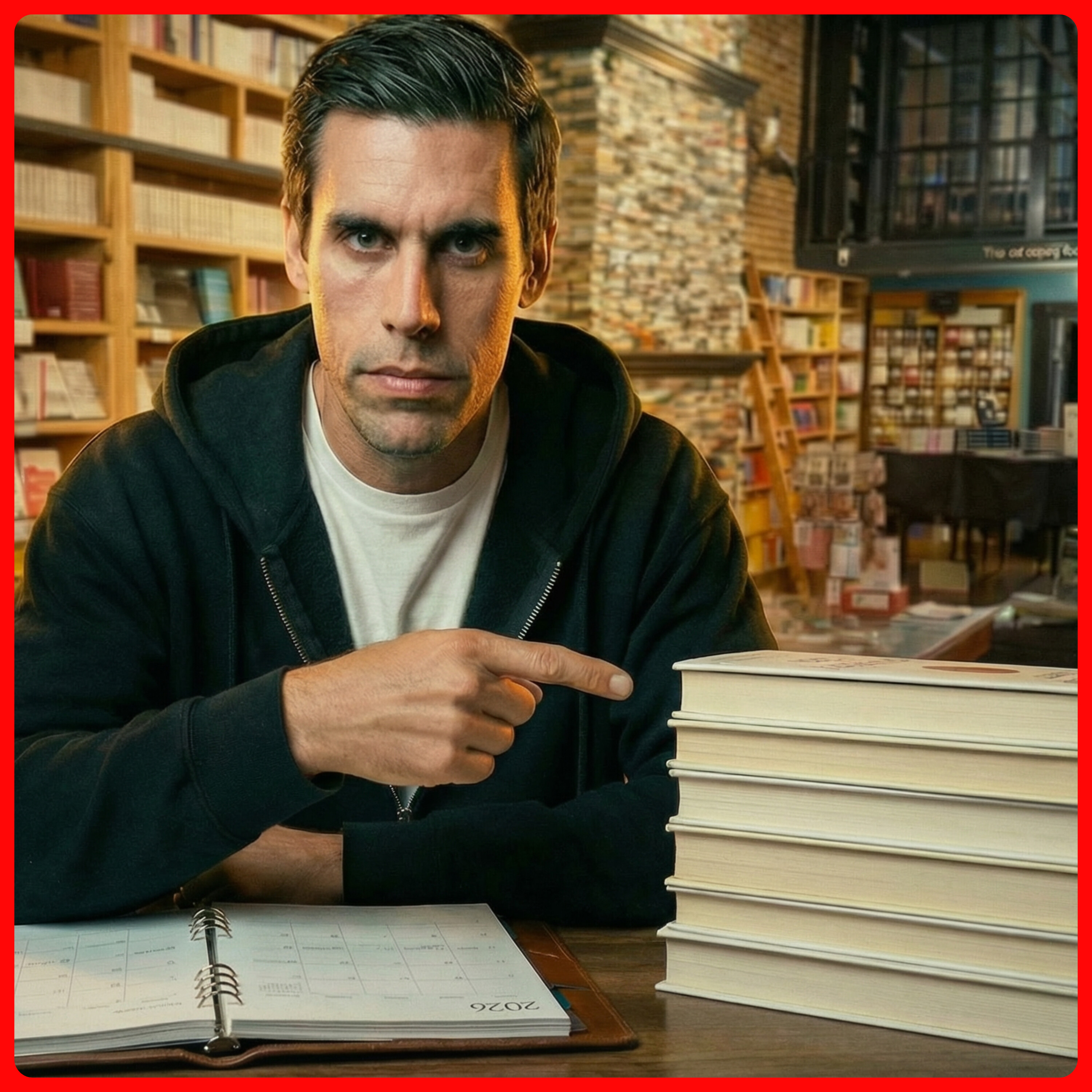
Loading summary
Transcript11 lines
- [00:00]
Ryan Holiday
About to head over and pick my kids up from school. And after I do, I know what they're going to ask. They're going to go, hey, can we.
- [00:06]
Go to Whole Foods?
- [00:07]
And I am going to say yes one, because then keeps them off their screens. But two, groceries are my responsibility in our household. And so yeah, we usually swing by the Whole Foods headquarters and we get all our groceries for the week. My wife has like a bazillion dietary restrictions. Sometimes that can be tough. But not at Whole Foods. They got everything even for Valentine's Day. They got mild of these chocolate dipped strawberries that I think we're gonna get. They got gluten free stuff, they got dairy free stuff. They got basically everything. And I usually pick her up flowers.
- [00:42]
While I am there too.
- [00:44]
If you're looking for something for someone for Valentine's Day this year, Whole Foods has got bouquets and arrangements. They've got succulents. Sometimes I'll just bring home a plant. She always appreciates it. The point is you can taste love all month at Whole Foods and maybe you'll see me there here at Austin. You know what has also been crazy because it integrates your Amazon account. When I pull up Amazon, I can see all the stuff that I ordered, which is always good to remember. Pull up my little Amazon in store code, get all my prime benefits. It's lovely. Anyways, I'm off to Whole Foods and you should too. We've just been feeling like a little claustrophobic in our house lately. Like as our kids are getting older and our stuff is getting older, it's just like our space is not working. So we're kind of reorganizing not just at home, but at the office. We've been making some room for some new employees here at the office and then also just redecorating a little bit. And the first place we checked was Wayfair because it is a one stop shop for all kinds of decor stuff, office furniture, organizers, bookcases, even blankets and pillows. Wayfair's huge selection makes it easy to find exactly what's right for you. And their site is super easy to use. And you can navigate with all these different filters to find exactly what you're looking for down to the exact size and material you want. And that's how we found all the stuff that is now decorating our house and the bookstore. Get organized, refreshed, and back on track this year. For way less, head to Wayfair.com right now to shop all things home. That's W-A-Y-F-A-I-R.com Wayfair Every style, every home. Welcome to the daily Stoic Podcast, designed to help bring those four key Stoic virtues, courage, discipline, justice and wisdom, into the real world.
- [02:34]
Most people don't read a lot, right? A few books a year at most. So if you're only going to read a couple books in a given year, what book should you read? That becomes a much more important question. So in today's video, I want to give you some books that I am confident are worth your time this year. I want to give you some books that will make you a better person this year that have a high roi, that have changed me, made me better, and I think will make you better at a bunch of different things in your life. I can't imagine anyone's resolution was to be less happy this year, right? No, we want to have less stress. We want to be less anxious, we want to have less turbulence, less frustration. We want to be happier. We want stuff to not be so hard. And I think most of us understand that, yeah, sure, life is hard, but we make life harder than it needs to be. We make things hard on ourselves. And that's where Dan Harris was in 2004. He has a panic attack on national television as an anchor for Good Morning America. And up until that moment, he thought that the voice in his head was serving him well, that it was an asset, it had driven him to the top of his profession. He didn't quite understand the ways that it was also driving him crazy and driving him into the ground. Right. And so that's where his book 10% happier comes in. And I think this is a great book for helping work on that voice in your head that helps you work on becoming happier. This is the subtitle, How I Tamed the Voice In My Head, Reduced Stress Without Losing My Edge and Found Self Help that Actually Works is a book largely influenced by his study of Buddhism and other Eastern philosophical schools. And the book follows him on that journey and I think is a great survey course in some of those great strategies. I think this is a great book for a well rounded, happy and mindful life that if you're ambitious or high achieving, it will do you a lot of good. This is a great book and I think it's important, you know, happiness isn't this thing that just magically happens. It's not a transformative thing. It's about getting a little bit happier or getting a little better at removing sources of unhappiness. And stress from your life. And Dan talks about that great in this book. He also has a great podcast. All right, so the ancients had a saying, and that saying was that character is fate. That who we are, the values we ascribe to, what we're trying to be, that really determines who we're going to be. That it all comes down to character. And that's why I was really excited about this book. And I think it's a book that you should read. This is General Stanley McChrystal's book on choices that define a life. And he's saying the same thing that ancient saying is trying to get at, right? That the choices we make about our character, choices that we make about our values, these are the choices that define our life. Much more so than where we go to college or what profession we choose. We are currently in the middle of a massive experiment about what it looks like when we have leaders in business and politics, in culture that not only don't have character, but don't even pay lip service to character. And we are reaping the consequences of that right now. This is kind of a throwback, older style book, a meditation on an important theme in the form of a bunch of short essays and stories. And I also think it's a throwback in terms of its earnestness and vulnerability. You know, he's quite critical of himself or like, if he was writing a book for speaking gigs or consulting or whatever, this is not the book that you would write. This is the thoughts of a man in the later stages of his career, reflecting on what he's learned, reflecting on the mistakes he's made, the future that he wants to leave to his children and his grandchildren. And I think that's something that we should be thinking about too. I love this book. General McChrystal came on the Daily Stoic podcast and talked about it. I think you're really going to like it. And I just took a ton of notes on this book. This here was one of the best selling books in the entire country in 1955. It was enormously popular when it came out. It was profoundly impactful for hundreds of thousands of people. It is a classic that's mostly been forgotten and lost. And part of the reason is because the author was, I guess we would say today, canceled, and rightfully so. She and her husband were controversial figures who had a lot of abhorrent beliefs. But that doesn't mean the ideas in the book aren't really, really important. Right? The original subtitle of this book was the answer to the conflicts in our lives. But it's really a book about stillness. I'm talking about Anne Marlenberg's A Gift from the Sea. And here we have a career woman. Here we have a person in the limelight. Here we have a person in the midst of what was becoming the woman's movement. Just society is changing. A lot's happening. Everything's going a mile a minute as she's trying to wrestle with all these challenging demands, as we ourselves are wrestling with all the demands of the modern world. Like, we all have this desire to slow things down, to get perspective, to get to what really matters, what's actually essential. And in this book where she's meditating on these sort of seashells on the beach and about what they mean and what they can teach us, it's just a great reminder and a great how to book for slowing down, calming down, achieving some small measure of tranquility and peace amidst the craziness. I think that's why it sold well when it came out. I think that's why it's still selling 70 years later and why it's so timeless and important. Because life is complicated. Life is overwhelming, and we need help resolving those inherent conflicts. Basically, in each chapter, Lindbergh takes a shell from the beach. And it's this sort of starting point on these different meditations on solitude and love and happiness and contentment. And, you know, as I said, it feels very modern for a book entering its seventh decade. And the main thing I don't like about this book is that I didn't read it when I was writing. Stillness is the key, because I almost certainly would have quoted it many, many times. Somebody told me recently that when person you know, tells you to read a book, that's a recommendation. But when your spouse tells you to read a book, it's a prescription. And my wife told me to read this book, and I'm very much in her debt because it made me a better parent and a better human being. It also helped me with my relationship with my own parents. I've been raving about this book ever since I read it because it's fantastic. This is Dr. Becky's good inside. It will be the best parenting book you have ever read. And honestly, even if you don't have children, it will make you a better son or daughter. No one is going to be a perfect parent, right? No one is a perfect person. But what Dr. Becky talks about here the most, or what I took most from this book, is that what we need to do is get better at repair. How do you own your mistakes? How do you apologize? How do you fix things? How do you come back after a disconnection and find connection? And she talks a lot in here about being better at being patient, that we ultimately have to remember that our kids are good inside, they're doing their best, that it's hard to be a kid, right? It's hard to be a person. You're struggling as a parent. You've had way more experience being a human being than they have. And so there's just a lot here. This is an amazing book. I've gotten to know Dr. Becky over the years and she's just a wonderful person. She, I think she lives these ideas as far as I know. Just a reminder like our job is to help raise kids who are emotionally well regulated, people who can deal with the difficulties of life. That's what the Stoics are trying to do. That's what Dr. Becky is trying to do. I've talked to her on the podcast that was a great episode, one of our most popular ever over the Daily Stoke podcast. So you should listen to that. If you want to be a better parent or a better person this year, read this book.
- [10:10]
We're all going to experience pain and injuries and physical obstacles, right?
- [10:15]
That's part of life.
- [10:16]
But we choose how we respond to those setbacks. And Built for Broken is an award winning book from corrective exercise specialist Scott Hogan that helps you heal painful joints and rebuild your body stronger. Obviously, mindset's a big part of that, but this book arms you with knowledge and gives you practical recommendations for rebuilding painful joints. Whether you're a runner like me or a lifter, whether you're an active dad, whether you're getting up there in age, your loved ones need you to be strong and pain free. And right now it's time to invest in the one vehicle that gets to carry you through in life, which is your joints. To celebrate the launch of Built from Broken in stores nationwide, listeners get access to a bunch of exclusive offers. Just visit saltrap.comdaily stoic to get your copy and download the full exercise video library for free. And you also get free access to the Built From Broken Guide to Regenerative Therapies, which Scott wrote in partnership with the Clinical Advisory Board of Physical Therapists and Regenerative medicine practitioners. And second, if you use code daily stoic@saltrap.com to save 20 bucks on your first order of therapeutic nutrition formulas, this book and tools are references you can turn to for the rest of your life to turn setbacks into comebacks.
- [11:40]
One of the most famous writers of all time, who many consider to be one of the greatest writers of all time. He didn't think that his classic novels were his best work. He thought this was his best work. And this book was so transgressive and provocative when it came out. It was actually banned. It was lost to history for almost eight decades. But it got rediscovered and it has slowly become a classic. It's a daily part of my life because it is an amazing book. I am talking about Tolstoy's A Calendar of Wisdom, which, as I said, he thought was more important and a better work even than War and Peace. Tolstoy himself said that daily study was necessary for self improvement for people. And so he tried to make a book that was composed of wise thoughts for every day of the year from some of the greatest philosophers of all time. He's talking about Epictetus and Marcus Aurelius and Buddha and Confucius and Pascal. Also Thoreau is in here and Emerson is in here. The purpose of the book, he said, was to give you like a great inner force, a kind of calmness and happiness and that communing with these great thinkers, whether it's Socrates or Epictetus or Matthew Arnold. It helps you understand humanity and helps you understand the human condition. Condition and helps you understand yourself. This is a book about the meaning of life and about virtue and about living well. But the fact that it's one page a day allows you to live with Tolstoy, live with these great thinkers a page at a time, over the course of a year. I am many years into reading this book. Every year, whatever today is, I take something new out of it. Sometimes I know what I experience in that moment. Other times a passage doesn't strike me, but several years later it does. This book took something like 17 years to be published and it took almost a hundred years before it appeared in English. I've gifted this book to tons of people. Come on the Daily Stoic podcast. Over the years, we sold thousands and thousands of copies of it through the painted porch. And I don't think you can go wrong picking up this book this year. It will make you a better, wiser and happier person. Obviously being healthy is important and people want to be wealthy too. But for what? Right? What are you trying to live a long time for? And what are you saving up all this money for? And actually, the author says this in the book. He says if you want to have a big Pile of money at the end of your life. Well, I guess that's your choice. But he says, I've never seen somebody's net worth posted on their tombstone. It's about quality of life. And this book changed how I think about money, how I think about spending, how I think about the value of time, right? How I want to make sure that I'm not deferring things to the future, but actually just stealing valuable things from myself here in the present moment. Obviously, delayed gratification is really important, but, you know, the point shouldn't be to have a large pile of money that you give to your kids at the end of your life. And in fact, one of the things he talks about in the book is just what age at which most people who inherit money from their parents get it from. And we're not talking necessarily even about large amounts of money. He's just saying, like, you know, people get money from their parents when they're 50 or 60, because their parents are dying at 70, 80, 90. And he's like, wouldn't it have been better to help those kids when they were going to college, when they themselves were having young kids or grandkids? It's just a different way of thinking about money. There's a reason this book has been a huge bestseller. It'll just change how you think about things. And I think a really important thing that I took from this book is not waiting to be generous, right to family and friends and also to the vulnerable, like, do good now when you can experience the benefits of doing that good, right? You know, when you delay, when you do put things off, what you're actually choosing to do is have less control over who and how that money is distributed later. So do the good now. Do it while you can. If you have more than you need, do good stuff with it. And if you haven't, read Morgan Housel's the Psychology of Money and the Art of Spending Money, those are two other books that I might pair with this one. I've written 15 books. I've hit the New York Times bestseller list multiple times. I've had number one New York Times bestsellers. I've done videos that have been seen millions and millions of times. I've given speeches to audiences all over the world. I am lucky enough to get to make stuff that people see that's really cool. And yet I don't make a single thing. Every big creative project that I sit down to do. I read this book first. And I don't think my success as a writer or artist or creative or whatever you want to call it would be possible without this book. I'm talking about Steven Pressfield's the War of Art. You see, every creative person is at war with themselves, with they're in a battle against the resistance. As Pressfield says, the thing that gets between us and what we're meant to do, what we're capable of doing. I didn't understand that until I read this book, until I did this thing full time. Just what an insidious, endless battle that is. But every time I write a book, every time I work on a book, I read this and it helps center me, it gives me perspective, and it arms me to win that battle fight against the resistance. Pretty much every writer and artist I know swears by this book. But it's not just for writers. I think there's something in here for parents and entrepreneurs, anyone that's trying to do anything challenging or hard, anything creative. This helps you to break through that resistance. If you're looking to accomplish something, if you're looking to do something and you haven't been doing, if you've been struggling to do it, I think you need to read this book. If you like this video, make sure you subscribe to the YouTube channel. I'm going to start publishing a bunch more stuff about books I like or just come see me here at the Painted Porch, my bookstore in Bastard, Texas.
- [17:13]
Commercial Narrator
The American Airlines Advantage Business Program is changing the way companies book travel and get rewarded. Designed for fast growing businesses, the program makes it easy to earn rewards and it's free to join your company earns one Advantage mile for every dollar spent on business travel booked anywhere with American. Use these miles to help offset future travel expenses, transfer to employees and more. You'll also gain access to a suite of tools to streamline travel management, including the ability to view employee activity, manage trip credits, and report with ease. And it's a win win. Travelers can earn additional loyalty points on top of what they already earned through the Advantage program, helping them reach status and faster. Earn more on business travel you're already taking with the American Airlines Advantage Business Program. Register today@aa.com Advantage Business.