← The Daily Stoic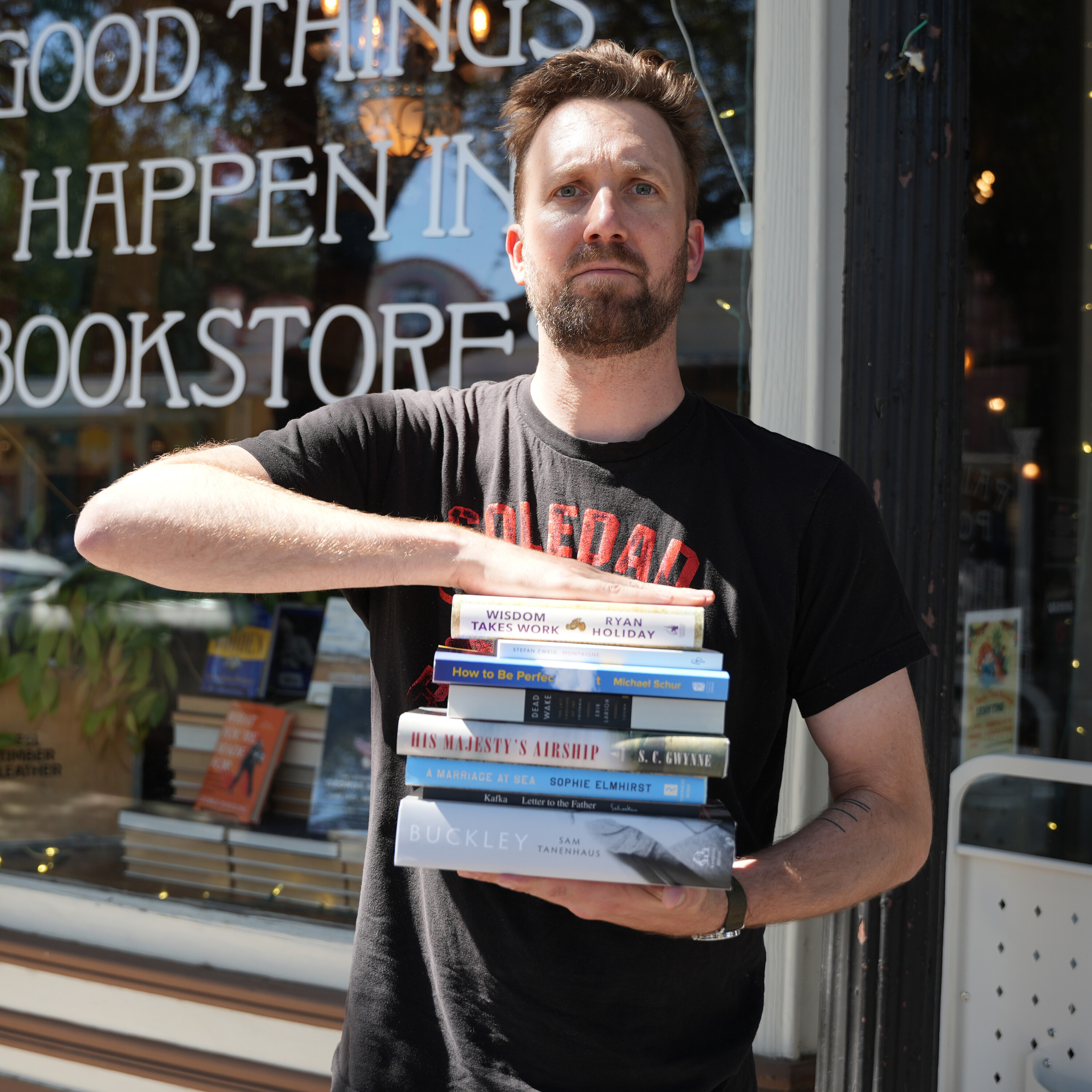
Loading summary
Transcript131 lines
- [00:00]
Ryan Holiday
Welcome to the daily Stoic Podcast, designed to help bring those four key Stoic virtues, courage, discipline, justice, and wisdom, into the real world.
- [00:15]
Stephen
You would not think that a thousand page biography of William F. Buckley would be fucking with me. Yeah, fucking with it.
- [00:22]
Patrick
A thousand page.
- [00:23]
Stephen
It's incredible. Really incredible. Yeah. Yes. Like, first off, just because it's like this arc of history that's fascinating. And he. All these different, like, James Baldwin's in there. He. I mean, he was the first person to publish Joan Didion.
- [00:38]
Patrick
Is that right?
- [00:39]
Stephen
Yes, he wrote for the National Review, but yeah. So it's this arc of American history that I think is fascinating. So basically he fondly recounts he was not invited, but his brothers, at the direction of their father, go burn a cross on somebody's lawn. Like, his father's, like, profoundly anti Semitic, profoundly racist, just a reactionary bigot. And then, so when you understand that, then when you understand. When you understand William Buckley, you're like, oh, he's actually doing this thing that's kind of endemic to the conservative movement, which is like, people have these opinions or these instincts. How do we intellectualize that? It's a way of creating, like, an intellectual cover for these sort of like, primal, emotional, prejudiced ideas. So there's the arc of that in his life. And then he starts by writing a book about liberal overreach on college campuses that his dad pays for.
- [01:44]
Patrick
Is that right?
- [01:45]
Stephen
Yeah, his dad was, like, an oil speculator. Okay. Then he is a speechwriter and advisor to McCarthy. And the next, he's this sort of Machiavellian genius behind, like, all these pivotal moments. It's fascinating, really.
- [02:05]
Ryan Holiday
You will realize, like, oh, if you
- [02:06]
Stephen
just change a couple of these names, it's the same things happening again. Yeah, but. But like, I. I think the Free Press, which I like for some stuff. Is it similar role where. It's like, part of what it does, though, is create kind of intellectual cover for things that people want to believe. Realizing that we tend to think of propaganda and misinformation as inserting false ideas. And actually its job is to give you reasons to believe what you already believe.
- [02:45]
Patrick
Yes.
- [02:45]
Stephen
Give you.
- [02:46]
Patrick
Give you a way to not look like an asshole in conversation.
- [02:48]
Stephen
Yes, yes. And kind of gives you this. It's like, okay, so the Wall Street Journal is this part of the hierarchy, and then all the way down to, like, you know, Charlie Kirk is in there somewhere, and then the Gateway Pundit is down here. But they're all doing this thing and they have various levels of funding, and it was. It was Interesting to me to watch, like, how people sought him out. Just like. Like Charlie Curtis is this average kid who wants to go to college. And some billionaires, like, you're good at this. Let me pay you to do that thing. And this basically is the same thing that happened to Buckley.
- [03:18]
Ryan Holiday
Really.
- [03:19]
Stephen
And then I experienced that with. When my stuff started to get popular, I would get invited to these conferences and I could see they were evaluating me. They'd be like, if you ever need anything, how could we get this out to more people? Which the left doesn't have. It tends to be, I think, more organic. But this process of, oh, this person has a way with audiences and their fellow travelers, with what we're saying, how do we bring them into the ecosystem?
- [03:52]
Patrick
I mean, that's like. I feel like Peterson's an interesting example of that. Right? Early Peterson. I'm like, oh, I get this. That's a lot of sense.
- [03:58]
Stephen
I met him at some of those conferences. I met him at an entrepreneur conference. And then the next thing I saw him was at a coke thing.
- [04:04]
Patrick
Yeah.
- [04:05]
Stephen
You know, and it's a process. Yeah. You gotta read this. I'm like, it's. You're gonna. You gotta read every page.
- [04:11]
Patrick
I come down to Texas and I leave with a thousand page biography on William F. Buckley.
- [04:16]
Stephen
It might be an audiobook for you then. But I'll show you my office in a second. You'll see how the notes I took on.
- [04:22]
Patrick
I haven't even finished a Gore Vidal book, if I'm being totally honest.
- [04:24]
Stephen
I don't know why I have either. But this is great. Is there anything you've been reading?
- [04:29]
Patrick
What have I been reading? So I've been. I just actually picked up the Pynchon book on the way here, so I've been reading that.
- [04:34]
Stephen
Okay.
- [04:35]
Patrick
I have been. I picked up some. Some writings by Camus. I like. I like me that Myth of Sisyphus.
- [04:39]
Stephen
Have you read the Plague? Yes, I just reread the Plague and it's another one where you're like, oh, this is. Explains everything.
- [04:48]
Patrick
Oh, that. Yeah.
- [04:49]
Stephen
I have this sort of theory about, like dark energy, that there's this like dark energy in humanity and it goes from issue to issue, era to era, and that you realize, like, oh, it's not about the plague at all. The Plague is about dark energy. Yeah. Because the plague is about Nazism.
- [05:02]
Patrick
Yes.
- [05:03]
Stephen
As a metaphor. But he's at the end, he's like, the play just goes on to the next. We think we beat it, but we did it. It just goes to the Next thing.
- [05:10]
Patrick
I think Camus is a fun one to read right now.
- [05:13]
Stephen
Yeah.
- [05:13]
Patrick
I feel like that. That absurdist point of view feels. Feels good. I was also reading Kafka because of that.
- [05:18]
Stephen
Ooh, did I give you. Did I give you this Kafka parenting book? No, because I remember I gave you some parents. You just had a kid. Right.
- [05:26]
Patrick
And you gave me the self. What is it?
- [05:29]
Stephen
Self driven child.
- [05:30]
Patrick
And this was great.
- [05:30]
Stephen
Did you like that?
- [05:31]
Patrick
You gave me these two. Both of these are great.
- [05:33]
Stephen
Okay.
- [05:33]
Patrick
This makes me want to.
- [05:34]
Stephen
Patrick is in an inside world.
- [05:36]
Patrick
Yes. It makes. This is helpful for.
- [05:38]
Stephen
Okay. Oh, yeah, sure. Okay. This is. Kaka wrote this. Oh, my God.
- [05:43]
Patrick
I read about this letter. I read about this. And it's brutal, right? It's like a brutal.
- [05:47]
Stephen
Super brutal. His father was kind of like William F. Buckley's father was just like one of those overbearing, powerful people. And you can sort of go two ways, you know, and he. He sort of goes in the other direction and then he writes this letter sort of dumping out all his feelings about it. It's beautiful and haunting, cautionary.
- [06:06]
Patrick
He is lovely. And I feel like his short stories now, where things feel like they don't make sense. In some ways, he taps into that in such a nice way.
- [06:13]
Stephen
Yeah. I don't know if you've seen a
- [06:22]
Ryan Holiday
video or a talk from me lately, but you can tell I'm kind of on a sweater kick. I don't know why exactly that started, but the problem with this sweater kick is, like, finding ones that actually look good that I like. And I'm not paying, like an absurd, let's call it unstoic amount of money on them. And that's where today's sponsor comes in. Quince. They've got great design, great styles, great fabrics, everyday essential that are effortless to wear. They're not too hot, they're not too cold, they're not too thin, they're not too thick. They work with top factories, cut out the middleman. So you're not paying for brand markup or fancy retail stores. Just great sweaters and clothes that you'll like. And you've probably seen me wear them in some of the Daily Stoics stuff. I got this Mongolian cashmere sweater. I got 100% organic cotton sweater. They're comfortable, they're high quality.
- [07:12]
Stephen
That's always the thing.
- [07:13]
Ryan Holiday
Stop overcomplicating your wardrobe. You don't need a closet full of options. You just need some great staples that actually work. And right now, if you go to quince.com stoic for free shipping. You also get 365 day returns. That's a full year to build out your wardrobe and love it. And you will now available in Canada too. Don't keep settling for clothes that don't last. Go to Q U I-e.com stoic for free shipping and 365 day returns. Q-U-I-N-C-E.com stoic Today's sponsor is Chime, the fee free banking app changing the way people bank. Chime isn't just another banking app. They unlock smarter banking for everyday people with products like MyPay giving you direct access to up to 5, $500 off your paycheck anytime. And they can help get you paid up to two days early with direct deposit. No more overdraft fees, no minimum balance fees and no monthly fees. Plus Chime makes your everyday spending work harder by delivering real rewards and financial progress. Bank fee free plus overdraft coverage you can count on by switching to Chime and earn up to 3.5% APY on your savings, which is much higher than a traditional bank. They've even launched their new Chime Card, which is a cash back card that helps you build credit with your own money. I wish this kind of stuff was around when I was younger. Seems like a great way to build credit and get your financial house in order. Chime is not just smarter banking, it's the most rewarding way to bank Join the millions who are already banking free today. It takes just a few minutes to sign up. Head over to chime.com stoic that is chime.com stoic Chime is a financial technology
- [08:55]
Chime Ad Voice
company, not a bank. Banking services A secured Chime, Visa credit card and MyPay line of credit provided by the Bancor Bank NA or Stride Bank NA. MyPay eligibility requirements apply and credit limit ranges $20 to $500. Optional services and products may have fees or charges. See chime.com feesinfo advertised annual percentage yield with Chime+status only. Otherwise 1.00% APY applies. No min balance required. Chime card on time Payment history may have a positive impact on your credit score. Results may vary. See chime.com for details and applicable terms.
- [09:18]
Stephen
I have many shipwrecked books for you.
- [09:20]
Patrick
Is that right?
- [09:20]
Stephen
So this one just came out. It's called the Marriage at Sea.
- [09:23]
Patrick
What is this?
- [09:24]
Stephen
This couple is sailing from England to New Zealand and in real life a whale breaks their sailboat apart and they spend like three months in a raft and it's, it's like about their marriage. It's a husband and wife just stuck in this raft. It's great. At one time they're in the Pacific, so it's like full of light. At one time they. They catch a giant sea turtle and they tie a rope to it and they, they try to like harness it, like to see if it can pull them. Yeah, but it's amazing. That one's good.
- [09:53]
Patrick
I got obsessed with Moby Dick. It's probably my favorite.
- [09:56]
Stephen
Well, have you read in the Heart of the Sea?
- [09:57]
Patrick
Yes.
- [09:58]
Stephen
Okay.
- [09:58]
Patrick
Amazing.
- [09:59]
Stephen
That's one of the all time greats.
- [10:00]
Patrick
I called the Melville Estate and they let me write at his desk for a couple days. What, a pilot? Yeah, Pilot didn't go anywhere.
- [10:07]
Stephen
You were writing a pilot?
- [10:08]
Patrick
I was writing a pilot and I needed to get away from home and I was like, I just need to go. I want to go up to the Berkshires. And I called him on kind of a lark. I was like, you know what, I know you do some writers stuff here and there. I was like, hey, hoping they're like
- [10:19]
Stephen
a Daily show fan. Was there any good energy in the.
- [10:22]
Patrick
Great energy, I think. But, you know, if I'm being totally honest, the energy is. I didn't dare look at my phone for a second in that room. I felt so guilty not being productive. I was productive for two straight days.
- [10:33]
Stephen
Interesting. Walter Lord has a book about the Titanic. That's amazing.
- [10:38]
Patrick
Oh, really?
- [10:39]
Stephen
But then Erik Larson has one about the sinking of the Lusitania. Which one is more your style?
- [10:44]
Ryan Holiday
Oh, wait.
- [10:45]
Patrick
The Sink of the. Wait, what is that? I don't know. The Lusitania.
- [10:47]
Stephen
Lusitania is the sinking of the American ship that basically brings us into World War I.
- [10:53]
Patrick
Give me that one.
- [10:54]
Stephen
All right. Where's that? Found it. Dead weight.
- [10:58]
Patrick
Look at this.
- [10:59]
Stephen
I gave this to Ed Helms when he was here. This is about zeppelins, which. Which is, in retrospect, the dumbest idea that humans have ever had.
- [11:11]
Patrick
I think so. Right, but. But a fun idea.
- [11:13]
Stephen
I mean, I imagine this, but they kept. Crap.
- [11:15]
Ryan Holiday
It's.
- [11:15]
Stephen
It. I. I describe this book as the definition of the triumph of hope over experience. Because they would just every single one horrendously crash. Because it is a balloon filled with highly flammable gas powered by an engine. This one, like this is the famous British one. It had a smoking room inside the zeppelin. Amazing. That again, meant people were lighting lighters and matches.
- [11:53]
Patrick
They brought on a fire eater every
- [11:56]
Stephen
time to come in. Yeah, exactly.
- [11:57]
Patrick
What I love is, like the Empire State Building has the document.
- [12:00]
Stephen
Yeah.
- [12:00]
Patrick
And they're like, oh, one stop there.
- [12:02]
Stephen
Well, so the crazy thing about. They talk about this in the book. So, like, okay, so you tie up a balloon to this pointy needle. All right. Okay. What happens when it gets windy, as it often does. Yeah.
- [12:17]
Ryan Holiday
It.
- [12:17]
Stephen
No amount of ropes are going to secure this giant it. And then the people are in it, like, or whatever. It's still whatever. So it was just the dumbest fucking idea.
- [12:29]
Patrick
The idea of a. Like. Like, how long was that?
- [12:32]
Stephen
Like, 40 years. Like, it really. It was. Lasted a lot longer than you would think it would. It's incredible because he wrote a book about snafus. Like, about.
- [12:44]
Patrick
I read his book.
- [12:45]
Ryan Holiday
Yeah.
- [12:46]
Stephen
That struck me as, like, just the definition of human stupidity. It's incredible.
- [12:52]
Patrick
Give me a philosophy thing. I'm liking Yong Chul Han.
- [12:55]
Stephen
Are you reading his stuff? No. I don't even know what you just said. Okay.
- [12:59]
Patrick
Green German, does a lot of, like, tech philosophy right now.
- [13:02]
Stephen
Ah. Michael Scher wrote a book about moral philosophy. Did you read that?
- [13:06]
Patrick
No. Good.
- [13:07]
Stephen
Really good. I bet it's awesome. Very fun.
- [13:09]
Patrick
I feel like.
- [13:10]
Stephen
Yeah.
- [13:10]
Patrick
Funny guy. Writing a smart book like this is going to make me so jealous.
- [13:13]
Stephen
Yeah.
- [13:13]
Patrick
I think I looked at this book. I'm like, I mean, I bet that book's fucking great.
- [13:16]
Stephen
It's really. It's really good. It's funny and good.
- [13:20]
Patrick
These prints are so nice.
- [13:21]
Stephen
Oh, I love this little series. And then we'll do this Montaigne book that I've been reading about. He's talking about Zweek. Wait, Zweek? I wrote he's the World of yesterday.
- [13:30]
Patrick
Yes.
- [13:30]
Stephen
So he's like, the most famous novelist in Europe. Yeah. Chase out of Germany the second time.
- [13:35]
Patrick
Yes.
- [13:36]
Stephen
And then he ends up in. In Brazil, I think. Brazil. And he rediscovers Montaigne, the French singer. And then he realizes, oh, Montaigne is writing in the middle of the religious wars of the 16th century. So it's like he's not just exploring philosophy for its own sake. He's turning inward because the world is tearing itself apart. He's saying that the hardest thing to do is to. To remain human in inhuman times. Montaigne was all about intellectual humility in a time when they're burning people alive for being heretics. And so how do you. How do you maintain intellectual humility when it's not just out of style, but the opposite is the case? And it's amazing.
- [14:21]
Patrick
Wow.
- [14:22]
Stephen
So good.
- [14:24]
Patrick
Because Zwig was like, a 50s writer, right?
- [14:27]
Stephen
Fair enough. He was popular during the first World War. So first half of the 20th century.
- [14:32]
Patrick
So this was.
- [14:34]
Stephen
He wrote a bunch of novels which are not that popular. And then he wrote a couple of biographies. Yeah.
- [14:38]
Patrick
Wes Anderson, loosely based one of his movies.
- [14:41]
Stephen
I didn't know that. I think his last one. But the World of Yesterday is a beautiful book.
- [14:45]
Ryan Holiday
Yeah.
- [14:46]
Stephen
And haunting. But this is. He. He would do these little biographies. Like, he wrote a really good biography of Marie Antoinette. That's good. We have one of Magellan that he wrote.
- [14:53]
Patrick
Really?
- [14:54]
Stephen
But the Montaigne one is his best one.
- [14:56]
Patrick
Oh, I love that.
- [15:01]
Ryan Holiday
Hey, it's Ryan. Thank you for listening to the Daily Stoic podcast. I just wanted to say we so appreciate it. We love serving you. It's amazing to us that over 30 million people have downloaded these episodes in the couple years we've been doing it. It's an honor. Please spread the word, tell people about it. And this isn't to sell anything.
- [15:20]
Stephen
I just wanted to say thank you.
- [15:40]
Grainger Ad Voice
If you're a maintenance supervisor at a manufacturing facility and your machinery isn't working right, Grainger knows you need to understand what's wrong as soon as possible. So when a conveyor motor falters, Grainger offers diagnostic tools like calibration kits and multimeters to help you identify and fix the problem. With Grainger, you can be confident you have everything you need to keep your facility running smoothly. Call 1-800-GRAINGER clickgrainger.com or just stop by Grainger for the ones who get it done.