← The Daily Stoic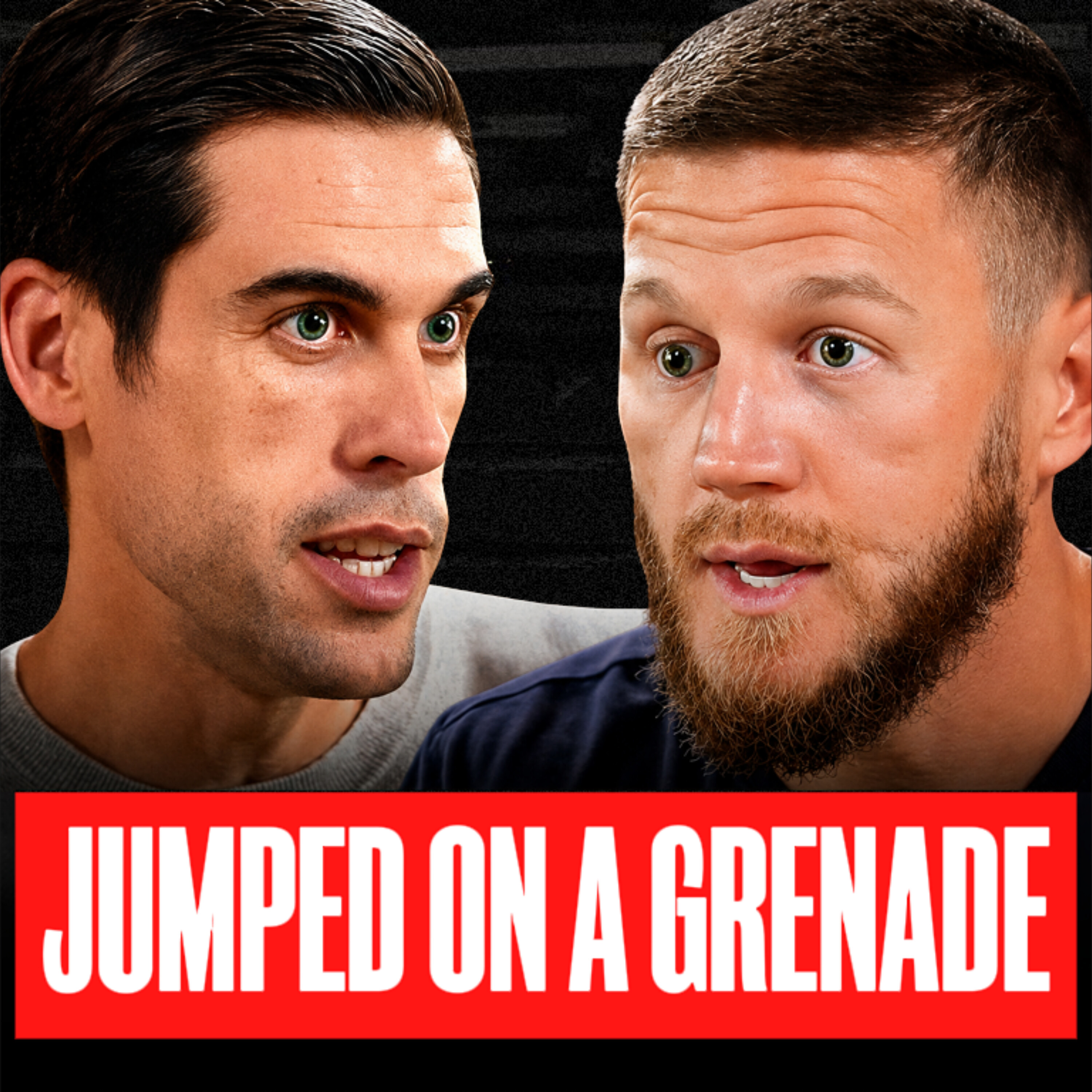
Loading summary
Transcript90 lines
- [00:00]
Ryan Holiday
My dad had his real estate license when I was a kid and I remember somebody called the house one time and I answered it and I screwed it up. Anyways, the point is my dad missed an important call and he didn't sell a house because of it. But if he had had today's sponsor, Quo, well, maybe that wouldn't have happened. Missed calls and slow follow ups are silent killers. That's how businesses leave money on the table without ever reading it. And that's why today's episode is brought to you by Quo. Q U O A business communication system built so you never miss our or mess up a call. Quo is the number one rated business phone system on G2 with over 3000 reviews. Built for how modern teams work. And more than 90,000 businesses, solo operators, growing teams all use it. It's not just a phone system, it's a smart one. AI automatically logs the calls, summarizes them, flags next steps so nothing falls through the cracks. You can even qualify leads or respond after hours so the business stays on even when you're off. Money is on the line. Always say hello with quo. Try quo for free plus 20% off your first six months when you go quo.comDailystoic q u o.comdaily stoic so this is like the best time of year in Texas. You know, the weather's getting good, you want to spend time outside. Our patio furniture is just like falling apart. So we're going to upgrade our little patio outside the house, our back deck at the ranch, and the first place we went to find some new chairs, a new rug, we're going to get a porch swing was Wayfair. It's been wonderful. Get out there, enjoy the spring before it gets too hot. Too crazy. Delivery was super easy. Wayfair also has installation and assembly stuff so I could spend my time writing instead of getting angry at some frustrating instructions. Ordering online is easy. It's all delivered right to your door. Wayfair products have over 20 million verified 5 star reviews to help you make the right call. And I recommend shopping with Wayfair Verified. Your shortcut to the good stuff. Their team of product specialists vet everything by hand using a 10 point quality inspection so you know you're getting a great piece no matter your budget. Get prepped for patio season for way less head over to Wayfair.com right now to shop all things home. W-A-Y-F-A-I-R.com Wayfair Every style every Home Wayfair Every Style Every Home welcome to The Daily Stoic Podcast, designed to help bring those four key stoic virtues, courage, discipline, justice, and wisdom, into the real world. Hey, it's Ryan. Welcome to another episode of the Daily Stoic podcast. Okay, so I gave a talk in Austin. I guess this was back in September, maybe October, and I'd had a kind of a crazy day in Austin, and I'd come straight from the podcast studio, and I told this story.
- [02:51]
Ryan Holiday (narration or additional commentary)
We know physical courage, I think, when we see it, right? Physical courage is Kyle Carpenter, who I interviewed today, won the Medal of Honor.
- [03:00]
Ryan Holiday
He was on a rooftop in Afghanistan.
- [03:03]
Ryan Holiday (narration or additional commentary)
A grenade comes in. In a split second, he throws himself
- [03:06]
Ryan Holiday
on top of it.
- [03:07]
Ryan Holiday (narration or additional commentary)
He absorbs the majority of the blast. He saves the life of his buddy and quite nearly loses his own. He wins the Medal of Honor for this. But it's that flash, that moment when you do the incredible thing he and I talked about. Someone that I'm writing about in my next book is a man named Tom Hudner. Tom Hudner is flying Korea in the early days of the Korean War. He's a wingman to a guy named Jesse Brown. He's the first black naval pilot. And Brown takes a bit of flak. It goes down to the snowy field near the Chosin Reservoir. And in an instant, Hudner, circling above, sees that his friend isn't leaving the plane. The canopy is up, he's still in the plane and he's waving. And without a thought, he crashes his own plane next to it in the hope of pulling him from the wreckage. It's unsuccessful. Brown is hopelessly stuck. And his last words to Hudner are, tell my wife Daisy, I love her. And when Hudner returns to his ship, he has to rescued by a helicopter. He is not only beating himself up for not having successfully rescued him, but believes he's going to be court martialed. The policy was you leave a down pilot because they couldn't afford to lose two pilots for every one that crashed. It's these moments of incredible selflessness when one puts their own interests behind someone else's interest. That's obviously like transcendent physical courage.
- [04:59]
Ryan Holiday
Obviously. I couldn't interview Tom Hudner. He's no longer with us. As I said, I had interviewed Kyle Carpenter that day, and I was fascinated by this decision that Kyle had made in a split second, a decision most of us can't imagine. And then I was even more interested in the journey that came after. So this is me talking to Kyle. You can follow him on Instagram. Hicksdigscars. That's Chick, just with A K C H I K S Digscars and you can grab signed copies of his memoir, you Are Worth it at the Painted Porch. Maybe you've been hearing the buzz about live shopping lately. I know I have. And it makes sense. Like, people are already on their phones, they're hanging out, they're looking for stuff to do. So why wouldn't business want to meet people where they're at? If you're hoping for people to find your listing or waiting for them to walk into your store might know a little bit about that. You're setting yourself up for disappointment. On Whatnot, you can go live and sell directly to people in real time. They see what you've got, they ask questions, and they buy. And they keep coming back. Whatnot is the largest dedicated live shopping platform. Whether it's beauty, collectibles, electronics, luxury, fashion, even cookies, sellers are building real, thriving businesses on Whatnot. Whatnot. Buyers spend more than an hour a day on the app. And they're not just browsing, they're bidding and buying and coming back so you can go live, show off your projects, and turn that into real income. People selling on whatnot sell 10 times more than on other major marketplaces, and that's because you're not just listing products, you're building real connections with buyers. For a limited time, Whatnot will match your first $150 sold in the month. You just got to visit whatnot.com sell to start selling. W-H-A-T N O-T.com sell whatnot.com sell I just heard this stat that shocked me given that I hear from the sales staff at my publisher quite a bit. The stat is sales teams spend about 50% of their time on admin work instead of selling relationship building closing deals, which means they're not selling right. And that's where today's sponsor comes in. Pipedrive. It's a simple, intelligent CRM tool for small and medium businesses. Pipedrive was built from the ground up to strip away that manual work. That stuff that's wasting your time taking your sales team away from doing the thing you pay them to do, which is sell stuff. They've got smart automations to handle repetitive tasks, and you can even customize these automations to fit your unique sales process. Plus, they've got AI features that will analyze your pipeline, flag stall deals, surface what needs attention, and tell your team what to do next without them having to go look for it. Switch to a CRM built by salespeople for salespeople and join over the 100,000 companies already using Pipedrive. And right now, when you use our link, you'll get a 30 day free trial. No credit card or payment needed. Just head over to pipedrive.comdoic to get started. That's pipedrive.comdoic to be up and running in minutes. Do you know the story of Tom Hudner? Do you know who that is? He won the Medal of Honor in Korea.
- [08:10]
Kyle Carpenter
I just spent the past two days with him or not? Not him. His son. His son?
- [08:14]
Ryan Holiday
No way.
- [08:15]
Kyle Carpenter
Tom. Yeah.
- [08:16]
Ryan Holiday
Really?
- [08:16]
Kyle Carpenter
Yeah. He is a exceptional individual, just like, you know, his father.
- [08:21]
Ryan Holiday
And was his son in the service too? Or what's his. What does his son do?
- [08:25]
Kyle Carpenter
No, he was not. But, yeah, two very successful sons. And now he helps with Medal of Honor related endeavors and just helping us in our mission.
- [08:37]
Ryan Holiday
But, yeah, I just read this book about him and I saw that the picture was taken by Tom Hudner Jr. And I was like, oh. So I didn't know the son existed. But I'm fascinated by the story. It's in the book that I'm doing now.
- [08:49]
Kyle Carpenter
How crazy.
- [08:50]
Ryan Holiday
Yeah. So for people don't know, he's a pilot in Korea.
- [08:55]
Kyle Carpenter
Correct.
- [08:55]
Ryan Holiday
And he's a wingman to Jesse Brown, who's the first black pilot in the Navy. And Brown takes a shot to his oil tank, has to crash in this field in the Chosin Reservoir. And then as they're circling, he sees that he. He doesn't get out of the plane because you couldn't eject. They're too low. And this is the crazy thing. So. Right. Right before they took off, the skipper of the ship goes, if anyone goes down, he's like, I'll court martial anyone who tries to rescue them. Because he's like, we can't afford to lose two planes and two pilots. Right, Right. He's like, wait for a helicopter. We will send a helicopter. I don't want anyone trying to rescue anyone. And then Hudner sees his friend go down and immediately disregards the orders and crashes his plane in this snowy field in the Chosin Reservoir and attempts to rescue Brown from the plane, who's, like, hopelessly stuck in there. And Brown's last words are, tell my wife I love her. I wanted to ask you about it because I'm fascinated with this story. Like, that decision to do the craziest thing that a person could do. You're one of the handful of people who might have some insight into that thought process.
- [10:20]
Kyle Carpenter
What a small world. And how unbelievable that this is the
- [10:24]
Ryan Holiday
first topic I have so many questions about this now.
- [10:27]
Kyle Carpenter
And I just spent two days with him. But, you know, obviously it was a split second decision out of love for his friend and fellow service member. But as I've examined, just, you know, for me personally, my, my journey in those five seconds on the roof. And I feel like just like a championship on the football field or getting an A on a test, very few things can be executed in the moment that they are without planning or thought or preparation before.
- [11:07]
Ryan Holiday
Yeah.
- [11:08]
Kyle Carpenter
And so I feel like, although the entire world only examines those five seconds on the roof, you know, I feel that, you know, one, I was just as a recipient and all of my fellow recipients will say, we just happen to be in that moment, in that time and place, and we had the opportunity to step up the way we did.
- [11:32]
Ryan Holiday
Right.
- [11:33]
Kyle Carpenter
I think that's the beautiful thing about the human spirit, is that anyone can step up in a time of need, no matter how, how small or how large of an act. But those moments on the roof were a culmination of the love and support throughout my life that I received from my parents. It was a culmination from. And I think a lot of people think, oh, Marine Corps, combat oriented, you know, hardcore. Whatever you think of when you think of Marines, good or bad, everyone thinks it's all about training.
- [12:07]
Ryan Holiday
Yeah.
- [12:08]
Kyle Carpenter
And every day we're just throwing grenades around the place, fake grenades, and hey, who's going to jump on it?
- [12:12]
Ryan Holiday
And like, like fumble recovery drills on a football team. You're practicing this thing over and over again. Was there ever a moment where that was a thing you had to consider doing?
- [12:26]
Kyle Carpenter
We do training with grenades, and I think it's just a byproduct of being in uniform and training with grenades that, that you think about things like that. And just in general, going into combat, am I going to be able to step up the way that I need to? Am I going to, you know, step up instead of back down when the bullets start flying? But it was never a tangible moment of training.
- [12:53]
Ryan Holiday
I guess that's what I'm curious about. Is it a conscious decision or is it something more like the training and the moment and the stories and the tradition?
- [13:04]
Kyle Carpenter
So many people think it's training. But an amazing aspect of the Marine Corps, especially through boot camp, is through the difficult moments of training when you're worn down, when you've been out training and you're tired and you're hungry and you've been exposed to the elements for days on end. Your drill instructors. It's a very intentional part of Boot camp, that in between those moments, they'll sit you down and they teach you about the history of the Marine Corps, those that came before you, those stories of unfathomable courage. I mean, I remember sitting there in boot camp during the Crucible, our big final event before we received our eagle, globe and anchor. And I believe I speak for all of us when sitting there, I just thought, I mean, who could do something like this? How can someone. And now I understand more, not from my action, but just from being a Marine and having that time in service. But just unfathomable acts of courage. Those that from all branches, Marine Corps side, just those that at 17, 18 years old in World War II, when they knew that the chances of making it onto the beach, making it to the beach even, and then past the beach and surviving what lay ahead were such a minuscule chance. And when those doors open, they charge for it anyway. And you know, I think a lot of people just in conversations I've had or just, you know, the love and support that I'm. I'm so humbled to be given. Sometimes it seems like, oh, Kyle, the first guy in history that jumped on a grenade. But you look back at every conflict and there are those that, you know, grenade or not, not only went above and beyond, but gave that last full measure of devotion for each other, for a purpose greater than themselves or any individ. And so that's why I say I was just happened to be on that roof and in those moments. But again, it was a culmination of so many different things in my life for my family, coaches on the athletic fields growing up. And I think ultimately I'm just so thankful that I reacted the way I did. Now granted, I wish I could have taken every bit of that grenade, but at least I can live my life and not always wonder why I didn't or if I could have.
- [15:51]
Ryan Holiday
Why do you mean you wish you took every bit of it?
- [15:54]
Kyle Carpenter
Because the Marine that I was with, my best friend, he was injured as well. So I wish I could have taken every bit of that blast. But, you know, I still, I feel like, gave my best effort. And so now I can live my life not wondering, but just being proud that I was able to step up as the Marine and the. The friend that I needed to be in that moment. But also going back to those moments in boot camp to have tried my best to uphold the legacy and the path that the Marines that came before me laid with unfathomable amounts of courage
- [16:35]
Ryan Holiday
and sacrifice, I feel like the Tradition is a huge part of it because, you know, your average person doesn't feel like they're maybe capable of doing that. And I think a big part of the training is not like, hey, how many pull ups can you do? And how far can you run and how much can you lift? Although that's obviously all part of it. But it's in the process of putting you through that and accepting you into the tradition that you feel like suddenly you're capable of or that you're an heir to this thing, even though you're not actually related. You are all part of this lineage that goes back and includes every single one of those people.
- [17:10]
Kyle Carpenter
Perfectly said. Y.
- [17:12]
Ryan Holiday
In that moment, are you like, are you thinking, hey, this is my job. Are you thinking, this is my friend? Do you think anything at all? Like, in the book, it makes it sound like you kind of just a thing happened and then you woke up after and you're like, where's my face? Basically. So I'm just curious how much thinking is going on.
- [17:32]
Kyle Carpenter
Well, I should have thought I'm about to kick this thing right back off the roof. But strangely, and I appreciate you having my book and reading it, but strangely, I don't remember any of the moments leading up to the blast. Now, unofficially, which, you know, the Medal of Honor that was awarded to me, although it never is and never will be an individual award or recognition, but that came from over two years and almost 300 pages of investigation.
- [18:09]
Ryan Holiday
It's not a thing they give lightly based on one person's opinion.
- [18:14]
Kyle Carpenter
Correct. You need multiple opinions. You need forensic blast evidence. And so, you know, they talked to me in the very beginning, and I really had nothing helpful to contribute. But even if I did, I think it's important to note that if you are injured in whatever incident they are investigating, you can't be an eyewitness because if you have any sort of head trauma, obviously your facts might not be that accurate.
- [18:41]
Ryan Holiday (narration or additional commentary)
Right.
- [18:41]
Kyle Carpenter
Safe to say I had some head trauma. Uh, but I don't. You know, unofficially, I would say the only thing that I remember before wasn't really anything cognitive.
- [18:53]
Ryan Holiday
Yeah.
- [18:54]
Kyle Carpenter
It was just, you know, knowing how you and your body feels. I remember almost as if I was an empty shell. I, I, I don't have any visual recollection. I just, I felt like I was on my knees and my body was falling forward. And then I felt like I got hit in the face really hard. But my actual kind of somewhat coherent thoughts followed the blast. And I remember being extremely confused and my vision was as if I was looking at a TV with no connection, just white and gray static. My ears are ringing extremely loud, just as they are this very moment that we're doing this podcast.
- [19:38]
Ryan Holiday
Oh, they just remain ringing always.
- [19:40]
Kyle Carpenter
Yeah. Which is, you know, can be daunting, but just gotta remain focused and, you know, every day's driving on for the mission. But after I felt like I got hit really hard in the face, that was followed by extreme confusion and disorientation. So much so that I was trying to just to get a grasp of where I was and what happened. And I've been in Afghanistan for over four months now. And so my first thought was, okay, I'm pretty sure I was in Afghanistan. The last thing I can remember, I was on a roof. But what could have injured me this bad on a roof? And then I thought maybe I got off of the roof, went on a foot patrol. Because the vast majority of our injuries over there, at least for my unit at the time, was stepping on IEDs because we were so far out in rural territory behind enemy lines, we had to get helicoptered in and we had had no vehicles. So everyone thinks military nowadays. We always have vehicles to roll around in, but very few roads to where we were. And the roads that were there were more pedestrian walkways, paths for livestock, so you don't have to go through the fields and damage crops. And they wouldn't support heavily armored vehicles. And before we got there, they had tried that. And the banks of the river would collapse, and Marines were drowning from being trapped in these arm armored vehicles. So we only had feet everywhere we went. And, you know, traditional Marine style.
- [21:24]
Ryan Holiday
Part of the tradition also, right?
- [21:26]
Kyle Carpenter
Yeah, exactly. And so I thought maybe I went on a patrol, stepped on an ied, and just the roof is the last thing I can remember. And that thought process was interrupted by, of course, what I thought was my buddies messing with me. Because Marines and service members are experts at messing with each other. It's kind of like our secondary job. And I thought, man, you know, whatever's happened, I can't believe in this banged up state that I'm in that my buddies are pouring warm water all over me. And that fragmented piece allowed the other ones to kind of fall into place. And I realized, like, oh, man, whatever's happened, my buddies aren't messing with me. And that's not warm water. I'm profusely bleeding out. And so at that moment, while getting just, I would say tired, but that would be an understatement.
- [22:22]
Ryan Holiday
It's probably the life leaving your body
- [22:23]
Kyle Carpenter
Just draining to and from your core. Just hard to describe. But at that moment when I realized that, I knew that was it. I thought about my family, how devastated my mom was going to be when that government car pulled into the driveway or those two marines in uniform knocked on the front door to tell my family I would not be coming home alive. Lastly, I said a quick prayer for forgiveness for anything I had done wrong in my life. And I faded from consciousness in the world for what I thought was the last time.
- [23:03]
Ryan Holiday
So you thought you were dying?
- [23:05]
Kyle Carpenter
Certain without a doubt that that was it. And, you know, I couldn't feel my face except for to get a little graphic here. I remember when I first woke up, I was trying to. I was trying to feel my mouth or my jaw with my tongue, but nothing was there. And so, but these final moments, you know, I was kind of. Because I couldn't feel my face. I really didn't have that deep of sense of what was going on, but I remember kind of crying a little bit in my head. Not because it wasn't, why am I here? You know, why did I even do this? Why am I in this position? It was more just, you know, I just turned 21 over there on my birthday, crawling through a field, getting shot at, thinking, man, I hope one day I can get my first cold legal beer, you know? Yeah, legal, yeah. But I just turned 21 and it
- [24:05]
Ryan Holiday
was more just the heaviness of the moment.
- [24:08]
Kyle Carpenter
The heaviness of the moment. And maybe in some sort of subtle way just knowing that, you know, this is it. And I guess I don't get to experience the rest of my life. Sure, now in hindsight, I still wouldn't change anything because I, I truly felt in my heart and I knew and I saw every day that we were there just helping a fellow struggling human being. But with that said, the world faded away. I thought that was it. And to my very unexpected and pleasant surprise, I woke up about five weeks later. And instead of a hot, dusty rooftop, it was a strange hospital room with Christmas stockings hanging on the wall beside my bed and about 3 or 4 inches of snow outside on my window pane. But that moment of waking up, my first thought was completely opposite of the last one that I had. And I thought, no way, I cannot believe I survived that. But that moment, although I had three years left of recovery, 40 to 50 plus surgeries, that moment really began this journey of self discovery, purpose and perspective that I've been on. It's crazy to say, but you know, about 15 years now.
- [25:43]
Ryan Holiday
This episode is sponsored by BetterHelp. I don't know about you, but the idea of therapy can bring up some resistance, right? Some hesitation. Not only does it take a lot of time, but it requires you to get vulnerable. It requires you to get outside your comfort zone. And that resistance can get in the way of doing something that's good for you. And so one way we can reduce that is by virtual therapy. And that's where today's sponsor, BetterHelp, comes in. Knowing that if I have to drive across town, if I have to wait in traffic, if I have to look for parking, these are all excuses I'm gonna use to not take the time do this thing that I know that I should do. BetterHelp makes starting and sticking with therapy easier. You take their quiz. They match you with a licensed therapist. You can communicate with that therapist however you want. Phone, video, text. You can join over 6 million people to date who have gotten help with BetterHelp. May is mental health awareness month. Find support and have someone with you in therapy. Sign up and get 10% off at betterhelp.com dailystorepod that's betterhelp.com daily stoic pod in Texas, a lot of the bugs are just not cool. The ants bite. Spiders are poisonous. There's all these kinds of wasps that I didn't even know existed before. Scorpions. Oh, man, it's crazy. And pest control is just a part of living here, owning a home or a store or anything. It's your problem, honestly. And the easiest way to keep bugs away is with pests. And when you sign up, Pesti will send you everything you need to do your own pest control. The pesti kit comes with everything you need to do your own pest control. Pro grade pesticide. That's the same stuff that the pros use. Sprayer, mixing bag, gloves, instructions. You can even get a kit customized to the season, location and weather. And with pesti, it starts at just $35 a treatment. With their DIY kit, there's no strangers in your house or appointments to make Pesti gets rid of over 100 types of bugs, from spiders to ants to roaches and scorpions. It's also kid and pets, pet friendly. Get bugs out of your house with pesti. Just go to Pesti.com Doak for an extra 10% off your order. That's Pesti.com DoAK for an extra 10% off. What's crazy to me is like, you know, you read the medal of honor citations, whether it's for Hudner or For you or for anyone, there's like the split second decision, right, to go on the grenade, to crash the plane, to do the thing. And that's what we call courage, right? Like that moment. But I mean, you're talking about, like your ears are still ringing from the event 15 years later. Like, that's a day to day thing that you have to deal with. I think about, he crashes the plane, then he, he basically wakes up and he's like, holy shit, I survived the landing. It might not work, right? And he, you know, so he kind of wakes up and then, then he's like, well, shit, now I'm down here, right? And now that's actually the hard part.
- [28:45]
Kyle Carpenter
Surrounded by a hundred pl.
- [28:47]
Ryan Holiday
Totally. Yeah. He's. He's just a sprint across this field. All he has is a service revolver. Even, even if he had just crashed in Alaska, it would have been bad. Like, he's exposed to the elements. Like he could have frozen. And so now, and now the hard part, like now the actually courageous, difficult thing comes now. Like the. What's he going to do? And he, obviously he's not thought through. Well, then I crash. And then the helicopter pilot will come. Like, he's not thinking about. I think Wyatt's courage is that it's this leap into the dark. You don't know how it's going to work out or that it's going to work out. In your case, you're going on the grid. You don't know whether you're going to get there in time or not. You don't know whether you're going to survive or not. And then you're certainly not able to go, like, and then three years in the hospital and then learning to do this again and feeling this again. So we almost overemphasize, which is the, the most impressive part of the experience. Like, what's the real ordeal? Is it the raising your hand? Is it, you know, that part or is it all the stuff that comes after this? We don't think of courage as, like, endurance, but it's that too.
- [30:00]
Kyle Carpenter
That was, that was very well said, Ryan. And I could not agree more. And I appreciate you recognizing that because, you know, I'm most proud of, of what I've done after the blast and whether that's the battle through recovery or all the way to the marathons or just continuing to push myself into that unknown, which I'm not bragging on myself for my story, but there's this line
- [30:30]
Ryan Holiday
from Seneca that I think about. He says sometimes even to live is an act of courage. You know, just the.
- [30:37]
Kyle Carpenter
Absolutely.
- [30:37]
Ryan Holiday
The keeping going. Like, again, we think of the courage as these sort of punctuated moments and these of battle or the firefighter that runs into a burning building or whatever. And that's obviously one part of it, but then the other part is the waking up the next day and the day after and the day after when you're dealing with the consequences of those couple of seconds that you did the thing.
- [31:01]
Kyle Carpenter
Yeah, absolutely. And when I experienced those final moments and to wake up to this unexpected bonus round that I'm living now. Of course, there are difficult days. There are long, dark, scary and painful nights. Through the hospital and even out of the hospital, life is hard. It's a hard earned journey. But to have experienced those final moments and to wake up, I can't help but to not try to make the most of it.
- [31:39]
Ryan Holiday
Yeah.
- [31:40]
Kyle Carpenter
And I think that's where I was wanting to get at, but I talked
- [31:45]
Ryan Holiday
to one of the Vietnam POWs, and he was saying, any morning you wake up and the lock's on the inside of the door, that's a good day. Wow. Because they spent seven years with the lock on the wrong side of the door. Right. They can't get out. And I think that's. You appreciate that it makes sense, but I do wonder how transferable and sustainable is that perspective? Right. Like, so you have this moment of courage, you do this thing. Like one thing you could take from that is like anything that's not getting blown up by a grenade is better than this. Right. Or anything is better than not getting blown up by a grenade. But I imagine you're still like, what the fuck is this traffic? Like, how. How quickly does just the regular frustrations of life kick in? Or do you find you're able to maintain that perspective?
- [32:36]
Kyle Carpenter
No, that. That's a great point. And yeah, of course, you know, little things in life that shouldn't, you know, still kind of get to you sometimes. But I think for anyone, grenade aside, I think it's extremely, you know, important to always work on and be able to refocus on that perspective. Yeah, the things that. That, that really matter.
- [33:05]
Ryan Holiday (narration or additional commentary)
Yeah.
- [33:05]
Kyle Carpenter
And, you know, just from the. The stoicism side of things, to understand what's in your control and out of your control. Yeah, that's been extremely helpful for me because throughout my recovery, you know, I went from being in the best shape of my life. Carrying a machine gun in Afghanistan, you know, 18 minute, three miles, and just always having a plan as a Marine, whether that is what today holds or what this specific patrol holds. You know, we knew what routes we were taking, we knew our points that we needed to hit and what village we were going to and what the mission was. But when I woke up, it was complete opposite. At first I didn't know if I could make it to that next breath. And I remember just laying there on my side and all the beeping machines are so annoying. It gets kind of starts to wear on you almost. And in the beginning, when my pain spiked or I was having difficulty with whatever it was, the machines will start going off. And then you got to get yourself back under control. You got to calm your heart rate. And so at first I didn't know if I could make it to that next breath or not. Which a machine was helping me at first, but when I got off that didn't know if the 40 or 50 surgeries, every single one going into it. You do the pre op, you're there at 4am, you do the pre op, you do the surgery. Some of them were nerve transplants or transfers at which take take two to four months to make that connection regenerate. So you have to stay persistent and you have to keep working at it even though nothing is happening. You have to just hope and trust that your hard work and your focus and dedication will eventually allow that nerve to reconnect. But then it was. I didn't know if the next surgery would take. And another aspect is when something catastrophic happens or you face extreme adversity, you know, a tough lesson is that the world keeps spinning understandably. So obviously, you know, people care a
- [35:26]
Ryan Holiday
lot after it happens and then they go back to their lives.
- [35:29]
Kyle Carpenter
Yep. Which, which, you know, I understand it's the way it is, but all of my friends who didn't go into the military were living their best life in college. And all of my buddies who thankfully did not get injured were still in Afghanistan together, operating. But my life was a complete, you know, unknown, I guess.
- [35:51]
Ryan Holiday
Yeah. And 21, 22 year olds are not great at patience and being told what to do, you know, and you're just like on top of all that, you're just like, yeah, you want to go back to your life and you can't.
- [36:04]
Kyle Carpenter
Yep. And so I guess as time went on, you know, I had to, I had to grapple with that.
- [36:11]
Ryan Holiday
Yeah.
- [36:12]
Kyle Carpenter
And although I realized that you don't have to have a perfect plan, you just have to be willing to say my, I guess mantra kind of became just keep working hard, try to be a good person, do the best you can. And help others around you. And it's got to lead. Lead you somewhere good. It's got to lead you to that light at the end of the tunnel.
- [36:42]
Ryan Holiday
I think that's right. Because, look, I wrote this book, the obstacle is away, and I think people. It's meant something to people. And I think generally the idea is true that there's an opportunity in everything, but that can feel very flippant to someone who just found out they have cancer or somebody who just got blown up by a grenade. You actually have this beautiful note in the acknowledgments that really hit me, which I think is very well said. You said the lessons of life, silver linings and perspective that I share in this book did not come easily or quickly. At times, silver linings only become apparent because I was forced to search through the darkness. And perspectives only became clear after years of deep thought and personal growth. These lessons originated from pain and suffering, but sometimes the most difficult struggles teach us the most beautiful lessons. Like, I imagine, in many ways, the recovery in the hospital was the most challenging part. Personally, emotionally, physically, because it not just goes on and on, but you have time to think about it and feel sorry for yourself and be angry and hope and despair. Like now, all of a sudden, the real emotions and the struggle and the having to figure out what this means and what you're going to do about it, that's like your problem in a way that it's not in five seconds on a roof in Afghanistan.
- [38:10]
Kyle Carpenter
Yeah, absolutely. The mental side of it, emotional side of it. But also, how am I going to do buttons now? Which is maybe I went from the Taliban being my enemy to buttons being my biggest enemy now. So the physical side of it as well. But, you know, like so many things in life, there is two sides to that story. There was the daunting, the unknown, the difficult side of it, but there was the side that, although it's kind of heavy to be told, hey, you have three more years left here for us to kind of put Humpty Dumpty back together again. But that also gave me time to think about all of that, to think about that perspective, which, if I had to summarize my journey in one word, it would be that because.
- [39:00]
Ryan Holiday
Perspective.
- [39:01]
Kyle Carpenter
Correct. Because I could look at, you know, it's always foundationally. It's, well, I'm here.
- [39:08]
Ryan Holiday
Yeah.
- [39:09]
Kyle Carpenter
When I thought that I wasn't going to be.
- [39:12]
Ryan Holiday
You shouldn't be correct. Yeah.
- [39:13]
Kyle Carpenter
But then it gets to. And some of this came from those I recovered with.
- [39:19]
Ryan Holiday
Yeah.
- [39:20]
Kyle Carpenter
Quadruple amputees triple amputees with their newborn sitting on what's left of their legs, you know, zooming off to therapy every day with a smile on their face. And so, you know, it gave me the time to think, hey, my arms might be super banged up, but I still have them. Yeah, most of my body might be shredded to pieces, but I still have two good legs that can get me up and inch me forward. And it's not about the limbs. I think just what I'm saying is it's a. About the mindset and looking at what you have compared to what you don't have.
- [40:02]
Ryan Holiday
Right.
- [40:02]
Kyle Carpenter
And I think that comparison, it can do wonders for you and take you amazing places or that comparison can become the thief of joy and it can turn you into a perpetually pessimistic person. And also, I saw in the hospital, and before I say this, I want to note that I think struggle, adversity, and most things in life should never be compared. My buddy Andy Stump said, I've done more than some and less than others. And that really stuck with me. But with that said, and again, not comparing, but I saw that there were those in the hospital with me because 2010 was a very violent year in Afghanistan. Most of the hospital rooms, I think, except for mine, because I was one of the ones in the worst shape. I needed a one to one, I needed kind of some other stuff going on in my room. A lot of machines, but every single room had two beds and two patients in it. And there was even a time where the least injured were out in the hallways. And so a lot of casualties were there and a lot of wounded warriors recovering. But I saw that, that there were some that had, and all struggle is relative, but there were some that had much more minor injuries, but they just never left the hospital. And I saw that their mindset and not their injuries were holding them back. And so although of course, I had terrible days and painful days and days where, you know, I wondered if I was going to be able to keep pushing forward. Although I kind of, in a way, I didn't feel like I had a choice because there were so many people pouring their love and their hearts and everything they had into getting me better. But, you know, in life you can learn from people, good and bad. You can take good and bad examples and lessons from people. And seeing that just, I guess, kind of planted a seed that, hey, one thing I have, you know, I might not have functioning limbs, I might have lost my eye, most of my teeth are blown out. But one thing I have is my mindset, is my attitude and is my care for myself and wanting to get better for myself and for those around me. And I'm, I'm thankful through all the medication and injuries that I kind of had that insight because it never left me.
- [42:56]
Ryan Holiday
Do you know who Epictetus was? The stoic philosopher?
- [42:59]
Kyle Carpenter
Absolutely.
- [42:59]
Ryan Holiday
So, you know, Epictetus is tortured by his. He's a slave, so he's. But he has this cruel master who tortures him. He breaks his leg at one point and so he has this. He's crippled the rest of his life, which is I guess the term they would use then. So he's coming at this not from like some 10 old year, weird academic perch, but like a dude who really suffered and went through stuff. And his thing was that we, every situation has two handles. You know, we get to decide what we're going to try to pick it up by. And yeah, you can, you can grab the handle that says, hey, I'm alive, this is good. Or you can grab the handle of like, why am I alive? This is horrible. And that handles kind of everything. The lens through which we, we decide to interpret the events or the position we're in is kind of the first step. Because if you get that one wrong, all the other steps are really hard. I feel like if you're like, I was singled out, this is horrible, this is insurmountable. You can tell yourself a story that becomes a self fulfilling prophecy now just telling yourself it's wonderful and I'm never going to suffer again and it's all going to great. And that's, that's the thing that those Vietnam prisoners talked about. Like, if the story you're telling yourself is I'm going to be home by Christmas, this is going to be over really soon. That's also a bad handle because life doesn't really care that that's what you think. But if you, if you. So it's, it's. The key is sort of picking something that's both hopeful but also got a kind of a grit and a determination to it. That's like, as you said, like, I just know I'm not quitting because as long as these people are helping me, I'm not going to give up. That's not like, oh, you know, if you get in a car accident and the doctors say you're never going to walk again just because you go, hey, I'm going to walk again. Sometimes that works, but not always. That's not magically going to give you your legs back.
- [44:59]
Kyle Carpenter
Yeah, there needs to be accepting of reality in there as well. But I think there is tremendous power, and I would say that's even an understatement to embracing the struggle.