Loading summary
Transcript106 lines
- [00:01]
Podcast Advertiser
This episode is brought to you by Progressive Insurance. Do you ever find yourself playing the budgeting game? Well, with a name your price tool from Progressive, you can find options that fit your budget and potentially lower your bills. Try it at progressive.com, progressive Casualty Insurance Company and affiliates pricing coverage match limited by state law. Not available in all states.
- [00:20]
Commercial Announcer
The American Airlines Advantage Business Program is changing the way companies book travel and get rewarded. Designed for fast growing businesses, the program makes it easy to earn rewards and it's free to join your company. Earns one Advantage mile for every dollar spent on business travel booked anywhere with American. Use these miles to help offset future travel expenses, transfer to employees and more. You'll also gain access to a suite of tools to streamline travel management, including the ability to view employee activity, manage trip credits and report with ease. And it's a win win. Travelers can earn additional loyalty points on top of what they already earned through the Advantage program, helping them reach status faster. Earn more on business travel you're already taking with the American Airlines Advantage Business Program. Register today@aa.com AdvantageBusiness if you're an H Vac technician and a call comes in, Grainger knows that you need a partner that helps you find the right product fast and hassle free. And you know that when the first problem of the day is a clanking blower mot, there's no need to break a sweat. With Grainger's easy to use website and product details, you're confident you'll soon have everything humming right along. Call 1-800-GRAINGER clickgrainger.com or just stop by Granger for the ones who get it done.
- [01:43]
Ryan Holiday
Welcome to the Daily Stoic Podcast, designed to help bring those four key stoic virtues, courage, discipline, justice and wisdom into the real world. Hey, it's Ryan. Welcome to another episode of the Daily Stoic podcast. Okay, so I had to fly to Maui for some work stuff. I'll tell you about it later. Really excited. It was very cool, but we were flying out here. I'm dragging the family along, packing a lot of stuff and so space was at a premium. So I had to decide am I going to bring another thousand page Doris Kearns Goodwin book with me? I was in the middle of reading her book the Bully Pulpit, which is about Theodore Roosevelt and Robert Taft. I'm clearly learning my lesson because when we flew to Australia two years ago, I brought Team of Rivals. I was gonna read it again for the part three of the wisdom book and it was heavy. I did not like it in my backpack I loved reading the book. I did not like carrying it around. This is one of the perils of reading physical books. But look, I've never read a Doris Kearns Goodwin book and thought, this is too long. No, no, she earns every page. So what did I end up doing? You know, I just binge read the book. I finished, like, the last 200, which was amazing. The book couldn't be more relevant because it's basically saying that, like, a politician can't just be morally correct. A leader can't just be on the
- [03:06]
Brian Balogh
right side of an issue.
- [03:06]
Ryan Holiday
They have to be able to sell it to the public. And it's a fascinating look at the way that Roosevelt understood how to use the bully pulpit of the presidency. He knew these journalists personally. He knew what they were trying to do. He brought them in, he brought stuff to them. It's just a fascinating look at also some of the media dynamics that haven't changed that much.
- [03:24]
Brian Balogh
Fascinating book.
- [03:25]
Ryan Holiday
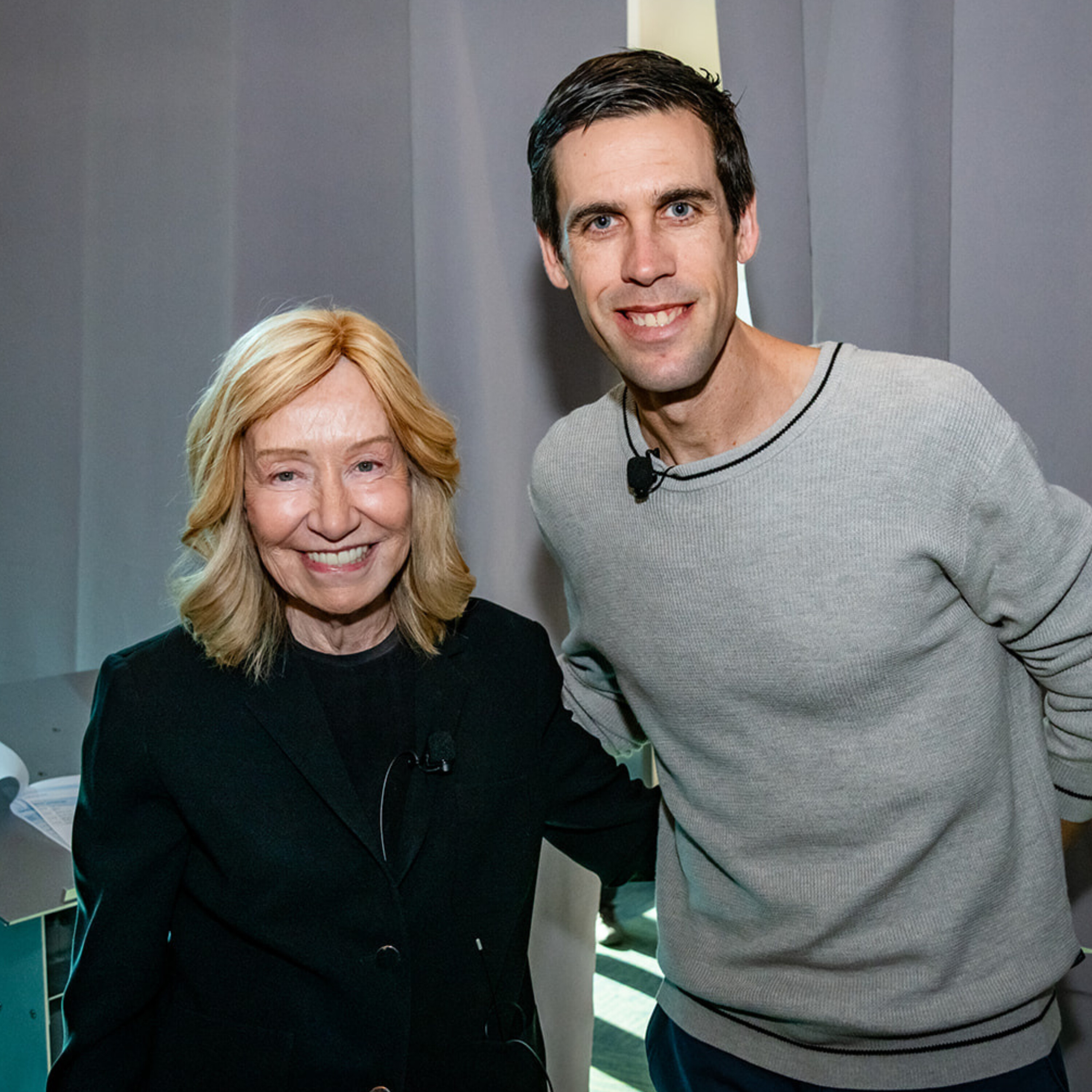
So, anyways, I finished it, so I did not have to take it on the trip. And now, uh, when I get home, I'll go back through all my notes as part of the note card system. What does this have to do with today's episode? Well, before this trip, I got to fly out to Palm Springs and have dinner with her and then interview her on stage. The Rancho Mirage Writers Festival has been going on for many, many years, and I've never been invited before. But to be invited and to get to interview Doris Kearns Goodwin, I mean, I had to pinch myself, is this my real life? And so I got to interview her on stage, and we talked about Lincoln, talked about Roosevelt, talked about Johnson. We talked about what the past can teach us about the present moment.
- [04:03]
Brian Balogh
You know what's really funny?
- [04:04]
Ryan Holiday
One of the things she says on stage is how she wrote this big chapter about tariffs in the bully pulpit. And she wasn't thinking anyone would be interested in it. She didn't know what it would have to do with anything. And then, of course, what do you know? It has everything to do with this current moment. And that's why I've said over and over and over again that the best way to understand the present is by reading about the past. Doris is one of the goats, certainly one of our greatest living biographers. She's won the Pulitzer Prize and God knows what else. And she's not just a writer. She was also a White House fellow to President Lyndon Johnson. She's a movie producer. And she's wrote a wonderful children's book, too, called The Leadership How 4 Kids Became Presidents, where she shares the different childhood experiences of Lincoln, both Roosevelts and Lyndon Johnson. Anyways, let me just get into this. This is me interviewing Doris Kearns Goodwin on stage. I can't wait for you to hear it. You can listen to my first interview with her, which we did, I don't know, a year and a half ago. That is also very good. And if you haven't read any of Doris Kearns Goodwin's books, I don't know what you're doing with your life. If you don't want to read an enormous book, you want her greatest hits. I also recommend her book Leadership in Turbulent Times, which is one of my all time favorites. You can grab all those at the Painted Porch. You can follow her on Instagram Orrisk Goodwin and check out more of her work on her website, doriskearnsgoodwin.com
- [05:29]
Brian Balogh
well, it's lovely to be here. I'm a huge fan. This is a complete honor for me.
- [05:34]
Doris Kearns Goodwin
Me too. You. So this is cool.
- [05:36]
Brian Balogh
Well, I was thinking as I was preparing for this, there's something I've read about Churchill where right as he's coming back into power and Germany is on the march, he was still finishing up one of the volumes of his History of the English Speaking Peoples, and he's writing a letter to his agent and he says something like, it's good to have 1,000 years of distance between me and the present moment. And I was thinking about that and thinking about Lincoln, who we're going to talk about today. It probably does say something that it's relaxing and calming to read about the Civil War and Abraham Lincoln. But it is. There's something about Team of Rivals that just, it kind of restores your faith in humanity a little bit, I think.
- [06:18]
Doris Kearns Goodwin
There's no question about that. I mean, it's kind of odd that I've spent my career studying the Civil War, the tumult at the turn of the 20th century, the Great Depression and World War II. But I feel better being back in those times. The main reason you feel better is that you know how they ended. We don't know that we feel the anxiety. They didn't know they were going to win World War II. The Allies, they didn't know that the Union would be restored and emancipation secured. They didn't know that the Depression would come to an end. We know that. So that's why we have to get strength from having been through those tough times before. But nothing more than Lincoln. I think, as you say, there's something about his person We've talked a little bit. We had a podcast on Lincoln. I felt like I was talking to somebody who knew him as well. It was so much fun. But it's not just what he did. Win the war and preserve the Union and emancipate the slaves. It's who he was. That's the thing. There was something about him. When I first was asked to think about a book about Lincoln, I was so scared because I hadn't even done the 19th century. So I went to see the. The great Lincoln scholar, David Donald. And he lived on Lincoln Road in Lincoln, Massachusetts. Anyway, he had a whole library and he showed me that and he said. And I said, I'm nervous about this. He said, you will never regret living with Lincoln. You'll feel like you're a better person at the end. And I really did feel that way. And then when Steven Spielberg decided to do the movie and Daniel Day Lewis decided to portray Lincoln, I told them that. And definitely Daniel said, I mean, having been Billy the Butcher for a while and all these other characters, to live with Lincoln, you somehow feel like you have the ordinary human emotions that your guys all talk about of anger and jealousy and envy, but somehow they'll poison you if you let them fester. So every time one of those comes, I think Abe is here telling me, who cares about jealousy? You can't control what's happening to somebody else.
- [08:02]
Brian Balogh
Yeah. And I imagine that reading and studying the past was not just a way for Lincoln to get through his difficult childhood, but he's also reading during the Civil War. You know, there's that famous scene, I think, right before he tells his cabinet about the Emancipation Proclamation. He's reading a chapter from Artemis Ward or something. He finds something incredibly soothing and reassuring about high and low brow literature.
- [08:33]
Doris Kearns Goodwin
Right. He loved Shakespeare's comedies as much as he loved Shakespeare's tragedies. And he used to read Shakespeare's comedies to his young aides, Nicolay and Hay at night, so that instead of thinking about the war and the number of people who die that day, the comedy would be in his head and he could just imagine what Shakespeare was talking about. And he could laugh to himself. He said, you know, he whistled off sadness through laughter that a good story was better for him than a drop of whiskey. So humor was a huge part of his life. I don't think I knew that when I started. I knew he'd be a great statesman, a great politician, but I don't think I realized how much I'd be laughing with him with April, because He doesn't look like he laughs, except when he laughed his whole body changed evidently. You know that sort of sad expression in his face which was just his face, you know, it suddenly came to life.
- [09:18]
Brian Balogh
Yeah, I just, I think there's something there for people. It's so easy to get trapped in your phone, whether you're doom scrolling or you're just reading endless amounts of news. Obviously it's the job of the citizen to be informed. But I think sometimes we over index for real time breaking news, which obviously Lincoln, you know, he's going down to the telegraph office to get it straight from the ballot. So he's one of the first generations of people that could get real time breaking news and it's always going to be horrible information for him. And yet he's Also, he's going 500 years back with Shakespeare or he's going 1,000 years back with philosophy or there's something, I think he's trying to root himself in the timeless human experience rather than just Antietam or Gettysburg or whatever.
- [10:03]
Doris Kearns Goodwin
Yeah, I think you almost have to do that. You have to just remember what human nature is and what people have been through. And Lincoln took great solace in and reading. I mean from the time he was little he had only one year of formal schooling, as you know, and somehow he had to get it on. You had something, you said he had to get his education. Right. What was that comment you made? It was such a good one.
- [10:23]
Brian Balogh
Yeah, nobody gave it to him. He had to go get it.
- [10:24]
Doris Kearns Goodwin
He had to go get it. And when that makes all the difference, that means you don't feel like you're finished with your education when you finish college or you finish high school, you have to do it your whole life. And he was able to when he couldn't get books because his father would take the books away from him. There weren't books in his neighborhood. He would walk miles in order to get a book. And then he would say that when he got a copy of King James Bible or Shakespeare's plays, he was so excited he couldn't eat, he couldn't sleep. Emily Dickinson once said or wrote that there's nothing like a frigate. No frigate, like a book to take you lands away. Which meant that he was able to imagine another way of. How did this kid growing up in this poor area where nobody's ambitions went much beyond or he thought they didn't. Beyond where to imagine that he could have another way of life. Nothing saddened him more. He one time saw an unmarked grave and he Said, who knows who's laying there? It could be somebody with talent that wasn't exercised. And that was part of his definition of democracy, that democracy should be able to make us rise to the level of our talent and discipline. You can't give a person more talent necessarily, but they can expand it and develop it. And you can't give them more discipline if they're not going to work hard. But democracy should allow it. That everybody, because he felt that sense, he was lucky enough that he was able to do that.
- [11:39]
Brian Balogh
And Lincoln's obviously famous for his self education as a young boy. You know, he's reading, he's carving down sentences that he hears on pieces of wood because he can't even afford paper. But I think there's sort of two pivotal moments that I think there's a lesson in leadership there. One in his life, one is right when sort of the popular sovereignty, the sort of suddenly slavery is on the march. And Lincoln, he'd always been opposed to slavery at this sort of visceral moral level, but he realizes that he doesn't know that much about the history of it. And he goes to the State House, he goes to the Library of Congress, and he just decides he's going to read everything he can about it. What did the founders say? And then the second moment is when he is president and suddenly this war is thrust upon him. And he realizes his 45 days in the Black Hawk War are not sufficient experience to lead what is going to be the largest army in the world.
- [12:35]
Ryan Holiday
So he has to go.
- [12:36]
Brian Balogh
And he could do deep dives, he'd go, I don't know about this. I'm going to know everything there is to know about this. And that process is fascinating to me.
- [12:44]
Doris Kearns Goodwin
I mean, you mentioned the idea of not feeling like, how can I possibly deal with a war when I've only had this short experience? And he felt that most acutely the night he was elected. He couldn't sleep. You know, he said that he realized he'd only had one year in Congress, one term in Congress and a few terms in the state legislature, and the country was already splitting apart and the most terrible war we'd ever have would begin soon thereafter. And it was that night that he made the decision to put his three chief rivals into his cabinet. Before dawn. He had made that critical decision that defined everything. And each one thought he was more powerful than Lincoln. Each one thought he was more celebrated, and they were. Each one was more educated. Each one thought he should be president instead of Abraham Lincoln and his friends Said to him, lincoln, you can't do this. You're going to look like a figurehead with all these powerful people around you. And he said, you're wrong. The country's in peril. These are the strongest and most able people in the country. I need them by my side. But I always tease that my good friend Lyndon Johnson would have put that same concept in less noble language. He liked to say, it's better to have your enemies inside the tent pissing out than outside the tent pissing in.
- [13:53]
Brian Balogh
There's a passage in Meditations where Marx realist thanks his philosophy teacher for teaching him never to be satisfied with just getting the gist of things. Things, wow. And Lincoln was never satisfied with getting the gist of things. I think Herndon said he had to get to the nub of it.
- [14:09]
Doris Kearns Goodwin
Yeah.
- [14:10]
Brian Balogh
And that's what's so interesting about his understanding of slavery. And then you see it most eloquently. People think of the Gettysburg Address as this work of oratory, but it's also this work of sort of scholarship. And it's a legal argument that he is the result of those hours and hours and hours of research as to what the founders thought about this issue.
- [14:30]
Doris Kearns Goodwin
And you know the interesting thing, when he comes up finally with the Emancipation Proclamation, it was possible because he had left the White House to go to the soldier's home, which was miles away. And he had the capacity there for reflection, which is what your guys always talk about. His guys, I mean, he's got these guys. He probably knows Marcus Aurelius and lived with him as much as I lived with Abraham Lincoln. And I've just been reading your stuff now. It's astonishing how much stoicism seems to apply to Lincoln. I mean, is that just because you do that, or. I mean, I just. See, I never thought of that until I've been reading what you've been doing.
- [15:05]
Brian Balogh
I would have loved to find some overt connection between Lincoln and some of those ancients. We don't see much. My favorite Lincoln story and the ancient authors, though, is the one about him and Plutarch. Do you know this one?
- [15:17]
Doris Kearns Goodwin
I don't know if I do.
- [15:18]
Brian Balogh
So someone's writing a campaign biography of Lincoln, and they're trying to make him sound more educated than he was. He didn't go to school, but he read this and he read this and he says, and one of his favorite authors is Plutarch, the great biographer. And Lincoln hasn't read Plutarch. And so he calls to go get a copy of Plutarch which he reads to thus make the biography true. And it does become one of his favorite books.
- [15:44]
Doris Kearns Goodwin
Wow. I don't know that. I know that. That's great.
- [15:47]
Brian Balogh
You know, don't pretend you've read it. Go read it. I think is the lesson there.
- [15:51]
Doris Kearns Goodwin
No, I mean, reading. I mean, it's just so heartbreaking when you think about today's world. I mean, we're in the middle of a library and how great to be able to see all these books around us. And are kids still feeling that same sense of holding a book and the glory of taking it to bed with you at night and not just, you know, not just getting a part of it? I hear sometimes that in high schools now, they're not having people read whole books, that they're reading pieces. You don't get it if you don't read the whole of it because you immerse yourself in it. It's an experience. It's a journey with that author.
- [16:21]
Brian Balogh
Well, you're. I mean, the amount. So one of your books, it looks big, but that's actually a distillation of, you know, years and years of work, thousands of hours. And so when you think about what a book contains, what a magical piece of technology it is, the compression of all this time and energy and experience, it's kind of amazing that people don't take advantage of it.
- [16:43]
Doris Kearns Goodwin
Yeah. My only worry is that the fattest book I wrote was on Theodore Roosevelt and Taft and the golden age of journalism. And a woman wrote me that she was reading it at night at bed, and she fell asleep and it broke her nose. So after that, I've tried to slim them down. So my desire to have big books, maybe I'm going down.
- [17:11]
Ryan Holiday
As you know, AI is everywhere. You're probably using a handful of different AI tools in your life, you know, day to day now. But how many of us are stopping and asking, should I be asking this to AI? I think about that all the time. Do I want to give it my personal information? Do I want to upload this thing that I worked on that I own the copyright to? I don't know. Right. Got work stuff, personal questions, late night thoughts, medical issues. We're sharing a lot with AI, maybe even more than we realized. And that's where DuckDuckGo comes in, because they just built Duck AI for folks who want to keep their conversations with AI tools private. You go to Duck AI and you can chat privately with the same AIs that you're already using, whether that's ChatGPT or Claude or whatever and it protects your info from hackers, from scammers and data hungry companies. It's a win win. Plus it's DuckDuckGo, the company known for protecting your data, not collecting it. No signups, no subscriptions, no learning curve. Just visit Duck AI and start chatting. If you want to use AI without giving up your privacy, visit Duck AI Stoic today. That's Duck aistoic, a private way to chat with AI from Duck Go where AI is always optional and private. We are just getting back from a trip so the fridge is empty and we were like oh man, we got to go to the store, we're going to have dinner tonight. And then I realized no no no wait, hellofresh just came. So we took the hellofresh meals out and we got to work. We love hellofresh in our household cause the meals are simple. You can make em on a busy work night, you can do it on the weekend, you can do it when you get to the end of your groceries. They have more than a hundred recipes every week, which is especially great if people at your home have allergies or preferences or they don't like to eat the same thing twice. You can always make just the right amount of food so everyone feels full and satisfied and there aren't a bunch of left to deal with. And there's now three times the seafood for no upcharge. If you've got folks coming over for dinner, impress them with new grass fed steak ribeyes. My kids love steak. HelloFresh always has delicious options with seasonal produce like pears, apples and asparagus. When dinner tastes this good, nothing hits like home cooking. And we love home cooking with hellofresh and I think you'll love it too. Just go to hellofresh.com stoic10fm to get 10 free meals and a free Zwilling knife which is $144 value on your third BO offer. Valued while supplies last free meals applied as discount on first box. New subscribers only varies by plan.
- [19:54]
Brian Balogh
The ability to say hey I'm going to go figure this thing out from top to bottom. Maybe you could talk a little bit about how you do that with your books because I think we're entering this world of AI where people think you write a query into this into chatgpt or Claude or whatever and it'll tell you everything you need to know. As if the summary is what's important and not the process of going through the whole thing.
- [20:16]
Doris Kearns Goodwin
Yeah, I mean what I always do when I start a new subject is to write a proposal for what it is that I want to know. Because the trouble is, once you get into a book, sometimes you get taken down avenues and maybe you're the only one that cares about it. There was a whole chapter in the Taft book about the tariff, which was pretty sexual sexy at the time and seems to be sexy again now. But I don't know that people really wanted to know that much about the tariffs.
- [20:41]
Brian Balogh
I would like to not have to know about tariffs.
- [20:43]
Doris Kearns Goodwin
Exactly so. But the process of writing. You said something that I thought was so important. He was talking about the whole ritual of the day. And you, like me, wake up early in the morning. Morning is the best hours because nothing can intrude. And you feel like I wake up at 5:30 and that time between when my husband was still alive, that time between 5:30 and 8 or so when he'd wake up, come down the stairs singing. And I knew that was the end of my writing for a little while. Then we'd have breakfast, read the papers, he'd go to his study, I'd go to mine. But now I just feel like that's that time when creative thoughts are right there. And then you said something too, about the fact that the best time when you're writing a book is when you're just writing it, when it's just yours and you have control over it. Once. Once it goes out. It's exciting when it goes out and you're on a book tour. But then there's an anxiety connected to it which isn't there when you're writing. So my favorite time is just being in the middle of a book.
- [21:37]
Brian Balogh
Yes. I think there's something special about the morning, which unfortunately there is the temptation to ruin. Like how many days are ruined before people's feet hit the floor because they reached for their phone and were informed, what so and so tweeted, or what so and so from work emailed them. Like, I think protecting that space for that reflection, you know, the world has always been busy, but we uniquely have access to everything that's happened in the world while we're asleep. I don't. I'm not sure that's the best and most productive way to spend those golden hours of the morning.
- [22:11]
Doris Kearns Goodwin
Absolutely. I mean that you have a sense then of you're living with the person you're writing about or whatever. The thing is, you're writing, they're with you, they're right there in the room. And if you bring somebody else into the room, then you're taking away that relationship, I mean, that sounds crazy, but I really do. When I wake up, I think about the guys I'm writing about. I think about them when they go to bed at night. So they're part of my life. And I sometimes feel when I move my books out of one biography that I'm writing and I move them out of the study to make room for the next guy that I'm leaving an old boyfriend behind, that you feel like, what am I doing? This is unfair. But that's the glory of being able to spend so much time on these books.
- [22:49]
Brian Balogh
The founding story of Stoicism is about this guy named zeno in the 4th century BC, and he's a merchant and he stops in Delphi and he goes up to visit the oracle. So he winds his way up this sacred road and he washes his hand in the spring and he lights the incense. And then he asks the oracle what the secret to the good life is. And the oracle goes back and she huffs these fumes that come up from the ground and gets really high. That's where the mysterious prophecies from the oracle would come from. And she comes back and she says, the secret to wisdom and the good life is to have conversations with the dead. And he doesn't know what this means until many years later. He's walking through the Athenian agora and hears someone reading a story that from Socrates, I guess Socrates via Plato. And he realizes in this moment that that's what reading is. It's a way to have conversations with the dead. And I think there's something about the wisdom of the past, whether it's Lincoln or Johnson or Roosevelt, that not that people alive today aren't wonderful, but that we wouldn't want to sample from the wisdom of these people that came before us.
- [23:59]
Doris Kearns Goodwin
You know, and the corollary that on the other side is just as we, the living, want to get wisdom from the past, we the living, hope that our stories will be told in the future. I mean, that's certainly what was a huge impetus for Lincoln. We've talked about this moment when he had a great depression. He had broken his engagement with Mary Todd. And his most important character trait, he thought, was keeping his word. And he had so humiliated her. His best friend, Joshua Speed, was leaving town and he said, if you have friends, you're going to lose them, but if you don't have them, you're going to be sad. And then his whole infrastructure project had fallen apart. And he was so sad that people took all knives and razors and Scissors from his room. And his friend Joshua Speed said to him, lincoln, you must rally or you will die. And he said, I know that, and I might just as soon die now, but I've not yet accomplished anything to make any human being remember that I have lived. I mean, I think all of us have that desire to have our story told after we die. It may be to our family, to our friends, to our colleagues, or it may be in history, but that's how you live on. Just as the dead live on as we read them now, we're going to live on when people think about us or talk about us.
- [25:13]
Brian Balogh
Yeah. Codifying the lessons of your own life and putting it in some form that other people can benefit from them is, I think that's what motivates us all as writers at some level.
- [25:24]
Doris Kearns Goodwin
Oh, I think that's really right. I think about the last book I wrote on the unfinished love story with my husband. I was so sad at the thought whether I could work on it or not, because it would make me miss him all the more because we were going to do it together. Until I realized that he'll be with me. He's with me. In fact, here I am talking about him again. Richard Goodwin, there, you're alive again. But I think more importantly, it's just that you want people to know what kind of person you are. Again, it's not just what you did. I mean, you'd hope they'd say that. When I think about the qualities of leadership that Lincoln had, he had humility and empathy and resilience and accountability and taking responsibility and kindness and compassion and an ambition for something that was larger than himself. You hope that about yourself, that people will say you were kind and had compassion and you had empathy, empathy and humility. Those are the central human qualities that make a person good. And they also may, in Lincoln's case, make a person great.
- [26:18]
Brian Balogh
The other parallel, I was thinking, to this sort of moment in time with Lincoln, there's this technology that's sort of going around. At that time, there was the Mechanical Turk. People believed there was this chess playing machine. And it turns out there was a man inside playing chess. And that's why he was so good. But the story, I think it was the governor of Kentucky. Someone comes to visit Lincoln right as the Civil War is breaking out. And they ask Lincoln, you know, do you have a message for the people down in Kentucky or whatever it is? And he stands up and he says, let them know there's a man in here. Wow. And I think about his Confidence, the greatest crisis in American history falls on his shoulders and he says, I think I can handle this. Where does that come from?
- [27:06]
Doris Kearns Goodwin
Yeah, it's so amazing. I mean, David Donald again, that scholar, he said that he thought the confidence came from the fact that in school, in his limited schooling, he was always by far ahead of everybody else in the class in terms of reading, understanding, and just again, the person he was. So he knew that. He knew that from his. But somehow, and I think maybe his stepmother gave it to him, maybe his mother to a certain extent before she died, he knew that she'd been loved, even though the relationship with the father was so troubling. But that combination of confidence and humility, that's what's so special in him because he's humble enough to know to surround himself with all these characters, but he's confident enough to know I'm going to make them a team and I'm going to be their leader. How does he think that? I mean, they are world class figures already and he's barely known. But it was inside him, that confidence.
- [27:55]
Ryan Holiday
Yeah.
- [27:55]
Brian Balogh
There's something about the confidence and humility that is an antidote to ego which you so often see in leaders and heads of state. He's hungry and humble enough to know, I don't know this, I have to learn it. And then when he learns it though, he's willing to bet on himself or willing to stand alone when everyone else thinks all is lost.
- [28:18]
Doris Kearns Goodwin
Yeah. He later said that he never doubted for a moment that we would eventually win the war. Despite all of the difficulties that he went through, that somehow he had a faith that it was right to win the war. And once especially it became more right. Exactly. Right makes right. When it became the emancipation that he was fighting for as well as the Union, then somehow that greater moral value would work. There were forces in the society he would often talk about things that control me, I don't control them. He had that sense, I think, that there are things out there and all you can do is whatever you. Your big thing. Or Marcus, I think of him as Marcus Aurelius now. Right. That you have to accept what you can't control. What is that saying exactly?
- [29:02]
Brian Balogh
Oh, well, stoicism is. You don't control what happens, you control how you respond to what happens.
- [29:06]
Doris Kearns Goodwin
Exactly.
- [29:07]
Brian Balogh
Yeah. I think, doesn't Lincoln say too that his time on the Mississippi river is so formative? But he says, you know, I'm like a. I'm like a captain. I sail from point to point. He had this sense of where he wanted to go, but he's able to break it up in these sort of composite tasks that make maybe the whole thing seem less daunting and overwhelming.
- [29:24]
Doris Kearns Goodwin
And I think what he was also able to do was to master himself, which you and Marcus talk about. I mean, at night, in addition to going to talk. In the comedies of Shakespeare, he would do pardons at night because somehow pardoning a soldier who had run away from fear or a soldier who had fallen asleep on checkpoint duty, who was about to be killed for that made him feel, I've saved somebody's life and as long as they go back to the war, they can have honor again and then their families will be proud of them. And then he could go to sleep again. So there was a sense of knowing what he needed to soothe himself, like he was his own psychiatrist. In a peculiar way, you could imagine
- [30:06]
Brian Balogh
it going a different way. For Lincoln, though. He has this hard childhood. He's basically abused by his father. Nobody gives him anything. It's one tragedy after another. He has to claw his way up effectively from nothing. You could imagine that creating a hard hearted person, right? And just like there were so many Americans who were that way, I do sometimes wonder if life was so hard. That's what made it hard for people to be sympathetic to people who had it harder than them at that time. But for Lincoln, it's the opposite. From his suffering came this profound compassion, this well of empathy. It doesn't always happen that way without a question.
- [30:46]
Doris Kearns Goodwin
I mean, one of the things I think about him at the beginning of his life, he had that humility, really. Even early young, he was able to say, I don't know grammar. I mean, he was embarrassed. And then he found out that there was this book he could get that he would learn grammar. And more importantly, I think that humility, as we say, is combined with confidence. But then at the end of his presidency, that's where you see the empathy really come out. Everybody had gone through this terrible war. After Appomattox, there was a rush on to hang the people who'd been in the Confederate army or the Confederate government and put them on trial and retribution and vindictiveness and retaliation. And Lincoln understood that feeling in the people's minds. But he said, we can't have any more hate. We can't. We've got to move forward. I mean, we need that feeling so much today. The idea of living back on vindictiveness and retaliation and retribution, that's what he says, will poison you. And somehow he was able to do that too. I mean, I just, I keep remembering his first big hand belt. Remember when he was 23 and he ran for office the first time. And in it he says, I'm so familiar with disappointment that if the good people decide not to vote for me, I'll understand it. I'm familiar with it. But then he says, but if I do lose, I'm going to come back five or six times until it's too embarrassing, and then I promise you I won't come back again. That's an amazing combination, that thing. And he also said, even then, every man has his peculiar ambition. He's saying this at, at 23 years old. Mine is to be esteemed of by my fellow man for having achieved something important. And he had that desire. A lot of people in power, they get it later in life. I interviewed Obama, President Obama, when he was leaving the presidency and he knew about that peculiar ambition thing. He said, I'm not sure at 23 that I had that kind of ambition to do something larger than myself. I mean, maybe I wanted to accomplish something, something to make my absent father feel proud or because of being a mixed race person. But it was only later that the ambition got attached to something where you could make a difference in people's lives.
- [32:49]
Brian Balogh
Yeah, it seems like the presidents tackle that in the second term. The big projects, right.
- [32:56]
Doris Kearns Goodwin
Then they start thinking, what's my legacy going to be?
- [32:58]
Brian Balogh
Yes. And Lincoln thought about that early.
- [33:00]
Doris Kearns Goodwin
Yeah, yeah.
- [33:08]
Brian Balogh
Look, this is the time of year
- [33:09]
Ryan Holiday
we try to get our health in order, try to get back on track, try to have better habits, put better things into our bodies. So maybe you're thinking about supplements. If you are. You know, it's a confusing space. There's a lot of brands out there. It's a low trust category. Not a lot of regulation, a lot of scammers, a lot of big unpronounceable ingredients is hard. And that's where momentous comes in. And it's also what makes them stand out. They become a high trust brand in a low trust category. They weren't satisfied with the industry standard, so they built the momentous standard, which is their commitment to doing things the right way, not the easy way. They use only the highest quality ingredients on the planet. Everything is based with clinically backed, highly bioavailable nutrients, no fillers, and no artificial sweeteners. Every product is independently certified by NSF for sport or Informed sport, which means they test it for contaminants, heavy metals, banned substances, and verify for label accuracy. If you want to start this year with supplements. I can't recommend them enough. You can try their protein or creatine or omega 3. Those are all ones that I have tried. I've been taking the creatine lately and right now Momentous is offering our listeners up to 35% off your first order with promo code DAILY STOIC. Head over to livemomentous.com and use promo code DAILY STOIC for up to 35 percent off your first order. LIVEMOMENTUS promo code DAILY Stoic this episode
- [34:41]
Podcast Advertiser
is brought to you by Progressive Insurance. Do you ever find yourself playing the budgeting game? Well, with the name your price tool from Progressive, you can find options that fit your budget and potentially lower your bills. Try it@progressive.com Progressive Casualty Insurance Company and affiliates Price and coverage match limited by state law. Not available in all states.
- [35:05]
Brian Balogh
There's something in Lincoln where because of the suffering, he both accepts that the suffering and pain is an inevitable part of life and yet does seem to have this desire to alleviate it in others when he can. Whether it's the pardons or, you know, sort of letting things go, that, that is probably what I admire most about him, that despite all the blows of fate landing upon him, he just, he stayed decent and kind and compassionate.
- [35:34]
Doris Kearns Goodwin
Yeah, there's very few times when he hated meanness in anybody. When he was pardoning the soldiers, that was the one thing he wouldn't pardon them for if they were mean. And when he would go, he went to the active battlefield more than a dozen times because he wanted to walk amidst the wounded, he wanted to visit them in the hospital. He to, wanted, wanted to sustain their morale. But more importantly, he would say he got his own morale boosted because of seeing them and the relationship he developed with the soldiers who themselves were suffering and gave them the impetus to keep wanting to fight. They knew when they went to the election in 1864 that voting for Lincoln meant the war would be extended because McClellan, who he was running against, good old General McClellan, who never moved his army anywhere, Lincoln always said, why have you, you created a stationary army. When McClellan said, I have horses that are tired, he said, what have your horses been doing? They haven't been moving. But anyway, McClellan, I just, he drove me crazy. But anyway, he's running against Lincoln in 1864 and he's sort of promising an earlier peace. So those soldiers know that by voting for and everybody thought McClellan would absolutely get their votes because he had been a popular general of the soldiers and Lincoln cared most about the soldiers vote than anything else else. And when we got the news that night that seven out of ten soldiers had voted for him, he said that mattered to him more than winning the election did. And that he said that he knew that then, that the cause that they were fighting together, they believed in the cause that he believed in, and they'd become together in that. And that was the best. I think before he died, that probably mattered as much to him as winning the war.
- [37:07]
Brian Balogh
One of the things we do about historical figures is we certainly make them into these myths or these legends. But of course, they are human beings. And it's like if Lincoln was naturally this way, it would be less impressive. Part of it is that there was a lot of work under the surface. We would love to think about him as fundamentally magnanimous, patient, kind, never holds grudges, never gets mad. But underneath there was a man with a temper, a man who got upset, a man who had his ambition. I think about those letters that he would write and then put in his desk drawer. Oh, yeah, you know, like so. So there's something too about Lincoln where he's having the fundamentally human response, but then he's got the self mastery to stop himself before he, you know, hits send.
- [37:54]
Doris Kearns Goodwin
Exactly. That's two things, actually. One is that when he was young, he was a great debater and he could be hard on the people he was working with. And so there was a Democrat when he was a Whig, and he so skewered him in a contest between the two that he made fun of the way he walked, the way he talked, that everybody started laughing. And the skinning of Thomas, his name was Jesse Thomas, was a laughter in the town. And Thomas started crying. And Lincoln realized, I've done something terribly wrong. He went to his house that night and apologized. But more importantly, he said to himself, I'm never going to use. Use my wit and humor to hurt somebody deliberately again. But then you're right. Then what happens during the war when General Meade failed to follow up with General Lee's army after the battle at Gettysburg, he was so depressed about it because if he had gotten Lee's army, the war might have been over, but he didn't get Lee's army. And he wrote him this long letter saying, I'm measurably distressed you didn't do what we asked you to do. The war might have come to an earlier end. Now it's going to go on month after month, month, year after year. But then he knew it would paralyze the general in the field. And he Put it aside, and it was never sent. And then you find in his letters, never sent and never signed, a whole bunch of these things where he'd get mad at somebody. That's why it's so great. I got a letter from a CEO of a company after team of rivals came out, said that he had heard his subordinate had done something bad and he had written a long email to him. And then he just decided, because he dread Lincoln put it in say rather than send. And he found out the next morning that his information wasn't right. So he said, lincoln saved me.
- [39:25]
Brian Balogh
Yeah, the ability to pause and reflect before doing the thing that's kind of his superpower. And I guess, I mean, it's a little easier in a world where it's less instantaneous, but you could argue this is so much more important. Now I think about, you know, like the Cuban missile crisis happening over 13 days. It would happen in 13 minutes. And just the speed at which things are happening makes it really hard for those better angels to take control, I think.
- [39:52]
Doris Kearns Goodwin
You know, interestingly, Lincoln, even though he was a great debater, I mean, when he debated with Stephen Douglas, he could be funny. At one point somebody said to him, lincoln, you're two faced. And his immediate response was, if I had two faces, do you think I'd be wearing this face? I mean, he was able to do. But once he became president, he never wanted to speak extemporaneously. I don't think he would be a tweeter today. Teddy Roosevelt, I can see him doing it because he was so good at those short speak softly and carry a big stick. Don't hit until you have to. He even gave Maxwell House the slogan good to the very last drop. So he'd be great at all that. But Lincoln, even when the union would win a battle and they'd come to serenade him and he would stand on the balcony and they'd be singing songs and he'd just say, let's sing songs and praise the soldiers. And they'd say, speech, speech. And he'd say, no, I have to wait until I'm ready. Because he said, words can hurt as well as heal. Words can divide as well as unite. So that would be a lesson for everybody today who just talks immediately and then tries to take it back and then says, I never said it in the first place. And then the whole idea of truth is undone.
- [40:54]
Brian Balogh
Today, I think Lincoln, properly understood, is a writer, you know, he's not an order. Apparently the speeches weren't that great, what he was saying was incredible. And it's because he so belabored every detail and every word. He had both, like the lawyer's mind and then the poet and the writer's mind. And so his arguments were just so tight. And you're right. He's never winging it, right?
- [41:19]
Doris Kearns Goodwin
Never. I mean, it was always thought that he wrote the Gettysburg Address on a piece of paper on his way to the cemetery. And that's completely untrue. He. He'd been thinking about it, and he would make little notes like it, and he'd put them in one of those desks that you have, you know, with the little. The little things. I love those desks. And then he'd bring them out when it was time to do it. So he labored over everything he wrote.
- [41:39]
Brian Balogh
Yeah. And I mean, I think there's sort of a predecessor of the Gettysburg Address where he was riffing like they came to the White House and sort of demanded a speech, and he gave a somewhat extemporaneous version of some of the ideas in the Gettysburg Address. And then when. When you read the Gettysburg Address, you go, oh, this is why this is the most famous speech of all time. Because he'd worked on it and he got it perfect. And that distillation, I think, makes all writers jealous. The guy that speaks before Lincoln talks for, like, two hours. Lincoln speaks for two minutes. And we remember one and not the other, because it's about the restraint and it's about the refining and the compression.
- [42:16]
Doris Kearns Goodwin
Well, that's the poet in him. I mean, poetry somehow is able to take something big and feelings and just compress it into a few lines, which is amazing. I wish I could do that. Then nobody would be getting their nose broken by what I was writing.
- [42:30]
Brian Balogh
Yeah, that line about. I would have written a shorter letter if I could, but I could. I wasn't a good enough writer.
- [42:37]
Doris Kearns Goodwin
You know, just to go back to what you started off with Churchill. The other great thing he said is, I think history's going to treat me well because I intend to write it.
- [42:44]
Ryan Holiday
Yes.
- [42:46]
Doris Kearns Goodwin
I'd love to have known him as well. Oh, my God. There's an interesting jealousy, because I was talking about this last night at dinner, but Franklin Roosevelt wondered how many speechwriters Churchill had, and he sent Harry Hopkins over to meet Churchill before he first was going to meet him himself. And Hopkins came back and said, no, it's really just him. He sits in the bathtub and he speaks out loud and frozen. Had a series of writers working for. So somehow there was something about Churchill's ability to write as he did, that Roosevelt admired greatly.
- [43:16]
Brian Balogh
Well, and that was honed by the fact that it was his job and he'd spent most of his adult life communicating with the public, which is actually one of the things I wanted to ask you about. What's so amazing about Lincoln is not just his moral sense and vision, but his ability to communicate that to the public. What's incredible about the Gettysburg Address is that he's redefining what America is, what the Civil War is about, in so few sentences, and yet everyone sort of agrees with it. Like his ability to communicate effectively, just as essential as his ability to be right about those issues.
- [43:53]
Doris Kearns Goodwin
You know, I hadn't thought about it until you just said it, but I think the reason he's able to communicate so effectively is because he was sensing where the public was every day. I mean, people would come in in the mornings and they would be able to talk to him about wanting a job as a postmaster or a clerk. And after a while, Nicolay and Hay again, these young aides said, Mr. Lincoln, you don't have time for these ordinary people. He said, you're wrong. These are my public opinion baths. I must never forget the popular assemblage.
- [44:20]
Brian Balogh
Social media.
- [44:22]
Doris Kearns Goodwin
Exactly. I never forget the popular assemblage from which I've come. And then he would read the newspapers, he would. He would go to the battlefields, as I said, he would constantly have people in. So he was sensing public opinion and he could sense the shifts in it. At first, it didn't seem like they could allow black people to go into the army because the white generals wouldn't allow it, or they would. Or people would desert as a result. But then as he saw what was happening when blacks did get into the army and they fought so well, then he realized this was maybe one of the most important things he did, and people's opinions. So the ability to communicate is not just with words. It's where is the public now and where do I want to move the public? But you have to know where they are to know where to move them.
- [45:03]
Brian Balogh
Yeah. It's like if Churchill shapes this through his writing, his speeches and then his radio program, which people don't understand. He was more popular in America than he was in his own country because of radio. Lincoln, I guess you could argue, hones that in the courtroom. How many juries does he get in front of? How many judges does he get in front of? He has this. We talk now about talking to real Americans. How many human beings had he had to make arguments to. He's a super communicator because he spent his adult life communicating with regular people all across the street.
- [45:38]
Doris Kearns Goodwin
What they said about him was the reason he was so successful. He was really one of the most successful lawyers. We forget that in his area was because he made the juries feel they were coming to the conclusion he wanted them to come to. He made them understand the facts. He made them understand the arguments. So they. It was natural. They said, of course this guy is guilty, or of course this guy is innocent. And he was. He was a great lawyer in that way. I think that's right. I mean, and that's what he was feeling about the American people. You know, he said, famously said, with public sentiment, anything is possible. Without it, nothing is possible. He knew that in a democracy, that's the most important thing you have to do. That's why you're picking up on. Communication is a skill unless the people are with you. I mean, there can be agitators on the outside pushing you in. They have to realize that was the great thing between Frederick Douglass and Abraham Lincoln. They became these really interesting partners, sort of where Douglas was always arguing for him to go further than he was willing to go at the time. And finally, finally, at the end, Douglas realized that if you judged Lincoln by abolitionist standards, he was slow and tardy and dull. But if you judged him by the standards of a president who has to worry about the sentiments of all the people, he was, you know, forward and active and radical. And that's the really interesting thing about a democracy.
- [46:55]
Brian Balogh
And not to get away from Lincoln. But I found that to be one of the most fascinating themes of the bully pulpit was Roosevelt's ability, I guess also Franklin Roosevelt, too. Their ability to communicate effectively with the public and to understand the media environment and how to get. When they are ahead of where the public is, how to bring the public along with them to persuade, not like a demagogue, but to persuade and effectively call out the best in people is just a very unique skill.
- [47:27]
Doris Kearns Goodwin
Right. And it's probably the most important quality in a democracy that a. That a leader has. And that's why establishing trust in your word and allowing people to believe that you're saying something that you can be trusted in, when you lose that trust, then democracy is in peril.
- [47:43]
Brian Balogh
Yeah. And then each one of them was, in their own way, on top of whatever the technology of their time was. Lincoln with newspapers and Theodore Roosevelt, obviously, with the next round of newspapers, and then. And then radio with Franklin Roosevelt.
- [47:58]
Doris Kearns Goodwin
I mean, obviously Franklin Roosevelt had the perfect voice for the radio, that conversational style of voice where people felt he was talking directly to them. One of my favorite stories was about the construction worker saw his partner running home one night, and he said, where are you going? He said, well, my president, he's coming to speak to me in my living room tonight. It's only right that I be there to greet him when he comes. But he made people feel that he was. He would imagine in his mind, he was talking. Talking to a woman working in a department store or a man on a construction line. So he wasn't just talking abstractly, he was talking to individuals, and they felt he was talking to them. That's the magic of communication.
- [48:33]
Brian Balogh
Well, and that's obviously also what you have to figure out as a writer is like, you are the most fascinated person in the world about this thing. You want to know every detail. And, yeah, your average reader is getting in a few pages before bed, and your enthusiasm and passion, and make it infectious, but also meet them where they are.
- [48:53]
Doris Kearns Goodwin
And you've done that.
- [48:55]
Brian Balogh
Yes.
- [48:56]
Doris Kearns Goodwin
He's got millions of people who read this thing. It's so incredible.
- [49:00]
Brian Balogh
Yeah. My publisher was not that excited when I pitched a series of books about an obscure school of ancient philosophy. But when you think about how you actually communicate it to people in a way that they can use, that's.
- [49:14]
Doris Kearns Goodwin
So how did it start? I mean, how did the philosophy thing start? Philosophy thing. That's very articulate. How did Marcus Aurelius come into your life and Seneca and all these characters?
- [49:23]
Brian Balogh
Yeah. I was in college not far from here. I went to school in Riverside, and I was introduced to the Stoics. And I think I thought philosophy was sort of inaccessible and complicated and theoretical. And then you read the most powerful man in the world talking to himself about why he can't huddle under the covers and stay warm.
- [49:43]
Doris Kearns Goodwin
This is so great.
- [49:43]
Brian Balogh
Yeah. There's a passage in Meditations where Marcus Aurelius doesn't want to get up early, and he's trying to talk himself out of getting up, out of bed. And the idea that that's what philosophy can be about. I think that really struck me, and just getting directly to the point and sort of saying it as well as it could be said. I think I was really struck by that.
- [50:02]
Doris Kearns Goodwin
And he talked to himself, right?
- [50:04]
Brian Balogh
Yes. I mean, that that's what Meditations translates to from the Greek. It's just to himself. It's pretty remarkable that this book, written for private consumption, is still relevant 2,000 years later.
- [50:16]
Doris Kearns Goodwin
So does he say, marcus, get out of bed.
- [50:18]
Brian Balogh
No, no. But it seems like he's writing in the second person, right? Because he goes, when you get up early and you don't want to get out of bed, this is what you should say to yourself. He doesn't mean you or me. He means himself. And he might be even mortified that we're talking about it today, but because it's so specific, it becomes universal. And I do think that's what great communicators do. They manage to find something inside themselves by talking about honestly and authentically. It creates a connection with everyone else who has either some version of that themselves or something related to that in themselves. And that's what it's about.
- [50:53]
Doris Kearns Goodwin
What about the part where these philosophers talk about the awareness of death being an important part of life?
- [51:00]
Brian Balogh
Yeah. That is probably the theme that you see the most in the Stoics. There's even. There's a. James Rahm, is a professor at Bard, has a whole edition of Seneca. It's an anthology, and it's just called how to Die. And it's just all of Seneca's thoughts on death. And that's because, obviously, death was more commonplace in the ancient world and then, just as it is today, still inevitable. And so the. The Stoic practice of memento mori is the kind of active meditation on the fragility and ephemerality of life. And the idea was that in meditating on that, it gives you not something depressing or melancholy, but something sort of urgent and clarifying that reminds you, like you have right now, what are you going to do with it? And that's the sort of Stoic practice.
- [51:44]
Doris Kearns Goodwin
Yeah. I think time becomes. I mean, time is the most precious resource we have. Right. And I mean, for me now, I mean, just being 83, I feel an awareness. I don't feel an awareness of death, but I certainly feel an awareness that I've not got 30 years left. And so I have to decide how I'm going to spend the days, which I'm not sure you think about when you're younger, you know. And again, I know that's one of the Stoics thoughts, what's essential and what's not essential. But I think I'm closer to feeling what's essential. I know that I only want to work with people that I care about, that I don't have time for assholes. Even if it's somehow. Even if it's somehow a project that might be interesting, and I've been able to go into other fields now, just because the process of writing is so lonely. And I was able to do it when my husband was there every day because we could share things at the end of the day. But with my partner, Beth Lasky, we formed a production company, gotten involved in documentaries and movies, and that's collaborative. And I realized I needed collaboration. I realize I need the idea of being able to see friends, that every single Tuesday night, there's a group of six women that I get together with at this club in Boston that used to be an old, stuffy men's club, and now it's become this young, hot club. I thought I'd meet a guy there when I got there. The average age is now 40 because it's so popular. Anyway, it's been wonderful. And every Tuesday night, these six women get together and we know each other and. And we talk about ourselves, but we also talk about the country and what's going on. And we now take field trips together. And it makes a huge difference to have that friendship thing. Were your guys friendly with each other?
- [53:16]
Brian Balogh
They were. There was something called the Scipionic Circle, which was a group of stoics that would meet right around the turn of the millennium, but they did tell us they would kick us out exactly when we hit to zero. So it's been lovely to collaborate and communicate with you today. This is a total honor for me. Thanks so much for listening. If you could rate this podcast and leave a review on itunes, that would mean so much to us and it would really help the show. We appreciate it, and I'll see you next episode.
- [54:02]
Doris Kearns Goodwin
Support is available 24. 7 with VRBoCare. We're here day or night, ready whenever you need help, because a great trip starts with the right support.