← The Daily Stoic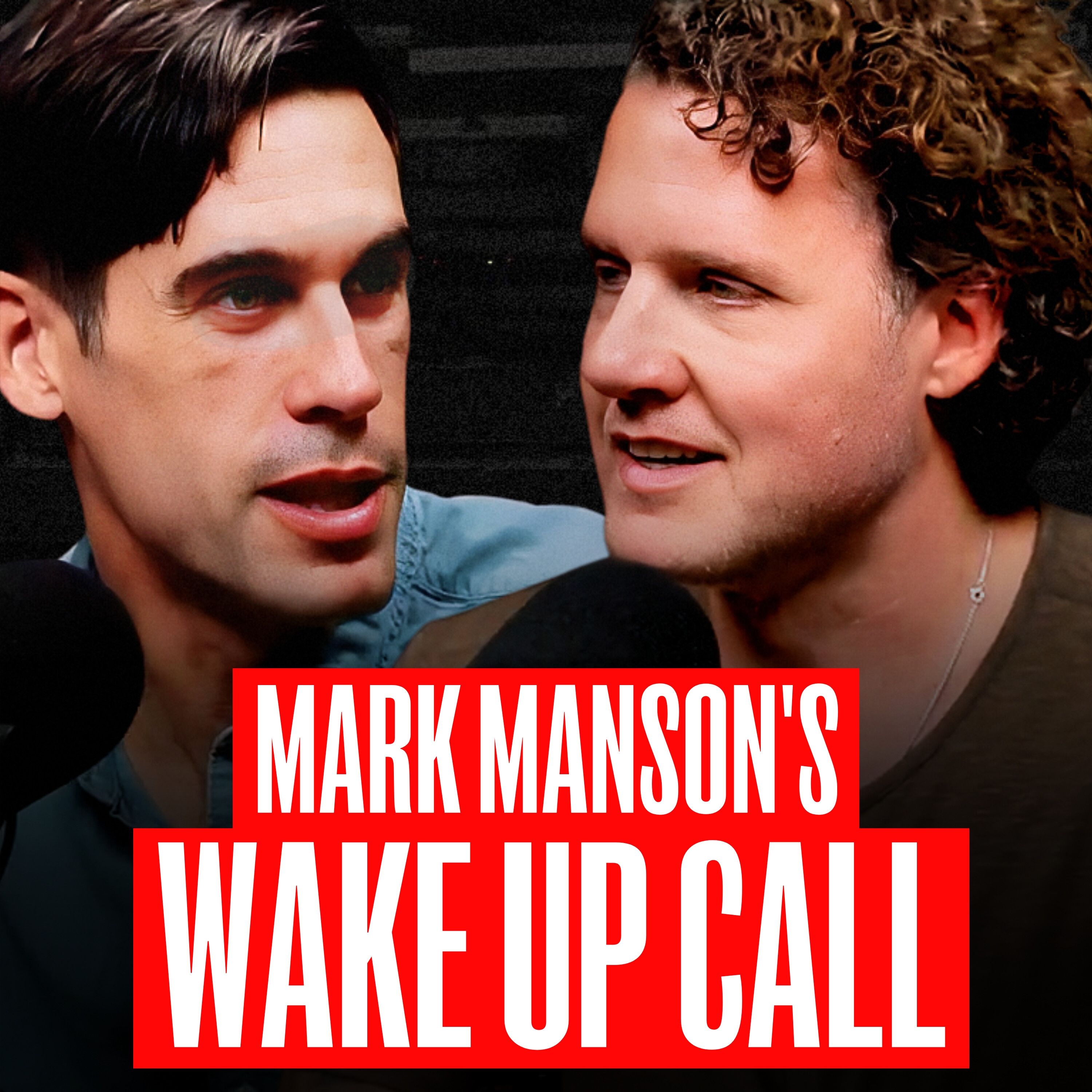
Loading summary
Transcript225 lines
- [00:00]
Ryan Holiday
I'm recording this on a Monday and.
- [00:02]
Stephen Hanselman
Monday is our grocery store day in our family.
- [00:05]
Ryan Holiday
I usually pick my kids up from.
- [00:07]
Stephen Hanselman
School and we go over to Whole Foods get all our groceries for the week.
- [00:11]
Ryan Holiday
Although here very shortly we're going to go over there to get our Thanksgiving turkey because they've got a bunch of great options. Turkeys start at 1.49a pound. If you have prime with organic birds at $2.99 a pound and they only carry no antibiotic ever, turkeys that will bring quality to your table at a great price. Whole Foods has great everyday price on all your Thanksgiving essentials. Whether you celebrate with a massive family or just a few close friends, everything.
- [00:38]
Stephen Hanselman
They sell has high standards to help.
- [00:39]
Ryan Holiday
You shop with confidence. Enjoy. So many ways to save on your.
- [00:43]
Stephen Hanselman
Thanksgiving spread at Whole Foods Market.
- [00:45]
Ryan Holiday
You've probably heard of eight Sleep by now because I talk about it all the time. I woke up on my eight Sleep mattress pad this morning and I've slept on one for years. Eight Sleep is a company that is about improving your sleep and they have dramatically improved mine. The Pod 5 is the newest generation of Eight Sleep's signature product, the Pod, which is a smart mattress cover that you put right on top of your existing mattress. Their results are up to one hour of additional quality sleep per night. Eight Sleep also just came out with their new Pod pillow cover. It syncs with your pod system and automatically adjusts your head and neck temperature in real time based on your sleep patterns. And like the mattress cover, you slip it over any pillow you already love. Just head over to eightsleep.com dailysto and use code DAILYSTOW to get 350 bucks off your very own Pod 5 Ultra. And the best part is you still get 30 days to try it at home and return it if you don't like it.
- [01:44]
Stephen Hanselman
I think you'll love it.
- [01:45]
Ryan Holiday
Your body will thank you for this investment in better sleep. Eight Sleep ships to many countries worldwide and you can see all the details@eightsleep.com.
- [01:52]
Toyota Narrator
Dailystoeit My family owns a 2023 Toyota 4Runner and honestly, it's my favorite vehicle that I've ever owned around town. It's smooth and reliable, but where it really shines is on our trips into the backcountry. We've taken it on backpacking adventures to Colorado and New Mexico, loaded up with gear and never had to think twice about whether it could handle the terrain. That's what Toyota trucks are built for. Off road confidence, rugged durability and the freedom to explore Toyota has a long history with the outdoor community, and they're committed to helping more people get out there and experience what nature has to offer. From remote trails to scenic byways, Toyota Trucks empowers you to take the detour, roam freely, and discover places that still feel wild and untouched. And they're not just making great trucks. They're working to expand access to adventure so more people can connect with the outdoors and pass that passion on to the next generation. Discover your uncharted territory. Learn more@toyota.com Trucks Adventure Detours. That's toyota.com Trucks Adventure detours.
- [02:54]
Ryan Holiday
Welcome to the weekend edition of the Daily Stoic. Each weekday we bring you a meditation.
- [03:00]
Stephen Hanselman
Inspired by the ancient stoics.
- [03:02]
Ryan Holiday
Something to help you live up to those four stoic virtues of courage, justice, temperance, and wisdom. And then here on the weekend, we take a deeper dive into those same topics. We interview Stoic philosophers. We explore at length how these Stoic ideas can be applied to our actual lives and the challenging issues of our time.
- [03:26]
Stephen Hanselman
Here on the weekend, when you have.
- [03:28]
Ryan Holiday
A little bit more space, when things have slowed down, be sure to take some time to think, to go for a walk, to sit with your journal, and most importantly, to prepare for what.
- [03:39]
Stephen Hanselman
The week ahead may bring. Hey, it's Ryan.
- [03:46]
Ryan Holiday
Welcome to another episode of the Daily Stoic podcast.
- [03:50]
Stephen Hanselman
Feels like an eternity ago, but back over Labor Day weekend, we were in Southern California. It's my wife's 20 year high school reunion. We saw some friends in LA, took the kids to the Santa Monica pier. We had like a lovely little trip.
- [04:05]
Ryan Holiday
And then I ran over and did.
- [04:08]
Stephen Hanselman
A podcast with my friend Mark Manson. Actually we did this huge deep dive into stoicism that ran on his podcast. I'll link to that in today's show notes. But afterwards, because we just hadn't talked enough and he hasn't been on this podcast like more times than basically anyone. We talked about some other things that I thought would be fun to talk about on the Daily Stoic podcast. I've known Mark forever. I've known Mark since before the Subtle Art of Not Giving a Fuck. I've been a big fan of his writing, actually.
- [04:38]
Ryan Holiday
I remember we, we had coffee or.
- [04:40]
Stephen Hanselman
Lunch or something in Austin when he was thinking about doing that book. I don't think either of us thought it could be this monster that it was. And it was one of the bestselling books in the country for like multiple years in a row. My actually favorite book of his is Everything is Fucked, A book about hope. Although it was funny, I Sent him a picture when we were in Greece this summer. He did a book before this, before all those, like a self published book on dating. And it was in this tiny like print shop, like a copy shop where you'd make copies or get office supplies. Little, Little Shop. They had it next to a bunch of Greek titles in Ithaca. So I thought that was funny. But Mark is great. I'm a big fan of his writing. I'm a bigger fan of him as a person because we've gotten to know each other over the years. He's given me a lot of advice on my writing. It's been fascinating to watch him grapple with his success. We talked about this in one of our episodes, the Idea of the Catastrophe of Success. It's been fascinating to watch him get in incredible shape, sort of undergo this transformation that he's undergone. And then it's been fascinating and inspiring and in other ways sort of motivated.
- [05:52]
Ryan Holiday
Me to get really on top of my game to watch him just really.
- [05:55]
Stephen Hanselman
Crush it lately on the stuff he does on YouTube and social media.
- [05:59]
Ryan Holiday
I think he's a fascinating guy.
- [06:01]
Stephen Hanselman
I think you're really going to like this conversation. As always, if you haven't checked out the Subtle Art of Not Giving a Fucking. I don't know, maybe you're like me. Sometimes you see a book that's just like selling like crazy and you're like, well, I don't want to read it. You have that sort of like indie sneer.
- [06:17]
Ryan Holiday
I usually find whenever I read those.
- [06:19]
Stephen Hanselman
Books I'm like, oh, I actually understand now. I'm the one that's wrong. Everyone who liked it is right and I was wrong.
- [06:25]
Ryan Holiday
There's a journal, the Subtle Art of.
- [06:26]
Stephen Hanselman
Not Giving a Fuck Journal. And then as I mentioned, Everything is Fucked. A book about hope. He's done some interesting Audible originals as well. You can check those out. You can follow him on all platforms. Arkmanson and then check out his podcast because it's great.
- [06:40]
Ryan Holiday
As I said, said I will link.
- [06:41]
Stephen Hanselman
To his episode and we will get into it.
- [06:46]
Ryan Holiday
Here's me talking with Mark Manson. This episode is sponsored by BetterHelp. I've talked here before. We've made whole videos about it. Therapy has been incredibly helpful to me.
- [07:03]
Stephen Hanselman
It's given me emotional awareness.
- [07:06]
Ryan Holiday
It's helped me process my feelings. It's helped me deal with stuff as a parent, as a spouse, and just a person in. In a crazy, busy, noisy, sometimes demoralizing world. And my therapy practice is part and parcel of my stoic practice. Right, Analyzing and putting your feelings Your impressions, your views, your values to the test. That's what therapy allows you to do. And there's a reason I use online therapy. Because it's more efficient. It takes less time. BetterHelp is built around making starting therapy easier. They connect you with a licensed therapist. You just fill out a questionnaire, and you can match with a therapist in as little as a couple of days. With over 7,000 reviews and a 4.3 rating on Trustpilot, BetterHelp is a platform you can trust. You can click the link in the description below or just go to betterhelp.com dailystoke to get 10% off your first month of therapy.
- [07:59]
Toyota Narrator 2
The world is full of tours.
- [08:03]
Mark Manson
But.
- [08:04]
Toyota Narrator 2
You don't choose a Toyota truck to follow the beaten path. You choose it to find the places.
- [08:10]
AT&T Narrator
In between.
- [08:12]
Toyota Narrator 2
The detours where each adventure pulls you toward the next. And wrong turns turn out right. So why would you ever take a tour when you could take a detour? Toyota trucks.
- [08:34]
Stephen Hanselman
I've been thinking a lot about this thing you said. You were saying that you want to be careful when you get advice from successful people about balance, because usually they became successful by their fundamental lack of balance. Correct. And then they became successful, and then they're thinking retroactively how they wish they used to be, or they're making changes now and then, acting as if that is the approach that got them where they are.
- [09:03]
Mark Manson
Yes, there's a lot of. I think a lot of positive lifestyle changes are a result of privilege. And I don't mean that in, like, a pejorative way, but it's like, you know, once you do have the money to do a sauna every day or, you know, have your, like, chia papaya creatine smoothie in the morning, like, that does feel like the most important thing to you. And so I. I just. I remember how I was coming up, which was I ate Red Bulls and Reese's cups every morning. I fell asleep with my laptop open on my chest and then would wake up in the middle of the night and continue working. So I. I just recognize the gap between who I am today and who I was when I was starting. And I. I try to be realistic about that gap and understand that, you know, the. My perceptual biases might try to convince me that the way I am today is the way I should have always been, but probably wasn't realistic back then.
- [10:00]
Stephen Hanselman
Yeah, it was funny. We were just talking about ancient philosophy in the thing we recorded, but, you know, Plato's idea of the cave, like, you Think what's important when you're in the cave and you come out of the cave and then you're like, whoa, no, no, I had it totally wrong. And there is a good impulse to want to come back and be like, hey, this thing that you're stressed about is not nearly as important as you think it is, or this way that you're doing it, it doesn't actually have to be that way. So there is that good impulse. But, yeah, there's a luxury of once you have made it or once you're good to be able to be like.
- [10:27]
Ryan Holiday
Yeah, just take it easy, do it slow.
- [10:29]
Stephen Hanselman
It's very rare that you find someone that's done something that's really impressive or big and they did it. Not as a maniac. You know what I mean?
- [10:41]
Mark Manson
Yes. Yeah, absolutely. I mean, I think fundamentally, to achieve extreme success, you cannot be a balanced person. That just strikes me as obviously true.
- [10:52]
Stephen Hanselman
And yet it's very hard to sustain success as a maniac or as an unbalanced person. And so that's the transition of, like, especially if you do it and you're like, no, no, my goal isn't to get in and get out. Yes, I want to have a long career as a baseball player, or I want to write books my whole life, or I want to not go through five marriages. You know, like, then all of a sudden, you realize a lot of those habits or practices that were adaptive for one set of goals, which was like, go big or go home, you know, get rich, die trying. Well, if you keep trying, you're going to die, right?
- [11:28]
Mark Manson
These days, I kind of think of it as volatility. So early on, volatility works in your favor. So if you have nothing, you want as much volatility as possible. Because if things go south, well, you have nothing to lose, so who cares? But things can go north very, very easily.
- [11:46]
Stephen Hanselman
Right?
- [11:47]
Mark Manson
But then once you're on that trajectory and you are, you've kind of achieved escape velocity. You don't want volatility. Like, you don't want. You don't want wild swings in your fortune.
- [11:58]
Stephen Hanselman
Yeah. Or your mood or your health.
- [12:00]
Mark Manson
Right. When everything is going great and you've built this amazing career and financial security and family and everything. Like, you want to minimize volatility, so. So you can maintain that trajectory. So I think that. That those biases are apparent on both sides. It's the same thing. It's like startup founders are always talking about how you should be a maniac, which makes sense, because to get a startup off the Ground. You have to be sure, out of your mind and work all the time.
- [12:28]
Stephen Hanselman
Then they become investors, and then I think they have a vested interest in you being a maniac.
- [12:34]
Mark Manson
Yes.
- [12:34]
Stephen Hanselman
Because they don't want a founder prioritizing their marriage or their relationship with their kids over this investment they've put in.
- [12:41]
Mark Manson
Yeah.
- [12:42]
Stephen Hanselman
So there is a little bit of something of like, yeah, who is this? Who is this? Sleep at your desk. Sleep when you're dead. You know, like, burn the candle at two ends. Hustle culture, myth. Who is it benefiting? Not the individual for the most part, but, like, the people who are trying to harness the power of said individual.
- [13:03]
Mark Manson
I, like, in my own life, I like the fact that I know I can go there if I need it.
- [13:08]
Stephen Hanselman
Right.
- [13:08]
Mark Manson
Like, so if I have a stretch, like, let's say I. So like, this year, I. I started a second business. Like a maniac.
- [13:15]
Ryan Holiday
Yeah.
- [13:15]
Mark Manson
But I know I have that. That on button.
- [13:17]
Stephen Hanselman
Right.
- [13:18]
Mark Manson
It's like, okay, I can do this for six months. I've been there before. I've done it a few times in my career. Like, I can work like a crazy person and sacrifice a lot of balance in other areas of my life. So I think it's useful, like, to have it as a skill, but you need to, like, be able to turn it off when. When you need to.
- [13:35]
Ryan Holiday
Yeah.
- [13:35]
Stephen Hanselman
I heard in the Robert Caro books on Lyndon Johnson, he talks about. He's like, I got it, but I have it on a leash. You have to have that, like, killer instinct. But if you're like, all killer instinct all the time, you'll probably kill yourself. Yeah, but I feel like a couple years ago, like, kind of at the height of your success, not that you're not more successful now, but, like, you could do anything you wanted. You'd done it. You kind of made a bunch of changes. You did that cliche thing a little bit.
- [14:02]
Ryan Holiday
Not. Not that you were giving cliche advice.
- [14:04]
Stephen Hanselman
But you were like, no, no, no, I'm. I'm not going to keep living this way. What were the changes you feel like you made?
- [14:10]
Mark Manson
There were significant changes both in terms of lifestyle and, I guess, professional changes. I'll start with the lifestyle, because that's more straightforward. I was a very volatile person when I was younger. Right. So there were very few parties that I would turn down. There were. You know, if you ever wanted somebody to join you for an exciting night out, I was your guy. I was always the last person to leave the dance floor. You know, I was pretty much up for anything at any Time, which I think served me well when I was young. A, because you have the energy, but also B, because I think novel experiences are more valuable. Sure, you learn more about who you are and what type of people there are in the world and what you like. But as I got older and the responsibilities and obligations of my career started to stack up, that just started. Those sorts of decisions became more irresponsible over time. So I really just have buttoned up my personal life quite a bit. Like, I stopped drinking. I don't really go out anymore. I moved to California. I now drink papaya creatine smoothies every morning. And I don't necessarily, like, recommend everybody do that all the time because, you know, there are different seasons of life. But it has had a very positive effect in terms of, like, dulling the volatility on the professional side. You know, there's this funny transition that happens in your career, and you never know exactly where it's going to happen. So early in your career, you. You need to say yes to everything because you don't know what's going to work. You don't know what's going to help you break through late in your career or once you've become successful or achieved a certain amount of success. You need to say no to most things. But that inflection point, it's very unclear where that inflection point is. You're never sure if you're actually nailing it. So I hit a point probably around the pandemic where I was like, I need to start saying no to things or I'm gonna lose my mind.
- [16:00]
Stephen Hanselman
Like.
- [16:01]
Mark Manson
Cause this is just way too much. So I would say what I've gotten much better at the last few years is just being very conscious of the projects I choose, the things that I commit myself to, the things that I invest my time and money into, and really, really making sure that it's like a fuck yes before I do it, instead of just being like, oh, wow, that's a big number. Sure. You know, and then six months later, regretting.
- [16:27]
Stephen Hanselman
It's funny because you. You wrote that article a long time ago. Yeah, I find this all the time where, like, you write something, you say something, and obviously you meant it, and obviously you were applying it at some level. And then you go, it's not that I didn't know what I was talking about. I definitely knew what I was talking about. I just didn't fully integrate what I was talking about. Like, and now it's like, oh, now I have to really do this.
- [16:49]
Mark Manson
It's funny because we just recorded a long podcast on stoicism for my podcast right before we started recording this. And we were like, one of the last things you and I talked about was how philosophy is not just something you read and understand. It has to be a daily consistent practice. And that that's actually the hard part of it. Like it reading a book is not the hard part. I think this is just another example of that in the case of the fuck yes or no thing, you know, the which for people listening who aren't familiar with it, it's the simple adage that if it's not a fuck yes, it should be like any significant decision. If it's not a fuck yes, then it should be a no. I wrote that article 10 or 12 years ago. I wrote it in the context of dating. It's was useful in a lot of kind of simple, you know, oh, should we buy this couch? It's really expensive. Well, it's not a fuck yes then. I guess not. What I, what I didn't realize at the time is that as your life kind of levels up, the sexiness of the things you should say no to also level up.
- [17:47]
Stephen Hanselman
Yes.
- [17:48]
Mark Manson
Right. So there are things today that you and I should say no to that our 25 year old selves dreamt of.
- [17:57]
Stephen Hanselman
It seems irresponsible to say no to them.
- [18:00]
Mark Manson
Exactly. Exactly. I guess the higher up the mountain you climb, the more difficult those nos become. And I didn't anticipate that. So in my head I'm like, oh, I got this no thing down. And then, you know, subtle art blows up. Bunch of new book deals come in, movie deal comes in, Will Smith shows up like. I'm like, yes, yes, yes, yes, yes. And, and I basically had to learn that lesson all over again.
- [18:26]
Stephen Hanselman
Yeah, well, you're, you're just learning it. It's like you're playing high school basketball and then college basketball and professional basketball and then you're playing in the Olympics or something. Yeah, the playoffs and then the championship. Yeah, it's like, it's the same game, but just the, the stakes are higher and the other people are better. And the thing, the problems you're solving in that game are different. Yeah. Yeah. It's like it feels irresponsible to say no to some things. It feels ungrateful to say no to certain things. And I think humans are really bad at calculating opportunity costs. Yeah. Like, I know if I don't do a speed, I know exactly how much money that costs, even though it's, it doesn't actually cost any money, but I know what I'm not getting.
- [19:10]
Mark Manson
Yes.
- [19:11]
Stephen Hanselman
There's no way to know what the individual toll of one thing is on a marriage, is on a relationship with a friend, is with your health, is with your overall productivity, is with the burnout that you are slowly, steadily progressing towards. That's the trap of it. Yeah.
- [19:28]
Mark Manson
Like you said, I think to a certain extent you have to make a lot of those mistakes to develop that awareness. I do feel like I am a little bit better at having that awareness of, you know. So, like, I took a speaking gig overseas a month or two ago. I do not. I do very few speaking gigs these days for exactly the reasons that we're talking about. And it's funny, because I had checked in the hotel. I'd been maybe been in the hotel for an hour before I was like, I'm an idiot. I should have stayed home. I should never have said yes to this. Like, what am I doing here? I just flew 13 hours to get here. So it is a lesson that keeps coming up time after time. But I do feel like the calibration gets better.
- [20:10]
Stephen Hanselman
Do you have any good systems or rules? Like, to me, it's often about saving me from myself.
- [20:15]
Mark Manson
Yes.
- [20:15]
Stephen Hanselman
You know, like, if I think I can do it, if no one is saying that's a bad idea, I'll probably do it.
- [20:21]
Mark Manson
Yeah. So in the case of speaking, you know, I initially had fuck, yes or no. But then it's like every speaking opportunity, especially if there's a bunch of money attached, it feels like a fuck. Yet when you get the email, you're like, fuck, yeah, I'll go. I'll go hang out in this country and get paid for it. So then I created a rule. I was like, okay, it needs to be. It needs to be a speaking opportunity that I would be interested in or enjoy even if I wasn't getting paid for it. Like, that became the rule for a while, but then I noticed that I was still convincing myself, like. Like, oh, yeah, of course I'll go ahead.
- [20:54]
Stephen Hanselman
I've never been there. Even though you could go there for any reason at any time.
- [20:57]
Mark Manson
Exactly, exactly. Or I have a friend that lives there I haven't seen in four years. Like, I could have dinner with them. Meanwhile, you're not processing that. You, like, you're gonna FL to London to have dinner with a friend.
- [21:06]
Ryan Holiday
Yeah, yeah.
- [21:06]
Stephen Hanselman
Also, you haven't texted or called that person. Right.
- [21:09]
Mark Manson
Like, four years.
- [21:09]
Stephen Hanselman
Yes.
- [21:10]
Ryan Holiday
Yes.
- [21:10]
Stephen Hanselman
You could do something about it right now, but now you're right.
- [21:13]
Mark Manson
Yes, Exactly. And so that failed. And then I realized that, like, I still couldn't trust my brain. And so now my process is my. I've told my head of operations to literally not show me any speaking opportunities unless she believes that they could fundamentally change my career. Oh, so that is the current rule.
- [21:35]
Stephen Hanselman
And then, and then the irony is you don't miss the things that you don't know about.
- [21:39]
Mark Manson
Exactly.
- [21:40]
Stephen Hanselman
The dilemma is only there because someone told you about the thing. Like, for me, again, these are all privilege. So I understand if people are, like, rolling their eyes. But like, I. It was later in my career that I realized I don't have to blow up my day because some random radio station read something I wrote and the host wanted me to have me on, and they have a slot at 2:15 Central Time. Do I want to do it?
- [22:07]
Ryan Holiday
Yeah.
- [22:07]
Stephen Hanselman
And, and the, the ease at which I would be like, well, I had all these plans, but this is, this is the job. You should do it. And then just to the ability to be like, well, I'm not going to do it. That takes a certain amount of discipline. But just getting rid of press request thing on my website just meant I don't get the requests anymore and I don't know what I'm not doing and I'm fine. Yeah. And if it wasn't happening, you would be fine. Yeah.
- [22:33]
Mark Manson
To bring this back, to bring, like, a much simpler example that also from my personal life. So as part of that, like, getting my lifestyle in order, I lost a ton of weight as, you know, between 2020 and 2024, I lost about £60 and struggled quite a bit through that period. You know, there were a lot of plateaus and rebounds and, you know, it was a very jagged line down. And I struggled a lot with the eating part of it. And it was funny because it was a very similar process in that, okay, initially, you know, I'm like, talking to my health coach and like, okay, these are the calories, these are the macros. Like, don't eat desserts, don't drink too much, don't whatever. I'm like, got it. This is easy, right? Well, you, you go out on a weekend or, you know, do a quick trip with the wife or maybe it's your anniversary or something. And like, there's this quick. Very quickly you find that there's almost always a reason of, like, well, what's one little dessert tonight? Or, you know, I had one glass of wine, but what's the second glass of wine? And so you, you, like, make these little. What's the word I'm looking for.
- [23:40]
Stephen Hanselman
Concession.
- [23:41]
Mark Manson
Concession. You make these little concessions that feel like a one off to you, but you're actually making them like almost every single day. And so of course they end up to you not losing any weight. So eventually I was like, okay, you know what? I need to have, like, rules for myself. So I had rules of no desserts, no no alcohol on weekdays. Like, created all these rules for myself. Well, even then I would still start finding, like, reasons of like, well, you know, I haven't seen my brother in six months and, you know, he just got married last year and we're having a great night and so, like, who am I to spoil this evening or whatever. Anyway, long story short, I. I literally got to the point where I'm like, I just went to my wife, I said, I'm not eating at a restaurant for the next 30 days, like, period. Because I know if I'm in the environment, my brain is going to start lying to me and I'm going to make up all these stupid reasons to start eating a bunch of crap that I shouldn't be eating. Whereas if I'm at home, I'm stuck to the stuff that's in the fridge, I'm okay. And I think of this as like, knowing when not to trust myself.
- [24:45]
Stephen Hanselman
Yeah.
- [24:46]
Mark Manson
So there's, you know, there's this cliche of like, trust yourself, you know, you know best, whatever. That's true in some cases. Right. But I mean, I've learned in the case of accepting speaking gigs and in the case of eating desserts or drinking alcohol, I can't trust myself.
- [25:01]
Stephen Hanselman
Yeah. I heard the definition of an addiction is when you have lost the freedom to abstain, when you no longer can be like, I don't want to. That's a problem. And I think we all have those things. And then that's where the discipline is not. We'll just try harder not to do the things. It's. How do you outsmart the part of yourself that is failing to. Not absolutely.
- [25:26]
Mark Manson
I've always said, like, if you're relying on willpower, you've lost.
- [25:29]
Stephen Hanselman
Yes.
- [25:29]
Mark Manson
It's over. Like, you shouldn't even put yourself in the spot where you're having to make a decision between the dessert and the salad or flying to Dublin or staying home with your kids. Right. Like, if you're in that, if you're in that spot and struggling to make that decision, you've failed yourself to a certain extent.
- [25:49]
Stephen Hanselman
Yeah, it's all easier said than done. And then it's like, it's the day to dayness of it. Hey it's Ryan. I am recording this on my wife's.
- [26:01]
Ryan Holiday
Phone, not at the office, at home.
- [26:04]
Stephen Hanselman
Because it was a long crazy day.
- [26:06]
Ryan Holiday
The office.
- [26:07]
Stephen Hanselman
We called each other. She was driving home, I was driving.
- [26:10]
Ryan Holiday
From picking up the kids and we.
- [26:11]
Stephen Hanselman
Said what are we going to do for dinner?
- [26:13]
Ryan Holiday
And that's when I remembered we had HelloFresh in the fridge.
- [26:16]
Stephen Hanselman
HelloFresh is the number one meal kit in America, making home cooking easier with.
- [26:21]
Ryan Holiday
Chef crafted recipes and fresh ingredients delivered straight to your door.
- [26:25]
Stephen Hanselman
And this fall they're serving up even more to love. This isn't the hellofresh you remember, but it's bigger. It's doubled its menu. It's healthier. They've got a healthier menu including 15.
- [26:35]
Ryan Holiday
High protein recipes each week.
- [26:37]
Stephen Hanselman
And it's tastier.
- [26:38]
Ryan Holiday
You can get steak and seafood recipes delivered every week for no extra cost.
- [26:43]
Stephen Hanselman
Discover new seasonal produce each week, from leeks to broccolini to Italian eggplant and more.
- [26:49]
Ryan Holiday
As I said, we love HelloFresh because.
- [26:51]
Stephen Hanselman
They curate meals that are not only.
- [26:52]
Ryan Holiday
Easy to make, but they are delicious. The best way to cook just got better. Go to hellofresh.com stoic10fm to get 10 free meals plus free breakfast for life. One per box with active subscription free.
- [27:10]
Stephen Hanselman
Meals applied as a discount on first box. New subscribers only. Varies by planning.
- [27:14]
Ryan Holiday
That's hellofresh.com stoic10fm to get 10 free.
- [27:19]
Stephen Hanselman
Meals plus free breakfast for life.
- [27:21]
Ryan Holiday
Thanks to Toyota Trucks for sponsoring this episode. When I bought my ranch in 2015 out here in Bastow County, I drove.
- [27:29]
Stephen Hanselman
My car about halfway down the dirt.
- [27:30]
Ryan Holiday
Road that we live on, thought, this.
- [27:32]
Stephen Hanselman
Isn'T going to work.
- [27:33]
Ryan Holiday
Stopped, parked it walked the rest of the way home, borrowed my wife's car, drove in Austin and bought a truck. One I bought was a Toyota Tacoma. And this truck wasn't just transportation getting.
- [27:45]
Stephen Hanselman
Me to and from my house.
- [27:47]
Ryan Holiday
It unlocked a whole different style of living for us. Not just on the ranch, but in our little Texas towns. There were places I could go now that I couldn't go before, especially out.
- [27:57]
Stephen Hanselman
Here in the piney forests, through the.
- [28:00]
Ryan Holiday
Fields and on the unpaved roads like the one that I lived in.
- [28:06]
Stephen Hanselman
We got to go deep into the.
- [28:07]
Ryan Holiday
Hill Country's wild beauty. We've driven all the way out to East Texas. We've driven it across the country. And by we, I mean not just my wife, but both my kids, who I drove home from the hospital in that truck. Toyota trucks are built for those who understand that the best adventures happen when you're willing to veer off course, because you never know when you'll end up on a Toyota Adventure Detour. And of course, this is stoicism, too, because every detour, every obstacle is an opportunity. But it's helpful if you can handle the difficulty inherent in that. If you've got the resilience and the right companion to make it wherever the road takes you, discover your uncharted territory. Learn more@toyota.com Trucks Adventure detours.
- [28:59]
Stephen Hanselman
I've sort of been practicing this thing of, like, more often than not. Like, more often than not, am I making the right choice?
- [29:04]
Ryan Holiday
Right.
- [29:05]
Stephen Hanselman
So it's like, with the exception of the things that are, like, obviously such destructive things that you can have none.
- [29:10]
Ryan Holiday
Of them in your life.
- [29:11]
Stephen Hanselman
But, like, how am I just, how am I getting better? Or more often than not, deciding to do this thing that's like, consistent with the person that I want to be or the values. Does that make sense? Like. Like, am I saying no more often than not? Am I saying no to the dessert? More like, how just consistently can you get better at doing it? And that's progress. Now, obviously, sometimes you have these hard rules, but just like, like going like, hey, I'm trying to just get better at doing. You're never going to be perfect at the thing. The thing is, how over the course of your life do you get better at this really tough thing that, by the way, most people are not even aware of as, like a battleground? Yeah. They're just doing whatever.
- [29:50]
Mark Manson
I would say the more often than not is that's like the healthy place to end up. It's funny because as you're saying that I'm thinking to myself, I'm like, 2019, Mark, if you told them, like, oh, just eating more often than not, like, I'm drunk three nights.
- [30:03]
Stephen Hanselman
That's the problem.
- [30:04]
Mark Manson
Yeah.
- [30:04]
Ryan Holiday
Yeah.
- [30:04]
Mark Manson
I'm drunk almost every night.
- [30:05]
Ryan Holiday
Yeah.
- [30:06]
Mark Manson
Whereas today I do operate on them more often than not, you know, with the, with food and exercise and everything. And it's. And it's working, it's okay. But I had to go through that period of hard rules and basically treating myself like an untrained dog. It's like once the inner dog is trained, then you can let it loose and off the leash, but until it's trained, you have to keep it.
- [30:32]
Stephen Hanselman
Well, the interesting thing is that it's because you spent the first 30 plus years training yourself to do the thing.
- [30:39]
Mark Manson
Right.
- [30:39]
Stephen Hanselman
Right. And just desire outcome. Desire outcome. Or, you know, offer, accept. Offer accept.
- [30:46]
Mark Manson
Yeah.
- [30:46]
Stephen Hanselman
And then it's, it's, it's hard to turn on a dime, be like, no, no, no, I'm, I'm actually the person that like doesn't jump on opportunities now. Like, I got here because I'm that person. Yes. So your identity's tied up in it. And then I think, you know, it was interesting you're saying about like the habits you can get away with when you're younger. I think a big part of it is also like as you get older you realize, oh, you can't just brute force this anymore. Like, there's things that like, I think like habits and routines. This isn't just me as like an older person, a person with success and whatever, to be able to be like, oh, I'm just, I'm describing something unattainable. It's more like, no, no, no, no. Early on I could write on the back of a crowded bus or you know, I could write with no sleep. I could just do the thing on sheer energy. And now it's like, no, no, no. If I am like not taking care of sleep and not taking care of food and I'm not controlling environment, it's not that your ability declines, but your raw willpower declines. And so to continue to perform at the same level, you have to find other areas to elevate what you're doing or you won't, you'll fall off.
- [31:54]
Mark Manson
I think the age thing is a really good point. I don't know if it's that the willpower declines. I would say the, the margin for error declines. Right. Like when I think back to my 20 year old self or 25 year old self. Yeah. I could go out, I could drink all night, I could party and I could sleep three hours and then wake up and bang out a whole day of work.
- [32:12]
Stephen Hanselman
Yeah.
- [32:12]
Mark Manson
And it was no problem. Today I would be dead. Like it would, it would be absolutely impossible in fact today if I just don't sleep quite right. I'm like, I feel it the next morning. And so I think, and maybe this comes back to why don't totally trust people after they're successful? Because usually after they're successful they're like in their 50s and they are really cranky about their sleep and their nutrition and their exercise and they think it's a really, really big deal. And they like, you don't remember that when you're 23, you're fucking indestructible. You can kind of get away with anything.
- [32:46]
Stephen Hanselman
Yes. It's funny, I did this book a couple Years ago with Chris Bosh, and he was telling me this story about flying with LeBron James and they're all on the heat and LeBron is like doing yoga in the aisle of the team plane, and they're all laughing at him. And this was like, still like three or four years ago that he's telling me this, and he's like, we're all making fun of him and busting his balls about it. And he's like, he's the only one of us that's still playing.
- [33:09]
Mark Manson
Yeah.
- [33:10]
Stephen Hanselman
And so it is true that some of these are things you can't understand until you're older. And yet also this element of the earlier you understand them even just partially, even if you're. If you're just paying lip service to them or only partly investing in them, they have profound returns later. It's the same. It's like, I don't know, same. Putting money in your retirement account, like putting $100 in when you're 20 is just profoundly different than putting $100 in when you're 30. Yeah. Because of the power of compounding interest in time.
- [33:41]
Mark Manson
It's an interesting analogy because. Yeah, I think if we're talking longevity or like sustained energy over time, then it makes a ton of sense to me.
- [33:51]
Stephen Hanselman
When it's like asking yourself, am I doing something that is a short term sprint, or am I trying to do this thing for a long time? And oftentimes there's parts of it. It's like, you might be running this company, but you're in this industry for a long time. Or you might be working on this, but then you're in this marriage for a long time. The conflicting, contradicting incentives of the short term of one and the long term of the other, that's the balance you got to figure out.
- [34:19]
Mark Manson
Yeah, I agree with that. That balancing act really becomes more apparent down the road. So, yeah, I guess if you do get good at it early, you will be more prepared. Because I had to go through a very ugly and painful transition, you know, through my 30s, into my 40s, to kind of get my shit together. So I guess what I'm saying is the advice that successful people give to aspiring people, it's not so much about how to be successful, it's about how to prepare yourself to stay successful over a long period of time.
- [34:53]
Stephen Hanselman
Yeah, you see this too, another example of it. And this might be too inside baseball, but people are like, you're listening to a successful person give you the math on self publishing or self funding or bootstrapping or whatever. And it's like, this is only their experience in light of having succeeded. And you don't know how it's going to pan out for you now. And so actually what the best path is, is very different. Do you know what I mean? Like, it's, it's very clear once it's worked.
- [35:22]
Mark Manson
Yes.
- [35:22]
Stephen Hanselman
What you should have done. Yeah. But you don't know if it's going to work. And so it really is. Like, what are this sort of just more foundational, general best practices, not like the. The person just wishing they could have done it slightly differently. Yeah.
- [35:36]
Mark Manson
I also just think that, like, people. The advice people want to. Like, that's the advice people want to hear.
- [35:41]
Ryan Holiday
Yes.
- [35:41]
Stephen Hanselman
Let's say. Want the inside baseball.
- [35:43]
Mark Manson
Well, no, no, no, no.
- [35:44]
Stephen Hanselman
What?
- [35:44]
Ryan Holiday
I.
- [35:44]
Mark Manson
Sorry, I'm referring to the other thing. Right. So it's like if you're a startup founder and you're completely lost and you're. You've tried, like, multiple iterations of a product, you have no customers, nothing's working, you're running out of money, like, there's a piece of you that wants the answer to be, wake up at 5:30, get some sunlight, drink a papaya smoothie. Like, sure, that's what's gonna work. So I think there's a demand. There's just a massive demand for that message. And in this day and age, any message that has a demand is gonna be met by somebody.
- [36:17]
Stephen Hanselman
Yes.
- [36:17]
Ryan Holiday
Right.
- [36:17]
Stephen Hanselman
No, like, aspiring writers want to know what fucking program to use, what font to write in. Yeah. What pencils, or how do you find an agent? And it's like. Because the advice of, like, you have to make something that's really good that people want. Yeah. Is so obvious. And then also, like, obviously the main thing they're struggling with.
- [36:38]
Mark Manson
Yeah.
- [36:38]
Stephen Hanselman
And it's more fun to fiddle at the margins, you know, literally, like, it's like, wow, you know, like what. You know, what does your screen look like? And it's like, that's not. That's not what. There's not a market in delivering that.
- [36:51]
Mark Manson
I mean, if only the right pin or the right font, you know, determined that.
- [36:56]
Stephen Hanselman
Yeah.
- [36:57]
Ryan Holiday
So how have you thought about this lately?
- [36:59]
Stephen Hanselman
Because you seem to really be into video and social and stuff now. How are you thinking about. Because again, you could just peace out. What gets you excited about this?
- [37:10]
Mark Manson
You know, it's funny, I went through a little bit of a, I guess, identity crisis, you would call it. Well, let me back up. So the short answer to that is like, I'm really Enjoying scaling out the kind of online media side of this career. And it's funny, because I'm actually enjoying it a lot more than I enjoy writing books. And that was a little bit of an epiphany for me a couple of years ago, I think what happened, I'd forgotten that I started my career being an Internet guy, right? Just posting a bunch of blogs and shit on Facebook and seeing what stuck. And I loved it. I lived it and breathed it. And eventually, as part of that process of growing that online audience and that online following, I did a book deal. And then that book deal turned into just like an absurdly mega bestseller. And I think what happened then is because the most successful thing I had ever done was write a book. I assumed, oh, I must be an author.
- [38:07]
Stephen Hanselman
Yes. Narrative and identity are very tricky and deceiving.
- [38:11]
Mark Manson
Yes. So it was what the world was rewarding me for. It was what everybody knew me for doing. It was the thing I was most validated for, is the thing I was making the most money doing. So I'm like, I guess I'm an author now. So I wrote a bunch of books, and they went well. They did very well. But I burned myself out, and I struggled a lot mentally during that period. And so then I came back to kind of doing the online stuff a few years ago, and I loved it. I'm a dog just chasing a car. I'm like, yeah, show me the numbers. Let me go viral. I want to see the numbers go up. So I'm having a blast doing it. I actually canceled a book deal. It was funny. I actually went to my publisher and I said, you know, I want to, like, launch a podcast, and I want to do a lot more video content. So I want to push the book back a year or two, but I'll have a much bigger audience, and I'll be able to test ideas and stuff. And they were like, oh, yeah, that sounds great. And then they threatened to cancel the contract. And so I said, yeah, sure, here's your money and no regrets. So, yeah, what I'm enjoying now is actually, it's very much the. I would call it the business media side of this career.
- [39:18]
Stephen Hanselman
This is really important. I actually. I was just giving this talk at eo, and I was talking about, like, you have to find out why you got into the thing you got into and what's the thing you like doing. So if you're like, if you really love to cook and then you start a restaurant, and then you spend all the time in the back office of the restaurant, looking at vendors or whatever, or dealing with critics, or then, like.
- [39:39]
Ryan Holiday
The rewards for you succeeding were that.
- [39:41]
Stephen Hanselman
You don't get to think to do the thing. Now, it might be that actually you didn't. You love the energy of being in the restaurant and running the restaurant and actually cooking wasn't your main thing. It was just a means to getting there. You have to know that, too. You have to know, like, what is the part of the thing that you actually like to do? Yeah. And then you have to hold on to that thing real tight as you succeed, because everything is going to be conspiring and incentivizing to make you not be able to do that thing as much. So for me, it's like, the writing is. The writing of the books is the thing I love the most. And so I have to be careful on the other things that I go, hey, did I. Like, I just told my wife the other day I walked. She was like, how was work today? Or whatever. And I was like, I'm not getting the middle of this book. And I fucking love it. Like, I was like, I don't. I'm dreading continuing in the sense that I know at some point, like, I'll get. This is the part that I love. Like, I'm figuring it out, and I'm like, I'm in the middle of it and I want to stay here. And so I was like, okay. The decision for that is, like, I'm not going to rush it. The publisher was like, so when do you want this? And, you know, they were trying. I was like, I'm not going to give them a date. That means I get less time to do the thing. Like, I'm just going to. I'll do this as long as I want to do it, because that's what the reward for succeeding at your thing should be, that you get to not rush through it. But you have to know what that thing is. And then you need the discipline and you need the confidence to go like, no, no, this is what I'm supposed to be doing, not what you think I'm supposed to be doing.
- [41:05]
Mark Manson
Yeah. And it's hard. It kind of comes back to the speaking thing. Right? It's hard. Especially when there's financial incentive, especially when there's a lot of social validation, social pressure to say yes to certain things or do certain things. So that's been my big realization, is that I'm an Internet guy, and I always have been. And I will write another book, but it will be in the service of kind of the online media career, not the other way around.
- [41:35]
Stephen Hanselman
Yeah. And it's so easy to essentially punish yourself with success. So the success means you don't get to do the thing you love anymore. And then you wonder why more and more success isn't making you happy, making you happier. It's because it's actually taking you away from what you like. It's like you're a coach. I just love working with athletes. And it's like, okay, but you just took this promotion, and now it's actually your assistants who are doing the part of the job that you like. And to have like, I remember my dad. I think about this all the time. My dad was a police detective, and he got promoted. He took the sergeant's test. He became a sergeant. And, like, the way it would work is your promotion is like, you then start at the bottom of the totem pole of the new thing. So it's like, he's the sergeant, but he's not supervising police detectives. He's a sergeant at the jail, like, the shittiest place. And he was like, what have I done? He's like, they make TV shows and movies about detectives.
- [42:30]
Mark Manson
Yeah.
- [42:30]
Stephen Hanselman
And he just realized, like, oh, I like doing this thing. But because, you know, obviously you take the next thing, you rewarded yourself with the thing that less people want or that you yourself don't want. And so knowing what that thing is is like the whole game.
- [42:48]
Mark Manson
It's funny, I've experienced something similar to your dad, but in reverse. So for all the 2010s, especially when the books were taking off, everybody kept telling me, keep your team as lean as possible. Don't hire a big team. Don't do all this crazy stuff. Just keep it simple. Outsource everything. You don't want to be a manager. You don't want to have to deal with people. And I was like, okay, yeah, I don't want to have to deal with anybody. So I kept a super lean team, super small. We didn't. We didn't do anything crazy. And then a couple years ago, when I decided to start scaling up this side of the business, I started building the team, and now we're up to like, 21, 22 people. Dude, I fucking love having a team.
- [43:29]
Ryan Holiday
I had a very similar experience.
- [43:31]
Stephen Hanselman
Awesome.
- [43:31]
Mark Manson
I'm like, this is so much fun. I wish I did this 10 years ago.
- [43:35]
Stephen Hanselman
It can be hard sometimes when you're like, wait, did I just have to deal with like three HR issues this week? Or whatever. There's. There's definitely. There's downsides to everything. But yeah, you're like, wait, I was just taking this out of me. Like someone was still doing and worrying about all the things. It was just me.
- [43:51]
Mark Manson
Yeah.
- [43:52]
Stephen Hanselman
And that book die was zero. He talks about, like this idea. He's like, you're stealing money from your poor self that your richer self won't care about.
- [44:00]
Mark Manson
Yes.
- [44:01]
Stephen Hanselman
You know, his point is like, if you're a doctor, you're not going to make a lot of money your first couple years, but if you're like, living very lean, you're kind of being an idiot because you know for a fact that in the future you're going to be all right and you should be able to.
- [44:13]
Ryan Holiday
To.
- [44:13]
Stephen Hanselman
To be able to make reasonable decisions about, like, you don't need to drive this clunker car if, like in the future you. You know. And so, yeah, sometimes you're like, well, I don't know. And you're like, you're just. You're playing it too safe. And really, the. The savings there are just coming out of your sanity connections. You could have had cool work you could have done that you didn't know about. Yeah. And. And also, like Casey Neistat said to me once, he was like, you do work not to make money, but you do work to do more cool work. Yeah. Right. And so it's like, wait, isn't this.
- [44:47]
Mark Manson
Is the whole point.
- [44:48]
Stephen Hanselman
The whole point is to work with cool people and do things that you're proud of, hopefully at a bigger level than you were doing before. And. And sometimes I think, yeah, I do think we over celebrated the kind of lean solo, no strings attached. It's like, I like that my success means other people can buy their first house or were able to do X, Y or Z.
- [45:13]
Ryan Holiday
That's cool.
- [45:14]
Stephen Hanselman
That's also success.
- [45:16]
Mark Manson
Again, it comes back to your point of just knowing who you are and what you want. Because now there's this whole movement around solopreneurs and whatnot. And I totally get it. There's some people that that's the optimal way to do it. You don't want to have to deal with anybody else. But, yeah, looking back, I think I was just maybe intimidated or brushed it off. I wish I had been a little bit more aggressive in the past with that.
- [45:42]
Stephen Hanselman
I think I agree with that. Well, cool, man. This was awesome. Do another short one sometime. Yeah.
- [45:47]
Mark Manson
I'm asking this purely of selfish, egotistical reasons. Am I the most frequent guest on Daily Stoic?
- [45:54]
Stephen Hanselman
I don't know, because I think we've done it remote once or twice. And then in person maybe once or twice.
- [45:59]
Mark Manson
I think this is four or five.
- [46:01]
Stephen Hanselman
It's somewhere near the top. I usually have set the record on most people's things because I've done the most books and it's like kind of uncomfortable to even ask to be like, hey, hey, ritual, can I come on for the seventh time? You know? And it's like, so usually I have the record on everyone's things. Well, I'm going to, but I think the model of like, oh, I already had them on is weird.
- [46:25]
Mark Manson
Yeah.
- [46:25]
Stephen Hanselman
You know, unless your podcast is like, I get their life story. I want to hear what's going. Like, I've been doing this kind of shorter and look, maybe the people can tell me they hate them, but I think the shorter ones where you're just like checking in or shooting the shit about a few things, I think it's better. And I think most podcasts are not, even though we just did a three hour one. But I think like 40 minutes is also good and 20 minutes can be good. Like it. Not everything needs to be this fucking merit on because I usually make myself. I get like 20 or 30% of the way in and then something new comes out and I never go back to the one I was listening to. Well, cool, man.
- [46:58]
Mark Manson
Awesome.
- [47:04]
Ryan Holiday
Thanks so much for listening.
- [47:05]
Stephen Hanselman
If you could rate this podcast and leave a review on itunes, that would mean so much to us and would really help the show. We appreciate it and I'll see you next episode.
- [47:32]
AT&T Narrator
And now, a next level moment from AT&T business. Say you've sent out a gigantic shipment of pillows and they need to be there in time for International Sleep day. You've got AT and T5G so you're fully confident, but the vendor isn't responding and International Sleep Day is tomorrow. Luckily, AT&T 5G lets you deal with any issues with ease. So the pillows will get delivered and everyone can sleep soundly, especially you. AT&T 5G requires a compatible plan and device. Coverage not available everywhere. Learn more@att.com 5G Network.
- [48:03]
K. Jewelry Narrator
This holiday Discover meaningful gifts for everyone on your list at K. Not sure where to start? Our jewelry experts are here to help you find or create the perfect gift in store or online. Book your appointment today and unwrap love this season only at K.