← The Daily Stoic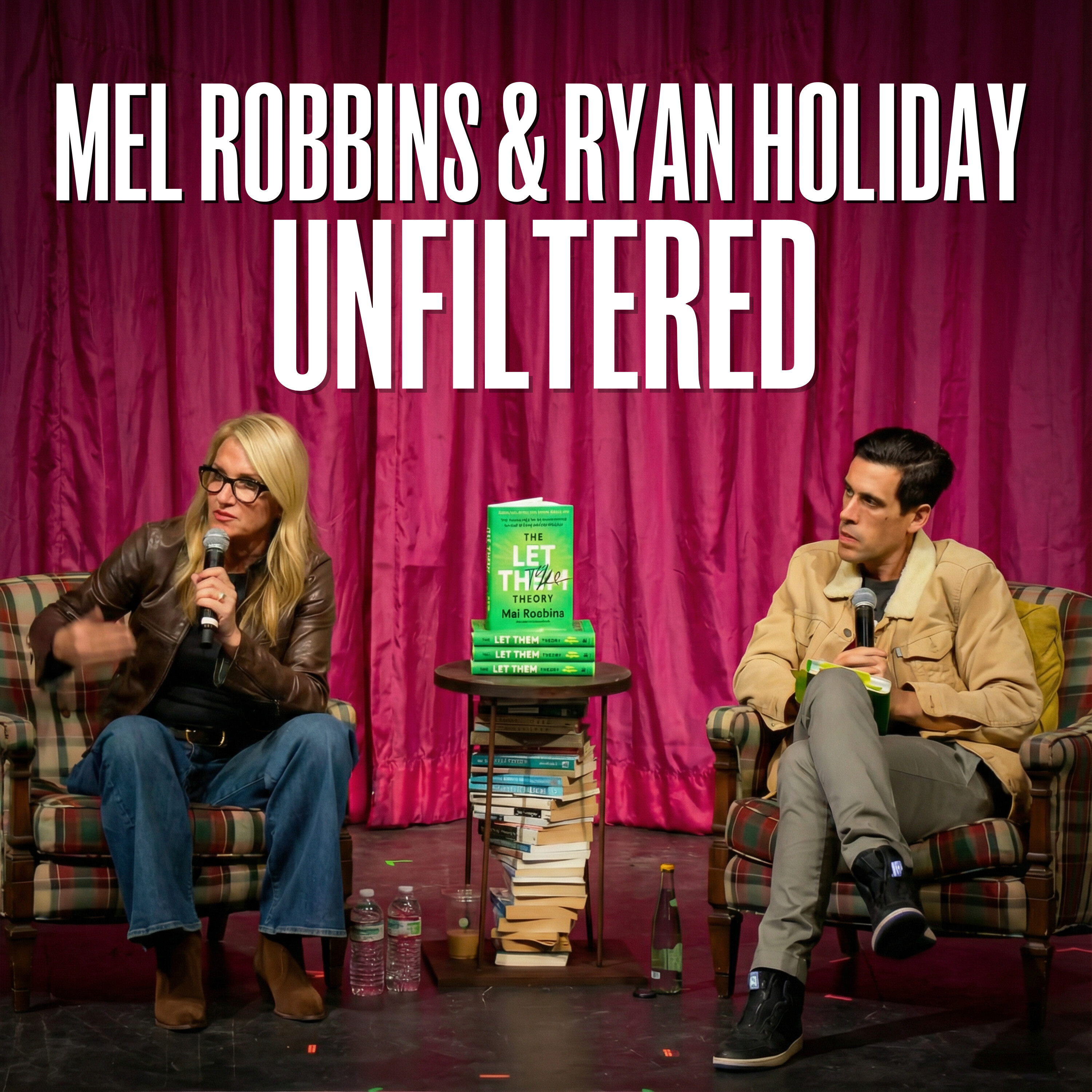
Loading summary
Transcript111 lines
- [00:00]
Ryan Holiday
So on Monday, I had a talk. I was flying to Florida for a talk, but I took the kids to school. I worked at the office and then I picked them up from school. We went to Whole Foods, did our weekly grocery shopping as the boys and I do every week. And then I drove. We met at a parking lot near the airport. I handed my wife the kids and all the groceries. And then I flew to Florida, flew home. And then when I got back the next night, I made myself a sandwich from the groceries that I had just bought. And actually the week before, I took them to Whole Foods for a weekly thing and I had a phone call I had to do. They played upstairs on the, on the playground. The Whole Foods headquarters here in Austin has a second story playground. They played on that while I did my phone call. And then together we went and did all our grocery shopping. I love Whole Foods. I don't have to worry about what I'm feeding my kids. They, they love the, you know, the hot bar. That's what they love. They love getting macaroni. My son loves orange chicken. They love the sushi there. We love Whole Foods in our family. And you should make Whole Foods your destination for all things wellness, including high qual organic options to help you make better choices. Their 365 brand has delicious and wallet friendly varieties of ready to eat salad kits. Plus ready to heat rice and bean blends to pair with lean proteins. You can also save big on supplements and vitamins. This month, check out their high quality multivitamins, probiotics and protein powders for all your New Year's resolutions and goals. Shop all things wellness at Whole Foods Market. One of the things I try to do towards the end of the year, it's something my parents taught me is like things slow down. You finally can think about things for a minute. I want to pick something or someone to be consciously generous to when we're out, we're traveling on Christmas Day. I love to tip big. But one of the things I love to do with my family is we pull up GiveWell and we find a highly effective charity and we donate money to it. Right. Sometimes when you're doing charitable donations like does it help? Does it make a difference? You donate to this fund or that fund. But one of the things that's so empowering about GiveWell is they put a number on the effectiveness, right? You know that it's making a difference. Which is why over 150,000 donors have already trusted GiveWell to give more than two and a half billion dollars and rigorous evidence suggests that these donations will save over 300,000 lives and improve the lives of millions more. Which is why when I'm thinking about making a charitable donation, I check GiveWell first. You find all their research and recommendations on their site for free. And thanks to the donors that sponsor that research, GiveWell doesn't take a cut of your tax deductible donation when you give it to one of the recommended funds. This is your first gift through GiveWell. You can have your donation matched up to $100 before the end of the year or as long as matching funds last. And to claim your match, you just go to givewell.org and pick podcast and enter the Daily Stoic at checkout. Make sure they know you heard about GiveWell from the Daily Stoic to get your donation matched. GiveWell.org code the Daily Stoic to donate or find out more. As you know, it's the start of the new year. We all have our resolutions. We wanna exercise more. We wanna eat healthier. One of mine is I. I love running, but I wanna do some other working out. I wanna be a little stronger in 2026. Well, that's where today's sponsor comes in. Tonal provides the convenience of a full gym and the guidance of a personal trainer anytime at home. With one sleek system. It's designed to reduce your mental load, which, frankly, is don't work out. It's like running this simple. I'm just gonna do it. I go this place, I turn around and then I come home, right? I don't have to think about how much weight I'm gonna lift, how many sets I'm gonna do. Am I doing it right? Is my form right? With Tonal, there's none of that. There's no focusing on workout planning and there's no second guessing your form either. Tonal gives you real time coaching cues to dial in your form and help you lift safely and effectively. And they set the optimal weight for every move and adjust in 1 pound increments as you get stronger. So you're always challenged. And right now, Tonal is offering our listeners 200 bucks off their Tonal purchase with promo code TDS. Go to Tonal.com and use promo code TDS for 200 bucks off your purchase. That's Tonal.com promo code TDS for $200 off. Welcome to the Daily Stoic podcast, where each weekday we bring you a meditation inspired by the ancient Stoics, A short passage of ancient wisdom designed to help you find strength and insight here in everyday Life. And on Wednesdays, we talk to some of our fellow students of ancient philosophy, well known and obscure, fascinating and powerful. With them, we discuss the strategies and habits that have helped them become who they are and also to find peace and wisdom in their lives. Hey, it's Ryan. Welcome to another episode of the Daily Stoic podcast. So, as you know, I am based in Bastrop, Texas, which is this beautiful little town. It's the closest small historic town to Austin. It's got this beautiful little historic Main Street. It kind of, honestly, we were just at Disney World as a family. It looks, looks like the main street that Walt Disney was trying to capture. Main street in Disneyland and Disney World, it doesn't have as many, like big. Like there's a couple three story buildings, like taller buildings, which you'll see in some places in Texas, like if you go to Lockhart, they've got a couple taller buildings. Or even Smithville, which is down the street from Bastrop. Bastrop's a little kind of low slung historic town. It's called the oldest historic town in Texas. That's not exactly true. I don't know why they say that, but it's gorgeous, right? And so that's where the painted porch is, down towards the beginning of Main Street. The painted porch is there, it's two. And then the studio, which where we record the podcast is right next to it. And when we do events for authors, like we've done one with Jack Carr, we did one with Matthew McConaughey, it's kind of tough cause the buildings are pretty small. There's not like a big event space. We can have only a relatively small amount of people when we do live events. So when Mel Robbins was coming out and she said, hey, I'm happy to do a book signing at your store, I thought, okay, our capacity is gonna be too low. I did know that there's this old historic opera house from the bookstore and I've been wanting an excuse to use it. We just hadn't had one yet. And so I reached out to our team and I said, hey, would you mind if we move this across the street to the Opera House? Now, Mel was in Austin for a big speaking gig. And one of the weird sort of behind the scenes things on speaking gigs is you usually can't do more than one event in the city that you're in. It's sort of a non compete thing. And so her wonderful publicist, Nicole Perez Kruger, managed to make things work. I've actually known Nicole for a long time. She's over@ align PR. We've, we've worked with her a bunch of times over the years. She's awesome if you're ever putting something out. But my point is she moved mountains to get this to happen. And so after we recorded the episode with Mel, what we did was we just walked down the street. We had a lovely little walk and talk. We crossed Chestnut and then we, we took a right and ended up at the Bastrop Opera House where we had 150 people sitting in a building that had been there for nearly 150 years and just continued the conversation. This is like, you know, sometimes we do part one and part two. This is basically part two of that interview with Mel. But then some other people got to ask questions as well. I thought this was a great little chat. She was awesome. It was wonderful to see someone as charismatic and with such stage presence. I thought it was a great conversation. I'm excited to bring that to you. Make sure you listen to part one. Make sure you read Let Them Theory. Not that that book needs my help. Was the best selling Nonfiction book of 2025 and may well be the fastest selling nonfiction book launch like, of all time. It's just an absolute. She signed copies of it, which of course immediately sold out. But we do have some copies of the Five Second Rule and the High Five Habit at the Painted Porch if you're a big Mel Robbins fan. Thanks to Mel, thanks to Nicole and Align PR for setting this up and thanks to all of you that came out. I hope to do more events like this in the future. I hope you're having a good new year, Hope you're getting after it and I will talk to all of you soon.
- [08:29]
Stephen Hanselman
Okay, so let's get into it.
- [08:32]
Ryan Holiday
Okay.
- [08:32]
Stephen Hanselman
I thought we should start with all these people are familiar with. But what do you find that people get wrong about the let them theory?
- [08:42]
Mel Robbins
Oh, there's two things I'm so glad we're starting. Number one, that when you say let them, that you're allowing somebody to disrespect you or that you're allowing somebody to hurt you. That is not what this theory is about at all. It's about when you say let them, you are not allowing anything. You're recognizing what's happening. And you're also recognizing that this situation is not going to change by changing them. That the power that you have is. In the second part, let me. Once I recognize this situation, my boss disrespects me. The person that I'm dating is treating me In a way that's very unattractive. It's below my standards. Instead of living in a fantasy in my head, I say let them. Let them behave how they behave, and let me recognize that this is the situation that I am. And now let me remind myself that I get to choose what's attractive. I get to choose whether or not this meets my standards. I get to choose if I'm going to spend my time and energy and obviously in situations that are very difficult or super challenging. It takes time to figure out how to navigate those situations. It takes time to have the actions that you're going to take build up to meaningful change. But just recognizing that the situation that you're in, the power is not in trying to change them. The power is not in living in a fantasy and your head that this is changing. The power is in you recognizing what's happening and then reminding yourself that your power is in your response to it. And you get to choose when you're ready to change, you get to choose when you're ready to leave, you get to choose how you're going to respond to this person that may never change. And so that's one misconception. The other misconception is that let them. Is it. That's not what this theory is. Let them is the easier part because it rhymes with fuck them. And I think that when you say let them, let them, that's why it works, because you have this level of superiority over the situation. But then you're sitting with the situation, and this theory doesn't work if all you do is say let them. This theory requires you. And it's the harder part, Ryan, to then say the part. Okay, let me. Let me remind myself that what I think about this, whether I come from compassion and understanding or judgment or whatever, you're going to think about a situation and what I do, or more importantly, what I don't do. And the third thing that you can control is, okay, the emotions are going to rise up. That means you're a functioning adult, that you have emotions. You're not numb. There are chemical explosions that are often beyond your control, but those emotions are gonna rise up. But, you know, I used to be the kind of person, Ryan, before this, that I was the idiot that you worked with that would get pissed off about something. And then I'd like write that email, you know, takes 90 minutes, and you go, go, go, go, go. And you're so pissed off, and you put 11 people on it. And then what do you sign it? This. And then you Hit. And if you ever notice, no one responds to those emails. And so I was the person that was allowing my emotions to make me a human reactor. And this taught me that the emotions are normal. And there's things about life that are so unfair and there are things that are scary and there are things that are frustrating and there's stuff that's going to stress you out and there's very real problems you may be facing. And your emotions are going to come and they're going to go. But if you can start to go, okay, let them, let them rise and fall. Take a beat. Let me remind myself that it's not going to always feel this way and let me choose how to respond. And there are times, guys, where I don't use it. I'm just a raging bitch and I fly off the handle. And then I quickly apologize and collect myself. But what I've noticed that has had a very profound impact on me is that I've never actually felt so calm and peaceful. I have lived with such chronic kind of on edge anxiety, waiting for the next shoe to drop, that I didn't understand that there was a way to go through life and not have everything kind of set you off.
- [13:30]
Stephen Hanselman
What you said about emotion there, I think is important because I think sometimes people think stoicism is the absence of emotion, isn't it? You've read the Ancients, you have, you achieved enlightenment and now you don't feel anything. And people go, I don't want to do that. To me, I don't think any amount of studying this stuff makes you never get triggered, never get upset, never get worried, never get jealous, never get afraid. It's just how far do you let those emotions take you? So you can write that angry email, but the self control is in not hitting send. The self control is in the stepping back and going, hey, actually, am I jealous of this person? Let me look at this larger picture. Can I be happy for them? Can I ask them questions? To me, it's like you have the emotion, but then can you not let it make you do something that later you're going to regret? That to me is really where the self control part of it comes through.
- [14:27]
Mel Robbins
Yeah. And it's been life changing. I kind of feel like, why did it take me 54 years to figure this out and I didn't know? And I also feel, I don't know if any of you have ever felt this way or feel this way. There were so many things that I wish I'd be in a conversation. I'm like, why did I say that? Or I would kind of think about my day, and I'd go, why did I react that way? And so there was so much judgment and questioning because I wasn't actually in control of myself, because I felt so triggered by what was going on around me. And this really helped me to just center myself and be able to feel more in control. I was also telling Ryan earlier, look, these are not things I'm proud to admit to everybody. It's not like, it's fun to, like, say to everybody that there's all, like, I. There's so many things I did as a parent that, my God, if I could just go back in time, which I can't, I would do differently. And I also think about the fact that I just. I took my emotions out on the people that I cared most about. And we were talking about the fact that if your kids come home from a day of school and they are horrible with you, that's actually a good sign because they've been holding it together for everybody else, and you're safe to do that with. But as an adult, I shouldn't be doing that, but I was. And then I would do that thing where I don't know if any of you have ever done this, where you're. You, like, snap at everybody. You're like, I'm sorry. Work was so stressful. And my kids literally used to say to me, right? They used to say, hey, I don't work with you, so don't take your work stress out on me.
- [16:15]
Stephen Hanselman
And the other people are paid to put up with your shit.
- [16:18]
Mel Robbins
Not enough. But it would then sink my heart because I would promise myself that I would do better, but I didn't know how to stop the onslaught that felt like a death by a thousand cuts all day long that I think we all feel in terms of what it's like to live in the world right now.
- [16:43]
Stephen Hanselman
You have an appendix in here. About parenting, I do think this applies very much to being a parent. If someone was trying to integrate some of this stuff into their life or into their family life, what do you think the best places to start are?
- [16:55]
Mel Robbins
I would download the appendix, and it's free. You don't even have to buy the book. Just go to. I think it's melrobbins.com parenting. It's written by Dr. Stuart Evelyn. He runs an institute at Mass General, Brigham Hospital, the number one research hospital in the world. He's been doing it for 30 years. It's called Think Kids. And he's actually writing a book right now based on the research that we did for the leptin theory to apply this to parenting. And it's called With Them. And his whole premise, which I think is such a beautiful thing, and it applies to adults, is that, first of all, let's just start with the truth that everybody wants to do well, everybody wants to thrive, everybody wants to live a good life. And if you're dealing with a child, or I would say an adult who's very challenging or who is not reaching their potential, instead of just labeling as such, like, take a step back and go. People do well when they can. And if they're not doing well, there's typically some skills that are missing. And for most adults, that skill is emotional management and maturity. And for kids, there's lots of different skills from impulse control to even to just sort of the social cues of, like, how far are your feet from other kids in a circle. So you're not the kid stepping up, like, right in people's face, and the kids are pushing you away. And so his premise around parenting is basically, you know, you're not gonna let your kids run in the street and drink alcohol and do all this other stupid stuff, like you're the parent. But when you take an approach that you're not in front of them, you've got your arm around them and you're with them, it allows you to really go side by side because your kids are so smart. You guys are doing such a great job with your kids. I mean it. And if you were to stop yourself from doing what I did, which is trying to push my kids to change or push them to be motivated, which only makes them resist what you're saying. If you go to your kids and he writes all about how you do this and all about the research in this book, beautiful resource that you can download in the back of the book. If you take this approach, like, hey, buddy, I notice that the grades aren't that great. How are you feeling about it? Even if they're like, all they're doing is thinking about it, it's so hard to sit in a classroom and not do well. And then you say, have you thought about what you might want to do about it? And they may have an answer, they may not. But I think nine times out of 10, 10, when you stop assuming and you stop and look, I'm only saying this because I did it all wrong. When you stop trying to solve it for them and you ask them with them, have you thought about what you might want to do, then you might be very surprised at what they come up with.
- [19:58]
Stephen Hanselman
When I also think how much of the conflict at home is about the parent. I think about this about my childhood and then now with my kids having opinions about things that you don't need to have an opinion about.
- [20:09]
Ryan Holiday
Right.
- [20:09]
Stephen Hanselman
And if you can let them, like what they like, like who they like, dress. You know, parents just have so many opinions and then those opinions become sources of conflict and contention. And most of those things, in the big scheme of things, when you're looking back on their childhood, you're not going to be glad you had arguments over X, Y and Z.
- [20:29]
Mel Robbins
Well, let me talk about, though, the really amazing intention behind the opinions because I think a lot of times what we're doing, or at least I'll just speak for myself, you know, when I'm trying to insert myself into my middle schooler's life, is I'm getting worried that they're going to get some sort of hard thing happening at school, be laughed at, whatever it may be. Like, fuck it all up.
- [20:57]
Ryan Holiday
I don't know.
- [20:57]
Mel Robbins
Like, I just, like you see it and you just really want to protect them. I think that's a beautiful thing. I think it's a natural thing. But what ends up happening, or at least what happened for me, is I was constantly stepping across the line because I would cease. Oh, oh, we had blue hair. Oh, God. Do you have to. Do you have to love ninja? Like, can we just do the tips, not the whole head, you know? And I'm starting. We're going to a school here, buddy. Is that possible? When I should have just let him. And he dyed the tips and he was happy and it was fine, but it came from a really good place. But I didn't quite understand the impact, I think about how I manage anxiety with my kids. Completely wrong. And it's really difficult when you have a kid that is starting to spiral from anxiety. And I'm actually going through this right now. Oakley's very public about his stuff and he's 20 and he's just feeling kind of lonely in college. And I'm nervous because he's a real thinker and so he can get up into his head and we're about to turn the clocks back and it's going to be like vampire season at 4 o' clock where he is. And I'm worried about him and I have to check that worry and I have to let him have the dignity of his experience and let me trust that he's going to be okay. But let me also check in in a responsible and meaningful way. But I gotta signal it, you guys, in a way that I'm not signaling to him that I don't think he's capable of managing himself through this. I'm literally reading the with them parenting manual right now on this. Another example, breakups. As we were writing the let them theory, you may or may not know this. I wrote this with my 26 year old daughter, Sawyer. We get to the part about love, we're writing the book. Brian, her boyfriend of two years, I'm talking end of the aisle guy breaks up with her, she takes the manuscript. I hate this book. What am I supposed to do? Just let him break my heart? Let him sleep with other people? Let him. And I love this guy. So now, of course, I'm devastated and I'm friends with the mom. We're devastated. I want to make this okay. And we are having to write the love and the breakup section as she's going through it. And I of course, want to. I want to make it okay.
- [23:43]
Ryan Holiday
I want to.
- [23:44]
Mel Robbins
Yes. I want to take her heartbreak away. I don't want her to be in a depressive state. I want to like come in and be like, it's going to be okay. And you're going to find. Which doesn't help. And as I'm standing there over the digital frame. Have you ever had to do this? Have you ever had to delete somebody from a digital frame? First of all, why do they make it so complicated? I'm standing there and I'm trying to get the delete thing and then it goes to the next photo and I'm like, oh my God. And so of course I'm like, can I just hit pause? Is there a pause on this? Because I don't want to delete this person because I'm still holding out hope. It was a gift to have that happen during this book because I realized that so much of the way that I love is to control and protect and make sure everything's going to be okay and bubble wrap the situation and bulldoze ahead and get her hinge profile up so we can get some positive attention going. I'm just kidding about that. But. And it forced me for the first time to let her grieve, to let her be in her bedroom for three days, to let her go through the experience in a way that she needed to, without trying to shortchange it, without trying to make it better. But just being a witness to her and putting my arm around her, it is so hard when they're struggling, you guys, because you would step in front of a bus to take it away. And yet what I've been learning is that the people in your life, not all of them, but most of them, are so much stronger than you think. And if you can operate in a way where you are signaling you are going to be okay no matter what happens, you can manage this. I believe in your abilities to get through this and I'm here with you. But I'm going to let you go through this experience because I believe you are going to get through it. Like it just changes everything.
- [26:08]
Ryan Holiday
Just this morning, as I do every morning, I was taking the supplements that I take. And if you're not taking any supplements, well, January is a good time to think about doing. Choosing the right supplements can be confusing because there's so many brands and you know, it's kind of a low trust category. It's not super regulated. The products are easy to make and the companies don't even have to say everything that's on their label. That's why we are happy to work with Momentous and why I take their supplements. They've become a high trust brand in a low trust category. They don't just meet the industry standard, they built the Momentous standard, which is their commitment to doing things the right way, not the easy way. Momentous sources only the highest quality ingredients on the planet. Their whey protein comes from grass fed European dairy cows. Their creatine uses the purest form of creatine monohydrate. And nearly every formula is made with clinically backed, highly bioavailable nutrients with no fillers and no artificial sweeteners. My wife is like allergic to everything. She's very sensitive about what she puts in her body and what she doesn't. And she loves their stuff too. If a product doesn't meet Momentous standards, it doesn't hit the shelves. In a space where trust is rare, Momentous is redefining what trust looks like. And right now, Momentous is offering our listeners up to 35% off your first order with promo code Daily Stoic. Head over to livemomentous.com and use promo code Daily Stoic for up to 35% off your first order. That's livemomentous.com promo code Daily Stoic. This episode is sponsored by BetterHelp. I actually just finished my online therapy session just a few minutes ago. The year's coming to an end. I guess I could have pushed it till January, but I thought, you know what? No I want the holidays to go well. I wanna be focused on what I should be focused on. I wanna take care of myself. I wanna get better. And that's where today's sponsor, BetterHelp, comes in. Therapy is a great way to get a unbiased perspective on your life. It's how you can get a weight off your shoulders. It's so you can focus on the future. It's so you can break old patterns and be who you wanna be in 2026. With over 30,000 therapists, BetterHelp is one of the world's largest online therapy platforms. They've served more than 5 million people all over the world. BetterHelp therapists work according to a strict code of conduct. They are fully licensed in the US and they even do the initial matching work for you so you can focus on your therapy goals. If you aren't happy with your therapist, you can switch to a different one at any time from their recommendations. If you want to leave some stuff behind, leave it in the past, leave it in 2025. Well, BetterHelp can help you do that. And you can sign up right now for 10% off@betterhelp.com DailyStoicPod that' that's betterhelp.com DailyStoicpod.
- [29:03]
Stephen Hanselman
I have one more question related to that and then we'll open it up to everyone thinking about, like, why I think we worry so much about our kids, why we interfere, and then generally what causes, I think, a lot of anxiety, I've come to think is like the idea of extrapolation.
- [29:16]
Mel Robbins
What's that word mean?
- [29:18]
Stephen Hanselman
We can't just let something be a. A singular instance. We have to think about what it's going to mean if we let them dye their hair or we let them do this, or there's a line in Meditations where Marx Lewis was like, just. Just that your child is sick. You don't have to think they're going to die of it.
- [29:37]
Mel Robbins
Right? That's what I'm doing with my song right now. Yes. I'm literally already. This is going to be terrible. Three weeks from now, you're worried they're.
- [29:45]
Stephen Hanselman
Going to end up under a breach? Some, yes. If you let them quit the piano.
- [29:48]
Ryan Holiday
Then they're going to be a quitter.
- [29:49]
Stephen Hanselman
And then they're going to drop out of high school and then they're not. All of a sudden, you're not in.
- [29:56]
Ryan Holiday
The present moment anymore.
- [29:57]
Stephen Hanselman
And I think just generally, if I think about what anxiety is, it's not allowing this to just be whatever it.
- [30:06]
Mel Robbins
Is Oh, I think it's something else.
- [30:07]
Stephen Hanselman
Okay, well, tell me. But I think the problem is we can't just let things, things be what they are. We have to interpret and predict what we think they're going to end up as. And that's what causes us stress and worry.
- [30:21]
Mel Robbins
And I think we do it because if you can envision what's going to happen, you think it's going to make you feel more in control now?
- [30:30]
Stephen Hanselman
Yes, sure.
- [30:32]
Mel Robbins
And the thing about anxiety, and this is something that I wish I had known years and years and years and years ago, is I love Dr. Russell Kennedy, who is a neuroscientist and a medical doctor who specializes in anxiety. And he says all, all anxiety is separation anxiety. I'm like, I don't think so. I don't think that's true. I don't think so. I don't think it's separation. And he's like, yes, it is, Val. And I said, well then explain to me how going on a job interview and having anxiety is separation anxiety. I'm not worried about my mother right now. Like, I'm not. And he said, no, no, no. It's separation from self. Because anxiety only happens in a moment where you feel uncertain about what's about to happen. And then an alarm kind of goes off in your body because you feel a little uncertain. And the alarm is making you pay attention because you feel uncertain. And then you and you separate from yourself and you go up in your head and you start going, what if this, what if that, what if the other thing. And now you crank up the alarm because you are now separating from your God given universe granted ability to manage it. And so for me, started to think about these moments where you feel anxious as a moment not to go up here, but to drop in and to say to yourself, I'm gonna be okay no matter what happens, I can manage this. Like it's okay that I'm nervous. Like being nervous or anxious about something might be a mentally healthy response to the situation because you care about it. You don't get anxious about shit, you don't care. And so like, if you think, okay, instead of going up here and going, well, what if it doesn't work out? Drop down here and go, well, what if it all works out? And what if I can manage this? And what if, like, I'm going to be okay no matter what happens? Now you're doubling down on your abilities and you're also changing the settings up here, which quiets the alarm in here. I didn't Know any of this, by the way? This is, like, new stuff. Like, I wish I had had that.
- [32:57]
Ryan Holiday
Yeah.
- [32:58]
Mel Robbins
Can I put grandma's pillow on?
- [33:01]
Stephen Hanselman
I don't think the pillows have any family history. You can stomp on it if you want.
- [33:04]
Mel Robbins
Okay. I'm not gonna stomp.
- [33:06]
Stephen Hanselman
All right, let's do questions. Let's keep them really tight and brief. Those statements are full of sentence.
- [33:14]
Mel Robbins
Oh, great. Hi, everybody. Thank you for coming. Hi.
- [33:18]
Ryan Holiday
Go for it.
- [33:19]
Mel Robbins
Okay. Okay.
- [33:20]
Audience Member 1
So, Mel, I'm going to challenge you. I'm obviously not going to refute the let them theory because it's affected my life profoundly already.
- [33:28]
Mel Robbins
Okay.
- [33:28]
Audience Member 1
I am knee deep in the rescue chapter. My mom, had she not intervened when I wasn't ready, would have let me die of addiction to drugs. Instead, she planned for me to go to rehab. I was 25 years old. I wasn't a mic. And yet she paved a pathway for me to do it. So how do you recognize when. I'm not fully through the chapter yet, but how do you recognize when someone is ready to change? You talk about motivation versus influence.
- [33:55]
Mel Robbins
How do you recognize that you can't? Because you recognize when you're ready for them to change. And you should continue to show up for people who are struggling. But the thing you have to let go of is the expectation that if you do the intervention and you pay for rehab, that the person that you're trying to support is ready to do the work at that time. That's the difference. It's an understanding that you can desperately want somebody to heal. You can desperately want somebody to become sober and to be able to be sober, and that is a beautiful thing. And don't ever give up seeing the bigger possibility for people in your life. And you can only control what you do in terms of how you show up and support somebody. You cannot control whether they're ready for the support. And I am so happy that you were ready to do the work, because it is very hard work to change your life. Very hard work. But would you agree that there was something that had to happen inside of you that made you want to change for yourself?
- [35:27]
Audience Member 1
100%. And my mom asked me, don't do it for me. Don't you want to do it for yourself? And that was the moment that I knew. And so just one more. Thank you. Number one. Number two on the New York Times bestseller list. No, we're going to get you to 52 weeks. But I can't believe that we're in small town backstop right now with two titans of thought. Leadership. And so I just wanted to thank you both for hosting an event like this.
- [35:48]
Mel Robbins
You're welcome. You're welcome. You're welcome to have flash. They all are. We always hear about breadcrumbs being left behind for others to pick up along the way. Y' all are probably leaving them now as you're talking, as you wrote your books, all the wisdom I want to hear about the breadcrumbs y' all have picked up along the way forward. These could be signs or coincidence or a great opportunity that was presented in front of you and you took it.
- [36:22]
Stephen Hanselman
That's an interesting idea, right? Everyone that you're following or learning from is also following someone else or learning from someone else. I think about my life was changed when someone handed me a copy of the Stoics 20 plus years ago now, right? Somebody said, hey, this worked for me. I think it might work for you. And I think what I try to do in my work is pay that idea forward.
- [36:45]
Ryan Holiday
So.
- [36:45]
Stephen Hanselman
So I try to take things that somebody told me or somebody introduced to me and I can't pay them back, but I can pay it forward by spreading it to other people. So that's kind of what I feel like I'm doing in my work.
- [36:59]
Mel Robbins
So I'm going to answer two ways. I see signs every day. I look for them. If you are clear about what you want in life, and I think a lot of times one of the reasons why at least I stayed stuck for so long is I wasn't clear about what I wanted. And clarity can literally be, I just don't want this. That's enough. It's enough to say how my life feels right now, how I feel in my body right now, how I feel at this job, how I feel in this relationship. It no longer feels good.
- [37:30]
Stephen Hanselman
Knowing what you don't like and how you don't want to live is actually a lot of direction.
- [37:33]
Mel Robbins
Well, I'm not a really positively motivated person. I really am more negative motivation. I need a lot of pain and I need to get to a point where, like, this sucks. And then I endure it for too long. And then I get to the point where, like, staying here is harder than doing something different. And so once I get clear about what I want, the coolest thing in the world, I kid you not, is that there are signs all around you. And this is not woo woo shit. This is the way your brain works. That when you start to get clear that your brain is not just a sponge, your brain is a spotlight. And it is waiting for you to get clear and loud about what you want. And we did this incredible episode with this neuroscientist and neurosurgeon, Dr. Jim Doughty, on the science of manifestation, where he explains the four parts of your brain that you are bringing online to purposefully, intentionally encode in your brain the things that you want so that the filters in your brain and the attention network and these four networks organize themselves to start to filter the world, just like your social media does as it's listening to you. And all of a sudden you're like, why am I seeing lower level facelifts? Oh, because I keep complaining about my jowls. Okay, I gotta stop talking. I like my face. I like my face. I like my face. Your brain works the same way. And I want you to listen to that episode because as he came in and spoke about this professor at Stanford, the chairman of the Dalai Lama Institute, he was so emotional. And when he left, I wondered, wait, was that performative or what? Like, he was so in touch with something, you could tell it was so urgent. That weekend, he went home and had a routine hernia surgery and it went horribly wrong. And he was in the ICU for months and died. And I think it was the last interview he ever gave. And I think subconsciously he knew that this was going to be the last time he could explain his life's work and how you can change the settings in your mind and the four different systems in your brain to help you filter the world so you don't just see signs, because there is evidence all around you if you are willing to look for it. And most of us are going through life like this, and the settings in our mind are from childhood telling us it's never going to work out. It might work out for rhino metal, but it's not going to work out for me. And you can change. The most exciting thing that I have learned recently is just we are designed to change, and that's the coolest thing in the world. And so that's the first thing I would say, is that I see signs all day long. Like, I am so moved by not only how this book has been received, but by the impact that it's making. And I know, because I see the signs, that it is not me. There is something deeply spiritual happening around our collective consciousness and the need to be reminded of what you know to be true about life and what's in your control and operating with acceptance and compassion and understanding instead of so much judgment. And so I see the signs all the time, and the Second thing that I will say, I just flew out of my mind. This is what happens when you're 57 and menopause. I'm sorry. The signs that. Oh, oh, breadcrumbs ahead. So if you go through life and you recognize, like, I feel like life, we're all on one big walk together. And there are gonna be times in life where you're a couple steps ahead of me and you've gone through something that I'm going through now, and you can help me as we're on this walk together. And then there are times where I might be side by side bitching about our family. That's what we do on that walk. And then there are times that I might be a little ahead of you, you know, oh, I went through that dyslexic thing with my son and myself, and maybe you're going through that. And so I can help you if you take an approach that you can learn from. Absolutely anybody, Everybody around you has something to teach you. I walked into a bathroom the other day. Oh, my God, it is. Well, I do think, like, how you operate in a bathroom says a lot about it. In a public bathroom now, do you thank the person that's cleaning the bathroom? I love you people because you know how thankless that job is. Do you know how many people walk past that person every day and treat them like the faucet? There was a woman cleaning a bathroom in an airport last night week. And she was singing a song, and she was saying good morning to everybody. That is a person we can all learn from because she understands the power of your energy. I love this saying that you bring the weather. You can be a bluebird sky on a sunny day. And we all know what it's like to throw open the curtains and see a day like that. It just seeps into your soul. Or you can be a thunderstorm. And I was a thunderstorm for too long. And so that's my answer.
- [43:34]
Ryan Holiday
Thank you.
- [43:38]
Mel Robbins
This question is for you. As you were finding your clarity, was there anybody or any. Anyone in particular that inspired you before you wrote? I mean, obviously let them. But the five second rule. Well, you know, I grew up, I'd come home from school and Oprah would be on tv. And I know that's kind of like an answer that a lot of people say, but she was the first person that really just made me think that there might be something bigger in store for my life. And she was the first person that I saw really doing interviews, not with celebrities, but with just normal people. And leaning in and being really curious about why people believe the things they believe or how they got through that terrible accident or why would you want like seven wives? One of us is enough. Like, you know, no judgment if you have seven wives. But you know, just. And so it really. She demonstrated something that impacted me and so I would say her. But I think I really take inspiration from just the oddest places because I think people have so much to teach you if you're willing to be curious and interested in other people, which I deeply am. Thank you. You're welcome. Ryan. I have your momentum or you coin. So that's what inspired me to come up here.
- [45:11]
Stephen Hanselman
Oh, lovely.
- [45:12]
Ryan Holiday
Thank you.
- [45:13]
Mel Robbins
Well done.
- [45:22]
Ryan Holiday
So we had a unusual little first world problem in our family. We built a little house down on the Gulf Coast. Almost done. And now we're in the process of furnishing it. And we had to get mattresses for all the rooms. And so it was like, what mattresses do we want? And I was asking a friend, you know, what mattress do you have? Do you have a mattress you love? And they were like, I love Helix. And as it happens, that's who we grabbed a house full of mattresses from. And they are, coincidentally enough, today's sponsor. It's obvious why people love their Helix mattresses. They're not just comfortable, they're comfortable for a reason. You fill out this quiz that matches you with the perfect mattress based on your preferences and your sleep getting. The midnight mattress, since it's got that medium firmness, it's not too firm, not too soft. And as it happens, it's their best selling model. Helix is the most awarded mattress brand. It's been tested and reviewed by experts like Forbes and Wired. They've got free shipping, seamless delivery. Like, honestly, the mattresses came sooner than we were thinking. We were doing this all. And then like the mattresses arrived sooner than the beds, which was awesome. Helix delivers the mattress right to your door with free shipping in the US and you can rest easy with the Helix guarantee that ensures seamless returns and exchanges. It's a risk free customer first experience designed to ensure that you're completely satisfied with your new mattress and includes 120 night sleep trial and limited lifetime warranty. Go to helixsleep.com stoic for 27% off. That's helix.com stoic for 27 percent off. Just make sure you enter our show name after checkout so they know we sent you helix.com stoic a couple of years ago, one of my wife's words for the year, we try to think about it a word that we're going to live by the next year. One of those words was systems. The idea was setting up better systems, putting systems in place that just make us better, more efficient, more effective, more responsible. And nowhere are systems more important than when it comes to your finances, right? Managing your money doesn't have to be a struggle. It can be automated, it can be accessible, it can be tracked. And that's where today's sponsor, Monarch, comes in. Monarch is an all in one personal finance tool designed to make your life easier. It brings your entire financial life from budgeting, accounts, investments, net worth and future planning all together in one dashboard, your laptop, or on your phone. And if you want to start the year off on the right foot financially and get 50% off your monarch subscription, you can. With Code Stoic, Monarch helps you reach concrete, achievable goals you'll stick to for all 12 months of the year, not just January. And they've got some new AI tools that are built on Monarch Intelligence, which is designed to help you access authentic collective wisdom of certified financial planners and financial advisors 24. 7 Access to financial advice and insights personalized to you this new year, achieve your financial goals for good. Monarch is the all in one tool that makes proactive money management simple all year long. Use code stoiconarch.com for half off your first year. That's 50% off your first year with monarch.com code stoic.
- [48:43]
Audience Member 2
Hi, this is for Mel and Ryan. I'm going to be speaking to a freshman class at Indiana University Business School all about career discovery. And what I find most interesting about both of your careers is it started a little bit non traditional. Mel, you had law, you started in law, and then Ryan, you started as a writing research assistant. So I love just, I feel like I've seen Steve Jobs had said if he didn't take this one class in fonts, Apple might not be the company it is. Were there any of those moments, early career college like that you were exploring that really helped set you up for the careers that you've built today?
- [49:22]
Mel Robbins
I squandered my college years. No, I did. I drank like crazy. I was like one of those kids that got to college and was like, woo, I'm not trying to be funny. And I was too focused on boyfriends and having fun and I didn't know I had chronic anxiety. And I call those the peak dysfunction years. They kind of led into law school too. And I say that because I think that even like there's classes that teach you stuff. And then there's the things that you learn by screwing up things up. And there was a lot that I would do differently based on that experience in my life. And I think that has informed a lot of the work that I do now, because I didn't know how to change. I didn't know that a lot of people felt the way that I felt. I didn't know that I was actually struggling with dyslexia and adhd and anxiety was the thing that came to the surface. I didn't know about the trauma that I didn't even remember. But the only class I can think of is I was. Well, I can think of two. One is I was a film major. And it was back when the film. What's that? I didn't know that. That's interesting. Film and history. And it was back when you had to cut the film and then stack it on the pins, kind of like those old printers. And then you had to put tape on there. And I would lose myself in those editing days and be up all night. And I didn't know that I had really bad dyslexia yet. Every other class I could barely get through. And the same thing happened in law school. I almost failed out of law school. And then I discovered mock trial, which is talking. And it was like a fish to water. And looking back, I can now see that the clues were there because the things that come naturally to you, the things that you enjoy, are aligning with the way that your brain works and the things that are deeply held in here and the things that are really like just friction at just impossible. Like, that's also a clue.
- [51:42]
Ryan Holiday
Yeah.
- [51:42]
Stephen Hanselman
I think one of the things that can happen is you can specialize too early. You're like, this is what I want to do. This is who I am. There's some advantage to sort of not knowing that because you end up having all these different experiences and trying different things and bumping into different things. It's really, really important. I think one of the best career advice books you could possibly read would be David Epstein's book range, which he's talking about how in sports, the earlier you specialize, you think that would be an advantage. It's actually a disadvantage not just because you can get injured from sort of repeated overuse, but because you're not developing a broad base of skills and experiences and knowledge. And so I had a career in marketing, and I was a research assistant. And then my book sort of was a combination of those two things. Later on so the more you can do, the more you can try, the more weird things you can find yourself in the middle of, the more ultimately you're going to find exactly your take on whatever it is that you're sort of meant to do.
- [52:41]
Mel Robbins
You know, I think increasingly you should do the thing that you enjoy and then you should focus on skill building in project management and in the skill and communication in terms of being able to stand and talk in front of people. Because those are things that are going to be a through line through absolutely every career that you have. And if you enjoy. Like I found it fascinating when I talked to Angela Duckworth, you know, she's the one that wrote that big book on grit. I kind of miss the memo that people who have discipline and willpower, there's a fundamental through line. They enjoy the things.
- [53:24]
Stephen Hanselman
It's not gritting your teeth and baring stuff you don't like.
- [53:26]
Mel Robbins
Yes, yes. And so if you encourage people to pursue something that they actually enjoy, they'll probably be really good at it because they're going to want to spend time at it. And if you then supplement it with some skill building and I think I call it clipboard mentality, I tend to hire a lot of first born daughters. Yes, right. You know what I'm talking about. Type A, like hand. And I didn't mean to, but there's this clipboard mentality of they will run you over before they will not get their to do list done. And that is a project management skill that is universal in people that anybody can learn and we're gonna need it. And then also learning how to stand up in front of people and express yourself, because especially for the women in the audience, bias is very important here. Based on the research, there's only one behavior that translates to getting a promotion at work for more money or a title change. It's are your contributions known? And it's not your boss's job to make your contributions known, it's your job. And so if you sit silently in a meeting or you're uncomfortable advocating for yourself or talking about the things that, that you're working on, you will get passed over. Because everybody is so overwhelmed, they don't even know what they're working on. So they definitely don't know what you're working on. So that would be. If I were going to do what you're going to do, that's what I would tell them.
- [54:57]
Audience Member 2
Thank you.
- [54:58]
Stephen Hanselman
All right, we got 10 minutes and three questions, so let's go.
- [55:01]
Ryan Holiday
Here, Here.
- [55:01]
Mel Robbins
That's it. Aren't you having fun? You have to get home. Okay.
- [55:04]
Ryan Holiday
Trying to respect your side.
- [55:05]
Mel Robbins
What time is it? I don't know what time is.
- [55:08]
Ryan Holiday
Go for it.
- [55:09]
Audience Member 3
Hi, my name is Nanette.
- [55:11]
Mel Robbins
Hello.
- [55:12]
Audience Member 3
So I really get the Lectin theory with people and how it works, and it's been helpful. When I was listening here, I got a lot of downloads and new thoughts. So I live with stage four breast cancer and so my life is essentially constant anxiety about unknown things. Like the common word in cancer is scanxiety. You know, it's a word that should be in the dictionary. So like, can I think I know the answer, but can I do let them with things that are people. Like, let the scan results be what.
- [55:45]
Mel Robbins
They'Re going to be.
- [55:46]
Ryan Holiday
Yes.
- [55:46]
Audience Member 3
And then. But the let me part is harder because it's like my entire life.
- [55:51]
Mel Robbins
Okay. I can't even imagine because I am not living your life. And here's a sign, by the way. So we're talking about looking for signs. I just interviewed.
- [56:02]
Audience Member 3
Yeah, 10, 20 people have sent me that podcast.
- [56:05]
Mel Robbins
No, I haven't published this.
- [56:06]
Audience Member 3
Oh, I thought you were talking about the doctor.
- [56:08]
Mel Robbins
No, and now I know who I was interviewing her for.
- [56:11]
Stephen Hanselman
Thank you.
- [56:12]
Mel Robbins
You. I interviewed Dr. Aliya Crum, who is a Stanford professor whose entire work is about settings in the mind. And she has done all this crazy research. You know, the little chicks. Oh, this is so cool, you guys. So I'm going to tell you about chick study so I can prove to you that her research is really interesting and it might work because I can give you the information. But if you don't have the hope that it might work, you won't try it. And I'm going to tell you the study. The study is fascinating. It's called the milkshake study. Dr. Crumb did this study. And here's how the setup works, okay? We're all in the study Monday morning at 9 o'. Clock. We got to show up faster. And we go into the lab and they present us a milkshake. Now, the milkshake is 300 calories, okay? That's the fact. But when we get this milkshake On Monday morning, Dr. Crum says, here's your milkshake. And it has a label on it that says like sensible milk a shake. And she tells you it's 150 calories. And it's a really good choice. It's a very sensible choice. And you and I drink the milkshake. Now, meanwhile, they got us hooked up to all kinds of stuff and IVs and everything else so they can measure our biology. And what's fascinating is that Even though it's 300 calories and has a certain nutritional component, because she changed the settings in your mind to believe it's 150 calories and it's a sensible choice, your body continues to release this hormone, I'll get the name wrong, like ghrelin or something like that, which is the hunger hormone, because your mind is signaling to your body that this is not enough. So your body is responding to the settings in your mind. So then Wednesday we go in fasted and it's 9 o' clock in the morning and. And here's your milkshake. It's 300 calories, the same damn thing they fed us on Monday. Okay. Vanilla milkshake, only this time the wrapper's pretty and it's decadent milkshake. This one's 600 calories. This one's a luxury. Oh, my God, you deserve this decadent thick again. Changing the settings in your mind, your body, when you drink what you believe to be the 600 calorie milkshake, does not release the hunger hormone because you are signaling to your body that you are satiated. Now, here's the gift for you. They have been studying and have not released this, and she talked about it on the podcast, the settings in the mind that are working for cancer patients. And their research is showing that when you say to yourself over and over, I can manage this, I can manage this, and then you add in, my body is capable of handling, those are the settings based on research that signal to your body a calmness which you need because one of the things that you know is managing your stress response is really important so that your beautiful, intelligent, amazing immune system can work with the training treatments. And the one thing that I do know is I do not know what's going to happen, but I know you're not going to go through this alone and I know you can manage it.
- [60:05]
Audience Member 3
Thank you so much. And this has also helped going to help a lot of people because I also work as a cancer coach and like, developing some sort of verbalizing around anxiety is one of my goals and I haven't been able to do it because I have it. And so when that podcast comes out and your words today are your, well.
- [60:22]
Mel Robbins
You can start using it now and here's why you haven't been able to do it, and here's why you have anxiety, because it's a mentally healthy response to what you're going through. To me it would be weird if you weren't anxious, but you, in those moments of uncertainty, can double down, that you have the ability to manage it, and that is going to help you manage it. And because you have anxiety, if you use that research, and it does start to help, now you can speak with a level of conviction because you're not just reading it or hearing about it like I have. You actually experienced it, and that's such an incredible thing.
- [61:14]
Audience Member 3
Thank you.
- [61:15]
Mel Robbins
You're welcome. Thank you. Hello. I have a question for both of y'.
- [61:23]
Stephen Hanselman
All.
- [61:24]
Audience Member 3
How do you balance giving yourself grace while holding yourself accountable for your goals?
- [61:30]
Stephen Hanselman
One of my favorite lines from Marcus Aurelius is he says, tolerant with others, strict with yourself. So obviously, I do think holding yourself accountable is. Is important because you're the only one that can really hold yourself accountable. At the same time, instead of trying to hold myself to some impossible standard, I try to think like, hey, am I getting better? Am I doing my best? It's really hard if you are holding yourself against some sort of objective standard or some, as I said, some impossible standard, and then you're mad because you lost, or you're mad because you didn't do this, you didn't beat this person. I try to measure myself against myself.
- [62:09]
Ryan Holiday
Which.
- [62:11]
Stephen Hanselman
Is nice, because I've got plenty of flaws and problems. And I'm just thinking about, am I getting better than I was before? I'm not always going to be perfect, but that's how I'm trying to think about, am I getting a little better than I was before?
- [62:24]
Mel Robbins
I think it's a great question because you're not a robot. And I think one of the real skills in life is not. Not what you do on the day is you feel great, but what do you actually do on the day that you don't feel good, and what do you do on the day after? You, like, really messed up yesterday. You didn't do what you said you were going to do. Are you the kind of person that just says, that's it, you beat yourself up, or do you have the ability, which is a skill, to recognize that life happens? And if yesterday you blew it, if you can wake up today and have grace for yourself and say, okay, I'm not going for a perfect streak here, but I'm going to pick myself back up and I'm going to go back out on the walk today or I'm not going to. Yeah, and there are going to be times in your life where you're going to not do it for five weeks and that's okay. I think about change, like going up a big staircase and you go up and then you hit a level. And when I have those streaks where I'm not good about looking at my phone in bed, or I'm spending too much time looking at my phone at night, or I maybe don't go to the gym for a week, I'm on a level. But the thing to keep in mind that I think is really important is that you still went up that staircase and you don't lose that game. And the secret is on those days to remember that the progress that you made isn't gone. And that's how you give yourself the grace for life to happen. And then just remind yourself at any point in time you can write, oh, I'm on a landing. That's all that happened. And I'm allowed to be human. And I'm going to start climbing the next flight of stairs.
- [64:22]
Stephen Hanselman
And that's really the powerful muscle, the one where you're on the level to say, hey, I'm going to take one more step here. It's not the 500th step in a row that's that hard. It's the when you're at the level to go, I'm not going to stay here. I'm going to try to go a little bit further.
- [64:37]
Mel Robbins
Well, and I'm going to give you one more piece of advice. You ready? So I am really stubborn and I will not hold myself accountable. So I have to set traps. For example, I do not sleep next to my phone because I will grab it and it's across the room because that's a trap. When the alarm goes off, I know I'm unmotivated. And if it's going off across the room now I'm mad at myself because I have to get out of bed. And I know that if I leave it up to Mel to decide whether or not I feel like exercising, the answer is no. And so you know what I do? I set a trap. I pick out my exercise clothes at night and I lay them on the floor of the closet like a giant middle finger waiting for me at 6 o' clock in the morning. And it's one less decision. And it helps me deal with the fact that I am a human being that I oftentimes doesn't want to do what I don't feel like doing. I think especially for women, or if you're going through a stressful period in your life or you're caring for aging parents or your kids are going through a tough time, Your ability to stay focused and be disciplined plummets. And so these are little tricks. Like, here's another one. I set a filled water bottle in front of the coffee maker. Like a linebacker waiting for me, I feel fill it the night before because I want to drink water before I have coffee. And so when you find that you're not able to stick to something before you beat yourself up, please take a step back. Please ask yourself, is there a little system I could create here, a little trap I could set so that I don't have to think so much? It's just right there. Is there a way I could make this easier for myself? Is there a post it note I could stick on the mirror? Is there like, you know, could I take it extra time at night and pack my own lunch because I'm constantly letting myself down because I don't have enough time in the morning. So before you indict yourself for not being able to really like be disciplined, just be like, can I just make this easier?
- [66:54]
Stephen Hanselman
And that's a form of grace. That's like time travel. It's grace for the future because you're making it easier for you to make the right decision when it comes up.
- [67:03]
Mel Robbins
Yes.
- [67:05]
Audience Member 1
Thank you.
- [67:06]
Ryan Holiday
You're welcome.
- [67:07]
Mel Robbins
And that's perfect because thank you, Mel, for just sharing all your little tools as a 50 something. Also, those tools just mean everything. Thank you for putting them in books. And Ryan, thank you for actually teaching me history. It's the only history I want to learn. Thank you so much. Here's my question. I don't know if you guys know this. The world is really heavy right now. Kind of sucks. You know, I want to know what is bringing you joy right now. That's a really important question because there's a really incredible medical doctor and she's a principal investigator for the fda and she is her, her research institute is the lab that did all the testing that got the first ever postpartum drug approved. She is such a badass. And she's just done the first ever research on what they're calling high functioning depression, which I think we all have right now. You know, you're able to get to work. You're able to like, go through the motions. You're able to like kind of pay the bills and get it all done. If you are, you are feeling disconnected from yourself. You are feeling a sense of hopelessness and overwhelm. And her prescription as a medical doctor who's been researching this in this incredible research institute is small moments of joy because it's almost like small moments of joy fill you up a little bit. It's like putting on a life jacket that keeps you above the water so you don't slip under it. And for me, I despite the fact that it feels like the world is slipping off its axis and that there are things that are tremendously wrong right now, I am actually very hopeful and very optimistic because I refuse to believe that the majority of us agree with the extreme 5% of voices that dominate 90% of the headlines in social media. I just refuse to believe it. And I know that the majority of us all want the same things. We believe the same. We may disagree on how to get there. And I know that people are waking up and people are saying we're better than this. Like I gotta start like just talking to people and I gotta start really aligning my life with my values instead of self silencing and letting all of this weigh me down, I got to reengage in my community. And small moments of joy remind you that there is meaning in life, in your life, even when things seem overwhelming. And that doesn't mean there aren't problems. But if you allow things that you can't control and all of the scary shit that's going on to put you in a state where you're paralyzed, you're silent, you're now so weighed down, if you allow that to happen, then you can't do your part to be part of the force for good. You can't wake up in the morning and go into the coffee shop, because you can go into the coffee shop and be like, are you like, good morning. The woman cleaning the bathroom in the airport is part of the force for good. She's reminding us of our better nature. And so I all day long, despite the terrifying things that are going on and the division that is so unnecessary, I force myself to find things to be optimistic about. And a lot of it for me is nature. Like I live on a mountain. I. When I hear those owls hooting, I just take a moment. When I see a mom with a baby on a swing, I drop into that. When I sit in an Adirondack chair and I am having a cup of tea, I look at the steam coming up. When I see a neighbor helping another neighbor, here's proof to know that we are more alike and people want the same things. If you have a disaster hit, look how everybody shows up. And so I think joy makes reminds you of what you know to be true. It reminds you that there is more to life than the headlines and what's happening right now. And if you can find small moments to be present, to be joyful, to be connected with your kids and your family, if you can find time to volunteer in your community and you're up close with your neighbors, even if you think you disagree, you'll realize you actually agree on a lot of things. I think it's the answer, honestly.
- [72:27]
Stephen Hanselman
It's about cultivating, I think, the eye that you look at the world with. Those are all a number of very perceptive observations that you just had about beauty in an ugly world, right? You can choose to see all the horrible things that are happening in the world, most of which are big, most of which are obvious, or you can sort of hone that kind of poet's eye to see what's wonderful and great and pretty. I was walking my dog on a dirt road and I was eating a plum ricotta. Do you know what that is?
- [72:59]
Ryan Holiday
Apparently they're still inventing new fruits.
- [73:02]
Stephen Hanselman
It's like an apricot and a koala fused together. And I was like, holy shit, this is a new. I've never had this flavor before in my life that didn't exist earlier. This is amazing. And the ability to see that in the midst of chaos and destruction and division, as you said, it's really important because that's partly what they want, right? They want you to be joyless, to be angry, to give up on human beings so they can do what they want. And I think the most important task for everyone in this room right now and for all time is to not let assholes turn you into an asshole, right? To not let cruel people make you cruel. The stoics say the best revenge is to not be like that. And if you think that they are cruel and awful and shitty and all of these things, it's a powerful, transgressive statement to not be those things. That's the job.
- [73:57]
Mel Robbins
I agree. And here's one other thing I want to say, because narrowing your focus to things that actually give you faith in life, again, it's not about tuning out what's happening. That's not what the message is for me at all. I know it's not what you're saying either. See, I really believe the researcher, Dr. Aditi Narikar, who is one of the world's leading experts on stress. And you know how when we were in the pandemic, people, especially educators, were like, we're not going to know the impact of this for years? Well, I think we're seeing the impact of it. I Think what happened when people went into lockdown. There was so much uncertainty and it was so sustained that everybody went into a stress response and fight or flight because we are not designed to live through that much uncertainty. That was constant. And your body doesn't reset automatically. You have to intentionally recognize that you are in a state of chronic stress. You're on edge all the time. The amygdala is running the show. The self criticism is louder than ever. The procrastination is louder than ever. The energy is out of your body. These are all men. Because stress is a medical state. And her research says that 83% of us are in that state right now. And if you take that as a medical fact, which I do, and you recognize the research, which I do, that when somebody is in the medical stress state, you're on edge. Oh my God. Like I can't focus. Why am I more of a. Why do I doom scroll more than ever? Why am I like, what is going on with this? When you take that as a fact, what's also true, medically speaking is your prefrontal cortex can't work the way it's supposed to. So your strategic thinking goes out the window. Your critical voice gets louder, your ability to regulate your emotions gets worse. And so one of the reasons why it's so important to really have that eye on things that bring you into the moment is it's a way to reset the stress response. It's a way for you to dial down what I think the pandemic stirred up in everybody. And when you do that, this part of your brain comes back online and you can think more clearly and you can focus on and you can regulate your emotions. And when you start to feel better, you do a little better. And if we're ever going to be able to fix a lot of the problems or overcome the division or start to have conversations the way people used to and work together. We have to all get out of a stress response so that we can do that with one another. And so I also think from a larger standpoint, that's why it's important. Thank you for coming out. Thank you. I really appreciate it.
- [77:11]
Stephen Hanselman
This was amazing.
- [77:12]
Mel Robbins
Appreciate it. No, I appreciate you coming out. Thank you. Thank you. Thank you for spending time with us tonight. Thank you for being here. Thank you for being interested and feeling better. I mean it. Because it starts with you. If you start taking a little bit better care of yourself, that's the best way that you can help your family. That's the best way you can help your community. Because when you start to really take your happiness and your health and your stress seriously and you take the little steps that make you feel a little bit better, please don't underestimate how powerful you are when you do that for yourself. So thank you for being here.
- [78:12]
Ryan Holiday
Thanks so much for listening. If you could rate this podcast and leave a review on itunes, that would mean so much to us and it would really help the show. We appreciate it. And I'll see you next episode.