← The Daily Stoic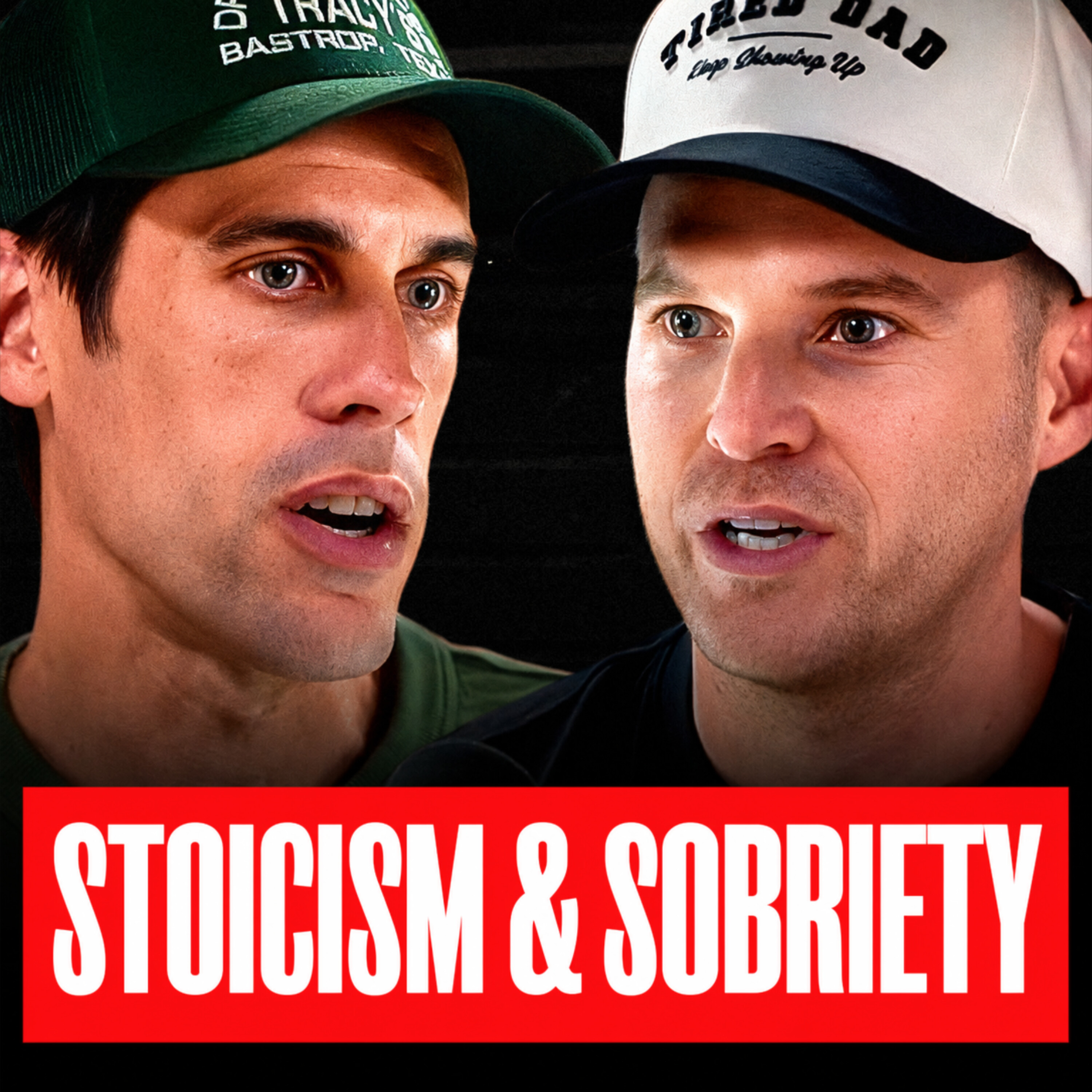
Loading summary
Transcript129 lines
- [00:00]
A
Welcome to the Daily Stoic Podcast, designed to help bring those four key Stoic virtues, courage, discipline, justice, and wisdom, into the real world. A lot of people think, you know, sobriety is about quitting something. I gotta quit smoking, I gotta quit drinking, I gotta quit doing this or that. But anyone that's kicked a serious habit knows it's. It's not so much about quitting as it is confronting not just your relationship with that substance, but why you turn to it in the first place, what it's doing in your life, what hole it's filling, what problem it's helping you medicate or run away from. You know, it's about facing your emotions instead of running from them. How to deal with chaos and dysregulation instead of just reaching for relief. And I think that's why Stoicism has become so popular in 12 step groups and recovery. But also just anyone trying to get control of themselves, trying to deal with those things that Seneca says make us a slave. And Seneca isn't even just talking about substances, right? Seneca's talking about ambition, he's talking about power. He's talking about wanting to be liked, wanting to be famous, wanting to be rich. And for the Stoics, it wasn't about perfect abstinence necessarily, especially for some of these things that actually are a part of life. Unlike cigarettes, which you don't need to smoke or crack, what you don't need to do, some of these other things are more integral part of life, and therefore confronting them and our dependence on them or our unhealthy relationship with them is even harder. I was talking about this a few years ago with Troy Baker. We did a great episode of the podcast. We were talking about Marcus Aurelius and the idea that Marcus Aurelius is not the work of someone who has mastered himself once and for all, but someone who's still wrestling, still correcting, still trying, still confronting himself in the fight to be the person that philosophy wants him to be. This is what we said. It's important that we don't see the Stoics. He's not writing in meditations from this sort of sage, like, Zen perspective of having triumphed over his emotions. It's the opposite. He's saying that because he got pissed at people today. I literally picture him, you know, from the river, you know, he's like sitting there going, you gotta get your shit together, man. When there's a passage towards the end, he's like, you're an old fucking man and you're still doing this. You know, and you realize this is not. This is not teenage Marcus putting down rules for how he wants to be. This is 30, 40, 50 years of philosophy Marcus, who's still having trouble with this shit with great teachers along the way. It's not like he didn't have a model for it. Like, he had literally the best education and he's still struggling. So there, there is sometimes where I think that the employing of comparison, comparison can be helpful. And that's what today's conversation with John Gustin is about. It was a lovely little conversation. John is the creator of the Tired Dad. If you spent any time on TikTok or Instagram, you got kids, probably the algorithm has surfaced you his stuff. A couple of years ago, his wife bought him Stillness Is the Key. My book and then Daily dad, which he was saying were sort of a transitional point in his life when he was trying to get sober, trying to write more, trying to be a better father and husband. And in this episode today, I wanted to riff a little bit with him on his path to sobriety, what made him change practices that are helping him stay sober, and how stoicism became a part of that journey. You can check out John's new book, the Tired A Hundred Reflections on Showing up for what Matters Most. And then of course, you should follow him on all the social platforms. Just search the Tired Dad. It's everywhere. It's a great follow. He's awesome. And I think you'll like this little episode. Maybe you've been hearing the buzz about live shopping lately. I know I have. And it makes sense. Like, people are already on their phones, they're hanging out, they're looking for stuff to do. So why wouldn't business want to meet people where they're at? If you're hoping for people to find your listing or waiting for them to walk into your store, might know a little bit about that. You're setting yourself up for disappointment. On Whatnot, you can go live and sell directly to people in real time. They see what you've got, they ask questions, and they buy. And they keep coming back. Whatnot is the largest dedicated live shopping platform. Whether it's beauty, collectibles, electronics, luxury, fashion, even cookies. Sellers are building real thriving businesses on Whatnot. Whatnot. Buyers spend more than an hour a day on the app. And they're not just browsing, they're bidding and buying and coming back so you can go live, show off your projects, and turn that into real income. People selling on whatnot sell 10 times more than on other major marketplaces and that's because you're not just listing products, you're building real connections with buyers. For a limited time, whatnot will match your first $150 sold in the first month. You just got to visit whatnot.com sell to start selling. W-H-A-T-N-O-T.com sell whatnot.com sell it all comes down to hiring. You got to find the right people for your team and you got to bring them on board and you got to onboard them quickly. You know, just throwing up a job post and hoping you get lucky. I've just found. Well, you don't get lucky enough if you want to find quality hires. Well, you should check out Indeed right now. People are finding quality hires on Indeed. Right now. In just the 30 or so seconds we've already been talking, people have made dozens of hires on Indeed. According to Indeed data worldwide, their sponsored jobs posted directly on indeed are 95% more likely to report a hire than a non sponsored job. So join more than 3.3 million employers worldwide that use Indeed to connect with quality talent that fits their needs. Spend less time searching and more time actually interviewing candidates who check all your boxes. Less time, less stress, more results when you need the right person to cut through the chaos. This is a job for Indeed. Sponsored Jobs and listeners of this Show Get a $75 sponsored job credit to help get your job the premium status it deserves@ Indeed.com stoic that's Indeed.com stoic right now. And support the show by saying you heard about it on this podcast. Indeed.com stoic terms and conditions apply. So tell me about getting sober.
- [06:25]
B
Yeah, I've never had a good relationship with any substance. It started when I was 13, seventh grade. My friend gave me Adderall and it was, this is amazing. I want to feel like this forever. It's like it's solving all my problems with like socialization and everything.
- [06:46]
A
So that's kind of the sign you're an addict, right? When it's like that magical experience.
- [06:50]
B
The first time when you become an addict, the first time you do something, which is how everything's been. First time I got drunk, I got alcohol poisoning at a school dance. And you would think that would be okay. This isn't for me. No. So that's how I knew my relationship with substances just was not. Was not healthy. And lied to myself for years thinking I can control it. And you get sober for three months and you're like, great, but you make up for lost time.
- [07:21]
A
Yeah.
- [07:21]
B
When's your back? But 2020 really was not good for
- [07:25]
A
it because suddenly you're trapped at home with yourself.
- [07:29]
B
And we had our second born, my son, during that time, late 19, we had him and we were in the same boat. Yeah. I always used it to just like hide my emotions, you know, not deal with stuff. I grew up with a very non expressive family. My dad is, you know, military. My grandpa was military. It wasn't. I didn't feel like I could be expressive, you know, I was, though. I'm a big feeler when.
- [07:57]
A
When you, when you drank, they could come out or was that it helped you keep them locked up?
- [08:02]
B
Both. You know, it just, you know, it solves the stuff that you should deal with.
- [08:07]
A
Yeah.
- [08:08]
B
And so flash forward to me getting sober in the beginning of 23, the second day in 2023, that first year was. It's not like it was, oh, my gosh, I'm sober. This is so great. It was like, oh, the last 20 years. Here they are.
- [08:23]
A
Yeah.
- [08:24]
B
This is all the stuff, you know, need to deal with. And, you know, because.
- [08:29]
A
Because, like, running away from your problems is like putting them on a credit card. Right. There's just the interest that is accruing and then.
- [08:35]
B
Exactly.
- [08:35]
A
You look at the balance one day and you're like, oh, shit, I have 20 years of deferred accumulated interest on all the shit that has been piling up since childhood.
- [08:46]
B
Yeah, yeah, exactly. I knew I was being honest with myself that I. I knew it wasn't going to get better. And my kids were young at the time, but I knew where it was going and I didn't want to have to get sober when they were, you know, when they knew what was going on.
- [09:04]
A
Right.
- [09:04]
B
You know, and I just didn't want to be that dad. And I just stopped lying to myself and I just dealt with it head on.
- [09:14]
A
And what'd you do? Did you go to rehab? You go to meetings? How'd you do it?
- [09:17]
B
No, just really. I just stopped and consumed a lot of material. You know, the full circle moment here. My wife got me. Stillness is key. And it came out in 2019, I think it was before, and I shelved it. Yeah, I didn't know who you were at the time. I didn't know what stoicism was. I always had this idea that stoicism was just to hold everything in and kind of this, like, Sparta mentality. Right, yeah, sure. As time went on, I picked it up again during that time when it was like, all right, after 2020, I need to Figure my life out. And I read it and I was like, oh, okay. This makes so much sense of inner peace and dealing with everything. Killing the ego, all that. And then the next book my wife got me was Daily dad for Father's Day.
- [10:10]
A
Oh, wow.
- [10:11]
B
Yeah. So it was kind of like a big part of that journey in the. In the beginning, really. 22. 2022 was like everything came to a head internally. It was never a lot of people when I did get sober, they're like, I didn't know you had a problem.
- [10:26]
A
Right.
- [10:26]
B
My wife knew what was going on.
- [10:28]
A
But was it a thing you guys would fight about like it was there or it was just kind of unsaid?
- [10:33]
B
We never fought about that. It didn't help things. You know, just normal arguments where amplified. Right. Because of it. But I was never an angry drunk or anything like that. But internally I was really, really low and I knew something had to change. And I mean, she. My wife has been. I think I would have had to have gone somewhere if I didn't have her.
- [10:57]
A
Yeah.
- [10:58]
B
She has been such a big support to me in everything, and she's helped me express myself more. She's very expressive and just like true teammates and been through some stuff. And a lot of it just had to do with ego. You know, in marriage, like, ego does
- [11:17]
A
not work because there's another person.
- [11:20]
B
Yes. And once we figure that out. And also kids change your marriage completely.
- [11:26]
A
Sure.
- [11:26]
B
And it's unchartered territory. No one was really guiding us. It was all on our own.
- [11:31]
A
So was it a clean break for you, or was it a period of a couple of years where you're really getting serious about it?
- [11:37]
B
Oh, yeah. It was probably 21 to 23. I was trying really hard and would take breaks and everything. But then 23.
- [11:46]
A
What made the difference in 23? Like, what set you up to be successful in 23 that you. You didn't have in 22 and 21?
- [11:54]
B
I would just say it was just kind of that rock bottom moment emotionally, internally, that I was like, done. I'm like, I'm done. I need to figure this out. I'll do whatever I need to do. But, you know, I did cold plunges every day. I don't even care the benefits of it. Like, I did it because it calmed my mind down. It was something extreme for you.
- [12:18]
A
Was it finding other ways of sort of quieting whatever that thing that you were using drugs and alcohol to address?
- [12:25]
B
Yep.
- [12:26]
A
What are some of those things?
- [12:27]
B
Breath, work, cold, plunging, reading, writing, journaling, running, working out Just anything to get my mind off of it and to stay. And then I got really like focused on, you know, being a dad and being a good husband and just kind of focused all that. Because it's the extreme behavior of an addict. You have to switch to extreme behavior to something that's good for you. Yeah. Or bad for you. Right.
- [12:56]
A
So the energy, it's like you have this energy or this sort of restlessness or dysfunction that doesn't just go away.
- [13:06]
B
Right.
- [13:06]
A
It needs an outlet.
- [13:08]
B
Exactly. That's why you see like addicts become ultra marathon runners or something, you know, or.
- [13:13]
A
But do you find social media can be a dysfunctional outlet for that energy too? There is that dopamine rush, the, the ego of it. You can stir shit up. There's an endless amount of energy like just on the other side of your phone too. Is that weird for you, given that it's also your job?
- [13:30]
B
Yeah. We know that if there's not a balance with it, it's can be toxic to you being an addictive personality. Yeah, obviously. But I try to use it to put out a positive message and to help people through it and you know, that's easier said than done because social media is social media.
- [13:50]
A
And I just mean I could see an environment where like, if I got sober, it's like, oh no, no, this isn't a bad habit. This is my job. Oh yeah, right. Like where it can go into, it can go into a work addiction. But then if your work is your phone and social media, I could see that as being a kind of a potent.
- [14:08]
B
Oh yeah, it can. But I'm super aware of that because that comes from that, like you said that the ego and oh, it's my job. And there's been times, you know, you learn from your mistakes. There's been times, definitely seasons where it's like, no, this is my job. But you know, it's endless, endless amounts
- [14:29]
A
of attention and never stops conflict that you can just kind of get high off.
- [14:35]
B
Yeah. And there's so many platforms and the work never ends. And just being an entrepreneur or self employed, the work never ends. You can work 24 hours a day. You know that. Yeah. You know, so yeah, you have to, you have to be mindful of that for sure.
- [14:51]
A
So it's going well.
- [14:53]
B
Yeah.
- [14:53]
A
The sobriety thing, we've got like two years, three years.
- [14:56]
B
Three years. Over three years.
- [14:58]
A
How does it feel? Is it better?
- [14:59]
B
It's. Yeah, a lot better. And just going through that struggle and dealing with everything of the past 20 plus years that I hid.
- [15:07]
A
Yeah.
- [15:08]
B
And going through adolescence, like, high, basically.
- [15:10]
A
Sure.
- [15:11]
B
Learn so much more about myself.
- [15:13]
A
And you kind of have to relearn how to be a person.
- [15:15]
B
For sure.
- [15:16]
A
Yeah.
- [15:17]
B
And now I'm 40 years old. I truly feel. What's that quote about? Life begins at 40, and everything else is just practice. Like, that's my quote right there.
- [15:26]
A
Yeah.
- [15:27]
B
That is what I feel like. I feel like I'm literally starting a whole new life, and that past life was just messing up a lot.
- [15:36]
A
Yes. And I imagine so going into your 40s sober, you're like, oh, this is how I have to deal with things that I've been not dealing with. Or this is. This is. I have to learn how to have the skills to deal with. Whether it's a tantrum or it's stress about money. You're having to learn how to manage stuff that you weren't managing before because you were. Just.
- [15:56]
B
Put a band on it.
- [15:58]
A
Yeah. Right. And you feel like stoicism was a part of that journey for you?
- [16:01]
B
For sure.
- [16:02]
A
What do you think you took from it?
- [16:03]
B
The ego. For sure. And that helped my marriage and then just helped everything.
- [16:08]
A
You are not special. You're not exempt.
- [16:10]
B
I feel like ego is, like, the downfall of everything.
- [16:13]
A
Yes.
- [16:13]
B
Like, it's. It's why people are workaholics. It's why people aren't present with their families. It's why marriages fail. Like, it's a big part of it because you're not paying attention to what matters. And it does. You know, it does you no favors at all. So ego was huge. And then just also that inner peace, like, and through the chaos. So that's the hardest part. Right. Stoicism is the hardest. When your kids are both screaming, you're trying to cook dinner, you're burning dinner, and it's just absolute chaos, and you're trying not to lose.
- [16:52]
A
Yeah. It's helpful to have something that can take the edge off. The problem is that. That that cure is worse than the disease.
- [16:59]
B
Exactly.
- [17:00]
A
Yeah.
- [17:00]
B
Yeah. It will help during that time, but then what are the repercussions later?
- [17:04]
A
Right? Yeah. The thing about ego and sort of addiction is it's like. It's this thing where you're, like, special, but then also you feel. You feel bad about yourself at the same time. Like, isn't there, like, an Alcoholics Anonymous saying about, like, being the piece of shit at the center of the universe?
- [17:20]
B
Yeah, like.
- [17:20]
A
Like, it's this weird ego, but also profound sense of worthlessness and loneline.
- [17:28]
B
Mm. Yeah. I think. I think especially with Non addicts that don't have addictive personalities, they look at other addicts like, why? It's a discipline thing.
- [17:37]
A
Yeah.
- [17:37]
B
And it's not a discipline thing. And it's also, it, it is selfish. But at some point it's like, you don't, you're not necessarily a bad person or a selfish person. You might be, but you might not be too. And then getting sober, a lot of the times people can carry that shame with them and that, that doesn't help their sobriety is to hold that regret and shame. And it's just kind of like that wasn't. You move on and, and deal with it.
- [18:09]
A
Yeah. And I think obviously both parenting stoicism and sobriety, I think it's how little control you have over things and the ability to sort of let go and roll with the punches is like that really difficult but essential lesson. But there's a difference between knowing it
- [18:25]
B
and knowing it for sure. And I mean, isn't that the, the problem with like self help and everything that you can read all the self help books, you can read all the stoicism books, but you still have to do it?
- [18:40]
A
Yeah.
- [18:41]
B
You can have all that knowledge, but what are you doing in your real life to, to show that?
- [18:47]
A
But specifically with like addiction, there's, there's a couple layers here, which is like one, you can know you have a problem but not believe you really have a problem. Right. So there's, there's like the knowing, hey, I know this isn' for me. I know I got to quit this. But then you can say like later or down the road or it's not as bad as other people, or I've got it under control. So you have that element of just like, you know it, but you don't really feel it. You know where you feel it, but you don't know or whatever it is. And then there's the part where it's like, then you know what you need to do. And then the actual doing of it day to day is the next part of it. It's like, hey, I know these are the, these are the, are the healthy habits. These are the practices. These are the things that keep me sober, that keep me on the right path. And then are you doing it day to day or are you making excuses or are you making exceptions? And then that's when you get yourself into trouble. So there's the knowing and then really knowing and being ready. Like, as you said, you wanted to get sober for a while, but it's not until some magical point in 2023, where you're like, okay, now it's really, really, really the time. And then. And just. Cause you know, it's the time that doesn't help you right now, three years later, where you have to do it again today and tomorrow and the day after.
- [20:07]
B
Yeah, it's just one day at a time, really. And that's a mindset that I shifted was don't just say, okay, it's gonna start today and last forever. It's gonna start today and it's gonna just be today and then it's gonna be tomorrow. And then, I mean, sometimes you go hour by hour and then I'm just
- [20:24]
A
not gonna do it right now.
- [20:26]
B
Right now.
- [20:26]
A
And as long as you stack enough of those on top of each other wins, you're there. Yes.
- [20:31]
B
Yeah. And it comes down to really that self reflection. So you have to be honest with yourself, like, am I an addict? Or maybe this just isn't serving me anymore and I want to stop it. You know, it doesn't have to be. I think addiction and everything is like, okay, you're homeless, on the streets, or you went to jail, or you, you got your third dui. Sometimes it's just a mental breakdown that gets you there.
- [20:55]
A
Sometimes a sense of like, hey, I had enough, man.
- [20:58]
B
Ye, yeah. Or a sense of, I just don't want to be dependent on something, or I don't want to have that glass of wine anymore. I'm just going to stop.
- [21:05]
A
I don't want to wake up feeling X, Y or Z in the morning anymore. And I know this is why I wake up that way.
- [21:12]
B
And that was the biggest. If I got something back from it immediately, waking up with my kids early without a headache or not being brain fog in the morning and just having really good mornings every single morning was, was nice.
- [21:32]
A
I heard this interview with Flea from the Red Hot Chili Peppers where he was talking about how he. He wasn't an addict the way that some of the other members of the band were, but he would only do drugs or drink when he was out of town. He was like, I don't. I never do it around my kids. And then he just had this epiphany or someone said to him once, like, hey, but what if your kids need you like while you're gone? Like, they just want to talk on the phone and you can't because you're hot. Or he's like, what if they just like, just. Even from like an energy standpoint, your kid's going through something and you're over here in oblivion. Because you're saying, out of sight, out of mind. And it's like that. As a parent, you don't get to say out of sight, out of mind. You never are actually off the clock.
- [22:10]
B
Yeah.
- [22:11]
A
And so that's when he decided to get totally sober. And I like that. Like, the idea that, like, your kids could need you wherever you are in the world, Whatever's happening in their world or your world. You just don't. You just don't have the luxury of checking out and doing something as selfish or as sort of. Yeah. As selfish as going like, hey, I'm gonna not be me for a while.
- [22:36]
B
Yeah, for sure. And that's a perfect example. And even just being. Just present with them, like, remembering things with them, like the bedtime routines. And my kids say, I don't know about your kids, but they say the craziest stuff right before bed. And you're like, where the hell did that come. They could just be, like, kids the whole day and just, you know, they're just kids. And then all of a sudden, you
- [22:59]
A
had to become a philosopher.
- [23:00]
B
Oh, my gosh. My daughter would be, like this whole, like, reflection of life and who she is, and. And I'm like, what the heck?
- [23:09]
A
Yeah. And if you had a bottle of wine at dinner, you're not gonna be there for that.
- [23:12]
B
Yeah. You're just like, all right, come on. Come on. You know?
- [23:15]
A
Sure.
- [23:15]
B
And to be like that, fully present. And I know Marcus Aurelius. The extreme version is like, act like they're not even gonna wake up the next day.
- [23:25]
A
Totally.
- [23:26]
B
You know?
- [23:26]
A
And. Well, and if they don't, how are you gonna feel if you passed out in the bed next to them before they fell asleep because you had too many drinks at dinner?
- [23:37]
B
Yeah. Or just being on your phone too much or with anything. You know, I talk about sobriety and everything, but I feel like everybody has some sort of addiction.
- [23:49]
A
Seneca says we're all slaves to something.
- [23:51]
B
Yeah.
- [23:51]
A
Yeah. And it could be ambition, which is work. It could be fame. It could be attention. It could be social media. Yeah. It could be drugs or alcohol. It could be things that are socially acceptable or things that are socially unacceptable. But there's something that has power over you, and that power is getting between you and your kids.
- [24:07]
B
Why do you think that is? Do you think it's, like, a control thing? Do you think it's just trying to find comfort in something or a purpose?
- [24:14]
A
I mean, I think probably all of the above. There's the stuff that takes the edge off, and then there's also the fact that, that other people design those things to be good at hooking people. Right. Like the smartest people in the world have designed that phone to be hard to resist. It's like you wouldn't live in a casino. You'd be like, this is a bad environment. But you sort of carry one around with you.
- [24:34]
B
Yeah.
- [24:35]
A
So it's like we're. And we're just susceptible to it. Right. Because we come from an environment of scarcity and to have unlimited amounts of things to scroll or check or. It's its own addiction.
- [24:56]
C
You're listening to this podcast, so I know you've got a curious mind. Here's a helpful fact you might not know yet. Drivers who switch and save with Progressive save over $900 on average. Pop over to progressive.com, answer some questions and you'll get a quick quote with discounts that are easy to come by. In fact, 99% of their auto customers earn at least one discount. Visit progressive.com and see if you can enjoy a little cash back. Progressive Casualty Insurance Company and affiliates national average 12 month savings of $946 by new customers surveyed who saved with Progressive between June 2024 and May 2025. Potential savings will vary.
- [25:36]
A
I just got up there and I was just like, oh my God, thank
- [25:39]
C
you, thank you, thank you.
- [25:42]
B
And then I heard, someone, anyone, please help.
- [25:45]
A
He's like Superman being able to carry me off the mountain.
- [25:51]
B
The award winning Tell Me what happened podcast from OnStar is back. New emergencies, new heroes. Find out what happens in season six of Tell Me what Happened. Out now.