← The Daily Stoic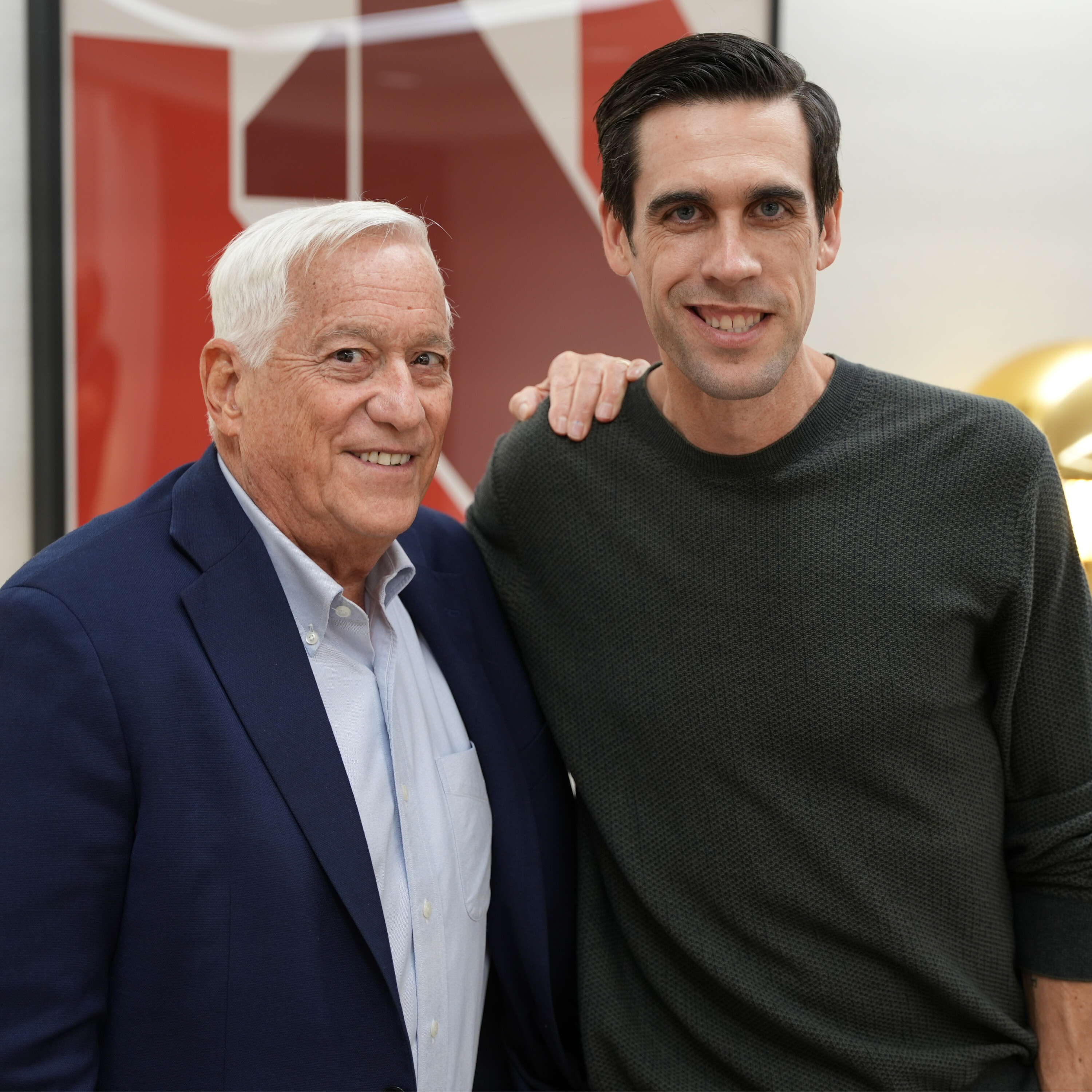
Loading summary
Transcript199 lines
- [00:00]
Toyota Truck Narrator
The world is full of tours.
- [00:05]
Ryan Holiday
But.
- [00:05]
Toyota Truck Narrator
You don't choose a Toyota truck to follow the beaten path. You choose it to find the places.
- [00:11]
Ryan Holiday
In between.
- [00:14]
Toyota Truck Narrator
The detours, where each adventure pulls you toward the next. And wrong turns turn out right. So why would you ever take a tour when you could take a detour? Toyota Trucks.
- [00:31]
Toyota Truck Customer
My family owns a 2023 Toyota 4Runner, and honestly, it's my favorite vehicle that I've ever owned around town. It's smooth and reliable, but where it really shines is on our trips into the backcountry. We've taken it on backpacking adventures to Colorado and New Mexico, loaded up with gear and never had to think twice about whether it could handle the terrain. That's what Toyota trucks are built for. Off road confidence, rugged durability, and the freedom to explore. Toyota has a long history with the outdoor community, and they're committed to helping more people get out there and experience what nature has to offer. From remote trails to scenic byways, Toyota Trucks empowers you to take the detour, roam freely, and discover places that still feel wild and untouched. And they're not just making great trucks. They're working to expand access to adventure so more people can connect with the outdoors and pass that passion on to the next generation. Discover your uncharted territory. Learn more at toyota.com trucks/adventure-detours that's toyota.com trucks/advance-detours Foreign.
- [01:31]
Ryan Holiday
Welcome to the weekend edition of the Daily Stoic Podcast.
- [01:35]
On Sundays, we take a deeper dive.
- [01:37]
Into these ancient topics with excerpts from the Stoic texts, audiobooks that we like, hear or recommend here at Daily Stoic.
- [01:46]
And other long form wisdom that you.
- [01:49]
Can chew on on this relaxing weekend or we hope this helps shape your understanding of this philosophy and most importantly, that you're able to apply it to your actual life. Thank you for listening. Hey, it's Ryan. Welcome to another episode of the Daily Stoic Podcast. It has been a bit nuts over here. I've been traveling a lot trying to wrap things up for the end of the year. This is kind of the crazy time. There's last minute stuff, stuff like I'm doing a talk in a couple days that they, they asked me to do like seven days before.
- [02:27]
It was supposed to be.
- [02:27]
I just did the talk in Seattle. You know, it's Christmas time. The kids are about to get out of school shopping. There's just like, you know, there's just a ton going on. And this is kind of the crazy time for Daily Stoic because signing lots of books People ordering stuff from the bookstore. There's a lot going on. Then I was taking some clothes out of the washer last night and I pulled a full chocolate croissant in the bag Starbucks out of a just run load of laundry. So you know, that was a wonderful surprise. Thankfully it didn't ruin all the clothes. And how or why this ended up in my kids pockets and then into the wash is a mystery of life. And amidst the craziness, I do try to go, hey, like you're very lucky to get to do what you do. You're blessed, you're living your dream. And actually something that was kind of.
- [03:19]
A dream that just happened to me three weeks ago.
- [03:21]
Two weeks ago. As I said, all the time sort of blurs together at this point. But Texas Tribfest is here in Austin. There's Texas Book Festival, then Texas Trip Fest. They asked me if I would do a panel about bookstores. This is a couple months ago. They asked me if I would do it. It was going to come up in November and I was like, I don't know, it's going to be a crazy day that day. We already had like three birthday parties scheduled. As I said, this is the crazy time of year. They asked me if I'd do it and they said, look, how about if.
- [03:49]
You do that, do an interview with.
- [03:51]
You and we'll pick someone cool to.
- [03:53]
Interview you on stage.
- [03:54]
And I said, oh, who were you thinking? And they said, what about Walter Isaacson? And I said, are you kidding? I mean Walter Isaacson is one of the greatest writers of our time. I actually went and looked cause I had him sign all my books when I met him. I added up all the pages here. I have read 3,736 pages of Walter Isaacson's and I guess that's just the first time.
- [04:20]
I've also gone back and reread a.
- [04:21]
Bunch of the books because his books have shaped so many of my books. The Franklin story in Ego is the Enemy is from his biography of Benjamin Franklin. There's a bunch of wisdom stories in Wisdom Takes Work that are from the da Vinci book. Same with the discipline book. There's even a chapter in Stillness is the Key that's got a da Vinci story from one of his books. There's a bunch of Elon Musk anecdotes that that led into that big part of Part two of Wisdom Takes Work that I first learned about in Walter's books. I've read so many of his books, actually going even back because I guess I Use Steve Jobs in Obstacle is the way we carry a bunch of his books in the store. I've been profoundly influenced by them. And, oh, you know what? This is, right? This is what brings it all full circle. Okay? Walter Isaacson is himself mentioned in a chapter in Right Thing right now where I talk about coaching trees because he is part of the coaching tree of the great Walker Percy, who is himself part of the William Alexander Percy coaching tree. So being interviewed by Walter Isaacson, amazing. Well, Walter's people reached out and said, okay, but what would you want to talk about? And I said, well, we could talk about stoicism, we could talk about Elon Musk. But what I'd really like to talk about is Walker Percy. And I'm looking here, I have a picture of Walker Percy on my wall. He's one of my favorite novelists. He wrote this book, Moviegoer, one of my favorite novels, but then was very influenced by stoic philosophy. And as I said, I knew they.
- [05:48]
Were vaguely knew each other.
- [05:50]
I didn't know the full extent of the relationship, but that's what I wanted to talk about. So at the Texas Tribune Festival downtown in Austin, I think it was at the Omni, we sat down. He was interviewing me, but really I had more questions for him. We talked Walker Percy, we talked stoicism, we talked Elon Musk, and we talked everything that's happening in the world today. It's a great interview. I was very honored that he was even interested in chatting with me. And then I have a full note card here for the book that I'm working on now. We're going to where Walter gave me some advice on how to write a great biography.
- [06:21]
So this was honestly, like, even if.
- [06:24]
You hate this episode, which you won't because it's awesome, I got so much out of it.
- [06:27]
Like, it was. It was the reason I do this.
- [06:29]
Podcast, right, Is like, to learn and to be exposed to things. And that very much happened here. Like, I'm grateful to the folks at the Texas Tribune Festival for having me. It's a nonprofit politics and policy public news website headquartered in Austin. But their investigative reporting and stuff, it ripples through not just this state, which has millions and millions of residents, but, you know, California and Texas. What happens here shapes, in many ways, the rest of the nation. So the Texas Tribune is a great news outlet. It's a great conference. I might bring you a chunk of that bookstore chat as well. But in the meantime, here is me talking with the great Walter Isaacson, who has a new book out called the Greatest Sentence Ever Written, which I bought on my way home from the Newark Airport two days ago at the Hudson, Florida bookstore. And it's great. It's about the first sentence of the Declaration of Independence. And just an absolute lovely book from a lovely writer.
- [07:27]
All of his stuff is amazing.
- [07:28]
We have some signed copies left. They'd make great gifts for the holidays. I'll link to that in today's show notes. But in the meantime, here's me and Walter Isaacson chatting away.
- [07:45]
Walter Isaacson
I guess they feel you're a man who needs no introduction, likewise even have a voice of God. But this is Ryan Holiday and this.
- [07:52]
Ryan Holiday
Is the great Walter Isaacson.
- [07:55]
Walter Isaacson
Big fan. We were talking backstage and I know we're going to get to Stoicism, he said, but let's start with Walker Percy, who in here, by the way, knows who Walker Percy is. All right, good. We both share a deep affection for Walker Percy.
- [08:10]
Ryan Holiday
Yes.
- [08:11]
Walter Isaacson
And in particular, the moviegoer and Aunt Emily in the moviegoer, who in some ways is part of your path to the stoicism idea. Right.
- [08:20]
Ryan Holiday
Yeah, I bought it. I bought the Movie Goer at a used bookstore on Oak street in New Orleans. I know that. And it was one of the first. I'd obviously known the Stoics and I'd read them, but it was the first time I saw them in fiction. And I think it's an obviously the fictional take on the Stoics in Walker Percy's. Fascinating. That's one of my favorite novels then, how stoicism makes its way through that family, which is a multi generational sort of path. He gets introduced to it by his uncle William.
- [08:53]
Alexander Purse has another amazing book, Lanterns.
- [08:56]
On the Levee, one of the great Southern memoirs.
- [08:59]
Walter Isaacson
You were such a Southerner.
- [09:01]
Ryan Holiday
I thought you were a Texan adopted Southerner. I'm a Californian, like everyone that lives here now.
- [09:08]
Walter Isaacson
All right, well, let's drill down on that because I think you and I may have slightly different. We're trying to navigate that novel. William Alexander Percy, the uncle who raised Walker Percy, very much the stoic and believes in the classical virtues of courage and honesty and whatever. And then Emily in the book is the character there. Binks, the very beginning of the book, I think, Binks's brother dies and Aunt Emily says, you have to have courage. That's what you need. And Binks says, okay, that's easy. Is that really all I have to do? And then he goes on the search and in some ways. Tell me what you think. I've always thought he said, I've got to go further. I have to have the spiritual values. That leap of faith.
- [10:03]
Ryan Holiday
Yeah.
- [10:03]
Walter Isaacson
How does that fit into Stoicism and then the question of something more spiritual?
- [10:10]
Ryan Holiday
Well, I do think it's interesting in the novel and we're really nerding out for people. This was one of the.
- [10:16]
Walter Isaacson
All of you haven't read or know of Walker Percy? You can wait. We will spend about five minutes.
- [10:21]
Ryan Holiday
At one point it was the National Book Award. When it came out, it was one of the great American novels. I think it's an incredible novel. But what I think is interesting from what I know about Walker Percy, having read about him and in the novel, is that the character finds both Stoicism and organized religion to be insufficient in the novel. But as, as the author, the person, he sort of relies on both of them. So I think it's interesting that the novel is sort of philosophically critical, but exploring the inadequacies of those systems in the modern world and then the, the actual author himself is. Finds them perhaps more satisfying. So I think that's kind of an interesting thing. But yeah, you basically get the sense that you have this young guy who's been through this horrible thing in Korea and he's tempted by all the modern pleasures and ambitions and then you have this old fashioned aunt talking to him about courage and justice and temperance and wisdom. And it's not work, it's not working. And I do think there's an analogy a little bit to where we are now, where we sort of know this isn't working. And then when people try to talk to us about the old fashioned virtues, they just sound old fashioned.
- [11:34]
Walter Isaacson
Right. And at least for Percy, I don't know what his outcome is, but he calls it the search.
- [11:39]
Ryan Holiday
Yes.
- [11:39]
Walter Isaacson
And you have to keep searching. So tell me how that fits in with your path to Stoicism.
- [11:45]
Ryan Holiday
So I was in college and I got passed a copy of Marcus Aurelius Meditations and, and that was the beginning of the search for me because I didn't know, I don't know what I thought philosophy was, but I didn't think it was the Emperor of Rome talking to himself about getting up early in the morning and not getting upset by things and, you know, trying to put up with how obnoxious people are. I thought philosophy was theoretical and abstract and no, here it is sort of urgently dealing with the questions of, of both practical modern life, but then also as I think the moviegoers about the sort of quest and search for meaning. What, what is it? For what do you do with this brief amount of time? There's a. My favorite passage in the.
- [12:31]
The book is.
- [12:32]
Is Aunt Emily, where she says, basically, like, I don't know what we're doing here. We're insignificant Cinders spinning around in the universe. But all I know is you gotta do your best and try to be a good person.
- [12:45]
Walter Isaacson
And how does that tie in? Marcus Aurelius starts at Epictetus. Is that how you say Epictetus? Epictetus. Sorry.
- [12:54]
Ryan Holiday
Yeah.
- [12:54]
Walter Isaacson
Tell me how they adopt the Stoic virtues and how you sort of discovered that was a good path for your search.
- [13:04]
Ryan Holiday
Yeah.
- [13:04]
So the Stoic virtues, as I said, the cardinal virtues, courage, discipline, justice, wisdom. You basically have the. For 500 or so years, these series of Stoic philosophers, some powerful, some powerless. You have Epictetus, who's a slave, Marc Sirius, who's an emperor, Seneca, a power broker in Nero's court. So he might have had a sense of what's happening right now, but the idea that the Stoics are sort of wrestling with how do you stay good in a world gone bad? How do you stay focused in a world of endless distractions and temptations? And how do you. How do you deal with the fact that life is unpredictable and capricious and often cruel?
- [13:49]
Walter Isaacson
I've been looking through your books, and your path started as sort of an advertising agency trying to trick people in a way. So tell me about your first book.
- [14:01]
Ryan Holiday
Well, as. As. As all marketers are, we're trying to get people to buy things. But, yeah, I was a marketer, and my first book is this sort of expose of the media system. Actually, I was living in New Orleans.
- [14:14]
Walter Isaacson
I was living in La Britannia street between 1st and 2nd. I say that for my wife. We live a block from there.
- [14:22]
Ryan Holiday
I was living in la, and I said, I don't want to do this anymore. This isn't what I want my life to be. And I found an apartment on Craigslist in New Orleans. I moved there. My future wife came with me. I will say she burst into tears when. When she saw it. I did not make a good pick. Saw the house, the room in said house. But I wanted to write a book about what I'd seen and experienced. And I remember this is 2011. I was working on this book. It's basically working on a book about fake news in 2011. And I remember thinking, if I don't get this out right away, it's going to be irrelevant. I was probably a little bit ahead of the curve about sort of the Flaws in the media system and how sort of bad actors or bad information can be sort of traded up that chain and sort of take hold in public consciousness. That's what that book is about.
- [15:12]
Walter Isaacson
But in some ways, it seems your next. Well, not your next book, but the two books, three books after that are a reaction to what you saw.
- [15:21]
Ryan Holiday
Yeah, I think that's right. There was a disgust and disillusionment, and there was. There was a difference between what I sort of personally believed and what I was philosophically interested in, and then what I was doing in my day job, which is a little bit, you know, Binks's position in. In the Moviegoer. I think Walker Percy's most reactionary book, actually my favorite is Lancelot, which is much darker, and it's a sort of more disturbing book. But I was like, that's just not what I want to do.
- [15:53]
Walter Isaacson
And so when you get exposed to stoicism.
- [15:56]
Ryan Holiday
Yeah.
- [15:57]
Walter Isaacson
What do you. How do you turn that into a book first, and then we'll get into the empire that comes from the book.
- [16:03]
Ryan Holiday
Well, as you can imagine, when I went to my publisher with the idea for an obscure school, a book about an obscure school of ancient philosophy, they. They too saw an empire in the making. They had the option on my next book. They're a business imprint of Penguin Random, then Penguin now Penguin Random House. And I said, this is what I want to do. And they said, are you sure? Could you maybe do something else, please? And they told me later they were just hoping I'd get it out of my system and write more marketing books. But that's really what I wanted to write about, is I wanted to write about ancient philosophy. I was a research assistant for Robert Greene. I don't know if you know who Robert Green is. He wrote the 48 laws of power and Mastery. Writes these sort of amazing nonfiction books. So they sort of picks a theme and then illustrated with stories from antiquity. So that's how I got my start. That's what I wanted to do. I just had this sort of detour in the marketing world.
- [16:56]
Walter Isaacson
And when did you figure out it was more than just a book you could do? There are podcasts, there's meditations.
- [17:06]
Ryan Holiday
Yeah. So I did the Obstacle is the Way, and then my agent said, you should do a page a day book of Stoic philosophy. He had been an editor at Harper's, and they. He'd had the idea for this book called the Daily Drucker, which is one page a day from Peter Drucker. That had been a monster Hit. And I said, who reads these? You know, it wasn't a medium that I was familiar with at all, as it turns out. Actually now, one of my favorite books, Tolstoy has a page a day book called the Calendar of Wisdom, which has a lot of the Stoics in it. So I didn't know that it was this sort of genre, but he suggested it and he said, you know, you do a translation at the top and then you riff on it each day. And I. I said, that sounds like an interesting idea, but, you know, I don't. Who's going to do the translations? And he said, oh, I'll do them. And apparently I was. You. You speak Greek and Latin. You've been holding out on me. So I'm maybe one of the only people to ever write a book with their book agent. And it worked out.
- [18:03]
Walter Isaacson
And you then turn it into.
- [18:06]
Ryan Holiday
So. So the Daily Stoic is a page a day. And then the idea is, well, what do you do on page 366? Well, actually 367. Cause you have to do it for the leap year in there. But the point is, what do you do after the last page? And so I bought the Dailystoic.com and I just kept going. So I've done every day since mid-2015, I have done an entry first for the book and now the email. It goes out to almost a million people every day. And it's.
- [18:38]
Walter Isaacson
And what is motivating you to do this?
- [18:41]
Ryan Holiday
Well, that a million people are waiting on the other end of it is a decent motivation to write the Daily Stoic. But like stoicism isn't this philosophy that you read. It's a philosophy I think you have to be reading. You're supposed to go over it over and over and over again, not unlike a recovery program or a prayer. It's this thing that you're kind of meditating on and reflecting on. And so for me, the writing is my philosophical practice. And then the reading is other people's philosophical practice. But I added it up at one point. It's millions of words that I've done, but it's kind of my penance. It's my vocation. I sit down and I take a thing from the Stokes every day, and I try to arrange it in a format that would make sense to me or someone that reminds me of something that either I need to know or I think people need to know. And that's. That's what the. The practice of it has. Has been. And it's consistent, doesn't matter what's happening in the world, I gotta get this thing out every day.
- [19:42]
Walter Isaacson
And what has it changed you?
- [19:44]
Ryan Holiday
You know, I think when I came to Stoicism, as I think a lot of young men, it's particularly popular with young men. I was interested in the, the discipline of the, the virtue of the discipline or the courage, right, the, the how to be stronger, faster, more resilient, tougher that, that element, the muscular part of Stoicism. But what's fascinating about it, and I think this is the Trojan horse of it, is it's also fundamentally, and I, I think you could argue primarily an ethical philosophy, like justice is the central virtue of, of the philosophy. And over and over again, the Stoics are talking about the common good, our interrelationality between people. The opening passage of Meditations is an interesting one. Mark Siros opens and he goes, today the people you'll meet will be annoying and obnoxious and stupid and jealous. He lists all the things. And I think, for instance, when I, when I first read it, I. Nodding my head, I'm attracted to the cynical side of it, right, that prepare for how people are going to be and don't let them get to you. But actually, as you know, as I think you spend more time with it, you realize the second part is actually the most important part where he goes, look, and you can't let them suck you down. But then he says, because we're made to work together and they're like this because they don't know better or they're struggling with things and your job is to work with them and to do your job. And the idea ultimately in Stoic philosophy that I think separated it from, say, the Epicureans, was that it was a philosophy for public life and public participation. And so it's centered around this idea of collaboration, connection, doing things for the common good. Mark the Stoics talk, Marcus Rio specifically talks about the idea of the common good 80 times in meditations, which, you know, is probably not a concern of Nero or Caligula. So, so the idea for the Stoics was this sort of public mindedness. And so I think I've. It's changed the ethical side of it took longer for me to, to catch on to, but ultimately that's where it's probably impacted me the most.
- [21:45]
Walter Isaacson
We've gone this far in the conversation and they're probably half the people who don't exactly know what Stoicism is, or they were like me before I started reading you, and they think, well, it Just means not being emotional and containing your emotions. And then when I read your stuff, it's. It's definitely being emotional.
- [22:12]
Ryan Holiday
You hear that?
- [22:14]
Toyota Truck Narrator
That's not just a Toyota truck. That's the sound of no crowds, no alerts, no distractions, and no telling what you'll find next. You know, like a detour. So why would you ever take a tour? And you could take a detour. Toyota trucks.
- [22:40]
Ryan Holiday
Thanks to Toyota Trucks for sponsoring this episode. When I bought my ranch in 2015 out here in Bastow County, I drove my car about halfway down the dirt road that we live on.
- [22:51]
Thought, this isn't going to work. Stopped, parked.
- [22:53]
It walked the rest of the way home, borrowed my wife's car, drove into Austin and bought a truck. What I bought was a Toyota Tacoma. And this truck wasn't just transportation getting.
- [23:04]
Me to and from my house.
- [23:06]
It unlocked a whole different style of living for us. Not just on the ranch, but in our little Texas towns. There were places I could go now that I couldn't go before, especially out here in the piney forests, through the fields, and on the unpaved roads like the one that I lived in.
- [23:25]
We got to go deep into the hill country's wild beauty.
- [23:29]
We've driven all the way out to East Texas. We've driven it across the country. And by we, I mean not just my wife, but both my kids, who I drove home from the hospital in that truck. Toyota trucks are built for those who understand that the best adventures happen when you're willing to veer off course, because you never know when you'll end up on a Toyota adventure detour. And of course, this is stoicism, too, because every detour, every obstacle is an opportunity. But it's helpful if you can handle the difficulty inherent in that, if you've got the resilience and the right companion to make it wherever the road takes you, discover your uncharted territory. Learn more@toyota.com Trucks Adventure detours.
- [24:18]
Walter Isaacson
Give us a definition and also the sort of the whole surrounding ecosystem of stoicism.
- [24:26]
Ryan Holiday
So stoicism is founded in the 4th century BC by this guy, Zeno. Zeno suffers a shipwreck, washes up an Athens, penniless. He's introduced to philosophy, builds it. I think it's fitting that it comes out of a disaster. It's got a disaster at the origin story. And then the philosophy is built around the idea that disasters are inevitable. But how you respond to those disasters is what it's about, that it's a philosophy about the response. I sort of summarize Stoicism often to people as we don't control what happens, we control how we respond to what happens. And the idea is that you have to respond with these virtues or with virtue. And so whether we're talking about a shipwreck or a jerk in traffic or an economic downturn, the idea for the Stoics is what virtue is this presenting you an opportunity to practice. That's the philosophy. So when we think about it as being emotionlessness, what the Stoics are really saying is, you know, have the emotion, just probably don't let the emotion color your response. So you can get angry and then you go, okay, but why is this person acting this way? Is me responding angrily who I want to be? Is it the right thing to do? So it's this kind of framework for stopping, pausing, reflecting, and then being as rational and self, self governed as possible in how you respond.
- [25:47]
Walter Isaacson
And we think of it as a classical philosophy. Greeks, the Romans, how does it get carried forward after that?
- [25:56]
Ryan Holiday
Yes. So starts in Greece, goes to Rome, sort of disappears during the Dark Ages. It is absorbed.
- [26:03]
Walter Isaacson
So does everything. That's how they're called art.
- [26:05]
Ryan Holiday
Yes, I mean, but one of the reasons is it's, it's absorbed into Christianity.
- [26:10]
Right.
- [26:11]
They share the cardinal virtues.
- [26:13]
Walter Isaacson
Well, let me pause there. The teachings of Jesus and the teachings of Marcus Aurelius do not seem the same to me. But am I wrong?
- [26:21]
Ryan Holiday
I would say an interesting aside is Seneca, the other famous Stoic, is born the same year as Jesus. They both exist in the same Roman Empire at the same time as these wildly popular philosophies. Seneca's brother is in the Bible. Really? Yeah, he lets St. Paul go. So interesting little aside. Marx, Aurelius, philosophy teacher, Rusticus kills Justin Martyr. So not all they're canceling Marcus Aurelius.
- [26:49]
Walter Isaacson
Kid doesn't turn out to be Commodus.
- [26:51]
Ryan Holiday
Not so good. Not so good. That's the question I get the most like what happened with Commodus? And I go, well, you know, Marcus was 40 when he became emperor, Commodus was 16. How would you have done at 16? Probably not great, but I wouldn't say exactly that. Stoic philosophy is the Stoicism and Marcus Aurelius is what we see in the Bible. But I would say that the virtues of Stoicism get absorbed into Christianity and this sort of Western thought. And then ultimately we see right around the time of Montaigne, it starts to bubble back up. Stoicism. The Victorians really rediscover it, bring it back this is where it enters the Percy family to bring this full circle.
- [27:34]
Walter Isaacson
But it's interesting because the Victorians rediscover it. But most of classical thinking gets rediscovered at the beginning of the Renaissance. And Lucretius and others.
- [27:45]
Ryan Holiday
Yes.
- [27:46]
Walter Isaacson
Why don't the Renaissance people rediscover the Stoics?
- [27:50]
Ryan Holiday
They do to a degree, but not to the same degree as, like, Lucretius. I think you tend to see the Stoics come up a bit later. You know, Montaigne, for instance, has a line from Epictetus carved in the beam of his ceilings. I don't know exactly. That is kind of an interesting question. It just comes. It comes a little bit later. Comes a little bit later. The Enlightenment thinkers, though, love the Stoics. Jefferson dies with Seneca on his nightstand. John Adams is a big fan of the Stoics. George Washington, you know, is probably the only one of the founders who doesn't read the Stoics in Greek or Latin, only in English.
- [28:32]
Walter Isaacson
Right. And although he epitomizes the virtues the best, he.
- [28:36]
Ryan Holiday
He is probably the ultimate model of them as far as the American tradition goes. Two other little quick things. Cato. There's a play by Joseph Addison called Cato, which I like to joke, was the Hamilton of its day. But. But that's all stoicism right there and is, like, so familiar to the founders that they're quoting it all the time, like in the way we might go. Immigrants, we get the job done. Lines like, I regret I have but one life to. You know, these are all lines from that play. And then, interestingly enough, Thomas Wentworth Higginson is the first American translator of Epictetus, and he leads a black regiment of troops in the Civil War. He's a friend of F. Emerson and stuff. So it happens a little bit later. And now that you bring it up.
- [29:20]
Walter Isaacson
The reason I was asking is it happens when the Enlightenment, the age of Reason and. And the scientific revolutions are happening. I was wondering if you thought those were connected.
- [29:30]
Ryan Holiday
Yeah, you're right, it's. It is a reason. It's a reason based philosophy, and that's probably why it's so appealing there. And I mean, as a. I grew up Catholic, I'd probably classify myself as agnostic. Now. What I liked about Stoicism is I felt like it was making arguments that I was familiar with having grown up in the church. But instead of saying, God wants you to do this, or if you don't do this, you're going to go to hell, it's more saying like, you'll live an unhappy, shitty life if you don't do that. Like, it's. It's an argument about your purpose and your meaning, but it's. It's less metaphysical than the religious argument. So I wonder if it has to do with the idea of the reason and logic. Is. Is that's the resurgent?
- [30:14]
Walter Isaacson
Is Stoicism supposed to be just a path to virtue or is it a path to fulfillment?
- [30:20]
Ryan Holiday
I think both.
- [30:20]
It is not designed for a life of ease. It is not.
- [30:25]
Walter Isaacson
The Epicurean.
- [30:26]
Ryan Holiday
Yes.
- [30:27]
Walter Isaacson
Rival philosophy.
- [30:28]
Ryan Holiday
Yeah. The distinction in the ancient world between the Epicureans and the Stoics, as Seneca says, is that an Epicurean will get involved in politics only if they have to, and a Stoic will get involved in politics. And by this they mean public life, unless something prevents them, so they're involved in the world. Instead of philosophy being the sole pursuit, I think the Stoics saw philosophy as a pursuit in whatever calling or domain you happen to be operating in. So there's the Stoicism of the soldier, there's the Stoicism of the statesman, the Stoicism of the blacksmith, the Stoicism of the slave, the Stoicism of the senator. It's how. How is this philosophy helping you in whatever your unique circumstances are?
- [31:11]
Walter Isaacson
Well, let me get back to Banks's dilemma at the end of the Moviegoer when he. He talks about, is that all there is? Is there a leap of faith? Is Stoicism in some ways divided from religion and spirituality?
- [31:26]
Ryan Holiday
Well, the Stoics certainly believed in the gods, and so there was. There was this, certainly this recognition of the higher powers or that you are not in charge. I think fundamentally, the Stoics are saying, you're not God, or if there is a God, it is fundamentally indifferent to you. And so we have to figure out how to adapt ourselves and respond to whatever God's nature, fate, fortune sends our.
- [31:56]
Walter Isaacson
Ties into Deism, then.
- [31:57]
Ryan Holiday
Yes. And again, this is, I think, why it makes so much sense to the founders. There's not the vengeful, omnipotent, all controlling God, but there is. You know, when Washington says the event is in the hand of God, he just means we don't know how it's going to go. Circumstances are going to happen, but let's do our best. Actually, there's a great line in that Cato play that I think encapsulates Stoicism where they say, we can't guarantee success, but we can do something better, we can deserve it. That's Stoicism. It's you do everything you can, and then you understand the outcome is ultimately not up to you.
- [32:35]
Walter Isaacson
Let's get into some of the sayings which you have at least 365 in any year. But the obstacle is the way is the way you start it. Explain those type. They're not Zen like they are, but they make you work that.
- [32:51]
Ryan Holiday
That is what is so unique about Marx's Meditations. I think it's unprecedented in the philosophical canon in that it was not intended for publication. It is not a philosophical argument. It is not an encapsulation of a school. It is a singular person riffing, reminding themselves of what they believe and what's important. And the reason there's so much repetition in it is that he needed that repetition. And actually, it's not in the Steve Jobs book. I think it's in the beginning of your Da Vinci book. You talk about Da Vinci's journals, and you mention that Steve Jobs, when you were working on the Jobs book, he was trying to show you some journals he'd written on a computer. And even Steve Jobs couldn't get access to it because it was on a computer.
- [33:40]
Walter Isaacson
It was on the next. You remember when he was in the wilderness, he had Next computer, and he was dying at this point, and he still has an old NEXT computer and he can't boot it up. And it did make me think there's really something beautiful about paper which Leonardo used. It has an infinite battery life. Its operating system never goes out. And Steve could never get those memos and letters from the 90s.
- [34:06]
Ryan Holiday
Yeah.
- [34:08]
And I think Marx Rios's meditations alongside da Vinci's journals are the sort of ultimate testament of that, because they're not for us. And yet in spending time with them, we're able, from the incredible specificness of them, there's a universality. And so here you have this guy writing to himself, and when he says you, he doesn't mean me, but he means him. And yet somehow centuries collapse and power dynamics collapse and cultures collapse. And you're like, oh, he's also talking to me. He's talking to all of us. But in this famous passage, and he's almost certainly talking about somebody who was causing trouble for him, you know, he says, when people get in our way and obstruct us, and then the passage continues, you know, he says that can't actually happen, he says, because nothing can impede our intention or our disposition because we can always change it. And he says the impediment to action advances. Action stands in the way. Becomes the way. The, the Buddhists do have a saying, the obstacle is the path. So both east and west saying some version of the same idea that whatever this problem is is actually not an obstacle, but an opportunity for you.
- [35:19]
Walter Isaacson
So the impediment to the act, the impediment to the action is actually where it's at.
- [35:24]
Ryan Holiday
Yeah. Yes. Where to go, what to struggle with. And that's not to say you hurl yourself at it endlessly. It might be the action is in going around. The action is in the patience from waiting for it to go away. Learning humility. It's basically what are you learning and what are you doing differently because of this thing that happened.
- [35:42]
Walter Isaacson
Give us a couple more that are your favorites of the Stoic or either Marcus Aurelius Meditations or your own.
- [35:50]
Ryan Holiday
I can give you an unlimited amount. There's the one thing I'm good at. I'll give you. I'll give you one from Epictetus. He says it's not things that upset us, it's our opinion about things.
- [36:00]
Walter Isaacson
Interesting.
- [36:00]
Ryan Holiday
So, you know, the event is objective. What the person said to you is not rude. It is random sounds coming out of their mouth. And then you have told yourself that it's rude, or you've told yourself that you've been harmed by it or humiliated by it or insulted by it. So that the things are. And then we make opinions about them and realizing that, oh yeah, like when I'm offended, that's because I have chosen to take that offense. That doesn't mean you should go around and say whatever you want to people and not care. But it's saying that. That we are. Our sense of what these things mean and the interpretation we give of them determines how they affect us.
- [36:39]
Walter Isaacson
So. And understanding that leads you to a more Stoic approach.
- [36:42]
Ryan Holiday
Yes, yes. Another one from Seneca, which I love, which I think is a life changing one for me. He says it's wrong to think of death as something that's happening in the future once that we're moving towards it. He says death is now, death is happening. He says the time that passes now belongs to death. And so to think of your life not as how many years do you have left, but how many years have you died? The Stoics are trying to get you to understand that, as Seneca says, you know, we're protective of property and we're protective of money and then frivolous with time. And the Stoics want you to understand that your life is what's happening now, not this thing that might end in the future. It's ending now.
- [37:24]
Walter Isaacson
All right, one more.
- [37:25]
Ryan Holiday
One more.
- [37:27]
Okay, what's a good one?
- [37:29]
Marc Realis says, and this is one I think about these days. Maybe this ties to your Elon Musk book. Here we have the most powerful man in the world, in some ways, an exception to the rule that absolute power corrupts absolutely. And there's a passage in Meditations where he talks about. He says, be careful not to be imperialized or stained purple. And so he's wrestling with how success, fame, and audience, all these things can change us. And so I think he says, you have to fight to remain the person that philosophy tried to make you.
- [38:04]
Wow.
- [38:04]
And so, again, if we think of the philosophy as this aspirational thing, this standard that we'll probably never meet, not unlike the opening of the Declaration of Independence that we're trying to live up to, that's probably closer to what the philosophy is supposed to be.
- [38:21]
Walter Isaacson
Well, you raised your very wealthy neighbor from Bastrop, Texas, on the outskirts of Austin, and you've written about Musk in ways that allow you to reflect on stoicism. And him tell us that.
- [38:36]
Ryan Holiday
Well, I was very influenced by your book, and obviously I've read quite a bit about him. I just finished this series on the cardinal virtues. So the courage, discipline, justice. The last one is wisdom. And I presented him as a character because I think he's someone sort of straight out of the pages of Plutarch, both incredibly gifted and incredibly flawed at the same time. And I tried to make the first the positive case for him being one of the smartest people on. I think I say at the beginning, to say that Elon Musk isn't smart, as some critics now try to do, is like saying he's not rich. It's hard to argue. He's done incredible things, and that's what makes the turn, or some of the other things that have been said or believed. So I think both alarming, but also fascinating. How does someone become stained purple or Caesar ified, changed by power, wealth, isolation, the algorithm? I think, to me, one of the things is, like, if it can happen to him, what chance do the rest of us have to resist?
- [39:44]
Walter Isaacson
And he sometimes fancies himself an adherent of Stoicism.
- [39:49]
Ryan Holiday
Yeah, I think he follows the Daily Stoic on. On Twitter.
- [39:53]
Walter Isaacson
He's a fan of yours, even if it's not fully mutual.
- [39:56]
Ryan Holiday
Well, I'll say.
- [39:57]
I like to write about dead people. It's easier. I know.
- [40:00]
Walter Isaacson
Trust me. I learned that. Yeah.
- [40:03]
Ryan Holiday
Also, you know, I wrote a book a Few years ago about Peter Thiel. And actually, the epigraph is a line from Walker Percy. But I will say that was hovering in the back of my mind. You don't want to write about an angry, vindictive billionaire. It's a. It's a scary thing. But. But I'm a fan in many ways. I just.
- [40:22]
I find.
- [40:23]
I find it emblematic of our times that here you have this person who in many cases should know better, not able to pull himself out of the either doom loop that he's in or.
- [40:36]
Walter Isaacson
You know, I think the demon loop.
- [40:38]
Ryan Holiday
The demon loop, yeah. Yeah. Well, I found that so fascinating in your book, I'd be curious to hear about it. But it's like so much of the mythology of the Working endlessly in the factory and pulling it back from the brink. How often the. That was the same. It's like that famous meme of the hot. The guy in the hot dog suit where he's like, we're trying to find out who did this. Like, you put yourself in the situation and then you're heroically going into demon mode to save it. The point is to not have to go into demon mode.
- [41:08]
Walter Isaacson
But that's what he thinks, which is, I can save it. I'm going to be the gladiator. I've got to put on the cape and do it. And he kind of pulls that up from classical philosophy. He thinks, really?
- [41:21]
Ryan Holiday
But isn't an ounce of prevention worth a pound of cure?
- [41:32]
Creatine isn't just for building muscle. It's actually a daily essential for strength and focus, recovery, aging, cognitive performance. And now, Momentous, who's today's sponsor, is making your daily creatine routine even easier with new creatine chews. I took two of them this morning. Each chew delivers exactly one gram of creapure creatine monohydrate, which is the gold standard. It's single sourced from Germany and it's NSF certified for sport. Momentous spent years testing until they created this new chewable that actually meets their momentous standard, which is uncompromising science, meticulous sourcing, and real transparency. This is performance without pause, made to support your body and your brain every single day. This is creatine done right. And right now, Momentous is offering our listeners up to 35% off your first order with promo code stoic. You just gotta go to livemomentous.com and use promo code STOIC for up to 35% off your first order. That's livemomentous.com promo code STOIC Function is the only health platform that gives you the data that most people never get. And it gives you the insights to start doing something about it. It too. With function, you get access to over 160 lab tests annually, from hormones to toxins to markers of heart health, inflammation and stress. And for an additional fee, you can also access MRI and chest CT scans, all tracked in one secure place. Over time, It's a near 360 degree view to see what's happening inside your body, which is why so many top health leaders are all behind function. If you want to give someone or yourself something truly meaningful this year, give them the clarity that comes from knowing their health. Most gifts fade, but this one helps your loved ones stay healthy. And you can own your health for just $365 a year. That's just a dollar a day. You can learn more. Join using the link go to functionhealth.com dailystoke or use code dailystoke25 for a $25 credit towards your membership.
- [43:38]
Walter Isaacson
So tell me about the Cardinal Virtues was a great book. I read it on the way down, which is how that would apply to somebody trying to make their way in the world. All the tech bros here in Austin, how can you say, all right, here's the virtues you gotta live by?
- [43:57]
Ryan Holiday
Yeah, I mean, I think courage, discipline, justice, wisdom. These are timeless virtues for a reason. And they sort of pop up in almost all the different spiritual and religious traditions. Maybe sometimes they're rendered as 5 or 7 or 10 or whatever, but they're all. We're all kind of dancing around the same human traits that we hold up. But I think, you know, wisdom is, is, I think in many ways the, the more relevant one in this moment right now, in this world of AI, where where like people are convinced that all of a sudden you can have a computer do your thinking for you. And in fact, what, what AI presents to me is a. If you want to get, if you want to get a lot out of it or you want to be prevented from being eaten alive by it, what you need is a, a strong liberal arts education so you know how to ask it the right things, how to parse the information and how to spot when it's obviously and as they say, sort of hallucinatingly incorrect as it, as it often is. And so I. Wisdom is, is the, the virtue I waited to the end of the series about cause I think it's sort of the one that unlocks all the others.
- [45:03]
Walter Isaacson
And it is so much more important now. The wisdom. Because as you say, there are many other things you can outsource, but that seems to be a fundamental human trait. Right?
- [45:14]
Ryan Holiday
It does. And, and you know, I think Elon Musk is a fascinating example of like, what happens when your information diet is corrupted.
- [45:21]
Walter Isaacson
Correct.
- [45:21]
Ryan Holiday
When, when, when bad info gets in and then how it compounds when you're.
- [45:26]
Walter Isaacson
Training on a bad data set.
- [45:28]
Ryan Holiday
Yeah.
- [45:28]
Walter Isaacson
Garbage in, garbage out.
- [45:30]
Ryan Holiday
Yeah. That's what's fascinating to me about his, his AI company. That seems like a flawed premise. Twitter. I can't imagine a worse data set for if you're trying to deduce human wisdom out of something than scraping lots of tweets.
- [45:43]
Walter Isaacson
Yeah, there's good.
- [45:45]
Ryan Holiday
Yeah, that's a scary thought. But I think obviously we're both biased as writers and authors, but I think people consume way too much real time information, way too much news. And actually you'd be better off studying the life of Leonardo da Vinci or Benjamin Franklin. And that would tell you a lot about what's happening now and help you understand the world as it is now. And part of that is because not only have we had time to actually think and reflect on what this stuff means, but you're less likely to project your biases or your partisanship on it. You want to go back and read about Truman or in the middle of COVID read about the Spanish flu or, you know, you want to, you want to study historical figures. I think it was Truman said, the only thing new in the world is the history you don't know.
- [46:37]
Walter Isaacson
Right.
- [46:37]
Ryan Holiday
And so how do you root yourself in information with a long half life? That, to me is one of the main arguments of the wisdom book. The thing and cardinal virtues being something that's had a pretty good half life. Ideas that are still going to be here and still going to be true a long time from now, as opposed to the latest speculation about X, Y.
- [46:57]
Walter Isaacson
Or Z. Yeah, it's an anecdote to our information overload. But I often when you go back to the founders, as you've been talking about, they each exhibit the cardinal virtues, but in different proportions. I mean, Washington of great rectitude, the passion of a John Adams or a Samuel Adams. But it did seem to me, and I'm biased, that it took the Franklin who was the wisdom person, the older person, twice as old as the rest of them, that was what held them all together, I think so.
- [47:30]
Ryan Holiday
And, and I talk about this a little bit in the wisdom book. What I think is fascinating about Franklin is here you have the smartest and and one of the most successful people on the planet. And he didn't have any enemies. People liked him. Even, even the British liked him.
- [47:46]
Right.
- [47:47]
And he added, on top of all of the virtues, a, A friendliness and a savvy and an understanding of human interaction that, that I think we don't celebrate enough. Like oftentimes people use being smart and successful as, As a way to disconnect from people or it makes them like people less. But he, he would say, and that's.
- [48:11]
Walter Isaacson
Elon's case, which is that empathy is not your friend.
- [48:14]
Ryan Holiday
Yes.
- [48:14]
Walter Isaacson
You don't want people to like you because that's a vanity. Whereas Franklin, to the extent he had a flaw, it's what you consider to be his virtue, is he was so eager to make everybody like him. He did not exhibit the courage. Virtue in your book.
- [48:31]
Ryan Holiday
I think he did in some ways.
- [48:32]
Walter Isaacson
But sure, signing the Declaration was an act of courage. Yeah.
- [48:35]
Ryan Holiday
Yes.
- [48:35]
But, yeah, he had the.
- [48:38]
Walter Isaacson
Well, I guess what I'm asking is, can you go too far to wanting people to like you?
- [48:43]
Ryan Holiday
Well, Aristotle said, you know, all the virtues sit as a midpoint between two vices.
- [48:48]
Walter Isaacson
Right.
- [48:49]
Ryan Holiday
And I think some, some of us are more of one than the other. I think we're all kind of. And what, what is so interesting about the cardinal virtues and why it's such a. I think a genius formation is, is that they all moderate each other. So courage not just is moderated by. At a certain point, it becomes recklessness. But courage, if not in pursuit of justice, becomes an empty and a valueless virtue. Wisdom tells us not just what causes are sort of good or bad, but also how one might bring them into the world.
- [49:30]
Right.
- [49:30]
Like what the, the competence needed to bring about a political revolution or outflank a bureaucracy. I, I mean, I think Elon deserves a lot of credit for not just that he had these brilliant scientific ideas, Steve Jobs as well, but their ability to organizationally and logistically bring them into the world. That's also, I guess, probably discipline, the sort of the work ethic. But so all the virtues balance each other out. Zeno, 2,500 years ago, is basically saying they are separate but inseparable from each other.
- [50:05]
Walter Isaacson
And that's something we've lost today is the notion that balance is the key to things, that going way out with any particular virtue can be a flaw.
- [50:16]
Ryan Holiday
Yes, yes. That you can have too much of a. Of a good thing or not enough of a good thing.
- [50:21]
And, and that's.
- [50:22]
I think discipline is sometimes rendered as temperance.
- [50:25]
Walter Isaacson
Yeah.
- [50:25]
Ryan Holiday
And that's not a very sexy word in, you know, in especially in America.
- [50:30]
Walter Isaacson
And the virtues of Ben Franklin. He has 12 and then adds humility. Temperance is number five.
- [50:35]
Ryan Holiday
Yes.
- [50:36]
Walter Isaacson
Now I did not listen. We were in the green room talking and we're having such a good time and I think you came in and told us all the logistics, like exactly how long we're supposed to go. Ryan Holiday an amazing dude.
- [50:49]
Ryan Holiday
Thank you so much. Thanks so much for listening. If you could rate this podcast and leave a review on itunes, that would mean so much to us and it would really help the show. We appreciate it and I'll see you next episode.
- [51:16]
Vrbo Advertiser
With stays under $250 a night, Vrvo makes it easy to celebrate sweater weather. Book a cabin with leaf views or a home with a fire pit for nights with friends with stays under $250 a night. Find a home for your exact needs book now@vrbo.com hey, it's Ryan.
- [51:32]
Ryan Holiday
I try not to make too many puns on my last name because I've.
- [51:35]
Been hearing it my who?
- [51:37]
But if you want to give a holiday gift of me, Ryan Holiday and the Daily Stoic, well, you can. We have a special offer. If you want to give Daily Stoic Premium as a gift, you can do that. Your friends, your family members, coworkers, whoever you give it to can get ad free episodes, early access and exclusive bonus content.
- [52:00]
Plus, we'll even throw in premium episodes.
- [52:02]
Of the Daily Dad Podcast. You can get both premium plans together for 25% off. It's a limited offer, available now through.
- [52:10]
The end of the holidays.
- [52:11]
That's through December 31st. You can click below to get it for them today. Happy Holidays.