← The Daily Stoic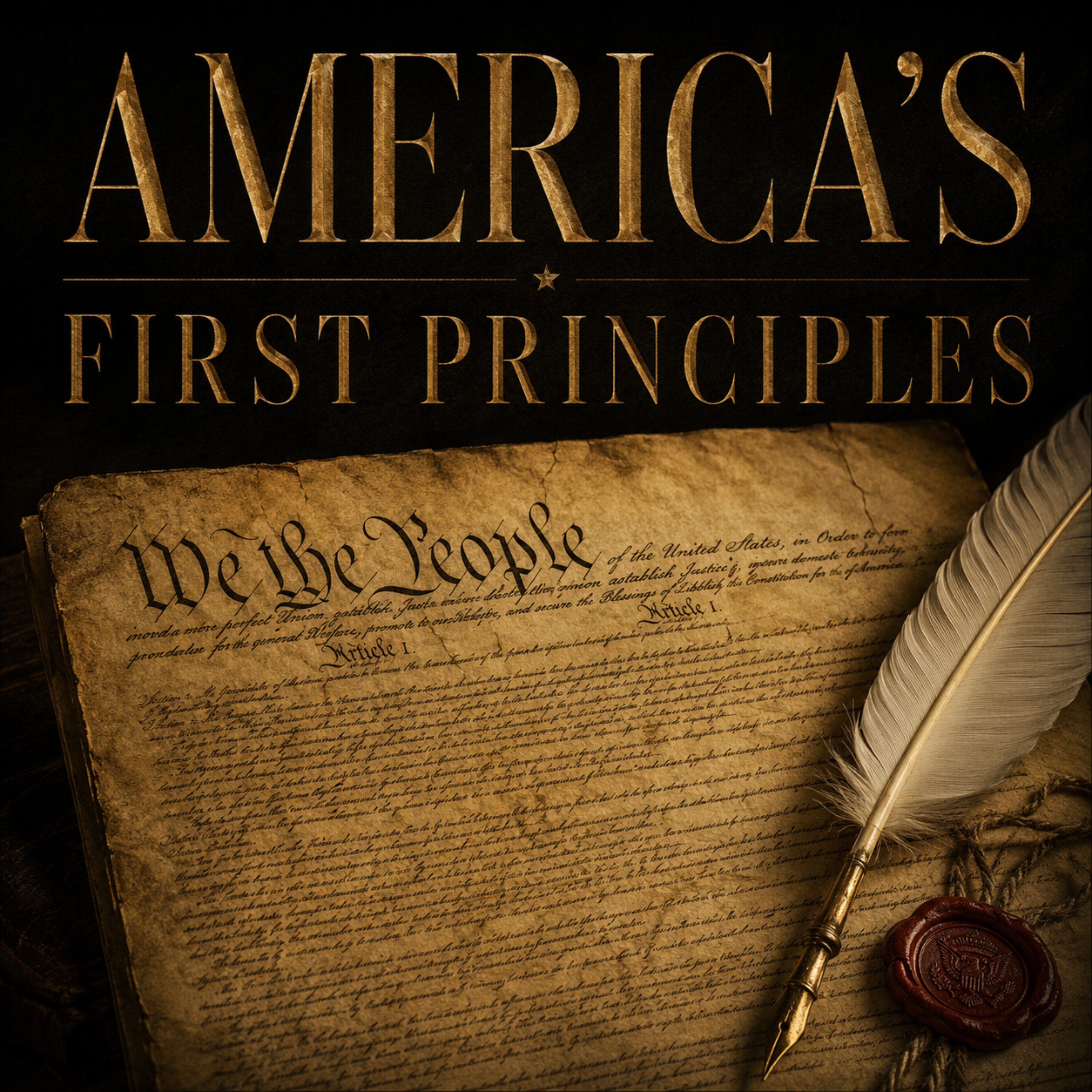
Loading summary
Transcript60 lines
- [00:00]
Ryan Holiday
Your customers don't want to wait around for a callback. They don't want to call three times. They don't like getting a message. They don't like not being able to get through to someone or do what they are trying to do right. They're trying to book an appointment, they're looking for a quote. They just need a little help. The point is, if nobody answers, they're calling somebody else or they're going to forget about it. And that's why today's episode is brought to you by Quo Q U O the business phone system built so you never miss a call. It is the number one rated business phone system on G2, trusted by over 90,000 businesses who rely on it to stay reachable and look professional. Every day, all your calls, texts and voicemails live in one place so anyone on your team can pick up the conversation, see the full history and respond fast. And Quo integrates with the tools your team already uses. HubSpot, Zapier, Claude, whatever. And it helps you save time, stay organized, and spend less effort chasing down information between systems. Money is on the line. Always say hello with Quo. Try Quo for free plus get 20% off your first 6 months when you go to quo.comDailySTOIC Q U O.com Daily
- [01:02]
Stephen Hanselman
Stoic this year is going to be
- [01:04]
Ryan Holiday
the 10 year anniversary not just of the Daily Stoic book, but dailystoke. Com, the email, the podcast, all that stuff. And I don't think we would be standing here 10 years later if it weren't for Shopify. Shopify has been the back end of so many of the things we've done from the New Year, New youw Challenges, to the medallions, to posters. Even right now, if you're going to buy a signed book from me, you're going to be checking out through shopify@dailystale.com or if you're buying something from Daily dad there, or if you come to the Painted Porch. We even use Shopify at point of sale in the store, and if you've been sitting on a business idea, Shopify makes it easy to make that happen. You've got everything you need to start selling, and Shopify handles the setup and the checkout and you can focus on growing the business and they've got all the tools to help you with what you need. Which is why Shopify powers millions of businesses worldwide, from household names like Mattel and Gymshark to small businesses just getting
- [01:56]
Stephen Hanselman
started like Daily Stoic was not that long ago.
- [01:59]
Ryan Holiday
With Shopify, nothing stands between Your idea and real business.
- [02:02]
Stephen Hanselman
So go make it one.
- [02:04]
Ryan Holiday
Start your free trial at shopify.com stock stoic. That's shopify.com stoic to start your free trial. Welcome to the Daily Stoic podcast, designed to help bring those four key Stoic virtues, courage, discipline, justice and wisdom into the real world. Hey, it's Ryan.
- [02:26]
Stephen Hanselman
Welcome to another episode of the Daily Stoic podcast. There has never been a better time for people to to read the book of today's guest and to listen to this conversation. As soon as I read it, I reached out to have Tom Ricks on the podcast because this is exactly connected to what we talk about here at Daily Stoic. The book is first what America's founders learned from the Greeks and Romans and how that shaped our country. It's really about the Greek and Roman philosophy, Stoicism, Epicureanism, what ancient Rome taught Thomas Jefferson and Benjamin Franklin and George Washington and John Adams, what it taught them, what the good lessons they took from it, the flaws inherent in some parts of the system. This is a conversation I was so excited to have. I'll just give you General James Mattis blurb of the book.
- [03:16]
Ryan Holiday
Thomas Ricks knocks it out of the
- [03:18]
Stephen Hanselman
park with this jewel of a book. On every page, I learned something new. Read it every night if you want to restore your faith in this country. So please listen to this conversation with the great Tom Ricks. But read First Principles, what America's founders learned from the Greeks and Romans and how that shaped our country. We talk about stoicism, we talk about America, we talk about right and wrong, we talk about justice, we talk about power, talk about a lot of great things. Be safe, everyone be smart and do the right thing. So you titled the book First Principles, and I think it's a great title. Cause essentially, correct me if I'm wrong, but the premise of the book is what did the people who created this country believe and where did they get those beliefs from?
- [04:05]
Tom Ricks
Absolutely. And to a degree that I think we don't recognize, we're not even equipped as a society generally to recognize. They took their inspiration to a surprising degree from the ancient world. For them, remember, they didn't have rock stars, they didn't have movie stars, they didn't have sports athletes. Their idols and their role models were the great philosophers and political figures of ancient Greece and Rome, especially Rome, and especially the decline of the Roman Republic, the people who tried to stop the decline. So Cato, Cicero, a few other people around him, and then some of the philosophers, generals.
- [04:46]
Stephen Hanselman
It's interesting too. Because I've got to imagine that for a good chunk of American history, that set of shared first principles would have almost been so obvious as to not be noticeable because everyone shared that sort of classical understanding. And then today it's hard to notice because people don't have the familiarity with these ancient teachers to notice, you know, a lot of the allusions and the nods, the subtle quotations and the influences. That you would even have to write your book is almost a bit of a commentary in and of itself.
- [05:20]
Tom Ricks
They would find it surprising. But remember, it wasn't everybody then, it was elites. There were a tiny number of colleges in America, six or seven or eight, at various times during the pre revolutionary period. And there were a tiny number of people who had graduated from high school, let alone graduate from college. Most people who got an education were white. Most people who got more than a year of education were white males. And even then, typically they got one or two years. So they really didn't know the classical world. But at the same time, they didn't have much of a political voice. But the people who led the revolution, the people who designed the country after the revolution, were indeed steeped in this ancient world. To them, ancient Roman history especially had the urgency of front page news because as they designed the country, they didn't have a lot of examples. They were trying to design a country that wasn't going to be a monarchy, and they didn't have a lot of historical examples. But you're right, we're left with a country nowadays where if you take the dollar bill out of your pocket, there's Latin on both sides. If you look at the center of our political universe, the US Capitol is named for a hill in Rome, the Capitoline Hill. The Democratic Party comes from a Greek word, the Republican Party comes from a Latin word. So it is all around us, but we don't even see what is in front of our eyes.
- [06:43]
Stephen Hanselman
And if you called someone a catiline or a cato, they wouldn't understand whether that's an insult or a compliment, and what the implications of those accusations would even be.
- [06:55]
Tom Ricks
And that's right. In the 18th century, by contrast, one of the most popular plays of the century was the play Cato by Joseph Addison, a favorite of George Washington, who was not steeped in the classics, yet really absorbed it from the culture around him. Two lines in that play are really striking. At one point, one character regrets that they have only one life to give to Rome. And another character says, give me liberty or give me death. And so when Politicians quoted those people knew what they were referring to. These days, we think they're just hot quotes from the revolutionary era, not realizing they were quoting. It's the equivalent these days of quoting Casablanca or Ghostbusters.
- [07:37]
Stephen Hanselman
I've joked on the podcast a few times that Cato was the Hamilton of its day.
- [07:42]
Tom Ricks
That's a very good way of putting it. It hadn't occurred to me. Yeah.
- [07:45]
Stephen Hanselman
I mean, so popular that Washington puts it on, allegedly at Valley Forge, like the depths of the America. It's even just difficult to wrap your head around a play being that important that at the depths of the darkest moment of the American Revolution, Washington is putting. Having his men act out a play about ancient Rome. Ancient Rome to cheer them up.
- [08:07]
Tom Ricks
It sounds like a Monty Python scene. We're in Valley Forge. What are we gonna do? Let's put on a musical.
- [08:12]
Stephen Hanselman
Right? But it is interesting, too. Stoicism appears in the book. You know, a few times I would have argued that maybe that stoicism was. Was closer to the first principles than maybe you do, but. But it is interesting in the book the different paths that the founders take to their classical knowledge. Right. So. So someone like Washington sort of gets it through pop culture and maybe a few books here or there. And then Jefferson is reading Seneca in the original Latin, you know, and certainly Washington wasn't doing that.
- [08:46]
Tom Ricks
One of my favorite moments in the book is when his vice president, John Adams, is having an argument with Timothy Pickering, who soon was to become Postmaster General, and they were arguing about whether Washington was illiterate. And Adams says, no, he wasn't illiterate. I got some very good letters when I was in Congress during the war, written by him, and Pickering says, written by that young Alexander Hamilton. Boy, he's a good writer. Washington was very conscious of his lack of education, though, and brought in people like Hamilton to perform skills that he was conscious of being deficient in. Cato very much is Washington's model. Washington has the misfortune to constantly have these models foisted on him. Do you consider Cicero a genuine Stoic?
- [09:32]
Stephen Hanselman
So I have him in that book as actually somewhat similar to the way you portray Adams in the book, which is a person who understood these things brilliantly but could sort of utterly failed to actually live up to them. So Cicero is fascinating in that he's responsible for rescuing much of Stoicism from the sort of dustbin of history, and he translates it and he illustrates it and tells these stories. But then when you actually look at his life, he failed to actually put into practice Much of what he purported to believe.
- [10:06]
Tom Ricks
Yeah, like John Adams turns out to be kind of the Woody Allen of the American Revolution. He's a big whiner. Unlike the Stoics, he constantly wears his feeling us on his sleeve. There's a great line that the novelist and historian Charlotte had about Cicero which applies to Adams as well, which is that he loved to talk about his country and he loved to talk about himself. And unfortunately he did both things equally as much as.
- [10:28]
Ryan Holiday
Yes.
- [10:28]
Stephen Hanselman
And I was fascinated with Cicero because it's like Cicero seemed to be play acting through most of his life, all these ideas and even, even up through the Catiline conspiracy, which was real. As I talk about lives of the Stokes, it's real. But you can't help maybe feeling that Cicero might have exaggerated a little bit for its own good. And then ironically, Rome does face a real sort of constitutional crisis, a moment of truth. And Cicero is basically nowhere to be found. And in the real moment of destiny, he fails.
- [11:03]
Tom Ricks
I have the feeling that, yeah, Cicero was very happy to see the conspiracy come down the pike. It's a little bit like the glee which with Madison greets Shay's Rebellion after the Revolution during the Articles of Confederation era. It's exactly what Madison needed to show that the current system isn't working. To blow the whistle and start beating the drama for the Constitutional Convention. Cicero very much is Adams model. And while I have some problems with Adams, I think his reputation has been inflated a lot lately. It is amazing to me that young John Adams decides to become America's Cicero and succeeds.
- [11:44]
Stephen Hanselman
Yes. Which is interesting too because Cicero basically decided to become Cicero. And you know, there's a self madeness to both of them that you can't help but admire.
- [11:53]
Tom Ricks
There is kind of. John Adams is the only one of our first four presidents who never owned a slave. He graduates from college, his parents don't have the money to support him. He can't sit down and read Greek and Roman history like Madison does for several years to prepare for the Constitution. Adams has to go get a job and he winds up a schoolteacher in a backwater in Massachusetts, doesn't even have a post office. He hates teaching. He totally is unprepared to be a teacher emotionally. Eventually decides to become a lawyer. But it's striking to me that Adams never has a mentor. I think he's such a prickly figure. Interesting. He is unable to find a mentor whereas George Washington had a mentor, whereas Thomas Jefferson had a couple and Jefferson becomes mentor to Madison. John Adams almost has to Mentor himself. You read his diaries and he's constantly berating himself. Pay less attention to girls and hunting, pay more attention to books because nobody else is guiding him. Even the guy in whose law office he worked sent him off to Boston without a letter of recommendation or introduction to anybody. Now this may have been, I think, because Adams was making eyes at the guy's wife, which is a constant problem in this era. Thomas Jefferson is so striking to me. He's an epicurean, clearly. He is an anti stoic. He's into the avoidance of pain, the pursuit of happiness, and he's constantly pursuing married women through his life. And I think it's the classic Epicurean recipe. It's all the rewards of romance without any of the risk of a permanent entanglement.
- [13:32]
Stephen Hanselman
Well, in one of Seneca's letters he talks about, he says, you must choose yourself a Cato. He says, sort of pick your model. And that could be a model you actually know, or it could be a sort of an ideal. But I think it's fascinating your book illustrates this so well. It's like John Adams picks Cicero and becomes much like Cicero, but, but with, with the flaws, you know, sort of being very well pronounced. And Washington seems to pick, pick Cato to some degree, as you said. It's also a little foisted on him, but then embodies the, the, the, the genius of Cato and some of the flaws. It seems like each founder kind of had a model that they were shaping their life against. And I found it remarkable how much they ended up being like the influence
- [14:18]
Tom Ricks
that they chose well, because they succeeded. We're looking at people who made it to the presidency, who successfully designed the country. There are other people who in many ways were spectacular failures. I would say Patrick Henry is a spectacular failure. Alexander Hamilton succeeds. He's basically Washington's prime minister, but pretty soon after that considers himself a failure. By the end of the 1790s, Alexander Hamilton says to a friend, there is no place in this country for me. It's a terrible thought. I mean, here he's come to this country, he's helped design the country, he has served well in the revolution and in politics, and he constantly is using different pseudonyms. All of people who were virtuous yet disrespected by their peers.
- [15:07]
Stephen Hanselman
Yeah, and I mean, they did become. Become successful. So there's some survivorship bias there. I guess what I mean is, it's, it's that they, they came to take on the traits of the person that they spent so much time studying. And learning about, which is also kind of a model that I think we struggle with today, sort of who are your heroes? Right. And I think as a society, we've, we've, we struggled to decide who our heroes are.
- [15:32]
Tom Ricks
Yeah. And our heroes are not particularly people you want to emulate, some of these rock stars and sports stars and so on. And people who we thought of as statesmen in our world today, we find out are greatly flawed. You actually just made me think of something I hadn't thought before. I think it's true that George Washington as president puts kind of the mold of Cato on the American presidency. We expect our presidents to be dignified, reserved, prudent, and to respect the dignity of the office. And he very much brings that to the presidency as he tries to kind of put the flesh of norms on the bones of the Constitution. And he establishes a lot of norms about how the president is supposed to behave. And then he steps down after two terms and turns over power gracefully to his successor. And I think that's one reason, I think that Donald Trump has shocked people so much. He is so much outside that Cato mold.
- [16:27]
Stephen Hanselman
Yes.
- [16:28]
Tom Ricks
Which is really a stoical mode for the presidency.
- [16:31]
Stephen Hanselman
I think so. And that point about heroes, I think what Donald Trump has, and I think you can say this without actually getting into the politics in it, what Donald Trump sort of revealed is that we had all these norms, we had all these systems, these processes, these rituals that were based on really hard won wisdom from the ancient world, from the first principles you're talking about. But, but over the last 200 years, the why of them got lost. Like we, even fdr, when FDR runs for reelection, he, he for, for a third term, he's violating a, a, a Cato esque norm put in place by Washington. And, and I think people thought the population would be much more upset about it than they were. But the reality is not knowing so much about why that norm had been set in the first place, it caused less of an uproar. I think what Donald Trump revealed is how much our education and our understanding of the first principles has atrophied. And so when the elites and the media get really upset about this norm or that norm, they expect that people are just going to intuitively understand why this is so important.
- [17:39]
Ryan Holiday
Hey, it's Ryan. I'm on the road right now doing talks all over the country. I love traveling, I love going to new places. The thing I don't like about it though, is I don't get to sleep in my bed at home, which I like. Not just because it's home, but because I have an eight sleep on my bed. I've had an eight sleep on my bed, I don't know, five years.
- [17:56]
Stephen Hanselman
I love it, my wife loves it.
- [17:58]
Ryan Holiday
We love it because it cools the mattress. It heats the mattress. You can have different sides, cool the different temperatures. It's even how I wake up in the morning. Instead of an annoying alarm clock or that, you know, horrible sound on your phone, it lightly buzzes you awake and then, and then when you're up, you want to turn it off, you just tap the mattress. There's all sorts of awesome features in my eight Sleep. It was worth every penny. The point is, I love my eight sleep. And the eight sleep keeps getting better. Eight sleep users report up to 32% better sleep and up to 34% better deep sleep.
- [18:30]
Stephen Hanselman
This is all stuff you love.
- [18:31]
Ryan Holiday
You can use the code Daily stoic@eightsleep.com Dailystoic right now for up to $500 off. And this Fourth of July sale ends on July 12, so don't wait. And if you have an HSA or an FSA, some eight sleep stuff qualifies for that as well through True Med and qualified customers save about 30% on average. Check your eligibility@truemed.com 8 Sleep before you buy True Med is for qualified customers. HSA and FSA tax savings may vary. Back to school starts now. Get long lasting battery life on the Dell XPS laptop powered by Series 3 Intel Core so you can work from anywhere. And now starting at $699 with exclusive student pricing starting at $599. It's lightweight, portable and packed with enough processing power to make multitasking a breeze. So say goodbye to distractions and hello to more free time because you finished your work faster. Complete your setup with savings on select monitors and more. Must have electronics and accessories, limited time deals and free shipping on PCs and more await you@dell.com deals. That's Dell.com deal deals.
- [19:48]
Stephen Hanselman
I've had a number of people on. I'm fascinated with Confederate monuments and the sort of argument about do you leave them up? Do you take them down? And I think one of the interesting things is that I think for the most part we're coming around to the idea that hey, they should come down. But what we struggle with is like, well, who should we celebrate? Who would if you were putting up a monument today, let's say you put the Confederate statues aside, who should we put a monument up and you know, the fact that it took like 60 years to put up an Eisenhower memorial in Washington, D.C. sort of shows us our struggle with who are our heroes and how do we honor them.
- [20:23]
Tom Ricks
The question in Confederate monuments also is asked, who put them up? When do they put them up? And what did they think they were doing when they put them up?
- [20:31]
Stephen Hanselman
Certainly.
- [20:32]
Tom Ricks
Certainly. And a lot of them are really celebrations of segregation and Jim Crow and the destruction of Reconstruction. I was thinking about this. A year ago, my wife and I just almost by accident, happened to be in Belfast in Northern Ireland and took a walking tour of the Troubles, the fighting in Northern Ireland over the last 40 years. And one of the subjects of this tour, and it speaks exactly to this Confederate memorial issue, was the guy was talking about the difficulty memorializing. He said, here was a bombing that killed 16 people. It was one of the first three bombings. There is no sign.
- [21:08]
Stephen Hanselman
Why?
- [21:08]
Tom Ricks
Because even now, we can't agree on what to say. Were they people, victims or were they participants? Was it a murder? Was it a political act? And he said, and then why are you putting up one here when you don't put up one for the Catholic down the street who was shot by the police? And you have this constant battle over what to actually memorialize. But I think it's an important discussion to have because it does point to what are you going to memorialize, how are you going to memorialize it, and why. My daughter happens to be a public historian and she's involved in a project in Baltimore. There was this African American cemetery in downtown Baltimore. It was paved over. Now, that happens all the time. Sure. African American cemeteries were totally disrespected. This is a special case because several hundred of the African Americans were Civil War soldiers, colored troops. So you're mixing in this. Well, you're dissing the military here, too. Sure. Well, they didn't care in the 1950s when they ran a highway over it. So it's fascinating, the whole issue of memorialization.
- [22:16]
Stephen Hanselman
Well, that was actually one of the things I wrote down that I wanted to talk to you about in your book. And I think it goes to where we struggle as a society right now, which is that, okay, so because the Confederate monument thing is complicated, people go, oh, should. Should you pull down your monument of Washington or Jefferson? They own slaves.
- [22:32]
Ryan Holiday
And.
- [22:32]
Stephen Hanselman
And on the one hand, or then some people say you should. You should pull em down because they did own slaves. But what I think is. What. I think what we're not doing what we should be doing. I'd be curious. Your Take, which is that the Founders did own slaves and it wasn't in a horrendous moral contradiction and a shameful act. I don't necessarily know if we need to come to a conclusion about it, but we do have to wrestle with it. And I think what you do well in the book that we're struggling to do as a society, it's not as simple as the Founders owned slaves. It's how do we wrestle with how they worked themselves into this moral complication. So we can wrestle with our own moral complications today.
- [23:16]
Tom Ricks
Yeah. And we can be instructed by their failures as well as by their successes. My wife happens to be a historian of the 19th century. Wrote a terrific book called Escape on the Pearl about the biggest attempted slave escape in American history when a bunch of middle class slaves, wine stewards, island teachers in Washington D.C. chartered a boat to take them to freedom in Philadelphia. And the boat was captured by a steamboat and they were taken back and it became a big, big thing in the 1840s. Her rule of thumb is what was the person best known for? Robert E. Lee is best known for fighting a war to defend slavery. Monument comes down. Thomas Jefferson was best known for the Declaration of Independence. Monument stays on. And I think it's a helpful indicator or tool. But since we're getting into the ancient world of slavery, I want to mention another issue here that really surprised me is the Founders stood on ancient slavery as a justification. Yes. Yet ancient slavery generally was very different than modern American race based slavery. Foremost, it was not race based. Anybody could be a slave. In fact, the word slave comes from the Slavs, who are clearly we would call Caucasian. And with the exception of a few places like Sparta, slavery tended not to be as harsh as American race based slavery. Slaves had some rights, the right to petition the emperor over abuse and their offspring. If a slave was freed, his offspring could hold public office, which was not the case in America. And so I think the founders kind of give themselves a free ride using the justification of slavery in the ancient world while presiding over a much harsher system of slavery.
- [25:14]
Stephen Hanselman
I'll forward it to you. I just wrote an email for the Daily Stoic List about this. Jefferson wrote about this in Notes from Virginia or whatever the book was called, where he's talking about, he said, you know, in the ancient world, you know, the Romans, they had Epictetus, they had Terence, they had Cyrus, they had these brilliant slaves. And he said that's why the Romans weren't as strict on their slaves as their slaves were smarter. And he said, but look at us, we don't have any of those. And the irony is, I mean, first off, Phillis Wheatley was a brilliant slave, but the difference is the Romans allowed the slaves to read and write. That was punishable by death in a good chunk of the south and at this time. And so, yeah, it's fascinating, the Founders basically took their love of classicalism and twisted it and contorted it, almost like the Nazis did, into this perverse ideology that allowed them to rationalize a heinous, heinous act.
- [26:09]
Tom Ricks
Yeah. And then they don't allow slavery just to stain the American fabric. They weave it into the American fabric. In the Constitution, the fundamental law of the land, they endorse slavery. And As a result, 250 years later, we are still pulling out these strands. And people don't recognize that white supremacism was written into the Constitution. And they avoided the word race. They in fact avoid the word slavery. But they know what they're talking about when they say people in bondage are to be counted as three fifths of a person.
- [26:41]
Stephen Hanselman
When you had a pretty powerful sentence in the book, that struck me where you said something like, and throughout the rest of American history, white supremacists would choose one of the parties at different times. Sometimes the Republicans, sometimes the Democrats, but that's always been a voting bloc in the United States. As much as we'd like that not
- [26:59]
Tom Ricks
to be true, it still is. And it's dependable, especially for people with declining basis. You can always play that card.
- [27:09]
Stephen Hanselman
To go to this point of wrestling with it, though, I think you know, where Washington shines greater than the other Founders is that he seemed to come closer to realizing the ideals than any of the others. He does free his slaves, you know what I mean? At considerable cost to himself.
- [27:28]
Tom Ricks
I mean, what's interesting is that Washington, as we were talking about it, an uneducated man, is better at learning from experience. He's better at seeing what's in front of his eyes. Like, I think, a lot of very intelligent people who are not well educated, he actually reflects on experience and draws lessons from it. In a way I would say Jefferson doesn't. And that's why Jefferson is just a big old hypocrite. Spends his whole life writing about liberty and philosophy, yet does it living off the sweat of captive humans. Whereas Washington, after he steps down from the presidency, does get interested in the abolition of slavery and starts reading pamphlets about it. He really did seem to have a different approach. I would say don't diss Madison here. Though Madison, I think, is underappreciated and I think stands right after Washington. I think Madison's the second most important founder. Washington wins the revolution. I don't think another general might have. So Washington gives us the country, Madison designs the country. And he's constantly in the background. I think he gets dissed a little bit because he is not a memorable writer. There's no phrases that really jump out from him. He's small, 5 foot 5 foot 1, 110 pounds, sickly, suffers from some form of epilepsy throughout his life. He doesn't have a good speaking voice and he's not really a good orator nonetheless. And he's not very social, by the way, which is unusual for a politician. Yet here's the guy who, during the 1780s, the Articles of Confederation period, starts beating the drum for a Constitutional convention, gets a Constitutional convention arranged, is the first guy to show up in Philadelphia, having spent four years preparing for, researching ancient Greek city states. And he has all these things at his fingertips. And that's why we wind up with big states and small states, each having two senators. And he said, well, that's the way that league worked in ancient Greece. The city states. This is sort of the ancient version of kind of, of NATO or the eu. Big city states and small city states. He's got two, so. And then he leads the ratification campaign with Hamilton to get the Constitution ratified. And then in the 1790s, Madison and Jefferson invent American politics, sort of the first version of it. Then he goes on and has a kind of mediocre presidency, but Madison really does so much in the background. Daniel Allen, who wrote a terrific book on the Declaration of Independence called Our Declaration, a meditation on equality. Daniel Allen says that a lot of early American history is Madison talking to himself. So he drafts a letter from Congress to Washington, then he drafts Washington's response, and then he drafts Congress response to Washington.
- [30:20]
Stephen Hanselman
It's fascinating and I think maybe this is a good place to wrap up. But I think what's so brilliant about, you know, Seneca talks about, he says the purpose of philosophy, studying philosophy is you turn the words into works, right? That, it, that, that. And. And Marcus Aurelius talks about, you know, he said, I always had this horror of pen and ink philosophers, just, just the thinkers. What I think the American founders really were and why I think they matter, even if you don't live in America or even particularly like America, is that they were. They were true philosophers in the sense that they took their love of classical wisdom, their inspiration from the ancient world, these principles, and they made something with it. They made them real, and they helped millions of people real get closer to realizing those ideals, which is, you know, I think the stoic idea that the epicurean, ironically for Thomas Jefferson, the Epicurean is like, I'm going to retreat to my garden. I'm going to live in this little fantasy world. And the stoic says, I'm going to get involved in politics. I'm going to lead a country, I'm going to fight in a war. I'm going to. I'm going to do something in the real world. And I think that's what I found so fascinating about your book and why I think there's so much to learn from the founders.
- [31:28]
Tom Ricks
And in that sense, the United States of America is the greatest single product of the Enlightenment.
- [31:34]
Stephen Hanselman
Yes. I mean, look, Napoleon is also a product of the Enlightenment, and look what he did with those principles, you know, killed a lot of people, basically. Tom, I love the book. It was so good to nerd out with you about this. I think everyone should read it. And I think if we want to make America great again, which I believe it should be, what we really have to do is understand these principles that made it great in the first place and then try to get ourselves a little bit closer to realizing them.
- [32:05]
Tom Ricks
Sam.