← The Daily Stoic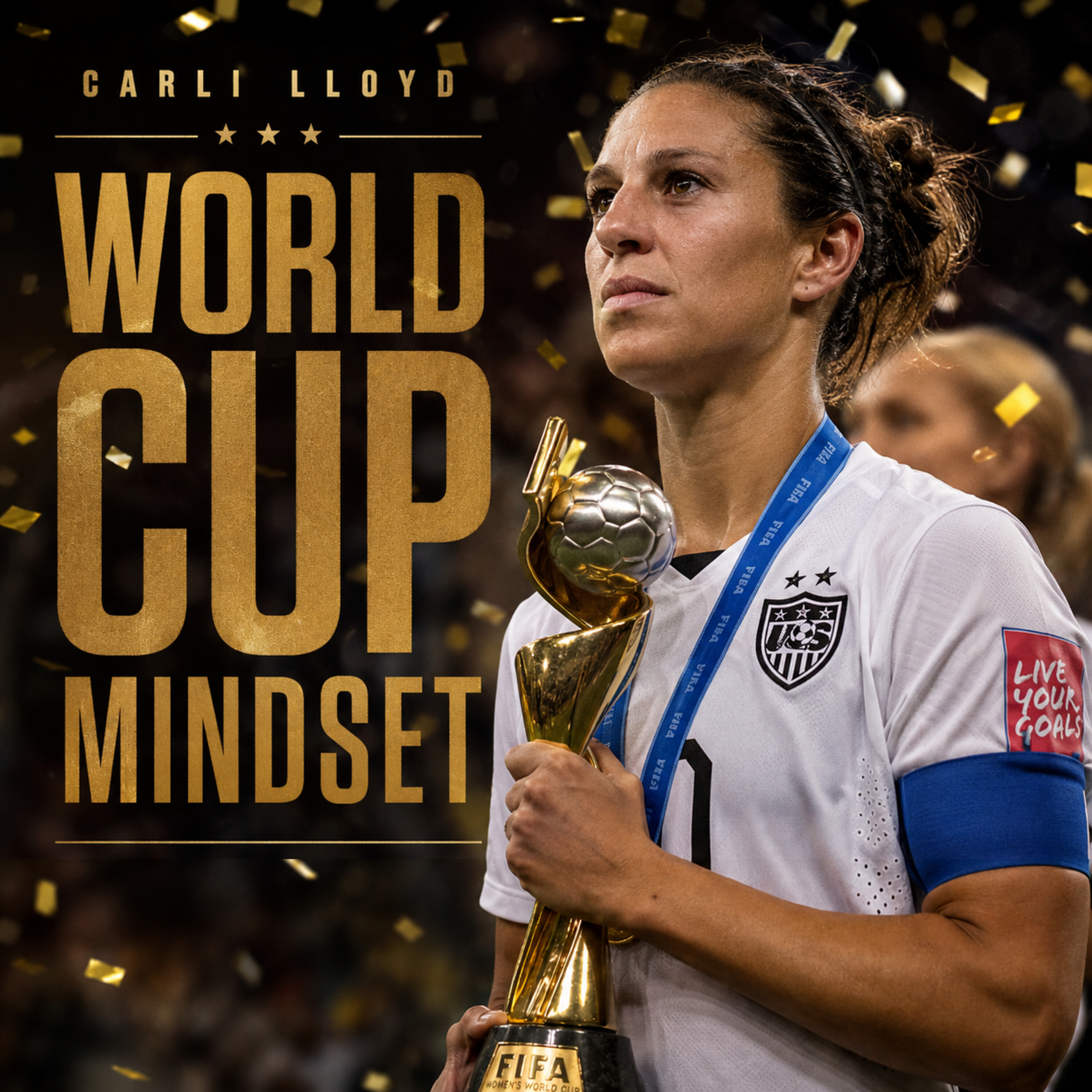
Loading summary
Transcript60 lines
- [00:00]
Ryan Holiday
Welcome to the Daily Stoic Podcast, designed to help bring those four key stoic virtues, courage, discipline, justice and wisdom, into the real world. Hey, it's Ryan. Welcome to another episode of the Daily Stoic podcast.
- [00:20]
Ryan Michler
It is the World Cup. I know this because a lot of
- [00:24]
Ryan Holiday
people are talking about it and I see it on TV everywhere. And we're at the drive through for McDonald's the other day. My kids were big maniacs and my son asked for a World Cup Happy Meal. And I thought, oh, yeah, the World Cup's happening. I don't know that much about soccer and you can tell that because I called soccer. I've been to an Austin FC game. It was very cool. But what is the connection between the World cup and stoicism? Well, back in 2023, we had one of the greatest American soccer players of all time, Carli Lloyd, on the podcast. She had retired in 2021. She's in the National Soccer hall of Fame. She's a Olympic gold medalist, a two time Women's World cup champion, two time FIFA Player of the Year, and a four time Olympian. 2008-2012-2016-2020. Crazy. And we were talking stoicism, what it takes to be a great athlete, what it takes to perform at the highest level. And she's also a starring character and subject of one of my favorite books about leadership and sports, Sam Walker's the Captain Class.
- [01:30]
Ryan Michler
I think the subtitle is A New
- [01:32]
Ryan Holiday
Theory of Leadership, but also the Driving for Between Some of the World's Greatest Teams. Great book. I think you'll see from this episode why Carli Lloyd is in there. Carly has her own great memoir, When Nobody Was Watching My Hard Fought Journey to the Top of the Soccer World. You can follow her on Instagram and Twitter at carliloyd and let's get into it.
- [01:50]
Ryan Michler
Going to obstacles and sort of the growth mindset. I was thinking about this as I was preparing. It's 20 years ago that you were cut from the under 21 team and you've talked about this. Um, that's kind of amazing. But you thought that was. That was it for you. Like, you've talked about how you thought that was the end of the road. Obviously it wasn't. But talk to me about that moment where you're sort of like, is, is this as far as this thing takes me? Or, you know, am I gonna double down and figure out who I'm gonna be and how I'm gonna get past this?
- [02:25]
Carli Lloyd
It was a pivotal moment in my career, in my life, and I kind of break up my life into two halves. The first half, you know, being born, and then up until this U21 point of getting cut, I was one player in person. I relied on my talent a lot. I had a lot of coaches who supported my talent. And even though one day I would show up and give 80%, it was still better than most people's. A hundred percent. And whether that was, you know, right or wrong with some of the coaches that I had, they would constantly play me, you know, they would constantly need me. I was the best player on every team I played on. And I never really kind of went through anything that was a little difficult or a little challenging or, you know, hit an obstacle, per se. And I was pretty lazy, in fact, and didn't have, like, the best workout ethic. Pointed the fingers, blamed a lot of people. There was never that again. That growth mindset, that, that internal motivation to say, all right, I'm going to look myself in the mirror. What do I need to do to be better? It's not anybody else's fault. What do I need to do? So when I got cut from the under 21 national team, the easy way out for me was to quit. Of course, my parents didn't want to see that happen. They had, you know, spent numerous weekends and hours and money giving me the opportunity to kind of lay this foundation. And they did know that I loved it. So I finally, you know, figured out that I just had to face it. And I really believe that the only way through any challenge and obstacle in life is through it. And you become better when you just go through it. Exactly. I remember that from your book. And so I started to just change my mindset, started to work hard, started to work on a lot of things that I wasn't necessarily, necessarily good at. I got myself fit. I hated running, but I just. I just did it. And I knew that I had to do it and have now grown to love running. It's therapeutic for me. It's. It's my outlet. So it, again, that. That first half of my life, you know, was. Was pretty much relying on my talent up to that point. And. And like anything in life, talent only gets you so far. And so that second part of my. My life from the under 21 days, you know, all the way until this point. Yeah, it's a tale of. Of two different people, two different Carlis. And, you know, right now it's been about, you know, digging deep. And I had the motivation, I had the passion. I just needed to learn the necessary tools to not only get me to the top, but allow me to stay there for so long. And, yeah, it's been. It's been an incredible journey, but that was a pivotal moment in my career and my life.
- [05:24]
Ryan Michler
There's a story about Rosanne Cash, Johnny Cash's daughter. I think I heard about it from Steven Pressfield first, but it's in her memoir, which is. Which is really, really good. But she was sort of coasting. She's obviously naturally talented. Her father's sort of music royalty, so she's just sort of doing her thing. And she'd put out a couple albums and they'd done okay. And she has this dream one night, and, you know, dreams are, like, sort of weird. And so she's in this dream and she's at this party and she sees the singer, Linda Ronstadt, talking to this man. And the man has, like a name tag on, and it says art, right? These sort of symbolizing, like, her craft, what she does. And she goes up to them. She's a huge Linda Ronstadt fan, and. And she. She tries to talk to her. And the man, Art, looks at her and he says, we don't respect dilettantes. And then they both turn her back, their back on her, and she sort of has this wake up call that she hasn't. She's been doing okay, but she's been a bit of a dilettante. Like, she wasn't all in on the thing. And then, you know, she ends up hiring better collaborators. She demands more of herself as a lyricist and as a musician, you know, hires teachers, et cetera. And I think about that moment, it's like, are you being serious about this thing, or are you just enjoying the fact that you're pretty good at it, or that you're getting rewards for it, or, you know, that it doesn't ask that much from you because life doesn't ultimately, the craft or the profession or the thing, it doesn't have much time for. Dilettante. You're not going to get very far.
- [07:02]
Carli Lloyd
No, no. And you're not going to be handed it. And I think the biggest lesson is, you know, I don't know that I necessarily even had the biggest. The most belief in myself that I could do it. So maybe there was a sense of fear that crept in. You know, what if I start running? What if I start working hard? And then what if I don't make it? But I committed to it from that point on. I was, like you said, I was all in and just consistently living a lifestyle, you know, throughout that journey of taking care of my body, getting enough sleep, eating well, training as much as I can, double, triple the amount of other players and just committing to that. And you don't know what the journey's going to be like, and you don't know how it's going to play out, but just a big believer in just being consistent with everything that you do and giving it all you have and the journey will write itself.
- [07:56]
Ryan Michler
Well, obviously in athletics, there's a sort of a legal distinction between amateur and professional, but it strikes me that that's. That's the moment that you turn pro.
- [08:06]
Carli Lloyd
You know, I think timing is everything in life. I think that there is the higher powers or whatever your beliefs are that, you know, need to collide and need to kind of all come together. But the under 21 national team for me was the four years throughout my collegiate career at Rutgers University. And then in 2004, when I finished up. 2005 was when I first got into the national team. I had two camps. They were actually not as busy that year because they were going through some contractual stuff. So I had my first two games being played on the national team, and it was almost like, hey, you're rolling into this and you better learn fast and take this opportunity and figure out what you need to do to be able to stay there.
- [08:54]
Ryan Michler
Yeah. And the idea of being a professional at what you do is sort of secondary or independent of whether you're getting paid for that thing or not. Right. Like, obviously being, being a pro athlete means, like, you're getting paid to be the athlete. But, like, there are plenty of people who are getting paid that are not professionals. Do you know what I mean? Like, they, they don't treat it like a job or a calling or a craft. They are continuing maybe because they're. Maybe they had different assets or whatever they did. They don't run into that thing that you happen to, to bump into there early on, which is like, hey, my natural talent isn't enough anymore. There has to be some other driver or system that is going to allow me to continue doing this.
- [09:42]
Carli Lloyd
Oh, absolutely. Yeah. Because you, you reach a point where, you know, you're. You're being funneled into a bucket of all the best players. Everybody that I was playing with were the same me just in a different state, in a different section of the country. So there's got to be some sort of separation of what's going to keep you there and what's going to allow you to. To keep staying, you know, at the top. And I Think it, it ultimately starts with passion. I mean that, that for me is a non negotiable. If you don't have any passion and love for what you do, it's going to be just treated as a job. It's going to be treated as, you know, this monotonous thing that you just go through life. But I mean I loved playing that round ball was, was my first love, you know, and it was never about the money, it was never about the fame, the glory, nothing. It was purely because of the beautiful game. And you know, that's, that's ultimately what, it's what it's all about. Now when you're you under five player playing on a wreck versus playing at a professional level, it does somewhat become a job. There's a lot of things that you have to navigate. You know, I think it's much easier when you're younger and there's not all this pressure and all these other things, you know, social media world and the media world and the doubters and, and all of that. So it's a, it is a lot to navigate and. But when you step in between those lines, and I always stepped in between those lines, it was like everything else around me just paused. It was like time stood still and I'm just playing this game and it was pretty amazing.
- [11:31]
Ryan Michler
There's a Paul Graham line that I love. He's this entrepreneur, he writes these great essays about entrepreneurship and creativity. And his line is that it's very hard to be great at something that you don't think about in the shower. You know, like if it's not something that you are profoundly obsessed with and consumed by, you are probably not going to be putting the resources in.
- [11:57]
Ryan Holiday
That's not just required, but that's going
- [11:59]
Ryan Michler
to allow you to compete with the majority of people in that field that are that way, right? For better or for worse. Like you're competing with and against people who are totally obsessed and live and breathe that thing. And so if you don't have that, that is a huge competitive disadvantage, a hundred percent.
- [12:19]
Carli Lloyd
And I saw that and felt that firsthand from players that I played with, played against all throughout my youth days, up into my college days. Some of those players, I used to look at them and say, wow, they're so much more talented than I am. They're, they're so much better than I am. But I got to a point where none of them were playing past college. Some hadn't even gone to college to play. And suddenly, you know, I, I remember kind of saying, you know, what was it that, that, you know, I saw these players just all of a sudden stopping and it's that will. It's that love, you know, it, it, it is life consuming, you know, for, for 17 years of my professional career, I don't know whether it's right or wrong. My life was consumed by soccer. And now stepping out of that world and being retired, I feel like I'm, I'm blessed to be able to be retired at the age of, you know, 39 last year, to still be able to do so many things. And now I feel like I have just such a better balance on life. You know, I was, I was all in and needed to do what I, what I did with my career. But now I just have this different perspective of, you know, maybe not being as hardcore and just kind of being in the present and just taking life in. So, yeah, I don't know if that's just, you know, getting older and not playing anymore, but I definitely have a shift in a mindset. In this new retired phase, it all
- [13:51]
Ryan Holiday
comes down to hiring. You gotta find the right people for your team and you gotta bring them on board and you gotta onboard them quickly. You know, just throwing up a job posting and hoping you get lucky. I've just found, well, you don't get lucky enough. If you want to find quality hires, well, you should check out Indeed right now. People are finding quality hires on Indeed. Right now. In just the 30 or so seconds we've already been talking, people have made dozens of hires on indeed. According to Indeed data worldwide, their sponsored jobs posted directly on indeed are 95% more likely to report a hire than a non sponsored job sponsored job. So join more than 3.3 million employers worldwide that use Indeed to connect with quality talent that fits their needs. Spend less time searching and more time actually interviewing candidates who check all your boxes. Less time, less stress, more results when you need the right person to cut through the chaos. This is a job for Indeed sponsored jobs and listeners of this Show Get a $75 sponsored job credit to help get your job the premium status it deserves@ Indeed.com stoic that's Indeed.com stoic right now and support the show by saying you heard about it on this podcast. Indeed.com stoat terms and conditions apply. Basically, since the early days of launching Daily stoke, which was 10 years ago this year, we have been using today's sponsor, Shopify. If you've bought anything from the Daily Stoic store, if you've bought anything online or in person at the Painted Porch, then you have also used Shopify. We use it because it's the best. We use it because it helps keep the lights on. And I even had the founder of Shopify, Tobias Lutke, on the podcast a couple of years back because he's also a fan of stoicism. Look, to use Shopify, you don't have to be a technical genius, you don't have to be a big business, although you can be. They've got plenty of resources to help you make your store work the way you want it to. Shopify also has a bunch of helpful AI tools you can use to write product descriptions, page headlines, even enhance your product photography. And best yet, Shopify is your commerce expert with world class expertise in everything from managing inventory to international shipping, to processing returns and beyond. And if you get stuck, Shopify is always there to help with their award winning 24. 7 customer support. Start your business today with the industry's best business partner, Shopify, and start hearing with Shopify today. Sign up for your $1 a month trial at shopify.com stoic go to shopify.com stoic
- [16:32]
Ryan Michler
I was with Dante Hightower, the football player, the other day. He just sort of retired and I was talking to him about that and I was like, you gotta find an outlet, man. Because like, I was like the intensity that you brought to this thing that you've been doing since you were 10 years old, right? Every day it's what you're thinking about in the shower, it's what you're spending literally hours in the gym, on the field, watching film. And then also like your competitiveness and your satisfaction, that was all directed at this thing. And that thing is now gone, right? That energy cannot just be vomited on. The people around you who have gotten to know you over the years as being the person who had an outlet for those things, right? Like you have, you have to find a, a productive, healthy place, I think, for that energy or it turns on itself.
- [17:32]
Carli Lloyd
Yeah, no, I, that's what I heard. I heard a lot of stories about athletes in particular that have retired, that haven't really transitioned well into that retirement phase. And I think it's, it's interesting and I'd almost like to dive deeper into it because I was someone who was able to dictate when I left the sport. It was no career ending injury, or I was too old, or it was a coach's decision. I said, I've done it all. I've got nothing left to prove. It's time for my next next step. In life. And. And that was that. And so to be able to peacefully walk away from something you've done your whole life, you talk about this outlet and this release. I don't really have those competitive foaming at the mouth juices that I'm longing for anymore, which I think is a good thing. I mean, I play. I play golf now with my husband, and I'm getting into that. And. But it's almost like a peaceful journey. Like, I'm just kind of all right. It's going to take time to learn the swing, and I'm going to. I'm going to be patient with it, but I'm going to enjoy the process more because I don't know that I necessarily took in and enjoyed the process in my career. And again, maybe that was good, maybe that was bad. I reached heights that I wanted to reach. But it's just an interesting perspective to kind of compare the two.
- [19:01]
Ryan Michler
See, like, there's two different Ryans. There's the Ryan who's writing a book, and then there's the Ryan who has recently finished a book, right? And so, like, Ryan who is writing a book is like a dog that's getting walked, that's going outside and playing a lot. You know, that's sort of very like. Or like a kid that, like, had a full day, right? Like, I had a productive, healthy, generative, you know, like, thing that I got a lot of that energy out. But then also because I care about this thing so much, I don't care about a lot of other things that don't really matter. I'm just sort of like, I don't care what the weather is when I'm writing. I don't care what's happening in the world. Like, I'm not noticing whether the house is messy or clean because, like, I have, like, a kind of a tunnel vision. That is my thing. And then sometimes my wife will catch me when I'm like, between books or I've just stopped a book or I'm waiting for edits back on a book. Like, suddenly I'm like, I'm up in everyone's business. I have a lot more. Like now all of a sudden, I'm. I'm looking for stuff that I would have. I would have been totally oblivious to before. And I think that is the beauty of having a kind of a life's task. Like a thing that you do that fulfills you and challenges you and stimulates you. Being involved with the game, I think probably generally is that for you. But I think people struggle when either they don't have that thing. Like, just imagine how frustrating it would be to be you having never discovered the thing you were meant to do. Like, if you just never. If you had walked away from soccer after you got cut, like, you would be the same person, but you would have never found that fulfillment and meaning and sense of self. So I think it's frustrating to never have it. And then it's also frustrating when the way you're involved in it changes. You have to find a new way to adjust and calibrate or else you're. You're not pleasant to be around.
- [21:04]
Carli Lloyd
Yeah. And I would probably say throughout my career, I mean, with my husband and I mean, talk about the tunnel vision. And your mood is a reflection of wins and losses, you know, success and failure. And it tended to not be good when there was failure and, you know, losses and all that. But you have to be all in. And I think that, you know, I do. I look at the people around me, you know, friends, family, and I couldn't imagine, you know, not. Not really going after a dream. Right. You know, you're just kind of cruising through life, and you go to college and you get a job, and then you're just kind of, you know, you're just. Just going about life. But, yeah, I'm very fortunate to have been able to do something that I love for so long and follow that dream. And. And I think what I take most from everything is again, you know, the books, the lessons, the. The journey, and everything that I've learned in between. That. That's what I treasure most. Because I'm a better person. I'm a stronger person. And I don't think that you. You get that just kind of going through life as. Just like it's your job, in a sense.
- [22:19]
Ryan Michler
There's obviously the people who choose not to and then the people who can't. Right. Like, I think. I think all the time of the Langston Hughes poem, what Happens to a dream deferred? Do you know that one?
- [22:31]
Carli Lloyd
I don't.
- [22:32]
Ryan Michler
Oh, it's so good. It's really short. I just pulled it up. He says, what happens to a dream deferred? Does it dry up like a raisin in the sun? Or fester like a sore and then run? Does it stink like rotten meat or crust and sugar over like a syrupy sweet? Or maybe it just sags like a heavy load? Or does it explode? And then. So you think about the people who. Because they didn't have the teachers or the coaches or people because of the color of their skin or what country they were born in, or the economic circumstances they were born in that have this potential or this calling or this gift, but they never know it. It's not even an option to explore it or make it real. Just how terrible a fate that is and how tragic that is for someone to like, not even. Not even have, like, a chance that they walked away from, but, like, to not even have a chance.
- [23:31]
Carli Lloyd
Right? Yeah. And that's why I'm so grateful and thankful. But do you think those types of people realize that through. Throughout life, or do you think that not knowing is kind of that unknown of not being fulfilled and realizing you haven't had that opportunity or. Or chance?
- [23:48]
Ryan Michler
There's probably different ways of knowing, right? There's like the. I could have, you know, I could have been somebody. I could have been a contender. You know, there's like, sort of that kind of like, I didn't pursue it or I didn't get it. Then there's like, you were talking about people who have injuries who, like, they were great. And then, you know, a freak fall or an accident or, you know, violence done to them takes that away. But then, yeah, there's probably a larger contingent that just sort of has lack of fulfillment or meaning or some sense that, like, they were meant for something more, but because they were born in this impoverished area or, like, I mean, how recently it even was possible to be a professional women's soccer player? Like, how many people? Just, like, it wasn't even a thing. Like, I'm sure there were generations of talented, athletic, you know, ambitious women who. It wasn't even a thing that they weren't thinking about. They were given a kind of tunnel vision about the kind of career options or life that they could or couldn't have. And there must have been kind of just a profound dissatisfaction or sense that there was more to life that they couldn't fully realize because of just how things were.
- [25:09]
Carli Lloyd
Yeah. I mean, even speaking to my mom, I mean, she had said, you know, soccer was never, never an option, never a choice for her to play. I mean, she was a cheerleader. There wasn't much. And then you have title nine, you know, that allowed women and more women's sports in college. So, yeah, it's. It is interesting. And then you look at. Yeah, I think it was. Yeah, it was. There's not a go. It's interesting. And then. And then. But then you hear stories of, you know, just incredible people who grow up with nothing and. And somehow find. Find a way through that which I think is incredible too. So, yeah, it's just life. Life is definitely a journey.
- [25:50]
Ryan Michler
Totally. Yeah. It's. There are the people who persevere through things that they shouldn't have to persevere through. And then there are the people who, you know, maybe they were just one degree less determined, but that didn't mean they couldn't have been great had there been fewer barriers, less resistance, you know, a different path. And.
- [26:14]
Ryan Holiday
And I'm sure there's.
- [26:15]
Ryan Michler
Even as I've talked to athletes, I remember I was talking to Marty Bennett about this, the who also played for the Patriots. But he's like, there was a very clear path for a big black dude like me to be a professional athlete. Like, there was a whole system that encouraged people like me to go towards sports. But he's like, I also liked drawing and art, and there was not a system that said, how do we make you great at that? You know, how many sort of sparks are there? And which sparks, as a society do we. Or green sprouts, whatever. How many of those do we make into something? And how many of those do we sort of, you know, stamp out? Like, there's the famous story about Malcolm X. Malcolm X is a young boy, and he said his teacher asked him what he wants to do. And she's like, he says he wants to be a lawyer. And she's like, she laughs at him. She's like, you must think of something more realistic. And I think there was a racial slur involved also. But the point is, like, he becomes a criminal instead, right? Like, because the thing that he should have been encouraged to think about is humiliatingly slammed in his face.
- [27:32]
Carli Lloyd
It's the same with kids too, nowadays. I would not. Yeah, you hear so many stories of professional athletes in particular, just because that's kind of the world that I'm in where, you know, their teachers have laughed at them when, hey, what do you want to do? Oh, I want to be a professional football player. I want to be a professional soccer player. And it is just interesting because from my perspective, you know, I would be like, hey, yeah, dream big. Go for it. You know, shoot for the stars. It is in a. In someone's particular environment journey, you know, what is said or done can literally have life changing effects on them and what way they go in life.
- [28:09]
Ryan Michler
You know, this discussion lately about Nepo babies, you know, this one about, like, people whose, like, parents are actors or actresses and then they become an actor, an actor. Like a lot of the people that are, like, famous and we're important or good today, you know, it's not so much a pulled up by their bootstraps thing. It's like their parents were in the industry, right? And so people are saying that's sort of unfair. And there's advance. And it's true. There's, you know, football. Super nepotistic. Hollywood, super nepotistic. Lots of professions are. But I've always thought, I think about this from a parenting standpoint, because I think about my own childhood. Like, nobody I knew was a writer. Nobody I knew. I don't think there's a single parent of any of my friends growing up that didn't have a salaried job. They were all, like, employees. I didn't know anyone that was like, an entrepreneur or a creative or an artist or something. And so I've always wondered if possible. Part of the thing about what we call nepotism, like, how does Steph Curry and his brother both make it to the NBA? The fact that their father was in the NBA, Is that a biological advantage? Is that an advantage that he. He pulls strings for them? Or is it that they woke. They lived in a world where it was possible to be a professional athlete. And their. Their dad was like, here's how you do it. It's not rocket science, like, in the sense that, like, you grow up not thinking that it's insane to make your living playing a game. Right? And, like, my kids will have a different relationship with books and entrepreneurship and things that I do because they've been normalized, like, by them growing up around a person who did it. And so I wonder how. How many people's options are closed off by the fact that the things that they want to do are just outside the experience or even the ability to conceive, like, by teachers or what? Like, the teacher's.
- [30:14]
Ryan Holiday
Like, you can't become a professional athlete
- [30:15]
Ryan Michler
because they'd never seen that before. It seems impossible. It's like you can't win the lottery, you know?
- [30:21]
Carli Lloyd
No. Yeah. No. It's interesting. I've had the same kind of chat with my husband about it. And you look at. You look at Tiger woods and his son. And now in the. In the super bowl with the Eagles and Chiefs, you've got the Kelsey brothers. So I was talking to my husband about this. You know, I was very athletic growing up. I'm one of three. I'm the oldest. I have a younger sister and a younger brother. And my husband, Brian was very athletic. And we kind of. We. We kind of go back and forth with one another, like, how much of that are you? You born a bit athletic and then how much of that is your environment? Like, you know, he was put in front of four wheelers, dirt bikes, waverunners, you know, every sport imaginable. I wasn't put in front of those, you know, action type sports and those riding sports, but, you know, swimming, softball, football, soccer. I mean, every sport. And my siblings, you know, we, we grew up in the same household. My brother went on to play college soccer and then that was it. And my sister played soccer for a little bit. But it's just very interesting, the dynamics of. Because we talk about it all the time when, you know, we want to start a family and we would want to give our kids the opportunity to just try everything. You know, maybe more geared towards sports because we're sports people, but because I feel like that's the only way you, you truly can kind of find a passion and know what you may be good at.
- [31:51]
Ryan Michler
Well, speaking of books, have you read David Epstein's book Range?
- [31:54]
Carli Lloyd
I have not.
- [31:55]
Ryan Michler
I think you would really like it. He wrote a book called the Sports Gene several years ago, which is really good. But then Range is basically, he's contrasting Tiger woods and Roger Federer. So like Tiger woods is basically from 2 years old, is told you're going to be a golfer and is basically raised in a kind of science experiment to, to do nothing but live and breathe, you know, hitting a small white ball. Whereas like Roger Federer, like plays a bunch of sports, he doesn't even really get serious about tennis until his like, late teens. And he just, he has a different relationship with. But they're both dominant, both, you know, all time greats. One has sort of more of a resilience and a flexibility and a lightness to him, and the other is like kind of imprisoned in this thing. And his point is that Range having a range of skills and interests and being exposed to different things, not just in sports, but in all things, is a, is a better, you know, is a better way to be.
- [32:57]
Carli Lloyd
Yeah, that's interesting. I know it, it is. I didn't, I didn't realize that often I just wrote that, that book down. It's very interesting. And then you kind of think of someone like Tiger who, I mean, greatest of all time, I mean, transformed the sport of golf and then kind of hit those, those rocky patches, you know, was, was that because he was just too, you know, one dimensional in that, you know, was there that feeling creeping in of wanting to experience other things? And there's a lot of athletes that you Know, are athletic that have played multiple sports. And it is kind of an interesting comparison to. Most of the greats do seem like they, they are a bit more dimensional than, than just that one sport. But then you've got the rare occasions
- [33:48]
Ryan Michler
that, you know, he was drafted as a baseball player also. Right. Like, you can be so good and good at multiple things. And like, I also think there's probably an argument if you're really getting into it. It's like there's something wrong with a high school baseball player having to get Tommy John surgery. Do you know what I mean? Like, that you've thrown so many pitches by the time you're 17 years old that you're wearing out your arm. Like, like what I love about what I do, and I think we talk about it less as a society is like burnout, right? Like, I love that you can be a writer, a professional writer up until the day that you die. You know, like, you had an incredibly long career and you're not even 40 and it's over. Like, you just think about, like, how, how small the window is for some of these things. But is, is part of the reason that people get these repetitive injuries or it's so short is that they're, they're thinking about it in such like a finite. They're not thinking about it. How can I, like they're thinking about, how can I be great at insert thing now we don't think long term in a lot of the decisions we make.
- [34:59]
Carli Lloyd
No, not at all. And that's, you know, a lot of athletes that, that I know, that I've played with, you know, some of them need knee replacements, some have already gotten them. So, you know, my quality of life. I'm, I'm grateful that I'm able to still golf, hike, ski, you know, do all of these things, because that'd be a really crappy life to played soccer for 34 years and then not be able to walk or do anything after that. But I, I am a, you know, I think it's a high debate amongst youth sports now in general. We just, we talk about the specialization and, and I'm all for, you know, if you want to be the best in something, you've got to put the time, you know, and energy and hours into that. But I look back on my youth career and I didn't get that burnout because I wasn't playing four or five soccer games on a weekend. It was one, maybe two max. So during that week, you look forward to that one or two games and then you get back at it and practice. And I did some other sports as well. But you develop different muscle groups. And I really believe that it's. Every parent now seems to want to get their child into some sort of specialized training at the age of four because they think they're going to be the next biggest star. I'm like, it doesn't work like that.
- [36:27]
Ryan Michler
That's totally what the book is about. And it's not just, hey, you could burn yourself out, you could get different injuries, but it's also like you learn things being in these different situations, having these experiences that ideally when you do ultimately specialize and you're right, at some point you have to pick a lane and you're like, because you can't be, you can't be world class at like seven things that you're half heartedly pursuing. You have to pick your thing. But like you, the more experiences and environments that you have to draw on, the better you're going to be at that thing.
- [37:07]
Ryan Holiday
As a business owner, I'm super familiar with how important a strong Internet connection is to keeping everything running smoothly. A slight delay in the Internet connection in the store, it could mean missed sales. A lag in a zoom call or a podcast recording could mean you lose everything you were doing. When every minute matters, every transaction, every customer, you cannot rely on a subpar Internet connection. You need a provider that's reliable. You need Spectrum Business. Spectrum Business keeps businesses of all sizes seamlessly connected with fast, reliable Internet, advanced Wi Fi, phone, TV and mobile services. They offer 100% US based customer support 24,7 to help you stay up and running and are sure to have the right plan for you. With tailored connectivity solutions and packages built for every business budget, millions of business owners rely on Spectrum Business to keep them connected. Visit spectrum.combusiness to learn more. Restrictions apply. Services not available in all areas. You know what silently kills sales teams? The inability to see what's happening in their pipeline. And part of the reason they can't do that is because they use software or CRM that's so complicated that people don't even log in. I mean, I do this all the time. You get some tool and you're like, I'm going to use it. And then it's so complicated you don't use it. And that's where today's sponsor pipedrive comes in. It's an easy, intelligent CRM loved by growing sales teams and most important, actually used by them. Pipedrive gives your team one complete trusted record of every customer and deal. It's all centered around a visual pipeline where you can see everything, what stage a deal is in, what needs to happen next. Then you've got complete clarity on your entire sales process in a glance. It's fast to set up, easy to learn, and genuinely delightful to use. Switch to a CRM built by salespeople for salespeople and join over 100,000 companies already using Pipedrive. And our link gives you an exclusive 30 days free instead of the usual 14 day trial. And no credit card or payment needed. Just head over to pipedrive.com stoic to get started. That's pipedrive.com stoic you can be up and running in minutes.
- [39:16]
Ryan Michler
You mentioned passion earlier. It's like you're not just competing with younger people, but you're also always competing with people who are hungrier, who have something to prove, who potentially want it more. Like, it must be hard. As you, like, as you have done more and more, like finding what is it inside yourself that's making you want it so badly? Do you know what I mean? Once, once you've done it, it's no longer, well, I'd like to do this before I stop. Well, okay, then you've done that. Like, what's getting you out of bed, what's putting you in the ice bath, what's putting you on the road again? You have to find that thing inside yourself to motivate you because it's not, it's not external stuff anymore.
- [40:02]
Carli Lloyd
Yeah, no. And just the expectation is hard. You know, once people see something that you've done and they expect it every time over and over and over again. But everybody's different and there's, there's always, you know, more. But then you, you've reached that level and the expectation is just people want it every single time. And I think that's what, that's what gets, gets hard.
- [40:22]
Ryan Michler
I'd be curious, like, okay, the, the discipline of like one more, one more rep, you know, one more burst of energy, you know, one more drive, one more season. Like, that's a pretty simple kind of discipline, right? You're drawing, you're drawing deeper in yourself. Like, what do I have left to give? How much gas do I have left? Can I do it one more time? That, that requires a certain amount of discipline. But I, I imagine actually the more challenging discipline was for you to say, like, all right, I'm, I'm done. I've had enough. I'm going to call it here. Like, as you said, my decision as opposed to a coach's decision. And you know, a doctor's decision, a financial decision or whatever, you had to have the discipline to know and then to act on your feeling that you had. You had taken it as far as it should be taken.
- [41:16]
Carli Lloyd
Yeah, I think that, you know, your ego can definitely get in the way. Who doesn't love a lifestyle of being in front of crowds and, you know, being on social media and being highlighted and winning things and having success? I mean, but again, that. That wasn't why I did what I did for so long. I did what I did for so long and had the consistency and the discipline and the will and the love simply because I wanted to. To never put limits on myself and push myself as far as I could go. And the way that the soccer world works, which is, you know, a little different than the NFL or the MLB or the NBA, you know, we have cycles where every four years there's a World cup and every four years there's an Olympics. So in my head, I envisioned my career originally only going three cycles, which would have put me at the 2016 Olympics to finish up. But when I got to the 2012 Olympics, I said to myself, I don't want to do one more cycle. I want to do two more cycles. So essentially, that was four. Four World Cups, four Olympics. So with 2020 happening and Tokyo getting pushed another year into 2021, I knew in my mind that. That that was going to be it, because the next cycle that came around was this year, this 2023 Women's World Cup. And then, you know, again, you're. You're getting into the. Could you push more? It's more travel. Everybody's going to be talking about your age. You know, they're going to want. They're going to want the old ones out and the new ones in. And it just was. For me, it was. It was actually an easy decision. You know, when we lost our. Our hope of winning another gold medal at the Tokyo Olympics, we lost to Canada. That then put us into the bronze medal game to compete for that medal against Australia. There's this picture of me sitting on a ball after that game. And in that moment, I knew that once this Olympics wrapped up, I was going to tell the people I needed to tell that I'm going to be retiring. And so it was kind of just. It was an easy alone moment that I had that I knew that I would never compete on the world stage again and I would never get a third gold medal. I would have to settle for bronze. And I was okay with that. I. I had Felt like I had given it all that I had. We talk about that discipline. It just, it got to the point where I gave so much of it from 2005 to 2021 that when I finished, I didn't have much in me. Like I was, I was operating in my reserves and was just fully at peace to turn that next page. And I'm, I'm grateful for that because like I said, I don't think a lot of athletes in particular get to enter that phase feeling that way. And, you know, there's a lot of factors. I had a, you know, falling out with my family for about 12 years, and they came back into my life in 2020. And again, we, I talk about kind of the, the timing and the things that the higher powers bring you, per se, and everything was just kind of wrapping up the way that it should have been. So it was almost like picture perfect. Aside from, you know, not winning a gold medal and, and all that, it was, yeah, it was, it was an easy decision for me to make.
- [44:48]
Ryan Michler
Well, you can come up with ways to not listen to that voice, though. I think what you're talking about is self awareness. Like you had this sense of, you had this notion you'd come to this place, but if you're also one of those people that had turned yourself into a machine, let's say, to be able to do what it is that you do, it can make it possible to sort of override that. That's why people, you know, sort of go out for the bank robber one more job, you know, or the, you know, I'm going to run for election one more time. Like you, it's. Knowing is one thing and then sticking to it is probably another. Because I imagine there were people who. It was in their interest that you keep doing it. Do you know what I mean? Like, I imagine you make the decision and then you have to face, you know, all the, all the things that, that entails, right? Like there's agents and support crew and blah. Like, you know, there, there is the reality of it. It still probably wasn't easy. And then to. So to stick with that trust or that sense you had with yourself, that was probably a. Took a, a certain amount of fortitude, I imagine.
- [46:00]
Carli Lloyd
Yeah, it's true. I never really kind of looked at it that way, I think, because I had just come to peace with it all and there was no real ego in my head telling me like, oh, you know, come on, chase, one more. And I was talking to a friend the other day about this. We're talking about somebody who is working all the time right now, and it's like, you know, if I can just get to this next stage at my job, you know, I'm going to be making X amount. And at what point does that chasing ever stop, you know, like, do you then get to that point and say, oh, if I can just get to this point? And that's how I sort of felt in my career to a point. But, yeah, I guess I could have. Could have talked myself out of it and could have kept going. But, yeah, just for me, that. That perfect timing of. Of just going out on my own was. Was my way of saying, you know, this. This is how I want it.
- [46:58]
Ryan Michler
Enough is such a powerful thing, right? Like, having enough. And yet to be great, particularly at sports, you have to be the kind of person that they're like, Tiger, there's a fascinating biography about him, but his dad, who would put him through these, like, crazy, you know, ordeals and sort of tortured him and put all this pressure on him.
- [47:20]
Ryan Holiday
He.
- [47:21]
Ryan Michler
He would say, like, I'll stop. You just have to say the magic word. And the magic word was enough. Like, I've had enough, right? So it was like he basically made that word, like, a sign of weakness, right? And, and there, you know, it's like, hey, I've had enough criticism. I've had enough pain. I've had enough, you know, all the things that you have to push through to be great. I've had enough rejection. I've had enough doubt. You have to push through that to be great. But then that makes it hard to be like, I have enough. Look at my wall of trophies. Look at my bank balance. Look at all the things I proved to myself. You know, I. I have people that I love. You know, all the other things, like, it can be hard to be like, I have enough. I'm good. I'm satisfied.
- [48:05]
Carli Lloyd
Yeah, no, it's. It's very true. And, and I got to the stage at the end, too, where I felt like I had been trying to prove people wrong throughout my career, which, you know, in a sense added some. Some fuel to my motivation to then end with realizing I don't need to prove another thing to anybody else. And it was a very freeing feeling. And when I announced my retirement at the point that I did, I think it was in August, I had a couple of months to sort of go on this farewell tour with my teammates and, you know, play a couple more games with the national team, with my club team. And I think that's when you Know, my teammates were really able to kind of see that mask off that I had on for so long that I just never let anything penetrate. And I think that that's sort of what I was looking forward to in this next chapter, was to really be able to live life, to be able to do all the things that I couldn't. I put soccer as number one forever, and it was all enough for me. And that essentially is the most freeing feeling. And now it's like I get fulfillment in other places.
- [49:21]
Ryan Michler
Well, how much for you also, though? I imagine having, you know, basically one all the great prizes of your profession that must have been immensely satisfying and, you know, rewarding and, you know, validating. But you also left the game, like, a lot better than you found it, right? Like, not just the public profile of the game, but some of the stands you took and then the lawsuit that you filed. How much of that also allowed you to sort of go, like, enough, because you were leaving the thing better than you found it, which to me is kind of the meaning of life, right, is that we leave the place people. You know, the thing that we do, we leave it in, you know, in a. In better hands than we. Than we took it from.
- [50:08]
Carli Lloyd
Yeah, it was. You know, I look back to the moment I came on the national team in 2005. I mentioned before where I only played two games that year. They had been renegotiating their collective bargaining agreement with U.S. soccer, and in there, they were asking for guaranteed salaries and health benefits and pregnancy leave, and all of these things that I simply, you know, had had no idea about. I just played in two games, received two checks, and I'm like, oh, wow, this is amazing. But little did I know that they were fighting for the next generation to be set up, essentially leaving the sport better than when they came into it. And then, you know, you fast forward to myself and my other teammates and kind of what we had to fight for. It just became necessary for us to then take that step like the Pioneers did, you know, prior to me and several other players knowing that, you know, these are the necessary steps we had to take to make the sport better. And, yeah, it was, you know, it was really tough, challenging to be part of that, to be fighting with your employer, filing lawsuits with them, and then stepping out on the field and having to compete. But I think that we set the standard and we gave the rest of the world, female soccer players, countries, teams, the confidence to know that they've got to fight, and they can now fight, because look at the standard that we set. So yeah, it's incredible to have been part of that and I think it's going to be evolutions of that because there's still leaps and bounds that we can keep pushing and making it better.
- [52:03]
Ryan Michler
When I think it's also like at the end of one's career or life, how are you going to measure whether you were successful or not? I probably, as you go on, as you get further from it, the sort of quantifiable things probably matter to us less and more. The impact and the collective benefit of what we do manage matters more. Which again, to go, what we're talking about are you valuing short term things or long term things? But then in the moment when we're faced with a choice, hey, do I want to speak up about this thing? Do I want to get involved in this thing? Then we go. But it'll hurt my prospects here or make me enemies here. We should try to zoom out and think about how we're going to think about it in a long time from now. And that should hopefully allow us to be a little bit more, I think, courageous and civic minded in what we do.
- [53:00]
Carli Lloyd
Yeah, I would, I would totally agree. I think, yeah, the friendships, the camaraderie, the struggles, you know, the, all the things that, that had to, you had to fight for. I mean that's, you know, people always ask me what's the best thing from your career? And I can't pick one. You know, it's, it's the whole complete package. It's, it's everything in between and the lessons, the journey. Every person that was kind of put in my life or, you know, within the team, good or bad, you know, I'm able to extract something from them and I think that's what's, that's what's pretty cool. And to be able to kind of have that perspective, you know, and I don't know that I necessarily would maybe have that, you know, being younger, but I think the older you get, you just have a, a bit of a different perspective on life and situations.
- [53:55]
Ryan Michler
I think that's right. And that's a beautiful spot to stop. So, Carly, thank you so much.
- [53:59]
Carli Lloyd
Thank you. Enjoyed it. Appreciate it. Grainger knows when you're a procurement manager for an office park, you're not managing one building, you're managing all of them. And to stay ahead, you need to see through walls and around corners. Lights about to fail, filters ready to clog H Vac on its last leg. If you wait until something breaks, you're already behind. Count on Grainger for quality products, easy reordering and 24. 7 support. Call 1-800-GRAINGER, click grainger.com or just stop by Grainger for the ones who get it done.