Loading summary
Transcript3 lines
- [00:00]
A
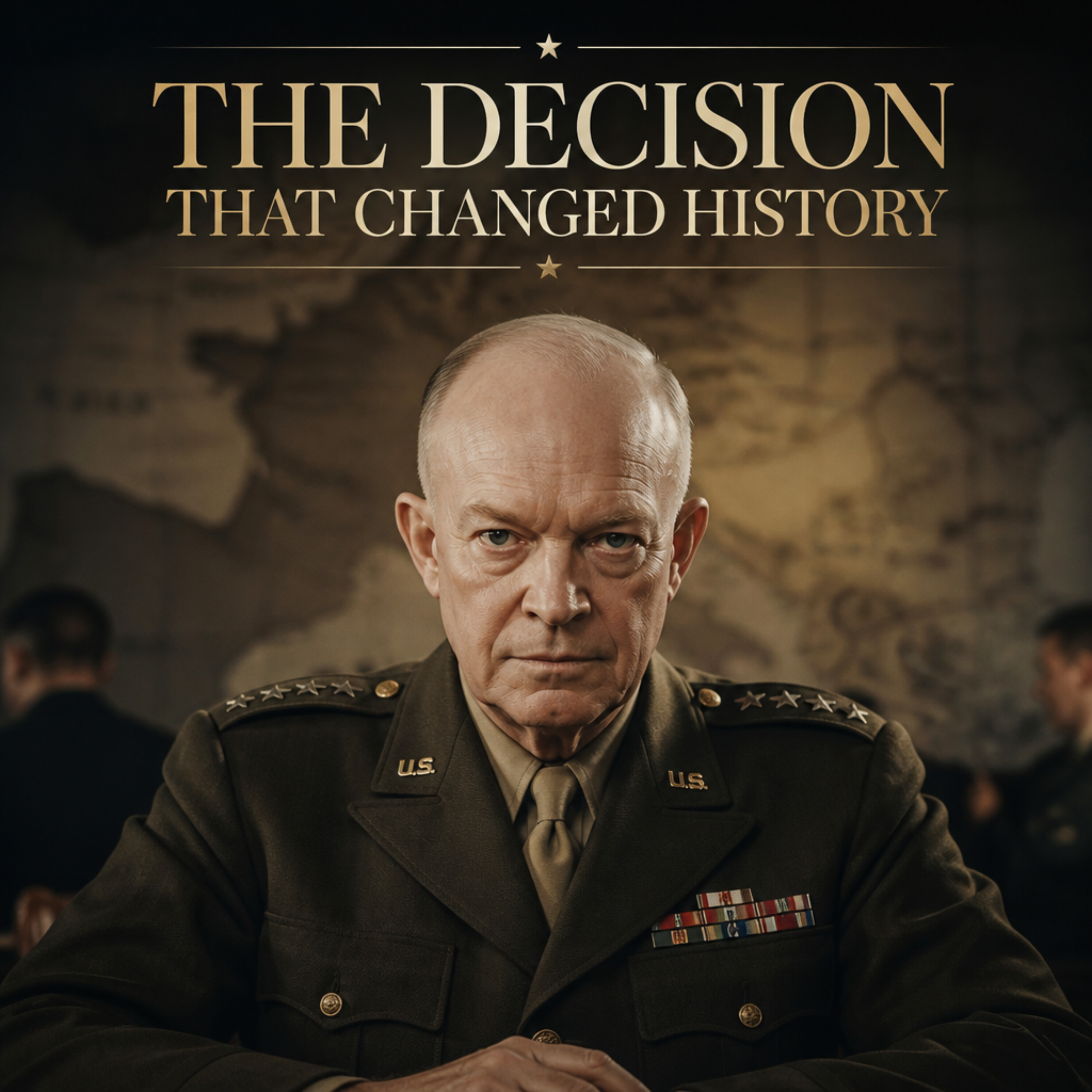
Welcome to the daily Stoic podcast, designed to help bring those four key Stoic virtues, courage, discipline, justice and wisdom into the real world. Out on the English Channel 82 years ago, the ocean hosted a moving city. Thousands of ships and vessels holding some hundred and fifty thousand tents. Young men bob in the sea under gloomy skies. Some of them begin to vomit in anticipation of what lies ahead. It's nearly six in the morning when the flashes start. The whole horizon lights up. British and American battleships begin an enormous barrage raining fire down on the French coast where these soldiers will soon land. As the boats approach shore, the ramps drop. Machine guns from the bluffs begin to to rake and sweep the boats and the men with horrendous fire. Many of the men die before their feet even touch the water, let alone the beach. Some men jump over the sides and are dragged down by their packs and gear. The ones who do land have to make a mad dash across 200ft of open sand in some of the most hostile territory imaginable. By nightfall, almost 5,000 men are dead. And yet most of the beaches in Normandy are taken. These are the events of June 6, 1944, one of the most momentous days in world history. General Dwight D. Eisenhower, the supreme commander of the Allied forces at Normandy, has pulled off one of the most stunning and impressive victories in all of military history. And in this moment, he turns the tides, not just of the war, but of the 20th century and Western civilization. He changes the world as we know it. And that's the story filled with a number of Stoic lessons that we're going to talk about in today's episode. So the Stoics have this phrase called premeditatio malorum, which is a premeditation of evils. It's basically the idea of doing a pre mortem rather than a postmortem. Postmortem is when you look after the fact that what went wrong, what you can learn from it. The Stoics try to think in anticipation of what could happen and prepare for it. Rehearse it in your mind. Seneca famously said, exile, torture, war, shipwreck. He says all the terms of the human lot should be before our eyes. He quotes a famous military historian from the ancient world, in fact, who said that leaders are never allowed to say, wow, I didn't think that would happen. For the Stoics, it's the unexpected who are crushed. It's the unexpected blow that lands heaviest. And if you want to be resolute, if you want to be successful, if you want to be Victorious, you can't be naive. And you have to understand that hope is not a strategy. And so by doing this exercise, Seneca is trying to prepare for what could go wrong, trying to mentally manage his expectations. But he's also trying to anticipate, toughen himself up, put into place what he needs to be in place in order to handle defeat or victory. And I think this pertains to Eisenhower at D Day because he uses a version of this practice there, as he prepares for the invasion the night before Operation Overlord, Eisenhower writes a short 64 word letter where or he takes full responsibility for it failing. Like he's not sitting there doing positive visualization the night before, imagining it all going his way. He's actually thinking about in advance it not going his way, because he understood that were a ton of factors totally outside of his control. The weather was touch or go. In fact, there's a new movie coming out just about the weather reports the day of the invasion, and what a difficult call that was to make. He knows that the defenses could turn out to be stronger than anticipated. He knows that despite everything he did, it might not go his way. And in fact, Eisenhower had a saying that he liked. He said, plans are worthless, but planning is everything. He understood that you had to plan and anticipate and imagine every contingency and. And yet he also understood fundamentally this other stoic idea, which is there's some things in our control and some things aren't, and that fortune, as the stoics would say, doesn't care about your plans at all and very often dashes them completely to pieces. And yet, being the kind of person who plans, who thinks about these contingencies is developing the competence as well as the confidence that allows you to, to adapt and improvise and adjust to these things as they're happening. If all you can imagine is things going the way that you want them to go and then they don't go your way, that's when you're in real trouble. That's the blow that lands heaviest, as Seneca is saying. But if you understand that you have to have plans, plural, right, that part of your plans should be planning for your plans falling apart. Now we're in very different, much more resilient territory. Basically, since the early days of launching Daily stoke, which was 10 years ago this year, we have been using today's sponsor, Shopify. If you've bought anything from the Daily Stoke store, if you've bought anything online or in person at the Painted Porch, then you have also used Shopify. We Use it because it's the best. We use it because it helps keep the lights on. And I even had the founder of Shopify, Tobias Lutke, on the podcast a couple of years back because he's also a fan of stoicism. Look, to use Shopify, you don't have to be a technical genius. You don't have to be a big business, although you can be. They've got plenty of resources to help you make your store work the way you want it to. Shopify also has a bunch of helpful AI tools you can use to write product descriptions, page headlines, even enhance your product photography. Best yet, Shopify is your commerce expert with world class expertise in everything from managing inventory to international shipping to processing returns and beyond. And if you get stuck, Shopify, Shopify is always there to help with their award winning 247 customer support. Start your business today with the industry's best business partner, Shopify, and start hearing with Shopify today. Sign up for your $1 a month trial at shopify.com stoic go to shopify.com stoic you know what silently kills sales teams? The inability to see what's happening in their pipeline. And part of the reason they can't do that is because they use software or CRM that's so complicated that people don't even log in. I mean, I do this all the time. You get some tool and you're like, I'm going to use it. And then it's so complicated you don't use it. And that's where today's sponsor, pipedrive comes in. It's an easy, intelligent CRM loved by growing sales teams and most important, actually used by them. Pipedrive gives your team one complete trusted record of every customer and deal. It's all centered around a visual pipeline where you can see everything, what stage a deal is in, what needs to happen next. Then you've got complete clarity on your entire sales process in a glance. It's fast to set up, easy to learn, and genuinely delightful to use. Switch to a CRM built by salespeople for salespeople and join over 100,000 companies already using Pipedrive and our link gives you an exclusive 30 days free instead of the usual 14 day trial. No credit card or payment needed. Just head over to pipedrive.com stoic to get started. That's pipedrive.com stoic you can be up and running in minutes. And as it happens, he didn't need that first letter because the initial landing was successful. But not long after he does begin to run into problems in the days after the successful landings, as they're trying to make this thrust into France and to liberate Europe. The Allied troops get bogged down mostly in the hedgerows of France. They just have. It's slower than they wanted. And what it does is it gives the Germans a chance to throw an enormous counter offensive at them. The Germans know that basically the whole war is on the line and they throw everything they have at it, something like 200,000 troops in this massive counteroffensive where they're attempting to throw the Allies back and defeat this landing, which Churchill had had always dreaded happening. And in fact, why he had delayed the potential landing at Normandy over and over and over again. He just understood that if it failed here, they'd probably have to sue for peace in some way. And so it's almost unimaginable what a 200,000 men Nazi counteroffensive would have looked like. But the German blitzkrieg was one of the most overwhelming and intimidating developments in modern warfare. At the beginning of the war, these columns of panzer tanks rushing into Poland and Belgium and France were unstoppable. And part of the reason that they were so unstoppable was this perception that they were unstoppable. Many armies simply surrendered in the face of them. And there was a real chance that this would happen to the Allies, that order would break down and they would get thrown back to the sea. And so it's here at this moment that I think Eisenhower is at his absolute best and in a way, at his most stoic. There's this magnificent scene. He strides into his field quarters. He has all of his generals gathered there, many of whom are rattled. They're convinced they're outmatched, they're not sure what's happening. And Eisenhower says, look, I want this situation to be regarded not as a disaster, but as an opportunity. He says, there will only be cheerful faces at this conference table. And what's he doing here? Is this just trying to cheer people up? Is it just wishful thinking? Is this the opposite of the negative visualization from before, Just positive manifestation? And no, what Eisenhower is realizing is that there's an opportunity inside this enormous obstacle that's being thrown at them. Yes, there is a huge rush of German troops coming at them, but he realizes that if they can absorb this, if the psychological part of the blow doesn't work, that if the Allied lines absorb this blow, that actually it can be their chance to sort of sew this thing up. Patton grasps this quite clearly. Too. He says, oh, I get it. You know, the Nazis have stuck their head in a meat grinder. I think this is actually quite similar to what Marx Realis talks about in Meditations, where he says, you know, the impediment to action advances action. What stands in the way becomes the way. If you're only seeing what they're doing to you and not what you can do in response to them, if you don't see how you can work with, with this, you're going to miss what's in front of you. And Eisenhower doesn't. So by allowing this sort of German wedge to come at them and then attacking from the sides, the Allies basically encircle the Germans and win the war. And look, I don't mean to be glib about this. This was an extremely difficult thing to do, and it cost thousands and thousands of lives, and it was waged over many, many weeks. But if you've heard of the Battle of the Bulge, the word Bulge there is illustrative. Basically, by absorbing the energy of this giant thrust of German men and material, eventually they encircle and ensnare something like 50,000 German troops. And actually my grandfather landed at Normandy, I believe, two days after D Day. He fights in the Battle of the Bulge. He wins the French Croix de Guerre. The invincible, devastating, unstoppable. German panzers become not just impotent, but it's a suicidal overreach, a textbook example of why you can't leave your flanks exposed. I think of this moment, this choice that Eisenhower makes, to see the opportunity instead of disaster in a moment to be kind of the definition of stoicism, action. Here he is, the commander of this enormous army, more manpower and firepower than you can really wrap your head around. And yet what he's thinking about is not that he is invincible and indestructible, but he's thinking about the unpredictable nature of war. He's thinking about all the things that could go wrong. He's thinking about how narrow run the whole thing is. I talk about him in Discipline is Destiny as the model of this kind of emotional and physical discipline that we need. I say in 1944, when he was appointed Supreme Allied Commander of the Allied Forces In World War II, he suddenly controlled an army of some 3 million men, the tip of a war effort that ultimately involved more than 50 million people. And there, at the head of an alliance of nations totaling an upward of 700 million citizens, he discovered that far from being exempt from the rules, he had to be stricter with himself than ever and he came to find that the best way to lead was not by force or fiat, but through persuasion, through compromise, through patience, by controlling his temper, and most of all, by example. And he recalls in this moment and moments throughout his life something that his mother used to quote from the book of Proverbs in the Bible, that he that is slow to anger is better than the mighty, and he that rules his spirit is better than he that taketh a city. And this is something the stoics talk about, that. That to be in power, you have to first be under your own power. And so we have to understand that Eisenhower conquers the world. He is victorious at D Day, you know, over eight decades ago, because he is first victorious over himself, victorious over, you know, delusions of grandeur, wishful thinking, and then later victorious over pessimistic thinking, over panic, over doubt, over fear. But when we control our emotions, when we can see things objectively, when we can stand steadily despite everything that's happening around us, it becomes possible to do that mental flip, right? To. To not just see what's bad about a situation, what's hard about a situation, what's going wrong, but the opportunity within it. I mean, like, imagine being in Eisenhower's shoes, like this enormous army is racing on you. You've pushed all your chips into the center. Everyone around you is discouraged and disillusioned and doubtful. And he was able to see not just a way to muddle through it, but to use this to his advantage, to turn the whole thing around. And that's what stoicism is. It's not this passive, resigned, hopeless thing, but it's something deeper than that. It's something more profound than that. And it's something we cultivate in our study and in our thinking so that in these big moments, big in the scheme of the world and in our own lives, so that we can use them when it counts.
- [16:04]
B
As a small business owner, sometimes it feels like no matter how much planning you do, there's always surprises, like an urgent, expensive repair. But here's a surprise you will like with progressive. Small business owners save 13% on their commercial auto insurance when they pay in full. So enjoy a surprise for once. Get a quote in as little as 8 minutes@progressivecommercial.com progressive casualty insurance company and affiliates. Discounts not available in all states or situations.
- [16:34]
C
You're listening to this podcast, so I know you've got a curious mind. Here's a helpful fact you might not know yet. Drivers who switch and save with Progressive save over $900 on average. Pop over to progressive.com, answer some questions and you'll get a quick quote with discounts that are easy to come by. In fact, 99% of their auto customers earn at least one discount. Visit progressive.com and see if you can enjoy a little cash back. Progressive Casualty Insurance Company and affiliates national average 12 month savings of $946 by new customers surveyed who saved with Progressive between June 2024 and May 2025. Potential savings.