← The Daily Stoic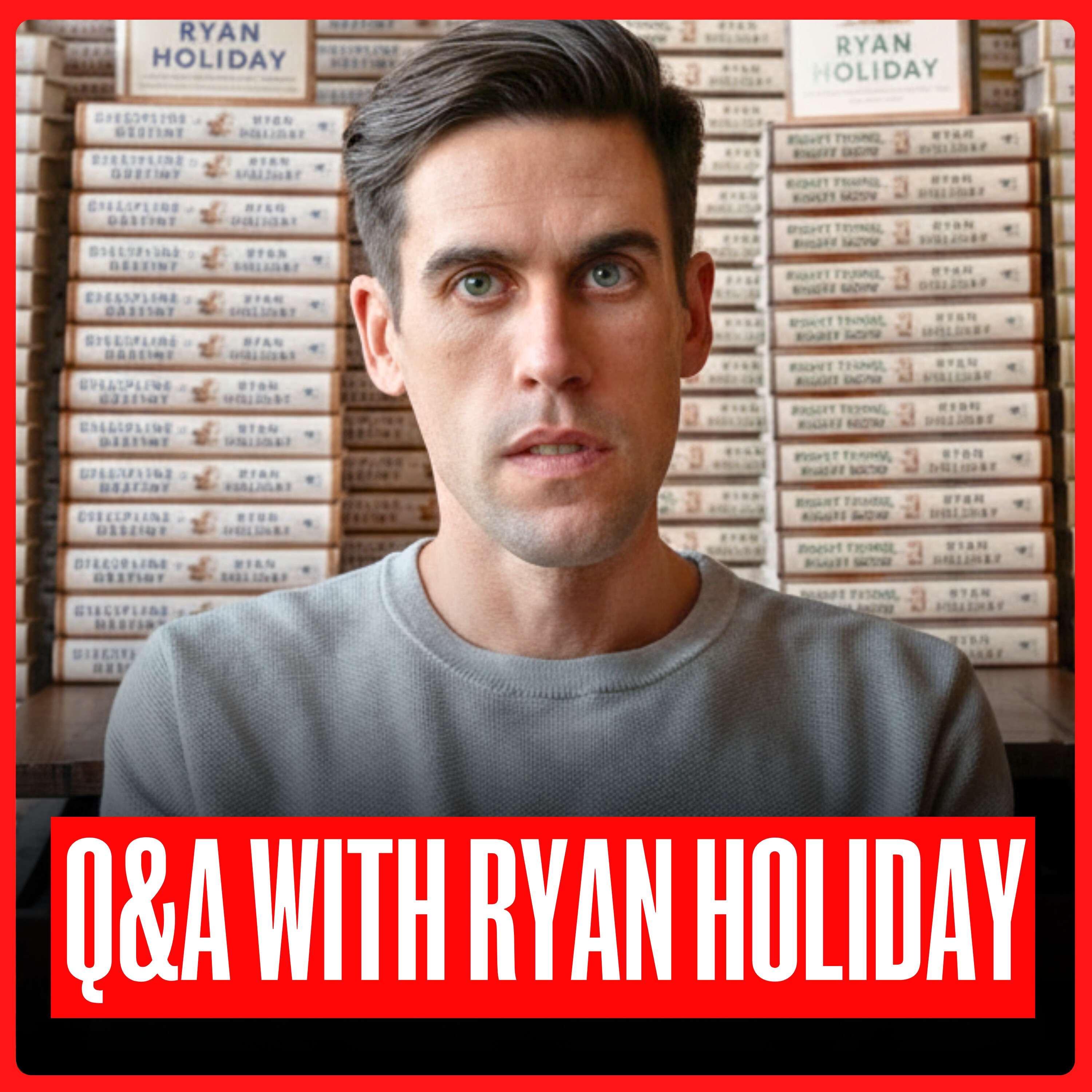
Loading summary
Transcript28 lines
- [00:00]
Ryan Holiday
Foreign welcome to the Daily Stoic Podcast where each day we bring you a Stoic inspired meditation designed to help you find strength and insight and wisdom into everyday life. Each one of these episodes is based on the 2000 year old philosophy that has guided some of history's greatest men and women to help you learn from them, to follow in their example, and to start your day off with a little dose of courage and discipline and justice and wisdom. For more, visit Dailystoic.com there's no one stupider than an angry person. They are brilliant. They're educated. They know better. So what explains why smart people do stupid things? One reason, as Seneca tells us, is anger. Because anger makes us stupid. It blinds us, makes us impulsive and rash, consumes us with grievances. It warps our sense of reality. In our desire for revenge or catharsis, we do things that make absolutely no sense. Imagine, Seneca writes, returning a kick to a mule or a bite to a dog. Yet isn't this exactly what we do when we are upset or hurt? There's even a famous old saying, whom the gods wish to destroy, they first make angry. It is here that Stoicism must intervene. We have to pause and reflect. We have to ask ourselves, is this really going to make things better? Is this really a good idea? We need to balance out our emotions with some self awareness and perspective. We have to check them with discipline. Because life is difficult enough, our problems are vexing enough that we will need all our wits about us cannot afford to be stupid. We cannot risk destroying ourselves. This episode is sponsored by BetterHelp. I've talked here before. We've made whole videos about it. Therapy has been incredibly helpful to me. It's given me emotional awareness. It's helped me process my feelings. It's helped me deal with stuff as a parent, as a spouse, and just a person in a crazy, busy, noisy, sometimes demoralizing world. And my therapy practice is part of and parcel of my stoic practice, right? Analyzing and putting your feelings, your impressions, your views, your values to the test. That's what therapy allows you to do. And there's a reason I use online therapy. Because it's more efficient. It takes less time. BetterHelp is built around making starting therapy easier. They connect you with a licensed therapist. You just fill out a questionnaire and you can match with a therapist in as little as a couple of days. With over 7,000 reviews and a 4.3 rating on Trustpilot, BetterHelp is a platform you can trust. You can click the link in the description below or just go to betterhelp.com daily stoic to get 10% off your first month of therapy. You've probably heard of Eight Sleep by Now because I talk about it all the time. I woke up on my eight Sleep mattress pad this morning and I've slept on one for years. Eight Sleep is a company that is about improving your sleep and they have dramatically improved mine. The Pod 5 is the newest generation of Eight Sleep's signature product, the Pod, which is a smart mattress cover that you put right on top of your existing mat mattress. Their results are up to one hour of additional quality sleep per night. Eight Sleep also just came out with their new Pod pillow cover. It syncs with your Pod system and automatically adjusts your head and neck temperature in real time based on your sleep patterns. And like the mattress cover, you slip it over any pillow you already love. Just head over to eightsleep.com dailystoicnow and use code DAILYSTOIC to get 350 bucks off your very own Pod 5 Ultra. And the best part is you still get 30 days at home and return it if you don't like it. I think you'll love it. Your body will thank you for this investment in better sleep. Eight Sleep ships to many countries worldwide and you can see all the details@eightsleep.com Daily Stoic hey, it's Ryan. Welcome to another episode of the Daily Stoic podcast. One of my favorite things about giving talks is that not just that I get to meet people who are actually trying to apply stoicism in the real world or, or meet people who've never even heard of stoicism, and they're just out there living their lives and I get to connect with them and learn from them and understand their experiences. I mean, that's why I'm excited to go to Seattle here in December. You can grab tickets for that, by the way, @dailystokelive.com and then I'll be in Phoenix and San Diego sometime in February, grab the tickets at the same spot. But I get to travel places that I have never been. Back in May, I went to Mexico City. I've been to Mexico many times. I've been all over Mexico. I mean, I grew up in California, I live in Texas, so it's always within reach. But for some reason I'd never been to Mexico City. I wasn't there for very long. I flew in the night before, got to have dinner in my hotel, take a couple walks, you know, go for a nice run in the morning and then go to this event space and then go home. So I didn't get to see a ton of it, although I did see this cool park named after Abraham Lincoln, where I spent a good chunk of time. So that was lovely. Actually, it was interesting because I was just finishing the Lincoln chapter from Wisdom Takes Work, and I go, this is kind of what Tolstoy was talking about. And he's in the North Caucus Mountains, and these people are asking him about Abraham Lincoln. And here I am in Mexico, and they've got a park named after him. That's the greatness of the man. I sort of brought it all home. I actually recorded a little video about it. But anyways, I gave this talk at an event called the National Advisory Council. But while I was there, a journalist interviewed me. His name is Juan Pablo Daleo, and he's a journalist. He's the director at Politico Mexico. And he interviewed me for a TV spot. And then I did my talk on stage. And then we wrapped it up by him asking me some more questions in front of the audience. So I wanted to bring you a chunk of that sort of Q and A that we did at the end of the talk. He did a great job moderating. And I was fascinated to learn about the political situation in Mexico, which I don't know that much about. It was fascinating for me to get to talk to someone about their world and what they're worried about. And as it happens, everyone's worried about what's happening in their country. This is a sort of shared experience. It turns down the volume on what you think is happening here. So I thought that was a great conversation, and I hope you enjoy it. And I hope to see you in Seattle and Phoenix and San Diego coming up very shortly. You can grab those tickets@dailystoiclive.com the Seattle event is almost sold out, so if you want to grab tickets, just go to dailystoiclive.com that's the one in December. I'm going to be in the other places in February. So that's@dailystoiclive.com.
- [07:28]
Juan Pablo Daleo
Ryan, what's your perspective on vulnerability, leadership, both from the stoic and human standpoint?
- [07:35]
Ryan Holiday
Yeah, I do think there is something about stoicism. People take it to mean invulnerability, you know, remoteness, aloofness. I don't think that that's who the Stoics were historically. I mean, we have multiple stories of Marcus Ruiz is crying. The Stoics made great works of art. The Stoics had families. They had Hobbies, they loved life. So this idea of repression, stuffing things down, that's not what Stoicism is about. And I don't think that's what great leaders do. Are leaders a calming presence when everyone else is freaking out? Yeah, of course that's a big part of it, but that doesn't mean we're just pretending that everything is always okay. To me, that's what leads to burnout. That's what leads to psychological issues. I try to work on this. I have two young boys I try to work on, hey, what are we feeling? Why are we feeling it? Let's go through it, let's work on it. Let's not make unconscious decisions in, you know, in reaction to those feelings that we have, but let's make sure we process and understand them so we're not sort of blindly just in the sway of our passions, as the ancients could say.
- [08:49]
Juan Pablo Daleo
The next question is, for entrepreneurs working in environments marked by violence, corruption, and the lack of justice, as in the case in many parts of Mexico, how can Stoic philosophy provide guidance and a sense of urgency when personal and economic freedoms are under pressure?
- [09:06]
Ryan Holiday
Unfortunately, none of this is new. Rome was obviously a powerful empire, but it was filled with corruption and violence and dysfunction. And the Stoics were known as sort of honest brokers inside that, good people inside that. And then they also courageously dealt with it and tried not to be corrupted by it themselves. There's a story. One of my favorite Stoics is a man named Rutilius Rufus. And he said he's a governor of one of the provinces of the Roman.
- [09:37]
Empire in Asia Minor.
- [09:40]
And he, unlike many of the governors sent as part of his empire, he decides not to loot the province. He decides not to use it as a personal piggy bank until this group says, you know, I'm here to govern these people, to provide competent governance, and this is not a way for me to get rich. So you can imagine that's a deviation from the standard way of doing business and create some entities. That's the problem with being honest and appropriate. Corrupt system is that you inherently indict and cause problems for those who are corrupt. So in a painful bit of irony, the sort of ruling elites drain Rutilius Rufus up on corruption charges for not being corrupt. It's their fastest way of getting rid of him. So he's brought up in this sort of show trial, all this false evidence is brought against him, and he's convicted and sent. The sentence, mercifully, is not death, it's exile. And they say, we'll give you one small bit of mercy, which is, we'll let you choose where you're going to be sent into exile. And Rufus thinks about it, and he says, okay, I'd like to go back to Asia Minor, where he's sent. So he's sent back to the province that he was supposedly corrupted, but in fact has not been. And there he is met with open arms and lives and. And serves honorably for the rest of his life. And to me, it's this idea that we don't control how other people do things. We don't control the brokenness of the system, but we do decide whether that system breaks us, right? We do decide whether we succumb to it. Now, I don't mean to be glib about this. I understand these are. Some cases are issues with life and death, but it was an issue of life and death for Virginia Scoopas. The Stoics are known. A group of them is known as the Stoic Opposition. They are constantly challenging their perpetual form in the side of emperors like Nero and Venetian. They are constantly exiled and sent away for this. But they tried to say, hey, look, I'm not going to think about the consequences. I'm going to think about whether this.
- [11:51]
Is the right thing to do or not.
- [11:54]
And this is what makes them great. And eventually it does lead to. To changes and improvements. Of course, here we are all these thousands of years talking about their example. So to me, the challenge of our time is to not be changed by the challenges of our time, to stick to the principles, the values, the conscience that we all have, and to not let the, as I say, not let the assholes turn into an asshole.
- [12:25]
Juan Pablo Daleo
Very well said. How can we foster resilience and progress in those who are product of their context and slaves of their history?
- [12:33]
Ryan Holiday
Well, we're all a product of our circumstances. We're all a slave to our history, so to say, the characteristic faith. But they did believe that we could shape our character and that philosophy was a way to do that.
- [12:45]
Our mentors are a way to do.
- [12:46]
That, that our reading, our learning, our study of history was a way to do that, that we shape our character. And they did believe that character wasn't character, values, philosophy, virtue, all these things. Excellence wasn't this thing that you had or didn't have, but it was a thing that you made. It was a thing that you are. And so if we think of virtue, for instance, as a verb and not a noun, that we go, okay, if we want to become better, we have to do better things. If we want someone who works for us to get better, to be more resilient, to grow, we do that by helping them do that thing again. It's not a DNA sequence that you got at birth or didn't. Stoicism, resilience, virtue, these are things that we cultivate in the choices that we make, in the things that we study, and then in the actions that we take.
- [13:40]
Juan Pablo Daleo
Another question. In places like Mexico, where governments there personal ambition and try to make everyone the same, often at the cost of individual growth and success. Often Stoicism help people stay true to themselves and find the courage to push back and rise above that mindset.
- [13:57]
Ryan Holiday
The primary virtue of Stoic philosophy, I.
- [14:01]
Have been tattooed on my wrist here.
- [14:03]
It's courage, discipline, justice and wisdom. Courage, I think, being the virtue that the others descend from or are impossible without. I think wrongly. We tend to think of courage as challenging corruption, charging onto the battlefield, rushing into a burning building. Those are all forms of physical courage, for sure. But the moral courage to be yourself, to go for what you want to go for, to put yourself out there, to try to do your best, is unfortunately one of the rarer forms of courage. One of my favorite Stoics is this guy named Lucripanus. He lives in the time of Nero. You can imagine that when you have an unstable, vain and paranoid emperor, standing out is a risky proposition. So this creates quite a bit of conformity and silence in Rome. But Agrippinas has none of it. He refuses to see the emperor. He speaks his mind. He's eccentric and unique. And a friend comes to him and says, why are you doing this? Don't you realize it's going to get you in trouble? And he says, look, I get it. Most people are comfortable performing, he says, but I'm not.
- [15:13]
He says.
- [15:16]
In a tunic or in a garment, there's all the threads that make it the color that it is. And then he says, there's the accent color. So he says, in a white tunic, I am the red thread that stands out and makes the garment beautiful. And I think we have to understand as individuals that we're all totally unique, that we have unique DNA, unique circumstances, unique experiences, unique skills. And strikes me as one of the craziest things in the world, that we sort of mute those colors to be more like everyone else. So the courage to stand out, to be yourself, to live as you want to live, to go for what you want to go for, I think is the most essential form of courage that there is.
- [15:58]
Juan Pablo Daleo
We have one last Question. Our leaders often must deal with anxiety, harsh feedback, and unclear outcomes. In your experience, how has stoicism helped you stay centered and resilient during times of serious doubts or very tough uncertainty?
- [16:15]
Ryan Holiday
Stoicism has a lot to teach us about all these things. I mean, anxiety, what is at the root of anxiety? That stuff, say, the root of anxiety is focusing on things that you don't control, right? And so Mark Srila said meditation, one of the famous passages, he said, you know, anxiety isn't this thing that I hope to escape. It has to be a thing that I'm going to discard because I'm the source of the anxiety. If you notice all the things that make you anxious, they all have one thing in common, and that's you. You are the source of the anxiety. The airport, is that what's making your anxious? Autonomy is not making you anxious. Your children are not. Your children's safety is not what's making you anxious. It's your feelings, your projections, your worries that are causing that. And so the decision to focus on what you control, accept a certain powerlessness, and then to say, but the parts of it I control, I'm going to do well, and that's where my energy is going to go, as opposed to just like unloading about the problem, taking feedback. Imagine a lot of people had a lot of strong thoughts about the emperor of Rome. In meditation, Marx Rios talks about how criticism makes you better, that he wanted to hear from people who didn't like what he was doing or who knew better than he did because it saves him from making mistakes. And you can see I make a distinction between good leaders and bad leaders. Good leaders solicit feedback. Bad readers run from feedback. There's actually a story I tell in my new book because I was looking at the Lincoln statue in the park this morning. Across from it is a statue of Martin Luther King Jr. And I tell the story in the book about Martin Luther King Jr. He had one of his most trusted aides, was, you know, sort of had the assigned role of being the devil's advocate in your meetings. And at one meeting, the guy's tired and distracted, and he decides not to do it. He's just not really paying attention. And afterwards, Martin Luther King pulls him aside and he says, hey, I need you to speak up at the meetings. Because he says, everyone here is certifiably insane. He says, we're all crazy. We need a voice of reason to prevent ourselves from doing extra crazy things. He says, I'm willing to give my life for this Cause but I'm not going to throw it away over some bit of foolishness. So even in sort of a radical, courageous, ambitious organization like Martin Luther King's, he has people whose job it is to be a dose of reality. And he's actively seeking out that criticism and he's noticing when he's not getting it. And the way we have to understand criticism, like, it feels unfortunate, it feels unpleasant, but like when my enemy is making or my opponent or my competition, when they are making a mistake or when they are incorrect, I don't correct them. That's actually one of the fundamental laws of strategy, which is never introduction enemy when they're making a mistake.
- [19:19]
Right.
- [19:20]
And so when someone is criticizing you, when someone is doing, giving you feedback, they are by definition not your enemy, your friend. They wouldn't be helping you, they wouldn't be giving you this information if they weren't trying to make you better. And so you have to actively seek out criticism and feedback. It's just a part of getting better. And so stoicism is, to me, the ability to say, I don't like hearing that. Doesn't feel fun hearing that. But I'm going to integrate it into my, into my understanding here because my goal is to get better. My goal is not to remain the same. And I appreciate you giving me what I need, which is more information.
- [20:02]
Juan Pablo Daleo
Ryan Holiday, thank you very much.
- [20:03]
Ryan Holiday
Thank you all for having me.
- [20:13]
Hey, it's Ryan. Thank you for listening to the Daily Stoic podcast. I just wanted to say we so appreciate it. We love serving you. It's amazing to us that over 30 million people have downloaded these episodes in the couple years we've been doing it. It's an honor. Please spread the word, tell people about it. And this isn't to sell anything. I just wanted to say thank.
- [20:40]
Toyota 4Runner Owner / Ad Voice
You. My family owns a 2023 Toyota 4Runner, and honestly, it's my favorite vehicle that I've ever owned around town. It's smooth and reliable, but where it really shines is on our trips into the backcountry. We've taken it on backpacking adventures to Colorado and New Mexico, loaded up with gear and never had to think twice about whether it could handle the terrain. That's what Toyota trucks are built for. Off road confidence, rugged durability, and the freedom to explore. Toyota has a long history with the outdoor community, and they're committed to helping more people get out there and experience what nature has to offer. From remote trails to scenic byways, Toyota Trucks empowers you to take the detour roam freely and discover places that still feel wild and untouched. And they're not just making great trucks. They're working to expand access to adventure so more people can connect with the outdoors and pass that passion on to the next generation. Discover your uncharted territory. Learn more at toyota.com trucks adventure detours that's toyota.com trucks/adventure-detours look, ads are annoying.
- [21:41]
Ryan Holiday
They are to be avoided if at all possible. I understand as a content creator why they need to exist. That's why I don't begrudge them when they appear on the shows that I listen to. But again, as a person who has to pay a podcast producer and has to pay for equipment and for the studio and the building that the studio is in, it's a lot to keep something like the Daily Stoic going. So if you want to support a show but not listen to ads, well, we have partnered with Supercast to bring you a ad free version of Daily Stoic. We're calling it Daily Stoic Premium. And with Premium you can listen to every episode of the Daily Stoic podcast completely ad free. No interruptions, just the ideas, just the messages, just the conversations you came to here for. And you can also get early access to episodes before they're available to the public. And we're going to have a bunch of exclusive bonus content and extended interviews in there just for Daily Stoic Premium members as well. If you want to remove distractions, go deeper into Stoicism and support the work we do here. Well, it takes less than a minute to sign up for Daily Stoic Premium and we are offering a limited time discount of 20% off your first year. Just go to Dailystoic.com premium to sign up right now or click the link in the show descriptions to make those ads go away.