Loading summary
Transcript62 lines
- [00:00]
A
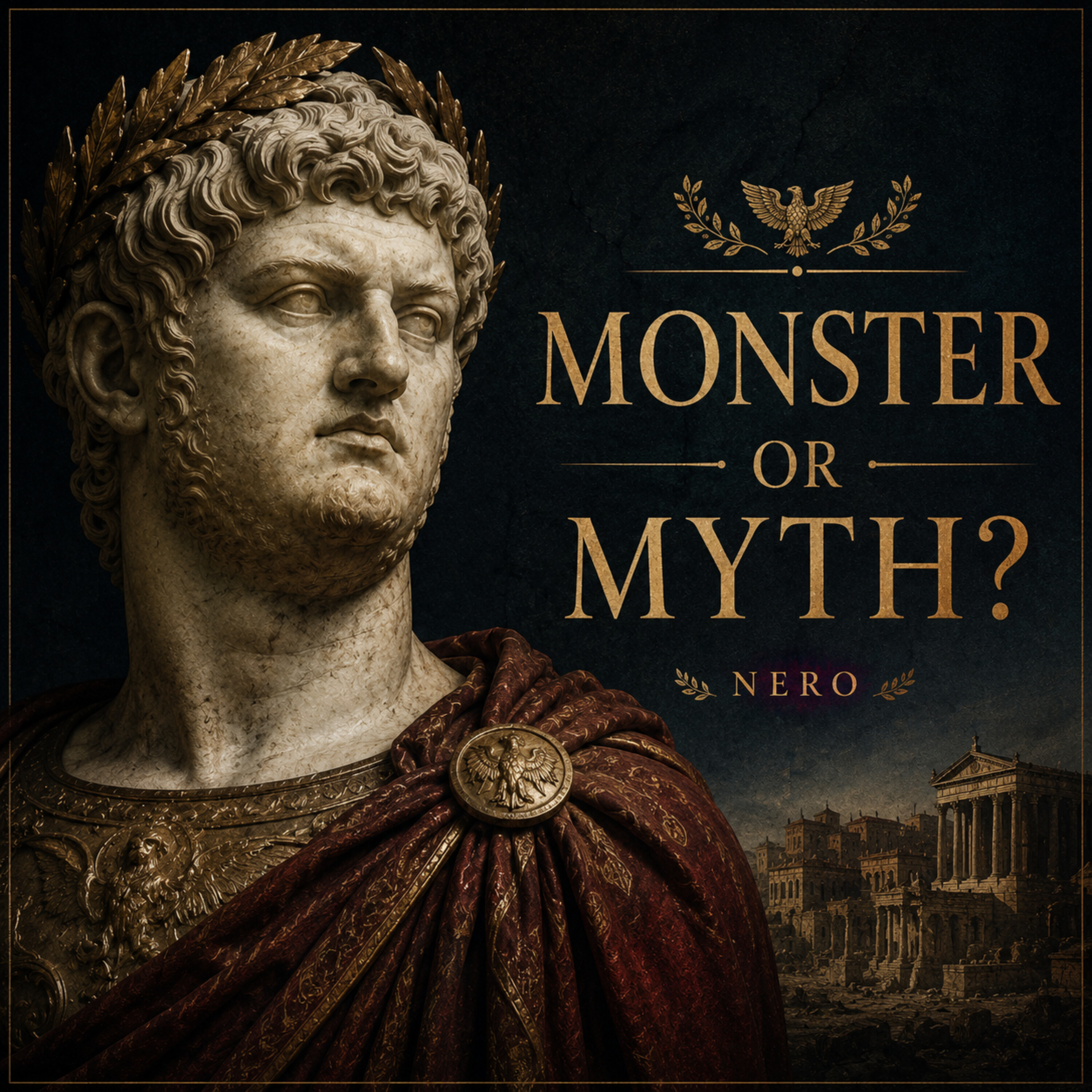
Every business is asking the same question, right? How do we make AI work for us, it's a lot of possibilities, a lot of guessing, and it's too risky to get wrong. And sitting on the sidelines is not an option either. Because one thing is almost certain, your competitors are making their moves, taking their risks and trying new things. Well, no more waiting. With NetSuite by Oracle, you can put AI to work. Today, NetSuite is the number one AI Cloud ERP trusted by over 43,000 businesses. It's a unified NetSuite that brings your financials, inventory, commerce, HR and CRM in a single source of truth. From software and IT services to healthcare equipment, manufacturing, financial services and many other great American industries, NetSuite delivers a customized solution for your business. It's not some bolted on tool. It's AI built into the system that runs your business. If your revenues are at least in the seven figures, get their free business guide. Demystifying AI at netsuite.com stoic they got is free to you at netsuite.com stoiC netsuite.com stoic as a business owner, I'm super familiar with how important a strong Internet connection is to keeping everything running smoothly. A slight delay in the Internet connection in the store, it could mean missed sales. A lag in a zoom call or a podcast recording could mean you lose everything you were doing. When every minute matters, every transaction, every customer, you cannot rely on a subpar Internet connection. You need a provider that's reliable. You need Spectrum Business. Spectrum Business keeps businesses of all sizes seamlessly connected with fast, reliable Internet, advanced wi fi, phone, TV and mobile services. They offer 100% US based customer support 24. 7 to help you stay up and running and are sure to have the right plan for you. With tailored connectivity solutions and packages built for every business budget, millions of business owners rely on Spectrum Business to keep them connected. Visit spectrum.combusiness to learn more. Restrictions apply Services not available in all areas welcome to the daily Stoic podcast, designed to help bring those four key Stoic virtues, courage, discipline, justice and wisdom into the real world. There are very few people for whom the name Nero brings up positive associations. It's a name that at this point has almost entirely negative connotations. Right? There's even that famous expression, right Fiddling while Rome burns, which is a burn laid at the feet of Nero, that during the fire of Rome, Nero supposedly fiddled and watched it all happen. That this is what bad leaders do. This is what indifferent, cruel, uncaring people do. Even in the ancient world. There were rumors that Nero set the fire on purpose to clear out undesirable so he could build a bigger palace. Now why does Nero have such a terrible reputation and is it deserved? I think we can all concede that a lot of what we know about Nero, and this is true for a lot of historical figures, including Seneca, who worked for Nero. A lot of what we know about him comes from people who didn't like him. Enemies, critics, historians writing after he was dead, who maybe had political agendas. So does Nero get a fair shake? Right? Was he the villain that history has turned him into? Actually, this was a question that SMITHSONIAN magazine wrote about at length in 2020. The article, I remember reading it when it came out, it said the new nicer Nero. And basically the article challenges this reputation of Nero as a self indulgent tyrant who again fiddled while Rome burned. And they claim that most of this reputation was shaped by hostile ancient sources, Tacitus and Sueton, and then of course the Christians who were opposed to Nero because of his cruel treatment of them. And then later that this reputation was continually reinforced in each subsequent generation in novels and plays and films. Like for 2000 years, this guy who certainly wasn't perfect, but perhaps wasn't as bad as people said, was turned into a caricature of a caricature of a caricature. And there are no shortage of modern scholars, namely John Drinkwater, who wrote a book called Nero Emperor and Court, who claim that much of what we've been told about Nero is exaggerated or misleading.
- [04:43]
B
If you go out into the street and ask someone to name a Roman emperor, it's almost certain that they'll say Nero. And most people just won't know why he's become such a character, that he's just an epitome of evil. What has struck me in researching Nero is that people love evil. There's no doubt about it. If you want a really bad, nasty character, this is Nero. The question is really, do professional Roman historians believe this anymore? I mean, it's out there, but do professional historians really believe it? Can we say it's true? The answer is no. Very little of it is in fact true. So this popular Nero is not the Nero we know. And it is because of the way that the science of ancient history developed that what this picture I'm giving you is the picture of a group of ancient sources. There are some Roman sources, Latin sources, Greek sources, but there are also Christian sources and Jewish sources. And these sources combine to give this hugely negative picture of Nero now, what modern historians have done, like whether people like it or not, is to look at this information and to look at it forensically, to pretend that these. These sources, the author of these sources are in court. And so you start probing, why are they saying this? And the answer is really that they are biased in many ways. The main Latin and brick sources, their names are Tacitus, Suetonius and Cassius Dio. They all come from a particular level.
- [06:41]
A
Society.
- [06:42]
B
Society. They're all aristocrats. The Roman aristocrats were against this system that Nero was ahead of anyway, and to some degree, they've all suffered from it. So they don't like anyone in Nero's position. And it doesn't matter if it was just Nero, that they're against anyone who's in the top position. I think once this bad Nero is in circulation, you can't get rid of it. My wife and I often discuss what makes a classic. And the classic is something a novel in particular or a play or a film that once it's there, can be distorted in any number of ways. I mean, there are a number of ways that Alice in Wonderland has been portrayed. I mean, there are ways for kids, there's some very dark ways for adults. The umpteen ways in which Sherlock Holmes has been portrayed. Right. Once this model is in circulation, people can do with it what they want. And this Nero model, the evil Nero, is so useful. I mean, he's attractive in this curious way because people love to hate. He can be used as a model
- [08:00]
A
of the tyrant and the different sources, you know, as they're trying to rehabilitate Nero's reputation or trying to mitigate some of the claims. They'll come at it from a couple of angles, like, okay, maybe he was poorly suited for the role, but not like a psychopath, that he was a young man thrust into power and most young emperors didn't do a good job. Or they'll say that, you know, he actually did a great job allowing competent administrators to govern the empire while he focused on his interests. They'll try to break down each of the individual crimes that have been blamed on him and try to knock down this one or that one. Maybe they'll even point to the fact that he responded apparently decently well to the great fire of 64 A.D. that he organized relief efforts, that there were some reforms after. And, you know, they'll point out that he wasn't actually fiddling. And then they'll look at some of the political murderers, like his brother and his mother, and go well, he wasn't the only one. In fact, Athenodorius and Arius Didymus, as I talk about in Lives of the Stoics, had Octavian, the first emperor of Rome, get rid of his half brother Caesarion. So they're saying that Nero is not a monster or a saint, but a complex historical figure whose reputation was shaped by these hostile historical facts rather than by like the actual evidence. And look, I myself have piled on to Nero over the years. We did a YouTube video in 2024 about narcissistic leaders and why they always fail in the end. And this is what I said about Nero.
- [09:49]
C
The great biographer of power, Robert Caro, talks about how power doesn't corrupt. He says that's too simple. He says what it does is it reveals. He says, power doesn't corrupt, power reveals. And what we see in Nero is not the easy narrative of Nero is that he is corrupted as he gives power, but it's actually more a process of the varnish coming off the real Nero emerging. As Nero stops listening to his advisors, as he gets rid of his mother, as he dispatches anyone and everyone who could tell him what to do, the real Nero comes out. And it's not a competent Nero, it's not a open minded Nero, it's a delusional, it's a vein, it's an egotistical Nero. And thus his collapse and his descent into evil was in this way inevitable. One of the things that power reveals about Nero is something that's very true about most egotistical people, which is they're actually beneath what seems like confidence, profoundly insecure and paranoid. And Nero is perhaps believing somehow not legitimately the emperor, perhaps knowing that he is hopelessly outmatched and unqualified for this job. And then the very real dangers of having things that other people want. Nero is paranoid that people are out to get him. And slowly but surely he creates circumstances in which he's able to get rid of his enemies, including his own mother, whom who he assassinates. He finds her unbearable, so he gets rid of her. He gets rid of a distant cousin because he hears of a meteor or a comet. And he takes this as a sign that this guy's out to get him. I mean, he's just wildly exaggerating all these dangers. And as he gets rid of potential challengers after challenger, Seneca has to remind him. He says, you know Nero, it's impossible for you to eliminate every one of your successors. He was making ultimately a very basic Stoic point that we all die eventually. And someone takes our place. But it's when his paranoia is empowered by his position, when suddenly he has the power of life and death over people, that he begins to leave this immense trail of bodies behind him. Because he just can't stomach the idea of anyone one day replacing him. Even though inevitably, invariably, that was going to happen anyway. Although some Christians would later blame Nero for starting the Great fire of Rome, he probably didn't. And he probably didn't fiddle while it burned. But like all, you know, incompetent, overmatched leaders, Nero is not able, in the moment of a crisis, to do the job right. He's not able to properly direct fighting of the fire. And then once it's done, he uses this as a pretext for these enormous and vain building projects that he'd long have in mind. And instead of also taking responsibility for having screwed up, instead of using a tragedy to bring people together, you know, he scapegoats the Christians and begins a wave of persecutions that would last for hundreds of years. You really see, as Robert Greene was saying, a leader's true character in a crisis. And you see ultimately what a fragile, weak and scared little man Nero was. There is this whole group of Stoics that would become known as the Stoic opposition. And they find Nero to be repugnant. Although Seneca fancies himself the adult in the room, the moderating influence on Nero, the other Stoics, Stoics like Gaius Plautus, Thrasia, Helvidius, there's a number of Stoics who just refuse to go along with Nero. They defy him. They are what you might call the resistance. Nero just can't handle anyone, not rubber stamping what he is doing. He can't stand that there is anyone or anything that disagrees with him, that wants to challenge him. And so they get locked in this cycle of conflict. He doesn't like that there's a Stoic named Agrippinas who has a sort of hereditary hatred of, of emperors. Tacitus tells us he just doesn't like that Agrippinas won't come to his parties. He just, he can't wrap his head around people not wanting to celebrate and love him. He thinks this is something he's entitled to rather than something he has to earn. Helvidius, one of the Stoics, is banished for having said something positively about Brutus, the killer of Caesar. Nero takes this somehow indirectly as a threat. Paranoia is just spitting him out of control.
- [14:26]
A
Control.
- [14:27]
C
Ultimately, Nero is just incompetent. He just doesn't have the stuff. This is the problem with hereditary rulers. But he doesn't do the work to be qualified to do this job. He doesn't take it seriously. And as he's piling up bodies after body of critics of his regime, there's a story about one conspirator against Nero who's put to death. And as he stares out into the grave, they're about to throw him in, he says, ugh, this too is not up to code. It was an embodiment of everything that was wrong with Nero. It's not just that he was cruel. It's that he was bad at being in charge. Nero's greatest enemy is this Stoic named Thrasia. And basically the source of their disagreement is that Thrasia insists on truth and justice and reality, that he tries to be good at his job. And this inevitably puts him on a collision course with Nero. He's the guy that says this is not normal, that there's something wrong with this guy, that this doesn't make sense. And so when Nero wants to shower his new wife with honors, Thracia doesn't want to go along with it. When Thracia saw corruption, he called it out. But this was in parcel of what Nero wanted on what his regime sat on. And so they were inevitably going to be enemies. Nero's sycophants whispered that he has to kill Thrasia. He says the country, in its eagerness for discord, is now talking of you, Nero. One man whispered into his ear, they're talking of you. And Thrasy as at once talked of Caesar and Cato. Cato was a hero, and Nero couldn't handle a hero existing, so he has to get rid of him. Nero expresses his displeasure to Thrasia. He expects him to throw himself at him, beg to be forgiven. Instead, Thrasia says, if you think I'm guilty of something, name your charges, accuse me out in the open. And ultimately they bring Thrasia up on these false charges, and he is executed. We're told that some of his last words are, nero can kill me, but he cannot harm me. Meaning that he refused to be corrupted by and degraded by Nero, even though Nero did have the power of life and death over him. But as it does for all gangsters and tyrants and bullies, eventually the support for Nero erodes, and it erodes slowly and then all at once. Ultimately, Nero has to kill Seneca as well. And he sends goons to. To. To dispatch the man who had raised him basically like a son. And as everyone wept and cried in In Seneca's house. Seneca stopped him and he goes, why is this surprising to you? He said, who? Who knew not Nero's cruelty? He said, look at all the other terrible things he's done to people close to him. He said, what's left then for him to take me out too? It had always been there. Who Nero was was always there. Power just enabled it. Nero had driven himself into a wicked downward spiral. He descended into madness. And eventually the Stoic opposition applies enough pressure. But of course, even at the end, Nero was a coward. He couldn't take responsibility, he couldn't take ownership, he couldn't go out like a man. One of the members of the Praetorian Guard, when they're watching this cowardly, selfish man child frantically try to save himself, he goes, is it as awful as that to die? Finally, even his trusted bodyguards abandoned him.
- [17:57]
A
Being an effective leader is difficult, right? You got to keep your ego in check. You got to know how your business works, how the team operates, operates for peak effectiveness. But most leaders are making decisions about their teams based on assumptions and not reality. And that's exactly the problem that today's sponsor, Scribe, was built to fix. Scribe Optimize passively captures how your team works across approved business apps. And it uses AI to automatically surface workflows, inefficiencies and improvement opportunities. No interviews, no manual discovery, no extra work for your team. Scribe is trusted by 80,000 plus enterprises, including nearly half of the Fortune 500. Scribe Optimize follows work across every tool involved. If someone starts something in Salesforce and finishes it in a completely different tool, it tracks it the whole way. And Optimize shows you where your biggest inefficiencies are with AI powered recommendations on how to fix them. So you're not just identifying problems, you're getting clear directions on how to improve. The kind of visibility that used to take months now is always on. And Optimize only works on applications. Your admin improves so no personal activity is captured and no one's privacy is at risk. If you want to see what Optimize could look like for your organization, visit Scribe. How Stoic S C R I B E dot how stoic I just heard this stat that shocked me given that I hear from the sales staff at my publisher quite a bit. The stat is sales teams spend about 50% of their time on admin work instead of selling relationship building, closing deals, which means they're not selling, right? And that's where today's sponsor comes in. Pipedrive. It's a simple, intelligent CRM tool for small and medium businesses. Pipedrive was built from the ground up to strip away that manual work. That stuff that's wasting your time taking your sales team away from doing the thing you pay them to do, which is sell stuff. They've got smart automations to handle repetitive tasks and you can even customize these automations to fit your unique sales process. Plus they've got AI features that will analyze your pipeline, flag stall deals, surface what needs attention, and tell your team what to do next without them having to go look for it. Switch to a CRM built by salespeople for salespeople and join over the 100,000 companies already using Pipedrive. And right now when you use our link, you'll get a 30 day free trial. No credit card or payment needed. Just head over to pipedrive.comdoic to get started. That's pipedrive.comdoic to be up and running in minutes. It's always interesting to read from a different perspective, to hear what other people think. And sometimes, you know, I talk about this in the wisdom book, the idea of steel manning the case. So instead of letting Nero be a character, really argue a positive case for Nero. Because I think when you do that you find, okay, some of the charges are spurious and some of the charges are ridiculous, but not all of them are. And then when you lay it all out, I think there are some indisputable indications that he's a decent stand in for all that is bad about bad leaders. And there are other scholars who have dived into Neera. What made him tick? Was he really as good or bad as they think? I interviewed one on the podcast podcasts when we were just getting started. Let's start with Nero, because you seem to be the most qualified person I could ask this question, which I remain fascinated with. So bear with me a historical parallel. Marcus Aurelius loses his father when he's young. He has a very influential, strong mother influence in his life. He's then introduced pretty early on to a philosophy teachers, one who teaches him and introduces him to stoicism. As a teenager he is put in line for the throne and then eventually he becomes emperor. Nero loses his father early on, has a strong motherly influence in his life, is introduced to stoic philosophy, set in line for the throne, and then their stories wildly diverge. What happened?
- [22:07]
D
I think there's different people. I mean the two similar lines, but underneath that. And the thing about Nero is that he had a very, very problematic childhood because he had this terrible mother agrippina the mother from hell, really, because she wanted to push him forward, Push him forward and push him forward, like those mothers who want their daughters to go to dance classes and become ballerinas. So it was very much like that. As he grew up in his teens, Nero decided that he didn't really like public life. What he really wanted to be was a professional musician based, above all in the cultural capital city of the Western world, then Alexandria. That's what he really wanted to do. And you can see his reign as not so much an attempt to implement the precepts of the stoicism, but more really to break away from the spot which his mother laid for her.
- [23:11]
A
So this complicated picture of Nero is one that I think, as a historical nerd, I'm fascinated by. But I'll tell you who I was not expecting to nerd out about it with. When Bert Kreischer, the comedian, came on the podcast, he was promoting his new show, Free Bert, which was really funny. He and I were talking about stoicism, and I figured he'd heard about it from social media and he'd heard about it from Tom Segura. But I didn't know that he was a bit of a history nerd, too, because all of a sudden, we were just way down the Nero rabbit hole. And here's where that ended up going. I don't know if you know anything about Nero, but Nero's.
- [23:49]
E
Do I know anything about Nero? Are you kidding me? So Nero never, never danced while. While Rome burned to the ground. He didn't play the fiddle.
- [23:57]
A
Play the fiddle. But he didn't do anything when it burned. He was the worst.
- [24:01]
E
No, no, no, no. So hang on. I get really hung up on Nero. Okay, so here's what happened. Okay?
- [24:06]
A
I did not think this was gonna.
- [24:08]
E
Nero was a pretty good fucking emperor. Hang on.
- [24:12]
A
Okay, let me just. Okay, give me. Give me your take.
- [24:13]
E
Okay, so he's a pretty good emperor, and he lasted for a while.
- [24:15]
A
Yes.
- [24:16]
E
And the guy that came up next, he didn't really do anything, and he kind of disappeared. He's like the Jimmy Carter of emperors. Right. The next guy was the Gerald Ford of emperors. And then the third guy, Ronald Reagan, was like, dude, we gotta let them forget about fucking Nero so I can carve my own past. So he goes, yo, let's retrofit the. Nero fiddled while Rome burned so that we can remember him as a piece of shit. And that's what they were trying to do to George Bush. No, I'm kidding. But that's what they did to Nero so that this guy could. Because I listen to a lot of stuff, but I barely take in.
- [24:48]
A
It seemed like you took a lot in.
- [24:49]
E
And so that's what I heard about Nero.
- [24:51]
A
Okay, so basically, Seneca is in exile. The Emperor Claudius is deranged, and he thinks that Seneca is having an affair with his sister. And so he banishes Seneca. Seneca gets sent into exile to the island of Corsica, which is off the coast of Italy. It's where Napoleon's from. Stuck in this rock in the middle of the ocean.
- [25:10]
C
He hates it.
- [25:11]
A
And he finally, he gets a letter. You can come back to Rome. It's from this woman, if you tutor my son. And that her son is Nero. So he gets called back in exchange for tutoring this young kid who's almost certainly going to become the emperor one day. And Nero's smart, Nero's promising. He seems like a good kid. Seneca teaches him everything he knows. And then Nero does become emperor, and for the first five years, he listens to Seneca, and he has another military advisor named Burrus who he listens to. And so the first five years of Nero are great. They're actually known as the Quinquinium Neronis, or the five golden years of Nero. But what happens is, you know, they say absolute power corrupts absolutely. The problem is Nero desperately wanted to be liked, and he desperately wanted to be liked as both an athlete and. And an artist. So, you know, it's funny.
- [26:04]
E
It sounds like Vladimir Putin.
- [26:05]
A
Yes, it's funny. People get the thing. You think that would be enough, but everyone has their secret fantasy of what they want to be. So Nero, like, you're talking to the
- [26:13]
E
guy that's on Testosterone and bench. £325. Yeah, keep going.
- [26:17]
A
He fixes the Olympics so he can win as a chariot racer. He forces people to listen to his poetry. He's delusional. He's not that good, but that's what he really wants to be known for. So he kind of starts to spin off the planet, and then he gets really paranoid that people are plotting against him. Right? Absolute power corrupts absolutely. At one point, Seneca tells him. He goes, you know, it's. It's impossible for you to. To kill literally all of your successors. The point being, eventually you'll die and someone will take your place. Like, you can't kill everyone.
- [26:48]
E
I need a Seneca in my life.
- [26:49]
A
And at one point, he kills. He assassinates his own mother. He turns against his mother. He sends her out on this cruise, on this boat ride, and he has her Killed. I know about that. So, so he, he loses his mind. He, he really is shitty and he loses his mind. And eventually Senec becomes very rich. Working for Nero finally goes, dude, I've had enough, I got to get out of here. And Nero goes, bro, that's not how this works. And so he sends Seneca into exile. Eventually he kills. Seneca kills everyone. There's a joke. He has one of his generals killed and the general's standing on the edge of his grave right before they kill him. And he looks down and he goes, even this isn't up to code. Like, he's like, Nero sucks even at this. So he sucks, he's good at first, spins off the planet sucks. And then this is where the story gets crazy. When the walls close in on him, Nero realizes he has to kill himself, but he's too much of a coward to do it, so he calls one of his advisors to do it. He botches it, he sticks the knife in, he kind of screws it up. Nero does. He calls one of his advisors and his advisor has to finish the job. And that advisor is the owner of Epictetus. So Epictetus is watching all of this happen. He's watching not just Nero spin off the planet, but he is watching Seneca like degrade himself by being associate. Like Seneca writes all this great stuff about what it means to be a
- [28:14]
C
stoic, what it means to be a
- [28:16]
A
good person, and then has a day job working for a monster. It's fucking fascinating, twisted world. And of course it's endlessly fascinating. And I've talked about this many times. Seneca's relationship with Nero. Was Seneca an enabler of Nero? Is he complicit in what Nero did? Or was he the adult in the room? Would Nero have been worse without Seneca's influence? And one of my favorite all time biographies, certainly one of my favorite books about Stoicism by James Rom called Dying Every Day, is about Seneca's time in Nero's court. This is something he writes in that book. He says the turbulence within Nero's palace also held huge historical importance. The future of a dynasty, even of Rome itself, hinged on whether a mother could get along with a son, whether a husband could stay married to his wife, whether a tutor could get his student to respect and heed him. Nero's extreme youth at the time of accession and his growing derangements afterward made the task of managing him and the failure to do so critical to the fortunes of the empire and the world. For the empire, as the Romans like to believe, had by Nero's era nearly reached the confines of the world that contained it. And in fact, when I had James Romm on the podcast, I've interviewed him a couple times, but he came out to Austin. I was curious to hear his thoughts. Like, what is it with something like Nero? Are they born that way? Is it something like Robert Caro says that power reveals, or is it created? Is it a product of circumstances? And here's what he says.
- [29:56]
F
Yes, Marcus Aurelius is the anti Nero in many ways. What's ironic is that his teachers had all learned from Epictetus, who had been present at the court of Nero and had probably seen the disaster with Seneca. So there is a direct line of transmission, really, from Seneca to Marcus. But the two of them are very distinct. And of course, Nero and Marcus are just antithetical. The one man who clung to his moral principles. Yes, even in spite of immense duress, immense pressure, and the other who collapsed, really, as soon as the opportunity for wrongdoing came around.
- [30:40]
A
And I wonder how much the swing vote is their mother, because
- [30:46]
C
what does
- [30:47]
A
he say about his mother? Marcus's description of his mother is her reverence for the divine, her generosity, her inability not only to not do wrong, but to even conceive of doing it in the simple way she lived, not in the least like the rich. That's basically the opposite of Nero's mother.
- [31:05]
F
Yes. Right.
- [31:06]
A
And so maybe that's the swing vote.
- [31:08]
F
That could be, yes, the parentage. And of course, Nero also lacked a
- [31:12]
A
father, but so did Marcus.
- [31:14]
F
Well, Marcus was adopted and had a very positive role model to look up to in Antoninus. But the problem of Nero being fatherless for really his first 13 years, and then having Seneca as a surrogate father, who at that point was already, you know, almost two generations older and not a very paternal type, I don't think. Never had children of his own. So, yeah, parenting was a big dividing line for those two.
- [31:45]
A
Yeah, that's interesting because Marcus is attached to Antoninus, and Hadrian probably thinks he's going to live for a few more years, and he lives for like 20 years. And Marcus actually takes to this apprenticeship and decides, like, yeah, I don't want to be emperor right away. I'm fine being the number two. And Nero is basically, that's what Seneca is set up to be, although he's not made emperor himself. And Nero listens to him for a little bit and then stops. I always come back to that famous baron statue of Seneca and Nero sitting together. And obviously it's not of the time. But you can see in Nero's body language some sense of what it would
- [32:28]
C
actually be like to have access to
- [32:30]
A
the potentially the wisest man of your time and think you know more or not be interested in hearing from them.
- [32:37]
F
Yes. Or to actively reject what he's telling you. The problem of Nero's love life right from the get go divided Seneca and Nero because Seneca wanted to defend the legitimate wife, Octavia, who represented the stability of the empire, the future dynasty, and the union of the two branches of the royal family. And Nero didn't want anything to do with that.
- [33:06]
A
Yes.
- [33:06]
F
He wanted the hottie.
- [33:09]
C
Yeah.
- [33:10]
A
It's at some level, no one can tell the emperor what to do, but Marcus Aurelius is bound by some sense of traditional or honor or norms. And then I would say the philosophy itself, like, the philosophy is telling him, like Epictetus is telling Marcus what to do, in that he has sort of laid down these precepts or these sort of ideals to aspire to, and Nero has none of that. And one of them spins off the planet and the other doesn't.
- [33:38]
F
Yeah. It's a fascinating study. The place of Stoicism in the. The heart of the Roman Empire in the palace, and the fact that it later got banished from the palace as a threat to imperial power. That too is part of the story. You mentioned Domitian and the exile of the philosophers from the royal court. At that point, it had been determined that. That Stoicism could not get along, could not be incorporated into the power structure.
- [34:17]
A
That time of Nero is so interesting because you have all these different kind of Stoic characters, and they each sort of show us a different way that you respond to tyranny or dysfunction or corruption. So you have someone like Agrippinas who's kind of this, like, marches to the beat of his own drummer. He says, I want to be the red thread in the white sweater. Then you have Epictetus, who's sort of powerless inside of it and just trying to focus internally. You know, just how do I find freedom within myself when I am literally, you know, in chains. Then you have Seneca, who's the collaborator. You know, it's sort of mitigator, martyr type. And then you have a thrasyou have these other ones who are sort of more aggressively rebellious and revolutionary, I guess. And I mean, they all end up effectively in the same place. I guess the Stoics would say it doesn't matter. Like they all. They all end up. Up not making it out alive. But there's these sort of different Paths that you can follow. And then it's sort of left to us all these thousands of years later to say, like, which role do you want to play?
- [35:26]
F
Yes, very true. And it's interesting that Marcus has become sort of our primary touchstone for Roman stoicism and by far more popular, more widely read than either Seneca or Epictetus, and certainly more so than the other minor figures. You know, Marcus has really gripped the imagination, I think in part because of his royal power, because he was able to resist the pull into hedonism, into vice, into family murder. Of course, he did some bad things. Let's not.
- [36:07]
A
We should grade him on a curve.
- [36:08]
F
We grade him on a curve. Yes, very much so. And compared to things he could have done and that Nero did, he comes out looking pretty good.
- [36:17]
E
Good.
- [36:18]
A
So was Nero really that bad? I'll. I'll leave it up to you to think about. I think Nero's last words, which were uttered as he had epic tetus owner stick the knife into his neck, being too afraid to do it himself, give us a sense of the narcissism and the megalomania and the ridiculousness of this character. He said, what an artist the world loses in me. There's something kind of funny about that. Not just because he wasn't a good artist, but although Nero feared the world was losing an artist with him, which, again, they weren't, his life has inspired and continues to inspire artists and writers and academics and creatives to this day. I hope you enjoyed this deep dive into Nero. Let's talk soon.
- [37:26]
B
I just got up there and I
- [37:28]
A
was just like, oh, my God, thank you. Thank you. And then I heard, someone, anyone, please help. So he's like Superman being able to carry me off the mount. The award winning Tell Me what happened
- [37:43]
C
podcast from OnStar is back. New emergencies, new heroes.
- [37:47]
A
Find out what happens in season six of Tell Me what Happened out now.
- [37:55]
C
If you work in university maintenance, Grainger considers you an MVP because your playbook ensures your arena is always ready for tip off. And Grainger is your trusted partner, offering the products you need all in one place, from H VAC and plumbing supplies to lighting and more. And all delivered with plenty of time left on the clock, so your team always gets the win. Call 1-800-GRAINGER visit grainger.com or just stop by Grainger for the ones who get it done.