← The Daily Stoic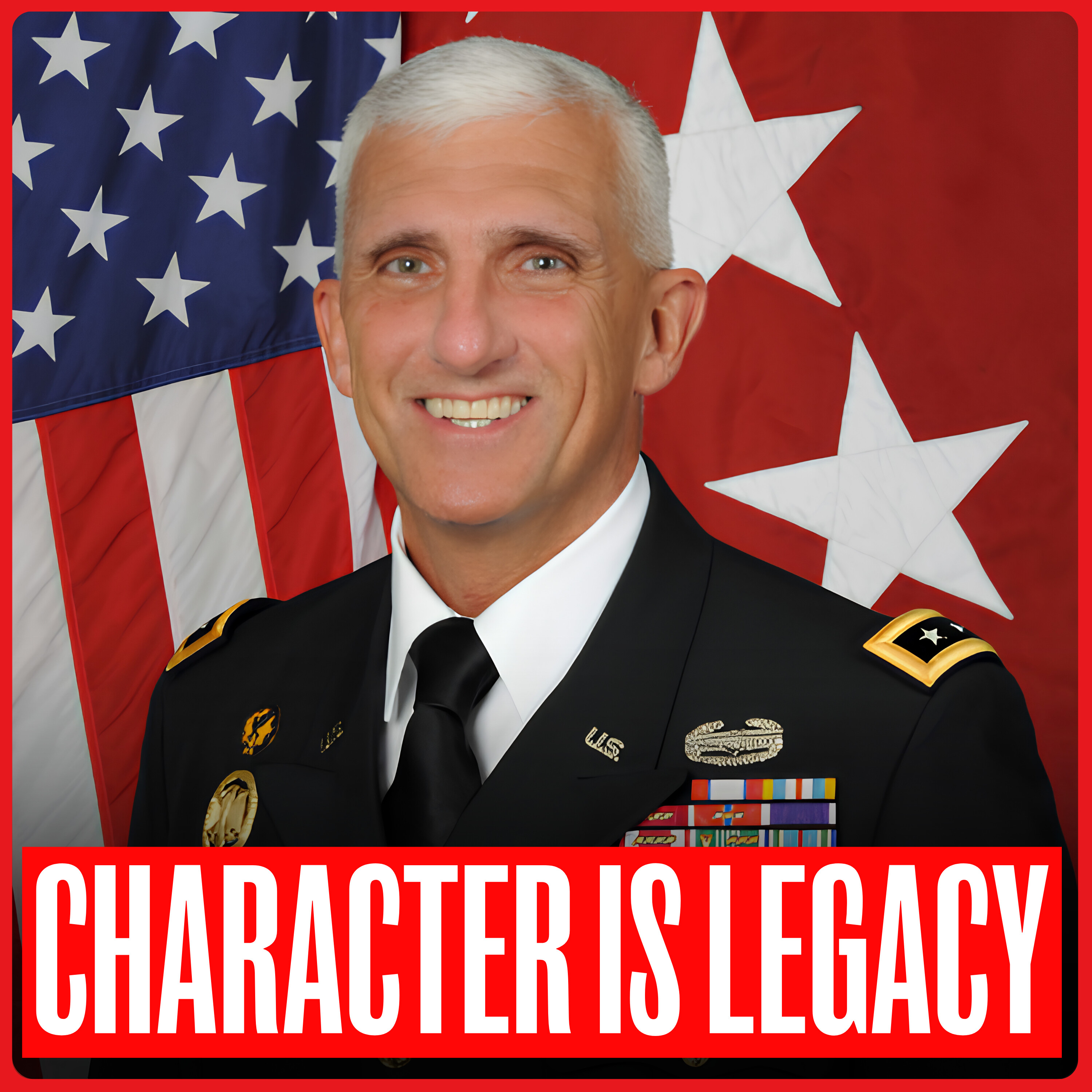
Loading summary
Transcript48 lines
- [00:00]
Ryan Holiday
Welcome to the Daily Stoic Podcast, designed to help bring those four key Stoic virtues, courage, discipline, justice, and wisdom, into the real world.
- [00:15]
Hey, it's Ryan.
- [00:16]
Welcome to another episode of the Daily Stoic podcast.
- [00:19]
Today is Father's Day.
- [00:20]
Yesterday we did a deep dive into Marcus Aurelius and Antoninus. What Marcus learns from his stepfather.
- [00:27]
That was a sort of how to father episode. And then second half of that episode
- [00:31]
was maybe a little bit what not to do about Tom Junod's complicated relationship with his father when he came on the Daily Stoic podcast. Today I am talking to Lieutenant General Mark Hertling. He spent almost 40 years in the US Army. Started as a tank platoon leader, became commander of U.S. army Europe and the 7th Army. He did combat tours in Desert Storm and Iraq, and then he helped support military transformation across Eastern Europe.
- [00:59]
Spent, you know, many years in uniform,
- [01:01]
many years deployed, was in combat many times.
- [01:05]
Thankfully, he came home.
- [01:06]
But there were many moments, I'm sure, where he didn't know if he would return. And that's. He has this great book called if I Don't A Father's Wartime Journal, which
- [01:16]
was the thoughts that he put down
- [01:18]
on his first deployment when he was
- [01:20]
told there'd be casualties as high as
- [01:22]
50% in his unit. You know, what did he want to leave to his two young sons? It's sort of an ethical will. It's a great book. You should definitely read it.
- [01:30]
And I'm gonna bring out a fuller
- [01:32]
episode later, but he and I wanted to talk about some fatherhood stuff.
- [01:37]
I think you're really gonna like it.
- [01:39]
It's a palate cleanser after Tom Junod's sort of complicated relationship with his father. But you should definitely read Tom Junod's book. In the days of my youth, I was told what it means to be a man. It's a great book, and so is Mark's book. So two great fatherhood books for today. And doesn't hurt always to reread Mark Aurelius passage on Antoninus either.
- [01:58]
Happy Father's Day, everyone.
- [02:00]
Enjoy. It all comes down to hiring. You got to find the right people for your team, and you got to bring them on board and you got to onboard them quickly. You know, just throwing up a job posting and hoping you get lucky. I've just found. Well, you don't get lucky enough. If you want to find quality hires. Well, you should check out Indeed Right now. People are finding quality hires on Indeed Right now. In just the 30 or so seconds we've already been talking, people have made dozens of hires on indeed. According to Indeed data worldwide, their sponsored jobs posted directly on indeed are 95% more likely to report a hire than a non sponsored job. So join more than 3.3 million employers worldwide that use Indeed to connect with quality talent that fits their needs. Spend less time searching and more time actually interviewing candidates who check all your boxes. Less. Less time, less stress, more results when you need the right person to cut through the chaos. This is a job for Indeed Sponsored Jobs and listeners of this Show Get a $75 sponsored job credit to help get your job the premium status it deserves@ Indeed.com stoic that's Indeed.com stoic right now and support the show by saying you heard about it on this podcast. Indeed.com stoic terms and conditions apply. Hey, it's Ryan. I'm on the road right now doing talks all over the country. I love traveling. I love going to new places. The thing I don't like about it though is I don't get to sleep in my bed at home.
- [03:35]
Which I like.
- [03:36]
Not just because it's home, but because I have an eight sleep on my bed. I've had an eight sleep on my bed. I don't know, five years. I love it. My wife loves it. We love it because it cools the mattress. It heats the mattress. You can have different sides, cool the different temperatures. It's even how I wake up in the morning. Instead of an annoying alarm clock or that, you know, horrible sound on your phone, it lightly buzzes you awake and then. And then when you're up, you want to turn it off, you just tap the mattress. There's all sorts of awesome features in My eight Sleep. It was worth every penny. The point is, I love my Eight Sleep. And the Eight Sleep keeps getting better Eight Sleep users report up to 32% better sleep and up to 34% better deep sleep.
- [04:16]
This is all stuff you love.
- [04:17]
You can use the code Daily stoic@eightsleep.com Dailystoic right now for up to $500 off. And this Fourth of July sale ends on July 12th, so don't wait. And if you have an HSA or an fsa, some eight Sleep stuff qualifies for that as well through True Med. And qualified customers save about 30% on average. Check your eligibility@truemed.com 8 Sleep before you buy True Med is for qualified customers. HSA and FSA tax savings may vary.
- [04:52]
So you wrote this, this book for your sons, trying to sort of pass these lessons on to them. There is this in the Jewish tradition, there's this idea of an ethical will, right? We write a will that, you know, says, hey, you get the house. You know, you get the life insurance policy. You know, you get Mom's jewelry and Dad's jackets. And then you got to decide what to do with all these books that you don't want and all the other stuff. Right? But the. The ethical will of, like, hey, here. Here's the character I'm trying to bequeath to you. Here are the values I want you to live by. It strikes me that was the primary reason that you're. You're writing the book. And in the years since, what do you feel like you got right? And what do you feel like maybe you would emphasize more now as far as lessons, let's say people are listening to this on Father's Day.
- [05:43]
Lieutenant General Mark Hertling
Yeah, well, and that's why it's important on Father's Day, because I. I'm lucky enough. We're lucky. My wife and I are lucky enough to have two great sons with wonderful grandchildren. And what's fascinating to me is when you see your sons or your daughters raise their own family, something changes in you. So what I was bequeathing to get to your question is more lessons for them to reflect on. I talk throughout the book about emotions and character and leadership, but the last chapter is repeating something both our boys actually have hung in their house, which is MacArthur's prayer for his son. Build me a son, O Lord, who is. And then he goes on and describes what he wants his son to be. Well, now we have two sons. That prayer was important to us when they were young and what we were trying to do with them. But now it's important for them to remember MacArthur's prayer for their children. And here's what the son or the daughters that you're building and what it takes to really remind them of what is important in life. It isn't the monetary success or the great job and the parking space outside your building. It's really your character and how you treat other people.
- [07:09]
Ryan Holiday
Yeah, it's interesting, right? If you're reflecting on your kids as they get older, do you want them to be really, really successful, really, really financially secure, really, really powerful, or do you like them to be great people? And I think everyone intuitively knows the answer to that question. And then you think, but what do I spend the most time talking about or working on? It's like, you know, how are your grades? How are you doing in sports? How are your manners? It's weird. We all know Character is the most important thing. And as you said, the Greeks but believe that character was destiny. And yet we kind of just assume the character side of things will take care of itself. That's not what we measure and work on day to day.
- [07:55]
Lieutenant General Mark Hertling
Right. And I often have a debate with my MDA students. Is leadership born or is it developed? Is it part of who you are? It's a little bit of both. And you can build that character by being aware of what it consists of. Here are the elements of character. Here are the elements of presence and intellect and stewardship. And yet I don't think we talk as much about the precision of developing character as we should. You know, we assume it will happen if they're good people, but boy, that's part of the reflection too, of what are your values, what are your behavioral patterns, what do you talk about at dinner, and the things that build who you are to be that good person. And that takes as much effort as being a great business person or lawyer or, you know, minister or whatever. Right.
- [08:52]
Ryan Holiday
Well, and it does feel like the military tradition is one of the few places left in our society where character is explicitly taught, talked about, you know, evaluated, developed in a way that, you know, the rest of sort of secular society it isn't. And if anything, you could argue we're living in a time of sort of like vice development or, or sort of the sidelining of character because it feels like it's insufficient to get ahead in this sort of crazy, upside down world that we're living in.
- [09:30]
Lieutenant General Mark Hertling
Couldn't say it better. And that's the thing. Are we taking time again, the reflections of the book? Are we taking times to analyze our own self, to see where we're centered, to find out the things we're doing? And that was really one of the purposes of the book was to say we all need to take that time to reflect and we don't do it as much as we should.
- [09:53]
Ryan Holiday
Yeah, the stoics talked about this idea of putting yourself up for review, you know, sort of at the end of the day, maybe it's 2 in the morning. Like you are on the, on the, on the COVID of the book here, and you're going, hey, what did I do well, what could I have done better? You know, and how do I know whether I did well or if I could have done better? If I, if I'm not clear about what I believe and what I'm trying to accomplish? Right. Like, what's my north Star here? What's my. What is the compass by which I'm evaluating. Did I. Did I win an award? Did I make money? Did somebody pat me on the back? Or did I do the right thing? You know, did I live in accordance with those values? And that is that inner dialogue that we have to be having. And then we have to teach our children how to have. We can't just expect them to have it.
- [10:37]
Lieutenant General Mark Hertling
Yeah. You know, it's interesting. My publisher, when he first read the book and said, yeah, I want to publish this, he said, you know, this isn't like most leadership books. He says most leadership books are the people saying how great they were and how they succeeded and everything. He says, you have more scar tissue than you have successes in this book. And that's the first time I've heard anybody say that. And I said, yeah. And it was kind of picking the scabs, as I went through to give advice to our sons. Don't do what I'm doing here. You know, take a look at your friendships. Make good choices. And it is going back to your question from earlier. It is an attempt to teach character and the elements thereof versus just proclaim what I have because I've had more failures than I've had successes.
- [11:25]
Ryan Holiday
Yeah. And the ability to be honest with yourself about what those failures are and to put them up for review is how ideally you don't. You don't repeat them. And then you're giving your children a leg up by not forcing them to start from scratch. Right. Like, ideally, the battles that you fight, literally and figuratively, your children can pick up where you left off. They don't have to do them the exact same way. You can't spare your children everything. And there's no book or set of ideas that are going to teach them everything they need to know. But they shouldn't have to learn everything by trial and error.
- [12:02]
Lieutenant General Mark Hertling
Right. But they're still going to have the scar tissue even if they take your advice. All people make mistakes. So, you know, it's just, okay, dad told me that I should do this versus that, and I didn't do that. So, okay, I've got a. I've got a little scratch on myself now. Yeah.
- [12:20]
Ryan Holiday
Well, and that speeds up the process. Like, even if you make all the same mistakes that your parents made or that you had tried to prevent them from making, the fact that. That you as the parent were honest about your own struggles with them and what you learned makes the pattern recognition faster. Right. Like they say in recovery, like, you're only as sick as your secrets. Right. And when we hold things Close. And we don't articulate what we've gone through, what we did wrong, where we could have done better. What we're forcing our kids to do is go through the world under the impression that they're the only one in this family tree that's had this problem or this temptation or gone down, made this mistake. Even with innocuous stuff in my family, I'm like, wait, like, this has been a thing that we've dealt with for generations, but just nobody brought it up. Like, it's. I could have gotten to this solution faster if shame hadn't been hiding what happened.
- [13:15]
Lieutenant General Mark Hertling
Yeah. It's the old expression. If you want a new approach, read an old book.
- [13:19]
Ryan Holiday
Yes. Yes.
- [13:22]
Lieutenant General Mark Hertling
Right.
- [13:22]
Ryan Holiday
Yeah. It's foolish to think you can spare your children from everything you ever went through, but if you can spare them from one thing that you went through, well, then we're making progress. Right. It's not as much progress as we could, and that is the study of history, how often we make the same mistakes over and over and over again. But the idea is we err a little bit less each time, and that's what propels us forward.
- [13:45]
Lieutenant General Mark Hertling
Yeah. It was interesting in a conversation with our son, who typed it up for me, he said, boy, this is really going to be a great legacy for the family. And I said, hey, Scott, I said, here's the deal. I said, when I started this thing, it was partially a legacy, but now I don't want our grandkids saying, boy, that Grandpa Hertling was just such a smart guy, and he gave us all this advice. If that's what comes out of this, it's a failure. What I want them thinking about is when they read the different sections and the journal entries and the reflections to say, hmm, I ought to take that on. I ought to try that, you know? And maybe that enlightens them a little bit. Not so much that I was a wise old man before I died, but boy, oh, boy, he passed along some gems for us to think about.
- [14:39]
Ryan Holiday
And recognizing parts of yourself in that ancestor, good and bad. Oh, I have this. And that's the tradition that I want to continue. And this is the part of the family legacy that stops with me. Right. Like I'm wearing a Bruce Springsteen shirt. He has this great line about, you know, we can be an ancestor for our kids or a ghost.
- [15:04]
Right.
- [15:04]
And I think, in a way, we're both those things for our kids. There's the parts of us and our history and our genetics and whatever that can haunt our family. And subsequent generations. And then there's the, the good parts that they get to carry forward that they benefit from, that guide them. And, and I think that's what I think we get when we have a good sense of, of general history, but also our, our family history, the good and the bad.
- [15:31]
Lieutenant General Mark Hertling
I gotta tell you, I love that quote. I'm gonna steal that one. That is classic. That is great.
- [15:35]
Ryan Holiday
I think that's a great Father's Day.
- [15:42]
Progressive Ad Voice
Foreign support for this podcast comes from Progressive, America's number one motorcycle insurer. Did you know? Writers who switch and save with Progressive save nearly $200 per year. That's a whole new pair of writing gloves and more quote today Progressive Casualty Insurance Company and affiliates national average 12 month savings of $197 by new customers surveyed who save with Progressive between October 2024 and September 2025. Potential savings will vary.
- [16:17]
Mistplay Ad Voice
Playing mobile games and not getting rewarded for it is a thing of the past. Why haven't you switched yet? If you're going to spend the time playing, you should be earning rewards doing it. With mistplay, you play what you love and earn points for gift cards and more. Plus, you can enter the Mistplay sweepstakes for your chance to win tens of thousands of dollars in cash or bundles and gift cards every week. So yeah, keep playing games, just maybe get rewarded for it. Download mistplay today and enter for your chance to win.