Podcast
THE DEEP DIVE aPODCAST
Hosted by VividVoices Media · EN
The Deep Dive aPodcast , produced by VividVoices Media production. Recorded in Atlanta. Unscripted. Unfinished.
VividVoices Media is an independent audio media company producing unscripted, long-form conversations that challenge polished narratives and surface-level discourse. Founded in Chicago and creatively rooted in Atlanta, the company prioritizes real voices, unresolved dialogue, and cultural depth over manufactured certainty.
VividVoices Media exists to create space for conversations that are honest, messy, and unfinished, because real understanding rarely fits into clean soundbites.
25episodes
Episodes
Newest firstAll episodes
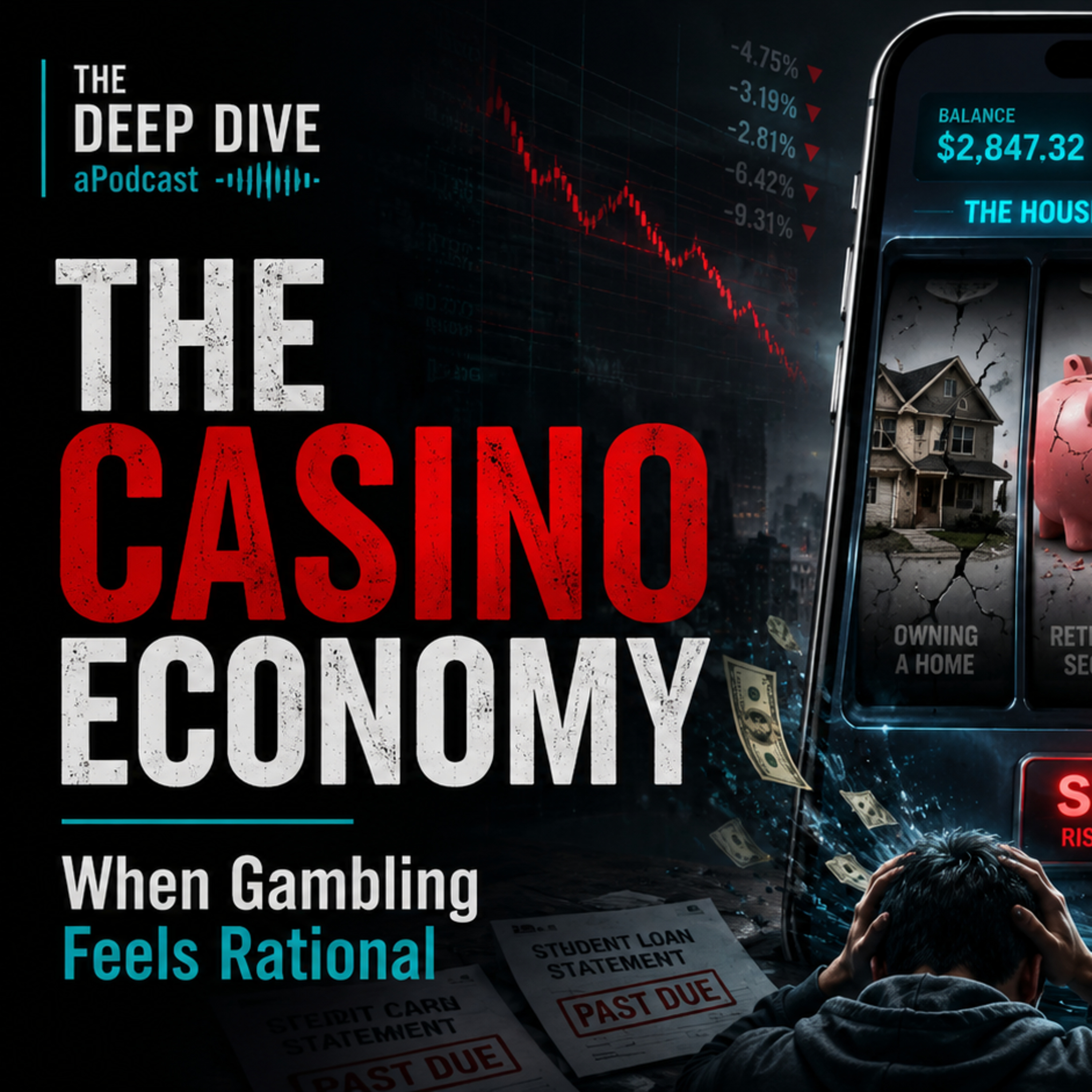
The Casino Economy: Why Financial Nihilism Makes Gambling Feel Rational
Jun 1800:19:54Tap to summarizeWhat happens when saving money no longer feels capable of changing your life?In this episode of The Deep Dive aPodcast, we examine the rise of financial nihilism, the growing belief that traditional paths to stability, including homeownership, retirement, and long-term investing, have become mathematically unreachable for an entire generation.The conversation moves from housing inequality and generational wealth gaps into lottery psychology, zero-day options, memecoins, mobile trading apps, payment for order flow, and the online communities that turn devastating financial losses into jokes, status, and protest.We also explore how trading platforms use gamified interfaces, push notifications, frictionless transactions, and casino-style reward systems to transform financial desperation into constant speculation. What looks like irrational gambling may actually be a response to a system many people already believe is rigged.But the consequences extend far beyond individual accounts. Hidden consumer credit exposure, increased market volatility, disappearing retirement savings, and an aging generation without a financial safety net could turn today’s private losses into tomorrow’s public crisis.If the economy increasingly feels like a casino where the house always wins, is the rational response to stop playing, or to try to break the machine from the inside?The Deep Dive aPodcast explores the systems, psychology, culture, and uncomfortable truths shaping the way we live.
Transcribe →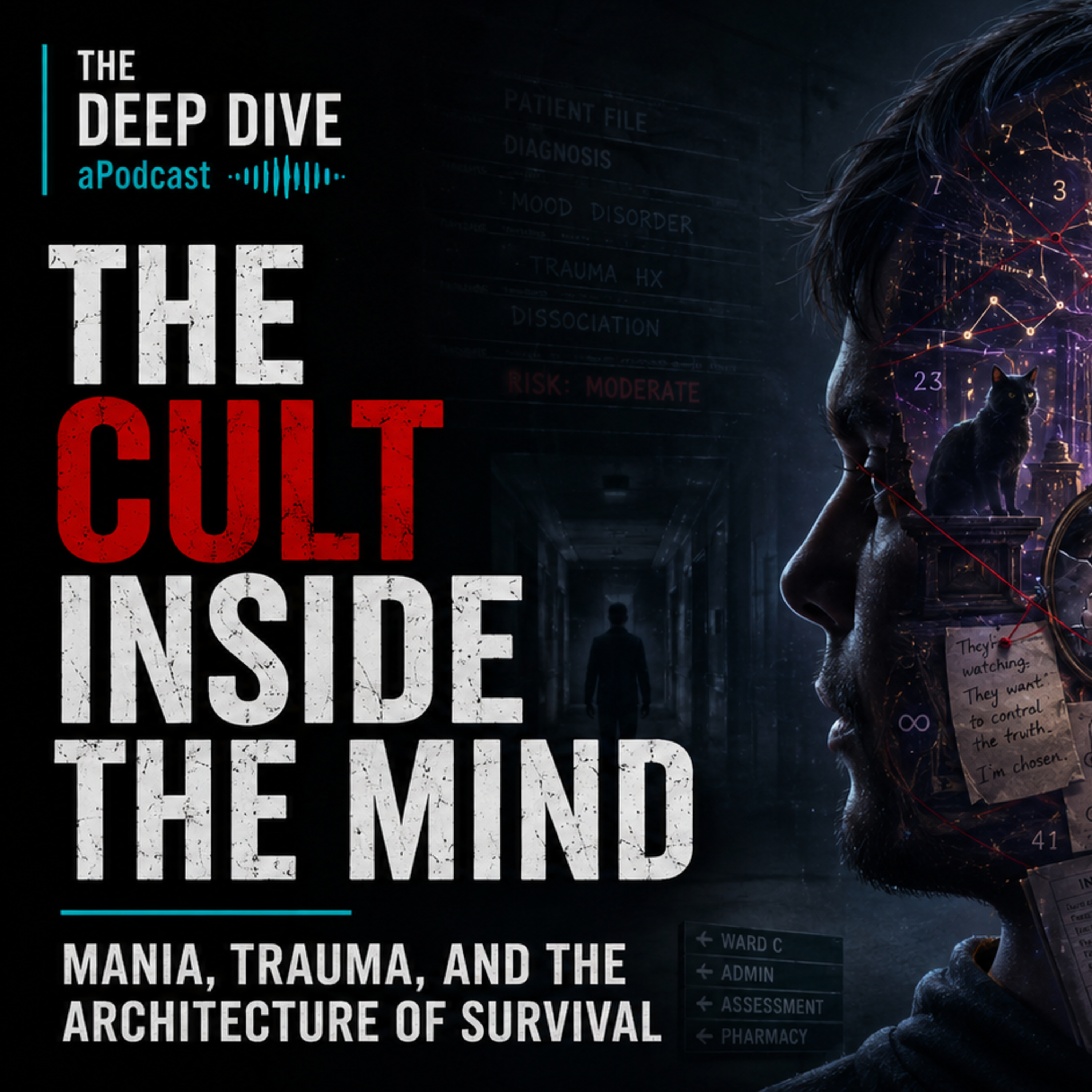
The Cult Inside the Mind: Mania, Trauma, and the Architecture of Survival
Jun 1700:49:25Tap to summarizeWhat happens when the force controlling your thoughts is not another person, but your own brain?In this episode of The Deep Dive aPodcast, we examine the terrifying intersection of bipolar mania, psychosis, trauma, identity, and institutional failure.The conversation begins with aberrant salience, the neurological process through which a dysregulated dopamine system can mark ordinary sights, sounds, numbers, memories, and coincidences as profoundly important. When everything feels meaningful, the mind is forced to build a story large enough to explain it. For some people, that story becomes religious, messianic, conspiratorial, or cosmic.From there, the episode explores the idea of mania as an internal cult. Sleep deprivation, emotional intensity, grandiosity, identity fusion, and the collapse of critical judgment can create a reality that feels more truthful than the world outside it. When that reality finally breaks, the survivor is often left facing financial destruction, damaged relationships, moral injury, shame, and the loss of the identity they believed had given their life purpose.The discussion then moves beneath the visible crisis and into the quieter architecture of trauma. Childhood neglect, avoidant personality disorder, emotional overcontrol, deliberate fragmentation, and the construction of separate functional selves are examined not simply as defects, but as survival systems built by a mind attempting to remain alive inside an unsafe world.The episode also confronts the medical, legal, and financial structures that frequently separate symptoms from their causes. Why are trauma and neglect so often treated as secondary conditions while the resulting disorders receive the official diagnosis, treatment, and funding? What happens when a system can afford to medicate the damage but cannot afford to acknowledge who or what created it?Finally, we look toward emerging paths of recovery, including radical openness, trauma integration, person-centered treatment, precision psychiatry, and the difficult reconstruction of identity after severe mental illness.Healing is not a return to the person someone was before the break. It is the creation of a new self capable of carrying what happened without being completely defined by it.This is a deep dive into the cult inside the mind, the systems outside it, and the human struggle to reclaim agency from both.
Transcribe →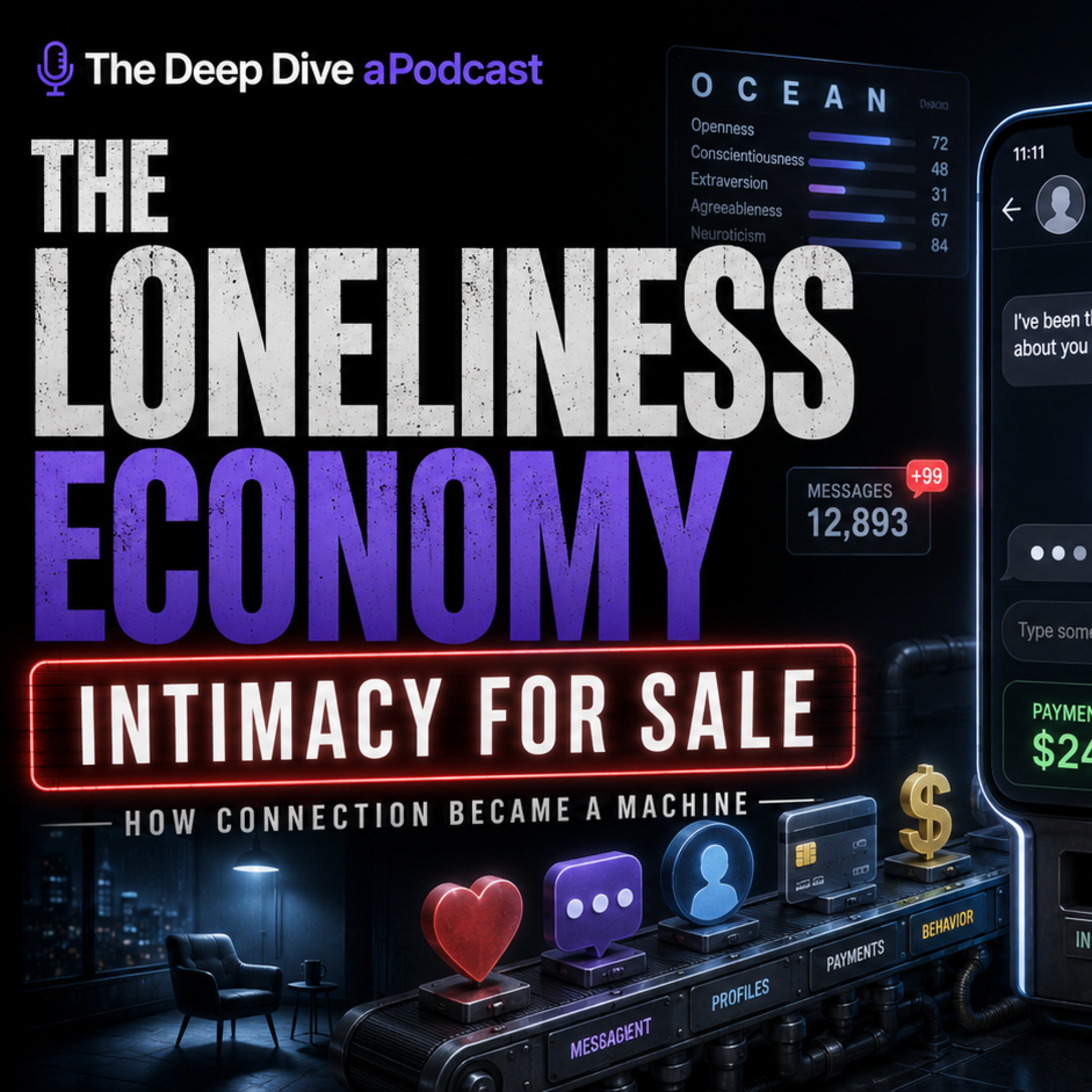
The Loneliness Economy: How Intimacy Became an Industry
Jun 1700:40:37Tap to summarizeWhat happens when loneliness stops being a human condition and becomes a business model?In this episode of The Deep Dive aPodcast, we examine the industrial scale of manufactured intimacy and the digital systems designed to identify, target, and monetize emotional vulnerability.The conversation begins with psychographic profiling, where platforms use behavioral data to predict personality traits, isolation, and emotional susceptibility with startling precision. From typing patterns and late-night scrolling to hesitation, attention, and screen behavior, the modern feed is not simply watching what users click. It is learning when they are most vulnerable.From there, the episode explores the creator economy and the psychology of parasocial trust. Influencers build intimacy through vulnerability, relatability, scarcity, and perceived access, creating relationships that feel personal even when they are designed for mass conversion.The investigation then moves into the OnlyFans ecosystem, where legal filings and undercover reporting reveal how promises of one-on-one connection are often fulfilled by outsourced chatters, agency workers, and increasingly sophisticated AI systems. What subscribers believe is a private relationship may actually be a carefully managed sales funnel supported by customer databases, automated messages, synthetic memory, and AI-generated images.The deeper the system goes, the less human it becomes.Human chatters are replaced by generative tools. Personal messages are optimized by software. Old content is repackaged as new. Emotional attachment becomes a measurable conversion rate. Even the illusion of memory can be automated more convincingly than a real person could sustain at scale.The episode culminates in one of the strangest legal contradictions of the digital age: attorneys using AI-generated legal arguments in a lawsuit challenging the deceptive use of AI and manufactured intimacy.At every level, the same pattern emerges. Human emotion is translated into data, data becomes leverage, and connection becomes a product rented back to the people who need it most.The question is no longer whether machines can simulate intimacy.It is whether we will still recognize the difference when they do.
Transcribe →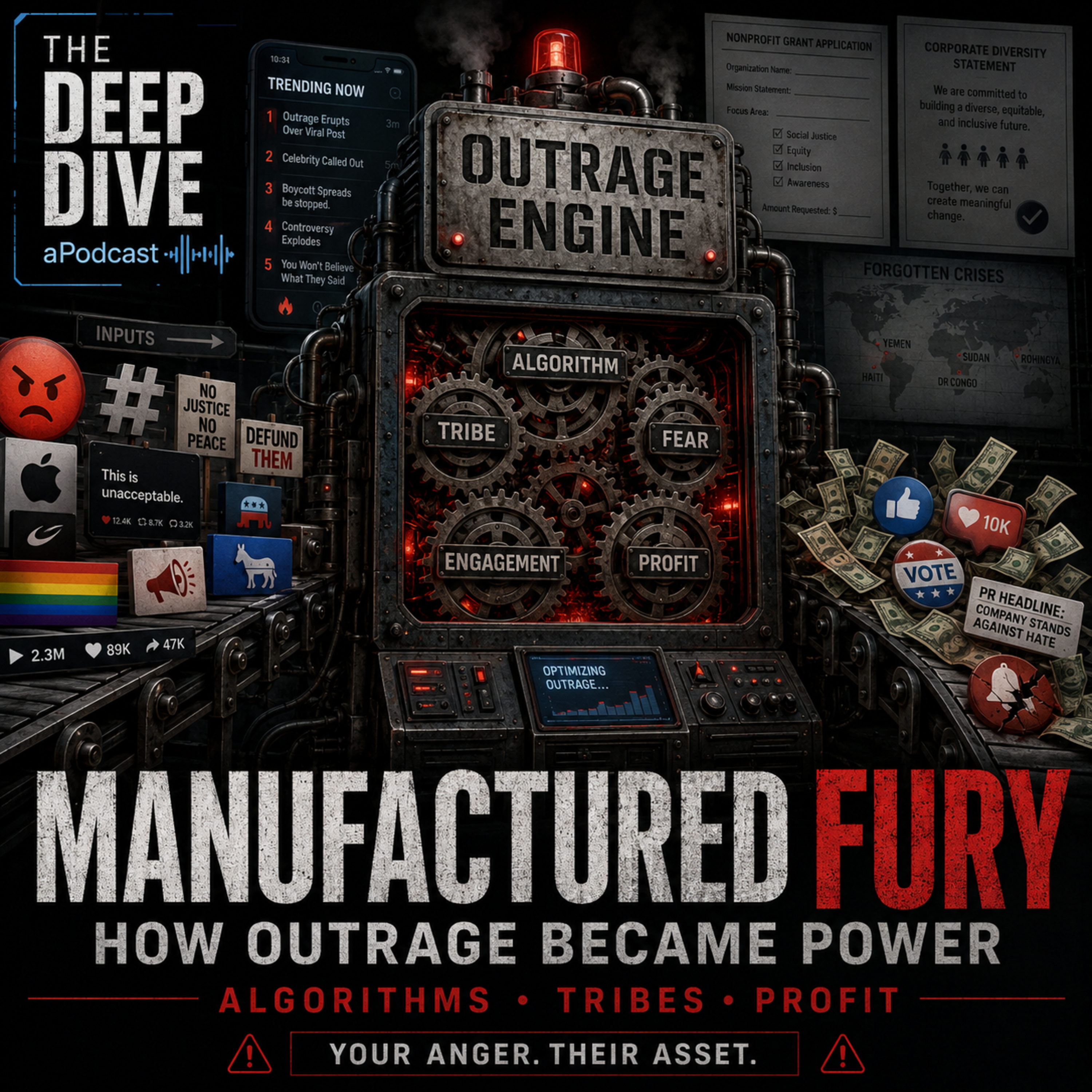
Manufactured Fury: How Algorithms Turn Outrage Into Power
Jun 1500:46:05Tap to summarizeWhat happens when outrage stops being a spontaneous human reaction and becomes a system designed for profit, control, and social conformity?In this episode of The Deep Dive aPodcast, we examine the machinery behind manufactured fury and the way digital platforms, political tribes, corporations, nonprofits, and influencers reward performance over progress.The conversation begins with the architecture of social media itself, where engagement-based algorithms amplify emotionally charged and hostile content far beyond what users would naturally encounter. Anger receives more reach. Tribal conflict generates more interaction. The result is a public square engineered to satisfy reflexive impulses while betraying the healthier, more constructive discourse people claim to want.From there, the episode explores the psychology of digital conformity. Reinforcement learning teaches users that outrage earns social currency, while norm learning pressures them to mimic the emotional temperature of their group. In tightly controlled online communities, people may no longer post because they believe something. They post because refusing to perform the expected anger risks social exile.The discussion traces this behavior through history, from performative abolitionism and northern complicity in slavery to modern online activism, corporate solidarity campaigns, and the nonprofit industrial complex. Across each era, the same pattern appears: symbolic morality offers status at a low personal cost, while genuine structural change demands sacrifice.The episode also examines how corporations convert social justice into brand protection. From Nike and Gillette to Bud Light, Amazon, Target, and Pride marketing, activism becomes a form of risk management, adopted when profitable and abandoned when the public pressure fades.But the critique does not stop with progressive institutions.The anti-woke backlash often relies on the same outrage incentives, villain narratives, fear-based mobilization, and algorithmic performance it claims to oppose. Both sides are trapped inside the same machine, selling different versions of the same emotional product.The human cost is real. Slactivism replaces material action. Forgotten humanitarian crises disappear when they fail to trend. Digital tribes punish intellectual honesty. Nonprofits professionalize dissent. Corporations borrow the language of justice while preserving the systems that benefit them.The episode ultimately asks whether morality still exists when it requires an audience.If nobody could see your outrage, your apology, your solidarity, or your good deed, would you still act?And if the answer changes when the screen goes dark, who were you really trying to save?
Transcribe →
The Missing Home Album and Leaked Eulogy
Feb 2700:24:52Tap to summarizeIn this episode of The Deep Dive aPodcast, we unpack the fallout surrounding the missing Home album, the haunting leaked track “After the Last Beat Fades,” and the growing theory that D.L.B may be shaping his legacy through silence, fragments, and controlled chaos rather than a traditional release. We also break down the so-called “wedding” photo, the symbolism behind Liannarie’s rising role, and whether this era marks an ending, a transformation, or the beginning of something even bigger.
Transcribe →YouTube's 2026 War on AI Slop
Feb 2300:28:43Tap to summarizeToday The Deep Dive aPodcast diving into YouTube's 2026 War on AI Slop
Transcribe →Higgsfield AI Directing and Wrapper Controversies
Feb 2000:44:29Tap to summarizeHiggsfield AI Directing and Wrapper Controversies: This episode explores the sudden "cancellation" of Higgsfield AI, examines the viral impact of Seedance 2.0, and delves into a significant legal development involving Epic Games and Google.
Transcribe →
Liannarie’s Dalisay: Purity Without Innocence
Feb 1800:30:11Tap to summarizeLiannarie Sheds the Tala Diwata PersonaThe 11SIX Music Singer Songwriter from The Philippines is one you should know about. The Deep Dive aPodcast , Presented by VIVIDVOICES MEDIA
Transcribe →Lazy Dropshipping Is Dead In 2026
Feb 1300:24:16Tap to summarizeLazy Dropshipping Is Dead In 2026: This podcast episode will explore the reasons why the lazy dropshipping business model is becoming obsolete. We'll discuss the challenges of relying solely on automation, the importance of building a strong brand, and the strategies needed for sustainable e-commerce success in the future. We'll also cover emerging trends and offer actionable tips for those looking to transition to more effective and profitable business approaches.
Transcribe →How Consciousness Collapses Reality
Feb 1200:32:56Tap to summarizeIn this thought-provoking episode, we delve into the enigmatic question of how consciousness might shape and even influence the fabric of reality. We explore various perspectives, from quantum entanglement and observer effect to philosophical interpretations of the mind-body problem. Prepare for a mind-bending journey as we examine the profound connection between our awareness and the world around us. * The role of the observer in quantum mechanics.* Philosophical implications of subjective experience.* The potential for consciousness to create or perceive reality.* Real-world examples and thought experiments.
Transcribe →