← Determined Society with Shawn French | Adversity & Mindset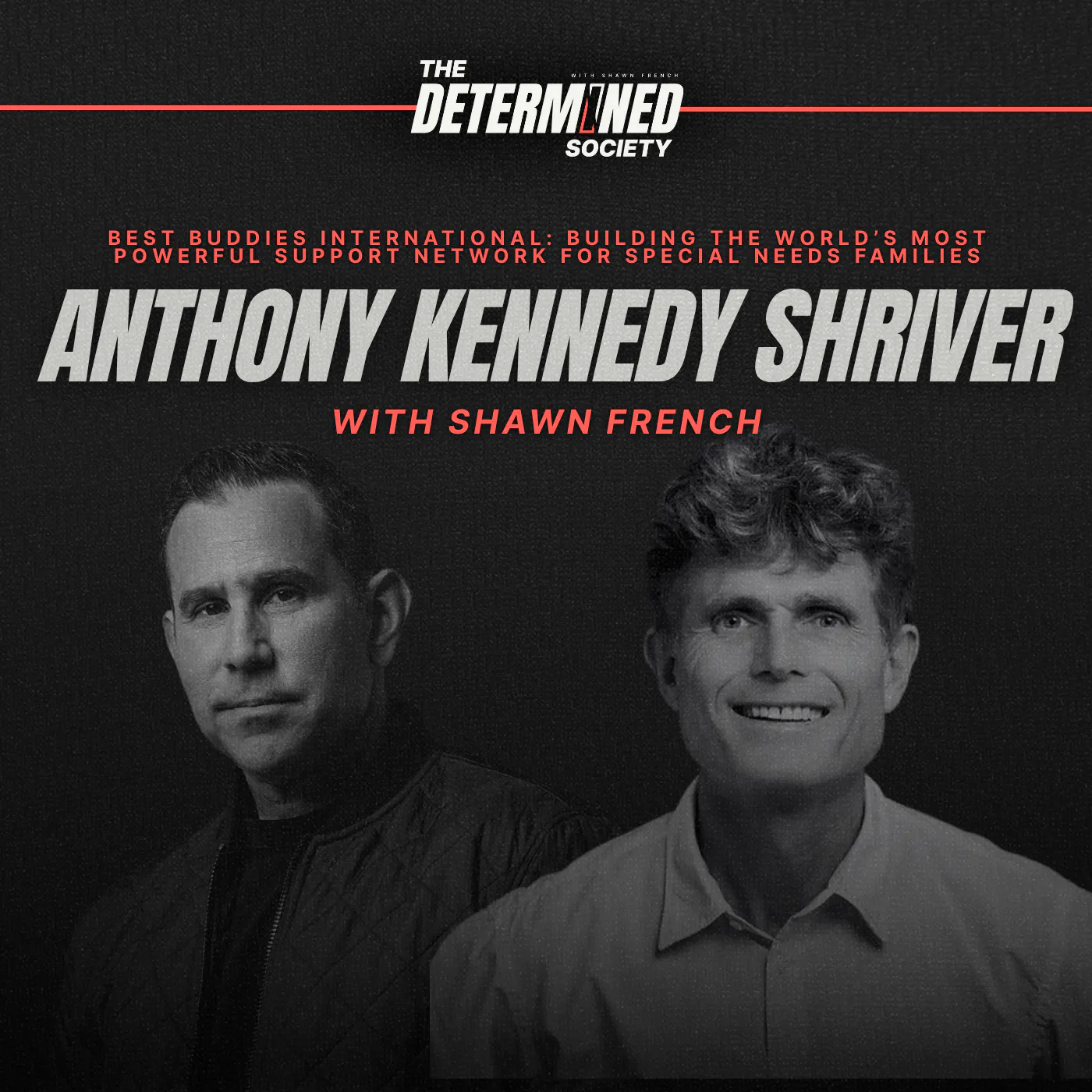
Determined Society with Shawn French | Adversity & Mindset
Anthony Kennedy Shriver & Best Buddies International: The World's Top Special Needs Support Network
00:49:42
Loading summary
Transcript88 lines
- [00:00]
Anthony Kennedy Shriver
Everybody gotta follow their passion and play the role and, you know, follow whatever God designed you to do. Most of us know it in our gut, but sometimes we're too scared to admit it or too scared to go for it. Then we get ourselves stuck in the wrong job, the wrong profession. We do a lousy job. We get unhappy, we get depressed because we don't have the courage to say, hey, I want to be an actor. Hey, I want to be the, you know, finance and make tons of money. Hey, I want to run a charity, you know, whatever it is.
- [00:26]
Unknown Speaker 1
Heck, man, I walked away from a successful medical sales career to do this. It was scary, right? And I could remember the look on my wife's face.
- [00:35]
Anthony Kennedy Shriver
She.
- [00:37]
Unknown Speaker 1
You're going to do what? Best buddies, right? You started this and, you know, started from one chapter at Georgetown, and it spread into 3,000 chapters internationally, 46 countries, and impacting right around 1.3 million people. What was your vision like when you started this, and how has it evolved over time?
- [01:04]
Anthony Kennedy Shriver
Well, honestly, when I first started, I really had no vision. You know, I really did it because I followed my heart. And I love being around people who have intellectual development disabilities. I had an amazing relationship with my aunt Rosemary Kennedy. I just knew they had, you know, unlimited potential and could realize their full potential when they're given the right support, encouragement, and energy. And I think, you know, that's sort of the story of everybody's life. And I think, you know, everybody needs a little bit of a helping hand. I've had a bunch of helping hands, and I think nobody gets to the top of the mountain on their own. And people with intellectual disabilities need sort of a little bit of a different journey, a little bit of a different strategy to get to the top. But I think whatever their dreams are, they can really be realized. And I just wanted to kind of go for it, sort of capture the spirit of young people in college, thought that they could be great friends, mentors, motivators, and at the same time, you know, motivate college kids to be aware this population exists and they can have real impact. And it makes you feel like a million bucks to be involved in a life of purpose and service. And, you know, every day you wake up and, you know, your energy's fired up and everything's possible. And so I didn't have a really a strategic plan in those days. I just was always, you know, entrepreneurial when I was a kid. Always sort of hustling deals and trying to make some money in the summers and during the year, and little Odd jobs and sort of brought that energy and excitement to this population and have continue to kind of grow on that. This year, you know, we're getting close to $100 million a year in our budget and almost have 500 people working for Best Buddies in the U.S. and couple hundred outside the U.S. so, you know, it's gotten, you know, reasonably large and, you know, impacting, you know, hundreds of thousands of people on an annual basis. So it's been fun, but, you know, it's a grind. You got to keep hitting it and you got to keep going and waking up early and getting after it every single day. I mean, it's the only way. And, you know, I think it's just the story of life. There's no easy way.
- [02:51]
Unknown Speaker 1
No, I love that perspective.
- [02:53]
Unknown Speaker 2
Right.
- [02:53]
Unknown Speaker 1
And. And just something a little bit about me that you don't know, but I want to share it with you. Before I got into this and everything like that, so many, many years ago, I was a teacher and I worked with, you know, kids in. In those types of situations, intellectual and, you know, developmental disabilities. So I was in an autism unit. You know, there was, you know, kids from, you know, you know, very low levels all the way to very high levels of autism and physical, Physical, disabled, everything. So, you know, when you talk about that purpose and being fired up every day to. To make that impact, I can really relate to it because, you know, a lot of my professional career, I mean, 10 years was working with. With kids in high school that had those, you know, developmental disabilities. And, and it was always very inspiring because you would see different views and perspectives from these kids, and they were also very special and extremely smart and given the opportunity to thrive in an environment once they trust you, it's beautiful, man. I just want to share that with you. So I get it.
- [04:04]
Anthony Kennedy Shriver
Good for you. Lucky you to have that experience. So you've got it, man. You already drank the Kool Aid, so you're. You're on the team. You know what we're talking about.
- [04:11]
Unknown Speaker 1
Absolutely. Absolutely.
- [04:13]
Anthony Kennedy Shriver
Lucky you. Lucky me?
- [04:15]
Unknown Speaker 1
Yeah. I mean, you know, just. Just seeing somebody that, you know, like yourself, that has built this not nonprofit so large to impact, you know, that demographic, I just, you know, to me is. Is commendable because they need it.
- [04:33]
Unknown Speaker 2
Right.
- [04:33]
Unknown Speaker 1
And I think that also too, it fulfills us in a certain way that we get to give back to them and learn more about them and be there through their development.
- [04:43]
Anthony Kennedy Shriver
Yeah, yeah. And you say they need it. I mean, in the end of the day, honestly, we need it. And you Know, we really need it. I think people need it. And I think part of the issues go on so often in our culture today is that, you know, people aren't in the spirit of thinking about other people first. They're always thinking about themselves. They're so self absorbed and caught up in their own world, worrying about everything that's going on in their life. They don't, you know, if you spend more time focusing on other people, focusing on enhancing other people's lives, making stuff happen for others, you get out of your own head, you get out of your own world. I think, and I think it's a great lesson, great value for young kids to get into the mindset, you know, when you give, you get, you know, when you're focused in on a purposeful life, a life that, you know, you get so much back when you help and support a person with special needs. They're so grateful. Their gratitude, their energy, their positivity. You know, they're, you know, they just, you know, they're just so happy, you know, that if you're around that you can't sit around all day long worrying about the news, and you can't sit around all day long worrying about what Trump's going to do, what's going to happen in Iran, because, you know, you're so caught up in just taking care of what's in front of you, taking care of how you can impact today and what you can do. And I think, you know, it just makes you way happier and way more fired up and, you know, have so much gratitude. And I live with, lead with it every day. And there's so many people that are so overwhelmed with everything that's going on in the world, and I, it's not that I'm oblivious to it, I just don't focus on it. And I don't, you know, I kind of got the blinders. I'm, it's funny, I'm here in New York with my son and I always gave him this analogy when we were kids and when he was a kid, you know, about the horses in Central park and they walk around with those blinders and why do they do it? Because in the traffic, they, you know, they don't want to get spooked from the cars. I mean, it's sort of the story of our, of our lives, right? We're, we're walking through life and stuff, coming at us constantly, whether it's the E bike in the bike lane, whether it's the guy on those three wheelers with the music, whether It's a taxi cab, an Uber. So much stuff is whipping by these horses, and the only way they're successful is they got those blinders on, and they're just looking straight ahead, and they're not caught up in whatever the missiles are. They're coming at him. And I always used to tell him that it's so great. Now he gets here, and he's always pointing to the blinders. I remember, Daddy, you told me about the blinders. The blinders. I got to stay focused on my goals, got to face. Focus on my tennis. I got to stay focused on my grades. I got to say, I can't worry about what my friends are doing. I can't worry about. They're sitting around in the pool all day long. You know, all the things that seem like they're the easy way, but they're not, right? Because everything's hard. You just got to sort of in my. I say to them all, you got to pick your heart. And if you pick a good, hard thing and you love it, it's not hard, but you're still at it for hours and hours, and it still takes a lot of your time, and you're at it on the weekends, but, you know, you love it because your heart's in it and you're passionate about it, which is sort of the story for me and Best Buddy. So I'm at it all the time, but, you know, I. I don't really see it as, you know, a job. You know, I see it as something that, you know, I'm passionate about and completely energizes me. And I just keep my blinders on, don't worry about what everybody else is doing, and just keep hammering. Right? So the horse thing, I think, is great. I'm so happy my son sees it and able to share that kind of analogy with him.
- [07:49]
Unknown Speaker 1
So I want to touch on that really quickly. But then I want to rewind a little bit and tell you about an experience I had with kids with special needs that we did on the baseball field, which is a really cool story, and I think you'll really enjoy, but I just had a conversation with my daughter today. She's eight.
- [08:04]
Unknown Speaker 2
All right.
- [08:05]
Unknown Speaker 1
And she. Yeah. Oh, yeah. So she didn't do a specific task that she was supposed to do for her summer reading. She goes to a prep school, and it's. It's required summer work. And she goes, I just didn't want to do it. And I explained to her, I. You know, it's like. It's like, hey, I knew you were gonna get mad. I knew your mom were gonna get mad. I just didn't care. I didn't want to do it. I'm like. So I'm trying to, like, listen to her perspective. And then I said to this. Or I was like, listen, you know, you could have a very, very hard life where you could have an easy life. And it's counterintuitive. You know, sweetheart, you. You could sit there and say, well, if I go easy now, things are going to be easy. But the result is going to be, if you choose easy continuously and consistently, you're going to have a very hard life. And so it's important to focus on what you need to do. And I said this to her, put your blinders on. Do the things that are necessary so you can have an easy life.
- [09:03]
Anthony Kennedy Shriver
And it.
- [09:03]
Unknown Speaker 1
It's great that, you know, we're sitting here, never met each other in person, but we're having the same conversations with our children. Because at the end of the day, that's the silver bullet.
- [09:13]
Anthony Kennedy Shriver
Yeah. I mean, listen, the theme, as I'll say to my kid, you know, these themes are the same themes. I mean, you read the philosophers from 2000, 3000 years ago, you know, Marcus Aurelius and those guys, they all say the exact same things we're saying right now. Right. All the issues are the same. I mean, we're all human beings. So it's, you know, nothing here is particularly. I wish I was saying something particularly novel, but I really am not. And, you know, human beings have the same challenges, same issues, same emotional challenges, relationships, whatever it is. It just been going on forever. And, you know, you can either pick, I think, you know, the right way, as you say, or you pick the wrong way. And, you know, we all end up in the right spot based on, you know, decision after decision. And doesn't mean that we don't all make mistakes. We all sin. But, you know, if you keep making the same ones, you don't end up in the best situation. Right.
- [10:01]
Unknown Speaker 1
Fantastic, man. When you said the missiles coming at us daily. And it's true, man. They're coming.
- [10:07]
Unknown Speaker 2
Right.
- [10:08]
Unknown Speaker 1
Proverbially.
- [10:09]
Unknown Speaker 2
Right.
- [10:10]
Unknown Speaker 1
God bless us. But. But there's still distractions. They can still shake us up. So it's just important. And it's great to teach the kids the lessons because, you know, as they grow into adults, they're able to make some sort of impact, like you're making, like that. That I'm making, and the people before them by focusing on others. And in that theme, when I was Coaching at Northport High School, we did a little partnership once a year with Challenger Baseball. One of my best friend's fathers, God rest his soul, created this organization called Challenger Baseball. And kids with all types of special needs, intellectual or even physical disabilities, would come to the baseball field and we play a game against them and we would have, you know, they would have their, their infield, in, outfield set, but each, each one of their players, each one of the Challenger players had one of our kids that we coached right next to them, building relationship with them, playing the game with them. And of course, at the end of the day, Challenger always won. And the joy that they had. Anthony, it was, was so impactful because, you know, it was, it was a great way to, to instill into the younger generation that life is much more than you. Life is much more than what you're doing. There's a whole nother perspective and a whole bunch of other people out there that have different levels of challenges as you. But the thing is, is we're all in this together and it was just an amazing thing.
- [11:45]
Anthony Kennedy Shriver
That's awesome. Sounds like a great program. Is that nationwide or that's just in Florida or.
- [11:50]
Unknown Speaker 1
I, I can look for you. I know it, I know it was ran out of Venice, Florida. I think it's still going. But that, that could be something cool. Yeah, I could get you information on that.
- [12:00]
Anthony Kennedy Shriver
Yeah, no, it's awesome.
- [12:02]
Unknown Speaker 1
Yeah, it's pretty neat. So, you know, you know, as you guys grow, right, I mean, you know, you're looking, like I said, 3,000 chapters, 46 countries. What are some of the key, I guess, strategies, partnership wise for you guys to continue this scale of growth and you know, where do you see this going in the next five to 10 years?
- [12:22]
Anthony Kennedy Shriver
Well, you know, 10 year plan is 500 million is the goal. So we're trying to grow it bigger. We're trying to get to 100 countries in the next 10 years. So we're in the 40s now, but you know, the, the growth curve international is pretty challenging. But you know, we've got a pretty good, you know, plan in place and we, you know, we kind of, I set the goals long term and I said, you know, shorter one, one year, three years, five and kind of going it backwards. So sort of trying to figure out where, where are we going to be in 10 years, what do we have to do between now and then in order to grow the budget the right way, grow the programming the right way, expand, you know, our pillars, you know, different divisions within each pillar. So that you know, everybody's sort of clear what the strategy is. And of course, you know, I have my plan and God's got his plan. Right? Yeah. It's never exactly the way we lay it out, obviously. I see that almost daily. Right. So again, trying to be, you know, flexible and understand that, you know, that's the way it goes. And you got to get assist, you know, in a situation where you can manage through all that. So I think, you know, we've got that, I think again, you know, trying to create, you know, events, trying to create corporate partnerships that are long term. You know, we try to create five year partnerships with a whole slew of companies so that we have some continuity in our revenue. We are trying to develop a thing, we have a thing called Best Buddies Ventures where we partner with for profit businesses and we co brand our, our program with them and we create positive cash flow. They're actually a for profit business that we partner in. So we're in an ice cream store, we've got a bakery, we're doing a partnership with Jersey Mike's. So people are coming in, yeah, they may know about Best Buddies, maybe they don't. And we have some signage in there, but they're coming into a Jersey Mike's to buy a sub and get a Coke and some potato chips or they're going to our bakery to get, you know, coffee or croissants or pizza, you know, order our ice cream store to get ice cream. Yeah, they might see Best Buddies or we have buddies working in there, but it's not in their face and it's not necessarily the only reason that they go there. So, you know, trying to build that part of the business out more so that we have, you know, revenue coming in that's not contingent upon people making donations or foundations continuing to try to, you know, expand. You know, the blue chip companies that we've got involved and we've got Coca Cola in a five year deal, we've got Rolex, you know, we've got Jersey Mike's, we've got Sephora, we've got Wells Fargo, we've got Citadel securities. You know, we've got, you know, some of the biggest brands in the world, some of the most famous brands in the world that we're partners with. So we got to keep renewing those, delivering excellence back to them so that they feel like they're getting real value, that they're driving business for themselves and they're making money because they partner with us. So that's really important to continue to grow that the cause related marketing, super important. You know, we do a days of giving with Jersey Mike's, for example. In over two days we did $5 million. So those kind of deals are super valuable. We got to do more of those. So we're working with other partners like that. You know, we got to grow the foundation space. That's a big space. The government space is a big space that we could raise more money and do more. Trying to get an authorization at the federal level as well is a big part of our future where we can get some more security and you know, create some ongoing revenue with the government so that we have a, you know, our pie. I mean, my real goal is always on these things is to try to, you know, have as many pieces as possible in the pie, right? So we've got a little bit of a piece of the pies that for profit, piece of his foundations, piece of his companies, piece of its individual givers, piece of it's the special events where people come because they want to ride in our cycling events or they want to come and come to a big party and be entertained by 50 Cent or Jason Deo or the Black Eyed Peas, you know, so, you know, you've got to have a product that's attractive and it can't just be, hey, you know, give me a thousand dollars or hey, give me a hundred thousand dollars. You know, not that those days ever existed, but to me those days are gone. You just can't have that mentality. I think it's got to be and everything we do a two way street. People have got to get real value in return for what they're doing. So we try to focus in on that and you know, a lot of opportunity, you know, to generate revenue outside the United States as well, which creates more diversity for our revenue stream so that we don't have all of our. I mean, everybody talks about investments. When you invest, you have a diversified portfolio. You know, when I'm building best buddies, I want a diversified revenue stream. And something may be hot today, but it could go to zero. Next year I may have some great deal with Jersey Mike's and then boom, I lose that deal. I can't have all my eggs in one basket or I can't have all my eggs with, you know, the state of California or the state of Texas or at the federal level. I mean, Trump wiped out usaid. I mean, if I was getting all my money from usaid, I'd be zero. So I think again, trying to be smart and trying to build a diversified Stream of revenue is really the key to these things. Set goals that are measurable, have staff accountable for, to execute on what we set out for them to do and in the hopes that they get it done and they have good training and good support and good, you know, super supervision. But if they can't do the job, we got to switch them out and get the right people in place. So I think it's, you know, it's constant evaluation of where we are and what we need to do and to stay ahead of the curve and to see what new things are happening so that we don't get caught, you know, trying to play catch up. We got it. You know, like the AI thing is going to change the way we operate as well. We got to be out in front of the curve on the AI. We can't be playing catch up in two years. We got to be all over it right now so that we don't get left at the train station when the train's leaving. So, you know, constantly trying to, you know, be on the road, traveling, listening to smart people, hearing what they say, thinking, reading, you know, and trying to stay in the loop so that, you know, the organization continues to stay vibrant, young and energetic and responsive to our constituents and providing really programs that, and services that are needed by, you know, our buddies and their families, which is in the end of the day is what the whole game's about. You know, we gotta, we're about, you know, serving people with special needs and you know, trying to support them in their, their life journey.
- [18:36]
Unknown Speaker 1
I love it, Anthony. And you know, you mentioned, and you know, you, you, you stayed on it for a little bit of time, but I want to go back to Best buddies ventures.
- [18:47]
Unknown Speaker 2
Right?
- [18:47]
Unknown Speaker 1
I mean that, that right there to me is, you know, like you said, it needs to be a two way street, you know, whether it's revenue, but also value.
- [18:56]
Unknown Speaker 2
Right.
- [18:56]
Unknown Speaker 1
And what I, I'm interested to hear some of the things that you guys have observed in people at Jersey Mike's or in these restaurants or ice cream shops that have worked some with some of the buddies, how their perspective has grown in working with, with these individuals because man, I think that is, you know, that that makes for a happier work environment, different perspective and, and gratitude and you know, I'm interested for you to share with the audience some of the things that you guys observed in those situations.
- [19:29]
Anthony Kennedy Shriver
Yeah, well, no, it's huge. I mean, listen, at the end of the day, the, the best of these ventures deals, they got to make money, right? Just, you know, we're putting up equity. We're a co investor. So our money's on the line. So they got to be profitable. So we've got to run a business. First and foremost, it's profitable and, you know, is tight and organized and, you know, delivering excellence to the customer that comes in the door. But I think you get a lot of loyalty from the customer that comes in the door where they see that, you know, 50% of the profits going to the organization to support the population of people that they're actually being served coffee by, you know, or actually is cleaning their tables or cleaning the floors or greeting them, you know, so that they see that and they feel better. You know, if you can go into a one of our coffee shops, as opposed to Starbucks, and half the profit goes to best buddies. And we're giving jobs to people with intellectual disabilities. And the products are the same. We got to have comparable products or better products. So our coffee's got to be better. You know, our croissants have to be better, our donuts have to be better. Our pizza needs to be better or at least as good. I think people will always pick us over the competition. So I think that's number one. Number two, you know, when we have the buddies working there, it changes the whole energy of the. Of the company. Right. All the other employees are happy. They know Johnny or Jill, and they're excited and they love him because they always come to work generally with an upbeat attitude and enormous gratitude. They're not showing up negative and complaining and whining and this is wrong, and that's wrong. And I missed the bus and I didn't get my transportation or, you know, whatever. I mean, you know, that just generally, you don't hear a lot of that. I mean, you know, listen, they're not perfect, so they complain. They do complain, but, you know, generally speaking, they're pretty upbeat, pretty positive, pretty excited about, you know, the opportunities that we're able to create through the Ventures program or even the jobs that we're able to find them, that they want to participate in. So they bring that spirit. So everybody else, you know, the tide rises with the whole team, right? When you have buddies there. And I think everybody else works harder. Everybody else feels what they're doing is important and that there's a reason for them to be doing what they're doing in the company that they work with. They understand the value system of the company. I mean, I think everybody wants to work for a company that has a good value system, has a good brand, you Know that they feel good about going to work for every single day. And I think, you know, the Buddies help bring that home and make people. The co workers understand, wow, I'm lucky to work for this company. You know, they've got a great culture, which is like Jersey Mike's, I think, has a great culture. They do it for Best Buddies, they do it for another. A lot of other organizations, and they've been growing like crazy, and they're super profitable. And their per store revenue is way above Subway, for example, they do two, three times the revenue that Subway does, but they give back tens of millions of dollars a year to communities and to organizations they support. So I think people go in, yeah, they're getting a great product and their sandwiches are better than Subway. But they also have a culture of giving and a spirit of giving. So I think if you can do all those things together, you know, you're crushing it. And everybody wins and everybody's making money and, you know, the company's getting value. We're making money, they're making money. The employees are happy. Our buddies are happy because they've got jobs. And, you know, those are the kind of partnerships that we're constantly trying to build. You know, I'm trying to think, you know, what can we do to help Coca Cola? I mean, they're one of the biggest brands, the most famous brands in the world. Why would they need Best Buddies? Well, in the end of the day, they don't really need us. But do I think that their brand is enhanced in a small way because of their partnership with us? I do. Do I think their employees are more excited about working for Coca Cola because they know that they partner with organizations like ours? I think they do. Do they work harder? I think they do. And is it kind of consistent with the spirit of Coke? And Coke sells happiness and joy. That's what they're trying to do with our organization. And they're hiring people with intellectual disabilities. So, you know, I think it's. You just got to keep in mind, no matter whether it's one of the great brands, whether it's Rolex or Coke or whoever, I think, you know, Best Buddies has a role in helping them build their culture of caring, culture of inclusion, a culture of purpose. And I think when we are able to do that, everybody wins.
- [23:44]
Unknown Speaker 1
Man, every time I want to say something like the word inclusivity, you take it from me, man.
- [23:49]
Anthony Kennedy Shriver
We're.
- [23:49]
Unknown Speaker 1
We're on the. We're on the same wavelength.
- [23:53]
Anthony Kennedy Shriver
There you go.
- [23:53]
Unknown Speaker 1
But, yeah, I mean, you know, it's part of it is because I understand.
- [23:57]
Unknown Speaker 2
Right?
- [23:57]
Unknown Speaker 1
Yeah. And I'm not coming into it completely oblivious to, to what that type of partnership can, can bring to a culture shift of inclusiveness. So it's, you know, there, there to me, when I, we touched on it, you, you mentioned it, but you didn't really go into it to the cycling.
- [24:14]
Unknown Speaker 2
Right.
- [24:15]
Unknown Speaker 1
I, I love it because you have all these different, you know, like you said, revenue sources, but activities to bring inclusion and culture building for both brands.
- [24:24]
Unknown Speaker 2
Right.
- [24:25]
Unknown Speaker 1
And, and to bring the gratitude and the experience for the buddies. But you know, also you're bringing a physical element to it as well. So you're promoting health at the same time. Can you talk about the cycling?
- [24:37]
Anthony Kennedy Shriver
Yeah, I mean, you know, I think, you know, what we try to do is we, as I kind of refer to them, we have a bunch of different assets, right. And we can sell these assets to whoever the customer is. And you know, we have, if our customer is a person with intellectual disabilities, we have employment opportunities for them. If they want to live and have a good inclusive five star housing, we can sell that to them. If you're an avid cyclist, we have all these cycling adventures all over the United States. Cycling camps, we have walks, we do 78 walks we did in 20, 25. So if you want to come out free, if you don't want to raise any money or you don't want to get a T shirt, you know, you can show up, walk, participate, play, you know, listening to music, the whole nine yards and be involved in the walk. You want to play pickleball, you can come play pickleball, one of our pickleball events. You want to play tennis, you can come play tennis. You know, you want to have your kid involved and get paired up with a person with intellectual disabilities, they can start a program at their school. If we don't have a mentoring program at their school. So again, trying to have a menu of different opportunities for people and ways that they can participate and get engaged despite what their level of interest is or what they want to do. So if you're a cyclist, you can come and you can hammer and ride 25, 28 miles an hour, have the best time with people that have won the Tour de France and you know, rub shoulders with what some of the greatest cyclists in the world or some of the greatest football players in the world or basketball players in the world, and you can get involved and you can raise money at the same time and have a great healthy experience and eat good food and have camaraderie and learn about, you know, our mission. You may have come because you love to cycle and you want to participate in a best buddy's challenge and ride 100 miles from Central park out into the Hudson Valley, or you want to ride 100 miles in Miami or in Northern California or in Boston. And that may have what got you there because you're passionate about cycling. But then we have you there, right? So we get the horse to the well and then we got to sell them. So when we get them there, we got to turn them on. They got to meet one of our participants, they got to hear one of our participants, you know, give a speech, they got to hear one of them sing the national anthem, you know, play the piano. And then, you know, we have that chance to sell them on our mission. And then yeah, maybe they came for cycling or maybe they came because they wanted to meet Tom Brady or Cindy Crawford, you know, but boom, we get them there, then we've got our job to do. We got to sell them on best buddies, we got to sell them on our mission and then we hope we keep them and make, turn them into a long term supporter. So I think, you know, the, we have these best buddies challenges, they all. The cycling component probably raises, you know, 15 million bucks a. $15 million a year, which is great. But you know, we have walks, they're raising 7 million a year. We have galas, traditional galas, they're doing 15 million a year. So we have a lot of different, you know, ways that people can participate. So if you want to come to a party and drink and have great wine, you can do it. But if you want to ride 100 miles and crush it next to Chris Froome, who's won the Tour de France four times, or Alberto Contador, Mark Cavendish or any of these great cyclists, you can do that as well. So again, I think you gotta make sure you're, you got something for everybody and you're keeping it fresh and you're keeping it alive. And you know, pickleball is huge now. So we've started in the pickleball space. We have a pickleball tournament in Aspen, Colorado. And so, you know, we're getting thing going and you know, trying again to, you know, make sure that we're, we got our foot in the door in all these different areas and that we can be attractive to people. And then if something doesn't work, we shut it down and you know, move on and you know, reinvent ourselves in another city or another market and keep going.
- [28:21]
Unknown Speaker 1
See that, that's the difference though, right? I mean, I'm listening to everything and the question was, you know, key strategies or strategic partnerships. And you're literally hitting on every single thing, right? Like you have the corporate sponsorships and the corporate relationships. You're going into sport and partnering with, you know, Tour de France champions. You mentioned Cindy Crawford, Tom Brady and I believe there's Guy Fieri too, right. Of all your celebrity ambassadors, you know, I mean that to me is, is more than just having somebody represent the brand. Those are all individuals that have been reported to be really, really good people.
- [29:02]
Unknown Speaker 2
Right.
- [29:02]
Unknown Speaker 1
And so that, that kind of thing right there is like, yes, you know, those celebrity ambassadors not only bring awareness to the, to the cause and to the foundation and maybe even a little bit of donation or whatever or revenue. But, but at the end of the day, you know, it, it just, you know, you thought, you, you've really thought of everything, man. And, and that's, and, and to me, so when I look back at the growth of the expansion right, internationally, to me it's, it's a no brainer. That's this thing is not, is going to hit the 500 million impact that you're going to hit.
- [29:41]
Anthony Kennedy Shriver
Yeah, well, yeah, I, I, I'm hopeful. Yeah, I'm confident we'll do it for sure. And you know, I think, you know, as we select these different things, I think, you know, the most important thing to remember and I always tell our team is that, you know, we've only got one reputation and we build our reputation through experiences that people have and people either come into the best buddy's family and they walk away with something really positive or they walk away with something negative. And that's our job, is to give them that experience that's positive. We don't hit it every single time. There's people probably that walk around and think we do a lousy job or have a terrible experience at an event. We got to figure out why and then correct it so we don't make the same mistake in the future. And as I always say, you know, our customers always, right. We got to make sure that we're super responsive to them. But you know, we build, in my judgment, we build our brand through experiences. And people come in and they have an experience at best buddies and then they go and they talk and they go and they build our reputation for ourselves. And you know, we have to make sure that the global ambassadors that we pick, they've got to be quality people and best buddies isn't right for everybody. And there's companies that aren't right for us. And there's plenty of companies. If they came and, you know, pitch me and wanted to give me $5 million, I wouldn't take them if they didn't fit our brand. I'm a long term player, you know, and I, and I, I know that we just keep chipping away. We'll get the right people. We can't go for a quick fix. You know, we got to build organically and just keep going, keep hammering. We lose somebody, we all will get another person. We keep our mission front and center. But it's really important. Who do we pick? Who do we allow into the best buddy's family? What's their brand and does it line up with our brand and are we doing the same things and in the end, you know, do we like each other? Does the head of Coca Cola, you know, is he my vibe or she? It happens to be a woman. Is she my vibe and does she feel my energy and do I feel hers and do we, we share the same values? If not, you know, it's not the right fit. You know, Pepsi's not the right fit for us. Coke's the right fit for us for a whole variety of different reasons. Subway is not the right fit for us. Jersey Mike's is the right fit for us for a whole variety of reasons. So I think, you know, you got to make sure. We have to make sure constantly that we're adjusting and picking and sometimes, you know, a company will have a partnership with a new CEO will come in and their vibe is different. And you know, we have a contract and our contract runs out. Sometimes I don't even want to renew with the company because it's just not the right. The CEO's taking the company in a direction that doesn't fit for best buddies. Not the right move. And it's hard to walk away from money. But, you know, sometimes you just got to do it for the long term benefit of the organization. So, you know, we got to be really careful. And you know, we got to make sure whatever we launch, whatever new industry we go into, whether it's pickleball, tennis, whatever it is, we know what we're doing. We do it right. We start super small, we grow, we perfect it, we make the mistakes on a small level before we try to scale it on a national level or even an international level, I think is critical to ensure that we continue to be successful.
- [32:40]
Unknown Speaker 1
I love it. You know, the, the specific part about the partnerships that may or may not be A fit based on, you know, maybe the energy of the CEO or just overall company dynamic.
- [32:53]
Unknown Speaker 2
Right.
- [32:53]
Unknown Speaker 1
Is very timely. You know, I put out a thought every single day on LinkedIn and on my socials in the story area. And today was about not selling your soul to get ahead.
- [33:06]
Unknown Speaker 2
Right.
- [33:06]
Unknown Speaker 1
Basically outlining the fact that, you know, what is it even worth if you compromised who you are along the way? Is it really a win?
- [33:16]
Unknown Speaker 2
Right?
- [33:17]
Unknown Speaker 1
And, you know, when I built my platform, it was bootstrap, just like you did with Best Buddies. Bootstrap, you're starting small. You perfect something, you scale, then you find something else. You do it small, perfect it scale. So what I've done is I've walked away from a lot of different partnerships because the brand message, the brand feel wasn't in line with what I'm building. So there's certain things I would never take money from. There are certain things in types of industries that I would never even interview because of the fact that my audience, to me is my family, that is, that they are the people that are listening to this show and getting the value out of it. I want to make sure that I'm the gatekeeper for them and that I honor them. So I love that you said that, man.
- [34:06]
Anthony Kennedy Shriver
Yeah, you got to do it. I mean, yesterday, I'm not going to name the company because I don't want to hurt them at all, but it's a nicotine company that's doing really, really well. And the nicotine dip, those tablets that you take and those things, you know, the guy pitched me and said, booming fast. You know, you want to do a partnership with Best Buddies, they'd love to be involved, you know, do you like it? Do you do it yourself? You know, No. I mean, it's not. It's not the right fit for us. You know what I mean? It just doesn't work. It's tempting. They got to, you know, they're. The brand's growing big time. They're all over the country. You know, we could be on the package. We could do, you know, five cents per can sold. The Best Buddies, you know, they do advertising for us, you know, similar things that we do with some of the other brands. But it's just. It's not the right fit for us. Right. It's not the right energy, and, you know, it's not the right dynamic for the organization. But, you know, I don't know what that deal would have looked like, whether it's been a hundred thousand a year or 500, 250,000 a year. I have no idea because I didn't negotiate it at all, but just doesn't fit. So you walk away, but, you know, you got to do it. You know, you got to walk away. And, you know, not everybody that rings your doorbell is the right person to let it in your house. And, you know, it's only got. You've only got your one place, so, you know, they get in your family, they're in. And, you know, they can be a cancer. So we, you know, you just got to watch it. You know, that. And it's, you know, it's the same principles about some of our biggest donors and these great huge finance guys. And, you know, they say it all the time in the investment world. So many of the things that they articulate in the investment world are so similar to, you know, our world. And the principle. I mean, so many of these principles that are consistent with every business, right? Every company, it's the same things. Everybody's got to pay attention to. And so many people don't pay attention. And, you know, they got caught up. And so much of it, I think, you know, comes back to ego. And which is why I think, again, the humility part. Faith, you know, having a calling, higher being. You know, for me, my faith, Catholicism, is huge. Remind you constantly that you're nothing and we're nothing. You know, we're here for 60 years, 80 years if we're lucky, and it can end in any moment. I could be out of my bike any day, and then, boom, it's over. So, you know, I think knowing that, you know, we really are nothing, 7 billion people. I'm one guy, you know, I'm not even a speck. And my time on the Earth is so tiny relative to the history of time. You know, it's. You gotta want to do the right thing, in my judgment. And it's. It's. It creates the best life.
- [36:30]
Unknown Speaker 1
Well, that. That's. That's what I want the audience to hang on to right now. So for those of you listening and watching, that is what I really want you to hold on to. Right? Because what you said there is. It's not about us. We are nothing. We are here, right? And our job while we're here is to make an impact as much as we possibly can and to serve.
- [36:47]
Unknown Speaker 2
Right?
- [36:48]
Unknown Speaker 1
And we have the same beliefs. Okay. You know, so it's like when. When we think of, you know, the ego and think of. In terms of like, well, you know, let me puff my chest out, man. It's just such a. It's Such a bad way. Maybe not a bad way, but, you know, for me, it's bad. It doesn't work for me, right? Because I want to be focused every day on what can I give someone? And. And. And how can I give it, right? Because for me, this is my way of giving that, you know, this is my way. And of course, you know, in my circle of people and my friends, I. I reach out. I pour into them when I'm off camera. And I'm the same guy, you know, on camera that you would be if you randomly showed up at my door. Same, same dude, right? Because that's the energy I'm in, right? And. And. But. But to. But to serve the world is. I really, truly feel that's what we're put here to do. And. And you're doing that daily.
- [37:41]
Anthony Kennedy Shriver
Oh, no, I appreciate it. And listen, I. I don't want to misrepresent. I mean, I think everybody's got their own journey, right? Everybody can serve in one way. And if there weren't people on Wall street making billions of dollars a year, they wouldn't be giving that money back because they've got all that money, or they wouldn't be letting me borrow their house for a best buddy's event. You know, so everybody's. If everybody was doing my job, you know, I wouldn't have a job and I wouldn't have a business. So I need people, you know, selling Coca Cola, I need people buying subs from Jersey Mike. So it's, you know, I need people at Citadel securities making tons of money. So I think that, you know, it's. Everybody got to follow their passion and play the role and, you know, follow whatever God designed you to do. Not everybody is designed to do what I do. You know, there's people in my office, even the job I do, they go. I go crazy. If I had to do your job. But I look at my, you know, head of accounting or accounts payable, I go. I go crazy. If I had to do your job, I'd hate it. I'd be terrible. So I think, again, trying to find, you know, your niche and your calling. And most of us know it in our gut, but sometimes we're too scared to admit it or too scared to go for it. Then we get ourselves stuck in the wrong job, the wrong profession. We do a lousy job, we get unhappy, we get depressed, we don't make money. And everything starts unraveling because we don't have the courage to say, hey, I want to be an actor. Hey, I want to be the. I want to go into the, you know, finance and make tons of money. Hey, I want to run a charity. You know, whatever it is, you know, nothing. Nothing bad there. You just got to go with what, you know, you're supposed to do. And then, you know, I think the whole system works really well when that happens. And the system gets off when people are in the wrong jobs and doing the wrong things and starts to unravel. So, anyways, it's good stuff. It takes all of us doing our thing.
- [39:24]
Unknown Speaker 1
It sure does. And to your point, right, you know, not everybody needs to be in exactly the way you serve. The CEO of Coca Cola is still in service. They are serving the best way that they know how.
- [39:35]
Unknown Speaker 2
Right.
- [39:35]
Unknown Speaker 1
And they're providing a product that people enjoy. And. And so I just think it's also important for the audience to really key in on that.
- [39:42]
Unknown Speaker 2
Right.
- [39:43]
Unknown Speaker 1
We're not suggesting that you go do exactly what Anthony's doing, what I'm doing, but find what that service is for you, because that's what. That's the vertical you can own, right? Yeah.
- [39:54]
Anthony Kennedy Shriver
100%. Yeah, you. You say it exactly right. Yeah. No, you know, obviously, so good for you and that you have the guts to do what you're doing.
- [40:02]
Unknown Speaker 1
Oh, yeah. I mean, heck. Heck, man, I. I walked away from a successful medical sales career to do this. I mean, scary.
- [40:11]
Anthony Kennedy Shriver
Scary. Yeah, right?
- [40:12]
Unknown Speaker 1
It's scary, right? And I could remember the look on my wife's face. She went, you're going to do what? And I'm like, I think this is it. This is. This is the purpose that I feel I have.
- [40:25]
Unknown Speaker 2
Right.
- [40:25]
Unknown Speaker 1
And this is how I can thrive and. And give value and. And, you know, obviously, too, make money for the family and. And it's working out. But it. But, man, it wasn't. It wasn't pretty for a while, Anthony. Like, it was scary. But, you know, a couple things. As we wind down the show and, you know, give you your time back and as I surely appreciate every moment you've given us in the audience, you know, the show is called the Determined Society. We're based on determination and discipline, focus, grit, resilience, everything you can think of, Right. Doing the things that we don't want to do at the time, because it's going to exercise that part of our brain that's going to help us progress the most. But in. In your definition, what does determination mean to you?
- [41:11]
Anthony Kennedy Shriver
I mean, I think determination comes from within. I mean, I think it's an inner sort of push and calling that we all have. And I think some people have enormous amounts of it and some people really don't have a lot of it. I think there's, you know, a lot of people. And I think human nature in many ways is, you know, lazy. I mean, I hate to say it, I think it's kind of negative, but I mean, I think people really want to always find the easiest way to do everything and they want to take the, the easiest road to get to wherever they think they want to go. And as I say, like to my son, I think having determination to, you know, fall in love with the process, you know, when I set goals, you know, I set the goal, but, you know, when I actually achieve the goal, it's such a letdown, you know, because I immediately feel like, you know, I really like the process of getting to the goal. That's the fun. It's like, you know, if I'm setting a goal on the bike, you know, I like the process of waking up at 4 o' clock in the morning and I like the process of walking the dog. I like the process of making my shake and filling my water bottles and setting up my bike and putting the lights on and setting my Garmin and making sure everything's charged and the night before and getting out there and winning the day and coming back at 7am and feeling like I already won. I'm ahead of everybody else. And that process is amazing. But every time I go on the bike, I have gold. What do I want to do? What's my power, how long's my hold, what's my interval? You know, those things. And I have a yearly goal, I have a monthly goal, I have a daily goal, weekly goals, and, you know, when I get the bigger goals, you know, it feels kind of good. But as soon as you get it, you know, we gotta, you gotta want. I want to set another goal and I want to go through it because I love the journey to get to where I want to go. And to me that requires determination. You're determined to get to the goal that you set out for yourself. And I don't know. Not that I'm better than anybody else at all. I'm not. I just. That's my, my path, that's my journey. I just don't know whether everybody wants to do that and loves the process. I think most people, a lot of people really love winning the lottery. You know, you just get all the money, but you don't do the work to get the money. It feels so much better to me anyways to do the Work and get the prize at the end. And the prize isn't even the prize to me. It's the journey to get to the prize. It's really the prize for me, which I love. So, I mean, to me, that's determination and having determination to do all that. And I just don't know whether, you know, everybody loves that, and it doesn't mean that they're bad. I just don't think everybody really wants to, you know, grind like that and be determined.
- [43:45]
Unknown Speaker 1
I love that because, like, as you're speaking, you're firing me up. Because every goal. Man, listen. Every goal that my team and I have hit with this show, I get there, I'm like, oh, it's a letdown almost. It's a. Dude. It's. It's the first time we hit a million, you know, listens in a year. I was like, oh, my God, this is gonna be amazing. We got there. I'm like, I miss the feeling of chasing it. I missed the feeling of the process. I missed the feeling of. Of get this one. I miss the pain.
- [44:15]
Unknown Speaker 2
Yeah, right?
- [44:16]
Unknown Speaker 1
And so then I take the dial, and I crank it up 180. I'm like, what makes me uncomfortable? What puts me in the most amount of pain daily in that journey? Because, like you said, that is the gift, the journey that the. The. Who you become in the. In the pursuit of that success. Just like that old movie, pursuit of happiness. Yeah, like, the end of the movie was a letdown for me. It was a success. But what I really loved was who. Who he was becoming. Yeah, man.
- [44:51]
Anthony Kennedy Shriver
Powerful. Yeah, you're right. You're right. But, you know, it's. It's funny. As I say to my kid, I've been getting him in the gym, and he's always complaining. He's sore. He's sore. You know, his legs hurt, his chest hurts. He's whining about. I said, you know, you're. You're in the right game if it hurts. If you go to the gym and you're never sore, you're not hitting it hard enough. You got to put more weight on. You got to do more reps. You got to burn it. You got to get the blood in the chest more. So the next morning you wake up and your chest is tight or your arms hurt or you got to do lunges with more weight on the lunges because your hamstrings aren't tight. You're not working hard enough. So you know you're doing it if it hurts. And you know, that's when the, the gain comes, you know, so anyways, we're on the same page, dude. We think the same, you know, we're, we're on it. So I appreciate it.
- [45:37]
Unknown Speaker 1
Absolutely, man. It's that progressive overload in anything you do in life, whether it's weights or business or spiritually. You put that progressive overload to help you grow as an individual. So I love it, man. You know, and in closing, you know, I want you to let the audience know how they could best to do two things, right? Best support best buddies or in or and become involved with best buddies.
- [46:03]
Anthony Kennedy Shriver
Well, best buddies.org go on there. We got all the info on there. You can make a donation, you can get involved. You can get a buddy yourself through our programs. You could hire someone with best buddies in your company or encourage the company you work for to hire a person with intellectual, developmental disabilities. You know, we operate our jobs program all over the US we're not in every single city in the entire United States. But you know, maybe we are where you are and we can, we can get that going. You can join one of our walks. We do 78 walks. You can join one of our challenges. We're launching our first one in New York City October 4th. Go on there and you know, sign up and join us, you know, and if you've never ridden 100 miles, you can train with one of our trainers and get fit to ride 100 miles. If you're not up for it, ride 15. We have a 15 mile, 40 mile. So again, you know, there's so many ways to get involved. The website's the best place to start and shoot us emails. We'll follow up. And if we don't follow up, we got a problem. You need to send me an email and we'll fix it so that we don't ever drop the ball. But you know, more the merrier and you know, it takes, it takes thousands of people to make this stuff work. Hundreds of thousands to make it stuck to work globally. So I welcome everybody on the in the in the best place family.
- [47:16]
Unknown Speaker 1
I love it. I'm looking forward to seeing what you guys have in Florida. I'd love to come to one of the galas support anyway I can. Absolutely, I will be there. I'll go and take a look and see what's going on.
- [47:29]
Anthony Kennedy Shriver
Biggest one is November 15th down in Miami. Do you want to come down? And actually the guy that founded Jersey Mike's co chairs it would be Peter Cancro and he started Jersey Mike's as a high school kid bought a little sub shop and sold it for $8 billion in January of this year. So, you know, it happens. Guy didn't go to college, you know, got a loan in high school. I mean, these stories are out there. These people are out there. You know, it can be you, right? Yeah, you can be a billionaire if that's really what you want or you can start your own charity or your own business. I mean, everything's possible. You know, just because someone else is doing it doesn't mean you can't do it.
- [48:06]
Unknown Speaker 1
Well, I will put November 15th on my calendar. You can, you can mark that, you can mark that down. I will be there. But you, hey, thanks again, man. I really thank you.
- [48:16]
Anthony Kennedy Shriver
I appreciate it, man. Have a great day.
- [48:17]
Unknown Speaker 1
I appreciate your time, audience. You heard it, best buddies.org Anthony Kennedy Shriver.