← Determined Society with Shawn French | Adversity & Mindset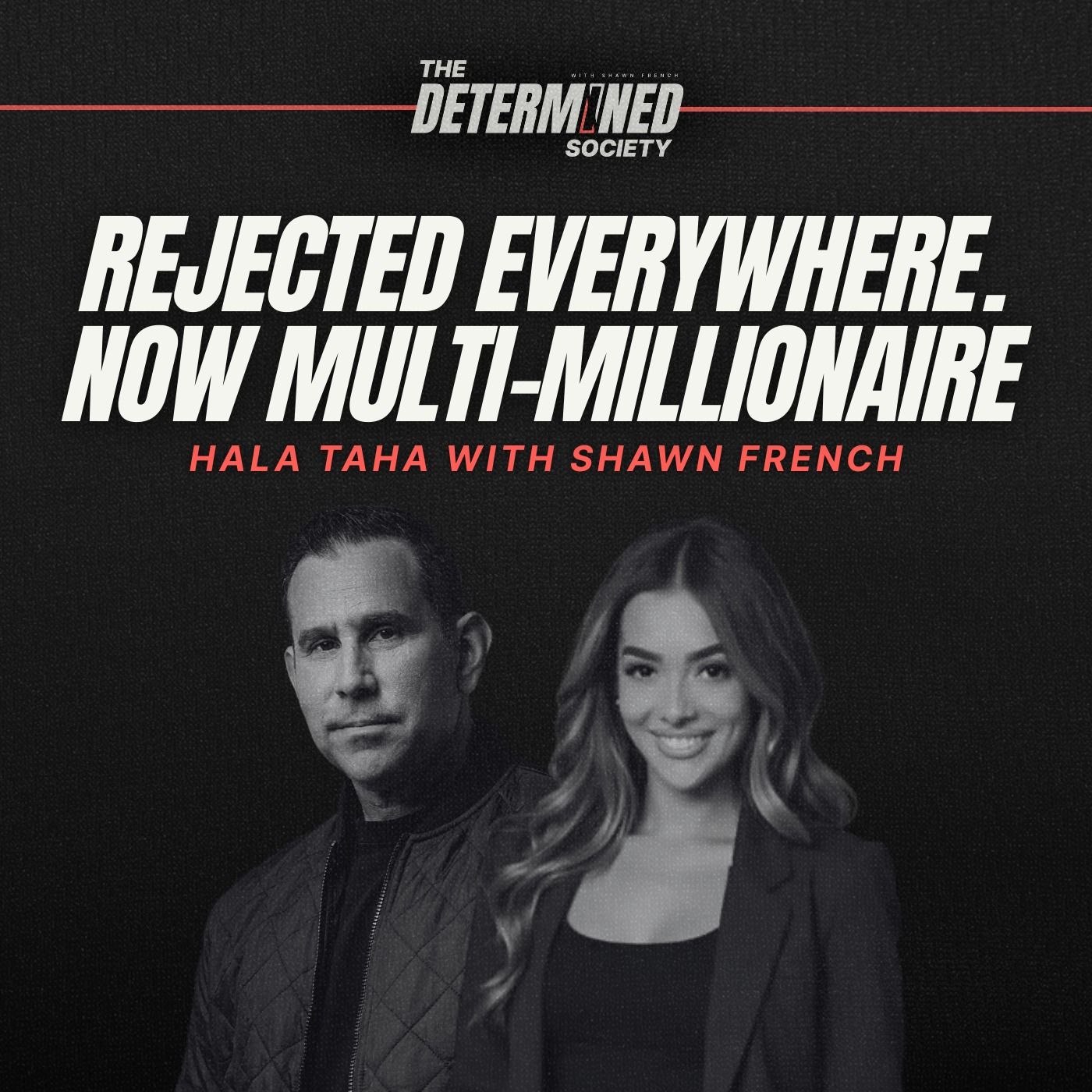
Determined Society with Shawn French | Adversity & Mindset
How Hala Taha Built Young and Profiting After Losing Everything
01:00:44
Loading summary
Transcript69 lines
- [00:01]
A
Ladies and gentlemen, if you're pushing your limits this year, your recovery has to keep up. Most people train hard but fall short on recovery. That's where therabody plus series comes in. The Jet Boots Pro plus are the first ever multi therapy recovery boots combining pneumatic compression, vibration and infrared LED light to help boost circulation and reduce soreness in less time. And they're completely wireless. No cords, no hoses, zero hassle, perfect after long runs, heavy lifts, or game days. They keep your legs feeling fresh even when the training load stays high. Because when your recovery delivers more, so can you. Right now, our listeners get 15% off your entire order. Use code determined at checkout. That's 15% off US only one time use valid until March 31, 2026. Take your recovery to the next level with the Thera Body plus series. Check out the Jet Boots Pro plus at the body.com code word determined.
- [01:01]
B
I'm Palestinian, and you know, when I was 16 years old is when 9, 11 happened. Suddenly it's like in one day, it's like I was an outsider. I got rejected so much. Like, imagine like, like literally everything I wanted to try in, in high school, I was denied. Like, I wasn't hala anymore. That gave me like really thick skin where, like, I didn't care. I tried for everything because I just figured rejection is just part of the process and I just got very used to it. Then when I got to college, there was like black students, Spanish students, and actually not married many white students. And suddenly I was equal again. So I'm grateful for those experiences, but that definitely was.
- [01:43]
A
That is absolutely heartbreaking. The sheer thought of judging somebody because of what they look, being profiled, a whole community, community discounting turning their back on you because of your ethnicity, because of what happened that you'd had nothing to do with, but you were paying the price. It's horrific.
- [02:01]
B
Yeah.
- [02:06]
A
What's up, guys? I got a good one for you today. I have holla with us. She is an absolutely incredible entrepreneur. She has built an amazing media company, an amazing podcast called yap, Young and profitable, an amazing network she's built, and she is the epitome of determination. So, Paula, welcome to the show.
- [02:26]
B
Sean, I'm so pumped to be here. Thank you for having me.
- [02:31]
A
No, absolutely. It's so funny because the podcasting world is so large, but also so small, Right? And so for years, I'd always see you come up, you know, on the little rankings right there with me. I was like, I. I was like, wow. You know, and then when it came the opportunity to do a little show swap, I'm like, I already feel like I know this person. So big world, but small, small world at the same time. So it's just nice to actually finally get to connect with you.
- [02:55]
B
I know. I see you around the charts, and it's cool to see your growth. I know I started a couple years earlier than you, but I've seen you around and just congratulations on all your success so far.
- [03:06]
A
Well, thank you. Likewise to you. You know, it's like one of those. Those facial recognition things. You always see the people and you're like, hey, you know, you never know, one day you. You might be on a cool conversation with them. And what I really love to do now is, you know, because we've shifted to, you know, society and culture, and we have different types of guests now that are in the public eye. And it's not always just podcasters like it used to be. So when I get the opportunity to talk to a colleague or someone that does the exact same thing as me on an amazing level, I get really excited about it because I always feel like I could learn something too.
- [03:38]
B
Yeah, well, I'm an open book. Anything you want to learn about podcasting or social media or creator entrepreneurship, I'd love to. To talk about it.
- [03:46]
A
Well, I mean, the. The. The social media thing, that's always a hack for me. I. I need. I need help in that. That. That's always something that's not my thing. I don't know how it really works, but I do my best. But, you know, I'm really wanting you to give the audience some background on your journey prior to podcasting and your journey into it and what it's done for you. And so just, you know, give them the lay of the land a little bit. We'll go from there.
- [04:10]
B
Yeah. Okay. Well, I think the best place to start is in college. So in college, I had this dream of becoming a singer. I had always sang my whole life, and I was singing and songwriting, and I thought that I was going to be like a pop singer, and that was really my goal. And so I had this crazy idea of interning at a radio station for the sole purpose of actually pushing my music to the DJs. So I got an internship at Hot 97, which is the world's number one hip hop and R&B station. This was 10 years ago in New York City, and I loved this internship. I started in the production department, more on the corporate side, and I did a really good job to the point Where Angie Martinez, who was the voice of New York at the time, she's a huge radio personality, like, top of her field, was like, holly, I want you to come work with me on the studio side. And only, like, 13 people in the whole company were allowed to work on that side of the office. And it's like, where all the celebrities are. And I was like, of course I want to. And so my internship actually formally ended at that point. There was no more college credit associated with it. And she was like, well, you got to come in every day. And I was like, okay, like, what do you like after school? Like, what do you mean? And like, she was like, well, like, it's up to you, like, if you want to take this, like, you've got to come in every day. So I ended up quitting my job, my college career. I dropped out of school and I decided to intern at this radio station. And so I worked for free at that radio station for two and a half years. And I took a pause from my college career. So then I had this, like, new vision of what I could be. I didn't have to use my voice for singing. And I thought, hey, I could just be the next Angie Martinez. They're already priming me for this opportunity at the station. Now I know how to audio edit and, and do everything I need to do to actually become, like, a radio personality. And that became kind of my dream. But they weren't paying me any money, and I was the youngest of four siblings. All my siblings were in med school. And there was a certain point where I was like a failure black sheep, you know, college dropout, not even making any money. I was making my money at night hosting showcases and parties with the DJs. And so my parents thought I was just like this wild party child and not happy with me at all. And I was like, okay, I gotta get, like, a paying job. And so the producer role opened up. The producer that worked on the show was a little bit of a, you know, underachiever. He got fired, and I was already doing his job. And I remember them telling me that they're hiring another producer. So I wrote this fancy email, why I deserve the job. I was already doing the job. I was like 22 years old or whatever I was, and they basically fired me after I asked to get that job. They actually wanted me to train somebody else who was in another department, a guy who was like two years older than me, to train him how to be the producer, because they had already fired the other guy. And then I Didn't show up. Angie fired me, cut me off. And not only cut me off, but blackballed me from the industry. She told all my DJ friends that I had basically, like, done everything for that. They can't even talk to me anymore. And fired me and outcasted me from the industry. So I was really upset. I felt like somebody died. I felt like a part of my identity was stripped away from me. Everybody knew me as Hala from Hot 97. It felt really embarrassing that I had lost this job and this career. But I decided I was going to, you know, start something new. I got fired on a Thursday. By Sunday, I had this new idea that I was going to start something called the Sorority of Hip hop. And I launched a blog site that became. Ended up becoming really popular. So I'll pause right there, because I know I just spit out a lot, and it's a long. It's a long story, my journey. But I'll pause there.
- [08:12]
A
No, it's really awesome. You know, I want to. And there's a lot there. Right? There's a lot to dig into for the audience. But the first thing I want to dig into is dropping out of college.
- [08:21]
B
Yeah, you.
- [08:22]
A
You are, like you said, the youngest of four siblings. Okay. Every other one of them were in middle school, medical school. And that feeling and the being the black sheep, how did you deal with that? Because parental influence and family influences a lot. Right. Did at any point did you feel that they were starting to talk you out of this? And how did you deal with it?
- [08:47]
B
Oh, yeah. I was, like, really, really the black sheep of my family. So not only was all my force siblings, three other siblings in med school, but my other immediate family were cousins that lived down the street. And all three of them were also in med school. So, like, I was the only one. And, like, not only taking an alternate path, but taking, like, a very alternate path, you know, not just, like, going to business or something, like, you know. And so I remember at Thanksgiving, I would always just be, like, talked down to. Everybody kind of, like, underestimated me, even though I was actually doing really cool stuff. Stuff. I was building a blog site. I was, you know, running an events company. I was hacking social media and becoming an influencer on Twitter and things like that, but they couldn't see any of that. It wasn't, like, credentialed. I wasn't making a lot of money yet. And so I really had nobody in my corner. Literally nobody. Except for my father. My father would always tell me, like, oh, don't Worry you're a star. Like, you're going to be their boss when you're older, you know? And my father always believed in me and helped me a lot. Like, you know, he would, you know, financially help me when I needed it in those moments in my life and was really the only one who believed in me and was like, no, just keep following your dreams as much as you can and never talk down to me. But everybody else really looked down on me. And I remember there was a period of time, so I started this blog site, and it became very popular. We were one of the most popular hip hop and entertainment sites in the world. And there was a point in time where we got so big, where MTV wanted us to have our own reality TV show. And it was like, right after the Jersey Shore. I was essentially, like, finally had made it, like, six years into basically working my butt off, working for free, since I was 18, 19 years old, and I was the lead of the show. They got us a studio on Broadway. They filmed us all summer, multiple episodes, and then they pulled the plug two weeks before the show was supposed to air. And it was another, like, slap in the face. And at this point, I was like, okay, maybe everyone's right. Maybe I need to be normal, get a real job, go back to school. And I remember all my siblings were doctors and this, this and that and. Or in their residency. And I remember, like, my. My brother and sisters, like, seriously, like, telling me, like, oh, like, basically saying the highest level I could achieve was, like, being, like, a speech language pathologist or an occupational therapist. And not that those are bad things, but, like, that's what they saw my potential as, you know, And I actually applied to 14 Speech language pathology schools and got rejected from every single one of them. And I went into business, I got my mba, and, you know, one thing led to another, and I started my podcast and started this media empire and way more successful. I love my siblings. They're very successful and smart, but way more successful than them. So it just goes to show that, like, you do not need to follow anyone's path. And what we were talking about earlier on my podcast, never listen to people who have not been where you want to go.
- [12:04]
A
That's the thing, right? Because if you wanted to be a medical doctor, then you would have followed that path and you would have listened and you would have, you know, hung on to every single word. But not just. Just because somebody. Everybody in the family is doing one thing, and even in your cousins down the street are into the medical practice. It doesn't mean that you have to follow that plan. And what I found, the people that are most successful are the people that disrupt. And you did this, started this, like, what, 2017, 2018, roughly.
- [12:31]
B
My podcast itself, yeah. 2018, yeah.
- [12:34]
A
Okay. So that was still relatively early. So you're early adopter. You understood how these things work. And you kind of probably saw this. This vision so clear. Right? How did you. How did you explain to them at the time, like, this is what I see. This is what I'm doing. And you're just gonna. One day you'll see, and I'll look at you. Right? How did you work through that?
- [13:00]
B
I didn't. I just did it myself. I didn't ask for anybody's permission. I didn't. You know, at the time when I started my podcast, I was in a corporate job for, like, four years. I was crushing it already making six figures. And I had thought I would never, ever get back on a mic. But then it was 2018. I saw people like Jenna Kutcher and Jon Lee Dumas, who are both my clients now, and I saw them, like, just crushing it. And I was like, well, wait a second. Like, I have radio experience. I can audio edit, I can video edit. I know how to hack social media. I'm a good personality. I can do this, too. And by the way, now it's so easy. When podcasting first came out, it was like, you have to be really technical. And, like, it was, like, really tricky to get your stuff on Apple. And suddenly there was these, like, accessible platforms, like, Podbean is where I started. And I was like, okay, well, I'll just upload my stuff to Podbean. My boyfriend was a music producer, and so I was like, I'll use one of his engineers to help me audio edit this. Cause I also have a corporate job. And so I just started. And I remember it was New Year's Day, and we were, like, going around the room at my corporate job, talking about our New Year's resolutions. And I was like, I'm gonna start a podcast this year. And I said it out loud to the world. And I launched it later that year. It took me all the way till April, but I launched it. And I haven't missed an episode for almost eight years.
- [14:24]
A
How was it? And great job. That. That's commendable. Right? How was it the first time you said that out loud in front of your peers?
- [14:34]
B
It was scary because, you know, everybody was kind of like, why are you doing this? I also started posting on LinkedIn at the time, and I remember a lot of my co workers were like, what are you doing? Like, what do you think? Like, who do you think you are? You know, posting up, you know, content, or trying to, like, what expertise do you have? Or, like, why do you think you should be doing it? And also, I was around 30 years old at the time when I launched my show. And I remember my friends telling me I was too old to launch my show. I was too old to do this and that. Like, I had already tried and failed. So, like, why are you trying again? Like, you, you got rejected by radio, you got rejected by satellite radio, you got rejected by tv. You have a good job. Like, why are you doing this? You know, you move past this. You matured from this dream, right? And so I just didn't listen to anyone. I knew in my heart that I was a leader. I have always been somebody who, like, just attracts big movements. So my first job, real corporate job, was 27 years old at Hewlett Packard, and I started their young employee network and I basically was running 7,000 young employees at the company. I had kickstarted my alumni association at my college. And when I started the podcast, by episode eight, I had 20 volunteers in a slack channel who worked for free for me and was a precursor of my social media agency, agency now YAP Media. And so, like, I just am very good at kind of motivating and recruiting people to help me. And I didn't need outside motivation. My motivation was motivating my fans and my team, and my motivation came from that.
- [16:21]
A
Hey, guys, we're gonna take a quick break and we're gonna slide into our recovery segment brought to you by therabody. What an amazing technology that therabody has. And it was founded on a really cool story by Dr. Jason Worsland. It was founded on pain. He got into an accident and had this extreme pain in his arm and found that percussive therapy really helped. So he created the very first version of the theragun with a makita drill just to pilot and test to see if his pain could be relieved by percussive therapy overall. And surely it was. So now birth to the theragun and now therabody who has a multitude of products to help you recover emotionally and physically. And some of the products even help with stress, meditation, and better sleep and just overall better wellness. And when I had Dr. J on the show earlier in 2025, it really spoke to me because his platform was founded out of. Out of physical pain and the determined society was founded out of emotional pain. And so it felt natural for us to partner up. So we are an official partnership with therabody and I want to talk to you about some of their products today that I've been enjoying that I think you need to understand and know more about so you could potentially implement them into your life. And I'm not going to get into a big deep dive of the actual science and everything like that. I'm just going to give you some anecdotal information based on the products that I'm using and that my wife is actually using too, that is helping us out a great deal at home. Because the great thing about these products, guys, is you can use them anywhere. You can use them in the gym, you can use them at home, in your bed, in your living room. Hell, you can even drive with a Thera Theragun pro plus in your car and use it on your quads, use it on your arms, whatever that is. The first thing I want to talk about is the Theragun pro plus. I bring that in my gym bag every day to the gym, and when I'm warming up, I use it to warm up, I put it on my arms. Whatever body part I'm using that day, I activate those muscles. And what I find is I'm able to move my body a lot quicker and I'm a lot stronger on those days that I do actually bring it and utilize it. I just think it's a great way to understand your body and the connection between your strength and your muscles and being warm and being able to perform. Because it's one thing to go work out, but it's another thing to perform while you're doing it. And the Theragun pro plus helps me do that. Another thing that I really, truly enjoy is the jet boots pro plus. These things are wire free. There's no hassle, there's no cords, there's infrared LED light, there's that compression therapy. And I've been having bad pains in my ankles, both of them actually, for about a year. And I don't understand where it's coming from. But when I started using the boots religiously, after a leg day or after a cardio session, I throw those boots on and I find myself a lot looser afterwards, I find myself lighter, and then the next day there's no pain in my lower extremity like my feet. The other thing that I really enjoy is that product really helps me recover a lot quicker. And let's face it, that's the most important thing when we're trying to move our bodies or we're trying to succeed in life, is we want quick recovery emotionally and physically. And these products help me do that, and they can help you do that as well. One of the other things that I really want to go into, because it's helping my wife out a ton with headaches and being able to distract from the noise in her mind, and honestly, it helps me with that too, is the Smart goggles. Whenever we feel a slight headache coming on or. Or things are getting really heavy, just in our minds, just thinking about all the stressors, all the things out there that we can't control, we throw the goggles on, get in a quiet place, and there's different cycles on there and different intensities of vibrations and massaging that you can either turn it up or turn it down. And what I really enjoy is it allows me to focus on what's going on with just me and I think about things. And the massaging with the Smart goggles relieves either headaches and it relaxes me and relaxes my wife to a point where we can fall asleep better. We are preparing to kind of downshift and shut down and slow down for the evening. So I heavily recommend them. The other thing it's really good for is just creating a peaceful time in your day. And what I found since using the Smart Goggles and then the other products is it works for me, it works for my family, and I know it can work for you too. So I want you guys to think about things that you are struggling with. If it's lower back pain or you wake up in the morning, your neck is tight, I'm going to tell you the Theragun Pro plus will help that out. They have cold therapy on it, hot therapy. I mean, think about that. When I open that box and realize that I could have heat therapy and cold therapy and a theragun changed everything for me and also really made the thing that I hate doing the most is warmup. Made that very easy for me just by applying it to the muscle group that I'm going to use before I do it and in between sets, which promotes quicker recovery between sets. So if you're looking to go high volume or to lift heavy weights, I strongly consider that all these products are there to help you move along in your day with less pain and recover quicker. So go check it out. Because now, like I said, the official partnership has begun. And from now until the end of March, in your first order, you get 15% off your first order, not every order. So if you're going to buy some stuff, load up there in that cart for that first time, and you get 15% off, go to therabody.com and at checkout, the code is determined. So let me know how you guys like it. Until then, stay determined. We talked about this on your show too. Is being. Being in an attitude of serving others, right? You started serving your audience, and that's what. That's what it took to grow and grow exponentially. A lot of times when we start something new, and I know this is true for me, I operated with a chip on my shoulder, and I kept hitting roadblock after roadblock after roadblock. It's like, okay, fine, you're putting. You're telling me I can't do something. You're just putting more fuel in the jet. That's all you're doing. But I realized I was doing it for all the wrong reasons. So I really love hearing you say you weren't doing it for anybody else. You weren't asking for permission. You didn't care. Your only goal was to pour into that audience.
- [23:22]
B
And by the way, I literally, even two years into it, I thought you couldn't make money from podcasting. Now my show is made $1.4 million in sponsorship. Just my show alone this year. You know, that's amazing. When I first started, two years into it, I literally would tell people, oh, you can't. This is just a passion project. This is just a hobby. You can't make money from podcasting, like, and I truly believed that. So I didn't even think it was possible to make money with your podcast because there wasn't a lot of examples. There wasn't, like, people like you and me back then. It was kind of like, there's only 10 people who make money off this, and for everybody else, it's a hobby, is what I believed.
- [24:04]
A
Well, that's what everybody thought I was doing, too. Like, why? Job. You have a job. Like, what's this hobby? What are you doing? This little podcast. How's your little podcast doing? And those things hurt, right? But then I have to sit there and look like, do they have a point then? Because when you said the first two years, you didn't know you could make money in podcasting, hell, it took me three or four to realize that I could, right? I mean, and again, I didn't have the systems in place. I didn't have the right network. I didn't understand what I was doing. Now it's a little bit different, right? But to have that faith in yourself, right? And to continue to push when everybody's telling you you can't do something. That's a special person.
- [24:42]
B
Yeah, well, you know what it was, it was being creative. So I thought that you couldn't make money via ads. I thought, like, sponsorships was only for Tim Ferriss and Jenna Kutcher and John Lee Dumas and for all the other. But we had to get creative. And it did push me to get creative because that's how I came up with my social media agency, where basically the people that would come on my show at the end of my show and at the time I was working in corporate, I would take these. These interviews in lunch, in a phone booth, like at Disney, you know, I would do my interviews at lunch, you know, and the. The guests that would come on my show, they'd end the interview and be like, well, you know, how. How did you become one of the biggest influencers on LinkedIn? Can. Can you do that for me? Or how did you grow this podcast? Like, I see you on the charts. Can. Can you. Can you build me a podcast? And. And they were very successful people who had a lot of money, who I was talking to. And for the longest time, I again told myself the story that, there's no money in this. This is just a hobby. And, like, I've got my corporate career and just focus on your corporate career and do this to serve people. And Covid hit. And I found myself with so much more time, and I decided that I was going to start offering social media services. I had. Do you know who Heather Monahan is?
- [26:00]
A
Yes.
- [26:01]
B
So she was my first client, and she came on my podcast, she asked me those same questions, and she didn't leave me alone. I had really cool videos. And she would. She would comment on my videos and be like, holly, you have. You have to teach me how to do videos. You have to do this for me. And so I wanted her to be my mentor. She was who I wanted to be in 10 years. And so I was like, okay, Heather, I'll teach you how to do it on. On Saturdays. On Saturdays, we'll do, like, I'll train you how to. How to do these videos. And so I remember our first training session. It was like, I showed her our Slack channel. I showed her our processes. And then she was like, hala, I'm never going to do this. I'm going to hire you. You hate your job. You told me that, like, they don't appreciate you. You already have a team. I just talked to VaynerMedia. I could give them my money or I could give you my money. She's like, what are you gonna do? Like, I wanna be your first client. Just say yes. And I was like, all right, I'll do it. So she paid me very little, like a thousand bucks a month. I still working my corporate job, but she was our first client. And then our second client was a billionaire, Jason Waller, who paid us $30,000 a month to run his Instagram, LinkedIn and podcast. And we grew his podcast huge. He became a really big podcaster. He quit podcasting since then. Cause he had some, like, legal issues. But yeah, like, then it just kept. It was like, skyrocketed. And I. I got like one huge client after another. Before I knew it, I was making over six figures a month with my social media agency and still working a corporate job. Finally quit my corporate job. Six months into having my agency, I was making well over six figures a month and had 30 people all around the world employed at the company, Gap Media. So that's the origin story of. Of my social media and production agency.
- [27:44]
A
Dude, that's badass. Yeah, that's really cool, right? So I'm gonna ask you a question, because, you know, in this world, we talk to a lot of networks, we talk to a lot of social media, you know, agencies. What makes your. What makes your network and what makes your social media agency so different?
- [28:02]
B
Oh, I know the biggest differentiator is that I'm my own customer. So I am my own customer. The same team that launched that, that built my LinkedIn, that built my Instagram, that built my podcast, that monetizes my podcast are the managers of everybody else who do it. For now, my clients. And so even to this day, I am my own customer. So I have, like, more urgency for things like growth. Like, nobody knows more about podcast growth and monetization than I do. Nobody. To be honest, I have a joke with one of my executives on my team that I probably make the most money per download of any podcaster in the world because nobody know have monetized better than I do, you know? And so just the fact that I want it for myself and I'm creative for myself, and I innovate and I'm my own guinea pig. I'm so much more innovative than all the other podcast networks. And I also have much more of, like, a podcaster first mentality, a listener first mentality, while also wanting to monetize and grow and build my brand. So the fact that, like, everything is basically centered around me where we're innovating and experimenting on my account. And then anything that works, we then just, just scale it as a service and launch it to our clients. So I'll give you an example. I'm really big on the audio apps. I have probably 800,000 subscribers across all the different apps do really well that have their have done for many years. And now we're really focused on YouTube. YouTube is the future, right? One in four downloads happen on YouTube. YouTube is a social media platform. You can go viral on YouTube. And to me that's like the future and I need to future proof everyone. And so I've been like, you know, just trying my best to grow on YouTube. I figured out how to do like in feed ads really well. I figured out thumbnails and titles and SEO and, you know, how to get organic as well as paid traffic to your YouTube. And I'm just going to scale it out to all the, you know, big OG audio podcasters in my network like Jenna Kutcher and John Lee Dumas and Lori Harder and so on, so that they can just leverage everything that I spent money on and invested in to learn. And now they're just getting it as being as a part of my network. Right. So. So me also being my own client helps me retain my clients because I'm just always like, ahead of the curve and. And like make sure that we're all ahead of the curve.
- [30:26]
A
Yeah, I think that's important because from what I've seen out there in the social media world, everybody thinks it's about. And again, it is about views, it's about engagement, but it's gone about in such a weird and basic way where you could just tell like, this isn't. This isn't the right way to go. You know what I mean? Like, how did you. How did you. Because you've mentioned this a couple times, right? And I don't want you to give your secrets on air, but share to me. You said hack social media three different times in our multiple conversations today. Is there any definition you can give me to that without giving away your stuff for free?
- [31:04]
B
I don't mind giving away my stuff for free. I teach all of this stuff. I'm very transparent. And when I say hack social media, what I really mean is just understanding your growth levers and the algorithms. Hacking social media is just understanding the algorithms. So, you know, on LinkedIn has a different algorithm than Instagram, but right now everything is the TikTok ification of social media, which is what Gary Vee taught me about. So in the past, old school LinkedIn, old school Facebook, they're the friend graph model. And basically in the past, your distribution on social media depended on how many followers and subscribers that you have. And you know, it was just like, you know, you post something up, if you had a lot of followers, you got more visibility, you got more engagement, you ended up, you know, going viral and so on. Now it's the interest based model where basically even if you have zero followers, it's all dependent on how good your content is, how easily the algorithm can find you based on like the keywords that you put in your posts and like the, the repetitiveness of your post so they know who to send your content to. The engagement and the engagement that you get, right? And so somebody with zero followers can go viral. And I've seen this firsthand. So I have my Instagram profile, which I have not spent a lot of time like growing my Instagram. My Instagram is something I've only focused on in the last two years. Like I solely focused on LinkedIn and podcasting for a very long time. And now I'm like really focused on Instagram and YouTube as like my next things that I'm going to try to really, really grow. And I started this other channel on the side that is, I'm Palestinian. And so I started a channel that is like, you know, called four piece Media. And I launched a little volunteer team to create content that I felt really passionate about that didn't fit my business brand and so I wanted to post it there. That content went so viral so fast with like no followers because it was the topic. People are passionate about the topic. So I could try so hard on Instagram to talk about entrepreneurship and business or whatever and it's great, but people aren't like, you know, going to fight for, for that topic, you know, and like really want to contribute and talk about it. And you know, and so in this social media world right now, it's to me like the secret is like, what is that passionate topic that you're going to talk about? And you also have to be realistic. There's topics that you can own and there's a cap to how many people are going to interact with it, right? So if you're, if your content is about like, you know, cat lovers or whatever, there's a lot of cat lovers out there, you're gonna get, you're gonna get a decent amount of views. If you can trigger people's emotions to, to why they feel so passionate about cats. You know, and so for me, I think a lot of hacking the algorithms these days is like, understanding the power of the topics and like, the emotions that you can bring with those topics is how you actually get visibility. And if you have good, engaging content and so on, you could. And train the algorithm on what you speak on. You'll do.
- [34:26]
A
Well, that's interesting, right, because the word, the A word algorithm that has creators spiraling, right. And into a point where they'll chastise Instagram for not showing their content. You know, and then I look at my certain situation. You know, we've grown. But at the same time, you would think that having a good guest on a big name, a recognizable face would do a lot more than it actually does. And it doesn't do much on Instagram. It really doesn't. So it's like I feel like I'm constantly fighting, scratching, and clawing for every single view. And we'll have some that go to 450,000 views, right? We'll have some that go, you know, 250, 197. But I still feel. And I, and I'm like you. I'm an open book. Like, I will say this, Tom Blue in the face, and I'll tell everybody how I feel about my platform. I feel at times, because of the types of conversations we have, it's. It could be very vanilla at times, it could be very, you know, inspirational in helping people get over their fears and, and how to be better and more disciplined in their life. But that's not necessarily what everybody's looking for right now. But there's creators like myself that say, wait a second, I'm not going to change who I am based on the algorithm. Right. So what would you give a creator like myself or somebody like me the advice of, like, what can they do to broaden the horizons, stay on brand and to understand the algorithm a little more to. To kind of catch it and, and ride that. Ride that tailwind.
- [35:59]
B
Yeah. So I think aside from the topic, which is basically you're saying, like, right, there's certain topics that just do really well on Instagram and social media, like working out, doing your makeup, fashion, because people are really passionate about these topics and also people like to be entertained. Right? And so, like, when it comes to our type of educational entrepreneurship, pretty serious content, it's really difficult to get that engagement and get people to follow us. Right. And that's why there's a certain. Some things you need to think about, first of all, like, are you on the right platform? Because for example, LinkedIn loves this type of content. I'm one of the biggest influencers on LinkedIn. I get so much more engagement on LinkedIn than I do on Instagram. Right? So are you on the right platforms? Long form platforms like YouTube do really well with this kind of stuff. Audio podcasts, which are crushing it, right? LinkedIn. But Instagram, we still want to grow on Instagram, we still want to go viral. The other thing you need to think about is like what features are working right now. So every platform has different features that are working on LinkedIn. Vertical photographs and really keyword heavy meaningful posts do really well. Okay? Videos don't yet. They keep trying to push video. Videos don't really work on LinkedIn yet on Instagram. It's real. So, right? It's short form video that is getting all the views, it's carousels that are doing really well. And those are the two content pieces that by far are doing the best, right? And then every social media platform has like the same rules, right? So number one, it's like engagement. So for example, watch time is super important. That, that cuts across YouTube, that cuts across Instagram, that cuts across Tick tock, that cuts across LinkedIn video. When it comes to videos, the algorithm wants to know, are people watching it for how long are they watching it multiple times? Then are they engaging, are they liking commenting and sharing? And all these little engagements are weighted differently. That's what people don't realize. So like likes and comments are the lowest. Like liking is the least desirable viral action. And a lot of people measure their success based on the number of likes, right? Comments are, are better. Longer comments are better. Comment conversations are even better. Shares are by far across all the platforms. The number one thing that will help you go viral and get you impressions, right? So like you always want to optimize for shares. So that means you need to have shareable content, right? So a lot of people's content is like about me, me, me. And nobody wants to share that. Nobody wants to share some random conversation about, you know, business usually to their followers. They might like it themselves and want to hear it, but it's not important enough for them to actually want to share. Which is why it's really difficult for like this type of entrepreneurship content to actually go super viral. Okay? But of course if it's really great, people are going to share it. So it's like, how do you make your content even better? Another thing is like thumbnails, right? So this is really important for basically all the video platforms. Even, even Short form content like Instagram and LinkedIn. Your thumbnail is really important. People want to know what are they gonna stay and watch for What? Like they want to know what the video is about and you want your thumbnail to look really engaging and welcoming for people to want to actually click and watch. And your thumbnail essentially is what is gonna optimize your click through rate and how engaging your video is. What's going to optimize your watch time and clicks. Plus watch time is, is, is retention and growth, right? So it's like you wanna get people to click on the video, you wanna get people to watch it and watch it multiple times and engage. And the best engagement metric like I mentioned is a share. So like that just cuts across all the social media platforms in terms of how to do well.
- [39:52]
A
No, it's awesome because, you know, for a creator like myself, right, I'm good at actually doing the content. Like we are going to have a conversation and it's really hard for someone like me or other creators to think of the ideas of what's going to actually work, right. What keywords do I need in my LinkedIn post? Right. What, what kind of keywords do I need in my Instagram caption or Facebook, it doesn't matter. The SEO on YouTube, the titles, the thumbnails. Now your agency, I would imagine you guys do that research and you help your, your clients through that. So it's kind of like, hey, this is, here's this post, here's this caption, here's this thumbnail. Is that kind of how it works?
- [40:36]
B
Yeah. So basically on their behalf, we're going through their content. We're picking the best content that we think has a chance. We're creating the thumbnail with the, you know, short headline and really engaging facial expressions so that people will actually click on it. And the other thing we're doing is thinking outside the box, right? So everybody is so focused on these talking head reels. But for instance, on Instagram now this like comic book style graphic posts where it's like, let's say like me and Grant Cardone and it's like me on top as a graphic and then like us both on the bottom and it's like me asking a question, then it flips to him, just a static graphic with like him answering the question. And people like to engage with that more. They want to read your podcast. Surprisingly, right?
- [41:23]
A
Interesting.
- [41:24]
B
And so it's also like thinking outside the box and not just doing, you know, the same thing that everybody else is doing. That's that's really how you cut through the noise is like being one step of ahead of everybody else. Now also on Instagram, they just rolled out that you can have like different sizing, right? And so we're seeing that less tall vertical stuff that are is performing better because it just stands out. People are like, well, what is this? This looks different than everything else I'm scrolling by. So you want to stop the scroll and sometimes that means like breaking whatever everybody thought is like best practice, which is talking head reels, right? Let's stop doing that and try other things that might stop the scroll and get engagement.
- [42:08]
A
Well, see, because the talking head videos is very hard for creators, right? Because you have to think of the idea, you have to get the script, you have to talk into your camera. And I don't do any, you know, camera facing things anymore. It's all here, right? It's all here. Because none of that was flowing for me. So I could imagine the value of creating other types of content to bring people to you, right? And then if they like you, they stay. Then they listen to your talking head stuff, they listen to your show, they go to the other places that you are because they end up liking you and want to support you. But it's very hard for a creator. It's very, I mean, I mean from my, from my seat, right? Because I only know how to do what I know how to do and I don't claim to know how to hack social media or to create the best graphic or to create the best type of content to go along with what I'm saying, right? I just don't know how to do that. So I would imagine a lot of creators the same way.
- [43:05]
B
Yeah, it's really hard, especially when you're an entrepreneur and you're not like just a full time influencer. Like I really want to get super, super good and lean into video this year. Like I, I'll just be honest. Like me and Cody Sanchez, right? Cody Sanchez is huge. Now last year we were at the same level and she just leaned into video and now she blew up and she's my friend, right? And like I'm so proud of her, but she leaned into short form video and she's like light years ahead. Like, you know, I, I do well and I've got a business and everything, but she's like crushed on Instagram. Crushed on.
- [43:44]
A
Cody's great. Cody's, she's, Cody's awesome.
- [43:46]
B
She's doing amazing, right? And we were at the same place a year ago in terms of like, influence, you know what I'm saying? But it's because she went full steam ahead and dedicated the time to create video content that is engaging, that is not podcast clips of her podcast. And very intentional. She's doing fashion reels, she's going to car washes and doing like fun little videos. She really leaned into it and invested the time and that is what you need to do as a creator. If you want to stand out, you really need to invest the time and you can't do the cookie cutter thing. But not everybody wants to be as big as Cody Sanchez and a lot of folks don't have a lot of time. So one of the things that I found that I love to do is I do a lot of webinars. So with my podcast network, I have a podcast network now. One of the things that we're known for is pioneering 360 campaigns. And something that I do as a creator, as part of my creative campaign options is I do webinars where like Teachable will sponsor me or opus Clip or Pipedrive. And for example, for like a Pipedrive webinar, I do like a 45 minute sales training. It might include like a five minute demo of Pipedrive. And then Pipedrive pays me. And now I record them in, in this beautiful studio. And I'm really passionate because it's like me teaching sales material and things that I love and it doesn't feel scripted and it doesn't feel fake. And then we chop that up and use that for social media content. And it performs way better than any talking head video would from like a podcast. Right. So we've tried to figure out ways in which we can just incorporate like my day to day process, like me doing a webinar to then create really great content out of it and then to take it to the next level. I've gotta be intentional. I know you always talk about intention. I've gotta be really intentional and create that, that content.
- [45:39]
A
Absolutely. Let's shift gears. Thank you for all that because I want the audience to, to get to know you much, much more and, and, and dive more into your story on how you've overcome. Because to me, you've overcome a lot. Right? I mean, you, it couldn't have been all sunshine and rainbows other than your family, you know, being in medical school and people telling you you're too old and you can't do it. Who do you think you are? You got blackballed out of an industry that you loved. You thought that was your path. What other hard Moments of adversity did you have. Did you have to overcome in order to build what you've built? And like you said, you've done over $1.4 million just in your own show this year. That shit ain't easy.
- [46:22]
B
Yeah. There's a couple, like, pivotal moments in my life that I think I had to overcome. Number one, I'm Palestinian and grew up in my teenage years. You know, when I was 16 years old is when 9, 11 happened. Right. And so that was really tough. And I remember just, you know, our family was treated so much differently in that moment. We grew up in a very white town. My dad was a surgeon and, like, very successful. And we were treated like all the Italian kids, all the Portuguese kids. Like, we were treated like, you know, an immigrant family. But everybody was like, I was popular. Everybody was like, I had friends that would sleep over, and everything was normal. Like, my brother was captain of the football team, and we were loved, you know? And then suddenly, it's like, in one day, it's like I was an outsider. And people would scream at me in the hallways. And I wasn't invited to the parties, and I wasn't getting on the cheerleading team, and I wasn't in the plays anymore. And I wasn't allowed in the talent show. And it was, like, one thing after the other. And, like, I really feel like those three years in high school were not that they were, like, horrible, but it's like I wasn't living. Like, I wasn't hala anymore, you know? And, like, I was just this very, like, bubbly person who was, like, always, like, you know, lead of the plays. And then suddenly as, like, all these opportunities were stripped away from me. But I. I hate looking at things, like, in a victim mindset. And, like, for me, it's like, I'm so, like, grateful that happened to me. Because then when I got to college, I ended up getting into, like, a regular school. Cause I had, like, no extracurricular activities. Cause I literally was not basically allowed to participate in anything in high school. And I got into, like, a school that was really diverse in Newark, New Jersey, called ngit. And when I got there, there was, like, black students, Spanish students, Indian students, Arab students, and actually not many white students. And suddenly it was. I was equal again, and I was getting all the opportunities. And so I became very, like, ambitious and popular. And I also, like, didn't fear rejection anymore because I got rejected so much. Like, imagine, literally everything I wanted to try in high school, I was denied. So I was just so Used to rejection. And that gave me, like, really thick skin where, like, I didn't care. I tried for everything because I just figured rejection is just part of the process, and I just got very used to it. So I think it gave me an edge, which is why when I was 19, you know, I was already working at a station, hanging out with celebrities and, you know, doing really cool stuff when everybody else was, like, doing their regular college thing, you know. So I'm grateful for those experiences, but that definitely was a big thing I had to overcome. And I feel bad for all the Arabs and, you know, folks that. That really got mistreated for no reason, especially from, like, a family like mine. Like, my dad loved being American. Like, my dad used to tell me all the time, like, we live in the best country in the world. Like, you should be so grateful you're in America. Like, he really was the embodiment of the American dream. So such a slap in the face to, like, a family like mine, you.
- [49:59]
A
Know, that is absolutely heartbreaking.
- [50:02]
B
Yeah.
- [50:02]
A
Thank you for sharing that. I mean, that can't be easy to talk about. I mean, the sheer thought of judging somebody because of what they look, being profiled, that's mortifying to me. I can't stand it. And the fact that you had to go through it and you've come out on the other side with such gratitude. I mean, truly, those were hard moments. Right? And that's what this show's based on. The determined society is going through hard moments. Sometimes it's. You're. You know, maybe a family member leaves you. A family member passes away. But you dealt with a whole. A whole community discounting turning their back on you because of your ethnicity, because of what happened that you'd had nothing to do with, but you were paying the price. You were paying the price, and you built thick skin through all of that. You were used to the rejection. There's no question in my mind it is the reason why you're so such a damn badass now. So there was a gift from. It doesn't take away from the fact that it was. That's. That's just. It's horrific. But, I mean, you ever look back and wonder if that hadn't happened, would I be where I am now?
- [51:11]
B
Yeah, I do. Because I feel like everything is like the butterfly effect, Right. Like, little things in your life position you differently later on. And, yeah, I do feel like if that didn't happen to me, I don't know if I would have been so ambitious. And to be honest, me in college, I just wanted to try things. I actually never went to class because I got to the radio club and I got into my sorority, and I was on the cheerleading team, and I was the lead in my play. I just wanted to try and try and try things because I was denied for so long to do anything outside of just class. And so I was, like. Wanted all these experiences. And I think it was me thinking outside the box and being more excited. Not about my education, like, unfortunately or fortunately, not about, like, me going to class. I was more excited about doing other things, like being in the radio club. Right. And so it just gave me, like, a different perspective, I think, on, like, how I wanted to spend my time.
- [52:14]
A
That's so cool. What would you tell somebody listening right now that is going through something? Maybe not exactly similar, but there's a lot going on in the world right now. There's a lot. And it's a disgusting place at times to live in. And we have to hold on to the beautiful parts because I truly do believe that this is still a great country. There's still a lot of beautiful things going on. We just have to focus on those. But what would you tell a young holler right now or a young boy that's being persecuted because the way they look, maybe, you know, maybe not be their skin. Maybe it's a personality thing that nobody likes. How would you. How would you help them? What would you say to them to get through that?
- [52:51]
B
That's a good question. I think. Number one, I think it's important to ensure that you do not allow other people's beliefs to, like, infiltrate you. Right. I always new and. And it could be that you have nobody in your life that is giving you these good beliefs. So it's up to you to try to make sure that you know that you're a person who is capable, that you can accomplish your dreams. Whatever your goals are, you want to make sure that you truly believe that you're that type of person. And for me, that was using, like, affirmations where I literally would. When I was. I remember being 18 years old in college and writing down everything. I. I wanted to feel like I am confident, I am beautiful, I am outgoing, I am social. Everybody likes to be around me. Whatever it is, writing it down, and then I would record it and listen to it all the time, right until I really felt that way. And I showed up with confidence and I. And I showed up differently, you know, and so I think, like, almost tricking yourself to believe until you become right. And so I believe that that is like really important. So like having really great self belief even if nobody else believes in you and everybody else is doubting you, like you've got to believe in yourself and like no one's gonna do that for you. Like you've got to do that for yourself. So I think, I think that's really important.
- [54:19]
A
No, thank you for that. There's something in there that I feel is the key, that I feel without a shadow of doubt from an objective standpoint. That was the reason it happened. What do you think the key was? I'm interested on your perspective because a lot of people do affirmations, to be quite honest. They do them, they're. They, they're not as effective for everybody else as they were you. Why do you think yours works so much?
- [54:42]
B
I think it's because I paired it with like really taking a lot of action and obsession. Like pure obsession. Like I like. Let's talk about my podcast and like what it took for me to launch my podcast, right? I was working a corporate job. I remember I would stay up till midnight prepping, doing whatever I need, and at the same time I was growing my LinkedIn profile. So like the two things I had going on was my corporate job and I was like a LinkedIn influencer and I had a podcast right before Nobody was a LinkedIn influencer or had a podcast, right? And so I remember I was, I would stay up till minute I had a slack channel with like eight volunteers or something and like it grew over time and I would get all my stuff prepped for the day in terms of like what am I posting on LinkedIn, what am I posting from my podcast? If I have prep, whatever research. I remember I would study 20 hours a week for my interviews. I was insane. And I would read every single book and listen to every single interview. And I had really great guests from the start because I stood out. Somebody who like really tried hard, right? And then I would wake up at six in the morning and do whatever I needed to do or like even earlier than that and be at work by 9 and do basically work for my podcast before I even got to work, right? And then I do my posts on the train and then I do my interviews at lunch and like I was just working around the clock through the weekends and just busting my ass and not only trying to figure out how to be the best host, but everything else. How to, how to market, how to monetize, how do other people monetize, how do other people grow? What are the Experiments I can do. And I got really obsessed with it to the point where two years into my podcasting journey, they called me the podcast princess.
- [56:31]
A
I did read that somewhere. Yeah, I did read it somewhere. You know, all those things that you're talking about are very important. I think they're very pivotal, obviously. Right. And it's kind of like when we talked on your show. It's your pro. It was your process, it was your strategic activity. You were clear on what you needed to do, and you continue to do it over and over and over again, no matter if you were tired, no matter how you felt emotionally. But are you interested in. To hear what I feel? It was the main key in your affirmations.
- [56:59]
B
Sure.
- [57:00]
A
Most people will write down affirmations, right? They'll journal it or they'll hear something. They'll hear a motivational podcast that's full of affirmations. But what you did differently was you recorded your voice saying it to you. To me, that's the key, because people can tell you anything that. Anything they want. They can tell you how they see you. They can tell you how powerful, how beautiful, how smart, how successful. But if you don't believe it yourself and you don't hear it in your own voice, it's not going to work as effectively. So I just thought that was interesting, because most people say, yeah, I do affirmations in the mirror. And when people do affirmations in the mirror on the ones that they feel most conflicted on, their voice cracks, it gets lower. They're not as powerful with it. So you don't emotionally feel it, but hearing it over and over again. To me, that was a pretty. That was a pretty nice touch. I like that.
- [57:58]
B
Yeah. And it reminds me of what you told me about how you wake up to an alarm that says, I love you, and it's you. It's you saying that, right?
- [58:06]
A
No, I just wrote it down. It's like I named it I love you, Sean. No, it's like, you know, like on the Apple, the. The iPhone. I love you, Sean. You used to say things like, get up. You know, no one gives a. Work harder. And then I realized that was all me operating out of, you know, scarcity. Like, I'm not enough. So let me start programming myself to read something positive. Right away, he's like, I love you, Sean. And now everything I do in the morning and throughout the day, I'm operating out of love for myself. There's a completely different thing for me now. Right. So I just. I just thought that was A really cool point to. To pull out that it was in your voice. I think that was a pivotal. Pivotal.
- [58:44]
B
It was move right there.
- [58:45]
A
Very strategic. I liked it. Hopefully the audience, guys, if you're listening, hopefully, if you're having an issue believing that you are what you think you are, record it and listen to yourself. I mean, truly, you're never too far ahead to do that. I was. When you were talking about them, like, man, maybe I should try that. That's pretty damn cool. Yeah. As we. As we start to wind down, we're coming towards the end of the show, and I always like to ask one specific question on my show. This is the determined society, and you have given a very good picture of who you are in as a face of determination. But how do you truly define what determination means to you?
- [59:27]
B
To me, determination just means showing up every day and doing your best job, you know?
- [59:35]
A
Do you believe every day you have to be as good as you were yesterday or it doesn't count?
- [59:39]
B
No, I believe that some. Some days you show up 50%, some days you show up 300%. And I just think there's. You've got to. You've got to just keep trying and keep putting in the reps and also respect yourself enough to do what you say you're gonna do, you know, and to do what you say you're gonna do and to hold yourself accountable, even when nobody else is holding you accountable, and to have that accountability.
- [60:09]
A
You're speaking my language. Allah. You're speaking my language. I love that. Well, no, because it's important, right? Because the reason why I asked, do you feel like you need to be as good as you were yesterday? Because a lot of people feel if they don't perform or they don't give the exact amount 100% that they gave the. The day before that the day is a failure. And it's not your 100%. Sometimes it's gonna. You're 50%, you're 100 that day, but you just can't have a zero day.
- [60:35]
B
Yeah.
- [60:35]
A
And you can't judge yourself. You just got to keep going. Right. So, you know, in closing, like, where can people find you? How can they work with you? I definitely want you to plug that. Tell the audience.
- [60:49]
B
Yeah. If you guys want to listen to another awesome podcast, I've got Young and Profiting. It's on all apps. It's on YouTube. Yap is what a lot of people call it. If you guys are interested in social media or podcast services, you can go to yap media.com. and if you're another podcaster who wants to monetize, you can check out our YAP Media Podcast network.
- [61:10]
A
Love it. Thank you so much for coming on, Hal. It was great pleasure to connect with you. I feel like we've been a part of each other's lives all afternoon. It's been great. Thank you for your time and I look forward to speaking to you further.
- [61:23]
B
Likewise.
- [61:23]
A
Sean, thank you absolutely for the audience. Share this episode with someone you know, love and trust that can learn from Paula and then also just learn a story of determination. She went through a lot and she overcame it and she's a very successful individual because of it. So until next time, guys, stay determined.