← Determined Society with Shawn French | Adversity & Mindset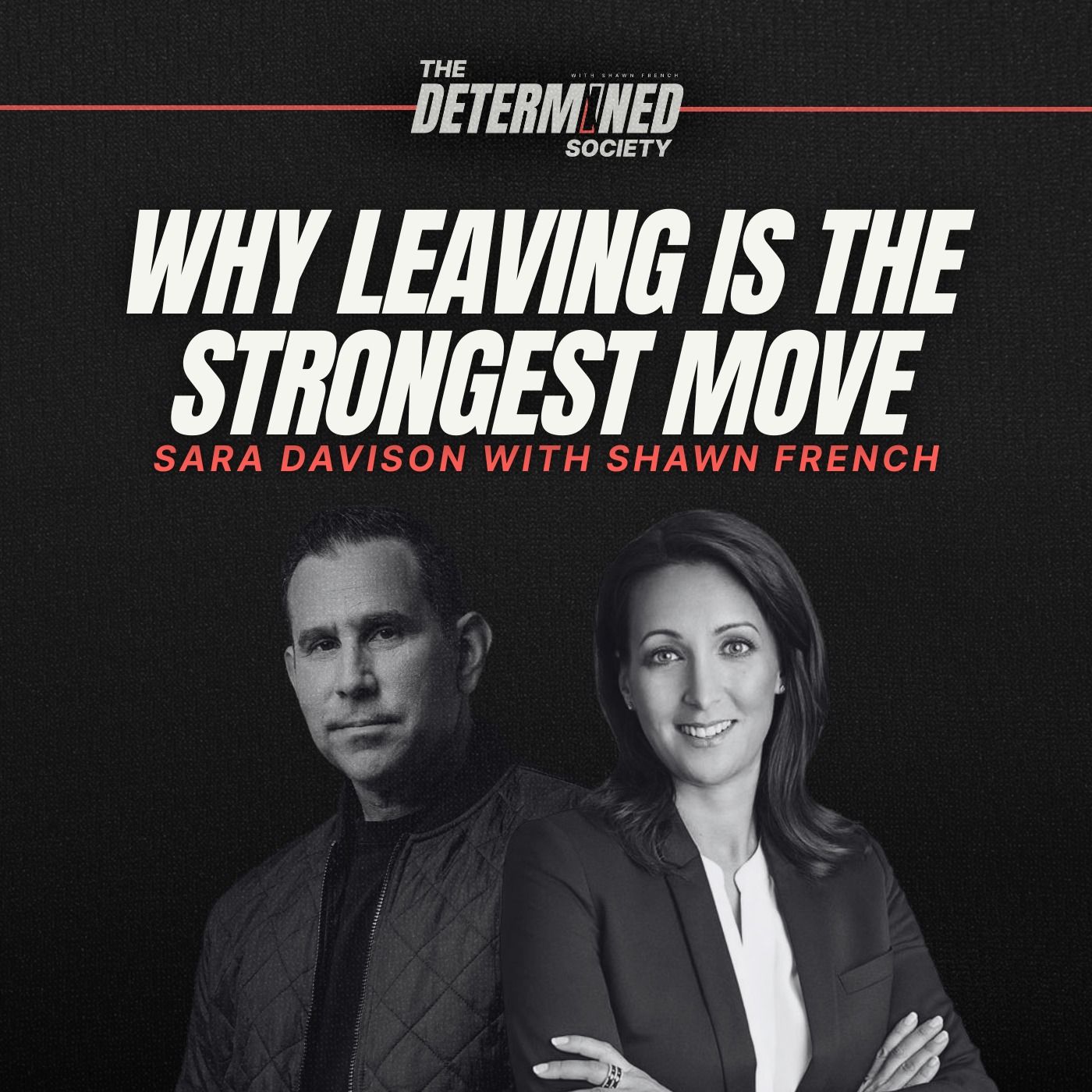
Determined Society with Shawn French | Adversity & Mindset
How to Take Your Power Back After Toxic Relationships with Sarah Davison
00:53:14
Loading summary
Transcript253 lines
- [00:01]
A
Ladies and gentlemen, if you're pushing your limits this year, your recovery has to keep up. Most people train hard but fall short on recovery. That's where Therabody plus series comes in. The Jet Boots Pro plus are the first ever multi therapy recovery boots combining pneumatic compression, vibration and infrared LED light to help boost circulation and reduce soreness in less time. And they're completely wireless. No cords, no hoses, zero hassle. Perfect after long runs, heavy lifts or game days. They keep your legs feeling fresh even when the training load stays high. Because when your recovery delivers more, so can you. Right now our listeners get 15% off your entire order. Use code determined at checkout. That's 15% off US only one time use valid until March 31, 2026. Take your recovery to the next level with the Therabody plus series. Check out the Jet Boots Pro plus at therabody.com code word determined. Screw you. Watch this. This is a monster book. This is.
- [01:05]
B
Yeah.
- [01:05]
A
Did you go through a toxic relationship that kind of spurred your development in your field?
- [01:11]
B
I never dreamed of becoming the divorce coach.
- [01:14]
A
It's not on the multiple choice in third grade. It's like definitely not.
- [01:19]
B
I've been in more than one toxic relationship and I spent a lot of time just being sad and being scared. Enough is enough. I'm going to take my power back. And that is actually where my motto, screw you. Watch this was born.
- [01:34]
A
Buck, you hold my beer. I love that there's always a lesson to learn. And I truly believe that if we take the good lessons out of every bad situation, there's always a way forward.
- [01:45]
B
Some people say, well, how did you get to that pivotal moment? Because I can't get up off the bathroom floor or I'm still sat in bed eating crisps or pickle and chips. Yeah, screw you. Watch this. Works for anyone. Super simple. It's just a mindset and it starts with one decision.
- [02:00]
A
Like what drugs? What's up everybody? I'm here today with Sarah Davidson. She is a world famous breakup and divorce coach. Don't worry guys, she's not recruiting people asking them to get divorced. But she helps people humor. She helps people remove themselves from abusive toxic relationships. And she's here with us today and I'm super excited. She is now a four time best selling author and she has this new book coming out called screw you. Watch this. So we're going to talk a little bit about her background. I'm sure we're going to touch on the book today, but welcome to the show.
- [02:41]
B
Oh my Goodness, I'm so excited to be here. Thank you, Sean.
- [02:44]
A
I can't believe you flew all the way from the UK just to see me. That's what I'm going to tell the audience. We know that's not the truth. You've been doing some amazing things, you here in America. Why don't you give us, the audience, a background of what you've been doing the last week or so?
- [02:56]
B
Well, I was delighted to be invited to speak in Hollywood at a conference out there, and I was talking about abusive relationships and how you can take your power back and recover, which was great fun. That was three days. We were with other speakers as well. It was great. And then hopped on a plane to come over and see Matt, who's fabulous. And, yeah, wanted to come see you guys. We've been recording other podcasts, too, but nothing as good as this one. So very excited to be here.
- [03:23]
A
Flattering.
- [03:24]
B
And then I'm off to New York on Sunday for a couple of TV shows there.
- [03:28]
A
Okay.
- [03:29]
B
Yeah.
- [03:29]
A
And then you go home?
- [03:30]
B
Then I fly home, yeah.
- [03:32]
A
How long are you going to be home in London for?
- [03:34]
B
Well, that's it. I'm home for Christmas.
- [03:35]
A
Oh, that's great.
- [03:36]
B
Yeah.
- [03:36]
A
Yeah, you better be.
- [03:37]
B
I know.
- [03:38]
A
You look very festive right now. You look fantastic. Fantastic. So, you know, let's get into it then. All right, so you're at this conference and you're in your talk, bunch of speakers talking about how to get out of abusive relationships and to take your power back. Right. And how to take your power back. One of the things that I see, whether it was. It was me in a. In a toxic relationship prior. Right. Toxic friendships. There's a bunch of people in. In abusive relationships. It doesn't have to be a romantic relationship. Right. What are some of the ways that people can start identifying that they are in a toxic relationship and some steps of how the hell get out of it? Because, hey, hey, right now, this world is hard enough, especially here in America, just to deal with, but being in an abusive or toxic relationship at the same time, that's like the double whammy. So how does one work through that?
- [04:34]
B
Well, I think recognizing it is the first step, because if you've been in a toxic relationship, and I think if we're honest, if you have been in one, you've probably been in more than one over a period of time, because unless you actually do the work, then that toxic relationship dynamic feels familiar and ironically safe. So we tend to repeat it. So learning to spot the signs is absolutely key to Stopping it, carrying on into the future and future relationships. So spotting the signs can be really looking at what is going on around you and identifying what is unacceptable behavior. If you're in a toxic relationship, you've probably minimalized and normalized it to stay there. So there may be things happening that you've gone, okay, maybe they're just having a bad day or I don't want to start an argument, so I'm not going to bring that up right now because I don't want to make things worse. But even the thought that you are not able to communicate freely, that's the key. If you can't express how you're feeling, if someone's lying to you, if they're confusing you. The gaslighting term means that confusing behavior. I think it's quite a well used term now, gaslighting. So we see people feeling completely gaslit because they're told things are happening in a way that they don't recall it. That way, maybe they're being told they're wrong a lot being put down. Isolation is another thing that happens very often because it's about increasing the control. And the interesting thing here is it doesn't happen on day one. They don't show up on day one as they are, say, the last day of a relationship. This is something that creeps up slowly and magnifies over time. So at the beginning we get in because they make us feel amazing. It's a great thing. And it's maybe the fairy tale we've always dreamed of and we've been waiting and had failed past relationships and thought, oh, that didn't work. When's the right person, Mr. Or Ms. Right coming along for me? And then this person turns up and they make you feel a million dollars, grandiose promises, making you feel really special, heard, listened, seen. But then over time, that mask starts to drop. But that's how we get hooked in to this perception of almost a perfect relationship. And then things like, do you want to see your parents this weekend? I'm a bit tired. Maybe we'll, we'll skip it this weekend down to maybe a few months or a few years down the line. I don't want to see your parents. Why would I want to go there? They're boring. So it is a small, slow, steady process. Yeah.
- [07:00]
A
Quick question. Because toxic relationships are very, very hard to identify for the people in it. Like you, like you said, do you find that people early on when they start to identify, I may be in an abusive relationship or a toxic situation. Do you find these men and women starting to make excuses like, well, no, that's because they were stressed. Or that's because of a lot of different things. They almost want to hold on to that perf, that perfect relationship because they don't want to fail at another one.
- [07:35]
B
Yeah, yeah, absolutely. I think you're absolutely spot on. We will make excuses because in order to be in a toxic relationship with someone that is like that, you have to be very empathetic, very often a people pleaser. You don't want to rock the boat. You don't want to cause conflict. You will avoid arguments and confrontation. So quite often we're, and I'm one of these people, we put things under the, under the carpet. We're like, okay, well, I'll come back to that. They're having a bad day. You know, their parents were difficult when they were growing up. So we excuse so that we don't have to confront. But the cycle is that, you know, we get back to that equilibrium after an argument or an incident and then it get, you know, we pull back. If something happens in an abusive relationship, so maybe there's a comment or a put down or a confusing incident or maybe in some cases actual violence, then we recoil and we step back and we go, oh, gosh, I'm uncomfortable with this. And so as we pull away, their need to increase control over us increases. So they then reach out and either to pull us back in, they'll say, I'm sorry, you know, it didn't happen that way. Maybe you're confused about what happened. Maybe they'll cry and actually seem very upset about it. Or maybe they'll tell you you're crazy. Or maybe I had a client the other day who said there was a horrendous incident that happened and things were getting thrown. Her husband was getting really difficult with her. She was sc. She retreated to the bedroom, went to bed, heard him go to sleep in another room. And when the morning came, he was bringing her breakfast in bed. He was singing around the house. And she was just so relieved that it was done that she didn't want to say, hang on a second.
- [09:18]
A
Yeah, what happened?
- [09:19]
B
Because she didn't want to create that tension again. She didn't want to go through it again. She was just glad they got through it. And then the calm after the storm was back to normal. And this is the pattern that we see quite often.
- [09:30]
A
Dan, talk about a pattern. This is what scares me, Sarah, is cycles. If you don't break them, then they continue on to your children. And so I think of these women and these men in these situations to where like, well, it's okay because that's how he or she was raised. They had a tough childhood, but they are making that choice not to stop it right there and they're bringing it into their relationship and it's gonna trickle down to the K. If the kids don't break it, it's going to go to your grandkids. I mean, this is, this is a big deal. Yeah, this is a very big deal.
- [10:06]
B
Yeah. And I think this is probably where I'm quite controversial on this topic because there is a lot of research to show that divorce damages children and obviously toxic relationships. A lot of parents feel very guilty. They're worried that this is going to really damage their kids, that they chose someone who wasn't healthy to parent their child. However, the good news is that yes, it can damage children for sure, but it doesn't have to. And there are lots of tools and things you can do to actually, and I know this sounds maybe a bit crazy, but it can be a valuable life lesson for your children if they understand what these toxic relationships look like, what the dynamics are, how to spot the signs so that they avoid them and maybe don't make the same mistakes that we did. So ultimately we can give them a toolkit of coping mechanisms. And if you look at the way children are coping at the moment, the suicide rate for teenagers is through the roof and self harming. You know, a lot of damaging coping mechanisms out there because we're not, we're not taught. Oh, we don't have a lesson at school where we sit down in class and the teacher says, okay class, let's have a look at what coping mechanisms you want to choose for the rest of your life.
- [11:14]
A
Isn't that sad?
- [11:15]
B
Yeah, I mean, do you want red wine? Do you want to go for a run? Do you want to. Yeah, we don't do.
- [11:20]
A
Which one do you want to do? Because here's the cause and effect between all of them.
- [11:23]
B
Yeah.
- [11:23]
A
And to your point though, it's so funny because, you know, a, you look at the educational system, right? And, and it's, I don't know how it is over there in the uk, but here you don't have conversations like that. I would have much rather, you know, being in high school and my teacher go, hey, today we're going to talk to you about the real that's going to happen. Like we're going to talk to you about this. Like you're, you're going to get dumped, you're going to feel depressed, you're going to feel all of these different things and you're going to want to go do this. You can. But here's what's going to happen. However, if you choose this over here, this is potentially a better way to handle it. And here's why we don't have that.
- [12:01]
B
Yeah, we don't teach them anything. You let them loose on life without life skills that are essential, then that, you know, like what happened to me, what happened to many people. We go into the world and we face plant because something comes up that we didn't know about and we didn't know how to cope. So we go for unhealthy coping mechanisms or we stay stuck. We just think that, well, this bad thing has happened to me. So therefore, this is the gray cloud that follows me around for the rest of my life. And I see so many people stuck in that situation. But actually with the children, and I think this is important as parents, and I know you've got three children, we will do more for our kids than we will ever do for ourselves. And so when we're stuck, and a lot of my clients and the clients that my, my coaches, I've trained teachers will say, you know, I just can't do this. It's too much. You know, you're asking me to step up and do things differently. And the leverage is always, if you can't do it for you, do it for your kids.
- [12:58]
A
Absolutely.
- [12:58]
B
Because they're watching. You are their role model. Everything you're doing, they are hearing, they are seeing. Even if you don't think they are, they are.
- [13:05]
A
Oh, yeah. Subconsciously, even, absolutely.
- [13:08]
B
They can feel it. They can feel the energy. If you're down now, it's just not about sort of putting the raw emotions, you know, the ugly crying on the bathroom floor, they don't need that. But they do need you to say, I am feeling sad today. So they recognize it's okay to express a negative emotion and identify it. If they can identify anger, jealousy, sadness, and then say, right, what can I do to cheer myself up? And then come up with some ideas. Whether it's five star jumps, I call them, but jumping jacks, I think you guys call them.
- [13:40]
A
Star jumps.
- [13:41]
B
Yeah. Cool. Star jumps. I don't know why, but it makes sense to me. And then the other things, you know, putting on your favorite tune, dance, going outside, you know, giving them a toolkit of healthy coping mechanisms because the wheels are going to fall off for our kids at some point.
- [13:57]
A
Like you Said they will.
- [13:59]
B
And we want to make sure that they're not turning to that self harming or the vaping, even any of those harmful, harmful coping mechanisms that they just fall into because it's not conscious. And we want to provide them with this toolkit and train them that actually you can control the remote to your brain, which means you can dial down negative emotions, which ultimately means we can choose how we respond.
- [14:21]
A
Interesting. Yeah, yeah, it's a good. All that stuff is really, really good. You know, we were talking about the kids. There's a couple points I want to make, but when you mentioned you reference, you know, telling the kids, like, hey, you know, I'm just a little sad today. You know, there's a lot of times, you know, every single Monday, I drive my three kids to school. My wife does it the other four days because she's a teacher and they go to that school. But Mondays are my day. I get some time with them. I get to go do that. And there's some times where I'm very quiet and I'll turn down the radio and I'll say, hey, guys, I just. Kids, I just want to tell you guys something. I'm just really quiet today and it's not you. I'm really sorry. I'm not annoyed. I'm not upset. I'm just down today. So I apologize. I'm not interacting. I'm always honest with them because I want them to be able to sit there and tell me, hey, I don't feel good today. Especially my six year old. I don't. I mean, she can articulate a whole lot about how she's feeling and she's an empath to the nth degree. She can literally tell you exactly how she's feeling. But my 12 year old may not be able to because he's a little more closed off, a little more reserved, a little more shy about his feelings, right? And, but I want them to be able to like, I just, hey, I'm pissed. Okay? So I know if my son says I'm pissed, I go, what's going on? I don't know yet. Okay, I'm not gonna push. I'll be like, all right, you go do that. Let me know when you want to talk. But I think there's also something to be said about something you said earlier, that divorce doesn't have to be traumatic for these children. I don't speak about this much on my show, and I probably should, but I have gone through this, right? My, my son was young and my, my, my daughter. My 9 year old was a baby. And the one thing that I got there was, there was a, a piece of mail. I'm gonna leave a name out. I love the guy. But I was really, really mad at what happened. I got a card and a CD from a church sermon and said, and the card said a bunch of things. I hate to see your family broken.
- [16:28]
B
Oh.
- [16:30]
A
And I looked at that and I'm like, I'm fixing my family by doing this. Because you're not living in what I'm living in right now. And my ex wife and I. And my, my ex wife and my, my wife, we're all friends. We are, we are close. But there are challenges for children that go back and forth. 50, 50. Right. Because there's different rules. We're very structured. We're. This is happening at this time. We're very structured. Right. And her house is a little bit more free, so they struggle with that. But it, you know, for, for kids, like, it's only going to be a really traumatic event if it continues on with the, I guess the, the conflict behavior and all these other things. So there's a narrative, you know, and in, in here in America. And it's just like you get married and, and I do believe marriage is forever, but there's some times where it does have to end. And I don't think staying together in a relationship, that's just gonna hurt the kids even more. Like, if I would have stayed in that marriage, my kids would have been busted.
- [17:34]
B
Yeah.
- [17:34]
A
Because I wouldn't have been me. Like, I wouldn't be doing this.
- [17:38]
B
Absolutely. Yeah.
- [17:39]
A
I wouldn't be doing this.
- [17:41]
B
You'd be surprised the number of people that say, I'm staying for the kids, I'm staying for the kids. And I'm like, well, what are you teaching the kids about love, about marriage, about healthy relationships. They're learning that you sleep in separate bedrooms or you row or you put each other down. You know, what is it you want to create for them? What's the environment? What do you want them to learn about love? Because they will repeat this. And this is about not just them, it's about their relationships moving forward and then also future generations. Because we carry these patterns forward.
- [18:12]
A
Yeah, yeah, we talked about that. Right. The cycles.
- [18:14]
B
Yeah.
- [18:15]
A
I mean, I think those are very important things. And so like when I start to have this initial reaction to fight, because I grew up around a lot of yelling, that's the way it was resolved in my house.
- [18:24]
B
Yeah.
- [18:25]
A
Mom, dad, going at each other.
- [18:26]
B
Yeah.
- [18:26]
A
So I'll have that natural reaction. Right. But. But I'm more self aware now to be like, this is your moment. This is going to be very painful mentally, but you have to simmer and you have to communicate as clearly and as calmly as possible so your kids can see it. Yeah, my wife does great at it. My wife's amazing.
- [18:46]
B
Well, it sounds like you're both doing amazing at it because allowing your kids the space to. To talk and feel safe, creating that environment so they can say how they're feeling and they can say. Can express that I'm not feeling good today without pushing them or making them, you know, dig too deep. That's. That's fantastic.
- [19:01]
A
Sarah, are you like, I would not be a fraction of where I am today and who I am today without my wife?
- [19:06]
B
No.
- [19:07]
A
She has been so supportive of everything. She has gambled. Right. Gambled on me in more ways than one. Like, more ways than one. Taking on two kids.
- [19:18]
B
Yeah, that's like that.
- [19:19]
A
They. They're super close. They call her mama. That is a. That's a solid relationship in this. What woman would be okay with their husband quitting a corporate sales career that makes a lot of money and great benefits to go, you know, do this full time. We made it work, though, you know, and there was contentious moments, but, you know, shout out to my wife and, you know, I just wouldn't be even close.
- [19:44]
B
I love that. And you know what the secret to a successful relationship is? You got to get good at picking the right partner, you know, and that's about taking accountability and working out not just what you want from a partner. Because we all know what we want instantly. Is it tall, dark, handsome, short, blonde, blue eyes. We know that. But what do you need, especially when you're divorced, you've gone through a relationship that hasn't worked. Again, it's working out and doing the work on what actually is important to me, what do I value that I know will make this next relationship more sustainable and finding that partner. You've obviously done a good job of identifying what you need as well. And. And it sounds like she's an incredible woman as well, to step up and, you know, be part of that new family, that blended family takes work.
- [20:27]
A
I got one thing right.
- [20:29]
B
I got one thing.
- [20:30]
A
It's a song. It's a song. Have you ever heard that song?
- [20:33]
B
Which song?
- [20:34]
A
It's Marshmallow and Kane Brown. No, One thing, right? Listen to it play for on the way back. Yeah, no, it's. It just made me think of that random thought, but, you know, I always, you know, when, when I interview amazing individuals that are doing amazing work and just, I really, truly feel that. And I, and I talked to Matt about this, you know, in our, in our conversation. Is everything great was created out of some source of pain? Like, I started this because I was in a lot of emotional pain. I didn't like myself. I was successful, I was doing great, but I was busted, I was broken. And I wanted to, I wanted to heal, but I wanted to focus on others while I was doing it. And so, like every conversation, every show, I heal a little bit more because I learned something more for you. Did you go through a toxic relationship that kind of spurred your development in your field?
- [21:28]
B
Yeah, I mean, I, I, I never dreamed of becoming the divorce coach. I mean, it's not really not on.
- [21:35]
A
The, it's not on the multiple choice, third grade. It's like, definitely not fireman, police officer, divorce coach. It's like, wait, it's not there. Yeah, that was other.
- [21:45]
B
Yeah. And, and I think, I think it's important because, you know, I spent a lot of time coming out. I've been in more than one toxic relationship, and I've spent a lot of time just being sad and being scared and fearful of the future and doubting myself and lacking confidence and belief in who I am. I kind of always, I went on a Tony Robbins seminar when I was 20, and it lit a fire in me that I didn't know was possible and said, you know, you can do anything you want to do, be anyone you want to be. And I was like, yeah, okay, okay. But I'm not very clever and I'm, I was never great at school and I wasn't the most popular kid and I, oh, what am I going to do? But that set me on a journey thinking about what I wanted to do, and I started getting more and more into personal development, self help. And I started flying speakers from the states to the UK because we're always behind you guys, like 10 years behind on all this stuff. So, So I was busy doing that.
- [22:40]
A
And is that why my analytics are so low over there?
- [22:44]
B
We're not, we're not ahead like you guys. We're catching up. But yeah, I got catapulted out of my last relationship and I didn't see it coming. And I spent a lot of time devastated, scared, like overwhelmed. So I remember just like curled up on the bathroom floor just sobbing for hours and hours and not being able to sleep. You know, everyone has different ways that that kind of stress and heartbreak and devastation comes out. And for me, I can't sleep and I can't eat. And I was fighting my mom at 2am and I was just in a mess. And I decided that I was going to take a break and I went out to Australia where we had an office. And I, I was on a beach out there. And it was a beautiful beach, Balmoral Beach. Like white sand, blue, blue sea. And everyone's living their best life around me. You know, kids are playing, people are laughing, couples walking hand in hand. And yet there I am, perched on this little sea wall again, crying my eyes out, racked with that physical pain that comes with heartbreak. Even though it's emotional, it wracks your whole body.
- [23:46]
A
Sure does.
- [23:47]
B
And a cockatoo flew down and landed in front of me. Now we definitely do not have these birds in the uk.
- [23:54]
A
Oh, really?
- [23:55]
B
Okay. And they're so beautiful. I mean, we have pigeons and that's kind of it. And this was like a white bird with this yellow plume. And I was like mesmerized. And it kind of was a pivotal moment for me because I was like, what am I doing? I have spent months feeling sorry for myself, feeling like I'm not good enough, wondering why I'm not good enough and I'm not attractive enough and I'm not clever enough to be this person's partner. And enough, enough is enough. I'm gonna take my power back. And that is actually where my motto, screw you. Watch. This was born. And it wasn't about aimed at my ex or any of the toxic exes I've been with. It was, it was at the fear and the self pity and the old story that I wasn't good enough. And it was like I'm letting go of all those restrictions that have held me back. That old story of who I can amount to be is not, is not for me anymore. Watch. This is about, I'm stepping up, I'm taking my power back. And because I tried therapy and nothing had touched the edges on how to cope with the devastation that I was feeling. So I thought, right, I'm going to create the tools. I've been coaching for, I think it was about 15 years at that point. So I thought, I'm going to combine my coaching skills, deals with this divorce process I've been thrown into. And I'm going to find tools, coping mechanisms that work for this. Like having to show up when your partner's there with their new partner. Ow. Heartbreak, pain. You know, she's stunning. I'm like, still haven't lost My baby weight, and I'm like, you know, I'm all over the place. My son's one. So I'm like, right, time to take my power back, step up. So I created Tools, which became my first book, Uncoupling. And then it just grew from there. I realized on my own, I couldn't help the people that were coming to me, because if you think about it, like, every single person on the planet has been through heartbreak at least once. So when I started saying, I'm helping people cope better with the heartbreak, I was getting inundated with people saying, can you help me? So I set up a training school, and I now train people to become breakup and divorce coaches with a specialist area if they want to specialize in helping people recover from toxic relationships. And now we've trained. I think it's about 800 coaches in 30 different countries, which is awesome because my mission is to help as many people as we can to cope better so no one has to feel like I felt when I was sat on that sea wall sobbing my heart out again. So, yeah, it's kind of become a something that people need. And I. I know the tools work because I use them on me. I've used them on thousands of clients.
- [26:22]
A
And you were. You were already a coach at that point. Right? Like. Like, how long ago was that?
- [26:27]
B
That was 16 years ago.
- [26:28]
A
16 years ago. I gotta ask you one question, because it's just been burning at me.
- [26:31]
B
Okay.
- [26:32]
A
This whole damn time. Why the cockatoo? Why the bird? Like, what? There's got to be some type of symbolic thing in your childhood or somewhere that. That bird. Yeah, that type of bird triggered something.
- [26:46]
B
Yeah.
- [26:47]
A
Like, it's. For me, when you say that, you're talking about the gray and white bird with the. With the yellow thing.
- [26:50]
B
Yeah. Yeah.
- [26:51]
A
So, like, at my aunt. At my aunt K's, they had a. They had a whole, like, cage, like, massive. They had, like, 10 of those things.
- [26:59]
B
Wow.
- [26:59]
A
So, like, for me, that triggered childhood.
- [27:01]
B
Like, right.
- [27:02]
A
Thanksgiving's Christmas.
- [27:03]
B
Well, we do not have these birds.
- [27:05]
A
That's interesting.
- [27:06]
B
We just don't. They're black and they're like. All the birds are black and brown, and they fly around and they're cute, whatever, but we don't have anything that's. Well, for me personally, that's the most stunning bird I'd ever seen. And. And, yeah, they're everywhere in. Where I was in Sydney. They were everywhere. And I was like, wow. But this one landed at my feet and sort of looked at me.
- [27:22]
A
Wow.
- [27:22]
B
And it Was just a. Yeah, you're right.
- [27:25]
A
I'm not. I'm not judging. It's just cool. I was just wondering, you know, I was like, hey, why the bird?
- [27:29]
B
I don't know.
- [27:29]
A
Then you just had pigeons in London. So, you know, that's. Yeah, that's probably that. So screw you. Watch this new book coming out, but I really forget the fact that it's a book for the audience sake.
- [27:44]
B
I.
- [27:46]
A
Everybody has that moment.
- [27:48]
B
Yeah.
- [27:48]
A
Where I always called, like, you hold my beer, because, you know, you get tested with something. Yeah. You can use it. I haven't trademarked it.
- [28:00]
B
I'm not sure the publisher would have gone with that as a title.
- [28:02]
A
No, not the title, but you could put the asterisks. No, no, you keep this. I say the. The whole. The whole idea is. Okay, fine. Watch me. Yeah, watch me. You can't do this, Sean. Or you can't do this. There. Okay. Screw you. Watch this. Yeah, so walk me through this book.
- [28:21]
B
So I guess it's everything I wish I'd had access to. And I think a lot of people struggle because, like, earlier we touched on. A lot of people stay stuck. And you stay stuck because you cannot move towards something you can't see.
- [28:34]
A
Right.
- [28:35]
B
So if you can't see the future and it's gray or sometimes it's a black hole, sometimes it's a blank canvas. But if you can't see it, then there's no way you can move towards it. So this is all about taking your power back to throw as much color on that canvas or even shine a bright light into that black hole so it illuminates what's coming next. And I think some people say, well, how did you get to that pivotal moment? Because I can't get up off the bathroom floor, or I'm still sat in bed eating crisps or pickle and chips. Yeah.
- [29:04]
A
Yeah.
- [29:04]
B
So, you know, it's like, okay, well, screw you. Watch this. Works for anyone. Super simple. Step one. You just have to think about the thing that's holding you back. Like, you know, the feeling, the trigger that the voice or the words that you hear. And screw you can be calm. Like, screw you. You know, to the fear, not to your ex. This isn't about revenge. This is a screw you. Or it can be screw you, you know, depending on where you're at. And then that's sort of saying no to the past. It's saying, I'm letting that go. And then watch. This is very much standing up straight, your chin up, a big smile on your Face, Even if you don't feel like it's. But shifting your physiology is the most important thing at this point. And then saying, watch this. And again, it can be, watch this, you know, but it, it creates that fire in your belly to get you up, to get you to change direction, to get you to go, you know what, I'm not saying it's going to be easy, but I'm going to step up and turn this thing around and then it's important. Step three, the final step is just to take some action. So make that call, write the plan. Say yes to something. Say no to something. Whatever it is, take some action. Because action creates that transformation. It turns that mantra, screw you, watch this. Into something that's a reality and that creates momentum and starts those changes happening. And that's what we want. We want what I call sticky change, which is lasting change. But it's, it's a very empowering. Whenever I say, screw you, watch this. In my training school, and I'm training my coaches, whatever, they're like, yeah, I love that.
- [30:29]
A
No, it's amazing. It's, it's impactful because, I mean, I'm a former athlete, so I think in terms of this, and I grew up with this small crater sized chip on my shoulder. Right. And sometimes it still shows up and I gotta, I gotta bring in the humility here. I'm like, all right, dude, you're not that person anymore. Yeah. But I think that we all go through traumas in life. We all go through hearing things from people that we love. Yeah, right. Parents, grandparents that tell us we can't do something. And so you grow up and you have this, this governor on you. Like, I can't go faster than 65 or I can't go do this because, you know, I'm not the celebrity or I'm, or I'm not good looking enough. I'm not tall enough.
- [31:10]
B
Yeah.
- [31:11]
A
But there's, there's a lot of power and for the audience here, of getting your power back. When you sit there, say, screw you, watch this. You're building a process. You're identifying, you're getting, you're getting quiet with it. You're making an action plan. You're sticking with it.
- [31:26]
B
Yeah.
- [31:26]
A
It's almost funny to me how everything great in life or every success, great coaching school and you got a, you trained a bunch of people. It came from a process.
- [31:40]
B
Yeah. And it came from pain. Pain is power. It's that journey, like you said you touched on. Most people who are doing stuff like that have Been on the rock bottom.
- [31:51]
A
Yeah. The process to me is so interesting, right, because you talk about identifying it and then what was the second step again?
- [31:59]
B
So identify and then shift your physiology.
- [32:01]
A
Right. And then action. Yeah, they get stuck there.
- [32:05]
B
Yeah.
- [32:06]
A
Action. And out of all the people you've coached, I'm sure that is a massive sticking point. Can you educate the audience how you help individuals get out of being stuck between two and three?
- [32:18]
B
Yeah. I mean, it really is about committing to do something, even if it's a small step. So chunking it down like where you want to go can look like this huge mountain, which is terrifying because you've got to get from the bottom to the top. But that's always going to be the way in life. If you've got dreams or goals, there's always going to be a journey. So it's about starting small, chunking it down into really simple, easy steps. So it could be. Have a think about one thing you can do right now that's going to move you forward. So it might even be just phoning a friend and saying, right, take notes and hold me accountable, because this is what I'm about to do. I want to change stuff. I'm not going to tell my old story anymore. That's a great thing, actually, because telling your story keeps you stuck, because your brain doesn't know the difference between it being something that happened in the past or happening right now in this moment. So you're giving them the latest episode of what your ex has done and you're reliving all those negative emotions. So we've got to stop that. And I always say to my coaches, you can't stop something or ask a client to stop something without replacing it with something else, because otherwise, when they get to that moment, they're going to go back to their old patterns. So we replace it with something else, which is your new future. So this mountain you want to climb, what's the project? And get your friend to hold you accountable to small steps every day, because over quite a short period of time, a small step every day is a huge leap forward, even just a month. But by keeping that momentum and telling people who will hold you accountable and swapping out some of the old, more destructive behaviors of positive ones, that's how you really start to create something. And in two or three days, you'll start to feel that it's an instant change. It's not something you have to go to therapy for six months to two months a year. This is instant change. And this all comes you can do it. This is the empowering toolkit that I hope is in the book there for people to say, you can do this, everyone can do this. It's just a mindset. And it starts with one decision. I deserve better.
- [34:13]
A
You're firing me up right now. Because everything you're talking about is the basis of what we do here. It's all of the same stuff in the thing that I loved most. And because I struggled with this, if I wanted to make a change, I felt like I had to be a night and day difference every single day. So I'm over here. And then, you know, yesterday, now today, I've got to be a thousand times better and go that hard every single day. And what it did is it wore me out. And what I started to realize that my 100% is not going to look the same every single day. Right. So there's certain times where I would, you know, go in the gym. I'm like, well, or not go to the gym because I didn't feel good. Now if I don't feel good, I go and I'm like, okay, well, after, you know, six different exercises and three sets or four sets each, I'm like, all right, I'm. Now I can make the distinction. I don't feel well. I'm not going to do that other exercise because I feel like I'm going to get hurt if I do.
- [35:13]
B
Man.
- [35:13]
A
If that's not a thing, then I do it. But it's small increments. Yeah, it is. You know, to your point, making that phone call. Or it could be I want to phone my ex and tell them what a pos. Here she is.
- [35:26]
B
Probably. I recommend that one.
- [35:28]
A
Yeah, we've all been there, sent that text you. But maybe, hey, I'm gonna go for a walk.
- [35:35]
B
Yeah.
- [35:36]
A
Or I'm gonna read five pages in a book. Every time I feel this energy.
- [35:39]
B
Yeah.
- [35:40]
A
I'm gonna read five pages in a, in a non fiction self development book and you start building out this process. And it's not only a process, it becomes a standard. And I think that's where it gets really sticky. Yeah, you're talking about those sticky, sticky changes. It's because it becomes a standard of yours.
- [35:57]
B
Yeah. I said part of your daily routine that you wake up. Now a lot of people, when they wake up, the first thing they hear is what? Either beep, beep, beep, which is not a nice noise to wake up to, or they switch on the news and it's like, oh my goodness. So you know, instantly there's things you can change and that becomes more of your daily routine. So you start with your favorite upbeat song or birds chirping, whatever your thing is. Right. And it's small changes that become part of your life. And I think you touched on something there about looking after yourself. And a lot of empaths who are the sort of audience reading my books and following me on Instagram, they, they feel that self care is selfish. And the reason is they put themselves bottom of the pile because they're looking after a partner. The kids, they're doing the work. You know, they've got a job or a career or they're working for themselves. Everything else comes first. And so they haven't got time for that gym session or a bath or, you know, just taking some time out for them or spending time with people that make them feel good about themselves, you know, so it's not selfish, it's essential because otherwise you get to the point where you can't help anybody. So building that into your daily routine is actually what I would say one of the life skills that we need to master.
- [37:13]
A
I love it. It's just like when you're on an airplane.
- [37:16]
B
Yeah.
- [37:16]
A
There's any loss of pressure in the cabin. Secure your fat, your mask and then help the children next to you or elderly next to you.
- [37:22]
B
It's, it's what they first, have you seen an empath? They're like, okay, well, no, I'm not going to do me, I'm going to do you.
- [37:28]
A
My wife is a crazy empath. Like, she. I mean, it's a gift, but you have to know how to use it or it could be a very, very hard thing to deal with.
- [37:38]
B
Yeah.
- [37:39]
A
But, you know, when I think of this and we were talking about, you know, for your, your students that you coach and for the audience listening, it's like, guys and girls, taking care of yourself first and foremost is not selfish.
- [37:52]
B
Yeah.
- [37:53]
A
It's the most selfless thing you can do. Yeah. When done in the right intentions. I'm not saying go out to the pub. That's what you guys say.
- [38:00]
B
Right.
- [38:00]
A
Or go to a bar and, and get whacked out drunk or pissed. Yeah.
- [38:05]
B
We say that is you guys.
- [38:06]
A
Is that what you guys say?
- [38:06]
B
Yeah.
- [38:07]
A
Okay.
- [38:07]
B
Thanks for translating from my audience.
- [38:10]
A
Hey, I'm good, right?
- [38:11]
B
You're great. I love it.
- [38:13]
A
That's selfish in a bad way because you're, you're breaking yourself down. But when you go and take care of yourself and pour into you, you are so on it for your family.
- [38:26]
B
Yeah.
- [38:27]
A
For Your kids, your colleagues at work, your friends. Like everybody around you is better because you are better. So moms, dads, if you're not taking care of yourself because you think your kids need you. Well, if you don't take care of yourself, you're not going to be around. Yeah, you're not going to be around because you can get sick. And it's your job. I always say it's, it's my job every single day. First thing is to take care of me so I can be healthy and have a clear mind for my beautiful children and my beautiful wife. That is it.
- [39:00]
B
I love that. Yeah.
- [39:02]
A
It's not selfish.
- [39:03]
B
No, it's. Yeah, that's selfish.
- [39:04]
A
Sign me up, I'll take it.
- [39:08]
B
I love it. I think it's. Then that's to your point of making it a daily habit is key because it's. You can't just do the self care when you've crashed because it is a lot harder to crawl your way out when you've crashed, trashed with the hole that you're in than just to maintain every day, even when you're busy and you know the kids need you and you've got things going on. You've got to find a way to make that a non negotiable in your weekly routine.
- [39:31]
A
Yeah. And I always do it like I always do those things for me. Like I don't encroach on family time too. I want everybody to understand that too because a lot of people might be saying what's what. You just go do that. And you, you don't hang out with your family. No. I'm either up at 4am when they're fast asleep, I'm in the gym taking care of me. Because that is my therapy. Yeah.
- [39:50]
B
Right.
- [39:50]
A
Talk therapy doesn't work for me.
- [39:52]
B
Yeah.
- [39:52]
A
Nothing works for me than working on my body. And that is my time of meditation. That's my therapy again. I do it when they're asleep or I do it when they're. My wife's at school at work or my kids are at school.
- [40:08]
B
Yeah.
- [40:09]
A
If I can go work out at 7 in the morning or 8 in the morning instead of 5 in the morning, I'm all good. I'm gonna go do that. But I, but I always make sure I take care of myself throughout the frameworks of the day. So that way when they walk through the door, I'm present. Yeah, yeah, I'm there.
- [40:25]
B
Yeah. Super important with kids that you are present. Especially if you have another parent who is maybe not present or Their life revolves around them. When they come and they're in your house, say, I know you mentioned 5050 with your kids, that's really hard, especially when you're the person who is, you know, the healthy parent. And now you don't get to see your kids because someone else's actions. But again, we, we help a lot of people through that. In fact, that's actually the most, the, the most spoken about topic on our free online support groups. And my business provides three hours of online free coaching every, every week on Zoom. So you can come on because like loneliness and isolation are actually the two biggest society's issues right now. They're the two biggest challenges that we all face. And that's not just to do with divorce, I guess it's just to do with lots of things that people are going through right now. But for those who are dealing with heartbreak or divorce, coming on to those groups gives them a tribe, find their tribe, get support. And the number one thing on that is I'm struggling with not seeing my kids.
- [41:24]
A
That's so hard. I remember it. Yeah, I remember it now. It's normalcy for me. I miss them. When there's a, even a two day stretch is hard. And then there's a five day stretch every other week. I'm like, oh, this sucks. But I find the beauty in it.
- [41:42]
B
Yeah.
- [41:42]
A
You know, I can say I, I have two beautiful children to miss right now and I can't wait till they come back and I'm gonna pour into them and we're gonna do fun things and we're gonna teach lessons, we're gonna do all the homework, we're gonna do all that stuff. But, but it is, it is something that is a real thing. And most people, I would, I would venture to say most couples you or individuals you help, they're unwilling at the beginning to make that move because they can't even fathom, oh yeah. Another man being in the house with children or another woman.
- [42:12]
B
Yeah.
- [42:12]
A
And that is a real fear.
- [42:14]
B
Oh, yeah. And it's, it's real, it's visceral and it's painful. Yeah. Even if, even if it's your decision to leave, it hurts. But if it wasn't and you never signed up to not seeing your kids every day, putting them to bed every day, that's definitely something that takes some navigation and that's hard understanding. Yeah. And it's a shift of focus and it's absolutely possible. That's the hope. Right. I know if you're listening to this and you're feeling that it feels like there isn't, but there is. There's tools you can use. You know, we. We create those that we have groups that support. You know, I created everything that I wish I'd had because this was one of the hardest things for me to come to terms with. You know, it. It was heartbreaking and devastating until I made a few. A few shifts and shifted my focus to, you know, building me back up and actually becoming a better person, a better woman that wasn't a mum, that wasn't a partner, that wasn't, you know, needed by everybody else, but using that time to rebuild me so that I was a better parent when my son came back.
- [43:12]
A
Yeah. Building Sarah.
- [43:13]
B
Yeah.
- [43:14]
A
Right. And it's. Isn't it funny how I bet you when you started doing that and then you got to a point where, like, all right, yeah, you weren't worried about the other woman. You weren't worried about anybody else.
- [43:23]
B
To be honest. The most important thing with kids is if they're kind to them. That's all you can hope for. That's the most important thing. However you personally feel about whatever their actions were or how they came into your world, that is irrelevant. We have to put the kids first. And what is best for them is to, you know, you want them to go there and have someone that's nice, bakes cookies with them, does stuff with them, or at least welcomes them in and isn't mean, you know, and if you've got that, that's a really big plus and that's something to be grateful for. So I think it's a tough one to get your head around.
- [43:54]
A
Yeah, it's a hard one.
- [43:55]
B
But we're the adults, right? And we need to do what's best for our kids. Even when it's the hard, hard thing.
- [44:00]
A
I just know someone's, you know, taking this episode in and going through that right now.
- [44:03]
B
Yeah, me too. I just.
- [44:05]
A
I just know that's happening, you know?
- [44:06]
B
Yeah.
- [44:07]
A
It gets better.
- [44:09]
B
It does.
- [44:09]
A
It gets better.
- [44:10]
B
It does. And there's things you can do now that will help that, so. Yeah.
- [44:13]
A
Like what? Drugs?
- [44:15]
B
Well, is that going to make you laugh in here?
- [44:21]
A
I'm going to make you laugh.
- [44:23]
B
I mean, I think it is all about self empowerment and using that time to. To. To become the person that you want to be in that time. So when they come back to you, you are in a better place. Because if you have, you know, I mean, I have married friends now who are like, you gotta have like a week off. So you're not doing the school runs that week. You can either lie in, but not for me. I'm working, I'm doing something, I'm traveling. But, you know, you can do stuff that isn't all about.
- [44:48]
A
Yeah.
- [44:49]
B
Your child. So you get to be you. You get to be. I get to be sorry, and then I get to then be mom. And it's. And that gives you a freedom that sometimes my friends are like, gosh, I wish I could jump off the treadmill just for a moment and just go out or go to dinner without thinking, oh, I wonder what time the babysitter's leaving. You know, so it. There are positives, but you have to dig deep. And it's. It's. It's a process.
- [45:09]
A
But you're so funny, because I remember when the. My two oldest were young, we didn't have Mia yet, you know, so my wife and I wouldn't. When we didn't have Bobby and Alina, we were able to go do whatever.
- [45:20]
B
Yeah.
- [45:20]
A
We go. We can go date. We could go on trips. Can't do that now because we got the. We got the little one. But, but, but there. My point is there are ways to preoccupy yourself, to enrich your life in different ways so that you're better when they come back.
- [45:36]
B
Yeah.
- [45:36]
A
I think it's just got to be a focus. So instead of. And I'm not saying it's not hard, but instead of going down that rabbit hole of shame and depression when they're not there, do you do something constructive? You know, if you've. If it's been burning at you that I really want to read 10 books this year, then start reading 10 books.
- [45:58]
B
Yeah.
- [45:59]
A
You know, not at once, though. Just.
- [46:00]
B
Just one funny story. I.
- [46:03]
A
Maybe this one. Screw you. Watch this.
- [46:04]
B
Yeah, definitely that one. I. When. When I first separated and I was handing my son over, I started dating a guy and I really liked him, and it was great. We were together for about 18 months, and I thought it was wonderful. And then over time, just clearly wasn't working. But I was kind of hanging on in there, and we sat down and we had the final I think we should break up kind of discussion. And I said, but what am I going to do when my son's at his dad's? And he said, sara, that really is not a reason to stay with me. And I realized that was actually probably one of the primary reasons I was with him.
- [46:41]
A
But that's a real emotion. Yeah.
- [46:43]
B
Yeah. But you can't stuff that emotion down and just kind of COVID it up and say, oh, I'm going to do this. And you've got to actually face that and deal with that and then put something concrete. Because if you're relying on someone else to fix the gaps in you, you're screwed on that front. You've got to take responsibility and accountability to do the work, to heal you so you can go into a relationship isn't a crutch. It's actually something that you come in on an equal basis and you build together. Right. So, yeah, that was my learning from that.
- [47:11]
A
It's interesting. It's interesting. It's amazing to me how life takes people through journeys. Whether it's a breakup, you know, bad relationship, there's always a lesson to learn. And I truly believe that if we can take the good lessons out of every bad situation, there's always a way forward, you know, and it's great that you wrote this. This. This is a monster book. This is.
- [47:34]
B
Yeah, there's some chapters in the back, though, so there's all my coaching advice on emotional recovery. But then I've actually got chapters from a family law firm, Pain Hicks beach, also a wealth management financial advice company, Lathe and Co, and a domestic abuse charity that I'm the patreon of. So it gives you like a real toolkit, advice from all different angles. So it's everything you need in one book.
- [47:56]
A
That's really awesome. What's your favorite part about this book? Favorite section?
- [48:00]
B
Oh, favorite section. I think the gameplay checklist, which is, I think, the gold dust of the book, which is basically, you know, when you're in a toxic relationship, as you've disclosed you were you kind of. Even when they're not.
- [48:14]
A
Well, I've been in a lot of them.
- [48:16]
B
Yeah.
- [48:16]
A
Been in a lot of them. I went to college, so.
- [48:20]
B
Yeah, me too. So even if you're not with them anymore and you're physically disassociated, very often we're still emotionally very connected to that person. And people say, oh, well, you're not living them with them anymore. It'll get better.
- [48:33]
A
No, it's like fucking Casper. They stick with you.
- [48:35]
B
The ghost post separation abuses can be a lot worse. And it's actually one of the biggest misunderstood challenges we have is that people think when you're not living with them, it gets better, but not if you're going to be still dealing with kids or finances or a divorce process. That's where it gets. Probably intensifies to a point where it's literally mental torture. So in there, I've created a. A tool that can help you emotionally disassociate. So how it works is that usually what happens? They'll throw a grenade into your little world so you'll start thinking, why are they saying that? Why does that email say that I didn't do that? Or. So you start what I call jumping into, like a rabbit warren and chasing around for the answer and speaking to your friends, speaking to your parents, going, I don't understand why they're saying, so real. This is huge.
- [49:20]
A
This is so real.
- [49:21]
B
Yeah. And you're driving yourself crazy. And everyone in your circle knows the whole thing and everyone's putting in their. Their two puppets worth and saying, oh, yeah, yeah, I think this and I think that. Anyway, you, you. That's keeping you stuck. So the thing I realized was we all think that our toxic personal pet psycho, I like to call them in a sort of adoring terms, we all have our own pet psycho. We all like to think that it's overwhelming. So it seems very clever. You don't know where they're coming from. But the reality is they're all playing the same game. They're all playing the same game with the same tactics. So what we have to do is understand the game and master the steps of the game so you can stay two steps ahead. Now, this is key. If you understand what they're doing and the tactics they're deploying. Instead of chasing the grenade down into the rabbit warren and speaking to everyone and getting yourself confused, just you, you leave it there. You get your tactic list, which is in the book, which basically gives you all the tactics they could be deploying, such as lying, gaslighting, isolating, bullying, intimidating, mirroring your own actions back to you. So again, blaming you for things, insulting you, cruelty, those things. So we tick off the list. Ah, yeah. Okay, well, that's a lie. That's intimidation. Okay. Tick. That's bullying. Okay. That's trying to get me to feel sad. Or that's using the children so you, you can tick them off. Now, what that does is it gives you the emotional ability to dial down that intensity rather than jumping into the confusing rabbit. Where. And we're stepping back and going, okay, I can see the tactics you're deploying. When you know what they're doing, you can go, oh, okay, let me think about this. This is what they're doing. Why, why do they want me to jump? Now, obviously they want to cause upset and distress. That's. That's a given with them. Total annihilation. Any cost is Usually the way they're going to. So you can see that, but you can see their tactics. And your pet psycho will have their favorites. So not everyone does the same thing. They'll have their favorites. So you'll know what those are. You can say right now with this clarity and calmness, what do I choose to do? Where do I choose to go next? What's my move? Because you're staying two steps ahead. You're seeing it for what it is. You're removing the emotional confusion and you're staying to the facts, which enables us to make better informed decisions, which is what we need. Less emotional chaos and better informed decisions with that clarity.
- [51:47]
A
This is awesome. Yeah, this is awesome.
- [51:49]
B
I'd say this, this works. And it blows the doors off. I can tell you that people who've never been able to sort of cope with the grenades that are constantly thrown at them find this game changing. It's a life changing.
- [51:59]
A
Well, because. Because, you know, I know we're running out of time, but the. I want to cover this too. Is it. The main point that I want to make is a lot of books just tell a story in, like, now I'm here, like, you're going through a full toolkit of. This is the emotion. This is what's happening. This is what your pet psycho is doing. And here's how you cope with it. Right? I love the pet psycho.
- [52:21]
B
Do you like that?
- [52:21]
A
Oh, my God, this is hysterical. But I mean, it's actual, real tools. Right. And exercises to get through. So of course it was written by a coach. Right. Like, here's your playbook. Go run it.
- [52:33]
B
Yeah.
- [52:34]
A
Right?
- [52:35]
B
Yeah.
- [52:35]
A
That's awesome. So where can. Where can. Well, no, I've got one more question for you. It's the most. One of the most important ones.
- [52:40]
B
Okay.
- [52:41]
A
Good Lord. So this is called the Determined Society.
- [52:44]
B
Yeah.
- [52:45]
A
And you know, when I built this platform, my wish was to wake up in a society that people chase their dreams. No matter how they felt emotionally at that time, they stuck with the commitment. Right. The emotion wore off, they wake up, they're not motivated. They still go and do their thing.
- [53:02]
B
Love it.
- [53:02]
A
In your words, how do you define determination?
- [53:06]
B
Watch this.
- [53:10]
A
Screw you. Watch this.
- [53:11]
B
Yeah, screw you. Watch this.
- [53:13]
A
Yeah, I love it. Because it's backed by process, it's backed by action.
- [53:16]
B
Yeah.
- [53:17]
A
It's backed by a lot of different things that.
- [53:19]
B
Watch. This is the fire. That's the. Okay, screw you. That's done. Now watch this.
- [53:23]
A
This. I love it.
- [53:23]
B
Yeah.
- [53:24]
A
Where can the audience find you?
- [53:26]
B
My website. Sara davison.com and Instagram. Sara Davison, Divorce Coach thank you so.
- [53:33]
A
Much for this amazing conversation.
- [53:35]
B
I absolutely love chatting with you. Great questions.
- [53:37]
A
Me too. Like, a lot of value to the audience, too.
- [53:40]
B
Oh, I hope so.
- [53:40]
A
A lot of learning. A lot of learning. I know it touched somebody. Oh, I too many people out there have these things going on in their lives where that they may think it's going on. And if they listen to this episode, hopefully it helps them a little bit.
- [53:55]
B
Yeah, I hope so.
- [53:56]
A
Hopefully there's no kids involved. Hopefully it's just maybe just another relationship you need to break out of or a friendship you need to walk away from. But I hope this episode helps you guys share it with everybody you know, love and trust. And thank you again for watching and listening. And until next time, stay determined.