← Determined Society with Shawn French | Adversity & Mindset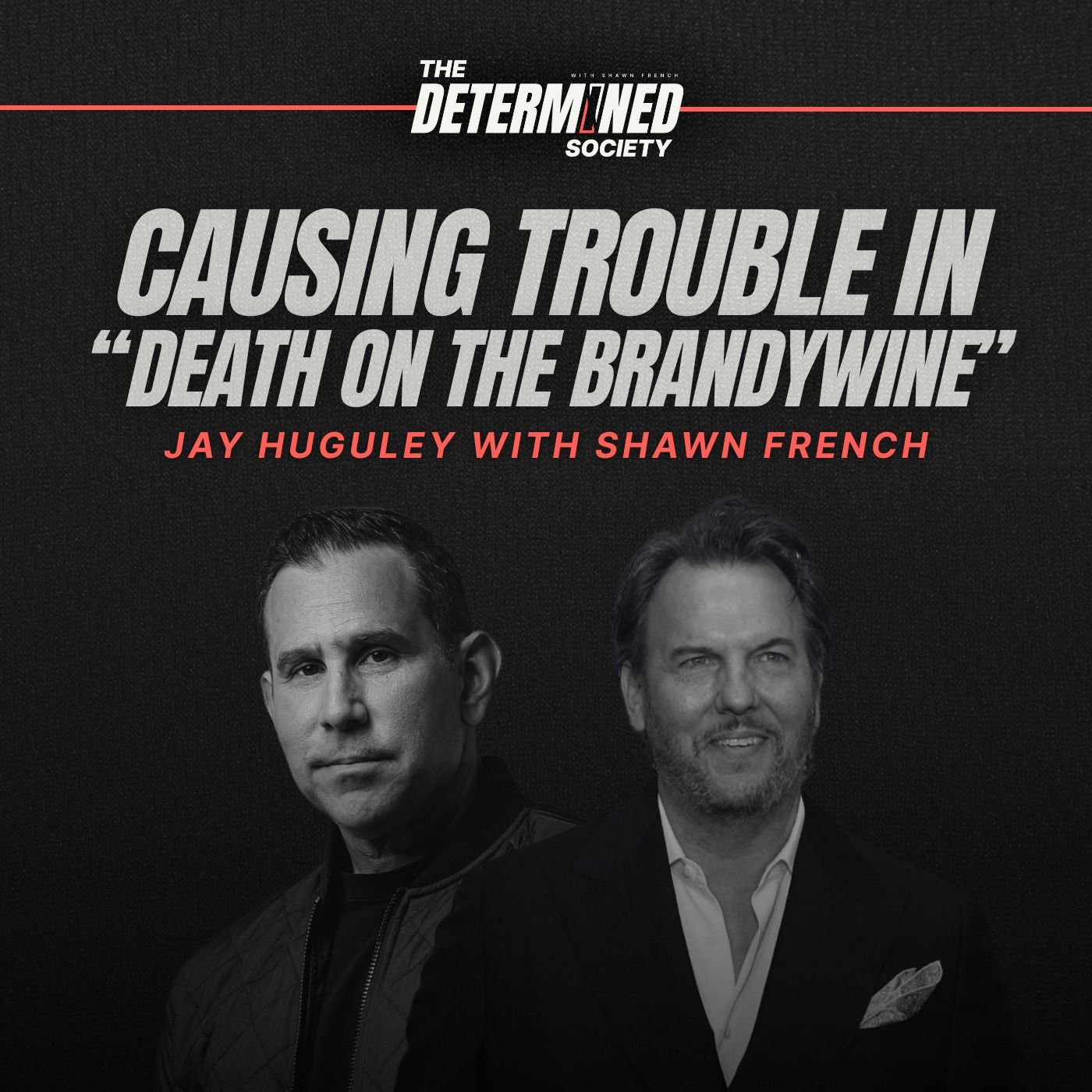
Determined Society with Shawn French | Adversity & Mindset
Jay Huguley: Causing Trouble in “Death on the Brandywine”
00:43:29
Loading summary
Transcript149 lines
- [00:00]
A
The one thing that I see that's very interesting with this film, the political landscape and, you know, society today, there's a lot of crazy things going on. So I think it is very timely. But then also like, it had to have been someone that was there. So they kind of shut this party down. It kind of plays on that game or that show Clue.
- [00:16]
B
Yeah. It's the eve of the announcement of a new political campaign and terrible crime happens in the beginning and they kind of shut down this party. Cause they know whoever did it must be there. Just kind of spins out from there.
- [00:31]
A
Interesting.
- [00:33]
B
Whatever happened doesn't have a whole lot to do with politics and has more to do with personal relationships. Everyone's a suspect.
- [00:40]
A
You have an interesting cast star in there. The woman from Scandal. Right.
- [00:46]
B
She's awesome. I was really excited to work with her. She's a lifer actor. She's been around forever and she's just really smart and she's great, Great in the movie.
- [00:57]
A
Yes, dude, she's awesome. What's up everybody? Got a good one today. Got Jay Hughley here starring in Death on the Brandywine. We're here to talk about this film. Potentially a little bit of Landman Season 2. We'll see where he wants to go with it, but super happy to have him on the show. He's done some amazing things, you know. True, true detective. Playing opposite of Matthew McConaughey and Woody Harrelson. Just an overall well rounded actor, true craftsman. So welcome to the show, Jay.
- [01:28]
B
Thank you so much. Great to be here.
- [01:31]
A
Oh man, it's good to see your face, man, and talk about this new movie coming out. I watched the trailer and I got to tell you, I'm sitting here and like I'm on suspense and I'm thinking, dang it, I hate watching these things because I want to watch this immediately.
- [01:42]
B
Yeah, yeah, it's fun. I mean, you know, as actors we read so many scripts and sometimes by like, you sort of know, by the first few pages and on page 10 of this thing I was like, what? You know, this is really twisting now. And yeah, it was a lot of fun to read, a lot of fun to work on.
- [02:05]
A
The thing that I thought was really interesting is the whole thing was 100% shot and was it Delaware?
- [02:09]
B
Yeah, uh huh. In Wilmington, Delaware.
- [02:11]
A
That's pretty cool.
- [02:12]
B
I had never really spent much time. I grew up in New Jersey, but I've only driven through those parts, so it was cool to spend time there. And you know, I live in California, so it was great to Have a winter. We were there all of February, and then we just start dumping snow. And then the next day it was just. It was just a beautiful experience. All of it.
- [02:33]
A
Well, that's awesome, man. You know, you mentioned by page 10 you were just locked in. What was it about the script? I mean, again, because if I'm reading books or if I'm watching a trailer or watching a screener, I usually know within the first five minutes, too, of what I'm really going to be into. But. But what was it specifically about the whole script and then specifically about your character that you were like, this is it right here.
- [02:54]
B
You know, it's fun for an actor to play a character who's trouble and who has a secret and who kind of messes up the whole equilibrium of the story. And that was Ry Riley. You know, a thing happens which I can't really tell you about because it's a spoiler, but. But I'm a sort of ne' er do well son who may or may not be involved. And I drink too much and I talk too much. And just from early on, he just seemed like trouble and really messed things up for the investigation, for the family. And that's a really fun thing to play for an actor, you know.
- [03:39]
A
Is it? Because, like. Cause you seem like the complete opposite. Right? Like, just in our early interaction, you have the opportunity to play something completely contrary to who you are in real life. How much of that do you look into when you're reading a script?
- [03:50]
B
Yeah, I mean, you know, it's. You know, we all have to go around and, you know, obeying the rules and, you know, being a good guy and, you know, we're trying to get ahead in our careers. I mean, so it's fun to play someone who just throws all of that in the garbage and, you know, says what he wants to say and gets in trouble. And so it's, It's. It's a lot of fun to play someone who's totally contrary to. To. Who are my parents? My parents would not have tolerated Ry Riley for five minutes, you know, but it's really cool.
- [04:25]
A
Do you. Do you find when you're playing that, you know, because that's not who you are, right? You say you get to. We're always trying to be on our best behavior. But then you get to play this character like Ry Riley that's just off the reservation. Do any of, like, these underlying things that you wish you could do on a normal daily basis come out in that character because you're allowed to do that. Right. You're allowed to kind of be off the. Off the cuff a little bit?
- [04:50]
B
No, I mean, I've never been one of those actors who brings their work home at night. So as soon as the work day is done, I'm. I'm good. I'm good to go. I'm back to myself.
- [05:00]
A
That's cool. But that's an interesting. That's interesting, though, because, you know, you hear a lot about actors getting caught in their character.
- [05:07]
B
How. How.
- [05:08]
A
How real is that?
- [05:11]
B
You know, it's never been very real for me. I will tell you. One time I did a play called Rabbit Hole by David Lindsay Aberra. It was a long run in Los Angeles, and it's. It won the Pulitzer Prize. That play, it's really brilliant. And it's about a family that lose a child. And I played the dad. And about, like, four weeks into the run, I turned to another actor. I was like, I'm sad. I was like, I got to figure out. When I do something like this, I got to figure out another way to work on it. Because that was the one time I was bringing it home. You know, I'd go home at night and think, like, okay, I gotta, you know, I gotta figure out another way in to this character.
- [05:51]
A
How did you work through that?
- [05:54]
B
You know, luckily it was. I only had a few more weeks left, but, you know, I'm lucky. I live in California, so I'd go for long walks on the beach, I dive in the ocean. Something to kind of bring me out of it. Exercise always helps. Talking to a good friend, you know, always help. And. Yeah, and knowing that you're really having an impact on the audience. You know, we had great audiences for that play. And so it was. It felt like good work.
- [06:30]
A
That's awesome. Because, like, everything you're mentioning, I think the viewers, the listeners right now, even myself, can relate to grounding yourself in some way, shape or form. Right. Whether you're a sales professional, author, actor, you know, all the things being equal, it's nice to reconnect with the earth and just ground yourself. Hop in the ocean and move your body a little bit, man.
- [06:52]
B
Yeah, for sure. Because you think, you know, you want to keep doing this thing that you love doing, so you got to figure out a way to have your feet on the ground. And, you know, I've never been one of those actors who thought you had to, like, really have the feelings of the character. I'm not a method actor. You know, if I play someone who's drunk, which I do in Death on the brand new one, I've never felt like I had to go out and really get drunk or show up drunk or. So. Yeah, I think if you want to keep doing the thing that you love doing, you got to find a way to be in the world and continue to do it and be happy, you.
- [07:31]
A
Know, I, I, I agree. You know.
- [07:33]
B
Yeah.
- [07:34]
A
You know, with, with my job, even in interviewing, I take on so much energy.
- [07:37]
B
Yeah.
- [07:38]
A
Because I'm talking to so many different people and I have to find a way on the way home to kind of leave the briefcase at the mailbox, so to speak. Right. The briefcase at the mailbox. It's like, okay, all the energy I absorb, I gotta find a way to release it because it can affect me when I get home. It can leave me in a certain energy. So again, completely different industry and a different set of execution daily. But I really, I really understand what you're talking about.
- [08:05]
B
Yeah, no, we're talking about the same thing. And, you know, it's, and it's also not fair to the people in your life, your loved ones and your, your friends and stuff. And you got, you got to figure that stuff out. So, so you're, yeah, absolutely. You're nice to be around, simply, you know.
- [08:20]
A
Yeah, exactly. I can't be a jerk. You know, I got to be kind of cool, you know, I got to, I got, I want my three kids to like me a little bit, you know?
- [08:27]
B
You know, they, they haven't seen you all day. You know, they want a good version of you when you get home. Yeah.
- [08:34]
A
Yeah. That's a hard one. Right. Because you have all the good intentions and you get home and like, one little thing, if it's on your mind and you have to answer something, you can get tied back up into it. But, you know, I always try to find this strategy. Like as soon as I start cooking is my phone goes away for about three, four hours.
- [08:52]
B
Yeah.
- [08:52]
A
I don't try to pick it back up until my kids are asleep. So that's kind of where I disconnect.
- [08:56]
B
That's really smart. That's really great.
- [08:58]
A
Yeah. So we can't get into a whole bunch of stuff about the movie and what it's about because we can't spoil it. But you know what can you tell the audience? Just give the synopsis. Right. Of, of the plot of the movie. And then I want to talk to you because you have an interesting cast are in there. The woman from, oh my gosh, what was it? Scandal. Right.
- [09:20]
B
She's awesome.
- [09:21]
A
Yeah, she's awesome. She's. She's so intense and so good in what she does. And it was a really cool casting job by putting her in this role, from what I can tell.
- [09:32]
B
Yeah, she's. I was really excited to work with her and she was even better than advertised. She's just like, she's a lifer actor. She's been around forever and she's just really smart and really interesting to talk to. And so we were able to spend a lot of time together. And she's great, great in the movie. Yeah. It's the eve of a political announcement of a new political campaign, and terrible, terrible crime happens in the beginning. And they kind of shut down this party because they know whoever did it must be there. And that's kind of where it starts and it just kind of spins out from there. It's really. As of your seat. Great.
- [10:17]
A
God, you're, you're killing me here, man. I'm just so jacked up to see this. I. And I know I'm trying to be very calculated on the things that I talk about and ask, but, you know, the one thing that I see that's very interesting with this film and just going off of what you just said, it's, you know, there's, you know, the political landscape and, you know, society today. There's a lot of crazy things going on. So I think it is very timely. But then also, like you're saying that it had to have been someone that was there, so they kind of shut this party down. It kind of plays on that game or that show Clue as well.
- [10:49]
B
Yeah. And it becomes pretty clear early on that whatever happened doesn't have a whole lot to do with politics and has more to do with personal relationships within the family, within the community. And yeah, it's. Everyone's a suspect. Everyone's. Everyone's got their eyes on them and there's a detective and it's, It's a lot of fun. It's a lot of a clue is a good analogy.
- [11:19]
A
Yeah, I try, man. You know, like, I'm. I'm wrong a lot of times, but I think I nailed that one. You did a great job describing it too. You know, I, I just. Again, I've only seen the trailer. Hopefully I can get a screener sometime soon, but. Because I'm dying to watch it. But, you know, the big thing is what I see so far is that it's high paced. Right. And then. And in today's viewers, you know, just in the audience in general, you have to continuously keep them engaged. What Was it like being on set and really focusing on that. That tempo for all of you guys?
- [11:54]
B
Yeah, I mean, it's always the director that sets the sort of the tempo or the. The mood or the pace of the film. And he always. Nick Wilkinson, who's just brilliant, he put that all in our head early on that this thing's gotta move. And you'll see. I mean, there's a lot of cameras whipping around and police cars and, you know, motorcycles and. Yeah, it's.
- [12:24]
A
That's awesome. I'm excited. Yeah, I'm really excited. I know you guys have some, you know, some early screen, you know, screenings coming out in early November, and, you know, hopefully I can catch one of them. And hopefully there's one going on in my area.
- [12:39]
B
I'm sure there will be. You know, they have that tradition of premiering a film where they shot it, so we're going to premiere at the Rehoboth Film Festival next week.
- [12:49]
A
Yeah, that's awesome, man.
- [12:50]
B
November.
- [12:51]
A
I'm sure it's going to go well. I can't wait to hear about it.
- [12:53]
B
I know. Me, too. I'm looking forward to it.
- [12:56]
A
So let's talk a little bit just about, you know, your journey as an actor. All right. As we all know, it's never an easy road, and no career is ever easy. Right. But Hollywood, you know, in that type of industry can be very, you know, very difficult. What are some of the things that you've, you know, early on overcame, you know, as far as adversity? And just tell us a little bit about that, because I think the audience would love to connect with that.
- [13:23]
B
Yeah, I mean, the thing I tell young actors a lot of the time is that you're signing on for a weird life. It's not a linear career at all. You know, you don't get promoted. You know, if you work hard. That doesn't mean you. You're going to be vice president someday. There's not this linear ascent to this career. You've got a complete. That you're constantly starting over. And the other thing I always say is get very good at the acting part of the job, you know, the craft, because that is a commodity that they all need. You're not going to hold on to your youth. You're not going to hold on to your fame. You're not going to hold it. But if you're a good actor and if you spend a lot of time in class and working on plays and working on scenes, if you get really good at the job of acting, they're gonna need you. And that's a sustainable commodity.
- [14:28]
A
One of the things that I really just enjoyed you saying, and I've heard it from Frankie Faison and a lot of other actors, that took a long time. I think it was 15 years before Frankie got his big break and coming to America. But, you know, when you look at. When you look at actors and actresses, they talk about practicing the craft.
- [14:46]
B
Yeah.
- [14:47]
A
I mean, really diving in and understanding the process and what that looks like. Because I think to the outside world, you know, actors and actresses, they go. They do a, you know, a little audition and, you know, then they shoot the movie, and then it goes out and like, oh, cool. That was great. But there's a big back into it and perfecting your craft. You guys are no different than professionals, just run of the mill in corporate that are working to get better every day.
- [15:14]
B
Yeah, exactly. And it's so important. And it's part of the thrilling thing about what we do is you. If you work hard. You know, I go to an acting studio every Saturday, and it's all working actors, and we put up scenes from plays and stuff like that. And I'm always working, trying to get better and better. And you feel yourself getting better. And that's fun. That's a really fun lifelong pursuit, getting better at craft. And so.
- [15:46]
A
Yeah, well, that's what I really enjoy hearing. Right. Because you've had a long career of a lot of amazing things that you've done, but every Saturday, you're in with a bunch of working actors looking to get better. It just proves the point to people listening and watching that no matter where you're at in your career, no matter how good you think you are or how successful you have been, you. You have to continue to be a lifelong learner.
- [16:08]
B
Yeah, for sure. And it's, you know, it's called Workspace Hollywood, and it's, you know, whenever I bring a guest, people kind of like, oh, well, they're in this class, or, oh, wow. Because everyone wants to do. You know, we don't all get these opportunities to play these big parts in plays. And, you know, we get the opportunities that we get. And so it's. It's nice to go in and work really hard at something that you've wanted to do for a long time. And you do see people getting better and better all the time and working more, which is fun.
- [16:48]
A
I mean, there's a community aspect too. Right. Because you can see other people grow. And I'm sure you guys are there for each other, communicating and encouraging Each other.
- [16:57]
B
Absolutely. And that's the other thing I tell young actors all the time. I'm like, as soon as you can get into a community of some kind of other actors, whether it's an acting class, do a play, because, you know, you want someone to call at the end of the day and be like, oh, I didn't get that thing. And, you know, will you read this with me so I can better at it for tomorrow? And, you know, it's a tough business sometimes, and you want comrades, for sure.
- [17:26]
A
Yeah. What is the hardest part about doing what you do? It's a loaded question. I know.
- [17:34]
B
Yeah. It changes all the time. I would say, for me, at this stage in my life, the hardest part is when you want something really, really bad and it goes to another actor. I'll be honest, you know, you think, oh, man, now I can't see. See it. But then you're like, that's ridiculous. And then you'll go see it. You're like, oh, he's actually really good. You know, I mean, all that stuff is. Is tough. And I've missed a lot of things. I've missed a lot of weddings. I've missed people's birthdays. I've missed christenings. You know, all those things. Like, they can't shut down a TV show because I want to go to my buddy's wedding. Yeah, I can quit the TV show, but, you know, I. I can't do that. So I've missed a lot of important events. That. That's a big one.
- [18:27]
A
I think we're talking about sacrifice right now. Right. In order to be really great at what you do, in order to have the sustainability that you've had in your career, there's going to be certain things that you miss. And I know a lot of people struggle with that. Right. And. And I have to do it. And again, I have to do it in this business, too. There's times where I need to travel and, you know, go out to LA and film interviews, and I may miss a soccer game, I may miss a baseball game. In my previous life, that never happened before. And so at the very beginning, it was very hard for me, Jay, to be. I'm going to miss something of my kids. Like, this is really difficult.
- [19:03]
B
I know. And part of me thinks, you know, that may be a generational thing because, you know, my dad's 92 and healthy and lives in Massachusetts, and he was just always missing stuff when I was a kid because he was always traveling internationally for business, and he was just always. But when he was home, he was home, and he was really present with me. And you get a little older and you realize, oh, he was out making money. He was out having a career, pursuing his passion so that I could go to college, so that I could go to school. And you realize those things, they come later on. But, yeah.
- [19:42]
A
Yeah. How much of, you know, going back to that and reflecting on that, what your dad did, traveling so much, you know, in. In your words, that he wasn't around much because he was having a career, how did that shape your work ethic?
- [19:57]
B
I mean, my father was really good at. You know, I remember when I told my father, I want to be an actor, he was like, that's literally the only thing I don't know anything about. I can't help you. I can't help you at all. Like anything else, I could give you some advice, business. But I think the way he shaped me the most in terms of my career is that he showed up for every single play I was ever in. He sat in the front row. He was proud of me. He. You know, he just. Once he knew what I wanted to do, he was on board and supported me in every way he could. And that is huge. And I realize the older I get, the more I realize, like, had I not had. Had my dad even flinched, said, nah, the acting thing, I don't know, I might have switched gears, but. But here I am.
- [20:57]
A
That's important because there's two things here that I want to explore. One is being present when it matters. Right, Right. He didn't miss anything. Excuse me, front row. And he didn't flinch when you mentioned what you wanted to do growing up, Jay. I played baseball my whole life. Went to college and played baseball. All I wanted to do was be a major league baseball player. You could not tell me any different, bro. I was like, you're going to tell me I'm not doing this? Well, then I would write you off. I'd cut you out quick. I don't care if you're a family member. I didn't have any time to listen to people tell me I couldn't do something.
- [21:31]
B
Yeah.
- [21:31]
A
You know, how important was that? Because, you know, that career, your career is almost untouchable for a lot of people. And when someone says, I want to be an actor, or even me, when I broke off from corporate America saying, I'm going to grow this podcast, people looked at me like I had seven eyeballs.
- [21:50]
B
Yeah.
- [21:50]
A
You know, and it's very important to be super comfortable with your gifts and what you feel your purpose is to move forward. How did you. I mean, again, because your, your, Your family supported you, but how about the other people in your life? What were some of the things that they said to you when you became very public about what you want to do?
- [22:08]
B
I mean, it is so important not to listen to people's opinions about what they. You should or shouldn't be doing with your life. I really believe that. You know, I had an acting teacher early on that said, like, pick three people. Pick three people that you completely trust and just turn to them and go, like, hey, was I good in that? Or should I do this? Or what do you think of this? You know, and I think that's really important. You gotta cut out all the noise. Cause it's crazy. It's crazy. What we wanna do, being an actor is you have to be partly insane, I think, because the nose that you hear along the way just keep coming. And so you gotta. You gotta shut out all the noise and focus on what's in front of you.
- [23:02]
A
That right there, that rejection aspect, right. There's so many people listening right now that are afraid to pursue their passion because they're afraid of the rejection. And in your business, and in my business, rejection is multiple times a day. How would you, I would say, give them advice on, to move forward with what they want to do despite the fear of all that rejection?
- [23:26]
B
I mean, you have two ways to go. You can quit or you can jump back in and work harder. And I've definitely gone on auditions, especially in my 20s, where I walked out of there and going like, I think I was good, but I don't think I got the part. You know, I didn't grab that. I didn't get it. And then you pivot. You're like, well, what can I do? What sort of choice could I have made that would have made the room go, whoa, that's weird. That's great, or, that was scary, or, he's the guy, or, so you just have to go back in and work harder. If you really want this thing, you've gotta. You've got to work really, really hard and, and not give up, you know, and don't listen to the noise.
- [24:21]
A
Yeah. So I think there's always going to be a level of noise. I can remember going back when I left teaching to go into sales, people talked.
- [24:28]
B
Yeah.
- [24:29]
A
When I left sales career to go into this, people talked for sure. It's. It's always going to be that way. And always think about this, and it could be, you know, I Could be completely off base. I could be wrong. But I always say, listen to the people that are doing what you're doing that have been very successful at what you want to do. And outside of your own opinion, those are the only ones that matter, because why would you turn to somebody that is not even doing what you're doing? And you're asking them for help, and you're holding their opinion and allowing it to impact your confidence in this thing? It's just like. And a lot of times, too, the people that are gonna come at you the hardest, it's not about you. It's about them. You're reminding them that they're not chasing their dreams and they're not doing enough.
- [25:10]
B
I mean, 100%. That's exactly right. You know, and I always had an acting teacher early on that said, you know, if someone disparages your career or your choices or whatever, even if it's in a little joke or in a little aside or something really subtle, never let it go. Politely confront it. You know, and we all have them. We all have that uncle who says, like, it's a tough road you've chosen. I don't know how long you gonna give this thing or whatever. Yeah. And you can take it and let it depress you and. And. Or you can turn to them and say, actually, what you do would be a tough road for me. Working in a cubicle every day and. And, you know, going through law briefs and that would be really hard for me. I'm pursuing the thing I always wanted to do. So every day, even if it's not a good day, it's great for me. Can you pass the potatoes?
- [26:07]
A
Hey, can you give me the last piece of steak?
- [26:09]
B
Exactly. And just. You don't have to be a jerk about it. But you can say, I hear what you're saying, and I don't like that joke.
- [26:19]
A
Do you ever keep that as fuel?
- [26:23]
B
Oh, yeah. I mean, I don't hold grudges or anything, but, you know, I never. If someone says something even slightly disparaging about what I do, I never let it go.
- [26:36]
A
Yeah. Same man.
- [26:38]
B
Yeah. I mean, you know, I'm proud of my job. I'm proud of the work that I do, and I've devoted my life to it. So, you know, I'm. I'm not gonna. I'm not gonna let a dumb joke slide. I won't be a jerk about it. I'll politely say, like, I heard that, and, nope.
- [26:58]
A
You know, it's so funny because I used to operate with this Massive crater sized chip on my shoulder. You know, when people come up to me, how's your little podcast doing? That pissed me off. And I would always respond, great. How are you doing? Yeah, you know, like, what I mean, what are you doing? Like, but for me, I always keep these comments as just, I always say, like, all you're doing is putting rocket fuel in the engine, bud. Like, that's all you're doing. And now I handle it a little more gracefully. I think about it and I just kind of smile. But then I always keep tabs. Like, I always keep tabs because they always come back around. Hey, I'm really proud of you. Like, you know, what you're doing is incredible. I can't believe it. And I'm thinking, all right, dude, like, three years ago you were laughing at me.
- [27:44]
B
Yes, exactly. And the truth is, if we're honest about it, anyone who says anyone refers to your little podcast is not pursuing what they want to do. And you gotta, you gotta feel bad for them because you know, they're, if they're hating on you, then you know something's wrong.
- [28:06]
A
It's funny because, like, people make jokes about people, but like me, right? They, they did. Like, what was the show you people with Jonah Hill, like, he quit his, his career and he started a podcast. I'm like, oh, my God. Like, me quitting a, a massive corporate sales career to start a podcast. Like, that's like the most douchey character in a, in a series. Like, they make fun of people.
- [28:28]
B
Like, I mean, if we're going to go through the long list of actors being made fun of and things that. Yeah, no, no, no, we just got to, we just got to let it slide off our back and go forward.
- [28:44]
A
Yeah. I think it's always important too, to, to think about why you're doing it. Right? Like, why. Why did I choose this career? Why did you choose your career? You know, what was the path? What. What's the reasoning behind it? And when you can dive into that purpose every day, the noise goes away because, you know, you're on a different mission. They can't even comprehend what I'm doing, what you're doing. Right. So I'm going to give him some grace, but I'm going to take that foot and I'm going to put it. I'm going to put the gas pedal down. I'm like, you're going to feel me, you're going to see, you know. Yeah, I still operate like that a little bit.
- [29:15]
B
Yeah, that's exactly right.
- [29:17]
A
Yeah, it's fun, man. It's fun. What is. What has been the one. The one job that you did not get, that you felt you were going to get, that really just ate you up.
- [29:33]
B
Wow. You know, I don't have anything off the top of my head right now. I just know that it happens probably once a year, you know, and sometimes it's a pilot that doesn't go and you think would have gone if I was in it, you know, or, you know, I've definitely read for things or tested for things where I was like, this is my part. This is.
- [30:04]
A
This is.
- [30:05]
B
I can bring everything I've learned along the way to this, and it's going to be good. And then it cast another actor, and then it doesn't go. And I think, you know, I think I'm confident enough to think, like, I really could have done something with that and it would have been different. But. But, yeah, it happens all the time. It's part of the job.
- [30:25]
A
The reason I asked that question is because I. Because most people cannot relate to what you do. Right. They can't relate. They're not on the big screen, you know, they're not sitting opposite of Matthew McConaughey and Woody Harrelson.
- [30:38]
B
Yeah.
- [30:39]
A
Like, they're just not.
- [30:40]
B
They're.
- [30:41]
A
They're not doing that. Right. So I always like to tie in these little anecdotes in there to where they can relate. Wait a second. This guy gets this once a year, like, and maybe sometimes more. Right. So they can relate to the fact, like, hey, we're not all that different. And if they can push through it and still work on their craft, then why am I sitting here bitching and moaning about it? I need to move forward, Right?
- [31:03]
B
That's right. That's right. Yeah. The bitching and moaning thing. I was lucky. I had really good mentors and teachers early on. That knocked that the heck out of me, because there's no way to live, you know, do something else. If, If. If you're going to bitch and moan your way through. Through a career, then please pick something else, because there's always another way to go. Always another way to pivot.
- [31:31]
A
That's a good point. That's a good point, because, like, every career I've been in, someone's bitching and moaning.
- [31:36]
B
Yeah, for sure.
- [31:37]
A
You know, someone's asking, how come you have all this? How come you're getting all the press? How come you're signing with a big agency? How come you're doing this is like, I don't know the answer. For you. But I'm. But I. But I can tell you something. The reason you're not is because you're asking me that question. That's something you got to explore. That's not for me.
- [31:56]
B
Yeah, the teacher say. The answer is in the question. You know exactly what you're saying. Yeah.
- [32:05]
A
You mentioned mentors.
- [32:06]
B
Right.
- [32:07]
A
Who has played the biggest role in your development that has inspired you the most in your career?
- [32:13]
B
You know, there's a great acting teacher, Milton Katsellas. He died in 2008. And I started studying with him right when I came to Los Angeles. And he was just, you know, he directed a bunch of movies in the 70s, butterflies are free, and did a lot of theater and worked with a lot of the greats, Bette Davis, Jenna Rowlands, all the way to George Clooney and Michelle Pfeiffer. And he was just a really great teacher. And he was kind of a crazy old Greek guy who, you know, I was this polite kid from New Jersey who wanted to be an actor. And the way he talked to me, it's just no one had ever talked to me that way before. And that was really important in my journey of an actor. You know, I would do a scene for him and he'd say, why the hell are you so polite? You know, and, you know, stuff like that. He's like, be polite in your life and your friends and your family, whatever, but not up on the stage. You know, we gotta. We gotta find out who this person is. We gotta, you know, and he really. He believed in me, he trusted me. And he beat the polite out of me in terms of art and my work, which I think I needed at the time.
- [33:25]
A
So what I'm hearing is, is he just challenged the hell out of you.
- [33:28]
B
He did. And, you know, he. He really would say, like, do you want this thing? Because you're not going to get this thing by being, you know, this sweet New Jersey kid who's polite all the time. You polite with your agents, you can be polite with your. Your colleagues, but on the stage, you need to be this guy that you're playing, and you gotta find that thing. And it was really all about being an artist. He'd say the same thing to a painter or a sculptor or, you know, toss that polite stuff out the window. Cause you gotta get to work.
- [34:09]
A
What I'm really hearing is that he cared.
- [34:12]
B
Yeah, for sure. And, you know, I think my first scene I ever did for him, he said, you know, you're good, you're good. He said, you know, there's a bit of an apology in your work. I can smell it, you know, And I. I said I'm sorry, and the whole class. I didn't even hear myself say it. Like, I didn't think about it. I just apologized, and the whole class burst out laughing, and. And we were on our way, you know? Yeah.
- [34:41]
A
He's like, that's pretty cool. Yeah, we got to get rid of it. It's so funny because right when you said there's a bit of apology in your work, I knew right where you were going. I. I knew you were going to apologize.
- [34:51]
B
Right.
- [34:51]
A
So that's a lot of deep work, though, too. Right. That's a lot of getting through things, you know, how did you work through that?
- [35:00]
B
You know, it's that thing of whatever you want to call it, fake it till you make it, or, you know, you act the part of someone who is not that way long enough. You know, I remember early on in auditions, I would, you know, I'd act the part of an actor who deserved to be at this audition in this room. I'd say, like, hey, do you mind if I move this chair over here? And I would kind of run the room. I'm like, I'm gonna use this for the chef and use this for the lawyer, and I'm gonna put this chair right here. And casting director would be like, you can do whatever you want. And there was something about playing a character of an actor even before the audition, who deserved to be there, who was right for this part, and. And it didn't feel natural at first, but it doesn't.
- [35:49]
A
How do you prepare, like, for. For this specific role and, you know, death on the Brandywine? How do you prepare on your own to get in this mindset of playing something completely opposite of who you are?
- [36:01]
B
I mean, everyone's different. But I always look at, like, how are we similar? Is the. Is the first thing I look at. And how does he dress? How does he walk? And then you just bit by bit, think about what he wants. He wants his father's. He wants to stop drinking. He wants to be more successful than his brother. So with Ry Riley, I really looked at. At where he had messed up who he wanted to be. And you just build it bit by bit and break it down scene by scene. You think, like, what does he want in this scene? Does he want. Does he want the drink that's sitting on the other side of the room? How's he gonna get it? So, yeah, you just go very slowly, and bit by bit, that's I love that.
- [37:02]
A
And again, like, the audience listening, like, you just heard Jay say bit by bit. Yeah, that sounds very small. But that's everything. Yeah, that is everything in life. Like, no matter what you're chasing, you have to go from stage to stage to stage.
- [37:18]
B
Yeah.
- [37:19]
A
It's all in the little bitty micro movements. And I love that you brought that up.
- [37:25]
B
Yeah. And you got a patience, you know, you got to have. You got to. You got to know that if you go bit by bit and if you really take your time, the end product is going to be. It's going to be good. But it takes.
- [37:40]
A
Dude, you just. You just melted down the whole audience with the P word patience. Because I don't think a lot of people have that nowadays.
- [37:46]
B
No, it's very, very true. It's very true. And it's everything.
- [37:50]
A
Yeah, I hear you. And it's hard. I'm not saying it's super easy to be patient. Like, all my people that are, you know, my team, my production, like, everybody that's involved in my company knows that by nature, I'm an extremely impatient individual. Like, I want it now. I want to grow now. But it's important for everybody to work backwards and go, okay, here's the end goal. But what do I need to do every second of the day to move myself towards that and really fall in love? And I talk about this on every show is the. The moments and the journey. Because once you hit that, you know, massive milestone, it's almost like there's this moment where, oh, what now? And what I realize is I love the chase. I love the work. So now I got to take this endpoint and move it way the hell up here and start to chase that, you know.
- [38:43]
B
Yeah, that's right. And, you know, there's no other way around it. I mean, you have to put in the work. And then I always say to young actors, too, once you've done all the work, then you kind of have to throw it out and grab it by the reins. Especially in acting, I think if you're rehearsing a play or rehearsing a part, you have to do all the preliminary work. How do they talk? How do they walk? How do they. How do they love? Do they. Who are their parents, who raised them? And then you can kind of come up with the character. And then on the day, you kind of just have to throw all that by the wayside and get to work. But the work, it's in there. It's all in there.
- [39:38]
A
Yeah, that's what's Fascinating to me. Right. Because it's easy for me to equate that to what I do.
- [39:43]
B
Yeah.
- [39:43]
A
But what I love hearing you say is just like with an athlete, you're going to practice, you're going to practice, you're going to practice. As soon as the disco lights come on, you just go, you perform. And you got to trust that all that work led you up to this moment and then you're ready.
- [39:56]
B
Yeah, exactly.
- [39:58]
A
That's good stuff.
- [39:59]
B
Yeah.
- [39:59]
A
Before we, before we close it out, are you able to talk about Landman coming up, the new season?
- [40:05]
B
Yeah, I mean, you know, you sign a million things that says you can't give away any plot points, but my stuff is. It's was really fun to work on. It's a great set. I, you know, I've. I've worked on one of Taylor Sheridan's other shows, Linus. I did. Yes, I did four of those. So I was very happy to come back to his universe. And my stuff is with Demi Moore. I think I can say that. And it's, it's really, it's. It's interesting. Yeah. That's about all I could say. But it's super smart and a great director and, you know, I'm excited about it.
- [40:43]
A
Well, Mr. Sheridan does great work, and it's one of the biggest shows on tv. Man, that's a. That's a big deal.
- [40:48]
B
You know, he's the best. You know, he used to be an actor, so, boy, does he get it. He really. He really knows how to work with actors. And, you know, and Linus, he came in and did the. A voiceover piece that they might have just had an intern do or something like that. He's just cares so much about the product. He is like Orson Welles to me. I mean, he's just one of the most talented guys to come around in a long time and. Yeah, super.
- [41:20]
A
That is. That is a very popular opinion.
- [41:22]
B
Yeah.
- [41:22]
A
About him. I mean, it truly is, you know, and it's really cool to see what he's created and, you know, what he's done and, and how, you know, just the light. You're speaking of him, and I think it means everything.
- [41:35]
B
Yeah. And, you know, often all those qualities don't come in one person. You know, sometimes you can technically have a real eye for what works and success and. And not have all the sort of nuance and storytelling it. But he's a great writer, he's a great director, and, you know, I don't know. I'm. I'm a huge fan that's pretty awesome.
- [41:59]
A
Because it's a lot of times, I mean, I can. I can use this analogy. Everybody, you know, looks back that, you know, love Barry Bonds, great baseball player, but he was kind of a. Of a person, right? To the media and to his teammates. That's the word. But Mr. Sheridan is like, he's very creative. He's amazing. But then he's also sounding like he's a great person.
- [42:18]
B
Yeah. Yeah, he really. As actors, because he was one and is one, and so that's always a. That's always a plus.
- [42:28]
A
That's awesome. Well, look, Jay, I appreciate you coming on and in sharing with the audience a little bit out of death on the Brandy one. I know we couldn't talk too much into it, but I'm super excited to see that in the audience. You need to go check it out, all right? You need to. You need to watch that movie and support him in the cast when it comes out in theaters. But more than anything, I just want to thank you for giving the audience a piece of you and talking about your process, the things that you went through, the things that inspire you and giving them a real life look into your life as a professional.
- [42:59]
B
Oh, well, thank you very much. I really. I really enjoyed this. And. And let me know. Let me know what you think of the movie.
- [43:06]
A
I can't wait, man. I'll. I'll definitely let everybody know, and I'll get the message to you. But for the audience, go check this movie out. Like I said, share this episode with somebody. You know, love and trust. Get a group of people going, get some popcorn, get some candy, get your Coke Zero and watch this damn movie. So until next time, guys, stay determined.