← Determined Society with Shawn French | Adversity & Mindset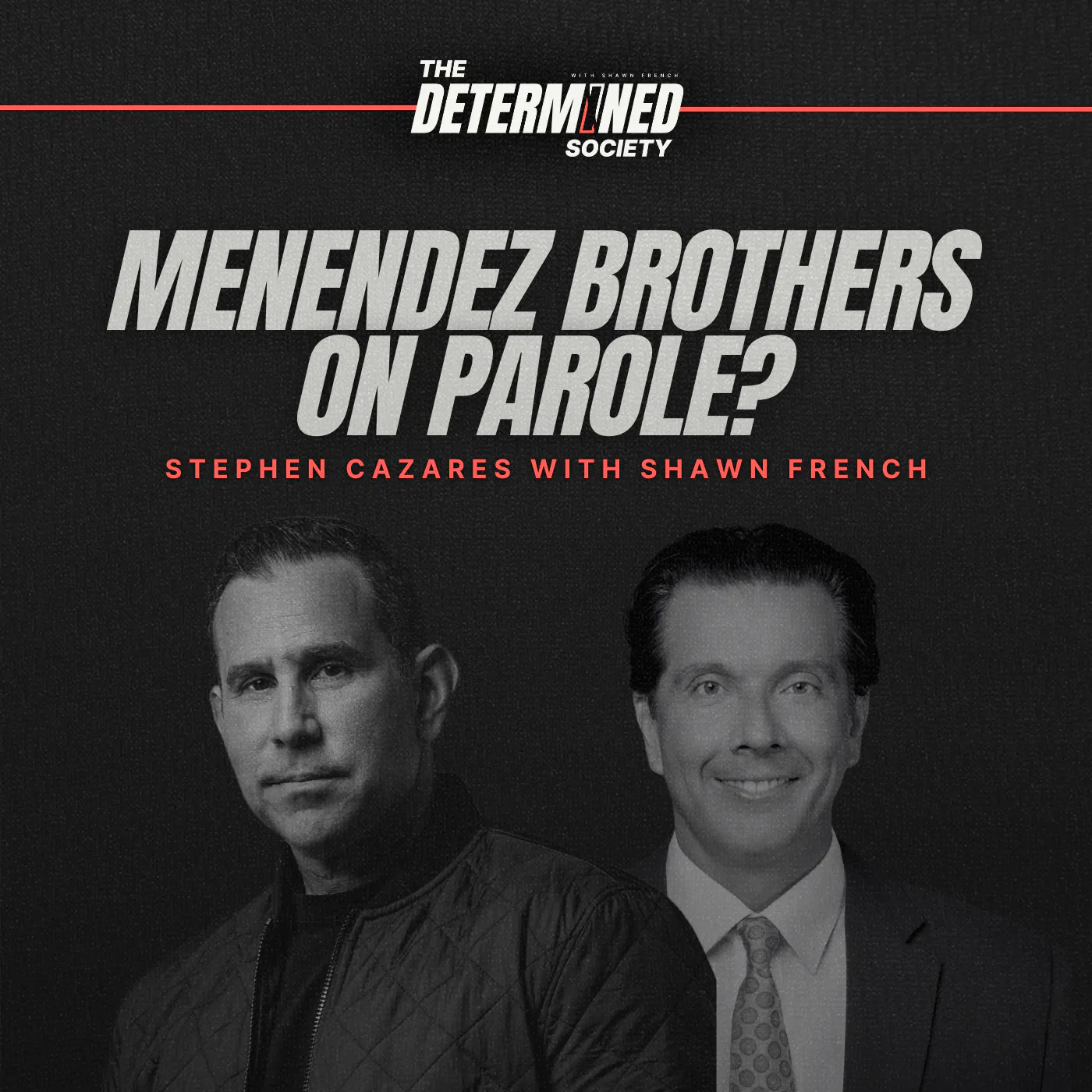
Determined Society with Shawn French | Adversity & Mindset
Stephen Cazares: The Menendez Brothers released on parole?
00:47:26
Loading summary
Transcript127 lines
- [00:00]
Sean
The Menendez case, zero shot. These guys were ever even going to be thought of getting out of prison, Right. They're going to spend their life behind bars.
- [00:07]
Steven
And now the judge resentenced them to 50 years with the possibility of parole. So now they come before the parole board in just a couple months.
- [00:17]
Sean
Oh, my God, is this real?
- [00:19]
Steven
You never would have thought this was going to happen back in the day.
- [00:22]
Sean
Is like it didn't matter. You kill your parents, especially in that type of grisly way. Lock you up, throw away the key. Now it's like they had it coming to them.
- [00:29]
Steven
Crazy part about it would be if they were granted parole, I would imagine they'll be on the talk show circuit granting interviews, trying to figure out ways.
- [00:37]
Sean
To monetize, book something, you know, a movie obviously. Right. Maybe they'll come on the Determined society. That'd be kind of crazy, huh? So, Stephen, you're out there in the world of California, you know, criminal law attorney, everything is allegedly right out there defending people. What's going on in your world right now? There's a, there's a lot going on out there, but specifically for you, you know, what are you seeing out there?
- [01:08]
Steven
Yeah, I mean, there, there's a lot, you know, with, with the, with the change in administrations, what my practice is focuses more on kind of white collar civil and criminal defense. So a lot of like securities fraud, money laundering, tax issues, civil litigation involving fraud. And, and with somewhat the changes in priorities by agencies that lead those sort of practices. You know, the doj, the sec. So we're seeing a little bit of a, a kind of change in focus from what they used to be interested in was kind of like corporate fraud, scpa, kind of bribery, things like that. And the focus is leading away from that towards maybe more middle market, kind of routine kind of kind of fraud, you know, Ponzi schemes. You're more securities fraud, things like that. So the shifts and priorities kind of affect everybody in the market. For me, it's been pretty good, but I can see some people are kind of having difficulty adjusting it.
- [02:11]
Sean
You know, it's interesting because like, you know, with your type of, your type of white collar crime, it's almost like you can go to work one day and make a couple bad decisions. Right. And, and it can land you in, in serious, serious trouble and in prison. Right. What, what, what about those things? I could look back and, and I don't have a lot of knowledge on it. Right. But I look back at like the whole GameStop thing. Right. Is that something that you're kind of talking about?
- [02:39]
Steven
Yeah, I mean, it's, it's interesting. I mean, you know, I've seen it from both sides. I was a federal prosecutor for the last, you know, seven years. I've been on the defense side. And what I often see is people who go into an activity or a fundraise or a business or an operation, well meaning with good intentions, and then an event, like you said, an event occurs, a loss of sort or some change in direction of the business that wasn't anticipated, and they try to fix it, and maybe trying to fix it without telling everybody how they're fixing it or what happened. And people can start digging a hole that once you start digging, it can be difficult to stop without blowing things up. And that's in my mind how a lot of people run into problems. It's trying to fix things on their own without getting proper help, without disclosing what's happening. And it can have really catastrophic consequences for even well meaning people.
- [03:44]
Sean
Is there, is there a recent example that you can dive into that's public, that you're allowed to talk about and that specifically speaks to something like that someone's trying to fix something, maybe doesn't tell them, and then this whole fire starts that they can't stop?
- [04:00]
Steven
Yeah. You know, I mean, it can even come from an experience from a case I worked on, the Theranos situation, you know, the Elizabeth Holmes blood testing company, well meaning, well intentioned. She was very public in her ambition and what she was trying to build. And my client Sunny Balwani was right there with her, helping her to build the business. But arguably, you know, one could suggest that there were some decisions made with respect to dealing with regulators, not misleading the regulators, but maybe taking aggressive positions with regulators that may have triggered those regulations. And I'm talking about in particular, and the FDA triggered them into taking more aggressive positions that kind of started this push pull that ultimately led to, you know, investigations, employee whistleblowing, the SEC, doj. And it all kind of spiraled down into what wound up being, you know, massive criminal trials and unfortunately for them, convictions.
- [05:03]
Sean
Yeah, it was an interesting thing because, you know, I mean, I, I live in a world where, you know, you know, you look at streaming services, right. And the thing that is very impactful that I see lately, I think we mentioned it yesterday, we were talking on the phone. It's just so crazy how Hollywood now is impacting real life. Right. And so when you have something like, you know, that the Theranos trial, that was just something that happened. And then it turned into a miniseries. And then it's a largely publicized thing. Right. I. To me, it's just interesting how this, the streaming services and Hollywood is. Is actually impacting public perception of things that are, you know, not necessarily private, but may not have heard of it if there wasn't a miniseries made on it.
- [05:53]
Steven
Oh, and. And it can have real consequences for the parties trying to litigate them. The matter or even trial. For example, you mentioned the miniseries. Our trial for. For Mr. Balwani started in March of 2022, the exact same week that Hulu released the miniseries. And so there were advertisements everywhere in the Bay Area. Every sign had. Had the Hulu show on it. And on the day the trial started, when the jury is coming in to start jury selection, they. They drove one of those advertising trucks that carry the big signs behind them. Yeah, one of those big trucks parked right in front of the federal court. Oh, my God. In San Jose. And you know, obviously the party has alerted the judge to this because the jurors are coming in and they're seeing that. And he actually went outside and told them to leave, which I'm not even sure is like constitutional, like he had the authority to do. He did it, they listened and they moved on. So, yeah, that was a real concern of ours because people are watching that series while the trial's going on. You know, it could obviously influence their views. So that was a constant push pull we were dealing with.
- [07:09]
Sean
Yeah, that's interesting. You know, another one comes to mind is, you know, you. I mean, we, we discussed yesterday. I grew up in the Bay Area, right. And I remember, you know, the whole Menendez, the Menendez case, and there was zero shot. Zero shot these guys were ever even going to be thought of getting out of prison. Right. They're going to spend their life behind bars. And you know, what was it last year? Netflix came out with the, the little miniseries, and now they're literally going up for resentencing. Right. I think that happens in August. Right.
- [07:45]
Steven
You know, so they were all. They were already resentenced, so they were given life without possibility of parole originally. Then in May, after all of those filings and motions and hearings, the judge re. Sentenced them to 50 years with the possibility of parole. And once you serve a certain amount of time, you become eligible. So they're now eligible for parole. So now they come before the parole board in, in August, just couple months.
- [08:15]
Sean
That's right. In the p. The pro board, they, they really don't like to let people out, man. You Know, they. They. That could be. But they at least have a shot now. And it's just crazy. It's like you're looking at this, like, oh, my God, is this real? You know?
- [08:30]
Steven
Yeah. What? You never would have thought this was going to happen if you were talking about this case three or four years ago when the prior DA in la, who was kind of a reformist, kind of started this whole process, and they actually. The district attorney filed the motion to. To request re sentencing, and then that d. A loss this past November, lost the election. And the new DA Came in and said, no, no, no, we're not going to do that. And he tried to withdraw the motion and the whole process. And the judge ultimately gave the brothers their hearings and, you know, granted them the opportunity to get parole. Now, whether it happens, the parole board is tough. If you go to the parole board's website and look at the calendar, it's just hundreds of people, like, on. On a weekly basis, like, through August. It's just a. It's an impossible task for them to give everybody a real close, careful look. But because the brothers are so famous and because this case is so unique, unlike all the rest of those. Those people who are on that parole board list, I mean, I think they have a real shot.
- [09:40]
Sean
You. You do think they have a real shot, huh?
- [09:43]
Steven
Yeah. I mean, it's because the amount of time they served and in these situations, because they committed the offenses before they were 26 years of age, and after they were convicted, the law in California changed so that if you commit certain heinous offenses, but you're considered a Youthful offender under 26, the court is supposed to take into consideration your age, development, other issues that may have motivated or contribute to the crime. And when that's the case, it gives you a slightly better angle in getting parole because you're. To the extent you've engaged in rehabilitation programs, things like that, those will maybe carry a little more weight than if someone was already a fully in. At least in the state of California's view, fully formed adult, not a youthful vendor.
- [10:40]
Sean
It's just wild to me, man, you know, because, like, I'm looking at this and I, you know, look, man, regardless of allegedly why they did it, because they never denied the fact that they did it. It was the reasoning they did it. Right. And now because of the. The hit miniseries, it gave everybody the opportunity, like, hey, let's look at this thing again, and caused mayhem, and it impacted the judicial system. Dude, that's powerful, man.
- [11:13]
Steven
Oh, yeah. I mean, I think so. Many things that have played into it, the media's impact on the case. You know, the, the, the kind of societal changes since these things happened. You know, the, the abuse issues were an issue in the original trial and the original trial, the first trial, the trial judge wouldn't let that defense come in. He kept it all out. It was only in the retrial where some of it came in, but not really the full extent that we're now aware of. And you know, given what happened in church with the Catholic Church, abuse issues and all, I think society has just changed its views about whether young men can be, you know, victims of that kind of abuse. I think back then the, the district attorney, the trial attorney actually told the jury, argued to the jury, young men like them can't be abused in that way. Which is absurd, right?
- [12:13]
Sean
Absolutely can.
- [12:16]
Steven
Yeah. No, that. So, you know, times have changed.
- [12:18]
Sean
But you're right though. Societal changes, right? And how people perceive these types of crimes and what they, and what, how the public views is acceptable or not. Right. So back in the day is like it didn't matter. You kill your parents, especially in that type of grizzly way, like lock you up, throw away the key. Now it's like they had it coming to them. Right. And I don't truly believe that, but some people do. I mean, you, you get on there and you, and you see on social media, you know, somebody like, hey, you know, like these kids did their time, you know, their parents, you know, did this to them, they should get out of jail now. And it's just like I'm looking around, I'm going, wow. And I'm wondering what your opinion is. Let's say they go before the parole board and they do get out. Two part question. If that process does ha. If that does happen, what's the process on the release? And then also what type of public backlash or celebration do you foresee happening?
- [13:16]
Steven
You know, it's interesting. So if, if the parole board were to get to that position and actually grant parole, and that would be after the brothers submit all of their kind of supporting information, the DA's office would submit all of theirs. Victim impact statements could be considered. You know, there's like a risk report done of the brother respect to whether they were violating rules in, in custody, things like that. All of that goes into the decision making. If, if the board then says, yes, we're going to grant because the evidence suggests that, you know, they do not present an unreasonable risk to society, the governor can still overrule and say no.
- [14:02]
Sean
Oh, okay.
- [14:05]
Steven
Not a free pass. You know, the board can grant and the governor can take it the way. Now whether he would do that, who knows. But you know, there are a lot of moving parts to this whole decision making and then even then a judge can impose conditions on the parole. Now what those conditions would be, it can depend, you know, he'll have, they would have, theoretically a parole officer. There might be work requirements. You have their check in requirements like financial disclosure requirements. Sometimes there could be, you know, you have your charitable work, things like that. Even home confinement can be a term probably unusual. And the really crazy thing here is we, I think all view the brothers together as a single unit. Theoretically, one of them could get rolled and the other could not.
- [15:05]
Sean
Interesting.
- [15:07]
Steven
Different factors. So they're not necessarily subject to the, the same outcome because again, they're each individual and they're going to be assessed individually.
- [15:16]
Sean
So you talk about Governor. So Gavin Newsom, is it, is it typical that a governor would overrule or re, remove the, the parole decision if they were granted? Is that normal?
- [15:31]
Steven
It's happened really. I think there are, I think there in my recollection one or two of the female Manson family clan. I think one of them was granted parole by the board and I think the governor overruled it, if I recalling correctly. So happens, particularly when you're talking about high profile crimes, the Menendez brothers, the Manson family, things like that, they're so grisly, you know, it's not, it's not out of kind of character for, for politicians to want to look tough on crime, you know.
- [16:08]
Sean
Yeah. What, okay, so the second part of the question was like, what? Say that they do get granted the parole. Newsom doesn't, you know, withdraw it and they do get out. They can get out immediately. Right. Like it would be an immediate type situation.
- [16:27]
Steven
Yes. Yeah, it could be quick.
- [16:31]
Sean
Can you imagine a world like, I mean, honestly, it's, it's, it's crazy to me because as, as we mentioned, I grew up in that area. I remember it happening. It was what, 89?
- [16:43]
Steven
Yep, yep. Yeah, it was when it happened, it was, it was, you know, the dawn of Court TV also. So, you know, that was really the be. That was really the beginning of, of this focus on the legal system and cameras in courtrooms, at least in state court. You know, this, this was really the, the, the, the starting point of kind of all of that all the way through the 90s and, and later the O.J. trial and. Yeah, yeah, this was really, really the beginning. But the crazy part about it would be if they were granted parole. Kind of the media frenzy. I mean, if you imagine what it's going to be, I would imagine they'll be on, on the talk show circuit on, you know, granting interviews, trying to figure out ways to monetize the notoriety. Wow.
- [17:34]
Sean
Book something, you know, a movie, obviously. Right. Maybe even the Determined Society. Maybe they'll come on the Determined Society. That'd be kind of crazy, huh?
- [17:45]
Steven
Maybe. I think it'd be a good move for them if they, if they do get out, it's. Go ahead.
- [17:51]
Sean
No, I mean, I agree it'd be kind of crazy. I was just, you know, just thinking about like all these different things. Like, you know, to your point of the media frenzy, I mean, it's, it's, it's gonna be massive. I think it's going to be massive either way. Whatever decision they make, right, Good, bad or indifferent, one gets out, both gets out, none of them get out. I, I think there's going to be a side that people are going to play and, and it could potentially cause an upwork, an uproar out there. Right. Do you, do you see anything potentially happening if they do get out? Like what, what do you see the, that, that frenzy being locally?
- [18:32]
Steven
You know, it's, it's always present, like throughout this whole re sentencing process. It's been pretty top of mind for most of the community. Local news even. I've been on top of it pretty much step by step actually in the courtroom for every hearing and reporting it out. So it's still, it's still a headline that follow. I just think for the brothers though, this is really a huge moment because in the parole system, if you don't get it the first time, the board can then make a decision. Well, can you retry in three years, five years, seven years? And given the age of where the brothers are at, you know, if they don't get it now, the clock is running. I mean, you know, you're, you don't come back for several years, which is really tough.
- [19:29]
Sean
They're, they're in their 50s, right?
- [19:32]
Steven
Yeah, I think so, yeah.
- [19:33]
Sean
Because I'm 46 and I know they're older than me.
- [19:36]
Steven
Yeah. They're older than myself as well. I think they're like in their late 50s, if I recall correctly.
- [19:41]
Sean
That seems mid to late 50s. That seems about right. Yeah, yeah, yeah. That'd be crazy. And just like, you know, I'm trying to think of like all the other things too, because they're sitting there like, obviously, of course they want to get Out. But what do they do? Who's gonna hire them? Right? Like they, I, I just. All these things, man, I'm just like very, I'm not saying it to be funny though. I know it's a, I know it's a chuckle. We're both laughing about it, but it's like, damn, like really think about that. Like what kind of quality of life are they going to have if in fact they do get out? They have nobody.
- [20:17]
Steven
It's. Well, they do have, interestingly, I mean they do have family members, cousins, aunts, who have mostly been supportive. And it sounds like they would be supportive of them going forward because part, again, part getting back to the whole parole plan and the presentation by the brothers, they actually have to present a release plan and a plan, plans they have and efforts they're going to make to basically rehabilitate, follow the rules and not recidivate, not commit crimes again. So basically they would have already presented to the board how they're going to be supported by friends, family, potential employers or business opportunities, things like that. That's all part of the decision making. Because if their family life and support were a blank slate, they had none. Pretty highly unlikely they get out because what else could you do but commit a crime to support yourself?
- [21:17]
Sean
Yeah, but to your point though, I think there's going to be a massive opportunity for them. I mean, there's going to be a book publisher that's ready for a massive six figure advance, right? There's, there's going to be a lot of different opportunities for them that are going to present it right away. I just think, I just think it's crazy. It's nuts to me. It's very, it's all very interesting, you know, but there's a lot of interesting things going out there in California right now. Hell, you were telling me yesterday what, what happened in the park, like what was going on? There was a parade, like what, what happened?
- [21:47]
Steven
Yeah, I mean, you know, with, with the, with the uptick in immigration enforcement, with ICE presence in Los Angeles over the last month, which, you know, I think most people, to the extent they were arresting, you know, felons and, and people here unlawfully who are committing crimes, I think most people kind of support that.
- [22:07]
Sean
Sure.
- [22:08]
Steven
But you know, chasing, chasing day laborers through the parking lot at Home Depot has been a little surprising to some. And then what happened just yesterday at MacArthur park, large park near downtown, pretty well known, there was essentially a kind of brigade of law enforcement. Most believe they are their ICE or cbp, Customs and Border Protection Fully masked, fully camoed, rifles, trucks, some on horseback, basically marching through the park. And, and the only thing or people that were in the park, there was a, a summer day camp for kids and they were in the park and they suddenly, all these, this whole parade of armed officers comes through and the kids had to be like, shuffled away. And so, you know, they weren't involved, but they interested me, buddy. They just kind of marched up and down the park, I guess, presumably to, to make known their presence in the community. I think DHS released a statement that they did it to deter the, the market for unlawful, for fake IDs and Social Security numbers in the park. I mean, theoretically, I guess, but you need and camo to do that.
- [23:32]
Sean
Just interesting. It kind of, it's almost like. Because I can tell you what it looked like from afar. You know what I mean? We're, we're out here in Florida and we went out there to do some interviews. And I think the day or two before, you know, I talked to Val and talked to my team. I'm like, guys, I don't know how close we're supposed to be to these, the, this, this, right. These protests, these riots, whatnot. I see, you know, armed guards in the middle of, you know, the interstate or the highway. I'm like, oh my God, like, what, what, what's going on out there? Right. And we got there and we didn't really see anything. But come to find out, the studio we, one of the studios we rented was literally two and a half miles away from the actual epicenter of this. And when I, when I asked the gentleman how far away it was, he's like, oh, you're about 25 miles away. I was like, dang, man. Dang.
- [24:27]
Steven
Yeah. The, all the action was within like a half square mile downtown where the federal buildings are essentially and pretty isolated to just that. So if, if you just focus the cameras on that look area, it looked intense. There's a lot going on. But if you bring the camera out, the larger picture, it's like a little street corner or two where the activity was.
- [24:52]
Sean
Yeah, it's a little pie. I saw that one reporter get hit with a rubber bullet. Did you see that?
- [24:57]
Steven
I know. And those hurt. They do real damage. You know, that's, that, that's a pain point, definitely. If you remember doing the paintball.
- [25:09]
Sean
Yeah.
- [25:09]
Steven
Back in the day, if you ever did paintball, like the way those paint pellets feel, apparently this is like ten times those paintballs. So.
- [25:16]
Sean
Great. You want to hear a crazy story about paintball well, we'll give the audience a break here and get them laugh a little bit. So my. My son's last birthday, he wanted to do paintball. And, you know, this was in October. I'm like, all right. My wife and I are like, all right, cool. Let's go do it. So. But it's all his friends. And, you know, I. I had one of my buddies and his wife come out, and the day was going great until my friend screwed the whole day up for everybody. It was towards the end, and buddy, aj, this is your fault. Goes up and sees my son, and he's, like, five feet from and just unloads on my kid. And no Steven, like, his. His leg was bleeding everywhere. I'm like, oh, yeah. What the. What the hell was that? It says kid's birthday, man. Like. Like, beat him, win. Like, shoot him once. But, like, also, we told my son, like, dude, don't wear shorts. Like, don't. It's hot. I'm gonna work. I'm like, okay. And, yeah, dude, so if it's. If it's, you know, 10 times worse than that, that hurts, man.
- [26:20]
Steven
No, thanks. Oh, yeah, no, thanks. Definitely. What.
- [26:23]
Sean
What else is going on in your world, man? There's got to be some there. I. I think you sent over some other points. Someone was Sunny Balwani, too, and there's a lot of interesting things going on.
- [26:34]
Steven
I mean, other than, obviously, everyone's talking about the Diddy case and how. How that all worked out and shook out and, you know, what are the moving factors? You know, I. I think some people are still trying to process that because, you know, I mean, it's emotional because people recognize, I think, the. The extent of the abuse and have difficulty processing. Like, but how is it he got off on both of the serious charges? I think a lot of people are still kind of grappling with. With that.
- [27:00]
Sean
Definitely, I'm one of them, you know, and I can talk about it. Like, look, I mean, I don't have a dog in the fight or the fact that what is right is what's right is what's right. Right? Like, I. I see the. The abuse on film, you know, with.
- [27:15]
Steven
With.
- [27:15]
Sean
With Cassie. Like, you see it in the hotel room. You see all of these different things, you know, like, the sex workers crossing state lines. Well, isn't that trafficking? Like, I. I don't. I don't understand. And typically, when the state of New York charges you with something that big, it sticks. Like, it. It. You know, that they. They have those. Those eyes dotted and those T's crossed. And so I think the, the big, the biggest surprised the public was, oh, he was convicted out of the 5M major counts. He was only convicted of two. And then it's like, what's going on? Is he getting out on bail? And you know, so obviously there's a lot of people that are like, man, this is kind of effed up because if this joker gets out, like, what the hell, man? Like, is it because of money? Is it because of, you know, the name? And, and again, you know, if he's not guilty, then obviously he shouldn't be there. Like, I get it. Like, I'm not saying that just because, you know, public perception says you're guilty that you're guilty. I'm not, I'm not saying that at all. I don't want to be ignorant in the fact that, oh it. When I saw that, I'm like, what the fuck? What? Like, seriously?
- [28:27]
Steven
Like, yeah, it blew me away. It's a real issue and it somewhat, I think ties into who prosecuted the case. Because he was charged, bets he wasn't charged by the, by the New York DA's office. And you know, so for federal jurisdiction, like you said, you've got to cross state lines or, you know, for the RICO charge, racketeer, Racketeer organization, again, use involving interstate commerce, you need to, to trigger federal jurisdiction. But some of the things you just described, you know, his literal assault and dragging Cassie through, through the hotel lobby, that doesn't cross state lines. That's, that's domestic abuse. That's assault. Yeah. And a clear. He could have been charged with that by the locals. Yeah, but that hasn't happened. I don't think that would be the most obvious charge. But instead in the federal jurisdiction, they had to put together a more complicated, you know, RICO case, trafficking case, and then the man act, which is what he was actually convicted of, which is simply transporting, you know, persons across state lines for prostitution, which is literally like an early 20th century statute that was designed to prevent kind of some concerns back then about white slavery and trafficking in, in women in the early 1900s, you know, so it's an odd, it's still an odd duck to a federal charge.
- [30:04]
Sean
That, that is odd. So with that charge there being convicted of that, what, what can that potentially come with? Because I know he's convicted of two things, right? What, what potentially is he looking at in your mind?
- [30:15]
Steven
Yeah, it's two counts of, of 18 USC 24, 21. The stat max is five years each. Five years. It might be 10 years each, but no one gets the stat max. Basically, you're sentenced under the sentencing guidelines. And for that basically offense, the guideline template starts at 14 points, which isn't significantly high, and then you add on additional points for, for other elements of the offense conduct. But, you know, I think the defense just submitted a letter, I think, asking for like two and a half years or something like that. Two, two and a half years. I think the government was asking for twice that.
- [31:01]
Sean
So two and a half years for, for each one or total?
- [31:05]
Steven
Total. Total, yeah.
- [31:07]
Sean
How long has he, how long has he been in.
- [31:11]
Steven
I think it's got to be about a year now.
- [31:13]
Sean
No, I, I feel like it's been a. I, I feel like it's, if it's not a year, it's like definitely eight months. Right. I feel like it's been quite some time. You know, I, I just. Because I know he was denied bail, right? He was denied bail. So, you know, obviously for, you know, the, the judge felt it appropriate to keep him there. But I mean, what are your thoughts? Like two. And if they ask for two and a half years, I mean, he would only have like a year left. A year and a half left.
- [31:47]
Steven
Yeah. He gets credit for the time. In the federal system, you typically do about 80, 85% of the time, as long as you get your good time credit. So, you know, maybe he's got, he would have a year left, A year and a half. If, again, if, if the judge goes with the, with the defense calculation and argument, the problem is the judge has been exposed to all this other conduct, really heinous, even though he's under the guidelines. Some of that acquitted conduct can still be taken into consideration under the guidelines, which is kind of crazy.
- [32:29]
Sean
Yeah.
- [32:29]
Steven
But it is counterintuitive. So, you know, I suspect the, the defense argument is a little aggressive. And, and given what the judge has seen of his character, I gotta think he's gonna go more towards the higher end of, of the guideline calculations. But that would just be my view.
- [32:49]
Sean
Yeah. I mean, so technically you. In, in your opinion, based on that, he could, he could serve another four to five years?
- [32:57]
Steven
I suspect so.
- [32:58]
Sean
Yeah.
- [32:58]
Steven
To me, that would, that would not just take into account the actual offenses of conviction, but, you know, part of the sentencing calculus is the person, the person, their character, their, their history and characteristics are what the, what the guidelines are supposed to take into consideration. And, and the, the officer who writes the report, though, they interview the person, they go to their family background, they interview family members. And so it's It's. It's somewhat of a. At least theoretically, a holistic look at the person. And you look at this person. I mean, obviously, he did great in the business world. Very successful, very talented. But obviously, there's some other. I'll call them character flaws.
- [33:41]
Sean
Sure.
- [33:42]
Steven
That led him to where he's at. And, you know, a judge can't ignore those character bloods.
- [33:47]
Sean
I. You know, it's. It's interesting because, you know, my wife was really kind of upset at. At the verdict, and I just looked at her. I go, you know, this is really unfortunate. It kind of, you know, pisses me off, too. I go. I said, but she goes, he's getting out. I go, nah. I was like, he's gonna serve some time, you know, and she's like, well, maybe time served. I'm like, no, no, no, no, no, no. It's not gonna be time served. He's not. He's not getting out anytime soon, in my opinion. And I could be wrong. And, you know, look, man, I mean, like I said, you know, there's just so many different types of character flaws that this man possesses. For a judge to be like, all right, man, you get to go home in five months. Like, the domestic charge, in my opinion, the salt, like, oh, my gosh, I can't believe that. That hasn't even been a charge.
- [34:37]
Steven
Yeah, I mean, that's. That. That's. That's the problem. Typically, a lot of the conduct he's been engaged in is charged by locals. And. And in. In particularly in Los Angeles, you know, like here now, we have a new DA Tough on crime. So.
- [34:51]
Sean
Yeah.
- [34:52]
Steven
You know, and in New York, I would think they would have been interested as well, to the extent some of the events took place in Vegas. You know, some of that would still be in statute. But when you get into all of these problems of, you know, are they overcharging, is it double jeopardy? Although technically. Technically, the state and the feds can both charge you for the same offense, and it's not double jeopardy. So it's interesting.
- [35:16]
Sean
What's the. What is the date on the. When do we know what's happening with him?
- [35:23]
Steven
Oh, I think it's the 20. Oh, it's October. It's the first week of October.
- [35:30]
Sean
That sounds about right. I thought it was in the fourth quarter for sure.
- [35:33]
Steven
Yeah, it's October. I think it's the first or second week of October. So there's. There's some time, and there will be some. Some wrangling about that, but, man, I mean, it's it's gonna happen.
- [35:46]
Sean
That's crazy. I mean, you know, just imagine, like, being one of those individuals, like even the Menendez brothers, you get the resentencing, and then you're just kind of chilling, just waiting, just like all that anxiety or that. That energy, you know what I mean? And really on both ends, too, the prosecution, the defense, and even the public eye, you know, his family, the. The victim's families, like, the victims, like, there's so much to go. There's so much going on here, man.
- [36:15]
Steven
I mean, for him, I mean, this is an almost total victory.
- [36:19]
Sean
Oh, absolutely.
- [36:20]
Steven
Was convicted. If he was convicted on the other offenses, he would have never stepped out of jail for the rest of life. So, you know, him. Him doing three months, six months, another year, year and a half is a piece of cake. I mean, what are the reports that when he returned back to custody, he got, like, a standing ovation from the fellow inmates over the result?
- [36:44]
Sean
Wow.
- [36:47]
Steven
You know, obviously, terrible, terrible conduct by him. But, you know, people have their views about, you know, what's right and wrong and what should and should not be charged. And, you know, it seems like the. The 12 jurors kind of agreed with those inmates on most of the. Most of the counts.
- [37:05]
Sean
Well, it sounds like he's well received in prison, too, so he's obviously safe, you know.
- [37:12]
Steven
Particularly now. There is a light at the end of the tunnel. He will be getting out, returning to his business, I'm assuming, although lots of civil litigation, he's. He's still got to confront, which isn't. Isn't cheap. But. No, he's also of an age where, you know, he's a talented guy. I mean, Will could know what's really crazy. Could he rehabilitate his image and make a comeback of some sort? Well. Well, people be willing to work with him? I don't know. I don't know what the answer to that question is, because in the end, what talks?
- [37:49]
Sean
Money for sure.
- [37:51]
Steven
Money talk for sure. And so I gotta think once he's out and. And he's doing the. The rehabilitation circuit himself, you know, there are business opportunities for anyone in his. In his circle again.
- [38:05]
Sean
I'm sure he's gonna have a phenomenal stable of PR to help him rehabilitate or at least attempt to. You know, I have my opinions. You may have yours. Like, do you think there's any potential for him to rehabilitate his image and be a productive business person in the industry again?
- [38:29]
Steven
You know, I tend to at least try to see the best of People, Right, right. Even when they've done terrible things, I always, I always feel like, how did they get to be that person? Like for the Menendez brother who created those monsters? Like, like what, what caused it? Typically, people. I mean, there are some people who are just completely anti. Social psychotics. Yeah. They had, you know, great upbringing, great family, and they're just nuts. But for a lot of other people who do bad things, you know, maybe in their background there have been some terrible things that they experienced that, that brought them to that point. I'm sure if something happened to him in his youth, we're probably going to hear about it when he comes out. But, you know, I, I would hope that there's some window for him to, to fix at least. I mean, he can't fix everything. Yeah. He did the harm he did to the people he hurt. But you would, you would think there's, there's some space for rehabilitation.
- [39:40]
Sean
I tell you, man, it's made it really hard for me to listen to one of his songs.
- [39:44]
Steven
Yeah.
- [39:45]
Sean
I'm gonna tell you, there's some jams. I mean, it's a real thing. Like, I say it in humor, but I don't know how many times, you know, diddy songs come on, even with, you know, Biggie or what. I'm like, oh, this is, this is a jam. And wife looks at me, she goes, turn that. I'm like, but it's back to Cali. It's back to Cali. Like, what do you mean, turn it. You know.
- [40:05]
Steven
Yeah. So there's the whole R. Kelly audience still listening to his, his great music.
- [40:12]
Sean
Yeah. Good old R. Kelly, man. Geez, man, that's another one. That's a, that's a whole nother episode. Good God.
- [40:20]
Steven
Oh, yeah.
- [40:22]
Sean
And there's, there's a cohort of people that run to his defense.
- [40:26]
Steven
Oh, yeah.
- [40:26]
Sean
And.
- [40:27]
Steven
Yeah, yeah. Not surprising. You know, it's the, the attraction of talent and, and, and fame and money too. Sure. You know, it's, there's something compelling about someone who can move people, whether it's through music or art or something else. You know, that's. Yeah, that's attractive.
- [40:47]
Sean
Because when, when you move out of music or art, that's emotion. Right. And when you play on that emotion, you can move people in and out of that energy. They latch on and then you don't see things for what they truly are.
- [41:02]
Steven
No, I totally agree. And that's, you know, that's, that's some of what went on in the Diddy trial as well. You know, both Sides trying to play on the jurors emotions. The prosecution trying to, you know, put the, the heinous conduct in, in the, in the eyes of the juror over and over and over. And the defense, you know, making the point that, you know, these, these victims stuck around for a reason. Yeah. The government said coercion. The defense said, no, it's money and fame and love. You know, all of those are emotions and trying to kind of paint the picture. Who's the hero and who's the villain in. In the trial. That's what almost all trials are about. Who's the hero, who's the villain? And Mark Agnifillo, Diddy's lawyer, convinced the jurors that for the most part, the villain was the prosecution, that they overcharged the case.
- [42:03]
Sean
So. Interesting. And it'll be not. It'll be. It'll be even more interesting to see how it plays out. But look, Steven, thank you so much for coming on today and, and giving me and the audience your brain. Truly insightful. And I, I just thought it was very interesting because, you know, I. My approach in this conversation was just out of curiosity. Right. Just asking the questions that I'm thinking about as I'm scrolling through my newsfeed. And I'm. I'm hoping that the audience is latching on or has latched on to things that you're saying and, you know, potentially bring some things to light. And, you know, it just, you know. But the ultimate thing too, Stephen, is, you know, there is a big play on how Hollywood impacts real life now. You know, whether it's white collar crime or criminal law, like an aggressive, you know, murder or something like that, or abuse. The one thing that I want the audience to truly realize is that no matter what their opinion is, there's still human lives involved. And we have to be open to if someone a. Is proven innocent. Right. Or rehabilitates themselves, it is not our job to continue with the outrage is to, I guess, trust the system that we're in. And I know that's hard. I know that's hard.
- [43:30]
Steven
It can be hard because, you know, we all have our own biases, subjective views, and even myself, it can be hard to kind of see the other side or, you know, really understand how it is that the jury could acquit someone who's been accused of such terrible behavior. But hey, it's those jurors who sat through the, the months of trial and evidence and, you know, you can convince one or two, but when they come together unanimously, in my experience, they usually have it. Right.
- [44:10]
Sean
One more. That kind of comes to mind, man. I'm sorry. It's old school.
- [44:13]
Steven
It's old.
- [44:14]
Sean
And it's not even in the news cycle anymore. But the Casey Anthony trial, like, I mean, that. That was wild, dude. That was wild. And I. I never thought in a million years she'd be acquitted of that. Right. But again, public opinion versus the juror sitting there, you know, and I'm not saying she. I'm not. I want everybody to. I want everybody to understand, and I want to be clear. I'm not saying she was innocent. I'm not. I'm saying they found her innocent. That was their decision. They were the ones not. Or not guilty. Yes.
- [44:48]
Steven
Which is different, even, I guess.
- [44:50]
Sean
It is different, I guess. Yeah, you're right. You're right. So, you know, but. But just. We weren't one of the jurors. We don't know what it was like. We. We didn't sit there. So. But I just want to be clear to the audience. I. That one blew my mind. That one really blew my mind. And I didn't like the. The verdict on that, obviously. But anyway, man, thank you so much. I. I enjoyed chatting with you and, you know, really looking forward to continuing to follow your career and everything that you have going on. And, man, I'll be cheering for you, brother, for sure.
- [45:24]
Steven
Hey, thanks a lot. I had a lot of fun, really enjoyed it. Would love to do it again and absolutely hope all go.
- [45:30]
Sean
Oh, brother. Open invite, man. Open invite. I'm sure you'll have something else come up really, really soon. We can wrap again. And obviously I'll be coming out to California, so even if it's just for a coffee or something, let's try to link up here soon. And I just appreciate you, man.
- [45:46]
Steven
Great. Would love that. Thanks a bunch.
- [45:48]
Sean
All right, for the audience, thank you for listening, watching. Please send this to somebody that you feel will get some value out of it. Even if you just want to say, hey, can you believe what Sean just said? Send it out there and would love to hear your opinions on it. And thank you again for listening. Until next time, stay determined. If you know your party's extension, press or say 1. To leave a message in our company mailbox, press or say 2.
- [46:19]
Steven
Spoiler alert. It will be full representative. Would you speak to your mother in that tone? Speak to a real human being. You shouldn't need to shout into the void to get your health insurance questions answered. Pacific Source Health Plans.
- [46:34]
Sean
This is a real person.
- [46:35]
Steven
How can I help you? Human Service, not automated phone trees.
- [46:40]
Sean
Pacific Source health plans.