← Determined Society with Shawn French | Adversity & Mindset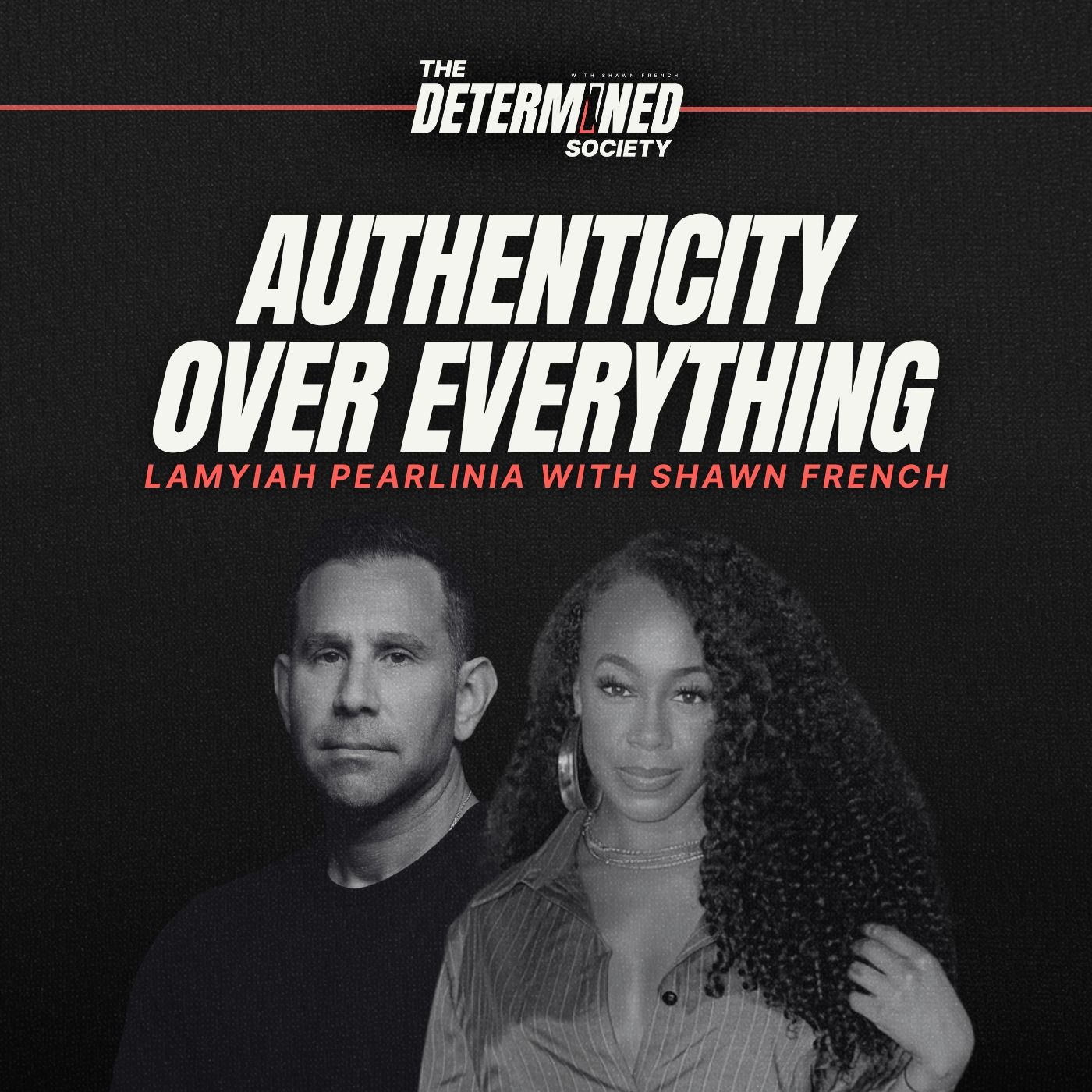
Determined Society with Shawn French | Adversity & Mindset
Career Pivots: How Adversity Builds Discipline | The Real Catalyst
01:30:07
Loading summary
Transcript570 lines
- [00:01]
A
With the American Express Platinum card, I can unlock experiences like no other. Since I'm always booking my next trip, I love that I can earn points on travel. Plus I get a resy benefit. So, you know, I'm hitting the restaurants everyone's talking about. And you can find out your welcome offer after you apply, which could be as high as 175,000 points. For experiences like no other, there's nothing like platinum. Learn more@americanexpress.com Explore Platinum Terms apply
- [00:31]
B
Start your day with Quaker Protein Instant Oatmeal.
- [00:34]
A
The instant oatmeal.
- [00:35]
B
Ready to help you tackle whatever your day brings. Like wrangling your toddler into their car seat. That was fun. Coaching your sixth grader soccer team. Go girls. And carrying all the groceries in one trip. Try Quaker Protein Instant Oatmeal, Granola and bars. Great taste and a good source of protein. Quaker Bring out the good.
- [01:00]
A
You yourself have gone through some hard moments in your life.
- [01:03]
B
Yeah.
- [01:03]
A
I mean, being the first woman in 40 years to graduate college and the
- [01:06]
B
first one to go to an hbcu. And that gives me joy. Even if I have to go home to Minnesota, which I'm not, because I don't want to go home to Minnesota.
- [01:15]
A
You're not going to have to go,
- [01:16]
B
even if I have to. My mom wanting to go back to school to get her GED because Maya went to college, or my mom buying her first home because anything is possible now because she's seen it in her daughter. My achievements and the places I've been, the people I have touched and impacted is far greater than something that didn't work out. It's far greater now that I. Now that we're chatting about it, now I kind of see we're walking. Is this therapy?
- [01:43]
A
Come on. Yes, it is. Welcome to the couch. What's up, everybody? Welcome back. I have a bombshell of an interview for you today. Lamaya Perina. She is a host of Inside South Florida and she has an amazing story. She Weren't you one of the first women to go to college in your family as well?
- [02:06]
B
First woman in like 40 years to graduate.
- [02:08]
A
40 years to graduate college. She went to HBCU Prairie View.
- [02:11]
B
Yes, I did.
- [02:12]
A
Now, they have great colors like LSU purple and gold, and you've got the gold nails and the purple pants. So I'm digging your color combo today, girl. So this is going to be a fun conversation. We're going to hear about some things that she's done in the past, things that she's doing currently, but there's Also a transition that she's going through right now and career in career, and we're going to talk about what's next with her. So without further ado, welcome to the show.
- [02:36]
B
Thank you. I did not choose to wear purple and gold on purpose. It just looked good today.
- [02:41]
A
Well, hey, purple and gold always looks good, my friend. That is the colors of royalty.
- [02:45]
B
Yes. Thank you so much for having me. I'm excited to be here.
- [02:47]
A
I'm so happy to have. You know, a lot of times, you know, whenever Matt says, hey, you got to interview this person. Done.
- [02:53]
B
Yeah, Matt Dylan does that a lot to me, too. I mean, he's good at that.
- [02:56]
A
He's good at that, but because he knows how to connect energies.
- [02:59]
B
Yeah, right.
- [02:59]
A
He knows how to connect good people with other good people that are going to have good conversation. And I've never had a bad recommendation from Matt Dillon. So when he said, like, you need to interview this chick, I go, well, when? Because I have some open. I have some open slots this week. So thank you for driving all the way over.
- [03:17]
B
No problem. I enjoyed it.
- [03:18]
A
Yeah. You got stuck in traffic.
- [03:20]
B
I got traffic. Took me by the neck.
- [03:22]
A
Did it really?
- [03:23]
B
But that's something I learned about Florida. Like, there's traffic everywhere. That's been the biggest lesson for me, is calm down in traffic. If you don't, your day will be ruined.
- [03:32]
A
You. Especially here in Naples.
- [03:34]
B
Really?
- [03:34]
A
Oh, yeah. Pine ridge is brutal. 41's brutal. It'll take me an hour and a half to get home.
- [03:41]
B
Really?
- [03:41]
A
Then I live 12 miles down the road.
- [03:44]
B
Wow.
- [03:44]
A
Yeah. I mean, as soon as you hit a certain time, if you don't get out of the studio by, like, one. Yeah, you're crushed. Oh, you're crushed. But I think you'll be good at going back.
- [03:53]
B
Yeah, I think so. It was not a lot of traffic going back.
- [03:56]
A
But where are you in. In the East Coast? Are you in Miami or.
- [04:00]
B
No, I'm actually in Davey. So my station was. Is in Plantation. And so I lived literally the next exit. Because when I moved, I said, I haven't been in traffic for such a long time. I was in Illinois, Springfield for three years. No traffic. Everything's 10 minutes away, really. And I'm like, if I go to Florida, I'm not driving more than five minutes to work. And so I've did it, and it's been great.
- [04:25]
A
And. And over there, though, like, over there, sometimes five minutes can take 40 minutes.
- [04:30]
B
Oh, for sure.
- [04:31]
A
I mean, it's wild. It's wild.
- [04:33]
B
Welcome to Florida.
- [04:34]
A
Yeah, welcome To Florida. Good old season. Everybody down here right now, cluttering up the road. But I like when they're here. Well, our economy thrives much better, especially here in southwest Florida, because we're much more seasonal than over there on the East Coast. There's not a whole lot over here. So, you know, during spring training or when the snowbirds come down, like, our economy thrives, it is a little irritating because you can't get into restaurants. I'm like, dude, I just want tacos and tequila. It's not that hard to get. Like, why, why am. Why can I not get in to get a freaking taco?
- [05:03]
B
And so you know what? When I first went to Miami, no, when I first got here, I'm like, oh my God, traffic is amazing. There's traffic, you know, you're a small. Well, it's not small, girl, but I lived in a small city for such a long time. And getting to the big city, he's like, okay, there's people here, Traffic. And then slowly but surely, I'm on the phone with my brother and I'm like, why are these people out at 9 in the morning? Where are they going? He's like, dude, you live in a vacation state. Yeah, people are there to have fun. Just relax.
- [05:29]
A
But it's funny because, like over there, like, people don't get up super early and, and they're not moving around like.
- [05:35]
B
No.
- [05:35]
A
My wife, when I met her, she lived in Brickell. And you know, we did the same job for a very long time. We were both selling payroll for the same company. And I'd be out in my territory by like 8am and she'd be waking up at 8 or 9. I'm like, dude, are you gonna work today? She goes, oh, it's Miami. They don't wake up until 11.
- [05:52]
B
And you know, Miami people, I always say that they have like these interesting made up jobs. Almost everybody's creating and influencing and like leisure. Everybody's in their Spanx. I mean, there's Spanx, there's Spandex, they're Spanx. I'm old.
- [06:06]
A
Could be Spanx too.
- [06:07]
B
Old, am I? But spandex and sports bras and they're just chilling. I think that's one thing I do like about Miami. And even for Lauderdale, everybody's happy, or it seems happy and just on the go and at their own pace. Yeah, they're just vibing and living.
- [06:23]
A
That is the key word, living. I was about to say they're living their life and I think that's so important right because there's so much distraction right now going on in the economy, in the government, politically, whatever. To be able to truly live your life, I think is such a gift because you can't worry about all the shit going on. You can't worry about what's going to happen. I mean, right now. I mean, look, you're going through a career transition. You didn't know that was coming. And we'll get to that. Right. But, like, you can't worry about the things that haven't happened yet because now you're living in the future and that's massive anxiety.
- [06:55]
B
Yes.
- [06:55]
A
You know, and then the, the. The true goal is to be here now. Right. And that is such a hard thing to do, especially as an adult. I have three kids, wife. You're always thinking of, like, things in the past or things in the future and worried, but it just pays huge dividends to be present and to try to focus on what you can control in that current moment.
- [07:18]
B
Yeah, yeah, I get that. I think for me, I'm an ambitious girl, and I've always been ambitious. I mean, I come from a background of women and men who are like hustlers, but. And I played a lot of sports growing up and I have a lot of brothers.
- [07:35]
A
Okay.
- [07:35]
B
I have six brothers and one sister.
- [07:36]
A
Oh, wow.
- [07:37]
B
All like, in sports.
- [07:38]
A
You're one of eight.
- [07:39]
B
Yes.
- [07:40]
A
I can't count.
- [07:41]
B
Is it eight, six, seven, eight. Yes. You're right.
- [07:43]
A
I did it. I did it. That's quick math.
- [07:45]
B
And it's between my mom and my dad's kids, but, like, we were all in sports. Very, very hustle, motivated and growing up, college, young adult life, working. I've always been, what's next? What's on the go? How can I climb this ladder? And in my industry, at first, I started as a news reporter and it always was, start small, at a small market, climb your ladder. Always think about how you can get to the next level, the next market, how you can get to these next industries or next companies. It was never smell your roses where you are. Enjoy life in small town Amarillo or midsize market in Springfield. It's always, how can I get to that next thing?
- [08:27]
A
That's interesting.
- [08:27]
B
Yeah.
- [08:28]
A
Because I'm wired that way. Yeah. You know, and so we'll hit certain benchmarks and we'll be doing certain things on the show. And from the outside looking in, they're like, dude, you're killing it.
- [08:37]
B
And I'm like, I don't feel like it.
- [08:38]
A
I don't feel like it. I need to do more, I need to do more. What's next?
- [08:41]
B
Right.
- [08:41]
A
Like, what is next? And I think there's. There's a healthy way to really, I guess, filter all that, because I don't think anybody should be happy where they're at in content, because to me, that breeds complacency. And then you start going the wrong direction.
- [08:57]
B
Right.
- [08:57]
A
Comfort kills. Right. So, like, for me, I want to know what that level up is. How can I push the envelope even more? How can we make it better? How can. And I. Sometimes I think I drive my team nuts, you know, like a good old rhino. Like, what can we do to make it better? He's like, dude, it's great. Like, no. I'm like, no, no, no, no. Like, what can we do to make it better?
- [09:13]
B
We exhausted all resources.
- [09:17]
A
I think that's very healthy. But it's also. I grew up with a father who was a hustler. You know, when. When he wasn't at work, he was out doing other stuff. Hustling.
- [09:26]
B
Yep. My dad did.
- [09:27]
A
Just the way it is.
- [09:28]
B
Yes.
- [09:29]
A
You know, and. And it wasn't until later on in life I learned what that was. Side jobs weren't side jobs. Oh, okay. You know what I'm saying? But it's like, we had a lot of different stuff, and we, you know, he had a boat, he had nice cars. Like, you know, we lived a nice life. But, you know, when you. When you witness that type of thing, you're always looking to grow. Like, how can I get more? How can I. How can I make. And for me, it's more about how can I impact more? Because I know if I impact more, then bottom line's gonna work itself out. Right?
- [10:01]
B
Yeah, I feel that.
- [10:02]
A
Yeah.
- [10:02]
B
That reminds me of my dad, too. So my dad growing up, he was a sheriff all my life, but he was my basketball coach. He made sure that he was my basketball coach, my T ball coach. If he had it his way, he'd be. He'd be my teacher, too.
- [10:15]
A
That's crazy.
- [10:16]
B
But when I went to college, he got a second. An airline just to make sure he had more enough money, but also to make sure I could fly from Texas to Minnesota for free.
- [10:29]
A
Smart.
- [10:29]
B
And my dad never slept. Even now he's a retired sheriff, but now he is getting his PhD, he is an adjunct professor, and he works at a rec center. And I just said, dad, when do you sleep? He's like, and he does. And he does. Like, he does security for St. Thomas University in Minnesota.
- [10:45]
A
Okay.
- [10:46]
B
He's like the lead Security. And he's just. And he does, like, the little side gigs. We get extra money. When do you sleep? And he's like, when I can. And I grew up seeing my mom and my dad that way. My mom had multiple jobs. She was a daycare provider at our house and worked at Walmart after the kids left.
- [11:03]
A
Wow.
- [11:04]
B
My parents really never slept. So that. That. I like to call it that perseverance that's embedded in me. So when we go back to saying, like, being very ambitious and always thinking about the next thing, I've seen it all my life. And my dad just told me the other day, I. I've always taught you how to fight, but I never taught you to let things just be.
- [11:24]
A
Oh, damn. That's. That's. That's impressive.
- [11:26]
B
Yeah.
- [11:26]
A
How did that rest of that conversation go?
- [11:28]
B
I was like, wait, we don't need to let it be. We need to keep going.
- [11:32]
A
Yes.
- [11:32]
B
But now I get it, though. That was just a couple weeks ago, and this was. Are we going to talk about my job now? Cause I'm ready to get into it.
- [11:40]
A
Just keep going. Okay, I'm. I'm on you.
- [11:42]
B
This was with my job. So I'm a lifestyle tv, and I've been here for a year, about three, four months, for a lifestyle show. That's my thing. Fashion, food, faith, females, fun. Those are my five Fs. And my company's taking a pivot because we are, of course, broadcasting a sports game or. Sports. Yeah, sports game. And that for the Florida Panthers, and they're pivoting to doing more sports programming for the show. And that kind of dissolved my position as a lifestyle host.
- [12:16]
A
Damn.
- [12:17]
B
But before that, they were like, just do more Florida Panthers stuff on the show. Just do more. Just do more sports stuff. And I'm like, I don't want to do. That's not me. That's not me. And I'm like, do I need to pivot? How long will that pivot last for me? And. And then it becomes, well, what do I need to do next? What does this look like next? And what if I don't have a job after this? And those. All those concessions of questions and anxiety, like you said, come into play. And I'm fighting everything. I'm fighting the leadership about what they want. I'm trying to make meetings happen to make sure we can save our show. And then all of a sudden, we get this meeting, and it's like, we're changing the direction of this show, and your job is being impacted by it. So I had no choice but to stop fighting.
- [13:03]
A
Yeah.
- [13:04]
B
And I spent maybe two months meeting with leadership. What do you guys want on this show? Meeting with the other people on the show. How can we pivot? How can we do more sports even if we don't want to? What does that look like? And that was my fighting to be. To persevere, but it was just time to just let it go and let it be.
- [13:23]
A
You know, that's a good point because, like, when you look at things like, you know, even in my industry, right. I mean, I get a thousand unsolicited pieces of advice every single day. Every single day. And it's usually, hey, you should talk more about this. This is trending. Go here. I'm like, but that's not me, you know, and so, like, I can't sell out, you know, I can't have conversations bashing one political side or the other political side. I can't. I can't get involved in a lot of different things because it's not going to come off authentic. And it's going to. People are going to be. That's forced. Like, you're doing this because you, you need to do this because you feel that if you don't do it, you're going to lose viewers and listeners. Okay, if I lose them, then I'll get more. Right. I want to be able to be me. Because if you were to go and do all the Florida Panther content and dive into the sports, if it's not your passion, if it's not a part of the five Fs, then it's not going to make sense. And it may do well, ratings wise, but you'll be dying inside.
- [14:31]
B
Absolutely.
- [14:31]
A
And it's not worth that.
- [14:32]
B
And I knew that. And in a part of me, my therapist just told me this yesterday. It's time to start trusting myself. A part of me is like, well, maybe this is just what I have to do. But another part is like, this isn't who you are. So why are you putting your own needs aside to fit into somebody else's mission? This is a business.
- [14:54]
A
Hey, guys, we're going to take a quick break and we're going to slide into our recovery segment brought to you by Therabody. What an amazing technology that therabody has. And it was founded on a really cool story by Dr. Jason Worsland. It was founded on pain. He got into an accident and had this extreme pain in his arm and found that percussive therapy really helped. So he created the very first version of the theragun with A makita drill just to pilot and test to see if his pain could be relieved or by percussive therapy overall. And surely it was. So now birth to the Theragun and now Therabody who has a multitude of products to help you recover emotionally and physically. And some of the products even help with stress, meditation and better sleep and just overall better wellness. And when I had Dr. J on the show earlier in 2025, it really spoke to me because his platform was founded out of out of physical pain and the determined society was founded out of emotional pain. And so it felt natural for us to partner up. So here we are, an official partnership with therabody and I want to talk to you about some of their products today that I've been enjoying, that I think you need to understand and know more about so you could potentially implement them into your life. And I'm not going to get into a big deep dive of the actual science and everything like that. I'm just going to give you some anecdotal information based on the products that I'm using and that my wife is actually using too, that is helping us out a great deal at home. Because the great thing about these products, guys, is you can use them anywhere. You can use them in the gym, you can use them at home, in your bed, in your living room. Hell, you can even drive with a Thera Theragun Pro plus in your car and use it on your quads, use it on your arms, whatever that is. The first thing I want to talk about is the Theragun Pro Plus. I bring that in my gym bag every day to the gym and when I'm warming up, I use it to warm up, I put it on my arms. Whatever body part I'm using that day, I activate those muscles. And what I find is I'm able to move my body a lot quicker and I'm a lot stronger on those days that I do actually bring it and utilize it. I just think it's a great way to understand your body and the connection between your strength and your muscles and being warm and being able to perform because it's one thing to go work out, but it's another thing to perform while you're doing it. And the Theragun Pro plus helps me do that. Another thing that I really, truly enjoy is that jet boots Pro plus. These things are wire free. There's no hassle, there's no cords, there's infrared LED light, there's that compression therapy. And I've been having bad pains in My ankles, both of them, actually, for about a year. And I don't understand where it's coming from. But when I started using the boots religiously after a leg day or after a cardio session, I throw those boots on and I find myself a lot looser. Afterwards, I find myself lighter, and then the next day, there's no pain in my lower extremity like my feet. The other thing that I really enjoy is that product really helps me recover a lot quicker. And let's face it, that's the most important thing when we're trying to move our bodies or we're trying to succeed in life, is we want quick recovery emotionally and physically. And these products help me do that, and they can help you do that as well. One of the other things that I really want to go into, because it's helping my wife out a ton of with headaches and being able to distract from the noise in our mind, and honestly, it helps me with that too, is the smart goggles. Whenever we feel a slight headache coming on or things are getting really heavy, just in our minds, just thinking about all the stressors, all the things out there that we can't control, we throw the goggles on, get in a quiet place, and there's different cycles on there and different intensities of vibrations and massaging that you can either turn it up or turn it down. And what I really enjoy is it allows me to focus on what's going on with just me, and I think about things. And the massaging with the smart goggles relieves either headaches, and it relaxes me and relaxes my wife to a point where we can fall asleep better. We are preparing to kind of downshift and shut down and slow down for the evening. So I heavily recommend them. The other thing it's really good for is just creating a peaceful time in your day. And what I found since using the smart goggles and then the other products is it works for me, it works for my family, and I know it can work for you, too. So I want you guys to think about things that you are struggling with. If it's lower back pain or you wake up in the morning, your neck is tight, I'm gonna tell you, the Theragun pro plus will help that out. They have cold therapy on it, hot therapy. I mean, think about that. When I opened that box and realized that I could have heat therapy and cold therapy and a theragun changed everything for me and also really made the thing that I hate doing the most is warmup. Made that very easy for me just by applying it to the muscle group that I'm going to use before I do it and in between sets, which promotes quicker recovery between sets. So if you're looking to go high volume or to lift heavy weights, I strongly consider that all these products are there to help you move along in your day with less pain and recover quicker. So go check it out. Because now, like I said, the official partnership has begun. And from now until the end of March, in your first order, you get 15% off your first order, not every order. So if you're going to buy some stuff, load up there in that cart for that first time, and you get 15% off, go to therabody.com and at checkout, the code is determined. So let me know how you guys like it. Until then, stay determined. That's something right there. We start to second guess ourselves, right? Like, well, maybe. Maybe I'm just missing it. Maybe I'm the problem. Right. And then you start making these concessions and then your happiness starts to dwindle down the drain. It starts to go.
- [21:31]
B
And anxiety comes in, fear comes in. And now you can't operate the way you used to operate because you're. You're moving out of lap. Yes, absolutely.
- [21:42]
A
You're cutting out of the flow. You can't be connected with God, the higher power, when you're worried about all these other things that people want you to be.
- [21:48]
B
Yep.
- [21:49]
A
I mean, I'm sure I'm. I mean, that's it right there.
- [21:52]
B
So good.
- [21:53]
A
I mean, that's it. Like, I'm gonna be me, and it's either gonna work or it's not. At least I know that I gave what I could. And, you know, I think it's important you know that when you said, you know, your dad taught you how to hustle, but he never taught you just how to sit with it or how to be. Just be.
- [22:12]
B
Yes. And that's so uncomfortable for me.
- [22:14]
A
I know. Like, because you shifted when you sit with.
- [22:16]
B
It made me. Made me want to run, right?
- [22:18]
A
No, because it's a physical reaction. Like, I feel that way too.
- [22:21]
B
Yeah.
- [22:21]
A
Because, like, I don't sit with things. I. I can't sit with things. If I need to do something that speaks to me. If I can see it right? And then I can get the. And people make fun of me about this all the time. If I see something, if I close my eyes and see it, that's one thing. That's a check mark. But if I can feel the emotion of attainment, then I move as fast as I can because I know I'm gonna make that my reality. But if I can't do those two things, then I can't do it, because it's not gonna be right. It'll never come off good. But sitting with things, Sitting with it.
- [23:02]
B
And that's been the biggest lesson in my life for the past couple of months. Sitting with it. It's uncomfortable. The thought of losing your job, laid off, whatever. It is the most uncomfortable feeling because I'm someone who likes to have control over my narrative. I am the person that says, all right, so this is next.
- [23:21]
A
Yeah.
- [23:22]
B
And this is where we're going, and this is how we're gonna get there. God literally was like, nope, you're gonna. First of all, I surrendered it to him. I said to him, okay, God, if we have to pivot to do more sports content, even if I don't want to do it, if you say, this is what we're going to do, let me know. Let me know. Yep, I'll do it. And I was ready to do it. And then he gave me a ram in the bush. Abraham. Abraham. Do you know that story?
- [23:44]
A
Yes.
- [23:44]
B
He gave me that ram in the bush. I was about to cut off my own baby. My own baby. Right. What I worked so hard to become. Oh, my gosh. Oh, my God. I'm having a revelation now. What is this but my own. My own self, like, my own baby, this woman, this. This passion that I've worked so hard to be, to achieve and to obtain. I was going to cut it off to fit into a mold, a piece of someone else's puzzle. Can you believe that? And God was like, no, we're going to release you in the most. The best circumstances you've ever seen before, because I've not had a job before. And it's like, this is different. This is different. This is him saying, you've learned what you needed to learn here. You're going to take it somewhere else. You're going to shine.
- [24:31]
A
Yeah. You're gonna end up doing your own thing. You're gonna end up doing your own thing, and it's going to be awesome. I mean, like, listen, I. You know, my wife is better at this than me, but I can read a lot of different people's energies, and I know when someone's special, you're special.
- [24:44]
B
Thank you.
- [24:45]
A
Absolutely. And. And the thing that you got to realize is, you know, the corporate game.
- [24:50]
B
The game.
- [24:51]
A
The game.
- [24:52]
B
Mm. That's the game. I'm learning it.
- [24:55]
A
The game is simple.
- [24:57]
B
Yes.
- [24:57]
A
Okay, you play it or you don't stay. And, you know, one of the things that my wife was really good at is not playing the game. And when I was around her a lot more, I started to not play the game. And then you quickly realize that you are a number. And I said, I don't think. I don't think everybody should play the game. I think you need to play it for long enough till you can figure out what your true gifts are. And then it's like, okay, this doesn't align. I'm out. Like, I'm gonna be me, you know? And if you don't like it, then we can talk about it. But playing the corporate game and fitting into their box and their narrative, that's part of the job description, right? It's like, okay, if you're a salesperson for a certain company, then you need to be a certain way, you need to do a certain thing, and you need to check off all these different KPIs every single day and do what they say. Hey, if you have to pivot to a completely different product or topic.
- [25:52]
B
Yeah.
- [25:52]
A
Then, hey, if you would have been like, yeah, I'm all in. You wouldn't have been happy, but you'd still be there. But you'd be drowning in misery.
- [26:02]
B
Yeah. You know, I always look at my career as relationships, too, because even in relationships, I cannot settle with just anything. And I always make those things equivalent. Like, I'm really happy in what I'm doing at my. In my career and the impact I've had and the people I've met and the stories I got to tell. And yes, I can mold and shape shift, but like you said, I'm never gonna be happy. It's just in relationships, it's the same thing with friendships too. You know, you can put up with a terrible person or someone that is not equally yoked. She'll never. It's never gonna be what it needs to be.
- [26:41]
A
Yeah. No. It's gonna be a season, and there's gonna be a massive blow up at the end, and it's not gonna feel right.
- [26:46]
B
At what cost do you lose your purpose and peace. And peace.
- [26:51]
A
Yeah.
- [26:52]
B
And I'm not. I realized that those things mean more than to God, than anything.
- [27:01]
A
Yeah.
- [27:01]
B
And that's his will and his prayer. It's not even about me, because I was ready to do it. All right, this is what we got to do to stay. But God said, no, it's not you.
- [27:10]
A
I love that. And it's great that you are listening.
- [27:13]
B
Oh, gosh. Yes.
- [27:14]
A
Because in. In times like this, and I think it's important for the audience to know this, like, because they're sitting there, think, okay, well, I'm spiritual as well, but maybe sometimes I don't have the discernment. If you aren't clear and you are desperate, you will not make the right decision out of lack.
- [27:31]
B
Yes.
- [27:32]
A
You just won't do it. But it's a special moment when you can go, you know what. What's the worst that can happen? You know the worst thing that could happen? You know, they dissolve your position.
- [27:45]
B
Yes.
- [27:45]
A
But, like, that's not even the worst. I mean, you're still gonna live. You're still gonna have breath in your lungs.
- [27:49]
B
I thought that my world was going to collapse.
- [27:51]
A
Walk us through that. Why did you think that?
- [27:53]
B
Okay. Okay.
- [27:54]
A
I think it's valid. I think it's a valid emotion. I'm just. I'm just curious on your thought process.
- [27:58]
B
I think so. I come from. I lived in a single parent household. My mom and my dad were never together. And I'm. I am. My mom's just with her children. I'm her first to graduate college. Everyone lives home. My brother's never. My brother went to college. My oldest, he didn't go back and graduate. My youngest never went. And I am the one that made it out. Made it out. And my biggest fear is to go back home with my tail tucked between my legs. That, to me, I'm still working on this in therapy, but that resembles failure to me because my mom is my mom, my dad, they're so proud of what I've achieved. And I have been told during this career, I've been in it seven years, I have been rejected multiple times. You're too small. You're too short. Your voice is not right. Your hair's too big. You're not polished enough.
- [28:58]
A
Your hair's too big.
- [28:59]
B
Yes. I've told the story of one news director calling me two or three times to let me know why he wasn't hiring me and to make me reapply, and he still didn't hire me. And then maybe months later, he was like, I reject that. I mean, I regret that. I regret not hiring you. So you live with this. This fear of rejection and not being wanted when you're trying to break through this career and then you get the job and you're like, yes, okay, I got the one. Yes. And then you move to your second yes. And your third. Yes. And now it's like you're in Miami, Fort Lauderdale, Florida, away from Home from Minnesota, all my family. And it's like they want you to change. And if you don't change or you can't, they're going to dissolve your position. So what happens next? Do I go back into this pool and apply and. And face being rejected again? Or told you're not good enough or told it's hard to get back into the industry? Or even told lifestyle is not a thing anymore? Or what if God wants me to completely pivot my career? And at this moment, my identity is my career. It's been my career for seven years. I've been fighting to be this girl, and now all of a sudden, it's going to be gone, literally from under me. What's going to happen to me? And that's how I felt. I remember cleaning my house a couple weeks ago, crying because I'm like, what if I don't live here anymore? What's going to happen? I was so fearful of what would come of me. But when they told me, your, your position is being impacted, basically you're getting laid off, I didn't feel any of that. I felt peace. Okay. And I was like, okay, God. I had to remember, God, you brought me here. I didn't want to come to Miami. I didn't want to. There were so many things that intimidated me about this, this, this station and the city. And I was like, no, I'm not going. But I did. And I was an Emmy award contributor, won a 40 under 40 award within the first year of me being here.
- [31:07]
A
That's so badass.
- [31:08]
B
And I have to remember that part.
- [31:10]
A
Yeah, yeah.
- [31:11]
B
You didn't have a job for three months before you got here. You know, you were still looking. But God sustained me, and I have to trust that he sustained me. I can't live in, oh, I'll be poor and I'm broke and God wants me to move back home and fail. He does not want those things.
- [31:26]
A
You know, it. I want to tell you a quick story.
- [31:28]
B
Am I talking too much?
- [31:29]
A
No, you're amazing.
- [31:30]
B
Okay, good.
- [31:31]
A
Amazing. This is what makes great conversation.
- [31:33]
B
Okay.
- [31:33]
A
They don't want to hear me all the time. They want to hear you moving home.
- [31:40]
B
Yeah.
- [31:40]
A
If you know, you. You said that. For me, moving home is symbolizes failure in 2007 and 8. It's when the mortgage meltdown happened. Okay. I'm originally from the San Francisco Bay. Played baseball at lsu. After, you know, I graduated lsu, I came to Florida because my parents migrated here. I spent 20 minutes in North Port, Florida. When I say 20 minutes, it's probably about two, three months.
- [32:08]
B
Okay.
- [32:11]
A
I was taking my teaching certification so I could teach, so I could coach baseball. Because he coaching baseball was where I could hide. That's what I thought my identity was.
- [32:23]
B
Yeah.
- [32:23]
A
Okay. And so it was back in the day when you had to go and do this is I'm aging myself. It's when you had to take the test on Scantron and bubble in the answers.
- [32:33]
B
I remember Scantron.
- [32:34]
A
Yeah.
- [32:34]
B
You're not that old.
- [32:35]
A
I did that and then they lost the test. So I. I went and got my stuff.
- [32:39]
B
They lost your test?
- [32:40]
A
They lost my test. I'm like, to hell with this place.
- [32:43]
B
Okay.
- [32:43]
A
I went home, packed up my car and drove across the country back home to California. No job, no place to live. Figured it out. Way home, had a place to live and had a job on the way home. Okay. Started doing mortgages. My whole point of the story is everything was going great until it wasn't. I walked in one day because every was talking about the real estate bubble. It's going to pop, it's going to burst. Home values are going to drop and rates are going to go sky high and all the programs are going to change and no one's going to be able to qualify for loans. I walked in one day and I looked at my board at a pipeline board. I had 12 loans closing that that month. A total of over $70,000 in one month. I was in my 20s. Opened up my computer, right. Logged in, went to my email. Loan program killed. Canceled, canceled. Canceled. Canceled. Because it popped. I lost every single loan.
- [33:41]
B
Yeah.
- [33:41]
A
In that pipeline. I made $0 that month. I had a mortgage, I had a car. I had my car repossessed. I had to short sell my house and I had to move. I had to tuck my tail between my legs and move to southwest Florida. And I lived in my mom's house. I didn't have a cell phone because I couldn't afford it. I didn't have a car because it got taken from the bank. And my mom at that time wasn't even living there. She was living with someone she was dating. And so I was living in this house. No cable. I was watching. I was watching DVDs of Friends over and over and over again. And then I built my life here. And the trajectory that it went, it was the biggest blessing that I think I've ever come across.
- [34:27]
B
Yeah.
- [34:27]
A
But it started out as me feeling like a failure. So even if the worst thing ever happened in your mind and you had to move back to Minnesota, you have no Idea what's waiting for you, what can happen there.
- [34:40]
B
Yeah, that's true, too. That's true in every aspect of this for me, if I go back home. But God's actually confirmed to me, like, on my way here, as a matter of fact. Can I say it?
- [34:52]
A
Yes, of course.
- [34:54]
B
I'm driving. And from Davie to Naples, part of the road is like, just fields. Like, it's just flat land. And when I used to be a reporter in Amarillo, that's where I first started. I used to drive like five hours to Dallas to go hang out with my friends.
- [35:10]
A
Oh, my God, it's such a drive.
- [35:11]
B
I was so thirsty to be with my friends.
- [35:12]
A
I know. Clearly, five hours. To hell with that.
- [35:15]
B
And then, like in Springfield, Illinois, I would drive an hour and a half to go to St. Louis to go hang out. And it was these flat lands all the time, just like this long drive, boring drive. And God said, do you remember the time where you had to drive and see all this dry land, this field? He said, you will never have to do that again. But before that, maybe 20 minutes, I'm like, lord, if we have to leave here, I said, I'm gonna not even finish that sentence. I'm gonna just surrender it to you. I'm just surrender whatever we have to do. If we have to leave, if we have to change careers, if we have to go home, if we have to go to a small city again, I surrender it to you. Don't wanna do it.
- [35:55]
A
No, I get it.
- [35:56]
B
But I will. And I just got confirmed to me. And I hope I can say it, Lord, but you'll never have to do that road again. And. And that's it. But still, like, okay, God, but what if I'm not going to be in media anymore? What if I have to be a publicist or whatever and I'm scared? He's just like you said, no idea how that can change my life.
- [36:17]
A
So, first of all, media is always going to be there.
- [36:19]
B
Always. Yes.
- [36:20]
A
You can have your own platform, right? Because you can do that now. I know I did it. Yeah, I did it. And now it's the only thing I do. I'm living the dream, right? It's hard and it's really not a dream. Half the time it's like, oh, my God, this is hard, right? It's very hard. But. But people trust these types of platforms, right? They. They go to it for the information, they come to ours for stories of determination and hope. And when I'm listening to you, this is all perseverance grit, and determination was a perfect fit for a great conversation.
- [36:55]
B
Yeah.
- [36:56]
A
But the other thing you got to think of is, like, what if I have to be a publicist? You would smash it.
- [37:01]
B
I know. As a publicist, I think I do great.
- [37:04]
A
Yeah. I mean, you would. You know, sometimes it can be a little dirty. Right. Because all publicists have their own angle. Right. And they. They allow their talent to do certain things as long as it fits what they want them to do. And that's the. That's the ugly part of the industry. Right. I've had many celebrities that have wanted to come on the show that I've had contact with, and then their PR say, we're not doing any press tours right now. I'm like, yeah, but this A list actor just said that he wanted to do. We're on a pause right now.
- [37:35]
B
Yeah.
- [37:36]
A
What world do I live in right now where the talent is like, hell, yeah. But the publicist is like, no. That's a strange thing for me because me, I mean, I love Matt. He's my. He's my public. He's like, no. I'm like, sorry, dude. Like, you're giving me. You're giving me some leeway on this one because I want to do it. Yeah. I think we should always be able to do what we want to do, as long as it doesn't hurt the platform. If he says don't do it because it's going to hurt you, then. Now I'm listening. Right Now I'm listening.
- [38:05]
B
Right.
- [38:05]
A
Right. But if you're telling me, like, no, you don't want me to do anything because I'm on a break, I'm like, I can't. I can't afford to take a break.
- [38:11]
B
Right.
- [38:12]
A
This is too much fun for me.
- [38:13]
B
Yeah. Yeah.
- [38:13]
A
My whole point is, is, like, all these things that you're going through and thinking about. Yeah. What if.
- [38:19]
B
What if.
- [38:19]
A
What if. What if you did have to do it?
- [38:21]
B
What if it works? That's what I've been on lately. What if this works?
- [38:25]
A
Yeah. I think that's something that you always have to hold on to. Right. Because, like, no matter what you choose, no matter what you go into, there's going to be a point of friction where it's not going the way you want it to go. Right. I mean, happens to me all the time.
- [38:39]
B
Yeah.
- [38:39]
A
Right. But then it's conversations like this that re. Energize me, that allow me to feel like we're in it. We're in the game. As long as these types of conversations Happen. I'm in the game, and then I can push a little bit more and figure out what it is I need to do. But if you're in this. You said it before, in this mindset of lack. Can't do it. And we all get there. We all get there, but we got to shake out of it as quickly as humanly possible, right?
- [39:11]
B
Mm. Yeah, you do. You do. I want to operate in abundance. I. I am operating in abundance.
- [39:19]
A
Yeah.
- [39:19]
B
Because I'm covered, and everything's gonna work out.
- [39:23]
A
People look at people like you and me when we say that kind of, like, stuff, and they don't understand it. They don't. They don't. They don't understand it. And it's okay. Yeah, it's okay. Because I. I mean, I think that when you grow up around people that hustle consistently and you see things work out, and then you yourself have gone through some hard moments in your life.
- [39:46]
B
Yeah.
- [39:47]
A
I mean, being the first woman in 40 years to graduate college, like, think about that.
- [39:52]
B
And the first one to go to an hbcu. I didn't realize the importance of it at all during college. I recently realized the importance of it because now I have younger cousins who are graduating from HBCUs, and that gives me joy, too, because there's no way I can fail now.
- [40:13]
A
Yeah.
- [40:14]
B
There's no way. Even if I have to go home to Minnesota, which I'm not, because I don't want to go home in Minnesota.
- [40:19]
A
You're not going to have to go. No.
- [40:20]
B
But even if I have to, my achievements and the places I've been, the people I have touched and impacted, is far greater than something that didn't work out. My cousins, my younger cousins are saying they want to go to Spelman, Alabama. I think it's Alabama. Maybe it's Alabama. Somewhere in Alabama. But just these different HBCUs because Maya went, or my mom wanting to go back to school to get her GED because Maya went to college, or my mom buying her first home because anything is possible now because she's seen it in her daughter. My achievements in the way God has blessed me to bless others is far greater than any layoff, any mission delay. It's far greater. Now that we're chatting about it now I kind of see we're walking. Is this therapy?
- [41:14]
A
Come on. Yes, it is. Welcome to the couch. Welcome to the couch. We get all the work done here.
- [41:19]
B
Yes. Like, now I see these things, but, yeah, I. What if it works? What if it works?
- [41:25]
A
You know, I think that the special thing when when we're going through creating something is to stay in that framework. What if it does work? And then you get to a point after enough. What if it does work? And be like, no, it's working. Like it's gonna work. You have to get to that point because there's gonna be enough people rooting against you.
- [41:50]
B
Oh, yeah.
- [41:50]
A
And so, like. Like, internally, you have to believe without a shadow of a doubt, no matter how bad you are at the beginning at something, it's going to work out. You are going to pull through. I go back and I look at things from, like, two, three years ago, and I'm mortified of how bad I was.
- [42:11]
B
But you kept going.
- [42:12]
A
But at the time, I thought I was it. And so I'll look back in another year or two and be like, wow, you sucked then. But. But that's the point, right? It's like, when you create something, you. You have to be willing to suck at it and eat dirt for a very, very long time. Because when you get to a point where you're thriving, you appreciate it much more. And the humility level is so much greater than walking into something and being dope.
- [42:37]
B
God, you're good, man. You should also do therapy. For real.
- [42:41]
A
I think I'm just. I think I'm just counseling myself.
- [42:43]
B
But that's about sitting in it, too, though. Yeah, sitting in. No, sitting in it. Knowing that you're. At the time you said you knew you were it, but sitting in it and keep going, you know, confronting and facing everything, because that's where you grow. When you avoid it, you. You could have been like, I don't think that was good. I'm going to just stop here. And what could have happened?
- [43:05]
A
You know, I think adversity is the real classroom, man. Yeah, you. I did a TED talk in Naples, and my talk was adversity is the real classroom. And we go. The whole conversation was about, what does adversity teach you? How can you be a lifelong learner? What are the things that you can do every single day that can really amplify who you are because of adversity? And I don't think. I don't think a lot of people look at it like that. They look at adversity as like. That's my stopping point. You know, I grew. I mean, growing up, being in athletics and you know how it is, right?
- [43:46]
B
Yeah.
- [43:47]
A
You know, God, seven siblings, right? And then. And then all of the things that you saw, your parents working multiple jobs, your dad not sleeping, your mom not sleeping, you know, all the Things. Adversity is the one thing that is constant in this world, and if you freaking run from it, you are not going to ever win.
- [44:08]
B
Nope.
- [44:09]
A
Because people think. People think the gift is the win. And this is why I miss Kobe Bryant so much. I get goosebumps every time I say this dude's name. He said, like, everybody thinks the championship is the thing. That's your reward. That is your gift. No, the moments leading up the chase, the training, the adversity, that's the gift. The other thing is just a trophy. But if you look at adversity as your move forward point, oh, my God, you will. For the audience listening, you will achieve more than you could ever imagine. If the moment something pushes back on you hard, you're like, you don't retreat. You put your face in it.
- [45:00]
B
Yes.
- [45:01]
A
That's the gift.
- [45:03]
B
It's like a game. It's like a basketball game. I can. Man. When we were 12, we went to, like, nationals. We were so good. We were so good in our stadium. We think we were like, 43 0. My dad's team, AAU Central Area Girls basketball team, just to shout them out.
- [45:21]
A
So cool.
- [45:22]
B
But we were, like, 43 0. And practice was so hard. And sometimes the games were so hard. Sometimes I remember, like, two girls had a concussion on our team. And then one of our other teammates broke her collarbone. And, like, I remember when she broke her collarbone, the game was like, 43, 45 or something like that. And we were down two minutes on the clock. We gotta figure out how we can tie this up. But Jada just broke her collarbone. And I'm looking at her sitting there crying. And my coach, not my dad, but my other coach, just took me out the game. You're not ready. You're not ready to face this adversity. You need to sit down for a little bit so we can win this game.
- [46:04]
A
Wow.
- [46:05]
B
That's one of the biggest lessons. And it's like, you gotta. Even if your collarbone's broke or someone's hurt on your team, you still gotta figure out how to face this up. Yes.
- [46:14]
A
Next up. It's gotta be that way.
- [46:15]
B
Let's go.
- [46:16]
A
And you know. And your team wouldn't have pulled through if the moments of practice weren't hard. Yep. So it's like, dang, that's good. I just. I reject the fact when people say, you know, this just isn't going well because there's too much resistance. It's like, well, if resistance builds you in the gym, then why can't it build you in Life.
- [46:35]
B
Yes.
- [46:36]
A
I mean, we go to try to go to failure in the gym, right? You try to, you know, the last two, three reps, you want it so hard you can barely get them up. But why in life do we want things easy?
- [46:46]
B
Wow. Dang. You also just reminded me I need to go to the gym.
- [46:51]
A
I went today. You don't go to the gym.
- [46:53]
B
I do, but I. I missed my hit workout two days in a row, and I know they're gonna get on my.
- [46:58]
A
Where do you go?
- [46:59]
B
Ufc.
- [47:00]
A
Oh, yeah. Really?
- [47:02]
B
I just wanted to go for the vibes at first. I just wanted to go to make
- [47:09]
A
friends, and there's nothing wrong with that.
- [47:11]
B
And I love it now. And I'm in the hit, and I do Pilates there. I love. And I have clothes now. I'm cute.
- [47:17]
A
You have UFC clothes. You got some fighter clothes. You look a little dangerous, you know, you walk around. Just did a workout at UFC gym
- [47:24]
B
with my pink outfit on.
- [47:25]
A
There you go.
- [47:26]
B
Walk around my headphones.
- [47:27]
A
Yeah.
- [47:27]
B
And I'm good at my hit class now, too. I'm really good.
- [47:29]
A
That's cool. How many days a week do you go?
- [47:31]
B
I go, three. Okay, three. Three a week. I go, well, four, actually. Monday, Wednesday, Friday, and Saturday.
- [47:37]
A
That's great.
- [47:38]
B
Yeah.
- [47:38]
A
That's really cool.
- [47:39]
B
Yes.
- [47:39]
A
You know, Pilates is something I've never tried.
- [47:41]
B
You gotta do. And.
- [47:43]
A
And listen, so many of my friends that are fitness people on online, I mean, the. The female ones are like, I'll comment on their stuff. They go, sean, have you ever done Pilates? I'm like, nah. They're like, trust me, you need to do it.
- [47:57]
B
Yes.
- [47:57]
A
And it's like that comfort level, right? It's like, I need to figure out a place where. Not that I'm comfortable going, right? But I'm just not gonna walk into a random Pilates studio, go, yo, I'm here. You know, like, let's do this. Because I remember one time. Okay, this is a funny story.
- [48:11]
B
Don't do that at any Pilates studio. No, it's hard.
- [48:14]
A
I mean, like. I mean. I mean, I see people like that that are in. I follow on Instagram, that are literally doing some small movement, and they're dripping and they're shaking. I'm like, I don't like that. Like, no, no, no, no, no, no, no. But. But I think it, you know, for overall, you know, fitness and stability and balance, I think it's smart, you know? But I got a funny story to tell you. So years ago. I mean, way, way, way long ago, babe, trust Me, when I was living in California, I was dating this. I was starting to date this girl, and she asked me if I want to do hot yoga. I'm like, absolutely. Because, I mean, like, yeah, I'm gonna go.
- [48:53]
B
Yeah.
- [48:54]
A
Because I'm. I'm working here, you know? And it was the worst experience of my life. I was puking everywhere. Like, I was sitting there dizzy. That is some hard stuff. So people think that, like, if you're not lifting weights, if you're doing Pilates or you're doing, you know, hot yoga, it's really not exercise. Like, that was the most tired I've ever been in my entire life.
- [49:12]
B
Pilates. When is when I first started seeing that, like, my body change, where my mom was like, on FaceTime. Why do your arms look so sculptured? I'm like, pilates?
- [49:22]
A
Yeah. Because I do the work, Mom.
- [49:24]
B
I do it.
- [49:25]
A
I do the work. I don't stop. But, yes, you have to get back in there.
- [49:28]
B
I do. I do.
- [49:30]
A
Tomorrow's Saturday, so you're going to go tomorrow, right?
- [49:31]
B
I'm doing my Pilates tomorrow.
- [49:33]
A
Okay.
- [49:33]
B
But Monday, back at it. Hit workouts. I like it. People need to go to. Like I said, I went for the vibes because I wanted to meet new people, but I got so intimidated at first because everybody seems like they know what they're doing, and everybody looks amazing. Here I am just bouncing around, trying to figure out where the app machine is. But now, because of consistency and the community I've built with my Hit Workout and Pilates class, I love it.
- [50:01]
A
See, I think it's.
- [50:02]
B
I love it.
- [50:03]
A
Now we're on fitness. This is great. It's a. It's a fully comprehensive conversation.
- [50:07]
B
Yes.
- [50:08]
A
So in most of my conversations, and Ryan knows, always comes back to, this is the gift of movement.
- [50:15]
B
Yeah.
- [50:15]
A
It's a true gift. And a lot of people look at it as a chore. But, like, if you're a cripple, would you regret?
- [50:22]
B
Right?
- [50:23]
A
Would you regret not?
- [50:24]
B
Yeah. Yeah.
- [50:26]
A
But, like, everybody needs to do what they like to do. So there's a lot of misdirection on. You should do hit. You shouldn't do hit. You should just do resistance training. I was like, whatever. Whatever blows your skirt up, you go do, and you do it consistently, and you eat good. Right. And you're healthy. You know, for me, I love lifting weights, but back In November of 24, I was very overweight, so I started at Orange Theory Fitness, and I was going four or five days a week.
- [50:54]
B
Okay.
- [50:55]
A
And so I could get the Cardio in and burn the calories and be in a long enough deficit, a big enough deficit for a longer period of time so I could shed some weight. And once I got to a certain point, I'm like, okay, now I'm back in the lift, like, so I don't go there anymore, but I'm enjoying just the lift.
- [51:09]
B
Yeah.
- [51:09]
A
But I want to incorporate more movement. I want to incorporate some Pilates. I want to incorporate some. Some hot yoga, because I think it's important. And for me, learning how to stay calm and present is super important because I am so freaking high strung.
- [51:21]
B
Yeah. And it helps you with your breathing, too.
- [51:26]
A
Yeah.
- [51:26]
B
Everything is connected, Sean. Everything is connected. Working out helps you with your resilience. It helps you with your breathing. It helps you slow down. Because when I was first working out, I'm like. When they're like, you're not doing anything.
- [51:42]
A
Yeah.
- [51:42]
B
You're trying to be cute.
- [51:43]
A
Yeah, yeah, yeah.
- [51:44]
B
Like, you got to slow these things down.
- [51:47]
A
Slow it down.
- [51:48]
B
Just like life. Work it out, slow it down.
- [51:52]
A
You know, it's funny because. And I never played basketball, but I play baseball.
- [51:56]
B
Huh.
- [51:56]
A
And when things got hot, when the game was tense and on the line, coaches always said, slow the game down.
- [52:04]
B
Yep. Wow. Isn't that good?
- [52:07]
A
So when you're working out, you have to do things slower. Yeah. Right. Because you need. You need the negative to tear the muscle. Right. When you're breathing, you need to slow it down. I don't know what it is in basketball, but hey, hey, you know, in life, you got to slow the game
- [52:20]
B
down a little bit because you're going to miss something. Everything's moving at the same time.
- [52:24]
A
Yeah.
- [52:24]
B
You got them moving this way, then moving here. You're here. Slow down. So you can see. Where are your best options? This is good, dude.
- [52:35]
A
This is like. Oh, come on. Think about. Think about the parallel between what you're going through right now.
- [52:41]
B
This is crazy.
- [52:42]
A
It's. It's.
- [52:43]
B
Slow down, slow down, worry, slow down. Because I know it seems tight. I know it seems like the clock is winding down, but you're not in lack right now. You got the ball. You got the ball on your side of the court.
- [52:56]
A
Yeah. You're going down the court with 25 seconds left, and you're the one with the ball in your hand. You control it. You control it. Right? And so my wife tells me all the time, she goes, hey, you need to take a minute.
- [53:07]
B
Yeah.
- [53:07]
A
You know, And I. And I never listen. Right. I'm a flawed human. No. I need to Push. And it's more of like, hey, you know, just be grateful for where you're at right now. Still work, but don't worry about what's next. And that's very hard for me because I'm like, we've already covered this. I'm always looking for that, another level, because my biggest fear is staying the same. Like, I think that's decay. Like, if I look. If I look at myself a year from now and I look back and there's no difference. Like, that. That'll destroy me. That is, like, the thing that I fear most other than the. The normal fears, like something happening to my children or something happening to me and me not being there for my children.
- [53:54]
B
Yeah.
- [53:54]
A
Yeah. Staying the same scares me so much because I was never allowed to do it when I was a kid, but I was like, no, you gotta.
- [54:04]
B
You gotta progress.
- [54:05]
A
Yeah. You. Like, you're not.
- [54:06]
B
How do you deal with that now as an adult? How do you tell your little self now I'm interviewing. How do you tell your little self it's okay to take your time. You don't have to change right now.
- [54:19]
A
You know, it's hard. I think it comes with support. Right. Like my wife, my business partners, and, you know, my good friend Pat told me one day, and he's one of my partners, he goes, hey, look, we can't worry about all the things that we're not getting right now. The world hasn't caught up yet. We know where we're going to be, but the world has to catch up. The only thing you need to do is worry about how you make the show the best show it could possibly be. So you control the controllables. Right. If you're struggling in something, if you're overweight, control what you put in your mouth. That's the one thing you can control. It's hard, it's not easy, but you. You get. You have to. Physically, no one's. No one's shoving the ice cream and the cupcakes and the pizza down your throat. Right. You're the one putting it in there.
- [55:06]
B
Yeah.
- [55:06]
A
So if you look at things in terms of how do I take a beat, how do I slow it down a little bit? It's just like, I'm in this moment. I'm gonna control what I can. So for me, in every single moment that I have, every single conversation or if it's a meeting, I'm controlling what I can right now with you. My end of it, which is being engaging and having a great conversation. Yeah. And giving the Audience, something that they can really hold on to. Like, whoa. Like, hey, this is good. That's the only thing you can do because you try to control everything else that's out of your control. Like, extrinsic thing. Like, external. Like, you were gonna drive yourself crazy.
- [55:42]
B
Yep.
- [55:42]
A
And I. And trust me, I fell at that a lot. I'm not perfect, but I have to rewind.
- [55:49]
B
Like, okay, let it go.
- [55:51]
A
What's like. Elsa, let it go. Yeah, let it go.
- [55:54]
B
Or like, Bill Harville. That's my dad's name. No fighting. Just let it go.
- [55:58]
A
Just let it go. Let it be.
- [56:00]
B
Let it be.
- [56:01]
A
Wow. Have you ever listened to the words of Let It Go?
- [56:04]
B
Not really.
- [56:05]
A
Do anyone.
- [56:06]
B
Do you know this?
- [56:06]
A
Well, I mean, I have three. I have two daughters, you know. Of course. I mean, if you listen to that song, it's actually a freaking jam.
- [56:13]
B
I'm going to listen to it today.
- [56:14]
A
Yeah.
- [56:15]
B
On my way back.
- [56:16]
A
Did you listen to Drop, Drop the World?
- [56:18]
B
No, I. No, I didn't listen to that one. I listened to. Is it that one? In the moment you gotta let you only give one shot.
- [56:28]
A
Oh, lose yourself. That's what she did on the way.
- [56:30]
B
Lose yourself, lose yourself.
- [56:31]
A
So for the audience, for some context and clarification, she was stuck in traffic and she kept texting. I was like, hey, don't worry about it. Like, we're fine. I'm not going anywhere. You get here safely. But, hey, I like to listen to Eminem when I need to calm down. It probably doesn't make sense, but, hey. And then she started listening to Eminem. And you chose Lose Yourself, Lose Yourself. My favorite Eminem verse ever is his verse on Drop the World with Lil Wayne.
- [56:58]
B
Okay, I gotta listen. I can't recall it.
- [57:02]
A
You've heard it.
- [57:03]
B
You know it by heart. Oh.
- [57:05]
A
I mean, except when Eminem starts doing his thing, it's like, I try. It's like, you know, I can't really keep up, but. But really is like, when someone tells me, like, hey, tell me something about yourself. And I'm, you know, I'm someone to sit here and tell you, like, hey, you want to know where my mind is at and everything that I've gone through? Listen to that verse.
- [57:25]
B
Okay.
- [57:25]
A
Listen to that verse. Because that plays on loop in my mind, you know? And when you get in the car, you're gonna text me afterwards. I'm gonna tell you right now. You're like, dude, wow. Like, because that. That. That's. That verse is about being overlooked by people. Yeah, it is about Don't Sleep on me. You're. This is where your head will lie on that pillow permanently. It's Betty by, like. It's like, literally, don't overlook me.
- [57:56]
B
Yeah.
- [57:56]
A
Like, I'm coming. Like, this is it. And for me, it just those types of songs, like, especially Eminem. Like, he, like, dude, he fills my soul. Dude. Like, that dude is the goat. Like, he is so darn good.
- [58:09]
B
Yeah. I love Eminem.
- [58:10]
A
Yeah.
- [58:10]
B
He's a legend.
- [58:11]
A
Yeah.
- [58:12]
B
Do you think he should do the next Super Bowl? What do you think about an Eminem Super Bowl? Would he bring out people?
- [58:21]
A
Yeah, I think. I think he would probably bring out Lil Wayne. He'd probably bring out Drake. They would do forever for sure. Which is another amazing Eminem verse. You know, Dre forgot about Dre.
- [58:33]
B
Yes.
- [58:33]
A
He would have to bring out Dre.
- [58:34]
B
He would have to. No, he. He has to start with. That's his friend. Yeah, Right.
- [58:39]
A
Right there. Like, yeah. That's the initial. Then I think they go, you know, Drake, Lil Wayne. I don't know. I just think that, you know, what would I think about an Eminem Super Bowl? I don't care who's playing. I'm going. I mean, the M. Bowl.
- [58:55]
B
Yeah, it's like Slim Shady bowl.
- [58:56]
A
Exactly. You ready for the Super Bowl? I'm like, I'm ready to see Eminem like that. That's it for me. Like, I don't. The whole game's already scripted. They already know who's gonna win. I don't really give a. About that, but I want to. I want to see Eminem.
- [59:06]
B
We have to see him.
- [59:07]
A
I have to see Eminem. You know, it's funny because I think music, right? And. And we get on tangents a lot, but for me, it's always connected. Like, I think as people, we're always looking for inspiration in certain areas. And for me, sometimes it's me. A lot of times it's music. And so. Because I can literally throw something on, and I can be in the most intense moment, and it can calm me down.
- [59:33]
B
Yes.
- [59:33]
A
Because of what it means. Right? What. What that verse means or. Or whatever, it calms me down and it gets me to focus.
- [59:45]
B
You feel seen almost. It's like someone is speaking exactly what you're thinking, because sometimes when you're going through, for me at least, going through so much, you can't put words to it. Then you hear the right song. It's like, exactly it. That's exactly what I was thinking.
- [60:00]
A
Yes. It's like, wait, you get me? Yep. Like, you made the song for me, you know? But then, like, there's that. Then there's that connection. Like, well, if I feel that way and you felt that way, like, dude, that's cool.
- [60:12]
B
Yes. You know, I've realized that in college, everyone thinks that they're going through things on their own, but so many people have the same or similar struggles or trying to find a similar path. We're all connected. We're all connected in some way.
- [60:30]
A
That's so good. It's a great segue because we live in a world right now where we think that everybody's different. Right. We want to fight about things. And, you know, you don't believe the same things I do.
- [60:40]
B
Yeah.
- [60:41]
A
I'm not saying that you don't, but I'm saying, like, just in general, you know, we don't believe exactly how I think you should believe or how you think I should believe. So now I don't like you. I think the main. The main thing that people are missing. And I learned and I had this great conversation. Have you ever seen Scandal?
- [61:04]
B
You know what? That's one I haven't watched. And I am gonna probably get canceled for that. Everybody's seen Scandal, and I have not. I do not know why, but I am this type of person. When something is hyped, I don't even touch it.
- [61:18]
A
Yeah.
- [61:18]
B
But it's on Netflix right now, and I've been thinking about getting into scandal with Ms. Olivia Pope.
- [61:23]
A
Amazing. Amazing.
- [61:25]
B
Yeah.
- [61:26]
A
The fact that it was only seven, eight seasons, it really upsets me because it was so good. It was just so good in so many different ways.
- [61:33]
B
I think I was just too young at the time.
- [61:35]
A
Probably. Probably. Yeah.
- [61:37]
B
But I'm in. I'm getting into it.
- [61:38]
A
Cause everybody's been telling me my, like, seventh time through it.
- [61:41]
B
Really.
- [61:42]
A
Well, I met. So Tony Goldwyn plays President Fitz.
- [61:46]
B
Yes.
- [61:47]
A
And I was in D.C. in January for some TV, me and Matt. And he's yelling at me, you know, matt, get over there and talk to that guy. I'm like, who is it? I don't know what the hell you're talking about. So I sit down, and I hear him. I hear him talking. And I'm. And I'm texting my nephew, who's coming to hang out at the new station in the green room. And we ended up having some type of conversation, you know, And I wasn't looking at him yet, and his voice sounded super familiar. I was like, there's no way in God's green earth it's this man.
- [62:20]
B
Yeah.
- [62:20]
A
There's no way to look up. I'm like, holy, that's him. I'm like, hey, what's going on, man? He's like, hey, nice to meet you. Like, and we have this long conversation, right? And he asked me what I do, what I'm doing there, and I told him, you know, this is what I do. He's like, oh, my gosh. My daughter and I just started our own podcast. Like, so what are your thoughts? I'm like, my thoughts? Like, dude, you're. You know, you're Tony Goldman, buddy. Like, do what you do.
- [62:42]
B
You need no thoughts.
- [62:43]
A
They need a thoughts. Just. Just do you. But. But we had this deep conversation. We spoke for probably 30 minutes, and we're working with his PR to schedule something for me to go up in New York and do something with him. But he said to me this. He's like, you know what? I just wish that people realize that we're more connected and more similar than we are dissimilar. I'm like, dude, I feel the same exact way. Because, like, we're all connected. We're all energy. And I just think it's super important, especially in these times now, that people. Okay, there's so much allegiance to certain figures, right? Certain people. And those. Certain people that everybody admires, right? And is fighting for two sides fighting. America's divided. We all know that. Yes, they're fighting. You know, my. Do this. This. No, no, no. Those figures don't give a About you. This is a movie. This is a PR stunt. Everything is scripted. Everything is a. Is a misdirection from something else. Like, come on, guys, like, it is built for us to fight. But if we can just sit there and say, you know what? I'm not buying into it. And I won't buy into it. I clearly won't. I refuse to hang out with people that want to talk crap about other people because they don't believe the same things. Like, no, this is America. We're all here because this is the place that is supposed to embrace differences. Yeah, Right.
- [64:29]
B
I think my take on everything, because I've lived as a news reporter. I've lived in Amarillo. I've lived in rural areas when I first started, and of course, now I'm covering out here. The people that I've met are always so interesting. And I met more pleasant people than I've met nasty people. And I've met some nasty people, but I've met so many pleasant people. Black, white, blue, brown, purple. And it doesn't matter for real, for me, what side of this country you're wanting to be on.
- [65:12]
A
Yeah, I'm with you.
- [65:14]
B
What's your heart look like? How do you treat people when you're upset? How do you treat people when you're. When you're sad or disappointed? And what do you need and how can I help you? That's what we're here for.
- [65:24]
A
We're here to serve.
- [65:25]
B
We're here to serve each other. I need you, you need me. I need you to survive. That's actually a song.
- [65:30]
A
Is it? What song is that?
- [65:31]
B
I need you.
- [65:32]
A
Oh, she's singing now.
- [65:34]
B
I need you to survive. You never heard this?
- [65:37]
A
No. What is it?
- [65:38]
B
It's a Christian. It's a gospel song. It's a gospel song, but I learned it growing up. It's like. It is his will. Whatever. Every. I forgot. Google it. I forget it, but it is.
- [65:48]
A
Send it to me.
- [65:49]
B
I will. I will.
- [65:50]
A
Send it to me.
- [65:51]
B
I will Listen to that Eminem song.
- [65:53]
A
Yes.
- [65:53]
B
You listen to this song. I forgot how it goes, but it's. I need you to survive. And it's talking about just everyone needing each other.
- [66:03]
A
Yeah.
- [66:03]
B
And I think we're getting away from that.
- [66:05]
A
Yeah.
- [66:06]
B
I mean, we've gone away from that.
- [66:08]
A
We are far past that line. Yeah, Far past that line. And that's kind of one of the things that, you know, I always chuckle because at the beginning of the conversation, I said, there's always someone telling me that I need to do X or Y or Z. I have chosen to stay very neutral because I am very neutral.
- [66:27]
B
Yeah.
- [66:28]
A
I am very neutral about everything that goes on this world. You do. You keep the children safe, protect the children. Don't put it in front of them. Let them make their decisions when they're. When they're grown ups. But outside of that, we're cool. I mean, unless you're killing people and, you know, doing some raunchy stuff, then I'm not cool with it. But, you know, I just think that, you know, for me, I wanted this platform to be for everybody.
- [66:58]
B
Yeah.
- [66:59]
A
I want everybody to feel comfortable here.
- [67:01]
B
You know, you don't have to get into politics if that's not your thing.
- [67:04]
A
Not my thing.
- [67:05]
B
Because that's like saying for me, being a lifestyle host, that I'm getting into policies and politics like that. Granted, I am a big advocate for women, and I am a big advocate for women of color just because I am a black woman. And I know our experiences are different, and the way we are viewed. The ways we are viewed are different. And we go through our own. I Don't even want to call it sacred. We go through our own experiences navigating corporate America in just this world, you know? And I'm a huge advocate of giving women their platform to share their stories. But you won't see me going into policy and stuff on my platform for real. But I do talk. I would talk about the experience of black womanhood.
- [67:52]
A
I like that, though. Right. Because that's something you have experience in. And like, we. Like we said off of air, like, I don't have that experience. I don't know what that's like.
- [68:00]
B
It is interesting. I mean, and it is interesting, I think, for me, and only my experience, I am a very direct black woman. And I have been told, like, you can't be so direct because it makes you look aggressive. It makes you look like you're angry.
- [68:20]
A
That's a trigger word.
- [68:21]
B
Yeah, that trigger word for you. Not for me, but for black women in general. Aggressive Black woman.
- [68:27]
A
Yes.
- [68:28]
B
And I don't like when people say, you're so passionate about it.
- [68:30]
A
Mm.
- [68:31]
B
I'm. I'm passionate about it. But what I'm saying, I'm just being very clear.
- [68:34]
A
So if someone says you're passionate, I
- [68:36]
B
don't know how to take that these days.
- [68:38]
A
But, like, so if we're having a conversation.
- [68:39]
B
Yeah.
- [68:40]
A
And I said to you, I was like, maya, I love your passion. You're very passionate.
- [68:43]
B
That's decent. But I'm telling you about an issue that I think needs to be rectified. I understand you're passionate about it. I feel like that's a little condescending.
- [68:52]
A
No, that's very condescending. Because what they're saying is, I understand you're passionate about it. They're saying, like, I don't understand why you're passionate about it, because I can't understand your perspective. That's not how good conversations start, and it's definitely not how they end.
- [69:06]
B
A lot of conversations are like that with me as a black woman. I think I'm learning that in this world, too, because I have this leadership aura about me. I am a leader. I see things a certain way, and I'm still learning how to talk to people in a way they can receive it. But because I'm a black woman, I have seen where there is less room for error in. In. In. In my field or for. For me, it's less room to make a mistake in how you're talking to someone. There's less room to get frustrated and. And get out your square a little bit. When people are being unprofessional or just outright just not doing what they're supposed to do. And. And, you know, you get to a point where you. You're the bubble pop.
- [69:54]
A
Yeah.
- [69:55]
B
And black women sometimes have to remember we can't say exactly what's on our mind, literally, because we're a black woman. And how dare this black woman say that she is upset with something that way? Oh, my God, she's so aggressive or overwhelmed. I've gotten that a lot. And I can't explain to you why this happens, but I can tell you it's happened to me a lot. And I've had to figure out and talk with mentors, how do I navigate this water. When you have five different managers who are all white, all men, or sometimes a white woman, and they see you and they are threatened by your passion.
- [70:38]
A
I knew you were going there. I was already bringing my quotes up. I think it's interesting because again, I said I don't have that experience. And just so you know, to clarify, you don't ever have to temper anything around me, ever, because I'm never going to think anything of anything. Yeah, we're friends now, so. But, you know, when I look at what you said earlier about you're too small, you're too short, your hair's too big, you're not polished enough. Those last two, to me, you're not polished enough, and your hair's too big is a direct attack on my race. On your race. When you told me that, I'm like, that's, that's. That's racist as shit, you know, because, like, I don't. I don't even understand that, you know?
- [71:24]
B
But you know what? Going to an HBCU gave me tough skin, a little bit. A little callous because I know who I am. I'm a great black woman. I'm very passionate in my own way. I'm very educated. I'm strong, I'm a leader, I'm motivated, I'm ambitious, I am kind, and I learn all of those things about what it means to be a black woman at an hbcu. I became proud of who I was as a black woman. Had I gone to, like, a pwi. Cause Minnesota, I was around all white people and I was in cross country. And like, I remember the cross country girls used to talk about going to go canoeing and what are you gonna do for the summer?
- [72:04]
A
I'm white, and that sounds horrible.
- [72:06]
B
I'm gonna go canoeing with my parents. And I'm like. And a little girl from the Hood. It's like, I've never been canoeing.
- [72:13]
A
Yeah.
- [72:14]
B
And they make you feel excluded. But going to a black college where I felt proud to be black. Proud to be a black woman. Proud to be an educated black woman from an hbcu. Yeah. You could tell me all you want. And it's confusing to me because I'm proud of me. Why aren't you accepting that? And I realized you don't have to.
- [72:32]
A
No, you don't have to. It's not for them. No, it's not for them. Those are great points, though. But it's funny you said the canoeing.
- [72:38]
B
Oh, yeah.
- [72:39]
A
You know, I, I think, you know, and a lot of people don't know this about me, and it's something that I've had to put together over the years, like, because not knowing my biological father, really, like, not even knowing what my ethnicity is. Well, I mean, I've. I've learned that there's a lot of span, like Spain, like, Spanish, American Indian. That's from my mom's side, I knew that. Lebanese from my dad's side. Like, there was a ton of different things thrown at me with my, My potential, you know, DNA, like, who I am. Very little of it was Caucasian, but I look white, so people automatically go, you're white. And, and that's fine. Like, I, I don't care. But I, I grew up in the East Bay in California, and you talking to some little girl from the hood, like, what I learned over the years is that I actually grew up in the ghetto, too. Like, I didn't know. Like, I didn't know as a kid. I just thought that, you know, walking out of middle school and running from the, the bloods was normal. That's.
- [73:42]
B
That's your experience.
- [73:42]
A
That's my experience, yeah. They would wait at the path, and they didn't like me because I, I had a. I mean, I had a flat top. Right. You know, I mean, like in the mullet back in the day. This is the 90s. Early 90s, right? No, like, yeah, early late 80s. Early 90s.
- [73:55]
B
Yeah.
- [73:56]
A
And so, like, you go through those things and you just think it's normal. Right. You don't understand when you, when you, when you're in that world and you have that kind of stuff going on, the gangs and, and a melting pot of races you don't understand. Black, white, brown. You. Like, these are the people I live around. And the, the, the longer that I'm around and I, And I look back at it and it's like, no wonder I'm so diverse is because I've been in this. I literally feel comfortable around everybody because I grew up in it.
- [74:30]
B
Did you ever experience any of your black or brown friends being treated differently than you growing up? And did you ever feel like you needed to advocate because of your privilege?
- [74:46]
A
It's a really hard question. And my silence isn't because I'm not gonna answer it. It's because I'm. I'm scanning through the eras.
- [74:53]
B
Yeah, yeah, yeah.
- [74:54]
A
You know what I mean? I'm scanning through the eras of, like, when did I notice this growing up? I. For me, I didn't feel privileged right. Outside looking into some other people that, yes, I'm privileged. I can. I can wear that. Like, I. I'm never going to argue with somebody that says, like, you're privileged. White privilege. I'm. Okay. I don't.
- [75:19]
B
You never. You never thought about it.
- [75:21]
A
I never thought about it growing up because we didn't, you know, like, yeah, we had things, but, like, you know, it wasn't just shit. Wasn't just handed to me.
- [75:29]
B
Right. Yeah.
- [75:29]
A
Right. So, yeah. But I also haven't experienced the other side, so I have to take their perspective and be like, you're probably right. It's not for me to defend.
- [75:42]
B
And sometimes I. I give people grace because they don't realize it in the moment. You're. I mean, you're only exposed to what you're exposed to.
- [75:49]
A
Yeah. Like. And so, like, for me, like, that part of your question, the privileged part, is I don't understand it because I don't ever feel privileged. My life hasn't been easy. But I can also appreciate it. Appreciate the fact that it's been a lot easier than a lot of other people to answer your question about, like, my black friends being treated differently, not growing up. In fact, it was the black kids picking on me, taking my lunch money, you know, and then my Guamanian buddies beating their ass. Right. Because I couldn't protect myself. I was just. I was a dork. Right. But as I got older, my best friend I played baseball with in college is black. And I did see it. We talk about it a lot, you know, like, you know, he was. He's angry. No, he wasn't. Wasn't angry. He's being mistreated. He had every right to have certain feelings about how he was being treated, you know, and. And again, you know, this is Louisiana.
- [76:54]
B
You know, I went to school in Texas.
- [76:56]
A
Yeah. So, yes, I've. I've heard. In a locker room.
- [77:01]
B
Yeah.
- [77:02]
A
That I never heard Before.
- [77:04]
B
Yeah.
- [77:04]
A
And I'm like, did you just say that word out?
- [77:06]
B
Wow.
- [77:07]
A
Like, did you just say that to that person, like, directly? Like, it blew me away because I never heard it. I never heard it back home. You know, I was, you know, 21. 20, 21 when I went to LSU. That was the first time I ever heard somebody pop off that word to someone directly and they got their ass handed to them in the locker room. I. I never.
- [77:32]
B
It's just different. It's crazy how we're all in the same country, but it's just. Just different experiences in different regions of the world. Yeah, the country. Yeah.
- [77:40]
A
And so to me, it wasn't until then. Yeah. Where it was. It was obvious, you know, and there's a lot of hurtful things that people would say, you know, gotta have one. The token. Like, how. How up is that? It's like, that's a human being. So I don't. For me, is like, I had. I always had a hard time dealing with that because it hurt me, too, because I was listening to it. I care about these people. They're my friends. So it's just. I don't know if that answers your question.
- [78:13]
B
Well, yeah. I mean, yeah. You realize you soon realized that sometimes we're treated differently, even if you weren't growing up, you know, and for me, that. Going to Texas, being in Minnesota, and my dad. My dad's biracial, and so he always. We should say, I need you to diversify your friend group. You need to have different friends who are different cultures and ethnicities and come from different backgrounds. And I never understood why. And then he's just like, this is how the world is. But then I didn't ever get the okay, but what about my blackness? And I am black, but whatever. But going to school, I got a whole different outlook on what black means. And that's like, what my dad taught me and took what I learned at school and I brought it to corporate America and I became just this.
- [79:06]
A
That's amazing.
- [79:07]
B
This girl.
- [79:08]
A
I've never had this conversation with somebody.
- [79:10]
B
Really.
- [79:10]
A
Nah. Nah.
- [79:11]
B
Well, welcome to the couch.
- [79:13]
A
She flipped it on me. She flipped it on me. But I love being asked hard questions like that.
- [79:19]
B
Yeah.
- [79:20]
A
You know? You know, because growing up, like I keep saying, when I was growing up, like, my friend group, there was me. So I'm just like, mixed of everything.
- [79:29]
B
Yeah.
- [79:30]
A
You know, a couple white dudes, Palestinian and Indian, Jewish.
- [79:36]
B
Wow.
- [79:36]
A
Like a melt Mexican. Like, this is like, that was my. That was my baseline, you know, so it. But as you you get to go
- [79:47]
B
into these different parts of the world. Yeah, it's different. But you take what you know of who you are, and you didn't allow people in the locker room to taint your mind. You still loved and still had a heart for people because you grew up with so many people and you didn't have this. These thoughts of stereotypes in your head. So that's respectable.
- [80:09]
A
Yeah. And it's. It's also ignorance. Right. Ignorance is bliss. Right. I had no idea. You know, it's so, like, this one always gets me, too. If you have a reality TV show and there's a black male or a black woman and also, like an equal, you know, white male or white woman. Right. And either the white woman and the. And the black woman are both going off the rails, who are they going to look at? The black woman. I. I'm sorry, I'm gonna say it like, that's. That. That's what society's conditioned to do.
- [80:41]
B
So take that. And that's my experience sometimes in corporate America, that's wild. It's like, I like. It's like you are playing Russian roulette. If you get impatient or fed up and express it in a way that's not. In a way even if you express it in a way that you wouldn't normally do, and if somebody else does it, they're gonna say, well, Lamaya, you can't control everyone else, but you can control your actions.
- [81:13]
A
And it's like, don't communicate how you feel.
- [81:15]
B
Don't.
- [81:16]
A
Because you're not allowed to.
- [81:17]
B
Nope.
- [81:17]
A
Because your skin color. You know, these are hard conversations. And that's why I appreciate it so much because, like, no one's ever asked me that question. I was like, oh, like, no one's ever asked me that question. But we're very transparent here. Right. And. And I just feel that they're important questions. And, you know, the one, though, that, that really tripped me up was the privilege. And what we. What we have to understand is because I bet you people listen to that and they're like, I know him. He's worked his ass. That's not what she's saying.
- [81:50]
B
Yeah, yeah.
- [81:51]
A
That's not what she's saying. You have to be open to other perspectives. Just because it's not true in my mind, it doesn't mean it's not true in somebody else's mind, because they have different experiences in life and have gone through different things to prove that I might have had an easier road.
- [82:11]
B
And not even just an easier road as, like, Things being handed to you. But just like I said, you can be a black girl, white girl in corporate America or whatever things, they're acting the same way. Who are they going to look at? And like if you, and I'm not saying this happened to you at all, but if you are in a car and your black friend is in the car with you and there is an hostile racist cop, who was he going to look at first? There are just some things in society we just have to accept that there's things that you may be able to do that your black friends weren't able to do and get the same treatment as a result of those things. And, and you guys could have really worked together and, and grit and grinded your whole lives. Yeah, but other people don't know that either when they look at you.
- [83:01]
A
Yeah. You know, I, I respect that and I, I, I think you're, I think you're correct. I know you're right. You know, it's, but when it's something you don't think about, you know, it takes a special conversation with a, with a great person to, to bring that out. Right. And I think it's a conversation that I think a lot of people might be triggered by. Right. I mean like I bet you there's people squirming right now. But guys, just. What if it were true? Mm. And if it is true, then what's so bad about it? Like think, I mean like really think. Like if it's not going to destroy who you are as a human being. Being open to other people's perspective on how they view life. That is true connection.
- [83:45]
B
I think I have privilege too. I have pretty privilege and I think the people joke about it, but I am.
- [83:51]
A
That's a thing.
- [83:52]
B
No, that's the thing. Yes it is.
- [83:53]
A
Yes.
- [83:54]
B
It's definitely a thing I've, I've gone through and I've been with other, I won't even say like ugly friends or any think like that. But I'm not, I don't have any ugly friends. I don't have any ugly friends.
- [84:04]
A
I refuse.
- [84:04]
B
But I had and, and pretty privileged. And then even being just a lighter skin complexion from other black women I remember in high school, I don't think of myself as light skin. Never have like light skin, dark skin, never like you don't look at color. I, I have a dark skinned mother. I was raised around dark skinned women. I never thought, oh I'm light skinned, I'm better or I'm caramel, I'm better. But in high School. I had a friend and we were just joking or whatever and I think we're trying to like joke about who this boy was going with. And I'm like, he's going with the light skinned girls. And she got so upset at me and I did not understand why me saying on light skin meant anything to her. But her experience as a darker complexion black girl was completely different from mine. And I could have been like, she's wrong or whatever, or squirmed or whatever. But I had to take what she said into consideration that she gets treated differently. And I can't say, well, my mom is dark skinned, I don't see that. I'm sorry, I did not know you were treated differently because of your complexion. Because of your complexion. So I always kept that in mind. Pretty privilege being seen, seen as she's a pretty girl or seen as she's a light, lighter skinned girl so she can get away with other things. Even if I don't feel like I'm experiencing that, it's probably true in some instances.
- [85:32]
A
I believe that 100, you know, I, I believe that, you know, I don't look at myself as an extremely handsome individual. I'm marginally handsome.
- [85:42]
B
You're like a Kendall.
- [85:43]
A
I'm like a Kindle.
- [85:44]
B
You guys are all Kindle.
- [85:45]
A
That's funny. But like, I know I'm not super ugly either, right? And I know that and I truly believe this because I know I have a really good voice. It has always been told to me, your voice is amazing. It calms me, it soothes me, it's gentle. I know that's a gift, but I also know that if I were really ugly, then this show wouldn't be really where it's at. I, I really, I really do believe that. I believe that everybody has certain marketability. Everybody, you know, like, okay, I could see it. Image, like he has image. And if I didn't have that image, I mean I could, you know, even if I, even if it worshiped ugly, but I had image and had something like some type of it factor, like then yes, I would, I would progress. So I, I believe it. I mean, I'm a, I'm a firm believer in it.
- [86:38]
B
It's an ugly reality to where we are.
- [86:41]
A
But people want to bury their head in the sand about it. They don't want to talk about it.
- [86:44]
B
You got to face it. They face the adversity.
- [86:47]
A
Face the adversity.
- [86:48]
B
Yeah, it's part of it. You can't avoid it and advocate for others who can't advocate for Themselves. That's important.
- [86:56]
A
Very important.
- [86:57]
B
If you see something happening. And I'm not saying go picket fence rioting and all of that, but advocate for that person. Try to learn more about their experience and try to ask questions to see how we can help each other.
- [87:12]
A
100.
- [87:12]
B
Because we're here for each other.
- [87:14]
A
Yeah. What a conversation.
- [87:15]
B
I know.
- [87:16]
A
Oh, my God. It went down a road, didn't it? It went down a road. It's never gone on this show. This girl's getting. Getting things out of me that she's never. That it's never been talked about.
- [87:26]
B
I hope that people don't cancel me. I've never been canceled before.
- [87:30]
A
You can't. It's. No one's getting canceled from this.
- [87:32]
B
Actually, I've been canceled before.
- [87:34]
A
You have?
- [87:34]
B
Yes. My first.
- [87:36]
A
Your first what?
- [87:37]
B
My first reporting job. I did a story about vaping.
- [87:41]
A
Okay.
- [87:41]
B
This man was in the hospital because he was vaping. And, like, I did the story, and I, like, talked to him about his lung failure or whatever it was. And then I. And then I also interviewed, like, a vaping store owner to get both sides of this, whatever they want to call it.
- [87:59]
A
That's real reporting, but go ahead.
- [88:00]
B
The vaping store owner went to the guy, paid his medical doctor's notes, and told the guy to say that I was lying about the story. And the national association of Vapers, which is a thing.
- [88:17]
A
National association of Vapors.
- [88:18]
B
Vapers association, something. They grilled me. This is my first job.
- [88:24]
A
Oh, my God. You're reporting on a story, for crying out loud.
- [88:27]
B
We had to put out the entire raw interview of the guy in the hospital and the transcripts and. And stuff. And, like, he had to come on the. The. The. Oh, my God. Yes. And then the. The store owner had to apologize, but he also, like, made fun of, like, me on camera. I had said ax instead of ask because I was new and nervous on camera, and, like, my words wouldn't come out right. And he was like, you better ask somebody making fun of me being black and ghetto. Yeah, that was my first job.
- [89:02]
A
That's tone deaf, man.
- [89:04]
B
Yes, that was in Amarillo, Texas.
- [89:07]
A
Well, that makes sense.
- [89:08]
B
But, like, that's when I first got canceled, and I guess I got rehired after that.
- [89:12]
A
Let's see. There you go. You came back. You didn't get fully canceled. Yeah, you're good. You're good. Well, thank you so much for coming on. I'm. I'm really excited to stay connected with you. You know, when these types of conversations happen, you people, they become My friends. So you're stuck with me now. Sorry. Sorry for it. But I'm looking forward to seeing what you're gonna do next. If there's anything I could do for you, like, I'm here, like I want to see you succeed, but I'm also here just to cheer your ass on.
- [89:39]
B
Okay?
- [89:39]
A
Whatever you need.
- [89:40]
B
Thank you.
- [89:40]
A
Thank you so. All right, guys. What an amazing conversation from. With an amazing human being. And listen, her Instagram handle will be in the show notes, so please go take a look, follow her up and, and watch what she's going to do from here on out in her career. Because I know whatever she's going to do, whatever she chooses to do, she's going to excel and be blessed at it and give lots of value to the people that are here in this world. So, guys, I say this all the time. I say this all the time. Adversity is the real classroom. And if you face some of it, don't run from it. That's your gift. That is your moment where you can put your face in that and move forward and get better in your life and better your life for the people that are in your life. Like your loved ones, your friends, all your family and your co workers and whatever it is, your dogs, your cats. I don't care if you have guinea pigs. That's your choice. Them too.
- [90:36]
B
And the rabbits.
- [90:37]
A
And the rabbits. Yes, the rabbits. They all matter. Rabbits matter. So listen, guys, share this. Someone you think you know, love and trust and like, let us know what you think. Like we, we are happy you sat here for over an hour and listened to this conversation. We hope you were entertained. But more than anything, we hope you're inspired to see other perspectives and just understand that your perspective isn't the only one. So until next time, guys, stay determined.
- [91:08]
B
Start your day with Quaker Protein Instant Oatmeal.
- [91:11]
A
The Instant Oatmeal.
- [91:12]
B
Ready to help you tackle whatever your day brings. Like wrangling your toddler into their car seat. That was fun. Coaching your 6th graders soccer team. Go girls. And carrying all the groceries in one trip. Try Quaker Protein Instant Oatmeal Granola and bars. Great taste and a good source of protein. Quaker bring out the good. At Strayer University, we help students like you go from Is it possible? To Anything is possible by offering offering access to up to 10 no cost gen Ed courses so you can reach your goals affordably and fast. Visit Strayer Edu to learn more.
- [91:54]
A
No cost Gen Ed is provided by
- [91:55]
B
Strayer University affiliate sofia. Eligibility rules apply.
- [91:59]
A
Connect with us for details.
- [92:00]
B
Strayer University is certified to operate in Virginia by CHEV and has many campuses, including at 2121 15th Street north in Arlington, Virginia.